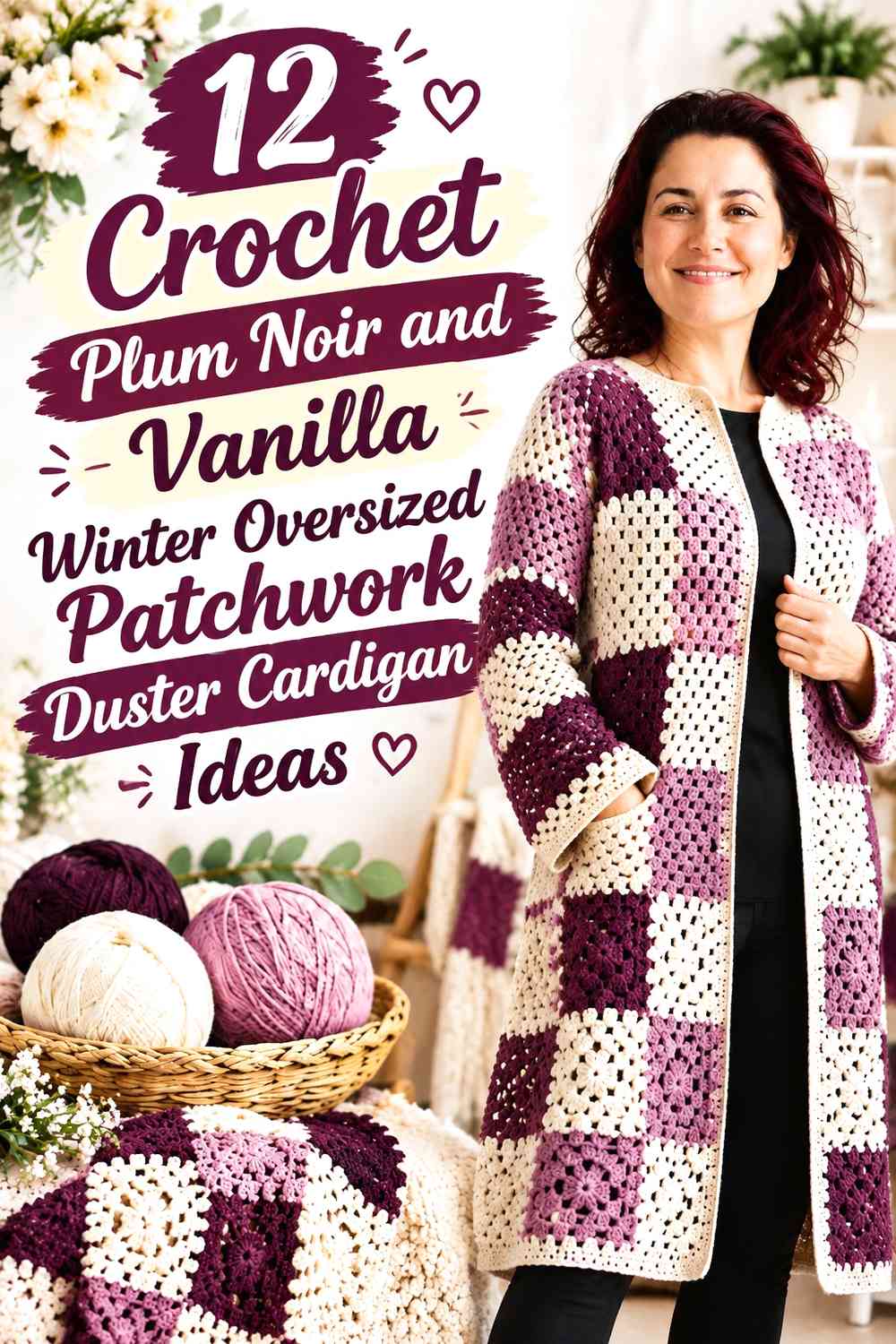

Plum noir and vanilla give an oversized crochet patchwork duster cardigan a strong dark-and-light framework. Plum noir can create deep visual anchors across long body panels and sleeves, while vanilla can separate squares, brighten the front opening, or prevent the lower half of a long cardigan from becoming one uninterrupted dark block.
A duster-length cardigan needs more color planning than a short patchwork sweater because the eye travels from shoulders to hem across a much larger surface. A color arrangement that looks balanced in a handful of squares can become bottom-heavy, vertically striped, or visually disconnected once repeated through long front panels, a full back, and oversized sleeves.
The tutorials supporting these ideas include patchwork and granny-square cardigans as well as long and oversized cardigan constructions. Use the credited tutorials for their exact construction methods and sizing guidance. The plum noir and vanilla palettes below are independent adaptations designed specifically for a winter oversized patchwork duster look.
Quick List
- Plum Noir-Dominant and Vanilla Grid Crochet Patchwork Duster Cardigan
- Vanilla-Dominant and Plum Noir Block Crochet Patchwork Duster Cardigan
- Plum Noir and Vanilla Checkerboard Crochet Patchwork Duster Cardigan
- Plum Noir Center and Vanilla Border Crochet Granny-Square Duster Cardigan
- Vanilla Center and Plum Noir Frame Crochet Patchwork Duster Cardigan
- Plum Noir Body and Vanilla Sleeve Crochet Patchwork Duster Cardigan
- Vanilla Body and Plum Noir Sleeve Crochet Patchwork Duster Cardigan
- Plum Noir Lower-Hem and Vanilla Upper-Panel Crochet Patchwork Duster Cardigan
- Vanilla Join and Plum Noir Square Crochet Oversized Duster Cardigan
- Plum Noir Front-Band and Vanilla Patchwork Crochet Duster Cardigan
- Plum Noir, Vanilla, and Muted Mauve Crochet Patchwork Duster Cardigan
- Plum Noir and Vanilla Two-Color Tonal Crochet Patchwork Duster Cardigan
Give Plum Noir and Vanilla Clear Roles Across a Long Cardigan
An oversized duster contains enough surface area for both shades to become dominant if their roles are not planned first. Decide whether plum noir controls the garment body, individual square centers, sleeves, joining lines, or finishing bands. Then give vanilla a different job instead of scattering both colors randomly.
This matters most around the lower half of the cardigan. Repeating too many plum-noir squares near the hem can make a long garment look visually weighted downward, while too much vanilla at the bottom can make the upper section appear disconnected. Distribute the darkest and lightest blocks deliberately from shoulder to hem.
Use Vanilla to Keep Plum Noir Patchwork Visible
A very dark plum can make neighboring square boundaries difficult to distinguish when several motifs touch. Vanilla can solve that problem through motif borders, joining lines, cuffs, or selected light squares rather than requiring an equal number of dark and light blocks.
Check the completed motifs side by side before joining the full garment. If the plum noir and vanilla relationship is extremely high contrast, smaller vanilla areas may be enough. If the vanilla is warmer and deeper than expected, slightly broader light sections can provide clearer separation.
Plan Plum Noir and Vanilla Across Sleeves Before Joining the Body
Oversized sleeves are visually important on a patchwork cardigan because they create large moving areas beside an already long body. If the torso is strongly plum-noir-dominant, repeating exactly the same ratio on both sleeves may make the whole garment feel heavier than intended.
Instead, use sleeves to rebalance the palette. Vanilla cuffs, lighter upper-arm squares, alternating motifs, or a single repeated vanilla column can keep plum noir from taking over the entire silhouette. Lay out both sleeves beside the body panels before final joining so the color rhythm can be judged as one garment.
1. Plum Noir-Dominant and Vanilla Grid Crochet Patchwork Duster Cardigan
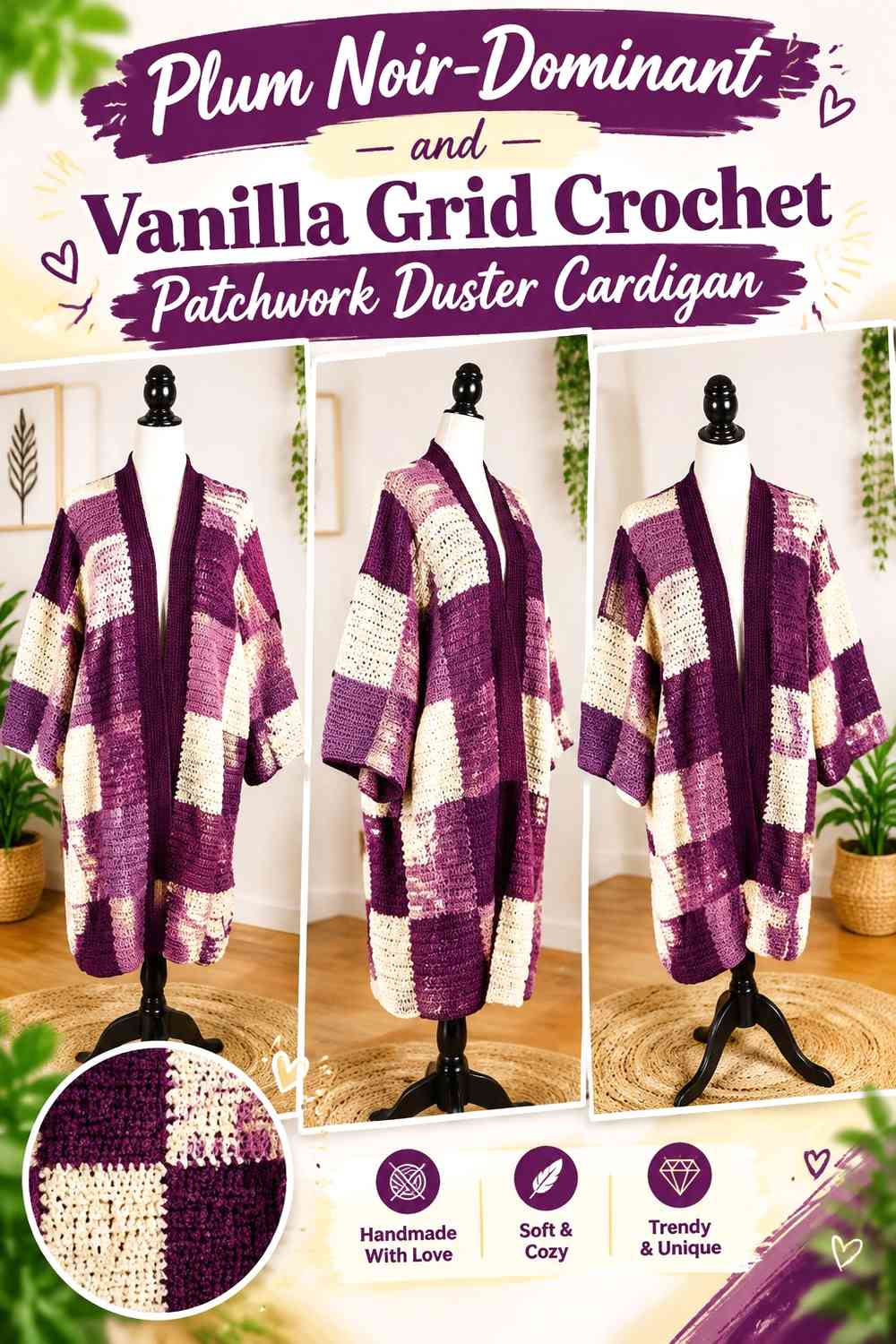
Let plum noir cover most of the patchwork squares and use vanilla primarily around their edges or between darker blocks. The result keeps the duster deep and winter-focused while allowing the patchwork construction to remain visible from shoulders to hem.
This arrangement is especially useful for a long cardigan because vanilla can create a consistent grid that prevents the many plum-noir sections from blending into one continuous dark surface.
Plum Noir Should Carry the Largest Duster Cardigan Panels
Place plum noir through the back, lower fronts, or other broad areas where you want the garment to feel visually grounded. Repeat it consistently rather than concentrating every dark square in one section.
On an oversized silhouette, distributing plum noir from upper body to lower hem usually creates more continuity than keeping all of the darkest motifs near the bottom.
Vanilla Joining Lines Can Separate Plum Noir Patchwork Squares
Vanilla joins or narrow vanilla motif borders give each plum-noir square a visible boundary. This is particularly useful across the back panel, where several dark motifs may otherwise merge when viewed from a distance.
Keep the vanilla lines fairly consistent so they act as a deliberate grid rather than isolated light seams.
Creator Credit: Handmade By Mei
2. Vanilla-Dominant and Plum Noir Block Crochet Patchwork Duster Cardigan
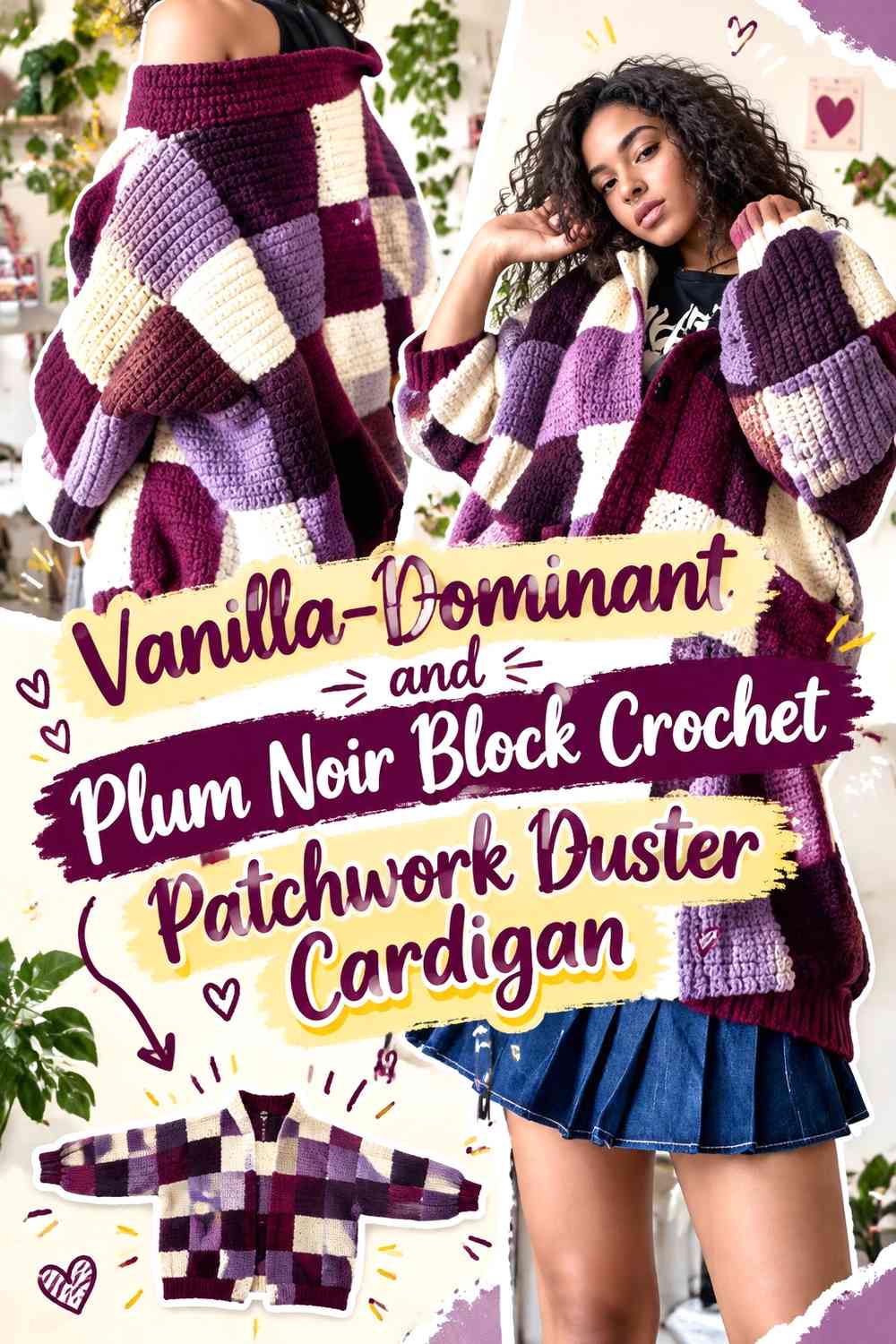
Reverse the hierarchy by using vanilla through most of the cardigan and reserving plum noir for repeated statement squares. The long silhouette becomes noticeably lighter, while the dark patches supply enough contrast to keep the garment from looking flat.
Space the plum-noir blocks through the front, back, and sleeves rather than placing them only in one zone.
Vanilla Needs Enough Continuous Area to Lead the Patchwork Cardigan
If vanilla is meant to dominate, allow several neighboring motifs or larger panel sections to stay light. Alternating every single square with plum noir can make the garment read as an equal checkerboard instead.
A broad vanilla front or upper-back area also gives the oversized shape more visual breathing room.
Plum Noir Blocks Should Repeat Down the Vanilla Duster Length
Use the dark patches as anchors at several heights—upper body, midsection, and lower garment—so the plum noir travels through the full silhouette.
Avoid stacking all dark squares into a single horizontal band. On a duster, that can visually divide the cardigan into separate upper and lower sections.
Creator Credit: ikoxun
3. Plum Noir and Vanilla Checkerboard Crochet Patchwork Duster Cardigan
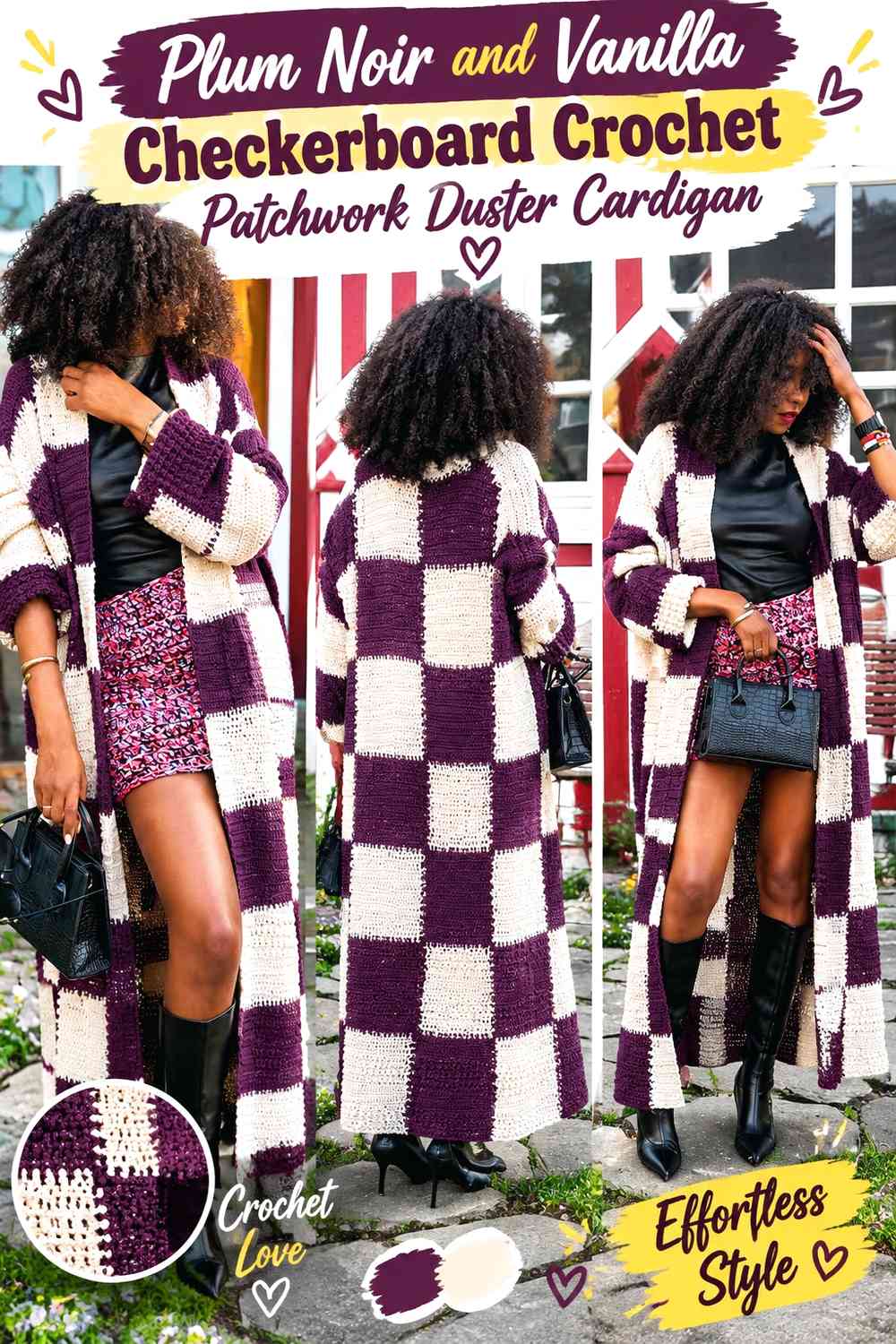
A checkerboard layout gives plum noir and vanilla similar visual importance. Alternating the colors across large patchwork blocks produces one of the clearest graphic treatments in the collection.
Because the contrast is already strong, keep cuffs, edging, and joining colors controlled rather than introducing several additional shades.
Plum Noir and Vanilla Checkerboards Need Alignment Across Long Panels
Plan the front and back layouts together so the checker sequence does not shift unintentionally at side joins. A long duster makes irregular placement more noticeable because the same pattern continues through many vertical rows.
Lay the motifs out at full cardigan length before assembly and check how dark blocks travel from shoulder to hem.
Vanilla Can Keep Plum Noir Checkerboard Sleeves From Looking Too Heavy
Oversized sleeves add considerable visual area, so a dark-heavy sleeve can upset an otherwise even checkerboard body. Continue enough vanilla into the sleeves to maintain the same overall rhythm.
You can also use vanilla cuffs as a clean stopping point if the final sleeve section contains more plum noir.
Creator Credit: AC Crochets
4. Plum Noir Center and Vanilla Border Crochet Granny-Square Duster Cardigan
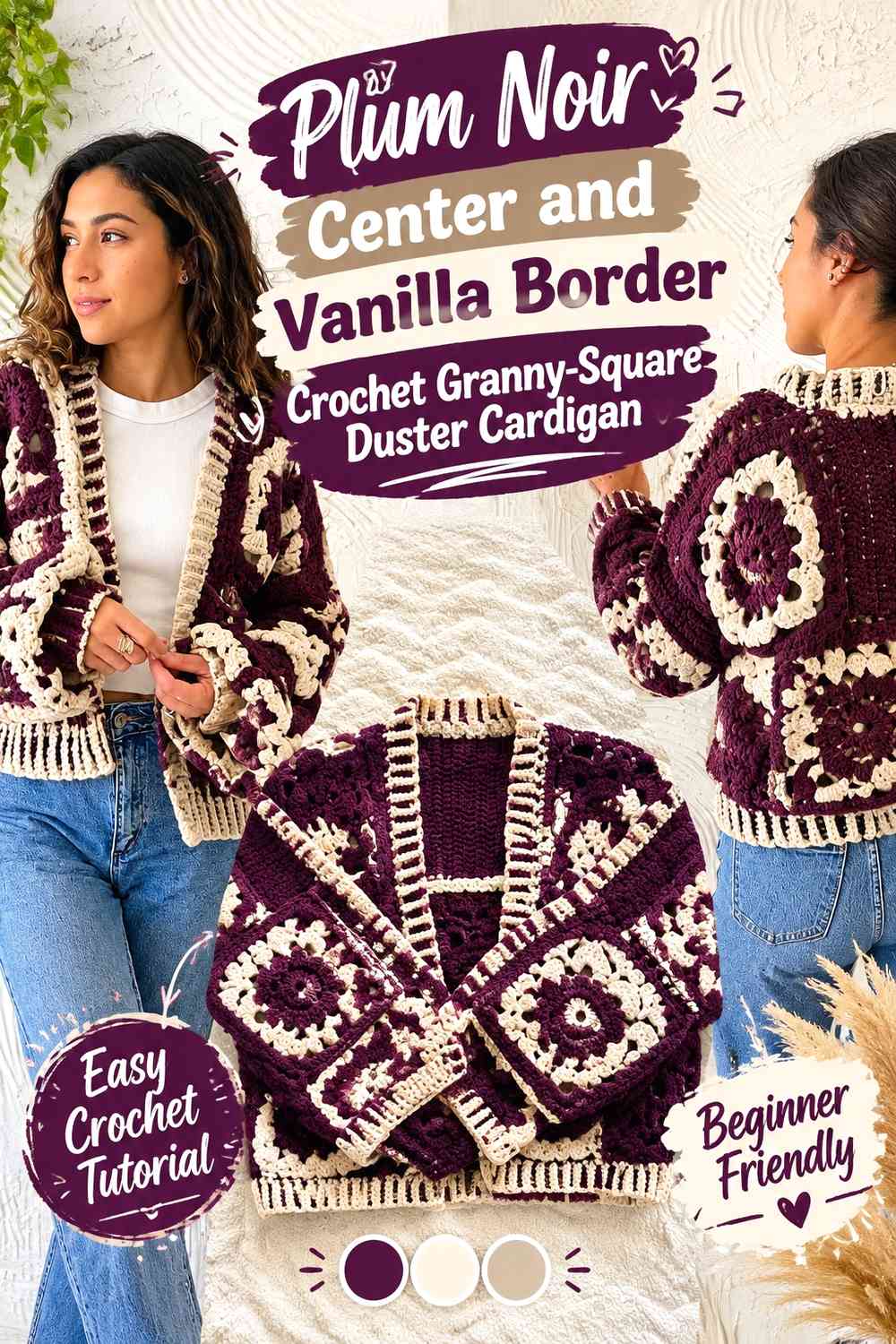
Build each patchwork motif around a plum-noir center and finish it with vanilla toward the outside. Once joined, the garment reads as a series of dark focal points floating inside a lighter grid.
This approach gives the cardigan repeated contrast without turning entire squares into solid dark blocks.
Plum Noir Centers Give Each Vanilla Granny Square a Focal Point
Keep the plum-noir center substantial enough to remain visible after the motifs are assembled. Very small dark centers can disappear once vanilla occupies most of the finished square.
Repeating the same center role across the garment also gives a patchwork duster more consistency even if motif placement varies.
Vanilla Borders Prevent Plum Noir Centers From Merging Across the Cardigan
Vanilla around each motif creates space between adjacent dark areas. The effect is especially useful through the back and lower skirt-like section of a long duster, where many squares sit next to one another.
If you also join with vanilla, check that the border-plus-join area does not become wider than you want visually.
Creator Credit: Emma Warrender
5. Vanilla Center and Plum Noir Frame Crochet Patchwork Duster Cardigan
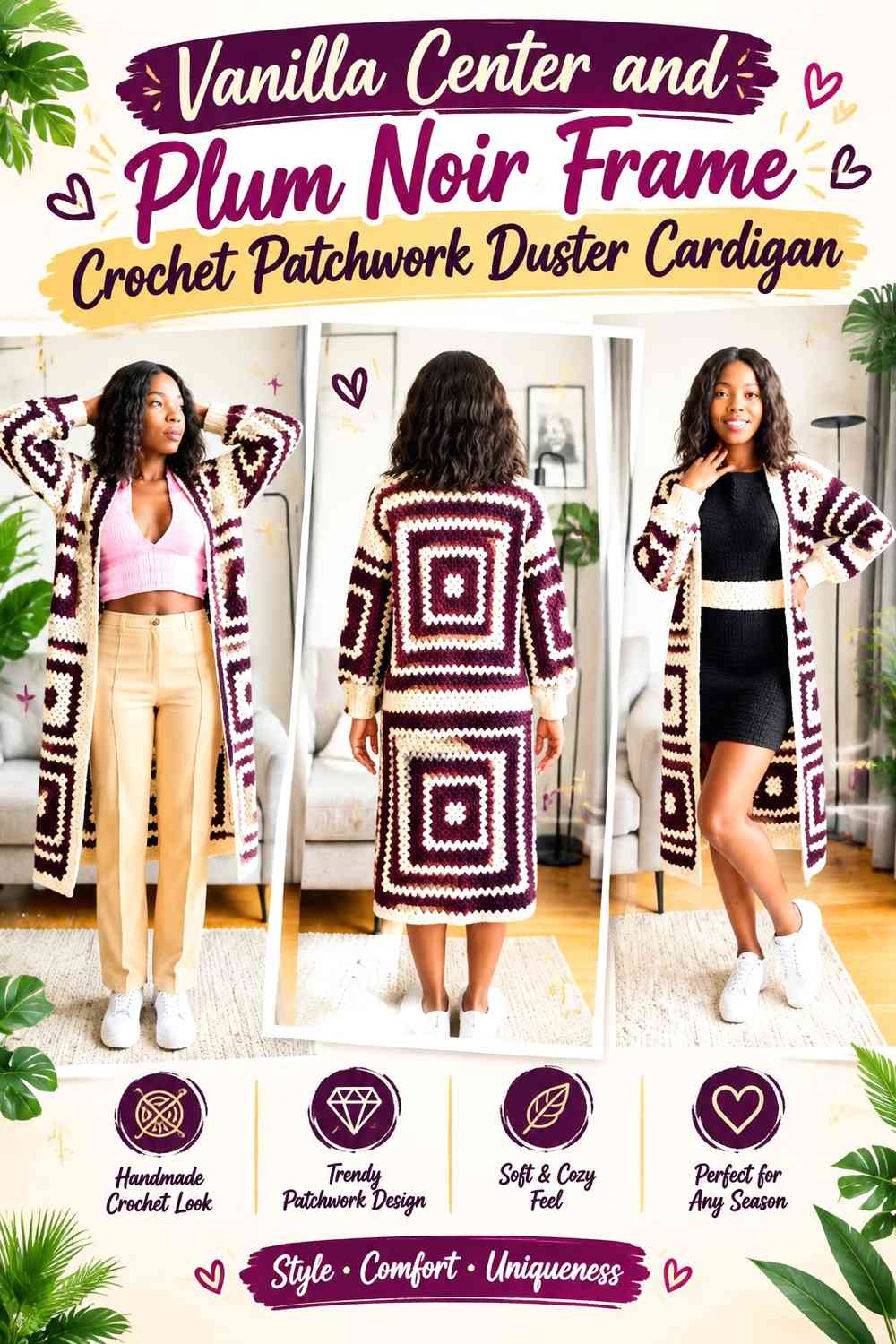
This palette reverses the previous motif structure. Place vanilla in the center and surround it with plum noir so every square carries a bright focal area inside a dark frame.
Across an oversized winter cardigan, the repeated vanilla centers keep the garment from becoming overwhelmingly dark while plum noir still defines most motif boundaries.
Vanilla Centers Can Brighten a Plum Noir Oversized Cardigan
Repeating vanilla through the center of every motif distributes the light color evenly from the shoulders through the long hem.
This is useful when you prefer a dark cardigan but still want patchwork detail to remain obvious at normal viewing distance.
Plum Noir Frames Give Vanilla Motifs Strong Patchwork Definition
Dark outer rounds or borders make the individual squares easier to identify before they are joined. If the joining color is also plum noir, however, neighboring frames may visually merge.
In that case, keep the motif centers large enough that the vanilla remains a significant part of the completed cardigan.
Creator Credit: Simply Angel Tiah
6. Plum Noir Body and Vanilla Sleeve Crochet Patchwork Duster Cardigan
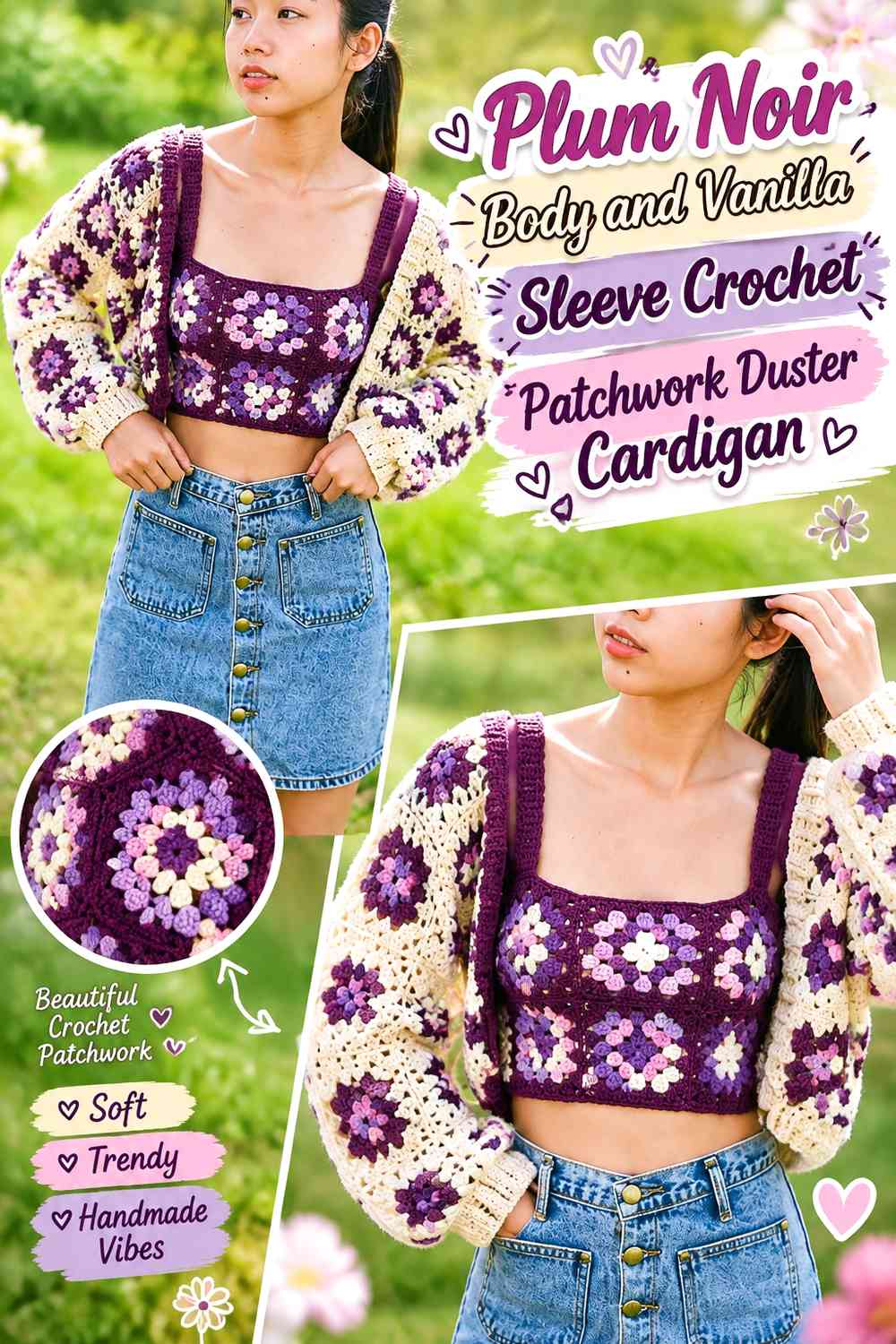
Use plum noir across most of the long torso and make the sleeves noticeably lighter with vanilla-led patchwork. This gives the oversized silhouette a strong central column while the arms provide contrast and movement.
Repeat a small amount of vanilla on the torso so the sleeve color does not feel completely separate from the body.
Plum Noir Can Create a Long Continuous Duster Silhouette
A dark torso emphasizes the vertical length of the cardigan, particularly when the front and lower panels remain mostly plum noir.
Break up that expanse with a few vanilla motifs or narrow joining lines if individual patchwork sections begin disappearing into the dark field.
Vanilla Sleeves Can Balance a Plum Noir-Heavy Cardigan Body
Use vanilla through several sleeve motifs rather than limiting it only to the cuffs. The lighter arms reduce the amount of dark color visible when the cardigan is worn open.
Repeat one or two plum-noir sleeve sections so the arms remain connected visually to the torso rather than looking like separate garments.
Creator Credit: Chenda DIY
7. Vanilla Body and Plum Noir Sleeve Crochet Patchwork Duster Cardigan
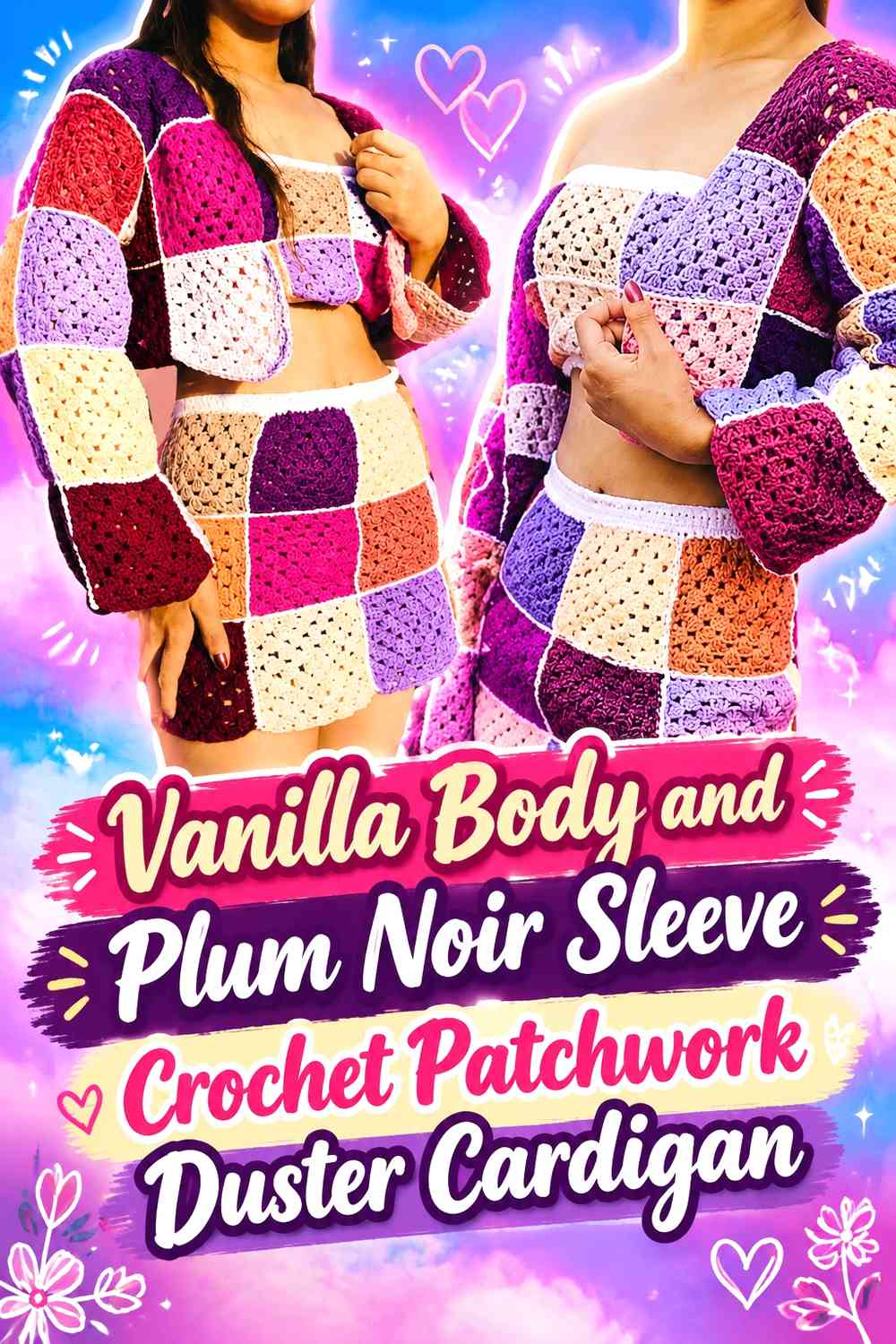
Give the long body a vanilla majority and place more plum noir across the oversized sleeves. The result draws attention toward the arms while keeping the front and back relatively light.
Because dark sleeves can become visually dominant, bring small plum-noir blocks into the torso to connect the two areas.
Vanilla Keeps the Long Duster Body From Feeling Visually Dense
Large vanilla sections through the front and back reduce the weight of a floorward-extending patchwork silhouette. They also create a clean background for plum-noir sleeve sections.
Keep enough vanilla toward the lower hem that the light body color does not disappear beneath darker finishing bands.
Plum Noir Sleeves Need Vanilla Repetition Near the Cuffs or Shoulders
If both sleeves are predominantly plum noir, use vanilla at the cuffs, shoulder motifs, or selected mid-arm sections. Those light interruptions connect the sleeves back to the body.
Check both arms simultaneously during layout. One sleeve with considerably more plum noir than the other can make an oversized cardigan appear unintentionally unbalanced.
Creator Credit: Yarns and Fins
8. Plum Noir Lower-Hem and Vanilla Upper-Panel Crochet Patchwork Duster Cardigan
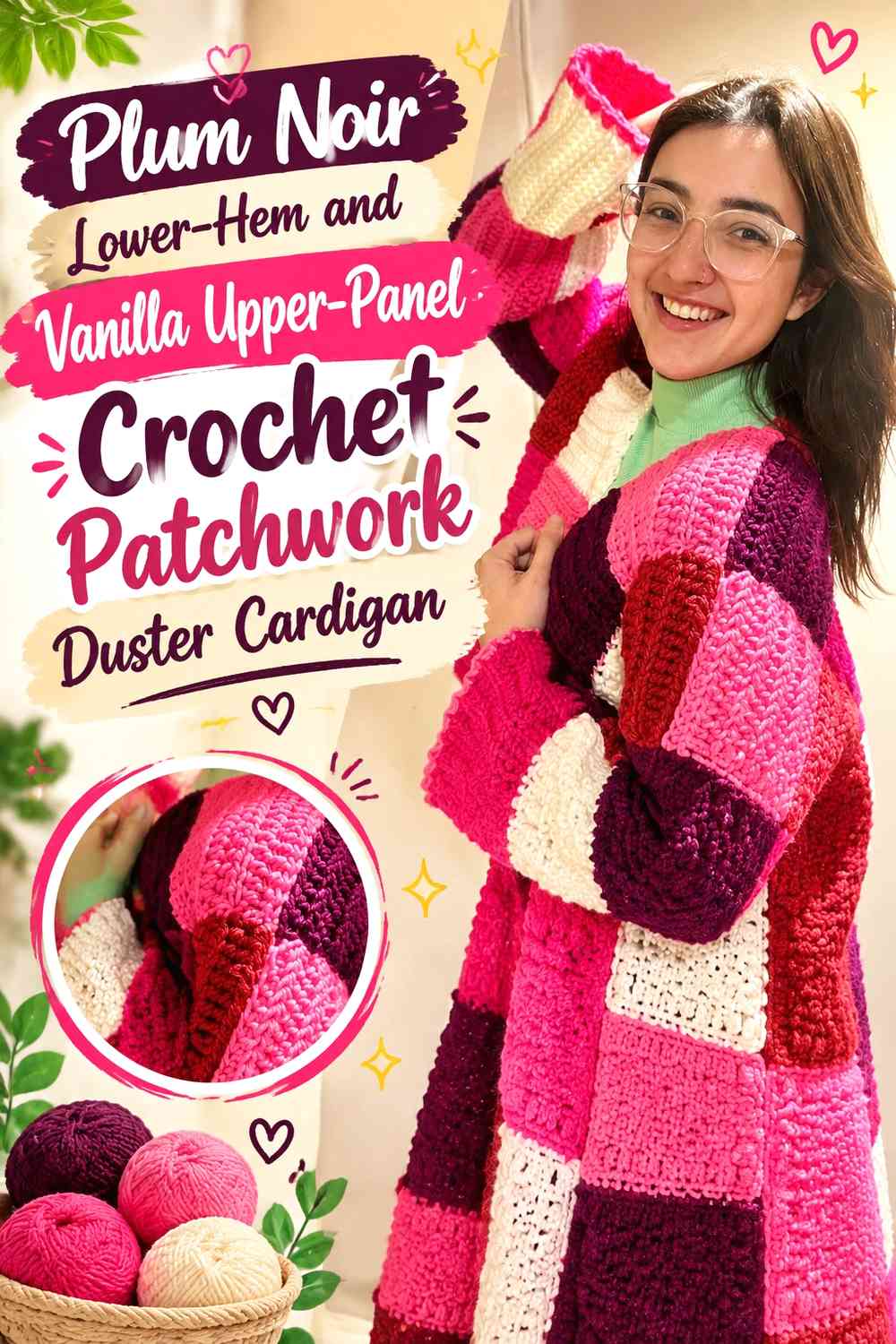
Create a vertical color transition by using more vanilla around the shoulders and upper torso, then increasing plum noir toward the long lower section. This gives the duster a darker base without creating a hard two-color division.
The transition works best when a few motifs from each shade cross into the neighboring zone.
Vanilla Can Keep the Upper Patchwork Cardigan Visually Open
A lighter shoulder and chest area prevents the longest portion of the garment from feeling uniformly dark from neckline to hem.
Carry some vanilla into the upper sleeves as well so the color transition feels connected across the full width of the cardigan.
Plum Noir Can Ground the Long Duster Hem Without Creating a Hard Band
Increase plum-noir motifs gradually toward the bottom rather than switching every square to dark at one exact row. A staggered transition preserves the patchwork character.
Leave at least a few vanilla motifs in the lower section so the final hem still relates to the upper body.
Creator Credit: Crochet with Karu
9. Vanilla Join and Plum Noir Square Crochet Oversized Duster Cardigan
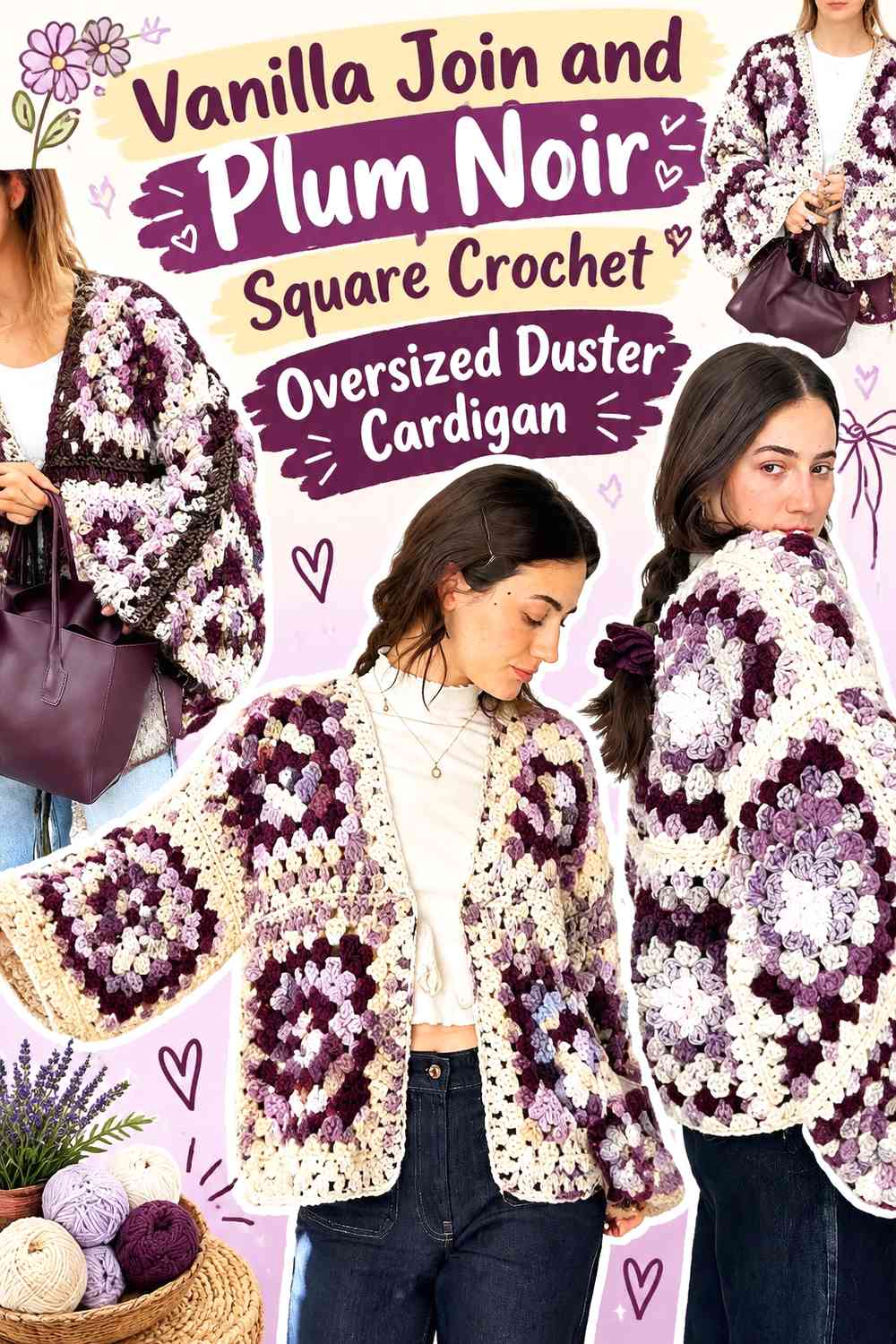
Make plum noir the main motif color and give vanilla a structural role through visible joins, seams, edging, and cuffs. Instead of relying on many light squares, the contrast comes from the lines that connect the cardigan.
This is a useful option when you want an especially dark winter duster but still need the patchwork construction to be legible.
Plum Noir Squares Can Cover Most of the Duster Without Losing Patchwork Detail
A largely plum-noir motif field can work when vanilla clearly marks where squares meet. Keep the dark motifs consistent enough that texture, rather than additional colors, creates internal variation.
If some squares include vanilla centers as well, use them strategically rather than distributing them randomly.
Vanilla Joins Turn Plum Noir Panels Into a Visible Grid
Light joining lines can emphasize the architecture of the garment from the shoulder seams through the long body.
Pay particular attention to sleeve-to-body joins and side seams. If those lines are much wider or brighter than the joins between motifs, they may become unintended focal points.
Creator Credit: Rose – Fiber Art
10. Plum Noir Front-Band and Vanilla Patchwork Crochet Duster Cardigan
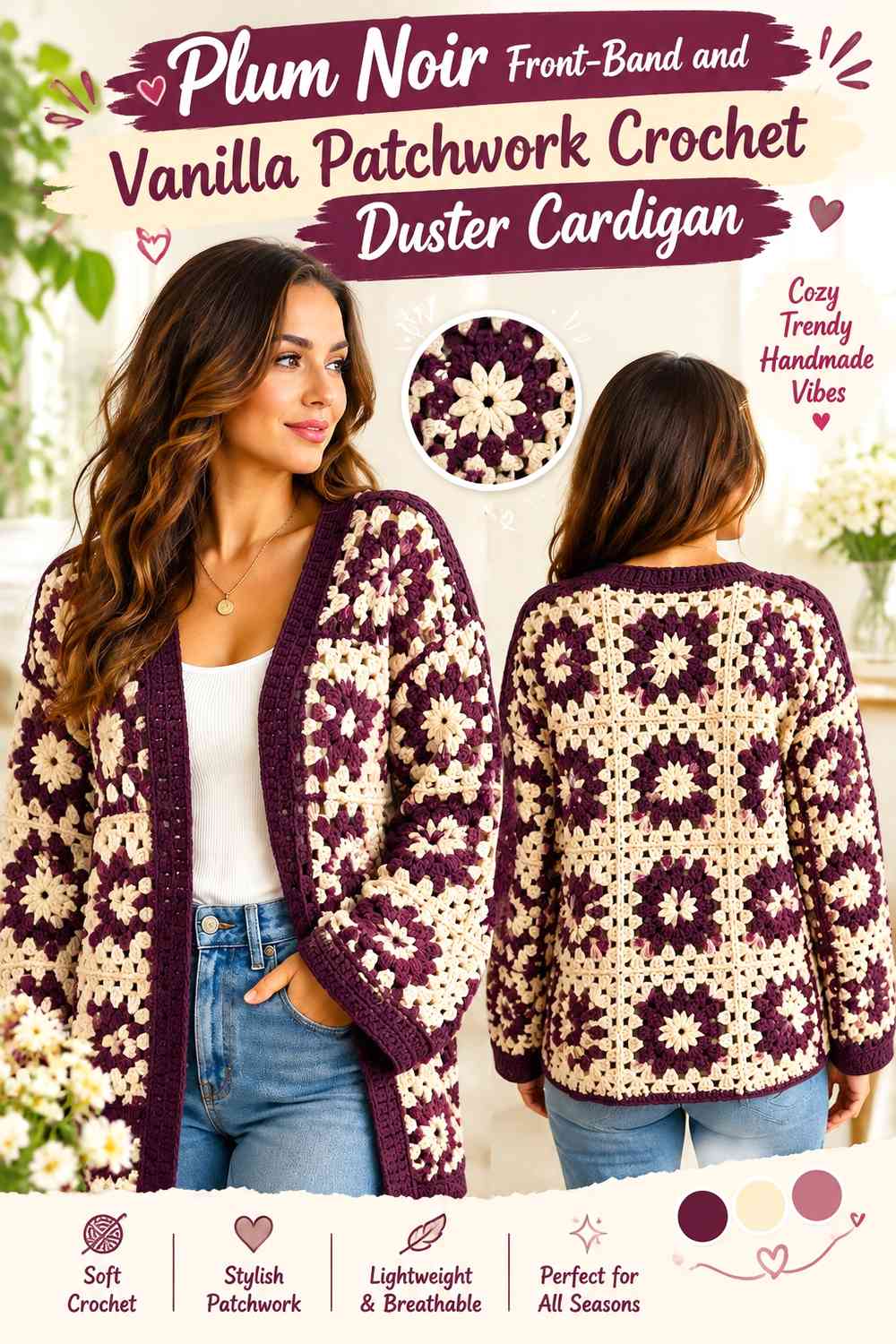
Let vanilla dominate the patchwork body and use plum noir for the entire front opening, neckline, cuffs, and possibly the lower edge. The dark finishing bands create a strong frame around a lighter oversized garment.
This design uses color to emphasize cardigan structure rather than individual square placement.
Plum Noir Front Bands Can Frame a Vanilla Patchwork Duster
A continuous plum-noir front edge creates a strong vertical line from neckline toward the hem. On a long cardigan, that repeated dark line can visually tie many lighter motifs together.
Keep the width of the band in proportion to the patchwork blocks so it frames rather than overwhelms them.
Vanilla Patchwork Needs Plum Noir Repetition Beyond the Front Edge
Bring plum noir into a few body motifs, cuffs, or sleeve sections so the dark front band does not look isolated.
A repeated dark square near each lower front can connect the plum-noir frame to the patchwork itself without changing the overall vanilla dominance.
Creator Credit: crochet-crosia
11. Plum Noir, Vanilla, and Muted Mauve Crochet Patchwork Duster Cardigan
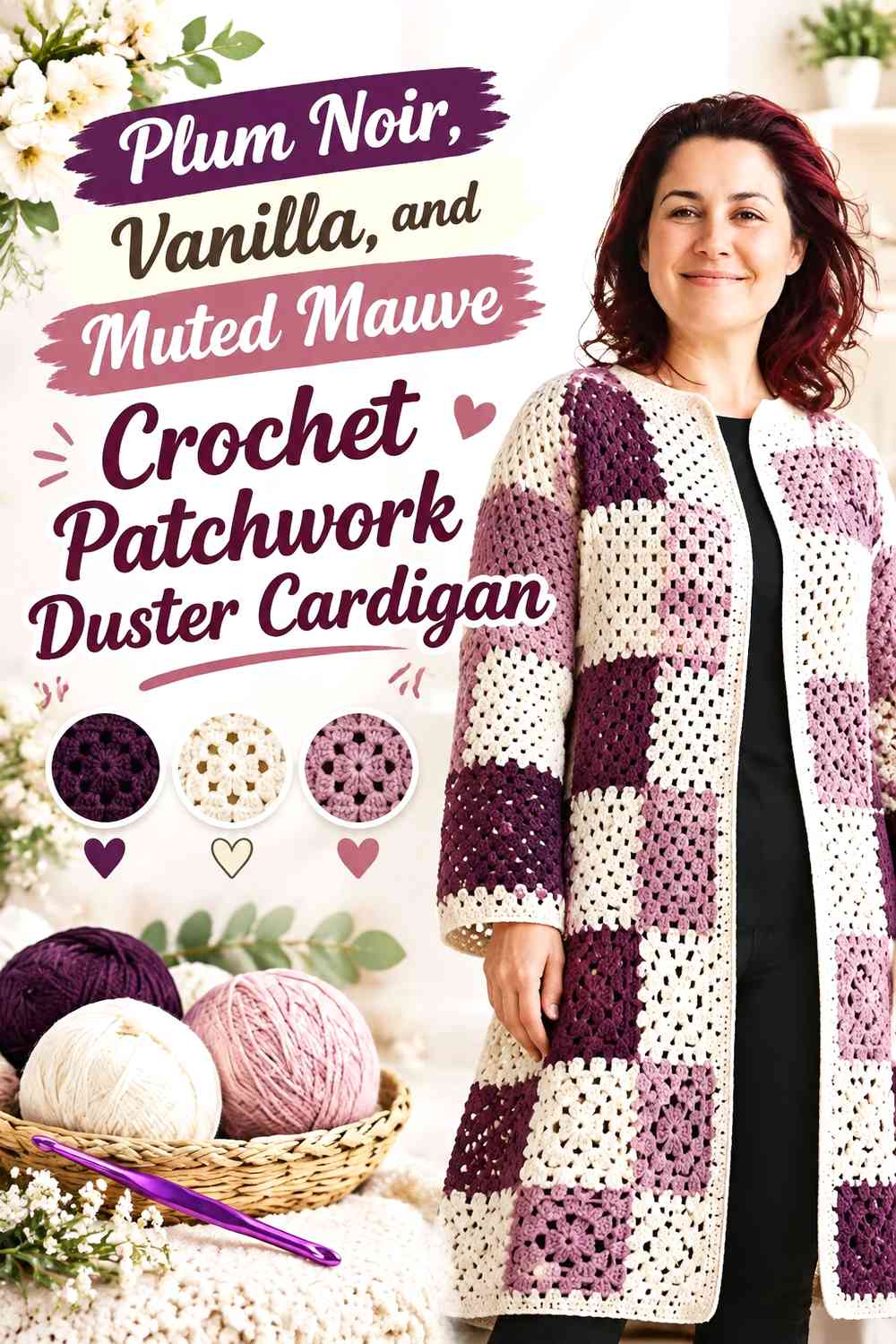
Introduce muted mauve as a transition color between plum noir and vanilla. The third shade can soften the jump from very dark purple to a pale neutral while keeping plum noir and vanilla clearly dominant.
Use mauve selectively in square centers, sleeve motifs, or transition rows rather than dividing the cardigan equally among all three colors.
Muted Mauve Should Bridge Plum Noir and Vanilla Instead of Competing
Choose mauve for areas where you want a middle visual value, such as motifs that sit between dark plum-noir and light vanilla blocks.
Keep its total surface smaller than the two anchor shades. If mauve covers as much of the garment as plum noir or vanilla, the cardigan becomes a three-color design rather than a two-color scheme with a transition shade.
Plum Noir Still Needs Strong Anchors Around Vanilla and Mauve
Use plum noir in broad lower-body blocks, cuffs, front bands, or selected sleeve motifs so the darkest shade remains structurally important.
Do not reduce plum noir to scattered tiny squares; its deep contrast is what prevents vanilla and muted mauve from blending into one soft field.
Vanilla Can Separate Plum Noir From Mauve on Detailed Patchwork Sections
If the two purple-family shades sit close in value, introduce vanilla between them in selected motifs or joins. That small light break can keep adjacent squares distinct.
This is especially useful on the back panel, where several similar dark motifs may otherwise merge from a distance.
Creator Credit: İlmeklerin Deryası
12. Plum Noir and Vanilla Two-Color Tonal Crochet Patchwork Duster Cardigan
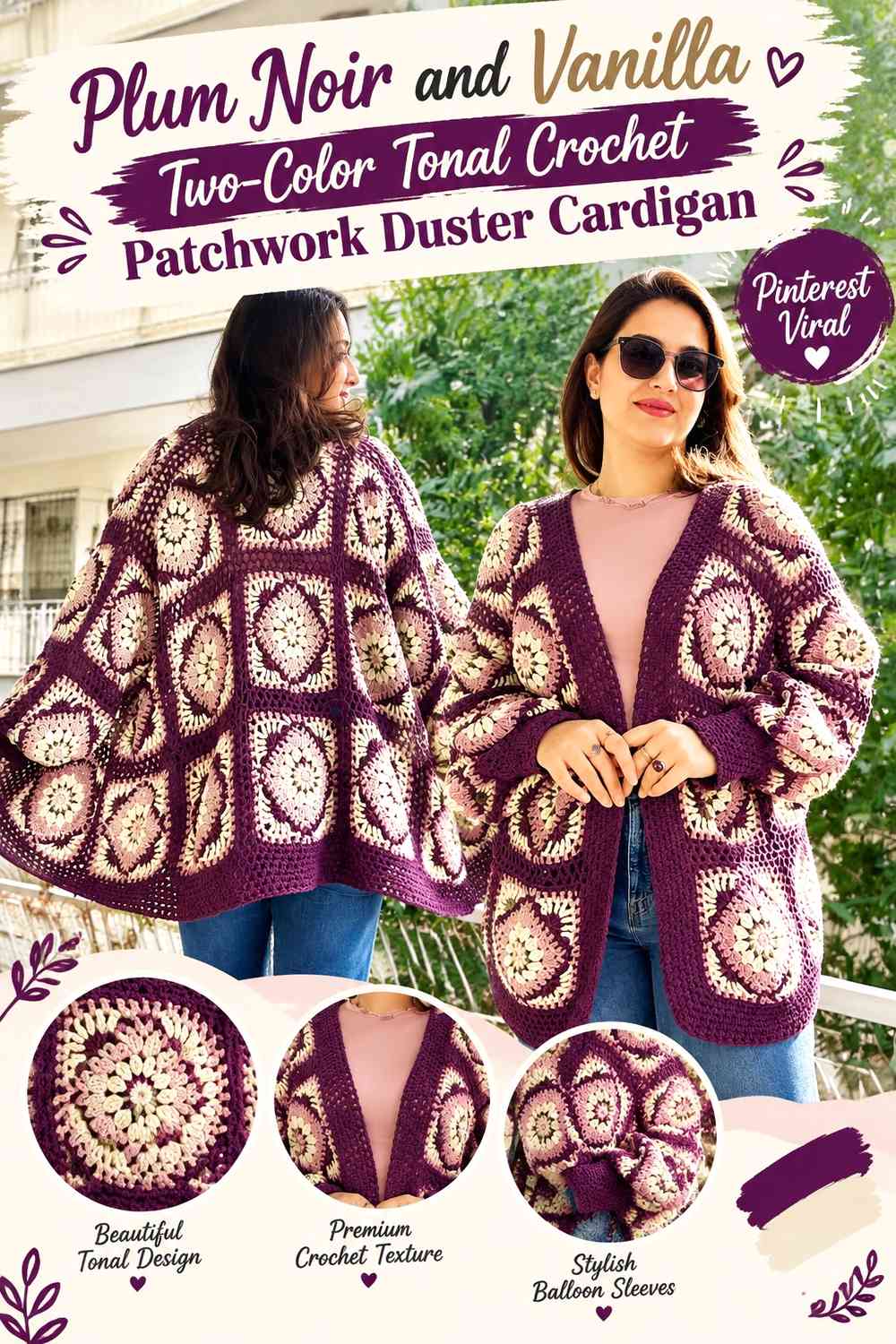
Limit the final cardigan strictly to plum noir and vanilla. Instead of adding a transition shade, create variety through different proportions: some motifs can be mostly plum noir, others mostly vanilla, and a smaller group can divide the shades more evenly.
The repeated two-color rule keeps a very large duster coherent even when the individual patches vary.
Plum Noir Needs Repetition From Shoulder to Hem
Place plum noir at several heights so the darkest color travels through the entire cardigan. A plum-noir shoulder square, mid-body motif, sleeve section, and lower patch can create continuity without forming a rigid stripe.
Look at the whole layout before joining rather than planning each panel independently.
Vanilla Should Break Up Large Plum Noir Areas on the Long Duster
Use vanilla where the garment begins to accumulate too many neighboring dark motifs. A single light square can interrupt a heavy section more effectively than adding several tiny vanilla details.
This is particularly useful around the lower back, where a long cardigan may contain many adjacent motifs.
Plum Noir and Vanilla Cuffs and Borders Should Finish the Patchwork Deliberately
Choose one finishing hierarchy and repeat it. Plum-noir cuffs with a plum-noir front band can contain a lighter patchwork arrangement, while vanilla finishing can soften a cardigan that already contains many dark squares.
Avoid changing the border color repeatedly simply because both yarns remain available. The finishing shade should clarify the final color balance.
Creator Credit: ÖRGÜ MÜ DEDİNİZ
Which Plum Noir and Vanilla Patchwork Duster Direction Should You Choose?
Choose a plum-noir-dominant arrangement when you want a darker winter layer with vanilla mainly providing separation. The plum-noir grid, dark-body, vanilla-join, and dark-frame ideas all retain a substantial deep-purple presence without hiding the patchwork structure.
For a lighter oversized cardigan, start with vanilla-dominant blocks, a vanilla body with dark sleeves, or vanilla patchwork framed by plum-noir finishing. These options allow the duster to stay visually open even when the garment has considerable length and volume.
If the individual motifs are what you most want to emphasize, use contrasting centers, borders, or joins. If the silhouette matters more, divide the colors between entire sleeves, body zones, front bands, or upper and lower sections. The latter approach lets color reinforce the long shape instead of making every square compete equally.
Conclusion
Plum noir and vanilla give an oversized patchwork duster cardigan enough contrast to make individual motifs visible while still allowing a controlled winter palette. Plum noir can anchor the long body, cuffs, joins, frames, or sleeves, while vanilla can open up large dark sections and keep the patchwork arrangement readable.
For a dramatic dark cardigan, use plum noir across most motifs and introduce vanilla through joins and selected squares. For a lighter duster, reverse the balance and use dark blocks or finishing bands as visual anchors. Checkerboards create the strongest two-color rhythm, while alternating motif centers and borders produce a more detailed patchwork effect.
Before joining the full garment, arrange the front panels, back, and both sleeves together. A color layout that looks balanced panel by panel can change considerably once the cardigan reaches duster length. Use each credited tutorial for its actual construction and sizing method, then apply the plum-noir-and-vanilla palette independently.
Frequently Asked Questions
Should Plum Noir or Vanilla dominate an oversized patchwork duster cardigan?
Either can dominate. Plum noir creates a darker, more grounded winter layer, while vanilla produces a lighter garment with dark contrast. Choose the dominant shade before arranging motifs so the body, sleeves, and long lower panels follow one clear hierarchy.
How do I stop Plum Noir squares from blending together in a patchwork cardigan?
Separate neighboring plum-noir motifs with vanilla borders, joining lines, or occasional light squares. If you prefer dark-on-dark motifs, use vanilla where major panel boundaries need more definition.
Should Vanilla patchwork squares be evenly distributed through a Plum Noir duster?
They do not need to be mathematically even, but they should appear in enough areas to feel intentional. Repeat vanilla through the upper body, lower section, and sleeves rather than concentrating every light motif in one location.
Can Plum Noir and Vanilla be enough colors for a large patchwork cardigan?
Yes. Variety can come from changing which shade forms the square center, border, join, cuff, or body section. A two-color palette can remain visually varied without introducing additional hues.
What third color works between Plum Noir and Vanilla?
A softened mauve can create a middle step between the deep plum and light vanilla. Keep it secondary if you want plum noir and vanilla to remain the defining palette, and make sure it stays visually distinct enough from plum noir to justify its inclusion.
Should the sleeves use the same Plum Noir and Vanilla ratio as the cardigan body?
Not necessarily. Oversized sleeves provide a useful place to rebalance the palette. A plum-noir-heavy body can take lighter vanilla sleeves, while a vanilla body can support darker sleeves. Judge the complete garment rather than matching each panel mechanically.
Which color should I use for joining Plum Noir and Vanilla patchwork squares?
Use vanilla when you want the patchwork grid to remain obvious against dark motifs. Use plum noir when the squares are mostly vanilla and you want stronger framing. If the motifs already contain equal amounts of both shades, choose the join color based on whether you want the seams to stand out or visually recede.