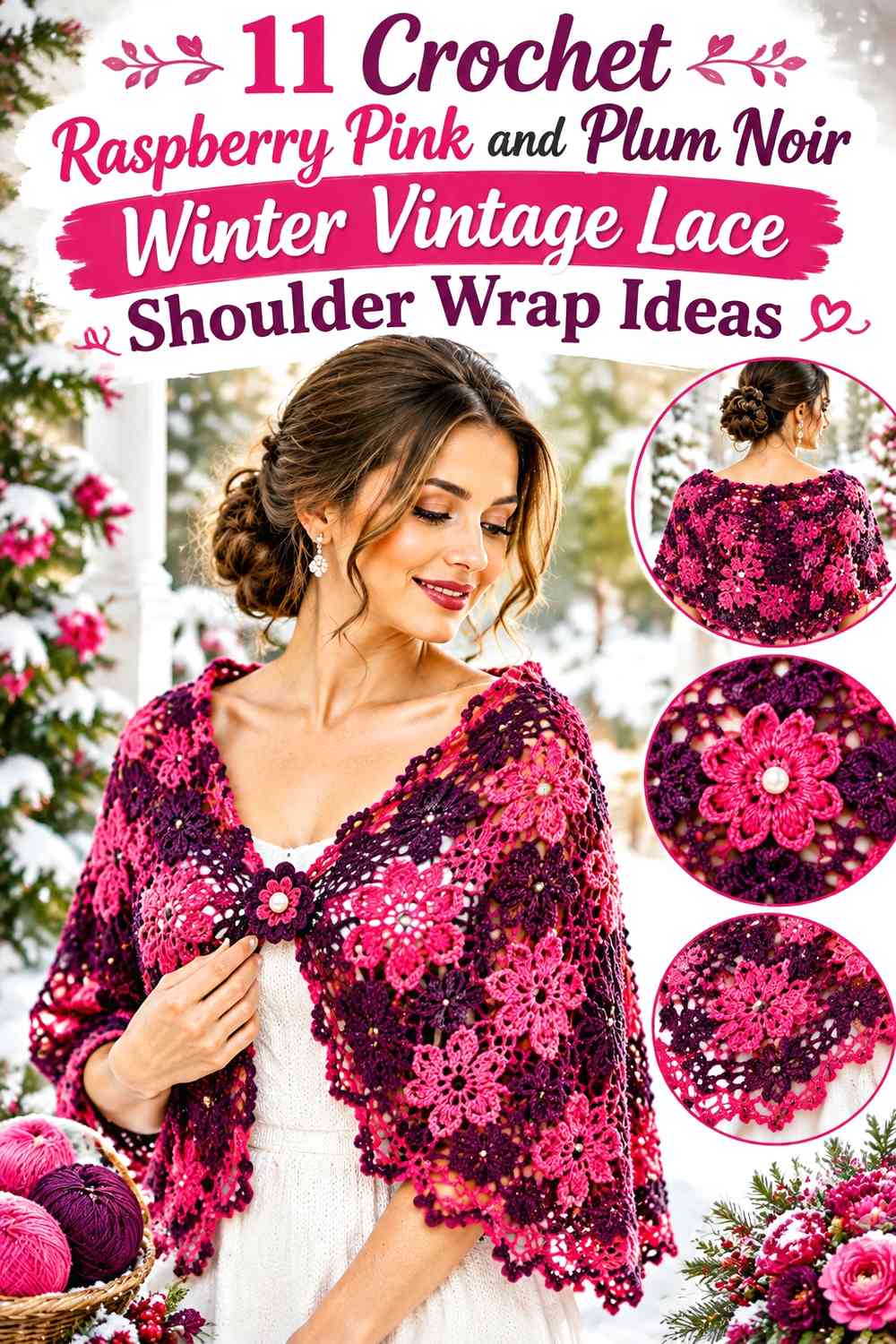

Raspberry Pink and Plum Noir give a crochet shoulder wrap an unusual winter palette: one shade supplies rich berry color while the other creates a much deeper plum foundation. On vintage-style lace, that difference can be used to emphasize scalloped edges, openwork panels, pineapple motifs, collars, and the portions of the wrap that frame the shoulders.
The strongest versions do not divide the colors equally by default. Plum Noir can dominate a shoulder-hugging wrap while Raspberry Pink highlights the lace edge, or Raspberry Pink can cover the main field while Plum Noir gives the neckline and border more definition. Because open crochet reveals clothing underneath, the color of a dress, blouse, or winter layer can also influence how clearly the two yarn colors separate.
The tutorials below support shawl, wrap, capelet, and lace construction concepts. The Raspberry Pink and Plum Noir palettes are independent adaptations, so the credited creators are not being presented as using these exact colors.
Quick List
- Plum Noir and Raspberry Pink Shell-Lace Crochet Shoulder Wrap
- Plum Noir and Raspberry Pink Pineapple-Lace Crochet Shoulder Wrap
- Raspberry Pink and Plum Noir Möbius Crochet Shoulder Wrap
- Plum Noir and Raspberry Pink Rectangular Crochet Shoulder Wrap
- Raspberry Pink and Plum Noir Vintage-Lace Crochet Shoulder Wrap
- Plum Noir and Raspberry Pink Triangle-Lace Crochet Shoulder Wrap
- Plum Noir and Raspberry Pink Cottage Crochet Shoulder Wrap
- Raspberry Pink and Plum Noir Spider-Lace Crochet Shoulder Wrap
Let Plum Noir or Raspberry Pink Lead the Shoulder Line
A shoulder wrap has a long horizontal viewing area, so an equal split can easily become striped or visually fragmented. Decide which color should form the continuous shoulder line first.
Plum Noir creates the darker winter direction and gives Raspberry Pink lace details a clear place to stand out. Raspberry Pink produces a softer berry-led wrap, while Plum Noir can define the neckline, ends, or decorative edge without occupying half the garment.
Use Raspberry Pink and Plum Noir to Reveal Vintage Lace
Color contrast is particularly useful around openwork. A Raspberry Pink scallop against a Plum Noir field can make each curve more noticeable, while a dark Plum Noir border can sharpen the outer edge of a lighter Raspberry Pink lace panel.
Check the yarns from normal viewing distance rather than only close to the hook. If Raspberry Pink and Plum Noir become surprisingly similar in darkness, concentrate the lighter shade around the lace details that most need separation.
Check Raspberry Pink and Plum Noir Over Winter Layers
Open lace allows the blouse, dress, or sweater underneath to show through. A black layer can visually blend with Plum Noir openings, while a pale layer creates much stronger contrast behind both colors.
Before committing to the final color distribution, place a swatch over clothing similar to what you expect to wear with the wrap. This is especially useful around wide lace sections and shoulder panels.
1. Plum Noir and Raspberry Pink Shell-Lace Crochet Shoulder Wrap
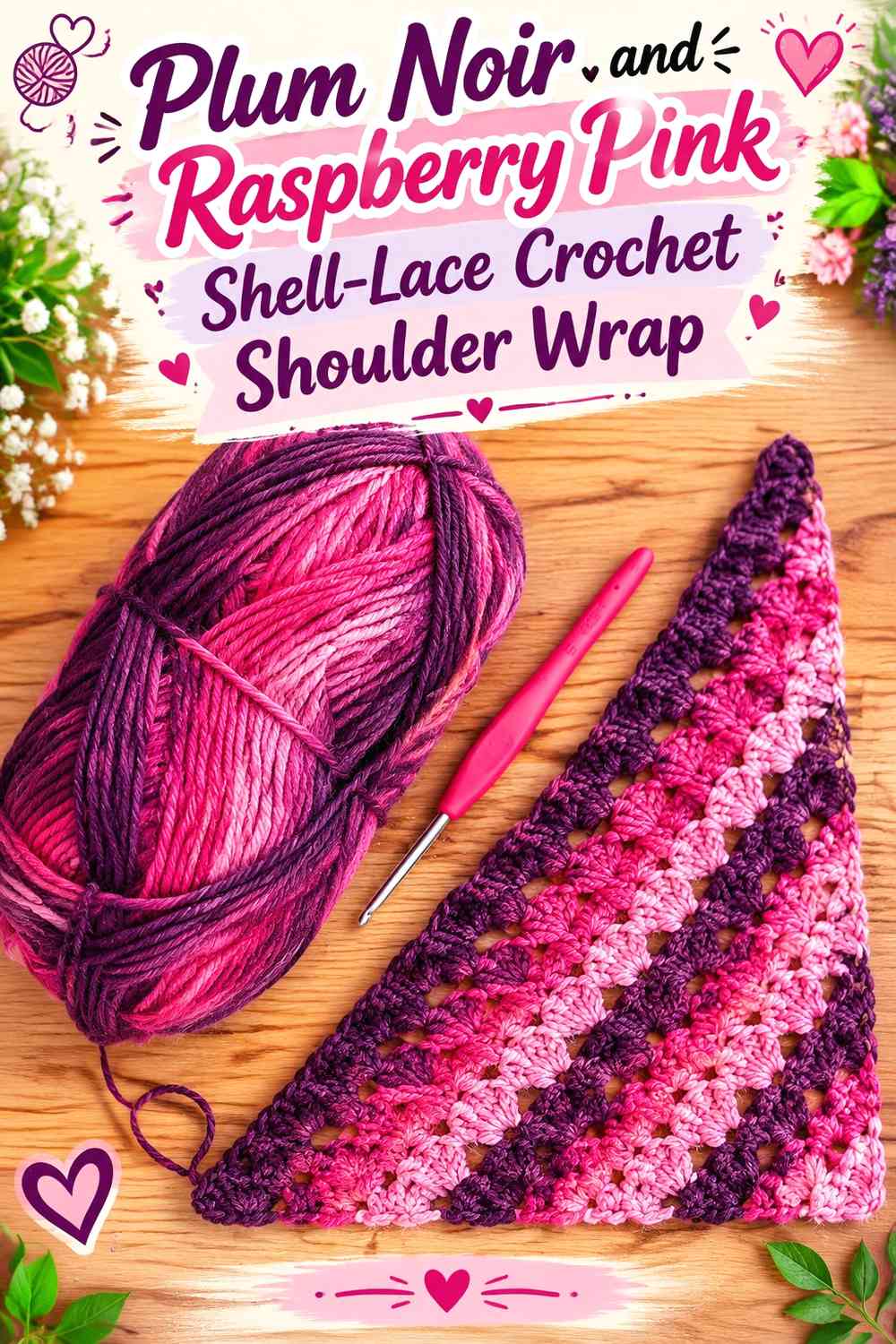
Let Plum Noir cover most of the shell-lace field and reserve Raspberry Pink for the lower scalloped edge. The result keeps the shoulder line dark while the brighter berry shade traces the decorative portion that falls below it.
Because shell-based lace already has repeated curves, Raspberry Pink does not need to appear inside every shell. A controlled border can provide enough contrast.
Plum Noir Keeps the Crochet Shoulder Field Visually Continuous
Use Plum Noir across the main section that passes over the shoulders. A continuous dark field prevents the wrap from being divided into too many short Raspberry Pink segments.
This also gives the shell texture room to remain visible through shadow and open space rather than through constant color changes.
Raspberry Pink Can Pick Out the Plum Noir Scalloped Edge
Place Raspberry Pink on the final decorative edge or a narrow band immediately before it. The brighter shade makes individual scallops easier to identify against the deeper Plum Noir body.
If the Raspberry Pink border begins to feel too prominent, reduce its width rather than scattering more Plum Noir stitches through the edge.
Creator Credit: Blossom Crochet
2. Plum Noir and Raspberry Pink Pineapple-Lace Crochet Shoulder Wrap
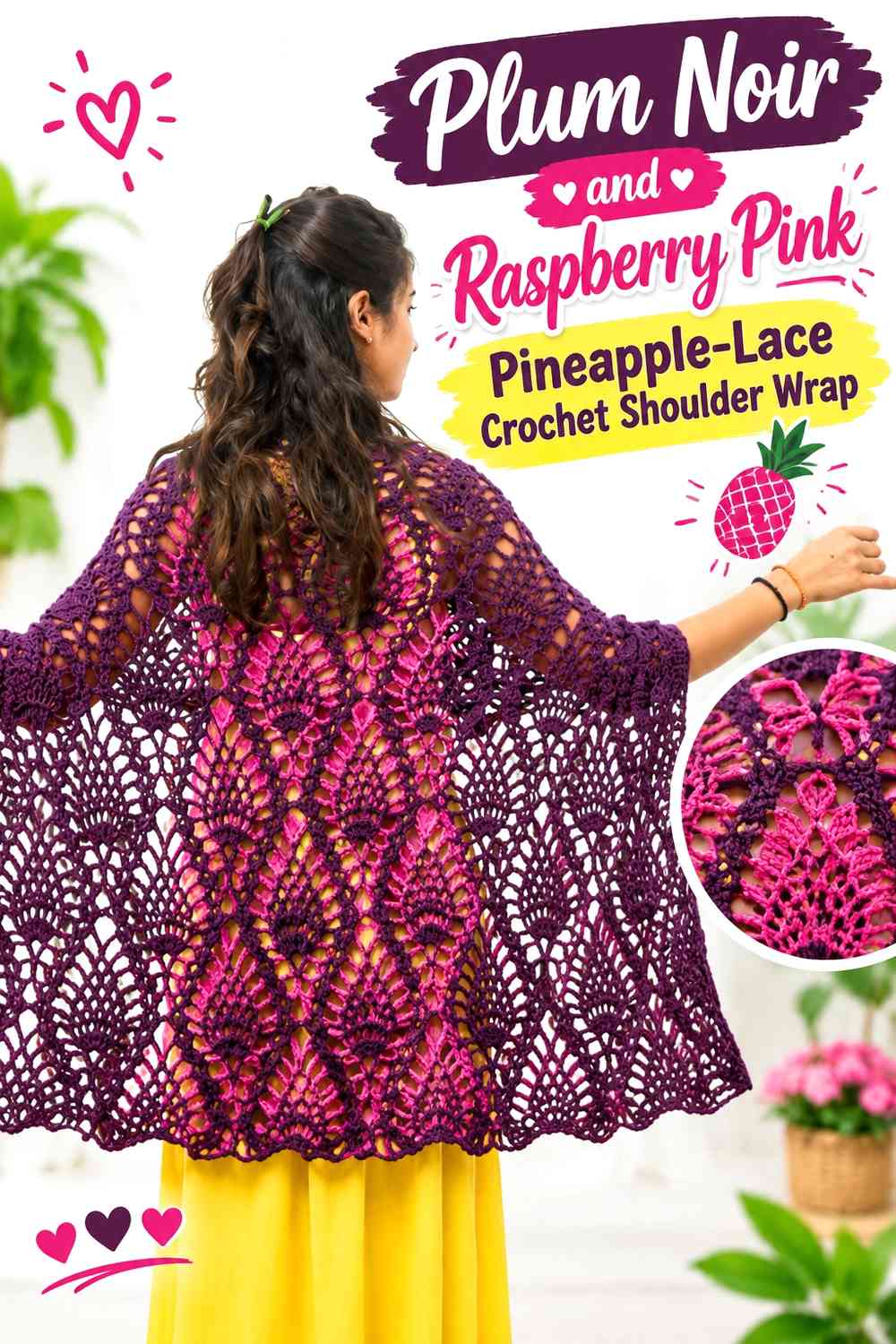
Pineapple-style lace provides larger decorative shapes, so color can emphasize entire motifs rather than individual small stitches. Use Plum Noir as the background and let Raspberry Pink appear around selected pineapple sections or the final border.
This produces a stronger vintage-lace direction than an evenly striped two-color wrap.
Raspberry Pink Can Separate Pineapple Lace Inside Plum Noir
Use Raspberry Pink where you want individual pineapple forms to become more obvious—such as a selected outer motif area or decorative lower section.
Avoid changing colors repeatedly inside every small component. Large lace motifs usually need enough uninterrupted color to keep their outlines easy to follow.
Plum Noir Should Anchor the Raspberry Pink Pineapple Border
Keep the upper shoulder area and neckline Plum Noir if the lower motifs contain substantial Raspberry Pink. The dark section balances the brighter lace and keeps the wrap winter-focused.
A Plum Noir finishing line can also visually reconnect a broad Raspberry Pink border to the body.
Creator Credit: Meladora’s Creations for Crochet
3. Raspberry Pink and Plum Noir Möbius Crochet Shoulder Wrap
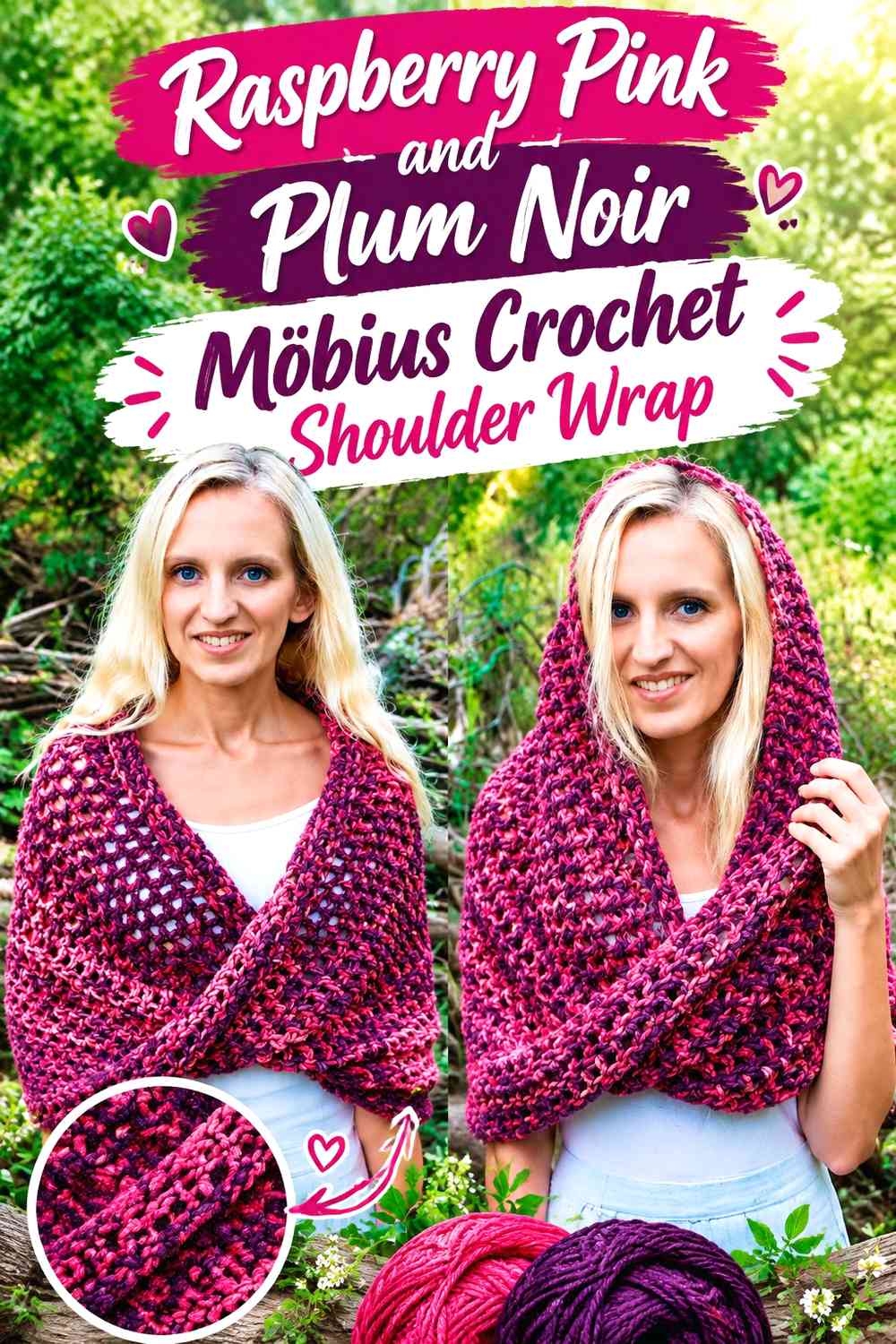
A twisted or continuous wrap benefits from a color plan that remains coherent from multiple viewing angles. Make Raspberry Pink the primary field and place Plum Noir along one defined edging area rather than treating the two colors as alternating stripes.
The dark edge can help reveal the continuous shape while Raspberry Pink remains the more visible color around the shoulders.
Raspberry Pink Should Remain Consistent Around the Crochet Wrap
Use Raspberry Pink over most of the continuous body so the twist does not also have to compete with numerous color changes.
The shape already creates visual movement. A stable main color lets that construction remain easier to read.
Plum Noir Can Trace the Raspberry Pink Wrap Edge
Place Plum Noir along a narrow edge where it can follow the wrap’s changing orientation. The deep color creates definition without breaking the Raspberry Pink field into separate blocks.
If both edges are darkened, keep them relatively narrow so Raspberry Pink still remains dominant.
Creator Credit: naztazia
4. Plum Noir and Raspberry Pink Rectangular Crochet Shoulder Wrap
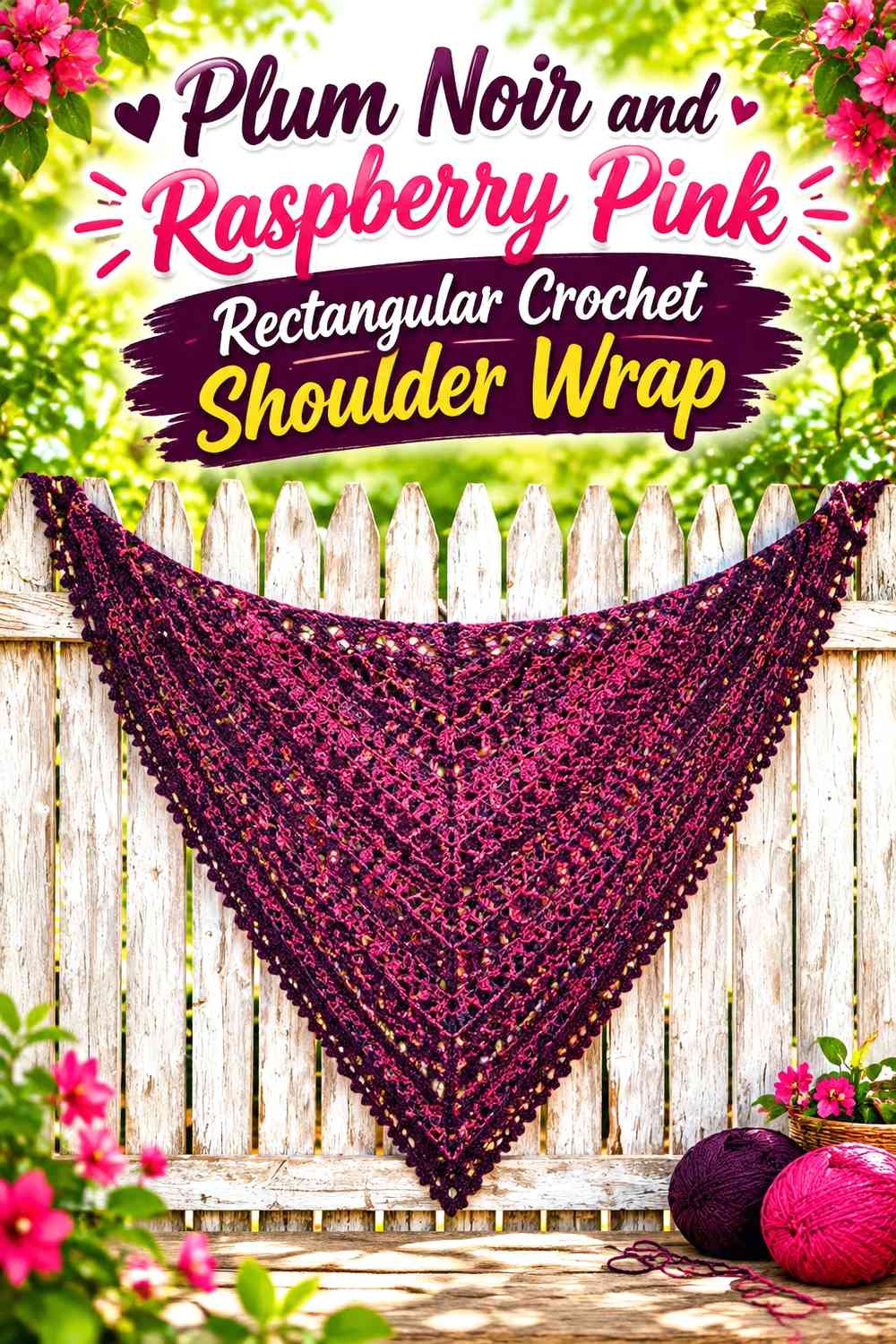
A rectangular shoulder wrap creates a broad canvas for color blocking. Use Plum Noir across the central section and introduce Raspberry Pink toward the ends through lace bands or decorative border sections.
This places the brighter color where the wrap hangs away from the shoulders rather than directly across the neckline.
Plum Noir Can Hold the Center of a Raspberry Pink-Accented Wrap
Keep the area that crosses the back and shoulders mostly Plum Noir. The continuous dark section makes the center feel visually connected even when the two ends contain more Raspberry Pink.
It also prevents the wrap from reading as a sequence of equally weighted color stripes.
Raspberry Pink End Panels Can Lighten a Plum Noir Shoulder Wrap
Bring Raspberry Pink into the final lace sections at each end. Repeating it symmetrically can give the long rectangular shape a deliberate finish.
If the ends already contain strong stitch texture, keep the color transition simple rather than adding several alternating bands.
Creator Credit: Bag-O-Day Crochet
5. Raspberry Pink and Plum Noir Vintage-Lace Crochet Shoulder Wrap
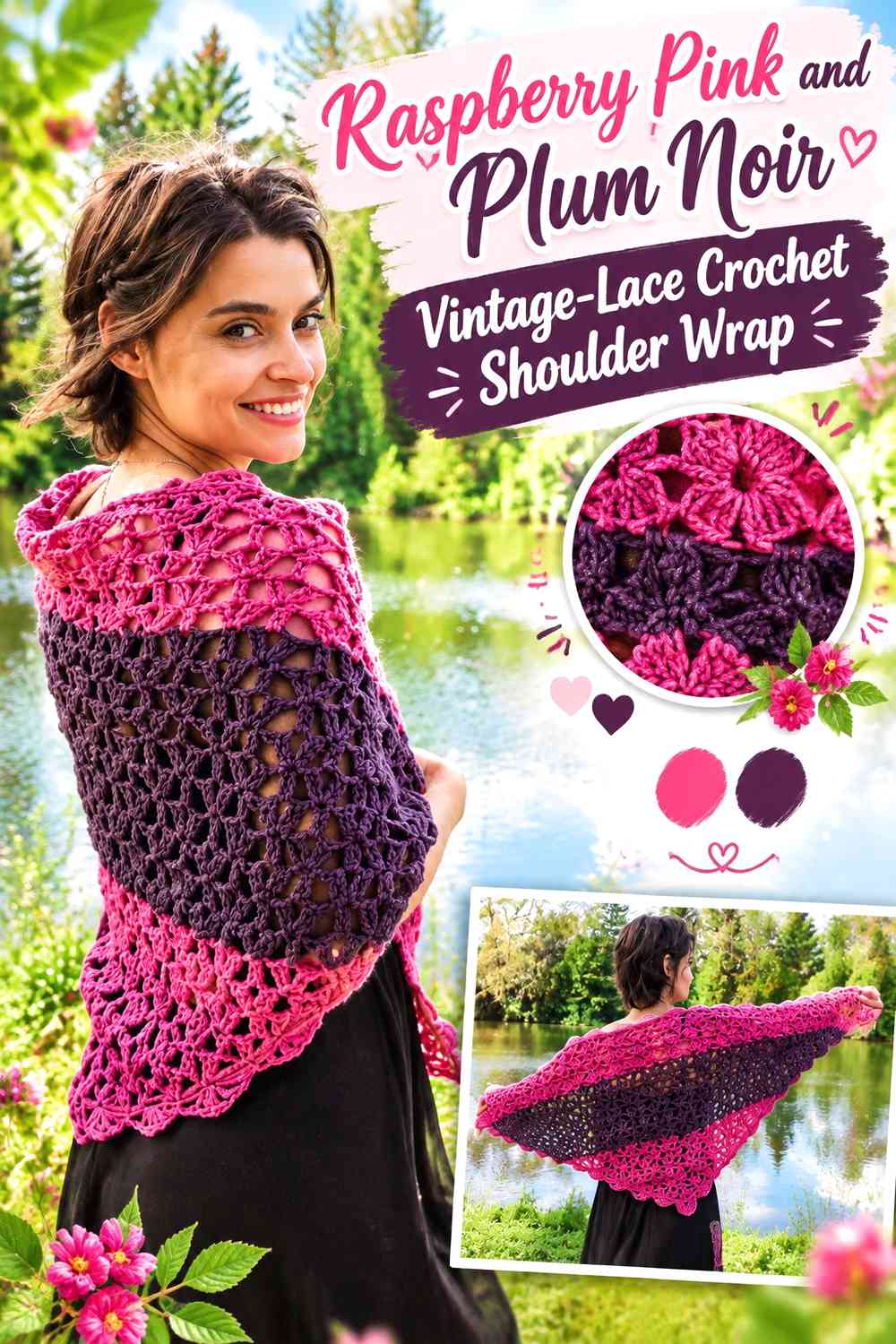
This version makes Raspberry Pink the main vintage-lace color and uses Plum Noir as a dark frame. The lighter berry tone allows the lace field to occupy most of the visual area, while Plum Noir defines the outer silhouette.
The contrast is especially useful around a long decorative edge where openwork might otherwise blend into the layer underneath.
Raspberry Pink Can Carry the Main Vintage Crochet Lace
Use Raspberry Pink consistently through the principal lace field instead of changing color within every repeat. A broad berry-colored area gives the stitch pattern visual continuity.
Reserve Plum Noir for features that genuinely need stronger definition.
Plum Noir Can Frame Raspberry Pink Along the Shoulder-Wrap Edge
A narrow Plum Noir outer border creates a darker stopping point around Raspberry Pink lace. This can be particularly effective at the neckline and lower edge.
Avoid making the Plum Noir border so broad that it becomes a second main field unless you specifically want a near-equal palette.
Creator Credit: Jayda InStitches
6. Plum Noir and Raspberry Pink Triangle-Lace Crochet Shoulder Wrap
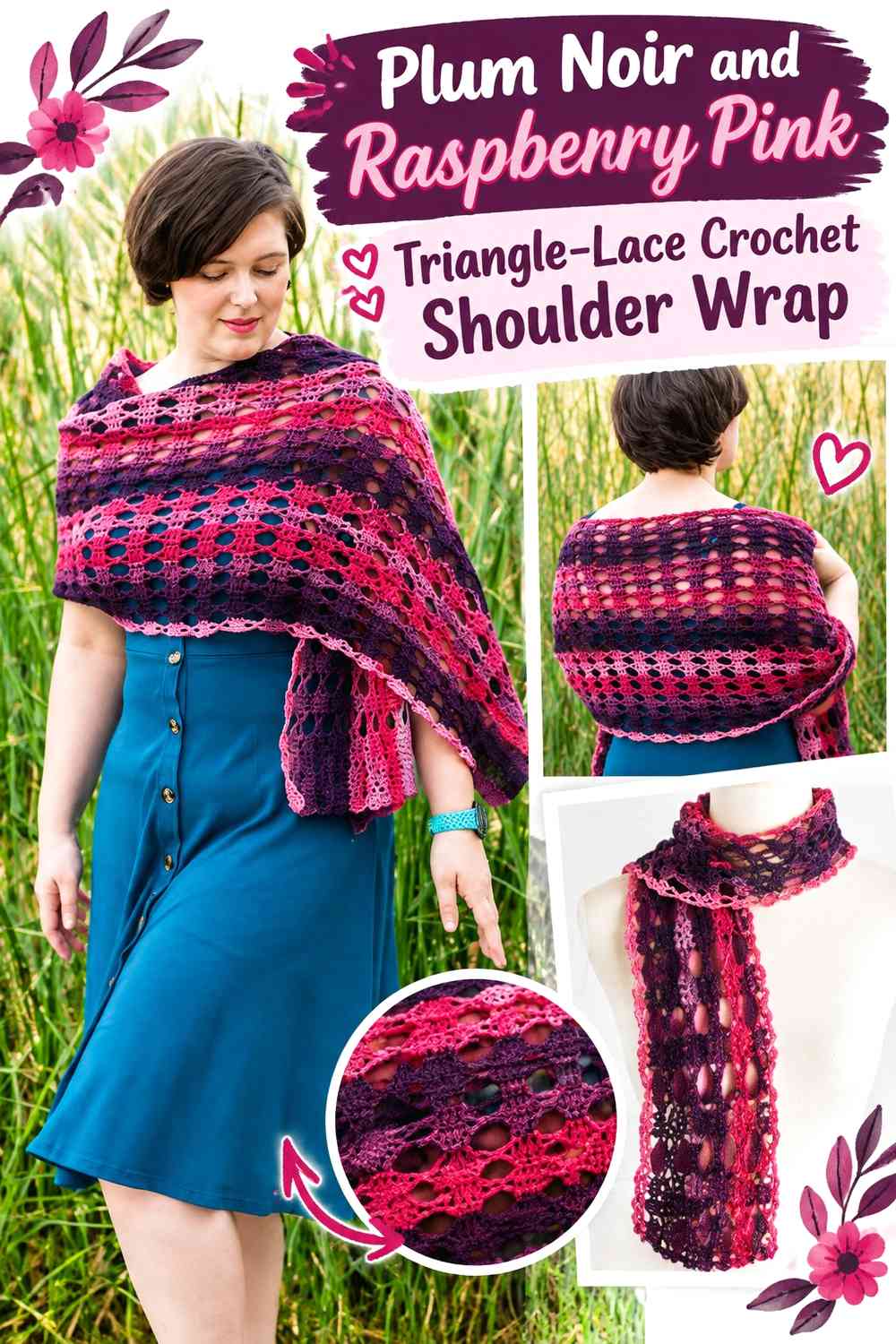
A triangular wrap naturally directs attention toward its lower point. Use Plum Noir across the upper and central sections, then introduce Raspberry Pink closer to the point or decorative lower border.
This lets color reinforce the shape without creating horizontal interruption across the shoulders.
Plum Noir Should Stay Strong Across the Crochet Shoulder Line
Keep the widest upper section Plum Noir so the wrap has a stable dark band across the shoulders.
If Raspberry Pink begins too high, repeated color changes can visually divide the widest part of the triangle into several competing zones.
Raspberry Pink Can Emphasize the Plum Noir Triangle Point
Bring Raspberry Pink into the lower point, picot-like details, or final lace rows. Concentrating the brighter color there gives the triangle a clear visual destination.
Repeat a small amount of Raspberry Pink elsewhere only if the point seems disconnected from the rest of the wrap.
Creator Credit: Winding Road Crochet
7. Plum Noir and Raspberry Pink Cottage Crochet Shoulder Wrap
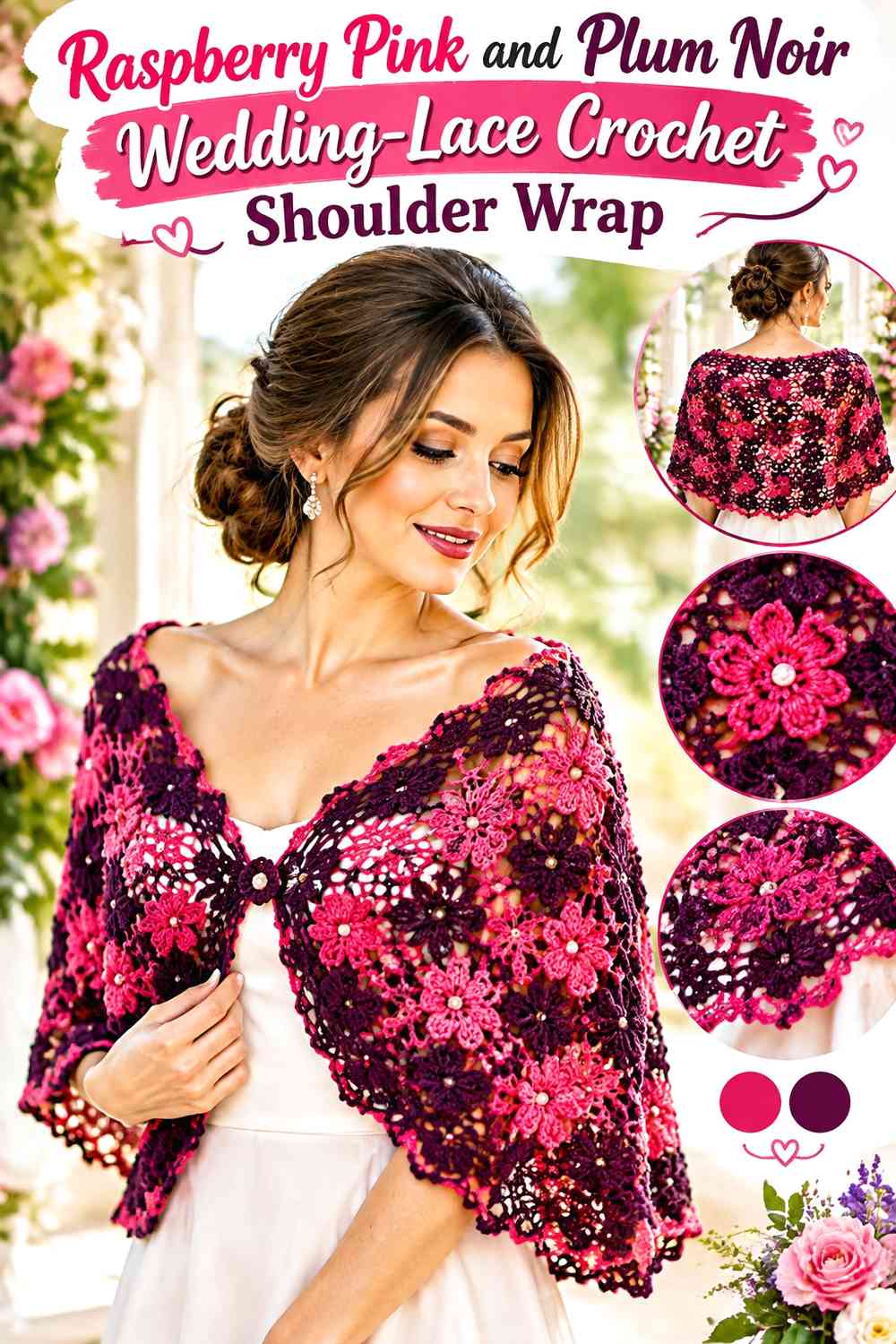
A longer rectangular or pocket-shawl-inspired construction can become a shoulder wrap by keeping the central Plum Noir area dominant and using Raspberry Pink on the decorative end sections.
This is a less delicate vintage interpretation than pineapple or fine lace, so color placement can provide more of the old-fashioned decorative character.
Plum Noir Can Ground a Raspberry Pink Cottage-Style Wrap
Use Plum Noir over the largest center area to establish a substantial winter base. That makes Raspberry Pink accents at the ends feel decorative rather than overwhelmingly bright.
If the construction includes extra end details, keep their main color consistent with the surrounding section.
Raspberry Pink Can Decorate Plum Noir Wrap Ends
Use Raspberry Pink in lace edging, end panels, or fringe-like finishing details if appropriate to the adapted wrap. The color repetition on both sides creates visual balance.
Keep the upper shoulder portion relatively free of additional Raspberry Pink bands if you want the dark central field to remain the strongest feature.
Creator Credit: Creative Grandma
8. Raspberry Pink and Plum Noir Spider-Lace Crochet Shoulder Wrap
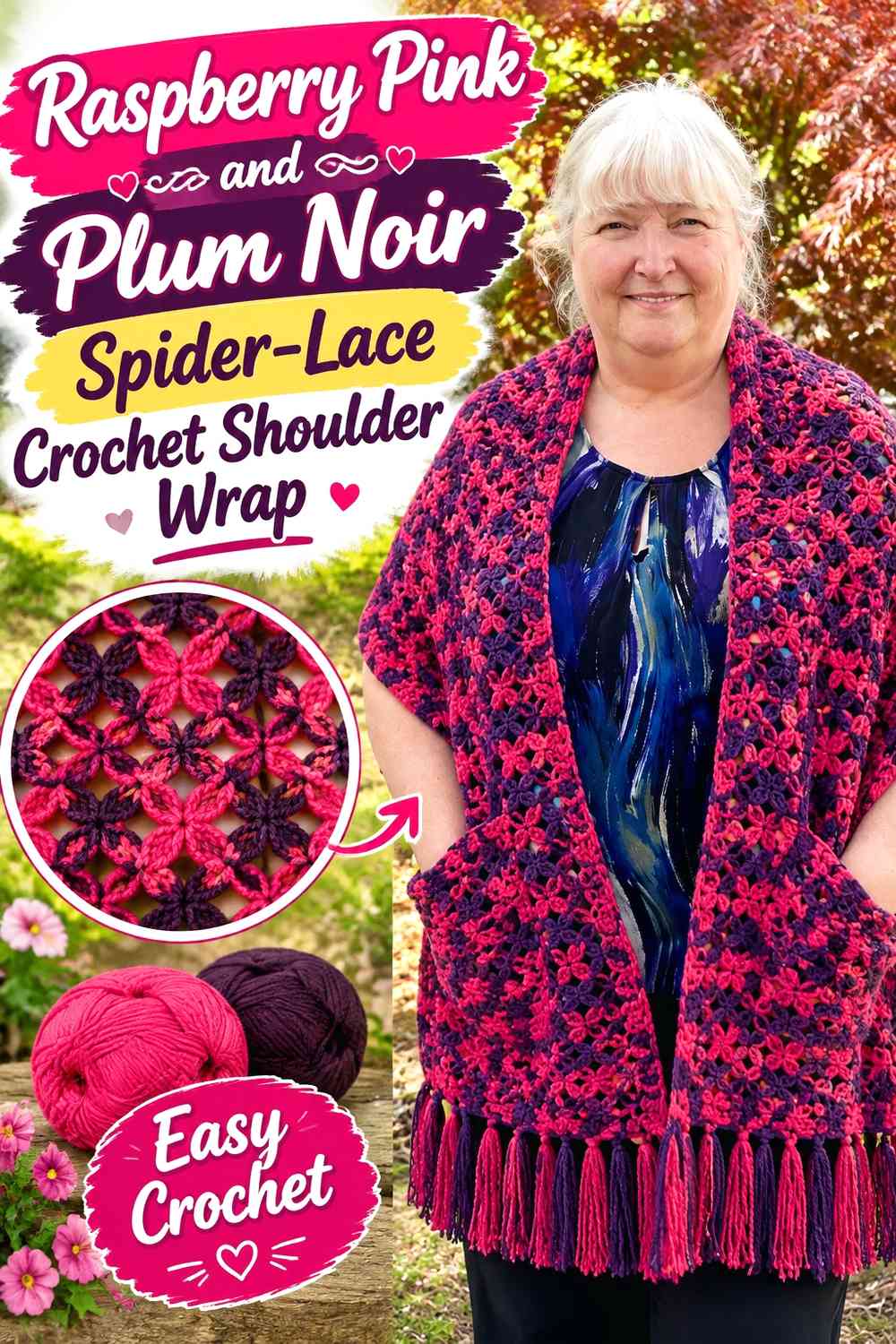
Spider-style openwork gives the final idea a more intricate lace direction. Make Raspberry Pink the principal lace color and introduce Plum Noir at the scalloped or pointed lower edge.
The dark trim creates a clear boundary around open Raspberry Pink sections, which can otherwise change appearance substantially depending on the clothing underneath.
Raspberry Pink Should Fill Most of the Spider-Lace Crochet Field
Allow Raspberry Pink to continue through the repeated open sections so the lace pattern remains visually connected.
Avoid inserting Plum Noir into every small opening; that can make the motif structure look busier than necessary.
Plum Noir Can Sharpen the Raspberry Pink Lace Border
Use Plum Noir around the last decorative section or outer points. The deeper shade provides a strong edge against Raspberry Pink without reducing the amount of openwork.
If you want a darker finished piece, add a narrow Plum Noir neckline rather than filling the entire Raspberry Pink center.
Creator Credit: Fiber Spider
Which Raspberry Pink and Plum Noir Shoulder Wrap Direction Fits Your Look?
For the darkest winter result, the Plum Noir shell, pineapple, triangular, banded, and cottage-wrap ideas keep the deep shade across most of the shoulders. Raspberry Pink is then reserved for borders, motifs, points, or repeated lace sections.
For a lighter vintage-lace direction, the Raspberry Pink vintage, C2C, wedding-style, and spider-lace wraps give the berry shade more surface area and use Plum Noir primarily to frame the garment.
If the lace pattern itself is highly detailed, use fewer color changes. If the construction is comparatively simple, a Raspberry Pink border, Plum Noir frame, or repeated end panel can provide more of the decorative character.
Conclusion
Raspberry Pink and Plum Noir can shift a crochet shoulder wrap from dark winter lace to romantic vintage color depending on which shade receives the larger visual role.
Choose Plum Noir across the shoulders when you want a deeper foundation with brighter Raspberry Pink detail. Reverse the balance when you want open lace to remain lighter and let Plum Noir sharpen the neckline or border. Pineapple and spider lace benefit from clear motif areas, while rectangular and simpler wraps can handle broader blocks of color.
Use the credited tutorials for their original construction details, then adapt the Raspberry Pink and Plum Noir hierarchy to the particular neckline, lace field, edge, and shoulder coverage you want.
Frequently Asked Questions
Should Raspberry Pink or Plum Noir Dominate a Vintage Crochet Shoulder Wrap?
Use Plum Noir as the dominant shade for a darker winter result, with Raspberry Pink highlighting lace borders or motifs. Use Raspberry Pink as the main field when you want a lighter berry-colored wrap framed by dark vintage-style edging.
Where Should Raspberry Pink Go on a Plum Noir Crochet Lace Wrap?
Raspberry Pink works well on scallops, pineapple motifs, pointed lower edges, lace bands, or decorative end panels. Choose a few deliberate locations instead of inserting Raspberry Pink into every Plum Noir lace repeat.
Can Plum Noir Be Used Only on the Border of a Raspberry Pink Shoulder Wrap?
Yes. A Plum Noir border can define the outer silhouette while leaving the main Raspberry Pink lace uninterrupted. This is especially useful when the center already contains detailed openwork.
How Can I Check Whether Raspberry Pink and Plum Noir Have Enough Contrast?
Place the yarns side by side and view them from several feet away. A grayscale photo can also show whether the two shades remain separated by lightness. If they merge, keep the lighter shade around the smallest lace details.
What Color Should I Wear Under a Raspberry Pink and Plum Noir Lace Wrap?
Treat the garment underneath as part of the visible color plan because open crochet will reveal it. A dark neutral can blend more strongly with Plum Noir openings, while a pale neutral creates clearer contrast behind both shades.
Should Raspberry Pink and Plum Noir Be Alternated in Every Lace Row?
Not necessarily. Frequent alternating can make an intricate lace pattern look busier. Larger uninterrupted areas usually make it easier to see both the stitch pattern and the dominant-supporting color relationship.
Can I Substitute Another Pink for Raspberry Pink Without Changing the Whole Wrap?
Yes. Preserve the role rather than matching a commercial shade name. Choose a pink that remains sufficiently distinct from Plum Noir in lightness and saturation, especially if it will be used on narrow lace edging or small motifs.