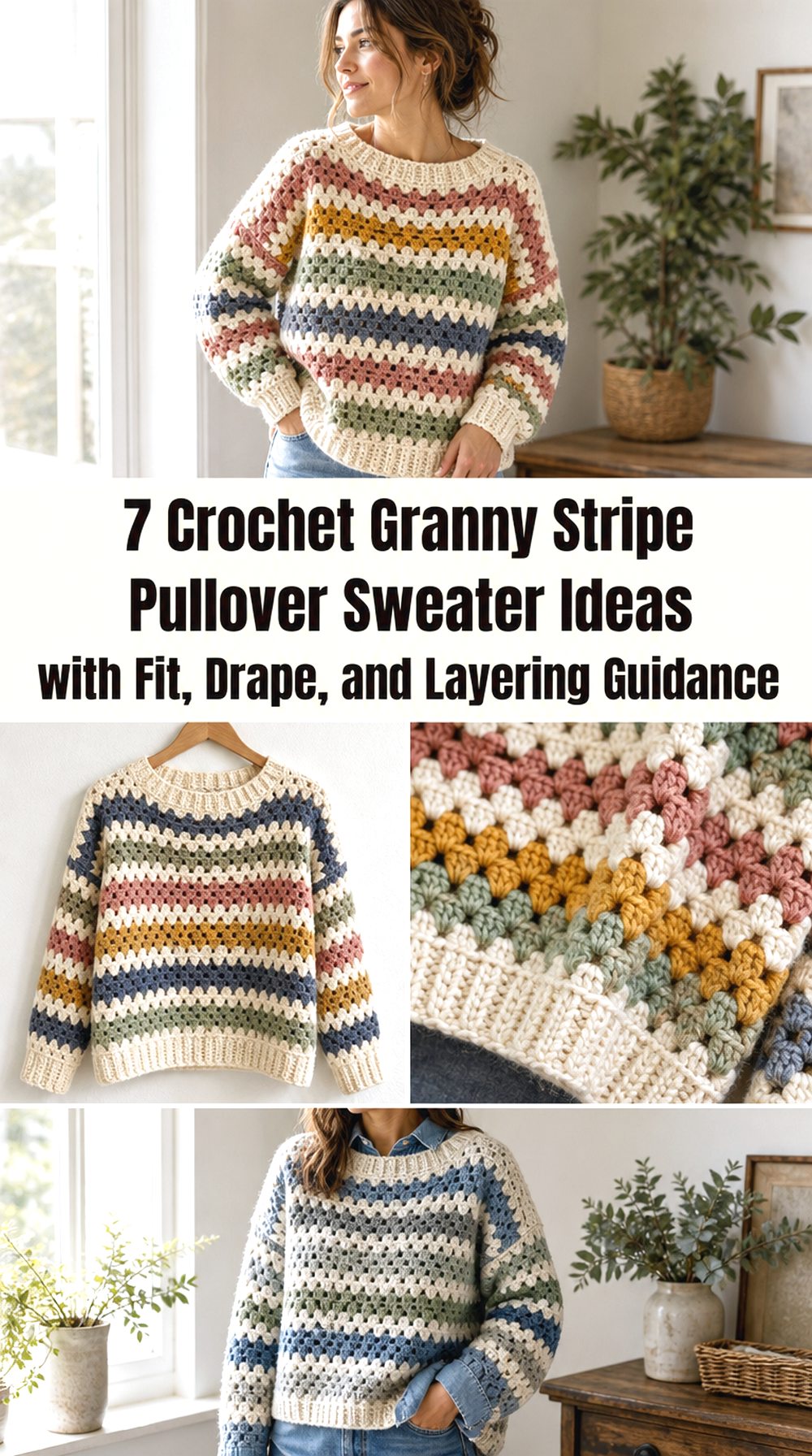

Granny stripes bring a familiar rhythm to pullovers, but the finished result can range from airy and boxy to softly fitted and winter-ready. These seven Crochet granny stripe pullover sweater ideas compare top-down, raglan, paneled, made-to-measure, and lacy constructions so readers can see where the real differences lie. Alongside each free source, the notes focus on neckline shape, sleeve structure, positive ease, yarn weight, colour placement, and layering potential. Because Crochet cluster fabric can change noticeably with fibre, hook size, and washing, the article also highlights swatching, finishing, and care decisions. Use the comparisons to choose a sweater that suits your preferred amount of shaping, sewing, warmth, and customisation.
Quick List
- Brushed Top-Down Crochet Granny Stripe Pullover Sweater
- Cropped Seamed Crochet Granny Stripe Pullover Sweater
- Gradient Raglan Crochet Granny Stripe Pullover Sweater
- Pointed-Yoke Crochet Granny Stripe Pullover Sweater
- Lacy Rectangle Crochet Granny Stripe Pullover Sweater
- Boat-Neck Crochet Granny Stripe Pullover Sweater
- Made-to-Measure Classic Crochet Granny Stripe Pullover Sweater
How to Choose a Crochet Granny Stripe Pullover Sweater for Fit and Drape
Start with the finished garment measurement, not only the body-size label. A granny stripe pullover often looks most balanced with some positive ease, but extra width also lowers the shoulder line and increases sleeve bulk. Next, swatch in the exact yarn and stripe sequence you plan to use. Brushed fibres soften the clusters, cotton blends may hang more heavily, and firm worsted yarn can create a boxier outline. Construction matters too: top-down sweaters are easier to try on and lengthen, while separate panels make shoulder and neckline placement more visible before seaming. Check whether the neckline suits your intended layers; a wide boat neck may need a camisole, whereas a crew or ribbed neck offers more coverage. Finally, plan colour changes before starting. Narrow stripes create frequent ends unless the yarn carries or changes colour automatically, while broader bands make sleeve and body alignment easier.
Brushed Top Down Crochet Granny Stripe Pullover Sweater
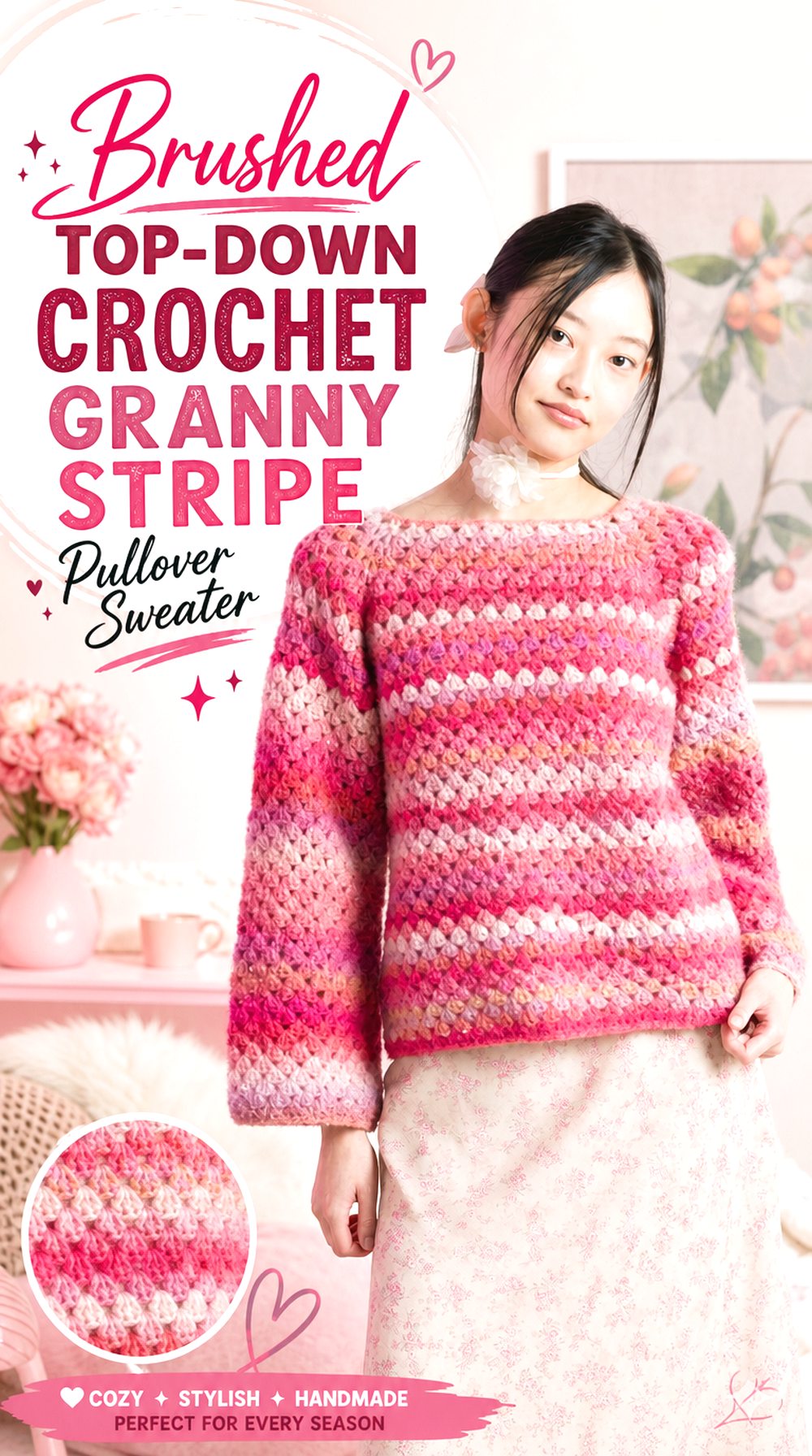
Design Details: This Crochet granny stripe pullover is worked seamlessly from the neck down, so the colour transitions travel continuously through the body and sleeves. The brushed self-striping yarn softens the cluster outlines and gives the surface a hazier appearance than a crisp cotton or smooth wool.
Fit and Layering: The listed finished chest measurements provide noticeable ease in several sizes. Compare those figures with a favourite sweater rather than choosing by body measurement alone, especially when planning to wear it over a shirt.
Good to Know: A fuzzy yarn may be slower to unravel and can hide small stitch inconsistencies. Swatch first, check the care directions for any substitute yarn, and photograph the colour sequence before starting the sleeves.
Cropped Seamed Crochet Granny Stripe Pullover Sweater
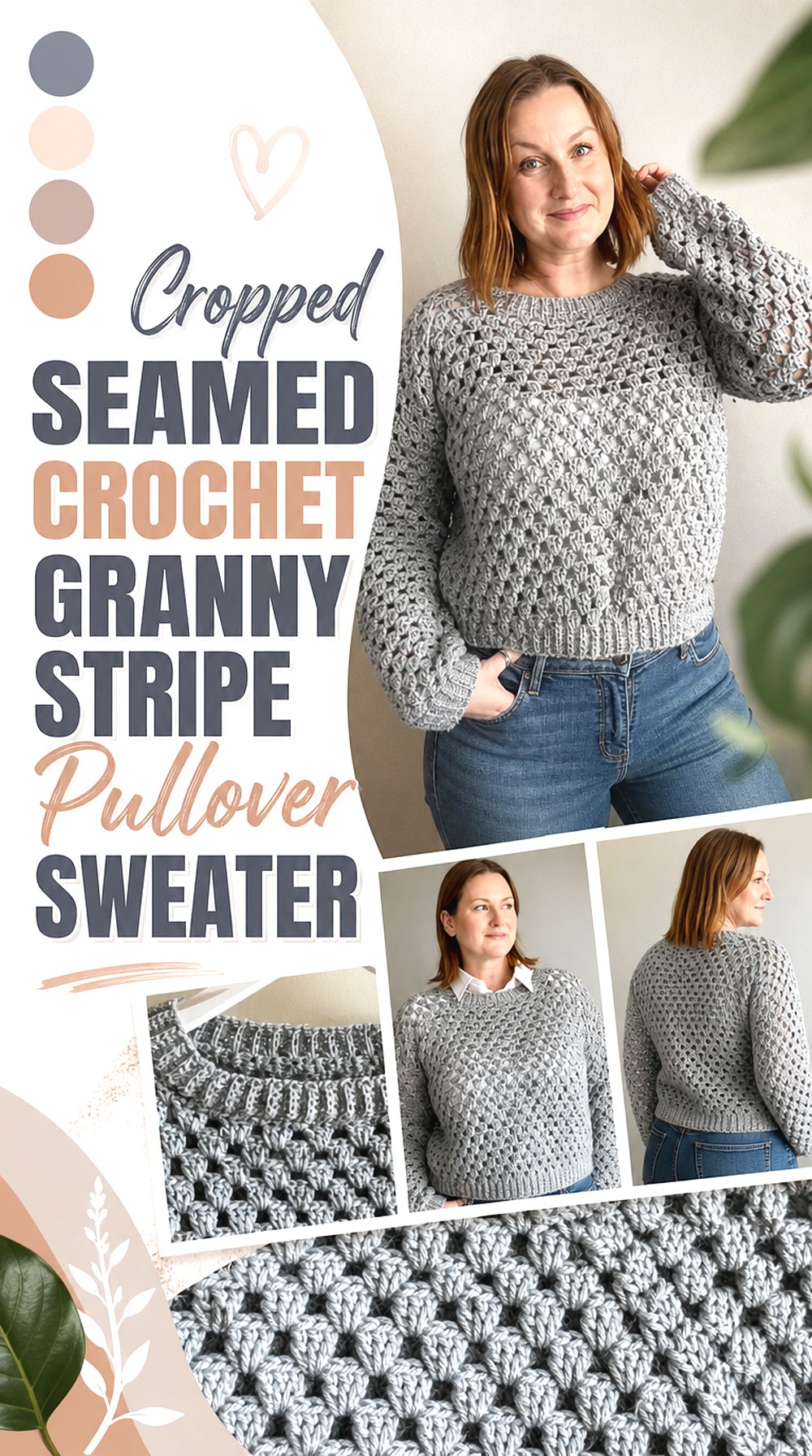
Construction Focus: Worked as four separate pieces, this Crochet granny stripe pullover combines front and back panels with two sleeves. Ribbed hems and cuffs create firmer boundaries around the open cluster fabric, while the crew neckline adds a more covered finish.
Why It Works: The panel approach suits readers who like checking width and length on a flat surface. Nine adult sizes and guidance on positive ease make it easier to compare the intended circumference with an existing pullover.
Before You Choose: Seams add structure but also require careful alignment. Match stripe rows at the shoulders and sides before sewing, and avoid pulling the mattress stitch too tightly. The cropped proportion may suit high-rise bottoms; adding length will increase yarn use and garment weight.
Gradient Raglan Crochet Granny Stripe Pullover Sweater
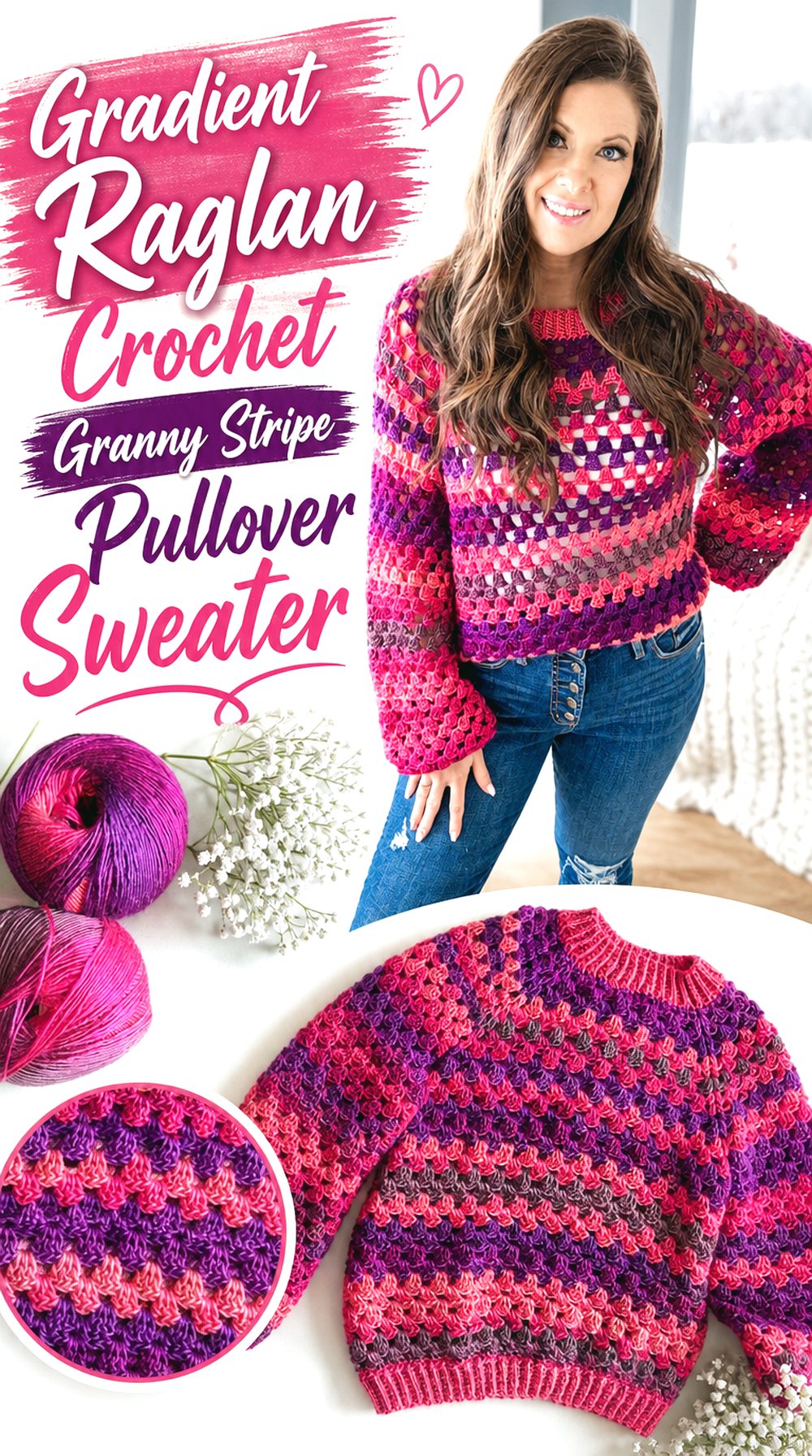
What Stands Out: This Crochet granny stripe pullover uses a seamless top-down raglan, with the body and sleeves completed in the round. A gradient yarn creates changing bands without repeated manual colour joins, and join-as-you-go cuffs give the sleeve ends a defined finish.
Customisation Idea: The tutorial shows cropped, hip, and tunic-length directions, so length can be assessed while the sweater is still on the hook. Try it on over the layer you expect to wear underneath and check both underarm depth and sleeve mobility before continuing.
Practical Point: Automatic colour changes will not necessarily match across both sleeves. Readers who want symmetry may need to rewind or separate yarn sections; those who prefer an organic gradient can let each sleeve develop independently.
Pointed Yoke Crochet Granny Stripe Pullover Sweater
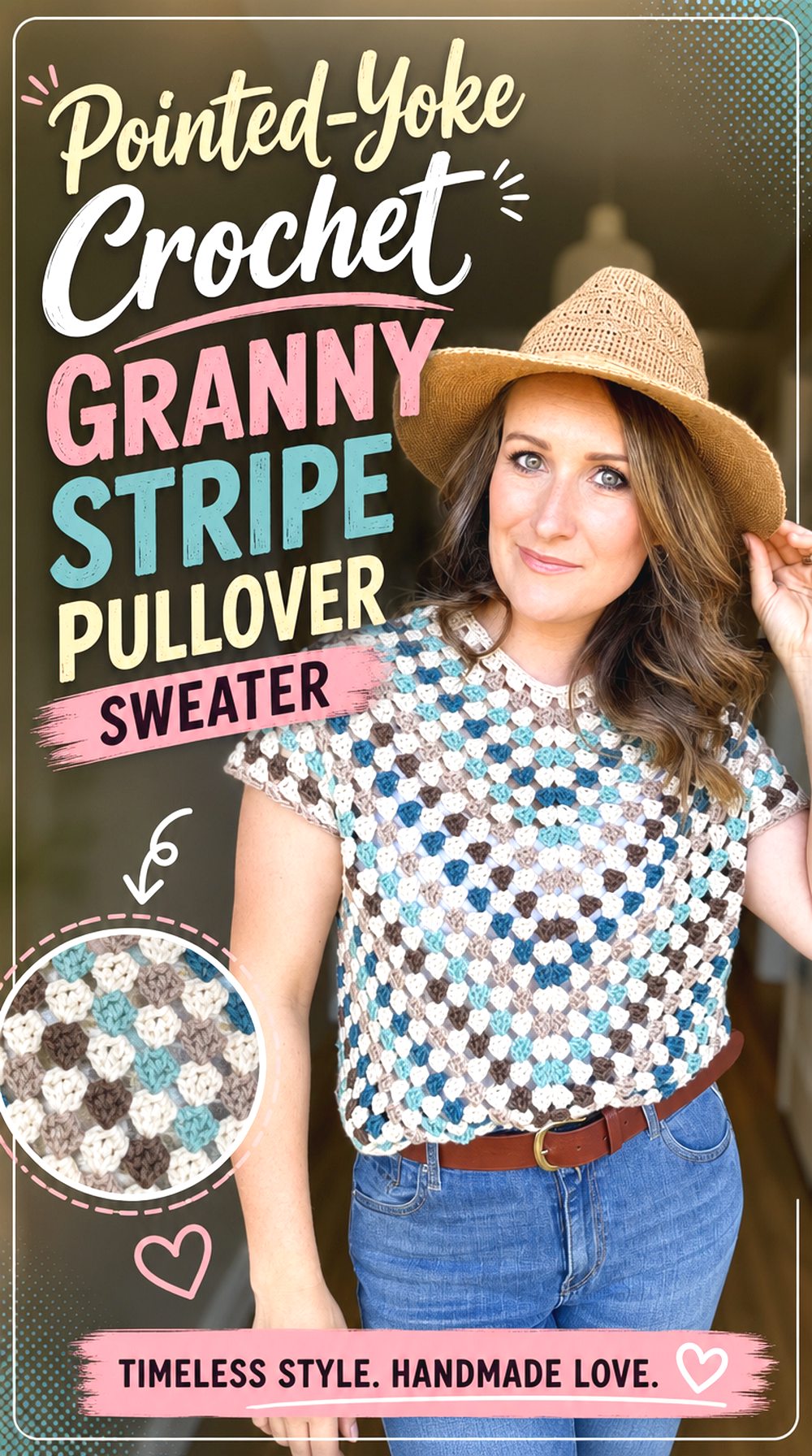
Design Details: The top-down yoke on this Crochet granny stripe pullover forms points at the front and back before the body is levelled near the hem. Sleeves are added around the armholes, with options for full length, shorter versions, or a sleeveless finish.
Fit and Finish: The design is intended with slight ease and gently tapered sleeves. Because the length is added after the armhole split, readers can adjust the body and sleeve proportions without rebuilding the neckline.
Who It Suits: This is useful for crocheters who want more customisation than a fixed rectangle sweater. The pointed yoke makes the stripe direction visually distinctive, but turned rounds and colour placement need attention. Decide on ribbed or lighter edging before buying yarn, since deeper bands add length and visual weight.
Lacy Rectangle Crochet Granny Stripe Pullover Sweater
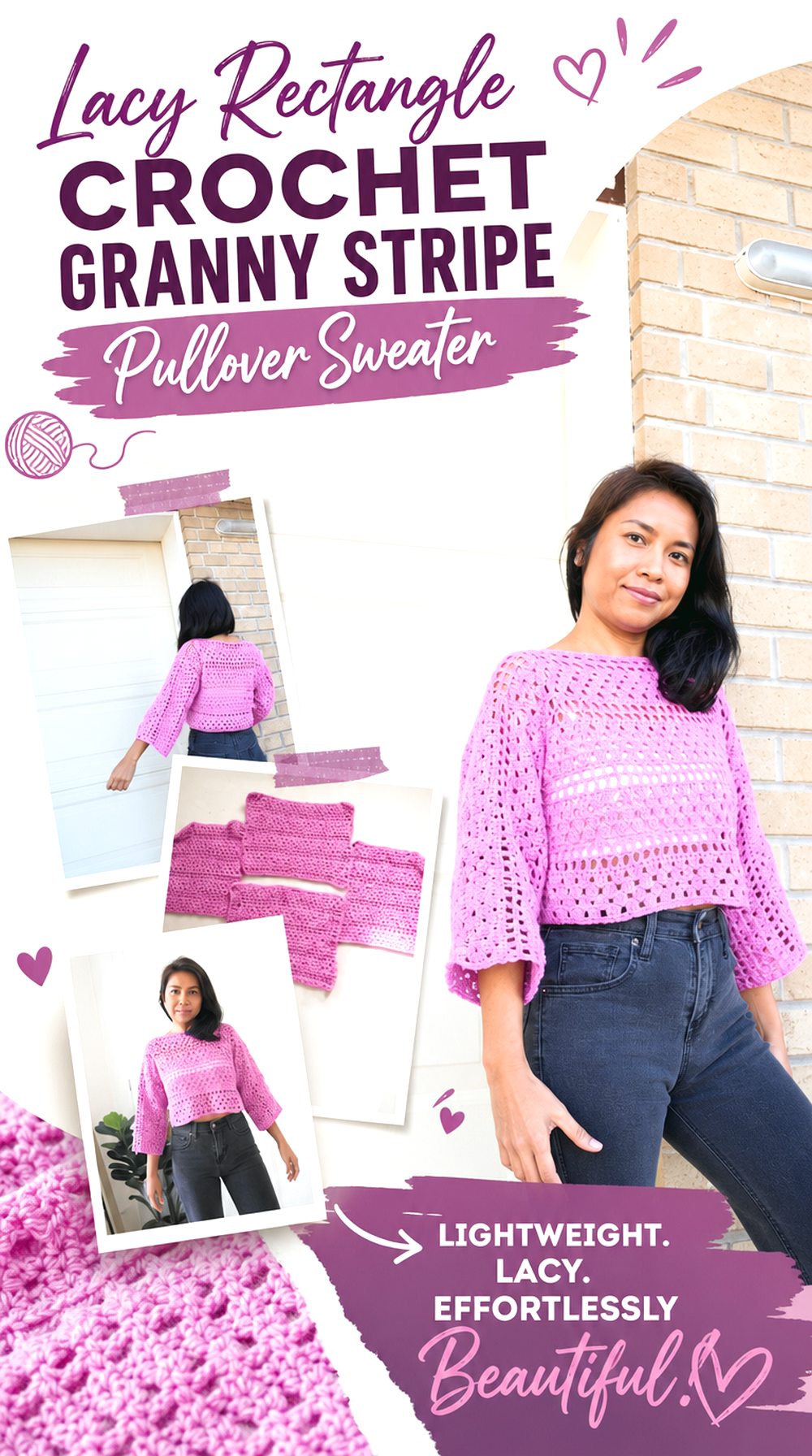
What Stands Out: Alternating granny sections with simpler lace rows gives this Crochet granny stripe pullover a lighter, more open surface. The body and sleeves are built from four rectangles, creating a relaxed shape without fitted waist or sleeve-cap shaping.
Best Use: The cropped sample works as a warm-weather layer over a camisole, dress, or swimsuit cover-up. The made-to-measure approach begins with shoulder width, and extra rows can extend the body or sleeves.
Before You Choose: Rectangle construction is approachable, but the fit is intentionally boxy. Check armhole depth before joining the sleeve tubes, and remember that a heavier fibre may pull the open fabric downward. Blocking can neaten the lace, although the chosen fibre’s care label should guide the method.
Boat Neck Crochet Granny Stripe Pullover Sweater
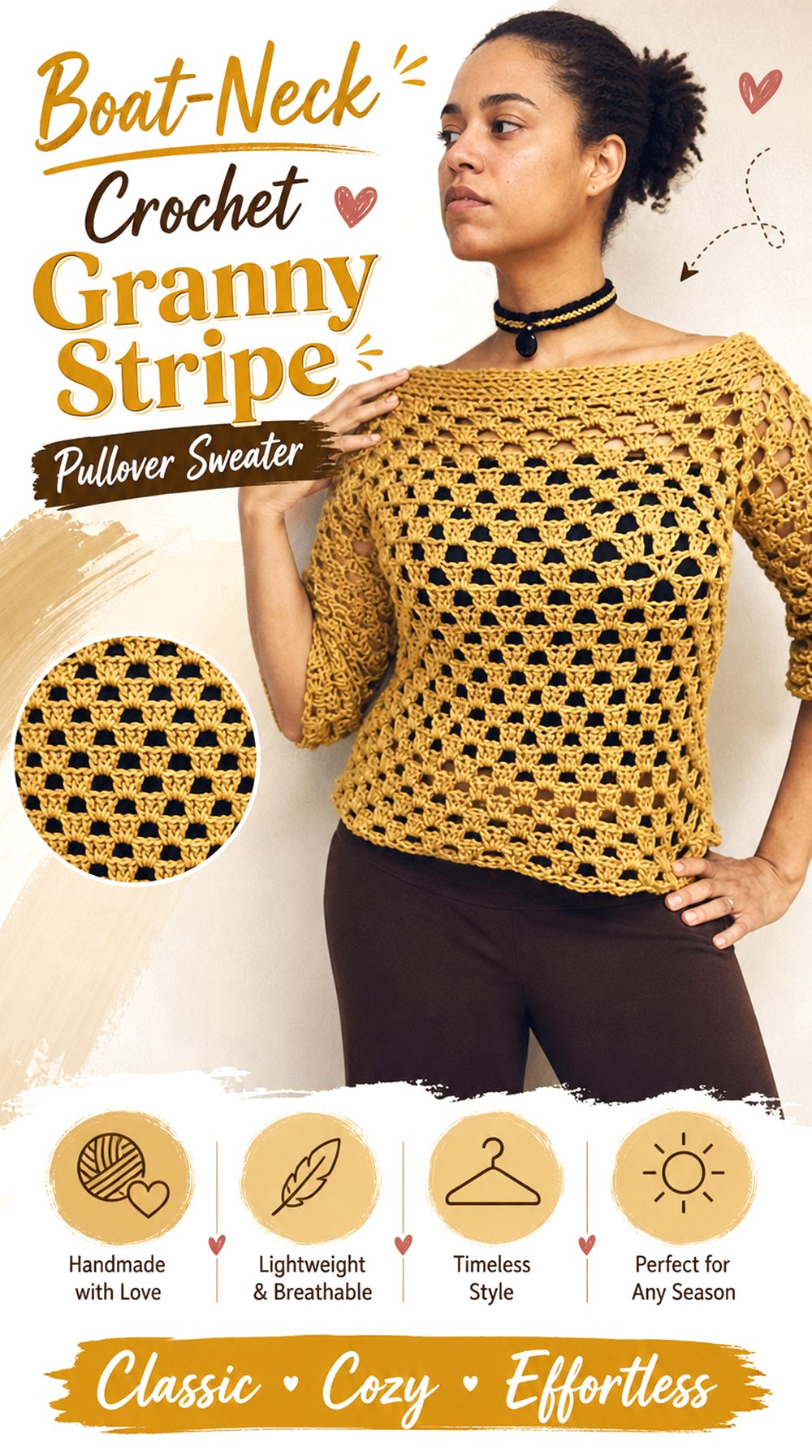
Design Details: A wide boat neckline gives this Crochet granny stripe pullover a strong horizontal line across the shoulders. The front, back, and sleeves are worked flat, then assembled into a simple T-shaped garment, with a separate neckline finish worked in continuous rounds.
Styling Direction: The open clusters and broad neck suit layered outfits, especially over a fitted tank or long-sleeve top. A solid colour keeps the silhouette graphic, while two or three controlled stripe colours can emphasise the panel shape.
Practical Point: Shoulder-seam width determines how open the neckline feels, so pin or clip the panels before sewing permanently. A large hook creates an airy fabric, but loose stitches may snag more easily and can expose more of the layer underneath.
Made to Measure Classic Crochet Granny Stripe Pullover Sweater
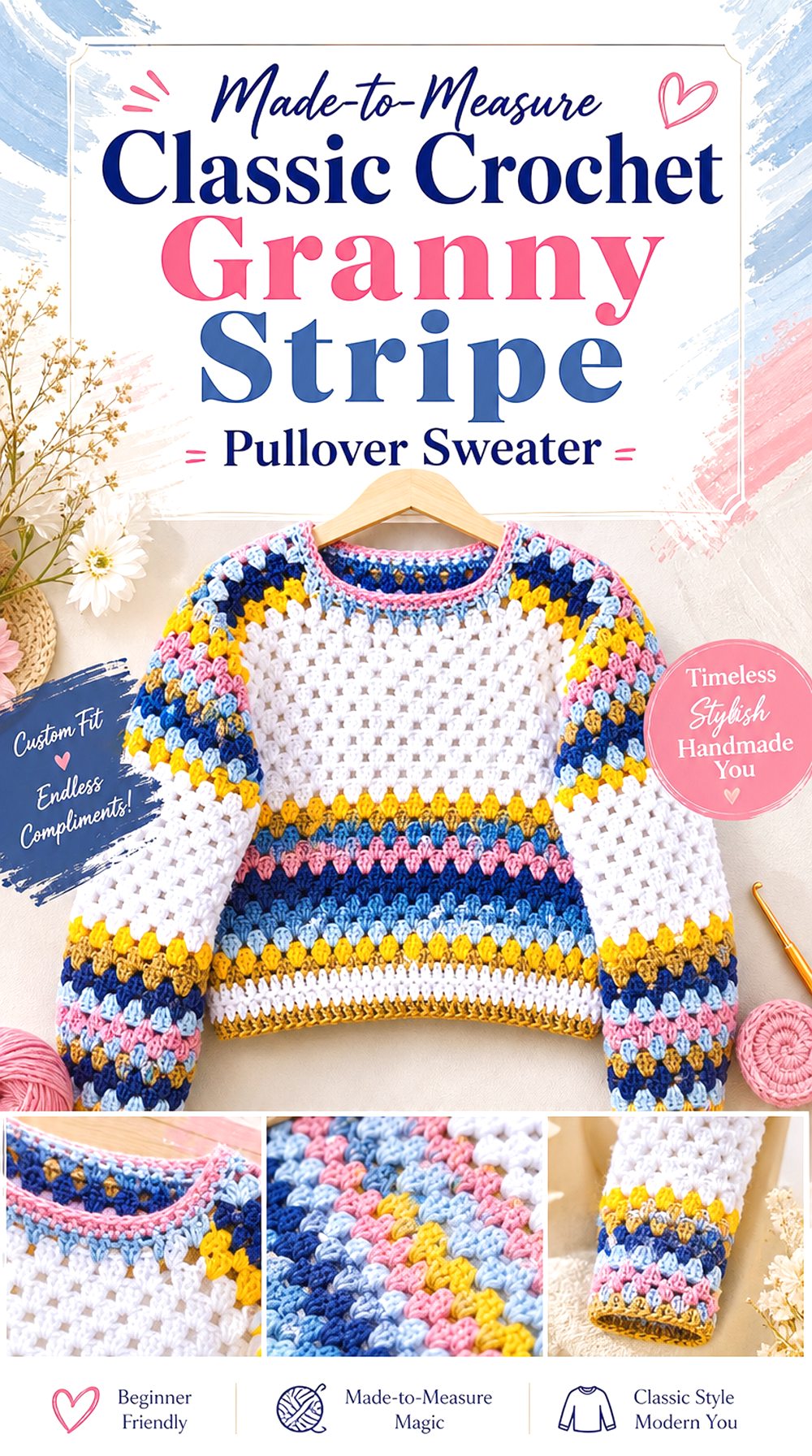
Construction Focus: This Crochet granny stripe pullover follows a made-to-measure approach rather than relying only on fixed garment dimensions. The tutorial works with modest positive ease and adds the sleeves directly to the garment, reducing separate sleeve assembly.
Why It Works: Measuring against the intended wearer allows the body length, sleeve length, and overall roominess to be adjusted together. It can suit readers who prefer a classic straight granny stripe surface without decorative motifs or complicated shaping.
Good to Know: Made-to-measure does not remove the need for a swatch. Record the cluster width, check the neckline opening before progressing too far, and repeat body measurements over the clothes intended for layering. Video-led instructions also require careful note-taking if you prefer a written checklist beside your work.
Useful Crochet Notes
Swatch After Washing: Make a generous granny stripe swatch, record its measurements, and clean it according to the yarn label. Recheck the width, row height, openness, and softness before calculating the sweater size. A small change across one cluster can become significant across the full chest.
Plan Ease Before Length: Settle the chest circumference and underarm depth before adding extra body length. A pullover that is both oversized and long may feel heavier than expected, particularly in fibres that relax after washing. Compare measurements with a garment made from similarly draping fabric.
Stabilise Seams and Edges: Match stripe rows before joining paneled sweaters, keep seams flexible, and avoid stretching the neckline while adding ribbing or edging. Lay the pieces flat between sewing stages so the shoulder width and sleeve placement can be checked from both sides.
Conclusion
Choose a top-down Crochet pullover when frequent try-ons and easy length changes matter most. Select a paneled version when visible seam placement and straightforward flat pieces feel more manageable. For warm-weather layering, favour lighter yarn and open lace sections; for a fuller winter layer, compare ease and fibre carefully. The strongest choice is the construction you can fit confidently and finish neatly.
FAQs
How much positive ease should a Crochet granny stripe pullover have?
Positive ease is the difference between body circumference and finished sweater circumference. For granny stripe fabric, a little extra room may improve layering, but too much can lower the armholes and widen the sleeves. Compare the pattern’s finished measurements with a pullover you already like.
Which yarn creates the clearest granny stripe texture?
Use the yarn weight and gauge specified by the source as a starting point, then judge fibre behaviour. Smooth yarn shows clusters clearly, brushed yarn softens them, and cotton-rich yarn may create more downward drape. Always wash and dry the swatch as the yarn label directs.
Is top-down or paneled construction better for fit?
Top-down construction is helpful because the body and sleeves can often be tried on during progress. Paneled construction makes width and length easy to inspect while flat, but it adds seaming. The better choice depends on whether you prefer repeated fitting or controlled assembly.
How can I manage the ends from narrow colour stripes?
Secure every colour change and weave ends through several nearby stitches without tightening the fabric. Where possible, carry yarn only when the source allows it and the carried strand will remain hidden. Frequent narrow stripes may create more finishing work than broader bands or self-striping yarn.
How should a Crochet granny stripe sweater be stored?
Lay the sweater flat, support the sleeves, and avoid narrow hangers that may distort the shoulders. Cleaning should follow the yarn label and any source-specific care notes. Reshape the neckline, cuffs, and hem while damp, then allow the garment to dry in its intended proportions.