A falling leaf motif brings natural movement to a pullover, while bell sleeves add volume that can shift the same garment from everyday layering to a stronger statement piece. These Crochet falling leaf bell sleeve pullover ideas compare textured fronts, open lace, cropped shapes, oversized bodies, three-quarter flares, and heavier cold-weather versions. You will also find practical guidance on ease, sleeve depth, yarn drape, seaming, blocking, and styling, so the finished Crochet garment is easier to wear rather than merely decorative. Some linked designs already include flared sleeves, while one leaf-textured sweater is especially useful as a body-and-motif reference for readers comfortable adapting the cuff. The guide compares visible construction, fit, styling, and trade-offs rather than simply listing links.
Quick List
- Textured Front-Panel Crochet Falling Leaf Bell Sleeve Pullover
- Cropped Lace Crochet Falling Leaf Bell Sleeve Pullover
- Airy Mesh Crochet Falling Leaf Bell Sleeve Pullover
- Mixed-Stitch Crochet Falling Leaf Bell Sleeve Pullover
- Three-Quarter Crochet Falling Leaf Bell Sleeve Pullover
- Crossed-Lace Crochet Falling Leaf Bell Sleeve Pullover
- Lace-Edged Crochet Falling Leaf Bell Sleeve Pullover
- Oversized Crochet Falling Leaf Bell Sleeve Pullover
- Two-Tone Crochet Falling Leaf Bell Sleeve Pullover
- Classic Crop Crochet Falling Leaf Bell Sleeve Pullover
- Minimalist Crochet Falling Leaf Bell Sleeve Pullover
- Relief-Stitch Crochet Falling Leaf Bell Sleeve Pullover
How to Choose a Crochet Falling Leaf Bell Sleeve Pullover for Fit and Drape
Start with body ease. A leaf-textured pullover can look polished with modest positive ease, while an oversized body needs enough shoulder structure to stop the armholes from dropping too low. Next, check where the sleeve begins to widen. A flare starting near the elbow is usually easier to layer under a coat than a sleeve that expands from the upper arm. Cuff depth matters too: dramatic bells show lace well but may brush tabletops, catch on handles, or feel awkward during cooking and desk work.
Yarn choice changes the silhouette. Smooth DK yarn can reveal leaf or lace repeats clearly, while bulky or fuzzy yarn creates a softer outline and more weight at the cuff. Compare blocked gauge before choosing a size because openwork often relaxes after washing. Finally, inspect construction. Panelled pullovers are straightforward to lengthen, but visible seams need even tension. Sleeves worked directly into the armhole reduce attachment seams, though increases must be distributed carefully to keep both bells balanced.
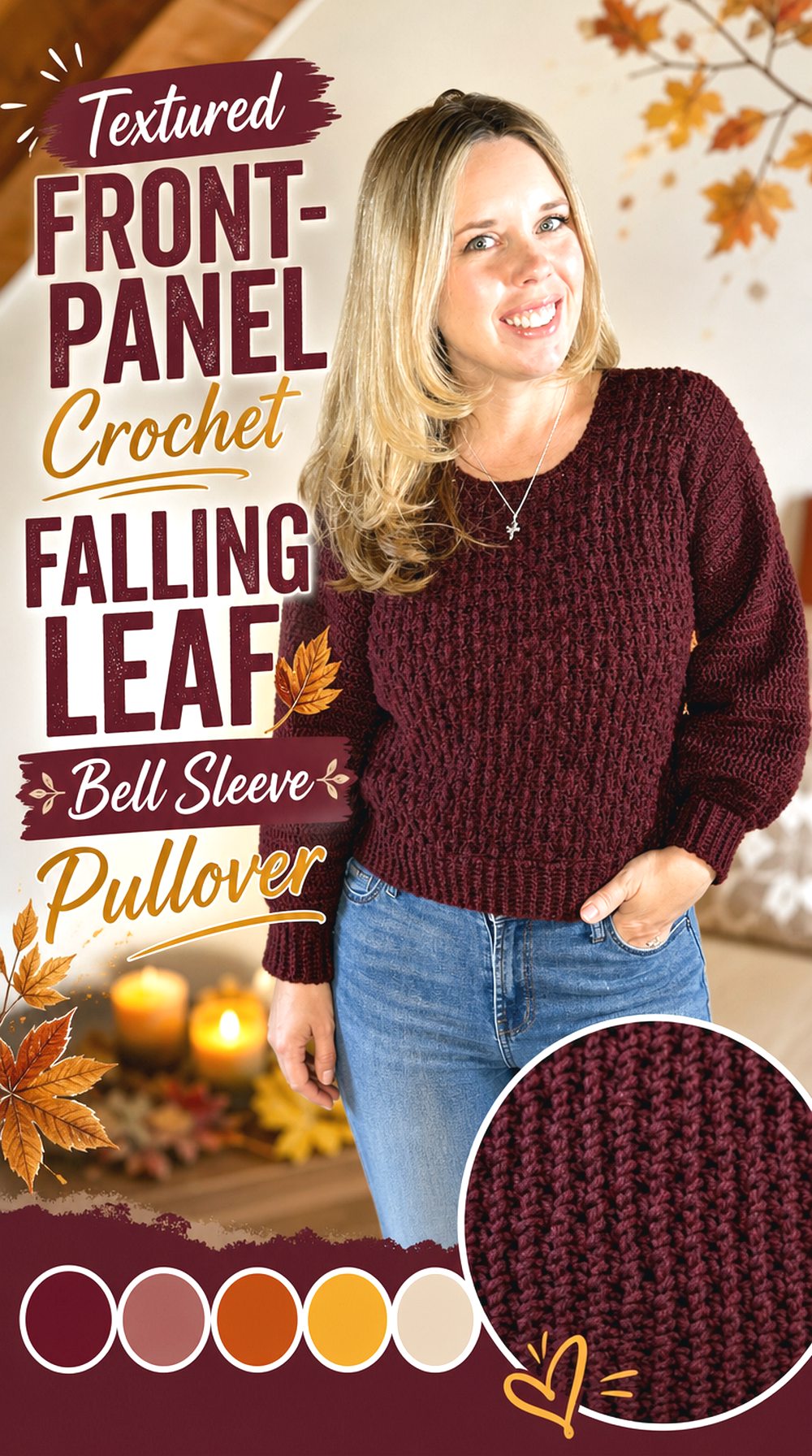
Textured Front Panel Crochet Falling Leaf Bell Sleeve Pullover
Design Details
The linked Falling Leaves sweater supplies the clearest motif reference in this collection. Its front panel carries raised leaf-like texture, while the back and original sleeves remain simpler so the central detail stays readable. Shaped armholes and neckline, plus ribbed finishes at the hem, cuffs, and neck, give the Crochet pullover a more tailored outline.
Before You Choose
The source uses straight sleeves with ribbed cuffs rather than bells. To create the featured silhouette, a confident crocheter would need to replace that finish with gradual increases and test the added cuff weight. Keep the body in a solid autumn shade such as rust, olive, or ochre so the texture does not compete with colour changes. This is the strongest choice for leaf definition, but not the most direct bell-sleeve project.
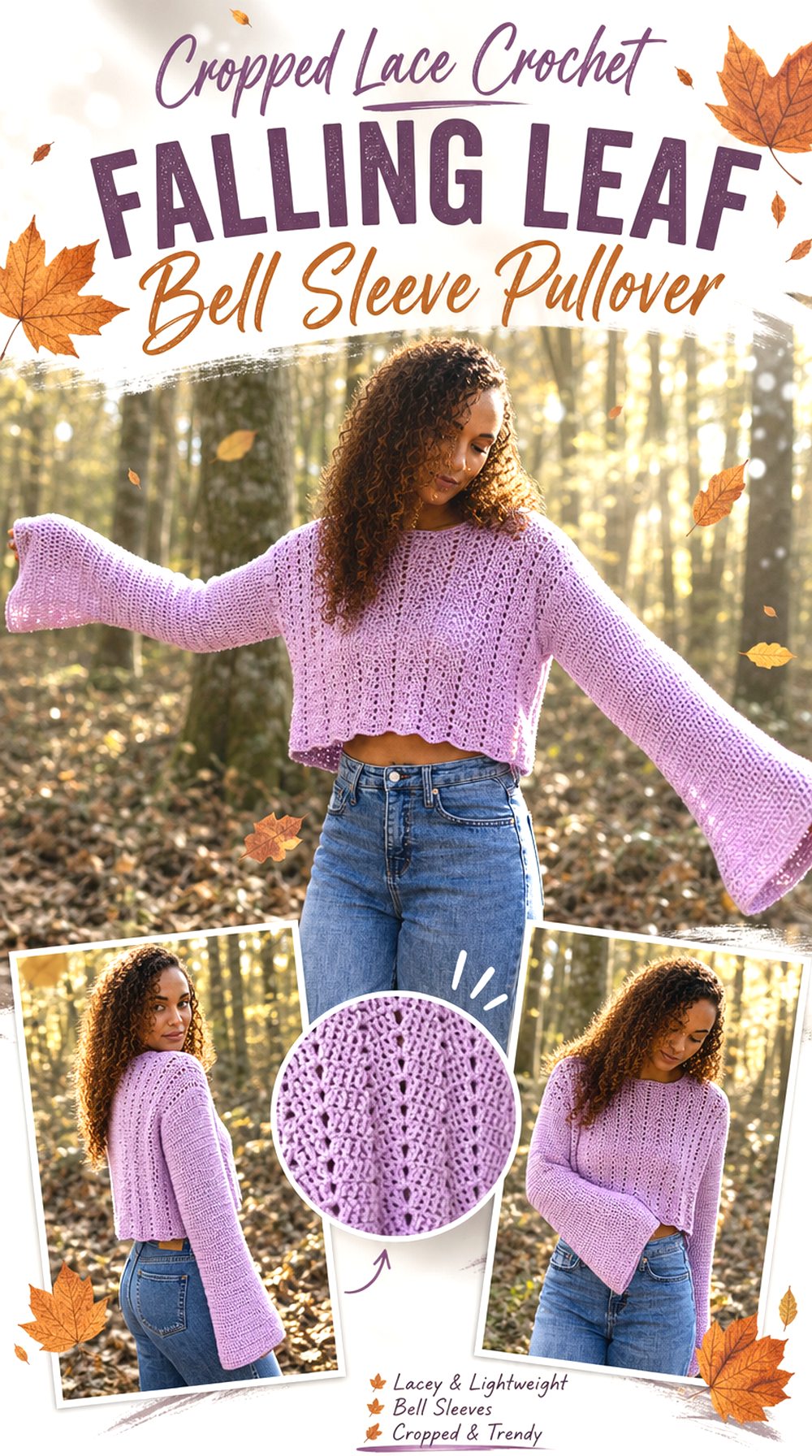
Cropped Lace Crochet Falling Leaf Bell Sleeve Pullover
What Stands Out
The Willow Crop uses an open lacy fabric and dramatic bell sleeves, creating a light Crochet pullover with visible movement at the wrists. The pattern is shown as a cropped, slightly oversized top, yet the body can be lengthened for more coverage. Its cotton-bamboo yarn choice supports the soft drape that keeps the wide sleeves from appearing stiff.
Best Use
This version suits spring, summer evenings, festivals, or indoor layering over a fitted camisole. A muted woodland colour can shift the lace toward the falling-leaf theme without changing the stitch design. The source also notes that the multi-strand yarn can split, so a smooth hook and careful insertion may help. Openwork makes the top breathable, but it also means the layer worn underneath becomes part of the finished styling.
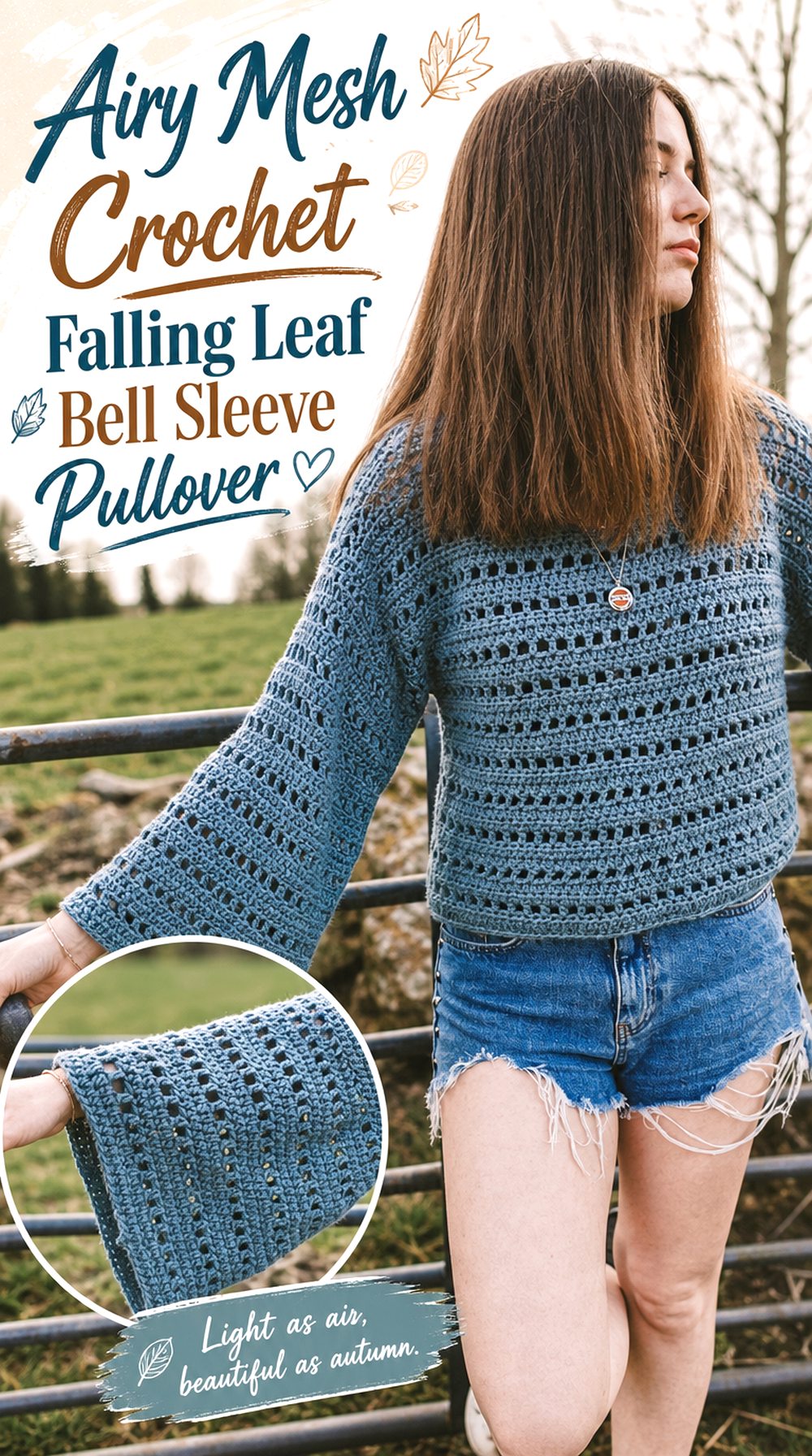
Airy Mesh Crochet Falling Leaf Bell Sleeve Pullover
Construction Focus
The Aoibheann Crochet Sweater is assembled from front and back panels, then the sleeves are worked directly around the armholes. Alternating solid rows with open mesh gives the garment a striped texture, and the instructions include an optional bell-sleeve route that begins widening after the elbow. Ribbing around the neckline adds a firmer finish above the airy body.
Customisation Idea
Use a gradual autumn gradient through the mesh bands, or keep the body neutral and place the deepest shade in the flared section. Because the sleeves are built onto the armhole, you can try on the pullover while checking length and flare placement. The trade-off is that increases must match on both sides; count rounds carefully and compare the sleeves flat before finishing. The open sections also call for thoughtful layering.
Mixed Stitch Crochet Falling Leaf Bell Sleeve Pullover
Why It Works
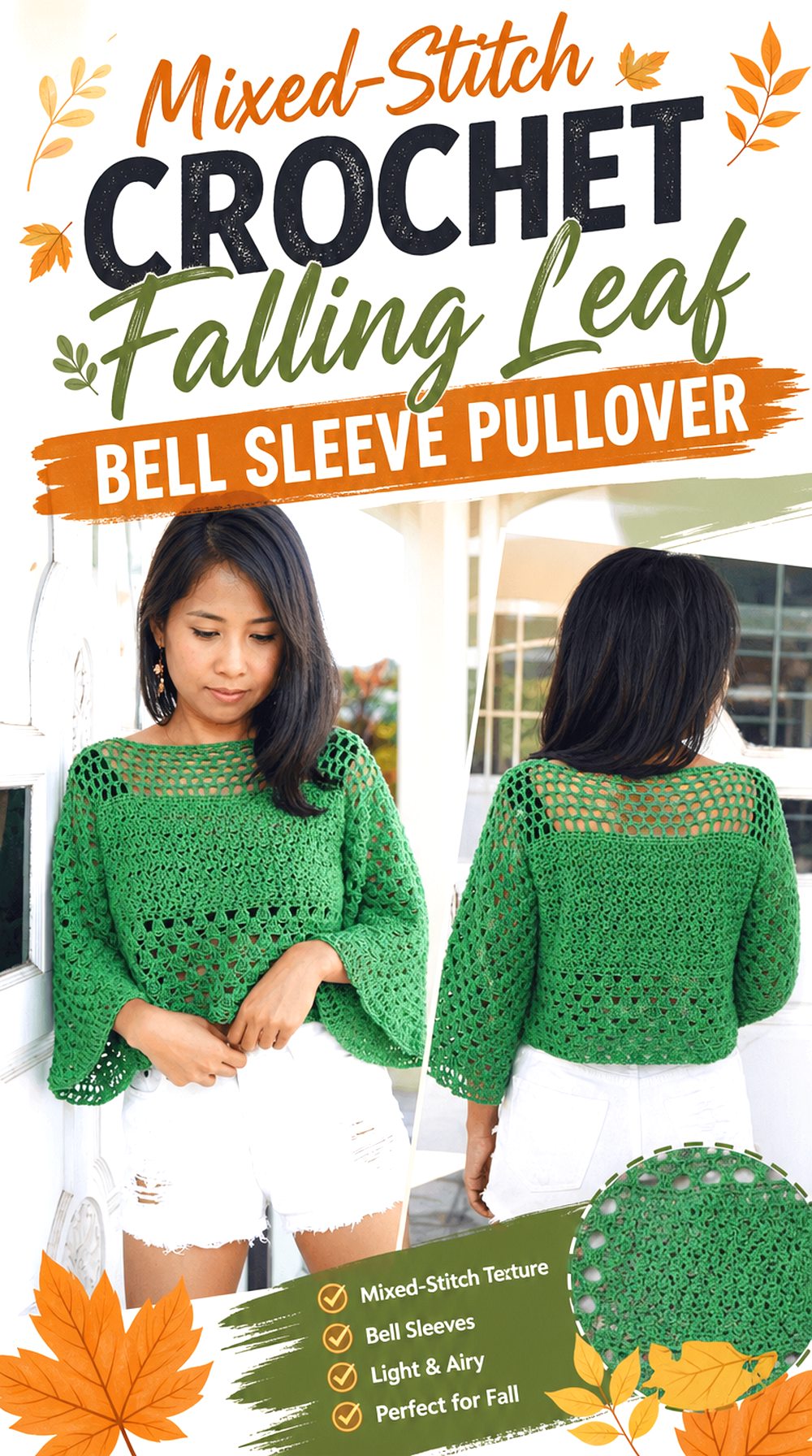
This made-to-measure Crochet pullover begins with two matching rectangular body pieces and adds long flared sleeves afterward. Lemon-peel texture, granny-style sections, and simple lace create more surface variation than a single-stitch sweater, which suits a falling-leaf palette of green, gold, brown, or wine. The linked design uses DK cotton for weight and drape.
Fit and Finish
The measurement-based foundation makes this option useful when standard size charts are not ideal. Decide first whether you want a close fit or extra ease, then leave enough armhole depth for comfortable movement. Rectangular construction produces a straighter body, so it may not provide the tailored waist or shoulder shaping found in more fitted pullovers. The mixed stitch sections are visually lively; limiting the project to one or two colours can keep the finished look balanced.
Three Quarter Crochet Falling Leaf Bell Sleeve Pullover
Design Details
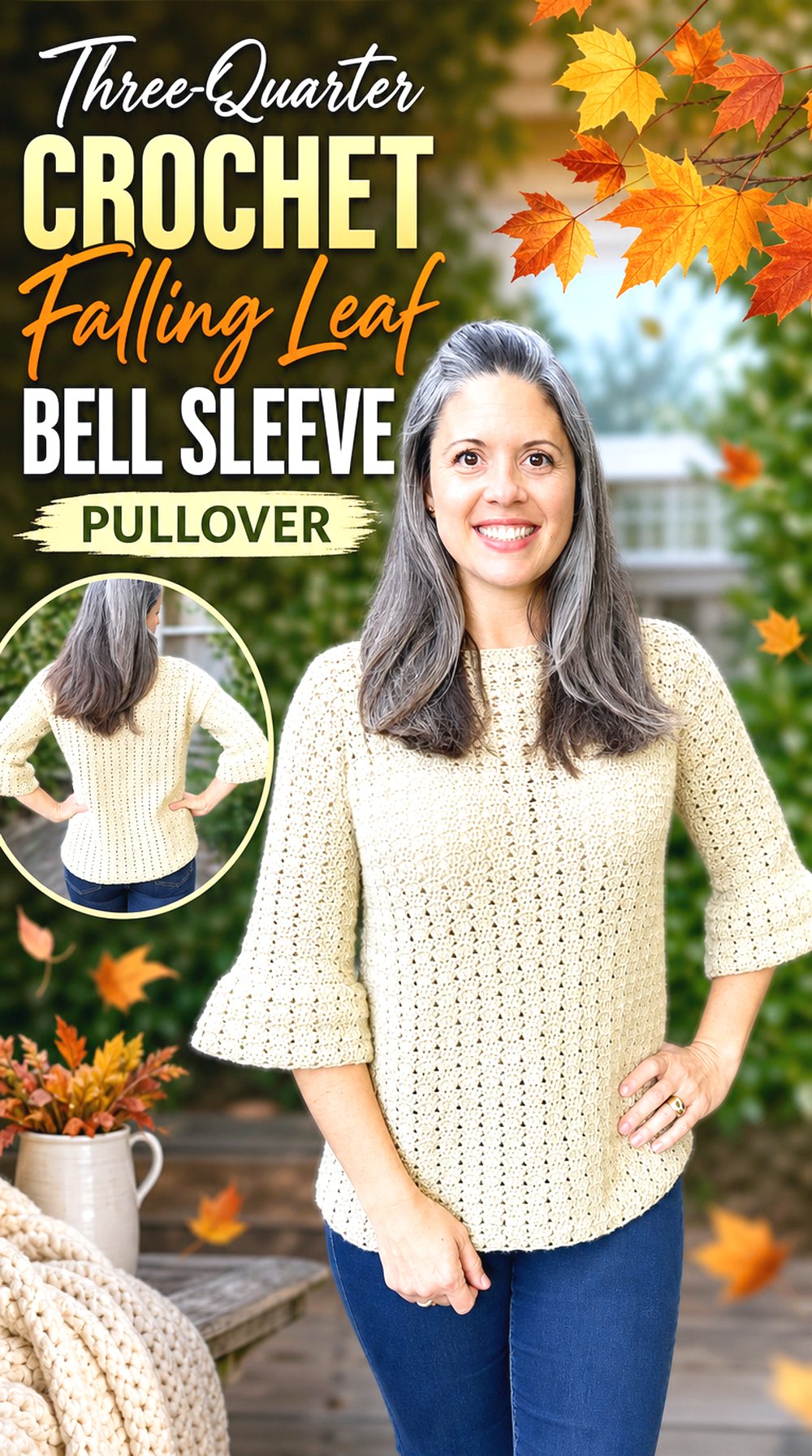
The Belinda top has three-quarter bell sleeves rather than wrist-length flares, making the Crochet shape easier to wear at a desk or under lighter outerwear. Basic stitches form an almost lace-like fabric, and the source includes a photo guide for the stitch pattern. The design is offered across nine women’s sizes with a small amount of positive ease.
Who It Suits
Choose this version when you want leaf-like openness without a very deep cuff. The shorter sleeve lets bracelets or a contrasting fitted layer remain visible, and it can work well for transitional weather. A smooth DK yarn should keep the stitch definition clear; swatching is especially important if substituting a thinner worsted yarn. The lighter structure may show the layer underneath, while the three-quarter length provides less warmth than a full sleeve.
Crossed Lace Crochet Falling Leaf Bell Sleeve Pullover
What Stands Out
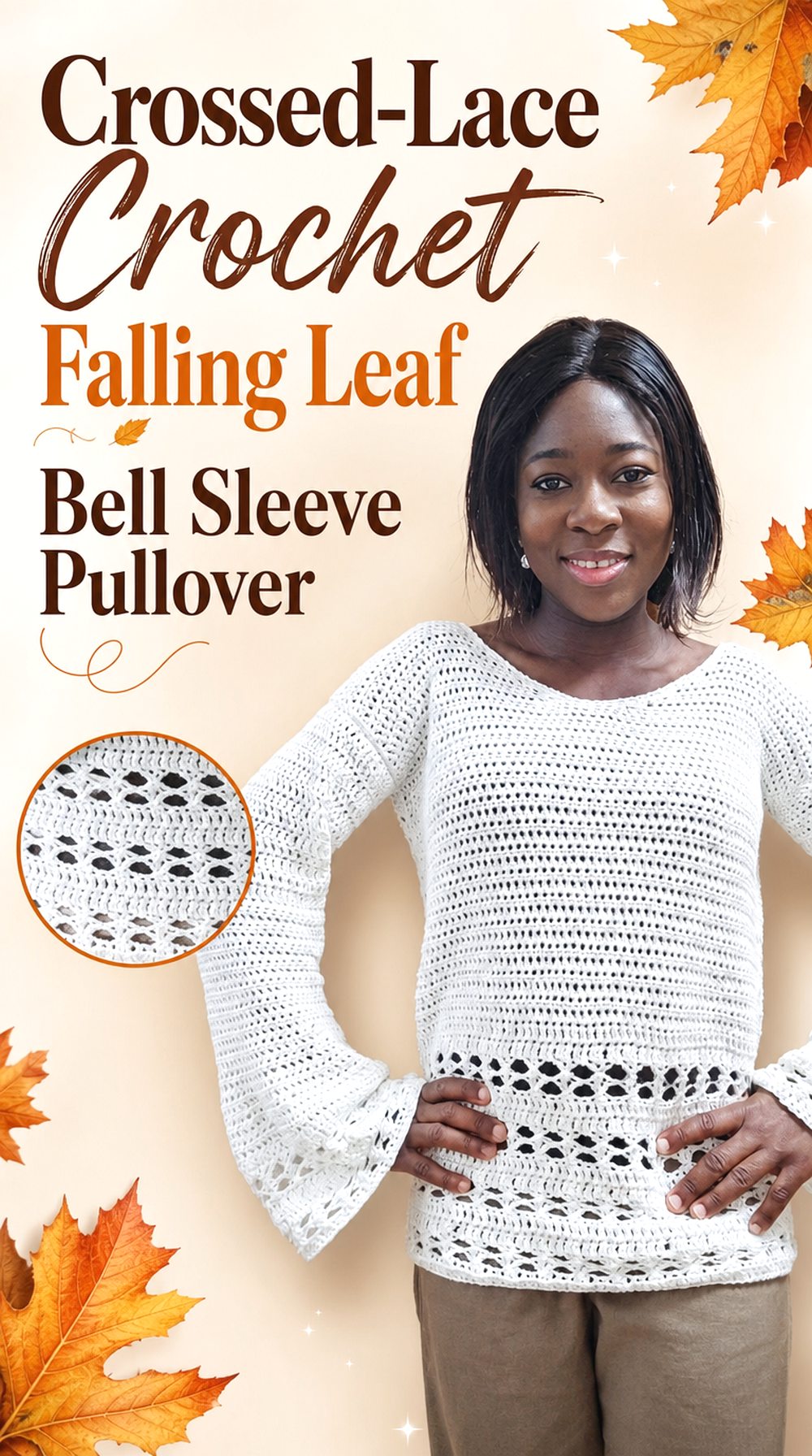
The Colleen Crochet bell sleeve sweater combines a mostly solid body with crossed-double-crochet lace details. That contrast gives the garment a structured centre and lighter decorative areas, while the broad cuffs supply the statement shape. The pattern covers sizes XS through 5XL and is shown with modest positive ease rather than an extremely oversized fit.
Practical Point
A yarn with good drape matters because a firm fibre can make the bell sleeves project outward instead of falling softly. This design can take a dark forest body with copper or amber lace sections for a stronger falling-leaf effect. The wide cuff is visually effective but may catch on chair arms or bag handles, so consider reducing the final flare if the pullover is intended for daily errands. Check sleeve length after blocking, as extra drape can lower the cuff.
Lace Edged Crochet Falling Leaf Bell Sleeve Pullover
Fit and Finish
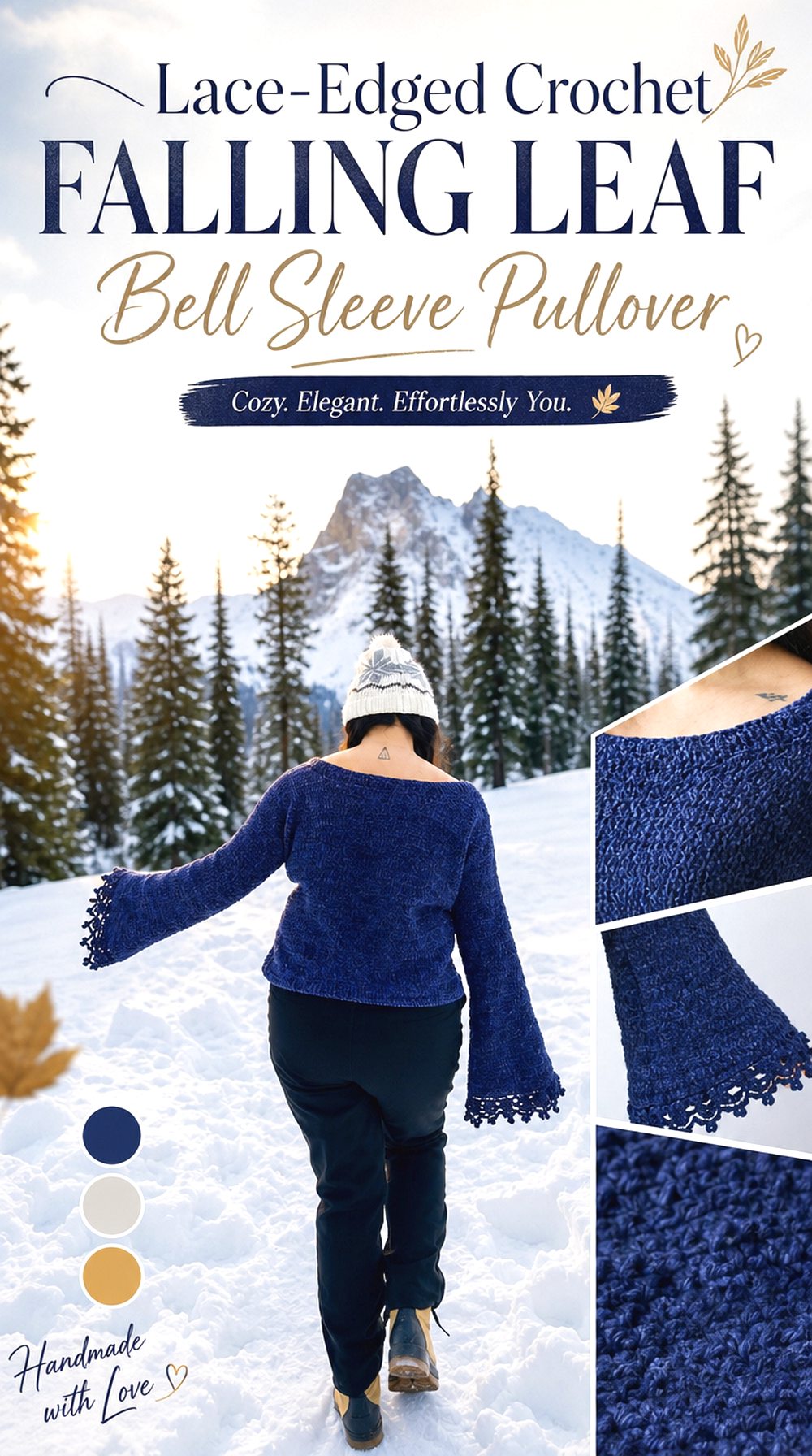
The Louis Belle Pullover keeps most of the Crochet body and sleeves relatively simple, then places lace at the lower sleeve to create a clear flared edge. The source describes limited shaping around the neckline and sleeve increases, with a small amount of positive ease. That makes the bell detail noticeable without covering the entire garment in openwork.
Care Note
The original uses a soft velvety DK yarn, which creates a plush surface but can make individual stitches harder to see. A smoother yarn would reveal the lace edge more sharply and may feel lighter at the wrist. Try the sleeve before completing the full flare so the cuff does not extend beyond a practical length. This is a useful choice for colder months, although a fuzzy yarn may blur any subtle leaf-inspired texture or make repairs less straightforward.
Oversized Crochet Falling Leaf Bell Sleeve Pullover
Best Use
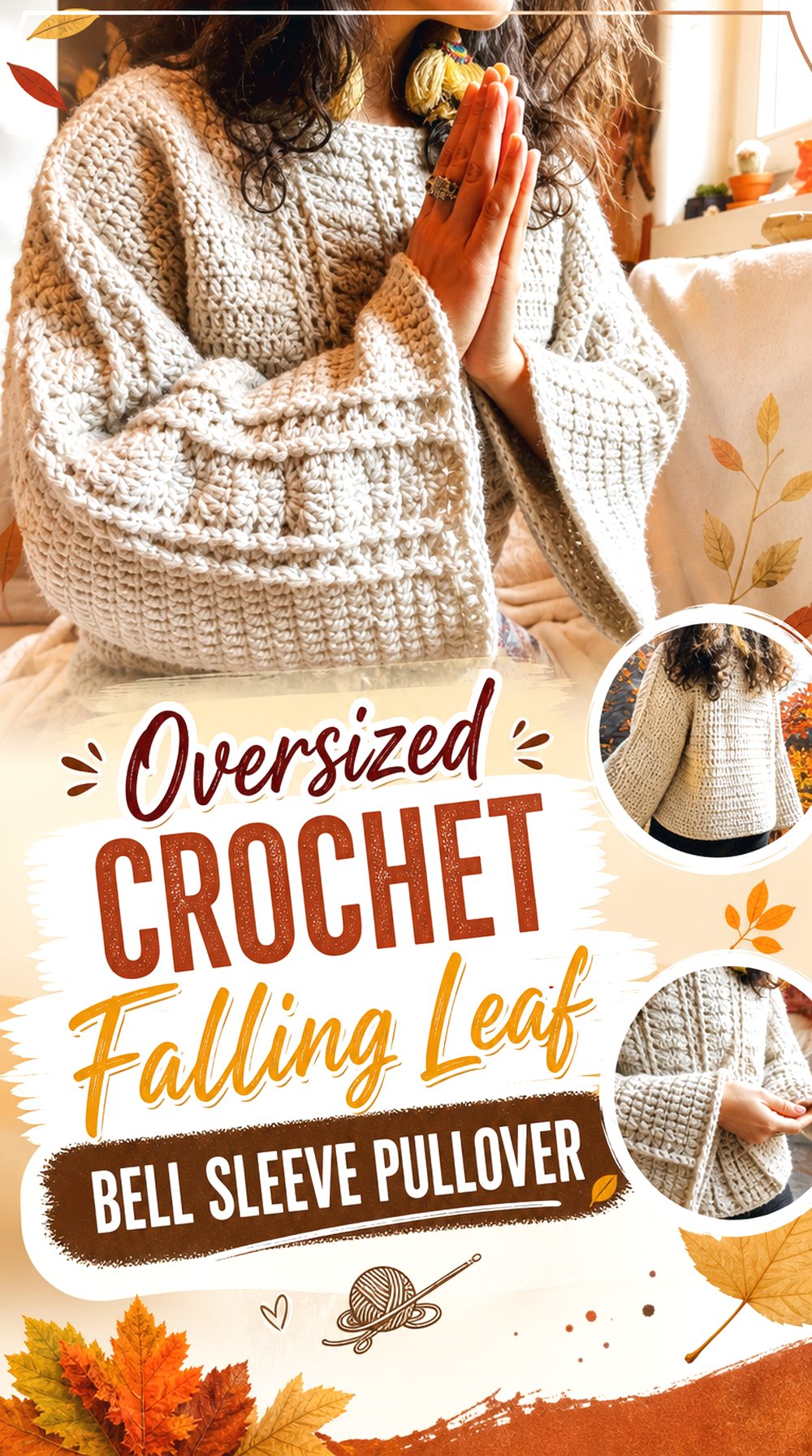
Grandmother Moon is an oversized Crochet sweater with a broad, relaxed silhouette and bell-sleeve styling that leans strongly toward a bohemian look. The pattern uses front- and back-post double crochet among its stitch set, adding raised lines that can complement an autumnal, bark-like surface. Its roomy body works well over leggings, slim trousers, or a fitted dress.
Before You Choose
The oversized proportions are the main attraction, but they also require careful size selection. A shoulder that drops too far can pull the sleeve flare lower and make the cuffs feel heavier. The source presents three size groupings rather than a long graded range, so compare the listed shoulder measurement with a sweater you already like. Blocking should focus on matching both sleeves and preventing the body from growing longer than intended. This is less suitable for close layering under a fitted coat.
Two Tone Crochet Falling Leaf Bell Sleeve Pullover
What Stands Out
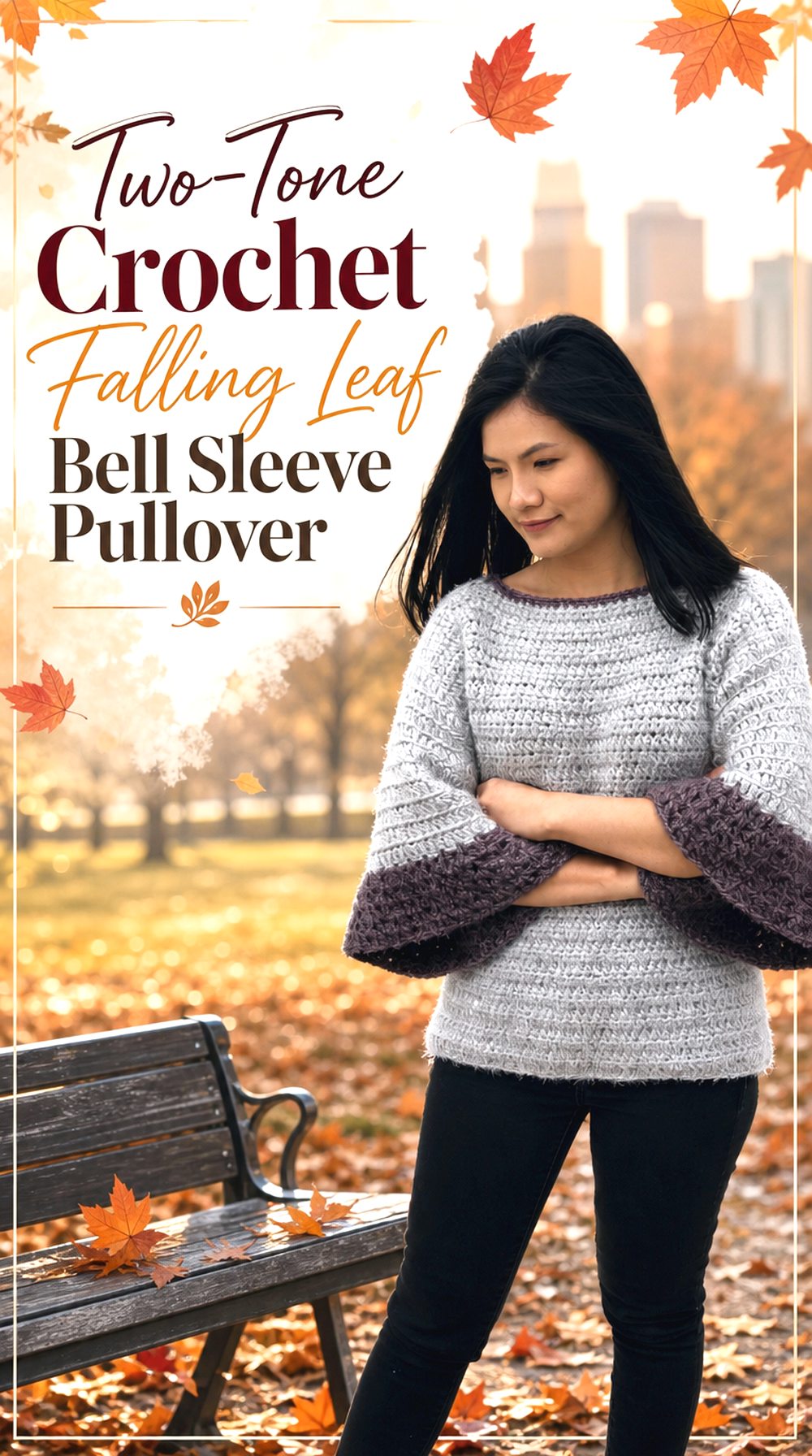
This KnitcroAddict pullover uses bulky yarn for a soft, substantial body, then changes colour and stitch texture at the widened sleeve ends. The front and back panels are identical, while the sleeves are worked into the armholes and finish with contrasting V-stitch sections. The result is a cosy Crochet sweater with a pronounced two-tone cuff.
Good to Know
The published written instructions are for a women’s medium, although the page also links a video tutorial. That limitation makes it most useful for readers who match the sample size or are comfortable recalculating panel width, armholes, and sleeve counts. Bulky yarn adds warmth but also increases cuff weight, so keep the bells slightly cropped if you want easier movement. A cream body with a russet cuff would reinforce the falling-leaf theme without introducing a busy colour pattern.
Classic Crop Crochet Falling Leaf Bell Sleeve Pullover

Why It Works
The Bell Crop is built from plain half-double-crochet panels, with separate sleeves that widen from a narrower upper section to a broad lower edge. The source provides women’s sizing from small through 3X, detailed gauge guidance, blocking advice, and mattress-stitch assembly. Its simple Crochet fabric gives the bell shape room to become the main feature.
Customisation Idea
Although the name suggests a crop, the instructions explain how to add body rows for a longer sweater. A leaf appliqué or embroidered falling-leaf line could be added after assembly without competing with complex stitchwork. Block each piece to matching dimensions before seaming, especially the two sleeves. The construction is approachable, but four separate pieces create several seams, and uneven mattress stitching can shorten one side or twist the sleeve. A thinner worsted yarn will keep the silhouette less bulky.
Minimalist Crochet Falling Leaf Bell Sleeve Pullover
Design Details
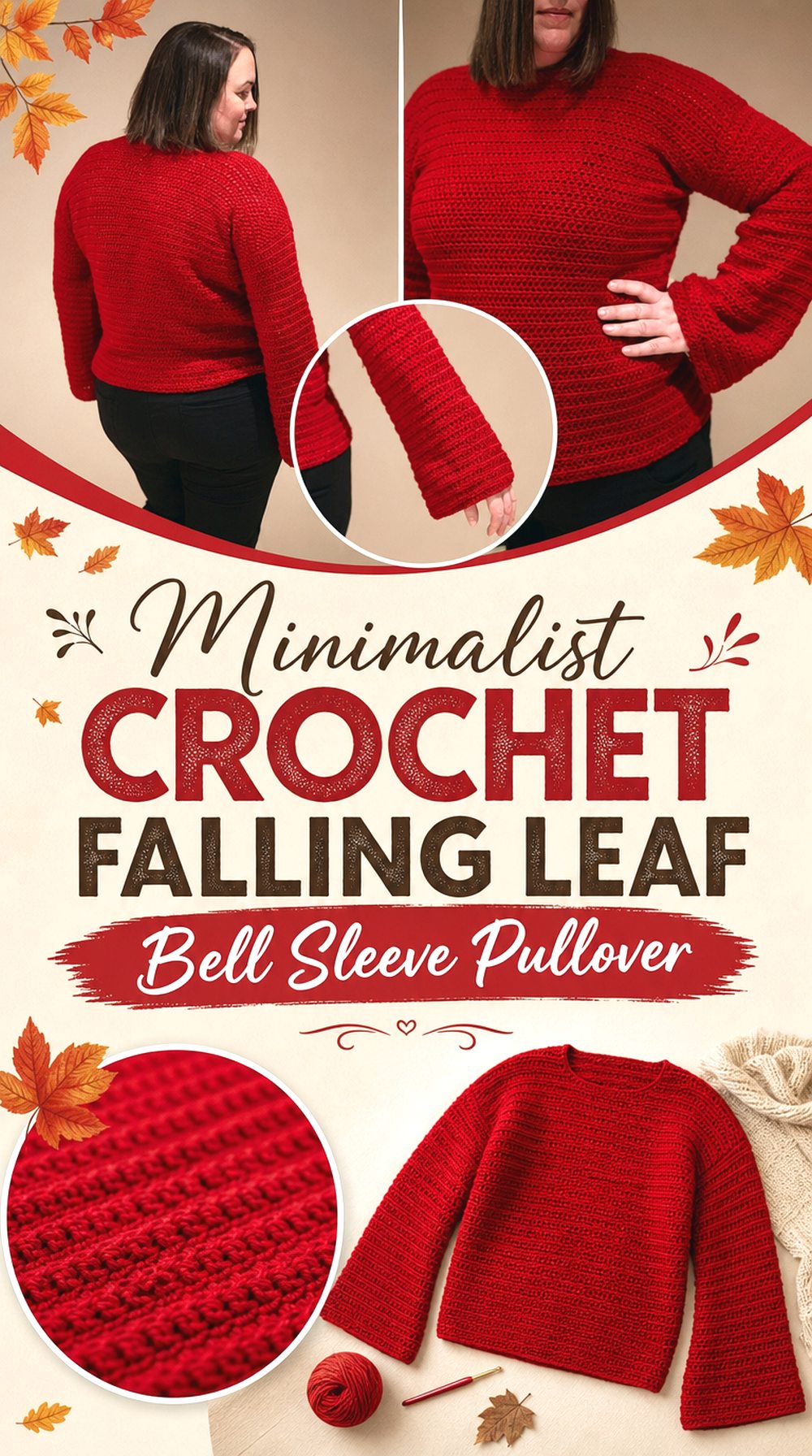
The Joy of Motion version is a minimalist Crochet bell sleeve sweater worked in four bottom-up pieces using half double crochet. Its smooth, solid fabric and uncomplicated neckline make it a practical base for colour, surface embroidery, or a single leaf motif placed near the shoulder. Sizes run from XS to 5XL, and the pieces are joined with whip stitch.
Everyday Use
This is the most wardrobe-neutral option in the group. A dark red, moss, camel, or charcoal shade can carry the autumn theme while pairing easily with jeans or skirts. Because the construction is plain, gauge and seaming quality are highly visible; uneven rows cannot hide inside lace. The separate sleeves allow the flare to be adjusted before assembly, but they also require accurate matching at the armhole. Readers seeking ornate texture may find the finished surface too restrained without added decoration.
Relief Stitch Crochet Falling Leaf Bell Sleeve Pullover
Construction Focus
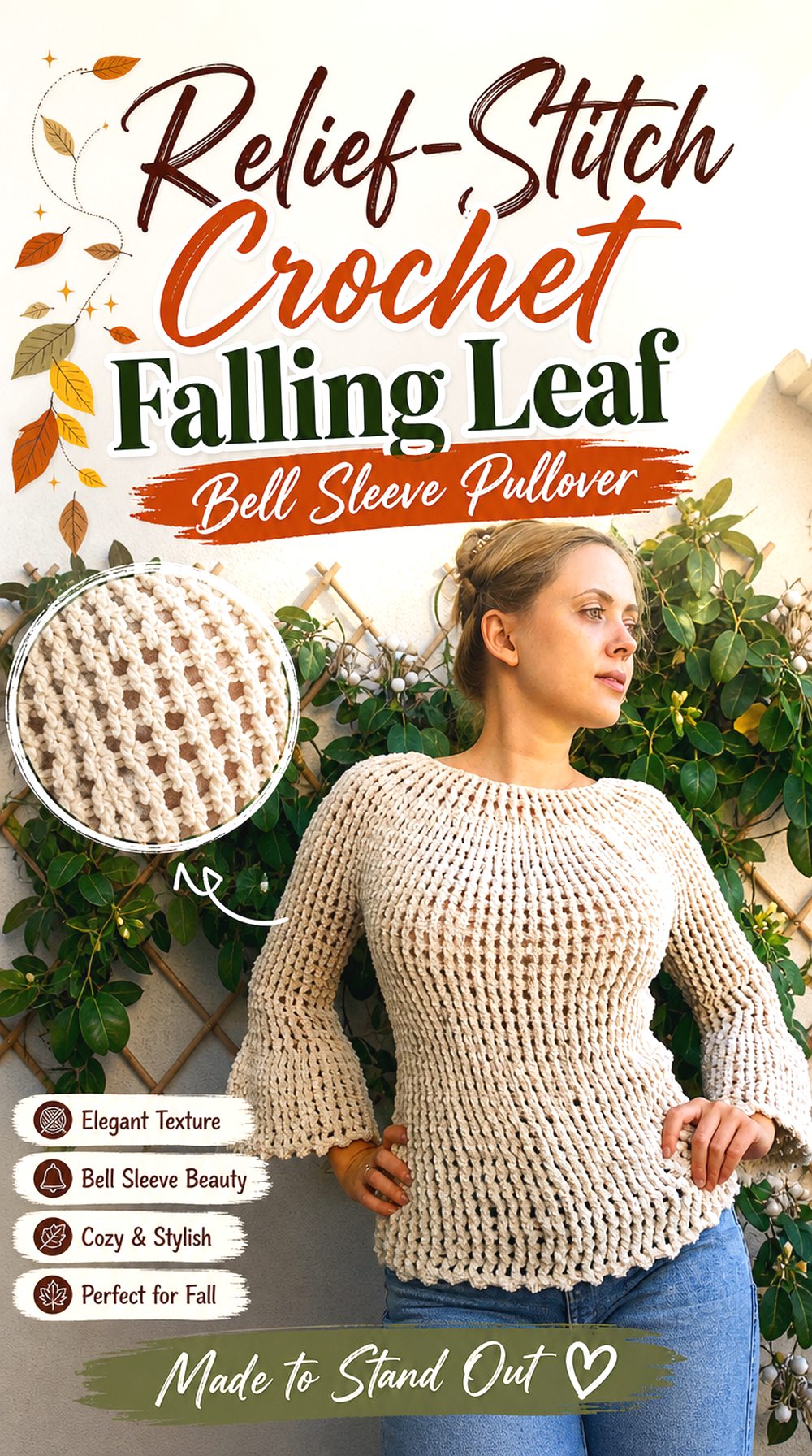
The Beautiful Crochet Stuff design uses relief stitches and a soft fancy yarn to create a two-sided textured sweater with flared sleeves. Raised post work gives the Crochet surface depth even in one colour, and the wide sleeve finish strengthens the dramatic silhouette. The page includes written rounds plus a linked video demonstration.
Practical Point
Fuzzy yarn softens the relief pattern, so choose it for a cloud-like autumn sweater rather than crisp botanical definition. For clearer leaf-inspired ridges, substitute a smoother yarn only after matching gauge and checking how the fabric hangs. The source provides a compact set of instructions rather than an extensive graded fit discussion, so examine the dimensions and video closely before committing. The plush fibre may also be warmer and harder to unravel cleanly. Keep accessories simple because both the texture and sleeve shape already carry strong visual weight.
Useful Crochet Notes
Choosing Yarn for Clear Leaves
Leaf texture reads most clearly in a smooth yarn with enough twist to keep raised stitches separate. Bell sleeves, however, need drape. Swatch the motif and a small flared section before buying the full quantity. A yarn that looks crisp in a square may become stiff once the cuff carries several extra rounds.
Checking Sleeve Length
Measure from the armhole to the wrist while wearing a similar layer underneath. Then decide where the flare should begin and how far the cuff may safely extend. Deep bells can lengthen after blocking, especially in cotton or bamboo blends. Record the round count for the first sleeve and duplicate it exactly on the second.
Blocking Without Losing Shape
Block body panels to the intended width and length before seaming, but avoid stretching openwork beyond the pattern measurements. Shape both bell sleeves side by side so their edges, flare depth, and total length match. Let the pieces dry fully before assembly; moving damp panels can distort shoulder lines and make the seams uneven.
Conclusion
Choose the leaf-textured front panel when botanical detail matters most, or start with a true bell-sleeve design when you prefer fewer modifications. Cropped lace versions suit lighter layering, while bulky and oversized pullovers offer more warmth and visual weight. Before deciding, compare the size range, flare depth, yarn behaviour, and amount of seaming. The most wearable project will balance the statement sleeve with your usual activities and outerwear.
FAQs
How much ease should a Crochet bell sleeve pullover have?
A fitted or classic pullover often works with modest positive ease, while an oversized version needs more room through the body. The important point is shoulder placement: too much width can drop the armhole and lower the bell cuff. Compare finished garment measurements with a sweater whose fit you already enjoy.
Where should the bell sleeve begin to flare?
A flare beginning around the elbow gives a noticeable shape without adding bulk near the upper arm. Starting lower creates a smaller, more practical cuff, while an earlier increase produces a dramatic sleeve. Mark the intended start on your arm and consider coat sleeves, desk work, and everyday reach before choosing.
Which yarn shows a falling leaf texture clearly?
Smooth, plied yarn generally shows raised clusters, post stitches, and leaf outlines more clearly than fuzzy yarn. DK or light worsted weights can balance definition with wearable drape, but the pattern gauge remains the deciding factor. Make a washed swatch because some fibres relax and flatten texture after blocking.
Can I add bell sleeves to a straight-sleeve Crochet sweater?
Yes, but the change requires controlled increases and enough yarn for the extra cuff width. Begin with the original upper sleeve, then distribute increases evenly from the chosen flare point. Test the sleeve on your arm and repeat the same increase placement on the second side. The source pattern may not provide those calculations.
How should I care for a Crochet pullover with wide sleeves?
Follow the yarn label and test the swatch first. Support the garment when wet so the sleeves do not stretch under their own weight, then dry it flat with both cuffs shaped equally. Store the pullover folded rather than on a hanger if the yarn is heavy or the shoulder seams begin to lengthen.