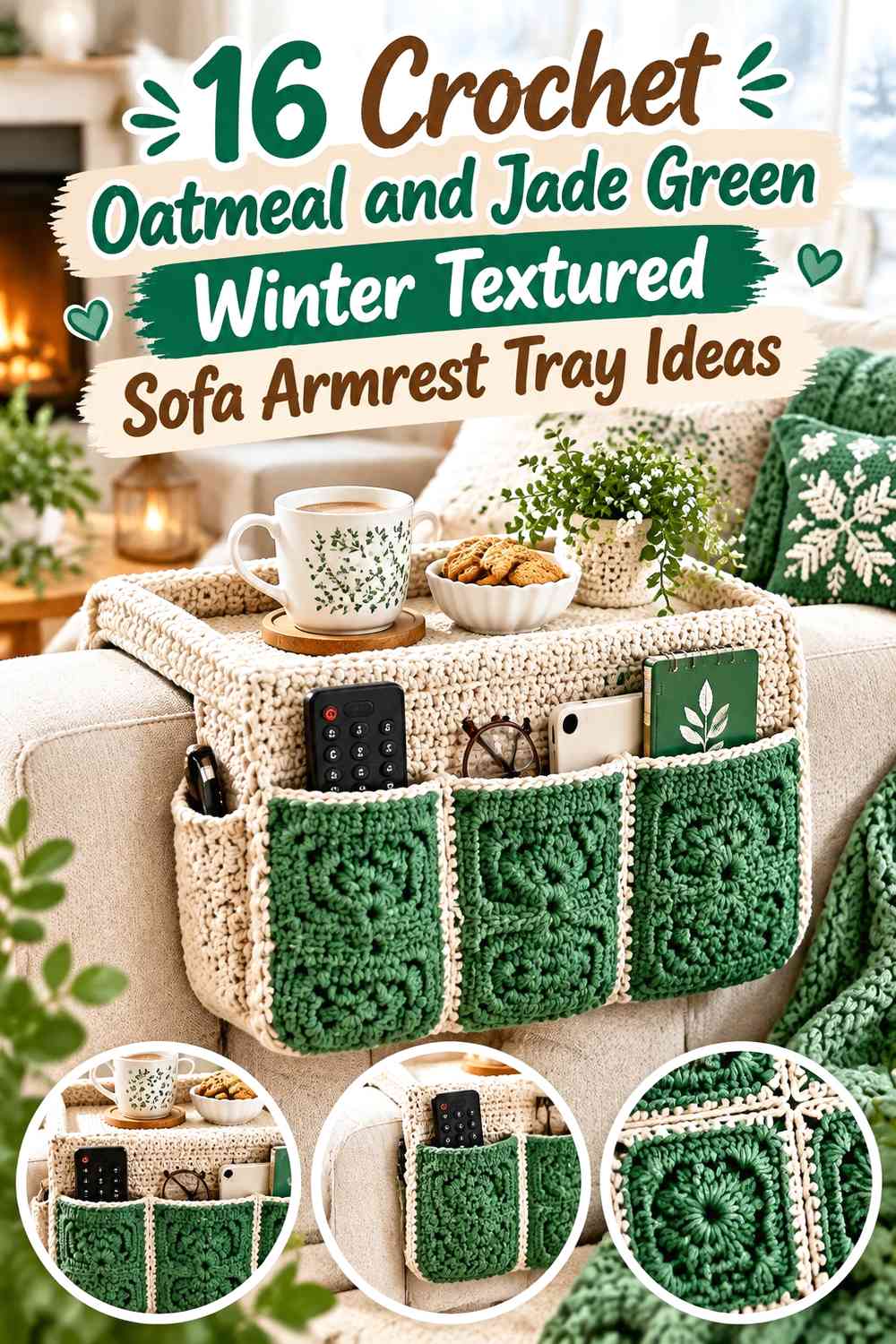

Oatmeal and jade green give a crochet sofa armrest tray a balanced winter palette that can separate decorative texture from practical organizer zones. Oatmeal works well across broad surfaces where raised stitches, braids, or ribbing need room to show, while jade green can define borders, pockets, tray sections, or the portion that folds down the side of the sofa.
A crochet armrest tray is a soft textile organizer rather than a rigid serving tray. The most useful designs treat the upper arm section as a stable-looking landing zone for lightweight items and use hanging panels or pockets for remotes, glasses, or similar small objects when the construction supports them. Do not assume a crocheted surface provides spill protection or rigid support for drinks.
The tutorials supporting these ideas include direct sofa organizers and armrest covers as well as rectangular baskets and textured placemats that provide useful construction references for flat tray zones, raised borders, or shallow organizer sections. Where a basket or placemat is used as inspiration, adapting it to fit a sofa arm is an independent design decision rather than part of the creator’s original project.
Quick List
- Oatmeal Crochet Sofa Armrest Tray With Jade Green Pocket Panel
- Jade Green Crochet Sofa Armrest Tray With Oatmeal Textured Center
- Oatmeal Granny-Panel Crochet Armrest Tray With Jade Green Borders
- Jade Green Crochet Remote-Pocket Armrest Tray With Oatmeal Top
- Oatmeal Braided Crochet Armrest Tray With Jade Green Edge
- Jade Green Rectangular Crochet Armrest Tray With Oatmeal Raised Border
- Oatmeal Square-Texture Crochet Armrest Tray With Jade Green Corners
- Jade Green Structured Crochet Armrest Tray With Oatmeal Center Panel
- Oatmeal Round-Texture Crochet Armrest Tray With Jade Green Side Pocket
- Jade Green Jasmine-Texture Crochet Armrest Tray With Oatmeal Border
- Oatmeal Geometric Crochet Armrest Tray With Jade Green Contrast
- Jade Green Flat Crochet Armrest Tray With Oatmeal Textured Strip
- Oatmeal Rectangular Crochet Armrest Tray With Jade Green Side Frame
- Jade Green Wave-Texture Crochet Armrest Tray With Oatmeal Bands
- Oatmeal Lace-Texture Crochet Armrest Tray With Jade Green Border
- Jade Green Firm-Edge Crochet Armrest Tray With Oatmeal Center
Decide Whether Oatmeal or Jade Green Should Cover the Sofa Arm
The broad section that rests across the sofa arm is the most visible part of the organizer, so its color will usually dominate the finished piece. Oatmeal gives raised texture and stitch direction a quieter background, while jade green creates a stronger block of color against neutral upholstery.
A useful two-color structure is to keep the upper arm panel oatmeal and place jade green on the hanging pocket section. Reversing that arrangement gives the tray a darker, more saturated top while oatmeal makes the organizer pockets easier to identify.
Use Oatmeal and Jade Green to Separate Tray Zones From Pockets
A sofa armrest organizer can contain several visual areas even when it is constructed as one piece. Contrast can mark the top surface, the section that folds over the outer edge, pocket openings, and a lower border.
Keep those roles consistent. If jade green identifies the pocket openings, repeat it on each pocket rather than changing to oatmeal halfway through the organizer. A clear color system makes the piece easier to read and keeps texture from becoming visually cluttered.
Let Oatmeal and Jade Green Texture Support the Armrest Shape
Raised texture can help a crochet organizer look substantial, but excessive bobbles or thick ridges directly beneath objects can create an uneven landing area. Keep the strongest texture toward exposed borders, hanging sections, or decorative panels when a flatter upper surface would be more practical.
Before finishing the border, drape the developing piece over the actual sofa arm. Armrests vary widely in width, curve, and upholstery, so color-block proportions that look balanced while flat may shift once the fabric bends over the furniture.
1. Oatmeal Crochet Sofa Armrest Tray With Jade Green Pocket Panel
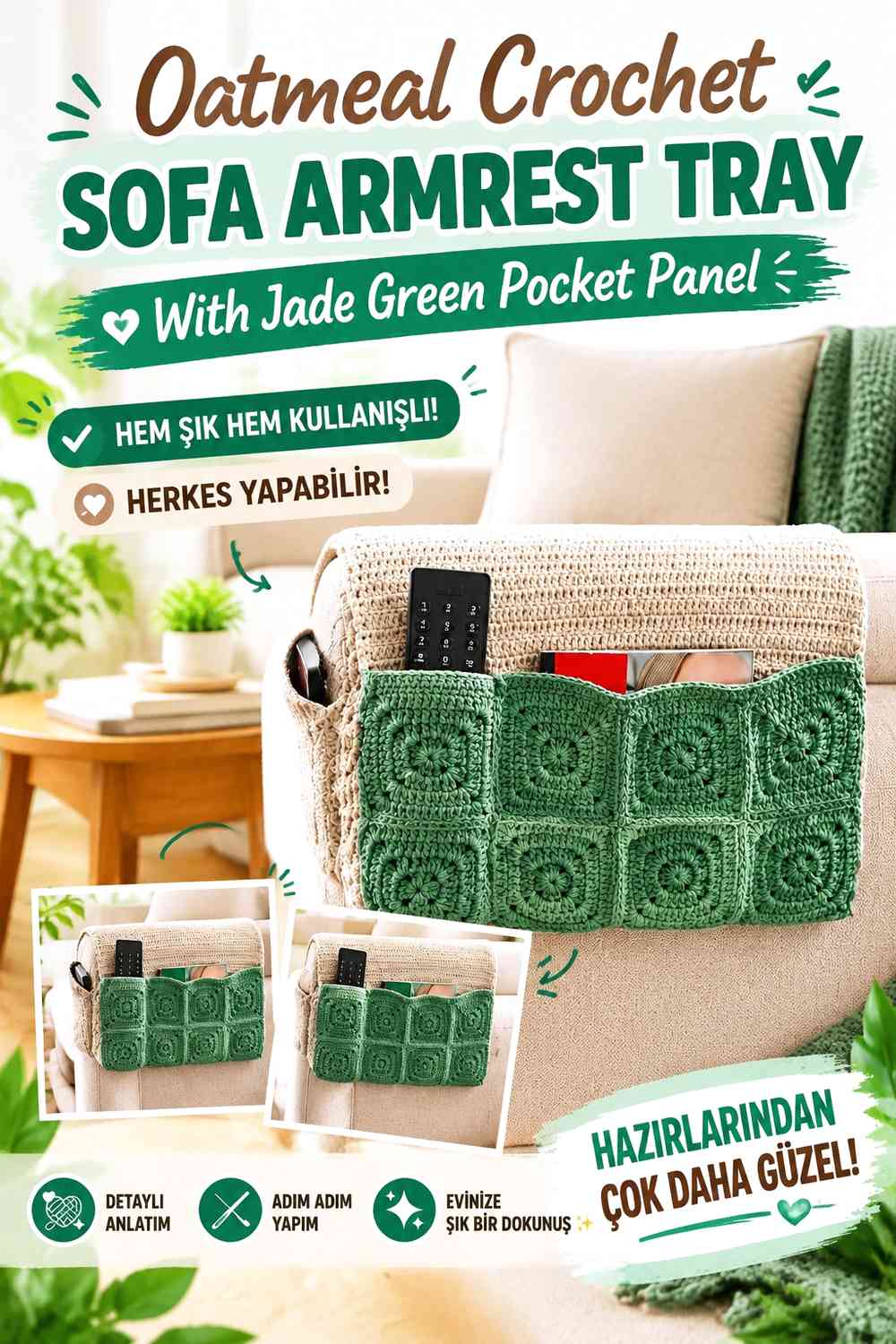
Use oatmeal across the broad section that lies over the armrest and make the hanging organizer panel jade green. This gives the upper surface a light, calm field while the darker green clearly identifies the storage portion below the edge of the sofa.
Oatmeal Keeps the Sofa Armrest Tray Surface Visually Calm
Let oatmeal cover most of the upper panel instead of inserting several jade stripes through the tray zone. A quieter surface gives ribbing or other crochet texture room to remain visible and helps the top feel separate from the pockets.
Keep the central area relatively flat if lightweight objects will rest there.
Jade Green Can Define Oatmeal Pocket Openings
Use jade green continuously through the hanging pocket panel and let oatmeal return only as a small edge if desired. The stronger color makes the storage area immediately recognizable below the lighter armrest section.
Oatmeal Can Reappear Against Jade Green Pocket Edges
A narrow oatmeal rim around the pocket openings can reconnect the lower panel with the top without weakening the jade-green block. Keep that pale repeat smaller than the main pocket area.
Creator Credit: Betül’s Elegant Loops
2. Jade Green Crochet Sofa Armrest Tray With Oatmeal Textured Center
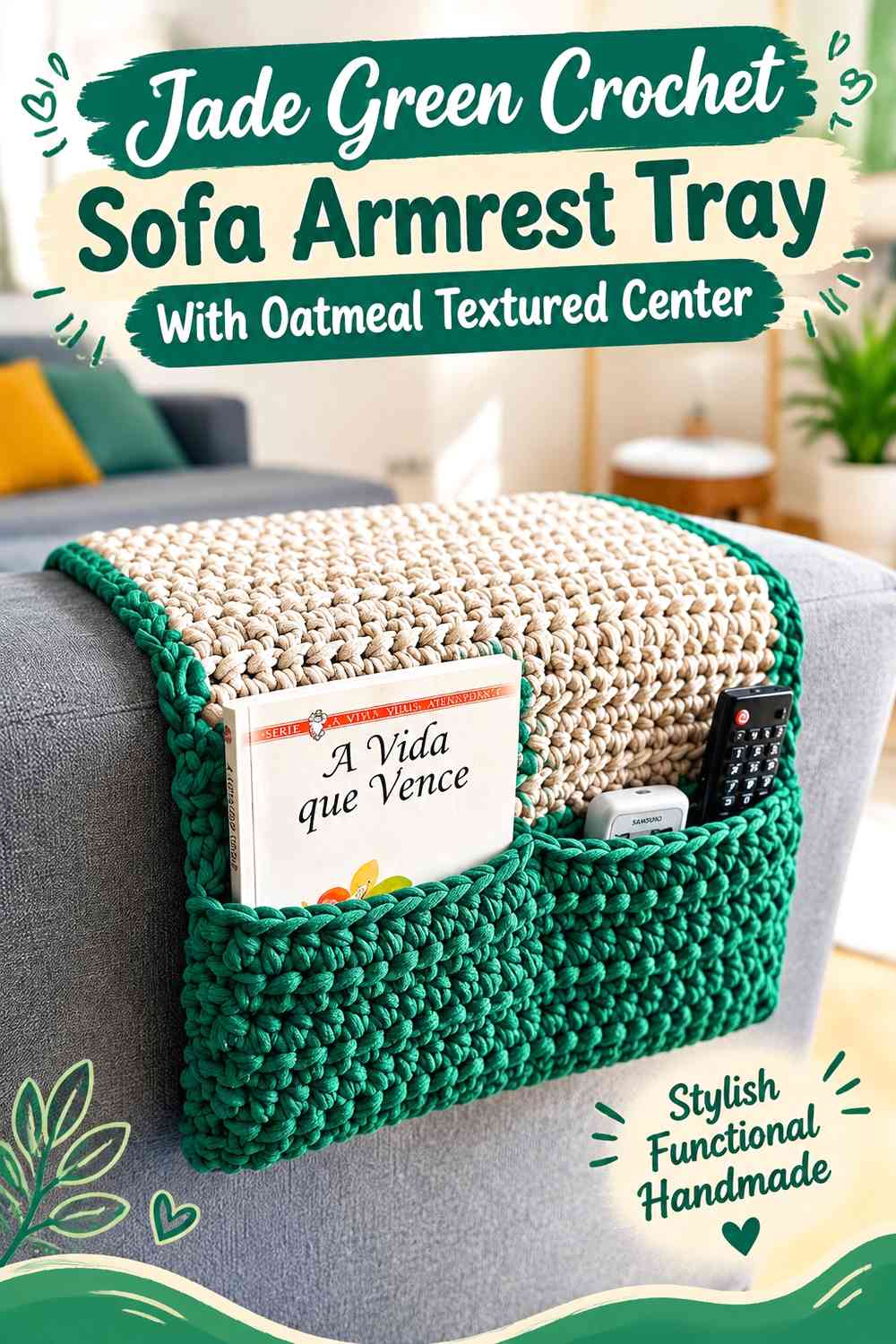
Reverse the balance by making jade green the primary armrest color and setting one oatmeal textured panel into the top. This works well when you want the sofa organizer to have a stronger color presence while still highlighting stitch detail.
Oatmeal Can Reveal Texture Inside a Jade Green Tray
Use oatmeal where braids, ribbing, or raised stitches form the main decorative feature. The lighter shade can make the texture easier to distinguish than it might be in a deep jade field.
Keep the textured insert broad enough to look intentional rather than like a narrow stripe.
Jade Green Should Frame the Oatmeal Center Consistently
Leave visible jade on both sides of the oatmeal panel so the green reads as a true frame. Carrying the same color into the hanging section creates continuity when the organizer bends over the sofa arm.
Creator Credit: La Kroche
3. Oatmeal Granny-Panel Crochet Armrest Tray With Jade Green Borders
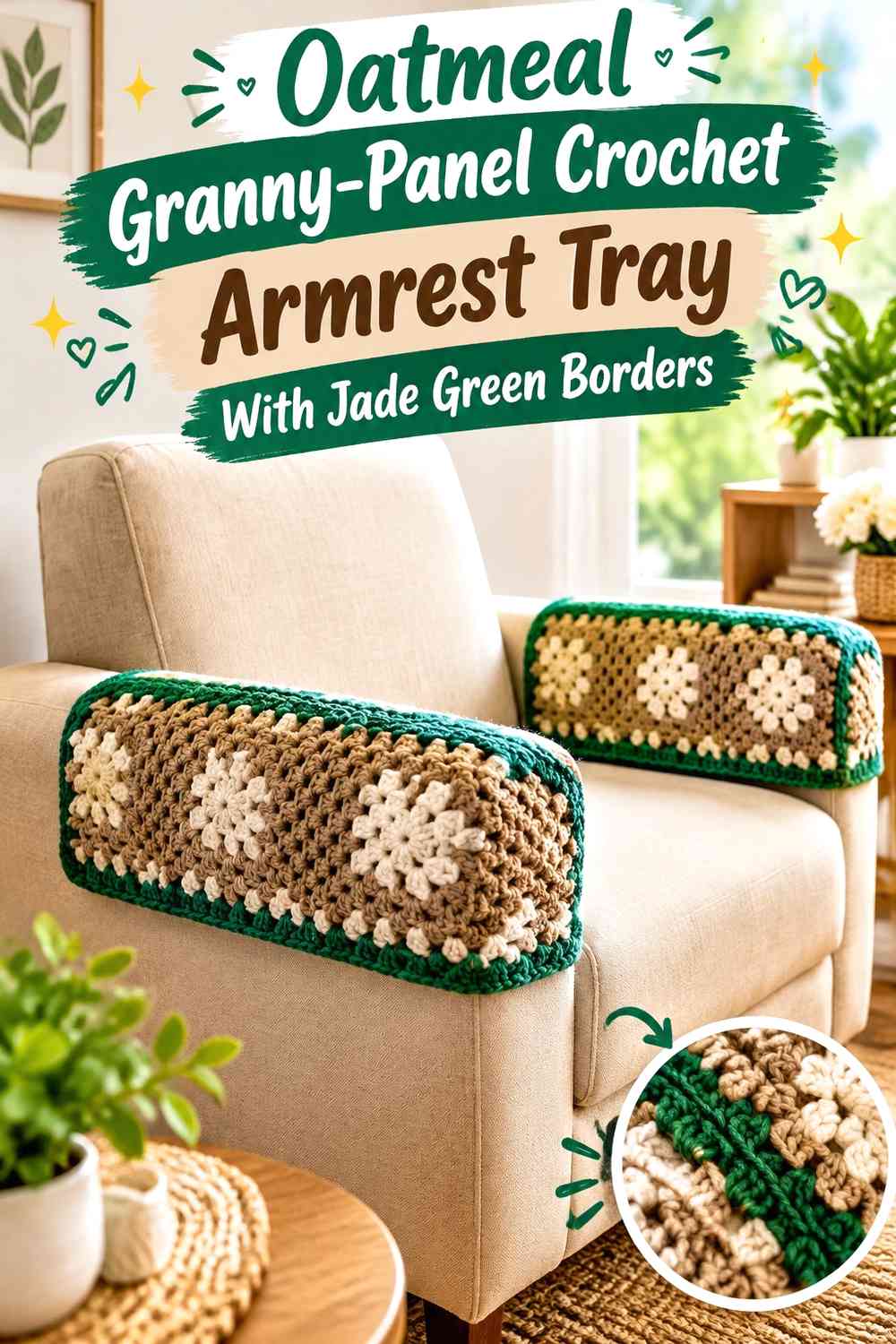
A granny-square armrest cover provides a patchwork route to the tray concept. Use oatmeal through most of the motif centers and jade green around outer rounds, joins, and edges so separate squares become one organized sofa panel.
Jade Green Can Frame Oatmeal Granny Panels
Keep jade green consistent around the motif edges. The dark outlines define each oatmeal-centered square without requiring several unrelated colors across the armrest.
When the panel bends over the sofa, the repeated green grid can also make the change from top to side visually clear.
Oatmeal Should Stay Broad Inside Jade Green Granny Borders
Give oatmeal enough space inside each square for the light surface to remain dominant after all the green joins accumulate. Dark joining color can contribute more visual area than expected once several motifs are assembled.
Jade Green Can Mark the Oatmeal Tray Zone Edge
Use a solid jade border around the finished granny panel. That outer line distinguishes the armrest cover from the upholstery and visually finishes the patchwork grid.
Creator Credit: Vivirtejiendo Crochet
4. Jade Green Crochet Remote-Pocket Armrest Tray With Oatmeal Top
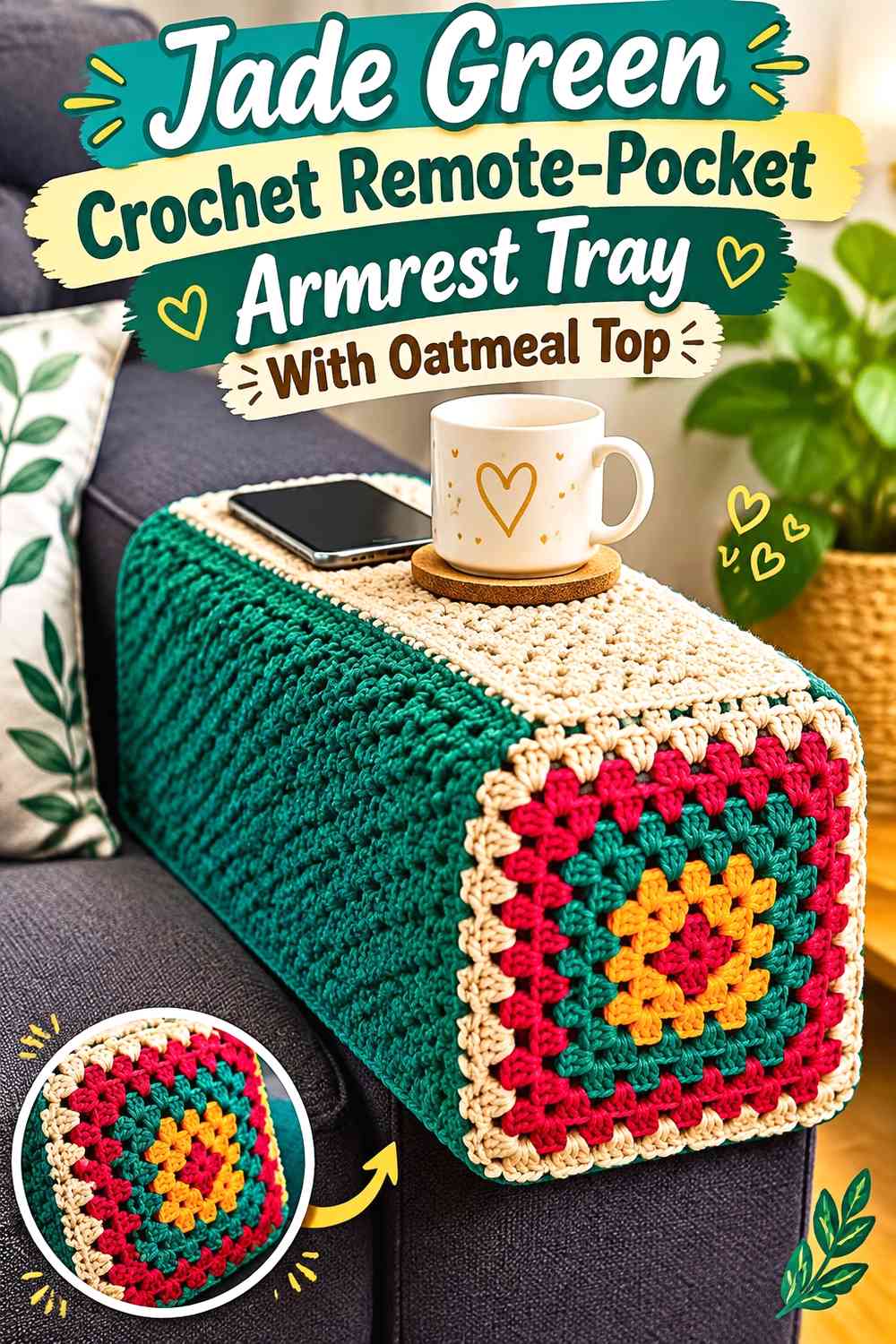
Make the upper surface oatmeal and the outer hanging section jade green, with pocket openings remaining visually connected to the darker panel. The strong division is practical for a sofa organizer because it separates the landing surface from the storage area.
Oatmeal Should Stay Flat Above Jade Green Pockets
Use a relatively calm oatmeal texture across the top where lightweight objects may be placed. Decorative raised sections can be moved toward the edges rather than concentrated beneath the intended tray area.
Jade Green Makes the Oatmeal Armrest Transition Easy to Read
Begin the green section near the outer fold where the organizer drops down the sofa side. The color change can visually mark the transition from armrest cover to storage panel.
Oatmeal Can Highlight Jade Green Pocket Rims
If more contrast is needed, use oatmeal narrowly around the tops of the green pockets. This repeats the tray color without breaking up the full jade panel.
Creator Credit: Arte Brasil
5. Oatmeal Braided Crochet Armrest Tray With Jade Green Edge
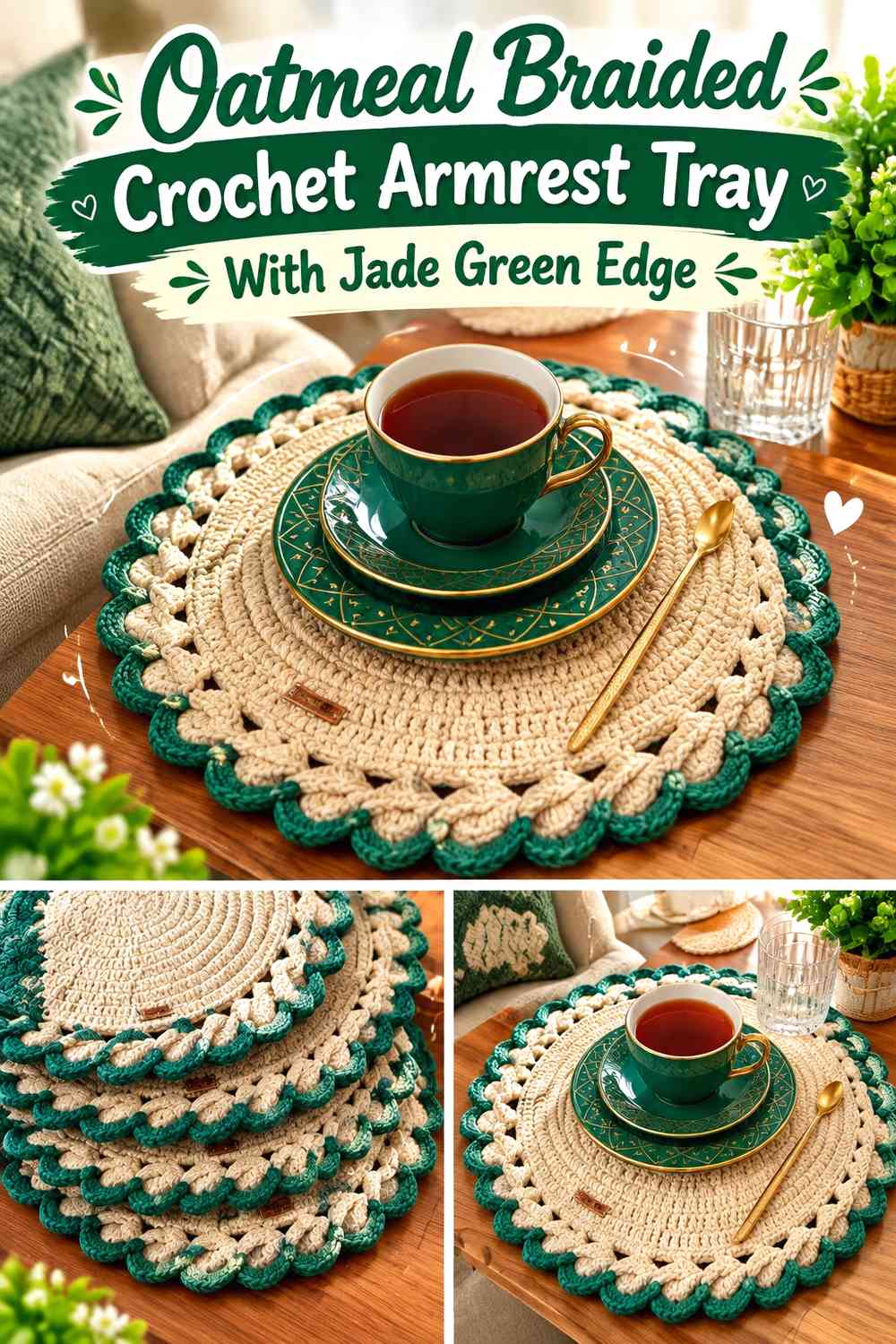
A braided or wave-like mat construction offers plenty of surface interest without requiring many color changes. Keep the main textured area oatmeal and use jade green around the perimeter or along one side that folds over the sofa.
Oatmeal Lets Braided Armrest Texture Stay Visible
Use oatmeal continuously through the braided section so stitch direction provides most of the surface variation. Multiple green interruptions could make it harder to follow the textured lines.
Jade Green Can Contain the Oatmeal Braided Tray
A green outer edge gives the pale panel a clear boundary and can help visually separate it from beige or cream upholstery.
If the armrest tray has one longer hanging side, carry more jade into that section so the border color gains a practical placement role.
Creator Credit: Vanessa Marcondes
6. Jade Green Rectangular Crochet Armrest Tray With Oatmeal Raised Border
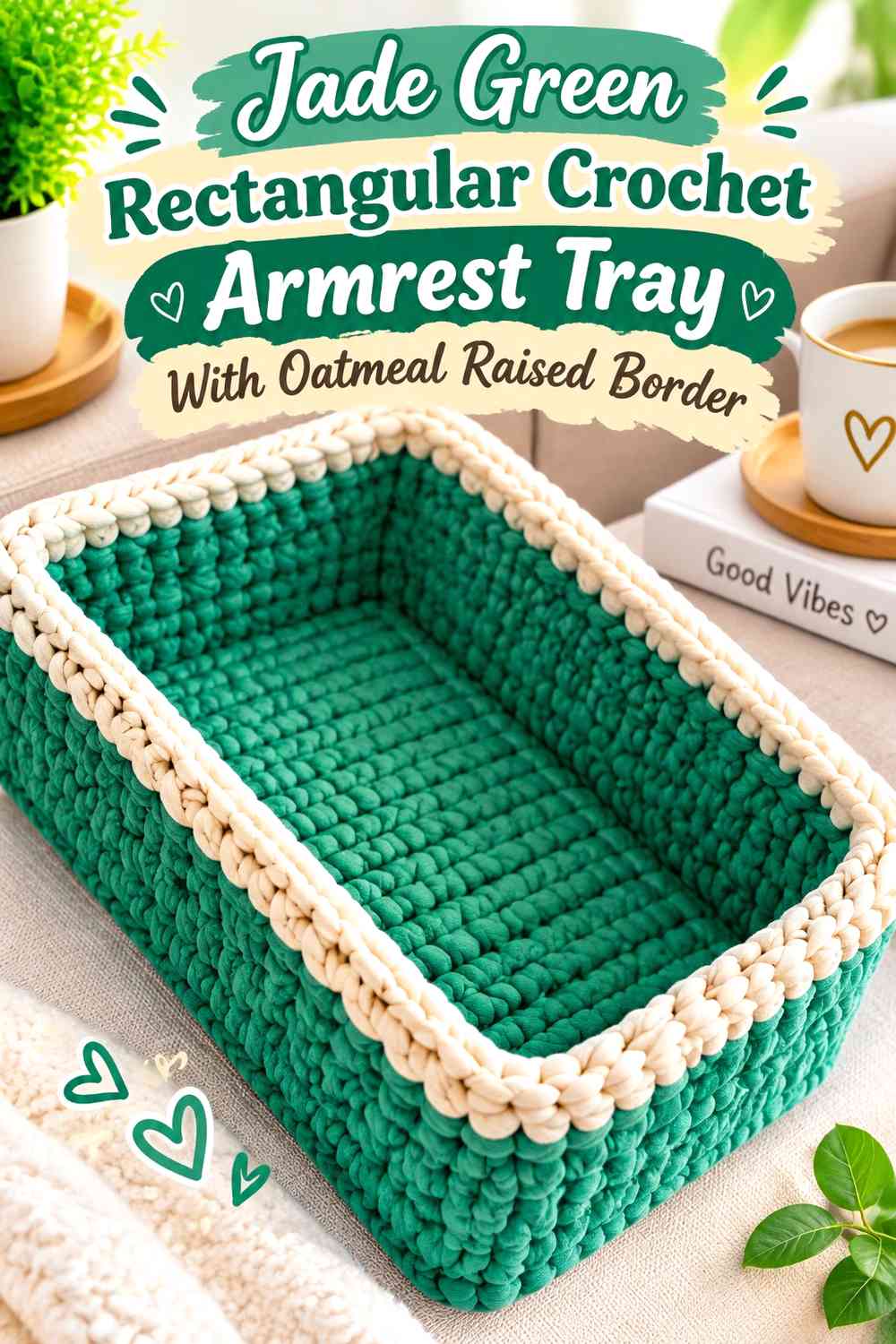
Use a structured rectangular-basket construction as inspiration for a shallow tray-like armrest section, but keep the adaptation soft and appropriate to the sofa. Make the center jade green and use oatmeal around a restrained raised perimeter.
Oatmeal Can Define a Jade Green Rectangular Tray Zone
Place oatmeal around the outside of the green center so the usable-looking top area has a visible boundary. A modest raised edge can create visual separation without implying the crochet is a rigid serving tray.
Jade Green Should Remain Broad Inside the Oatmeal Border
Leave enough green center space that the border does not consume the full armrest width. On a narrow sofa arm, an oversized raised edge can make the central area impractical.
Oatmeal and Jade Green Should Follow the Actual Armrest Width
Measure the sofa arm before choosing the proportions of center and border. A rectangular construction reference should be adapted to the furniture rather than copied at its original basket dimensions.
Creator Credit: Gancho e Trapilho
7. Oatmeal Square-Texture Crochet Armrest Tray With Jade Green Corners
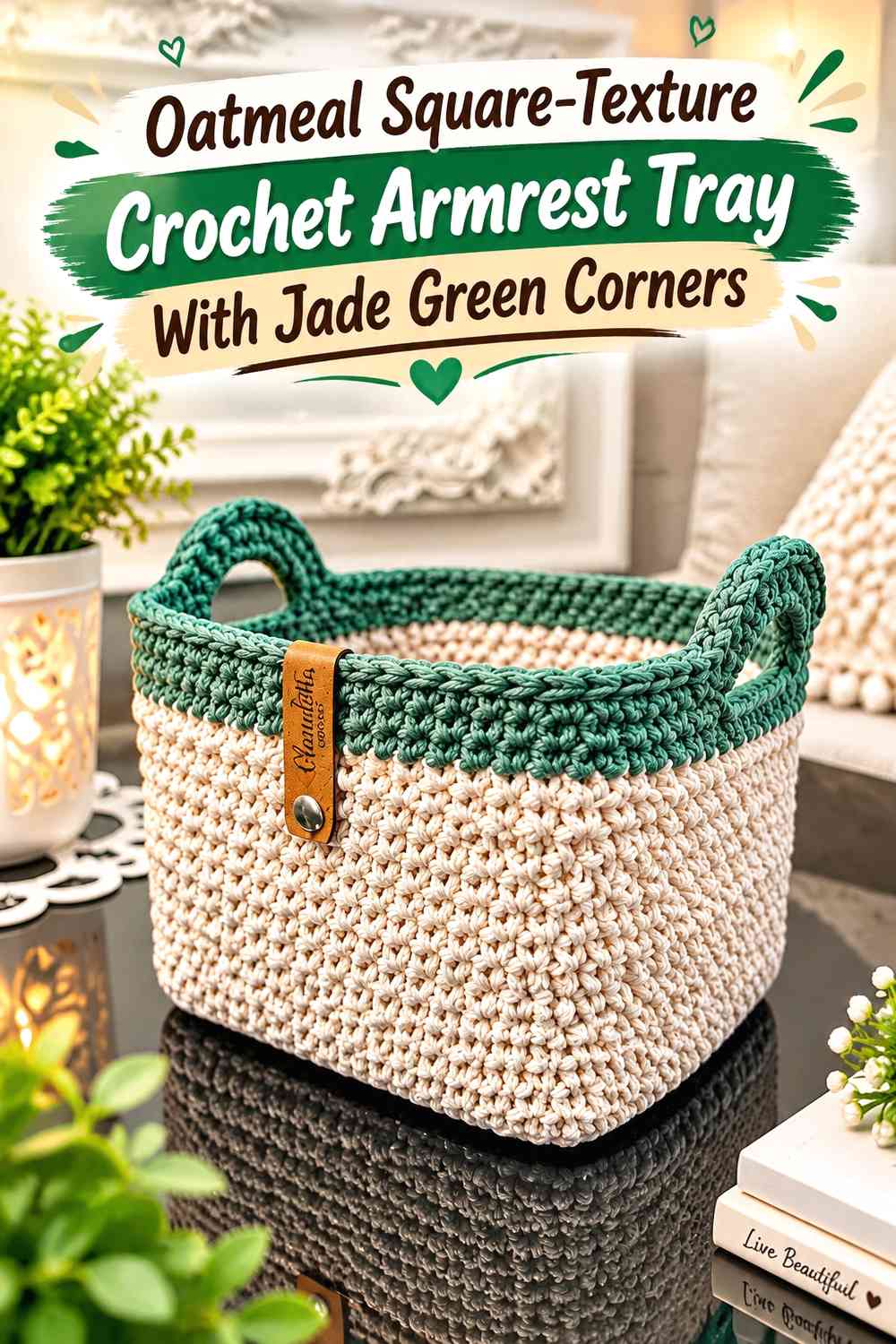
A square-basket construction can inspire a strongly defined top panel. Use oatmeal across the center and jade green in the corner or outer sections so the color emphasizes the armrest shape rather than filling the whole surface.
Jade Green Corners Can Frame an Oatmeal Armrest Center
Place green where the tray panel turns toward its outer edges. The darker corner treatment gives the light center a contained appearance without adding stripes through the main surface.
Oatmeal Should Stay Broad Between Jade Green Corners
Keep the pale center uninterrupted enough for texture to remain visible and for the panel to feel spacious rather than heavily segmented.
Jade Green Can Continue Down One Oatmeal Sofa Side
If the design includes a hanging organizer section, carry jade from the corner into that side panel. This connects the top framing color with the functional lower area.
Creator Credit: Claudetta Crochet
8. Jade Green Structured Crochet Armrest Tray With Oatmeal Center Panel
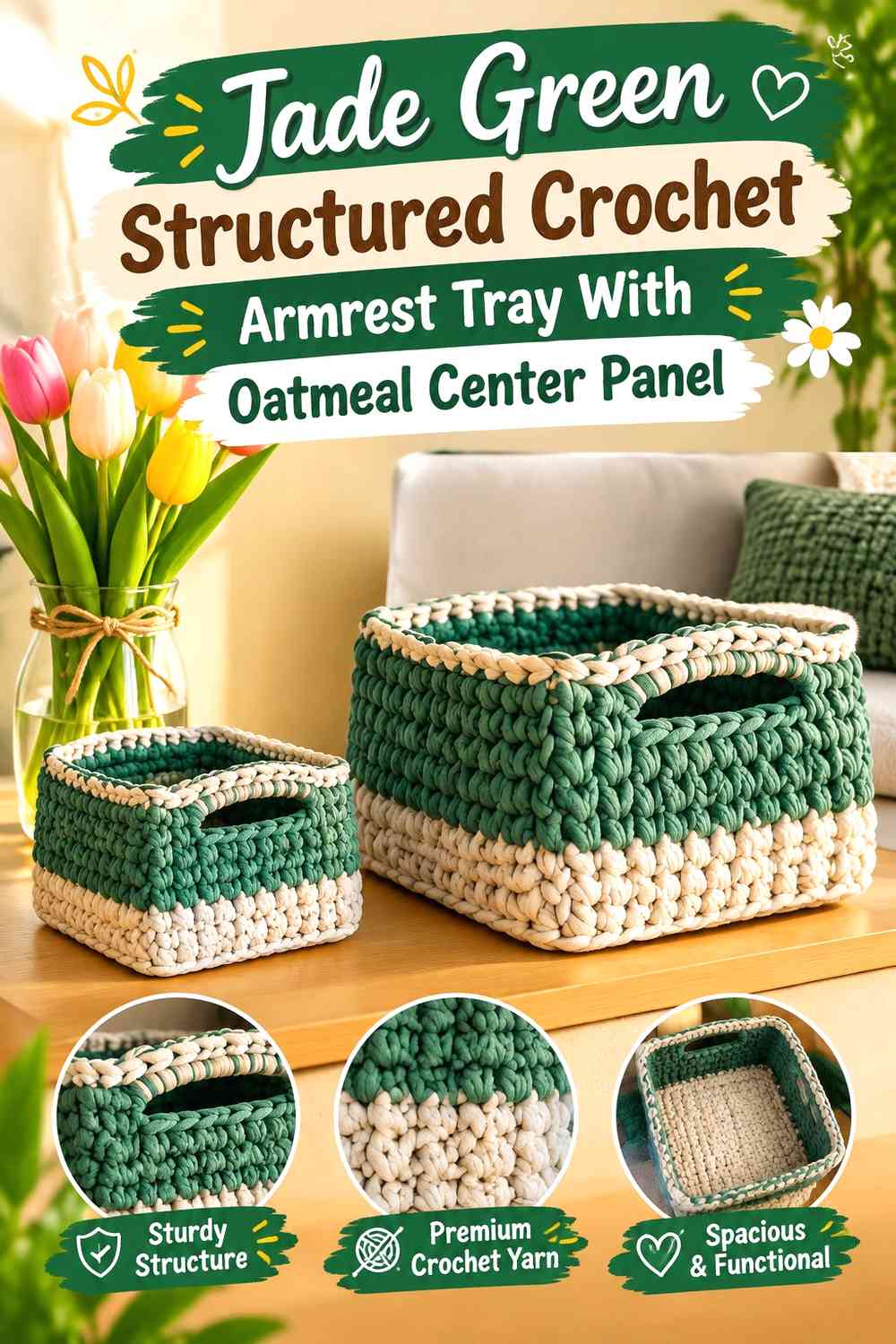
A more structured rectangular reference can produce a visually firm-looking sofa organizer when adapted carefully. Keep jade green around the sides and oatmeal through a broad central strip that lies along the armrest.
Oatmeal Creates a Clear Center Inside Jade Green
Make the oatmeal panel wide enough to form the primary top zone. The pale center can visually soften a strongly saturated green organizer and keep the overall piece from feeling too dark.
Jade Green Side Sections Can Wrap Around the Oatmeal Tray
Use green at the outer edges where the fabric begins to bend over the sofa arm. This makes the color distribution respond to the furniture shape instead of functioning only as decoration.
Creator Credit: Lallaulab
9. Oatmeal Round-Texture Crochet Armrest Tray With Jade Green Side Pocket
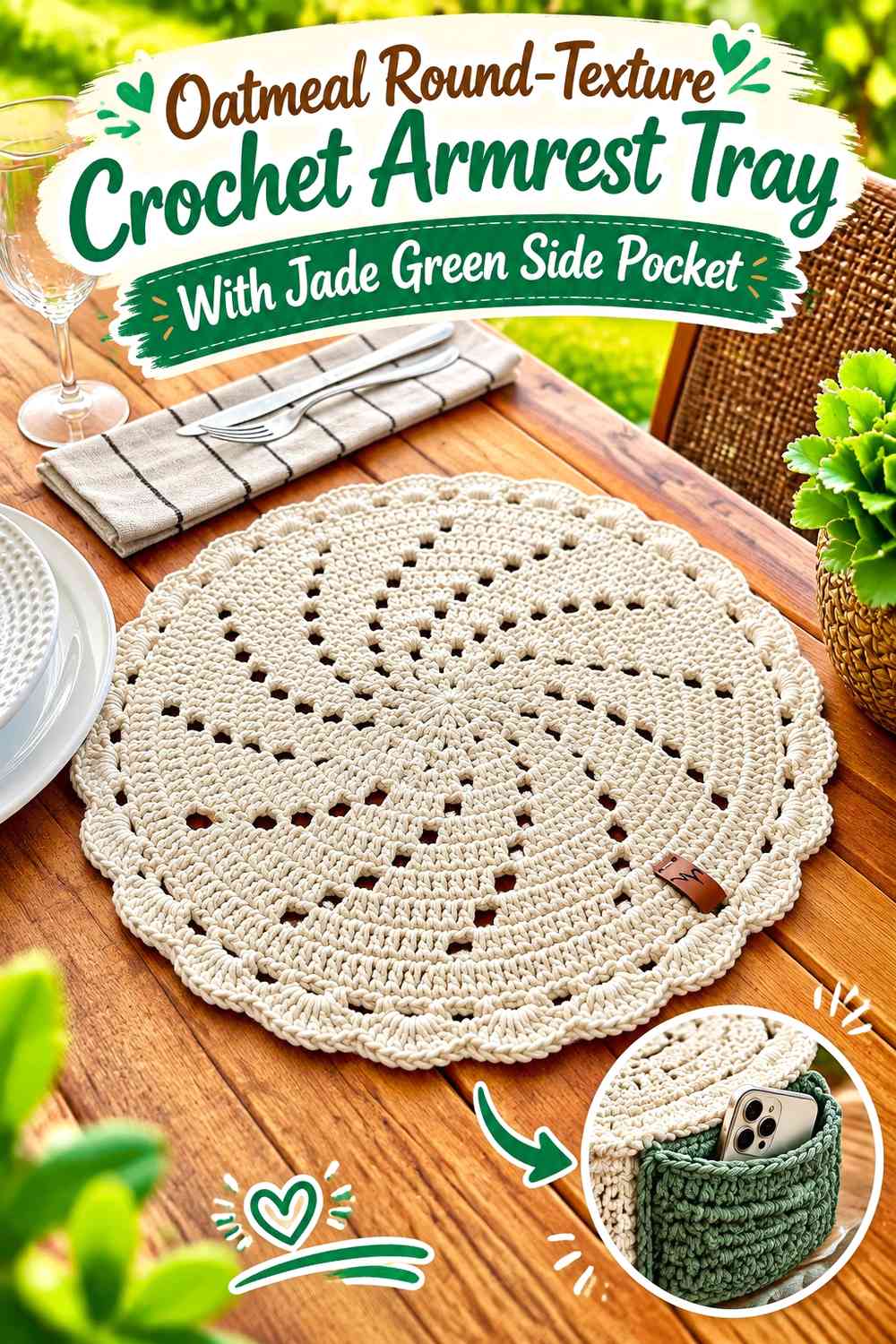
A circular placemat construction can be adapted conceptually into a rounded or medallion-style textured panel on the top of the sofa organizer. Keep the decorative center oatmeal and use jade green for a simpler side pocket.
Oatmeal Can Make a Textured Medallion Visible on the Armrest
Use the pale color across the entire central motif rather than alternating green through every round. This allows the radial or circular texture to remain the main decorative element.
Jade Green Should Stay Simpler Beside Oatmeal Texture
Keep the hanging pocket comparatively plain so it does not compete with the detailed top panel. The contrast between textured oatmeal and solid-looking jade creates enough variation.
Jade Green Can Frame the Oatmeal Medallion Edge
A narrow dark border around the central section can connect the round texture with the green hanging side without changing the motif itself.
Creator Credit: Marcelo Nunes Croche
10. Jade Green Jasmine-Texture Crochet Armrest Tray With Oatmeal Border
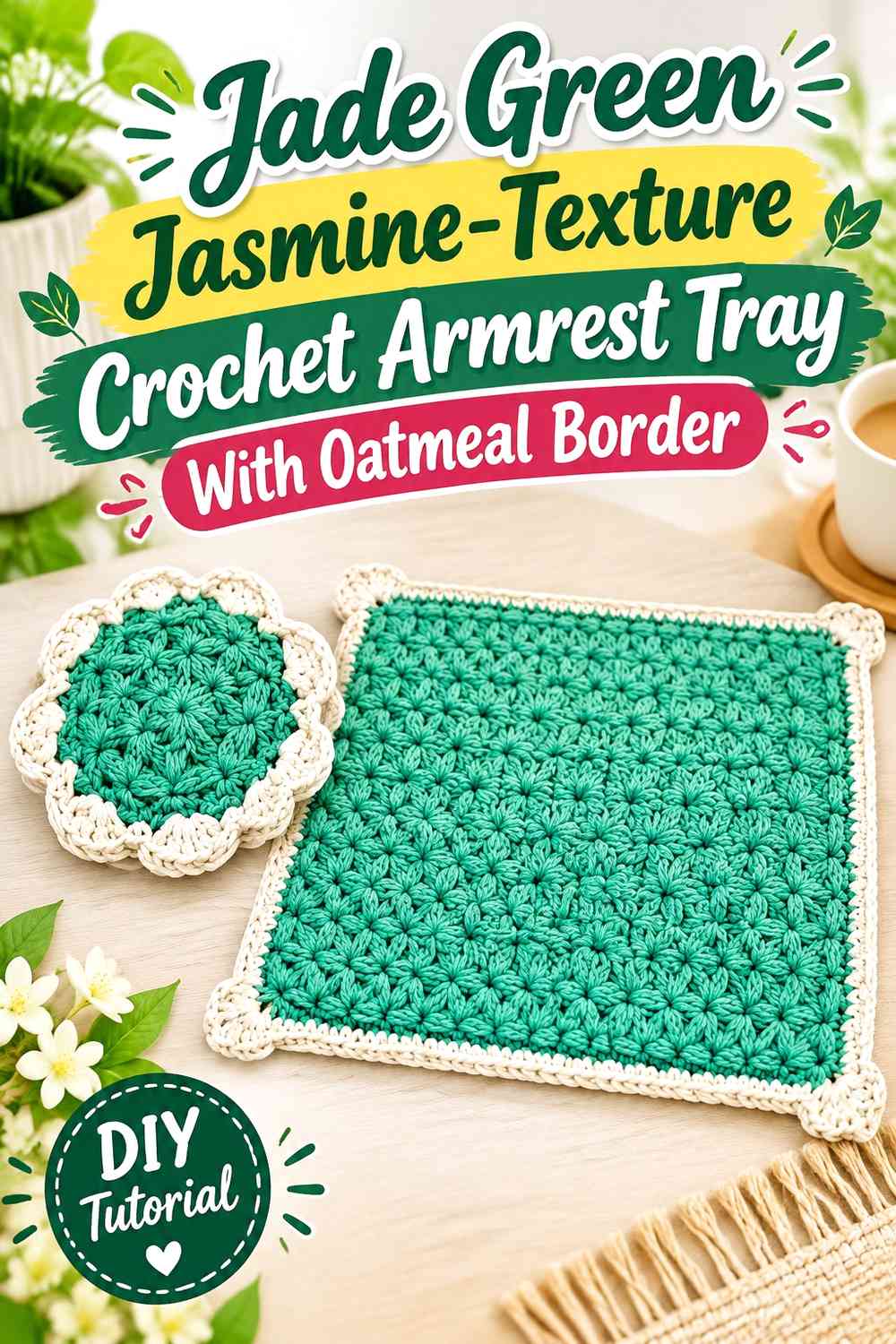
A dense floral or jasmine-like texture can provide a plush-looking top panel. Use jade green for that main texture and oatmeal around the outside so the border separates the intricate surface from the sofa.
Jade Green Should Carry the Main Textured Tray Surface
Keep the dense stitch pattern primarily green so its repeating texture stays visually connected. Alternating colors inside every repeat could make the surface much busier.
Oatmeal Can Calm a Detailed Jade Green Border Area
Use oatmeal as a simple edge instead of adding another complex stitch pattern. The lighter boundary provides contrast while letting the green texture remain the focal point.
Oatmeal Should Stay Clear of Jade Green Raised Center Areas
If the dense texture produces significant height, keep a flatter section where desired rather than assuming every part of the organizer needs the same raised stitch. A sofa-arm tray benefits from distinguishing decorative areas from the most usable top surface.
Creator Credit: Bag-O-Day Crochet
11. Oatmeal Geometric Crochet Armrest Tray With Jade Green Contrast
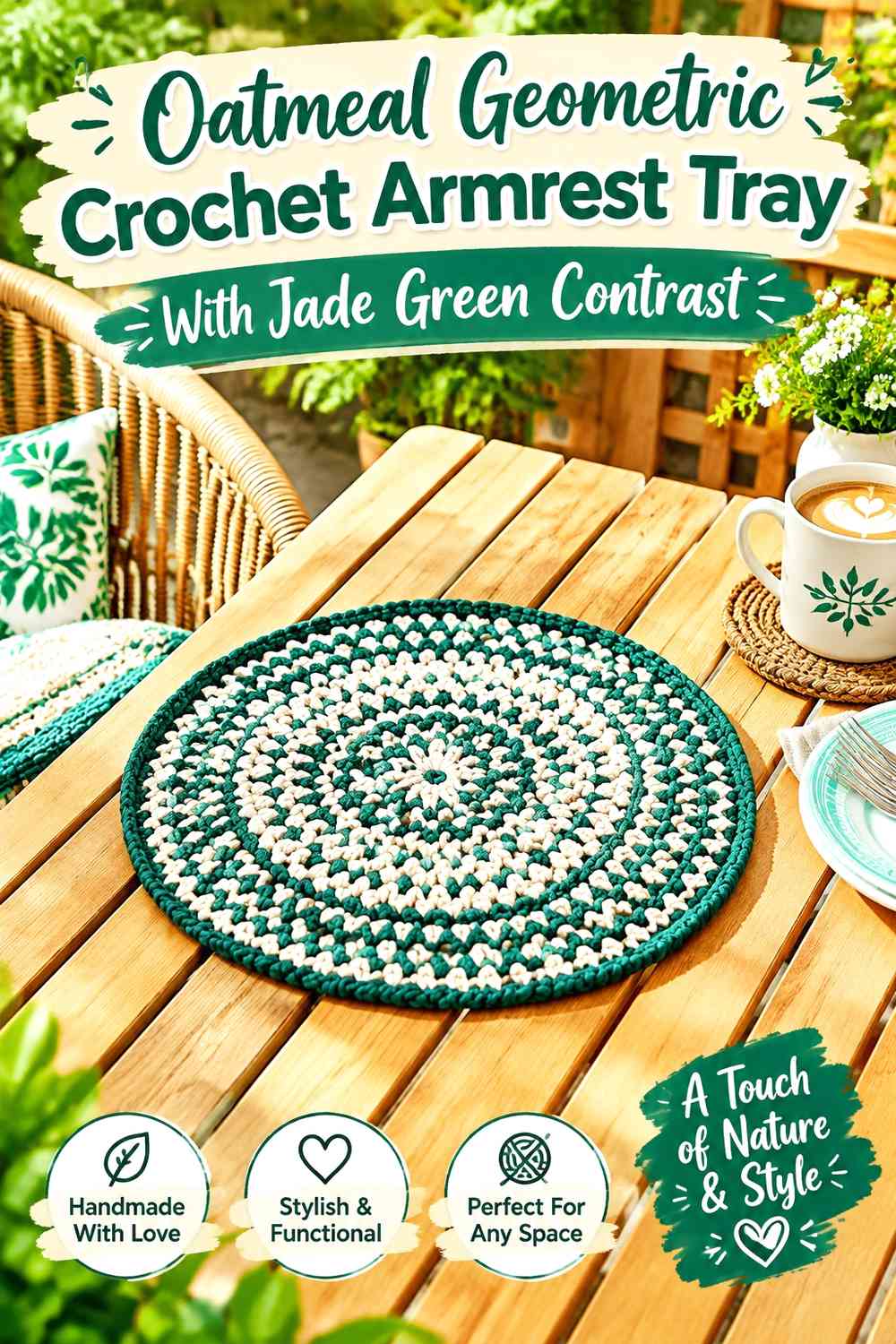
Use a geometric or radial placemat pattern as the decorative top zone, keeping oatmeal as the main field and jade green in selected sections or the outer frame. This creates a more graphic winter armrest piece without requiring patchwork assembly.
Jade Green Should Mark Selected Oatmeal Geometric Sections
Use green in one repeatable role, such as the outer band or alternating large sections. Avoid coloring every small geometric detail differently, because the stitch pattern already provides strong visual structure.
Oatmeal Needs Enough Space Around Jade Green Geometry
Leave broad pale sections between darker areas so the pattern remains easy to read after the mat bends over the armrest.
Jade Green Can Continue From the Oatmeal Geometry Into a Pocket
If a hanging pocket is added, use jade there to repeat the darker motif color. This creates a clear relationship between the decorative top and functional side panel.
Creator Credit: The Crochet Crowd
12. Jade Green Flat Crochet Armrest Tray With Oatmeal Textured Strip
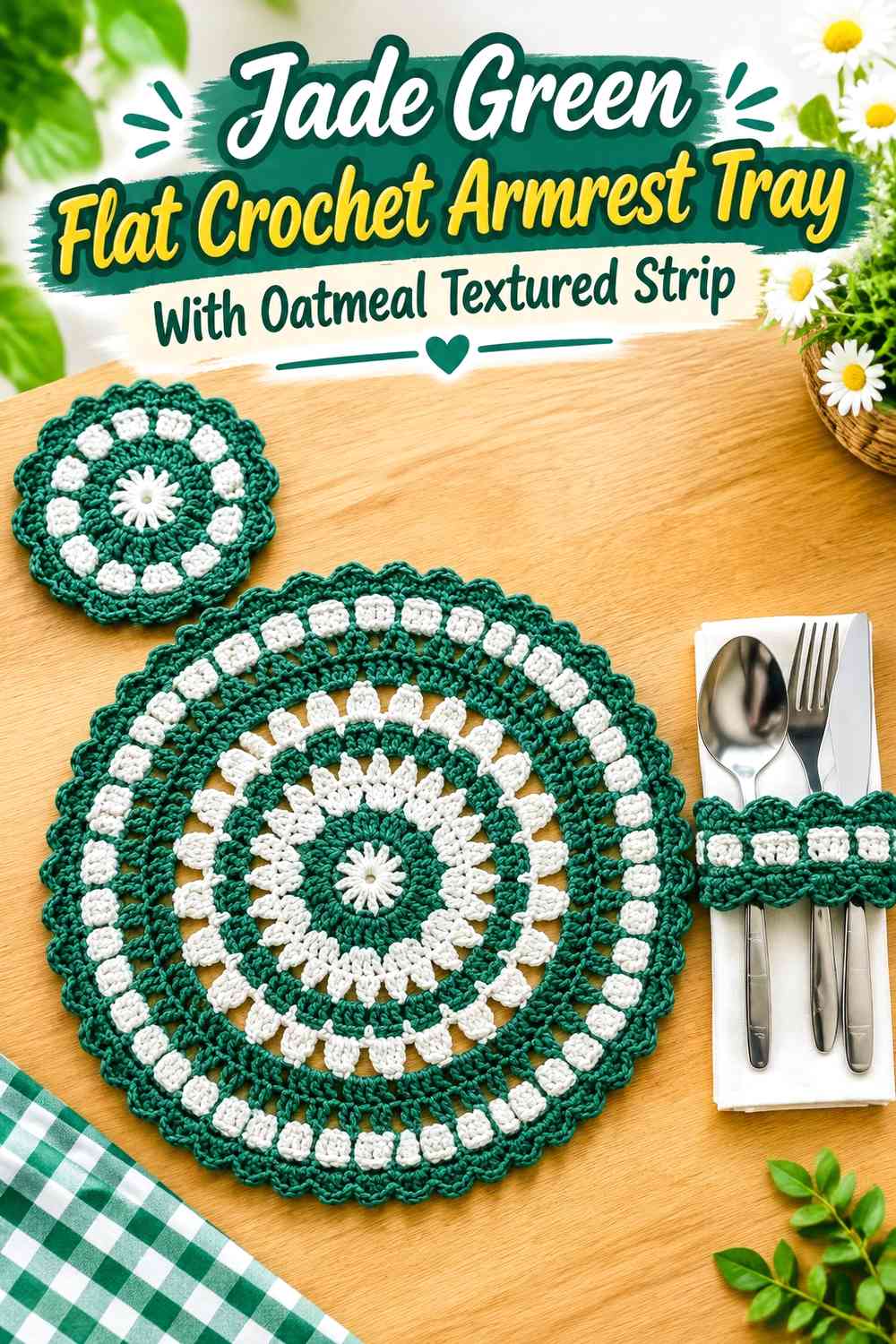
For a simpler sofa-arm surface, keep most of the panel jade green and run one oatmeal textured strip lengthwise through the center. The long color division works naturally with the direction of a sofa arm.
Oatmeal Can Create a Long Textured Line Through Jade Green
Use the pale strip as the main decorative feature rather than placing several short bands across the arm. A lengthwise panel emphasizes the armrest direction and can remain visible even when a remote or small object rests nearby.
Jade Green Should Stay Broad Beside the Oatmeal Strip
Leave substantial green on both sides so the oatmeal reads as an inset rather than splitting the piece into equal stripes.
Creator Credit: Crochet with Clare
13. Oatmeal Rectangular Crochet Armrest Tray With Jade Green Side Frame
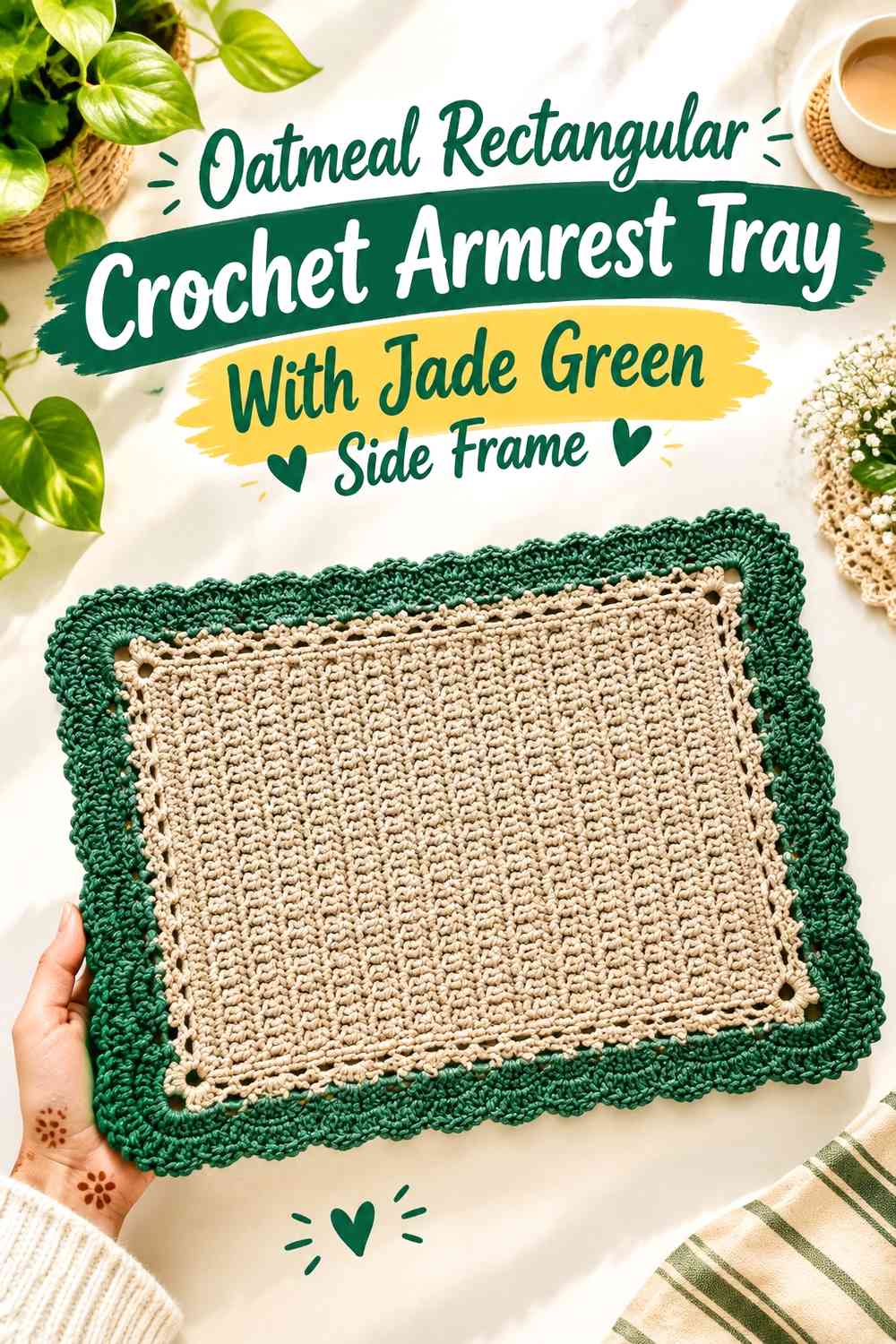
Use a flat rectangular placemat construction as the main sofa-arm panel and place jade green along the long sides or outer frame. This is a straightforward option when you want minimal raised texture across the center.
Jade Green Can Frame an Oatmeal Rectangular Armrest Tray
Use the darker color around the long perimeter where it can clearly separate the mat from the sofa. A consistent frame also makes an adapted pocket or hanging extension easier to integrate later.
Oatmeal Should Remain Uninterrupted Inside Jade Green
Keep the center relatively quiet so the rectangular shape and border provide the visual structure. This direction is useful when you prefer color blocking over heavy texture.
Jade Green Can Extend Below the Oatmeal Armrest Edge
If one side is lengthened into a hanging organizer, continue the green frame into that lower section. The color change then follows the physical bend of the sofa arm.
Creator Credit: Crochetnaari
14. Jade Green Wave-Texture Crochet Armrest Tray With Oatmeal Bands
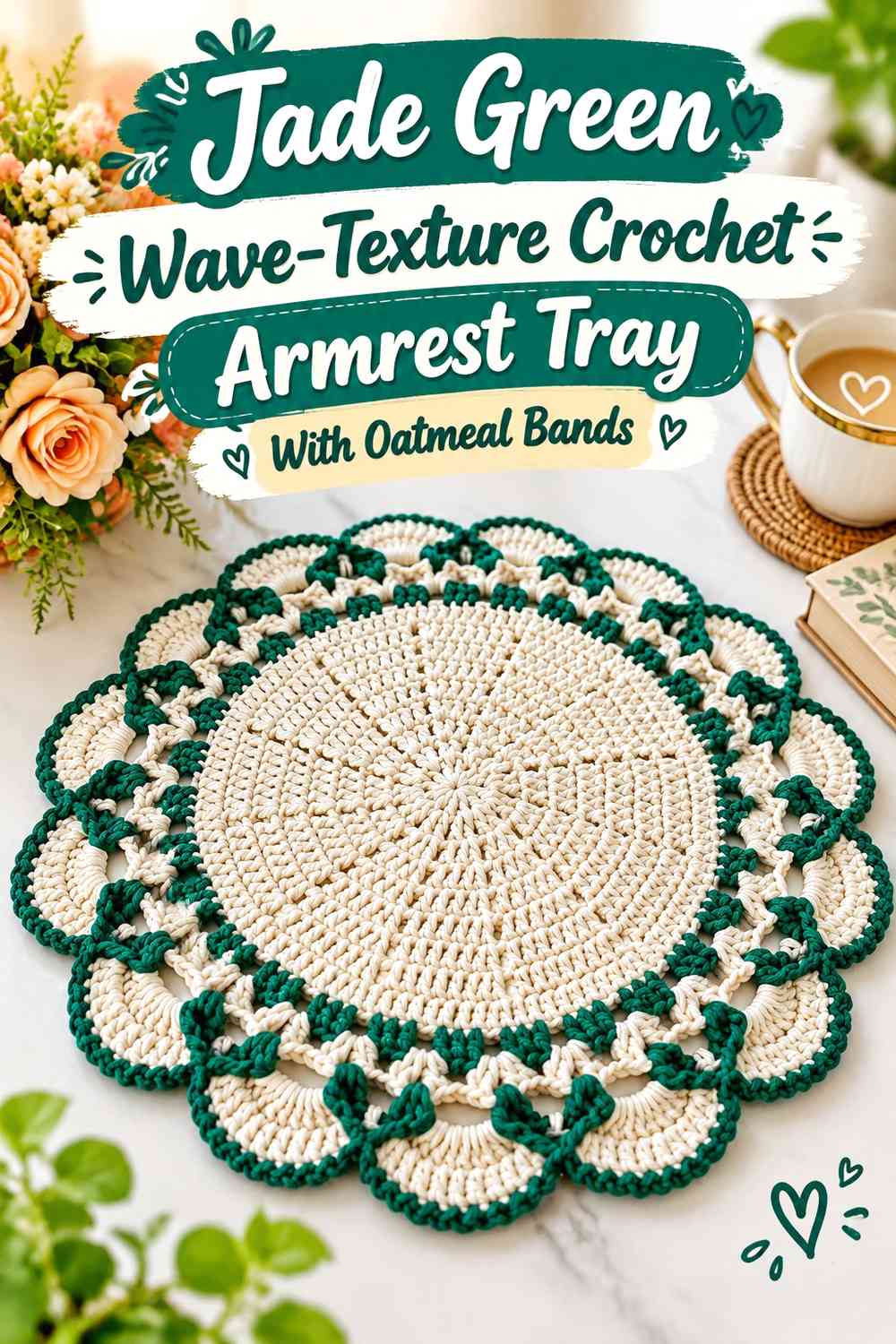
Use a wave-like or braided surface with jade green as the dominant shade and oatmeal appearing in a few broad bands. The curved texture already creates movement, so the color changes should remain simple.
Oatmeal Bands Need Enough Width Across Jade Green Waves
Use fewer, broader pale sections so the color remains visible across the textured surface. Very narrow oatmeal lines may become visually fragmented by the changing stitch direction.
Jade Green Should Connect the Oatmeal Wave Sections
Leave substantial jade areas between the bands so the tray still reads as green-led. The darker field gives the lighter curves enough contrast to remain distinct.
Oatmeal Can Finish the Jade Green Armrest Edge
A narrow pale edge can repeat the stripe color and visually close the design without introducing another wide band.
Creator Credit: Ateliê Isabela Fernanda
15. Oatmeal Lace-Texture Crochet Armrest Tray With Jade Green Border
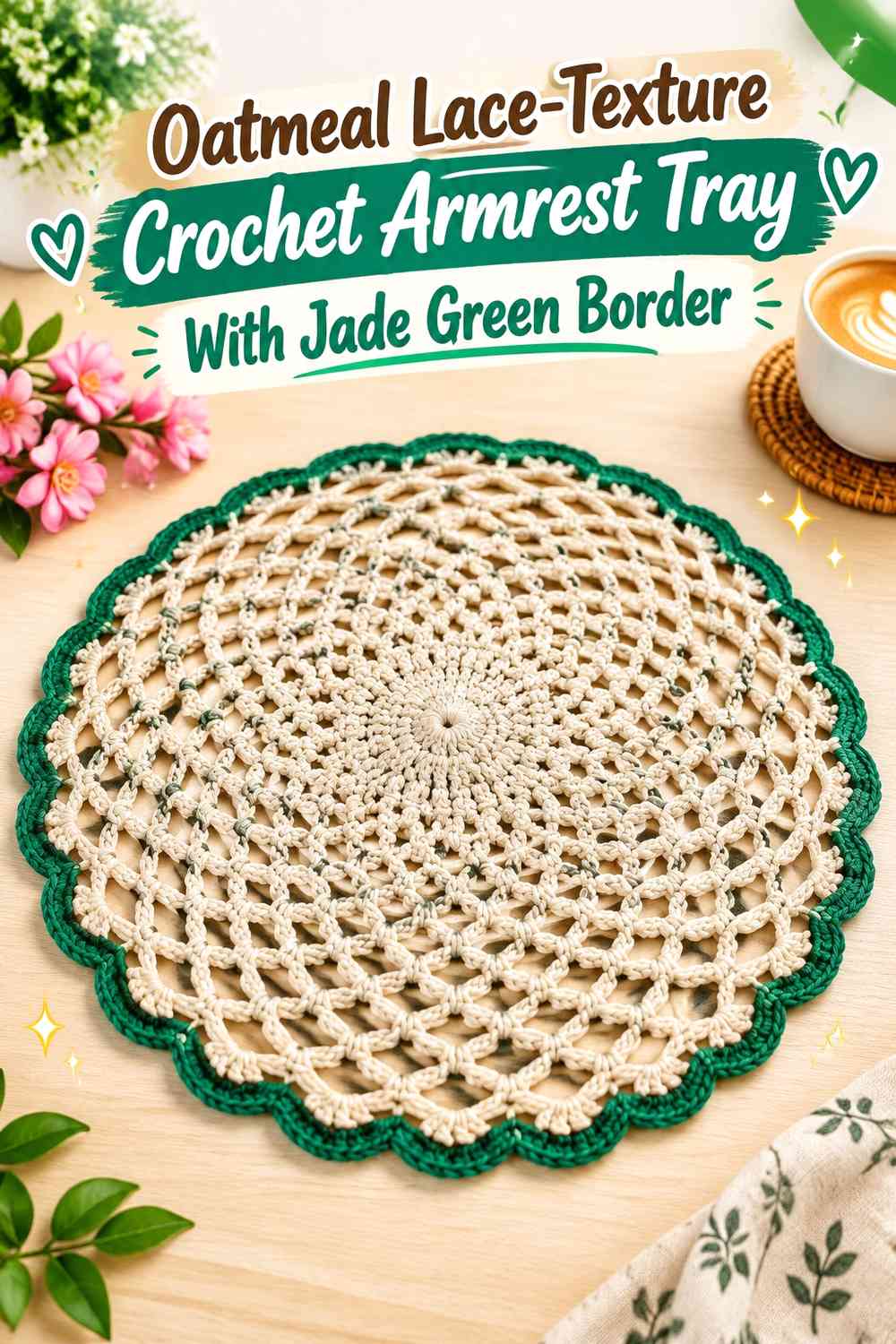
A lace-style placemat construction can inspire a more decorative armrest cover when the open texture suits the intended use. Keep the lace oatmeal and use jade green around the outside so the delicate surface has a strong frame.
Jade Green Can Make Oatmeal Lace Easier to See
A dark border gives the pale openwork a clear perimeter. This is particularly useful when the sofa upholstery is also light and the oatmeal texture might otherwise blend into it.
Oatmeal Lace Should Stay Away From Heavily Used Jade Green Zones
If the armrest tray will hold small objects regularly, consider keeping the most open lace toward exposed decorative areas rather than the most functional landing zone. Openwork may not support small items as predictably as a denser fabric.
Jade Green Should Remain Simple Around Oatmeal Lace
Avoid adding a second elaborate border stitch. The lace already supplies substantial visual detail, so a cleaner green frame will usually preserve the hierarchy.
Creator Credit: Camila Passadori handmade
16. Jade Green Firm-Edge Crochet Armrest Tray With Oatmeal Center

For the final direction, use a basket-style reference to create a visually structured edge around an oatmeal center. Jade green can cover the perimeter and short side sections while the light middle remains the main armrest surface.
Oatmeal Can Keep the Jade Green Armrest Tray Center Light
Use oatmeal through most of the central panel so the tray does not become one dark green block across the sofa arm. The pale field also gives any simple stitch texture more visibility.
Jade Green Can Define the Oatmeal Perimeter Without Implying Rigidity
A firm-looking crochet edge can visually frame the center, but the finished piece is still textile. Keep expectations appropriate to a soft organizer rather than treating the border as a rigid wall capable of containing unstable objects.
Jade Green and Oatmeal Proportions Should Follow the Sofa Arm
Drape the developing piece over the actual furniture before deciding the final border depth. A wide green edge that looks balanced on a table may consume too much of the top surface once it wraps around a narrow armrest.
Creator Credit: Chunky Yarn Barn. Australia
Comparing the Oatmeal and Jade Green Sofa Armrest Tray Directions
For the closest organizer-style constructions, Ideas 1, 3, and 4 draw most directly from sofa arm covers and remote-storage formats. These are useful when the armrest piece needs a hanging section rather than functioning only as a decorative top mat.
Ideas 6, 7, 8, and 16 use basket-inspired structure to create more strongly defined tray zones. They work best as visual and construction references for shallow borders or firmer-looking edges, not as claims that a crochet armrest tray becomes a rigid serving tray.
Ideas 5, 9, 10, 11, 12, 13, 14, and 15 emphasize the upper surface. Choose braided, radial, jasmine, geometric, rectangular, wave, or lace texture according to how decorative you want the exposed armrest section to be.
For the quietest winter palette, oatmeal-dominant Ideas 1, 3, 5, 7, 9, 13, and 15 let jade green act mainly as a border or organizer color. Jade-dominant versions create a stronger furniture accent and use oatmeal to expose texture or lighten the central landing zone.
Conclusion
Oatmeal and jade green work especially well on a textured sofa armrest tray when color placement helps explain the function of each section. Oatmeal can create a calm central surface and reveal braids, ribbing, radial texture, or lace, while jade green can define pocket panels, outer borders, folds, and structured-looking edges.
Choose a true armrest-organizer direction when you need side pockets, a flat textured panel when the top surface is the main feature, or a basket-inspired border when you want the tray zone to feel more visually contained. Keep the most raised or open texture away from areas where a flatter surface would be more practical.
Before finalizing the dimensions, test the developing piece directly on the sofa. Armrest width, curvature, upholstery friction, and the length of any hanging section all affect how the textile sits. A crocheted armrest tray remains a soft organizer rather than a rigid or spill-resistant serving surface, so use it for items suited to that construction. Follow the linked tutorials for their demonstrated arm covers, organizers, mats, or basket constructions and treat these oatmeal-and-jade-green sofa adaptations as independent planning ideas.
Frequently Asked Questions
Should Oatmeal or Jade Green Dominate a Crochet Sofa Armrest Tray?
Use oatmeal as the main color when you want texture to remain light and understated. Jade green works well as the dominant shade when the organizer should become a stronger accent against neutral upholstery.
Where Should Jade Green Go on an Oatmeal Sofa Armrest Tray?
Useful placements include pocket panels, the outer border, the section that folds over the arm, corner framing, or a narrow raised edge. Keeping jade tied to structural areas helps the two-color layout look intentional.
Can a Crochet Sofa Armrest Tray Hold Drinks?
Treat it as a soft textile organizer rather than a rigid serving tray. It does not automatically provide a level, waterproof, or spill-resistant surface. Use the top only for objects appropriate to the actual stability and construction of your armrest and organizer.
How Can I Keep Oatmeal Texture Visible on a Sofa Armrest?
Use larger uninterrupted oatmeal sections and avoid placing several contrasting stripes through intricate stitchwork. Braids, ridges, and radial texture usually read more clearly when the background color stays consistent.
Can I Adapt a Crochet Placemat Into an Armrest Tray?
A placemat can provide a useful flat-panel construction reference, but its width and length need to suit the actual sofa arm. If you add hanging pockets or side sections, those require separate planning rather than being assumed from the placemat construction.
Can a Crochet Basket Tutorial Be Used for a Sofa Armrest Tray?
It can provide ideas for rectangular bases, defined corners, or shallow raised edging. A basket tutorial is not automatically an armrest-tray pattern, so adjust the concept to the furniture and remember that a soft crochet edge does not turn the organizer into a rigid tray.
What Should I Preserve if I Substitute Oatmeal or Jade Green?
Preserve their contrast and intended roles. An oatmeal substitute should remain light enough to reveal texture and create a calm field, while a jade-green substitute should remain distinct enough to define pockets, borders, and structural sections.