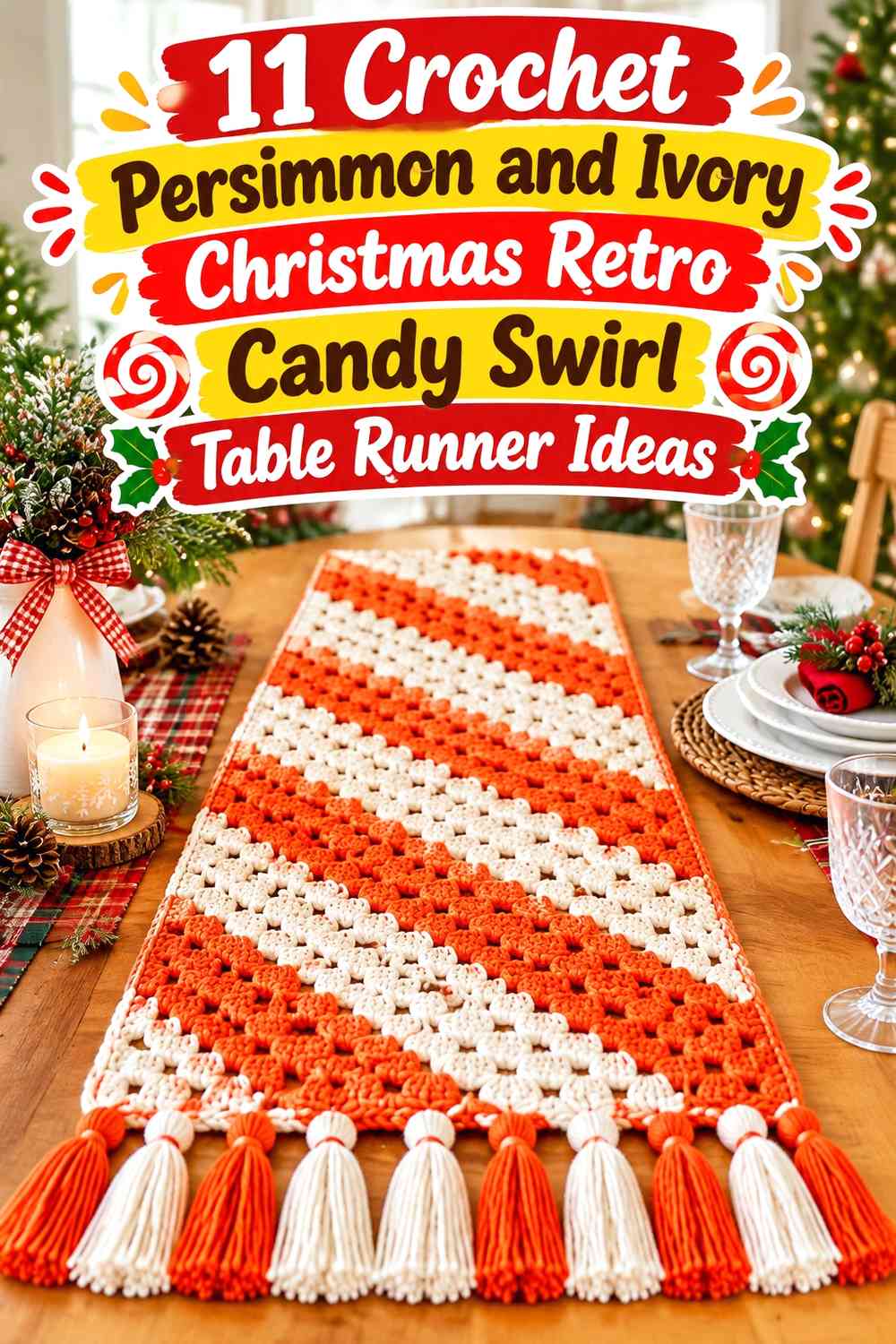

Persimmon and ivory offer a softer alternative to bright red and white for a Christmas crochet table runner. Persimmon can provide the warm, saturated side of a retro candy palette, while ivory creates the pale separation needed to make swirls, stripes, motifs, and scalloped details readable across a long table surface.
The candy-swirl effect does not require every runner to contain a literal peppermint motif. Alternating curves, spiral centers, diagonal color changes, radiating blocks, round motifs, and repeated persimmon-and-ivory bands can all suggest vintage wrapped candy when the two colors repeat with a clear rhythm.
Because a table runner is viewed both from above and along its length, color placement should work from both directions. Decide whether the candy effect belongs across the whole runner, only in repeated motifs, or primarily at the two ends before distributing persimmon and ivory.
The tutorials below support table-runner constructions and adaptable motif-runner concepts. The persimmon-and-ivory palettes are independent color adaptations rather than claims about the colors used by the tutorial creators.
Quick List
- Persimmon and Ivory Diagonal Candy-Stripe Crochet Table Runner
- Ivory Field with Persimmon Candy-Swirl Crochet Christmas Runner
- Persimmon and Ivory Zigzag Granny Candy Crochet Table Runner
- Ivory Filet and Persimmon Candy-Window Crochet Table Runner
- Persimmon Center and Ivory Scallop Crochet Retro Candy Runner
- Ivory Oval and Persimmon Swirl-End Crochet Christmas Table Runner
- Persimmon and Ivory Spiral-Medallion Crochet Candy Table Runner
- Ivory Granny Blocks with Persimmon Pinwheel Crochet Table Runner
- Persimmon Rosette and Ivory Join Crochet Retro Candy Runner
- Ivory Christmas Runner with Persimmon Candy Border
- Persimmon and Ivory Lace-Fan Crochet Vintage Candy Table Runner
Decide Whether Persimmon or Ivory Should Lead the Candy Palette
A persimmon-dominant runner creates a warmer, stronger Christmas statement and lets ivory function as the visual equivalent of the pale stripe in a vintage hard candy. This works especially well when the runner has broad solid areas, textured blocks, or heavily defined borders.
An ivory-dominant runner is lighter. Persimmon can then appear in spirals, diagonal stripes, motif centers, scallops, or end panels without filling the entire table with saturated color.
Equal coverage can work for checkerboards, pinwheels, and repeated stripes, but it needs a consistent pattern. Randomly switching between equal amounts of persimmon and ivory can make a long runner feel fragmented instead of intentionally retro.
Use Persimmon and Ivory to Create a Clear Candy Swirl
For an obvious candy reference, color needs to appear to rotate, radiate, or alternate. A spiral motif can do this literally, but a zigzag or fan arrangement can create similar movement when persimmon and ivory repeatedly change direction.
Keep the value difference visible. If your ivory is quite warm and the persimmon is pale or muted, small alternating details may blend from a distance. In that case, make the colored bands broader or concentrate persimmon into larger motif sections.
Avoid introducing several additional Christmas colors unless they have a clear purpose. The retro character here comes largely from the restricted two-color relationship.
Place Persimmon and Ivory Where the Runner Will Stay Visible
Centerpieces, serving dishes, and candles can cover the middle of a table runner. If that is likely, place some of the strongest persimmon-and-ivory candy detailing toward both ends instead of concentrating every focal motif in the center.
For a dining table, repeating the palette from one end to the other keeps the runner coherent even when part of it is covered. A quieter ivory center with more elaborate persimmon swirls at the ends is another useful approach when the middle will usually sit beneath table decor.
1. Persimmon and Ivory Diagonal Candy-Stripe Crochet Table Runner
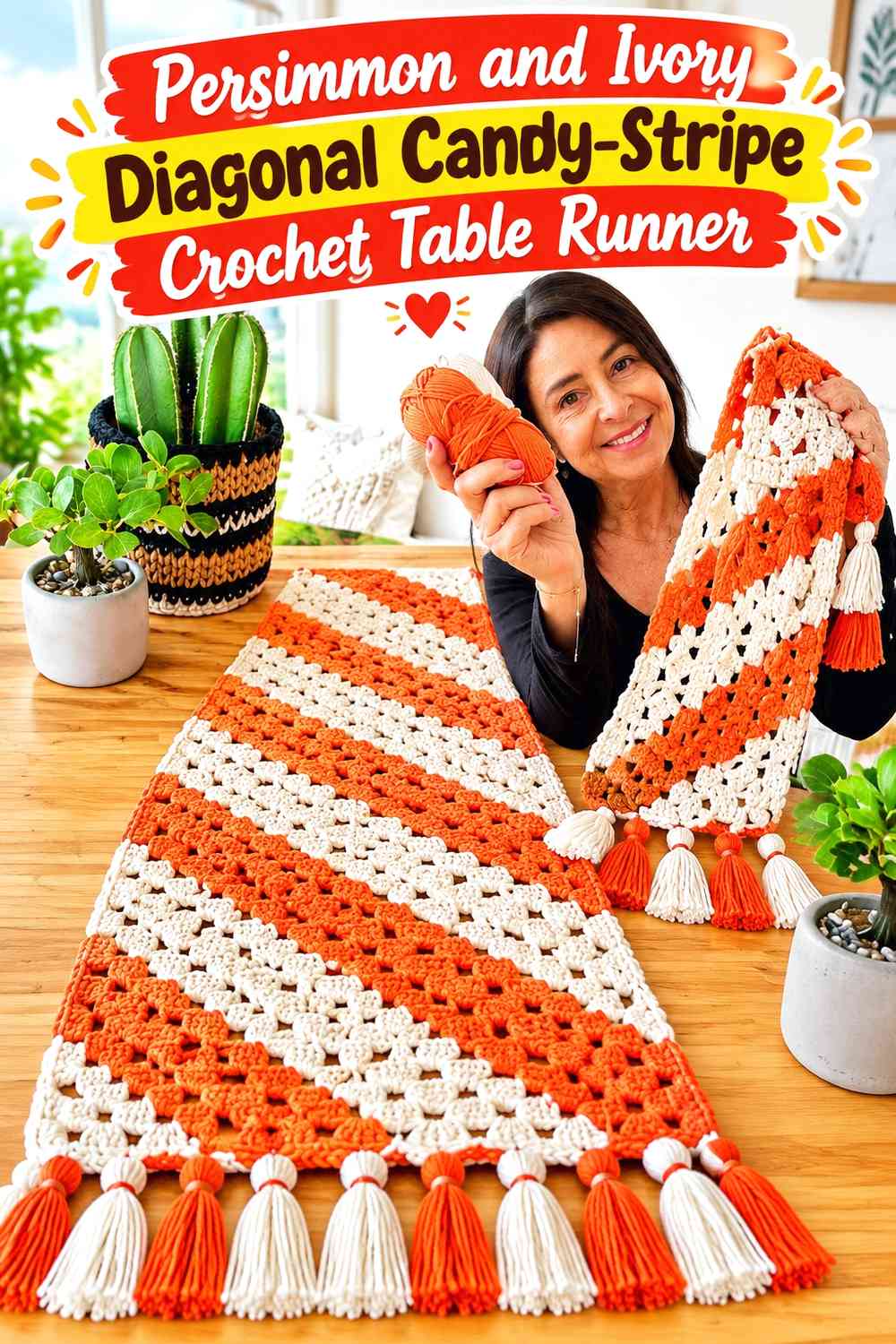
This version uses repeated diagonal movement to evoke a twisted retro candy wrapper or striped hard candy. Let persimmon and ivory alternate in broad directional sections rather than tiny stripes. Across a long table runner, larger areas remain easier to recognize and keep the two-color rhythm from becoming visually noisy.
Persimmon Should Form Strong Diagonal Crochet Bands
Give persimmon enough width to create visible directional movement. Thin isolated orange-red lines can look like ordinary trim, while broader repeated sections make the candy-stripe reference more apparent from across the table.
Ivory Should Separate Persimmon Without Breaking the Candy Rhythm
Repeat ivory consistently between the persimmon areas. The pale sections need enough space to remain distinct rather than becoming narrow outlines around a dominant warm field.
Persimmon Can Finish an Ivory Candy-Stripe Runner Edge
A persimmon outer border can contain the alternating interior and prevent ivory at the edge from visually disappearing against a light tabletop.
Creator Credit: Deco y Puntos
2. Ivory Field with Persimmon Candy-Swirl Crochet Christmas Runner
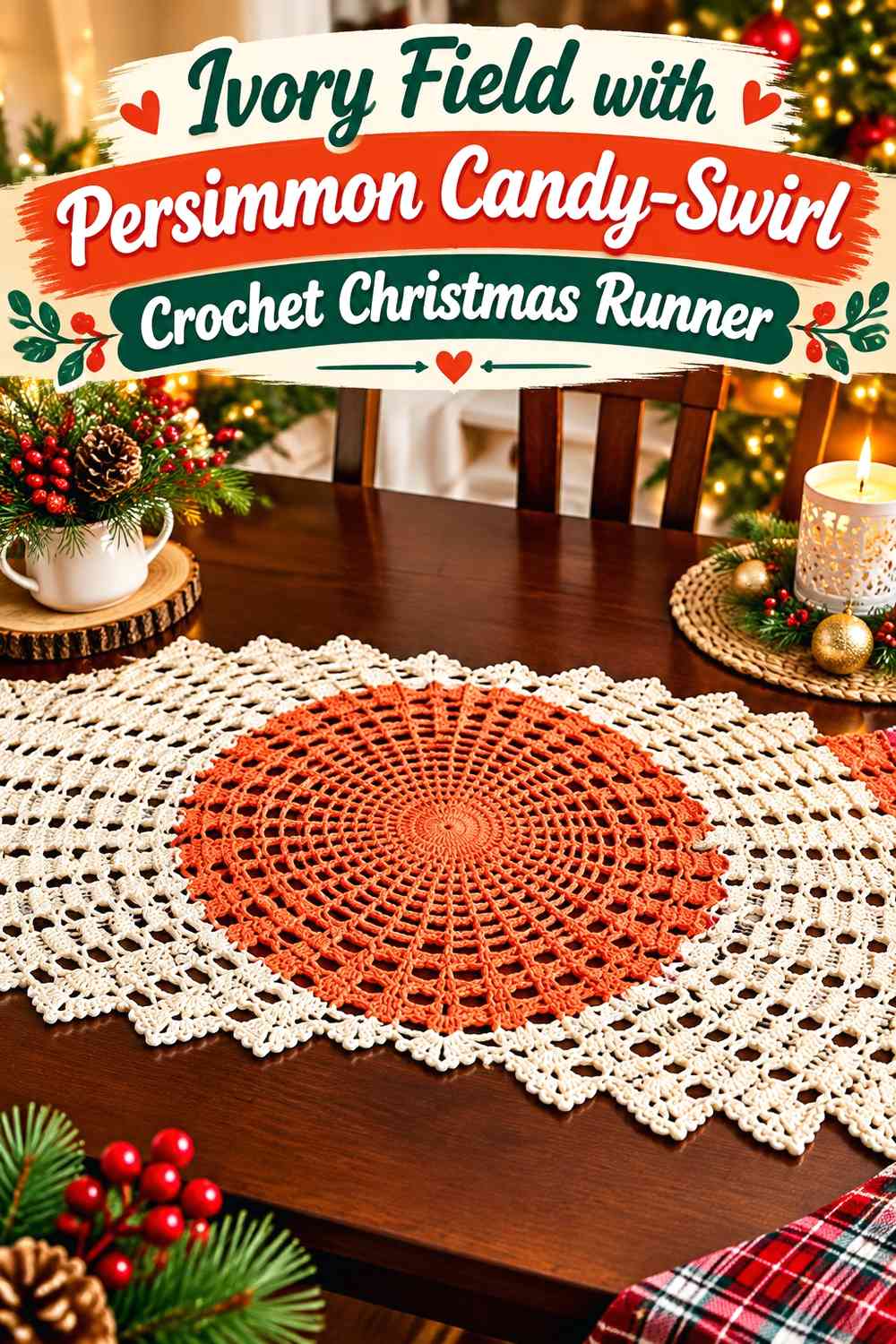
Use ivory across most of the runner and concentrate persimmon in repeating curved or radiating focal areas. This creates a lighter Christmas table setting while still making the warm candy color noticeable at regular intervals.
Ivory Gives Persimmon Candy Motifs More Negative Space
Keep enough ivory around each colored focal area so the persimmon shapes do not merge into one continuous stripe. The background space is part of what makes separate candy-like motifs readable.
Persimmon Should Repeat Through the Ivory Crochet Runner
One persimmon motif at each end can work, but repeating the color at least once through the interior creates a stronger relationship between both sides of the runner.
Ivory Can Keep Persimmon Christmas Ends From Feeling Too Heavy
If the end sections contain more persimmon, leave ivory visible around their perimeter. This keeps the warmer color from visually weighing down both ends compared with the pale center.
Creator Credit: Que Bonito es Tejer
3. Persimmon and Ivory Zigzag Granny Candy Crochet Table Runner
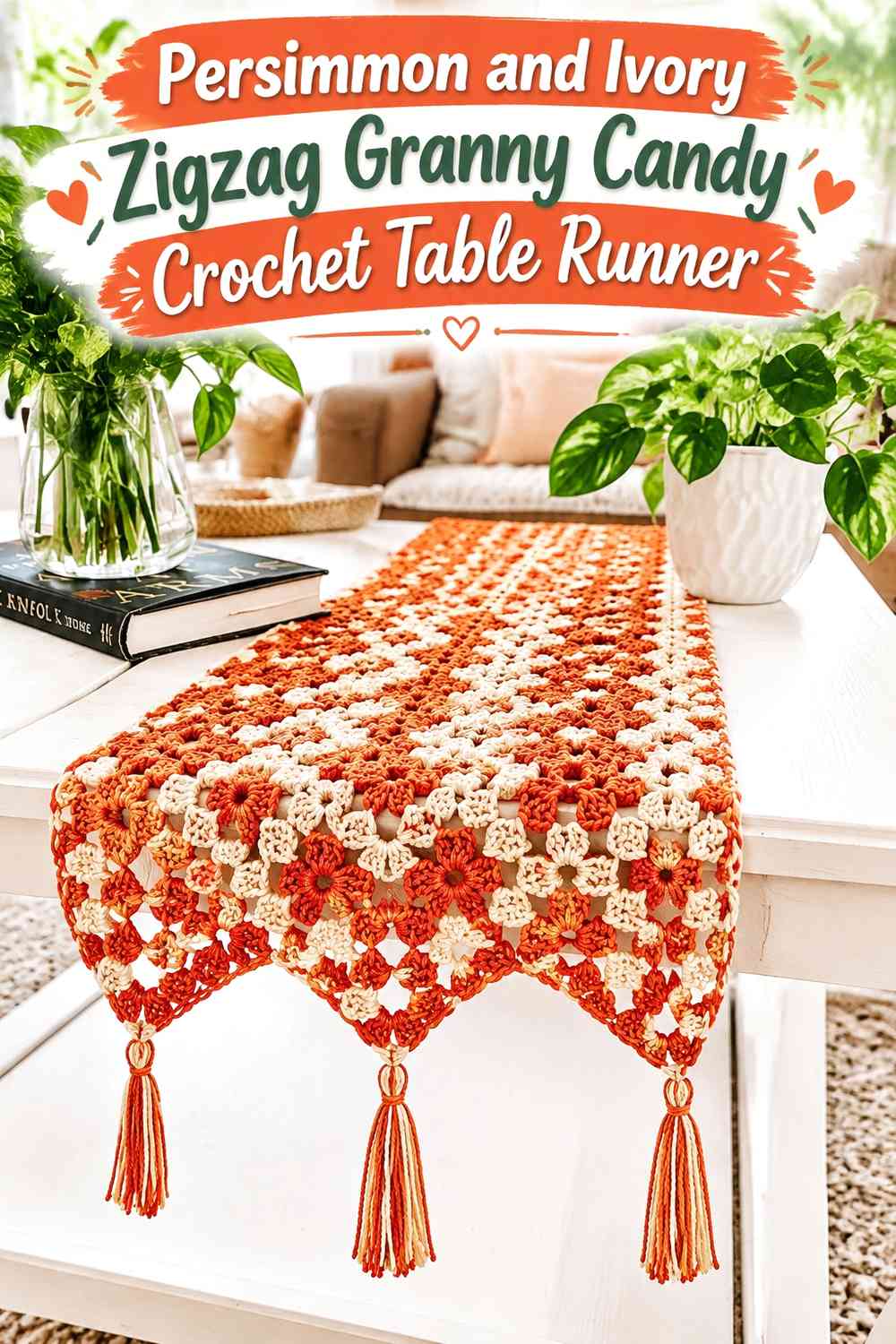
A zigzag granny construction naturally creates directional movement that can be pushed toward a retro candy look with alternating persimmon and ivory. Rather than changing color in every tiny cluster, organize the shades into larger repeating zigzag bands so the movement remains visible along the runner.
Persimmon Can Strengthen the Crochet Zigzag Peaks
Use persimmon across selected peaks or directional bands to make the zigzag rhythm easy to follow. Repeating the warm shade at consistent intervals gives the runner more structure than scattering persimmon unpredictably.
Ivory Gives Persimmon Granny Sections Visual Separation
Ivory can form the valleys or intervening bands. This keeps neighboring persimmon areas from merging and reinforces the back-and-forth movement associated with striped candy.
Persimmon and Ivory Should Continue Into the Crochet Ends
If the main body uses both colors, avoid finishing each end in an unrelated solid shade. Repeat the same two-color hierarchy so the zigzag pattern feels complete from end to end.
Creator Credit: CJ Design
4. Ivory Filet and Persimmon Candy-Window Crochet Table Runner
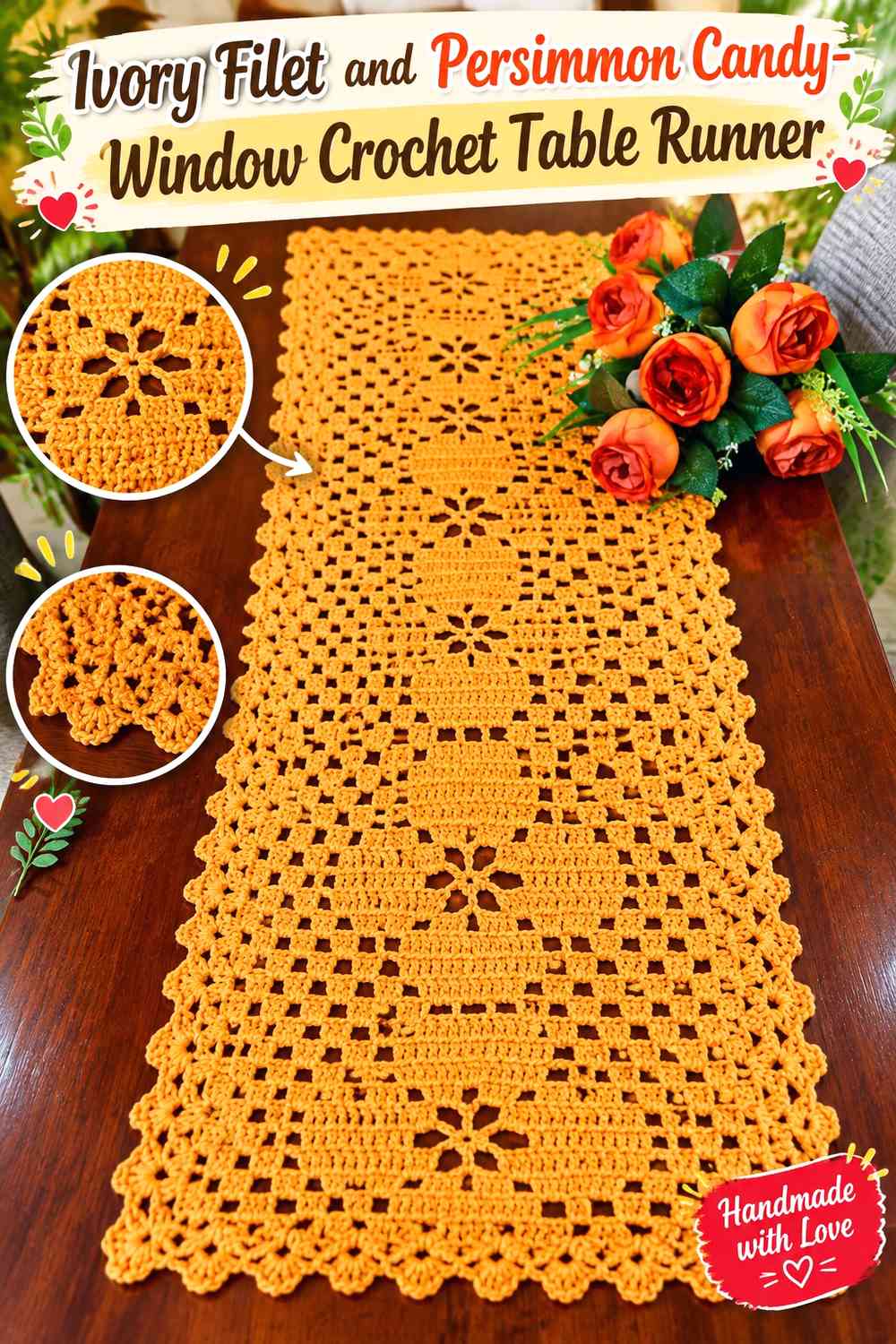
Filet-style crochet offers open and filled areas that can be emphasized with color without requiring a complicated multicolor pattern. Let ivory dominate the open field and use persimmon in selected blocks, borders, or repeated panels that resemble small candy windows.
Ivory Should Carry Most of the Crochet Filet Surface
A continuous ivory background allows the open structure to remain clear. Too many frequent color changes can distract from the contrast between open and solid areas already built into the fabric.
Persimmon Can Create Repeated Candy Blocks Inside Ivory
Place persimmon in several deliberate sections rather than one isolated patch. Repetition along the runner helps the colored blocks read as a decorative system rather than an accidental interruption.
Persimmon Can Frame the Ivory Filet Runner
A warm outer edge gives the pale openwork a visible boundary, particularly on a cream, white, or light wood table where ivory alone may have softer separation.
Creator Credit: Carmem Crochê
5. Persimmon Center and Ivory Scallop Crochet Retro Candy Runner
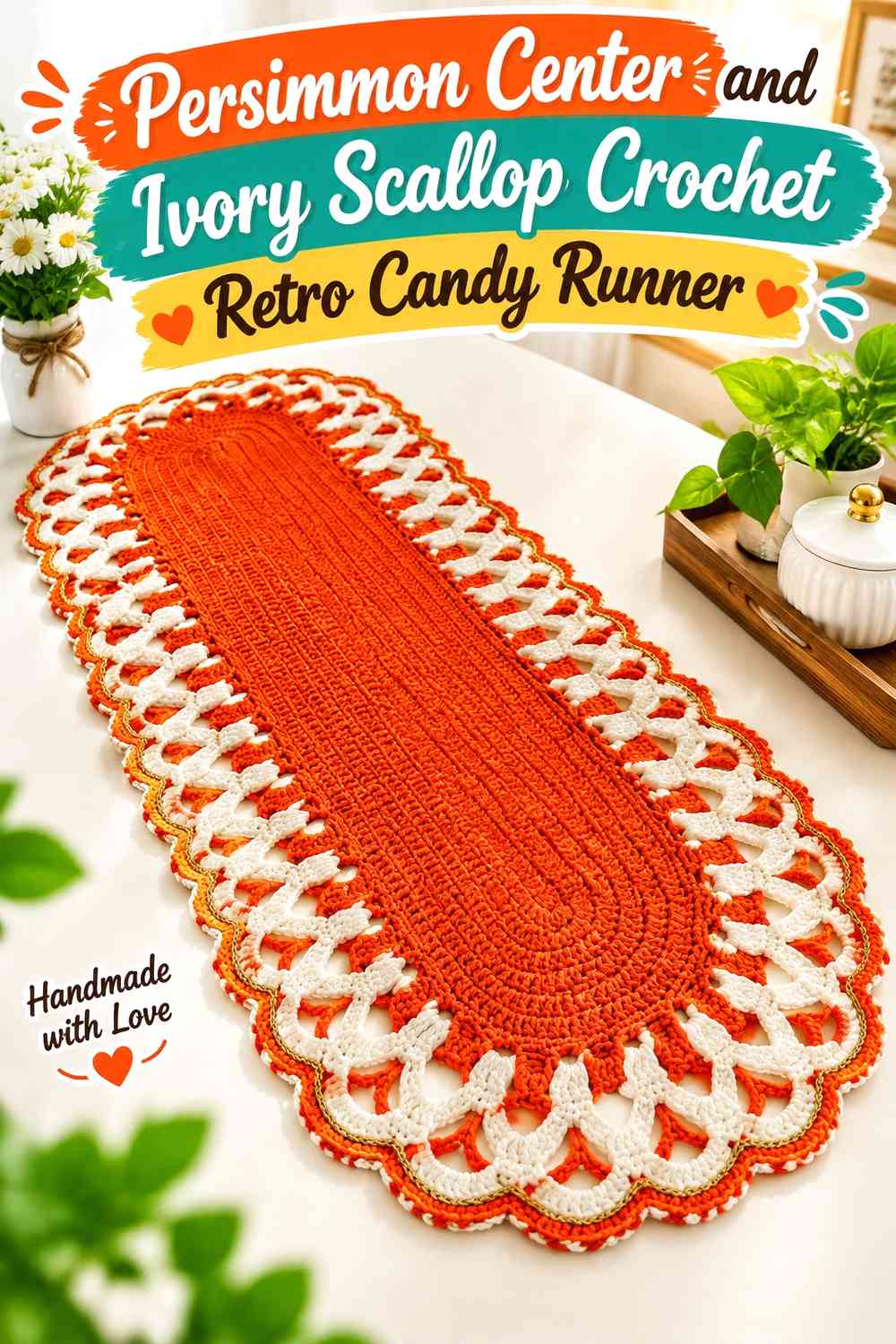
Here, persimmon occupies the main interior while ivory highlights decorative scalloped or fan-like edges. The result resembles a saturated candy center surrounded by a pale wrapper-like finish and keeps the strongest color away from the outermost edge.
Persimmon Should Stay Broad Through the Crochet Runner Center
Keep the warm main field relatively uninterrupted. A broad persimmon area gives scalloped ivory details something substantial to frame and prevents the runner from becoming an equal stripe pattern.
Ivory Can Make Persimmon Scalloped Edges Easier to Read
Use ivory where the runner forms curved points, fans, or decorative border details. The lighter value separates individual edge shapes and helps them remain visible against the table.
Persimmon Can Repeat Inside an Ivory Final Edge
If the border becomes several layers wide, return to persimmon in one narrow detail. This connects the edge to the center without changing ivory’s role as the primary scallop color.
Creator Credit: Crochê da Alessandra
6. Ivory Oval and Persimmon Swirl-End Crochet Christmas Table Runner
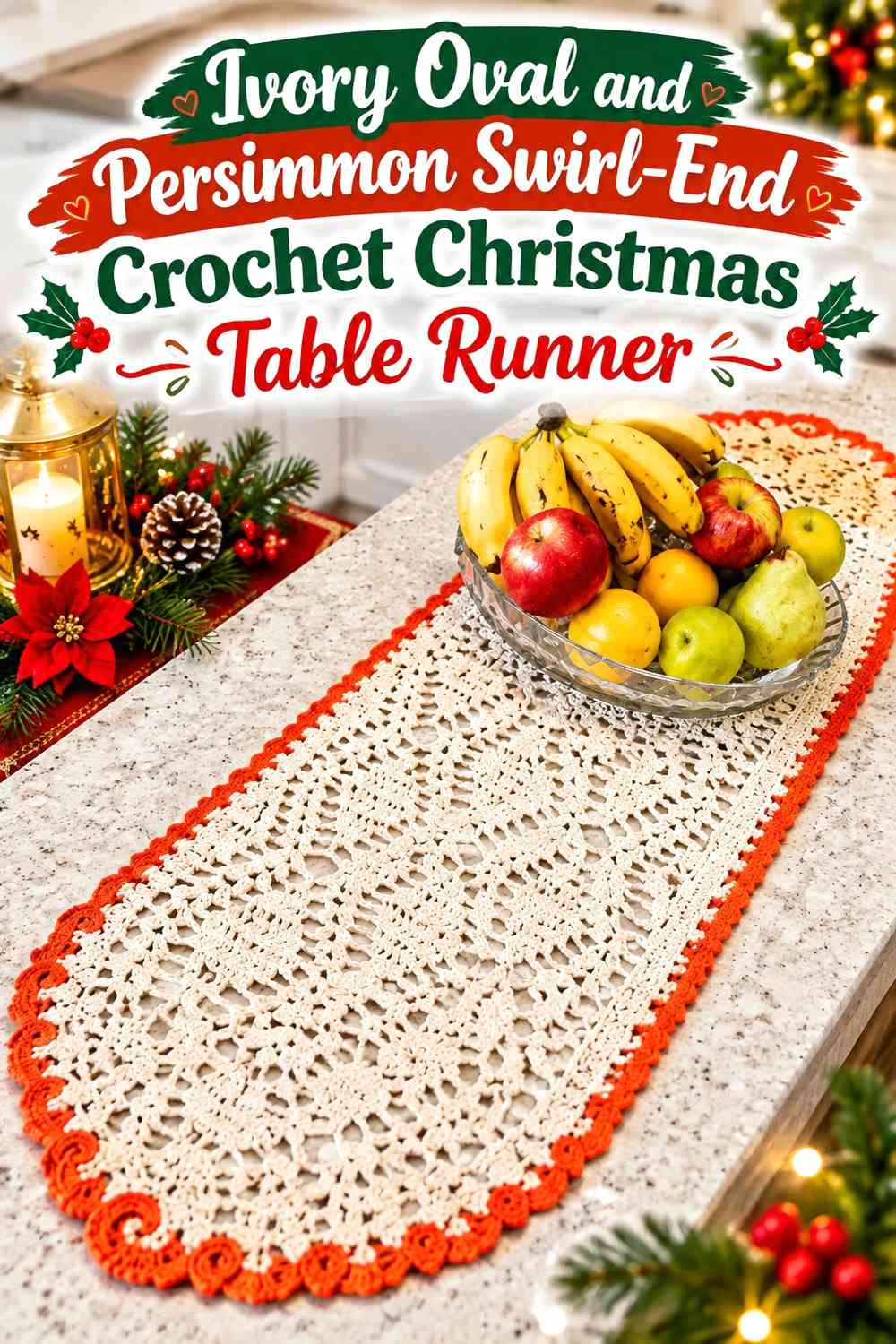
An oval-ended runner gives the candy palette a natural place to curve. Keep the central length mostly ivory and increase the proportion of persimmon as each end rounds outward. The changing color distribution can suggest swirled candy without requiring the whole runner to use a spiral motif.
Ivory Can Keep the Long Crochet Runner Center Quiet
A mostly ivory center provides visual rest and leaves room for plates, candles, or another centerpiece without hiding the most detailed colorwork.
Persimmon Should Become Stronger Toward the Ivory Runner Ends
Increase persimmon in repeated curved sections as the runner approaches each rounded end. Mirroring that treatment on both sides creates a deliberate retro candy effect.
Ivory Should Remain Visible Between Persimmon End Sections
Do not let the warm shade become one solid cap unless that is intentional. Pale breaks between persimmon areas are what preserve the striped-candy reference.
Creator Credit: Aprendendo Crochê
7. Persimmon and Ivory Spiral-Medallion Crochet Candy Table Runner
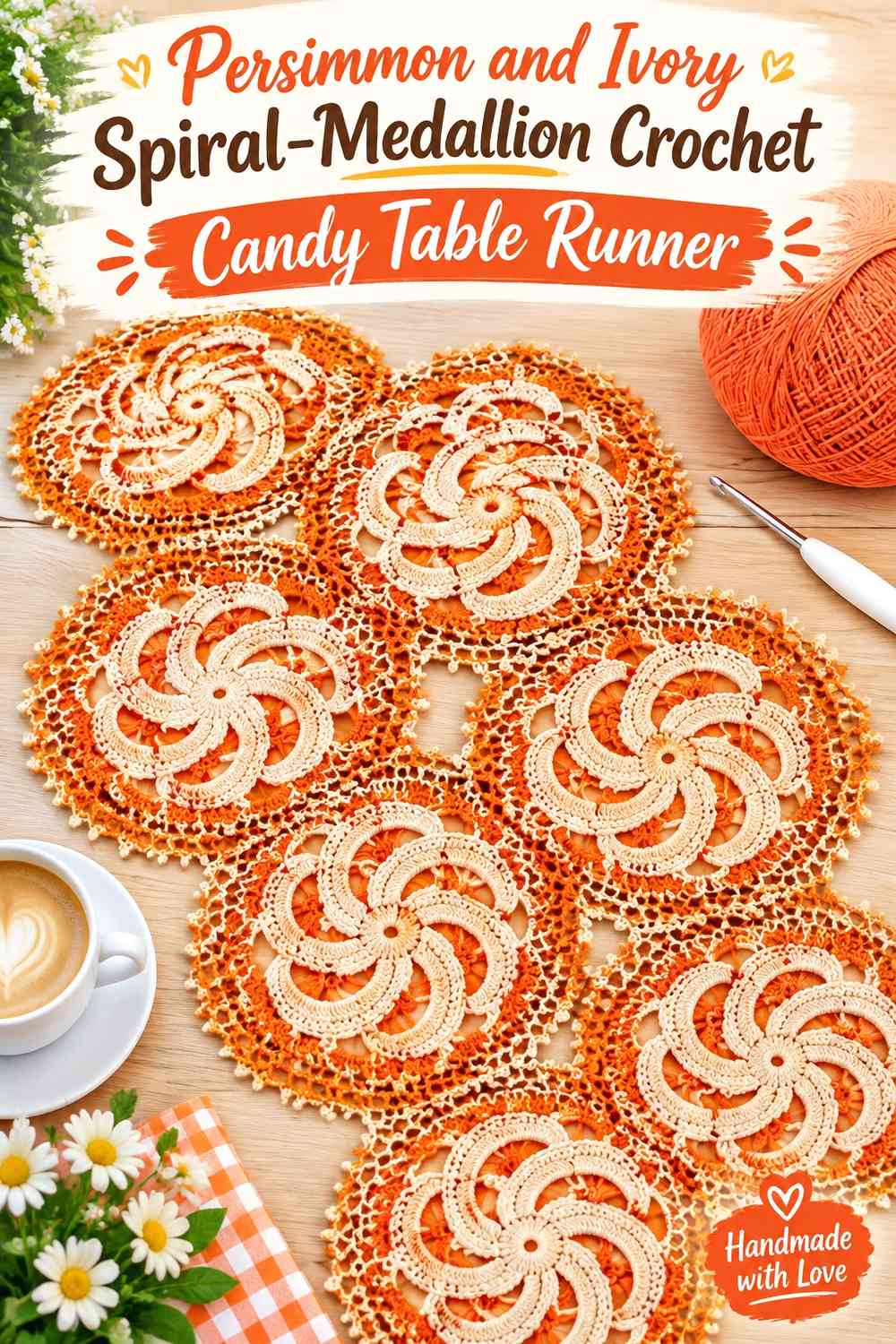
A spiral-centered motif is the most direct way to translate the candy-swirl idea into crochet. Use persimmon and ivory so that the eye can follow the rotation within each medallion, then repeat the same color logic across every joined motif.
Persimmon Should Follow a Consistent Crochet Spiral Direction
Once persimmon is assigned to part of the rotating design, repeat that placement from motif to motif. Inconsistent color orientation can weaken the impression of a coordinated row of candies.
Ivory Needs Enough Space Between Persimmon Spiral Sections
Keep ivory visibly distinct inside the motif. If the pale areas become too narrow, the medallion may read as a mostly persimmon circle rather than a two-color swirl.
Persimmon or Ivory Joins Can Change the Candy-Medallion Effect
An ivory joining area makes individual persimmon-heavy medallions feel more separate. A persimmon join creates a stronger continuous warm line through the runner. Choose based on whether you want to emphasize separate candies or one connected composition.
Creator Credit: Уроки ВЯЗАНИЯ Литке Татьяны
8. Ivory Granny Blocks with Persimmon Pinwheel Crochet Table Runner
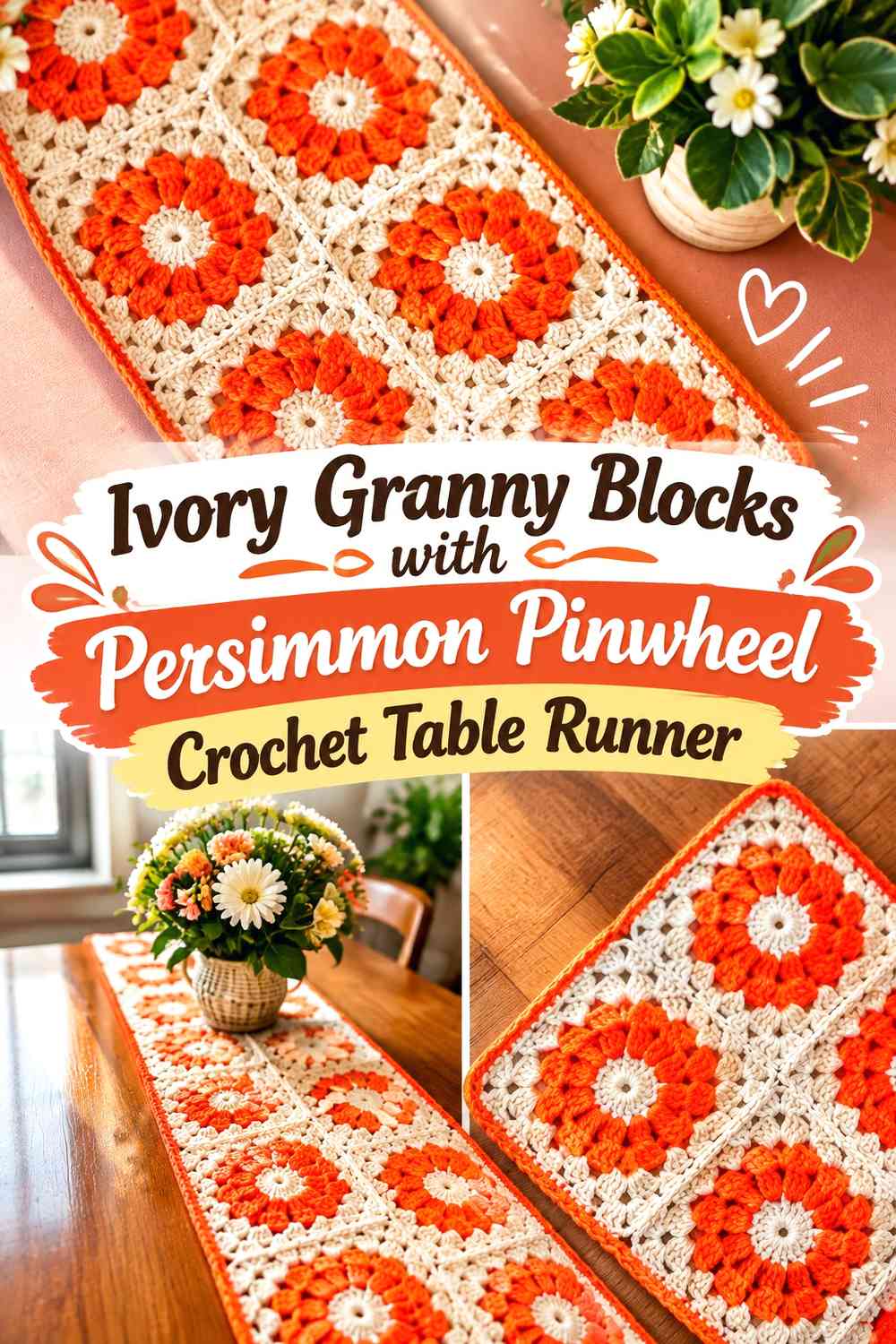
Joined square construction can create a quilt-like retro runner. Make ivory the repeated background or outer area of each block and arrange persimmon inside the squares so the colored sections appear to rotate or shift from one block to the next.
Ivory Should Repeat Around Every Persimmon Crochet Block
A common ivory outer area helps separate the squares and gives the entire runner a consistent grid. It also prevents neighboring persimmon areas from merging after joining.
Persimmon Can Rotate Through the Ivory Granny Squares
Change the position of persimmon in a controlled sequence from square to square to suggest a pinwheel or turning candy pattern. The rotation should be intentional rather than random.
Ivory Joins Can Keep Persimmon Pinwheels Distinct
Using the lighter shade between squares reinforces the individual candy-block effect. If you use persimmon for the joins instead, expect the warm color to form stronger lines between motifs.
Creator Credit: Sonia Langthasa
9. Persimmon Rosette and Ivory Join Crochet Retro Candy Runner
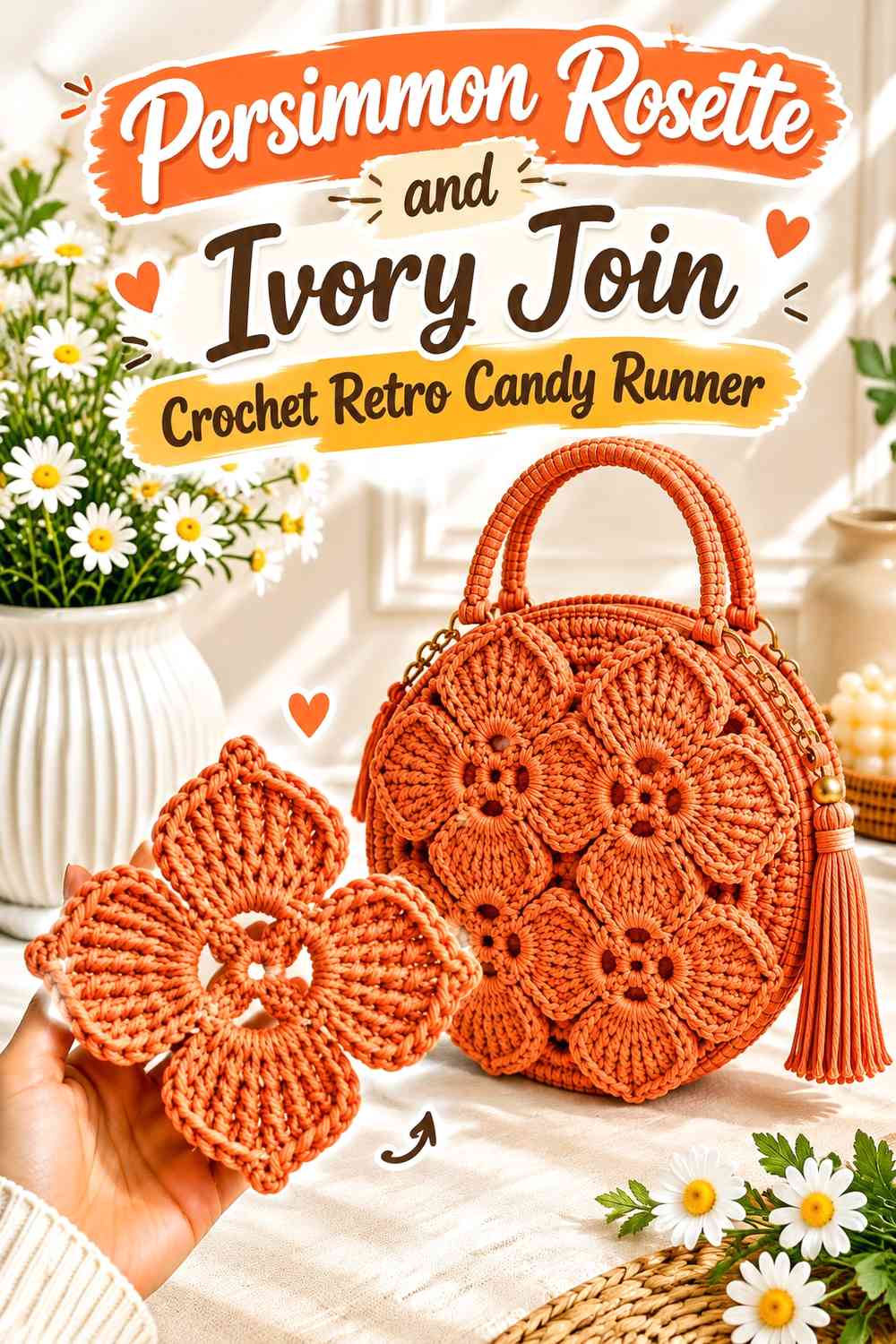
Round or floral motifs can be shifted toward a candy-inspired direction through color placement. Use persimmon in the radiating motif sections and ivory around them so the repeated shapes suggest wrapped sweets or rosette candies rather than introducing several floral colors.
Persimmon Can Turn Radiating Crochet Motifs Into Candy Focal Points
Keep the warm color moving outward from the center in a repeated pattern. The radiating placement matters more to the candy effect than simply filling an entire motif with persimmon.
Ivory Should Separate Each Persimmon Crochet Rosette
Use ivory around the outer portion or joining space so individual motifs remain distinct. This makes the runner look like a sequence of repeated candy medallions rather than one continuous orange-red surface.
Persimmon Can Repeat Along an Ivory Runner Border
A narrow persimmon outer detail reconnects the edge with the motif centers. Keep it secondary so the rosette-like centers remain the main candy reference.
Creator Credit: Knitting Love
10. Ivory Christmas Runner with Persimmon Candy Border
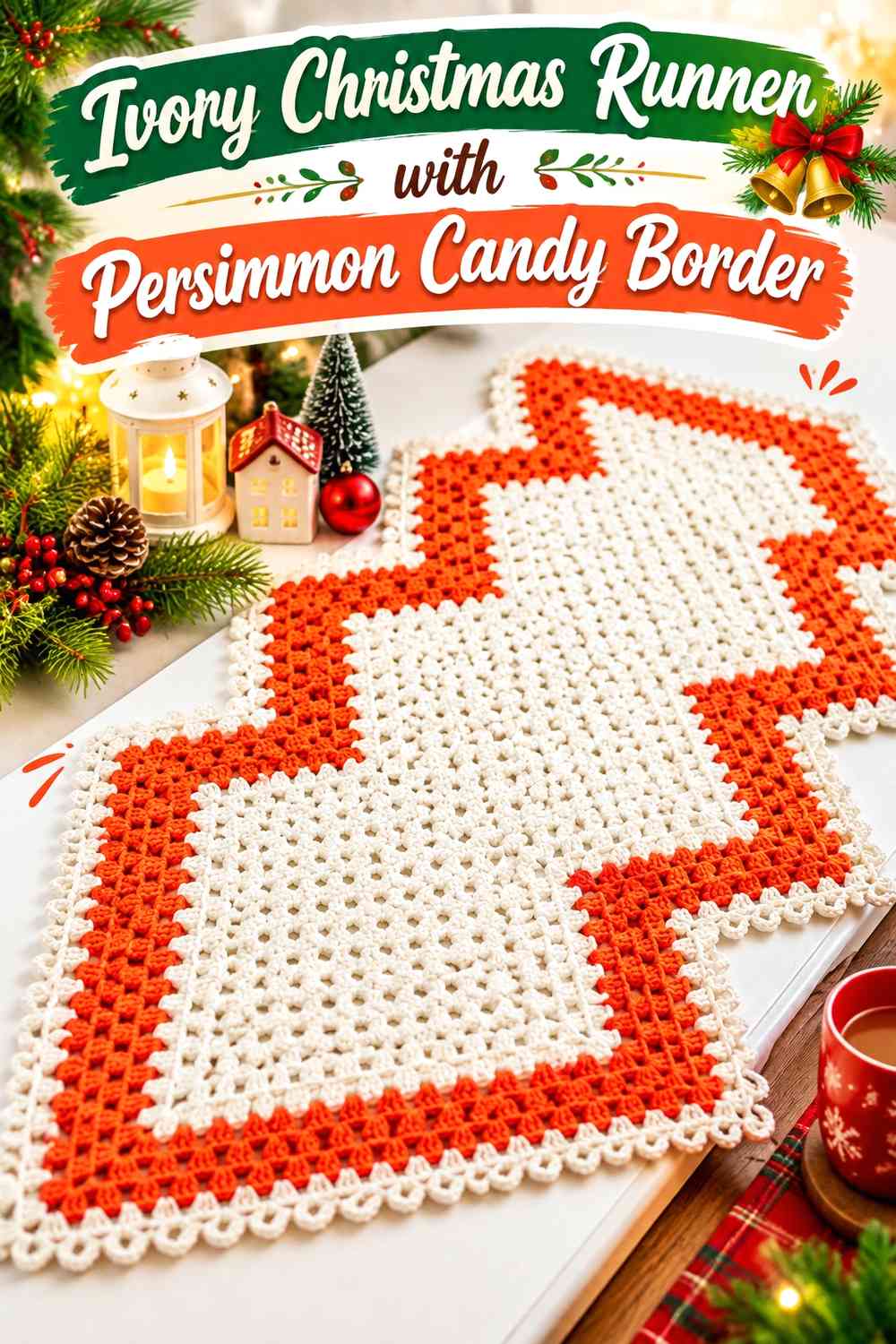
For a quieter interpretation, let ivory cover almost the entire table runner and confine persimmon to the Christmas border. Repeated warm blocks, points, or curves along the perimeter can suggest candy trim without placing strong color beneath every centerpiece.
Ivory Can Keep the Main Christmas Crochet Runner Neutral
A broad ivory interior makes the runner easier to coordinate with other table decorations and provides a clean field around dishes or centerpieces.
Persimmon Should Repeat Consistently Around the Ivory Border
Use the warm shade according to one repeat system instead of introducing isolated patches. Even spacing or mirrored end treatments make the border look intentionally candy-inspired.
Persimmon End Details Can Be Stronger Than the Ivory Side Borders
The two ends are often the most visible parts of a runner once the table is set. Increase the amount of persimmon there if you want the candy theme to remain noticeable beneath a centerpiece.
Creator Credit: Mary Souza crochê
11. Persimmon and Ivory Lace-Fan Crochet Vintage Candy Table Runner
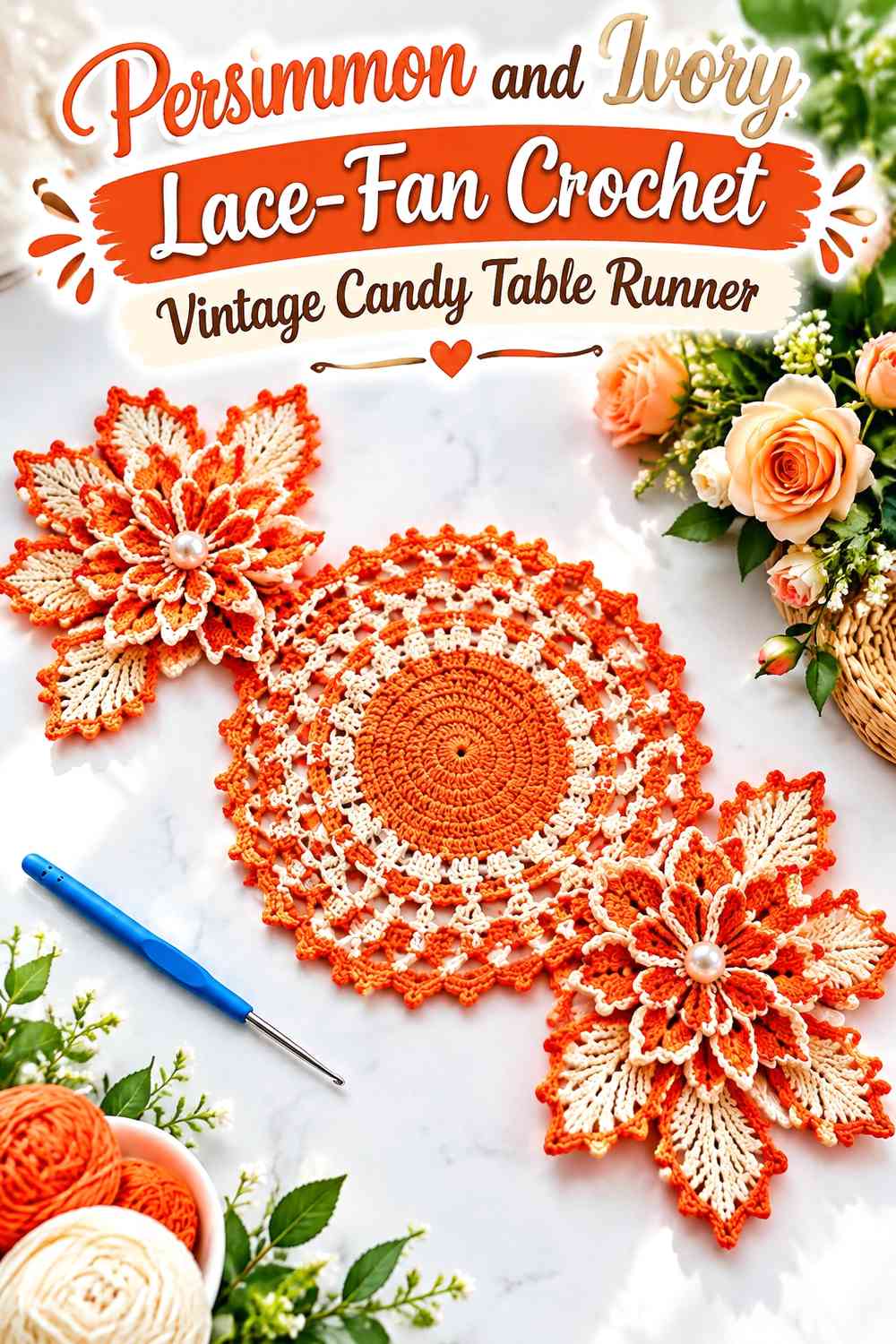
A lace motif or fan-based runner can take on a retro candy appearance when the two colors alternate through radiating sections. Keep the palette restricted to persimmon and ivory so the movement of the lace, rather than extra Christmas colors, creates the decorative complexity.
Persimmon Can Emphasize Radiating Crochet Fan Sections
Place persimmon on selected fan segments or repeated motif areas where the stitches spread outward. The warm color makes that radial movement easier to notice and gives the lace a candy-pinwheel direction.
Ivory Should Preserve Open Space Around Persimmon Lace
Use ivory through neighboring sections and openwork so the strong color has enough separation. An all-persimmon lace surface would reduce the visible two-color rotation.
Persimmon and Ivory Need a Repeated End Treatment
Mirror the color hierarchy at both ends of the runner. A consistent finish helps a detailed lace composition feel balanced when it extends lengthwise across the table.
Creator Credit: Crochet Swan
Which Persimmon and Ivory Retro Candy Runner Should You Choose?
For the clearest candy-swirl effect, the spiral-medallion, rotating granny-block, rosette, zigzag, and lace-fan ideas provide the strongest sense of circular or directional movement.
If you prefer a quieter Christmas table, choose an ivory-dominant runner with persimmon concentrated in the border, ends, or occasional motifs. Ideas 2, 4, 6, and 10 leave more pale surface available around dishes and centerpieces.
For a warmer persimmon-led runner, Ideas 1 and 5 give the saturated shade more visual area while using ivory mainly for separation and edging.
You can also choose according to what will remain uncovered. A busy centerpiece favors stronger candy detailing at both ends, while a relatively bare table gives a full-length swirl, granny, or diagonal stripe treatment more room to be seen.
Conclusion
Persimmon and ivory can create a recognizable retro Christmas candy direction without copying the familiar bright-red-and-white peppermint palette.
Persimmon works well as the dominant shade when you want a warmer, stronger runner, while ivory creates the negative space that keeps spirals, stripes, fans, and radiating motifs readable. An ivory-dominant layout produces a quieter table and allows persimmon to become a controlled holiday accent.
The candy theme is strongest when the colors appear to move. Repeated diagonals, rotating blocks, spiral medallions, curved ends, and radiating motifs all create that movement in different ways.
Use the credited tutorials for their exact crochet construction, then adapt the persimmon and ivory placement around the body, motifs, joins, borders, ends, and scallops according to the candy-swirl direction you want.
Frequently Asked Questions
Does a Persimmon and Ivory Crochet Runner Still Look Christmas-Themed Without Bright Red?
Yes. The Christmas direction can come from the candy-inspired color repetition, runner styling, and seasonal table setting rather than from bright red alone. Persimmon gives the palette a warm orange-red direction while ivory provides the pale contrast.
How Can I Make Persimmon and Ivory Look Like Retro Candy Instead of Ordinary Stripes?
Use color placement that rotates, radiates, curves, or changes direction. Spirals, pinwheels, zigzags, radiating fans, and repeated curved end sections create a stronger candy reference than simple parallel bands.
Should Persimmon or Ivory Dominate a Christmas Table Runner?
Persimmon produces a warmer and more saturated result. Ivory gives the runner a lighter background and makes individual persimmon motifs more prominent. Choose according to how much strong color you want visible beneath the rest of the table setting.
Where Should the Strongest Persimmon Candy Motifs Go on a Table Runner?
Consider what will cover the center of the table. If you usually use a centerpiece, put some of the strongest persimmon motifs toward both ends where they remain visible. On an uncovered table, repeating focal motifs through the full length can work well.
How Can I Check Whether Persimmon and Ivory Have Enough Contrast?
Place the actual yarns side by side and look at them from several feet away. You can also photograph them and view the image in grayscale. If the values are very similar, make the alternating sections larger so the pattern does not depend on tiny color differences.
Can I Add Green or Gold to a Persimmon and Ivory Candy Runner?
You can, but use a third shade sparingly if you want the two-color retro candy identity to remain clear. A small amount in an edge or isolated detail will change the palette less than distributing a third color equally throughout every motif.
Should Every Candy-Swirl Motif Use Persimmon and Ivory in the Same Order?
Consistent placement usually creates the clearest repeated rhythm. You can rotate the physical orientation of motifs for movement while preserving the same color hierarchy, or deliberately alternate the color order if you want a more active patchwork effect.