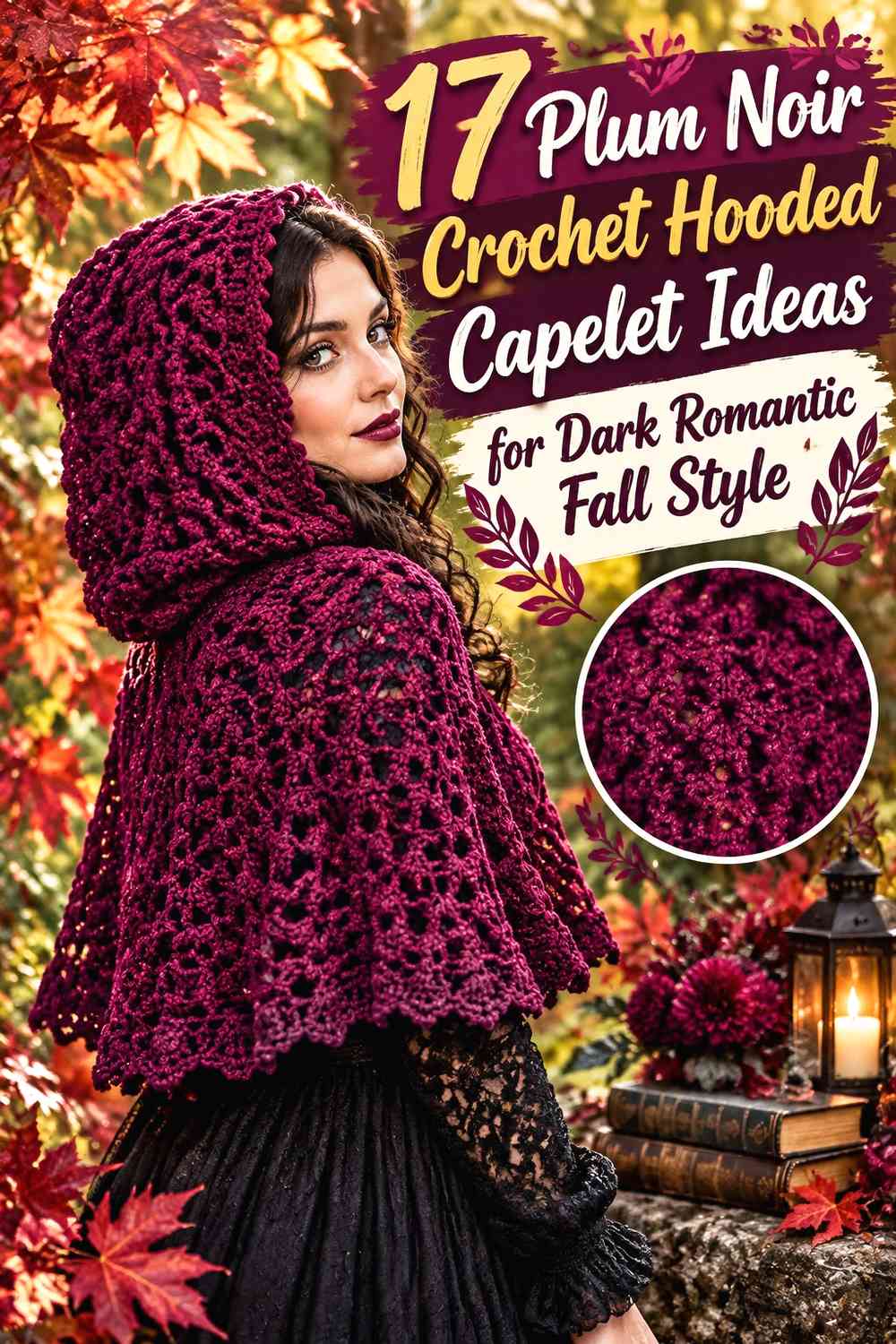

Plum noir gives a crochet hooded capelet the depth of a near-black shade while keeping a muted purple undertone that can support dark romantic fall styling. On a wearable that combines a hood, neckline, shoulder coverage, and a shorter cape silhouette, the color can look very different depending on where texture, lighter accents, and contrasting trim are placed.
The strongest approach is usually to let plum noir dominate. A solid dark body creates a continuous line across the shoulders, while a secondary shade can define the hood opening, neckline, closure, or lower edge without dividing the capelet into too many competing bands. Texture also matters: ribbing, lace, raised stitches, and openwork can create visual variation even when the garment remains nearly monochromatic.
The credited tutorials include direct hooded capes and ponchos as well as hooded wraps, cowls, capelets, and separate hood constructions. Where a tutorial does not combine both elements, it supports the relevant hood or shoulder-covering concept rather than representing an exact match. The plum noir palettes below are independent editorial adaptations and are not presented as the creators’ original color choices.
Quick List
- All-Plum Noir Crochet Hooded Capelet
- Plum Noir and Antique Pewter Crochet Hooded Capelet
- Plum Noir and Oxblood Crochet Hooded Capelet
- Plum Noir and Charcoal Crochet Hooded Capelet
- Plum Noir and Dusty Mauve Crochet Hooded Capelet
- Plum Noir and Black Cherry Crochet Oversized-Hood Capelet
- Plum Noir and Antique Ivory Crochet Lace-Edge Hooded Capelet
- Plum Noir and Dark Cocoa Crochet Buttoned Hooded Capelet
- Plum Noir and Muted Copper Crochet Hooded Capelet
- Plum Noir and Smoky Rose Crochet Ribbed Hooded Capelet
- Plum Noir and Deep Sage Crochet Textured Hooded Capelet
- Plum Noir and Black Crochet Tonal Hooded Capelet
- Plum Noir and Antique Gold Crochet Hooded Capelet
- Plum Noir and Fog Gray Crochet Lace Hooded Capelet
- Plum Noir and Burgundy Crochet Scalloped Hooded Capelet
- Plum Noir and Tobacco Brown Crochet Shoulder Capelet With Hood
- Plum Noir and Dusky Lilac Crochet Pixie-Hood Capelet
Let Plum Noir Control the Hood-to-Shoulder Silhouette
A hooded capelet already has several strong shapes: the face opening, the hood crown, the neckline, the shoulder line, and the lower cape edge. Plum noir works particularly well when it connects several of those areas instead of appearing in isolated blocks.
For a long, uninterrupted dark line, keep the hood and body plum noir and introduce any secondary shade only at the face opening, closure, or lower border. If you want the hood to become the focal point, keep the cape body comparatively plain and concentrate texture or contrast around the head and neckline.
Check the color distribution while the garment is being worn or placed on a dress form. A trim that looks substantial while the capelet is flat may appear much narrower once it curves around the shoulders.
Use Texture to Keep Plum Noir Crochet From Looking Flat
Dark yarn can make fine stitch details less obvious from a distance, especially when the texture is shallow. That does not mean plum noir needs a lighter color everywhere. Wider ribs, pronounced openwork, scalloped edges, or directional stitch patterns can create enough light and shadow to separate sections naturally.
If an important detail disappears, a secondary shade can be used strategically around that feature. A lighter hood edge can clarify the face opening, while a dark contrasting border can define the hem without changing the mood of the garment.
Before introducing another color, view the plum noir fabric under the lighting in which you expect to wear it. Dark texture can appear substantially different indoors, outdoors, and in low evening light.
Keep Plum Noir Dark Romantic Styling Focused on the Capelet
For a dark romantic fall direction, the capelet should still remain wearable rather than becoming overloaded with decorative references. One strong hood, a distinctive lower edge, an antique-looking closure color, or a controlled lace section can establish the mood more effectively than adding contrast to every seam.
Plum noir pairs naturally with other subdued shades when their roles remain clear. Pewter and fog gray create cooler contrast; oxblood and black cherry deepen the red-purple side of the palette; dark cocoa and tobacco brown bring in autumn warmth; antique ivory provides the strongest light contrast.
1. All-Plum Noir Crochet Hooded Capelet
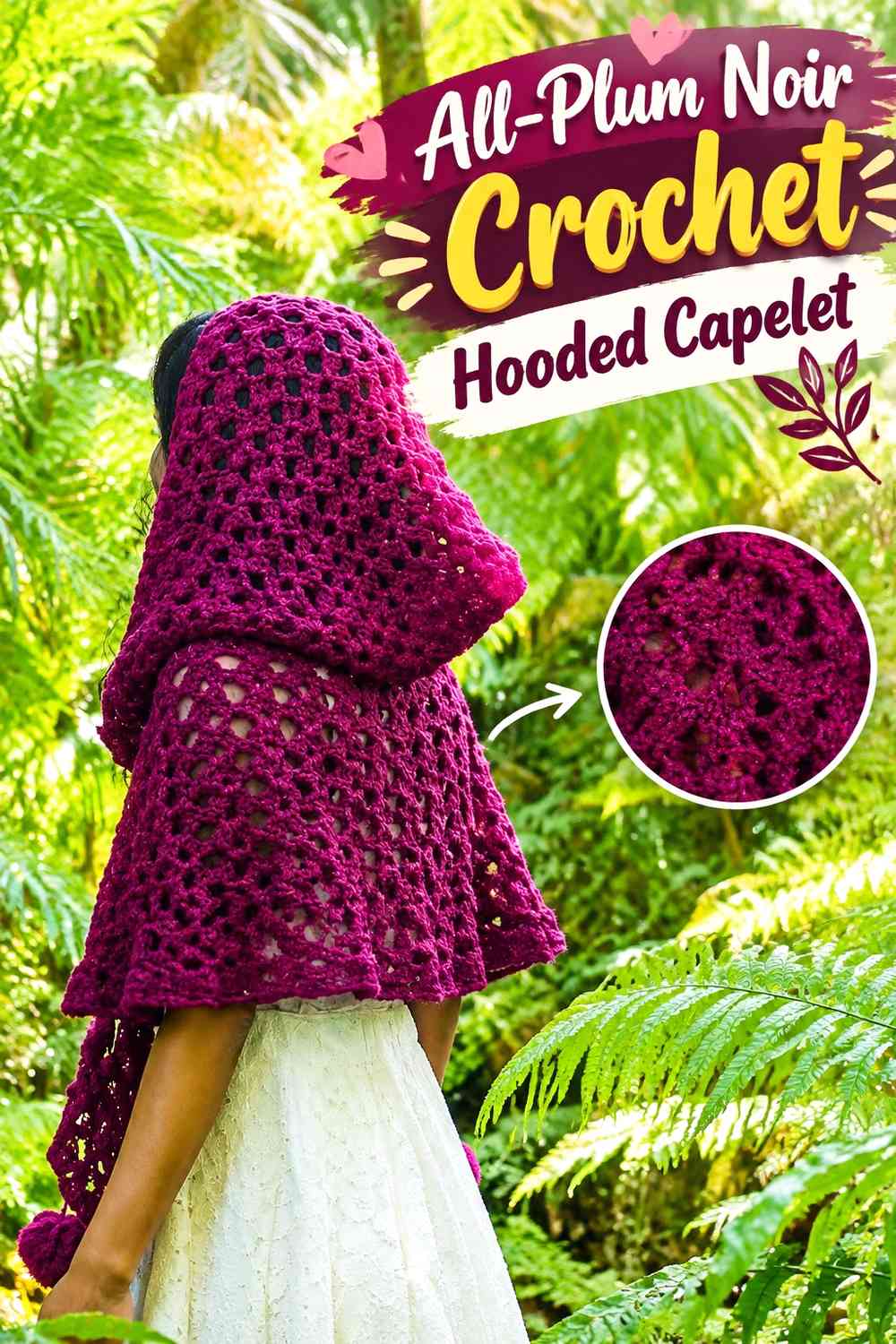
A fully plum noir capelet puts texture and silhouette ahead of color contrast. Keeping the hood, shoulders, neckline, and edging in one shade creates the darkest and most continuous option in the collection, making stitch direction and drape especially important.
Let Plum Noir Run Continuously From Hood to Capelet
Use plum noir through both the hood and shoulder section so the eye follows one uninterrupted dark shape. This is particularly effective when the hood is meant to feel like an integral part of the garment rather than an attached accessory.
Avoid adding a contrasting join merely to distinguish the hood. If the construction already changes direction at the neckline, that structural shift may provide enough definition.
Use Plum Noir Texture to Separate the Capelet Edge
If the lower edge needs more visual weight, change texture rather than color. A ribbed, denser, or more open border can distinguish the hem while preserving the monochromatic palette.
Check the edge from several feet away. Very subtle texture can disappear in a near-black shade, so the contrast may need to come from a clearly different stitch surface.
Keep Plum Noir Closures Visually Quiet
A same-color tie or fastening treatment keeps attention on the hood and shoulder line. This works well when you want the capelet to layer over dresses, high necklines, or fall tops without introducing another obvious accent.
Creator Credit: Jennyandteddy crochet.
2. Plum Noir and Antique Pewter Crochet Hooded Capelet
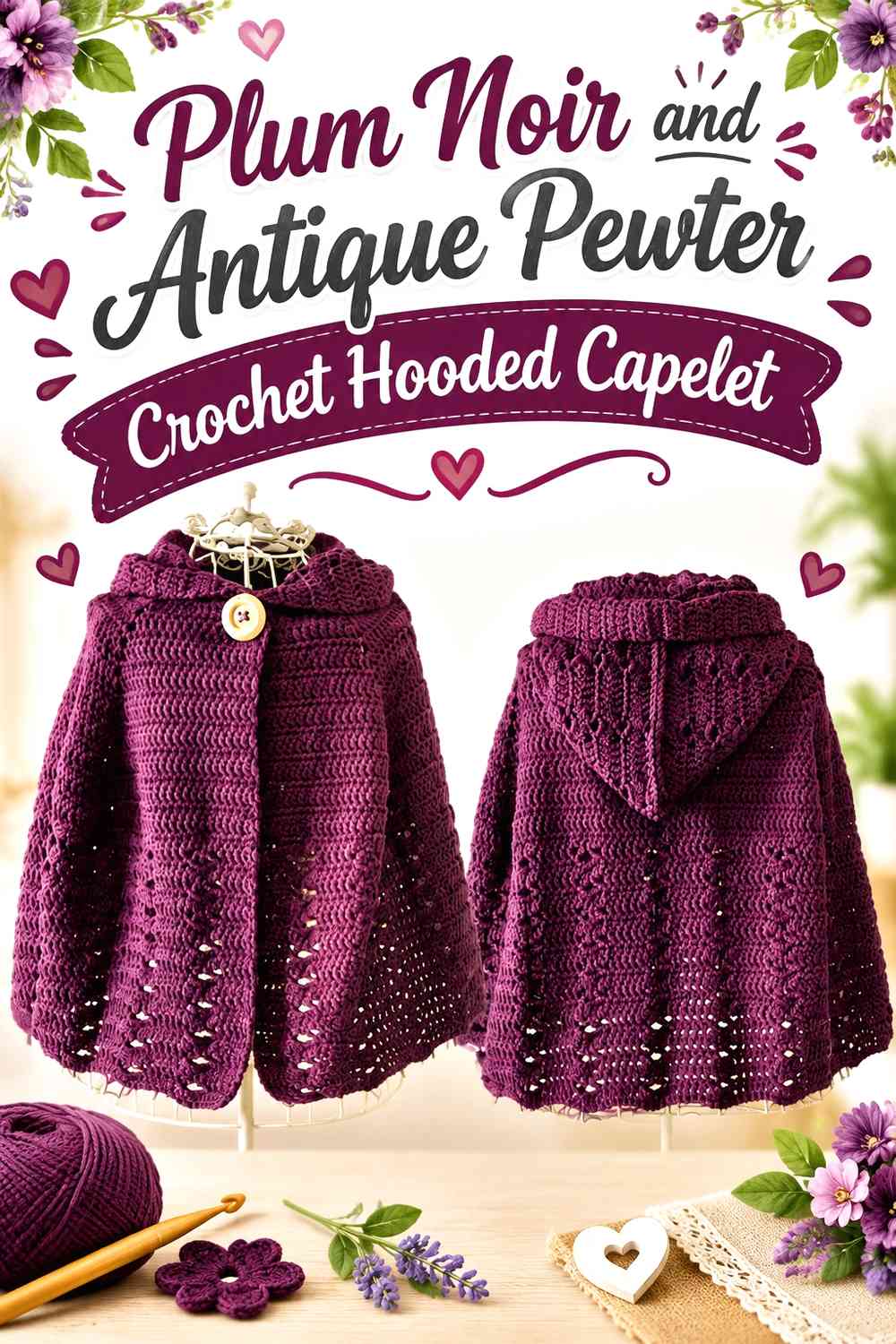
Antique pewter gives plum noir a cool, aged-looking contrast without becoming bright silver. Use it narrowly around the face or neckline so the darker body remains dominant.
Keep Plum Noir Across the Main Hooded Capelet Body
Let plum noir cover the shoulders and most of the hood. A continuous dark field keeps the garment visually grounded and gives the cooler pewter detail a clear place to work.
Use Antique Pewter to Define the Plum Noir Hood Opening
A narrow pewter edge around the face can make a deep hood easier to distinguish from the surrounding dark fabric. Keep the accent consistent instead of widening it unpredictably around the neckline.
Repeat Plum Noir Beyond the Antique Pewter Neckline
If pewter also appears at the closure, leave the lower cape edge plum noir. This prevents the secondary shade from outlining every boundary and turning a subtle accent into the dominant frame.
Creator Credit: Alina Crochet & Knitting
3. Plum Noir and Oxblood Crochet Hooded Capelet
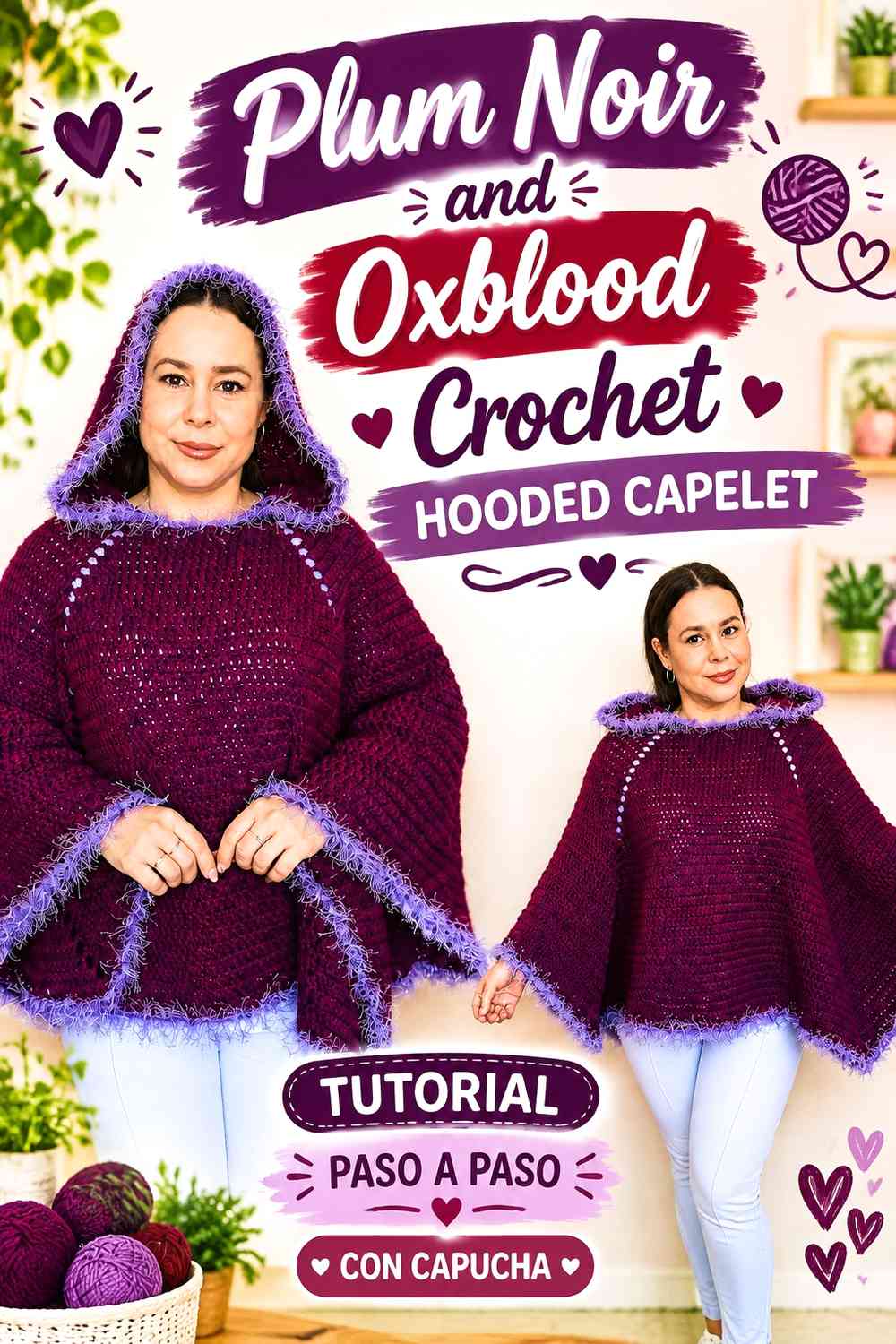
Oxblood deepens the romantic side of plum noir without creating the sharp contrast of a light neutral. Because both shades carry substantial visual weight, use them in broader sections rather than tiny alternating stripes.
Let Plum Noir Dominate the Hood and Shoulders Beside Oxblood
Keep the main capelet and most of the hood plum noir. An oxblood interior-facing hood edge, neckline band, or controlled lower section can add warmth without splitting the entire garment in half.
Give Oxblood Enough Area to Show Against Plum Noir
A very narrow oxblood line may disappear beside such a dark purple. Use it where the garment naturally offers more surface area, such as the hood opening or one deliberate border.
Keep Plum Noir Between Oxblood Accents
If oxblood appears at both neckline and hem, leave a generous uninterrupted plum noir body between them. That separation maintains the dark-purple identity of the capelet.
Creator Credit: MageTeje
4. Plum Noir and Charcoal Crochet Hooded Capelet
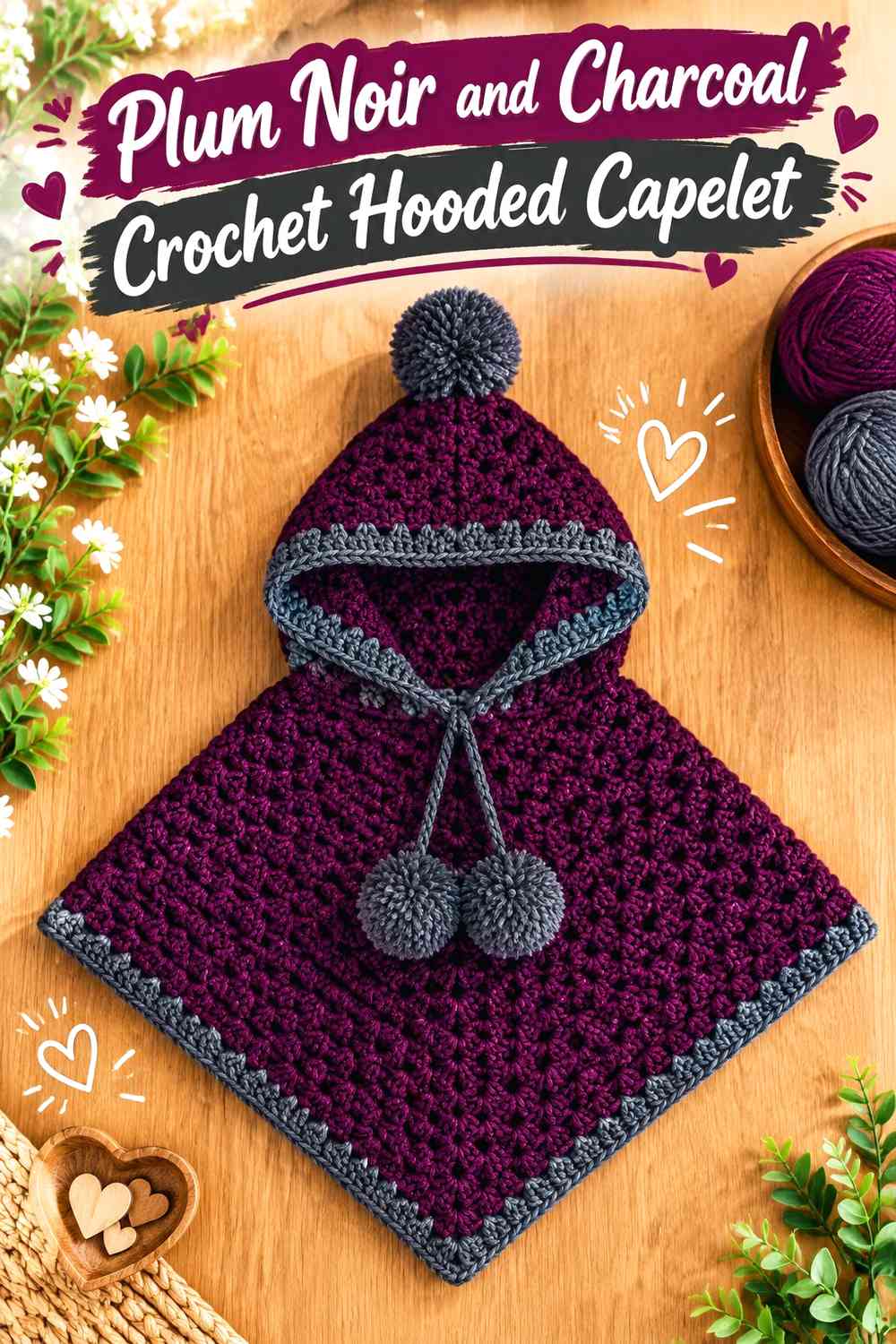
Charcoal creates one of the lowest-contrast pairings in the collection. The color change is subtle, so it works best where stitch direction or garment structure reinforces the transition.
Use Plum Noir Across the Visible Capelet Panels
Keep plum noir over the broad shoulder area where it can remain the first color noticed. Reserve charcoal for secondary structural zones rather than giving both shades equal coverage.
Put Charcoal Around the Plum Noir Hood Edge
The hood opening is a useful place for close-value contrast because the shape itself helps distinguish the two colors. Charcoal can also continue into ties or a narrow neckline treatment.
Check Plum Noir and Charcoal in Grayscale
If both shades appear almost identical, do not depend on a one-row color change to create definition. Use charcoal across a wider border or combine the color shift with a different texture.
Creator Credit: Crochet, tricot
5. Plum Noir and Dusty Mauve Crochet Hooded Capelet
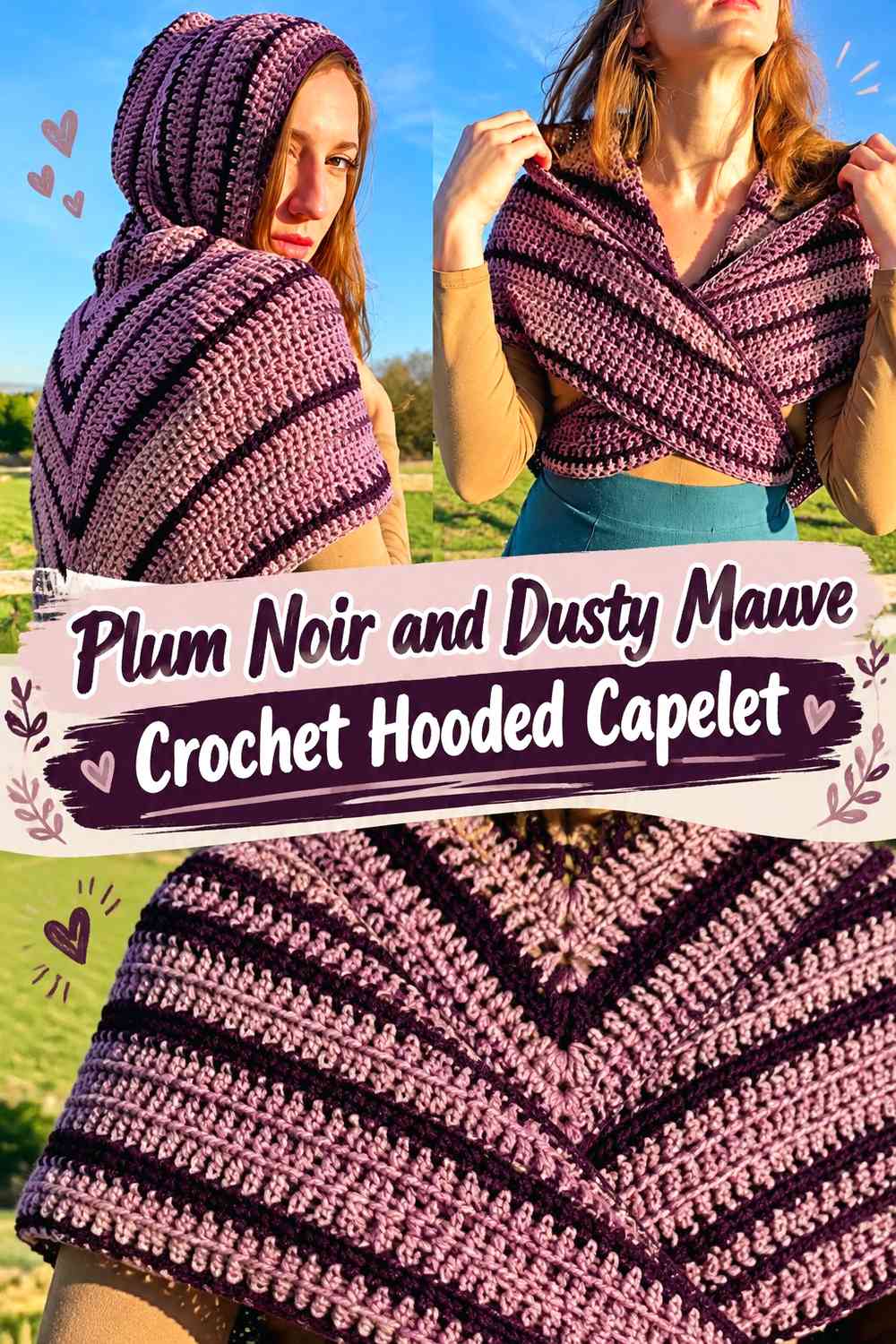
Dusty mauve lightens the purple family without introducing an unrelated hue. It works particularly well when you want the hood opening to appear softer against an otherwise very dark capelet.
Keep Plum Noir Broad Around Dusty Mauve Hood Trim
Use plum noir through the cape body and main hood structure. The large dark area allows dusty mauve to remain a supporting tonal accent.
Use Dusty Mauve Inside the Plum Noir Hood Opening
Place mauve where it will appear close to the face and neckline rather than spreading it across every hem. The lighter purple can clarify the hood shape while maintaining a related color family.
Repeat Plum Noir Below the Dusty Mauve Neckline
Keep the shoulder and lower edge predominantly plum noir so the garment does not become a two-tone purple stripe pattern. The dark body should still visually anchor the capelet.
Creator Credit: Forest Feather Fashion
6. Plum Noir and Black Cherry Crochet Oversized-Hood Capelet
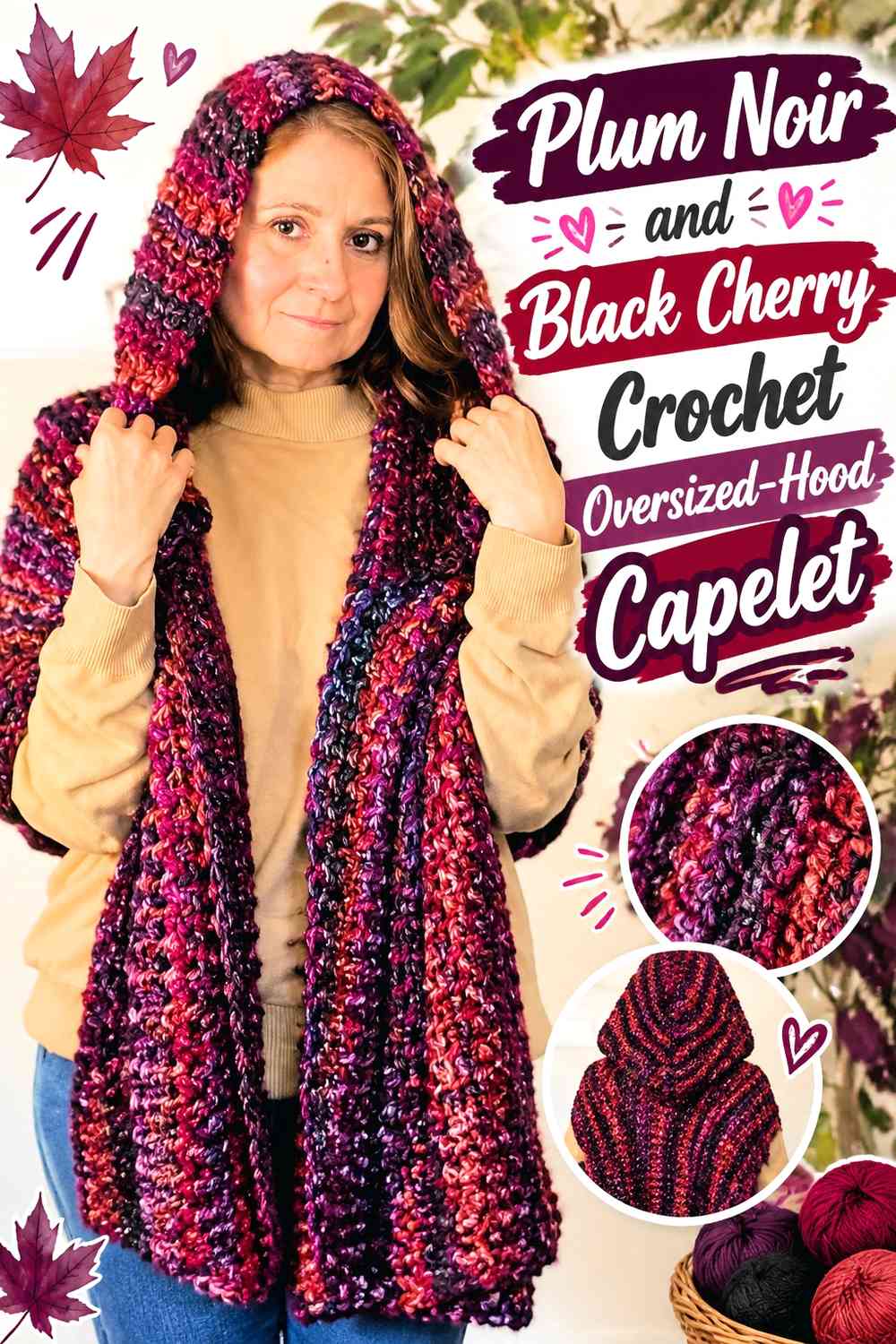
An oversized hood creates enough surface area to support a second very dark color. Black cherry can appear inside the hood or along selected outer sections while plum noir controls the cape body.
Let Plum Noir Ground the Oversized Hooded Capelet
Keep the shoulder wrap and lower cape section plum noir. This gives the enlarged hood a stable dark base and prevents the garment from becoming visually top-heavy through color alone.
Place Black Cherry Inside the Plum Noir Oversized Hood
A dark cherry interior creates a subtle shift when the hood falls backward or opens around the face. Because the colors are close, use the secondary shade in a broad area rather than a tiny stripe.
Keep Plum Noir Stronger Than Black Cherry at the Capelet Hem
Avoid repeating an equally wide cherry band around the bottom if the hood already carries substantial cherry color. Let the cape edge remain mostly plum noir so the emphasis stays upward.
Creator Credit: Crazy Cool Crochet
7. Plum Noir and Antique Ivory Crochet Lace-Edge Hooded Capelet
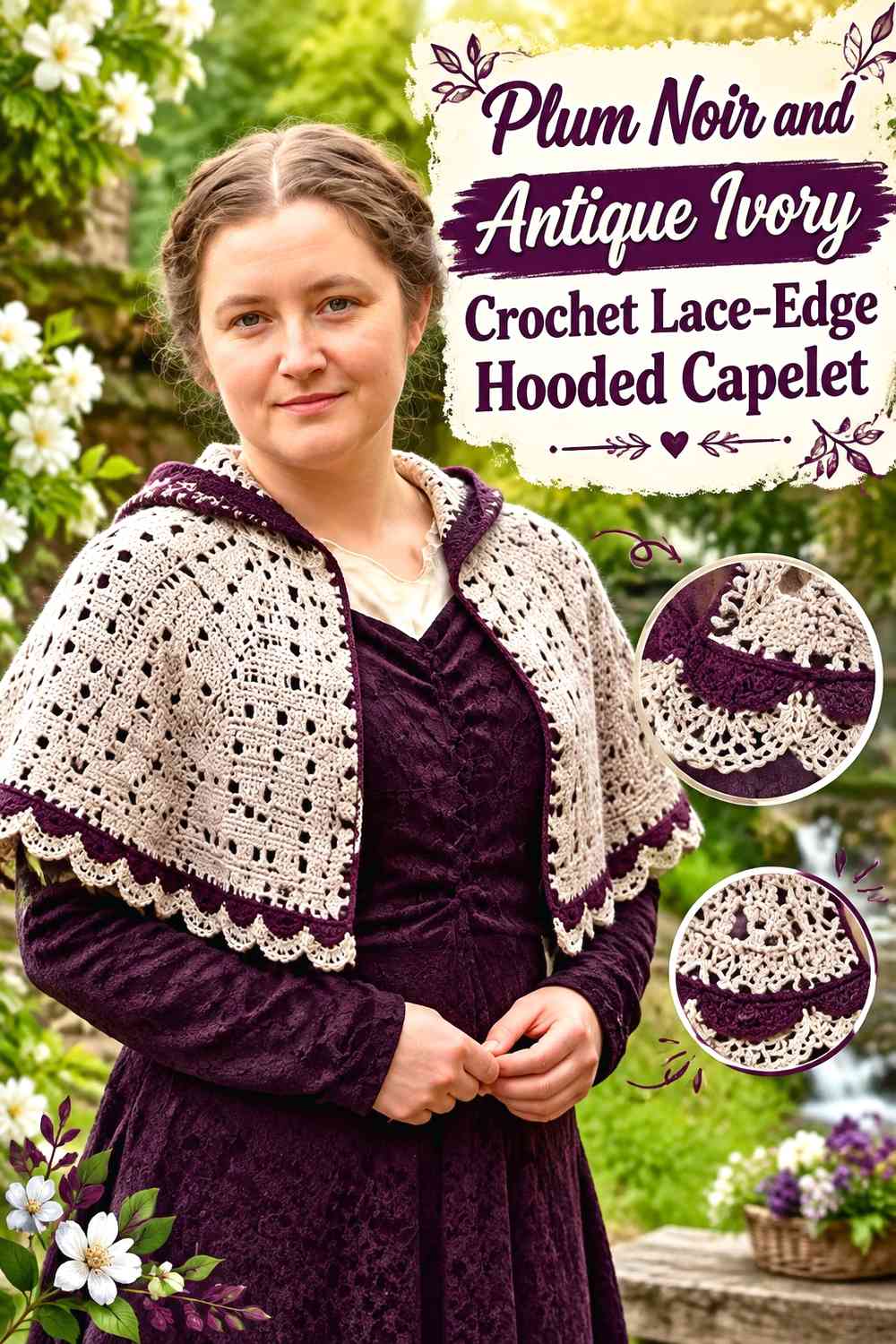
Antique ivory creates the strongest light/dark contrast in this collection. Use it carefully around lace or openwork so it clarifies decorative detail without changing the capelet into a predominantly light-trimmed garment.
Keep Plum Noir Dominant Around Antique Ivory Lace
Use plum noir across the hood, neckline foundation, and shoulder body. The light lace should occupy a smaller visual area than the dark garment underneath it.
Put Antique Ivory Beside Plum Noir Openwork
A narrow ivory border around lace can make openings and scallops easier to recognize. Place the contrast where the decorative structure actually benefits from it rather than outlining every seam.
Return to Plum Noir Above the Antique Ivory Capelet Edge
If ivory appears at the hem, keep the hood primarily plum noir. This distributes the contrast without allowing the light shade to surround the whole garment.
Creator Credit: YarnAndy
8. Plum Noir and Dark Cocoa Crochet Buttoned Hooded Capelet
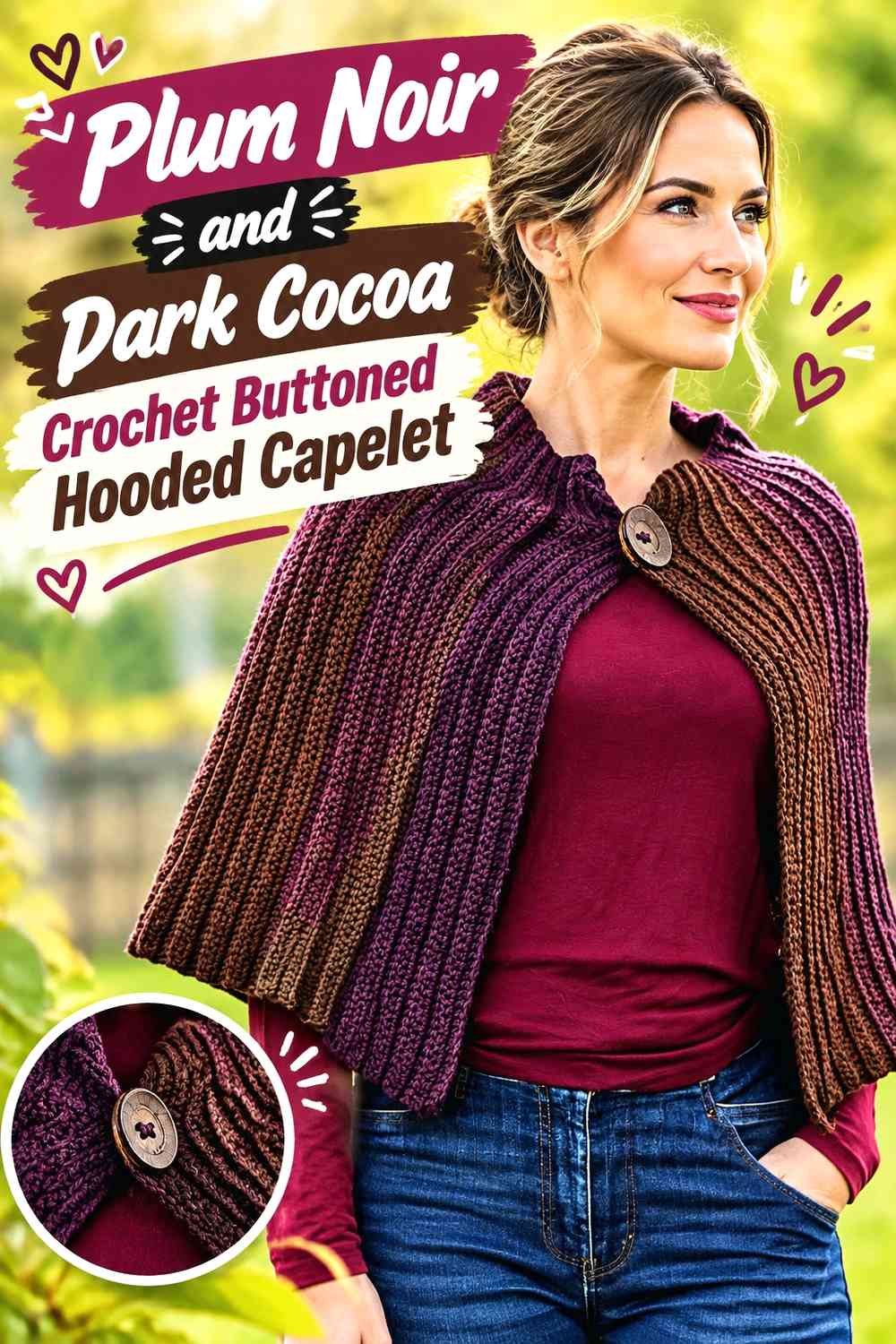
Dark cocoa gives plum noir a warmer autumn companion and works particularly well around button bands, ties, or neck closures. Because the two shades are both deep, the effect remains restrained.
Keep Plum Noir Across the Buttoned Capelet Body
Let plum noir carry the broad shoulder coverage so the capelet keeps its near-black purple identity. A simple body also makes the closure area easier to notice.
Use Dark Cocoa Around the Plum Noir Closure
Place cocoa along a short button band, loop, or narrow neckline treatment. The warm brown can make the front structure easier to identify without creating a bright focal point.
Keep Plum Noir Continuous Around the Dark Cocoa Hood
If cocoa is used near the neck, avoid extending it through the entire hood unless you deliberately want a two-color upper section. A mostly plum noir hood maintains stronger continuity with the shoulders.
Creator Credit: Nana’s Crafty Home | Tonya Bush
9. Plum Noir and Muted Copper Crochet Hooded Capelet
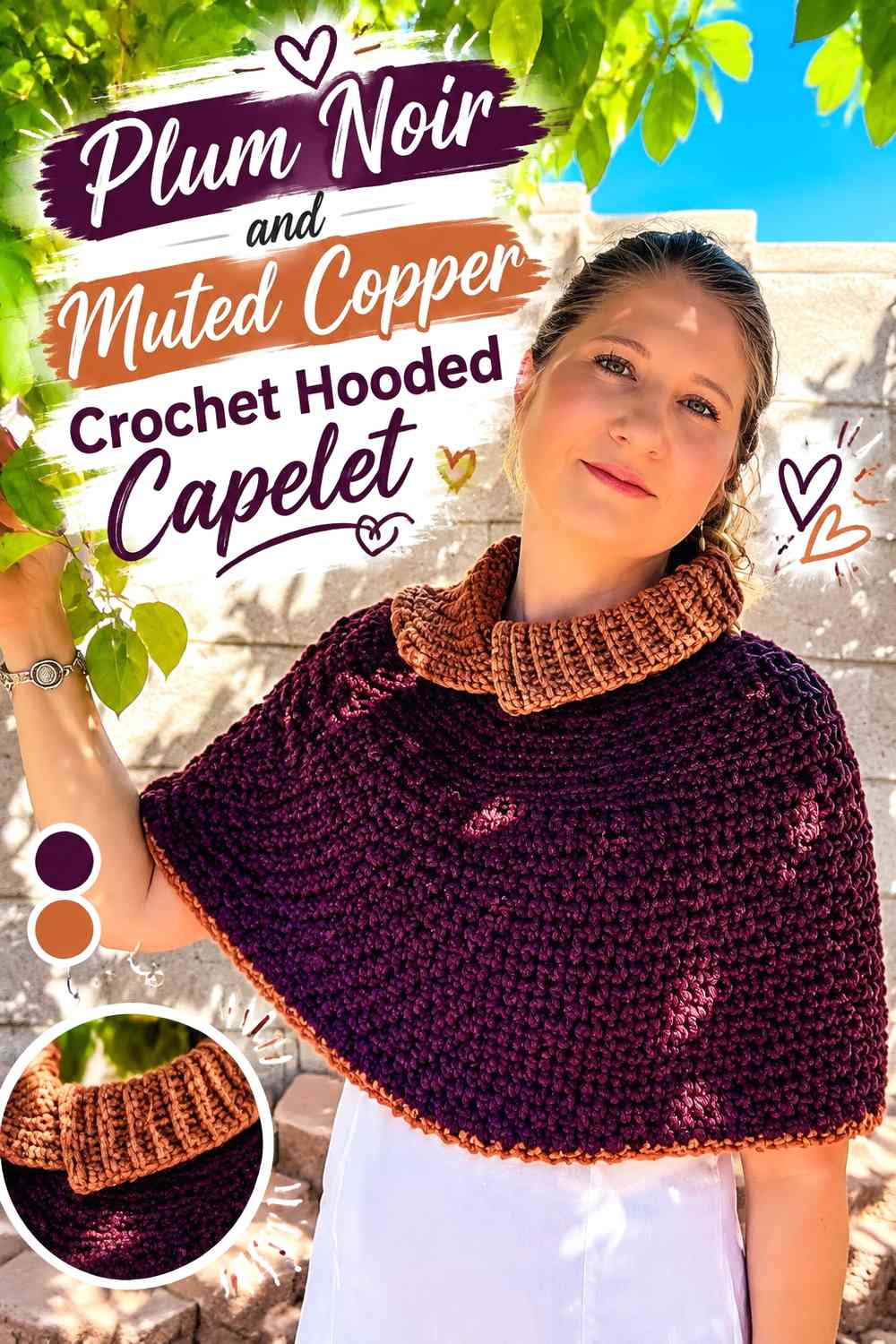
Muted copper can introduce a small warm accent that suits fall styling without overpowering plum noir. It is most effective when treated as a detail color rather than a broad secondary panel.
Let Plum Noir Cover Most of the Capelet Before Adding Copper
Keep the garment predominantly plum noir and choose one or two specific places for copper. This protects the dark romantic direction and prevents the warm accent from turning the capelet into a strongly two-tone piece.
Use Muted Copper at the Plum Noir Neckline or Closure
A narrow trim or closure detail can act like aged metal visually, even when it is simply a yarn color. Keep it concentrated near the center front where small accents naturally attract attention.
Avoid Over-Outlining Plum Noir With Muted Copper
Do not automatically place copper around the hood, neckline, and hem simultaneously. One strong accent zone usually gives the garment more focus.
Creator Credit: Itchin’ for some Stitchin’
10. Plum Noir and Smoky Rose Crochet Ribbed Hooded Capelet
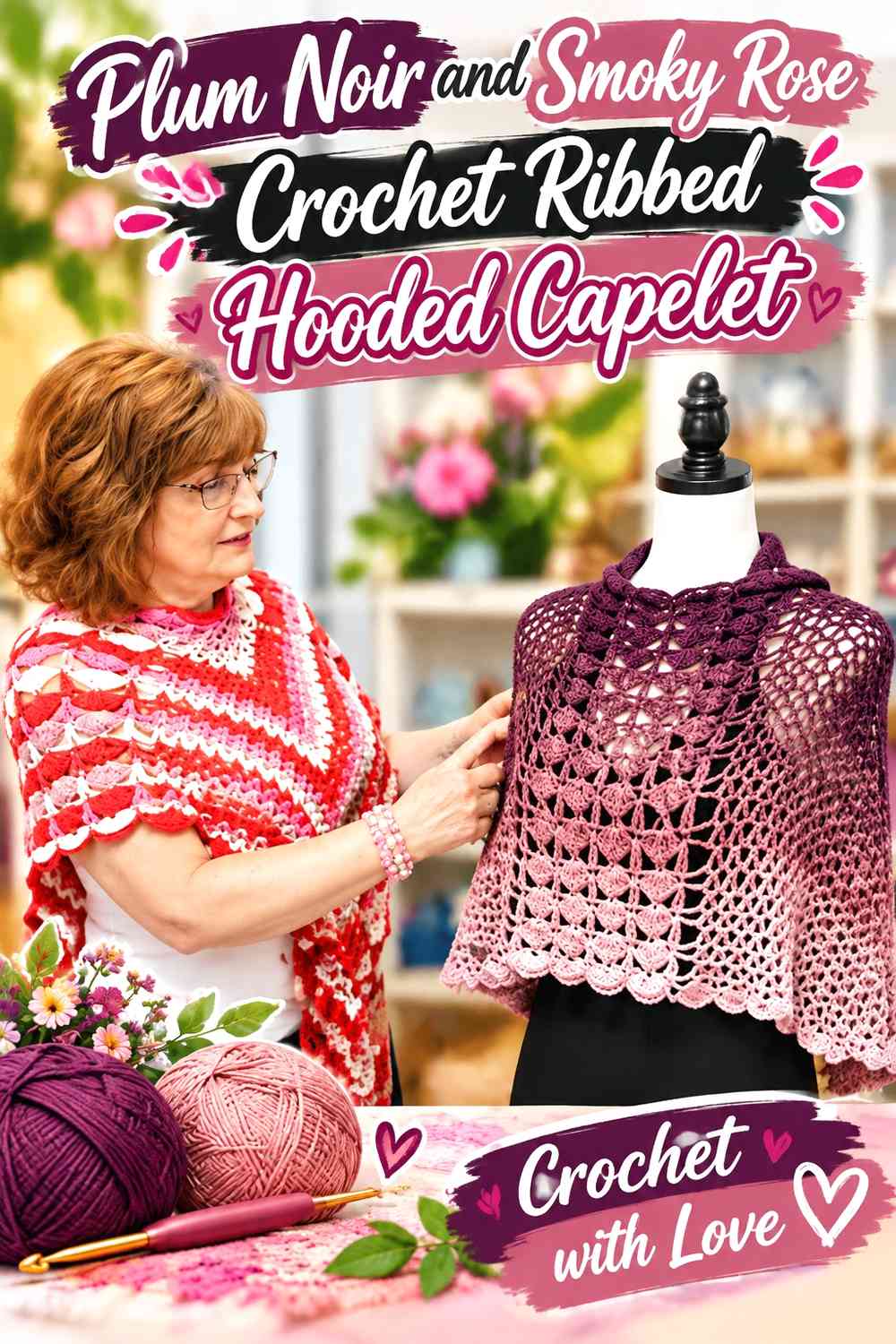
Smoky rose offers softer contrast than antique ivory while staying within a muted romantic palette. Use it around ribbing or folded edges where the lighter shade can make the directional texture more visible.
Let Plum Noir Carry the Main Ribbed Capelet Texture
Keep most of the ribs plum noir so shadows between raised lines provide variation. Switching color on every ridge can create more striping than the dark romantic style needs.
Use Smoky Rose to Clarify Plum Noir Ribbing
A controlled rose section at the neckline or lower border can reveal the direction of the ribbed construction. Make the section wide enough to look intentional rather than like one accidental pale row.
Keep Plum Noir Strong Around the Smoky Rose Hood Edge
If rose appears near the face, let plum noir cover most of the hood crown. The darker upper section prevents the pastel-leaning accent from taking over the silhouette.
Creator Credit: Crafty Yarn Owl with Darla 🇨🇦
11. Plum Noir and Deep Sage Crochet Textured Hooded Capelet
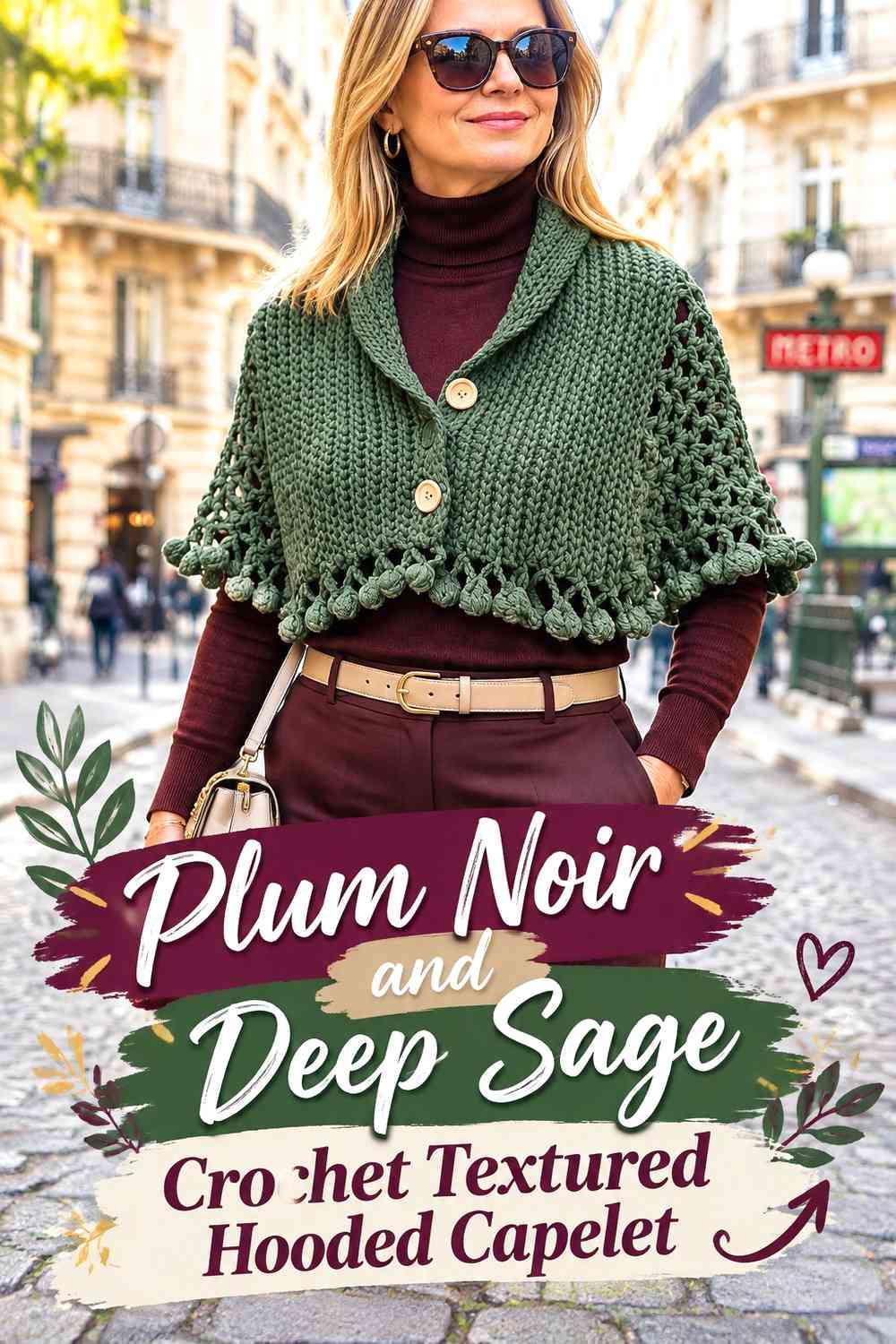
Deep sage creates an earthy fall contrast while staying dark enough for the overall palette. It works best when confined to edges, ties, or a selected texture section rather than alternating equally with plum noir.
Keep Plum Noir Central Beside Deep Sage Texture
Use plum noir across the main body and hood. Deep sage can then occupy a border or secondary textured area without turning the capelet into a green-and-purple block pattern.
Put Deep Sage Where Plum Noir Texture Needs Separation
A sage neckline or lower band can help distinguish two stitch surfaces when dark plum texture alone is difficult to read. Use the color change at a structural transition rather than in the middle of an unrelated panel.
Repeat Plum Noir More Often Than Deep Sage
If sage appears at the lower edge, keep ties and hood trim plum noir, or vice versa. Limiting the green repetition preserves the main-color hierarchy.
Creator Credit: Handwork diy
12. Plum Noir and Black Crochet Tonal Hooded Capelet
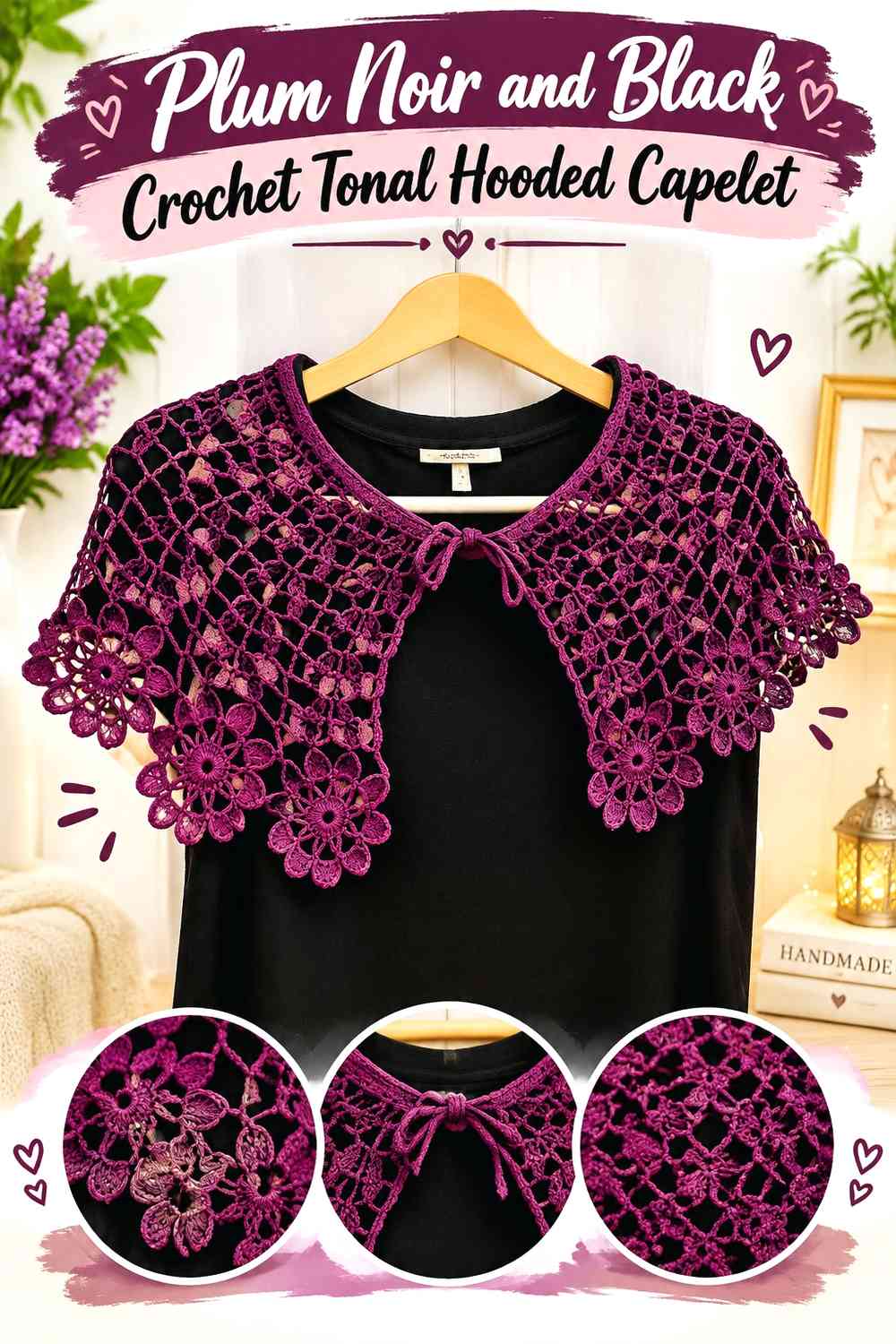
Black beside plum noir creates the darkest tonal option. Rather than relying on obvious color contrast, this idea uses black to sharpen selected boundaries while allowing the purple undertone to remain visible across larger areas.
Keep Plum Noir Across the Broadest Capelet Sections
Plum noir should occupy enough surface area for its purple character to remain distinguishable from true black. Use black only where a boundary needs additional definition.
Put Black Along the Plum Noir Hood Opening
A black face edge can deepen the hood without creating a bright outline. This works particularly well when the capelet is intended to layer over similarly dark fall clothing.
Protect Plum Noir From Too Much Black at the Hem
If black also covers a very wide lower border, the garment may read as primarily black. Keep at least one major area—the cape body or hood—uninterrupted plum noir.
Creator Credit: Crochet with Joanna
13. Plum Noir and Antique Gold Crochet Hooded Capelet
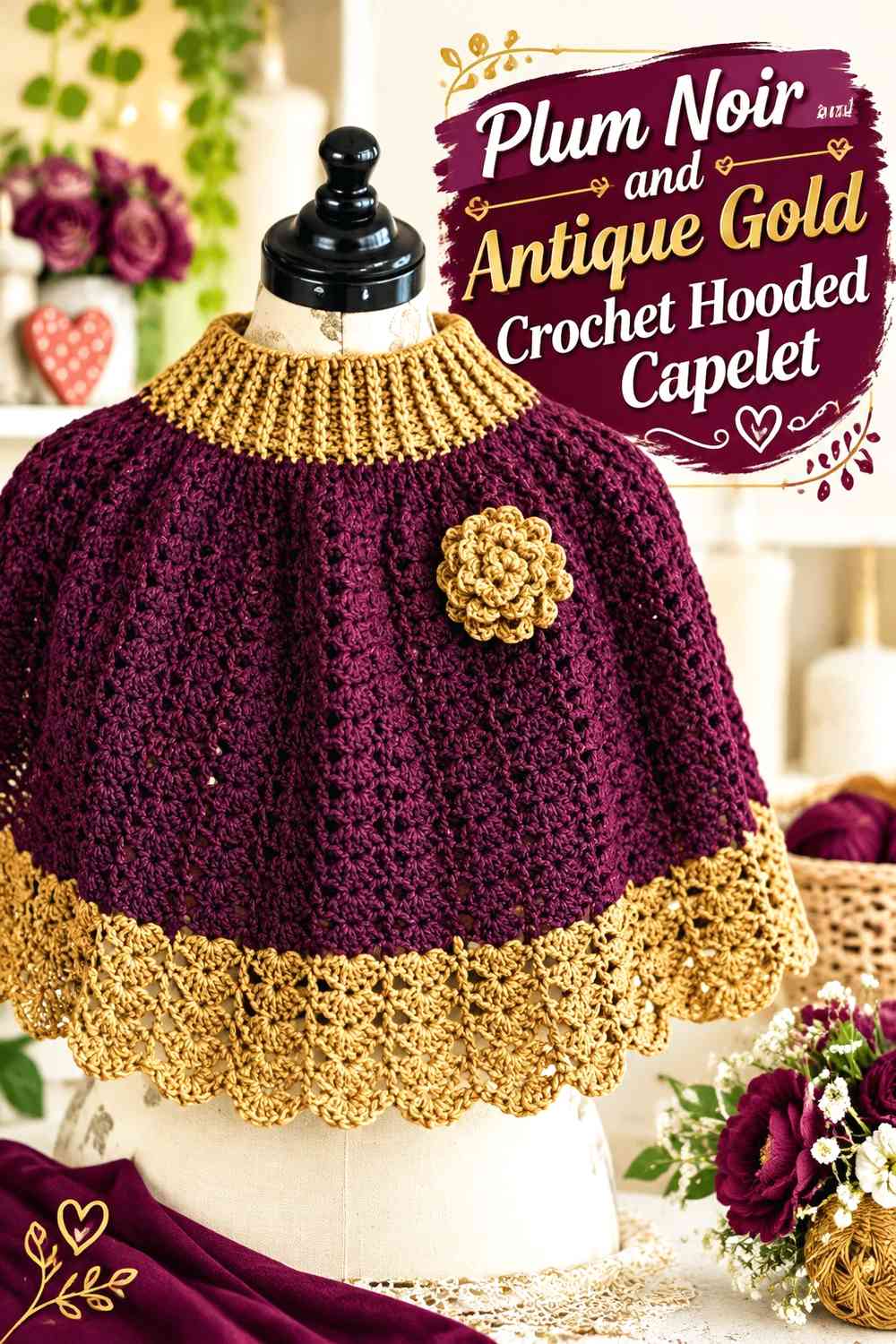
Antique-gold-colored yarn gives the capelet a warmer decorative accent than silver or pewter. Keep it narrow and intentional so the plum noir body continues to set the mood.
Let Plum Noir Surround Antique Gold Details
Use plum noir through the hood, shoulders, and most edging. The dark field gives a small gold-colored detail enough contrast to be noticed without needing a large area.
Place Antique Gold at the Plum Noir Neckline
A narrow neckline treatment, small tie detail, or limited border can provide the accent. The center-front area is especially useful because it creates one deliberate focal point.
Keep Plum Noir Dominant Below Antique Gold Trim
Avoid repeating gold throughout the complete lower hem if the neckline already carries a strong warm accent. Leaving the cape body dark creates a cleaner hierarchy.
Creator Credit: Loopy Mabel Crochet
14. Plum Noir and Fog Gray Crochet Lace Hooded Capelet
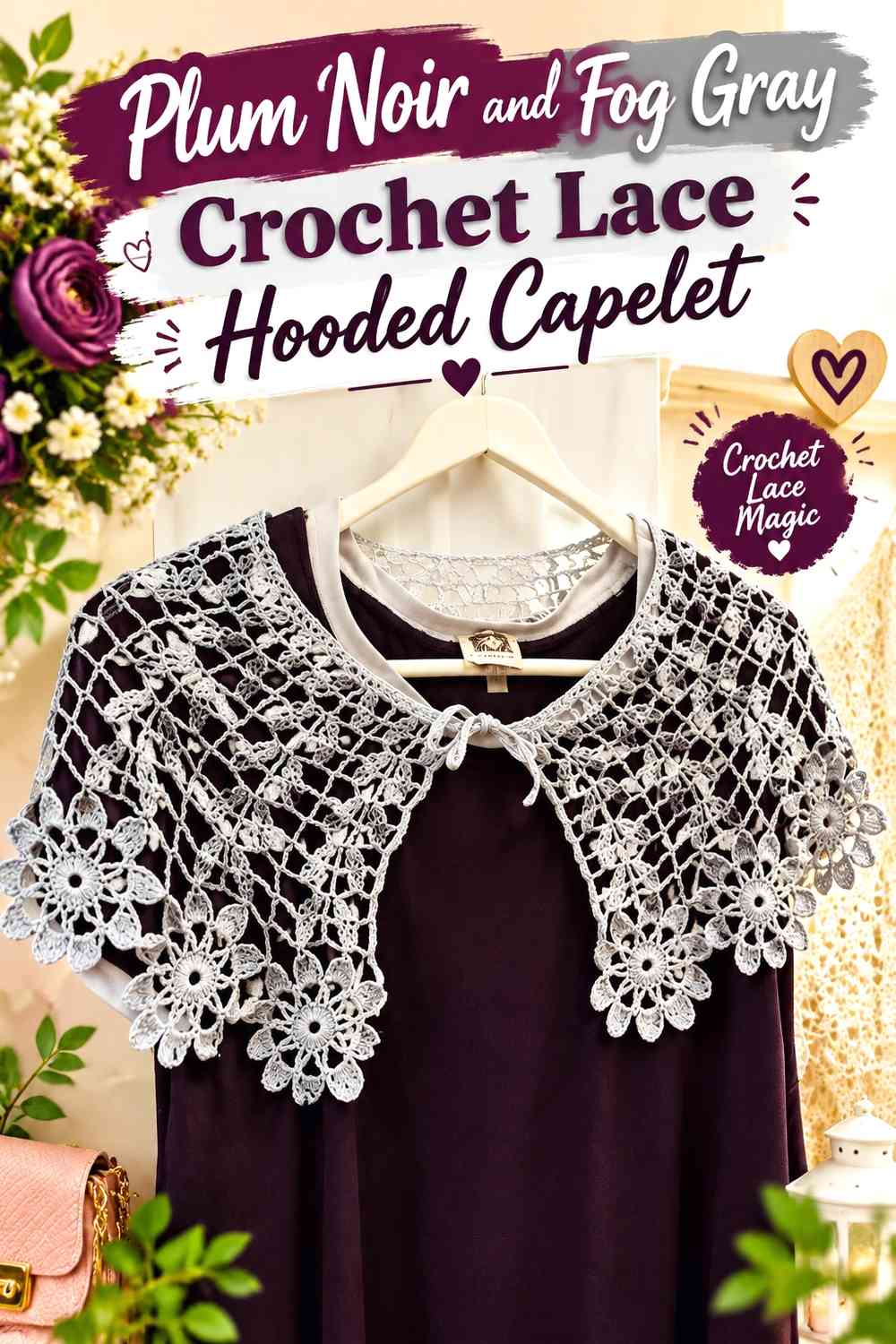
Fog gray makes lace and openwork easier to separate without the starkness of ivory. This palette suits a capelet where lighter edging should remain muted and cool.
Keep Plum Noir Across the Main Lace Capelet Body
Use plum noir for the largest openwork sections so the garment remains clearly dark and romantic. The lace pattern itself can introduce enough visual lightness.
Add Fog Gray Where Plum Noir Lace Needs an Edge
A narrow gray border can prevent the outer scallops or open stitches from disappearing against dark clothing worn underneath.
Keep Plum Noir Strong Around the Fog Gray Hood Opening
If gray appears around the hood, limit the width so the crown and shoulder line remain plum noir. That continuity keeps the lighter edge from visually separating the hood from the capelet.
Creator Credit: Crochet with Joanna
15. Plum Noir and Burgundy Crochet Scalloped Hooded Capelet
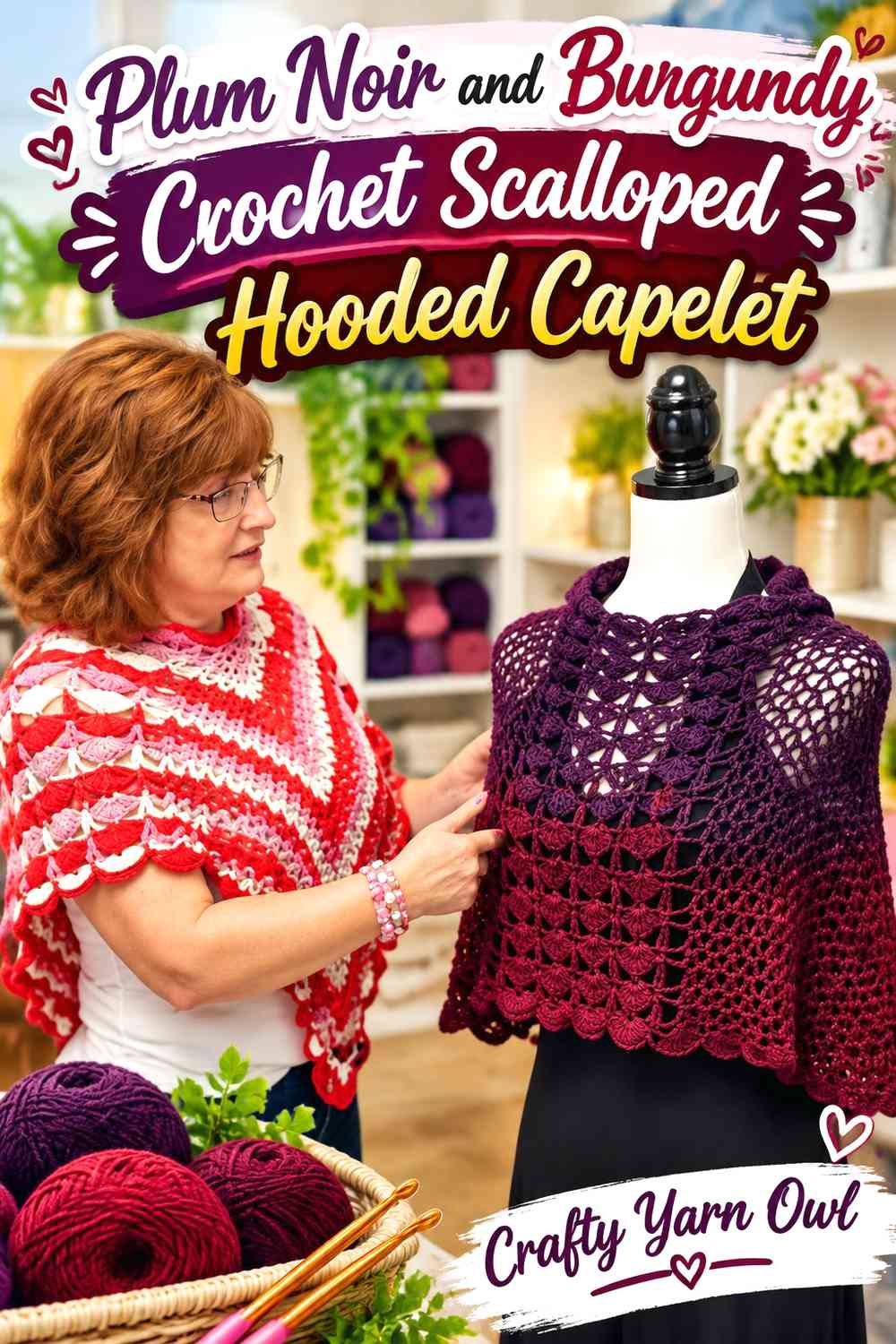
Burgundy reinforces the dark romantic fall direction while remaining distinct enough from plum noir to show along a decorative lower edge. A scalloped or shaped border is an especially useful location because the color and silhouette can reinforce each other.
Keep Plum Noir Above the Burgundy Scalloped Edge
Use plum noir through the broad cape body so burgundy remains concentrated near the hem. The dark upper area gives the shaped lower border room to stand out.
Use Burgundy to Clarify Plum Noir Scallops
Place burgundy across the complete shaped section or only along its outermost edge. Avoid alternating the two colors within every small curve if that makes the hem visually busy.
Carry Plum Noir Back Into the Burgundy Hooded Capelet Neckline
Keep the neckline and hood mainly plum noir so the strongest secondary color stays at the bottom. This creates a clear top-to-bottom hierarchy.
Creator Credit: Crafty Yarn Owl with Darla 🇨🇦
16. Plum Noir and Tobacco Brown Crochet Shoulder Capelet With Hood
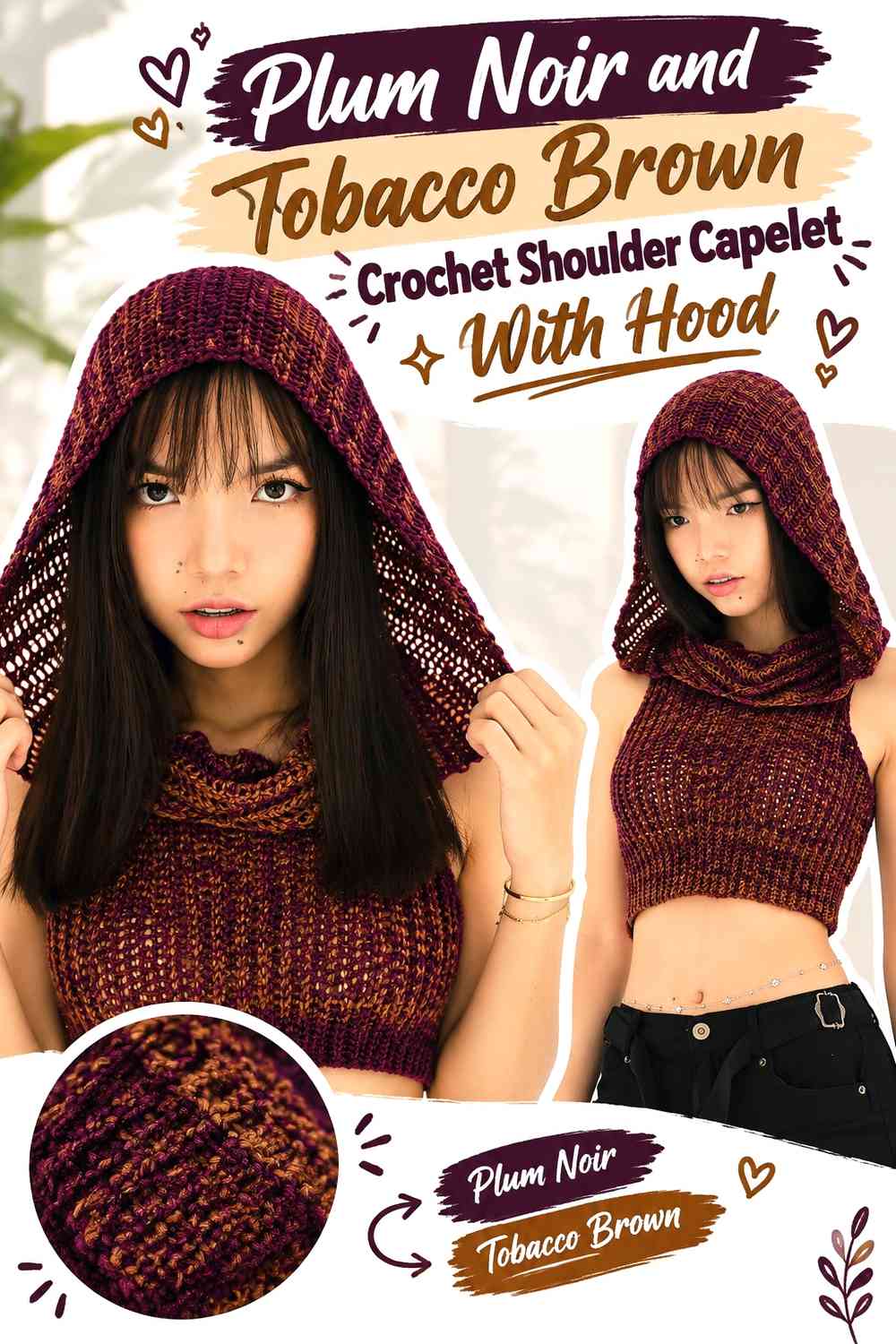
Tobacco brown creates the warmest autumn pairing in the collection. Use it in broad but secondary areas such as a shoulder border or hood facing rather than scattering it through small stripes.
Let Plum Noir Cover Most of the Shoulder Capelet
Keep the central shoulder span plum noir so the garment retains its dark romantic base. Tobacco brown can then warm the edge without competing for equal area.
Use Tobacco Brown to Frame the Plum Noir Shoulder Line
A brown lower band can visually ground the capelet and distinguish it from a dark skirt, dress, or top worn beneath it. Keep the band proportional to the shorter capelet length.
Keep Plum Noir Dominant Around the Tobacco Brown Hood
If brown appears inside the hood, leave the outside crown plum noir. The darker exterior keeps the garment visually connected from head to shoulder.
Creator Credit: Chenda DIY
17. Plum Noir and Dusky Lilac Crochet Pixie-Hood Capelet
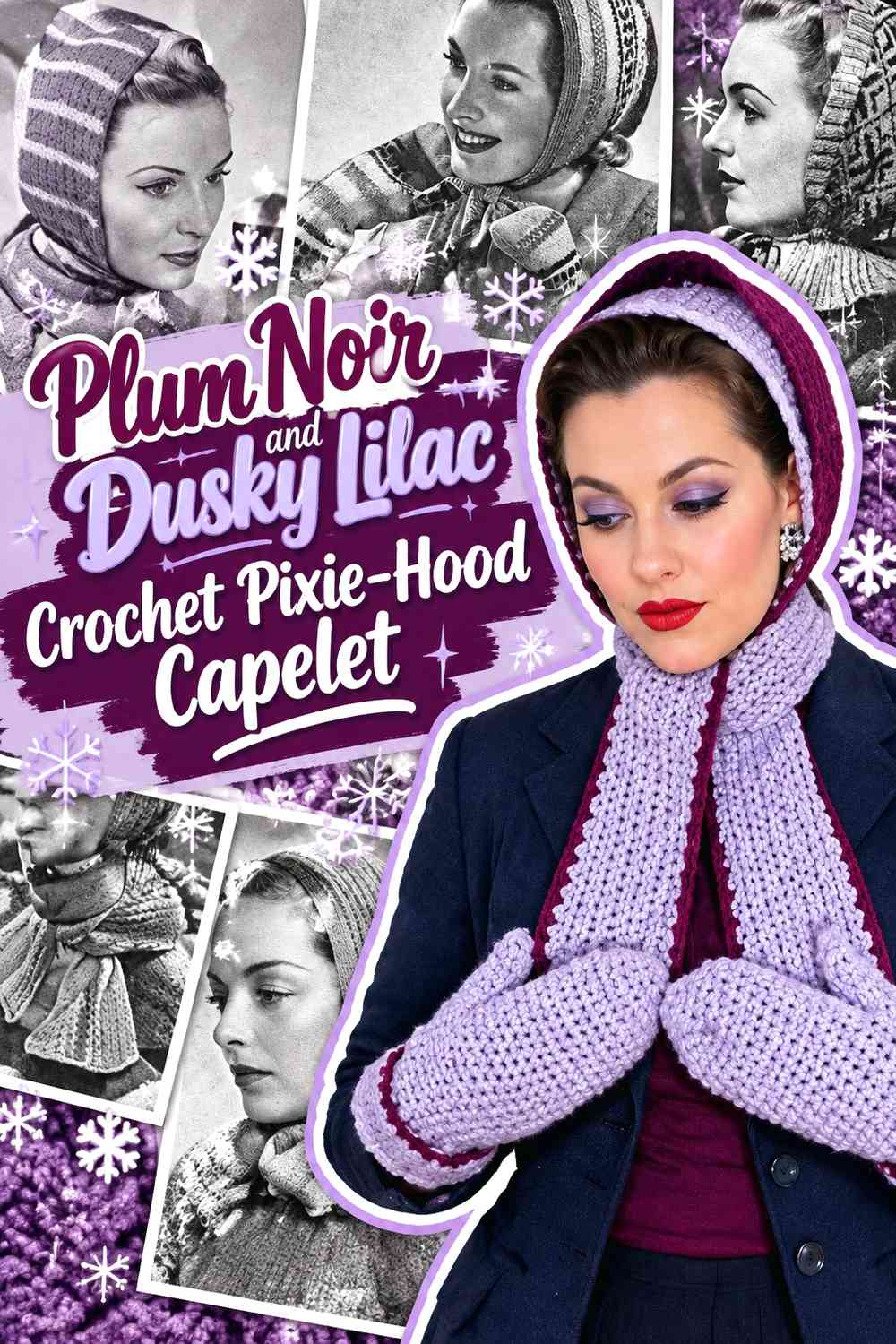
A pixie-style or softly pointed hood gives the final capelet a more overtly romantic silhouette. Dusky lilac can reveal the hood edge while plum noir controls the shoulder wrap and outer crown.
Keep Plum Noir Across the Pixie-Hood Exterior
Use plum noir through the outside of the hood and cape body so the pointed silhouette reads as one continuous dark form.
Use Dusky Lilac Inside the Plum Noir Hood Opening
A softened lilac facing or narrow edge can make the hood shape easier to distinguish without creating the brightness of ivory.
Return to Plum Noir Across the Dusky Lilac Shoulder Capelet
Keep the shoulder wrap primarily plum noir so the lighter purple remains concentrated around the face. This creates a clear focal progression from hood to dark cape body.
Creator Credit: La Vie With Bee
Comparing the Plum Noir Hooded Capelet Directions
For the darkest treatment, ideas 1, 4, and 12 keep the palette monochromatic or extremely close in value. These depend more heavily on hood shape, ribbing, lace, and surface texture for visual separation.
Ideas 2 and 14 introduce cooler light accents through antique pewter or fog gray. They are useful when the hood opening or decorative edge needs more definition without moving all the way to cream.
For richer romantic color, ideas 3, 5, 6, 10, 15, and 17 stay close to the red-purple family. Oxblood and black cherry create the darkest secondary colors, while dusty mauve, smoky rose, burgundy, and dusky lilac provide progressively more visible tonal contrast.
Ideas 8, 11, and 16 bring earthy fall shades into the plum noir base through dark cocoa, deep sage, and tobacco brown. These work especially well when you want the capelet to coordinate with brown leather, olive outerwear, or other muted autumn neutrals without turning the garment into a bright seasonal palette.
Ideas 7, 9, and 13 use the strongest accent strategy. Antique ivory creates light contrast, while muted copper and antique gold concentrate warm decorative color at specific edges or closures.
Conclusion
Plum noir is most effective on a crochet hooded capelet when it remains the color that connects the hood, neckline, shoulders, and lower silhouette. Secondary shades should clarify a particular decision—such as the hood opening, closure, lace edge, ribbing, or hem—rather than appearing everywhere simply to break up the dark surface.
Choose the all-plum-noir idea when texture and silhouette should carry the design, or use black and charcoal for an even darker tonal direction. Oxblood, black cherry, burgundy, and dusty mauve strengthen the romantic side of the palette, while cocoa, sage, and tobacco brown move it toward an earthy fall wardrobe.
Before committing to a contrasting border, drape the developing capelet over the shoulders and check it vertically. Pay particular attention to how wide the hood trim appears, whether the lower edge has enough visual weight, and whether the secondary color repeats often enough to look intentional without competing with plum noir.
The credited tutorials should be used for their original hood, cape, capelet, poncho, cowl, or wrap construction guidance. Where separate construction concepts are being adapted, check the neckline and finished dimensions carefully before combining them rather than assuming any hood will automatically fit any capelet.
Frequently Asked Questions
What Colors Work With Plum Noir on a Dark Romantic Crochet Hooded Capelet?
Close dark shades such as black, charcoal, black cherry, oxblood, and dark cocoa preserve the strongest gothic-romantic direction. Dusty mauve, smoky rose, fog gray, and antique ivory create progressively more contrast, while muted copper or antique gold can work as smaller warm accents.
Should Plum Noir Cover the Hood and Capelet Body?
Using plum noir across both areas creates the strongest continuous silhouette. If you want the hood emphasized, keep its exterior plum noir and introduce a secondary shade only around the opening, facing, or ties.
How Can Plum Noir Crochet Texture Stay Visible?
Use stitch texture with enough depth or open space to create noticeable light and shadow. Ribbing, defined borders, openwork, and shaped edging can provide separation without another color. If an important detail still disappears, place a controlled contrasting shade around that specific area.
What Is a Good Light Accent for a Plum Noir Hooded Capelet?
Antique ivory creates the strongest contrast, while fog gray and dusty mauve produce softer transitions. Use a light accent around the hood opening, lace edge, or neckline rather than outlining every edge if you want plum noir to remain dominant.
Can Plum Noir Be Paired With Brown for Fall Style?
Yes. Dark cocoa and tobacco brown can warm the palette while keeping it subdued. Use brown at a closure, hood facing, neckline, or lower border and preserve a broad plum noir area through the main shoulder section.
How Can I Make a Plum Noir Capelet Look More Dark Romantic Without Adding Many Colors?
Let silhouette and texture carry more of the style. A deep hood, shaped hem, controlled lace section, ribbing, or a distinctive neckline can create more character while the garment stays predominantly plum noir.
Can I Add a Hood to a Plum Noir Capelet Tutorial That Does Not Include One?
It can be possible as an adaptation, but do not assume a separate hood will automatically fit the capelet neckline. Compare the finished neckline and hood attachment dimensions, consider the extra weight and drape around the shoulders, and use the original tutorials for their respective construction details rather than combining stitch counts or assembly sequences blindly.