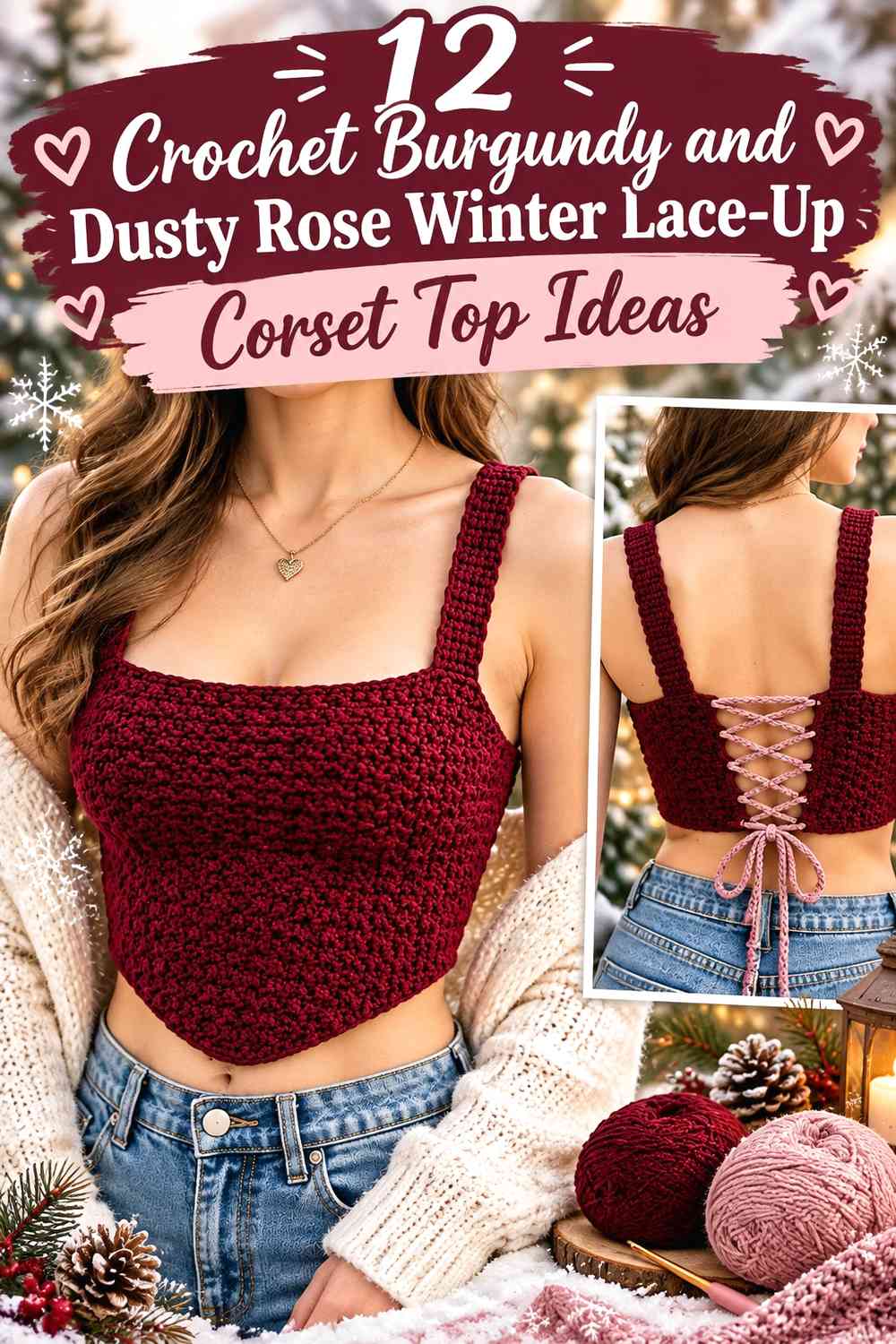

Burgundy and dusty rose create a useful light-and-dark relationship for a crochet lace-up corset top. Burgundy can give the fitted body, waist, cups, or edging more visual weight, while dusty rose can lighten lacing, side panels, straps, ruffles, and other details that need separation from the darker base.
For winter styling, the colors also have to work when the corset top is layered. A fitted long-sleeve shirt, turtleneck, or other base layer may show through the lace-up opening, so that underlayer becomes part of the final color composition. The placement of burgundy and dusty rose should therefore be judged both flat and while the top is worn.
These 12 ideas keep the same core palette but change which shade dominates, where the lace-up feature sits, how panels are separated, and how the lighter color moves around the fitted silhouette. The credited tutorials support corset, bustier, lace-up, or fitted-top construction concepts; the burgundy-and-dusty-rose palettes are independent adaptations.
Quick List
- Burgundy Crochet Winter Lace-Up Corset Top with Dusty Rose Back Lacing
- Dusty Rose Crochet Winter Lace-Up Corset Top with Burgundy Back Lacing
- Burgundy Ribbed Crochet Winter Corset Top with Dusty Rose Lace-Up Back
- Burgundy and Dusty Rose Crochet Winter Lace-Up Corset Top with Split Front Panels
- Burgundy Crochet Winter Lace-Up Corset Top with Dusty Rose Ruffled Hem and Lacing
- Dusty Rose Crochet Winter Bustier Corset Top with Burgundy Waist and Lacing
- Burgundy Crochet Winter Lace-Up Corset Top with Dusty Rose Cups
- Dusty Rose Crochet Winter Corset Top with Burgundy Contour Edging and Lacing
- Burgundy and Dusty Rose Crochet Winter Front-Lace Corset Top
- Burgundy Crochet Winter Corset Top with Dusty Rose Ribbed Side Panels
- Burgundy and Dusty Rose Crochet Winter Corset Top with Reversed Panel Lacing
Decide Whether Burgundy or Dusty Rose Should Lead the Crochet Corset Top
Giving one shade a clearly larger role usually makes the lace-up detail easier to understand. A mostly burgundy corset with dusty rose lacing creates a concentrated pale accent, while a dusty rose body with burgundy lacing makes the crossing cords one of the darkest features on the garment.
You do not need a strict percentage formula. Instead, identify the part you want noticed first. If the fitted waist and torso shape should lead, place the darker burgundy there. If the lacing should become the strongest graphic element, reserve burgundy for the cord, eyelet edges, or narrow contour lines against a broader dusty rose field.
Use Burgundy and Dusty Rose Contrast Around the Lace-Up Opening
Corset lacing creates several narrow diagonal lines, so insufficient contrast can make the crossed pattern disappear. Test the lacing against the actual body color before finishing a long cord. Viewing a photo in grayscale can help reveal whether the two yarns remain noticeably different in lightness.
The underlayer matters too. Dusty rose lacing over a burgundy top may look very different when a black, cream, gray, or similarly colored winter layer is visible through the opening. Check all three colors together before deciding that the lacing needs an additional border.
Balance Burgundy and Dusty Rose for Winter Layering
A crochet corset top can become a winter styling layer rather than the only garment on the upper body. When worn over a fitted long-sleeve top, the visible base color affects the neckline, armholes, lace-up gap, and any open crochet sections.
Keep the burgundy-and-dusty-rose relationship clear even after another layer is added. If the underlayer is visually strong, simplify the crochet palette rather than introducing several extra accent shades.
1. Burgundy Crochet Winter Lace-Up Corset Top with Dusty Rose Back Lacing
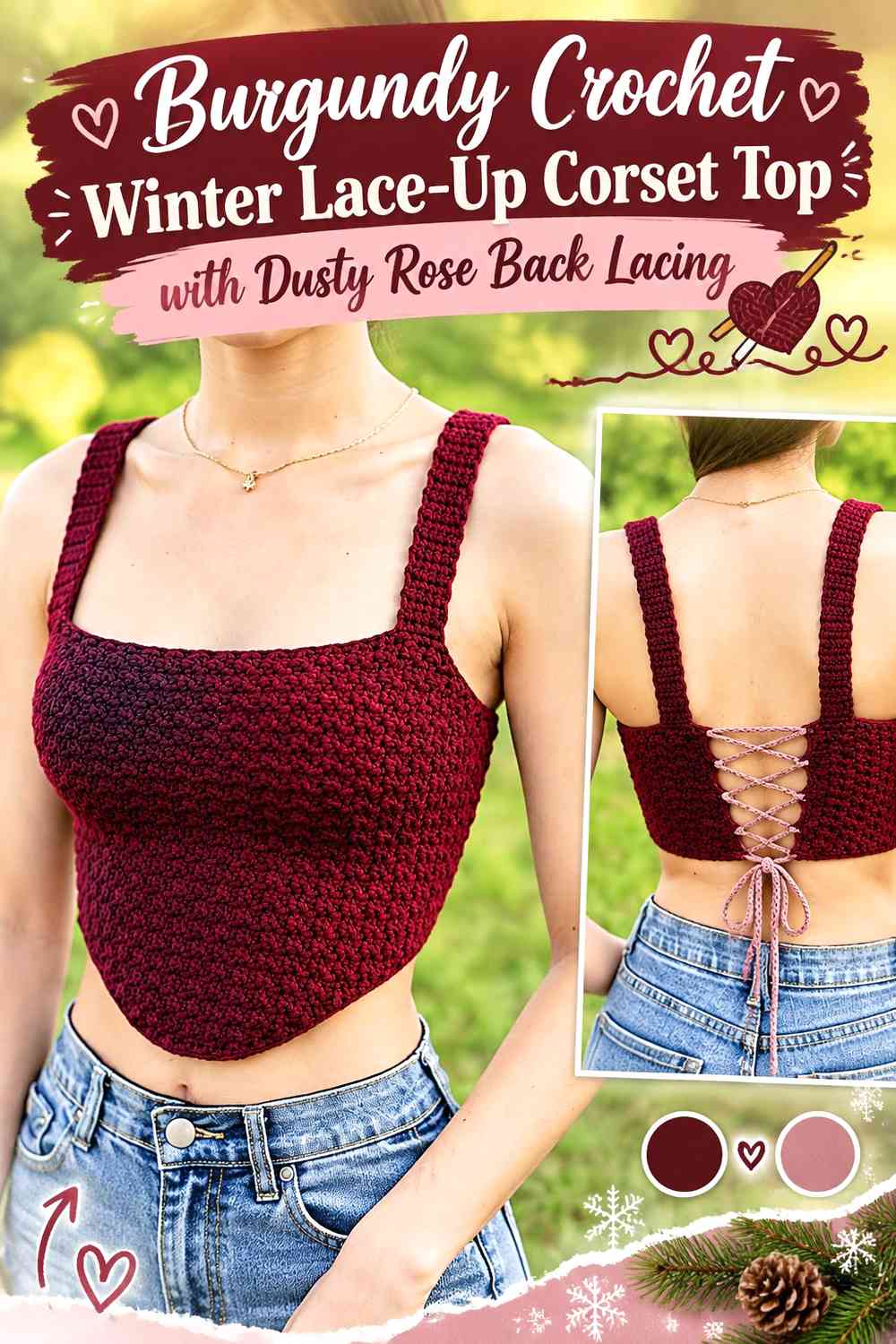
Let burgundy cover most of the corset body and reserve dusty rose for the back lacing. This is one of the clearest ways to use the palette because the darker shade establishes the fitted silhouette while the lighter crossing cord immediately identifies the corset feature.
Burgundy Should Create a Continuous Corset Body
Keep burgundy uninterrupted across the main front and side sections when you want the silhouette itself to feel visually strong. Too many dusty rose patches through the body can compete with the back lacing and weaken the simple dark-base concept.
Check the back edges before adding the cord. The burgundy should form a consistent frame on both sides so the dusty rose crossings sit inside a clearly defined opening.
Dusty Rose Should Stay Visible Across the Burgundy Back
Choose dusty rose for the lacing only if it remains distinguishable against the burgundy edges and the winter layer beneath the opening. If your particular shades are close in value, a slightly lighter muted pink can preserve the intended relationship without abandoning the palette.
The dusty rose cord does not need to appear elsewhere in large areas. A small repeat at the straps or neckline can be enough to connect the back detail to the front.
Creator Credit: Chenda DIY
2. Dusty Rose Crochet Winter Lace-Up Corset Top with Burgundy Back Lacing
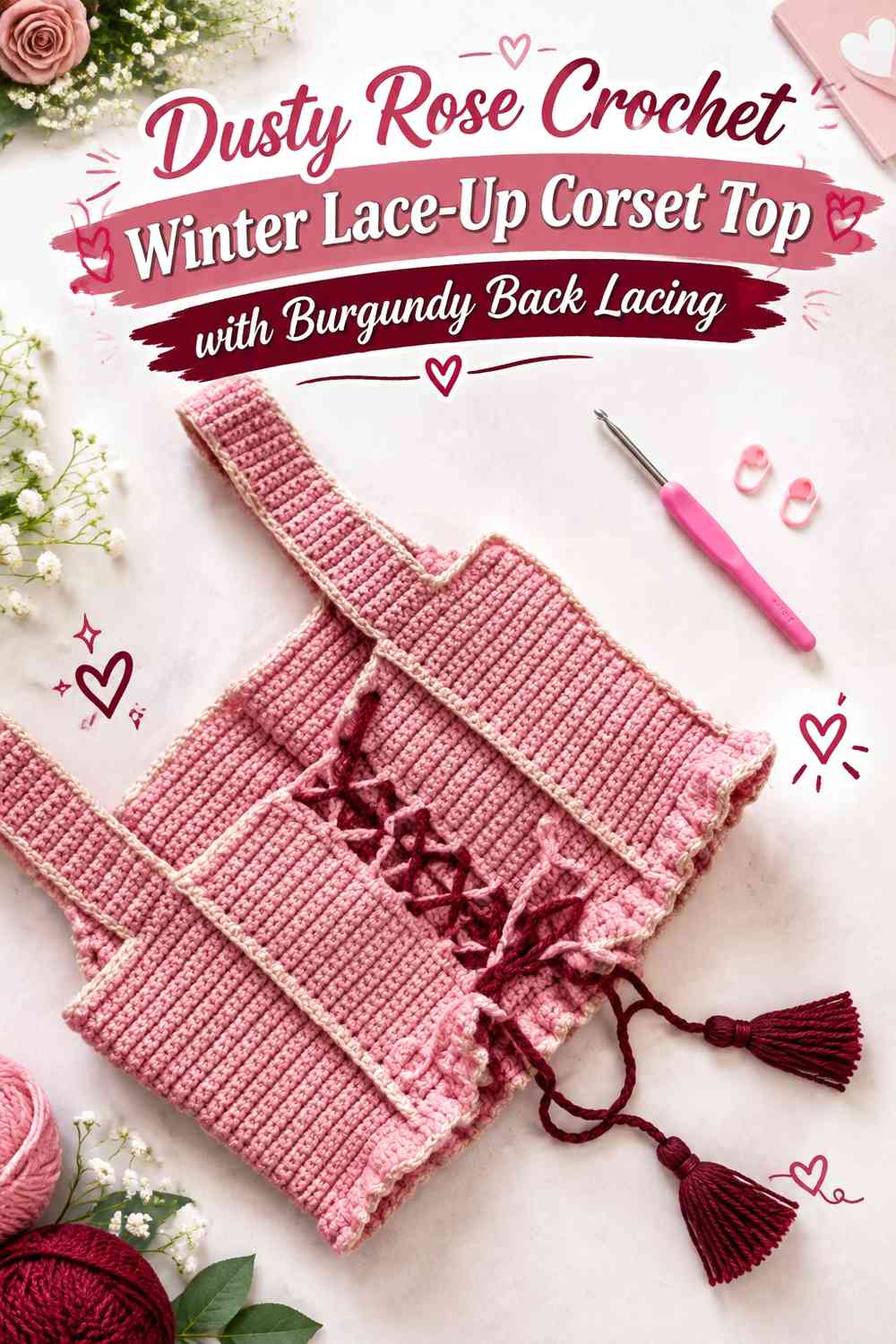
Reverse the first arrangement by using dusty rose for the fitted body and burgundy for the lacing. The lighter body shifts visual emphasis toward the crossed cords, making the lace-up treatment one of the darkest and most noticeable elements.
Dusty Rose Should Occupy Enough of the Corset to Feel Intentional
Let dusty rose cover the major body panels rather than reducing it to several pale accents. A broad muted-pink field gives burgundy lacing a consistent background and helps the color reversal look deliberate.
For winter layering, compare the dusty rose top against the intended shirt or turtleneck. A very similar underlayer may visually erase open edges, while stronger contrast can emphasize them.
Burgundy Lacing Can Anchor the Dusty Rose Back
Use burgundy where you want the eye to follow the crossing pattern. Dark lacing can also connect naturally with burgundy edging or straps, but repeating the color everywhere will reduce the special role of the closure.
If you add burgundy elsewhere, keep those areas narrower than the dusty rose body so the hierarchy remains obvious.
Creator Credit: archisdiary🌸
3. Burgundy Ribbed Crochet Winter Corset Top with Dusty Rose Lace-Up Back
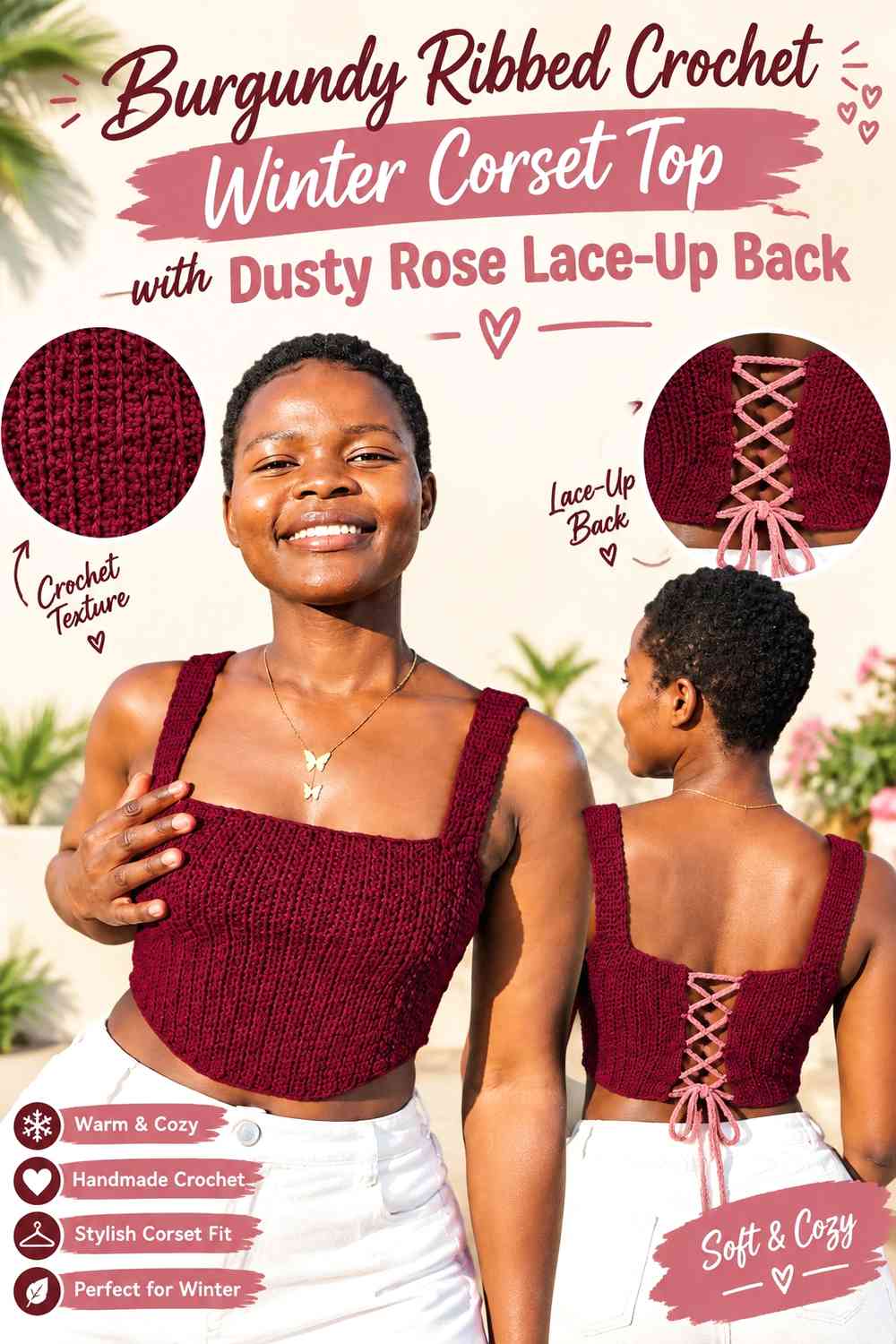
A ribbed burgundy body gives this idea strong vertical or directional texture, while dusty rose lacing provides a softer break at the back. The color division is particularly useful when the ribbing already adds plenty of surface detail and you do not want additional multicolor panels competing with it.
Burgundy Keeps Ribbed Corset Texture Visually Connected
Use burgundy consistently across the ribbed areas so the texture can create shadow without frequent color interruptions. A single dark shade also makes it easier to distinguish the structural-looking body from the decorative lacing.
Check the ribbing after stretching the garment to its intended fit. The appearance of burgundy texture can change when the fabric expands.
Dusty Rose Gives the Burgundy Ribbing a Softer Lace-Up Finish
Reserve dusty rose for the back cord, selected trim, or a narrow upper edge. This lighter contrast prevents the lace-up feature from disappearing into the dark ribbed surface.
If you repeat blush at the straps, keep the placement symmetrical unless a deliberately asymmetric color treatment is part of the design.
Creator Credit: Kemunto crochets
4. Burgundy and Dusty Rose Crochet Winter Lace-Up Corset Top with Split Front Panels
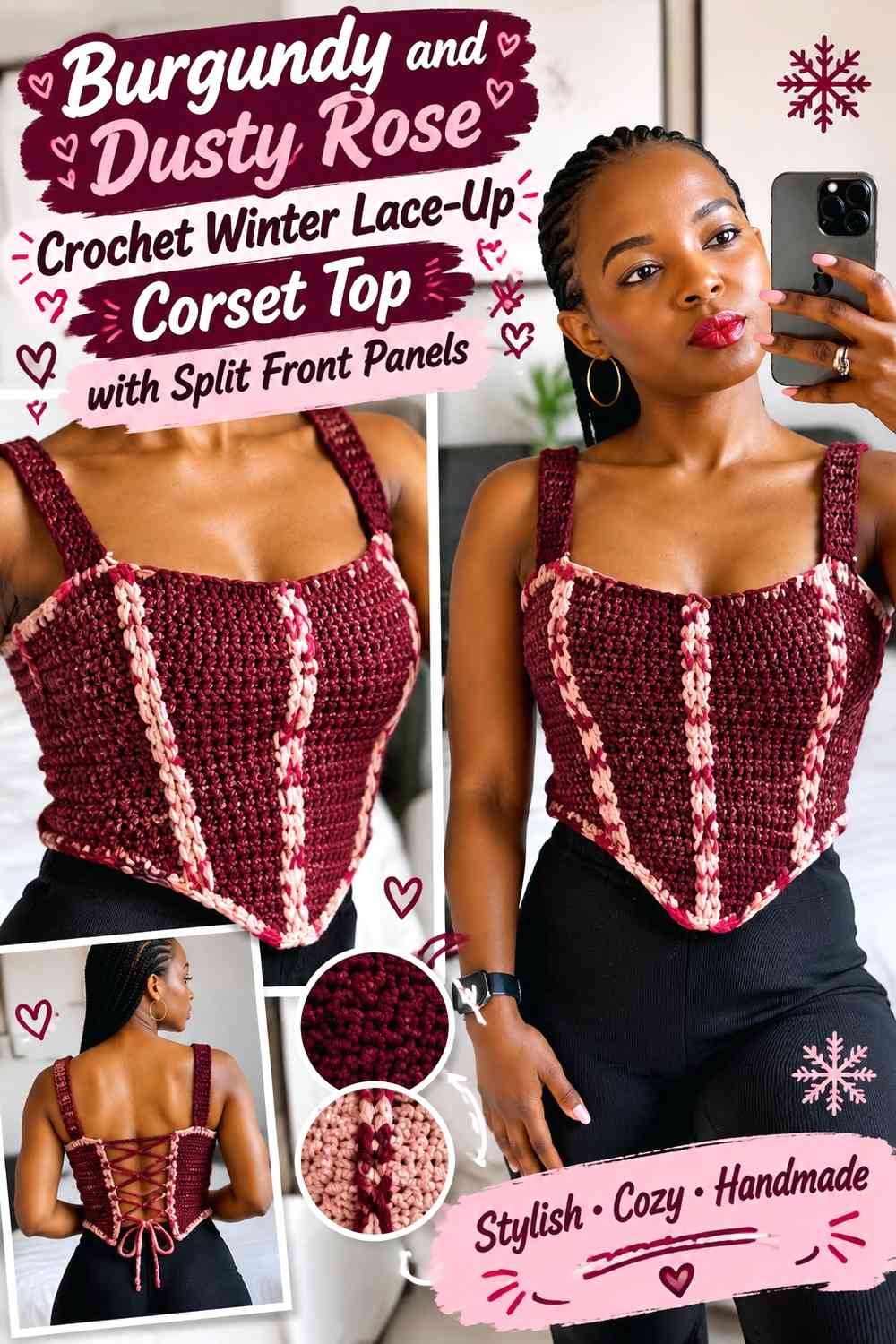
Divide the front into clearly organized burgundy and dusty rose sections instead of placing all contrast at the back. Burgundy can frame the outer torso while dusty rose occupies a central panel, with the lace-up closure repeating one of those colors.
Burgundy Can Frame the Dusty Rose Center Panel
Placing burgundy at the sides gives the lighter middle section a darker boundary. This is useful when you want front-panel shaping to remain visible even under an open cardigan or jacket.
Keep the burgundy sections broad enough to appear intentional. Very thin side strips may look more like edging than actual color-block panels.
Dusty Rose Should Connect the Front Panel to the Lace-Up Detail
Repeat dusty rose in the lacing when you want the center front and closure to share one visual language. Alternatively, use burgundy lacing when stronger contrast is needed.
Before choosing, look at the top from both front and back. The color hierarchy should make sense from more than one angle.
Creator Credit: AC Crochets
5. Burgundy Crochet Winter Lace-Up Corset Top with Dusty Rose Ruffled Hem and Lacing
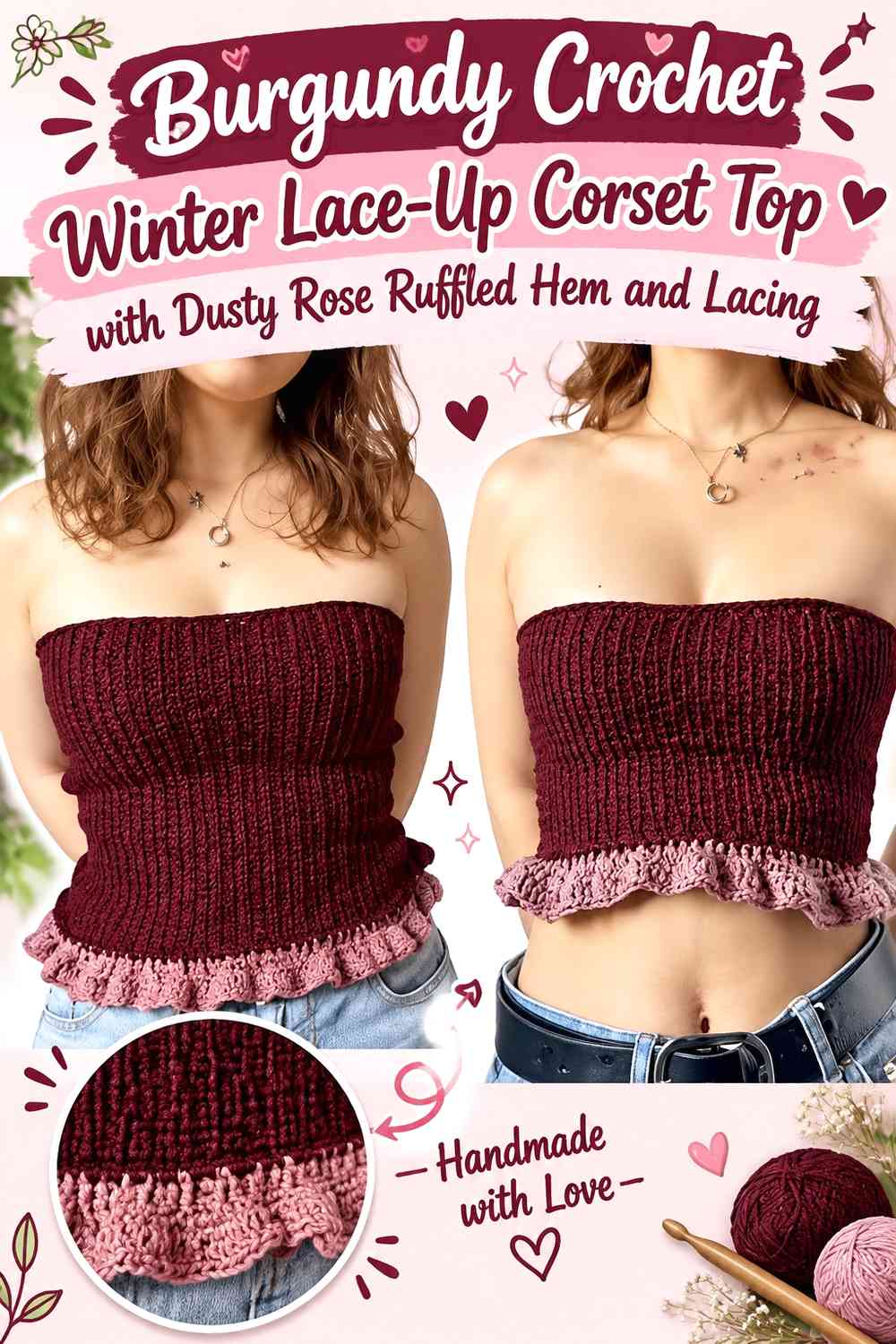
A dusty rose ruffle or softly shaped lower edge can lighten a mostly burgundy corset without breaking the fitted body into multiple blocks. Matching the lace-up cord to the ruffled edge then repeats the lighter color in two purposeful areas.
Burgundy Should Remain Solid Above the Dusty Rose Hem
Keep most of the torso burgundy so the ruffle reads as an ending rather than the start of a heavily striped design. The darker body also gives the lower dusty rose shape a consistent background.
When layering over a longer winter shirt, check whether the underlayer extends beneath the ruffle. Its color may become visible between or below the crochet edge.
Dusty Rose Can Link the Ruffled Hem to the Burgundy Corset Lacing
Using dusty rose both at the hem and in the lace-up cord creates repetition without requiring equal amounts of both colors. This helps the lighter shade travel through the garment while burgundy remains dominant.
If the ruffle already has a lot of texture, keep additional dusty rose edging around the neckline restrained.
Creator Credit: thisfairymade
6. Dusty Rose Crochet Winter Bustier Corset Top with Burgundy Waist and Lacing

Use dusty rose through the upper bustier area and concentrate burgundy at the waist and closure. The darker lower section visually anchors the garment while the lighter upper area keeps the palette from becoming overwhelmingly dark.
Dusty Rose Can Keep the Upper Corset Area Visually Lighter
A broad dusty rose upper field works well when the shaping itself already creates enough detail. Avoid adding several extra colors around shaped sections; let the tonal contrast between blush and burgundy do the work.
If straps are included, continuing dusty rose into them keeps the upper half visually connected.
Burgundy Can Define the Waist and Lace-Up Areas
Use burgundy at the lower torso, waist edge, or lacing when you want the darkest shade to reinforce the most fitted-looking area. A narrow burgundy outline can also separate dusty rose from the underlayer.
Check that the lower dark section does not become so tall that the top looks divided exactly in half unless that balanced color blocking is intentional.
Creator Credit: Made by BJax
7. Burgundy Crochet Winter Lace-Up Corset Top with Dusty Rose Cups
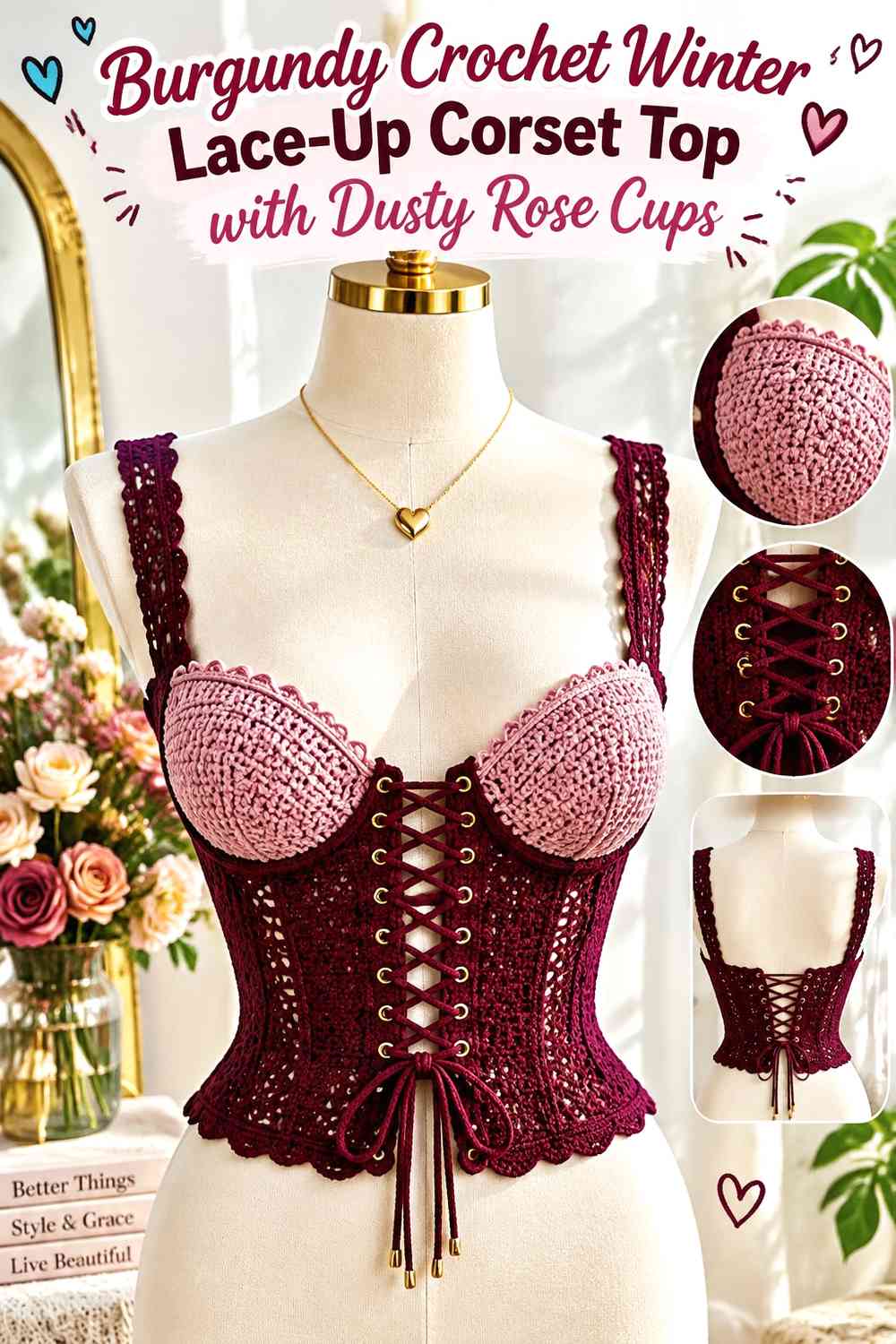
Make the shaped upper sections dusty rose while keeping the surrounding corset body burgundy. This directs attention toward the upper front without requiring bright contrast, and burgundy lacing can pull the darker body color through to the closure.
Dusty Rose Cups Need a Clear Burgundy Boundary
Use burgundy immediately around the dusty rose sections when you want their shape to remain recognizable. If the colors have similar value, a narrow burgundy border can give the transition more definition.
Keep that outline consistent rather than making one side noticeably heavier, particularly when the upper front is already highly shaped.
Burgundy Lacing Keeps the Dusty Rose Front from Taking Over
Repeating burgundy in the closure returns the dominant body color to another focal area. This creates a useful front-to-back connection: blush draws attention at the upper front while burgundy remains responsible for the overall frame.
For winter layering, check how the cup colors interact with the neckline of the shirt underneath.
Creator Credit: Krystal Everdeen
8. Dusty Rose Crochet Winter Corset Top with Burgundy Contour Edging and Lacing
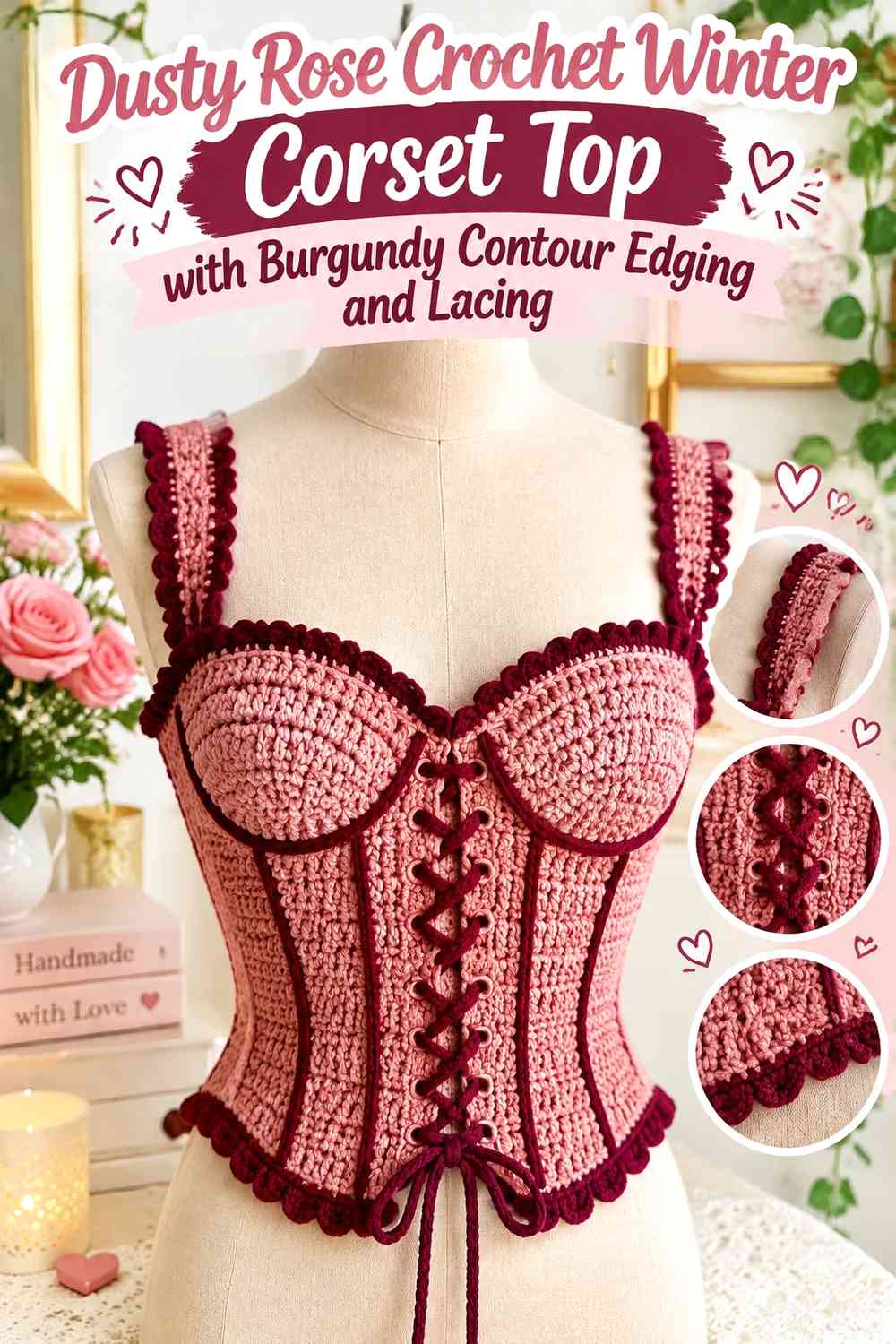
Instead of using broad burgundy panels, let dusty rose cover nearly all of the top and reserve burgundy for edges, straps, and the lace-up closure. The result keeps the overall garment lighter while using the darkest shade to trace its important lines.
Dusty Rose Should Stay Uninterrupted Across the Main Corset Panels
Large dusty rose sections prevent the top from becoming overly outlined. Let the body read as one pale field, then use burgundy only where definition is useful.
This approach can be especially effective when the crochet texture already provides plenty of surface variation.
Burgundy Edging Can Define Dusty Rose Without Becoming a Third Panel
Place burgundy along the neckline, side edge, lower edge, or lace-up opening in controlled amounts. The goal is to trace the silhouette rather than surround every small section.
If every seam or texture change receives burgundy edging, the design can become visually busy. Choose the boundaries that matter most.
Creator Credit: Cherilyn Q
9. Burgundy and Dusty Rose Crochet Winter Front-Lace Corset Top
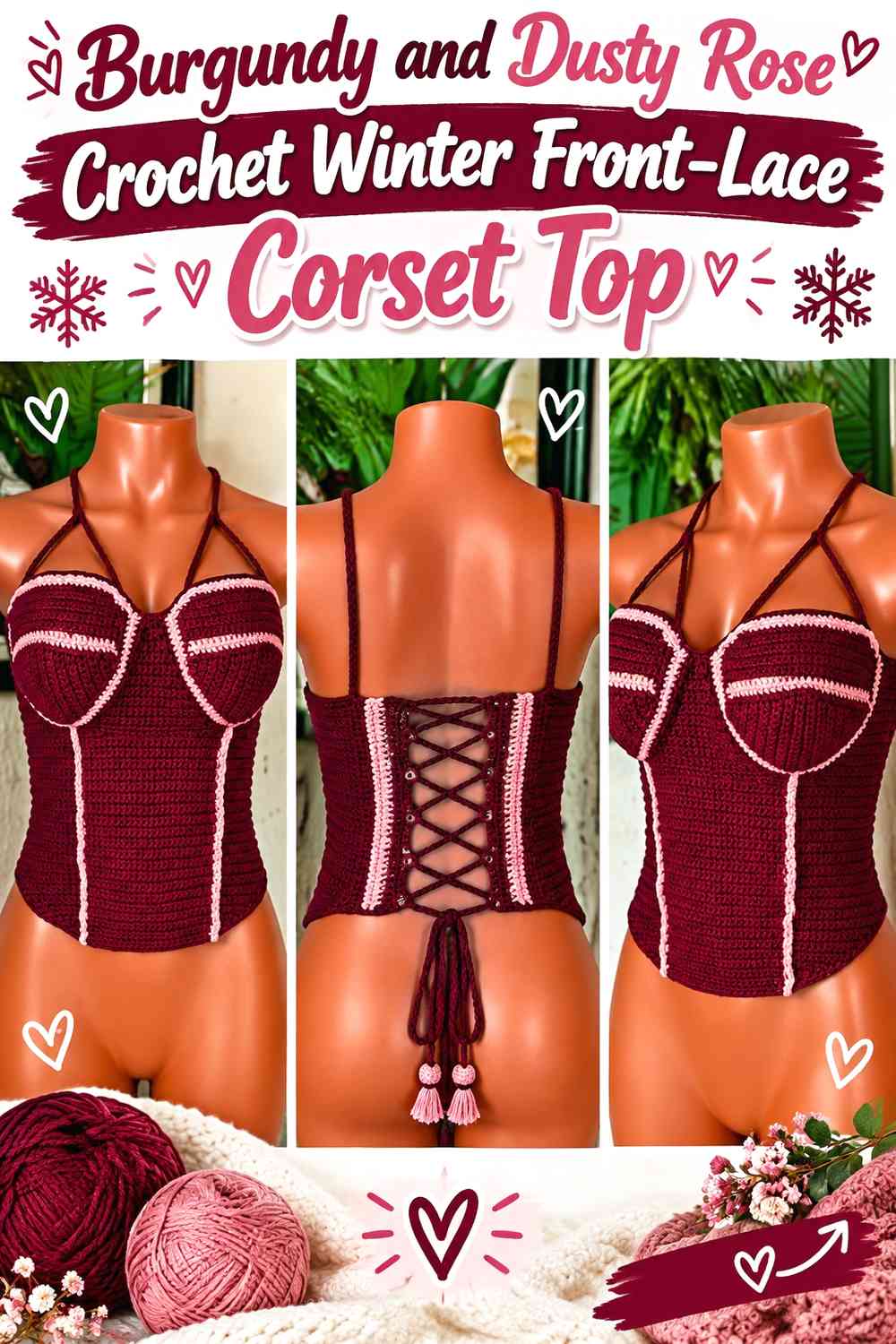
Move the lace-up feature to the front and make color contrast part of the central design. A burgundy body with dusty rose lacing produces a softer crossing pattern, while dusty rose panels with burgundy cord create a stronger graphic center.
Burgundy Can Keep the Front-Lace Corset Body Grounded
Because front lacing already draws attention, a mostly burgundy body can prevent additional color blocking from competing with it. Use the dark shade on the surrounding panels and allow the crossing cord to become the lighter detail.
Check the appearance with the intended winter underlayer because its color may show directly behind the front opening.
Dusty Rose Lacing Should Be Tested Against Burgundy Before Finishing
Front lacing is highly visible, so test a short section first. Make sure dusty rose remains distinct both where it crosses burgundy edging and where it passes over the underlayer beneath the opening.
If the cord looks too pale and disconnected, repeat dusty rose once more at the straps or lower border instead of introducing another new color.
Creator Credit: FTK Crochet
10. Burgundy Crochet Winter Corset Top with Dusty Rose Ribbed Side Panels

Instead of centering the second color, place dusty rose along the side panels and keep burgundy across the main front and lace-up back. This changes the palette subtly when viewed from different angles and prevents the lighter color from competing with the central front.
Burgundy Should Connect the Front and Lace-Up Back
Carry burgundy through the front and into the edges around the closure so the darkest shade forms one continuous visual structure. This helps the top remain recognizably burgundy even when dusty rose occupies substantial side areas.
A continuous dominant color is particularly helpful when the garment is partly covered by a winter cardigan.
Dusty Rose Side Panels Can Lighten the Burgundy Silhouette
Side panels allow dusty rose to appear in meaningful amounts without taking over the center front. Their visibility will change as the wearer turns, which can make the two-color treatment feel more dimensional.
Check panel width while wearing the top. A narrow dusty rose section may almost disappear from the front, while a broad one can become a major part of the palette.
Creator Credit: Amigurumi Forge
11. Burgundy and Dusty Rose Crochet Winter Corset Top with Reversed Panel Lacing
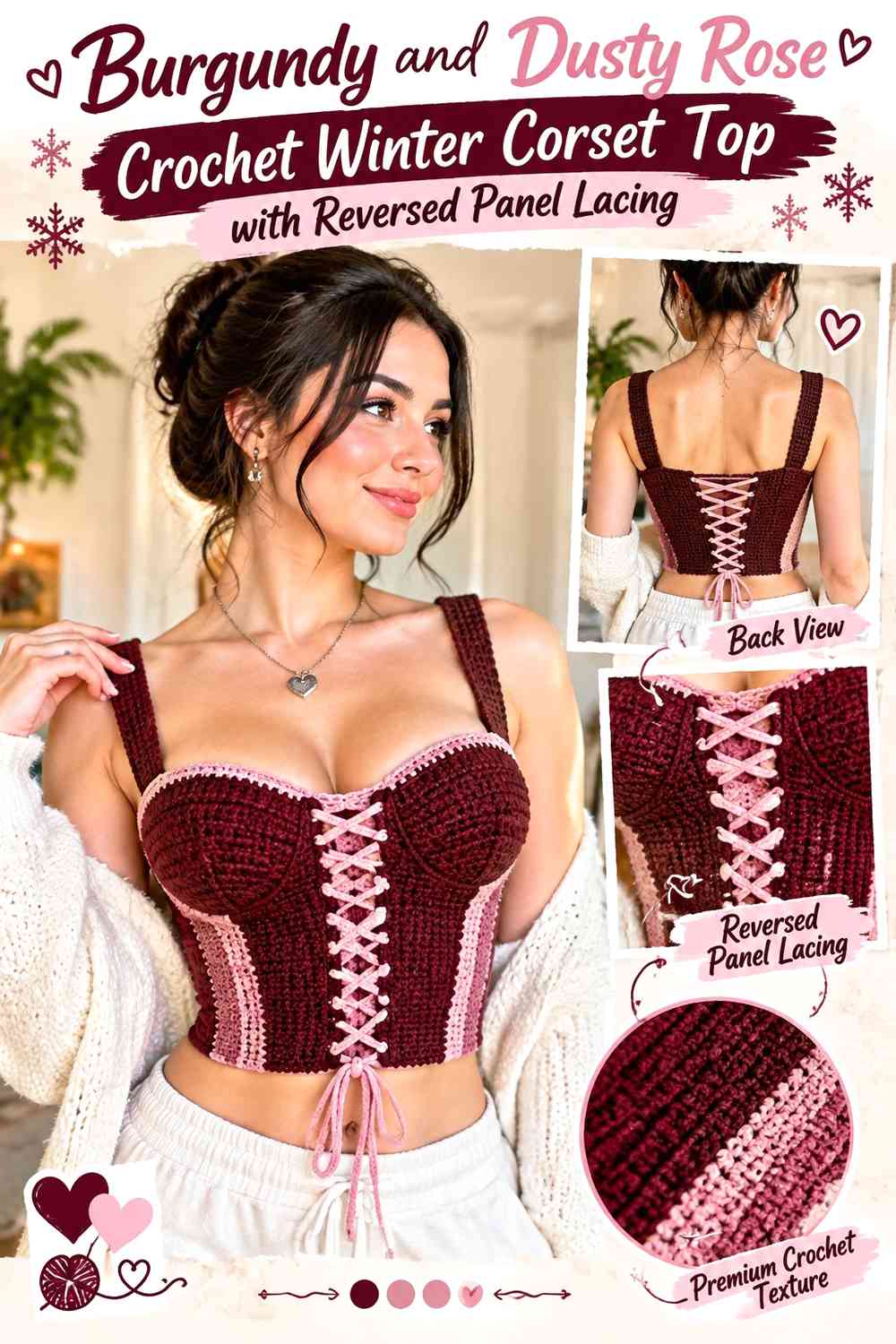
Use a deliberate reversal: place burgundy panels next to dusty rose lacing on one visual section and dusty rose panels next to burgundy lacing or edging elsewhere. The idea creates more movement than a simple dominant-and-accent arrangement while still staying within the same two-color palette.
Burgundy Should Repeat in Large Enough Areas to Hold the Reversed Palette Together
Even with alternating panels, keep burgundy visible in several substantial sections rather than scattering it in tiny fragments. Larger blocks prevent the design from resembling random yarn changes.
One practical approach is to let burgundy dominate the lower body and return again in selected upper or closure details.
Dusty Rose Needs a Consistent Role Across the Burgundy Reversal
Give dusty rose a repeatable job—such as central panels, upper edging, or one set of lacing details. Repetition makes the reversal understandable even when the corset is layered beneath an open jacket.
If every section swaps colors independently, simplify the plan before crocheting. Two shades can still look overly busy when their placement has no hierarchy.
Creator Credit: Mati Denmark
Which Burgundy and Dusty Rose Winter Lace-Up Corset Top Direction Works Best?
For the clearest two-color hierarchy, choose a burgundy body with dusty rose lacing or reverse the combination. These versions make it immediately obvious which color is dominant and which color exists to emphasize the closure.
For more front detail, use dusty rose cups, a center panel, contour edging, or front lacing. Ribbed side panels create a quieter color change that appears differently from each viewing angle, while a ruffled dusty rose hem gives the lighter shade a decorative role without dividing the entire torso.
If winter layering is important, simpler color placement is usually easier to coordinate. A two-color corset worn over another visible garment already creates a three-color composition, so test the complete outfit rather than assessing the crochet top in isolation.
Conclusion
Burgundy and dusty rose can produce very different crochet lace-up corset tops depending on which shade controls the body and which shade is reserved for closure details. Burgundy is useful when you want a darker visual frame around the waist, panels, edges, or ribbed texture. Dusty rose can lighten cups, side sections, ruffles, straps, and lacing without abandoning the subdued winter palette.
Choose the mostly burgundy versions when you want the darker shade to define the silhouette. Choose a dusty rose body with burgundy lacing when the crossing cords should become the strongest feature. Front lacing and reversed panels provide more color movement, while simple back lacing gives the cleanest two-color result.
Before completing the second half or matching details, try the top over the winter layer you expect to wear with it. The underlayer can change both the apparent contrast of the lace-up opening and the overall balance between burgundy and dusty rose. Use the credited tutorial for exact construction, measurements, shaping, and finishing.
Frequently Asked Questions
Should Burgundy or Dusty Rose Be the Main Color of a Crochet Corset Top?
Choose burgundy as the dominant color when you want a darker, stronger-looking torso field with softer pink details. Choose dusty rose as the dominant shade when you want burgundy lacing, borders, or panels to become the darkest focal points. The key is to give the two colors different visual roles rather than automatically dividing them equally.
Does Dusty Rose Show Up Clearly Against Burgundy Lacing Edges?
It can, but the result depends on the exact yarns. Compare them side by side and in crocheted fabric. If they merge when viewed from a distance or in grayscale, choose a lighter dusty rose or a deeper burgundy while keeping the same muted color direction.
Should Burgundy or Dusty Rose Be Used for the Corset Lacing?
Use dusty rose lacing when the body is primarily burgundy and you want a softer crossing pattern. Burgundy lacing is useful against a dusty rose body when you want the closure to look more graphic and defined. Also check the color of the garment visible through the lace-up opening.
How Can I Style a Burgundy and Dusty Rose Crochet Corset Top for Winter?
Treat the corset as a layering piece when more coverage is wanted. A fitted long-sleeve shirt, turtleneck, or similar base can sit beneath it, provided the combination works with the fit of the chosen corset construction. Keep the underlayer color in mind because it may remain visible at the neckline, armholes, open stitches, and lacing.
Can Burgundy and Dusty Rose Be Used in the Same Corset Panels?
Yes. Use broad, deliberate sections rather than frequent small color changes if you want the panel structure to remain easy to read. Burgundy can frame a dusty rose center or lower section, while dusty rose can form side panels against a burgundy front.
How Do I Keep Burgundy and Dusty Rose From Looking Too Busy on a Lace-Up Top?
Limit each shade to a clear job. For example, use burgundy for the body and edging and dusty rose for lacing and straps. If you add stripes, ruffles, or multiple panel colors, remove another decorative color treatment so the fitted silhouette and closure remain readable.
What Happens to Burgundy and Dusty Rose When a Winter Underlayer Shows Through the Lacing?
The underlayer effectively becomes another visible color. A dark layer may reduce the apparent contrast around burgundy, while a light layer may make the opening look more pronounced. Test the completed lacing over the intended base garment before deciding whether the cord or border needs stronger contrast.