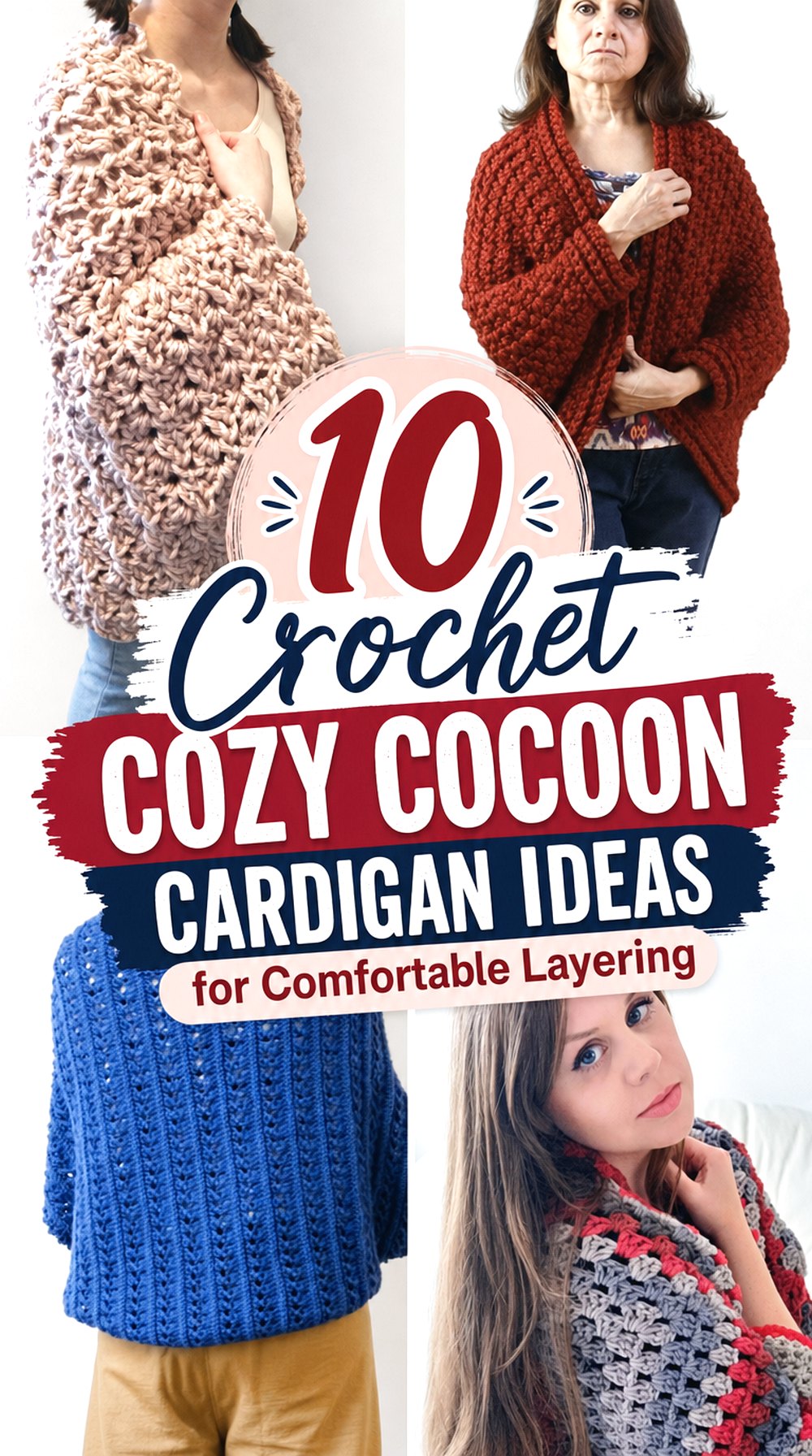

Cocoon cardigans are useful when you want a soft layer without the structure of a fitted sweater. Most are shaped from a square, rectangle, or wide panel, so the finished look usually has a relaxed back, loose sleeves, and an open front that can sit over simple outfits.
This collection focuses on cozy crochet cocoon cardigan ideas with different shapes, textures, and finishes. You will find chunky throw-on styles, lacy shrug cardigans, ribbed edges, C2C construction, granny square shaping, and open textures that give each project its own reason to choose.
Quick List
- Crochet Chunky Throw-On Cocoon Cardigan
- Crochet Alpine Stitch Cocoon Sweater
- Crochet Lacy Dragonfly Cocoon Shrug Cardigan
- Crochet Super Bulky Moss Cocoon Shrug Cardigan
- Crochet Three-Panel Ribbed Cocoon Cardigan
- Crochet V-Stitch Open Cocoon Cardigan
- Crochet Lace-Collar Cocoon Cardigan
- Crochet C2C Square Cocoon Cardigan
- Crochet Multi-Color Cocoon Cardigan
- Crochet Granny Square Shell-Edge Cocoon Cardigan
Why These Crochet Cocoon Cardigans Are Worth Making
A crochet cocoon cardigan gives you a roomy layer that can work over shirts, tanks, dresses, or simple long sleeves, depending on the yarn and finished coverage. The open-front shape makes it less restrictive than a fitted cardigan, while the sleeve openings keep it more wearable than a flat shawl.
These projects are also useful for comparing construction styles. A rectangle cardigan may feel straightforward to plan, a granny square version gives a more central motif look, and a C2C or lacy version brings more texture. Before choosing, readers should compare size notes, armhole shaping, front opening, sleeve finish, and whether the tutorial includes written support.
Crochet Chunky Throw On Cocoon Cardigan
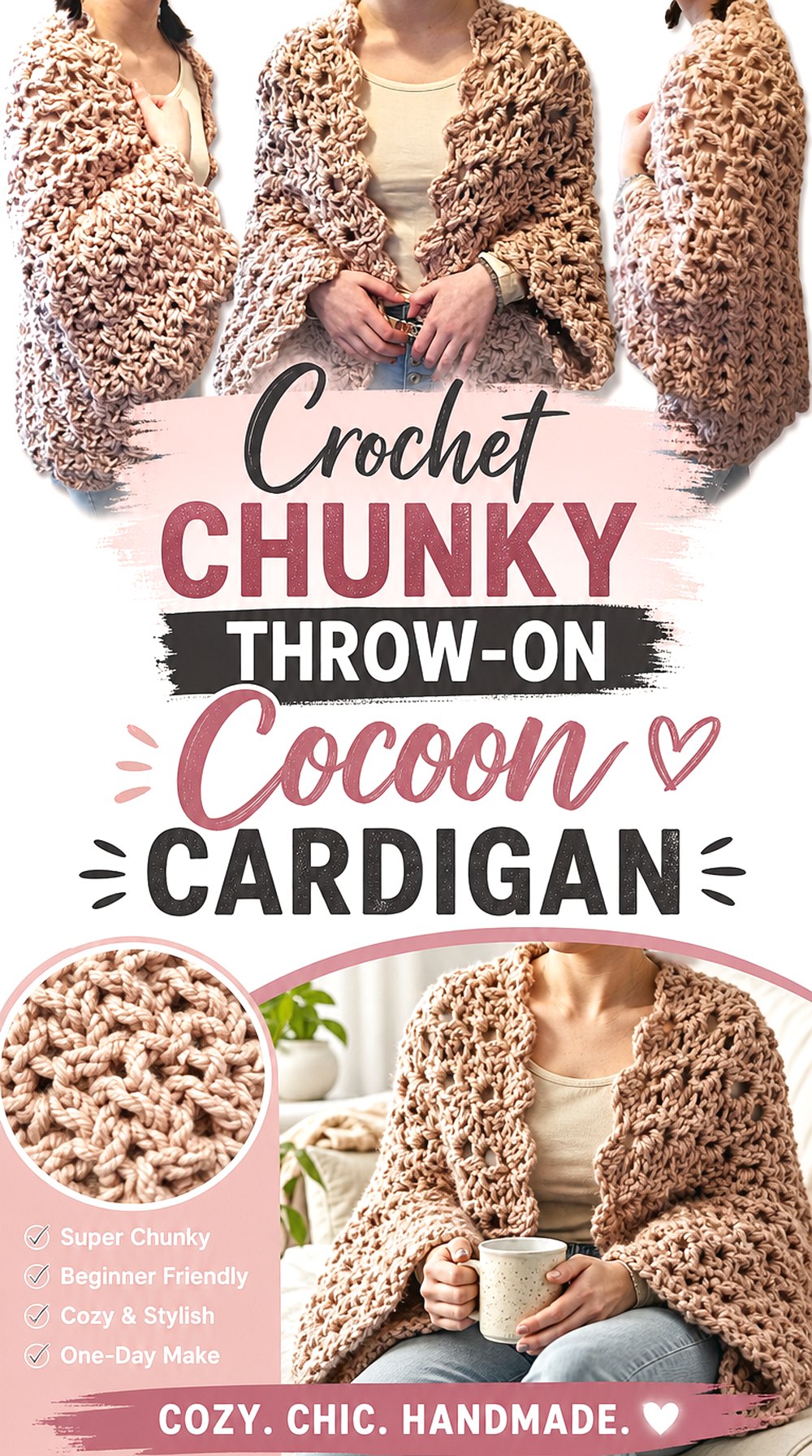
A thicker cocoon cardigan gives this idea a blanket-like feel without becoming a full robe. The finished shape is meant for wrapping over casual layers, with a roomy body and open front that may suit cool evenings, desk wear, or relaxed weekends. This option stands apart from the lighter lace cardigans in the list because its main appeal is the soft, substantial coverage shown in the tutorial.
Think About the Cozy Layering Role
A chunky cocoon cardigan is usually chosen for coverage and softness rather than close shaping. Readers should think about what they want underneath it before starting: a fitted tee, a long-sleeve base, or a thinner sweater will all affect how much room feels comfortable. It is also worth checking whether the finished front hangs open widely or sits closer across the body.
Confirm the Supply Notes First
The source includes yarn and hook information in its description, so readers should record those details before shopping. With bulky-looking garments, changing yarn weight can alter drape, length, and sleeve feel. Instead of guessing a substitute, compare the creator’s material list with the yarn label, then check whether the full written pattern gives more information about sizing.
Watch the Shape Before Finishing
For a cocoon cardigan, the turning point is not just the stitch texture; it is how the flat fabric becomes a wearable layer. Readers should pause around the shaping and finishing sections so the arm openings, front edge, and back drape make sense before moving ahead. A quick fit check at that stage can prevent ending with a layer that feels too short or too wide.
Crochet Alpine Stitch Cocoon Sweater
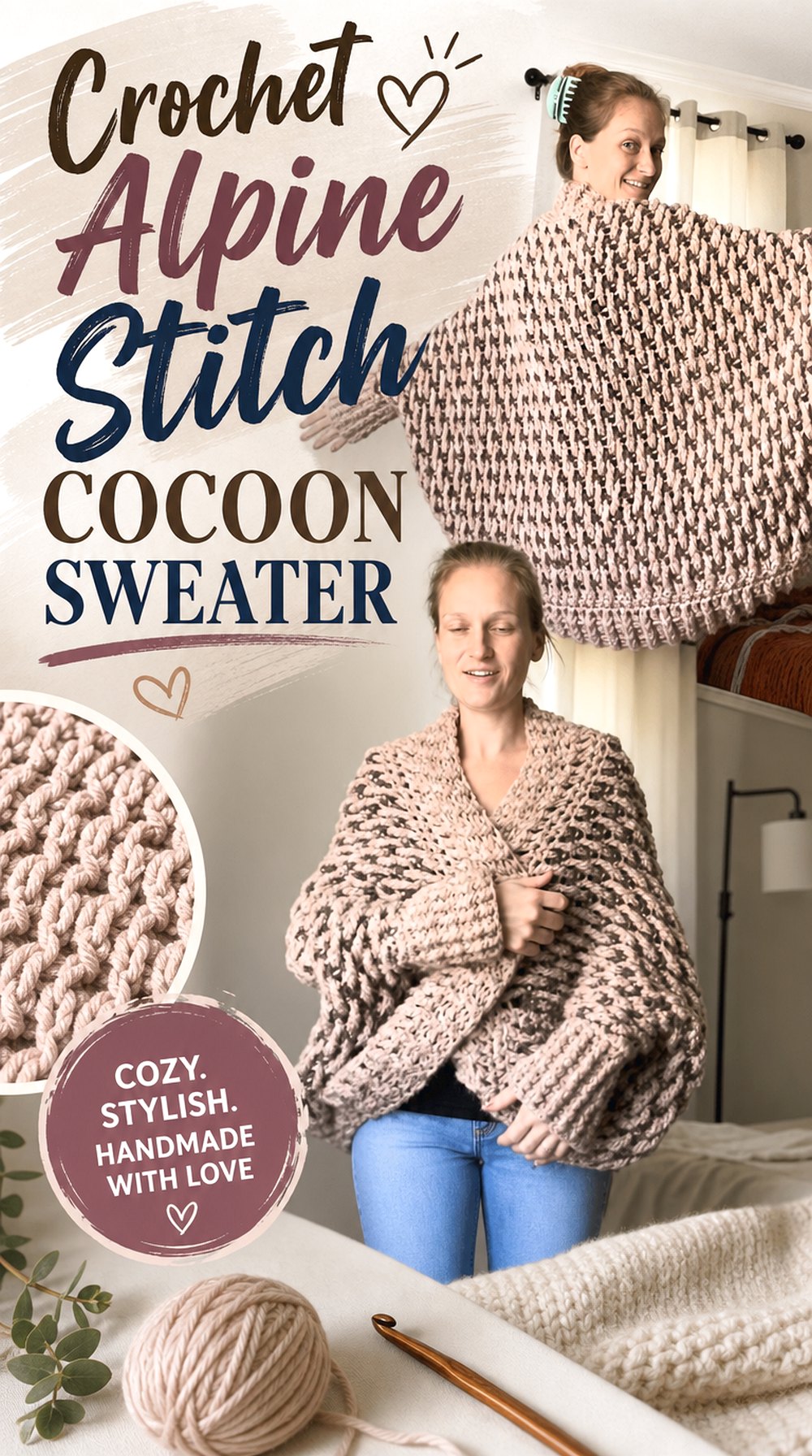
The alpine stitch gives this cocoon sweater a raised, textured surface with more depth than a plain flat panel. The source describes it as a simple rectangle design using chunky yarn, with minimal seaming and no shaping, increasing, or decreasing in the main construction. That makes this project different from the C2C, granny square, and three-panel options later in the list.
Notice the Raised Texture
The alpine texture is the detail that carries this cardigan visually, so it is worth deciding whether a more defined surface suits your wardrobe. Raised stitches can make the finished fabric look fuller, especially in a cocoon shape. Readers who want a quieter layer may prefer a smoother option, while those who like visible stitch texture may be drawn to this one.
Check the Written Pattern Support
The description notes that the video is meant to support the written pattern and construction diagrams. That matters because a cocoon sweater can look simple once finished, but the folding, seaming, and edging still need clear orientation. Readers should keep the written pattern nearby and use the video for close-up construction guidance instead of relying on memory.
Compare the Rectangle Size
A rectangle-based cocoon cardigan depends heavily on the starting panel size. Even small changes can affect body width, sleeve depth, and how far the front opening drapes. Before committing to a size, readers should compare the source’s measurements with a sweater or cardigan they already like, especially across the back and around the upper arms.
Original Tutorial and Creator Credit
Creator: Life and Yarn
Crochet Lacy Dragonfly Cocoon Shrug Cardigan
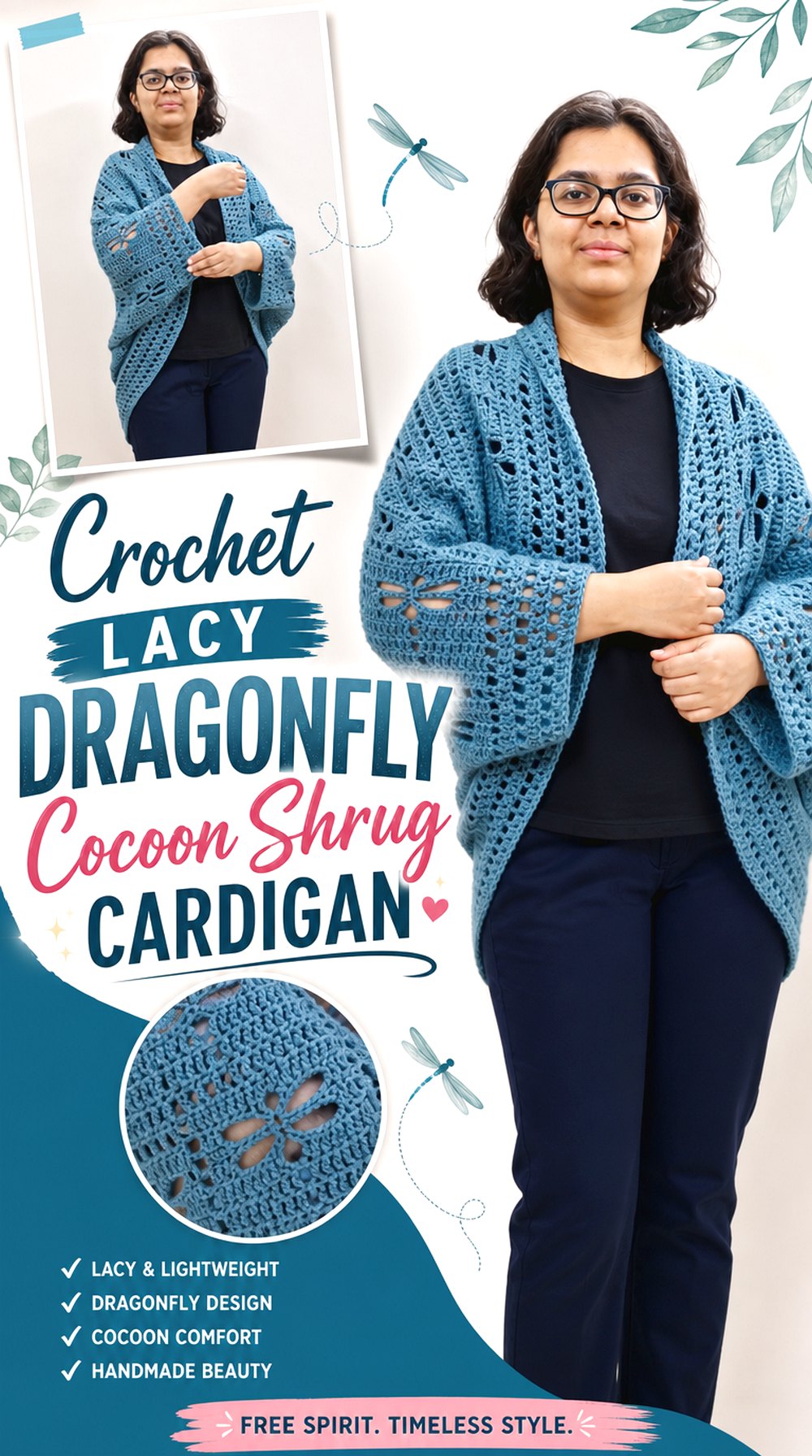
Open dragonfly-style texture gives this cocoon shrug cardigan a lighter look than the chunky versions. The tutorial describes a light, airy rectangle that folds into a wrap-style cardigan, with size chart and yarn details linked separately. This idea may suit readers who want a soft layer with visible openwork rather than a dense winter-only cardigan.
Think About Coverage
A lacy cocoon cardigan will not give the same visual coverage as a dense stitch pattern. That can be useful over a tank, dress, or fitted top when the goal is shape and texture, not full concealment. Readers should look closely at how open the stitch pattern appears on the body and decide what base layer they would feel comfortable wearing underneath.
Review the Size Chart
The source points viewers to separate size and yarn details, which are important for a wearable project. A cocoon shrug can be forgiving in the body but still needs reasonable armhole placement and back width. Before choosing a size, readers should check the creator’s chart and compare it with their own preferred garment length and sleeve opening comfort.
Slow Down the Armhole Section
The armholes are where a flat rectangle starts acting like a cardigan. Since this project uses an open stitch pattern, orientation and edge placement matter visually. Readers should slow down when the piece is folded and the armholes are formed, then compare both sides before continuing with the border so the finished drape stays balanced.
Original Tutorial and Creator Credit
Creator: Let’s All Crochet
Crochet Super Bulky Moss Cocoon Shrug Cardigan
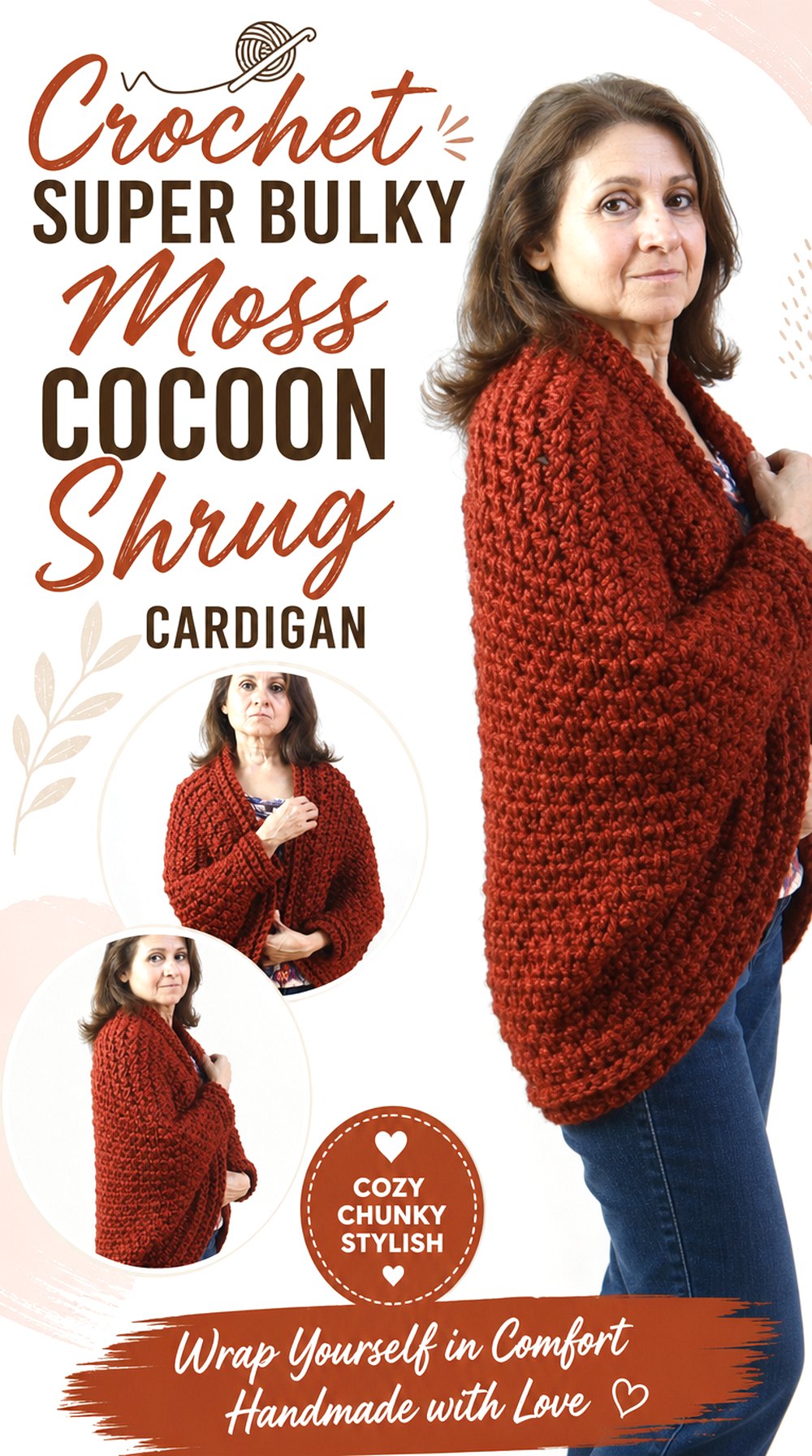
A moss stitch cocoon shrug has a different rhythm from the lacy and alpine versions because the surface looks more compact and pebbled. The creator describes this design as using super bulky yarn, with size information and a border width that can be adjusted. It reads as a cozy, heavier shrug cardigan with a simple open front and soft shoulder coverage.
Consider the Heavier Shape
Super bulky yarn can make a cocoon cardigan feel substantial, so readers should decide where they plan to wear it. A thicker shrug may feel useful over simple indoor layers or as a casual cool-weather piece, but it may not fit comfortably under every coat. The finished sleeve depth and shoulder drape are worth checking before choosing this project.
Confirm the Size Direction
The description includes size guidance and explains that the starting foundation affects width. That is helpful, but readers should still compare the source’s size notes with their own measurements. Cocoon cardigans can grow wide quickly, so it is better to check the intended body width and length early than to rely only on the general size label.
Plan the Border Width
This project includes a visible border, and the description notes a range for the border width. That finishing choice can change how the cardigan hangs at the opening and cuffs. A wider border may look more substantial, while a narrower one may keep the shrug softer and less bulky. Readers should decide which finish suits the final use.
Original Tutorial and Creator Credit
Creator: Crazy Cool Crochet
Crochet Three Panel Ribbed Cocoon Cardigan
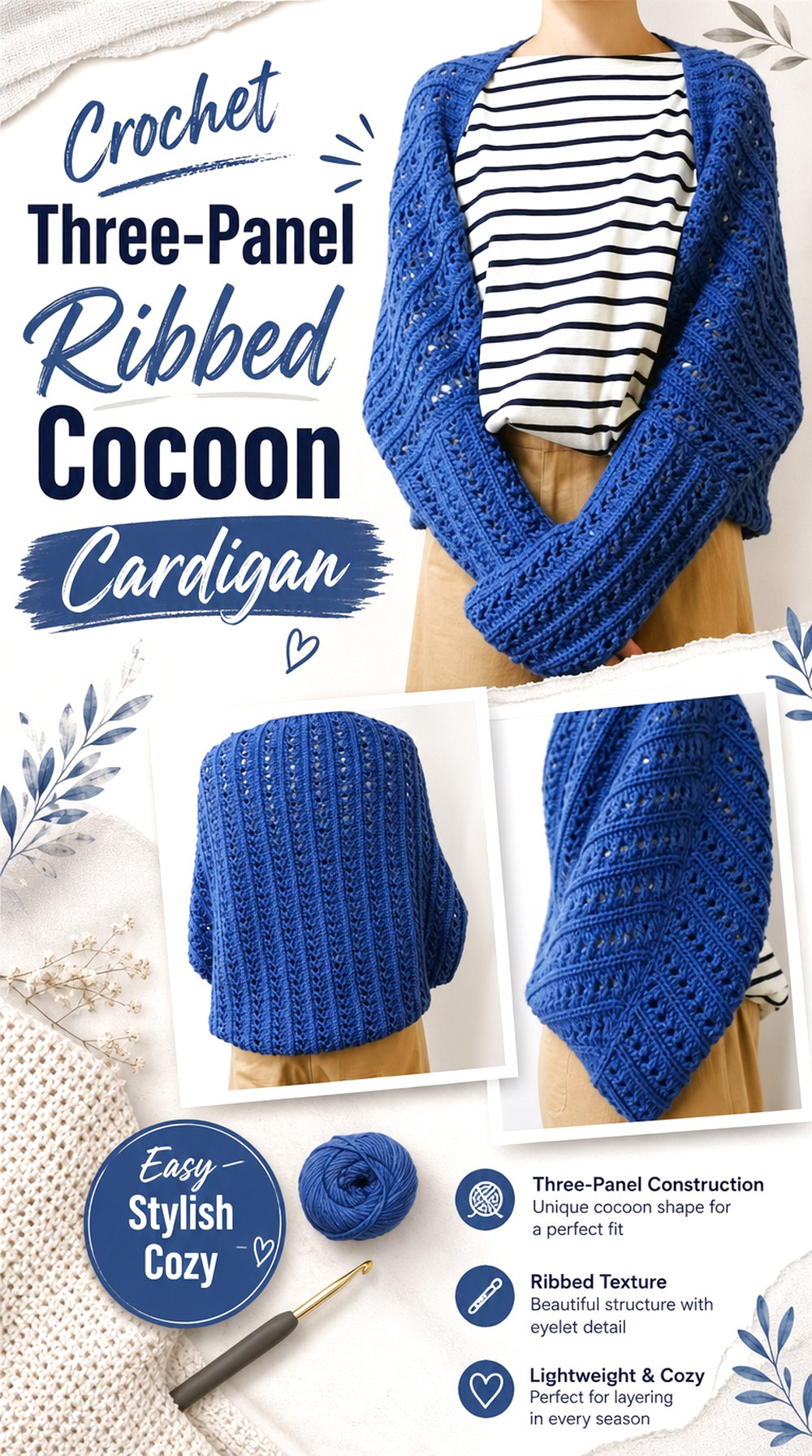
This cocoon cardigan is different from the one-piece rectangle styles because the source describes three parts that are joined, with ribbing worked into the placket and wrists. The finished look has a more cardigan-like finish around the front and sleeve ends. It may appeal to readers who want a relaxed cocoon shape but still like defined edges.
Look at the Ribbed Edges
The ribbing around the front and wrists gives this design a more finished garment feel. Readers who dislike a loose raw-looking edge may appreciate that structure. It is worth looking at how wide the placket appears and how the cuffs sit on the wrist, since these details influence whether the cardigan feels casual, neat, or somewhere in between.
Watch for Separate Pieces
Because the source mentions three parts, readers should prepare for a little more organization than a single rectangle project. Labeling or separating pieces while working can help prevent confusion later. The most useful check is orientation: make sure the parts line up as the creator intends before committing to the joining stage.
Confirm Size Changes Carefully
The description says the size of each part can be changed to preference. That flexibility is useful, but it also means readers should make deliberate decisions. Changes to panel width, sleeve length, or ribbing can affect the whole cardigan. Before altering anything, compare the finished view with a garment that already fits the way you like.
Original Tutorial and Creator Credit
Creator: Orinam crochet
Crochet V Stitch Open Cocoon Cardigan
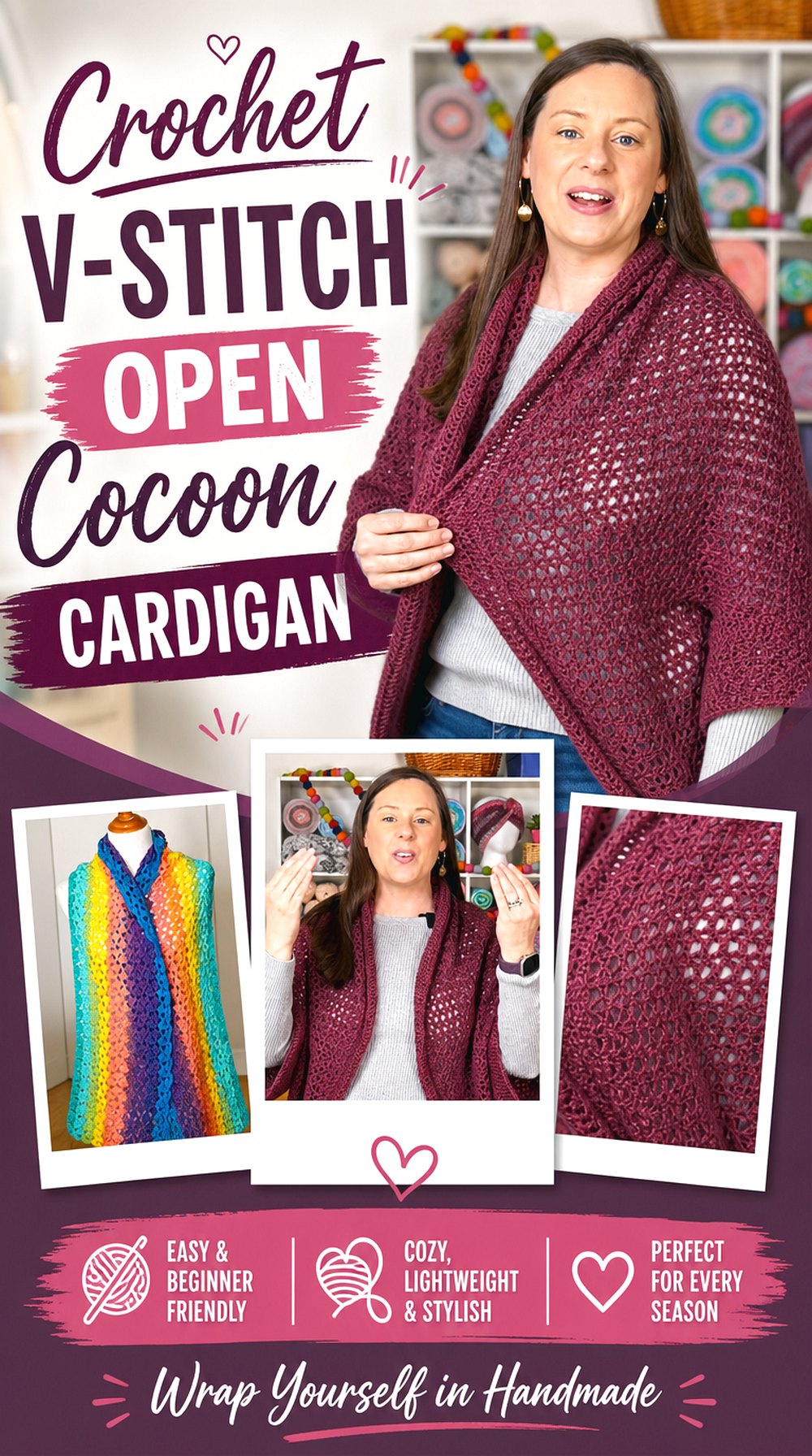
Open V-stitch texture gives this cocoon cardigan a softer, airier look than the super bulky versions. The source describes a lacy texture, a bit of an open look, and a simple edge that finishes the cardigan. This idea works well in the list because it sits between a cozy cardigan and a more breathable wrap layer.
Think About the Open Texture
The V-stitch look creates space in the fabric, so readers should think about both coverage and styling. It may layer nicely when the base garment is part of the outfit, rather than something hidden. Before choosing this project, look at how much of the underlayer remains visible and decide whether that openness matches the season and setting you have in mind.
Check the Finished Edge
A simple edge can make an open cocoon cardigan look intentional rather than unfinished. Readers should pay attention to the front opening and sleeve edges, since these areas frame the whole garment. If the edge is too loose or too tight, the cardigan may not drape as expected, so the finishing section deserves careful viewing.
Look for Written Instructions
The creator links a full written pattern, which is helpful for a wearable project. Readers who like to pause less often may want to open the written version while following along. It also gives a place to confirm materials, size direction, and any notes that are hard to catch while watching the crochet movement on screen.
Original Tutorial and Creator Credit
Creator: Fiber Flux
Crochet Lace Collar Cocoon Cardigan
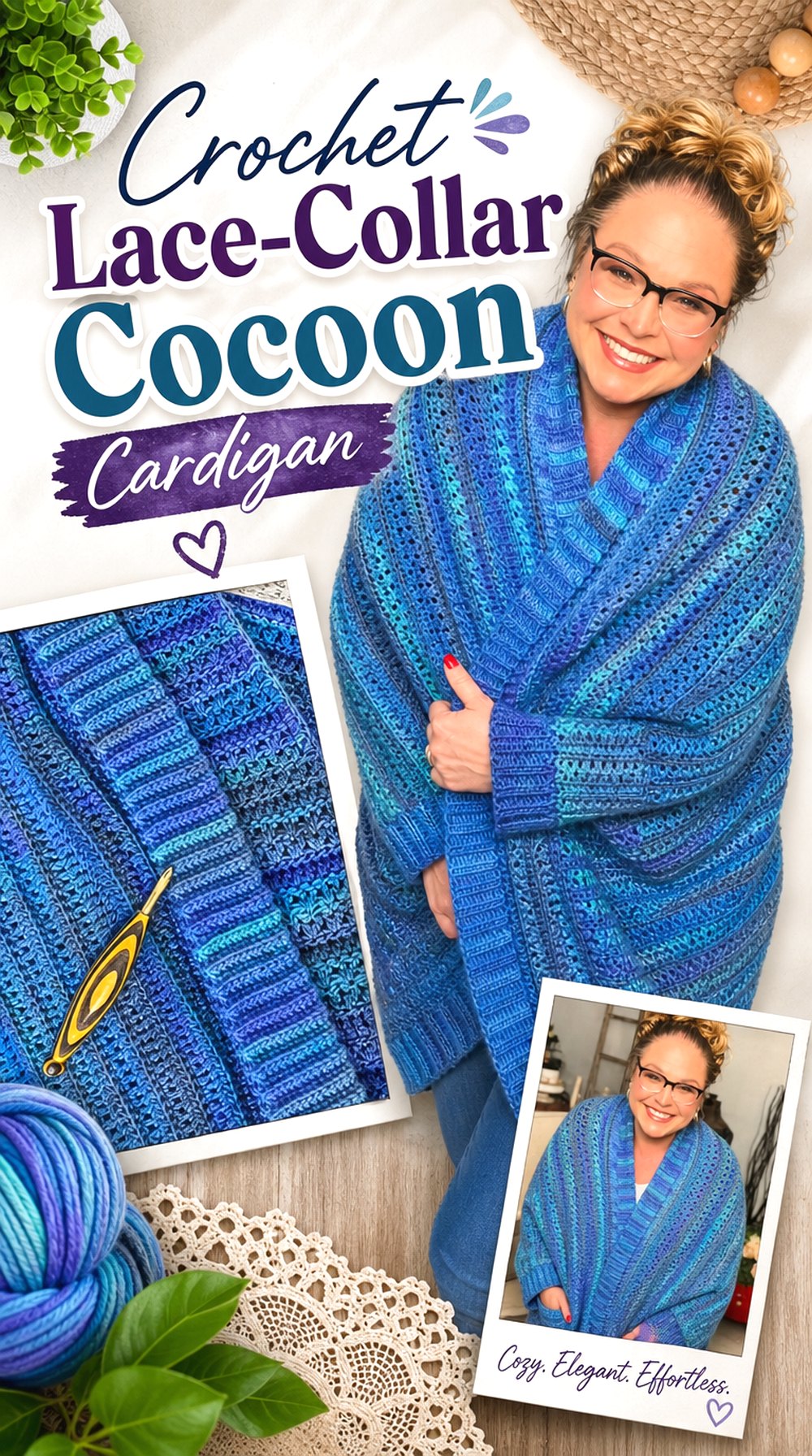
A larger collar changes the feeling of this cocoon cardigan, giving the open front more visual weight. The source describes an engaging lace pattern, a shawl collar, multiple sizes, measurements, gauge, and listed supplies. Compared with the simpler throw-on shapes, this idea feels more planned as a garment with fit information to review before starting.
Compare the Collar Width
A shawl-style collar can frame the front beautifully, but it also changes how the cardigan sits across the shoulders and bust. Readers should look at the finished collar width and decide whether they want that extra front structure. It may feel more cardigan-like than a plain cocoon shrug, especially when worn over a simple top.
Review the Size and Gauge Notes
This source provides size and measurement information, so readers should use it. Cocoon shapes are roomy, but gauge can still affect length, collar width, and sleeve placement. Before beginning, compare the listed measurements with your body measurements and preferred ease. This is especially important for readers who want the cardigan to fall at a specific length.
Check Any Extra Components
The description lists notions beyond yarn and hook, including items used for finishing and blocking. Readers should review the full material list before starting so the final steps are not interrupted. A cardigan with lace and collar structure may benefit from finishing attention, so supplies for shaping, marking, and weaving in ends should be ready.
Original Tutorial and Creator Credit
Creator: Marly Bird
Crochet C2C Square Cocoon Cardigan
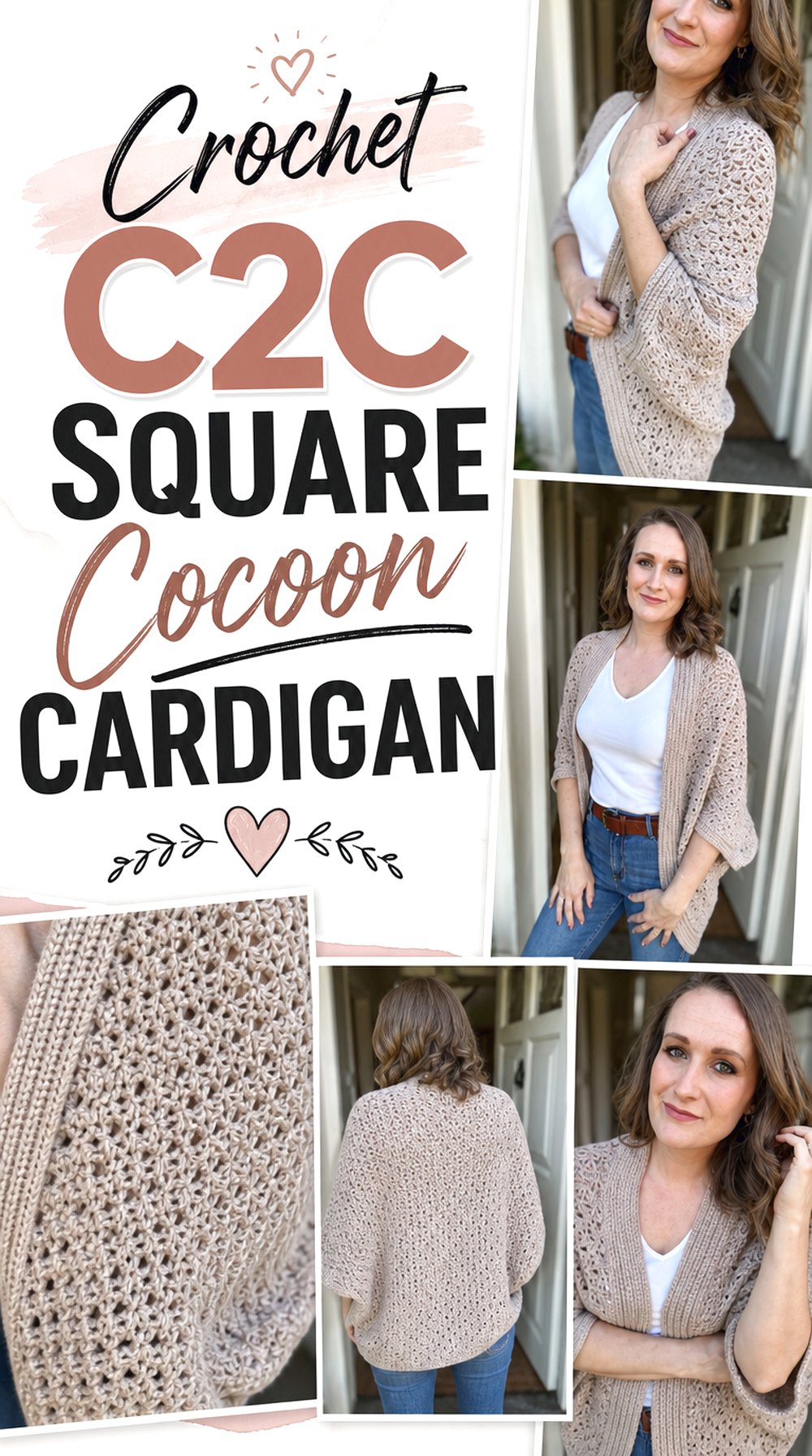
This cardigan uses corner-to-corner construction, which gives it a different texture and planning style from standard row-by-row rectangle cardigans. The source describes a lace C2C square used to create a crochet shrug, with adult sizes from XS to 5XL and a sizing chart or schematic in the pattern materials.
Notice the C2C Direction
Corner-to-corner crochet changes how the fabric grows, so readers should pay attention to the diagonal direction and how it affects the finished square. This is a useful option for anyone who likes a more geometric fabric surface. It also means that measuring progress may feel different from measuring a normal straight rectangle.
Check the Sizing Chart
The source includes adult size information and pattern support, which should guide the decision. Since a C2C square has to become a wearable shrug, the finished dimensions matter. Readers should compare the chart with the width they want across the back and the amount of front drape they prefer before settling on a size.
Watch the Square-to-Shrug Change
The most important moment is when the square becomes a cardigan shape. Readers should slow down during the folding, joining, and armhole setup so the corners and edges land correctly. A C2C fabric has a clear diagonal texture, so uneven placement can be easier to notice in the finished garment.
Original Tutorial and Creator Credit
Creator: HanJan Crochet
Crochet Multi Color Cocoon Cardigan
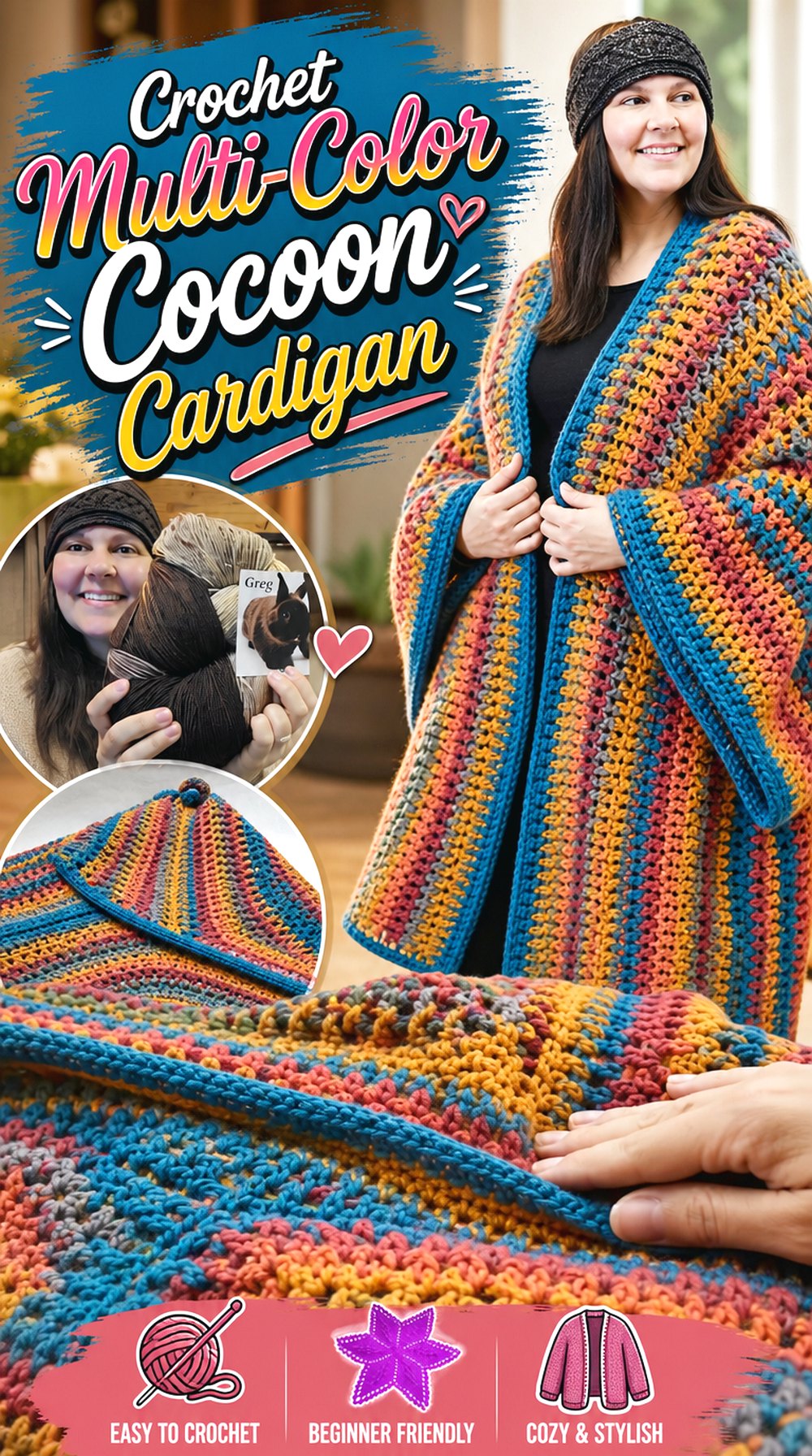
A multi-color cocoon cardigan brings the focus to color movement as well as shape. The Bag-O-Day tutorial title calls this the “Cardi of Many Colors,” and the project fits this list as a bolder option among the quieter textured cardigans. It may suit readers who want a relaxed cocoon layer that feels more playful and less plain.
Plan the Color Placement
With a many-color cardigan, the placement of color changes can affect the whole look. Readers should decide whether they want bold contrast, soft transitions, or a stash-style mix before beginning. A cocoon cardigan has a large visible back area, so colors that look small in the skein may appear much stronger across the finished fabric.
Think About Outfit Pairing
A colorful cocoon cardigan often becomes the main part of an outfit. That can be useful over plain jeans, leggings, simple dresses, or solid tops. Readers who usually wear prints may want to check whether the cardigan will compete with those outfits, while readers with many basics may find the color movement easier to use.
Recheck the Finished Shape
When color is the first thing you notice, it is still important to check the shape. Look at the sleeve openings, front drape, and back length before deciding this is the right project. A colorful cardigan should still sit comfortably and have the coverage you want, not just a color combination that looks appealing on screen.
Original Tutorial and Creator Credit
Creator: Bag-O-Day Crochet
Crochet Granny Square Shell Edge Cocoon Cardigan
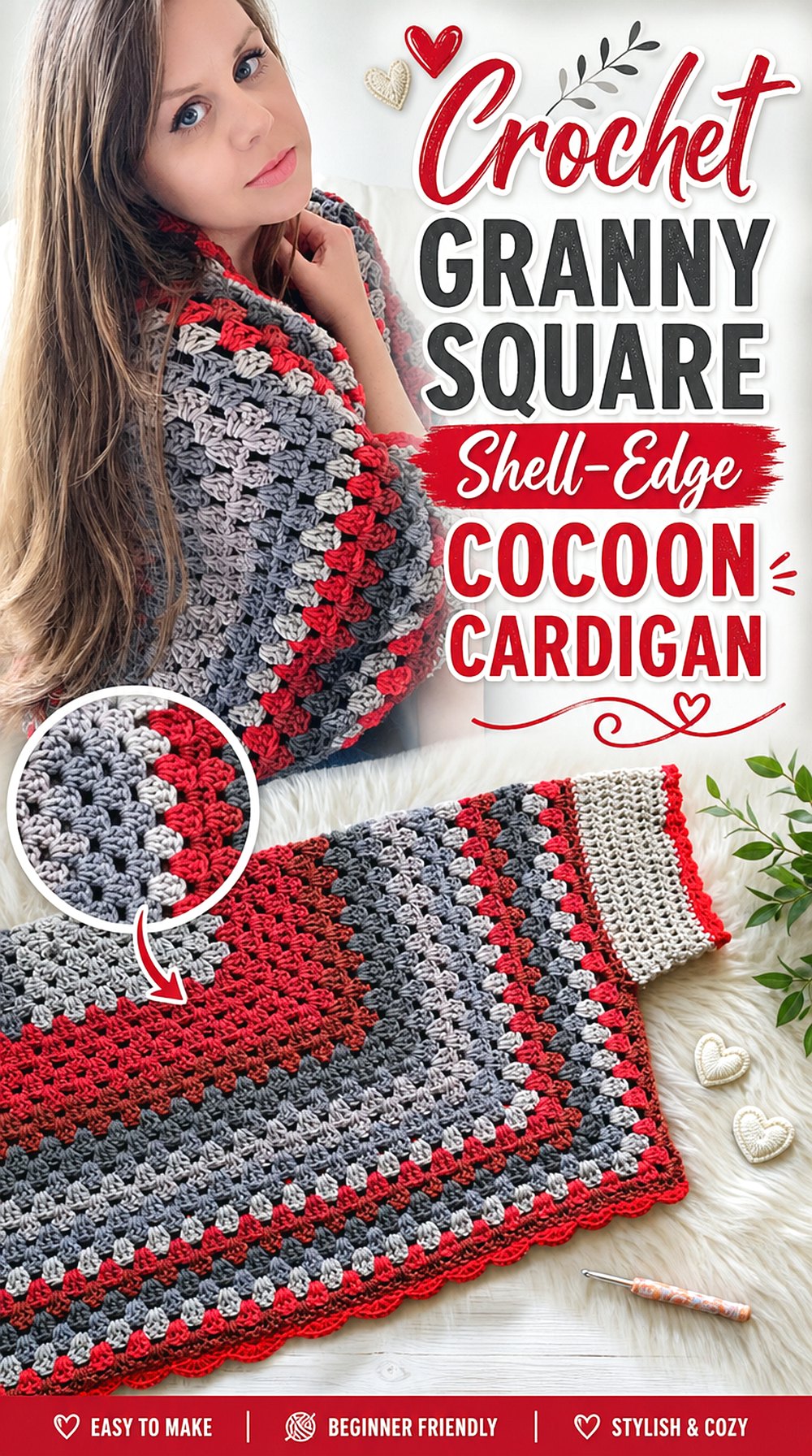
A granny square base gives this cocoon cardigan a centered, traditional motif look, while the shell edging adds a softer decorative finish around the opening and sleeves. The source describes a granny square base, sewn cardigan shaping, and added sleeve and front opening edging, which makes this project different from rectangle, C2C, and three-panel cardigans.
Notice the Granny Square Base
The granny square structure gives the cardigan a clear center-out look. Readers who enjoy motif-based crochet may prefer this over a long row-by-row rectangle. Because the square becomes the body of the cardigan, the final measurement of that square matters. Check the creator’s sizing direction before deciding how large the base should be.
Look at the Shell Edge
The shell edging adds decoration and helps define the openings. This is useful if you want a cocoon cardigan that feels more finished and feminine without adding buttons or a full collar. Readers should look closely at how the shell border sits around the sleeves and front, especially if they prefer a cleaner or less decorative edge.
Confirm the Creator’s Terms
The description links a free written pattern and mentions an optional PDF source. Readers who plan to share photos, gift the garment, or sell finished pieces should check the creator’s current terms directly. Permission details can vary by designer, and a YouTube tutorial link does not automatically give permission for commercial use.
Conclusion
These crochet cocoon cardigan ideas give readers several ways to choose a cozy layer. The chunky and super bulky options focus on warmth and softness, while the V-stitch and dragonfly versions offer more open texture. The ribbed, lace-collar, C2C, and granny square designs bring stronger construction details for readers who want a more defined finish. For exact counts, sizing, materials, and construction order, follow the original tutorials linked with each creator credit.
FAQs
How do I choose the right crochet cocoon cardigan style?
Start with the amount of coverage you want. A chunky or super bulky cocoon cardigan may feel more like a cozy wrap, while lacy and V-stitch versions leave more of the outfit underneath visible. Then compare construction: rectangle, square, C2C, and panel-based designs all fit and drape differently.
What should I check before starting a cocoon cardigan tutorial?
Check the finished measurements, yarn weight, hook size, size range, gauge notes, and whether a written pattern or chart is linked. Cocoon cardigans can look forgiving, but the panel size controls the back width, sleeve opening, and front drape. Confirm those points before buying yarn.
Are crochet cocoon cardigans good for layering?
They can be useful for layering because most have an open front and relaxed body. The best choice depends on the stitch density and yarn. A dense chunky cardigan may suit cooler weather, while an open lacy version may work better over a tank, dress, or fitted long-sleeve top.
Can I change the yarn for a crochet cocoon cardigan?
Only change yarn after checking the creator’s gauge, measurements, and fiber notes. A different yarn can change drape, stretch, weight, and sleeve feel. For wearable projects, it is safer to make a test swatch and compare it with the tutorial or written pattern before starting the full cardigan.
Can I sell a cocoon cardigan made from a YouTube tutorial?
Do not assume selling is allowed. Check the creator’s current written terms, pattern license, video description, and shop policy if a PDF is linked. Some designers allow small-scale selling with credit, while others restrict commercial use. When terms are unclear, contact the creator directly.