

Pistachio and Powder Blue give a winter crochet cardigan a soft, cool-toned palette without making the garment feel colorless. Pistachio can ground the body panels and upper sleeves, while Powder Blue can define scalloped cuffs, bell-sleeve edges, front bands, collars, or repeated sleeve sections that need more visual separation.
Scalloped sleeves make color placement especially important because the cuff already attracts attention through shape. Putting the stronger contrast exactly at that edge can turn the sleeve into the main feature, while using the second shade farther up the arm creates a quieter effect. The body, neckline, and front borders then need enough repetition to keep the cuff color from looking disconnected.
The tutorials below support the underlying cardigan constructions. Some demonstrate bell sleeves, cuffs, openwork, granny construction, or other sleeve treatments directly; others provide a compatible cardigan base rather than the exact scalloped cuff described here. Where a tutorial does not include scallops, treat the scalloped sleeve finish as a separate adaptation and preserve the creator’s structural fit and shaping rather than changing stitch counts merely to force the decorative edge.
Quick List
- Pistachio Crochet Bell-Sleeve Cardigan With Powder Blue Scalloped Cuffs
- Powder Blue Crochet Bell-Sleeve Cardigan With Pistachio Scallop Bands
- Pistachio Crochet Collar Cardigan With Powder Blue Sleeve Scallops
- Powder Blue Crochet Seamed Cardigan With Pistachio Scalloped Cuffs
- Pistachio Crochet Pocket Cardigan With Powder Blue Sleeve Edging
- Powder Blue Crochet Drop-Shoulder Cardigan With Pistachio Scalloped Sleeves
- Pistachio Crochet Mesh Cardigan With Powder Blue Open Scallops
- Powder Blue Crochet V-Neck Cardigan With Pistachio Scalloped Cuffs
- Pistachio and Powder Blue Striped Crochet Scalloped Sleeve Cardigan
- Powder Blue Cropped Crochet Cardigan With Pistachio Scalloped Sleeves
- Pistachio Patchwork Crochet Cardigan With Powder Blue Sleeve Scallops
- Powder Blue Lace Crochet Cardigan With Pistachio Scalloped Cuffs
- Powder Blue Tie-Front Crochet Cardigan With Pistachio Bell-Sleeve Scallops
- Pistachio One-Piece Crochet Cardigan With Powder Blue Scalloped Cuffs
- Powder Blue Duster Crochet Cardigan With Pistachio Sleeve Scallops
- Pistachio Cropped Crochet Cardigan With Powder Blue Scalloped Cuffs
- Powder Blue Tie-Front Crochet Cardigan With Pistachio Scalloped Sleeve Edge
- Pistachio Batwing Crochet Cardigan With Powder Blue Scalloped Cuffs
Decide Whether Pistachio or Powder Blue Should Carry the Cardigan Body
The body color determines how strongly the scalloped sleeve edge stands out. A Pistachio body with Powder Blue cuffs creates a clear pale-blue endpoint at each wrist, while a Powder Blue body with Pistachio scallops gives the garment a greener, more defined outer edge.
For winter layering, consider what remains visible beneath a coat or vest. A front band, neckline, and cuffs often stay more noticeable than the lower back panel, so repeating the scallop color around the opening can connect the cardigan even when much of the body is covered.
Use Pistachio and Powder Blue to Separate Sleeve Shape From Sleeve Edge
The sleeve does not have to alternate colors from shoulder to wrist. Keeping most of the sleeve one color allows its shape—straight, balloon, bell, batwing, or relaxed—to remain clear. The second shade can then begin near the lower arm or at the scallops.
This is particularly useful on wide sleeves. A contrasting scalloped cuff already occupies substantial visual space, so numerous additional bands can make the lower arm look crowded.
Check Pistachio and Powder Blue Scallops With the Cardigan Worn
Scallops change shape when a sleeve hangs vertically. A border that appears broad and flat on a table may look narrower when the fabric drapes from the wrist.
Before repeating the same finish on the second sleeve, pin or temporarily attach your planned color treatment and try on the cardigan. Check whether the Powder Blue or Pistachio scallops remain visible from the front and side and whether both sleeves have similar visual weight.
1. Pistachio Crochet Bell-Sleeve Cardigan With Powder Blue Scalloped Cuffs
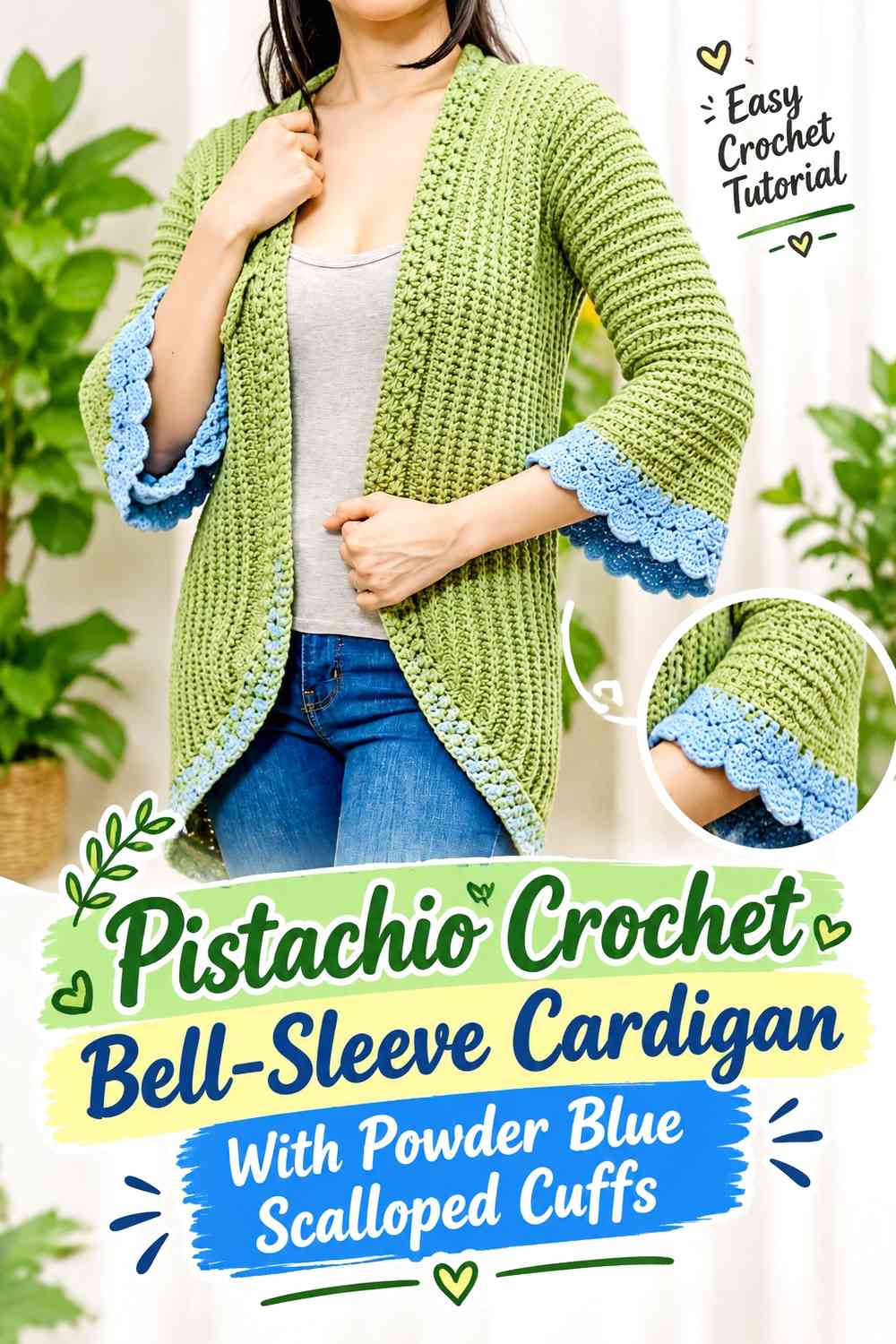
A bell-sleeve cardigan naturally gives the decorative edge more room than a close-fitting cuff. Keep the body and most of each expanding sleeve Pistachio, then move into Powder Blue only near the widest lower section. The lighter blue can make the scalloped edge look separate from the sleeve flare rather than blending into it.
Let Pistachio Carry the Full Bell-Sleeve Expansion
Keep Pistachio continuous while the sleeve widens so the eye can follow the bell shape from upper arm to lower edge. Starting the blue too high can divide the flare into several unrelated sections.
A narrow Powder Blue transition near the bottom is enough if the scallops themselves already have substantial depth.
Use Powder Blue to Clarify the Pistachio Scalloped Cuff
Powder Blue works well on the outermost curves because the color change coincides with the change in silhouette.
Repeat a small amount of Powder Blue around the neckline or front band if the cuffs otherwise feel isolated from the Pistachio body.
Creator Credit: TCDDIY
2. Powder Blue Crochet Bell-Sleeve Cardigan With Pistachio Scallop Bands
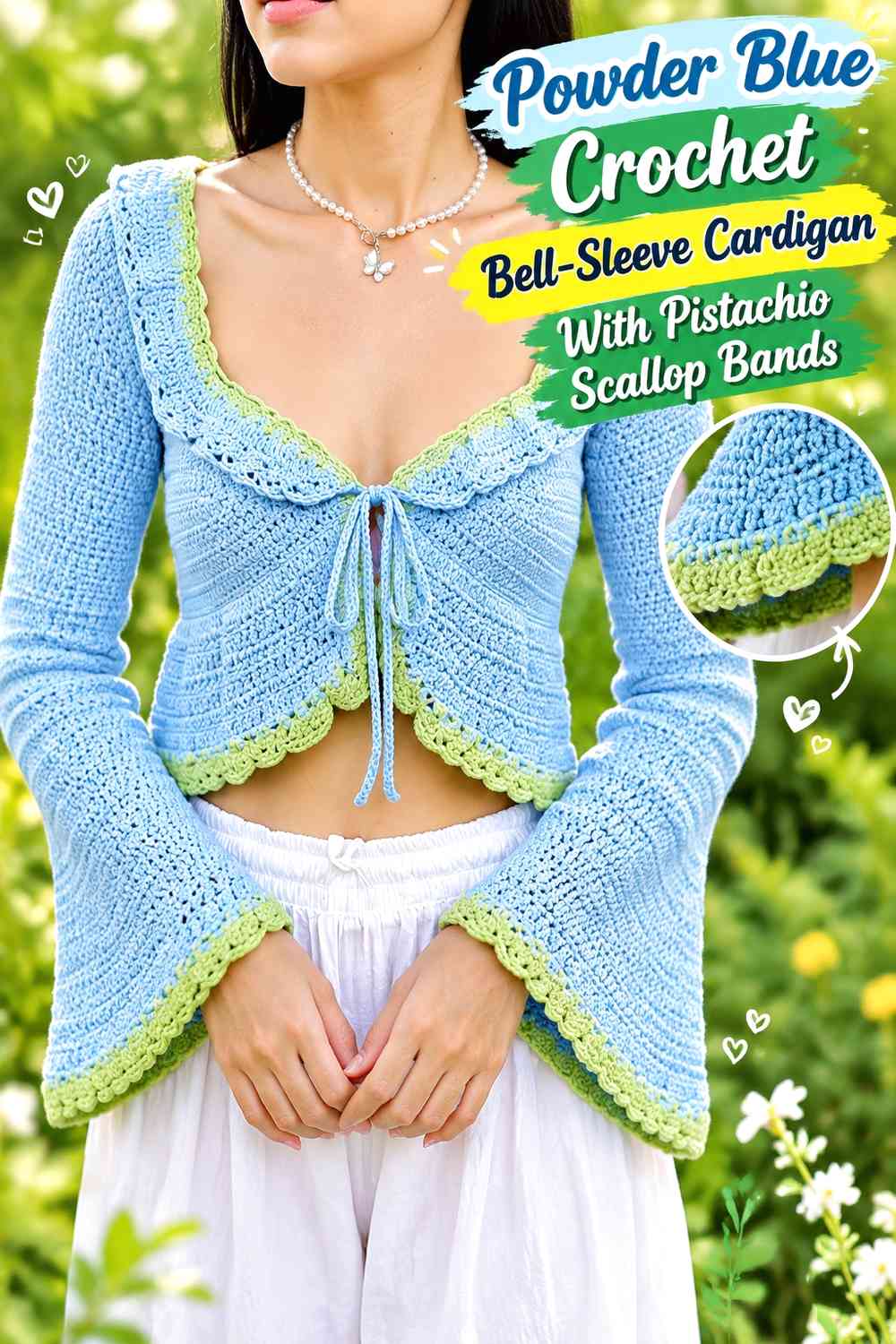
Reverse the hierarchy by letting Powder Blue dominate the cardigan and wide sleeves. Pistachio can appear in a concentrated band directly above the scallops, creating a two-stage sleeve finish rather than outlining the complete garment in green.
Keep Powder Blue Broad Through the Bell Sleeves
A connected Powder Blue field helps the wide sleeves remain visually light and keeps the garment from becoming overly striped.
Allow the color to continue almost to the lower edge before introducing Pistachio.
Put Pistachio Immediately Above the Powder Blue Sleeve Edge
A Pistachio band can mark the transition into the scalloped finish. You can keep the final scallops Pistachio as well or return to Powder Blue for a layered color effect.
Whichever arrangement you choose, repeat it identically on both sleeves because asymmetry becomes particularly noticeable at wide cuffs.
Creator Credit: Chenda DIY
3. Pistachio Crochet Collar Cardigan With Powder Blue Sleeve Scallops
A cardigan with a substantial collar gives Powder Blue a second logical location beyond the cuffs. Use Pistachio across the main panels and sleeves, then repeat Powder Blue at the scalloped wrist edges and around part of the neckline.
Let Pistachio Connect the Cardigan Panels and Sleeves
Keeping the body, shoulders, and upper sleeves Pistachio creates one continuous foundation beneath the contrasting finishing details.
This is particularly helpful when the collar already adds visual volume around the upper body.
Repeat Powder Blue From the Pistachio Cuffs to the Collar
Use Powder Blue sparingly around the neckline so the scalloped sleeves remain the principal pale-blue feature.
A narrow collar treatment is enough to make the Powder Blue wrists feel connected to the rest of the cardigan without creating a heavy frame around the complete front.
Creator Credit: Heart Hook Home
4. Powder Blue Crochet Seamed Cardigan With Pistachio Scalloped Cuffs

A traditional seamed cardigan provides clearly defined sleeves that can be planned separately from the front and back panels. Make the body Powder Blue and use Pistachio primarily at the cuffs, allowing the color change to emphasize where each sleeve ends.
Keep Powder Blue Consistent Across the Seamed Cardigan Pieces
Using one body shade across separate components makes it easier to preserve a cohesive look after assembly.
Before adding Pistachio, compare both finished sleeves side by side so their blue lengths and cuff starting points match.
Let Pistachio Finish Both Powder Blue Sleeves Equally
A scalloped Pistachio cuff will draw attention to any difference in sleeve length or border depth.
Check both cuffs together before fastening off so the green edging creates a matched pair rather than two independently finished sleeves.
Creator Credit: KnitcroAddict
5. Pistachio Crochet Pocket Cardigan With Powder Blue Sleeve Edging
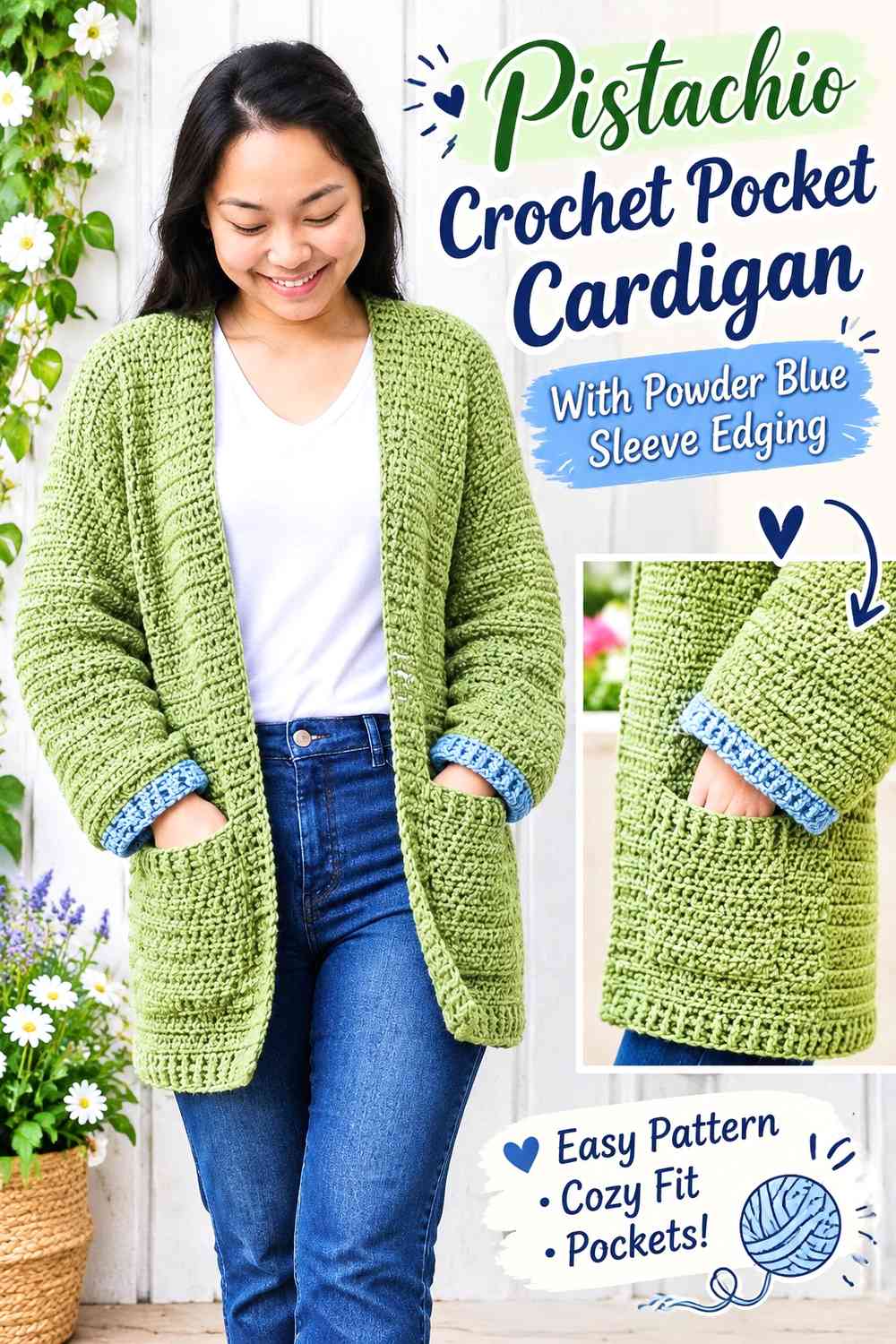
A cardigan with visible front pockets already contains additional surface features, so keep the color treatment concentrated. Use Pistachio across the oversized body, pockets, and sleeves, then reserve Powder Blue for the scalloped wrist edges.
Keep Pistachio Continuous Around the Pockets
Making the pockets Pistachio prevents them from competing with the sleeves for color attention. Their shape remains visible through construction rather than contrast.
This leaves the Powder Blue cuffs as the strongest two-color feature.
Use Powder Blue Only Where the Pistachio Sleeves End
A controlled scalloped border can provide enough Powder Blue without adding another broad blue area to the front.
If you want one repeated accent, use a narrow Powder Blue line around the cardigan opening rather than recoloring the pockets.
Creator Credit: For The Frills
6. Powder Blue Crochet Drop-Shoulder Cardigan With Pistachio Scalloped Sleeves
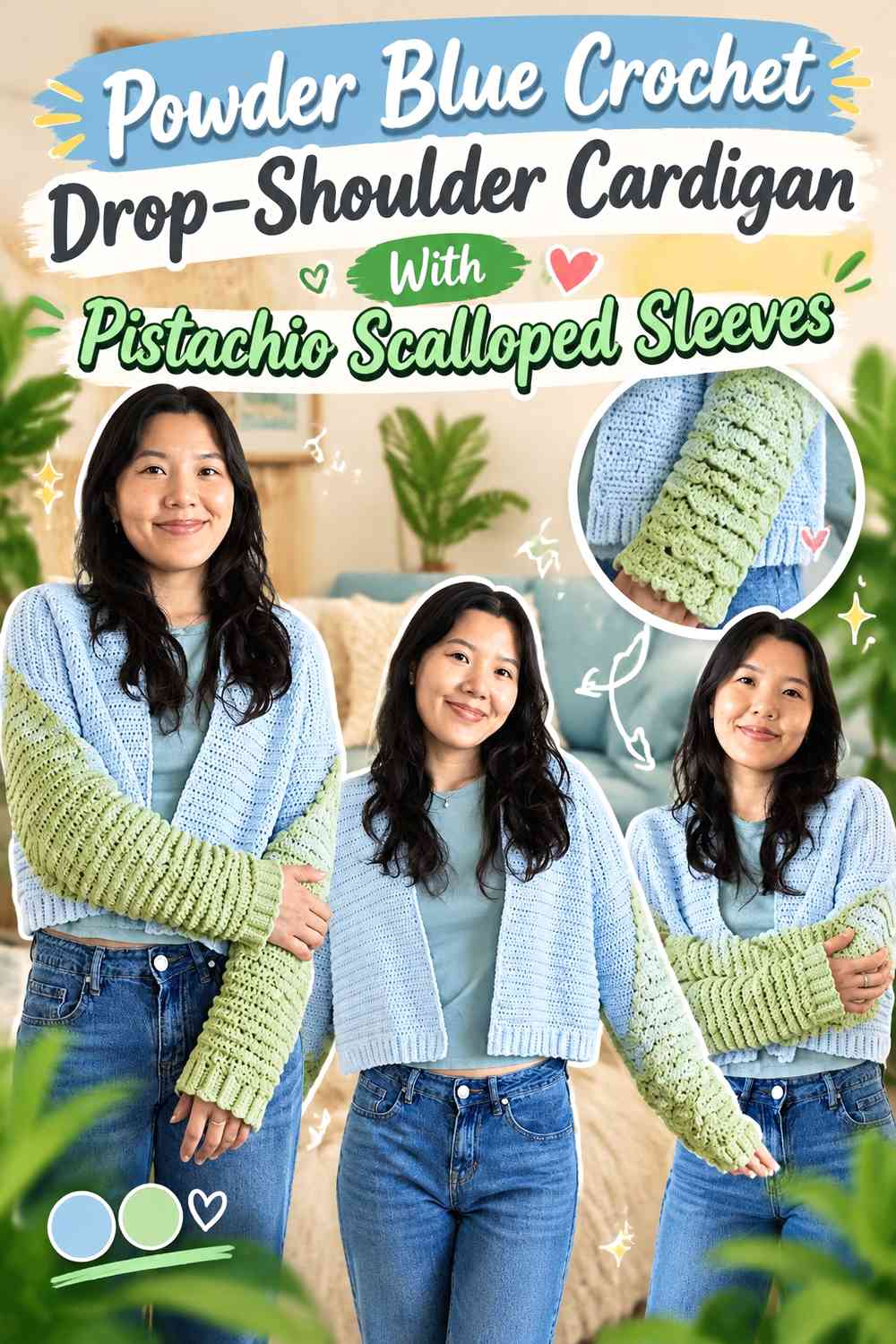
A relaxed drop shoulder creates a long visual line from the upper body into the sleeve. Keeping that complete area Powder Blue and changing to Pistachio only at the wrist makes the scalloped finish feel deliberate rather than interrupting the relaxed construction.
Let Powder Blue Flow From the Shoulder Into the Sleeve
Avoid introducing Pistachio directly at the dropped shoulder seam if you want the sleeve to feel visually connected to the body.
The uninterrupted Powder Blue line can make a relaxed winter layer look less segmented.
Use Pistachio to Stop the Powder Blue Sleeve at the Wrist
A Pistachio scalloped edge provides a clear endpoint for the long blue sleeve.
Repeat Pistachio around the lower cardigan border only if the garment needs more green balance; otherwise, the cuffs can remain the main contrast.
Creator Credit: VivCrochets
7. Pistachio Crochet Mesh Cardigan With Powder Blue Open Scallops
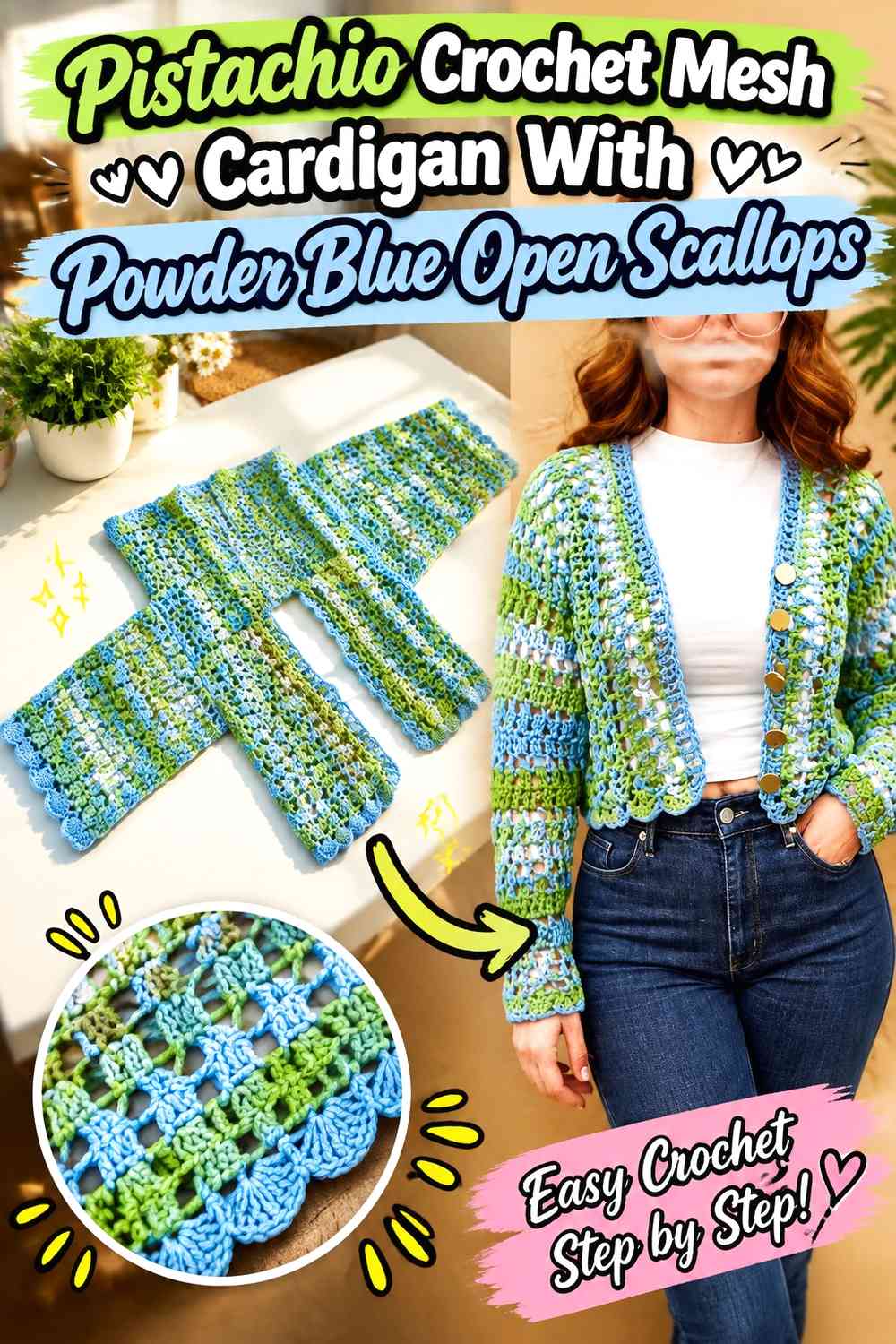
Mesh already introduces a large amount of visual detail, so use color in broad areas rather than alternating frequently. Keep most of the open cardigan Pistachio and use Powder Blue for the final scalloped sleeve edge where the open spaces can continue into a decorative border.
Keep Pistachio Continuous Through the Mesh Sleeves
A single Pistachio field allows the mesh repeat to remain easy to see and keeps the clothing underneath from competing with multiple yarn colors.
Judge the shade while the cardigan is actually layered over a winter top because the base layer will show through.
Give Powder Blue Scallops Enough Space Against Pistachio Mesh
The Powder Blue edge should remain visually distinct from the openings immediately above it.
If the mesh and scallops have similarly open structures, a short solid Powder Blue transition band can help separate the sleeve body from the final curves.
Creator Credit: Brunaticality
8. Powder Blue Crochet V-Neck Cardigan With Pistachio Scalloped Cuffs
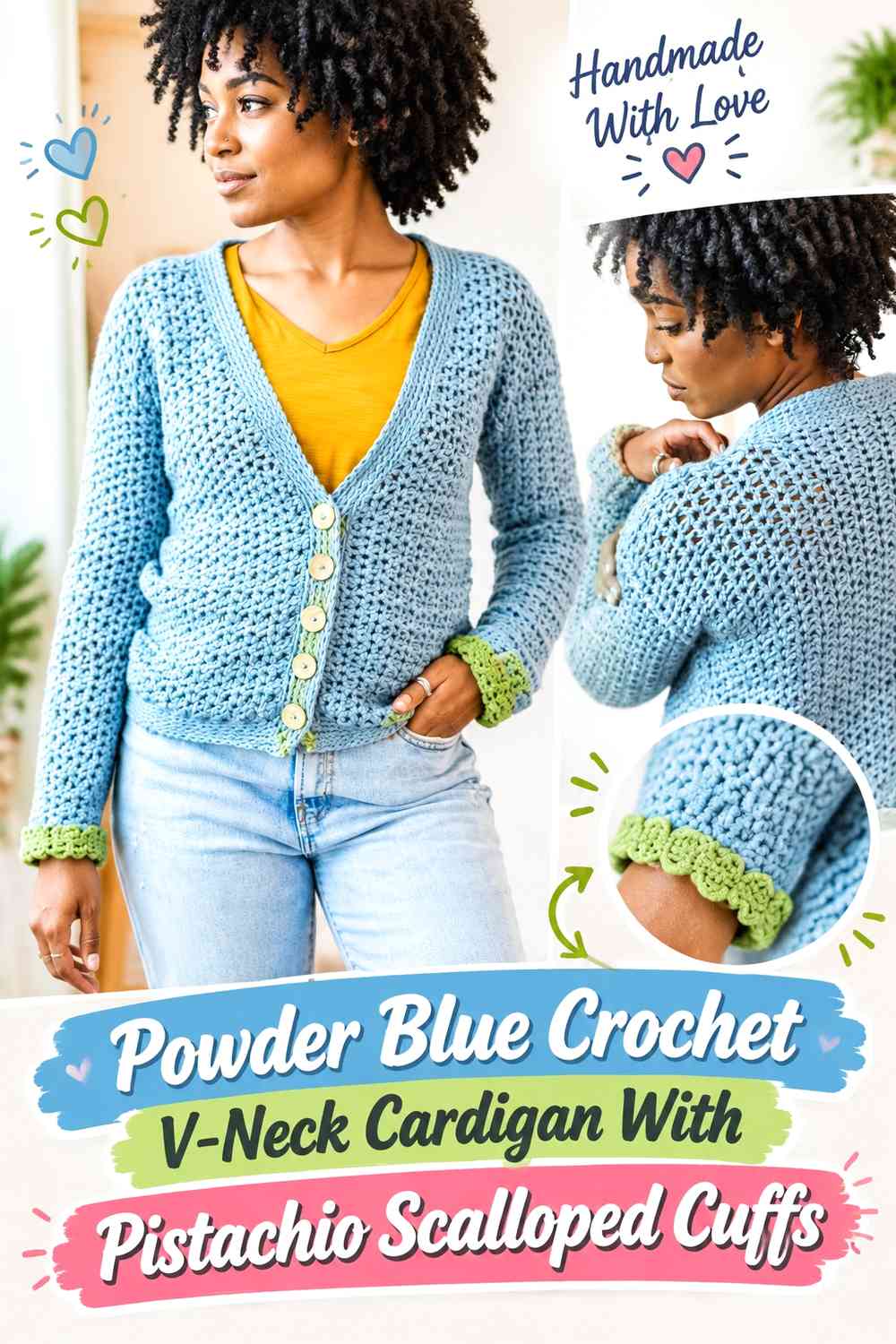
A V-neck button cardigan already directs attention down the center front, so place the strongest color contrast at the sleeves rather than creating an equally heavy two-tone button band. Keep the body Powder Blue and make Pistachio the cuff color.
Let Powder Blue Keep the V-Neck Front Visually Clean
Use Powder Blue continuously around most of the body so the neckline and button line remain easy to read.
Too many Pistachio stripes through the front can compete with the diagonal V shape.
Make Pistachio the Main Powder Blue Cuff Feature
Use Pistachio for the scallops and, if needed, a narrow band immediately above them.
Because defined cuffs are already visually important on this type of cardigan, keep any additional Pistachio neckline accent narrower than the sleeve treatment.
Creator Credit: TL Yarn Crafts
9. Pistachio and Powder Blue Striped Crochet Scalloped Sleeve Cardigan
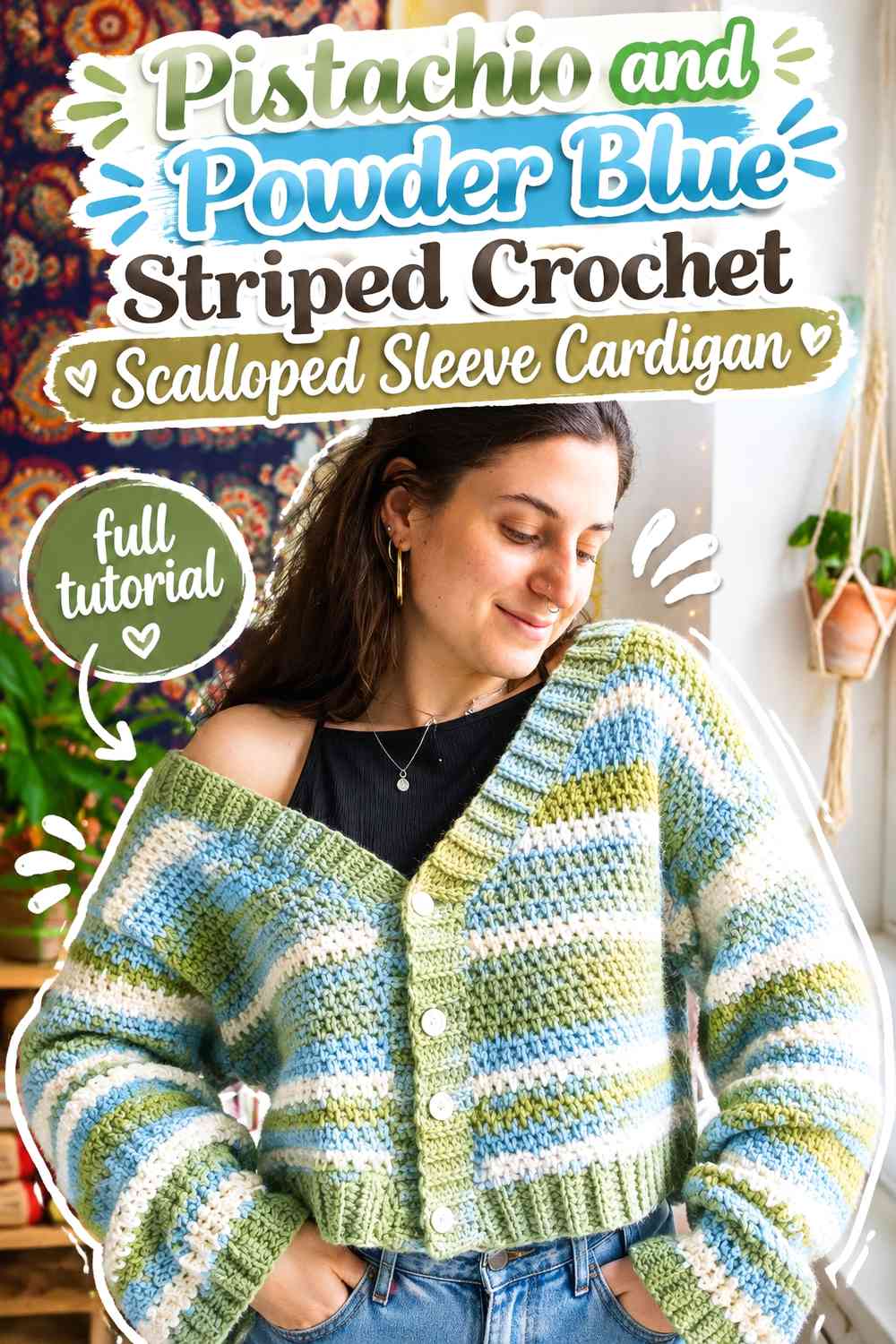
A striped cardigan lets both colors occupy larger areas, but the scalloped sleeve still needs a clear endpoint. Alternate Pistachio and Powder Blue through the body, then choose one shade for the final scallops rather than continuing the stripe rhythm through every curve.
Keep Pistachio and Powder Blue Stripe Order Deliberate
Record the sequence used on the first front and sleeve before working the matching sections.
The two colors should repeat intentionally across the garment, especially where sleeves meet the body and where the two fronts are seen together.
Choose One Pistachio or Powder Blue Shade for the Scalloped Cuff
A solid-color scallop creates a visual rest after repeated striping. Use Pistachio if the final sleeve band is Powder Blue, or reverse the relationship when you want a lighter edge.
This prevents the curves from being broken into small alternating fragments.
Creator Credit: Bloodimaryart Crochet
10. Powder Blue Cropped Crochet Cardigan With Pistachio Scalloped Sleeves
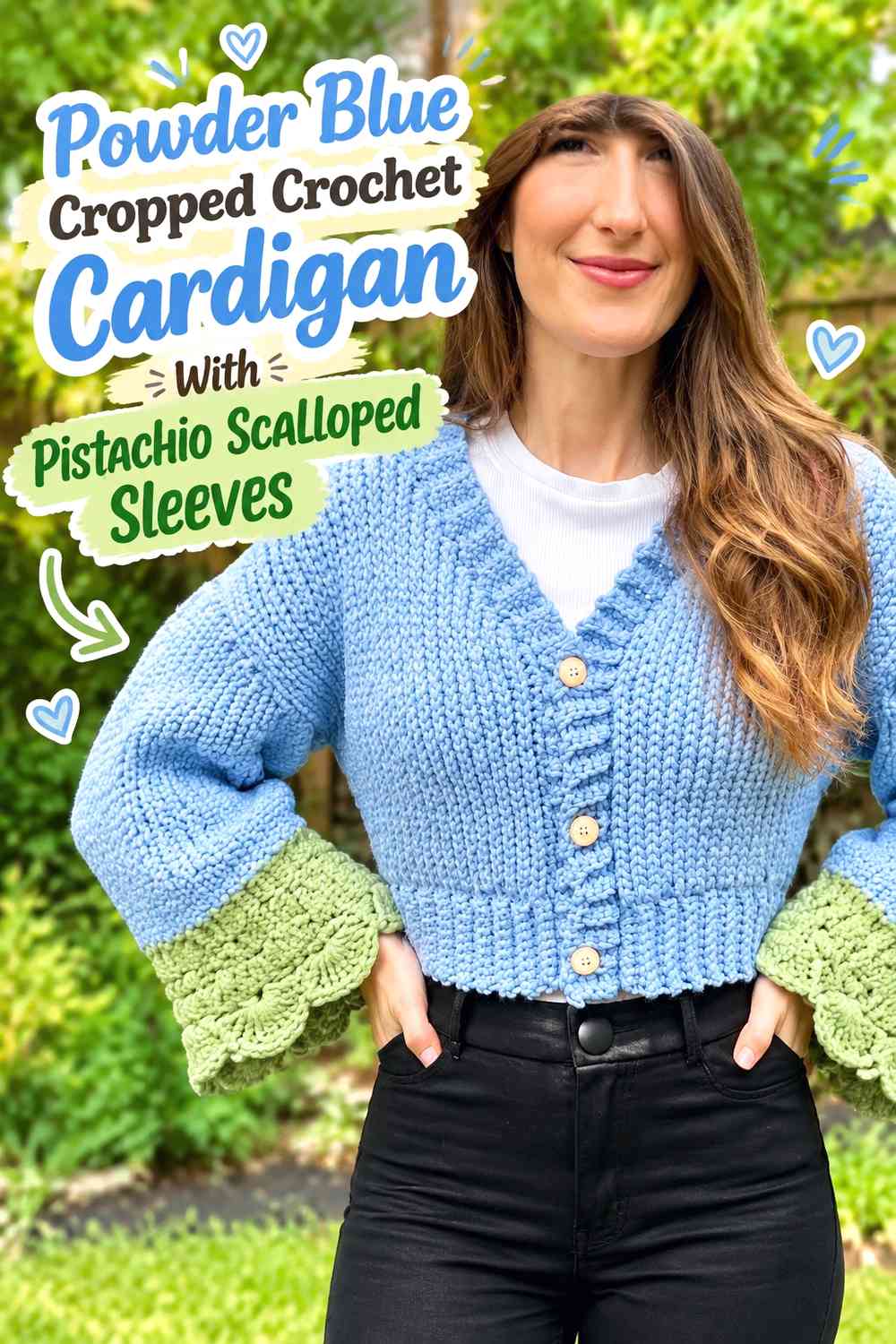
A cropped cardigan concentrates the garment vertically, so sleeve color occupies a larger share of the finished look. Use Powder Blue through the body and most of the sleeves while giving Pistachio a substantial scalloped lower section.
Let Powder Blue Keep the Cropped Body Light
A mostly Powder Blue torso allows the shorter hem and buttoned front to remain visually clear.
Avoid a heavy Pistachio body border if the cuffs already provide a large green feature.
Give Pistachio More Room on the Powder Blue Sleeves
Because the body is short, slightly deeper Pistachio cuff sections can balance the upper garment without overwhelming it.
Start the contrast low enough that the sleeve still reads primarily as Powder Blue from shoulder to forearm.
Creator Credit: Stephanie Tashi
11. Pistachio Patchwork Crochet Cardigan With Powder Blue Sleeve Scallops
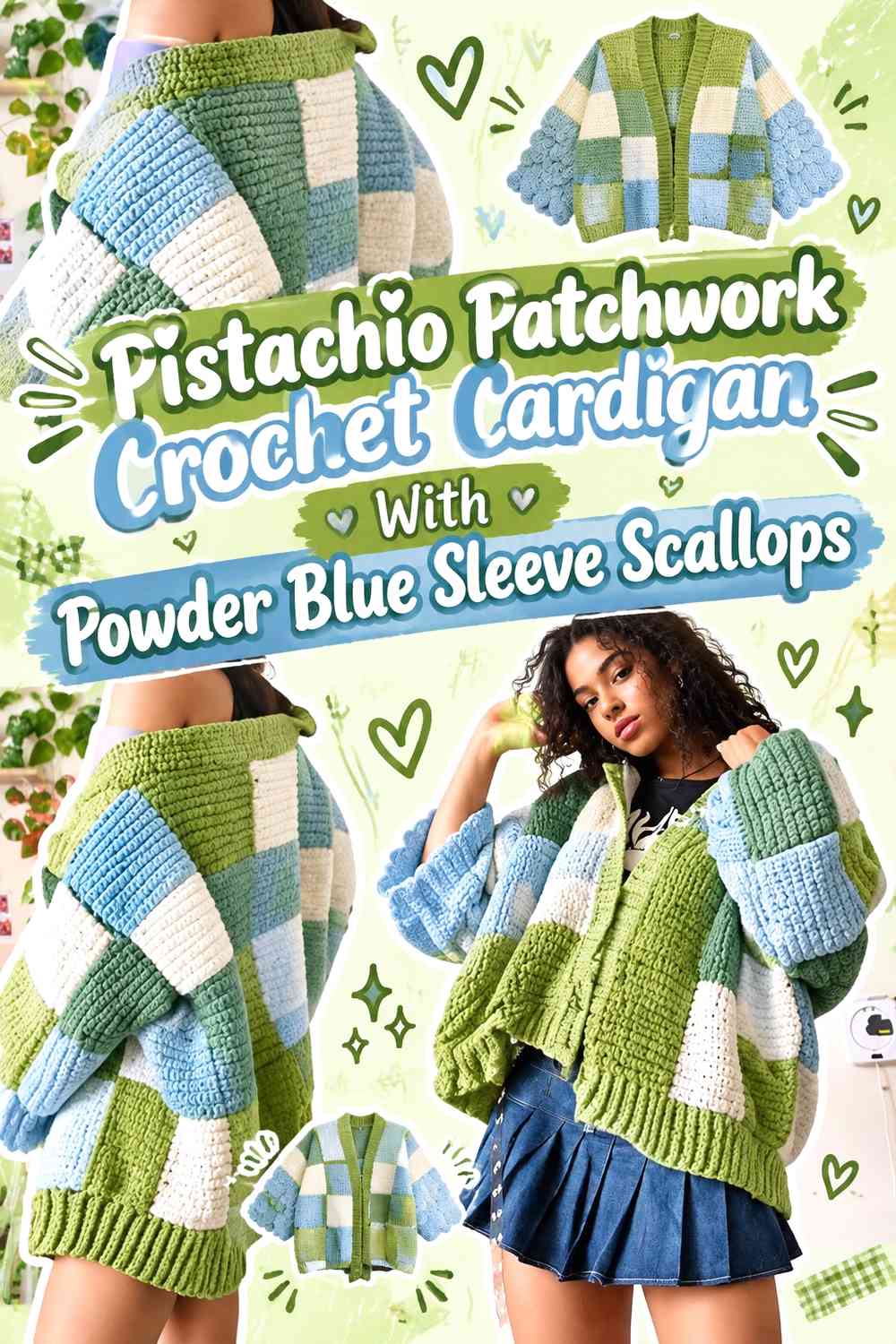
Patchwork already divides the garment into strong blocks, so make the sleeve edge one consistent color. Use Pistachio as the dominant square or panel shade and finish both sleeves in Powder Blue.
Keep Pistachio Strong Across the Patchwork Layout
If every square alternates equally between both colors, the garment may lose a clear dominant shade. Let Pistachio lead more of the body and upper sleeve positions.
Lay out the motifs before joining so Powder Blue does not accidentally cluster heavily on one side.
Use Powder Blue to Unify the Pistachio Patchwork Sleeves
A matching Powder Blue scalloped edge on both sleeves can visually unite an otherwise varied modular surface.
Because the patchwork already contains multiple boundaries, keep the scallop treatment clean rather than adding several additional color bands above it.
Creator Credit: ikoxun
12. Powder Blue Lace Crochet Cardigan With Pistachio Scalloped Cuffs

A lace cardigan makes a natural base for scalloped edging because openwork and curved borders can share a delicate visual language. Keep the main lace Powder Blue and introduce Pistachio only near the sleeve ends and possibly the front ties.
Let Powder Blue Carry the Main Lace Pattern
Keeping the openwork one color helps the repeated holes and solid sections remain visually coherent.
Remember that the color of the layer underneath becomes part of the finished appearance through the lace.
Use Pistachio Scallops to Ground the Powder Blue Openwork
A Pistachio sleeve edge can give the airy blue fabric a clearer endpoint.
If the front ties are visually narrow, repeating Pistachio there can connect the cuffs without adding another broad green area.
Creator Credit: Alona crochets
13. Powder Blue Tie-Front Crochet Cardigan With Pistachio Bell-Sleeve Scallops
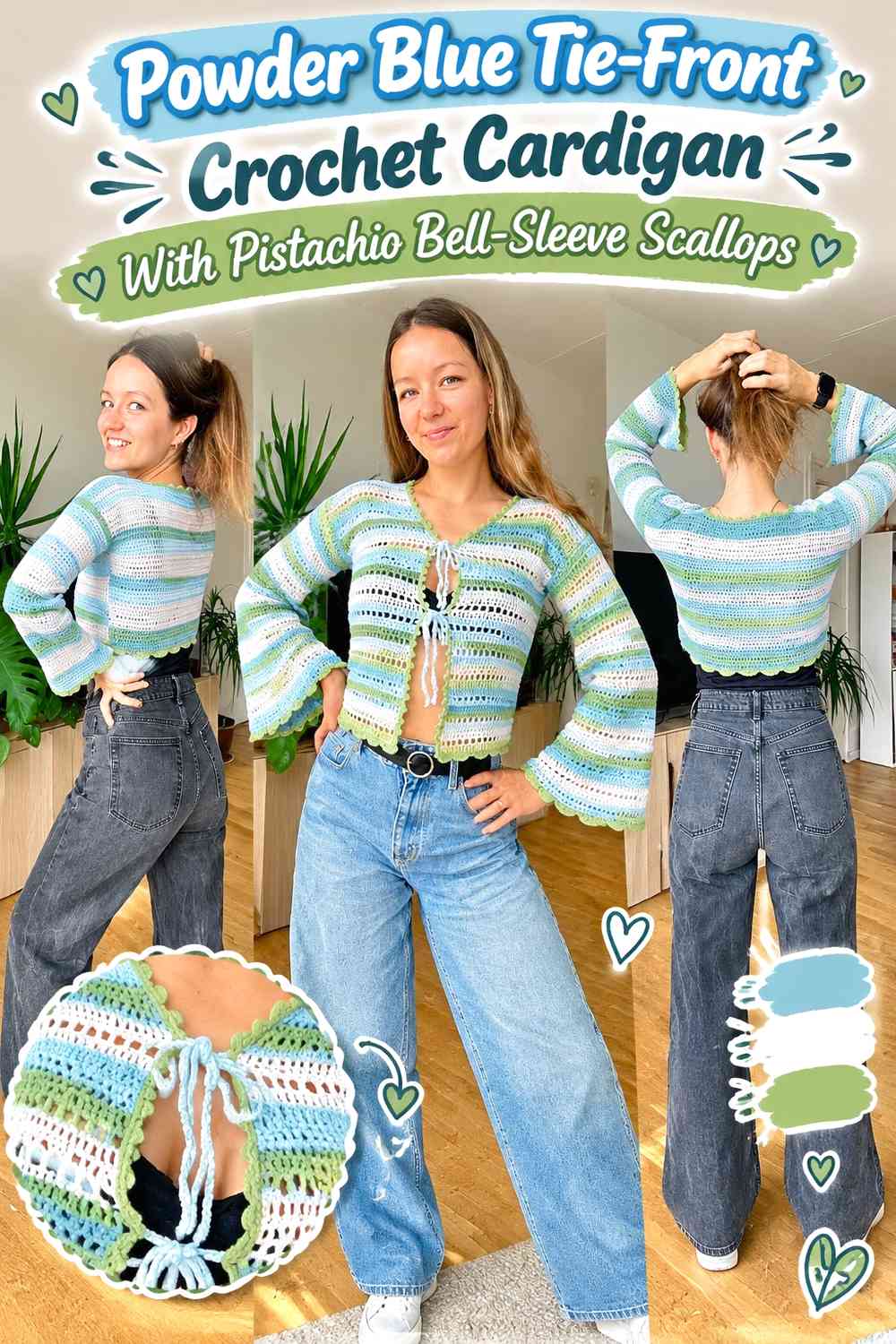
A tie-front cardigan with wide sleeves already places movement at both the center and wrists. Use Powder Blue through the body and upper sleeves, then switch to Pistachio only in the lower bell section and scalloped edge.
Let Powder Blue Keep the Tie-Front Cardigan Cohesive
The front ties create enough movement through the center, so a single Powder Blue body can keep the garment from becoming overly decorative.
If you repeat Pistachio in the ties, do it sparingly so they do not compete with the cuffs.
Make Pistachio Strongest at the Powder Blue Bell-Sleeve Edge
The widening sleeve gives Pistachio enough space to become a meaningful lower-arm feature.
Allow some Powder Blue to remain immediately above the final scallops so the sleeve transition stays easy to read.
Creator Credit: by Kristine
14. Pistachio One-Piece Crochet Cardigan With Powder Blue Scalloped Cuffs
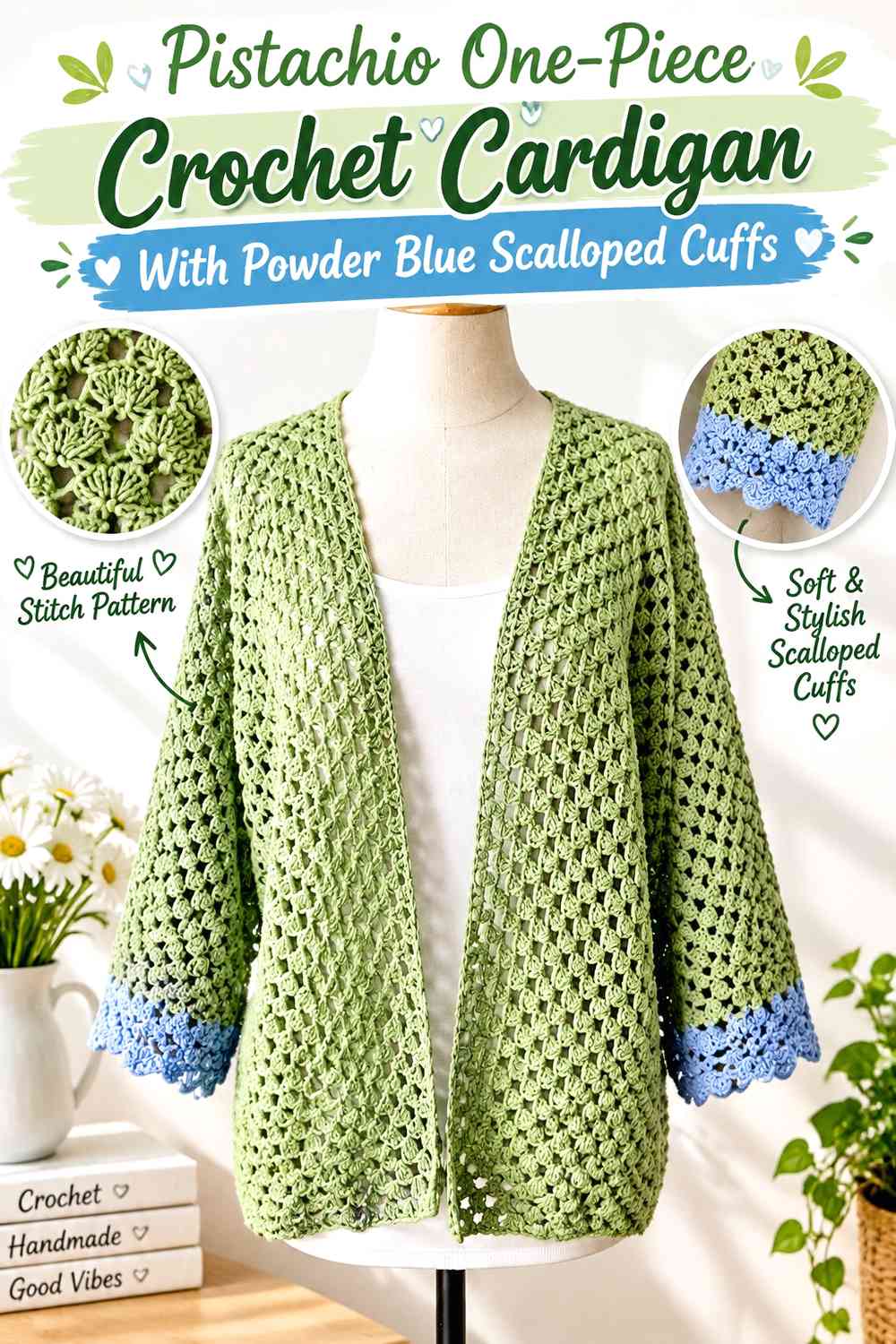
A one-piece cardigan benefits from a simple palette that does not obscure how the continuous fabric becomes a garment. Keep the principal piece Pistachio and introduce Powder Blue only once the sleeve ends and finishing edges are clearly established.
Let Pistachio Preserve the One-Piece Cardigan Continuity
Using Pistachio across the main construction emphasizes the uninterrupted relationship between body and sleeve areas.
This also avoids confusing a color transition with a structural boundary while the piece is still developing.
Add Powder Blue Only at Finished Pistachio Sleeve Edges
Once the sleeve opening is established according to the original construction, a Powder Blue scallop can become a separate decorative finish.
Do not alter structural shaping merely to fit a preferred number of scallops; adjust the decorative repeat compatibly with the finished edge instead.
Creator Credit: Crochet Capri
15. Powder Blue Duster Crochet Cardigan With Pistachio Sleeve Scallops

A long duster contains far more body fabric than a cropped cardigan, so small Pistachio cuffs can disappear visually. Keep the long body Powder Blue but give the scalloped sleeve treatment enough green depth to remain visible in proportion to the extended silhouette.
Let Powder Blue Control the Long Vertical Cardigan Line
A connected Powder Blue body emphasizes length and prevents contrasting horizontal bands from chopping the duster into sections.
If you want Pistachio elsewhere, a narrow front edge can repeat it without interrupting the long silhouette.
Scale Pistachio Scallops to the Powder Blue Duster
A longer cardigan can support a slightly more substantial cuff treatment than a very short one.
Judge the Pistachio section while wearing the full-length garment; what looks large when the sleeve is isolated may appear modest beside a long Powder Blue body.
Creator Credit: BzzzMagicHands🧶
16. Pistachio Cropped Crochet Cardigan With Powder Blue Scalloped Cuffs
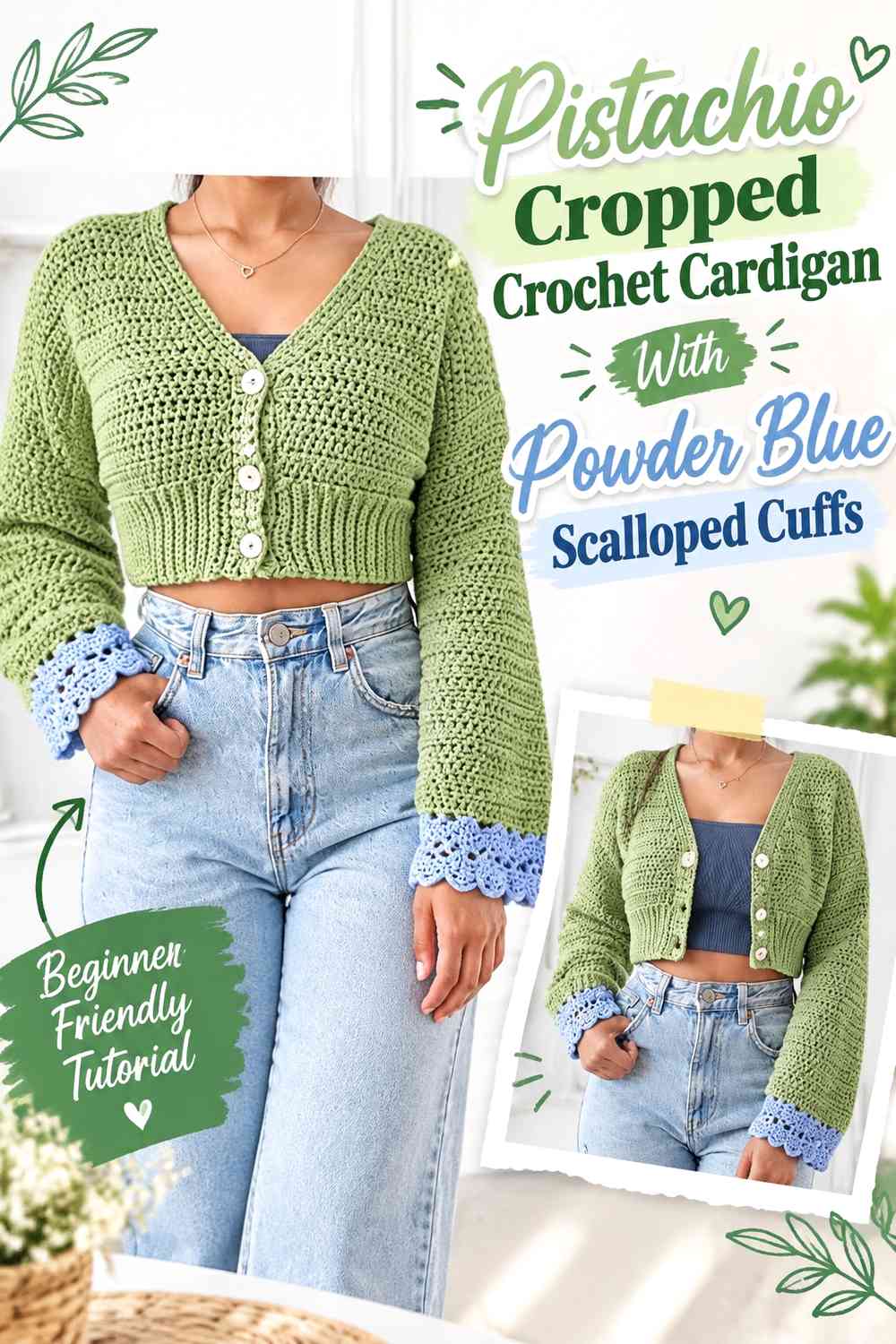
A clean cropped cardigan lets the scalloped sleeves become the primary decorative feature. Use Pistachio across the body, button area, and sleeve length, then switch completely to Powder Blue for the final wrist curves.
Keep Pistachio Simple Across the Cropped Cardigan Body
A relatively quiet body creates enough visual space for the cuffs to stand out without needing additional blue bands through the front.
This also keeps the shorter body from looking divided into several small horizontal zones.
Let Powder Blue Provide the Main Pistachio Sleeve Contrast
Use Powder Blue only at the scallops or in one narrow lead-in band plus the scallops.
If the cuffs already look prominent when both arms are lowered, keep the hem Pistachio rather than adding another large blue finish.
Creator Credit: Rosa Ferns
17. Powder Blue Tie-Front Crochet Cardigan With Pistachio Scalloped Sleeve Edge

A lightweight tie-front cardigan can take a smaller scalloped treatment than a heavy winter layer. Let Powder Blue remain dominant and use Pistachio as a narrow sleeve-edge accent that echoes the compact front ties.
Let Powder Blue Preserve the Lightweight Cardigan Look
Keep the body and sleeve surfaces mostly Powder Blue so the open front remains visually light.
A large Pistachio lower-sleeve block could make the wrists appear much heavier than the short body.
Keep Pistachio Scallops Narrow Against Powder Blue
Use a shallower scallop or visually restrained green edge when the cardigan fabric itself is light and open.
If you repeat Pistachio in the ties, keep both accents similar in visual weight so neither looks accidentally heavier.
Creator Credit: Dana B
18. Pistachio Batwing Crochet Cardigan With Powder Blue Scalloped Cuffs
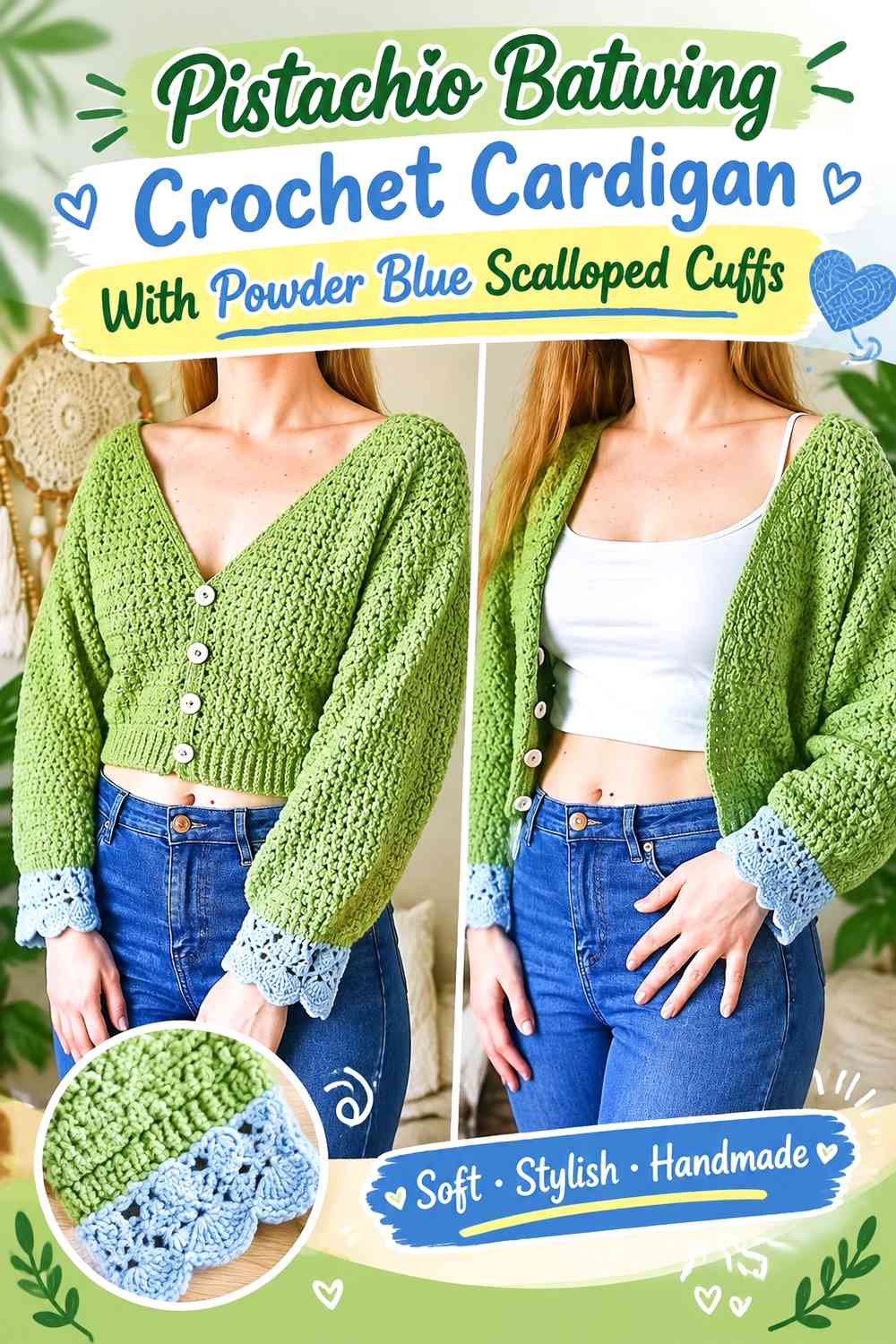
Batwing sleeves blend the upper sleeve and body together, making the wrist one of the few clear places to introduce a second color. Keep the expansive upper garment Pistachio and place Powder Blue only where the sleeve narrows toward the hand.
Let Pistachio Flow Through the Batwing Shape
A single Pistachio field emphasizes the continuous fabric from torso to underarm and sleeve.
Adding color changes high on the arm can visually break that defining batwing silhouette into unrelated sections.
Use Powder Blue to Finish the Pistachio Batwing Sleeves
A Powder Blue scalloped cuff creates a clear endpoint without interfering with the generous upper shape.
Because the batwing provides substantial volume above the wrist, keep the scallop proportional and check that it does not make the sleeve opening appear overly heavy.
Repeat Powder Blue Lightly Against the Pistachio Front
If the blue cuffs seem isolated, use a narrow Powder Blue front or neckline edge rather than another broad body panel.
That repetition connects the sleeves while preserving Pistachio as the dominant color across the distinctive batwing construction.
Creator Credit: Madeleine Shirley
Which Pistachio and Powder Blue Scalloped Sleeve Cardigan Direction Should You Choose?
For the strongest sleeve-focused effect, Ideas 1, 2, 14, and 19 use bell, wide, or batwing shapes where the scalloped edge has enough room to become a major visual feature. Keep the body comparatively quiet so the lower sleeve does not compete with equally strong borders elsewhere.
Ideas 3, 4, 5, 6, 8, 15, 17, and 18 use more familiar cardigan bodies. These are useful when you want the Pistachio-and-Powder-Blue palette to make the cuffs distinctive without turning the entire garment into a highly decorative piece.
Ideas 7 and 12 pair scallops with mesh or lace. In those cardigans, check how openwork and edging interact because both already introduce negative space.
Ideas 9 and 11 make color more active across the garment through stripes or patchwork. A single-color scalloped cuff is especially useful there because it gives the sleeve a clear endpoint after a busier body.
Ideas 13 and 16 shift attention to garment proportion. The raglan emphasizes shoulder lines, while the duster emphasizes length, so the sleeve scallops should support rather than compete with those dominant structural features.
Conclusion
Pistachio and Powder Blue can give a winter crochet cardigan a soft two-color identity without requiring the entire garment to alternate shades. The most effective approach is usually to let one color carry the body and most of the sleeves while the second color defines the scalloped wrist edge.
For the strongest sleeve statement, use the contrasting shade across a deeper bell or cuff section. For a quieter cardigan, limit it to the final scallop row and repeat only a small amount around the neckline or front band.
Always judge the sleeve treatment on the worn cardigan. The width of the sleeve, the way the fabric hangs, and the proportion of the body all change how large a Pistachio or Powder Blue cuff appears. Follow the original creator tutorial for the underlying cardigan construction and fit, then add a compatible scalloped treatment without changing structural shaping merely to accommodate the color design.
Frequently Asked Questions
Should Pistachio or Powder Blue Dominate a Winter Scalloped Sleeve Cardigan?
Pistachio can dominate when you want the cardigan to feel slightly more grounded and want Powder Blue to brighten the cuffs. Powder Blue works well as the main shade when you want a lighter overall garment with Pistachio providing stronger edge definition.
The sleeve shape matters too. A wide bell cuff gives the supporting color more visual area than a narrow wrist edge.
Where Should Powder Blue Go on a Pistachio Scalloped Sleeve Cardigan?
The outer scallops are the most direct location. Powder Blue can also appear in a narrow band above the cuff, around the neckline, or along the front opening to connect the sleeves with the body.
Avoid making every border Powder Blue automatically. Let the sleeve remain the main feature if that is the purpose of the cardigan.
Can I Add Pistachio Scallops to a Powder Blue Cardigan Tutorial That Does Not Include Scalloped Sleeves?
Yes, when the finished sleeve edge is compatible with a separately planned decorative border.
Follow the creator’s original sleeve shaping and fit first. Do not alter structural increases, decreases, or sleeve dimensions simply to force a particular number of scallops.
How Can I Keep Pistachio and Powder Blue From Blending Together?
Compare the actual yarns side by side because both shades can be relatively soft. A grayscale photograph can help reveal whether there is enough light-and-dark separation.
If the values are similar, make the cuff color area broader or choose a slightly lighter Powder Blue or deeper Pistachio while keeping the same overall palette direction.
Should Both Scalloped Sleeves Use the Same Pistachio and Powder Blue Layout?
Usually yes if you want a balanced cardigan. Match where the color transition begins, how much of the lower sleeve uses the contrast shade, and how the scalloped edge appears.
An intentionally asymmetric cardigan is possible, but the difference should be planned rather than caused by losing track of the first sleeve’s color sequence.
Can Pistachio and Powder Blue Work on a Granny or Patchwork Cardigan With Scalloped Sleeves?
Yes. Decide which shade dominates the motifs first, then use one consistent color for the sleeve scallops.
A solid scalloped cuff can help visually contain a busy granny-square or patchwork sleeve instead of adding another complicated color repeat.
How Much of the Sleeve Should Be Scalloped?
That depends on the sleeve construction and the look you want. A narrow scallop functions mainly as edging, while a deeper decorative section becomes part of the sleeve silhouette.
Check the planned depth against the complete cardigan rather than judging the cuff alone. A long duster or broad bell sleeve can visually support a larger scalloped section than a compact cropped cardigan.
Should the Cardigan Border Match the Pistachio or Powder Blue Sleeve Scallops?
It can, but it does not need to. Matching the front border to the cuff creates stronger color continuity, while keeping the border in the body color makes the scalloped sleeves more prominent.
Choose according to which feature should lead: the overall cardigan frame or the decorative wrists.