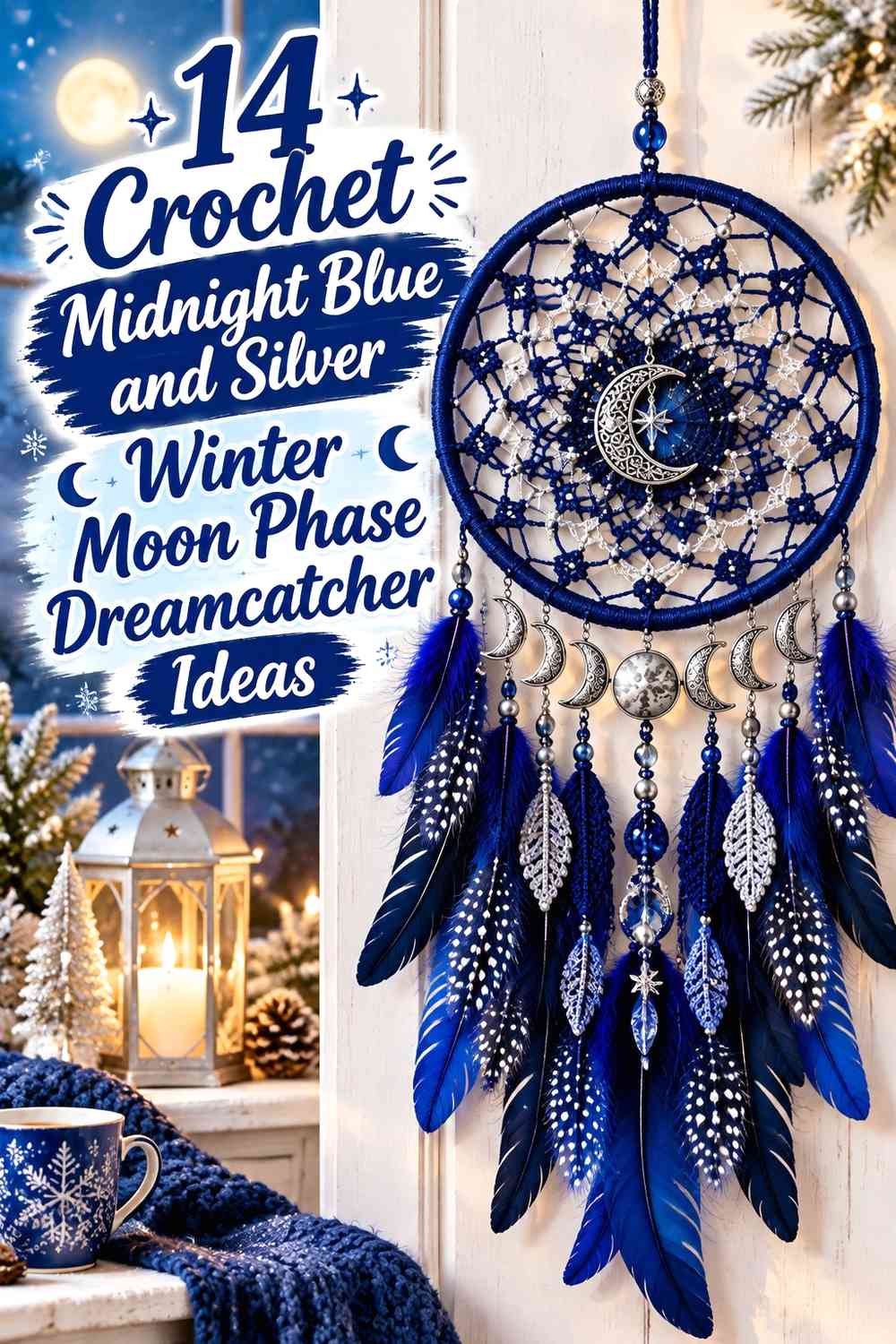

Midnight blue and silver give a crochet moon phase dreamcatcher a natural winter-night structure without requiring a crowded celestial palette. Midnight blue can establish the hoop, night-sky center, tassels, or darker phases, while silver can define crescents, full moons, stars, radial edging, and hanging details that need to remain visible from across the room.
Moon phases also give the two colors a useful organizing system. Rather than alternating midnight blue and silver randomly, you can let the changing lunar shapes determine where silver increases or decreases. A silver full moon can become the central focal point, for example, while increasingly narrow silver crescents appear against larger midnight-blue fields toward the outer sections.
The tutorials supporting these ideas include complete crochet dreamcatcher-style hoop hangings, mandala centers, moon-phase garlands, crescent motifs, star garlands, and moon-and-star wall decor. The midnight-blue, silver, winter, and moon-phase arrangements below are independent adaptations, so the creator credits support the construction concepts rather than claiming each creator used this exact palette or made the same finished hanging.
Quick List
- Midnight Blue Crochet Winter Moon Phase Dreamcatcher with Silver Lunar Arc
- Silver Full Moon Crochet Dreamcatcher with Midnight Blue Outer Hoop
- Midnight Blue Crochet Crescent-Sequence Dreamcatcher with Silver Phase Highlights
- Midnight Blue Crochet Mandala Dreamcatcher with Silver Lunar Ring
- Silver Crochet Moon Phase Crown Dreamcatcher with Midnight Blue Center
- Midnight Blue Crochet Crescent Dreamcatcher with Silver Star Drops
- Silver Crochet Full Moon Dreamcatcher with Midnight Blue Winter Fringe
- Midnight Blue Crochet Moon-and-Star Dreamcatcher with Silver Hanging Strands
- Silver Crochet Celestial Curtain Dreamcatcher with Midnight Blue Moon Phases
- Midnight Blue Crochet Star-Ring Dreamcatcher with Silver Moon Center
- Silver Crochet Openwork Dreamcatcher with Midnight Blue Moon Phase Border
- Midnight Blue Crochet Moon Phase Dreamcatcher with Silver Granny Stars
- Midnight Blue Crochet Multi-Hoop Dreamcatcher with Silver Moon Phase Centers
- Balanced Midnight Blue and Silver Crochet Full-Cycle Moon Phase Dreamcatcher
Let Midnight Blue Create the Winter Night-Sky Structure
Midnight blue works especially well on the hoop, connecting strands, broad mandala sections, and negative spaces surrounding lunar motifs. Keeping those larger areas blue gives silver enough contrast to identify individual phases without turning the whole hanging pale.
If the wall behind the piece is also dark, move more silver toward the outer ring or lower strands. A dreamcatcher that looks balanced on a light work surface can lose much of its midnight-blue outline against navy, charcoal, or deep green walls.
Use Silver to Make the Moon Phases Read Clearly
Silver does not need to occupy half of the hanging to have equal visual importance. A full silver circle, several crescents, or a repeated silver border can attract attention even when midnight blue covers substantially more surface.
Keep the phase sequence easy to follow. When every moon also has stripes, stars, and several outlines, the changing lunar silhouettes can become secondary to the decoration. Complete silver sections against midnight blue generally communicate the moon-phase idea more clearly.
Balance Midnight Blue and Silver Across the Hoop and Lower Strands
The round center and the hanging fringe should feel like parts of one composition. If almost all silver sits inside the hoop while every lower strand is midnight blue, the hanging can look divided at the bottom edge.
Repeat one color from the hoop into the drops. Silver stars beneath a blue hoop, or blue tassels beneath a silver-centered mandala, can connect the upper and lower sections without requiring both colors in every strand.
1. Midnight Blue Crochet Winter Moon Phase Dreamcatcher with Silver Lunar Arc
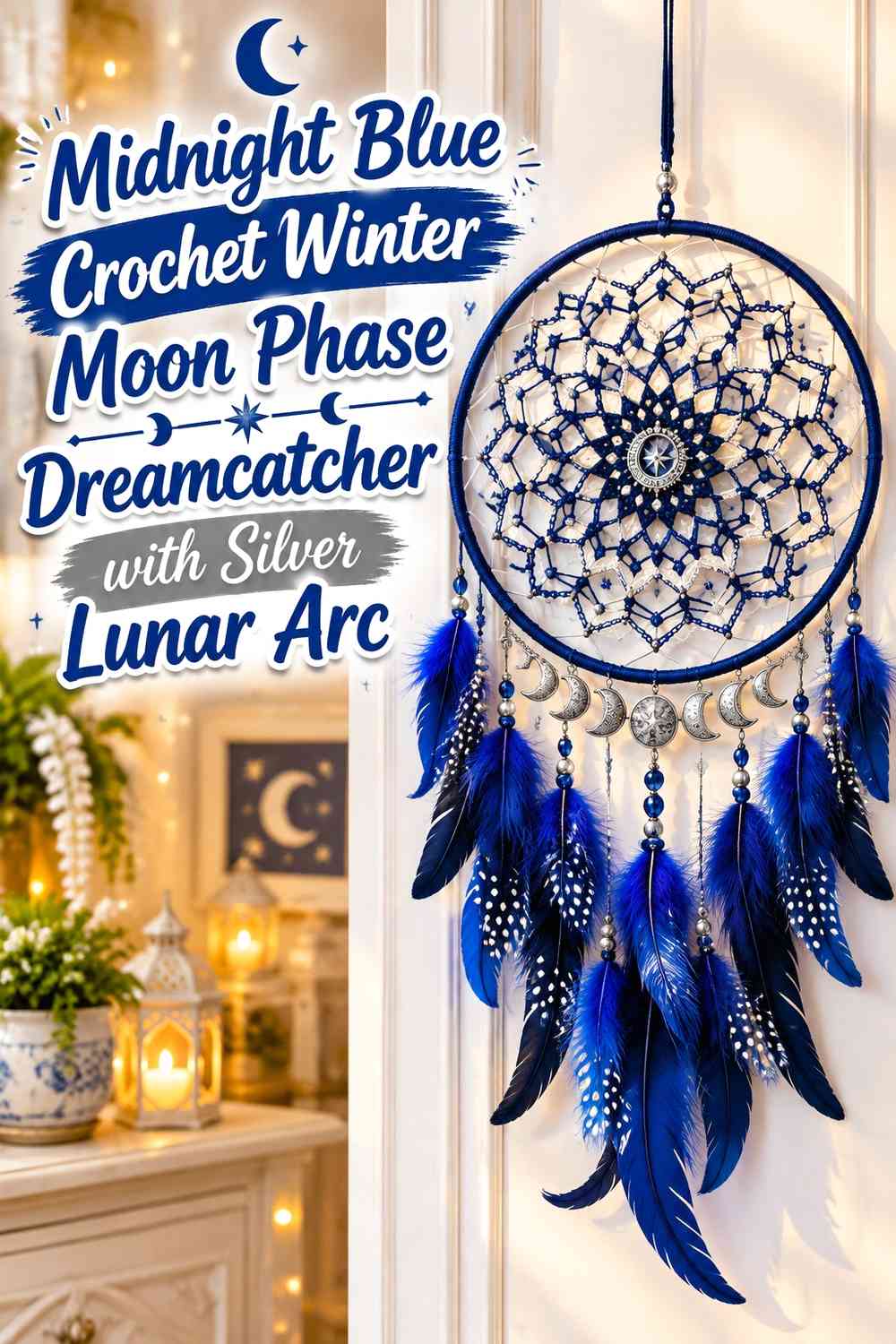
Use midnight blue for the hoop and openwork center, then arrange the main silver moon phases in an arc across the upper or middle section. This keeps the dreamcatcher visually dark while allowing the phase sequence to become its clearest feature.
Silver Moon Phases Should Read Clearly Across Midnight Blue
Give each silver phase enough open blue around it for the changing shapes to remain recognizable. Crowding several crescents together can make them look like decorative slivers rather than a deliberate lunar sequence.
Midnight Blue Can Connect the Silver Moon Phase Arc to the Hoop
Repeat blue between the phases and around the circumference instead of outlining every moon heavily in silver. The continuous dark field makes the lighter lunar shapes feel suspended within one night-sky composition.
Keep Silver Secondary in the Midnight Blue Lower Fringe
A few silver strands or small celestial accents can echo the lunar arc without duplicating the entire phase sequence below the hoop.
Creator Credit: cc crochet
2. Silver Full Moon Crochet Dreamcatcher with Midnight Blue Outer Hoop
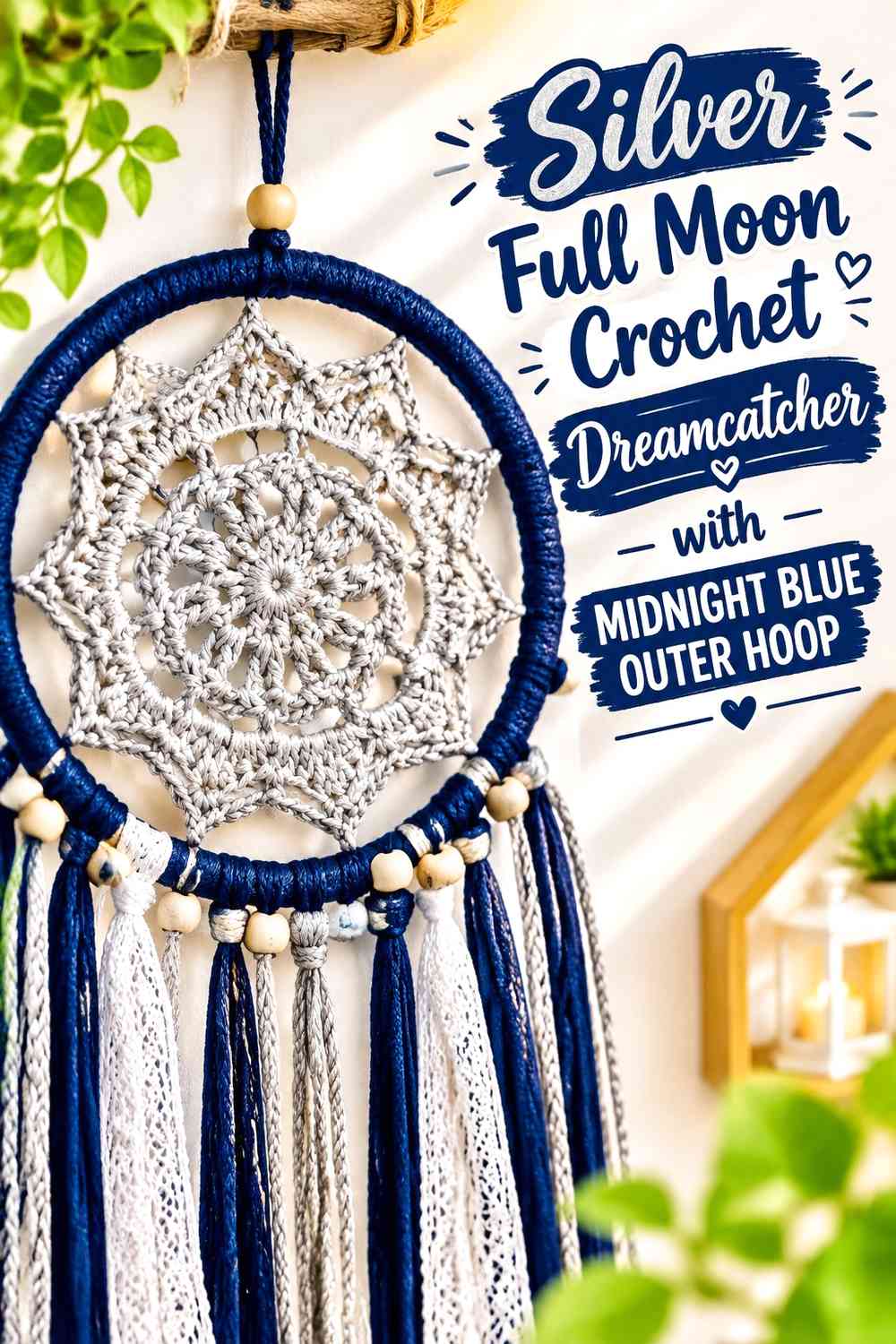
Make one large silver full moon the center of the hanging and surround it with a midnight-blue hoop and darker openwork. Smaller phase references can sit nearer the perimeter, but the full moon should remain the unmistakable focal point.
Silver Should Dominate the Full Moon Against Midnight Blue
Keep the main circle substantially silver instead of breaking it into many blue sections. The large uninterrupted light area makes the full-moon phase recognizable before the viewer notices smaller details.
Midnight Blue Can Frame the Silver Full Moon Without Crowding It
Use blue across the surrounding radial structure and hoop. Leave enough visual separation between the silver circle and blue edge that the moon does not appear to fill the entire dreamcatcher.
Repeat Midnight Blue Below the Silver Full Moon
Blue tassels or hanging strands can give the pale center a darker lower anchor. A few smaller silver accents can then connect the fringe back to the full moon.
Creator Credit: Ahuyama Crochet
3. Midnight Blue Crochet Crescent-Sequence Dreamcatcher with Silver Phase Highlights
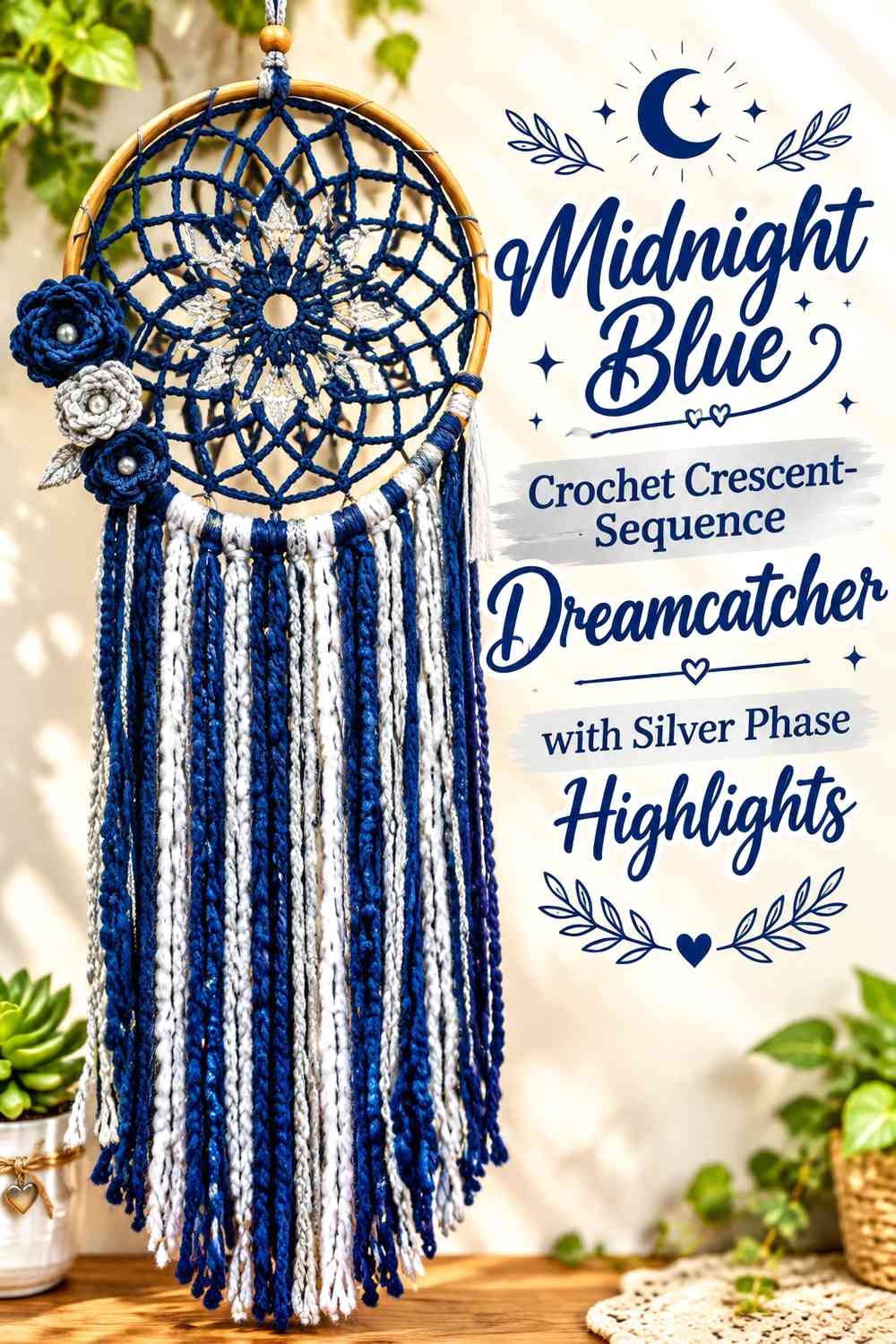
Use midnight-blue crescent and half-moon forms as the main repeating lunar shapes while reserving silver for selected illuminated edges or complete phases. This creates a darker interpretation of the lunar cycle rather than making every moon silver.
Midnight Blue Crescents Need Silver Separation Between Phases
Because the darker moons can blend with the hoop, use silver at selected intervals to divide the sequence. A silver full moon at the midpoint can provide a useful anchor.
Silver Can Mark the Brightest Point of the Midnight Blue Lunar Cycle
Concentrate the largest silver area at the full moon and reduce it toward the crescents. This lets the color distribution reinforce the idea of changing lunar illumination.
Keep Midnight Blue Continuous Around Silver Phase Changes
A consistent blue hoop or center field prevents the sequence from looking like unrelated two-color motifs.
Creator Credit: Pequeña Mania
4. Midnight Blue Crochet Mandala Dreamcatcher with Silver Lunar Ring
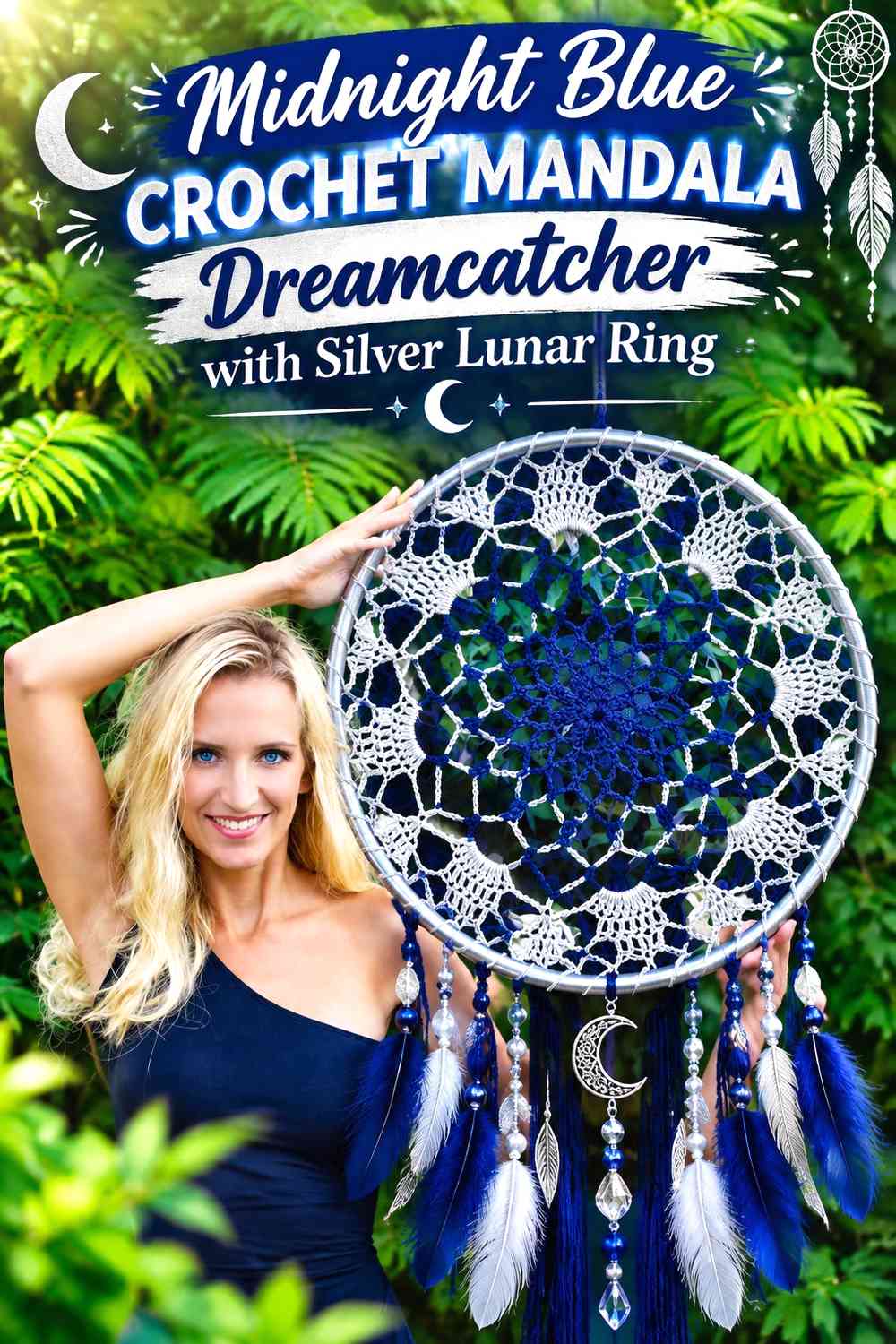
Build the main round center as a midnight-blue mandala and create a surrounding silver ring that suggests repeated lunar positions. This gives the dreamcatcher strong radial texture while keeping the moon-phase treatment closer to the perimeter.
Midnight Blue Should Carry the Main Mandala Texture
Keep broad sections of the radial crochet blue so openwork and stitch direction remain visible. Changing to silver every round can make the mandala compete with the moon-phase ring.
Silver Can Define the Lunar Ring Around Midnight Blue
Use silver at selected points around the circumference, especially where crescent or circular motifs can be distinguished from the main mandala.
Leave Midnight Blue Space Between Silver Phase Markers
The ring does not need to be solid silver. Dark intervals provide the separation that allows individual lunar shapes to register.
Creator Credit: naztazia
5. Silver Crochet Moon Phase Crown Dreamcatcher with Midnight Blue Center
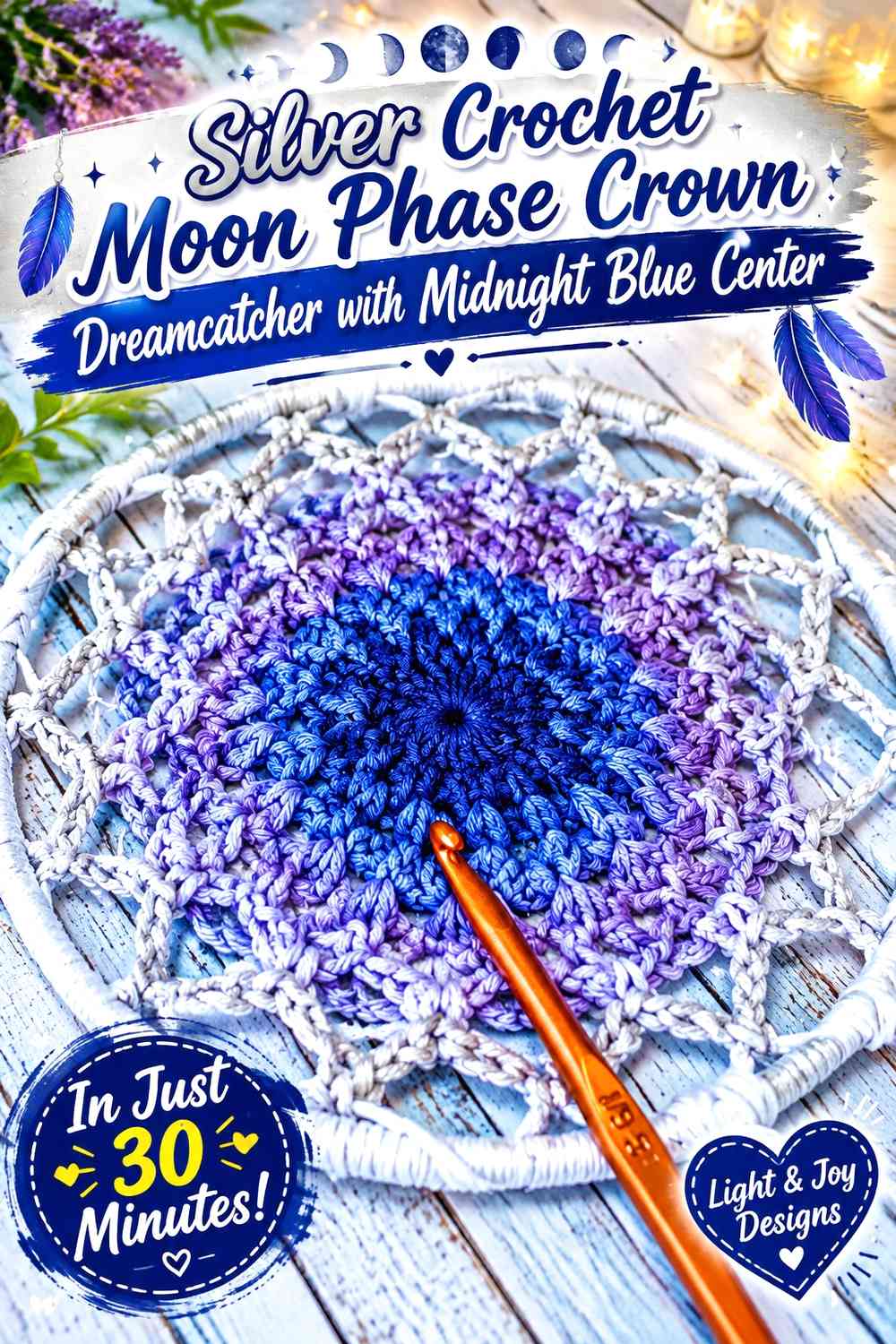
Concentrate the moon phases across the upper half of the hoop in silver and keep the central crochet midnight blue. The upper lunar crown gives the hanging a clear top while leaving the lower portion available for lighter fringe or open space.
Silver Moon Phases Can Form a Crown Above Midnight Blue
Arrange the phases to follow the hoop’s curve rather than placing them in a straight line. Their orientation should reinforce the round frame.
Midnight Blue Should Keep the Silver Crown Visually Grounded
Use blue through the center and lower hoop so the pale upper section does not appear disconnected from the rest of the hanging.
Repeat Silver Sparingly Through Midnight Blue Lower Details
One or two silver lower accents can connect the bottom to the crown without making the design equally busy above and below.
Creator Credit: Light and Joy Designs
6. Midnight Blue Crochet Crescent Dreamcatcher with Silver Star Drops
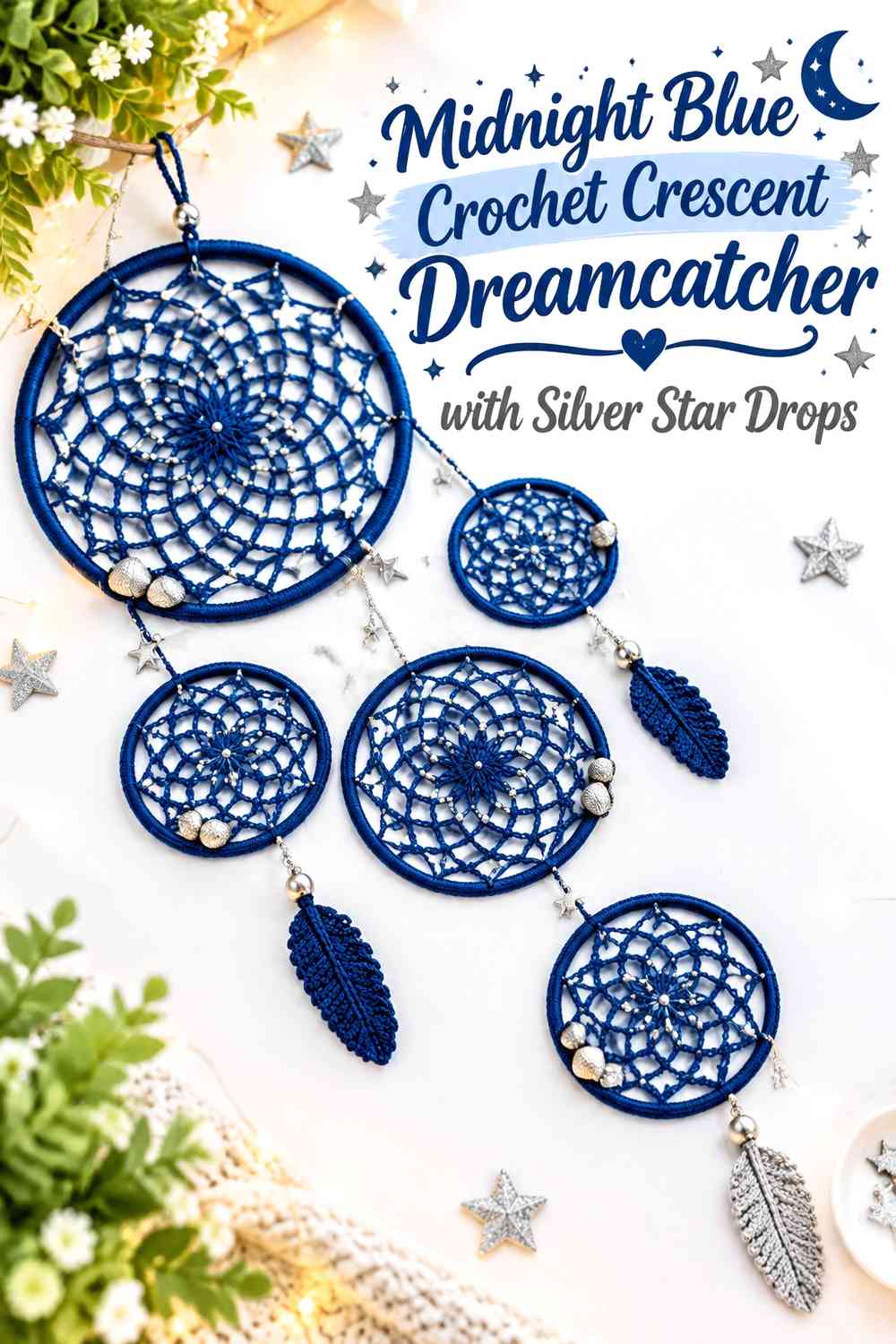
Make a large midnight-blue crescent the main celestial motif and use silver stars along the hanging strands. This simplifies the moon-phase theme into one dominant lunar form supported by smaller night-sky details.
Midnight Blue Crescent Should Stay Larger Than the Silver Stars
The crescent needs enough scale to remain the primary moon element. If the lower silver stars become too large or numerous, the hanging can shift from moon-led to star-led.
Silver Stars Can Lighten the Midnight Blue Lower Strands
Place stars at varied heights instead of creating one straight row. The staggered positions create a more natural celestial cascade.
Repeat Silver Near the Midnight Blue Crescent Carefully
A small silver edge or nearby star can connect the top and bottom, but leave enough blue visible for the crescent silhouette to remain complete.
Creator Credit: Francesca Uncinettando Crochet&Love
7. Silver Crochet Full Moon Dreamcatcher with Midnight Blue Winter Fringe
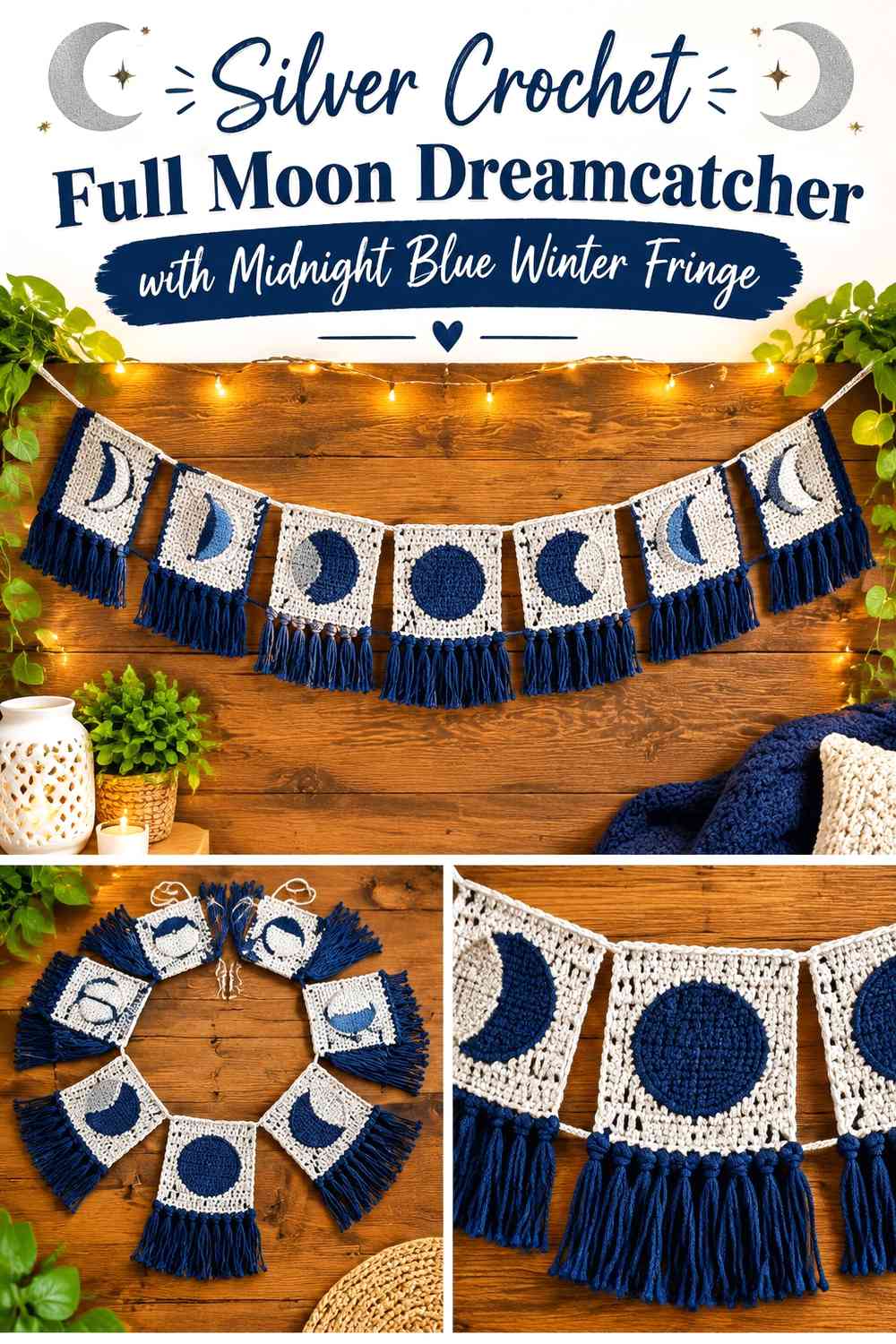
Use a silver full moon or moon-phase center and let midnight blue dominate the fringe beneath it. The color transition from pale circular center to dark hanging strands gives the wall piece a clear top-to-bottom winter-night progression.
Silver Full Moon Should Remain Visible Above Midnight Blue Fringe
Do not let the longest blue strands begin so high that they visually cut into the central moon. Preserve open space around the circle.
Midnight Blue Fringe Can Create a Strong Winter Night Base
Use blue through most of the lower hanging section so the light lunar center remains the brightest area. Different fringe lengths can provide movement without additional colors.
Repeat Silver Inside the Midnight Blue Fringe Selectively
One or two silver strands, crescents, or knots can prevent the lower section from looking completely separate from the moon above.
Creator Credit: Happy Heartsy
8. Midnight Blue Crochet Moon-and-Star Dreamcatcher with Silver Hanging Strands
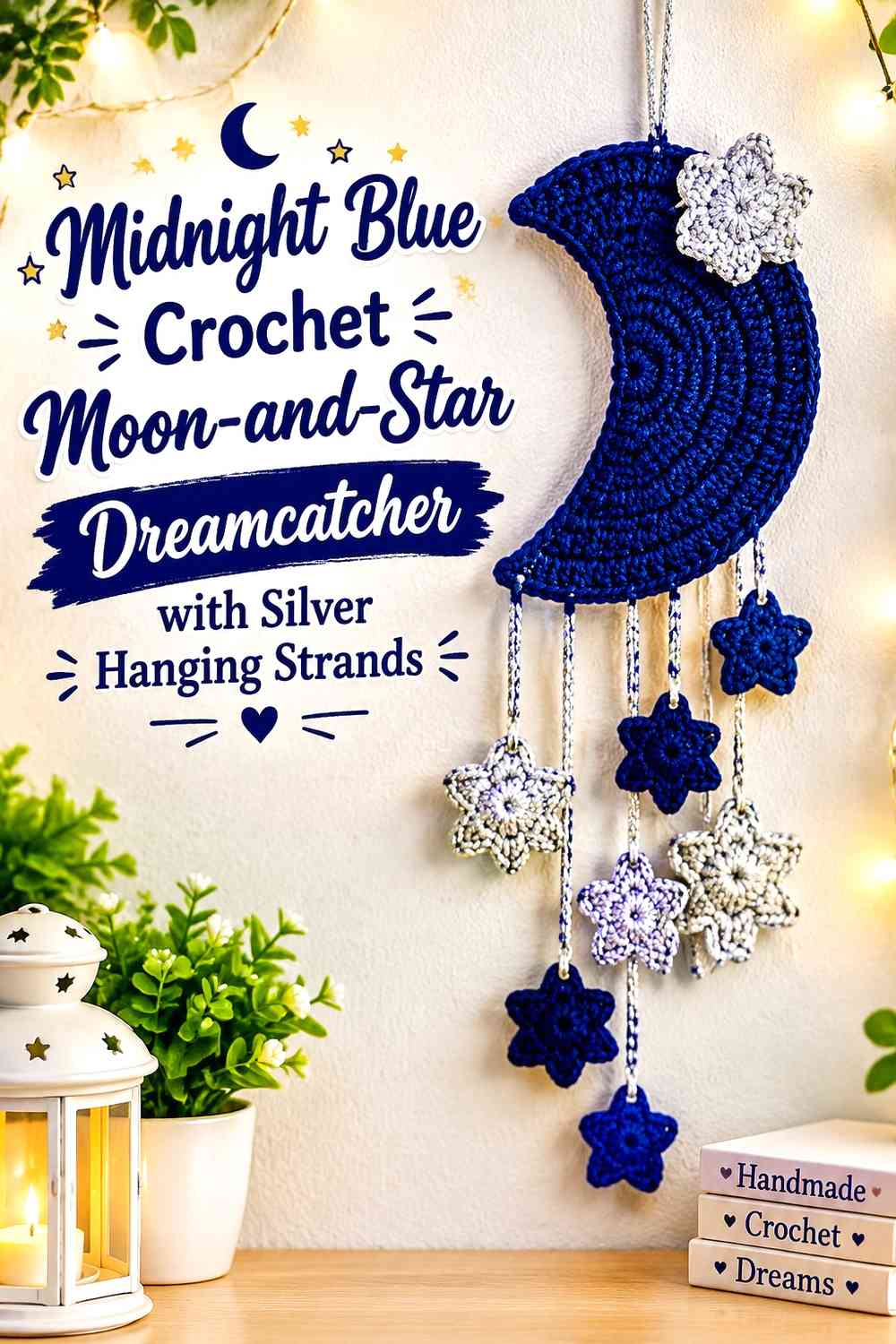
Combine a midnight-blue moon with several blue celestial details inside the hoop, then use silver for selected stars and lower strands. The silver movement below the hoop can keep a dark upper composition from feeling visually heavy.
Midnight Blue Moon Should Anchor the Silver Star Arrangement
Place the strongest moon motif first and distribute silver stars around it rather than filling every empty section. The moon needs enough surrounding space to remain obvious.
Silver Strands Can Extend the Midnight Blue Celestial Scene Downward
Use silver in several lower lines rather than only at the hoop. This distributes the lighter shade vertically and keeps the two-color scheme visible throughout the hanging.
Keep Midnight Blue Between Silver Lower Accents
Alternating every strand can create a rigid striped effect. Groups of blue with selective silver interruptions generally feel more celestial.
Creator Credit: Habijabi Ideas
9. Silver Crochet Celestial Curtain Dreamcatcher with Midnight Blue Moon Phases
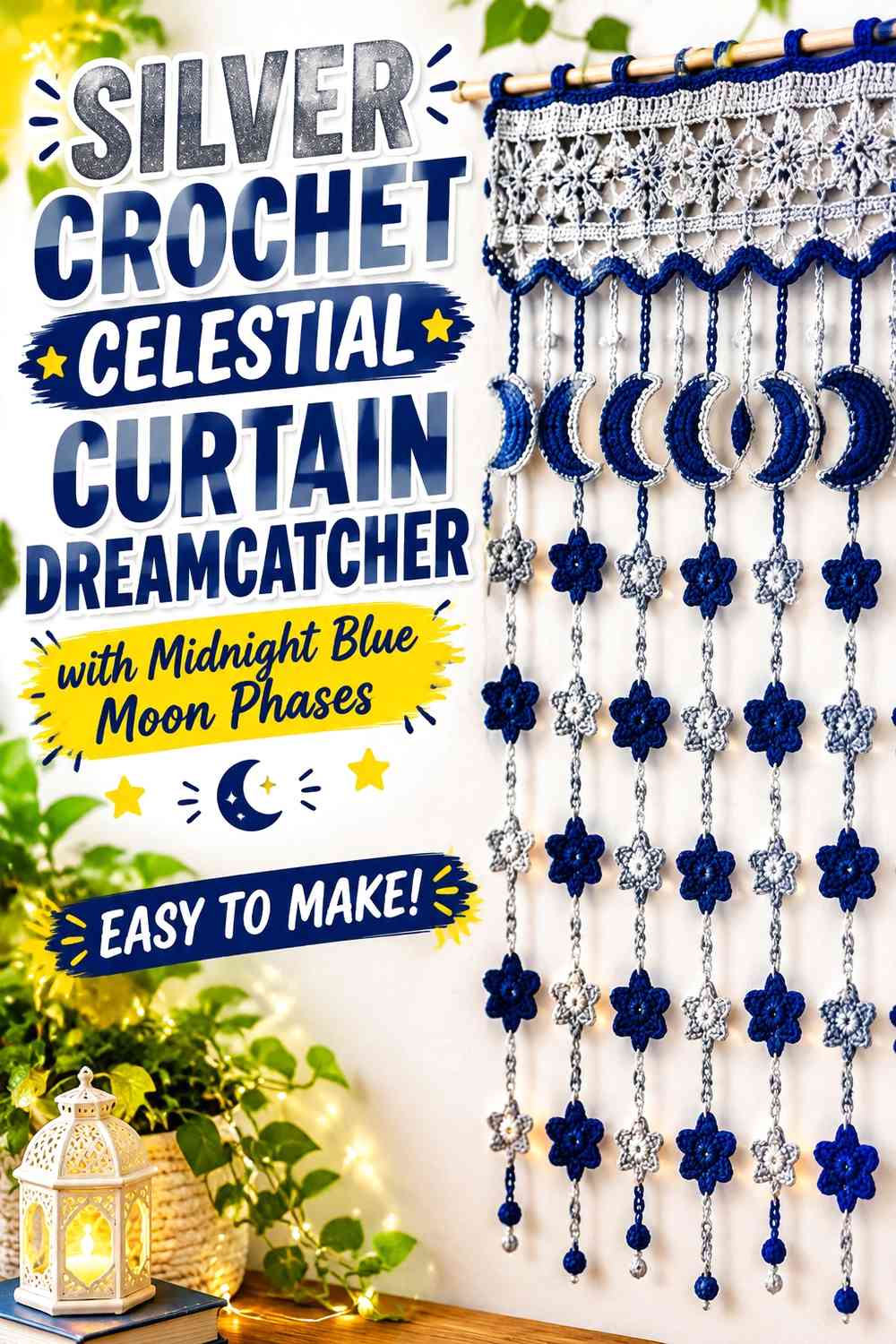
Use multiple suspended strands containing midnight-blue lunar forms and silver stars or connectors. The result expands the dreamcatcher beyond one central motif and makes the moon-phase sequence part of a wider hanging field.
Midnight Blue Moon Phases Need a Clear Order Among Silver Strands
Keep the phases in an understandable sequence even when their heights vary. Random placement can make a lunar cycle look like unrelated moon decorations.
Silver Can Separate Midnight Blue Phases Vertically
Use silver stars or connecting sections between major moon shapes. The lighter details prevent dark motifs on neighboring strands from visually merging.
Keep Silver and Midnight Blue Strand Lengths Uneven but Balanced
Different lengths add movement, but check the whole hanging before final attachment so one side does not carry most of the darkest or longest strands.
Creator Credit: Crochet Anne
10. Midnight Blue Crochet Star-Ring Dreamcatcher with Silver Moon Center
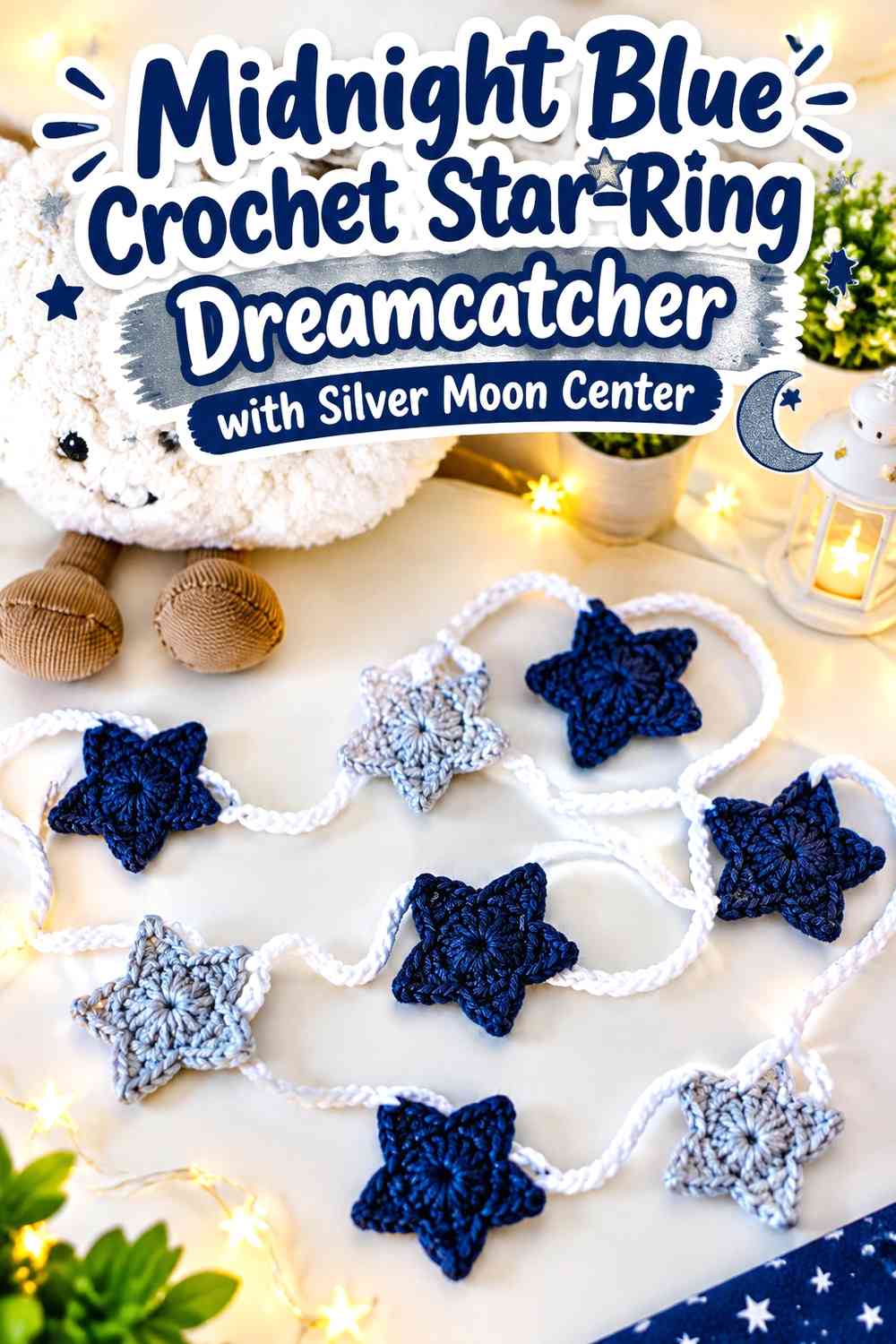
Use midnight-blue stars around the outer section and place a silver moon or full-moon form at the center. This reverses the common silver-star approach and lets blue create the radial frame.
Midnight Blue Stars Can Surround the Silver Moon Without Competing
Keep the stars smaller than the moon and leave visible gaps between their points. The center should remain the first shape the eye recognizes.
Silver Should Stay Broad at the Center of Midnight Blue
A strong uninterrupted silver circle or crescent provides enough contrast to stand against multiple dark motifs.
Repeat Silver Minimally Through the Midnight Blue Star Ring
A small silver hanging strand or lower point can connect the center to the edge without weakening the blue star field.
Creator Credit: cosy kates 🪴
11. Silver Crochet Openwork Dreamcatcher with Midnight Blue Moon Phase Border
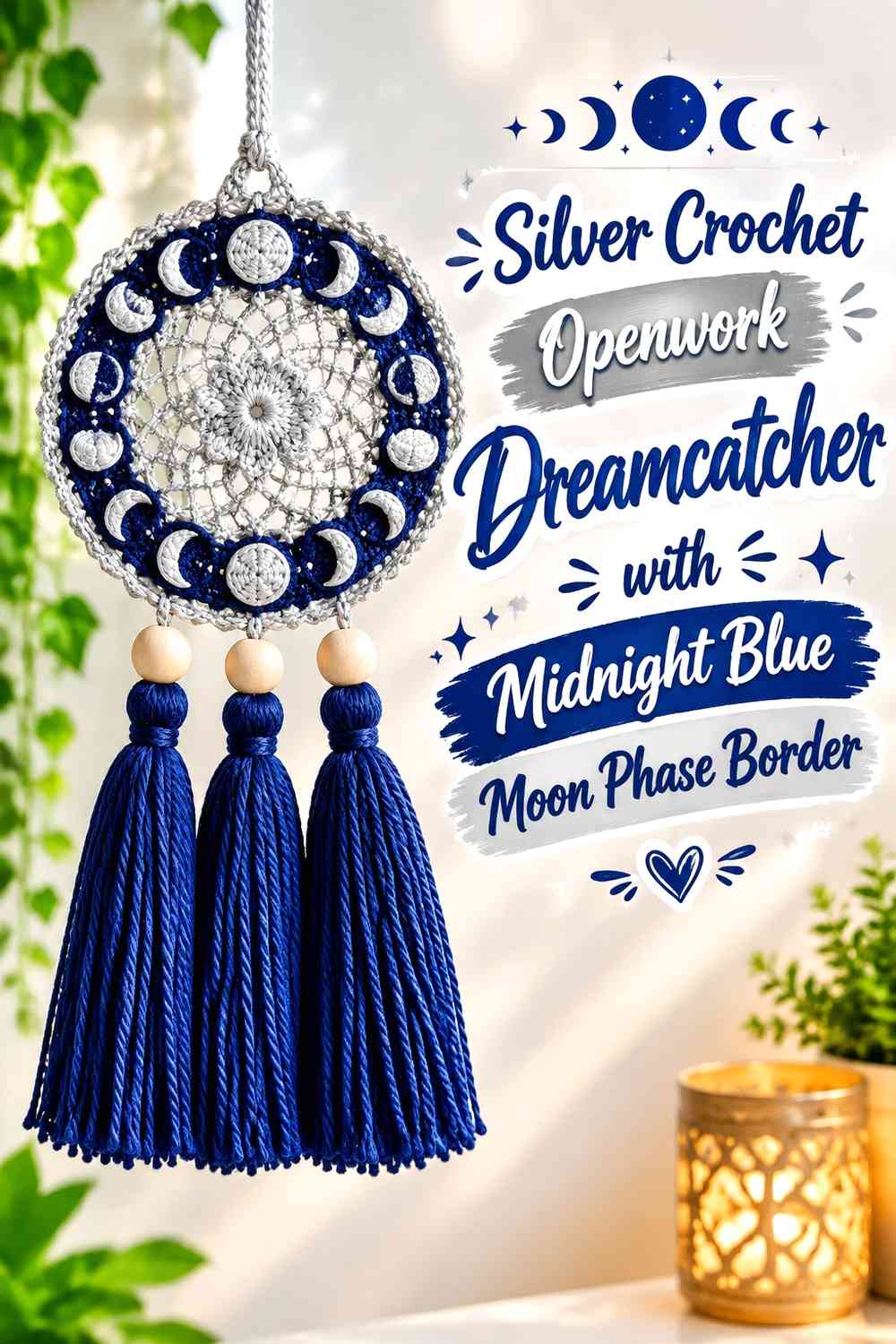
Let silver dominate the openwork center and place midnight-blue moons or phase markers closer to the hoop. This creates a lighter dreamcatcher overall while retaining a dark lunar sequence around the edge.
Silver Openwork Should Stay Clear Behind Midnight Blue Phases
Use broad silver areas or open radial sections so the center does not compete with each blue moon shape.
Midnight Blue Can Give the Silver Dreamcatcher a Strong Lunar Border
Place the darker phase motifs at deliberate positions around the hoop. Their deeper color can define the circumference even when the silver center is very open.
Keep Silver Visible Between Midnight Blue Phase Motifs
Avoid filling the entire perimeter with touching blue shapes. Silver gaps preserve the sequence and prevent the edge from becoming one dark ring.
Creator Credit: Sweet Softies
12. Midnight Blue Crochet Moon Phase Dreamcatcher with Silver Granny Stars
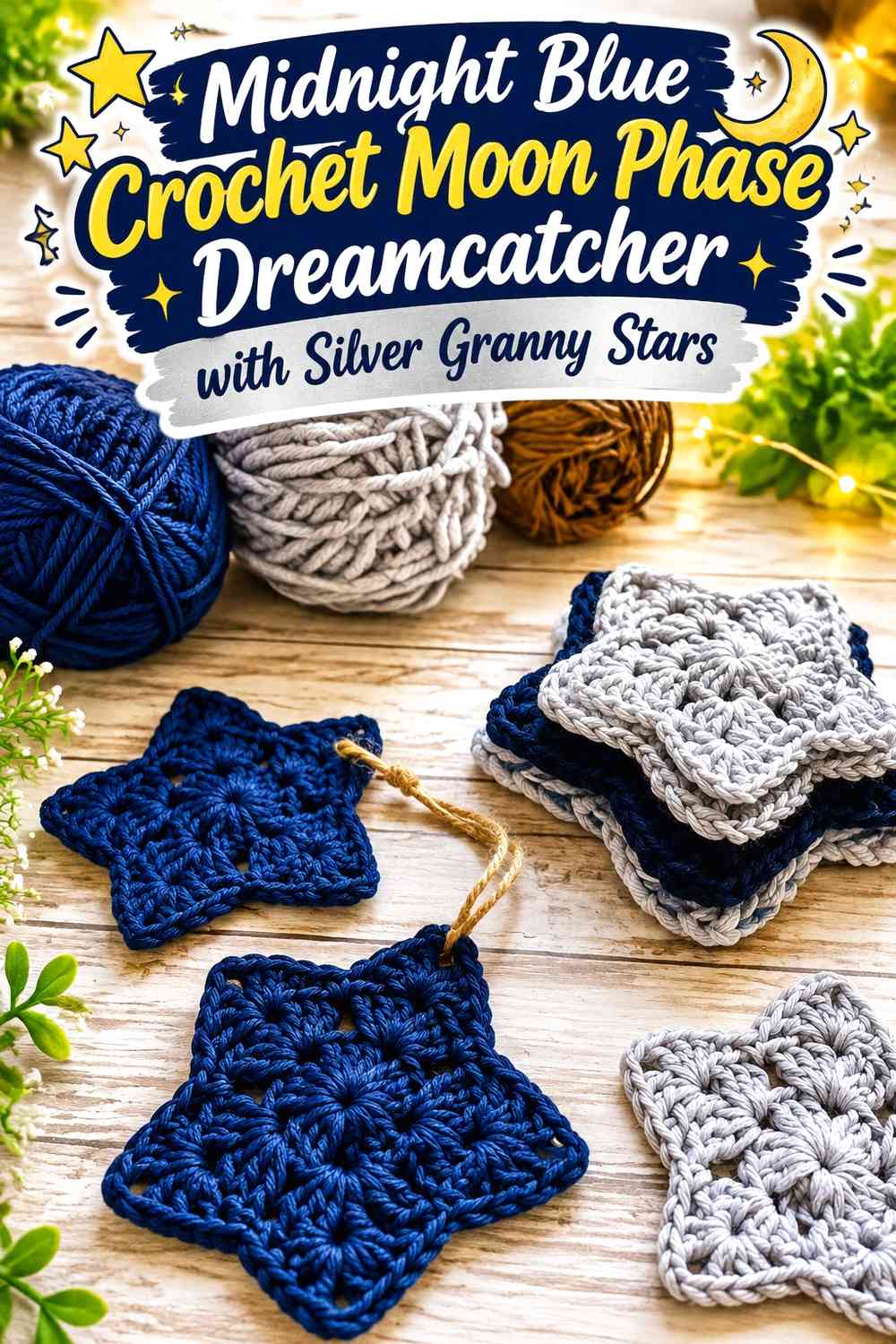
Use midnight blue for the hoop, moons, and main hanging strands, then add clearly shaped silver granny-style stars as secondary motifs. Their broader points can remain visible more easily than extremely tiny star appliqués.
Silver Granny Stars Need Space Around Midnight Blue Moon Phases
Position the stars between or below major lunar elements rather than directly over the phase sequence. Both motif types need distinct silhouettes.
Midnight Blue Should Remain the Main Field Behind Silver Stars
Use blue across the larger hoop and connecting areas so silver does not become the dominant color simply because the stars have broad surfaces.
Repeat Silver Granny Stars Unevenly Across Midnight Blue Strands
A few different heights can create movement while avoiding a rigid row of identical stars beneath the hoop.
Creator Credit: Mary Matthews Handmade
13. Midnight Blue Crochet Multi-Hoop Dreamcatcher with Silver Moon Phase Centers
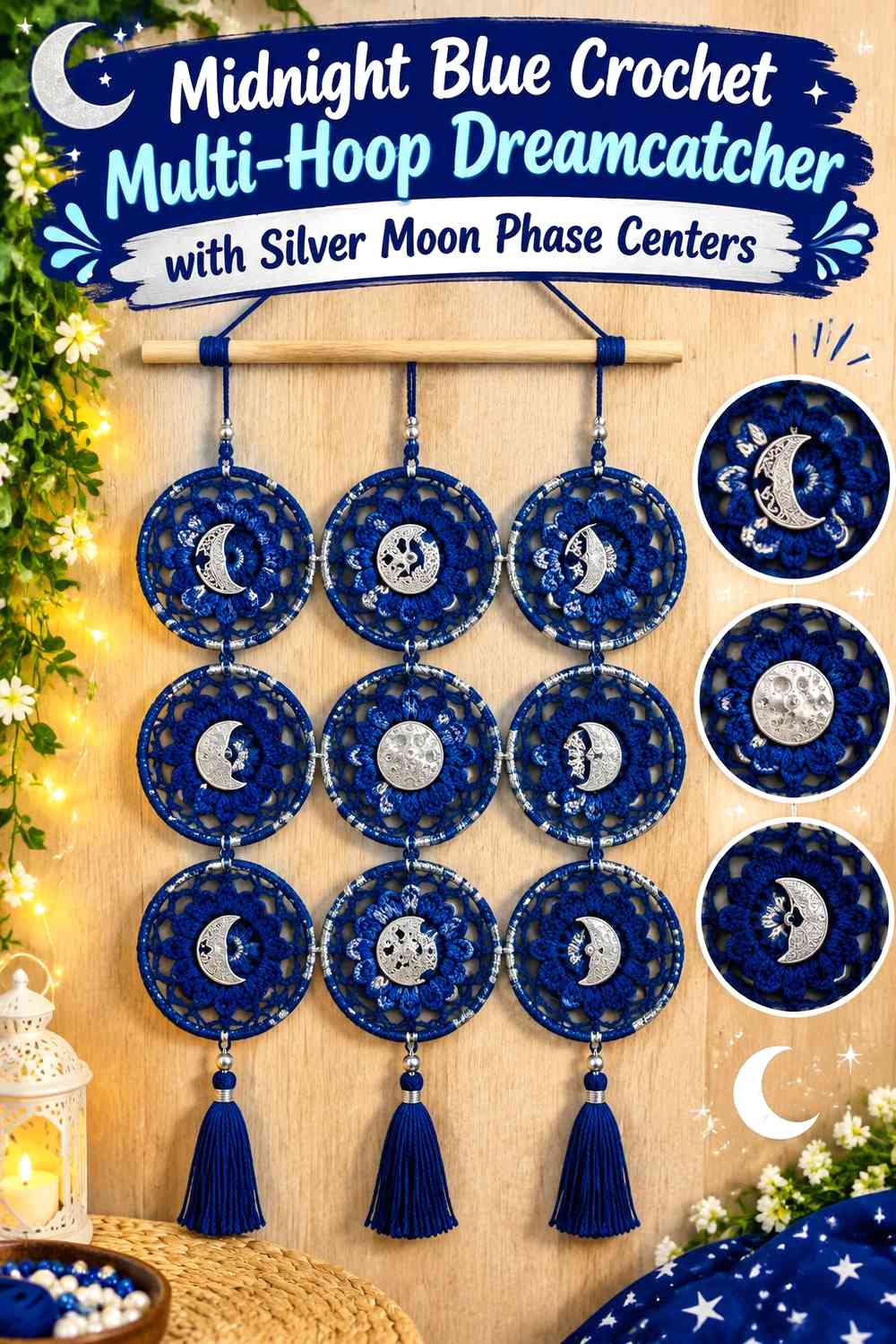
Use several smaller hoops rather than one large circle, keeping their outer areas midnight blue and changing the silver center to represent different lunar phases. The grouped format makes each phase its own framed unit.
Midnight Blue Hoops Can Unite Several Silver Moon Phases
Use the same blue treatment around each ring so the separate circles feel like one coordinated wall hanging rather than independent ornaments.
Silver Centers Should Change Clearly Inside Midnight Blue
Let one hoop contain a broad full-moon field while others reduce the silver area into halves or crescents. The phase difference should be visible before decorative details are added.
Space Midnight Blue and Silver Hoops Before Permanent Joining
Lay the entire group out first and compare the gaps. Equal spacing is not mandatory, but the collection should have a deliberate visual rhythm.
Creator Credit: The Crochet Swirl
14. Balanced Midnight Blue and Silver Crochet Full-Cycle Moon Phase Dreamcatcher
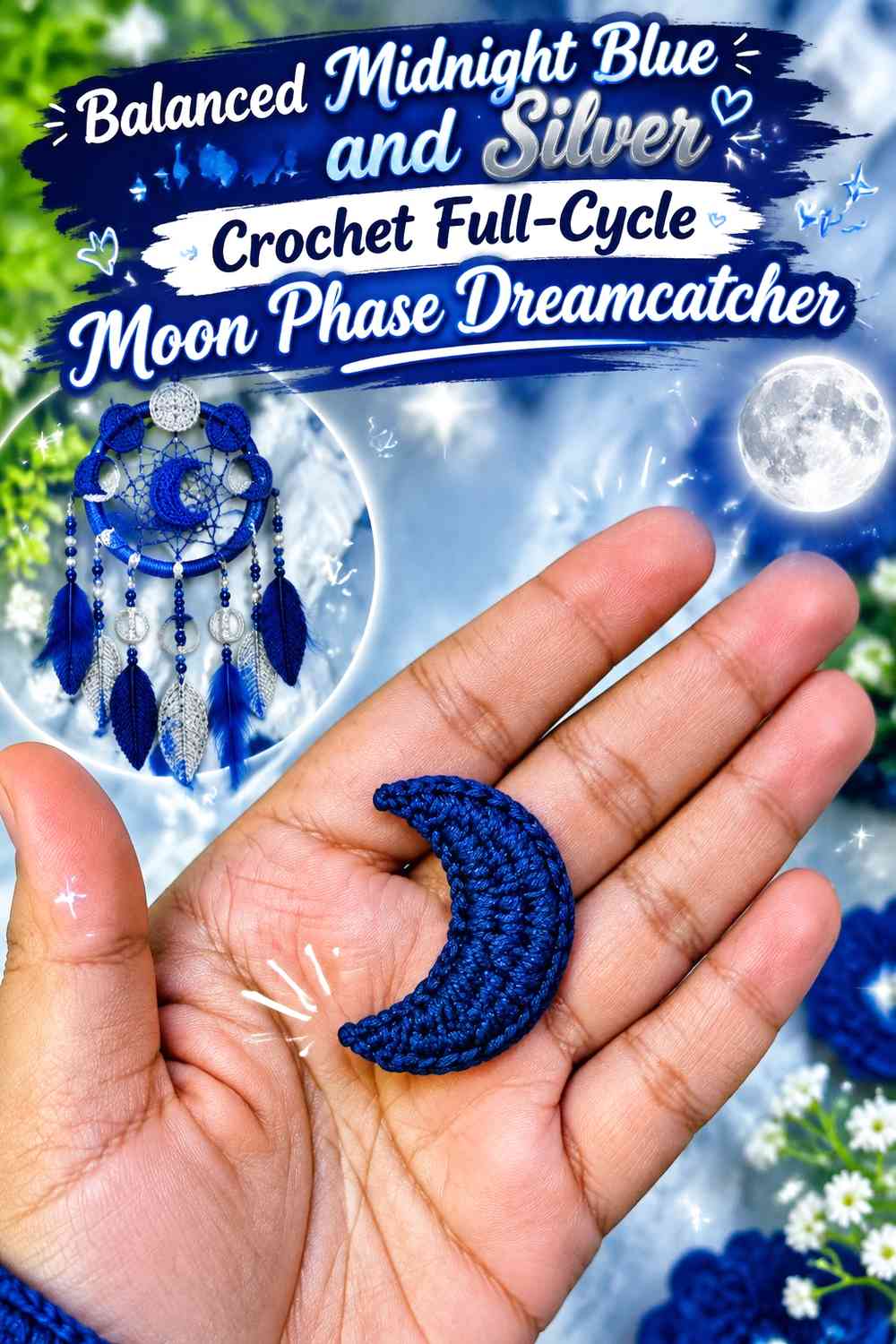
Create a complete lunar-cycle arrangement in which midnight blue and silver both occupy substantial roles. Silver can increase toward the full moon and decrease toward the crescents while midnight blue does the reverse, giving the color balance a reason tied directly to the phases.
Silver Should Increase Gradually Across Midnight Blue Moon Phases
Make the progression readable from one phase to the next. The full moon can carry the largest silver area while nearby phases retain increasing amounts of midnight blue.
Midnight Blue Should Return Gradually After the Silver Full Moon
Continue the sequence instead of ending immediately at the brightest phase. Reversing the color proportions helps communicate a complete cycle rather than a collection of unrelated crescents.
Keep Midnight Blue and Silver Fringe Simpler Than the Full-Cycle Hoop
The moon phases already provide the primary pattern. Use mostly solid-color lower strands, perhaps with one or two contrasting accents, rather than recreating the whole phase sequence in the fringe.
Creator Credit: Creggy’s Crochet
Which Midnight Blue and Silver Moon Phase Dreamcatcher Direction Should You Choose?
Choose a midnight-blue-dominant dreamcatcher when you want a deeper winter-night appearance. Blue hoops, mandalas, crescents, and long strands create a strong dark structure while silver works well for full moons, stars, and selected phase highlights.
Choose a silver-dominant dreamcatcher when you want the wall hanging to feel lighter and more lunar. A silver mandala or full moon can lead the center while midnight-blue moons, outer rings, or fringe provide enough darkness to define the shape.
For the clearest moon-phase theme, let color proportions change with the lunar sequence: less silver at the narrow crescents, more through the intermediate phases, and the broadest silver area at the full moon. That approach makes the palette part of the concept rather than simply alternating blue and silver for decoration.
Conclusion
Midnight blue and silver can give a crochet winter moon phase dreamcatcher strong celestial contrast while keeping the palette controlled. Midnight blue works naturally across hoops, night-sky fields, darker crescents, tassels, and connecting strands, while silver can define the moon phases, stars, openwork highlights, and focal center.
For a simple design, choose one midnight-blue hoop with a silver lunar arc or one large silver full moon surrounded by blue. For a more detailed wall hanging, use several phases, staggered celestial strands, stars, or multiple small hoops. The strongest versions keep enough negative space around the moons for the sequence to remain readable.
Use the credited tutorials for the dreamcatcher-style hoop, mandala, moon, moon-phase garland, or star constructions each creator actually demonstrates. Plan the full lunar arrangement and midnight-blue/silver distribution separately before permanently attaching motifs and hanging strands.
Frequently Asked Questions
Should Midnight Blue or Silver Dominate a Winter Moon Phase Dreamcatcher?
Midnight blue works well as the dominant shade when you want a strong night-sky effect. Silver is better as the main color when you want the moons and openwork center to feel brighter, with blue used mainly around the hoop and lower strands.
Where Should Silver Go on a Midnight Blue Moon Phase Dreamcatcher?
Useful placements include the full moon, illuminated sections of the other phases, stars, outer edging, selected strands, and small lower celestial motifs. Concentrating silver in complete shapes usually gives better definition than scattering it through tiny stitches.
How Can I Make Silver Moon Phases Stand Out Against Midnight Blue?
Leave enough midnight-blue space between the phases and use broad silver lunar areas. If the actual yarns are close in value, enlarge the moon shapes or keep the surrounding blue simpler instead of relying on a fine silver outline.
Should the Full Moon Be Silver on a Midnight Blue Dreamcatcher?
It is a particularly clear option because the full moon can become the brightest point in the phase sequence. You can then decrease the visible silver through the neighboring phases to create an intuitive lunar progression.
Can Midnight Blue and Silver Stars Be Mixed with Moon Phases?
Yes. Keep stars smaller or less numerous than the lunar motifs so they remain supporting elements. Placing stars along the lower strands or in the spaces between moon phases can preserve the hierarchy.
How Should Midnight Blue and Silver Be Distributed in the Fringe?
Use larger groups of one color rather than alternating every strand mechanically. Midnight-blue fringe with several silver accents creates a dark lower section, while silver strands beneath a blue hoop make the hanging lighter and more vertical.
Can a Mandala or Crescent Tutorial Be Adapted into a Moon Phase Dreamcatcher?
Yes, but the source only supports the construction it actually teaches. A mandala tutorial can provide the hoop center, and a crescent tutorial can provide an individual lunar motif; arranging several phases, choosing their order, and integrating them into the complete midnight-blue and silver wall hanging are separate design decisions.