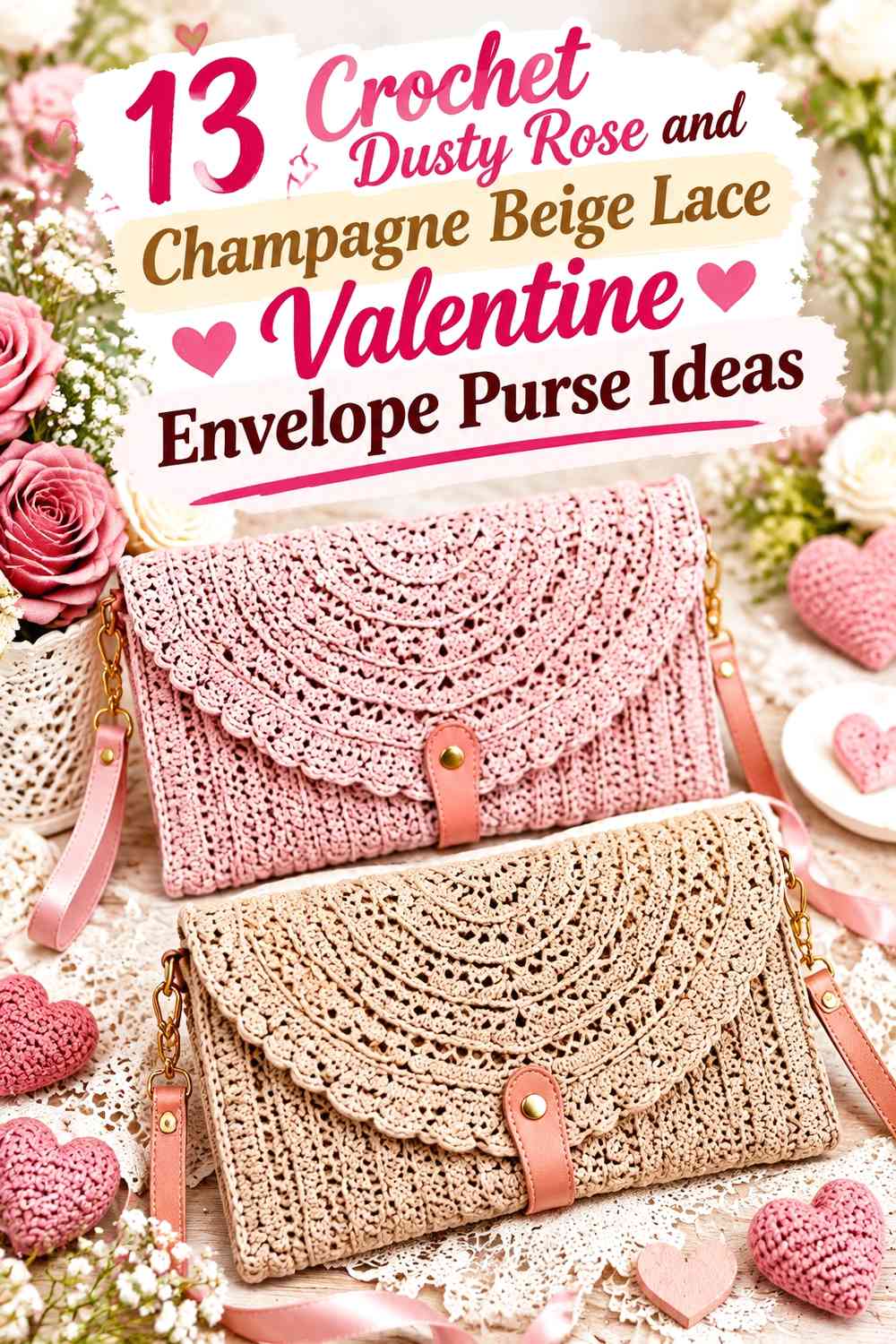

Dusty rose and champagne beige can give a crochet Valentine envelope purse a romantic palette without relying on bright red or high-contrast white. Dusty rose supplies the stronger floral-pink note, while champagne beige can soften the purse body, define lace, frame a heart motif, or provide a quieter background behind the envelope flap.
The envelope shape makes color placement especially important because the flap occupies so much of the visible front. A champagne beige lace flap over a dusty rose body creates a different focal point from a dusty rose flap over a beige body. Openwork introduces another decision: whatever sits behind the lace becomes part of the palette, whether that is the purse body, a lining, or the contents visible through larger openings.
These 13 ideas use different dominant-color roles, lace placements, Valentine heart accents, edging treatments, closures, straps, and tonal relationships while keeping dusty rose and champagne beige at the center of the design.
Quick List
- Dusty Rose Body and Champagne Beige Lace Crochet Valentine Envelope Purse
- Champagne Beige Body and Dusty Rose Lace Crochet Valentine Envelope Purse
- Dusty Rose and Champagne Beige Heart Crochet Valentine Lace Envelope Purse
- Champagne Beige and Dusty Rose Heart-Center Crochet Valentine Lace Envelope Purse
- Dusty Rose Lace Overlay and Champagne Beige Crochet Valentine Envelope Purse
- Champagne Beige Body and Dusty Rose Edged Crochet Valentine Lace Envelope Purse
- Dusty Rose Scalloped-Flap and Champagne Beige Crochet Valentine Lace Envelope Purse
- Champagne Beige Pointed-Flap and Dusty Rose Border Crochet Valentine Lace Envelope Purse
- Dusty Rose and Champagne Beige Striped Crochet Valentine Lace Envelope Purse
- Champagne Beige and Dusty Rose Heart-Strap Crochet Valentine Lace Envelope Purse
- Dusty Rose and Champagne Beige Bow-Accent Crochet Valentine Lace Envelope Purse
- Tonal Dusty Rose and Champagne Beige Trim Crochet Valentine Lace Envelope Purse
- Balanced Dusty Rose and Champagne Beige Crochet Valentine Lace Envelope Purse
Decide Whether Dusty Rose or Champagne Beige Should Lead the Envelope Purse
Start by choosing the color that should occupy the largest uninterrupted area. A dusty rose body makes the whole purse read pink even when the flap is champagne beige. Reversing the arrangement creates a lighter neutral purse with a more concentrated pink Valentine accent.
The flap is not a minor detail. When closed, it can cover much of the front panel, so a contrasting flap may appear almost as important as the body color. Test the colors in the folded position rather than judging only a flat crocheted panel.
Use Champagne Beige and Dusty Rose Contrast to Protect Lace Visibility
Lace depends on negative space as much as yarn color. If dusty rose lace sits directly over a similarly valued beige surface, the openings may be visible only at close range. Stronger light/dark separation makes the lace structure easier to recognize.
Before committing to a large openwork flap, place the intended backing or lining behind a sample. That shows whether champagne beige should remain behind dusty rose lace, whether the colors should be reversed, or whether a slightly lighter or darker version of one shade would improve definition.
Coordinate Dusty Rose Hearts and Champagne Beige Closures With the Envelope Flap
A Valentine heart, button loop, bow, or closure sits near the natural focal point of an envelope purse. Treat those details as part of the palette hierarchy rather than adding another color automatically.
If dusty rose already dominates the body, champagne beige can define the closure without adding more pink. On a champagne-heavy purse, a small dusty rose heart or button area can repeat the accent color without needing a wide pink border.
1. Dusty Rose Body and Champagne Beige Lace Crochet Valentine Envelope Purse
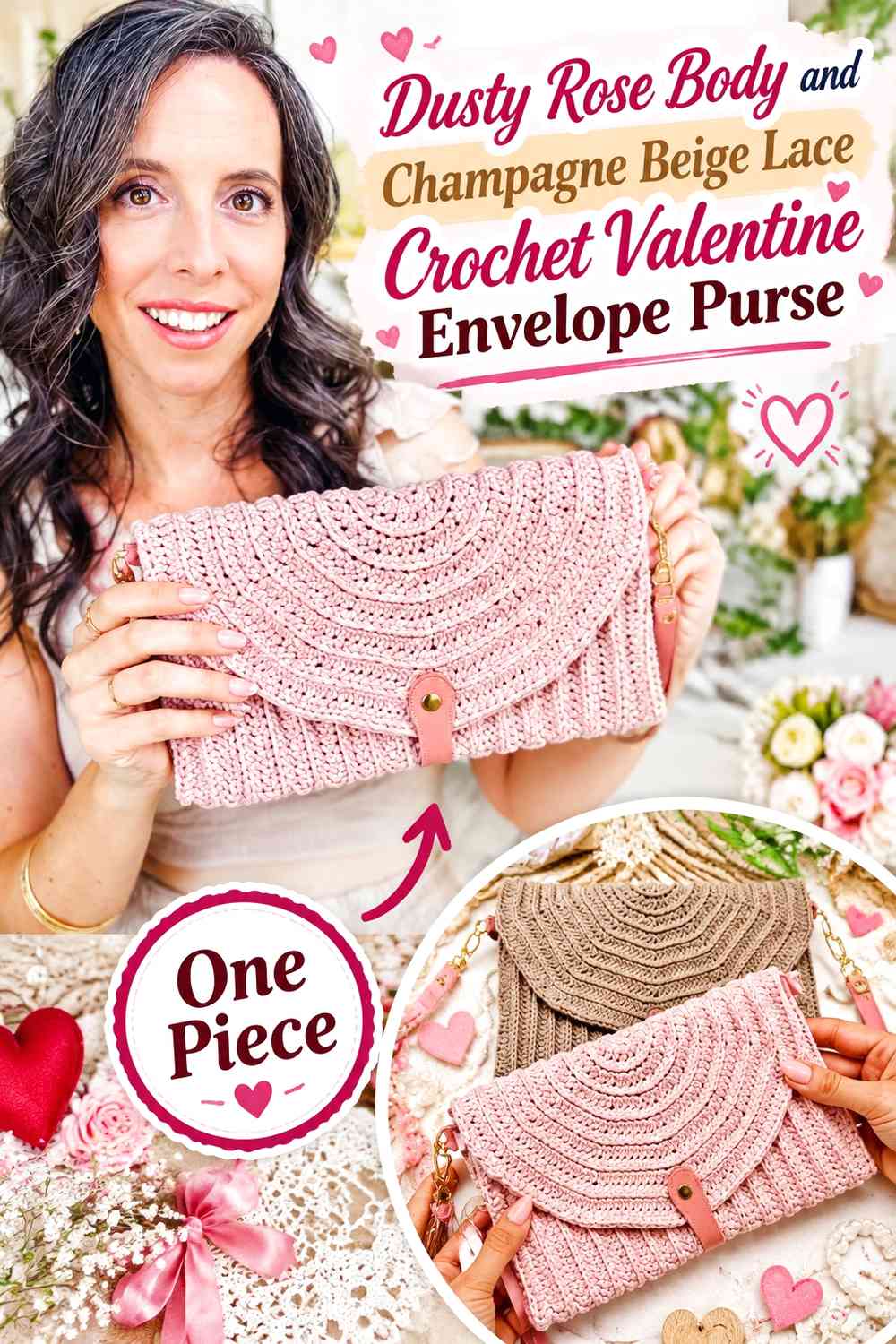
Let dusty rose cover the main purse body while champagne beige forms the visible lace flap. This gives the pink shade the largest area but keeps the envelope point lighter and more detailed. Because the flap overlaps the dusty rose front, the body itself becomes the background seen through any open lace sections.
Champagne Beige Lace Should Reveal Enough Dusty Rose Under the Flap
Openwork is most useful here when enough dusty rose remains visible through it to show the pattern. If the champagne beige stitches are extremely dense, the flap may read simply as a solid neutral triangle rather than a lace feature.
View the closed purse from normal carrying distance before deciding whether the beige section needs more visual openness.
Dusty Rose Should Continue Beyond the Champagne Beige Flap
Keep a visible dusty rose border around or below the closed flap so the dominant color does not disappear when the purse is shut. This maintains the pink-led Valentine direction instead of allowing the neutral flap to take over the whole front.
A dusty rose strap or small closure detail can reinforce that continuity without adding another color.
Creator Credit: Briana K
2. Champagne Beige Body and Dusty Rose Lace Crochet Valentine Envelope Purse
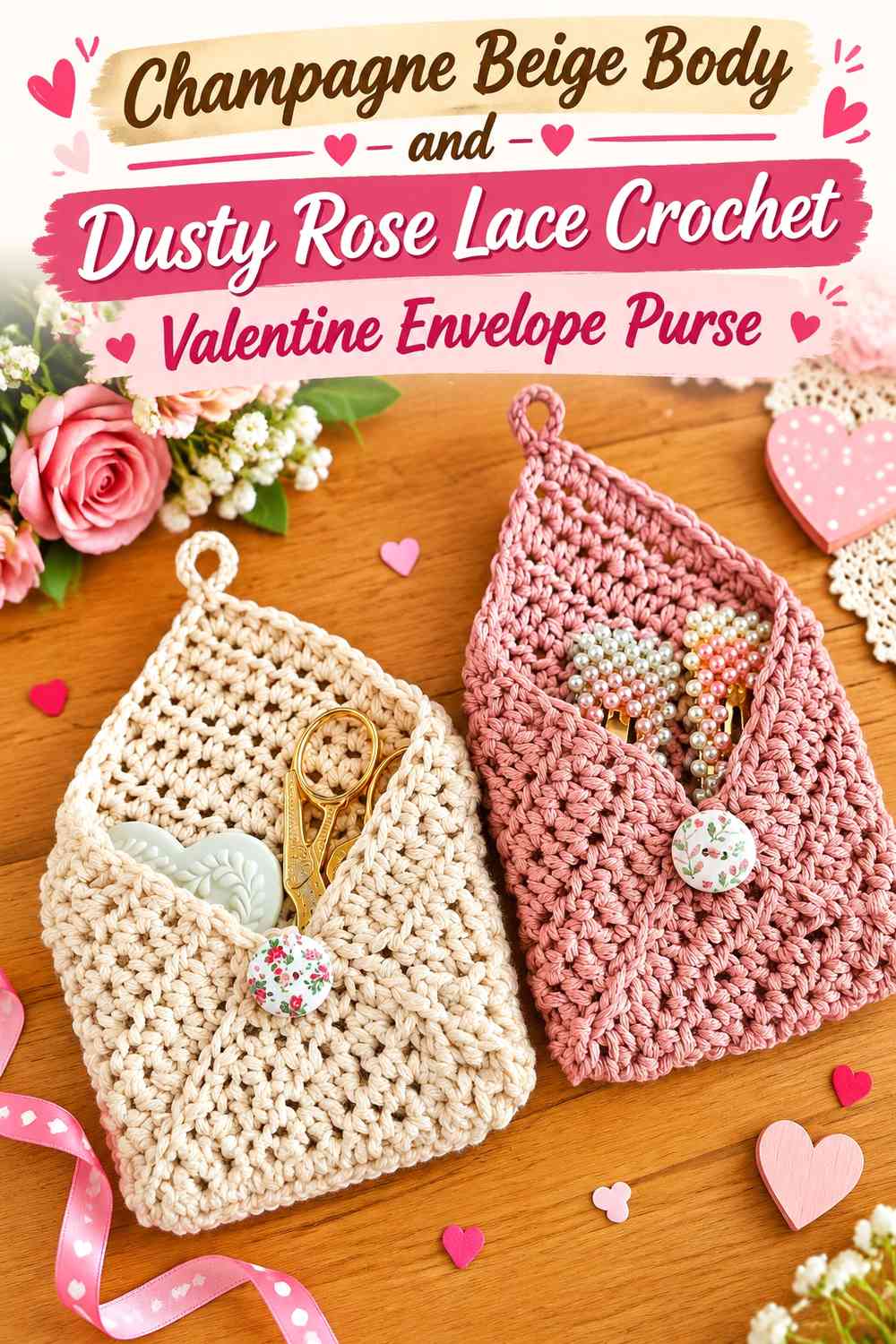
Reverse the first palette by allowing champagne beige to cover the purse body and dusty rose to form the decorative flap. The result puts pink exactly where the eye naturally follows the envelope point, making a smaller amount of dusty rose feel more prominent.
Dusty Rose Lace Can Become the Main Feature Against Champagne Beige
A pink lace flap has enough decorative information on its own, so the beige body can remain comparatively quiet. Avoid distributing unrelated pink motifs across every open area if the flap is intended to carry the Valentine identity.
The champagne background underneath the openwork also helps repeat the main body color inside the pink section.
Champagne Beige Should Remain Visible Around the Dusty Rose Flap
A flap that nearly covers the complete front can make the purse look predominantly dusty rose despite the beige body. If you want champagne to remain dominant, keep some beige clearly visible beneath the point and along the sides.
This color checkpoint is easier to make after folding the developing purse into its final envelope shape.
Creator Credit: Selina Veronique Crochet
3. Dusty Rose and Champagne Beige Heart Crochet Valentine Lace Envelope Purse
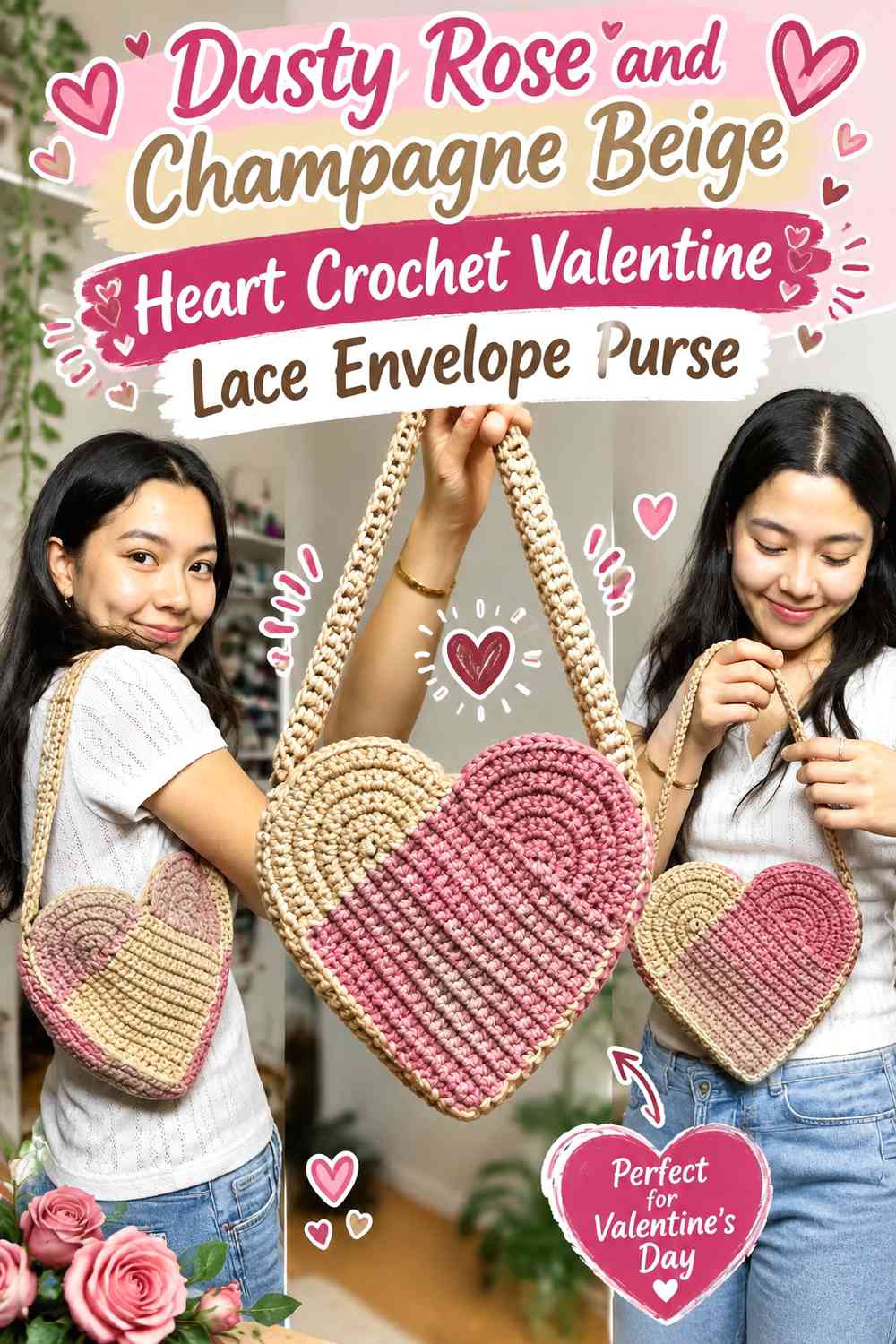
Use dusty rose for the envelope body and place a champagne beige heart at or near the flap point. Lace can surround the heart or appear as a smaller section along the edge, allowing the Valentine motif to remain the clearest decorative shape.
Champagne Beige Gives the Dusty Rose Valentine Heart Area a Softer Contrast
A beige heart against dusty rose creates less dramatic separation than bright white but can still define the shape when the values differ enough. Check the heart against the completed pink surface rather than relying on the yarns in their skeins.
If the shape disappears, adjust the lightness of the beige before enlarging the heart or adding another outline color.
Dusty Rose Should Frame the Champagne Beige Heart Clearly
Leave enough uninterrupted dusty rose around the heart for its outline to remain recognizable. Placing the heart directly beside complicated lace, several borders, and prominent hardware can reduce its visual impact.
A simpler pink area surrounding the beige motif gives the Valentine detail more room to work.
Creator Credit: VivCrochets
4. Champagne Beige and Dusty Rose Heart-Center Crochet Valentine Lace Envelope Purse
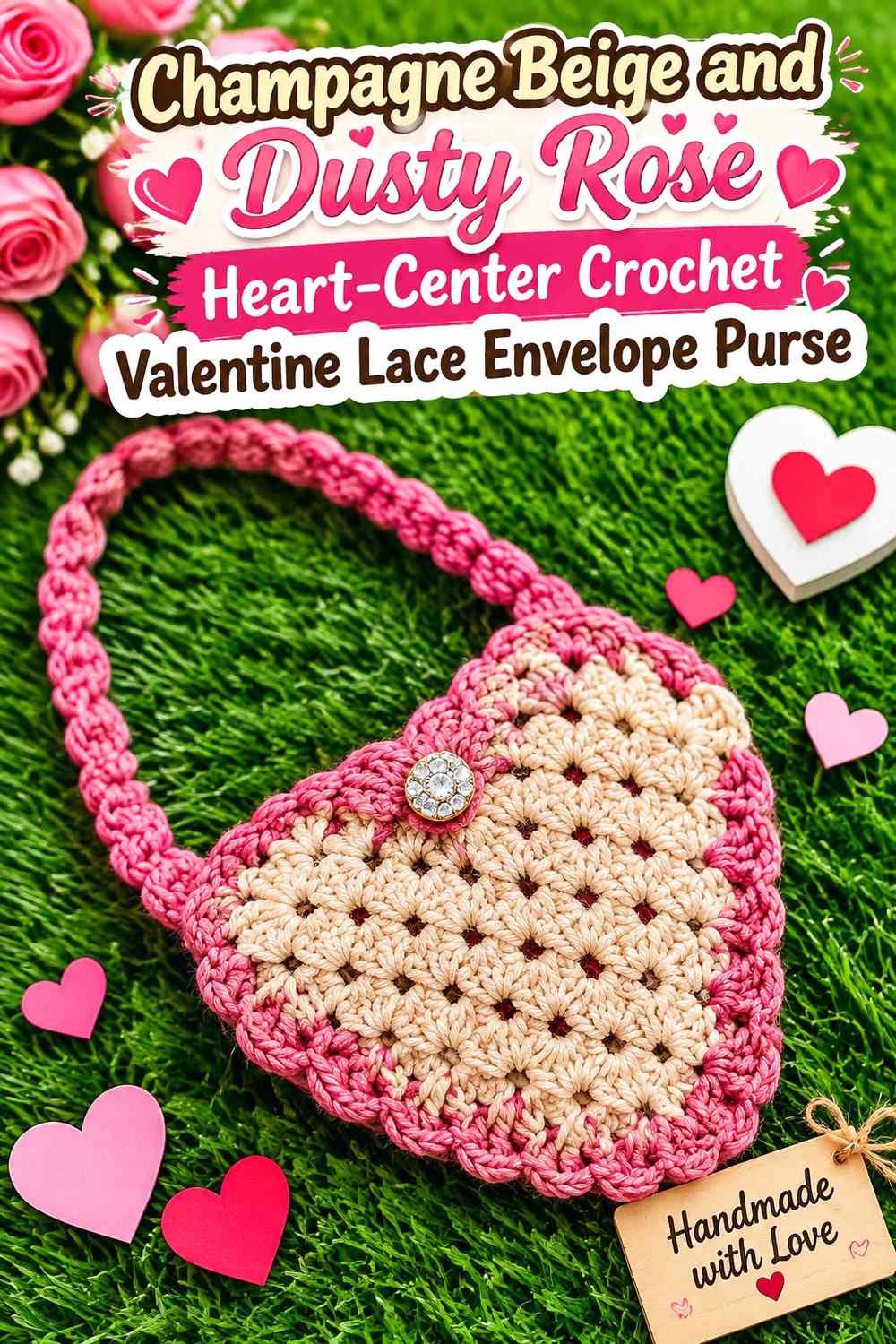
Make champagne beige the larger purse and lace color, then concentrate dusty rose in a heart at the front closure area. This produces one of the most neutral-heavy palettes in the collection while still giving the Valentine theme an unmistakable pink focal point.
Dusty Rose Can Anchor a Champagne Beige Envelope Flap
A heart near the point of the flap naturally reinforces the direction of the envelope shape. Because the pink area is relatively small, it can be the most saturated part of the palette without overwhelming the beige body.
Avoid repeating equally strong dusty rose details in several unrelated positions if the heart is intended to remain the focal point.
Champagne Beige Lace Needs Space Around the Dusty Rose Heart
Keep the immediate area around the pink motif readable. Dense decorative texture, several openwork patterns, and a heart all competing in one small flap can make the front harder to interpret.
Let the beige lace supply texture while the dusty rose heart supplies the concentrated color contrast.
Creator Credit: CrochetHook
5. Dusty Rose Lace Overlay and Champagne Beige Crochet Valentine Envelope Purse
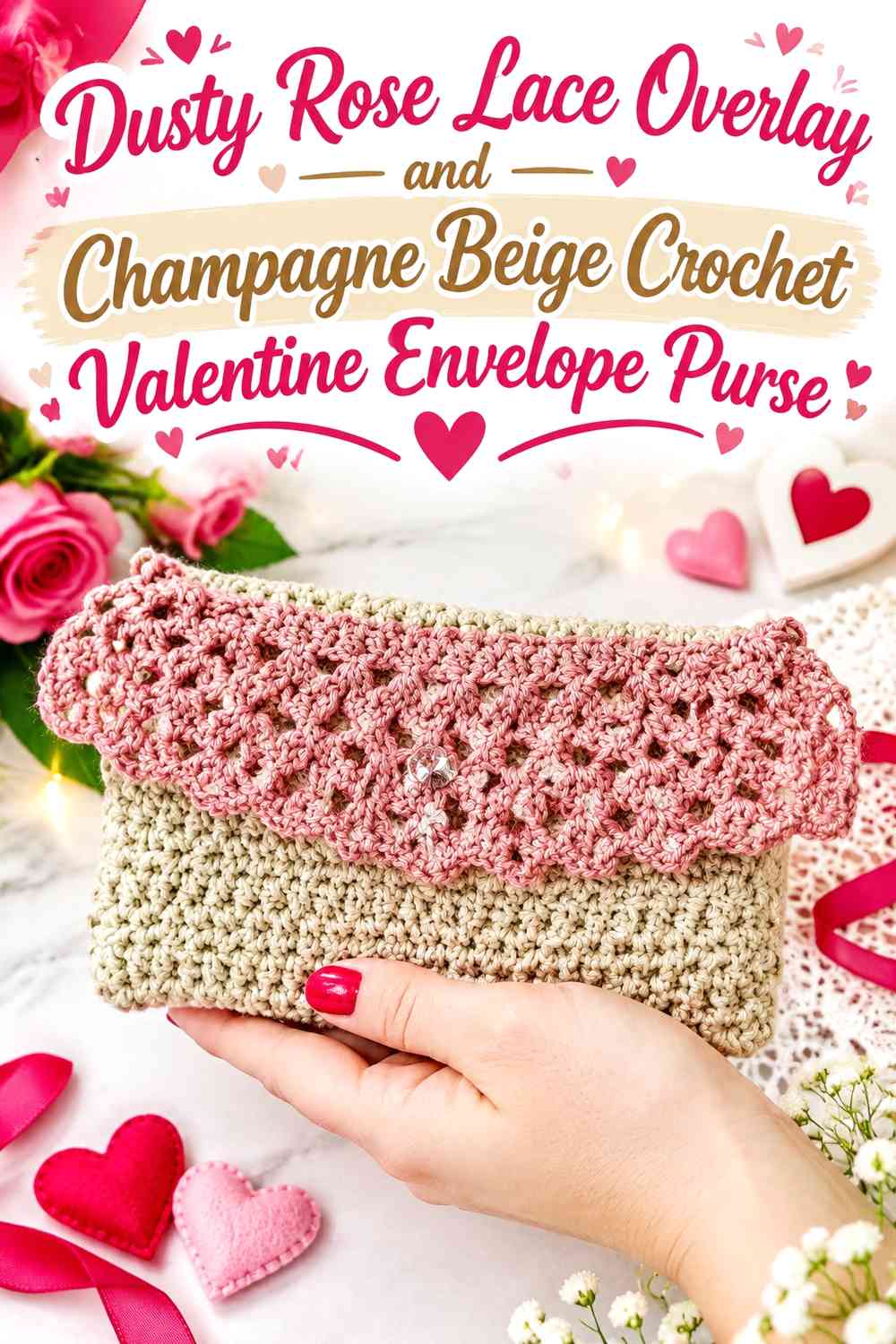
In this version, champagne beige sits beneath a dusty rose lace layer so the neutral color becomes visible through the openings. The overlay idea gives both colors a role in the same part of the purse rather than separating them into a pink body and beige flap.
Dusty Rose Lace Should Contrast With the Champagne Beige Layer Beneath It
Test the exact two yarn colors together before committing to the overlay. If dusty rose and champagne beige are too close in value, the pattern may lose definition and read as one blended surface.
A slightly deeper dusty rose can strengthen the lace without changing the basic muted palette.
Champagne Beige Should Show Through the Dusty Rose Openwork Consistently
Uneven backing placement can make some parts of the lace look strongly contrasted while other sections visually disappear. Check how the beige sits behind the openwork across the entire visible flap or front panel.
If a fabric lining is involved, its visible color becomes part of this decision too.
Creator Credit: Fiber Flux
6. Champagne Beige Body and Dusty Rose Edged Crochet Valentine Lace Envelope Purse
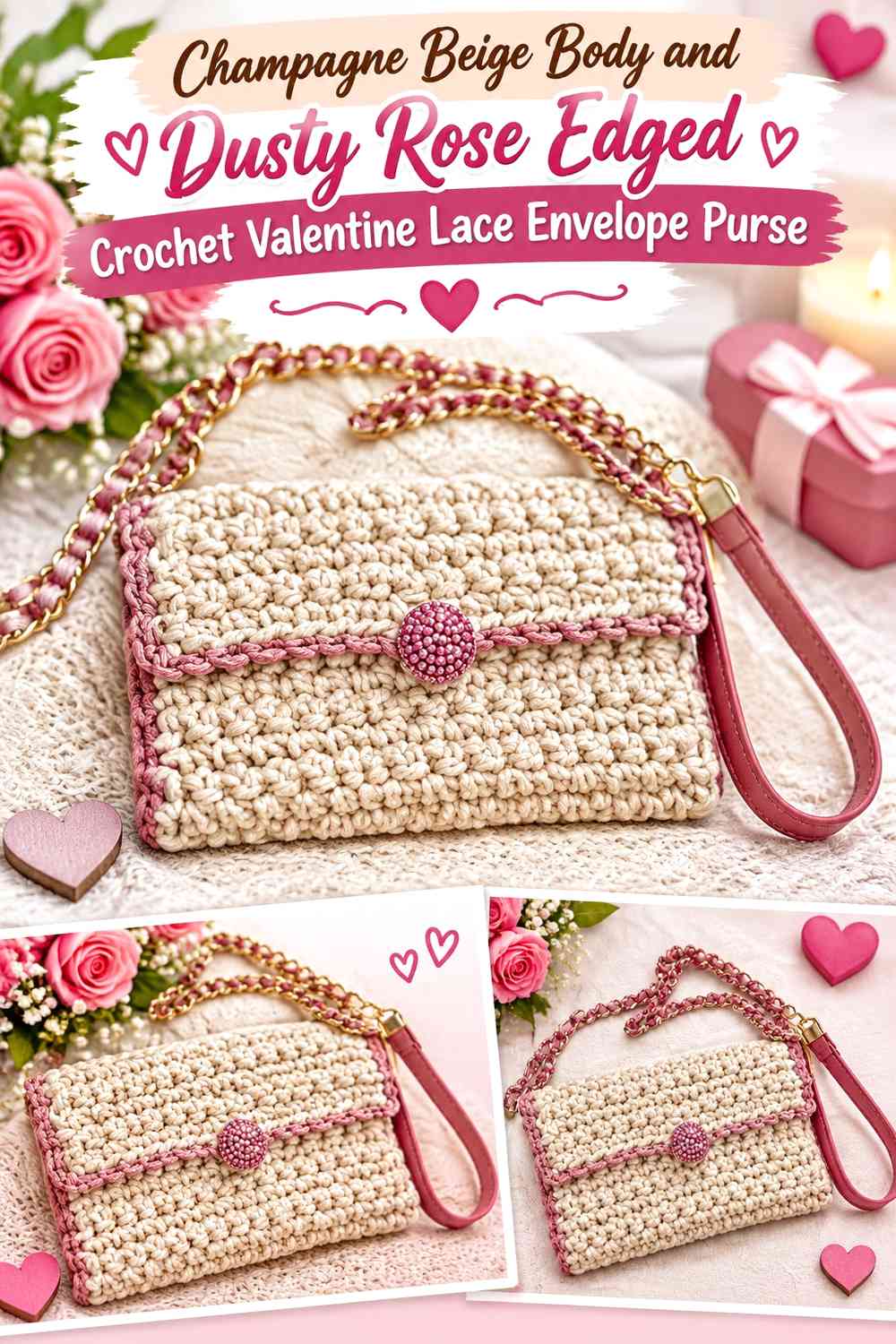
Keep the purse largely champagne beige, including the body and most of the flap, then use dusty rose along lace edges, the flap perimeter, or a narrow finishing line. Pink becomes a framing device instead of filling the main panels.
Dusty Rose Edging Can Define a Champagne Beige Lace Flap
Open beige lace can lose its outer silhouette against light clothing or surroundings. A restrained dusty rose edge gives the flap a clearer boundary and emphasizes its envelope point.
Keep the pink line proportionate to the lace. An overly wide border can visually replace the delicate edge with a solid stripe.
Champagne Beige Should Remain the Main Surface Behind Dusty Rose Edging
Repeat beige across both the purse body and most of the flap so the overall accessory still reads neutral first. Dusty rose can then appear at the closure or strap attachment as a small repeat.
This makes the border feel connected instead of looking like a single unrelated line around the front.
Creator Credit: Hectanooga1
7. Dusty Rose Scalloped-Flap and Champagne Beige Crochet Valentine Lace Envelope Purse
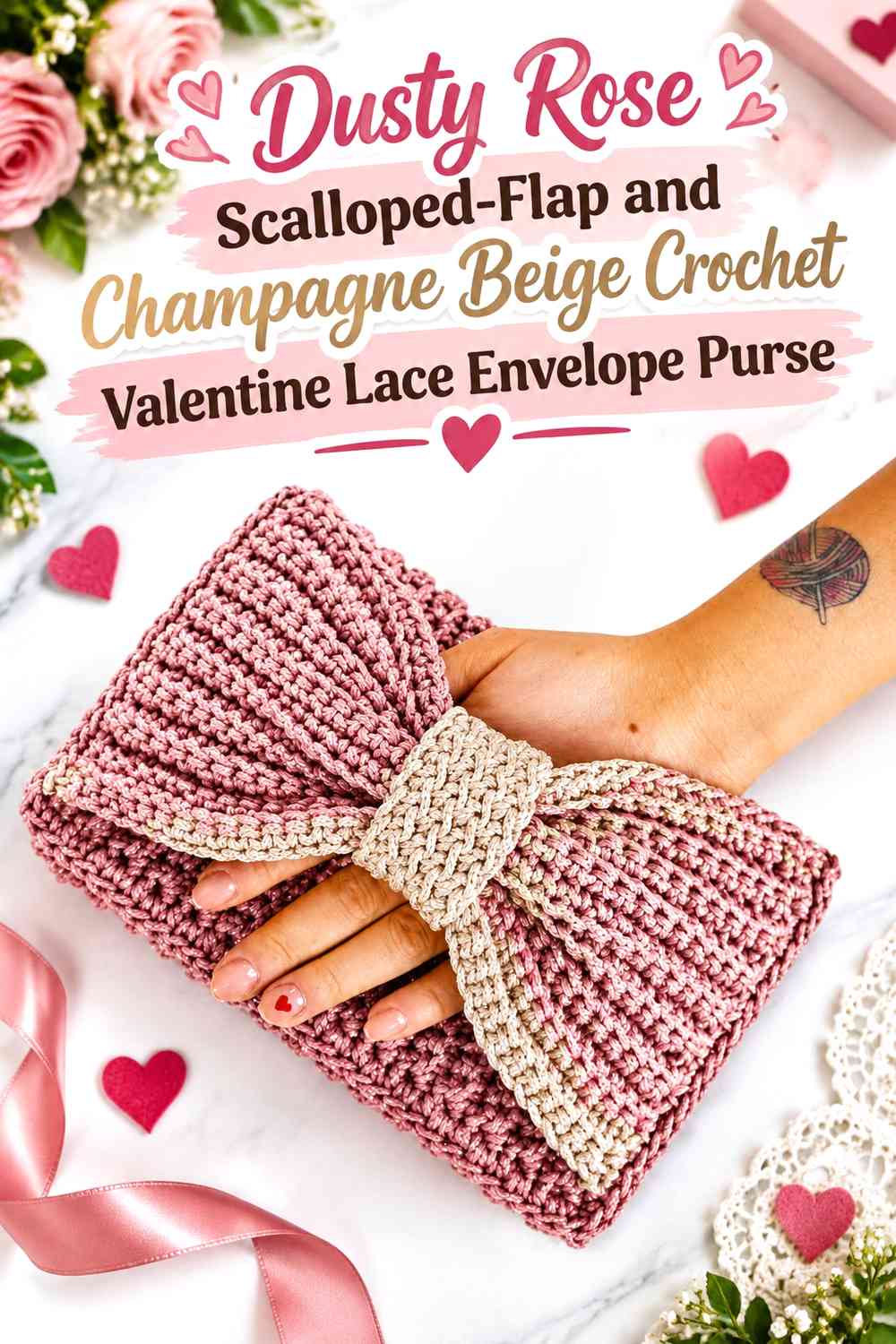
Use champagne beige for the envelope body and dusty rose for a decorative scalloped or lace-oriented flap. The curved edge softens the angular envelope silhouette while the color difference clearly separates flap from body.
Dusty Rose Scallops Need a Quiet Champagne Beige Background
Let the beige body remain relatively uninterrupted immediately below the decorative flap. The negative space helps individual pink scallops or lace points remain visible instead of merging with additional motifs.
If a heart is added, keep it small enough that it does not compete with the flap edge.
Champagne Beige Can Stop the Dusty Rose Flap From Looking Too Heavy
Because a solid dusty rose flap can occupy a large part of the purse front, including lace or open areas allows beige to show through and reduces the visual weight of the pink.
This is particularly useful when the dusty rose shade is deeper than the champagne beige body.
Creator Credit: Sirin’s Crochet
8. Champagne Beige Pointed-Flap and Dusty Rose Border Crochet Valentine Lace Envelope Purse
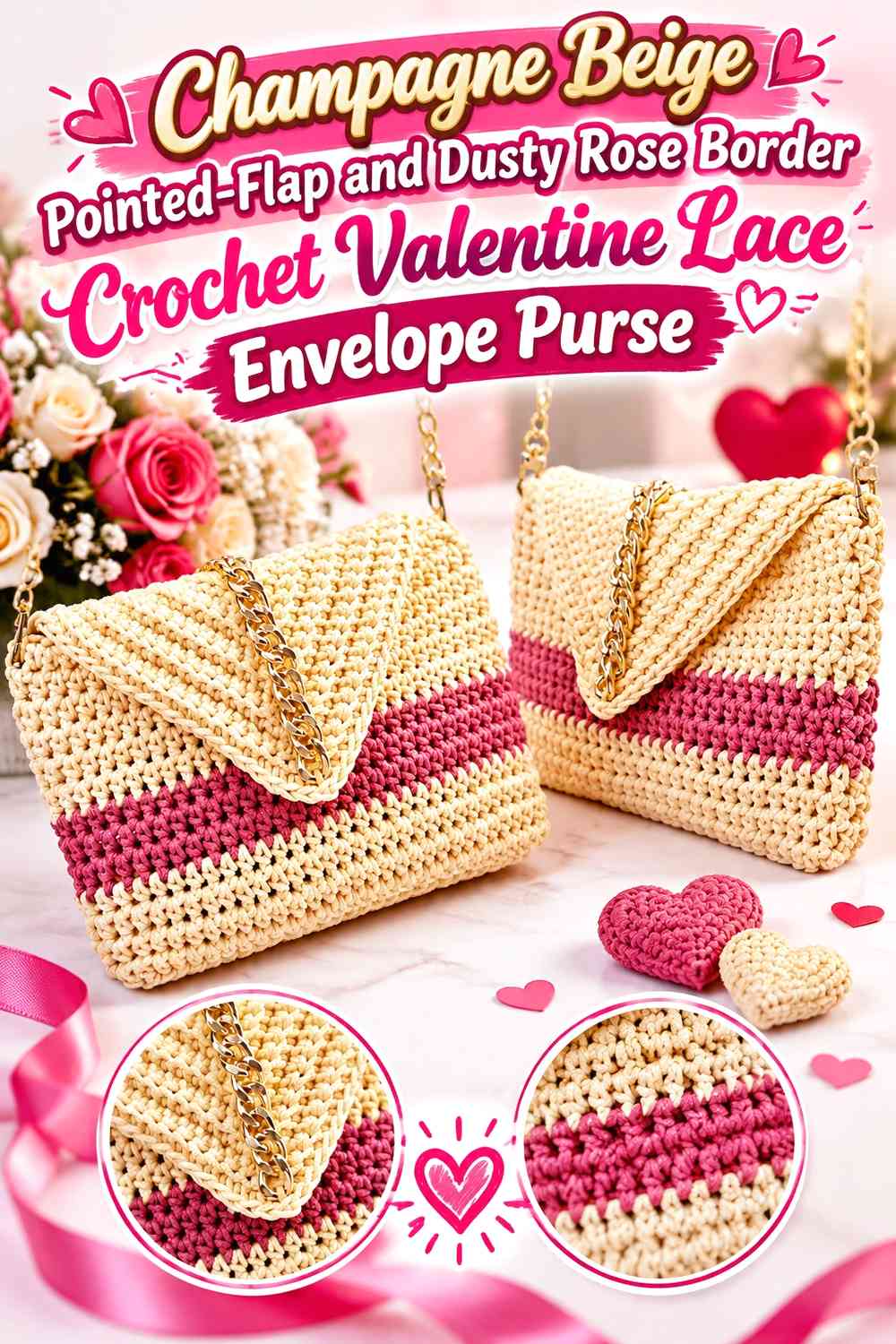
Emphasize the classic envelope geometry with a champagne beige pointed flap surrounded by a dusty rose border. A small amount of lace can sit inside the beige area, keeping the pointed silhouette cleaner than an all-over openwork treatment.
Dusty Rose Can Trace the Champagne Beige Envelope Point
Using pink specifically along the angled edges draws attention to the triangular flap. Keep the border even in visual width so one side does not appear heavier than the other.
The dusty rose line can continue around the purse opening if you want the front and back to feel connected.
Champagne Beige Lace Should Not Hide the Dusty Rose Pointed Border
Choose lace placement that leaves the outer pink edge intact. If openwork, decorative motifs, and border changes all overlap at the point, the clean envelope geometry can become difficult to see.
Let champagne beige carry the interior texture while dusty rose defines the silhouette.
Creator Credit: TSUNAMI – Crochet Makers
9. Dusty Rose and Champagne Beige Striped Crochet Valentine Lace Envelope Purse
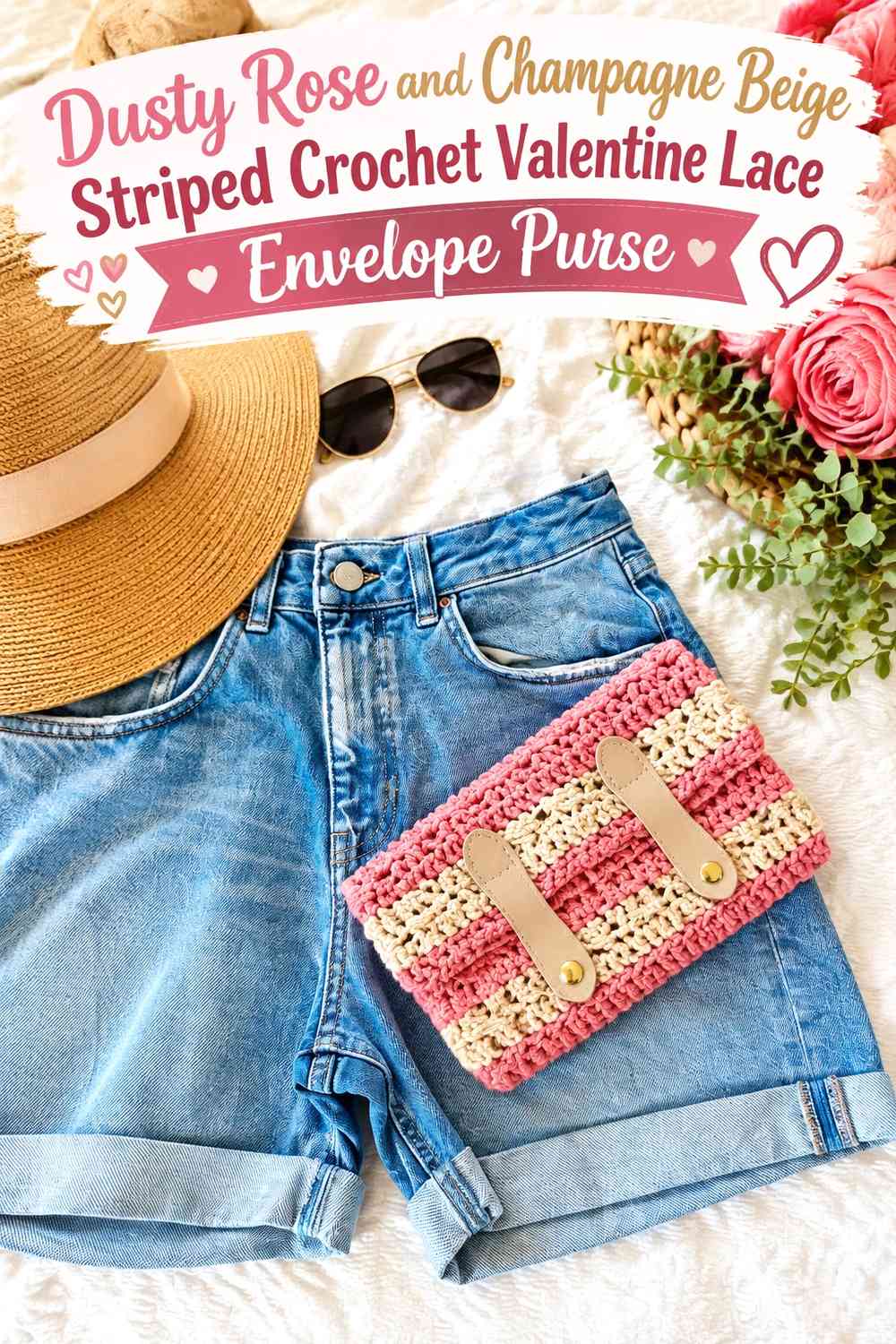
Use the two main colors in repeated sections across the purse while reserving lace for the flap or a selected front panel. This creates a more graphic Valentine treatment than assigning one color solely to the body and the other solely to the trim.
Dusty Rose and Champagne Beige Stripes Need a Clear Width Hierarchy
Equal-width stripes can create a strong two-color rhythm, but they may compete with delicate lace. If the flap is the main decorative feature, use broader sections of one color and smaller repeats of the other.
That gives the eye both a dominant field and a recognizable lace focal point.
Champagne Beige Lace Can Break Up Strong Dusty Rose Striping
If dusty rose occupies several prominent bands, a beige openwork flap provides a lighter visual pause. Carry one thin rose repeat into the flap edge if the beige section otherwise looks detached from the striped body.
Avoid adding a third strong stripe color when the two-color contrast is already doing the main work.
Creator Credit: HanJan Crochet
10. Champagne Beige and Dusty Rose Heart-Strap Crochet Valentine Lace Envelope Purse
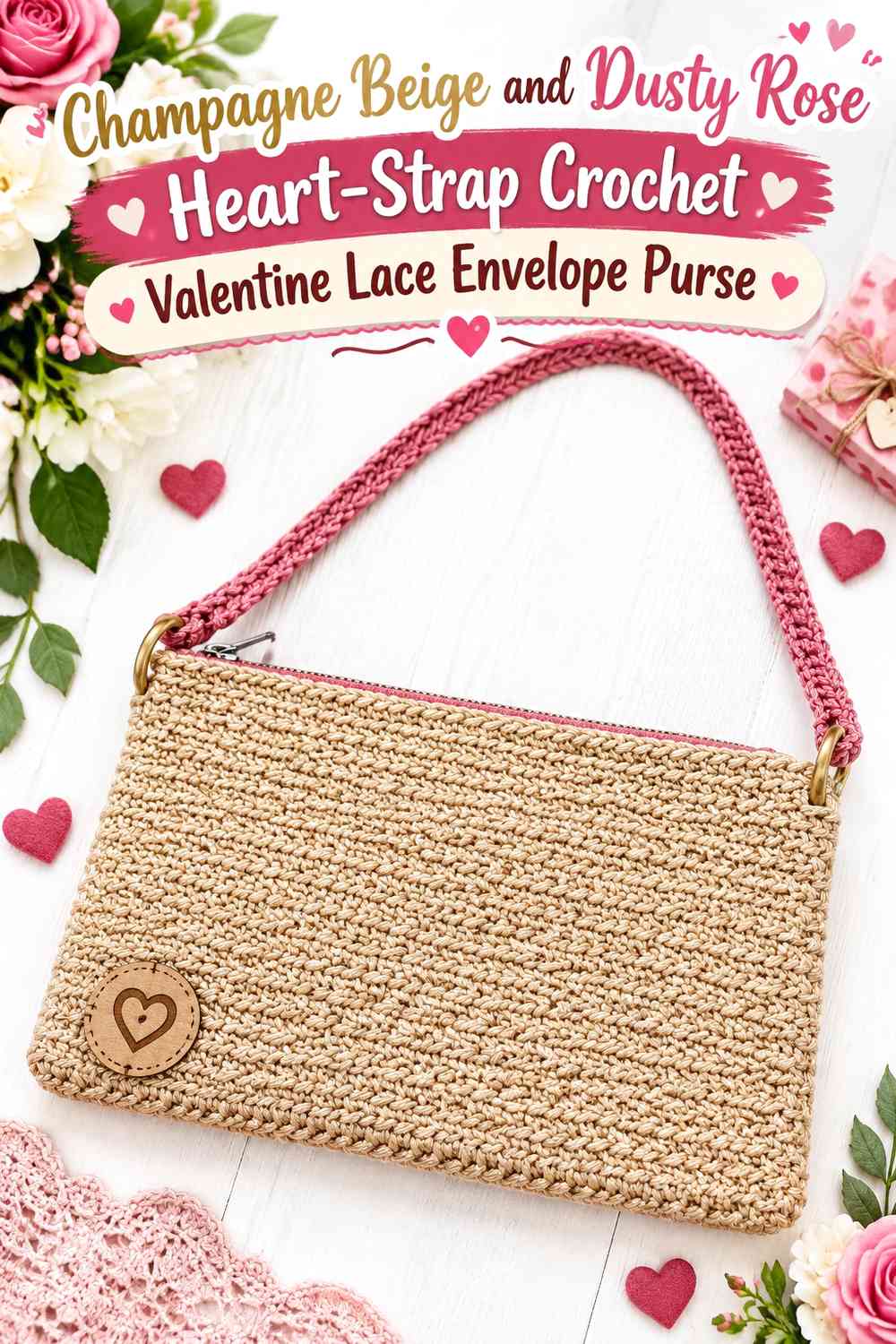
Keep most of the envelope and lace champagne beige, then use dusty rose for a heart detail and a narrow strap or wrist loop. Repeating pink in two separate functional areas makes the accent feel intentional without enlarging it across the entire bag.
Dusty Rose Can Connect the Valentine Heart to the Purse Strap
Using the same accent color in the heart and strap gives the eye two controlled pink repeats. The heart remains decorative while the strap extends that color beyond the main envelope shape.
Avoid making the complete border pink as well unless you want to shift toward a much more evenly balanced palette.
Champagne Beige Should Dominate the Lace Around Dusty Rose Details
A broad beige field keeps both pink accents clearly visible. If pink is scattered through every section of lace, the distinction between the focal heart and secondary decoration becomes weaker.
Let champagne beige supply the quiet visual area that gives the dusty rose details their importance.
Creator Credit: KnitcroAddict
11. Dusty Rose and Champagne Beige Bow-Accent Crochet Valentine Lace Envelope Purse
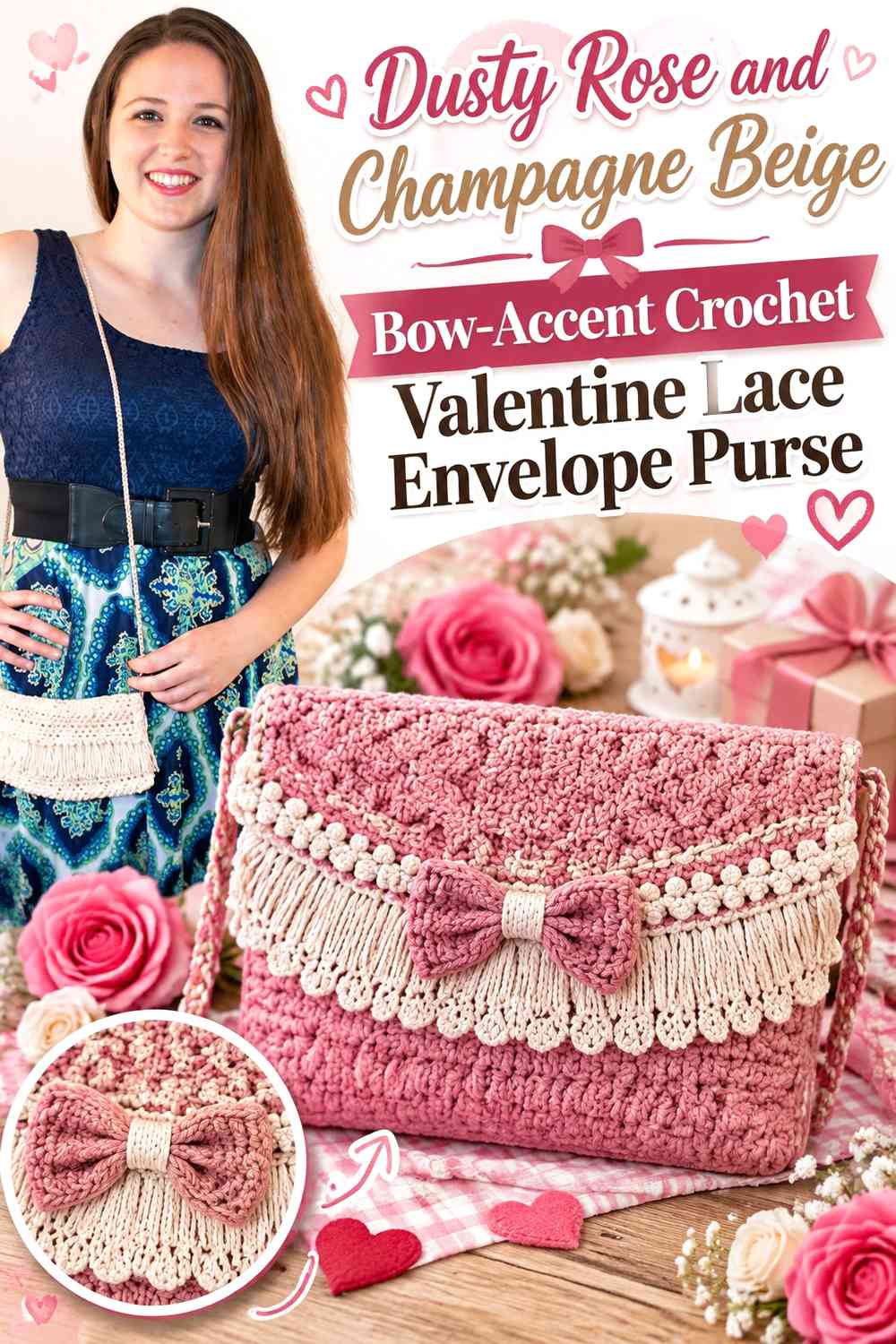
A small bow can replace the heart as the primary romantic accent while the envelope silhouette keeps the Valentine-card association. Use dusty rose for the body or flap and champagne beige for the bow, lace section, or both.
Champagne Beige Bow Details Should Contrast With Dusty Rose Lace
A dimensional bow already produces shadows and texture, so it does not need several additional colors. Champagne beige can distinguish the bow from the rose surface while keeping the palette muted.
Temporarily position the bow before fixing it in place so it does not visually cover the most attractive lace section or obscure the flap point.
Dusty Rose Should Remain Visible Around the Champagne Beige Bow
Leave enough pink around the embellishment for the two-color contrast to read cleanly. A bow that fills nearly the entire flap can make the dusty rose behave only as an outline.
Smaller beige decoration usually preserves the envelope silhouette more effectively.
Creator Credit: All Craft TV
12. Tonal Dusty Rose and Champagne Beige Trim Crochet Valentine Lace Envelope Purse
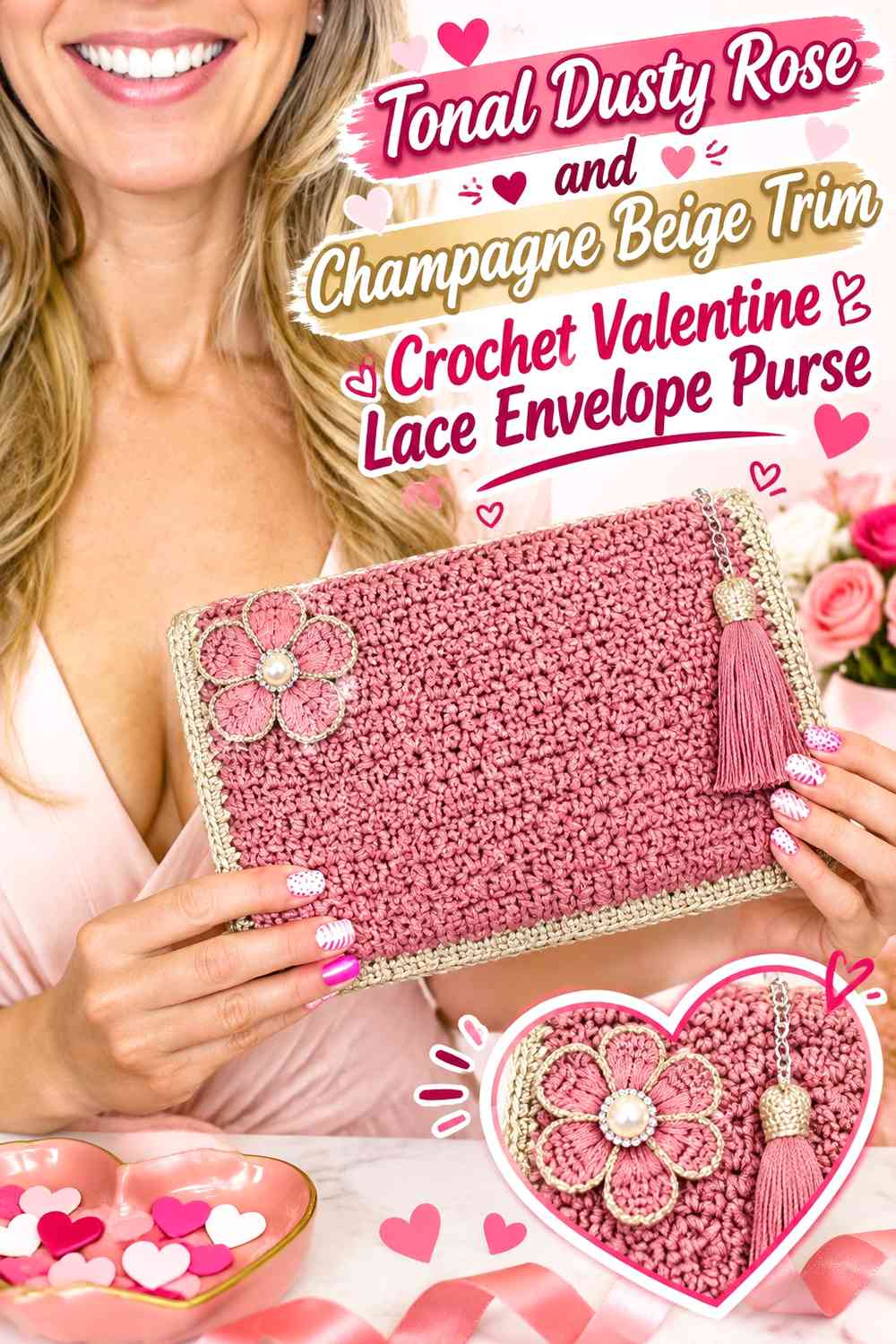
Use two related dusty rose values through the body and flap, then bring champagne beige in only at the lace trim and closure. This is the most rose-heavy palette in the collection, but the neutral still has a specific job.
Tonal Dusty Rose Sections Need Enough Difference to Stay Visible
A lighter dusty rose flap over a deeper dusty rose body can create subtle layering, but the values need to differ enough for the envelope fold to remain apparent.
If both yarns look almost identical once crocheted, use one rose instead and let champagne beige provide the main contrast.
Champagne Beige Lace Trim Can Separate Two Dusty Rose Tones
Placing a beige line between the two pink areas creates a deliberate transition and protects the flap outline. This is particularly useful when the rose shades are related closely enough that their boundary would otherwise disappear.
The champagne trim can also repeat at the closure without expanding into another large panel.
Creator Credit: Naztazia
13. Balanced Dusty Rose and Champagne Beige Crochet Valentine Lace Envelope Purse
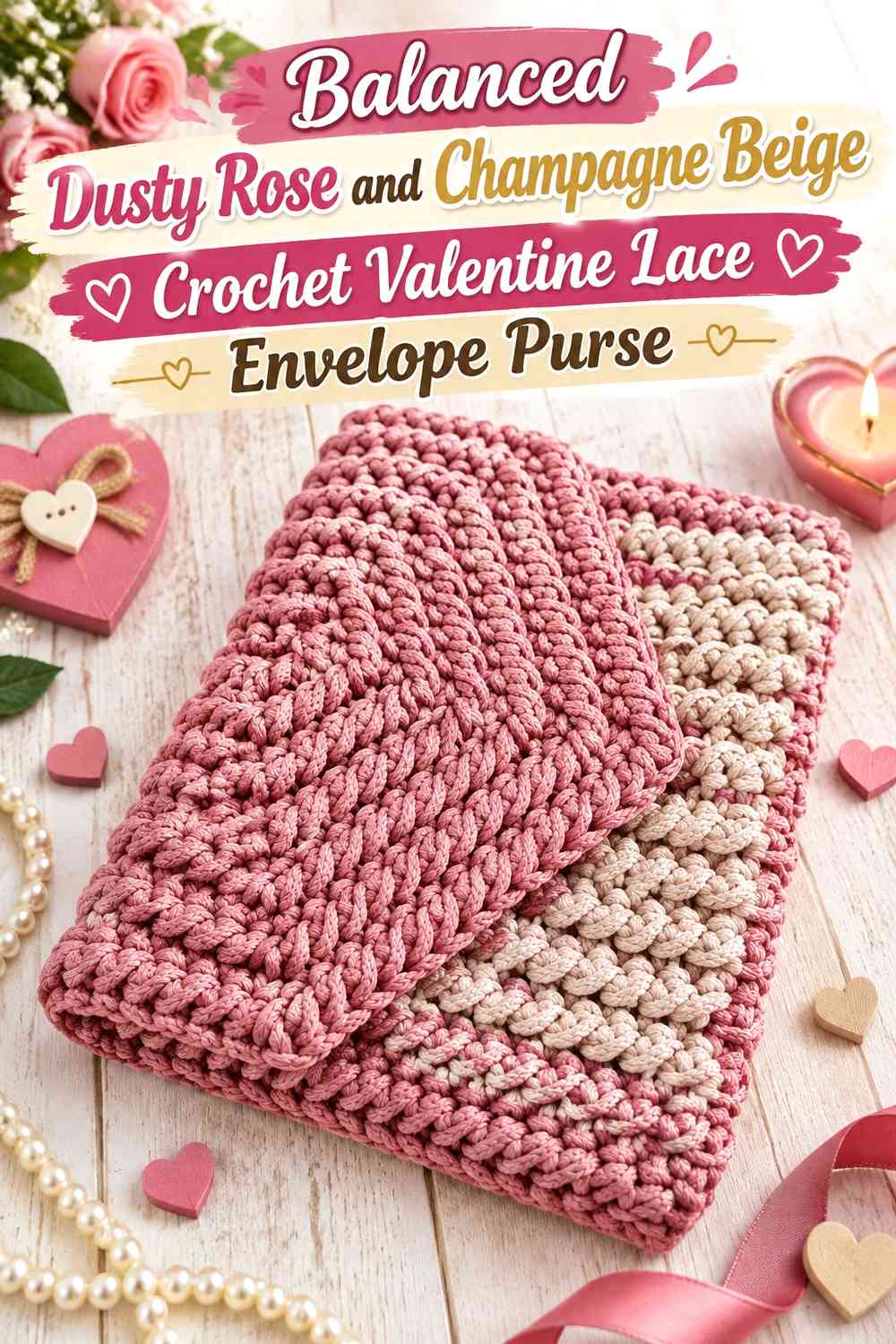
The final palette gives dusty rose and champagne beige similar visual weight. One color can occupy the lower body while the other takes the flap, with lace, edging, or small heart details repeating each shade across the opposite area.
Dusty Rose and Champagne Beige Need Defined Roles in a Balanced Purse
Equal visual importance should not mean random color changes. Decide where each shade belongs before finishing: for example, champagne beige on the flap and selected lace details, with dusty rose on the body, edge, and closure.
Repeating the same logic on the back and strap keeps the purse coordinated when viewed from different angles.
Champagne Beige Lace Can Link Separate Dusty Rose Sections
If dusty rose appears on the lower body and again along the flap edge, beige lace between those areas can act as a visual transition rather than an unrelated third zone.
Keep the openings consistent enough that the rose showing beneath them looks deliberate.
Dusty Rose Accents Should Not Overwhelm a Balanced Champagne Beige Layout
Review the purse in its closed position before adding extra pink hearts, tassels, borders, or strap details. Several individually small accents can collectively make dusty rose dominant.
If the two colors already feel balanced, stopping before the final embellishment may preserve the intended relationship better than adding another decorative element.
Creator Credit: Peppytess
Comparing the Dusty Rose and Champagne Beige Valentine Purse Palettes
For a purse that reads distinctly pink, choose the dusty rose body with a champagne lace flap, the tonal dusty rose version, or the rose-heavy bow treatment. These options keep pink across the largest visible areas while using champagne beige mainly for definition.
For a quieter, neutral-led result, start with a champagne beige body and concentrate dusty rose in the heart, lace flap, edging, or strap. The pink then becomes a deliberate Valentine accent rather than the overall purse color.
If lace is your priority, the overlay design creates the strongest interaction between both colors because the backing becomes visible through the openwork. If the envelope silhouette matters more, a solid pointed flap with contrasting edging keeps the triangular closure easier to recognize.
Conclusion
Dusty rose and champagne beige can take a Valentine envelope purse in several directions without changing the core romantic palette. Dusty rose works well when you want the purse to read clearly pink, while champagne beige gives lace, hearts, edges, and envelope flaps a softer contrast than bright white.
The most important choice is not simply which color you prefer, but where each shade will be visible after the purse is folded and closed. Check the flap over the body, look at the backing through any lace, and decide whether hearts, borders, closures, and straps genuinely need more color before adding them. Use the credited tutorials for their exact construction details and treat the palettes here as independent color-planning directions.
Frequently Asked Questions
Does champagne beige provide enough contrast with dusty rose crochet lace?
It can, but the result depends on the exact lightness of the two yarns. Place them together and check the combination from a distance. If lace openings disappear against the backing, choose a lighter champagne beige or a deeper dusty rose while preserving the same muted palette.
Should dusty rose go on the body or flap of a Valentine envelope purse?
Use dusty rose on the body when you want the whole purse to read pink. Put it mainly on the flap when you want champagne beige to dominate while the Valentine color remains concentrated at the front.
What should show behind an open champagne beige lace flap?
A dusty rose purse body can work as the backing and reinforce the two-color palette. If a separate lining will be visible, consider its color before finishing because it will influence how clearly the lace pattern appears.
Can I add a heart to a dusty rose and champagne beige envelope purse?
Yes. Place the heart where it does not compete with the strongest lace detail. Champagne beige can define a heart on a dusty rose field, while dusty rose works well as a concentrated heart accent on a neutral beige purse.
Should the border match dusty rose or champagne beige?
Match the border to the color role you want to reinforce. Dusty rose edging can sharpen a champagne beige flap, while champagne edging can lighten a pink-heavy purse. A border usually feels more integrated when its color already appears elsewhere on the envelope.
How can I keep a dusty rose and champagne beige lace purse from looking too busy?
Give each color a defined role and limit the number of focal details. A purse does not necessarily need contrasting lace, a large heart, a bow, a multicolor border, and an accent strap at the same time. Let one or two Valentine details lead while the rest support the envelope shape.
Can dusty rose and champagne beige work without a third color?
Yes. The two colors can handle the body, flap, lace, edging, and closure on their own. Add another shade only when it solves a specific visual problem, such as a heart center or lace detail that lacks enough separation.