
Pistachio and cream create a soft winter palette that works especially well when the decorative detail is concentrated around a scalloped edge. Pistachio can cover the main back and body of the pet sweater, while cream can define the hem, collar, chest transition, or selected scallops without breaking the garment into too many color blocks.
The placement of the scallops matters as much as the palette. A cream scalloped back hem can frame a broad pistachio body, while a cream collar gives the lighter shade more visibility near the neck. On a smaller sweater, even a narrow scalloped line can become a strong accent, so it is not necessary to repeat the treatment around every opening.
Fit and movement should come before decoration. Measure the individual pet according to the tutorial or pattern being used, check the neck, chest, back length, belly clearance, and leg openings, and make sure decorative edging does not hang where paws can catch it. Clothing should be removed if the animal shows discomfort, restricted movement, overheating, chewing at the garment, or persistent attempts to escape it.
The tutorials credited below support the underlying pet-sweater construction. The pistachio-and-cream palettes and scalloped placements are independent adaptations rather than claims that the creators used these exact colors or finishing ideas.
Quick List
- Pistachio Crochet Pet Sweater With a Cream Scalloped Back Hem
- Cream Crochet Pet Sweater With a Pistachio Scalloped Collar
- Pistachio Crochet Pet Sweater With Cream Scalloped Neck and Hem
- Pistachio Puff-Stitch Crochet Pet Sweater With Cream Scalloped Edging
- Pistachio Long-Sleeve Crochet Pet Sweater With Cream Scalloped Cuffs
- Pistachio Crochet Pet Sweater With a Cream Scalloped Chest Border
- Pistachio and Cream Colorwork Crochet Pet Sweater With a Cream Scalloped Hem
- Pistachio Moss-Stitch Crochet Pet Sweater With Cream Scalloped Back Edging
- Pistachio Custom-Fit Crochet Pet Sweater With a Cream Scalloped Tail Edge
- Cream Crochet Pet Sweater With a Pistachio Back Panel and Cream Scallops
- Pistachio Cross-Stitch Crochet Pet Sweater With Cream Scalloped Trim
- Pistachio Crochet Pet Sweater With a Cream Scalloped Yoke Transition
Let Pistachio Carry the Main Pet Sweater Body
Pistachio works well across the largest areas because it creates one continuous color from the neck toward the back hem. That continuity is especially useful on a small pet sweater, where several separate color blocks can make the garment look visually crowded.
Use cream where the construction already creates a natural boundary: the collar, end of the back panel, chest transition, or a narrow edging section. When the lighter color follows an existing garment line, the scallops feel integrated rather than added randomly.
If you reverse the colors, preserve the same hierarchy. A cream body with pistachio trim can work just as well, but one shade should still dominate enough surface to keep the sweater visually organized.
Use Cream Scallops Where They Will Stay Visible and Out of the Way
The back hem is one of the most useful locations for scalloped edging because it can be seen clearly without surrounding every leg opening. Keep the scallops proportionate to the sweater; oversized loops on a very small garment can overwhelm the pistachio body and may hang lower than intended.
A collar can also take a scalloped finish when the construction and fit allow it, but decorative edging should not make the neckline bulky or interfere with normal head and neck movement. Keep the garment’s original fit requirements intact rather than adding trim that changes the opening significantly.
Around sleeves or leg openings, restrained finishing is preferable. If you use a scalloped effect there, keep it compact and check the sweater on the pet to ensure the edge does not catch paws or restrict movement.
Balance Pistachio and Cream Around the Chest and Back
The back provides the largest uninterrupted color area on most pet sweaters, so it is a natural place for pistachio to dominate. Cream can then repeat at the neck and hem without covering much of the body.
The chest is visually smaller but functionally important. Avoid making a decorative cream band so deep that it alters stretch or fit through the widest part of the torso. Color placement should follow the existing sweater construction rather than forcing the body into a new shape.
Also consider practical belly clearance. A longer decorative edge may look balanced from the side but should not extend into an area where it could become wet or soiled during normal pet movement.
1. Pistachio Crochet Pet Sweater With a Cream Scalloped Back Hem
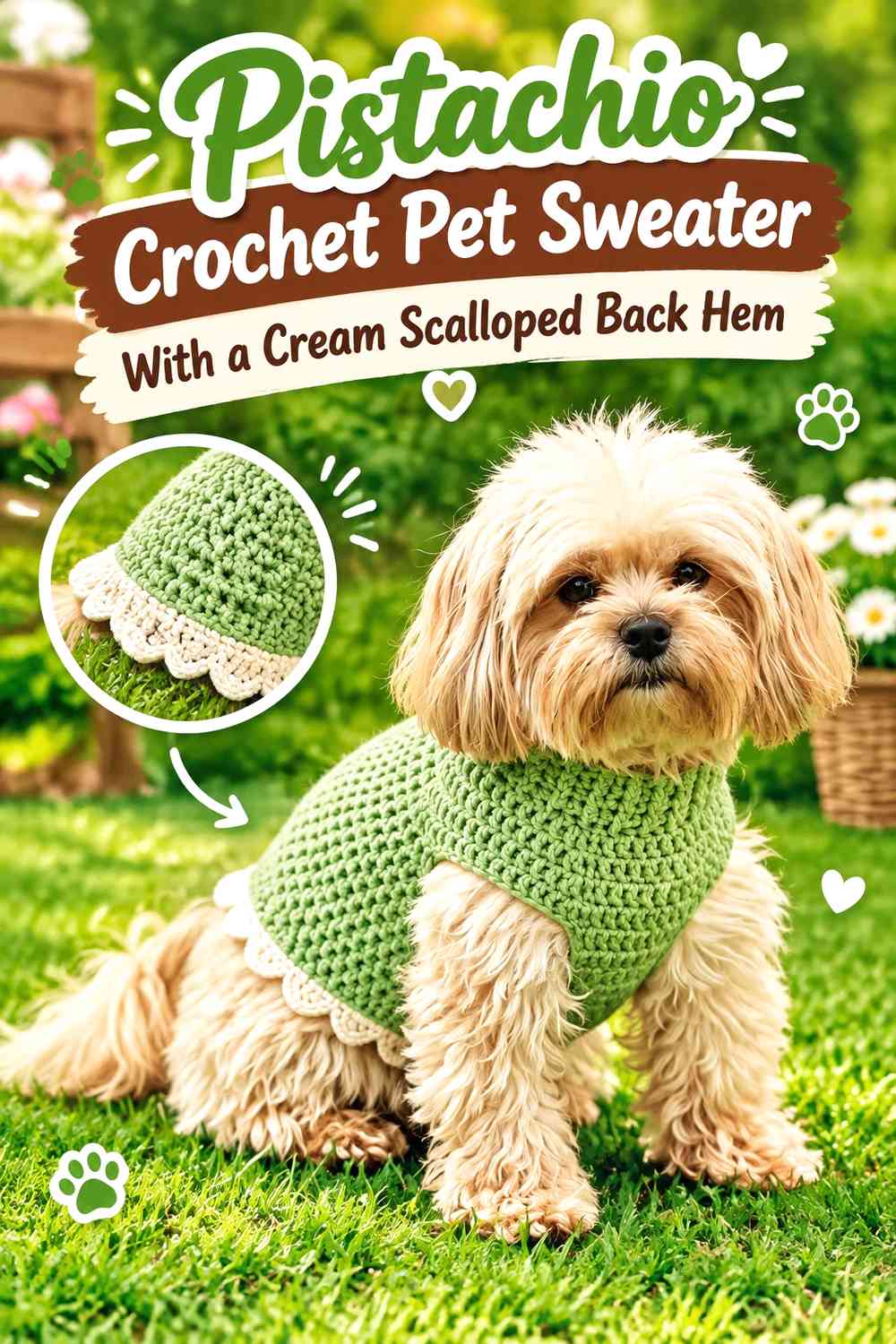
This version gives pistachio almost the entire visible sweater body and reserves cream for one clearly defined scalloped line at the back. The result is a simple color hierarchy: soft green across the torso and a light finish where the back panel ends.
Cream Scallops Should Frame the Pistachio Back Without Hanging Too Low
Keep the cream edge compact enough to follow the existing hem rather than dramatically extending it.
The scallops should function as a finish to the pistachio panel, not as a second skirt-like section that changes the sweater’s practical length.
Pistachio Should Stay Continuous Above the Cream Back Hem
Leave a broad uninterrupted pistachio area between the collar and scallops. That continuous field makes the cream edge easier to notice even when the trim itself is relatively narrow.
If you add additional cream, keep it to a smaller repeat such as the collar rather than another broad body band.
Cream Can Repeat at the Pistachio Collar in a Smaller Amount
A narrow cream neck edge can connect the front and back of the palette.
Keep it visually lighter than the scalloped hem so the back remains the main decorative area.
Creator Credit: Crochet It
2. Cream Crochet Pet Sweater With a Pistachio Scalloped Collar

Reverse the balance by giving cream most of the body and concentrating pistachio near the neckline. This makes the sweater noticeably lighter overall while giving the green scallops a strong frame around the top.
Pistachio Scallops Should Stay Comfortable Against the Cream Neckline
Keep the decorative edge subordinate to the actual neck opening. It should not tighten the collar or create a bulky ridge that changes how the sweater sits.
Check the finished neckline according to the tutorial’s fitting guidance before adding decorative trim.
Cream Gives the Pistachio Collar Enough Visual Separation
A broad cream back and chest area leaves the green neckline as a distinct accent instead of one of several competing pistachio sections.
This works particularly well when you want the scallop detail to be noticed near the face without adding color around the leg openings.
Pistachio Can Return at the Cream Back Hem Without Another Full Scallop
If the collar feels visually isolated, use a narrow pistachio finishing line at the back.
Keeping the lower repeat simpler than the collar preserves the neckline as the main decorative feature.
Creator Credit: Crochet With Tiffany
3. Pistachio Crochet Pet Sweater With Cream Scalloped Neck and Hem
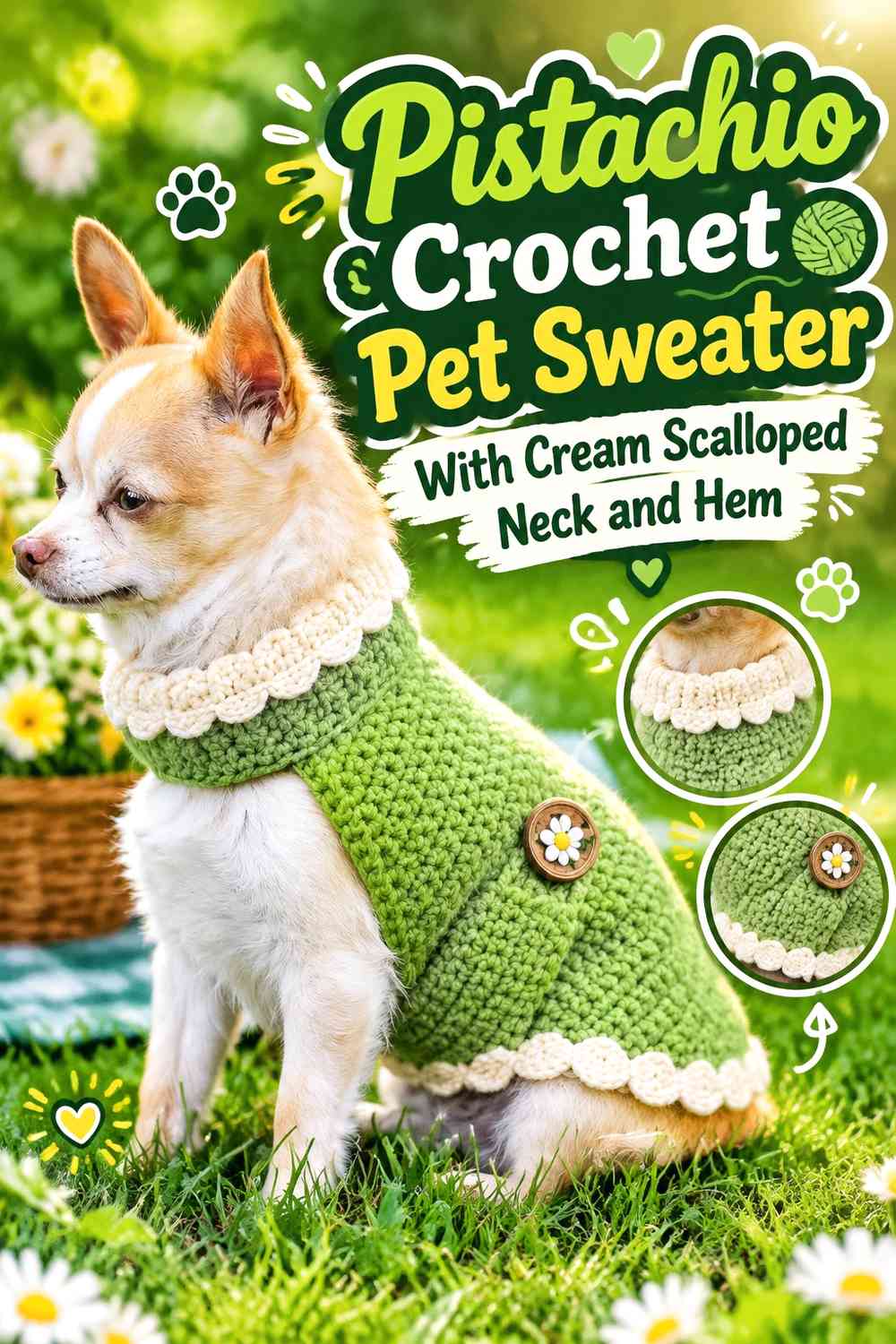
This version repeats cream at both ends of a pistachio body. The two light edges create a framed effect, so the central green section needs to remain broad enough to keep pistachio dominant.
Cream Neck Scallops Should Be Smaller Than the Pistachio Body
Use compact cream shaping around the neckline rather than a deep decorative collar.
The neck edge is close to the face and highly visible, so it does not need much surface area to balance the larger scalloped back hem.
Pistachio Needs an Uninterrupted Center Between Cream Edges
Keep the chest and back mostly pistachio.
A third cream band across the middle could divide the garment into several small zones and weaken the clean end-to-end framing.
Cream Back Scallops Can Carry More Visual Weight Than the Cream Collar
If one edge should be more decorative, make it the back hem rather than increasing bulk at the neckline.
This lets the two cream treatments coordinate without requiring them to be identical.
Creator Credit: Last Minute Laura
4. Pistachio Puff-Stitch Crochet Pet Sweater With Cream Scalloped Edging
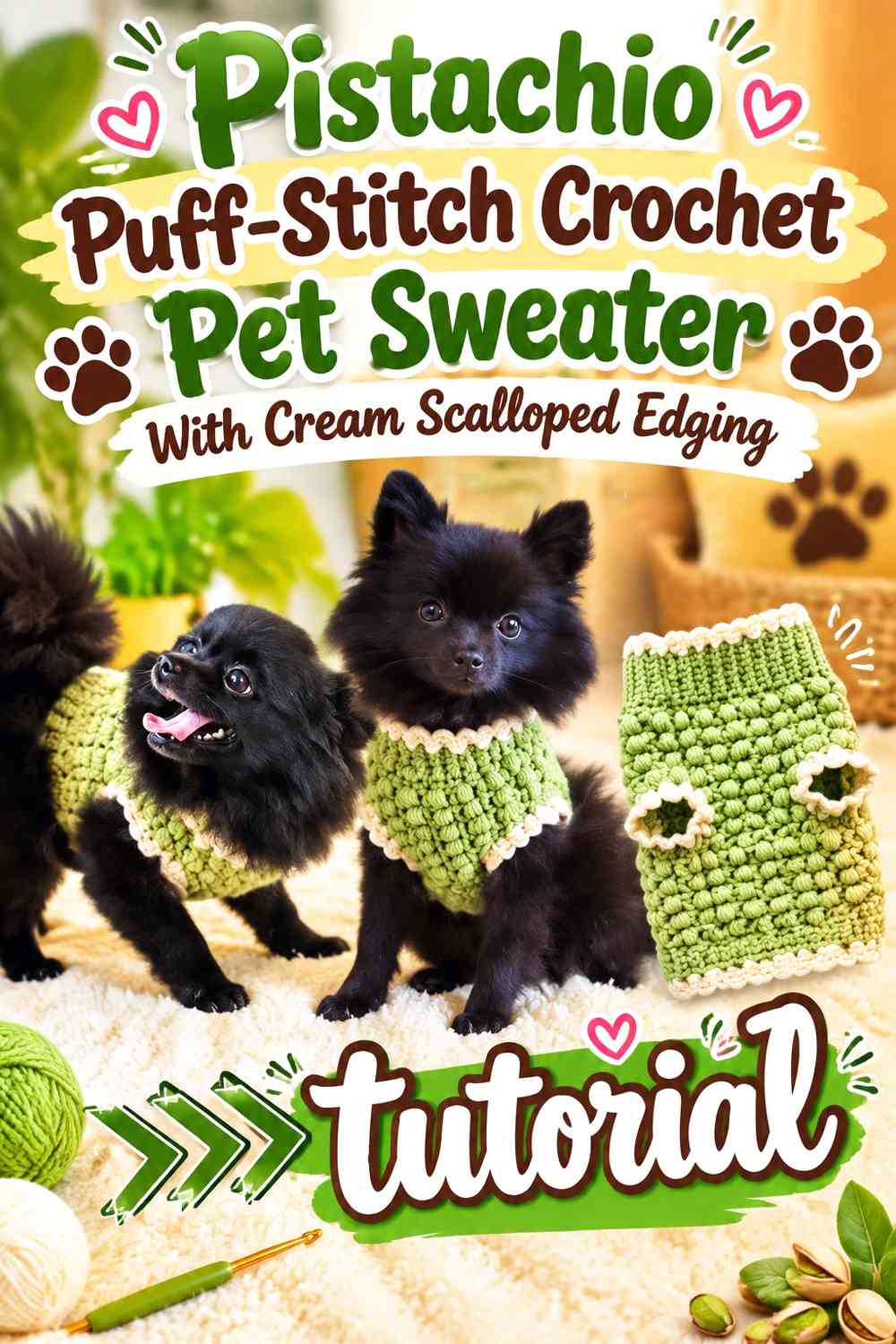
Texture already gives this sweater substantial surface interest. Let pistachio cover most of the puff-stitch or raised areas and restrict cream to a clear scalloped finish so color does not compete with texture.
Pistachio Puff Texture Needs Quiet Cream Scallops
Keep the cream edge simpler than the body texture.
Highly textured scallops beside an already dimensional pistachio surface can create too many small shadows and make the sweater look heavier than intended.
Cream Should Define the End of the Pistachio Texture
Place the scalloped line where the textured body naturally finishes.
Pairing the color change with the end of the main stitch treatment gives the cream a structural purpose rather than making it look like an unrelated decorative band.
Pistachio Should Remain Dominant Around Cream Leg Openings
Keep leg-opening finishes mainly pistachio when the back hem already carries cream scallops.
This reduces the chance of several pale decorative edges competing around the lower half of the sweater.
Creator Credit: SheiLa Teré
5. Pistachio Long-Sleeve Crochet Pet Sweater With Cream Scalloped Cuffs
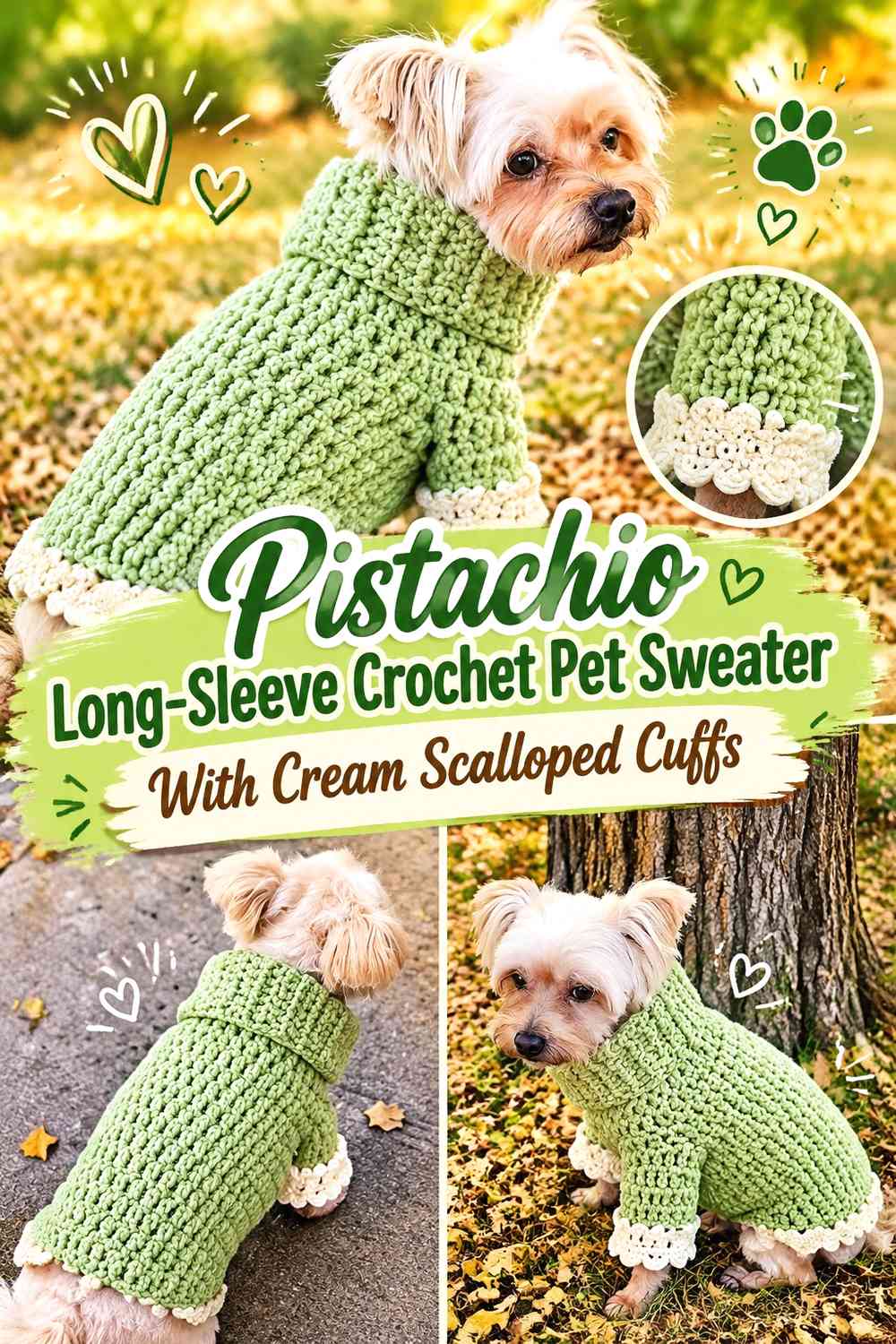
A long-sleeve construction creates additional color zones at the legs. Use pistachio for the torso and sleeves, then introduce compact cream scallops at the cuff edge only if they remain clear of the paws during movement.
Cream Cuff Scallops Must Stay Clear of Pistachio-Covered Paws
Keep the decorative edge short and controlled.
Long loops or deep scallops at the leg opening can hang lower than expected, so check the sweater while the pet is standing and walking before treating the cuff as finished.
Pistachio Sleeves Should Separate the Cream Cuffs From the Body
Use enough uninterrupted pistachio between the torso and cuffs that the lighter trim reads as a small finishing detail.
A broad cream sleeve section would shift attention away from the main green body and make the cuffs visually heavier.
Cream Back Edging Should Stay Simpler Than Cream Sleeve Scallops
If you repeat cream at the back, use a plain or very narrow finish.
The cuffs already provide multiple scalloped areas, so another highly decorative edge can make the lower silhouette overly busy.
Creator Credit: Vibes with Dani
6. Pistachio Crochet Pet Sweater With a Cream Scalloped Chest Border
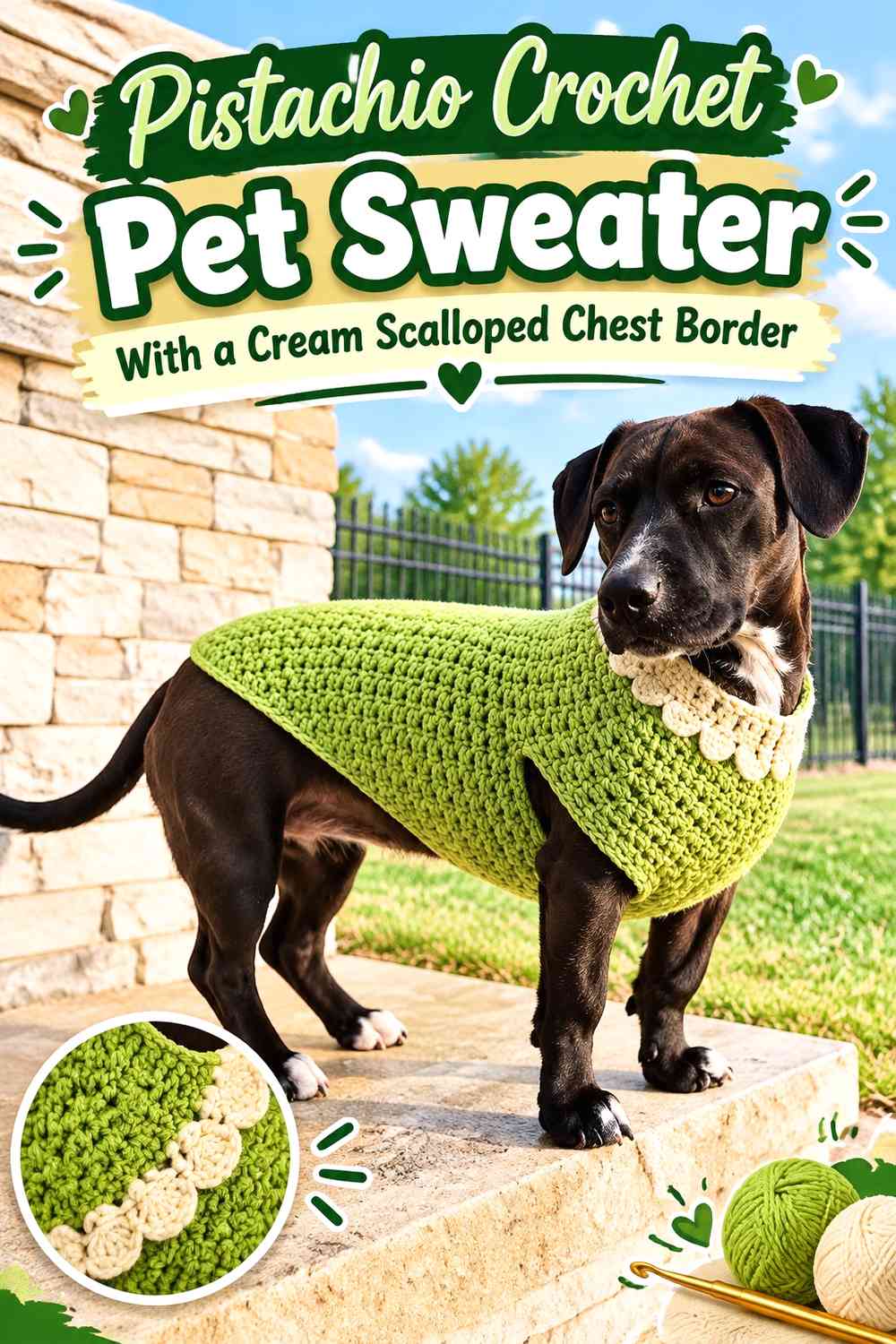
Instead of emphasizing the back hem, position the color transition closer to the chest while keeping the actual fit and shaping of the original sweater intact. Pistachio remains the main torso color, and cream marks the decorative transition.
Cream Scallops Should Follow the Pistachio Chest Shape
Do not force a perfectly straight decorative line across an area that is shaped for the pet’s body.
Let the cream treatment respect the existing construction so the color change does not visually fight the garment’s fit.
Pistachio Needs to Continue Through the Main Back Above Cream
The back is still the largest visible field, so keeping it predominantly pistachio stops the chest accent from dividing the whole sweater in half.
Use cream as a transition rather than a co-dominant body color.
Cream Chest Detail Should Not Reduce Pistachio Stretch
Avoid adding a decorative layer that makes the chest noticeably less flexible than the underlying sweater.
The trim should follow the fit rather than acting like a stiff band around the torso.
Creator Credit: Heart Hook Home
7. Pistachio and Cream Colorwork Crochet Pet Sweater With a Cream Scalloped Hem

A colorwork or patterned yoke provides a useful place to use both shades above a largely pistachio body. Let cream appear in the upper pattern and return once at the scalloped back edge.
Cream Colorwork Should Stay Distinct Against Pistachio
Use enough light-dark separation for the yoke pattern to remain readable without introducing additional colors.
If the actual pistachio and cream yarns are very close in value, simplify the colorwork arrangement rather than relying on tiny details.
Pistachio Should Separate the Cream Yoke From the Cream Scallops
Leave a broad pistachio body between the two cream-heavy areas.
That green interval prevents the upper pattern and lower trim from visually merging into an evenly two-tone sweater.
Cream Scallops Can Echo the Pistachio-and-Cream Yoke Without Repeating Its Pattern
The hem does not need the same motifs used at the neck.
A simple cream scallop can repeat the color while allowing the yoke to remain the most detailed part of the garment.
Creator Credit: Yarnspirations
8. Pistachio Moss-Stitch Crochet Pet Sweater With Cream Scalloped Back Edging
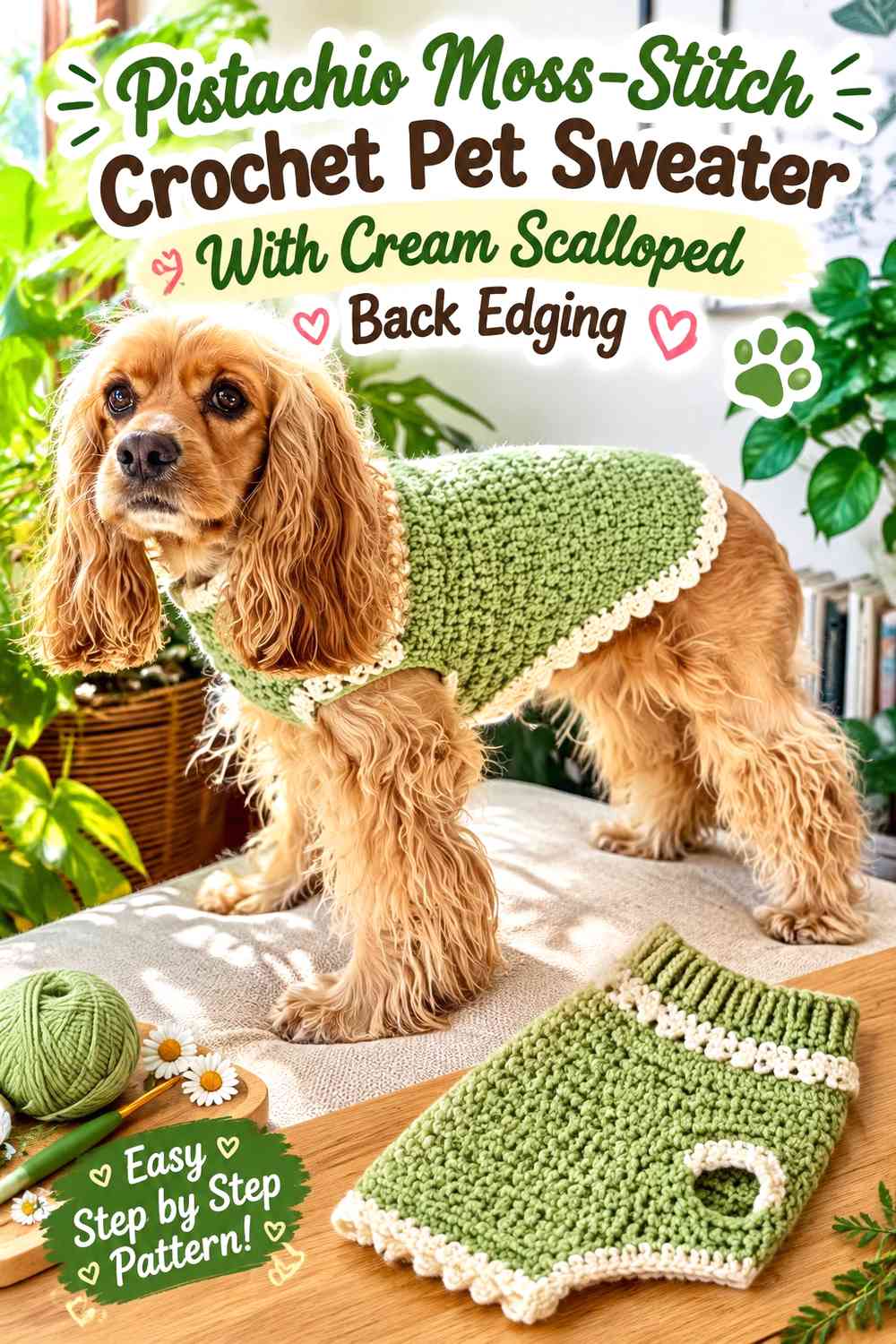
Moss-stitch texture creates a small-scale surface pattern, so use pistachio across most of the sweater and make the cream back edge broader and simpler than the stitches above it.
Cream Scallops Can Give Pistachio Moss Stitch a Clear Ending
A defined cream edge separates the textured back from the final silhouette.
Keep the scallops regular enough that they read as intentional trim rather than an extension of the tiny stitch pattern.
Pistachio Moss Stitch Should Remain the Largest Visual Area
Avoid alternating pistachio and cream throughout every moss-stitch section if the goal is a green-led sweater.
The body texture already provides variety without requiring constant color changes.
Cream Can Mark the Pistachio Collar With a Narrow Repeat
A small cream line near the neck can connect the palette from front to back.
Keep it narrower than the back scallops so the sweater still has one main decorative finish.
Creator Credit: it’s erin b.
9. Pistachio Custom-Fit Crochet Pet Sweater With a Cream Scalloped Tail Edge

A made-to-measure construction is useful when the pet’s proportions do not match a standard size. Apply the pistachio-and-cream palette only after the core fit is established, then add the scalloped treatment at the back where it will not alter chest or leg measurements.
Cream Scallops Should Follow the Finished Pistachio Back Length
Determine the practical sweater length first.
The cream edge should finish that measured back panel rather than being added as extra length after the sweater is already appropriately sized.
Pistachio Should Stay Clear Around the Belly While Cream Finishes the Back
Keep the decorative scallops on the back portion instead of extending them into the lower belly area.
This preserves a cleaner underside and keeps the trim away from areas more likely to become soiled.
Cream Should Be Added Only After the Pistachio Fit Is Checked
Try the base sweater according to the tutorial’s fitting process before adding decorative edging.
That makes it easier to distinguish a fit problem from an issue created by the added scallops.
Creator Credit: Maria’s Blue Crayon
10. Cream Crochet Pet Sweater With a Pistachio Back Panel and Cream Scallops
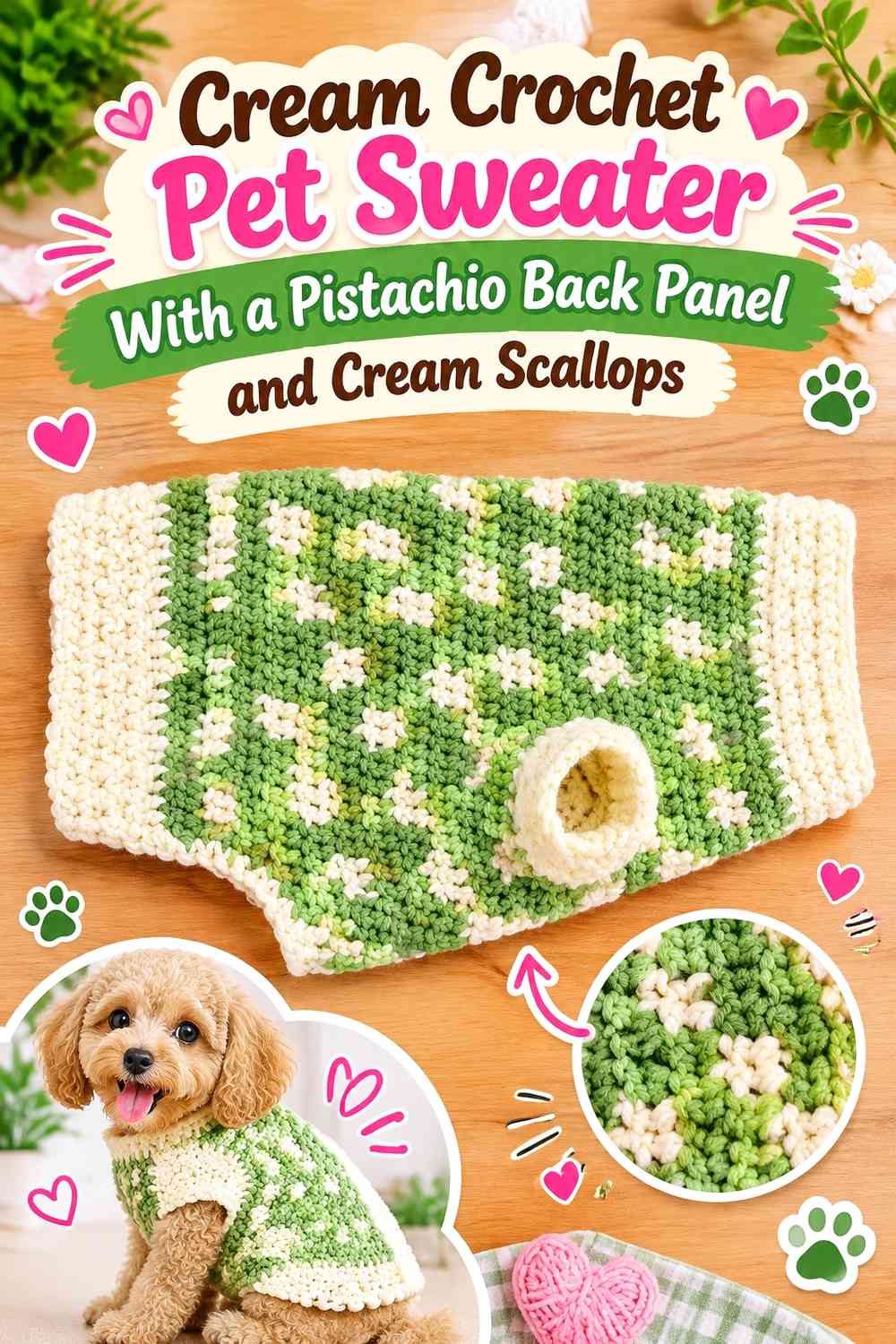
This color arrangement uses cream for much of the sweater while giving pistachio one broad back panel. Cream returns at the scalloped lower edge, creating a light frame around the darker green section.
Pistachio Needs a Large Enough Back Panel Against Cream
Avoid reducing pistachio to a very narrow stripe.
A broader green back section creates a clear center and gives the cream side or chest areas a supporting role.
Cream Scallops Should Finish the Pistachio Panel Without Hiding It
Keep the scalloped edge relatively shallow so enough pistachio remains visible immediately above it.
An oversized cream finish can visually shorten the green panel and make the sweater look more cream-dominant than planned.
Cream Sides Can Soften the Pistachio Back Without Extra Color
There is no need for another neutral or accent shade.
The contrast between cream side areas and the pistachio back already creates enough visual structure for the sweater.
Creator Credit: Markie Garcia
11. Pistachio Cross-Stitch Crochet Pet Sweater With Cream Scalloped Trim
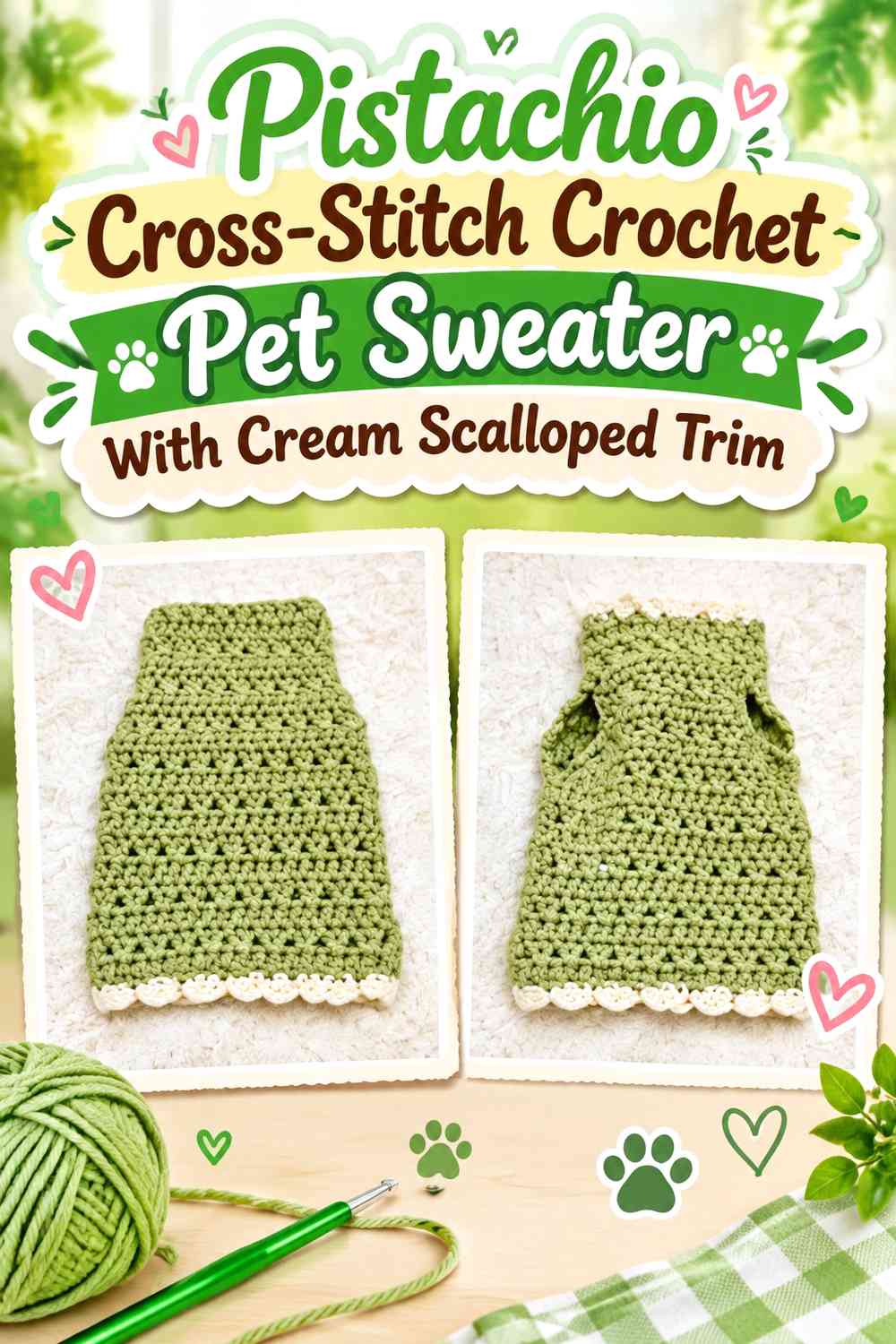
A cross-double-crochet or similarly patterned surface can give the pistachio body a more open visual texture. Cream works best as a controlled outer trim rather than being inserted through every patterned section.
Pistachio Patterning Should Remain Visible Above Cream Scallops
Leave enough green fabric between the leg openings and back edge to show the stitch pattern clearly.
If the cream trim begins too high, it can obscure the part of the sweater that makes this version visually different.
Cream Scallops Can Simplify a Detailed Pistachio Body
Use a straightforward cream repeat at the hem.
A clean edge gives the patterned pistachio surface a definite ending without introducing another complex stitch treatment.
Pistachio Should Continue Around the Cream-Accented Leg Area
Keep the immediate leg-opening structure primarily green when cream already appears at the back.
This prevents several contrasting edges from clustering around areas important for movement.
Creator Credit: LittleGemsCreations1
12. Pistachio Crochet Pet Sweater With a Cream Scalloped Yoke Transition
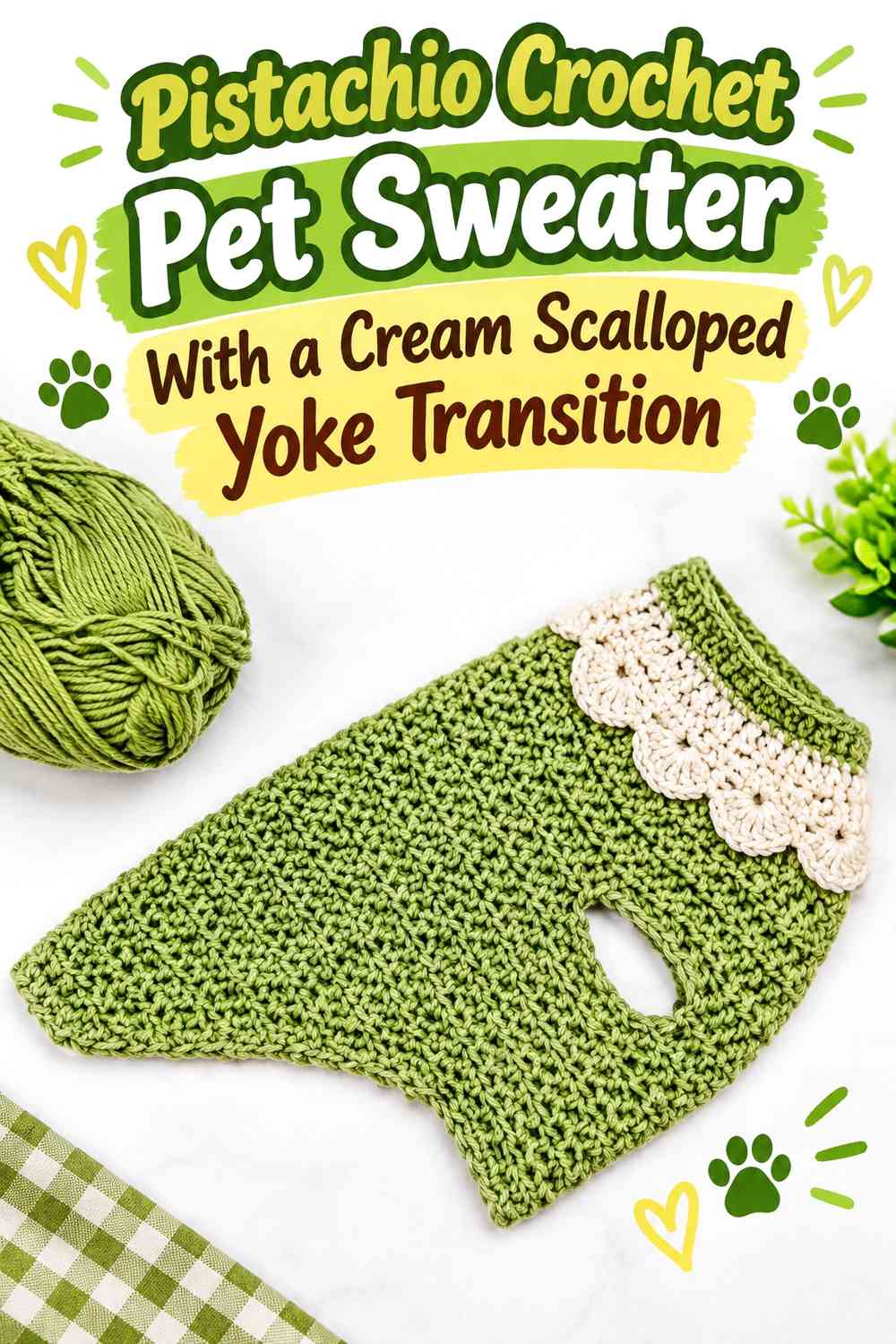
The final idea places the scalloped effect higher on the sweater. Use pistachio through the collar and main body, then introduce cream along the yoke-to-body transition as a decorative line rather than only at the lower hem.
Cream Yoke Scallops Should Stay Flat Against the Pistachio Body
A decorative transition across the upper torso should not create loops that project outward excessively.
Keep the scalloped effect compact so it behaves as surface detail rather than a loose layer that may fold or catch.
Pistachio Above and Below Cream Keeps the Yoke Integrated
Use pistachio on both sides of the cream transition if you want the scallops to read as an inset detail.
This creates a very different effect from a cream collar or hem because the lighter shade is surrounded by green.
Cream Can Return Once at the Pistachio Back Edge
A narrow cream finish at the hem can reconnect the yoke accent with the lower sweater.
Keep the lower repeat simpler so the unusual scalloped yoke remains the defining detail.
Creator Credit: LoopsOnlyCrochet
Comparing Pistachio and Cream Scalloped Pet Sweater Styles
For the simplest color balance, choose a pistachio body with one cream scalloped back hem. Most of the garment remains uninterrupted green, while the lighter edge provides an obvious finish without affecting several fit zones.
For more cream, use matching neck-and-hem edging or reverse the palette with a cream body and pistachio collar. These directions make the pale shade more prominent but still give each color a distinct role.
Textured, moss-stitch, and colorwork sweaters already contain substantial visual detail. On those projects, simplify the scallops rather than making the edging as intricate as the sweater body. A clean cream finish can separate the decorative stitch surface from the outer silhouette.
Long sleeves need the most restraint around leg openings. If scallops are used at the cuffs, keep them compact and check the sweater while the pet moves. A decorative back edge is generally easier to keep away from paws than loose trim around the legs.
Conclusion
Pistachio and cream can create several distinctly different winter pet sweaters simply by changing where the scalloped detail appears. A cream back hem keeps the sweater strongly pistachio-led, while a scalloped collar moves the lighter shade toward the face. A yoke transition or chest accent gives the palette an entirely different structure without adding a third color.
Choose the decorative zone only after the underlying sweater fit is established. Neck, chest, leg openings, belly clearance, and back length are functional areas first; scallops should finish those areas rather than changing how they fit.
Before using the sweater, watch the pet walk and move naturally in it. Check that the scalloped edges stay clear of paws, the garment does not restrict the front legs or neck, and the animal is comfortable wearing it. Follow each credited creator’s tutorial for exact construction and use the pistachio-and-cream arrangements here as independent color adaptations.
Frequently Asked Questions
Should pistachio or cream dominate a winter crochet pet sweater?
Pistachio works well as the dominant shade when you want the sweater body to remain visually continuous and the cream scallops to stand out. A cream-dominant sweater can also work, particularly when pistachio is concentrated in the collar or back panel.
Where should cream scallops go on a pistachio pet sweater?
The back hem is one of the clearest placements because it finishes a broad pistachio panel without surrounding every leg opening. The collar, yoke transition, and chest border can also work when the edging does not interfere with fit or movement.
Can I put cream scallops around the leg openings?
You can use a restrained decorative finish if the construction allows it, but check the sweater carefully while the pet is walking. Avoid long or loose edging that can catch paws, and do not let decoration reduce the usable leg-opening size.
How can I keep pistachio and cream from looking too busy on a small pet sweater?
Give one shade most of the surface area. For example, make the body pistachio and limit cream to the collar and one scalloped hem. Small garments usually need fewer large color zones than a larger sweater.
Should the scalloped edge add extra length to the pet sweater?
Treat the practical back length as a fit decision first. A scalloped finish should generally complete that edge rather than substantially extending a sweater that is already the correct length.
How do I know whether a crochet pet sweater fits comfortably?
Follow the measurement and fitting guidance in the chosen tutorial, and check the garment on the individual animal. It should allow normal standing and walking without obvious restriction at the neck, chest, or legs. Remove it if the pet shows persistent discomfort or tries repeatedly to get out of it.
How do I substitute pistachio or cream without changing the palette idea?
Preserve the roles and contrast. Replace pistachio with another softened light-to-medium green and cream with a noticeably lighter warm neutral. Compare the yarns together before adding scalloped details so the edging remains visible against the body.