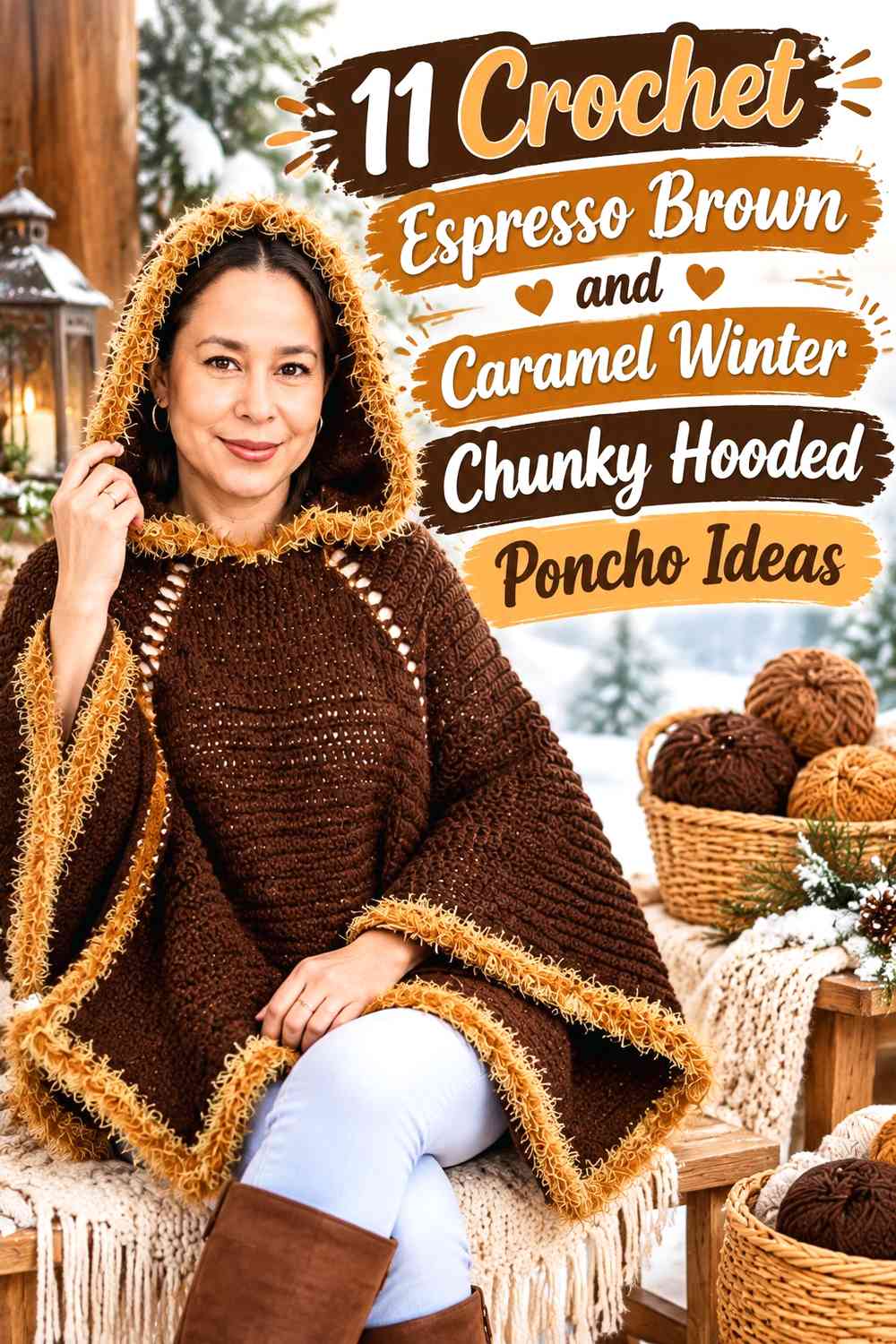

Espresso brown and caramel give a chunky hooded poncho enough contrast to show off the garment’s shape without turning it into a highly multicolored winter piece. Espresso brown can carry the broad body panels and shoulders, while caramel can define the hood opening, lower border, stripes, textured sections, or a front-facing focal panel.
The hood is an especially useful color zone. A caramel frame around an espresso-brown hood can brighten the area nearest the face, while an all-brown hood above caramel body bands creates a heavier, darker winter direction. Because a poncho has much more uninterrupted surface than a cardigan, even one broad caramel stripe can have substantial visual weight.
Do not assume a different yarn thickness can be substituted into a tutorial without affecting the finished dimensions. If you adapt a poncho construction to a chunkier yarn than the creator used, make and measure a swatch, compare it with the tutorial or written pattern gauge, and adjust through the pattern’s own sizing guidance rather than copying stitch counts blindly.
The tutorials below include exact hooded-poncho constructions as well as related poncho, capelet, and collar constructions that can support an independently planned hooded adaptation. The espresso-brown-and-caramel palettes are editorial color directions and should not be attributed to the creators unless their original tutorial specifically uses them.
Quick List
- Espresso Brown Crochet Chunky Hooded Poncho With a Caramel Hood Border
- Espresso Brown Textured Crochet Hooded Poncho With Caramel Lower Edging
- Espresso Brown Crochet Hooded Poncho With Broad Caramel Shoulder Stripes
- Espresso Brown Shell-Stitch Crochet Hooded Poncho With Caramel Trim
- Caramel Crochet Chunky Hooded Poncho With an Espresso Brown Hood
- Espresso Brown Two-Point Crochet Hooded Poncho With Caramel Border Bands
- Espresso Brown Granny-Panel Crochet Hooded Poncho With Caramel Accent Sections
- Espresso Brown Poncho-Sweater Crochet Hooded Poncho With Caramel Side Panels
- Espresso Brown Turtleneck-Style Crochet Hooded Poncho With Caramel Hood Framing
- Espresso Brown Ruana-Style Crochet Hooded Poncho With Caramel Front Borders
- Espresso Brown Capelet-Inspired Crochet Hooded Poncho With a Caramel Yoke
Let Espresso Brown Carry the Chunky Poncho Body
A hooded poncho has large uninterrupted areas across the front, back, and shoulders, making espresso brown useful as the dominant shade. Keeping those broad surfaces dark gives the silhouette continuity and leaves caramel free to emphasize selected construction lines.
Caramel does not need to cover half the garment to be effective. One hood border, a pair of shoulder bands, or a deeper lower edge can provide enough contrast to break up a large espresso-brown surface.
When the crochet texture itself is pronounced, reduce the number of color changes. Chunkier-looking stitches already create shadow and visual variation, so several narrow alternating bands can compete with the texture rather than reveal it.
Use Caramel to Frame the Hood and Poncho Edges
The hood opening is one of the most visible places for caramel because it surrounds a relatively small area compared with the full poncho body. A narrow caramel edge can therefore feel significant without making the garment caramel-dominant.
The lower hem provides a different effect. Caramel placed there visually grounds the espresso-brown body and can emphasize a pointed or curved poncho silhouette. If both the hood and hem use caramel, decide which one should be broader so the garment has a clear hierarchy.
For a more understated result, keep the hood espresso brown and use caramel only on the lower edge or side borders. This places the lighter color farther from the face and preserves a darker overall winter look.
Check Espresso Brown and Caramel Placement Before Changing Yarn Weight
A tutorial designed in a lighter yarn may not retain the same hood depth, body width, or drape when worked unchanged in a much thicker yarn. Treat the tutorial’s construction as the guide and the chunky color concept as an adaptation that still needs proper gauge planning.
This matters especially around the neckline and hood. A bulkier fabric can change how the opening sits, so establish the poncho’s fit before adding a deep caramel border that could alter the finished edge further.
Color samples are helpful too. Work enough espresso brown and caramel together to see whether the lighter shade remains visible across the actual texture you intend to use rather than judging the combination only from unwound yarn.
1. Espresso Brown Crochet Chunky Hooded Poncho With a Caramel Hood Border
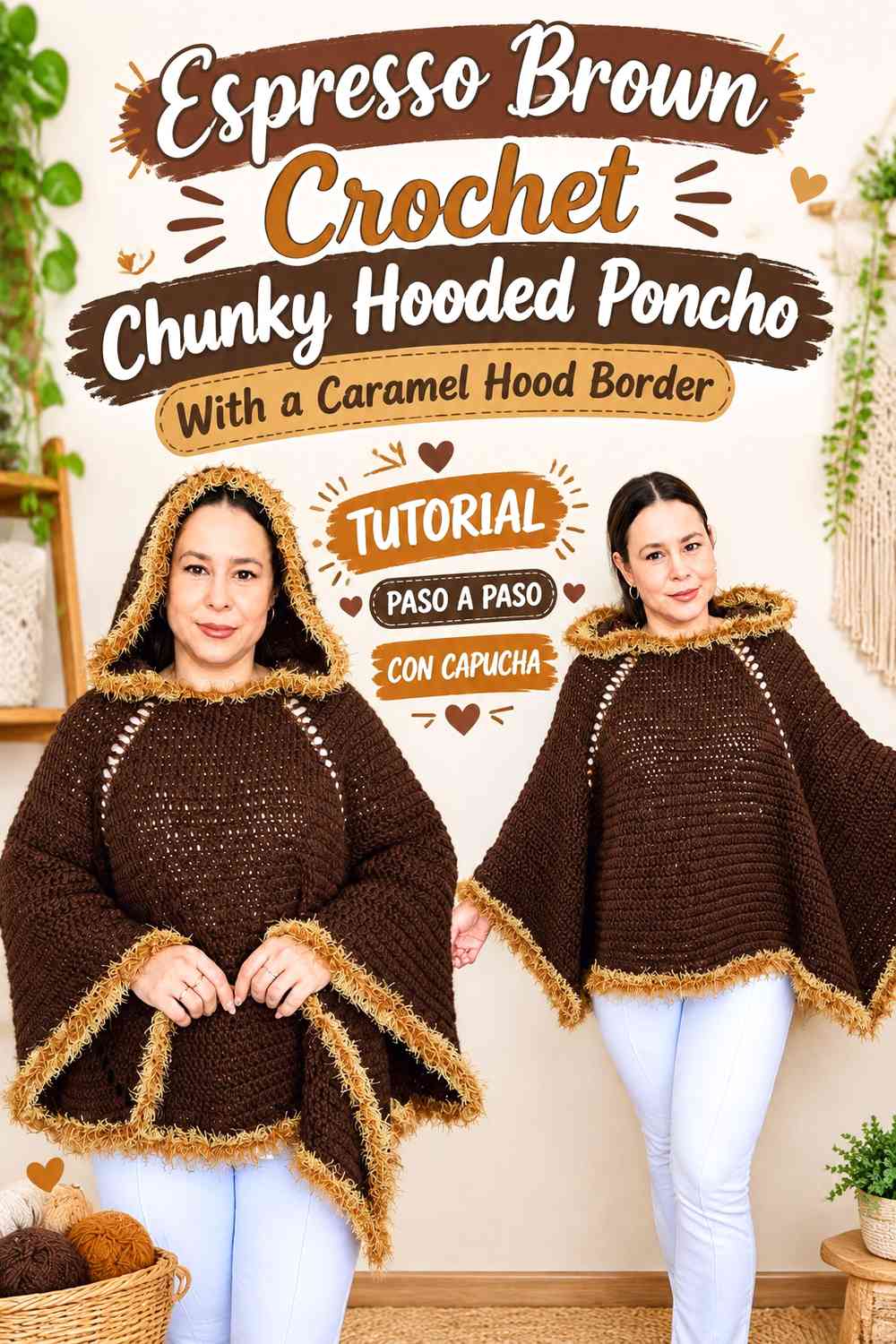
This is the most straightforward version of the palette: espresso brown covers nearly the entire poncho while caramel frames the hood opening. The contrast stays concentrated near the top, leaving the broad front and back panels dark and continuous.
Caramel Should Clearly Frame the Espresso Brown Hood
Use caramel as a deliberate boundary around the opening rather than scattering isolated caramel stitches throughout the hood.
A continuous lighter frame draws attention to the hood shape and separates it from an otherwise espresso-brown upper body.
Espresso Brown Should Continue From the Hood Into the Poncho Body
Keeping the hood interior, shoulders, and main body in espresso brown creates one long dark visual line.
If you repeat caramel lower on the garment, make that secondary accent narrower than the hood treatment so the face-framing section remains the main contrast.
Caramel Edging Should Not Overwhelm the Espresso Brown Neckline
A chunky-looking edge gains visual weight quickly. Keep the caramel border proportionate to the hood rather than making it so broad that it changes the apparent size of the opening.
Creator Credit: MageTeje
2. Espresso Brown Textured Crochet Hooded Poncho With Caramel Lower Edging
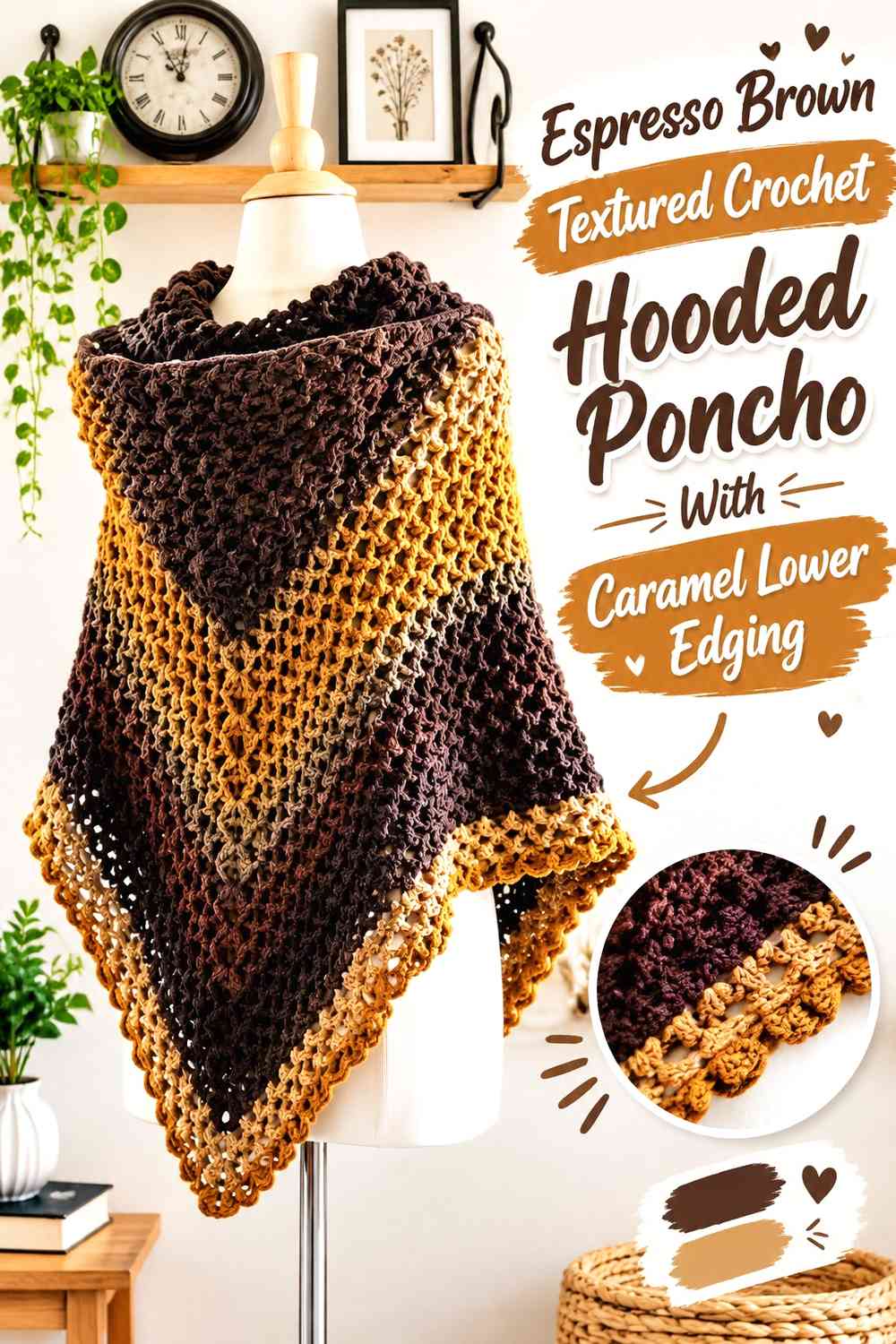
A textured poncho already has substantial surface detail, so this version keeps almost all of that texture espresso brown. Caramel appears only around the lower edge, where it can emphasize the silhouette without interrupting the stitch pattern across the torso.
Espresso Brown Texture Needs Uninterrupted Space Above Caramel
Allow several inches of visual continuity above the lower contrast section rather than introducing frequent caramel stripes throughout the body.
The dark surface can then show the texture through light and shadow while the caramel hem supplies one clean color break.
Caramel Can Define the Espresso Brown Pointed Hem
If the poncho construction creates front and back points, a contrasting lower border can make those lines easier to see.
Keep the caramel treatment consistent around the points so one side does not appear visually heavier than the other.
Espresso Brown Hood Texture Can Stay Free of Caramel
Leaving the hood entirely brown distinguishes this idea from a face-framed version.
It also concentrates the only major light area near the hem, creating a bottom-weighted color layout.
Creator Credit: crochetdreamz
3. Espresso Brown Crochet Hooded Poncho With Broad Caramel Shoulder Stripes
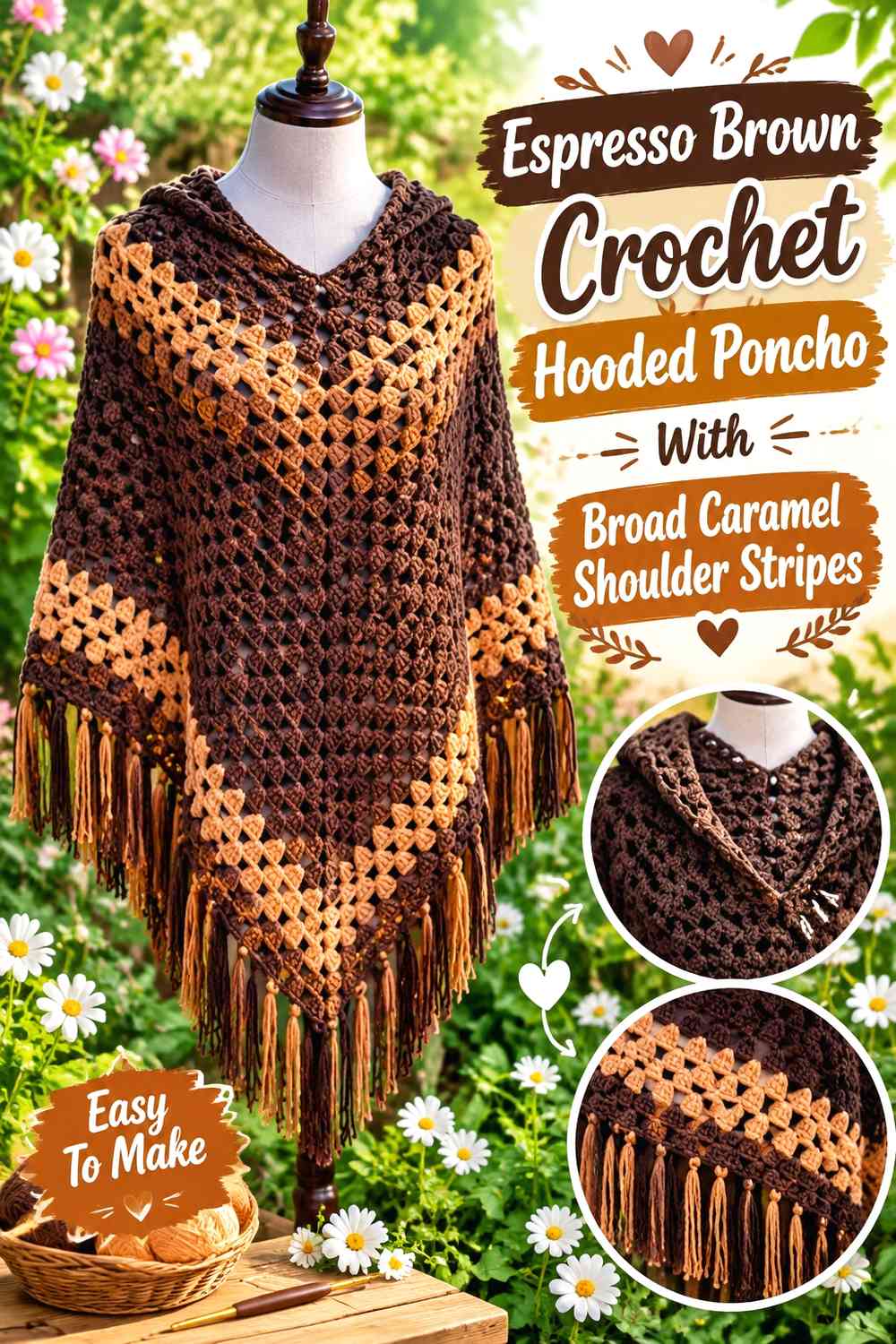
This color scheme moves caramel away from the edges and across the upper body. Use espresso brown for the hood and most of the poncho, then introduce one or two broad caramel bands around the shoulder area.
Caramel Shoulder Stripes Need Enough Espresso Brown Between Them
If two caramel bands are used, leave a visible brown interval so they remain separate stripes instead of merging into one wide light section.
Broad bands already attract considerable attention on a large poncho, so additional caramel decoration should stay restrained.
Espresso Brown Hood Should Anchor the Caramel Shoulder Bands
Keeping the entire hood dark creates a strong top section before the caramel stripes begin.
This is useful when you want the garment to feel espresso-led despite substantial lighter color across the shoulders.
Caramel Stripes Should Follow the Espresso Brown Poncho Construction
Place the bands according to the direction in which the poncho is worked.
A color change that aligns with existing rows or rounds looks more deliberate than one forced across a construction line that naturally changes direction.
Creator Credit: The Crochet Crowd
4. Espresso Brown Shell-Stitch Crochet Hooded Poncho With Caramel Trim
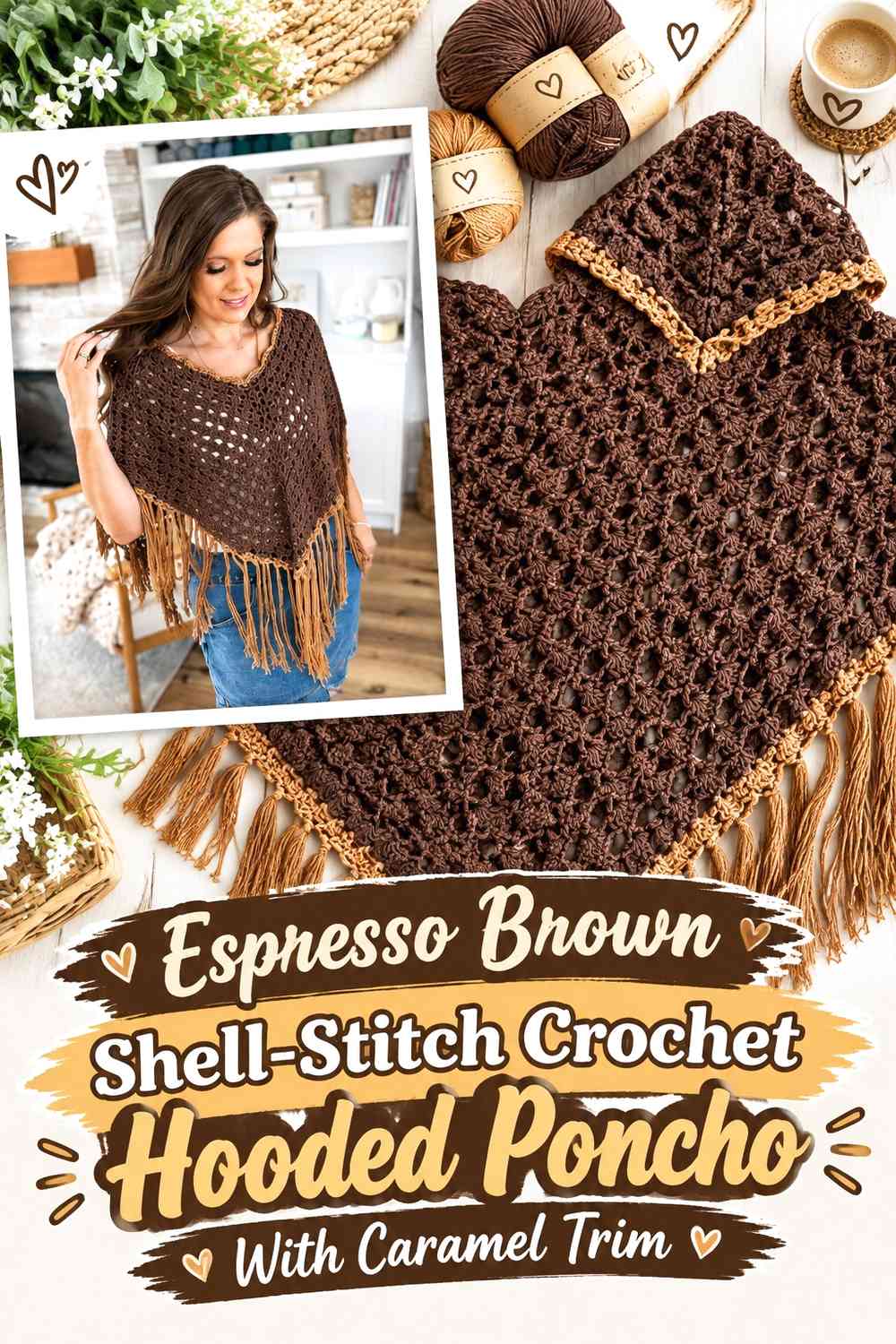
Shell texture creates repeating visual movement across the poncho, so this idea uses caramel mainly to outline the garment rather than interrupt every shell repeat. Espresso brown remains the main shell-stitch color.
Espresso Brown Shells Should Remain the Main Surface Beside Caramel
Keep long runs of shell texture in espresso brown so the stitch pattern stays visually connected.
Changing to caramel too frequently could turn the garment into a striped poncho where the color rhythm competes with the shells.
Caramel Can Highlight the Espresso Brown Hood and Hem Together
Use the same caramel shade at the hood opening and lower edge to create a coordinated frame.
Make one of those treatments narrower if equal-width borders make the garment feel boxed in by the lighter color.
Espresso Brown Should Separate Caramel Trim From the Shoulder Line
Leaving the shoulders dark gives the caramel edges enough distance from one another.
That dark middle section helps the poncho retain its deep winter character.
Creator Credit: MJ’s Off The Hook Designs
5. Caramel Crochet Chunky Hooded Poncho With an Espresso Brown Hood
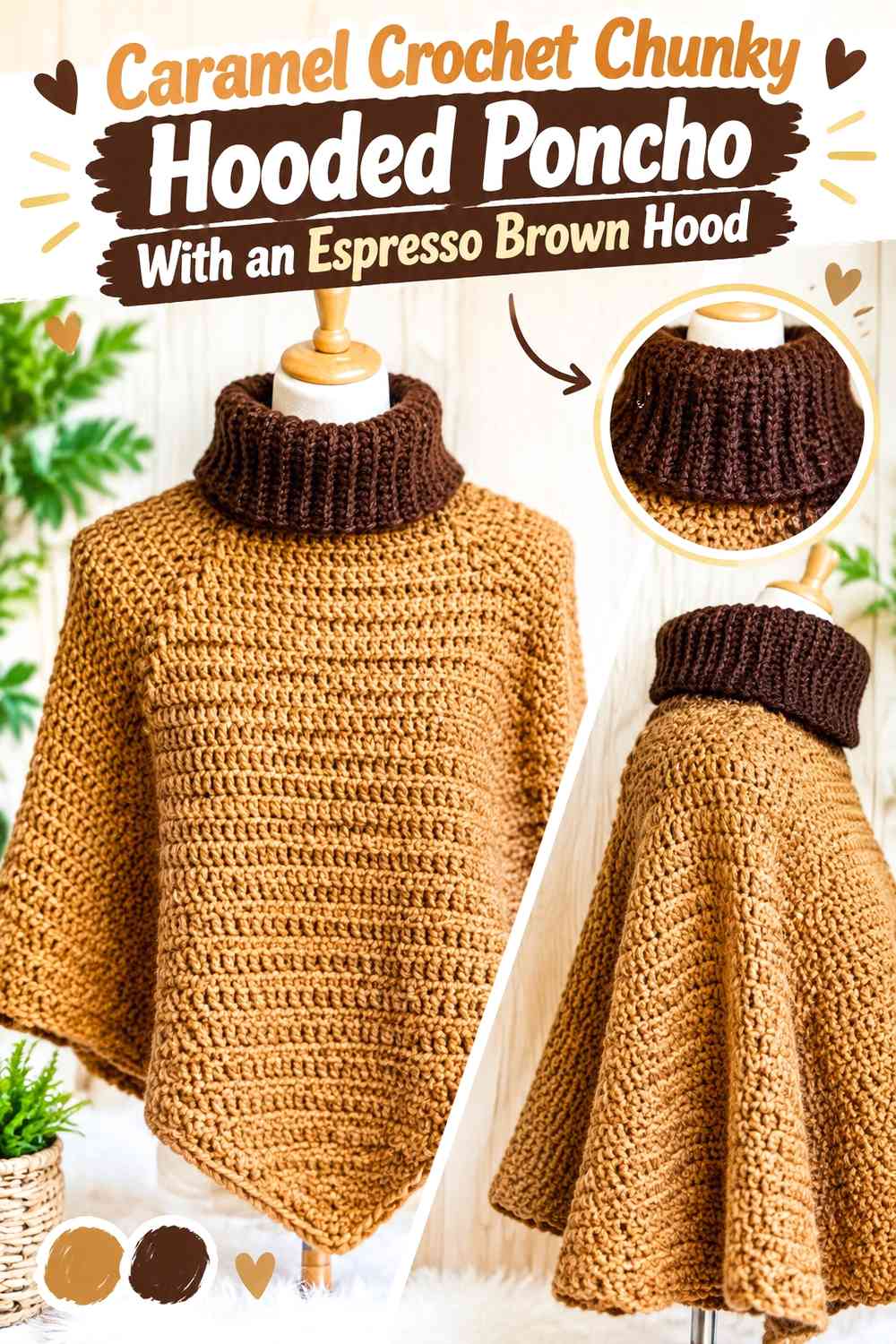
Reverse the usual hierarchy by making caramel the main body color and espresso brown the hood. This creates a lighter poncho overall while keeping the deepest shade concentrated around the head and shoulders.
Espresso Brown Hood Should Be the Darkest Anchor Above Caramel
Let the hood remain largely uninterrupted espresso brown rather than adding multiple caramel stripes through it.
The strong dark top becomes the defining feature of this palette reversal.
Caramel Body Panels Need Enough Continuity Below Espresso Brown
Keep the front and back predominantly caramel so the color change at the neckline feels deliberate.
If espresso brown reappears in too many broad body bands, the distinction between hood and body becomes less important.
Espresso Brown Can Return at the Caramel Hem in a Narrower Repeat
A small dark lower edge can reconnect the hem with the hood without dividing the caramel body.
Keep this secondary repeat shallower than the hood so the upper dark zone remains dominant.
Creator Credit: Kiriko Crochet
6. Espresso Brown Two-Point Crochet Hooded Poncho With Caramel Border Bands
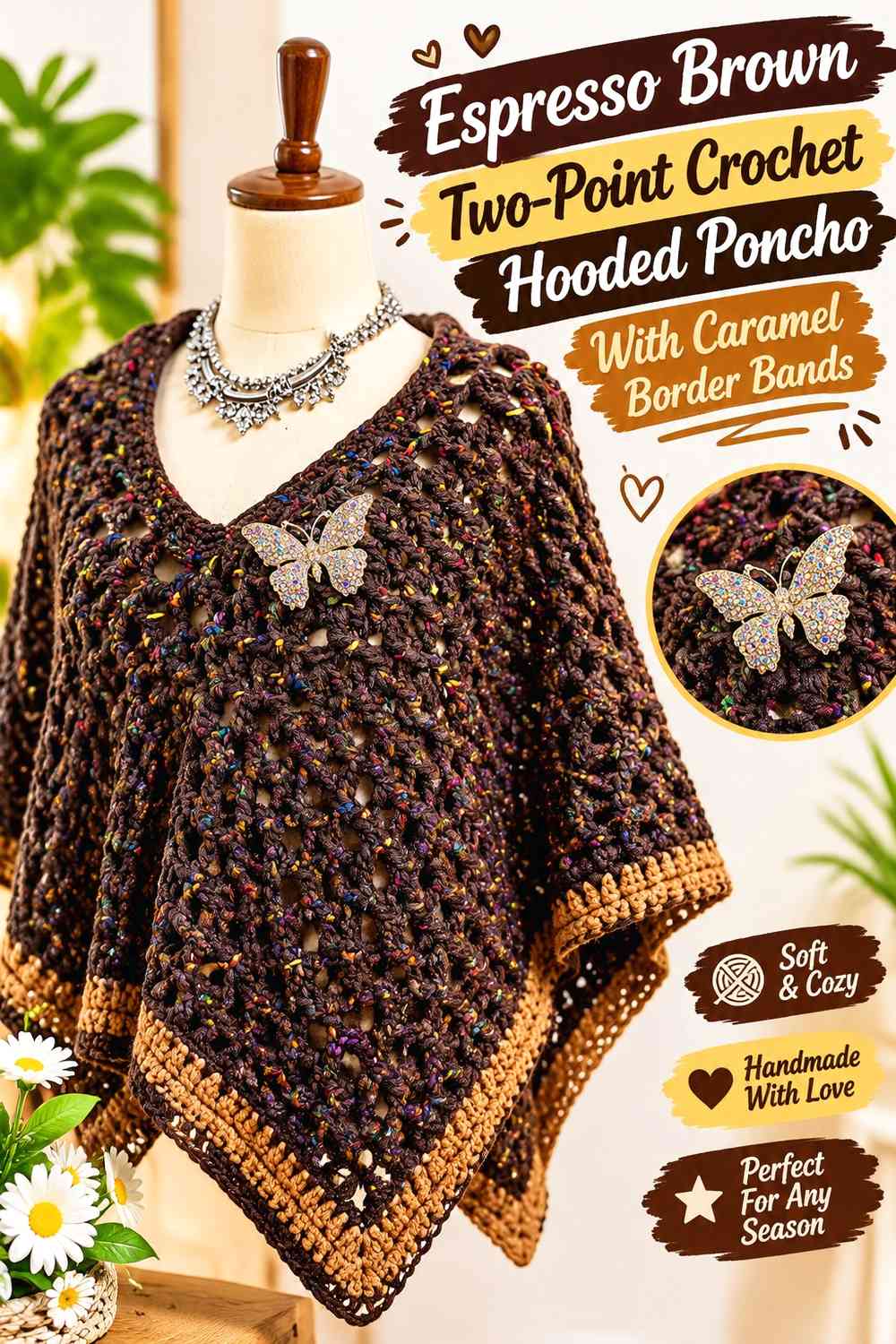
A two-point poncho naturally directs the eye toward the front and back tips. Espresso brown can carry the main construction, while caramel outlines the lower perimeter and emphasizes those pointed sections.
Caramel Can Trace the Espresso Brown Two-Point Shape
Use the contrast color around the existing lower edge rather than inserting unrelated bands higher on the body.
This makes the caramel useful for showing the silhouette itself.
Espresso Brown Should Dominate Above the Caramel Border
Leave most of the body dark from the neckline to near the hem.
That uninterrupted espresso area is especially valuable on a pointed poncho because the shape already supplies substantial visual movement.
Caramel Hood Details Should Stay Smaller Than the Espresso Brown Body Border
If you repeat caramel around the hood, keep it as a narrow frame.
The broader hem treatment can then remain the defining contrast feature.
Creator Credit: Bag-O-Day Crochet
7. Espresso Brown Granny-Panel Crochet Hooded Poncho With Caramel Accent Sections
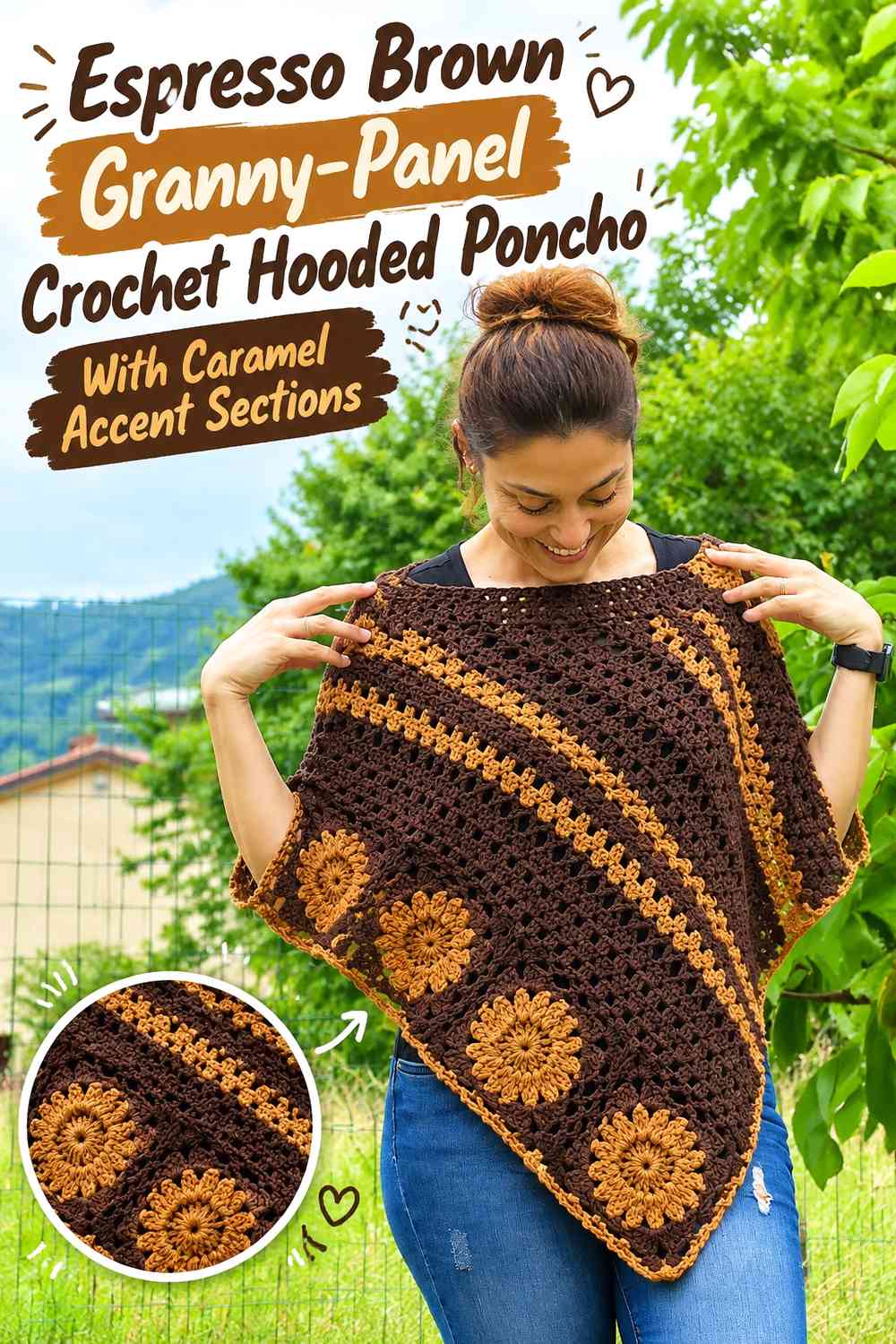
A panel-based poncho allows caramel to appear in contained areas rather than traditional stripes. Keep the main granny or motif sections espresso brown and use caramel selectively in connecting bands or one recurring section within the panel design.
Caramel Sections Need Consistent Placement Across Espresso Brown Panels
Repeat the caramel in the same visual role from one motif or panel to the next.
Random placement can make the lighter shade look patchy instead of establishing a deliberate two-color rhythm.
Espresso Brown Joins Can Keep Caramel Panels Connected
Use espresso brown where sections meet if you want the construction lines to recede.
Dark joining areas prevent the caramel accents from becoming one continuous network across the entire poncho.
Caramel Can Reappear Around the Espresso Brown Hood Opening
A narrow hood frame can connect the upper garment to the caramel used inside the body panels.
Keep it modest when the panel work already contains significant contrast.
Creator Credit: Francesca Uncinettando Crochet&Love
8. Espresso Brown Poncho-Sweater Crochet Hooded Poncho With Caramel Side Panels
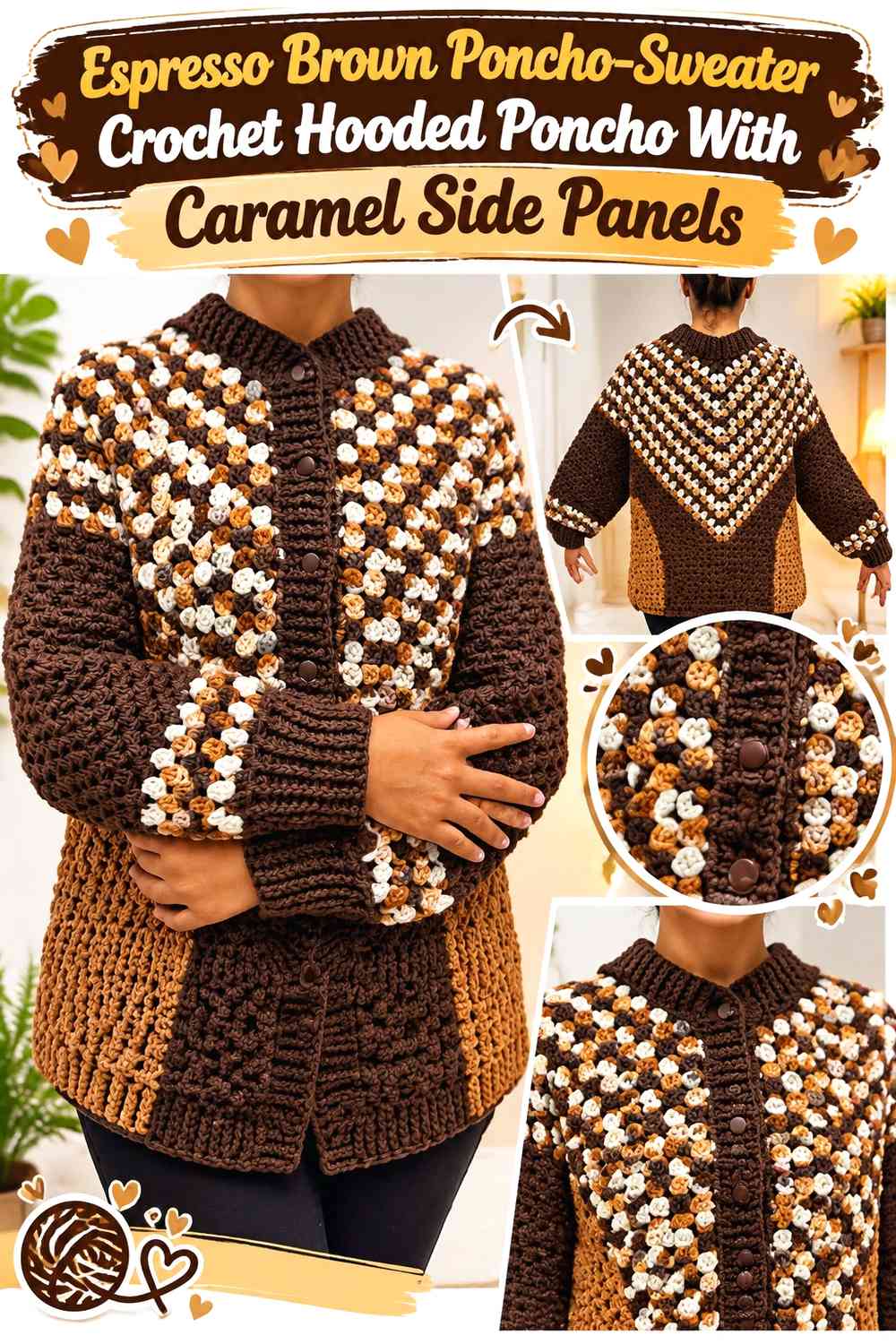
A poncho-sweater construction offers more defined side areas than a traditional open poncho. Use espresso brown across the central front and back while caramel occupies narrower sections toward the sides.
Caramel Side Panels Should Stay Narrower Than the Espresso Brown Center
Give espresso brown enough front-facing area to remain the obvious dominant shade.
Broad caramel sides can quickly make the garment feel evenly two-tone, especially when viewed at an angle.
Espresso Brown Hood Can Continue the Central Caramel-Framed Panel
Keep the hood dark so it visually extends the main central espresso area upward.
The caramel side sections then frame the body rather than competing with the hood.
Caramel Side Color Should Respect Espresso Brown Arm Movement Areas
Follow the tutorial’s existing garment shaping rather than creating color sections that imply seams or openings where none exist.
The palette should clarify construction, not make the poncho-sweater look visually distorted.
Creator Credit: Todo en crochet
9. Espresso Brown Turtleneck-Style Crochet Hooded Poncho With Caramel Hood Framing
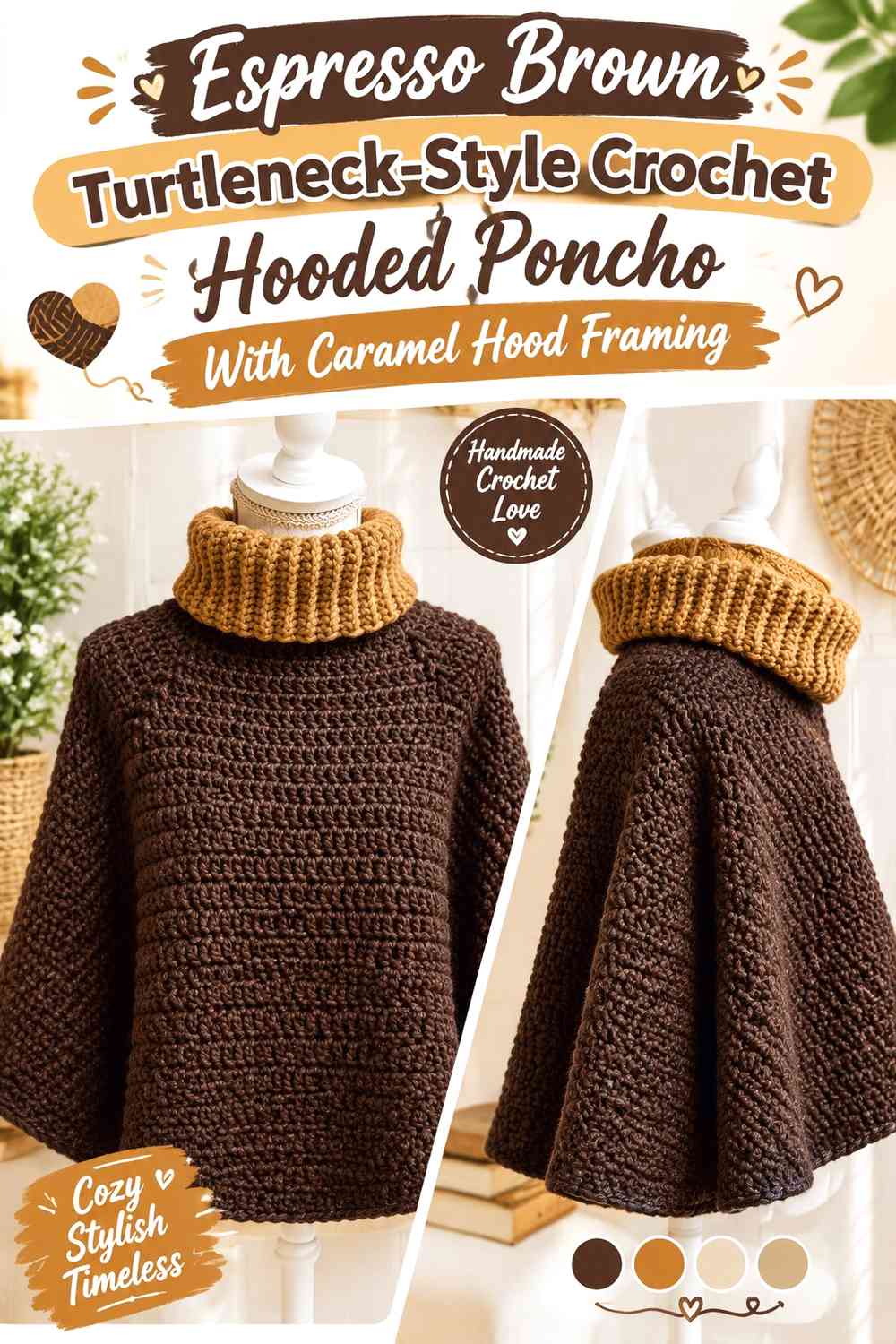
A high-neck poncho provides a useful base for a hooded adaptation because the neckline already has substantial visual presence. Keep the neck and body espresso brown, then use caramel to frame the added hood or the transition around its opening.
Espresso Brown Neckline Should Remain Visible Beneath Caramel
Do not cover the entire upper construction with a broad caramel section.
Leaving espresso brown through the neck visually connects the hood to the body and preserves the deeper color near the center.
Caramel Can Separate the Espresso Brown Hood From the Face
Use the lighter shade along the outer hood edge rather than throughout the entire hood.
This gives the caramel one highly visible role while the hood interior remains consistent with the espresso-brown body.
Espresso Brown Lower Panels Can Keep Caramel Concentrated at the Top
Avoid repeating another broad caramel hem if you want this idea to remain hood-focused.
A dark lower body makes the lighter face-framing detail more distinctive.
Creator Credit: Kiriko Crochet
10. Espresso Brown Ruana-Style Crochet Hooded Poncho With Caramel Front Borders
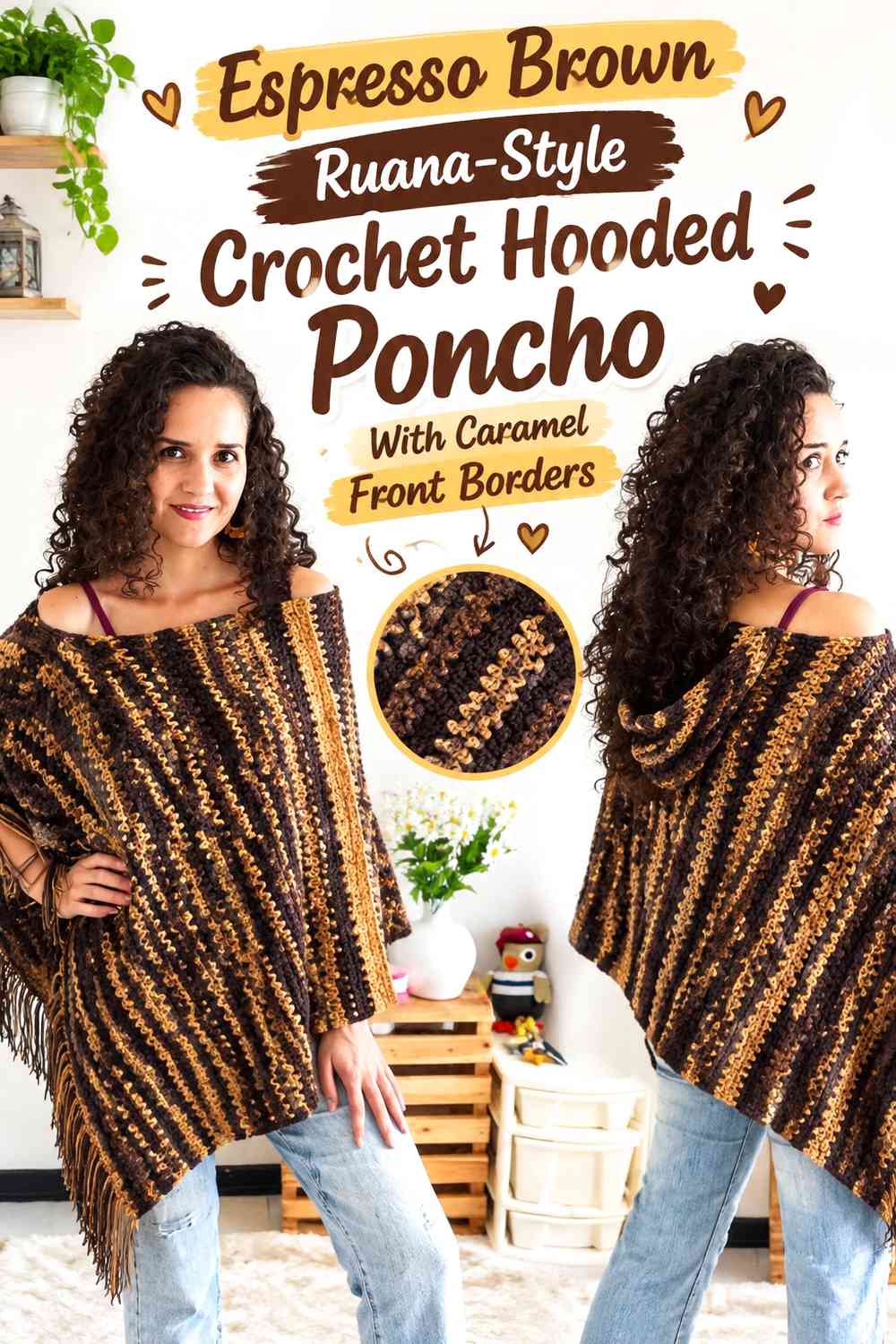
A ruana-inspired shape emphasizes open front edges rather than a single continuous neckline. Use espresso brown for the large back and side panels and caramel along the vertical front borders, then coordinate the hood with those lines.
Caramel Front Borders Can Lengthen the Espresso Brown Visual Line
Run the lighter shade consistently along both front edges so the contrast follows the garment opening.
Uneven border widths become particularly noticeable when the two sides hang next to one another.
Espresso Brown Back Panels Should Stay Broad Behind Caramel
The large back surface is the best place to preserve the darkest color.
Keeping it almost entirely espresso brown stops the long caramel borders from becoming visually dominant when viewed from behind.
Caramel Hood Edging Can Connect the Espresso Brown Ruana Front
Continue a narrow caramel line from the front border around the hood opening if the construction allows.
This creates one continuous framing concept rather than several unrelated accent sections.
Creator Credit: Crochet MC
11. Espresso Brown Capelet-Inspired Crochet Hooded Poncho With a Caramel Yoke
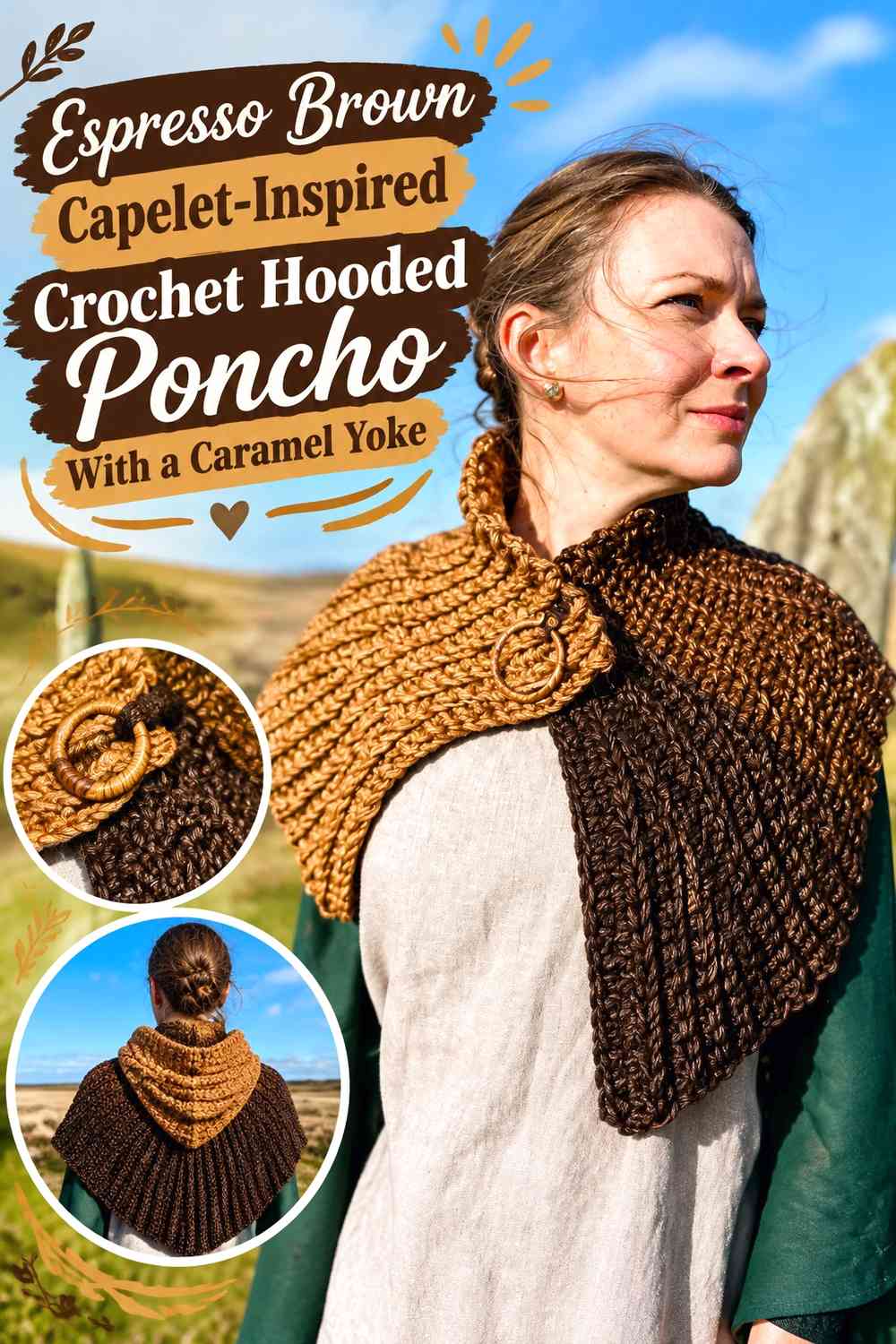
A capelet construction places more emphasis around the shoulders and upper chest. Use espresso brown for the lower poncho extension and hood, then create a caramel yoke area between them for a warmer two-zone color layout.
Caramel Yoke Should Sit Clearly Between Espresso Brown Sections
Keep espresso brown visible both above and below the caramel area.
This makes the lighter shade function as a deliberate inset rather than turning the top half of the poncho entirely caramel.
Espresso Brown Hood Can Ground the Caramel Shoulder Area
A dark hood above the lighter yoke keeps the deepest color near the face and prevents the shoulder section from becoming the visual endpoint of the garment.
It also distinguishes this idea from the caramel-body version.
Caramel Yoke Width Should Respect the Espresso Brown Capelet Shape
Follow the existing shoulder construction when placing the color change.
A yoke that ends at a natural shaping line usually looks more integrated than a stripe chosen only by visual width.
Creator Credit: Ophelia Talks Crochet
Comparing Espresso Brown and Caramel Chunky Hooded Poncho Styles
For the darkest overall look, use espresso brown across the hood and body and limit caramel to one structural edge. The hood-border, lower-hem, and two-point versions preserve the largest uninterrupted brown surfaces.
For stronger caramel contrast, move the lighter shade into shoulder stripes, side panels, or a yoke. Those placements increase its visual area without requiring the entire body to become striped.
The reversed caramel-body version gives the palette its lightest direction. An espresso-brown hood still provides enough dark weight at the top to prevent the garment from losing the deep winter character of the color scheme.
Construction matters when choosing between them. Traditional pointed ponchos suit hem-focused caramel, ruana shapes make vertical caramel borders more natural, and panel or poncho-sweater constructions provide defined spaces for side accents. A hood should be planned with that underlying construction rather than added only because the article theme calls for one.
Conclusion
Espresso brown and caramel can produce very different chunky hooded ponchos without adding a third color. A caramel hood frame draws attention upward, a caramel hem emphasizes the poncho silhouette, and broad caramel shoulder bands create the strongest horizontal contrast.
Use espresso brown across the largest body area when you want the poncho to remain dark and winter-focused. Reverse the balance for a lighter garment, or concentrate caramel in the yoke or side panels when you want more contrast without regular striping.
Before committing to the full color layout, establish the poncho’s gauge and fit using the construction you are following. This is particularly important when adapting a tutorial to a thicker yarn than the creator used. Check the neckline, hood depth, shoulder span, and overall length first, then use caramel to emphasize those established lines rather than letting decorative color changes determine the fit.
Frequently Asked Questions
Should espresso brown or caramel dominate a chunky hooded crochet poncho?
Espresso brown is a strong dominant choice when you want a deep winter look. Use caramel around the hood, hem, shoulders, or side panels. A caramel-dominant body can also work if espresso brown remains concentrated in a substantial area such as the hood.
Where should caramel go on an espresso brown hooded poncho?
Useful placements include the hood opening, lower border, shoulder stripes, side panels, front edges, or yoke. Choose one primary location first, then use smaller caramel repeats elsewhere only if the main accent feels disconnected.
How can I keep espresso brown and caramel from looking too striped?
Use larger color zones. For example, keep the full body espresso brown and add one caramel hood border or hem instead of alternating short brown-and-caramel bands throughout the garment.
Does caramel work well around an espresso brown crochet hood?
Yes. The lighter shade can define the hood opening clearly against a dark body. Keep the border proportionate to the hood so it functions as framing rather than becoming a large caramel panel around the neckline.
Can I use chunky yarn with any crochet poncho tutorial?
Do not substitute a substantially different yarn thickness and keep the creator’s stitch counts automatically. Compare gauge and follow the tutorial or pattern’s sizing guidance. A thicker fabric can change the poncho’s width, length, neckline, hood size, and overall drape.
Should the hood match the espresso brown body or the caramel trim?
Either approach can work. An espresso-brown hood creates a continuous dark line from head to body, while a caramel hood becomes a much stronger focal section. If the hood is caramel, reduce large caramel areas elsewhere if you want espresso brown to remain dominant.
How can I substitute espresso brown or caramel without changing this winter palette?
Preserve the relationship between the shades. Replace espresso brown with another deep warm brown and caramel with a lighter warm tan or golden brown that remains noticeably lighter than the main color. Compare the yarns together in the intended stitch texture before committing to the full poncho.