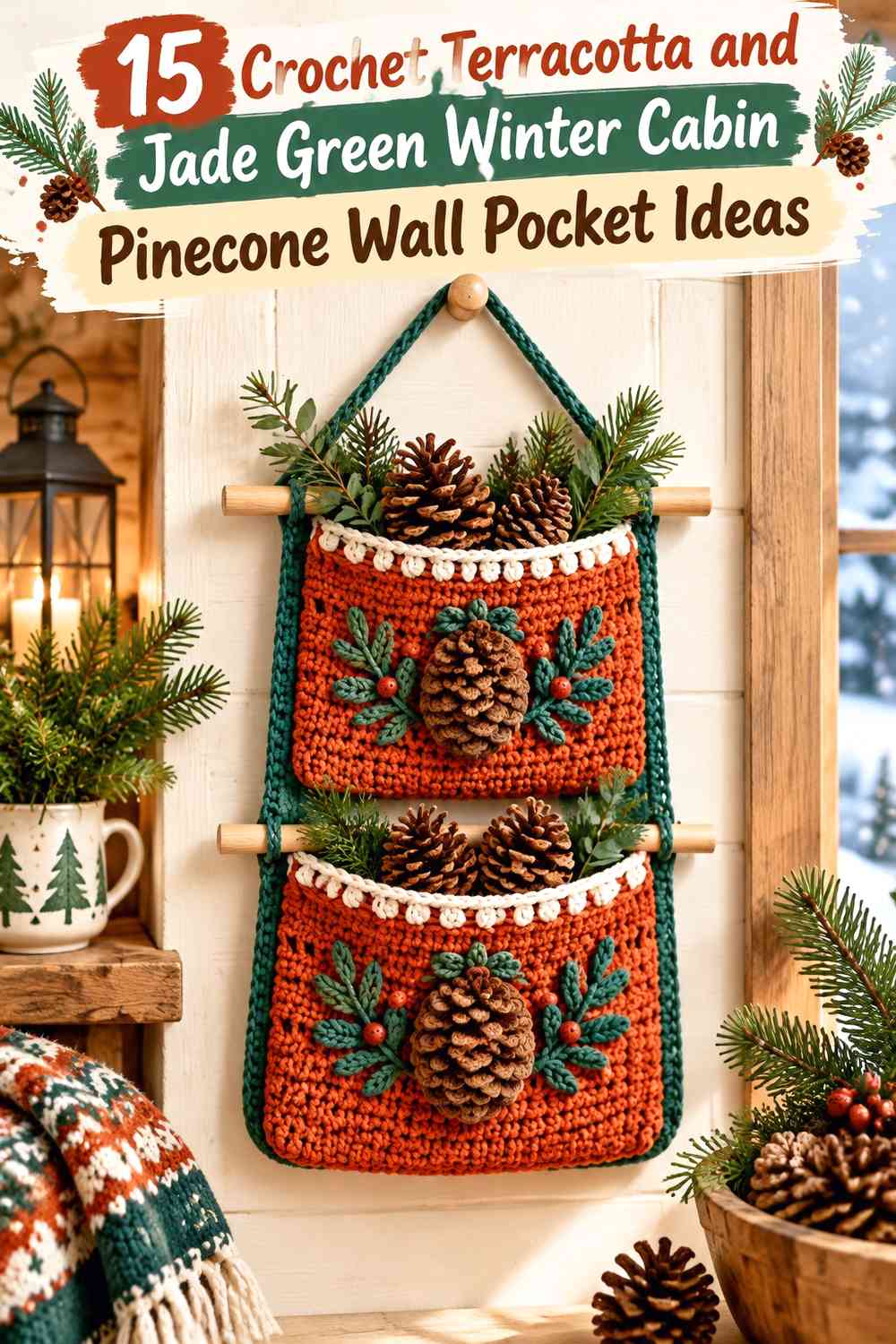

Terracotta and jade green give a crochet wall pocket a strong winter-cabin direction without relying on traditional holiday red and green. Terracotta can suggest the warm brown-orange side of pinecones, wood, and fired clay, while jade green supplies the evergreen contrast that keeps the palette connected to winter foliage.
A wall pocket also gives these colors several distinct jobs. The pocket body, upper opening, hanging loop, backing panel, border, and pinecone decoration do not all need to use the same color proportions. In many cases, the pinecone motif will read more clearly when one color dominates the pocket and the other is concentrated around the decorative area.
The tutorials credited below teach crochet wall organizers, hanging baskets, or closely related hanging-pocket constructions. The terracotta, jade green, and pinecone treatments are independent adaptations, so the creators should not be assumed to have used these exact colors or pinecone details.
Quick List
- Terracotta, Jade Green, and Cream Snowcap Crochet Pinecone Wall Pocket
- Jade Green, Terracotta, and Espresso Crochet Cabin Pinecone Wall Pocket
- Terracotta, Jade Green, and Oatmeal Banded Crochet Pinecone Wall Pocket
- Jade Green, Terracotta, and Deep Pine Crochet Framed Pinecone Wall Pocket
- Terracotta, Jade Green, and Warm White Folded Crochet Pinecone Wall Pocket
- Jade Green, Terracotta, and Charcoal Crochet Winter Pinecone Wall Pocket
- Terracotta, Jade Green, and Antique Gold Crochet Cabin Pinecone Wall Pocket
- Jade Green, Terracotta, and Dusty Blue Frost Crochet Pinecone Wall Pocket
- Terracotta, Jade Green, and Burgundy Crochet Cabin Pinecone Wall Pocket
- Jade Green, Terracotta, and Mushroom Taupe Crochet Pinecone Wall Pocket
- Terracotta, Jade Green, and Silver Gray Crochet Winter Pinecone Wall Pocket
- Jade Green, Terracotta, and Black-Edge Graphic Crochet Pinecone Wall Pocket
- Terracotta, Jade Green, and Chestnut Brown Crochet Pinecone Wall Pocket
- Jade Green, Terracotta, and Icy Sage Crochet Tonal Pinecone Wall Pocket
- Terracotta and Jade Green Two-Color Crochet Pinecone Wall Pocket
Decide Whether Terracotta or Jade Green Should Carry the Crochet Wall Pocket
Choose the dominant color before deciding where the pinecone decoration belongs. A terracotta pocket with jade edging produces a warmer wall piece, while a jade-green body makes terracotta pinecones much easier to identify as the focal detail.
For a wall pocket, the front surface matters most because that is where appliqués, motifs, and edging remain visible after the pocket contains small items. If a color is intended as the star of the palette, give it enough uninterrupted surface to remain visible after the pocket begins to fill.
Keep Terracotta Pinecones Visible Against Jade Green Crochet
A terracotta pinecone on a jade-green pocket creates a straightforward hue contrast, but the actual yarns still need to be compared for light and dark value. A very deep terracotta can lose some separation against a dark jade.
If that happens, use cream, oatmeal, silver gray, or another lighter palette color around the pinecone rather than adding more decoration everywhere. A small outline, backing shape, or nearby border can improve separation while keeping the cabin palette controlled.
Use Jade Green Around the Wall-Pocket Opening With Purpose
The upper opening is a useful place for jade green because the darker or cooler color can visually define where the storage area begins. It can also connect a terracotta body to green pine-needle or branch-inspired details around the pinecone motif.
Avoid putting every accent color at the opening, hanging loop, border, and motif simultaneously. On a compact wall pocket, repetition works best when each color has one clear primary role and perhaps one smaller echo elsewhere.
1. Terracotta, Jade Green, and Cream Snowcap Crochet Pinecone Wall Pocket
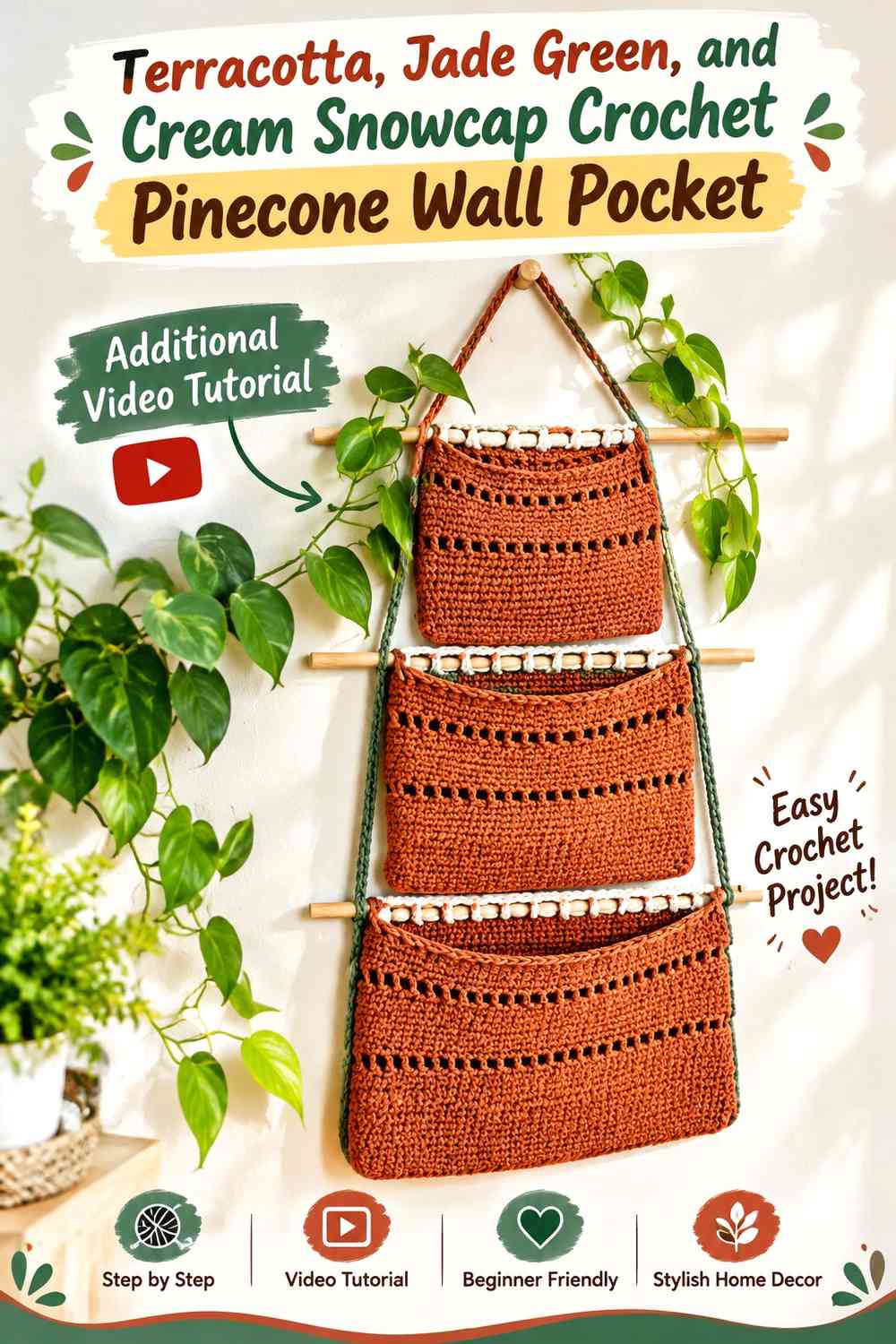
Terracotta leads across the front pocket, jade green defines the opening and pine-branch details, and cream adds a small snowy highlight. This scheme keeps the winter-cabin idea recognizable while allowing the terracotta surface to remain warm and substantial.
Terracotta Should Cover Most of the Crochet Wall Pocket Front
Use terracotta across the largest visible pocket section so the pinecone theme does not depend entirely on a small appliqué. A jade-green opening or border can then create a clear cooler contrast.
If the pocket has a backing panel, keeping that panel mostly terracotta also prevents the hanging piece from looking divided into too many separate color blocks.
Jade Green Can Frame a Terracotta Pinecone Without Hiding It
Place jade around the pinecone as leaves, branch-like accents, or a narrow surrounding detail rather than covering the cone itself. This lets the terracotta motif remain visually connected to the terracotta body while the green marks its outline.
Cream Should Stay a Small Highlight Beside Terracotta and Jade Green
Cream works well as a restrained top edge, tiny motif accent, or narrow border. Too much cream changes the project from an earthy cabin palette into a much lighter neutral wall hanging.
Creator Credit: Happy Heartsy
2. Jade Green, Terracotta, and Espresso Crochet Cabin Pinecone Wall Pocket
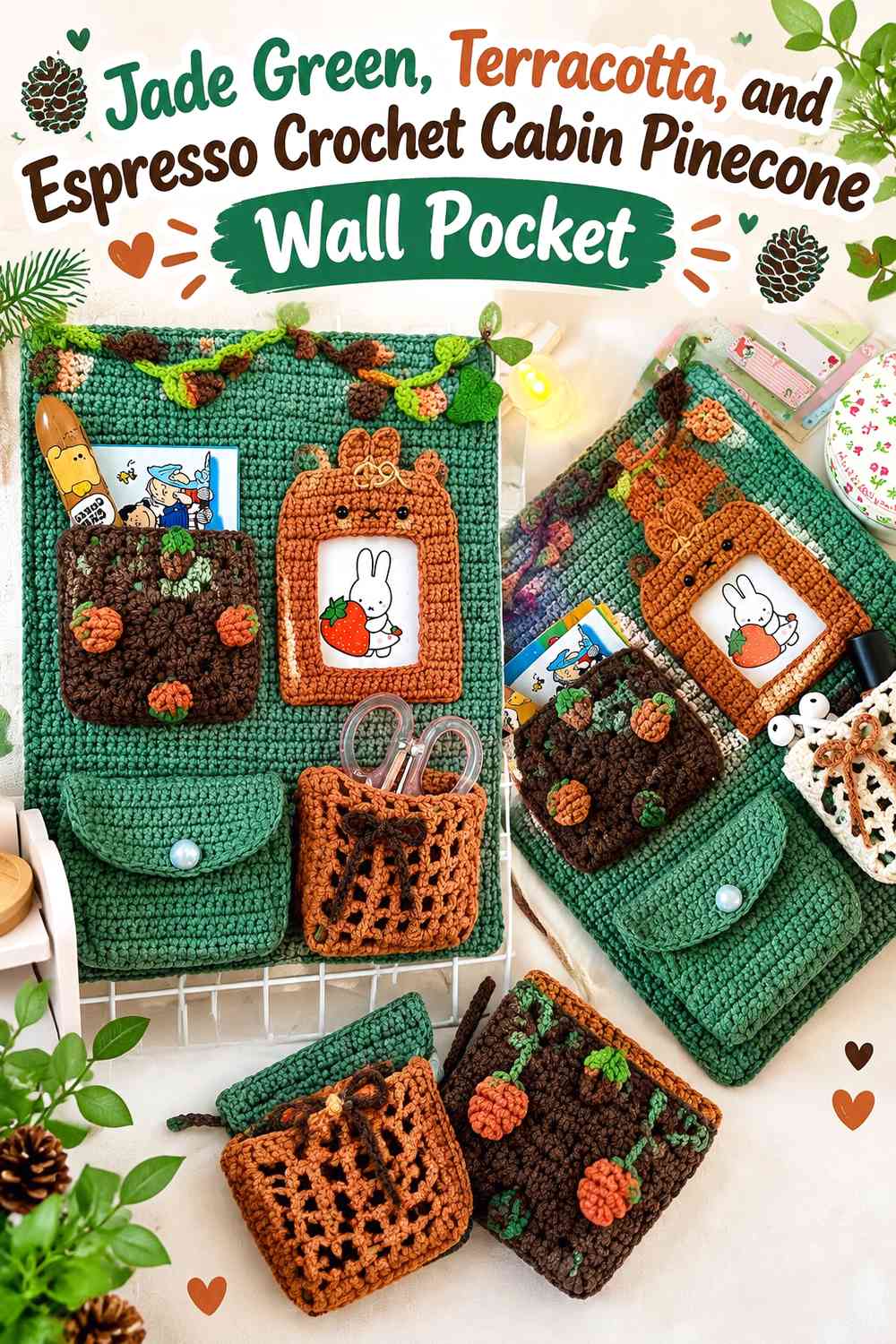
Jade green becomes the main field, making terracotta pinecones the obvious warm focal point. Espresso adds the darkest anchor around the hanging loop, opening, or lower edge.
Jade Green Gives Terracotta Pinecones a Clear Crochet Background
Use jade across most of the pocket front so terracotta pinecones do not have to compete with other warm areas. This is particularly effective when the pinecone decoration sits near the center or lower front.
Keeping the body green also makes small terracotta repeats easier to notice if you want more than one cone.
Espresso Can Ground the Jade Green Wall-Pocket Opening
A narrow espresso edge can distinguish the upper opening from the green body. Keep the brown controlled so it reinforces the cabin direction without competing with the terracotta pinecone.
Terracotta Should Remain Warmer and More Visible Than Espresso
If the chosen terracotta and espresso are both dark, put a little jade between them. That separation keeps the pinecone from merging into the darkest trim.
Creator Credit: chubbiesbyash𐙚
3. Terracotta, Jade Green, and Oatmeal Banded Crochet Pinecone Wall Pocket
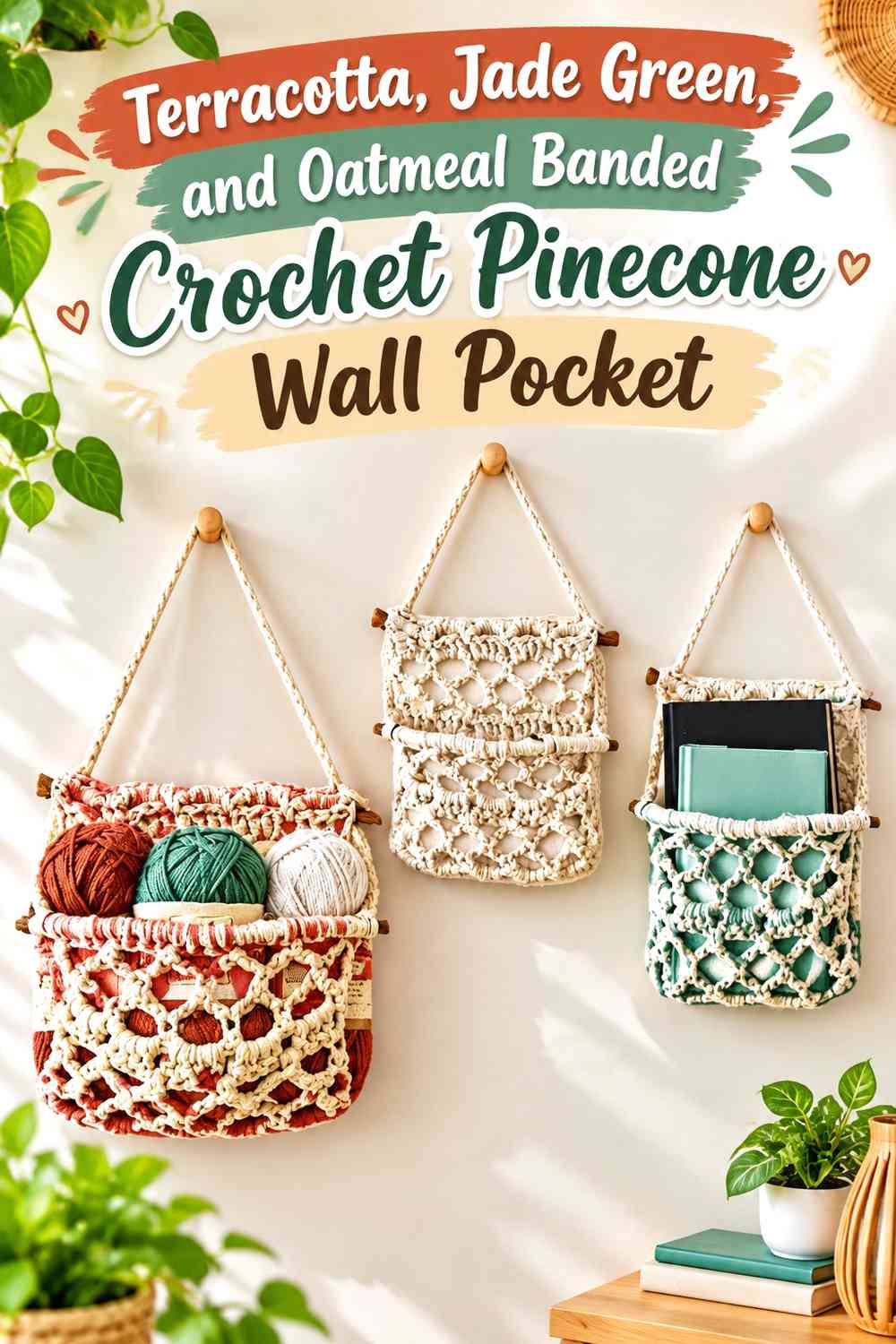
Oatmeal softens the strong terracotta-and-jade contrast and works well as a narrow horizontal band across the pocket. Terracotta remains dominant, while jade green repeats around the opening and pinecone foliage.
Terracotta Can Form the Main Crochet Pocket Below an Oatmeal Band
Keep the lower storage area largely terracotta and place oatmeal higher on the wall piece. This leaves the portion most visible from across the room warm and uncluttered.
Jade Green Can Repeat From the Pinecone Detail to the Pocket Rim
Using jade both around the pinecone and at the opening ties the decorative motif to the functional part of the wall pocket. The two green areas do not need to be equal in size.
Oatmeal Should Separate Terracotta and Jade Green Selectively
One neutral band can give the eye a pause between strong warm and cool sections. Repeating oatmeal between every color change would make the pocket more striped than pinecone-focused.
Creator Credit: luckyday ♡
4. Jade Green, Terracotta, and Deep Pine Crochet Framed Pinecone Wall Pocket
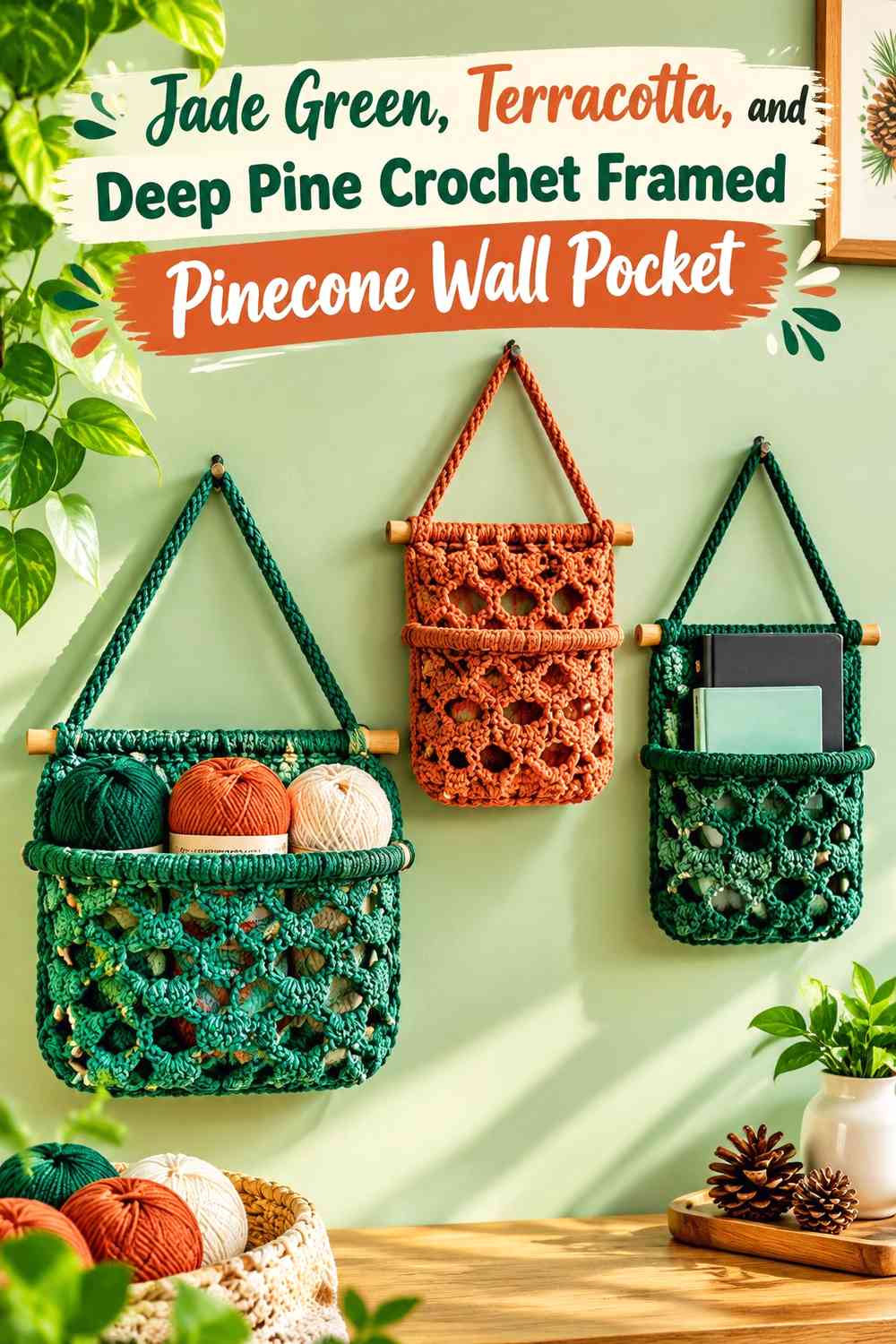
This palette uses two greens with different jobs. Jade green covers the main body, deep pine frames the opening or hanging detail, and terracotta supplies the pinecone focal point.
Jade Green Should Stay Distinct From Deep Pine on the Crochet Pocket
Choose a deep pine that is noticeably darker than the jade. If the two greens look nearly identical, the framing effect disappears and the extra color adds little value.
Terracotta Pinecones Can Sit Against the Jade Green Main Field
A warm terracotta motif has more visual impact when it is not surrounded by several other warm accents. Keep the cone area simple and let the two greens create the surrounding woodland structure.
Deep Pine Works Best at the Jade Green Pocket Edge
Use the deepest green where definition matters: the rim, hanging loop, or narrow outer border. Keeping it away from most of the pinecone surface preserves the terracotta focal point.
Creator Credit: Yarnissonline
5. Terracotta, Jade Green, and Warm White Folded Crochet Pinecone Wall Pocket
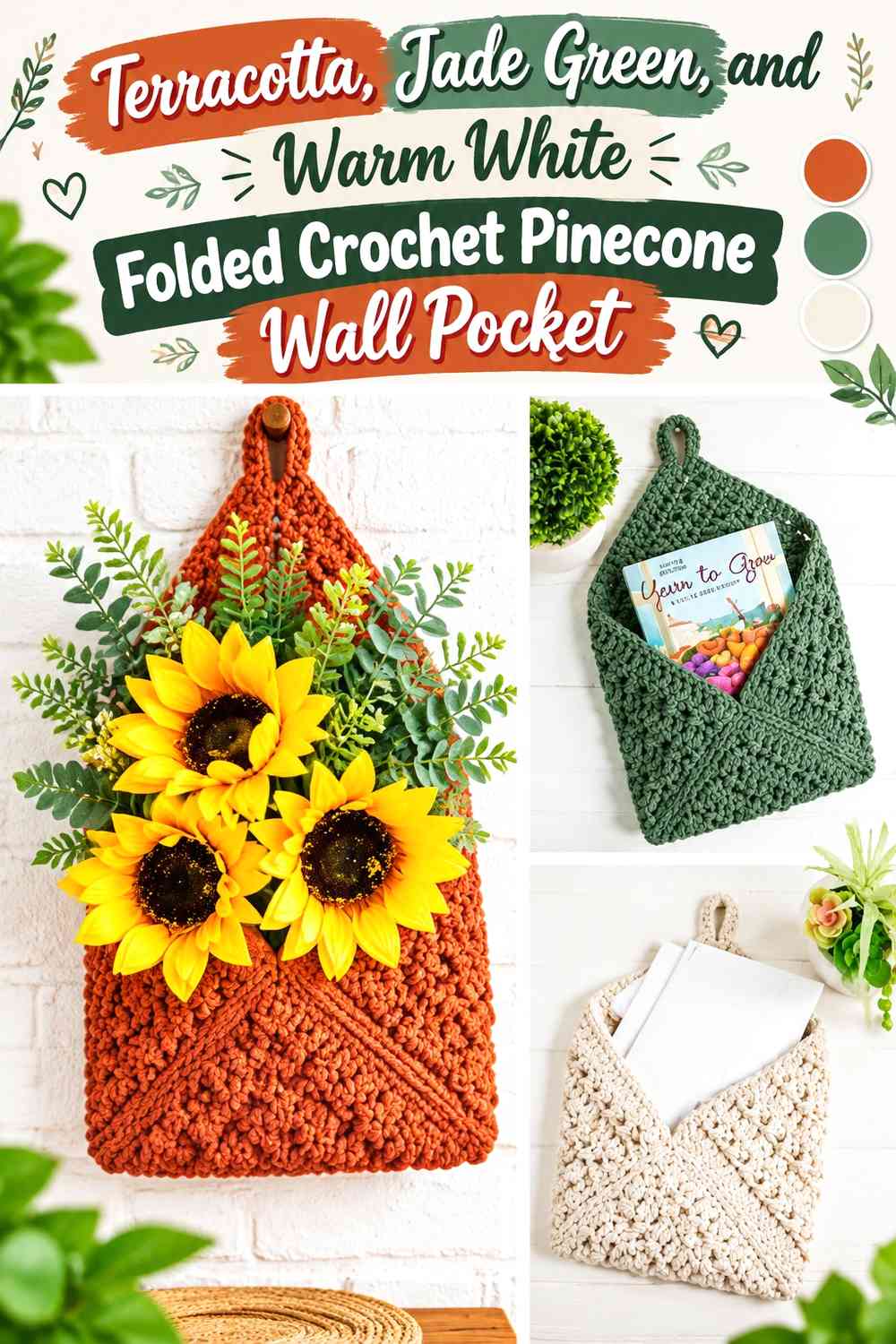
A folded wall-pocket form creates visible planes that can be assigned different colors. Terracotta can cover the broad front, jade green can mark the folded opening, and warm white can lighten selected borders.
Terracotta Should Keep the Folded Crochet Pocket Geometry Easy to Read
Use terracotta on the largest front section rather than alternating several colors across every fold. A continuous main color makes the pocket shape easier to understand.
Jade Green Can Define the Terracotta Folded Opening
A green upper rim or folded edge creates a natural visual break between the storage opening and the front surface. It also provides an obvious place to connect green foliage around a terracotta pinecone.
Warm White Can Highlight Terracotta and Jade Green Without Dominating
A narrow warm-white edge can brighten the wall pocket against dark wood or cabin-style walls. Keep it secondary so the earthy orange-green pairing still defines the project.
Creator Credit: Winding Road Crochet
6. Jade Green, Terracotta, and Charcoal Crochet Winter Pinecone Wall Pocket
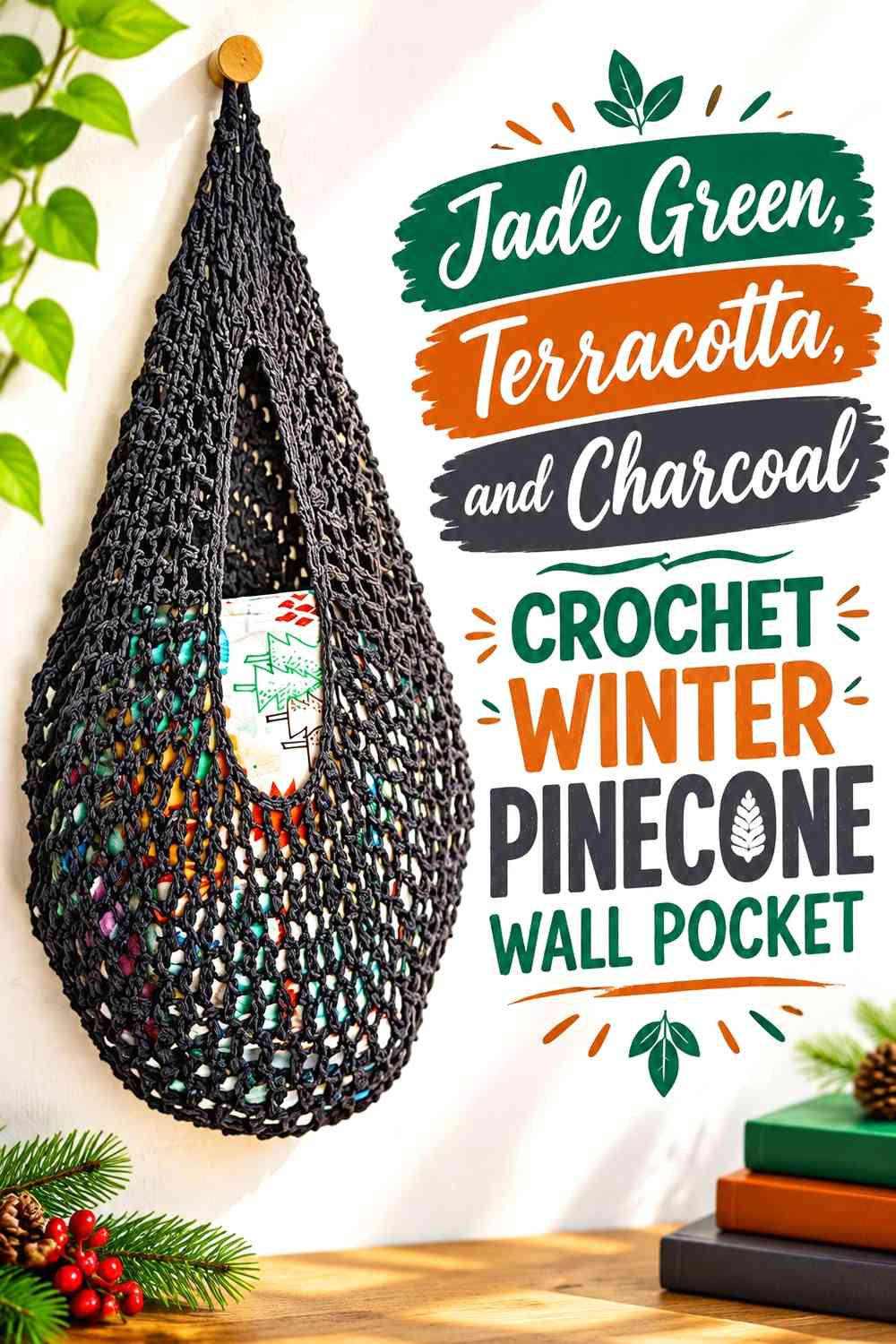
Charcoal introduces a cool dark frame that makes this scheme more graphic. Jade green can lead across the pocket, terracotta can form the pinecones, and charcoal can define only the most structural edges.
Jade Green Needs Enough Surface Beside Charcoal
Avoid making charcoal bands too wide. A dark opening, loop, and border can quickly surround the entire pocket and reduce the jade-green field.
Terracotta Pinecones Can Warm a Charcoal-Edged Jade Green Pocket
Keep terracotta concentrated at the motif rather than repeating it through every structural feature. The warm cone then becomes the visual counterpoint to the green-and-charcoal body.
Charcoal Should Outline Jade Green Rather Than Divide Every Section
Use charcoal where the silhouette benefits from definition. If it appears between every green and terracotta detail, the wall pocket can become overly segmented.
Creator Credit: Crochet With Julie
7. Terracotta, Jade Green, and Antique Gold Crochet Cabin Pinecone Wall Pocket
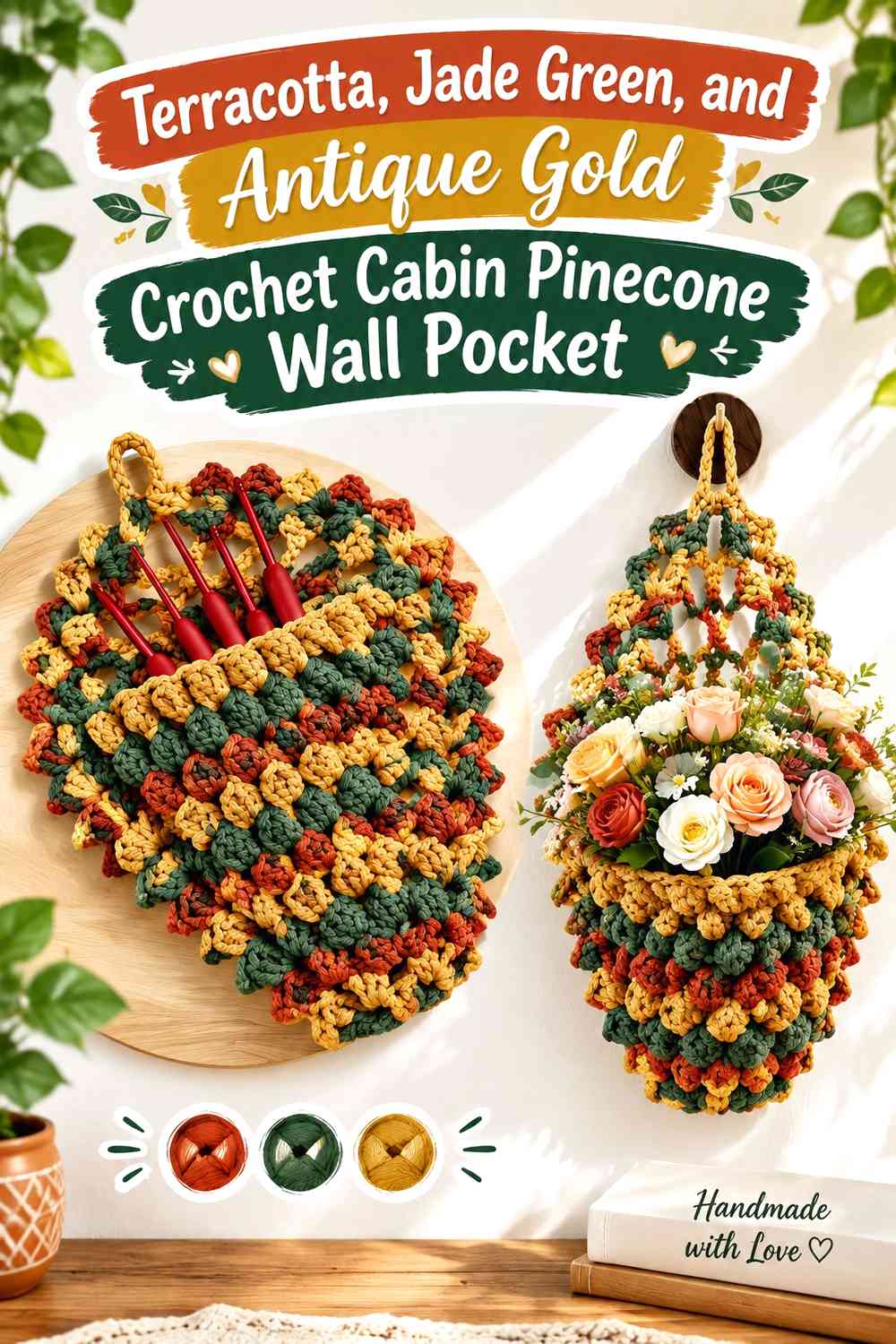
Antique-gold color can add a muted golden note that fits naturally beside terracotta without becoming as bright as yellow. Use it sparingly around a jade-green upper section or as a small motif accent.
Terracotta Should Stay Stronger Than Antique Gold on the Crochet Pocket
Give terracotta the broad body or the main pinecone motif. Antique gold should occupy less visual area so it remains an accent rather than creating a second warm dominant color.
Jade Green Can Separate Terracotta From Antique Gold
A green band between the two warm shades creates clearer organization. This is useful when the terracotta and antique gold are similar in value.
Antique Gold Can Echo the Terracotta Pinecone in Small Details
A narrow edge, tiny hanging-loop accent, or small pinecone highlight is enough to establish the color. Keep the repetition limited and consistent.
Creator Credit: Crochet Everyday
8. Jade Green, Terracotta, and Dusty Blue Frost Crochet Pinecone Wall Pocket
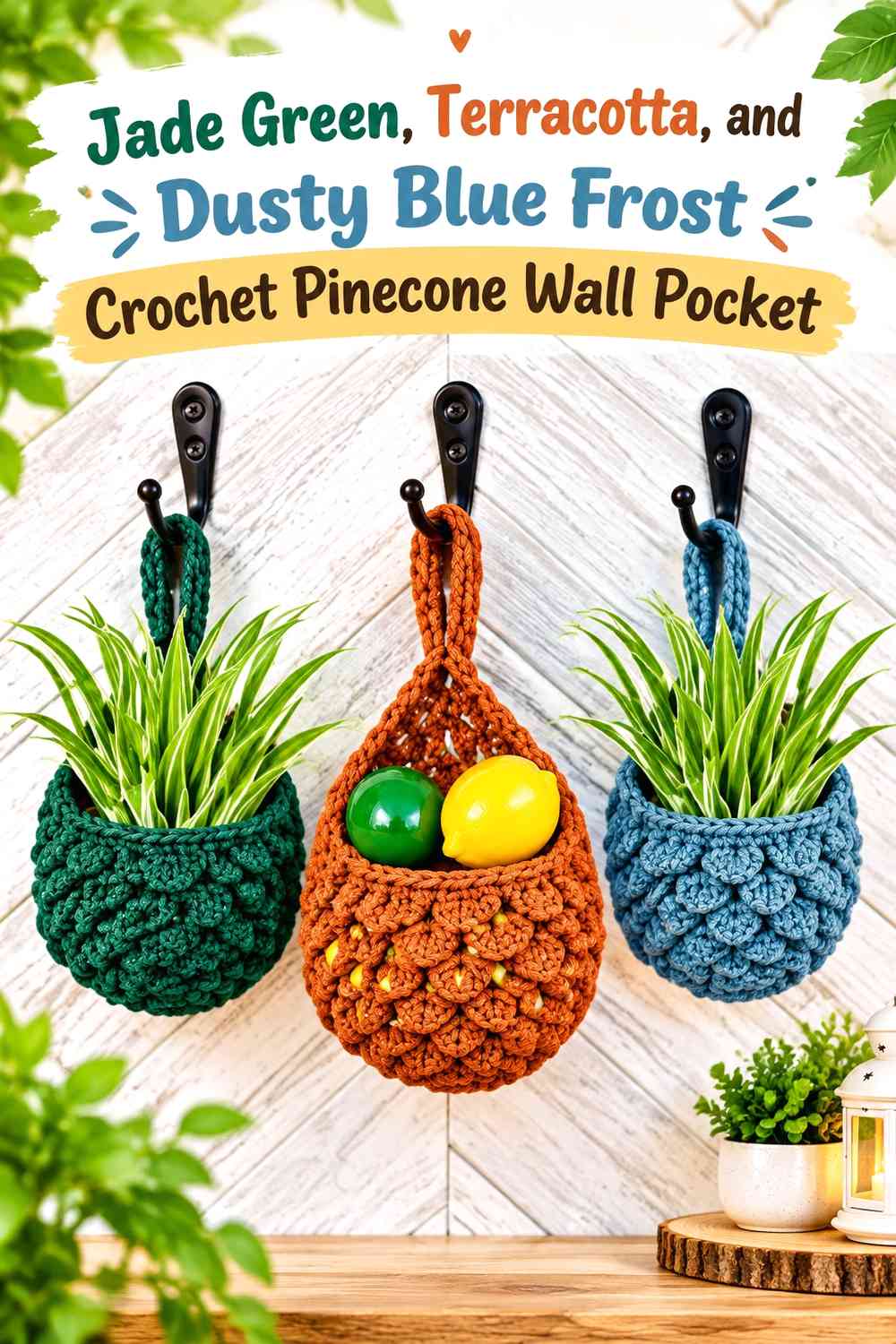
Dusty blue gives the winter-cabin palette a cooler frost note. Jade remains the main body color, terracotta marks the pinecone, and dusty blue appears only where a colder accent helps separate sections.
Jade Green Should Remain the Main Crochet Pocket Color
Use jade across the storage body so dusty blue does not turn the project into a blue-green wall hanging. The title palette should still be obvious at first glance.
Terracotta Pinecones Need Clear Space Beside Dusty Blue
If the blue appears near the motif, let jade or a little open space separate the two accent colors. This keeps the terracotta cone from competing with another focal hue.
Dusty Blue Can Cool the Jade Green Pocket Border
A narrow blue-gray edge or upper band can create the frosted winter direction without covering much surface. It works best as a supporting color rather than another full body panel.
Creator Credit: Hectanooga1
9. Terracotta, Jade Green, and Burgundy Crochet Cabin Pinecone Wall Pocket
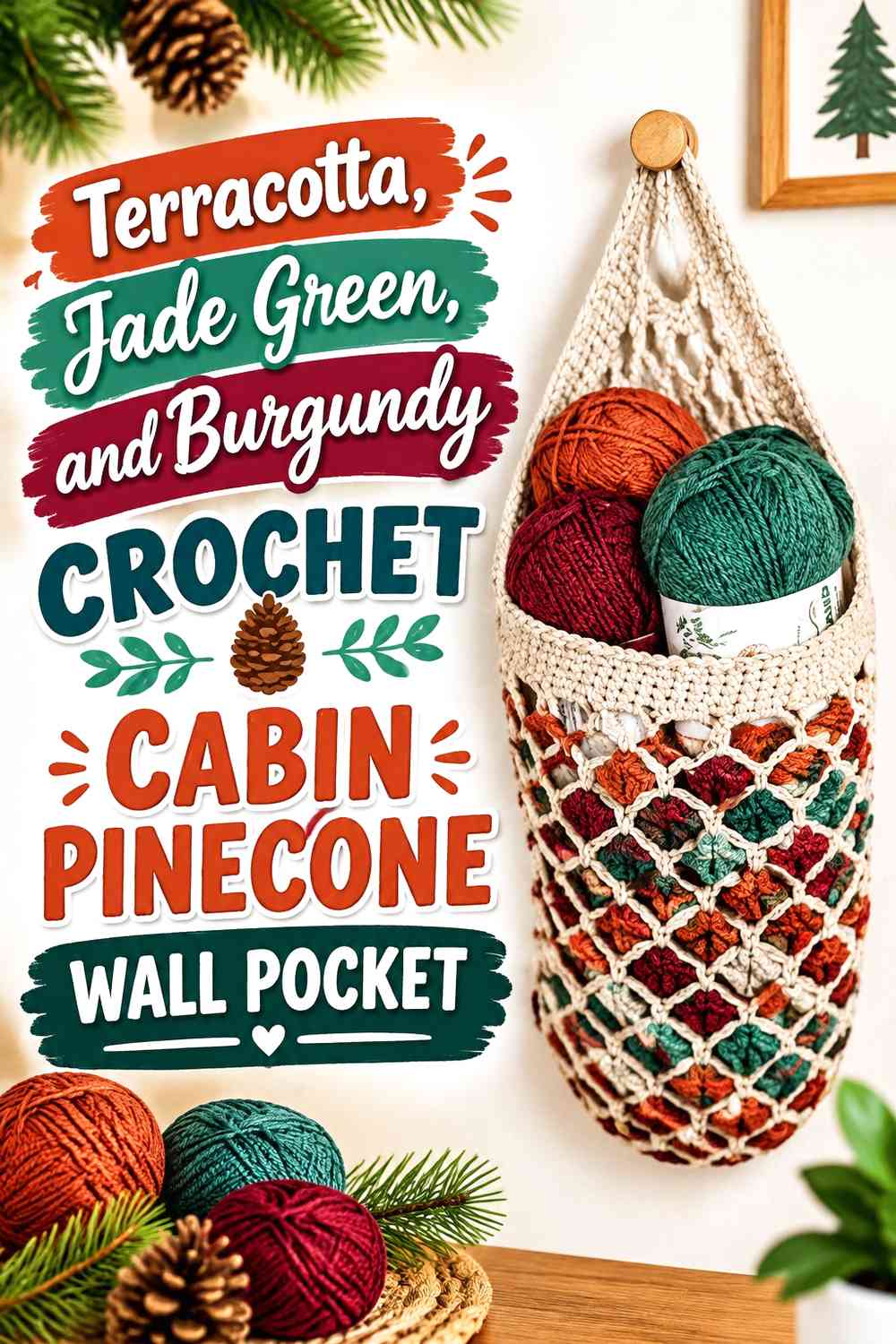
Burgundy deepens the warm half of the palette. Terracotta remains the pinecone and body color, jade green supplies evergreen contrast, and burgundy frames selected edges.
Terracotta Should Stay Visibly Lighter Than Burgundy
Check the actual yarns side by side. If burgundy and terracotta collapse into one dark warm area, use jade between them or reduce the burgundy border.
Jade Green Can Keep the Terracotta Pinecone From Blending Into Burgundy
Place jade foliage or an inner green frame around the cone when burgundy appears nearby. The cool interruption makes the warm motif easier to locate.
Burgundy Works Best as a Narrow Terracotta Pocket Accent
Use burgundy around the opening, loop, or small lower edge. Broad burgundy sections can overpower the softer terracotta and make the wall pocket visually heavier.
Creator Credit: First The Coffee Crochet
10. Jade Green, Terracotta, and Mushroom Taupe Crochet Pinecone Wall Pocket
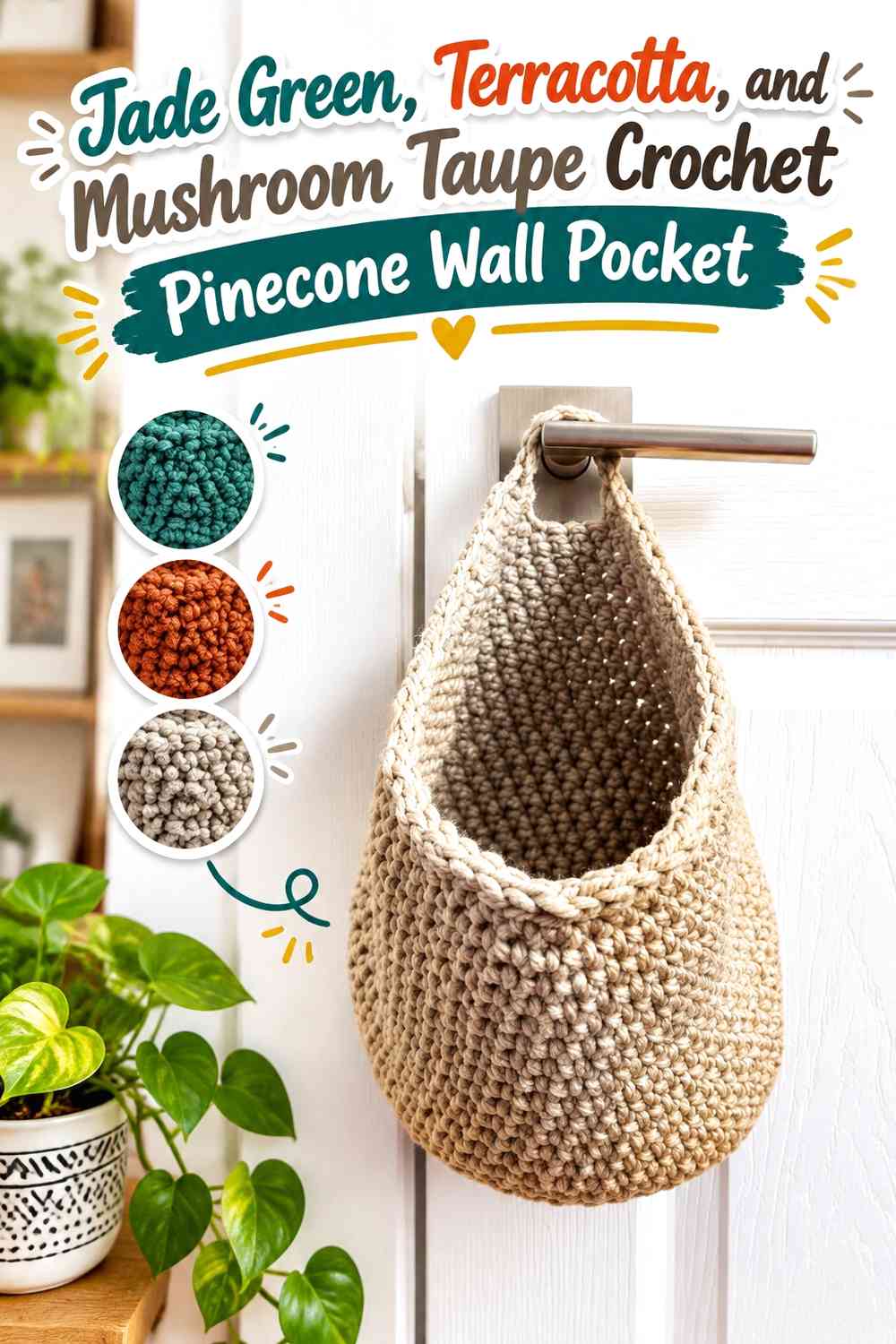
Mushroom taupe creates a quieter cabin scheme than white or black. Jade green can dominate the front, terracotta can provide the pinecone, and taupe can form the backing panel or secondary border.
Jade Green Can Lead Against a Mushroom Taupe Backing
A taupe backing gives the jade pocket a neutral frame without the sharpness of black. This can make a layered wall organizer feel calmer while keeping the front clearly green.
Terracotta Pinecones Should Stay Concentrated on Jade Green
Place the pinecone where the jade background remains uninterrupted. Avoid moving the cone partly onto taupe if that weakens its outline.
Mushroom Taupe Can Balance Terracotta Without Becoming Another Brown
Choose taupe for its muted neutral role rather than trying to match the pinecone. The visual separation between taupe and terracotta should remain clear enough that the motif does not disappear.
Creator Credit: Jayda InStitches
11. Terracotta, Jade Green, and Silver Gray Crochet Winter Pinecone Wall Pocket
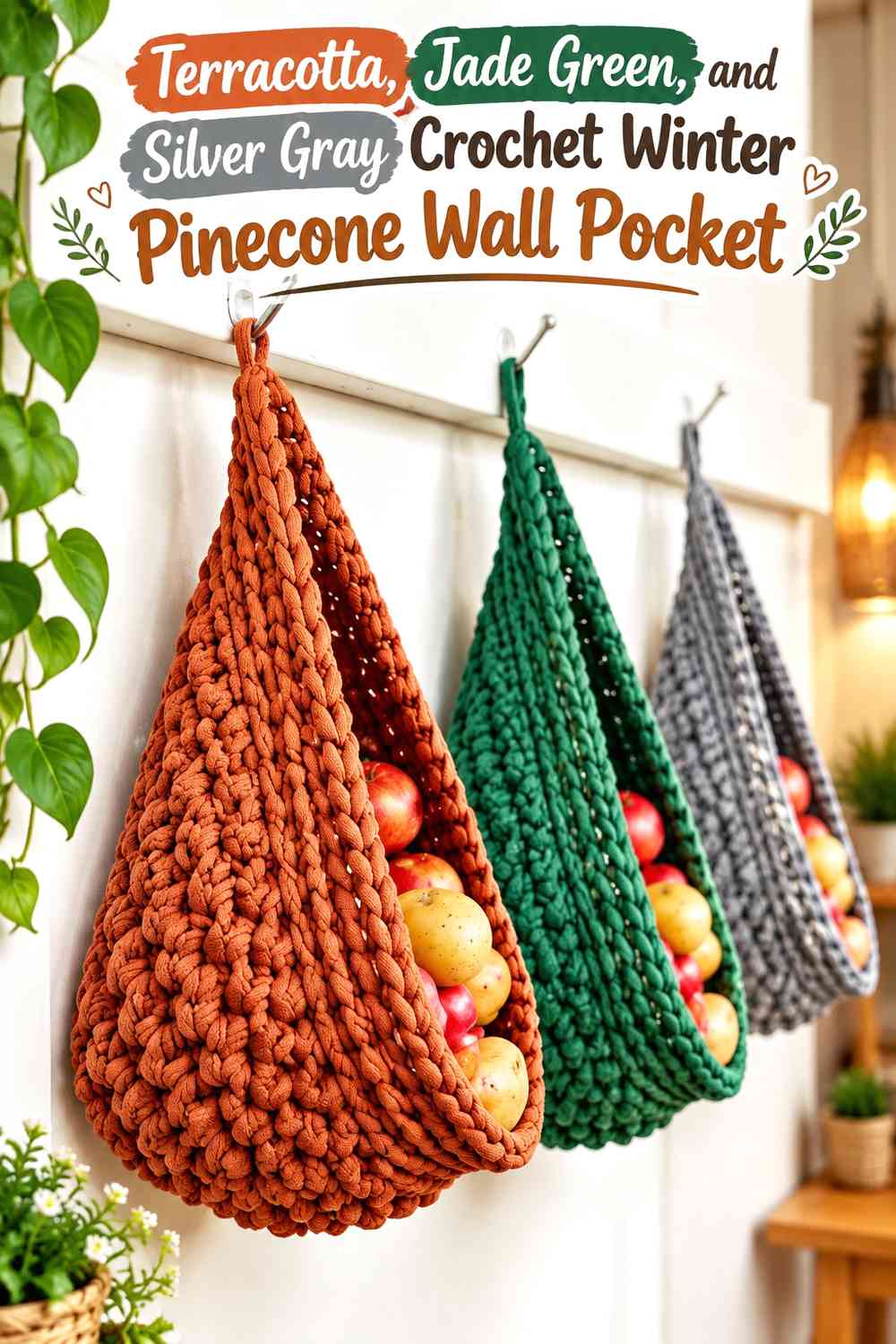
Silver gray introduces a cooler neutral while leaving terracotta and jade green as the only strong hues. It works particularly well along a top border or backing panel.
Terracotta Can Warm a Silver Gray Crochet Pocket Frame
Use terracotta across the main front or pinecone motif and allow silver gray to sit farther back. This keeps the neutral from washing out the earthy cabin character.
Jade Green Can Connect the Terracotta Pinecone to Winter Foliage
Repeat jade in both a pocket edge and the pinecone’s surrounding branch details. The repeated green creates continuity without requiring a large green body.
Silver Gray Should Stay Lighter Than the Jade Green Edge
If gray and jade are too similar in value, the border may lose definition. Choose their placement based on the actual yarn contrast rather than assuming gray will automatically appear lighter.
Creator Credit: You can DIY Recipes & Design | Turmeric Me Crazy
12. Jade Green, Terracotta, and Black-Edge Graphic Crochet Pinecone Wall Pocket
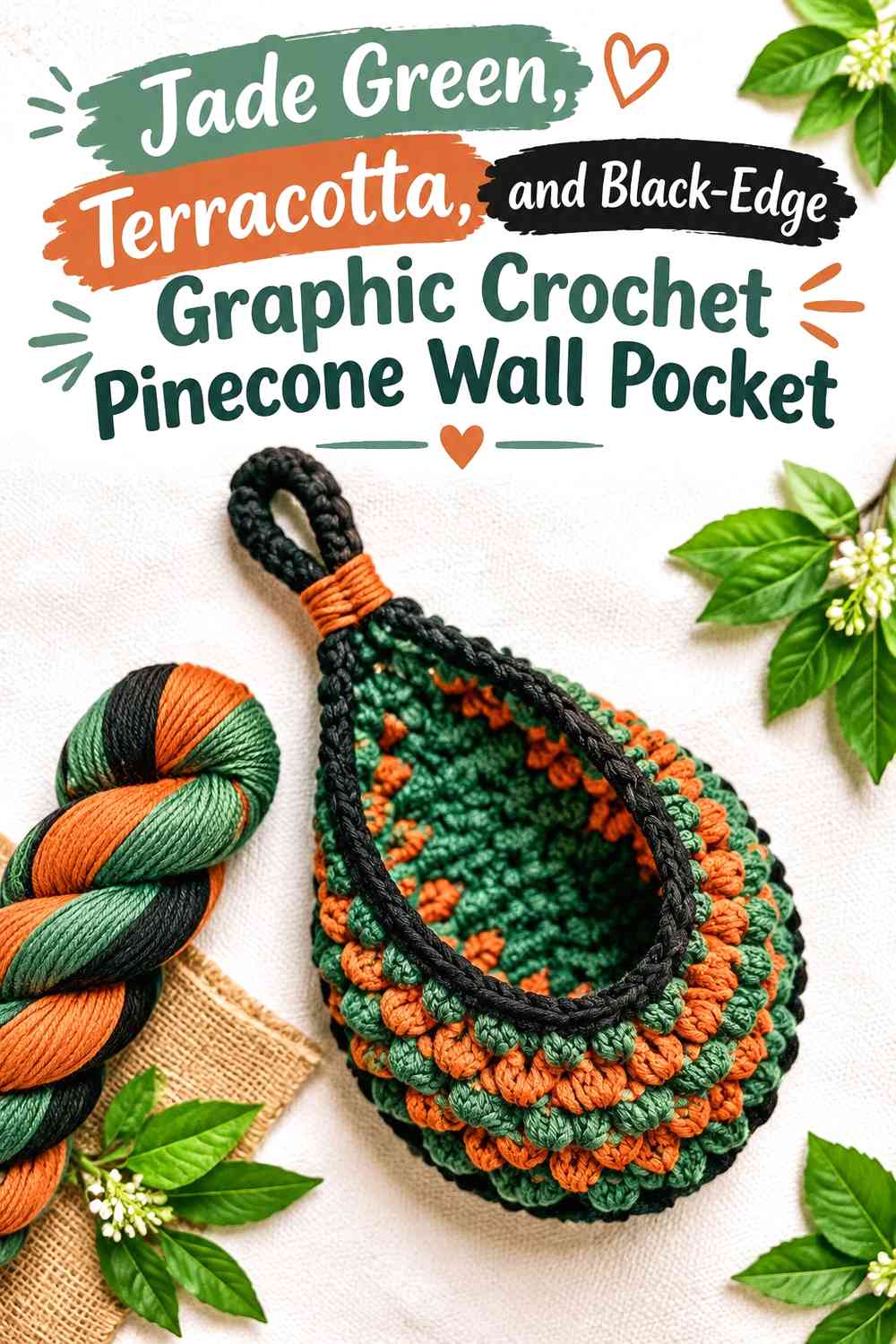
Black gives this idea the strongest outline in the collection. Jade green carries the pocket body, terracotta forms the pinecone, and black appears only at structural edges.
Jade Green Should Occupy Much More Space Than Black
A small black rim or hanging loop can already create a strong frame. Keep the body overwhelmingly jade so the wall pocket does not become a black-and-green project.
Terracotta Pinecones Need Jade Green Between Them and Black
If the pinecone sits near a black border, leave a visible green interval around it. That prevents the warm motif from becoming visually trapped between dark edges.
Black Can Sharpen the Jade Green Wall-Pocket Silhouette
Use black where the outer contour needs clarity against a busy wall. Avoid outlining every leaf or cone detail, which can make the compact wall piece look overly graphic.
Creator Credit: Sweet Softies
13. Terracotta, Jade Green, and Chestnut Brown Crochet Pinecone Wall Pocket
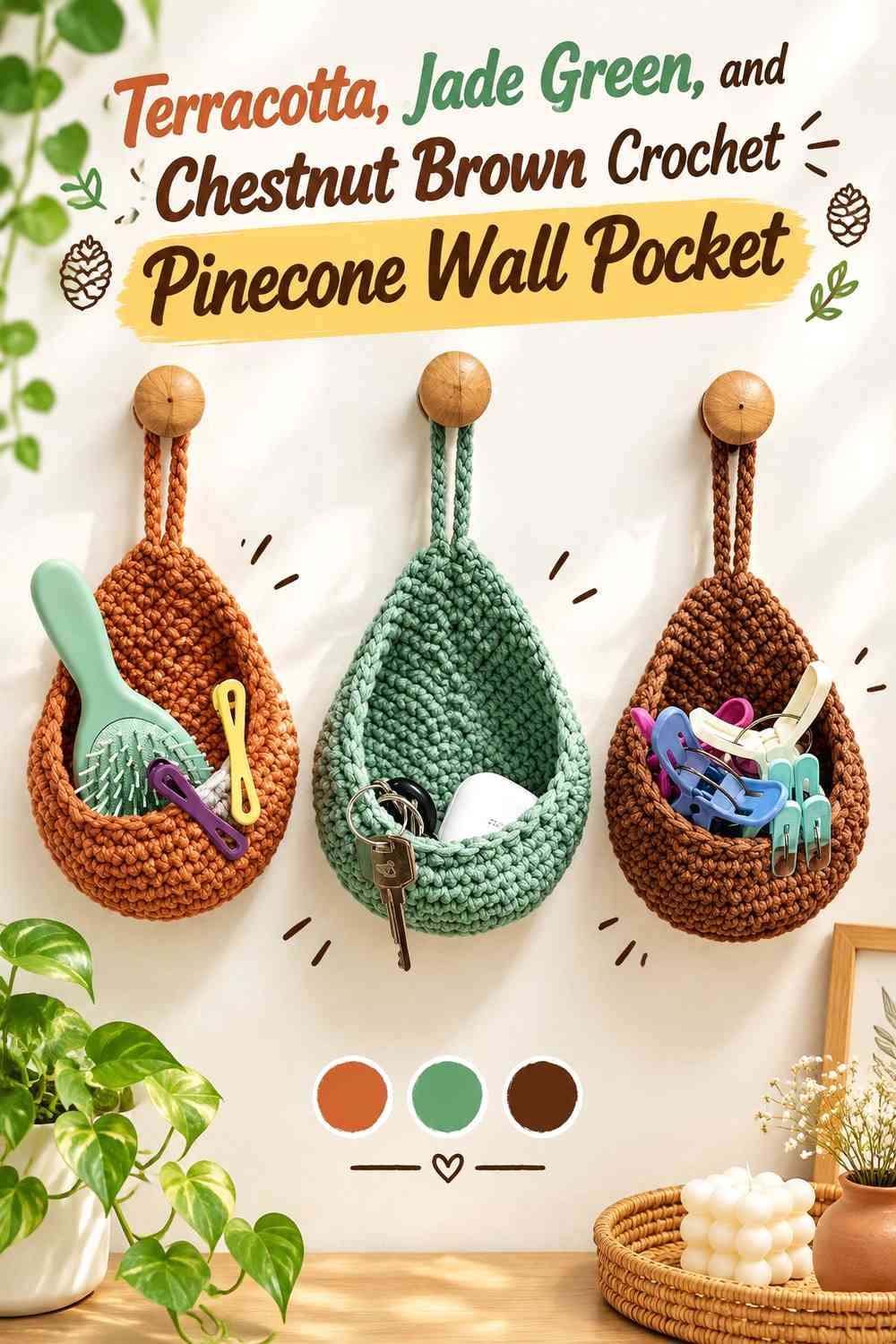
Chestnut brown supports the pinecone theme without being as dark as espresso. Terracotta can cover the main pocket, jade can form the opening and foliage, and chestnut can define the cone base or lower edge.
Terracotta Should Remain Distinct From Chestnut Brown
Compare both warm colors in the stitch texture you plan to use. If they blend, place jade green between them rather than adding more brown.
Jade Green Can Keep the Terracotta Crochet Pocket From Becoming Too Warm
Use jade at the upper edge and around the pinecone decoration. This gives the eye a cool counterweight across the most visible portion of the wall pocket.
Chestnut Brown Can Deepen the Terracotta Pinecone Detail
A small darker-brown section can give the pinecone motif additional visual definition without requiring the entire cone to become brown. Keep the treatment broad and decorative rather than trying to reproduce a detailed natural cone.
Creator Credit: Crochet Musings
14. Jade Green, Terracotta, and Icy Sage Crochet Tonal Pinecone Wall Pocket
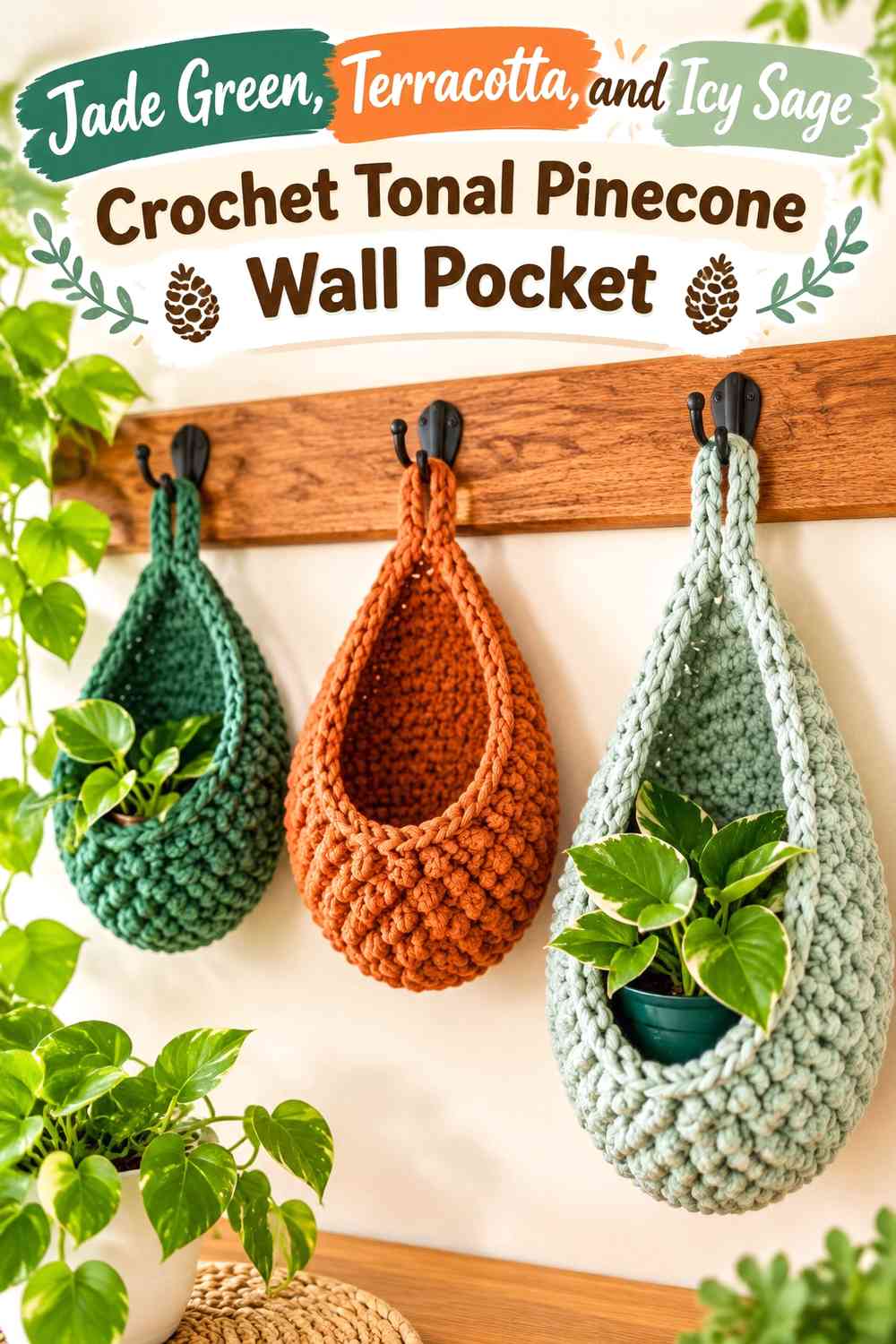
This scheme uses two greens to create a softer winter woodland effect. Jade green remains the deeper body color, icy sage provides lighter foliage or edging, and terracotta remains the clear warm pinecone accent.
Jade Green Should Be Noticeably Deeper Than Icy Sage
The two greens need enough value difference to show separate roles. If they merge, use sage only on larger sections rather than tiny leaf or edge details.
Terracotta Pinecones Can Break Up a Jade Green and Sage Pocket
The warm cone provides the strongest hue change in this palette. Keep its placement central or deliberately repeated so it does not look like an isolated spot of orange-brown.
Icy Sage Can Lighten the Jade Green Pocket Opening
A sage upper band can soften the transition from the deep green body to the wall behind it. Repeating a little sage near the pinecone can connect the light accent back to the decoration.
Creator Credit: Off the Beaten Hook
15. Terracotta and Jade Green Two-Color Crochet Pinecone Wall Pocket
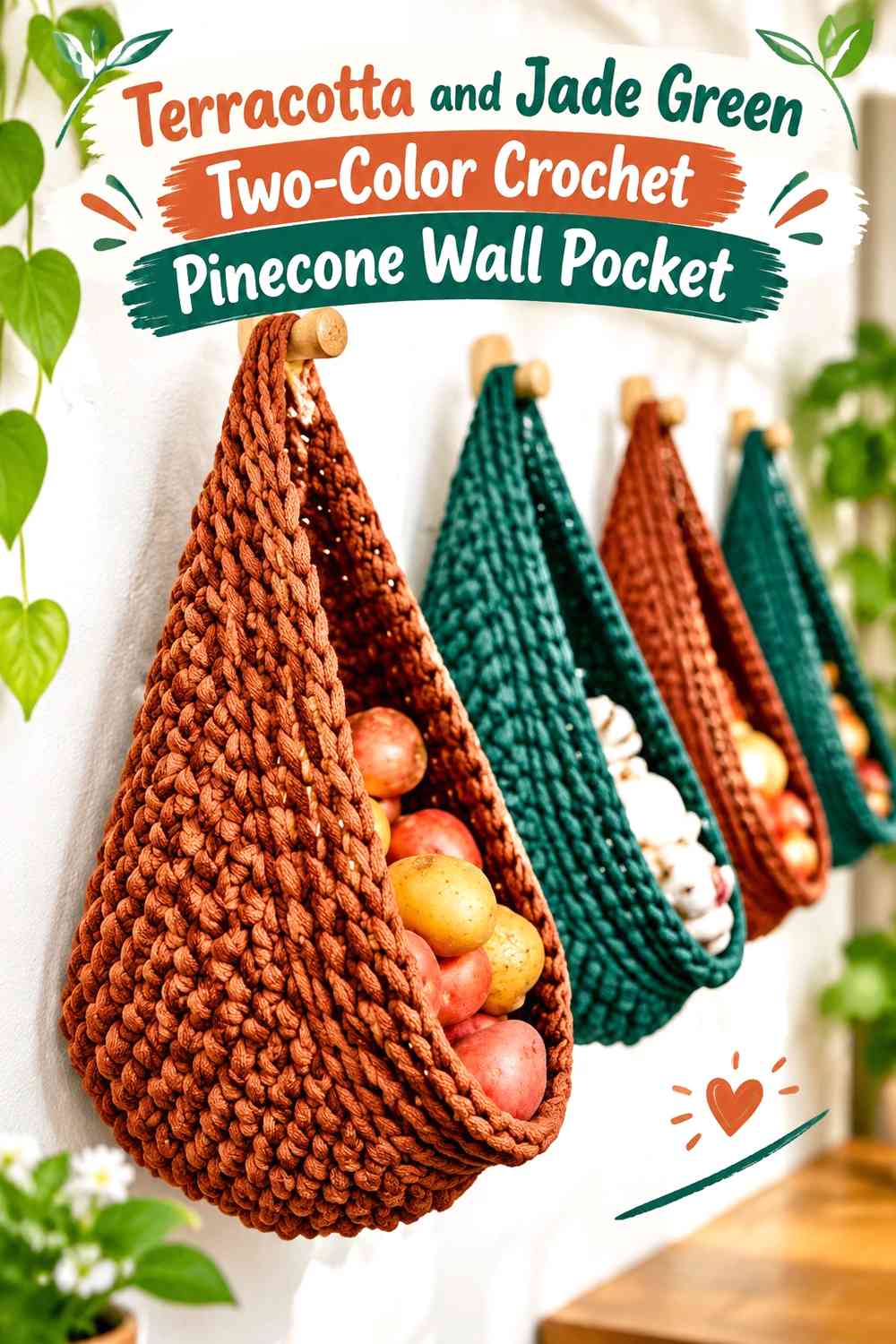
The final scheme removes every neutral and depends entirely on the relationship between terracotta and jade green. Because there is no third shade to separate weak boundaries, the placement of the two colors matters more.
Jade Green Can Make a Terracotta Pinecone the Main Crochet Focal Point
Use jade across the pocket body and reserve terracotta for the pinecone plus one smaller repeated detail. This gives the motif the clearest possible role.
A terracotta hanging loop or narrow lower border can echo the cone without competing with it.
Terracotta Can Lead While Jade Green Defines the Pocket Opening
Reverse the hierarchy for a warmer wall piece. A terracotta front with a jade upper edge and green foliage keeps the pinecone idea connected to the entire pocket rather than treating the cone as an isolated decoration.
Terracotta and Jade Green Need a Value Check Without a Neutral Separator
Photograph a swatch in grayscale or view the yarns from a distance. If the colors are too close in value, choose a lighter terracotta or deeper jade while preserving the same warm-earth and evergreen relationship.
Creator Credit: Leelee Knits
Which Terracotta and Jade Green Pinecone Wall Pocket Palette Should You Choose?
For the warmest cabin direction, start with the cream-snowcap, antique-gold, chestnut, espresso, or burgundy schemes. They reinforce the earthy side of terracotta while still leaving enough jade green to suggest evergreen foliage.
For a cooler winter look, silver gray, dusty blue, charcoal, or icy sage gives jade green more support. These options are particularly useful when the wall or surrounding decor already contains cool grays or blue-green tones.
Choose black or deep pine when the wall pocket needs stronger outline definition. Mushroom taupe, oatmeal, and warm white are better when you want separation without a dramatic dark border.
The two-color version puts the most pressure on color placement but also keeps the pinecone concept especially clear: one color carries the pocket, while the other defines the motif and functional edges.
Conclusion
Terracotta and jade green work especially well for a winter-cabin crochet wall pocket when each color has a clear job. Terracotta can carry the pocket body or pinecone motif, while jade green can define the opening, foliage, hanging detail, or larger background field.
The most useful third colors are those that solve a visual problem. Cream and oatmeal lighten dark boundaries, espresso and charcoal strengthen an edge, silver gray and dusty blue cool the palette, and chestnut or burgundy deepen the cabin direction.
Plan the pinecone placement after deciding where the pocket opening and hanging point will sit. The decoration should remain visible when the pocket contains something, and its colors should not merge into the main body. Use the credited tutorials for their original hanging-basket, wall-pocket, or organizer construction guidance, then adapt the pinecone and palette independently.
Frequently Asked Questions
Should Terracotta or Jade Green Be the Main Color of a Crochet Pinecone Wall Pocket?
Either can lead. A jade-green pocket gives a terracotta pinecone the strongest direct contrast, while a terracotta body creates a warmer wall piece and lets jade green work around the opening and foliage.
Decide which element you want the eye to notice first before dividing the colors.
What Color Should a Pinecone Be on a Jade Green Crochet Wall Pocket?
Terracotta is a useful editorial choice because it stays visibly warmer than jade green while maintaining the earthy cabin palette. You can add a small chestnut or espresso detail if more depth is wanted, but the pinecone does not need multiple brown shades to remain recognizable.
Where Should Jade Green Go on a Terracotta Wall Pocket?
Useful locations include the upper opening, hanging loop, border, pine-branch accents, or a larger backing panel. Repeating green in two related locations can make the palette feel connected without dividing the entire pocket into stripes.
How Can I Make a Terracotta Pinecone Stand Out Against a Dark Jade Green Pocket?
First check their light/dark values. If both are deep, add a small lighter separator such as cream, oatmeal, silver gray, or icy sage near the motif, or choose a slightly lighter terracotta.
Increasing contrast around the pinecone is usually more effective than adding several unrelated colors.
Can I Add Pinecones to a Crochet Hanging-Basket Tutorial That Does Not Include Them?
Yes, as an independent decorative adaptation, provided the finished pocket gives you a suitable surface for an appliqué or other compatible decoration. Follow the original creator’s tutorial for the pocket construction and treat the pinecone placement as a separate design decision.
Do not assume every hanging-basket shape will provide the same flat decorative area.
Should the Pinecone Sit in the Center of the Crochet Wall Pocket?
Not necessarily. A centered motif works when the front remains visible, but a lower or slightly offset pinecone may be easier to see if the upper portion folds, gathers, or becomes visually busy around the opening.
Consider the finished pocket while it is hanging and holding the type of lightweight items you intend to store.
How Can I Keep a Three-Color Terracotta and Jade Green Wall Pocket From Looking Busy?
Give the colors different responsibilities. Let terracotta or jade green dominate, use the other title color for the pinecone or major structural detail, and keep the third shade limited to an edge, backing section, or small repeated accent.
On a compact wall pocket, clear color hierarchy usually creates more impact than giving all three shades equal space.