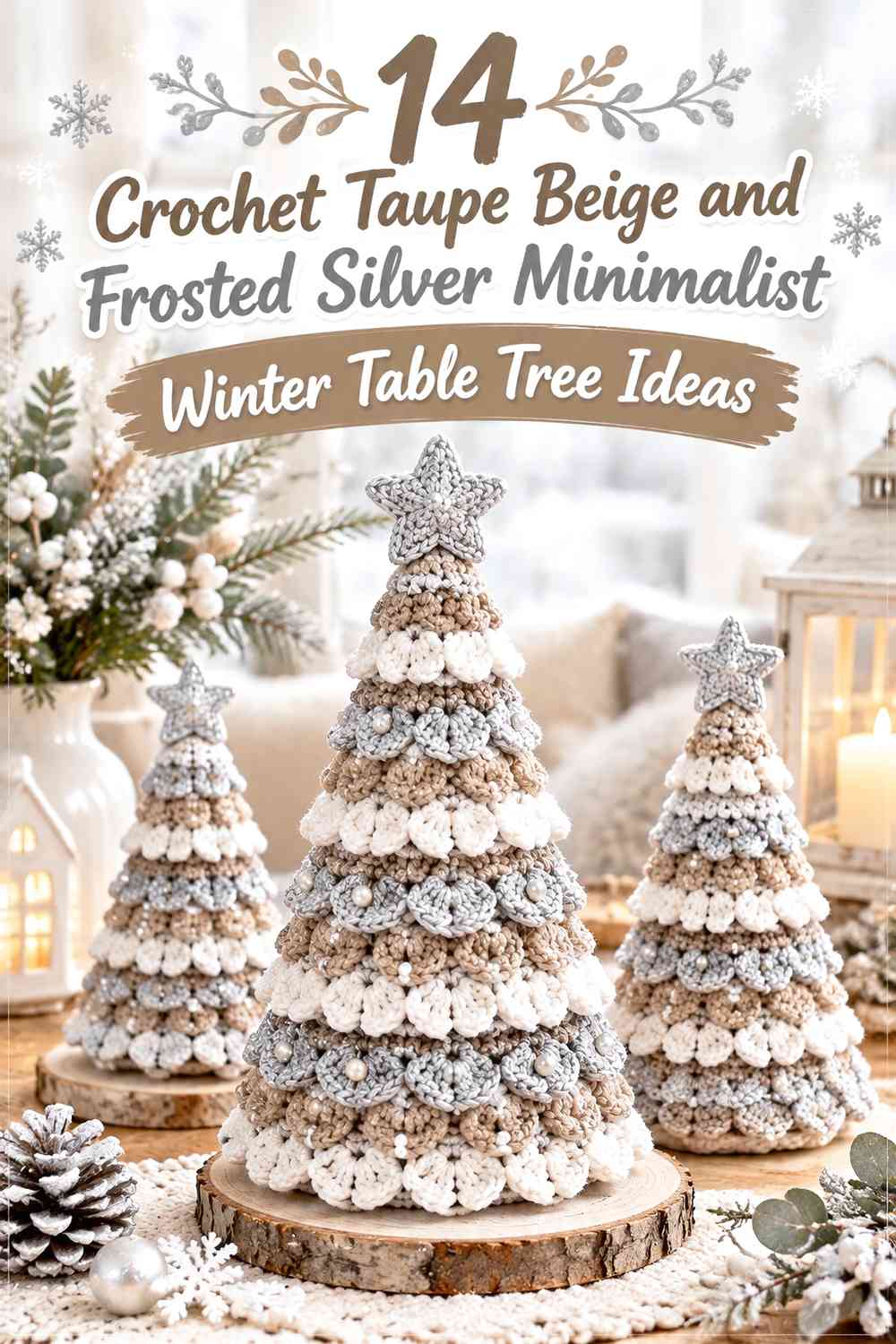

Taupe beige and frosted silver create a quieter alternative to traditional red-and-green crochet Christmas trees. Taupe beige can cover the broad tree body and keep the tabletop decoration neutral, while frosted silver can define tier edges, branch tips, garlands, stars, or a narrow base without filling the tree with ornament colors.
For a minimalist table tree, color restraint matters as much as the silhouette. A small freestanding tree may already contain layered branches, ridges, bobbles, granny motifs, or spiral texture. Adding silver to every raised section can make that construction look much busier than intended. Choose one feature for the strongest silver treatment and let taupe beige provide visual space around it.
The credited tutorials include freestanding tabletop trees, cone trees, potted trees, amigurumi trees, spiral trees, and smaller Christmas tree decorations. The freestanding sources are the closest construction matches. Flat or hanging tree tutorials are useful for silhouette, layering, granny-square, and edge ideas, but they do not automatically provide a stable tabletop base. Treat the taupe-beige, frosted-silver, and standing-display treatments below as independent adaptations.
Quick List
- Taupe Beige and Frosted Silver Crochet Snow-Edge Cone Table Tree
- Frosted Silver, Taupe Beige, and Warm Ivory Crochet Layered Table Tree
- Taupe Beige, Frosted Silver, and Charcoal Crochet Ribbed Table Tree
- Frosted Silver, Taupe Beige, and Mushroom Brown Crochet Potted Table Tree
- Taupe Beige, Frosted Silver, and Pearl White Crochet Popcorn Table Tree
- Frosted Silver, Taupe Beige, and Dusty Blue Crochet Spiral Table Tree
- Taupe Beige, Frosted Silver, and Pewter Crochet Tiered Table Tree
- Frosted Silver, Taupe Beige, and Oatmeal Crochet Mantel Table Tree
- Taupe Beige, Frosted Silver, and Soft Sage Crochet Cone-Wrap Table Tree
- Frosted Silver, Taupe Beige, and Espresso Crochet Granny-Layer Table Tree
- Taupe Beige, Frosted Silver, and Icy Blue Crochet Mini Table Tree
- Frosted Silver, Taupe Beige, and Antique Gold Crochet Minimal Table Tree
- Taupe Beige, Frosted Silver, and Soft White Crochet Jasmine-Texture Table Tree
- Taupe Beige and Frosted Silver Two-Color Crochet Minimalist Table Tree
Decide Whether Taupe Beige or Frosted Silver Should Cover the Tree Body
Taupe beige is the simpler dominant choice when you want a calm tabletop object. It can cover the cone, branches, or layered tree sections while frosted silver stays on the edges and top.
A silver-dominant tree creates a lighter winter effect but needs enough taupe beige around the trunk, lower tiers, or base to stop the entire piece from becoming one pale shape.
Judge the palette from normal tabletop distance. On a small tree, even a narrow silver line repeated around several tiers can become a major part of the final color balance.
Keep Frosted Silver Focused on One Taupe Beige Tree Feature
Minimalism is easier to maintain when silver has one primary job. It might edge every tier, trace one spiral garland, cover the star, or define the trunk and base.
Using silver simultaneously on the branch tips, star, garland, ornaments, trunk, and lower border usually weakens the restrained direction. Repeat it enough to look intentional, but leave substantial taupe beige uninterrupted.
Plan Taupe Beige and Frosted Silver Around the Table-Tree Base
The base is especially important on a freestanding crochet tree because it affects the silhouette as well as the color balance. A taupe tree with a silver lower edge can look wider and more grounded, while a pale silver tree on a taupe base creates a clearer separation from a light tabletop.
Follow the original tutorial for its support or construction method. A hanging tree ornament or flat motif should not be assumed to stand upright simply because its shape resembles a tabletop tree.
1. Taupe Beige and Frosted Silver Crochet Snow-Edge Cone Table Tree
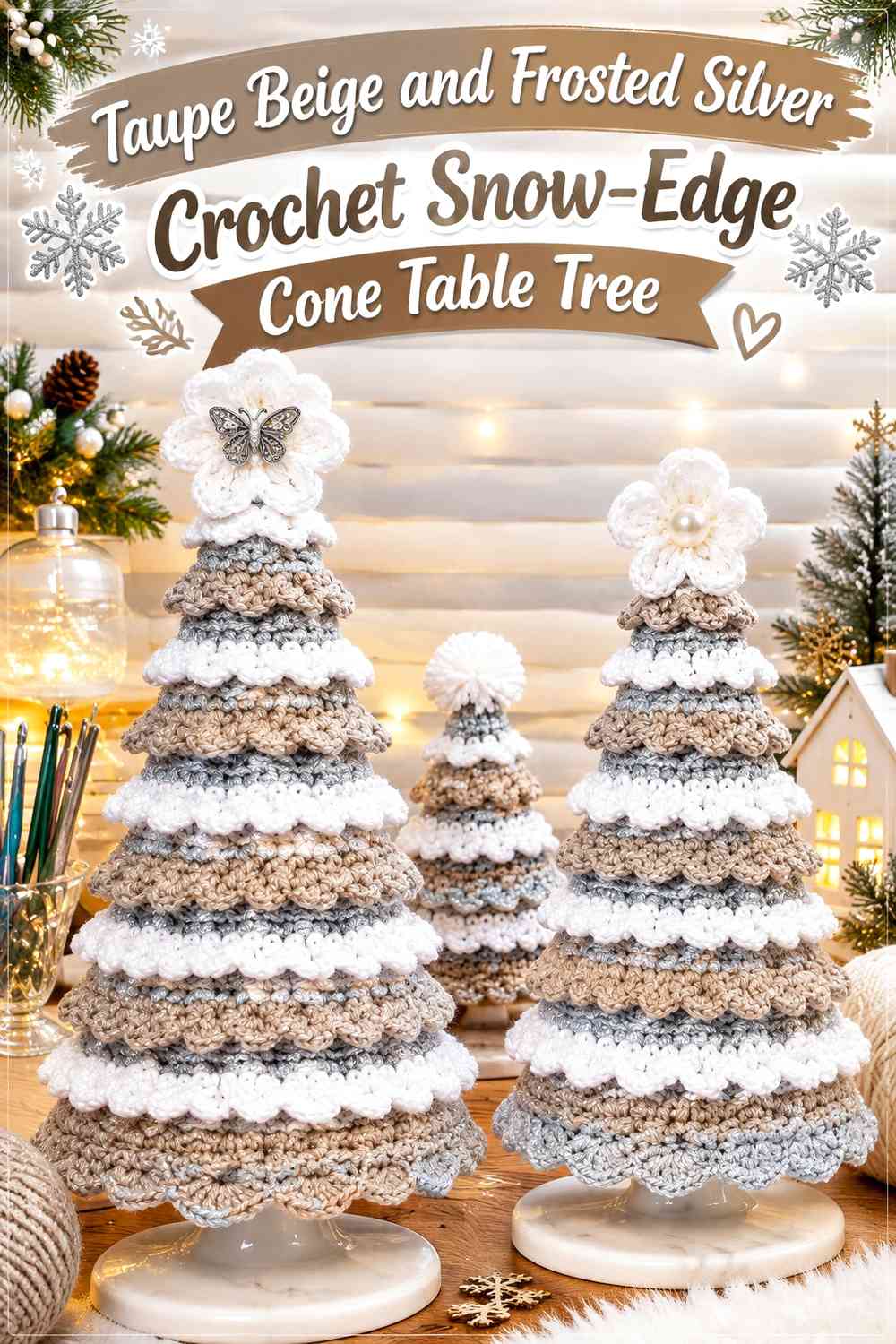
Taupe beige can cover the full cone while frosted silver traces only the lower edges of selected tiers. The simple division keeps the tree neutral but gives the silhouette a visible winter finish from every side.
Taupe Beige Should Carry the Main Crochet Cone
Use taupe beige continuously from the top toward the base so the table tree reads as one calm shape. Large uninterrupted areas are particularly useful when the crochet already has ridges or branch-like texture.
Frosted Silver Can Define Taupe Beige Tier Edges
Place silver along the outermost edge of each tier or on alternating tiers. Repetition creates a frost-line effect without requiring extra ornaments.
Keep the silver lines relatively narrow so the taupe body remains dominant.
Taupe Beige Should Stay Visible at the Frosted Silver Base
Avoid finishing the entire lower section in silver. Leaving taupe visible close to the tabletop connects the base to the rest of the tree and prevents the light border from visually cutting off the bottom.
Creator Credit: Lyza Walters
2. Frosted Silver, Taupe Beige, and Warm Ivory Crochet Layered Table Tree
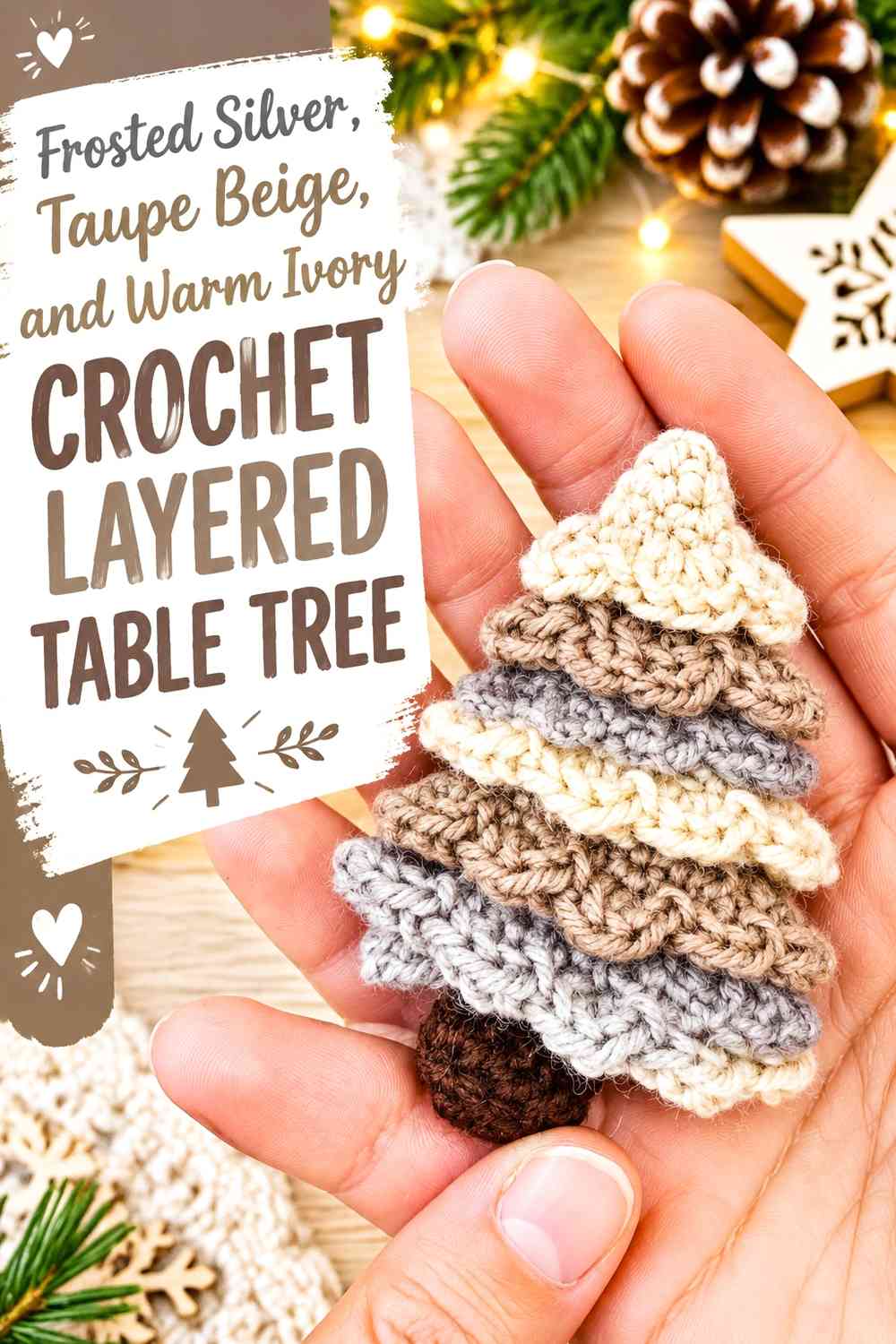
Frosted silver can dominate the layered branches, taupe beige can appear through the lower tiers and trunk, and warm ivory can soften the transitions. This is a lighter palette but still avoids a fully white snow-tree effect.
Frosted Silver Should Remain the Main Layered Crochet Color
Use silver across the largest visible branch sections and keep taupe beige concentrated in fewer, clearly defined places. This makes the reversed color hierarchy intentional.
Taupe Beige Can Ground Frosted Silver Near the Lower Tree
Use taupe around the trunk, bottom tier, or base. The darker neutral helps the pale tree remain distinct from a light-colored tabletop.
Warm Ivory Should Stay Quieter Than Frosted Silver
Use ivory on one small top detail, inner tier, or star. If ivory repeats around every branch, the difference between the two pale shades can become unnecessarily complicated.
Creator Credit: Francesca Uncinettando Crochet&Love
3. Taupe Beige, Frosted Silver, and Charcoal Crochet Ribbed Table Tree
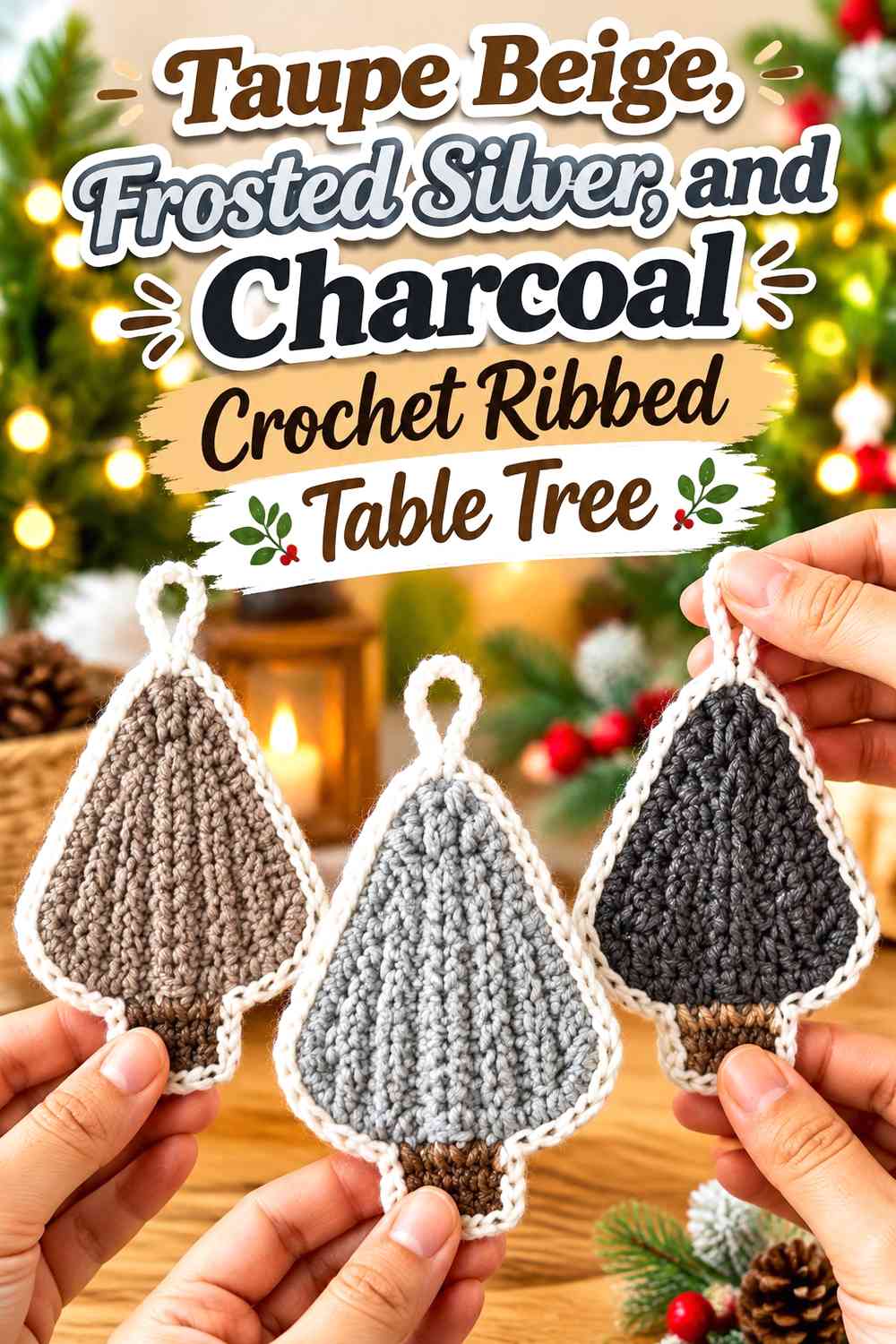
Charcoal gives this minimalist tree a sharper structural accent. Taupe beige can dominate the body, frosted silver can mark the raised ridges, and charcoal can remain at the trunk or base.
Taupe Beige Should Keep the Crochet Ribbing Calm
Let taupe cover most of the textured tree rather than changing color at every ridge. The ribbed structure already creates light and shadow.
Frosted Silver Can Highlight Selected Taupe Beige Ridges
Use silver on alternating raised lines or only near the outer branch edges. A few repeated highlights can reveal the texture without turning every ridge into a stripe.
Charcoal Should Stay Smaller Than Frosted Silver on the Taupe Beige Tree
Keep charcoal near the base or trunk. Its darker value means a small amount is sufficient to give the tree visual weight.
Creator Credit: Kane Crochet
4. Frosted Silver, Taupe Beige, and Mushroom Brown Crochet Potted Table Tree
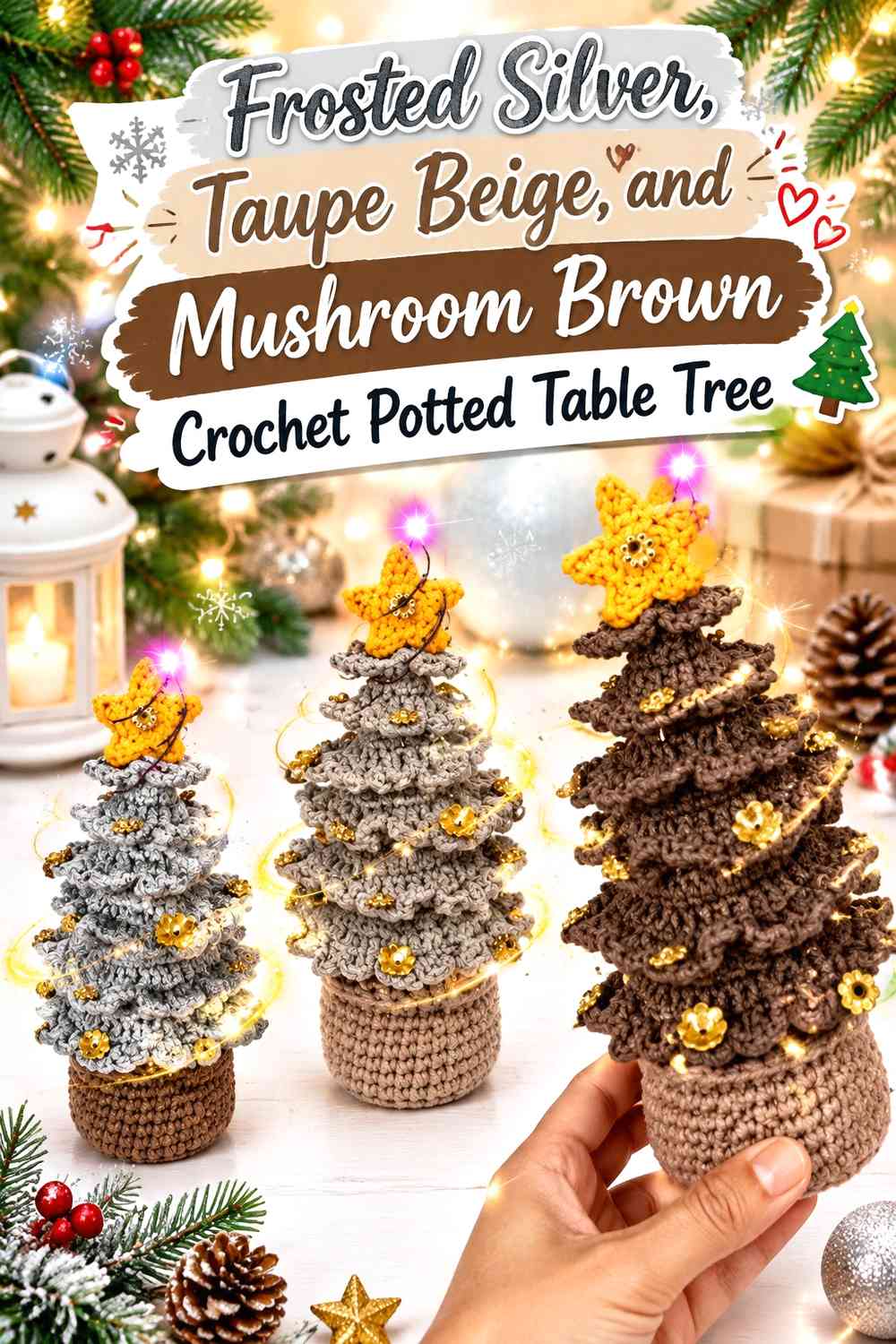
A potted construction gives the neutral palette an obvious place for a third shade. Frosted silver can cover the tree, taupe beige can form branch details, and mushroom brown can stay entirely on the pot or trunk.
Frosted Silver Should Keep the Crochet Tree Distinct From the Pot
Use silver through most of the upper tree so the tabletop silhouette stays light. Do not carry mushroom brown into the branch sections unless a stronger earth-tone result is wanted.
Taupe Beige Can Break Up the Frosted Silver Tree Gently
Use taupe on selected tier edges, tiny garland-like sections, or the lower branches. The tonal neutral creates variation without introducing a saturated Christmas color.
Mushroom Brown Should Ground Taupe Beige at the Tree Base
Restrict the brown to the pot, trunk, or immediate lower support. Keeping it localized makes the tree look deliberately potted rather than striped in three neutrals.
Creator Credit: Cennagurumi
5. Taupe Beige, Frosted Silver, and Pearl White Crochet Popcorn Table Tree
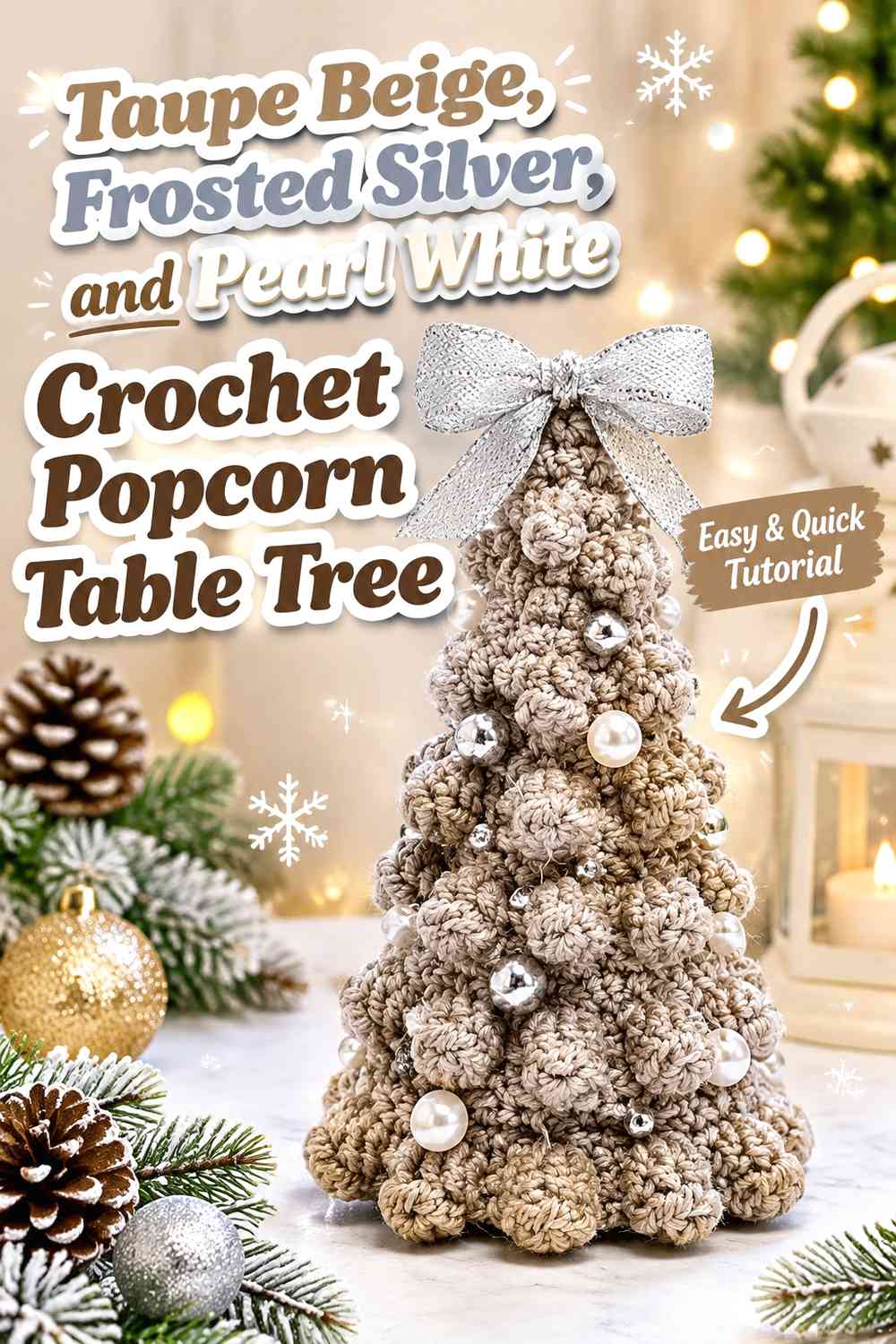
Popcorn or bobble-like texture gives this tree its decoration, so the color treatment can remain extremely simple. Taupe beige can form the tree, frosted silver can identify selected raised details, and pearl white can stay near the top.
Taupe Beige Should Remain Continuous Around the Crochet Popcorn Texture
Use taupe across the majority of the tree so the dimensional stitches create their own pattern through shadow.
Changing color on every raised stitch can make the tree look dotted rather than minimalist.
Frosted Silver Can Pick Out Only Some Taupe Beige Popcorn Details
Highlight a controlled vertical line, one tier, or a small group of raised stitches. The selective silver treatment makes those details look deliberate.
Pearl White Should Stay Smaller Than Frosted Silver on the Taupe Beige Tree
Reserve white for a star or top accent. Keeping it away from most of the body prevents two pale accent colors from competing.
Creator Credit: Gul’s Cozy Crochet
6. Frosted Silver, Taupe Beige, and Dusty Blue Crochet Spiral Table Tree
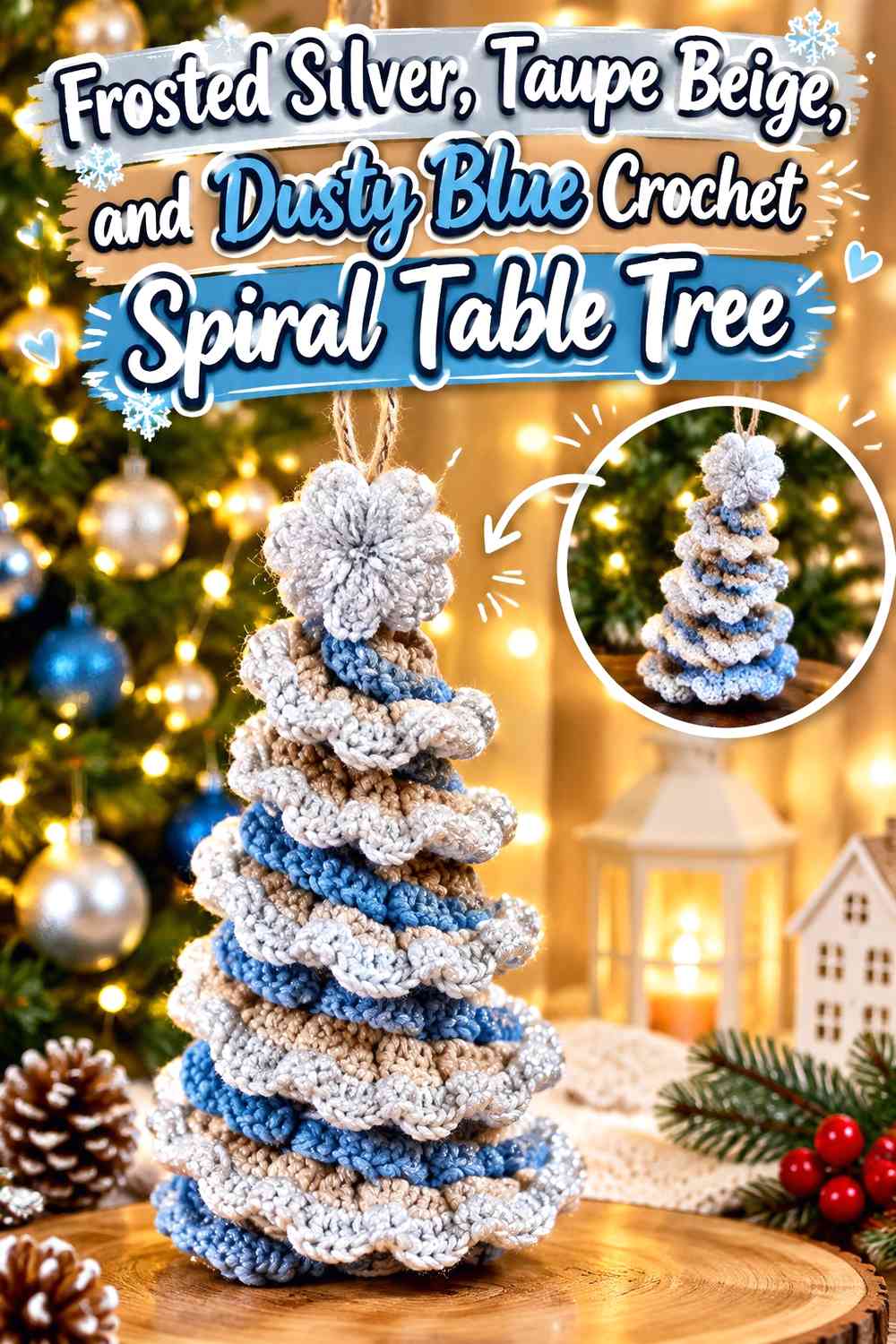
A spiral tree already creates strong movement, so the palette should remain limited. Frosted silver can run through the main spiral, taupe beige can form the underlying structure, and dusty blue can appear only in a narrow lower section.
Frosted Silver Should Carry the Main Crochet Spiral
Use silver along the most visible continuous curve so the eye can follow it from top to bottom. Breaking that path into several colors can reduce the clean spiral effect.
Taupe Beige Can Give Frosted Silver a Calm Background
Keep the support or inner tree taupe so the silver curve remains distinct. This is especially useful when several spiral layers overlap visually.
Dusty Blue Should Stay Smaller Than Taupe Beige
Use blue on one bottom section, tiny top detail, or occasional accent. Its role is to cool the palette, not turn the tree into a blue-and-silver decoration.
Creator Credit: Crochetaure
7. Taupe Beige, Frosted Silver, and Pewter Crochet Tiered Table Tree
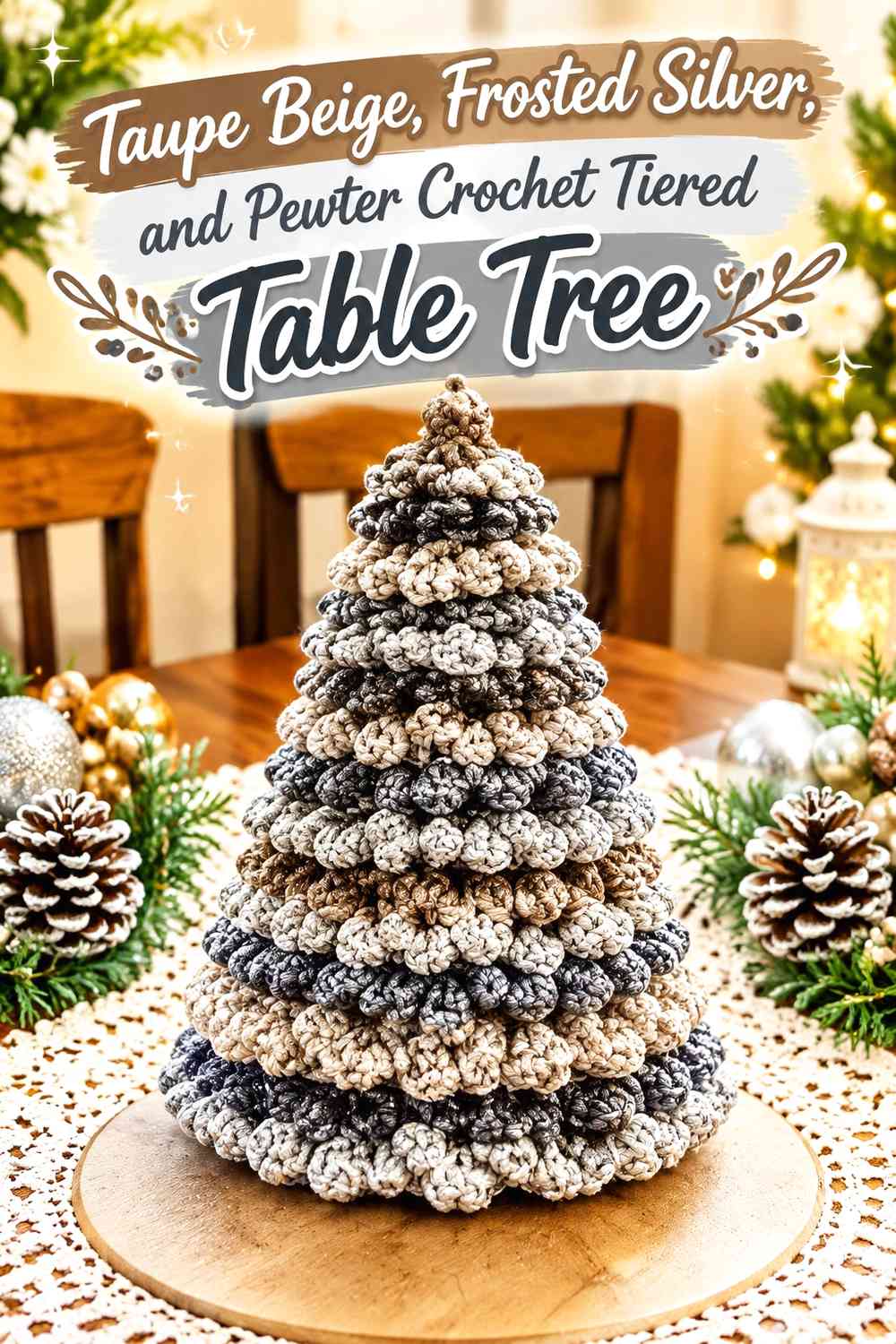
Pewter creates a medium-dark metallic-looking color step without requiring actual metallic fiber. Taupe beige can dominate the layered tree, silver can define the branch tips, and pewter can deepen only the lowest tier.
Taupe Beige Should Keep the Tiered Crochet Tree Unified
Use the same taupe through most layers so the increasing tier size remains the primary structural change.
Frosted Silver Can Finish Taupe Beige Branch Tips Consistently
Repeat the same silver placement on each tier. Consistency is more useful than adding new ornament colors to different levels.
Pewter Should Stay at the Lower Taupe Beige Tier
A darker lower edge can visually anchor the table tree. Keep pewter away from the upper tiers so the silhouette becomes lighter toward the top.
Creator Credit: Bag-O-Day Crochet
8. Frosted Silver, Taupe Beige, and Oatmeal Crochet Mantel Table Tree
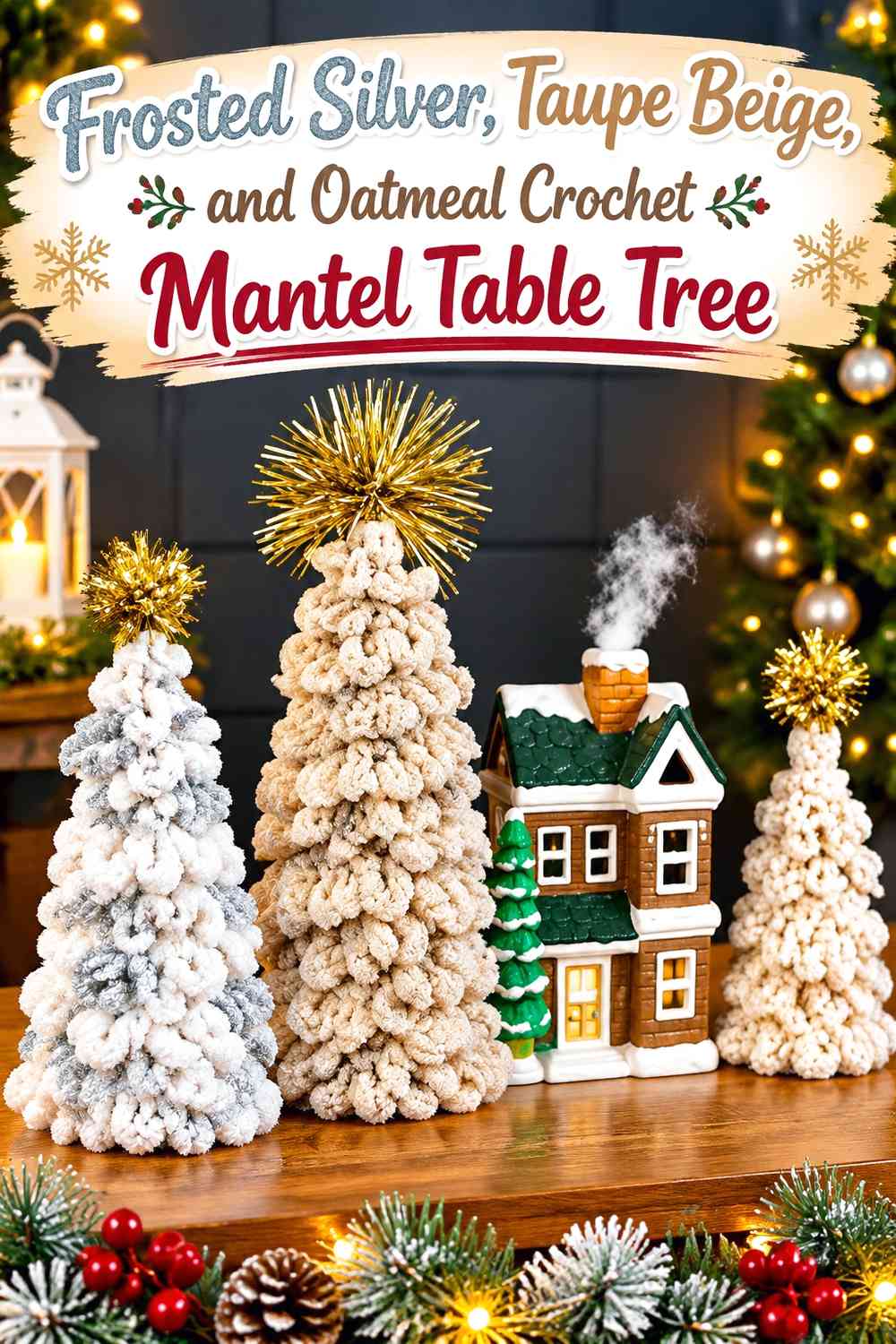
Frosted silver can cover most of this small freestanding tree, taupe beige can form the trunk and selected branch bands, and oatmeal can soften the base. The three neutrals remain close enough for a restrained winter display.
Frosted Silver Should Stay Broad Across the Crochet Tree
Use silver as the main upper-body color rather than dividing the tree evenly between three neutrals.
Taupe Beige Can Add Structure to Frosted Silver Branch Sections
Place taupe on one or two clear horizontal bands or branch edges. This gives the pale tree more depth without creating a multicolor striped effect.
Oatmeal Should Stay Softer Than Taupe Beige at the Base
Use oatmeal on the stand or lower border if you want a gentler transition to the tabletop. The taupe should remain the more noticeable supporting neutral.
Creator Credit: Hectanooga1
9. Taupe Beige, Frosted Silver, and Soft Sage Crochet Cone-Wrap Table Tree
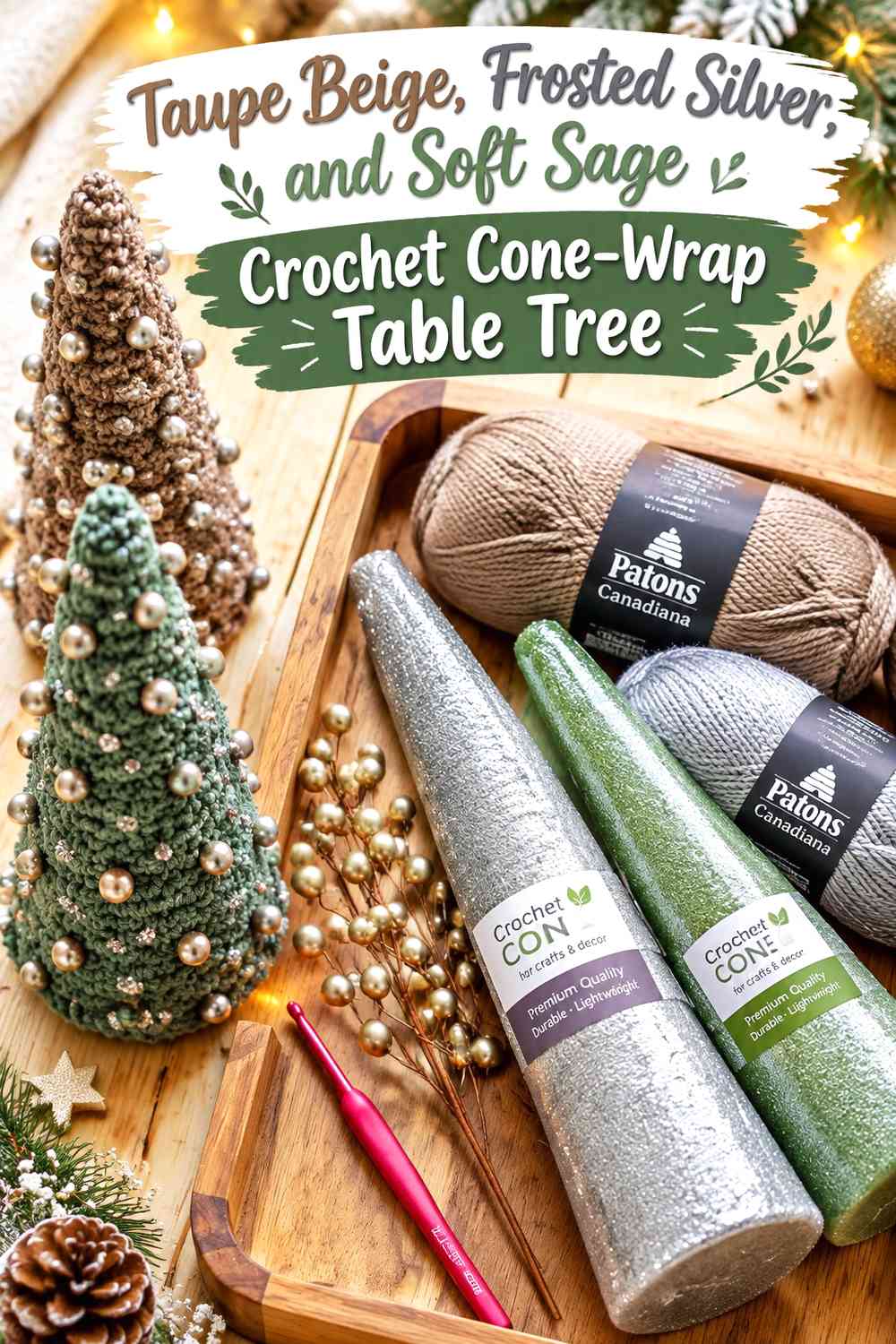
Soft sage introduces a very restrained botanical note. Taupe beige can cover the cone, frosted silver can edge the wrapped crochet layer, and sage can appear in one narrow interior band.
Taupe Beige Should Remain the Main Cone Color
Keep the broad underlying form taupe so the wrapped texture has a quiet foundation.
Frosted Silver Can Edge the Taupe Beige Crochet Wrap
Use silver on the visible outer edge of the wrapped strip or branch layer. The repeated pale line can create frost without additional ornaments.
Soft Sage Should Stay Smaller Than Frosted Silver
Use sage only inside one wrap, on the star, or near the base. A broad sage treatment would shift the design back toward a more conventional green Christmas tree.
Creator Credit: Rich Textures Crochet
10. Frosted Silver, Taupe Beige, and Espresso Crochet Granny-Layer Table Tree
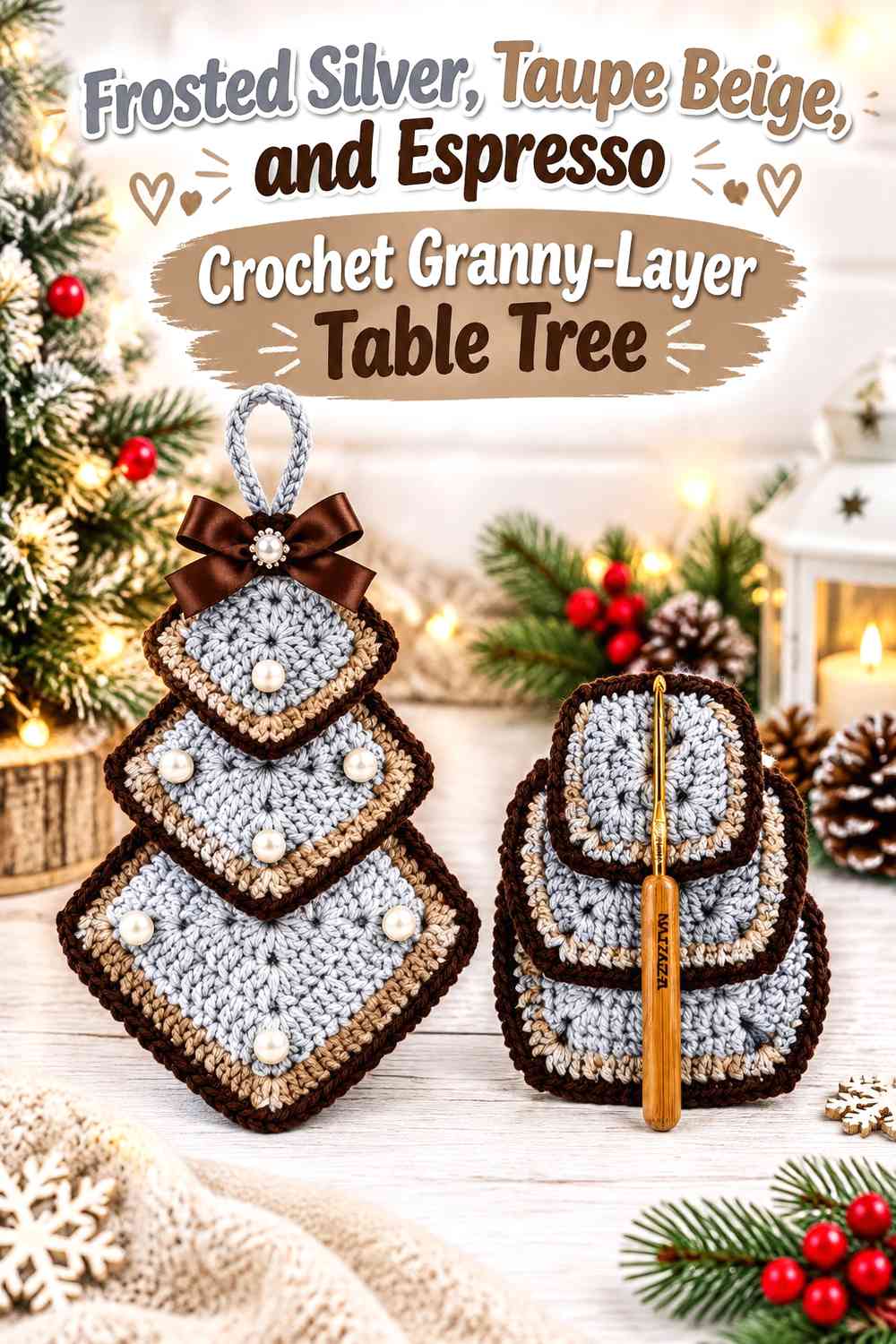
A granny-based tree has more visible geometry than a plain cone, so a controlled three-neutral palette keeps the stacked motifs from looking busy. Frosted silver can dominate the squares, taupe beige can form their borders, and espresso can define the trunk.
Frosted Silver Should Keep the Granny Tree Light
Use silver across most of each visible motif so the assembled tree reads as one pale winter form rather than several unrelated squares.
Taupe Beige Can Unite the Frosted Silver Granny Layers
Repeat the same taupe outer round or joining edge on each section. The consistent border visually connects the motifs.
Espresso Should Stay Confined Beneath Taupe Beige
Use espresso for the trunk or tiny base only. A strong dark outline around every granny section would make the layered tree too graphic for the minimalist direction.
Creator Credit: naztazia
11. Taupe Beige, Frosted Silver, and Icy Blue Crochet Mini Table Tree
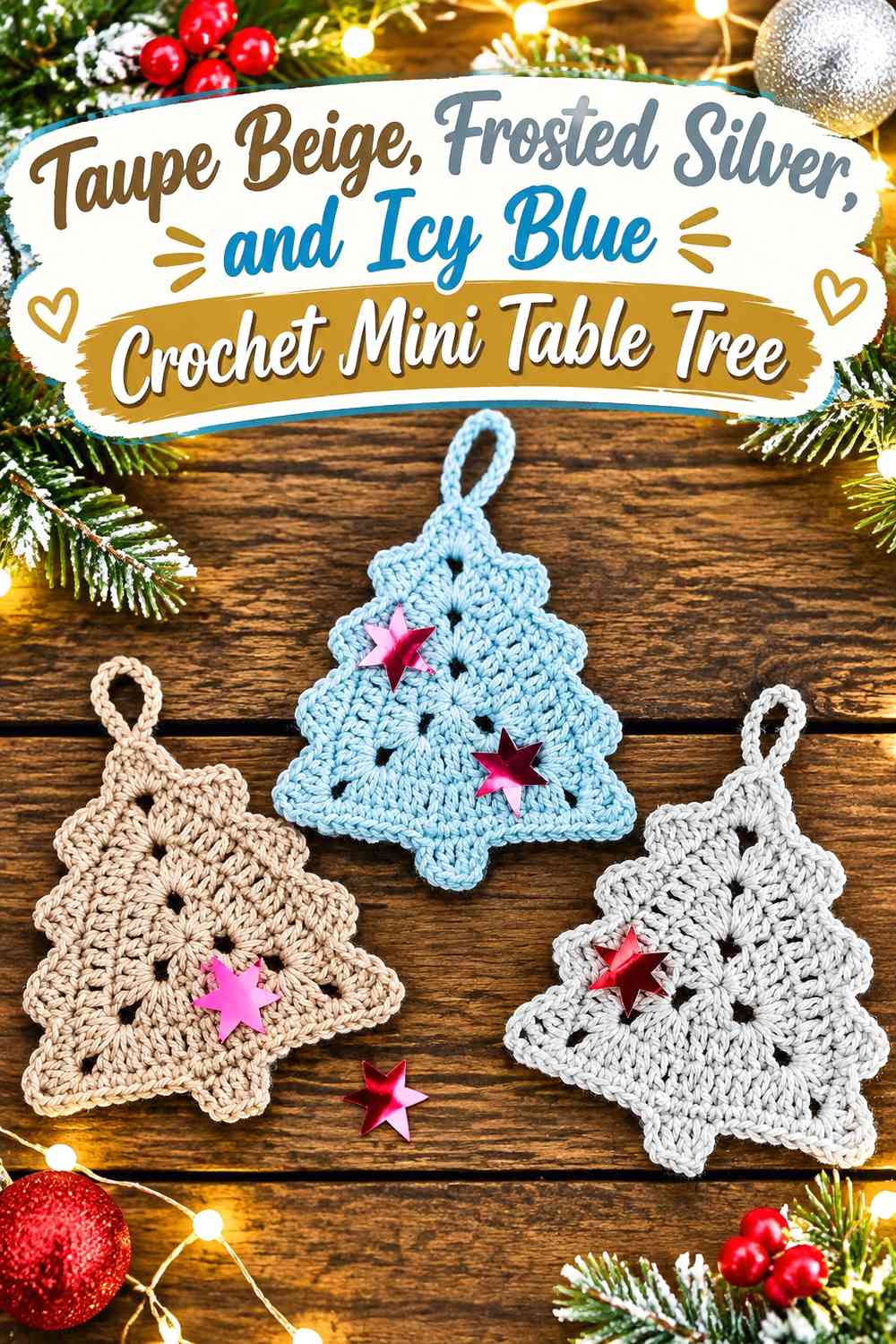
Taupe beige can dominate the tree, frosted silver can mark the edges, and icy blue can appear as one very small winter accent. This palette suits a compact tree because the blue does not need much area to become visible.
Taupe Beige Should Cover Most of the Crochet Mini Tree
Keep the body simple and solid so its small silhouette remains recognizable. Too many alternating colors can make a tiny tree look fragmented.
Frosted Silver Can Define the Taupe Beige Tree Outline
Use silver along the lower branch edges or a narrow perimeter where it can remain visible from tabletop distance.
Icy Blue Should Stay Smaller Than Frosted Silver
Reserve blue for the top, one branch band, or another compact detail. The tree should still read first as taupe beige and silver.
Creator Credit: Kristines Crochets
12. Frosted Silver, Taupe Beige, and Antique Gold Crochet Minimal Table Tree
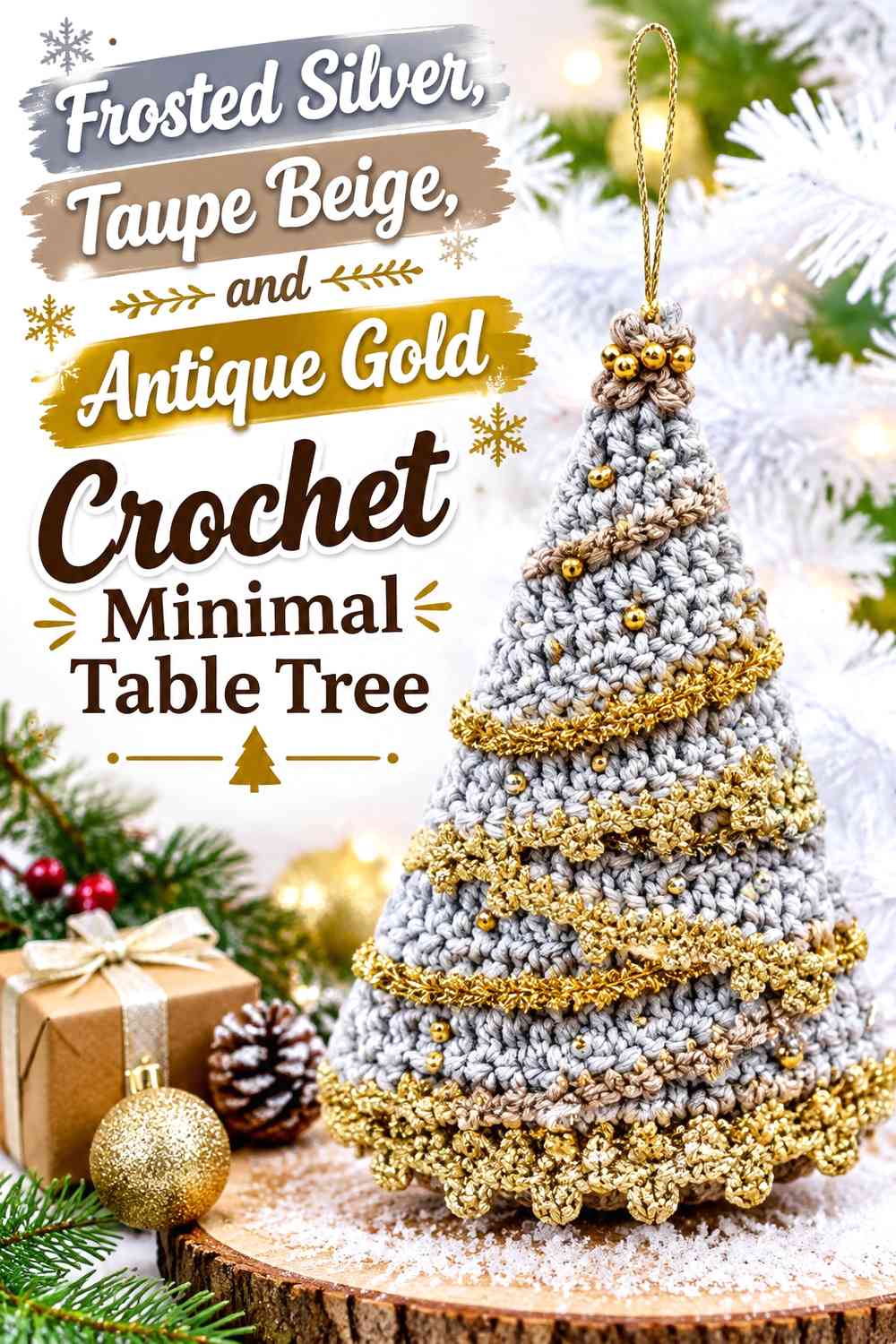
Antique-gold color creates one warmer point inside the otherwise cool-neutral palette. Frosted silver can lead across the tree, taupe beige can form the base or trunk, and gold can remain limited to the topper.
Frosted Silver Should Carry More Crochet Surface Than Antique Gold
Use silver across the broad tree shape and keep the golden shade exceptionally small. The warm accent attracts attention quickly against cool silver.
Taupe Beige Can Ground Frosted Silver Below the Tree
Use taupe at the trunk, stand, or bottom tier to create a visual transition from the light upper tree to the tabletop.
Antique Gold Should Stay Focused Above Taupe Beige and Frosted Silver
A star, tiny top band, or similarly small feature is enough. “Antique gold” describes the color direction; the minimalist effect does not depend on metallic yarn.
Creator Credit: Crochet with Tuula Maaria
13. Taupe Beige, Frosted Silver, and Soft White Crochet Jasmine-Texture Table Tree
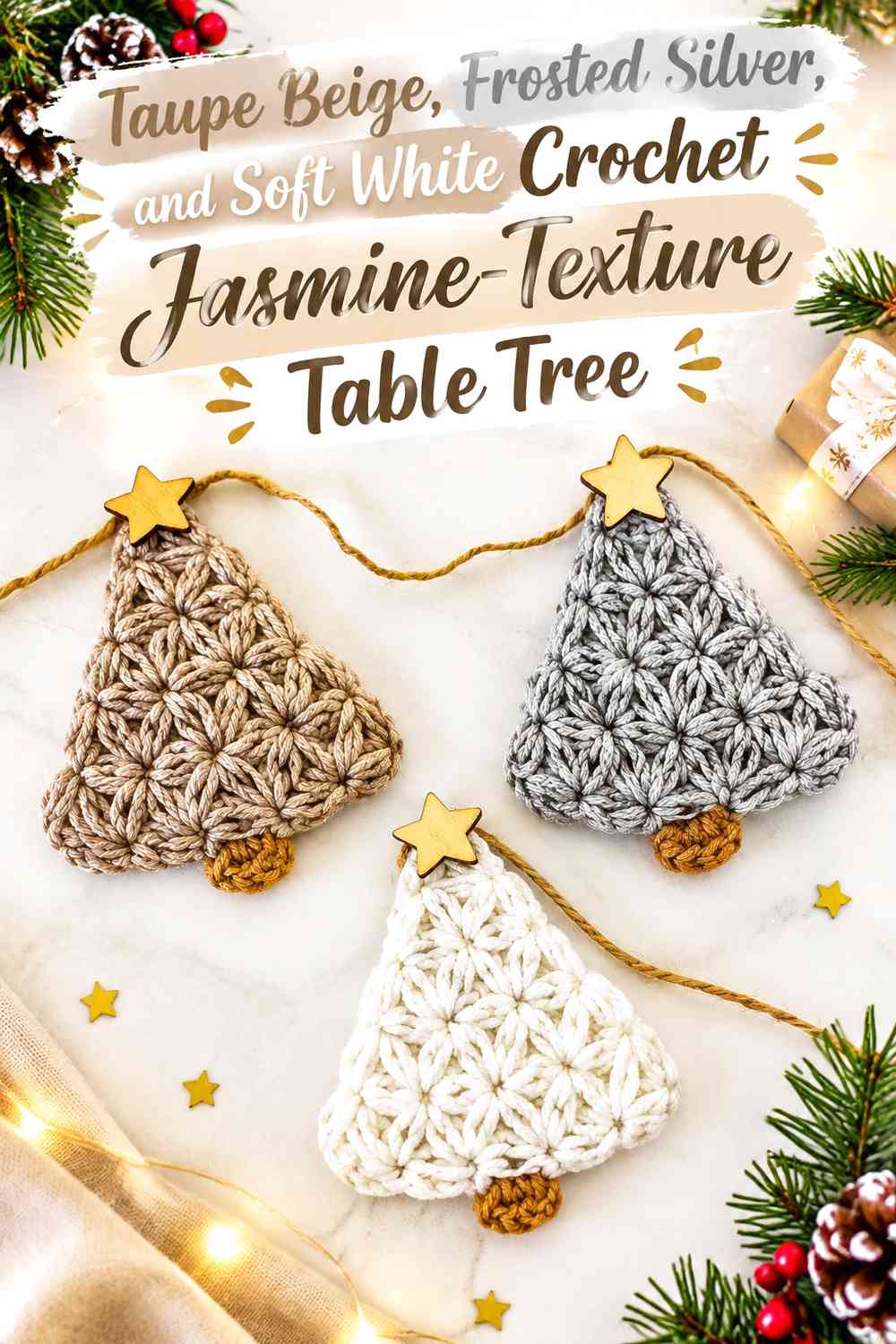
A jasmine- or star-textured tree surface already contains decorative structure. Taupe beige can lead, frosted silver can define the outer shape, and soft white can appear only where extra light contrast is necessary.
Taupe Beige Should Keep the Crochet Jasmine Texture Readable
Use taupe across most of the textured body. The stitch pattern itself should create the visual detail instead of frequent color changes.
Frosted Silver Can Trace the Taupe Beige Outer Tree Shape
Place silver at the border or trunk edge where it can clarify the silhouette without covering the textured center.
Soft White Should Stay Smaller Than Frosted Silver
Use white on one top detail or tiny base repeat. Keeping the palest shade minimal protects the more distinctive silver-and-taupe relationship.
Creator Credit: kimcraft
14. Taupe Beige and Frosted Silver Two-Color Crochet Minimalist Table Tree
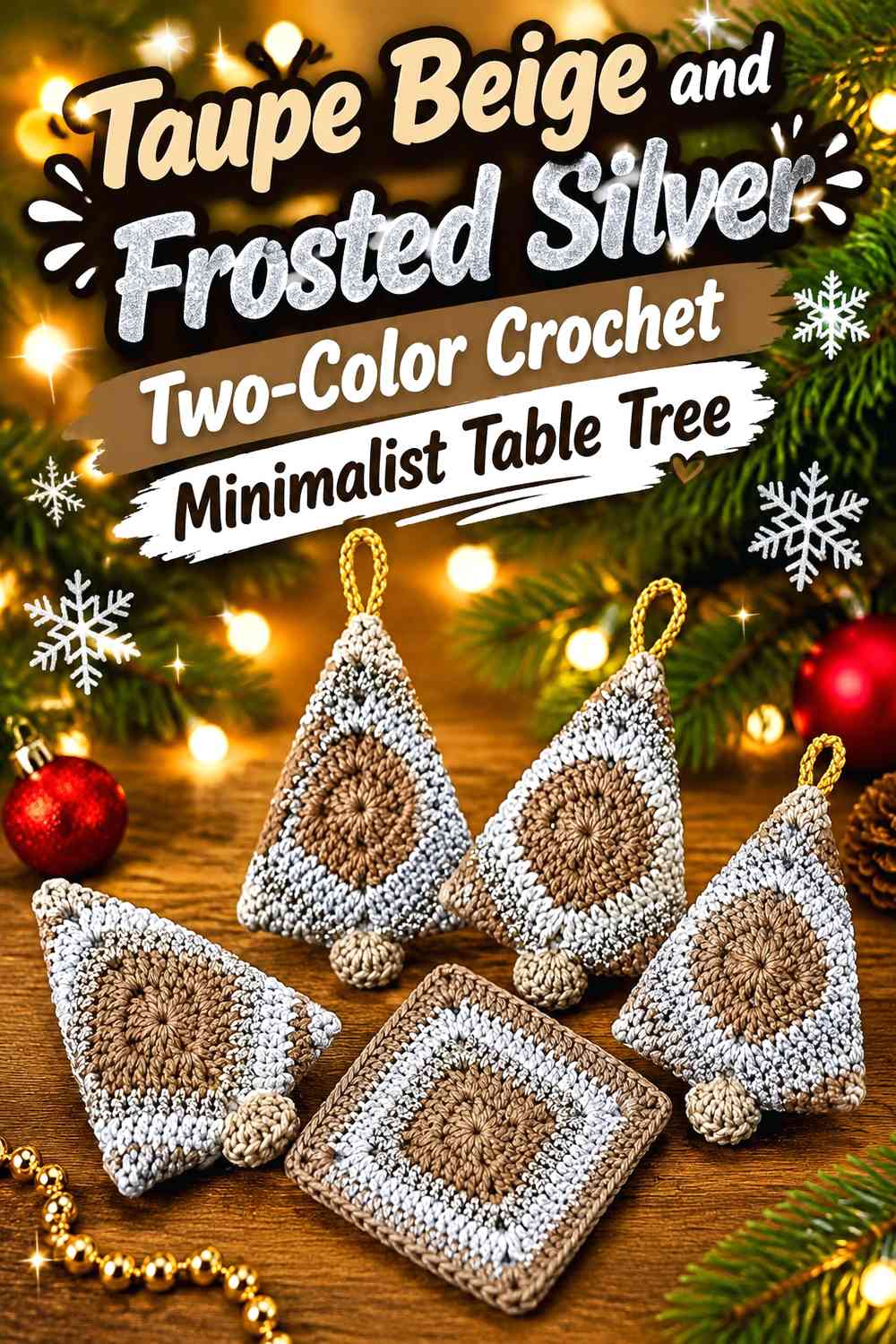
The final scheme removes every third color and relies entirely on taupe beige and frosted silver. The reduced palette puts more attention on proportion, texture, and where the two neutrals exchange roles.
Taupe Beige Can Lead With Frosted Silver Crochet Branch Tips
Use taupe across the full tree body and silver only at the outermost branch or tier edges. This is the clearest understated winter interpretation.
Frosted Silver Can Lead With a Taupe Beige Tree Base
Reverse the hierarchy for a paler display. Silver can dominate the branches while taupe remains at the trunk, base, and one lower tier.
Taupe Beige and Frosted Silver Should Repeat Unequally
Avoid dividing every tier exactly in half. One shade should clearly dominate while the other reinforces edges, layers, or support points.
This unequal distribution makes a two-color tree feel calmer than evenly alternating stripes.
Creator Credit: Crochet Craftsman
Which Taupe Beige and Frosted Silver Table Tree Palette Should You Choose?
For the most strictly minimalist result, choose the snow-edge cone, oatmeal mantel tree, pewter tiered tree, or pure two-color design. These palettes stay close to neutral and rely on the crochet silhouette for most of their character.
If you want more winter contrast, pearl white, soft white, icy blue, or dusty blue can add a cooler light point without overwhelming taupe beige. Charcoal and espresso create the strongest structural definition and are particularly useful around bases and trunks.
Soft sage introduces the most restrained botanical color, while antique gold adds the warmest decorative accent. Mushroom brown keeps a potted tree earthy and neutral.
Construction should influence the palette as well. Plain cones can support a visible silver edge or spiral, while highly textured popcorn, jasmine, granny, or layered trees usually benefit from fewer color changes.
Conclusion
Taupe beige and frosted silver are especially effective for a minimalist crochet table tree because they create visible contrast without relying on a traditional holiday palette. Taupe beige can provide the calm broad surface, while frosted silver can identify branch edges, tiers, garlands, stars, or other features that explain the tree silhouette.
The simplest versions give silver one primary job. Edge the tiers, trace the spiral, highlight the branch tips, or use it on the topper rather than decorating every part of the tree simultaneously.
Third colors are most useful when they solve a specific visual problem. Charcoal, pewter, espresso, or mushroom brown can ground a pale tree; ivory and white can brighten details; dusty or icy blue can cool the palette; and a small antique-gold accent can introduce warmth.
Use the credited tutorials for their original tabletop, freestanding, potted, amigurumi, spiral, granny-tree, or decorative-tree construction. When a source teaches a hanging or flatter Christmas tree, treat the tabletop base and standing support as a separate adaptation rather than assuming the original design will stand unsupported.
Frequently Asked Questions
Should Taupe Beige or Frosted Silver Dominate a Minimalist Crochet Table Tree?
Taupe beige is useful when you want the calmest neutral result and a small amount of silver edging. Frosted silver creates a lighter winter tree and works well when taupe beige is concentrated at the trunk or base.
For a minimalist result, one should usually occupy substantially more surface than the other.
Where Should Frosted Silver Go on a Taupe Beige Crochet Table Tree?
Useful locations include branch tips, tier edges, a narrow spiral garland, the star, the bottom border, or selected raised texture.
Choose one main silver feature rather than adding it to every decorative area.
Does Frosted Silver Yarn Need to Be Metallic?
No. Frosted silver can simply describe a cool light-gray or silver-colored yarn. The color contrast and placement create the winter effect; metallic fiber is not required.
How Can I Keep a Taupe Beige Table Tree From Looking Too Plain?
Use crochet texture and silhouette before adding more colors. Layered tiers, ridges, bobbles, spiral sections, or a clearly defined edge can provide visual interest while keeping the neutral palette restrained.
A narrow frosted-silver repeat may be enough to reveal that structure.
Can a Flat Crochet Christmas Tree Tutorial Be Used for a Table Tree?
It can provide useful silhouette, granny-layer, edge, or color-placement ideas, but a flat ornament does not automatically provide a freestanding structure.
Use a compatible support or tabletop construction and treat standing stability as a separate design requirement.
What Third Colors Work With Taupe Beige and Frosted Silver?
Warm ivory, oatmeal, soft white, pearl white, pewter, charcoal, mushroom brown, espresso, dusty blue, icy blue, soft sage, and a small antique-gold color accent can all work for different visual purposes.
Keep the third color noticeably smaller than the two title shades if the goal is a minimalist tree.
Should Every Tree in a Taupe Beige and Frosted Silver Table Display Match?
No. A small grouping can reverse the palette—for example, one taupe tree with silver edging and one silver tree with a taupe base—while repeating the same limited color system.
Changing tree height or texture while keeping the palette controlled can create variety without adding more ornament colors.