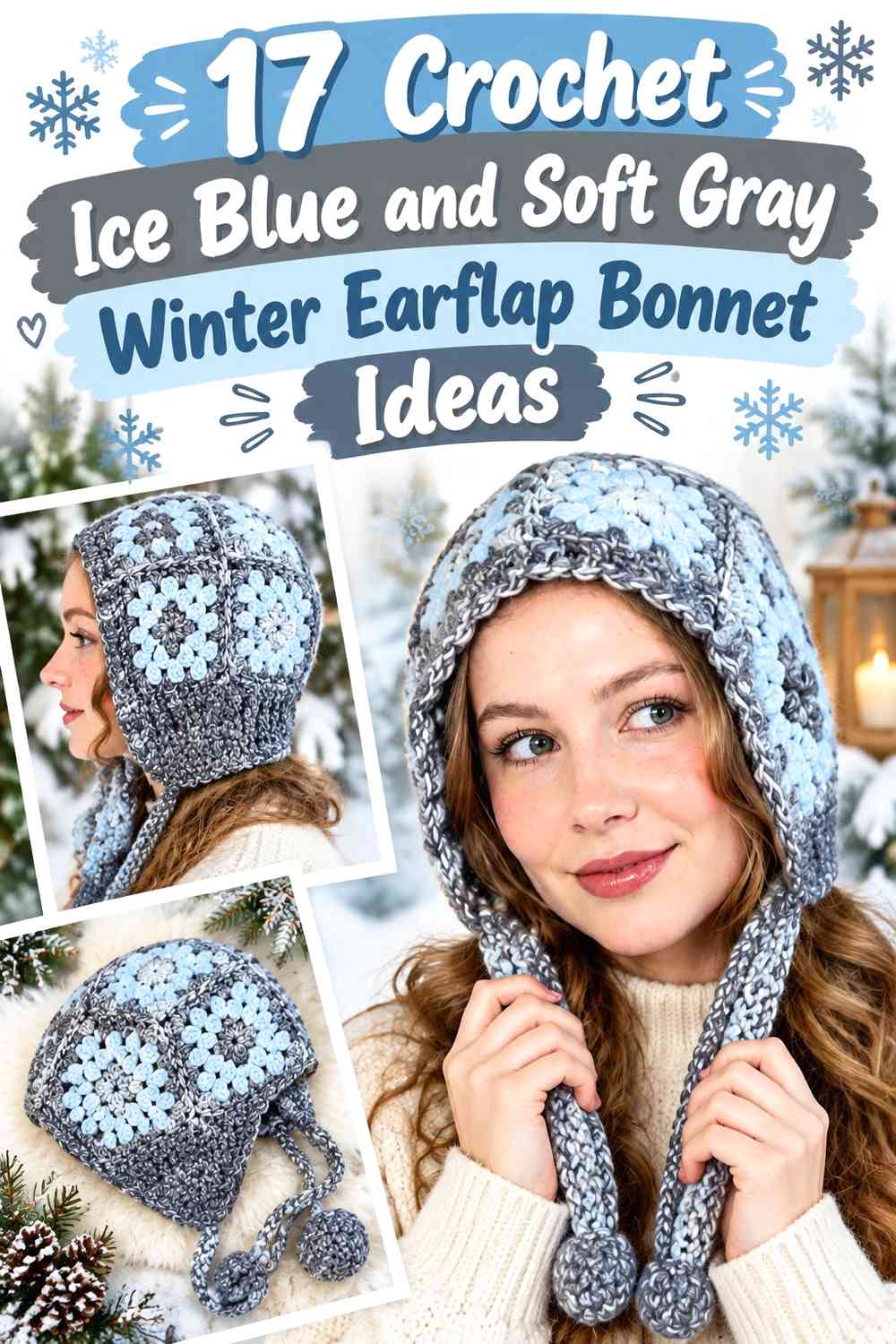

Ice blue and soft gray give a crochet winter earflap bonnet a cool two-color palette with enough contrast to define the parts that matter most around the face. Ice blue can carry the crown and main bonnet body, while soft gray can identify the earflaps, forehead edge, ties, or lower trim without making the accessory look heavily striped.
The balance can also be reversed. A soft gray crown with ice blue ear coverage puts more emphasis on the side panels and makes the colder blue shade the obvious winter accent. With heavily textured or ribbed bonnets, broad color areas usually work better than frequent changes because the stitches already create plenty of visual movement.
The supporting tutorials include true earflap hats and trapper constructions as well as bonnet and hood designs with useful side coverage. Where a source does not already include conventional earflaps, treat the earflap treatment below as an independent adaptation rather than a feature demonstrated by the creator.
Quick List
- Ice Blue Crown and Soft Gray Earflap Crochet Winter Bonnet
- Soft Gray Crown and Ice Blue Earflap Crochet Winter Bonnet
- Ice Blue Ribbed and Soft Gray Scarf-Flap Crochet Winter Bonnet
- Ice Blue Bonnet With Soft Gray Braided-Tie Earflaps
- Ice Blue Trapper Bonnet With Soft Gray Plush-Look Trim
- Ice Blue One-Piece Bonnet With Soft Gray Contrast Edge
- Soft Gray Trapper Bonnet With Ice Blue Earflaps
- Ice Blue Aviator Bonnet With Soft Gray Forehead Flap
- Ice Blue Slouchy Bonnet With Soft Gray Ear Panels
- Ice Blue Bow-Tie Bonnet With Soft Gray Earflap Edges
- Ice Blue and Soft Gray Marled Crochet Winter Earflap Bonnet
- Ice Blue Textured Bonnet With Soft Gray Earflap Frame
- Ice Blue Chunky Pixie Bonnet With Soft Gray Earflaps
- Soft Gray Rectangle Bonnet With Ice Blue Earflap Ties
- Ice Blue Ribbed Balaclava Bonnet With Soft Gray Side Flaps
- Soft Gray Hooded Bonnet With Ice Blue Ear and Neck Panels
- Ice Blue Drawstring Bonnet With Soft Gray Ear Coverage
Give Ice Blue and Soft Gray Different Jobs Around the Face
The face opening, ear coverage, and ties are natural places for contrast because they already divide the bonnet into recognizable sections. An ice blue crown can remain visually continuous while soft gray begins where the bonnet drops over the ears, making the warmer coverage area easy to identify.
Avoid changing colors at every shaping point. Too many small blue-and-gray sections can make the bonnet look fragmented, especially when the yarn texture or ribbing already creates strong lines.
Use Soft Gray to Frame Ice Blue Without Flattening the Winter Palette
Soft gray works particularly well as a supporting shade because it can separate one ice blue section from another without competing strongly with the main color. A gray forehead band, earflap outline, or lower edging can make pale blue fabric easier to read.
If your chosen ice blue and gray are similar in lightness, compare them side by side before using gray for tiny details. A broader earflap or face band will remain clearer than a very narrow contrast line.
Repeat Ice Blue and Soft Gray Where the Bonnet Actually Needs Definition
The strongest contrast should stay in visible structural areas. Earflaps, forehead bands, lower edges, and ties usually benefit more from color definition than the center of the crown.
If soft gray already outlines the earflaps, repeating a little at the forehead can connect the design. You do not necessarily need another gray stripe through the middle of the ice blue crown.
1. Ice Blue Crown and Soft Gray Earflap Crochet Winter Bonnet
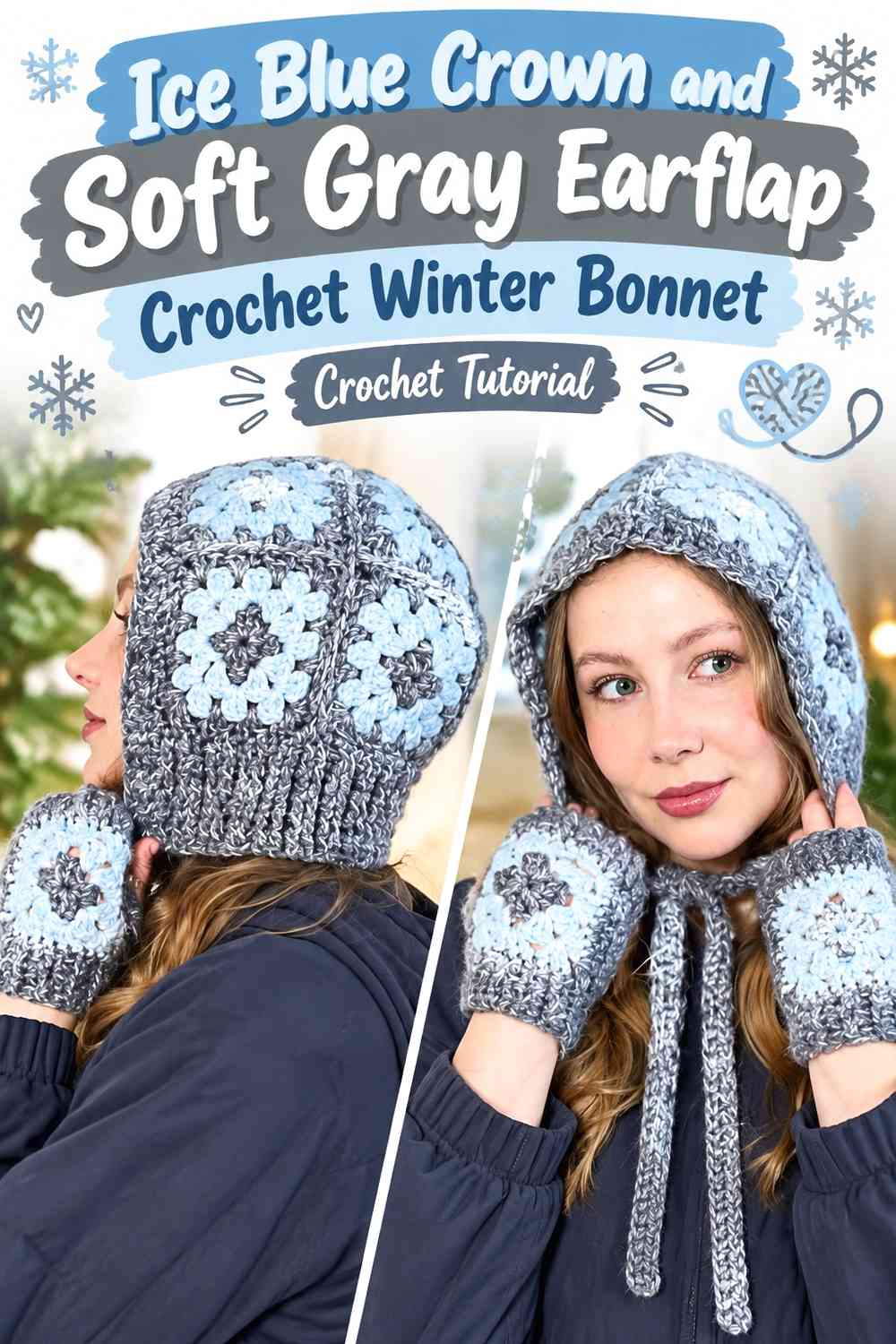
This is the clearest ice-blue-led arrangement. Keep the crown and upper sides ice blue while soft gray takes over where the bonnet extends around the ears. The color transition makes the coverage sections obvious without interrupting the winter-blue crown.
Soft Gray Earflaps Can Ground the Ice Blue Crown
Give soft gray enough area to read as a true side panel rather than a tiny finishing stripe. The gray can begin close to the ear area and continue into the lower edge or ties.
Keeping the upper crown ice blue maintains one uninterrupted cold-weather color field above the face.
Ice Blue Should Continue Clearly Between the Soft Gray Earflaps
Protect a visible blue section across the forehead and crown. If the gray side areas extend too high, the accessory can become gray-dominant even though ice blue was intended to lead.
A narrow gray forehead edge can connect the flaps without replacing the larger blue field.
Creator Credit: DIYGuru
2. Soft Gray Crown and Ice Blue Earflap Crochet Winter Bonnet
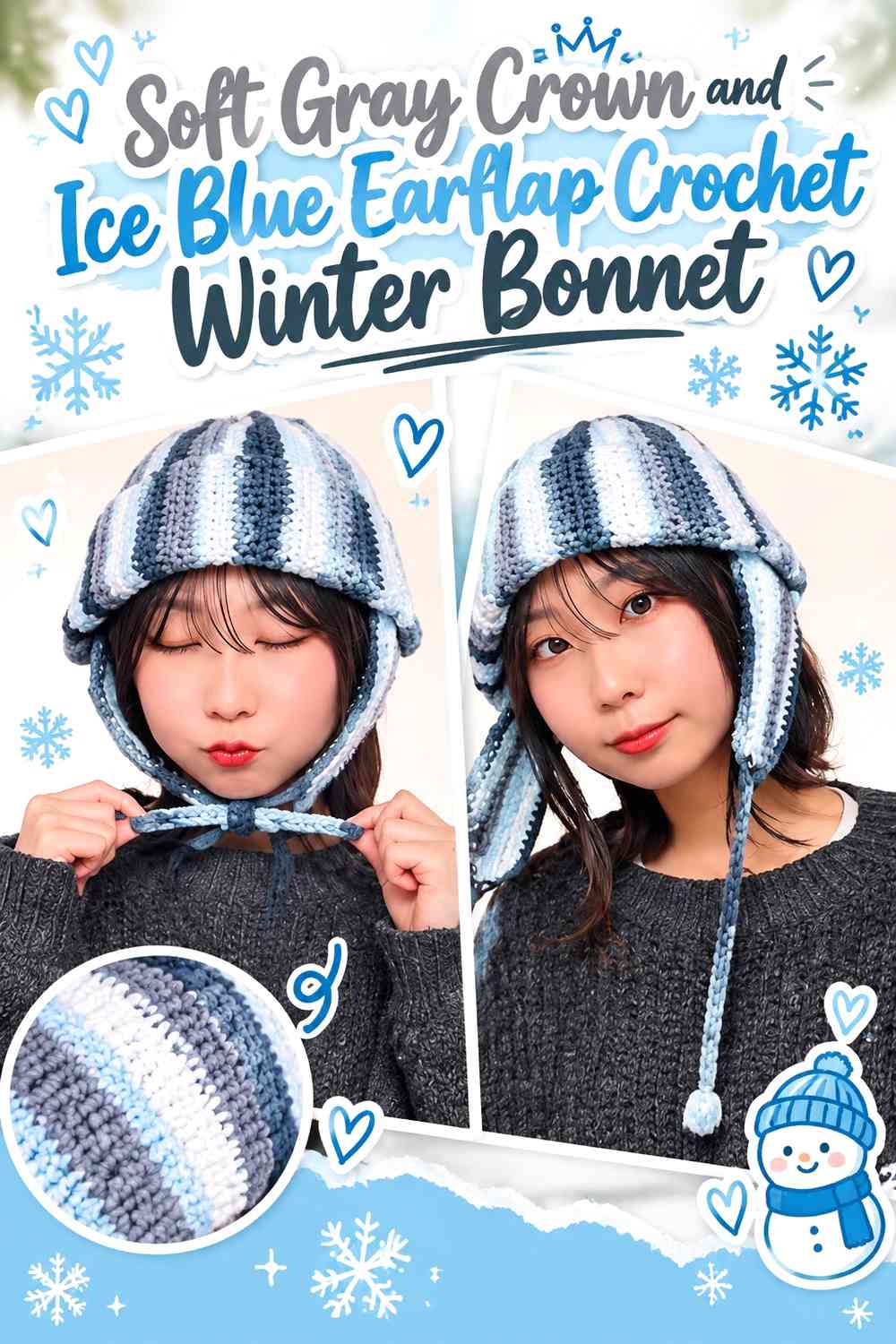
Reversing the palette makes ice blue the accent. Soft gray covers the crown and larger bonnet surface while blue appears around the ears, where a brighter cool shade can create noticeable side framing.
Ice Blue Earflaps Need Enough Width Against Soft Gray
Use blue through most of each flap instead of confining it to a narrow outline. Broad blue areas make the side coverage an intentional feature rather than decorative piping.
A small blue repeat at the forehead can connect the two sides visually.
Soft Gray Can Keep Ice Blue Ear Coverage From Becoming Too Bright
Leave the central crown, back, and most of the face frame gray. The neutral field gives the blue earflaps more influence even though they occupy less total area.
Creator Credit: Shirokuro Crochet
3. Ice Blue Ribbed and Soft Gray Scarf-Flap Crochet Winter Bonnet
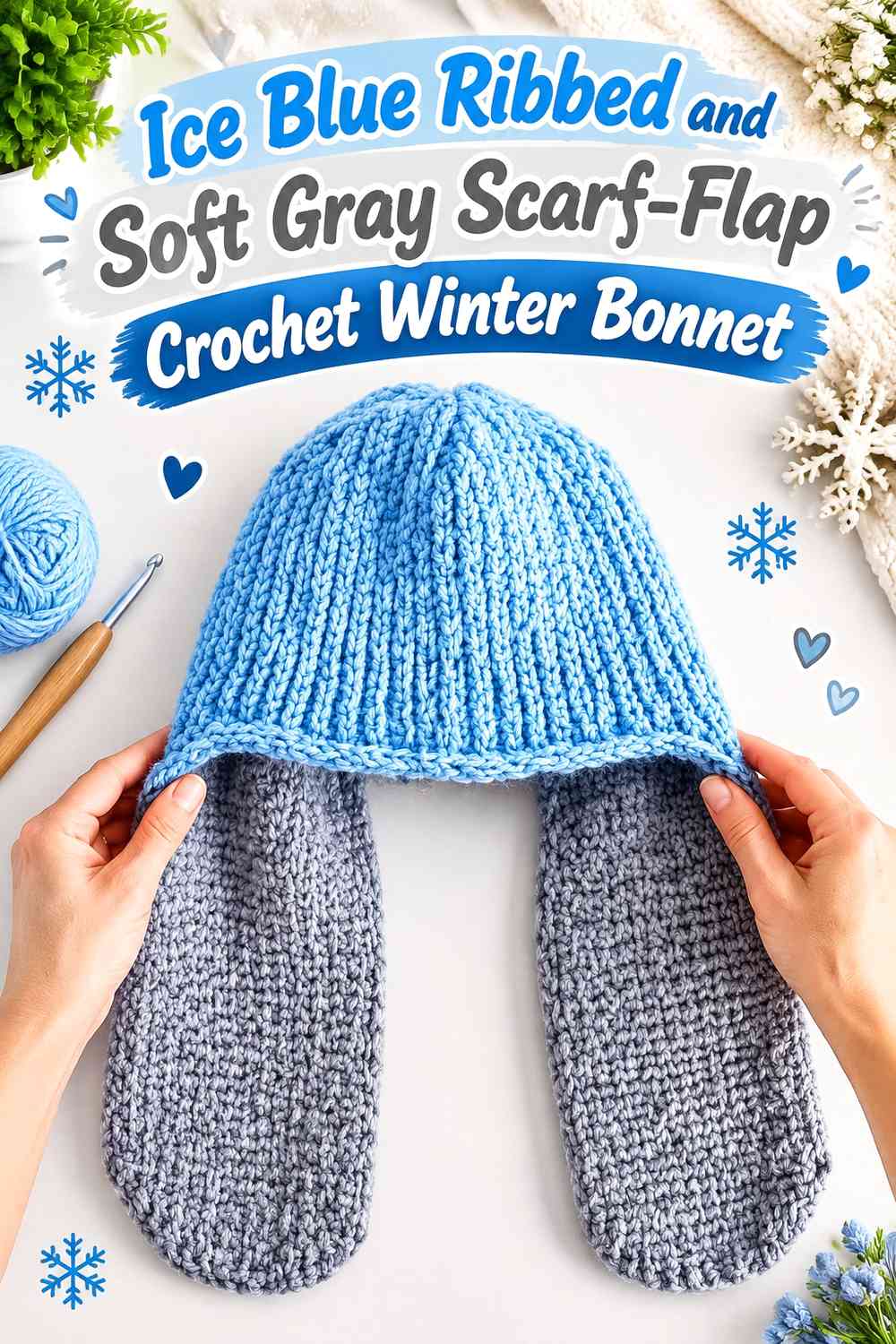
Long earflaps create enough surface to function almost like scarf panels. Ice blue can carry the ribbed crown while soft gray begins below the ears and continues through the elongated lower sections.
Soft Gray Long Flaps Need an Ice Blue Crown Break
Make the transition between blue and gray obvious before the flaps extend downward. This prevents the long side pieces from visually merging with the crown and lets the two-color construction remain easy to understand.
Ice Blue Ribbing Can Carry the Main Winter Bonnet Texture
Keep most crown ribs ice blue rather than alternating them individually with gray. The ribbing itself already supplies repeated vertical detail, so broad color blocking keeps the surface calmer.
Creator Credit: Serafima Crochet & Knitting
4. Ice Blue Bonnet With Soft Gray Braided-Tie Earflaps

Braided ties create a useful place to mix both colors without changing the main crown. Ice blue can cover the bonnet and earflaps, while soft gray appears along the flap edge and through selected strands of the ties.
Soft Gray Braids Can Extend the Ice Blue Earflap Color Story
Carry gray directly from the edge of each blue earflap into the braid. This makes the ties look like a continuation of the side treatment rather than separate decorations added afterward.
Keep the crown simpler if the ties already contain visible color mixing.
Ice Blue Earflaps Should Remain Larger Than Soft Gray Tie Details
The blue side panels still need enough area to define the bonnet. If gray edging and braiding become too prominent, the earflaps can look mostly gray despite their blue base.
Creator Credit: Little Llama Crochet
5. Ice Blue Trapper Bonnet With Soft Gray Plush-Look Trim

A trapper silhouette gives soft gray several natural trim areas around an ice blue body. Gray can define the forehead flap, earflaps, or lower edge, creating a lined-looking contrast without requiring a third shade.
Soft Gray Trim Can Separate the Ice Blue Trapper Panels
Use gray consistently on the areas that visually fold or frame the bonnet. A forehead section and earflap edge in the same gray create a connected trim system.
Avoid adding unrelated gray stripes across the crown if the structural edges already provide enough contrast.
Ice Blue Needs Broad Space Between Soft Gray Winter Sections
Keep most of the crown blue so the gray framing remains secondary. This is especially important on a trapper shape, where a substantial forehead panel and two side areas can already occupy a large percentage of the visible hat.
Creator Credit: Yarnspirations
6. Ice Blue One-Piece Bonnet With Soft Gray Contrast Edge
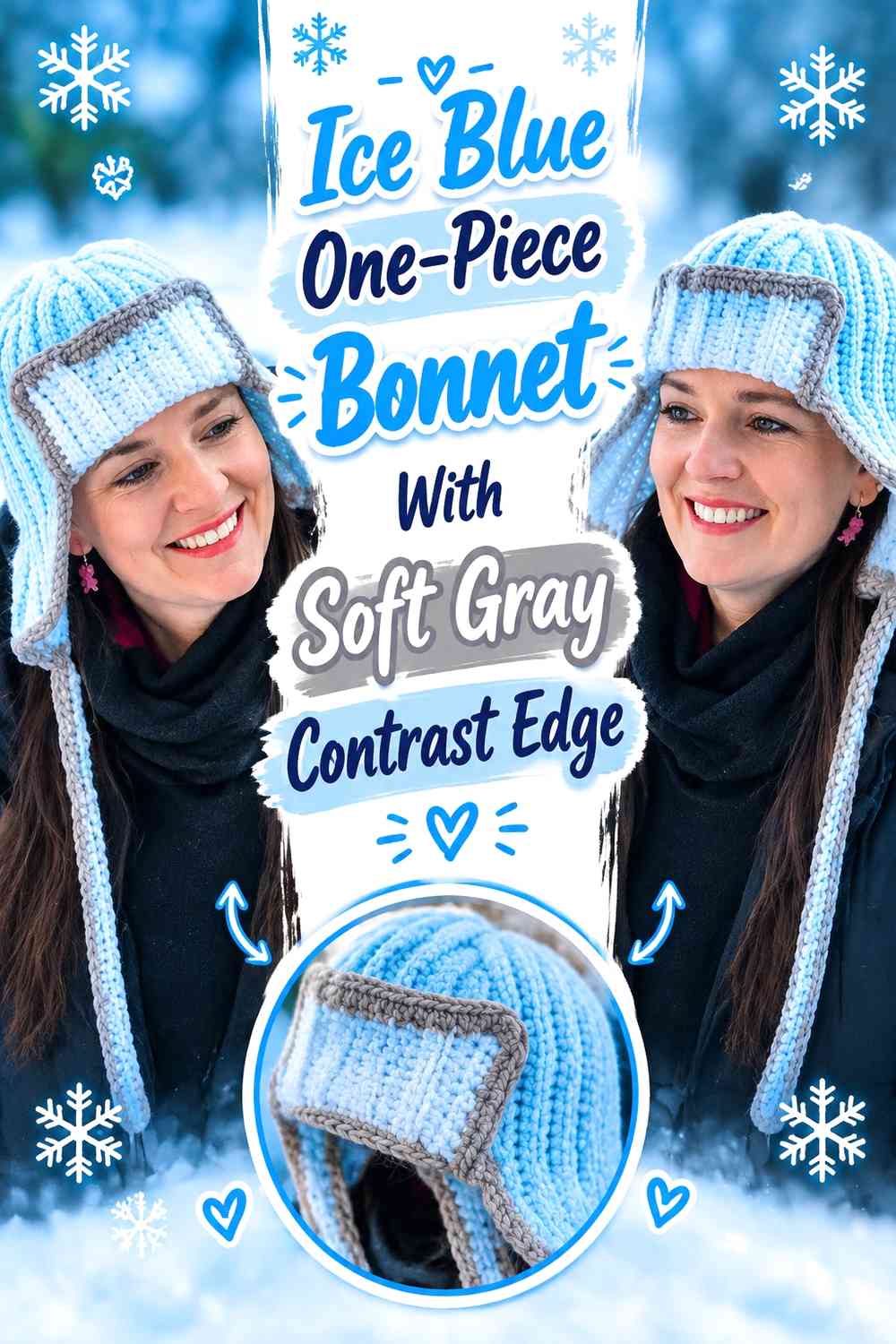
A side-to-side or one-piece construction benefits from a simple perimeter color. Ice blue can cover the developing bonnet while soft gray traces the forehead flap, ear coverage, and lower edge in one continuous visual line.
Soft Gray Can Clarify the Ice Blue One-Piece Silhouette
Use gray around the outer boundary instead of inserting it into the main panel. The contrast makes the earflap and forehead shapes easier to see while respecting the unified construction.
Ice Blue Should Stay Continuous Inside the Soft Gray Frame
Avoid breaking the center into extra stripes simply because the border uses another color. The clean blue field is what makes the gray outline function like a frame.
Creator Credit: Nebeska Crochet with Love
7. Soft Gray Trapper Bonnet With Ice Blue Earflaps
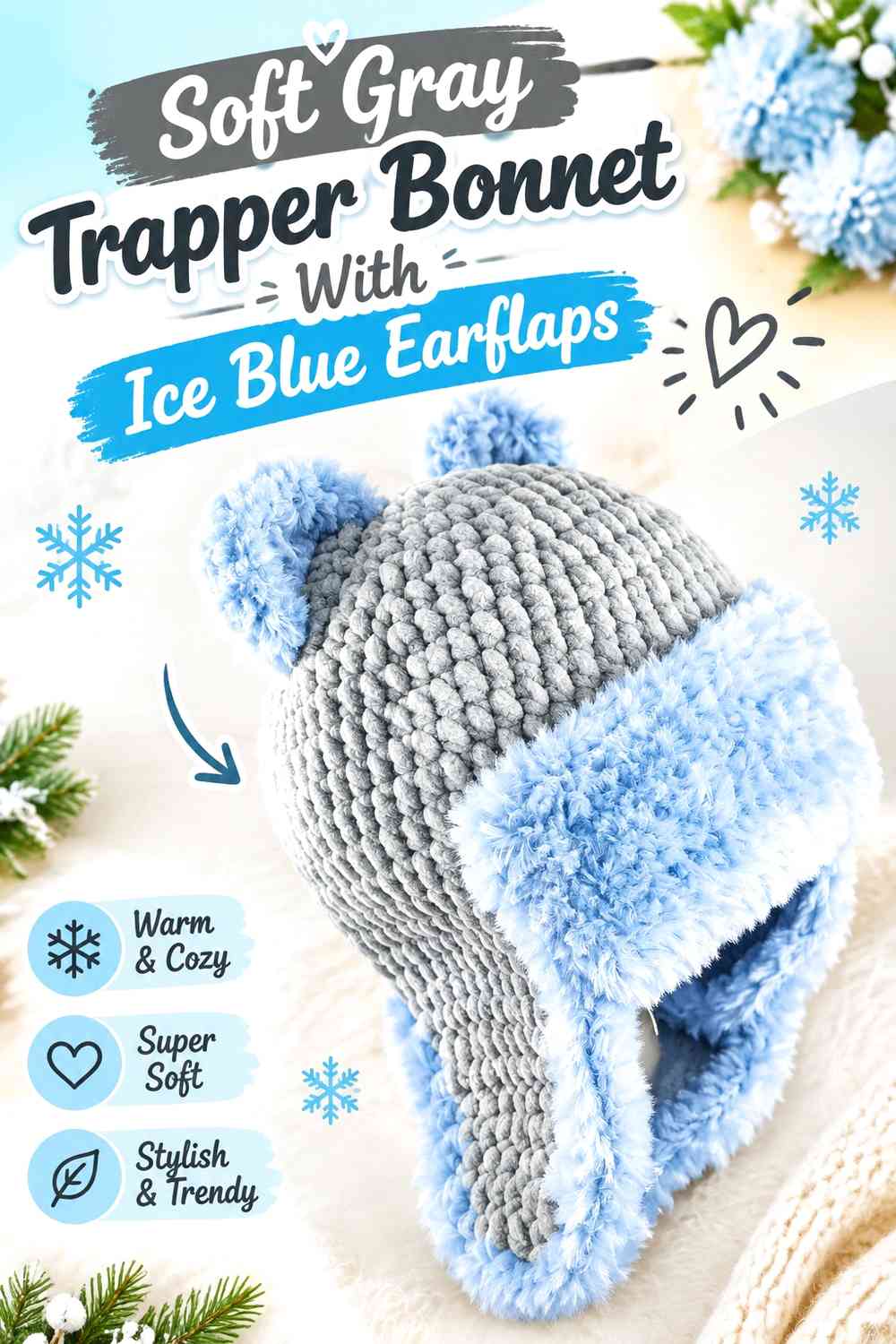
This version makes the neutral shade dominant. Soft gray covers the crown and main trapper structure, while ice blue appears across substantial earflaps and can repeat in a small forehead section.
Ice Blue Earflaps Can Be the Main Accent on Soft Gray
Let blue cover most of the visible ear sections rather than adding only blue piping. The contrast will stay noticeable from the side, which is where earflap styling matters most.
Soft Gray Should Connect the Ice Blue Earflaps Over the Crown
Keep the top and back gray so both blue sides feel attached to the same bonnet. A broad gray central field also prevents the piece from turning into an equal blue-and-gray block design.
Creator Credit: Tommy’s sheep crochet and knitting
8. Ice Blue Aviator Bonnet With Soft Gray Forehead Flap
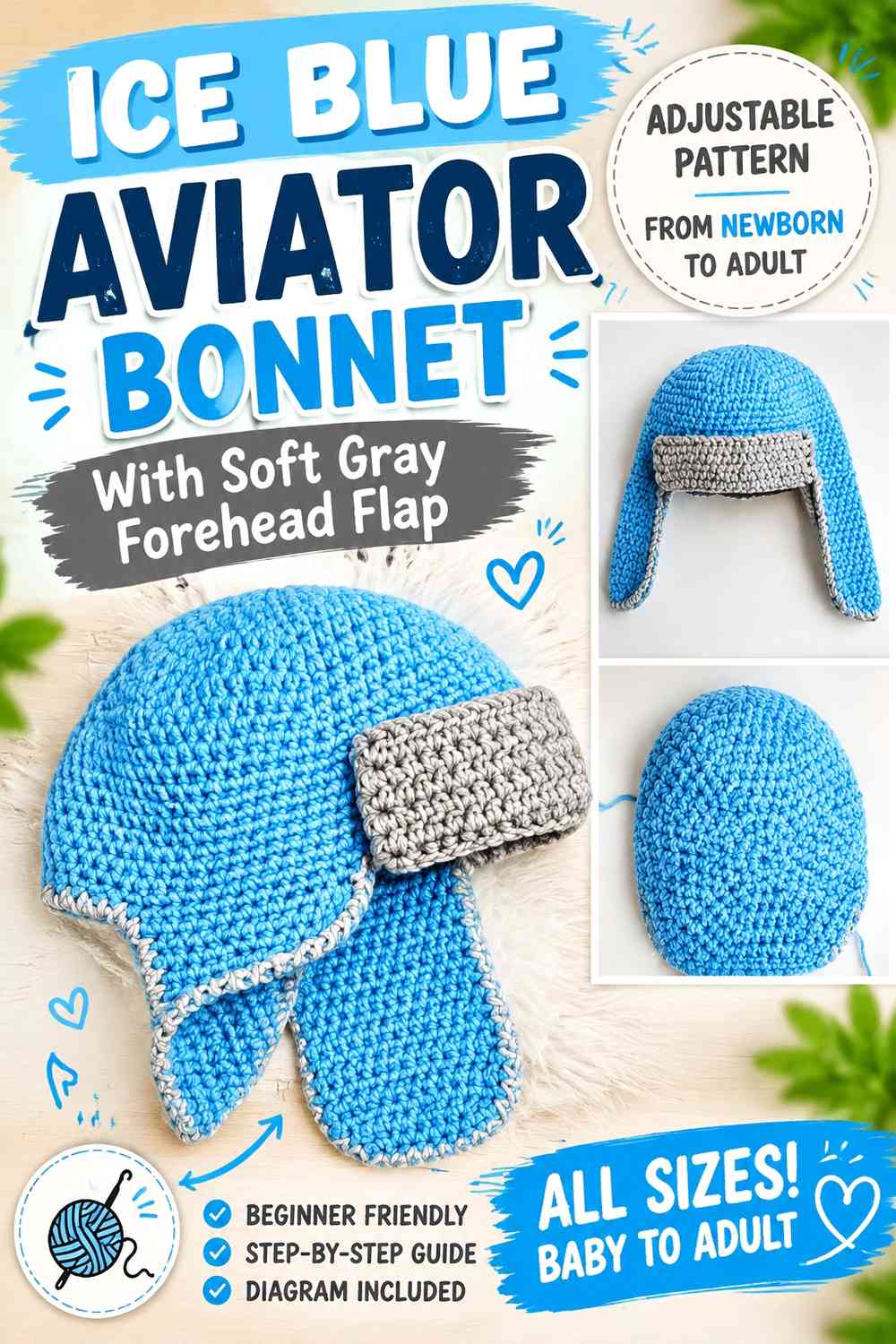
A forehead flap creates a second major contrast zone besides the earflaps. Ice blue can cover the crown and sides, while soft gray forms the front panel and a narrow line around the lower edge.
Soft Gray Forehead Panels Need Clear Ice Blue Around Them
Keep blue visible above and beside the gray flap so the contrasting section retains a distinct rectangular or curved shape.
If gray spreads too far into the crown, the visor effect becomes less obvious because the colors no longer mark separate components.
Ice Blue Ear Sections Can Echo the Soft Gray Forehead Flap
Leave the earflaps primarily blue but add a narrow gray edge if you want the side coverage connected to the front panel.
This is usually enough repetition; the entire earflap does not need to become gray as well.
Creator Credit: Vivid Yarn Crochet
9. Ice Blue Slouchy Bonnet With Soft Gray Ear Panels
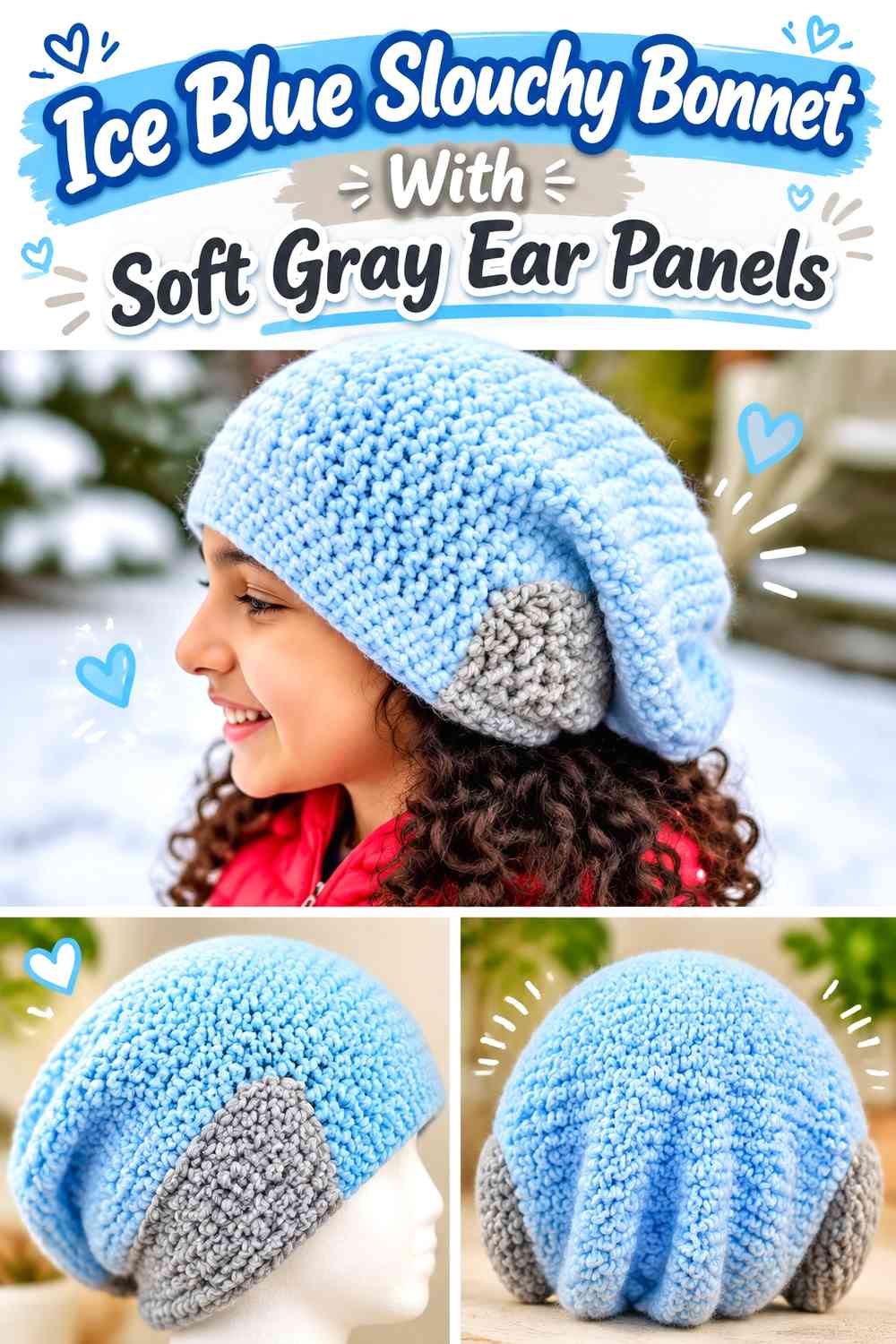
A slouchier crown adds volume at the back, so color can help separate that relaxed section from the fitted areas near the ears. Ice blue can cover the extra crown fabric while soft gray remains closer to the face and sides.
Soft Gray Ear Panels Can Stabilize an Ice Blue Slouchy Crown Visually
Use gray around the ears where the bonnet should look more fitted. The darker or more neutral side panels contrast with the larger ice blue volume behind them and make the relaxed back intentional.
Ice Blue Should Carry the Extra Slouch Rather Than Soft Gray
Keep the largest loose section blue. If gray dominates both the side panels and the slouch, the blue accent may shrink to a narrow center with much less winter impact.
Creator Credit: DIY FROM HOME CROCHET
10. Ice Blue Bow-Tie Bonnet With Soft Gray Earflap Edges
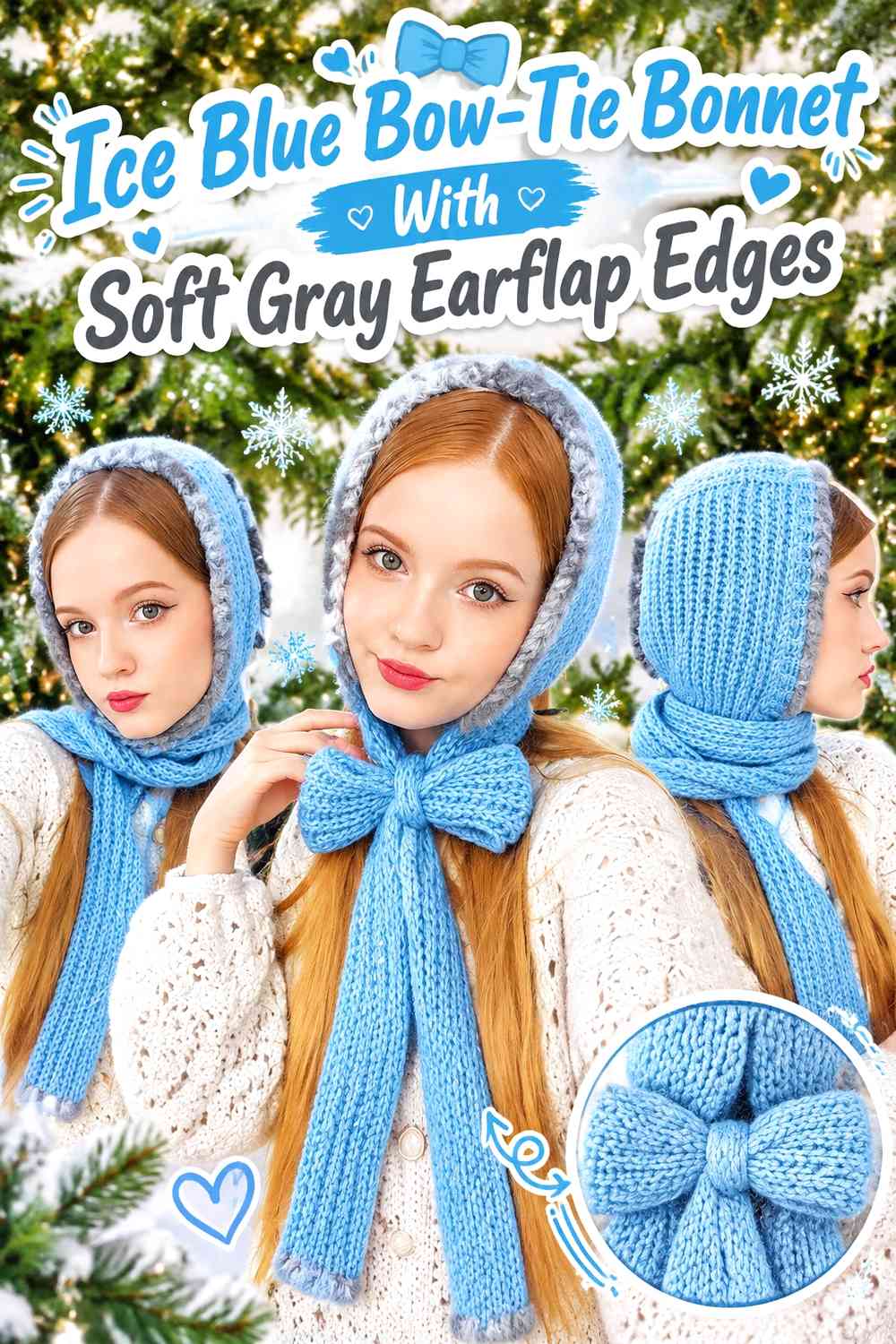
Long bonnet ties can form a prominent bow, so the palette does not need additional complicated colorwork. Ice blue can carry the body and ties while soft gray traces the earflaps and perhaps the outer edge of the ribbons.
Soft Gray Earflap Edges Can Connect to Ice Blue Bow Ties
Start gray around the side panels and allow only a small amount to continue into the ties. This links the ear coverage to the closure without turning the full bow gray.
Ice Blue Bow Ties Should Stay Visually Lighter Than Soft Gray Flaps
Keep most of each long tie blue so the bow looks connected to the crown. The gray should behave as edging or a narrow accent rather than breaking the ribbons into several alternating blocks.
Creator Credit: WONDER NETTING
11. Ice Blue and Soft Gray Marled Crochet Winter Earflap Bonnet

Holding or visually combining two close winter colors can create a blended bonnet body. Instead of adding many stripes, use the mixed ice-blue-and-gray surface through the crown and reserve a more solid shade for the earflaps.
Soft Gray Earflaps Can Ground an Ice Blue and Gray Marled Crown
A solid gray flap provides a clear endpoint beneath a more visually blended upper fabric. This keeps the ear coverage recognizable even when the crown contains both shades.
Ice Blue Should Remain Noticeable Through the Soft Gray Marling
If the mixed crown reads almost entirely gray, the ice blue direction can disappear. Compare the shades once crocheted together rather than assuming their skein colors will remain equally visible.
Creator Credit: Material Grrrlz
12. Ice Blue Textured Bonnet With Soft Gray Earflap Frame
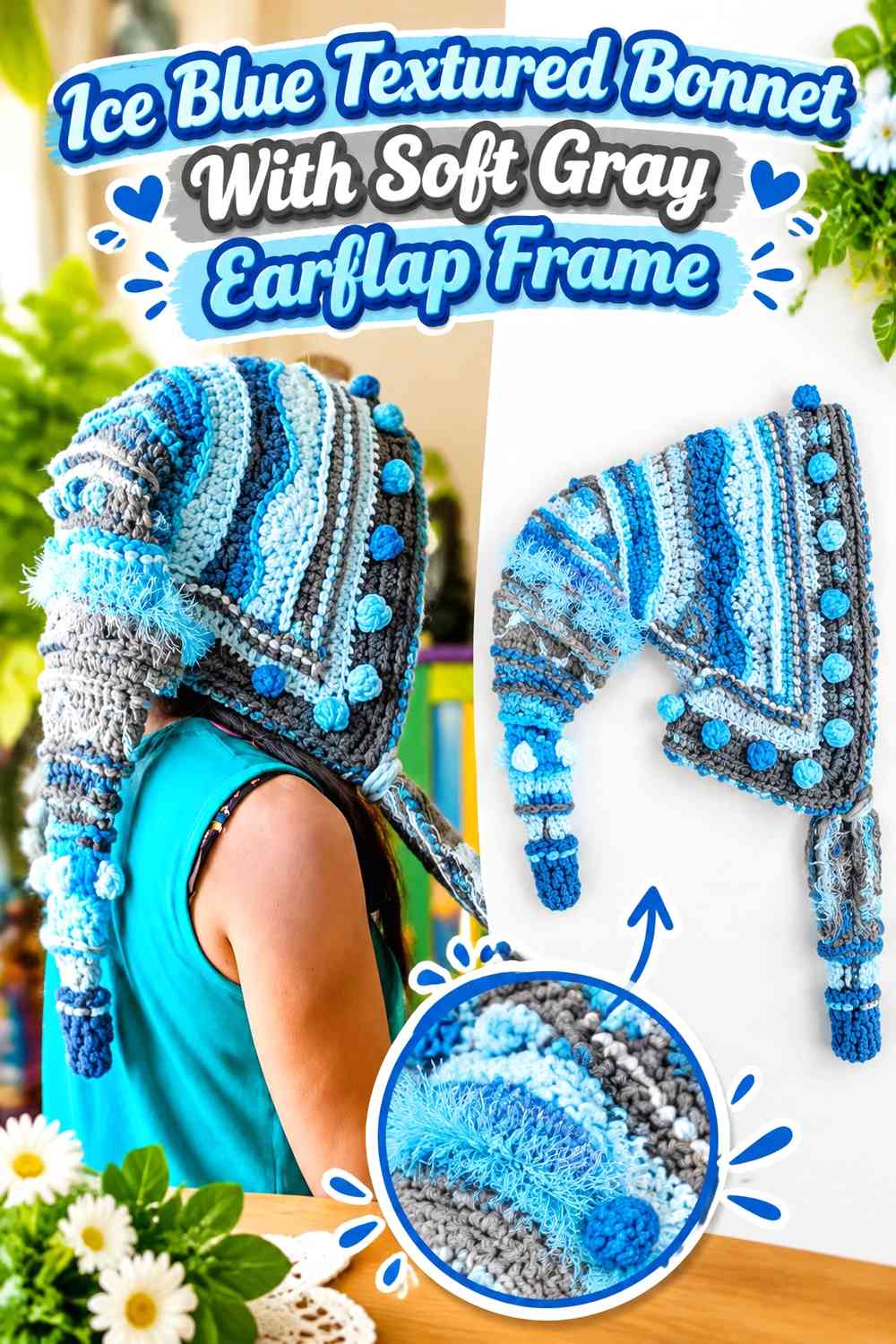
Strong surface texture gives this bonnet enough decoration without additional motifs. Ice blue can carry the raised stitchwork while soft gray outlines the face and continues around the earflap perimeter.
Soft Gray Framing Should Stay Simple Beside Ice Blue Texture
Use a clean gray edge rather than adding another elaborate stitch treatment. The contrast color can define the shape while the blue body remains responsible for most of the visual detail.
Ice Blue Texture Needs Space Inside the Soft Gray Earflap Border
Leave the textured blue field broad enough for raised stitches to remain visible. A very thick gray frame can reduce the amount of blue surface and compete with the texture.
Creator Credit: Earth Tricks
13. Ice Blue Chunky Pixie Bonnet With Soft Gray Earflaps

A pointed winter bonnet already has a dramatic crown, so the color scheme should reinforce rather than compete with that silhouette. Ice blue can cover the crown and point while soft gray grounds the lower ear sections.
Soft Gray Earflaps Can Ground the Ice Blue Pixie Point
Keeping gray low on the bonnet creates a stable base beneath the taller blue crown. The color division helps the exaggerated top remain the focal feature.
Ice Blue Should Continue Uninterrupted Into the Point
Avoid inserting gray bands through the pointed crown. One continuous ice blue area makes the shape clearer and allows the lower contrast to define the ears instead.
Creator Credit: Simply Made by Erin Crochet
14. Soft Gray Rectangle Bonnet With Ice Blue Earflap Ties
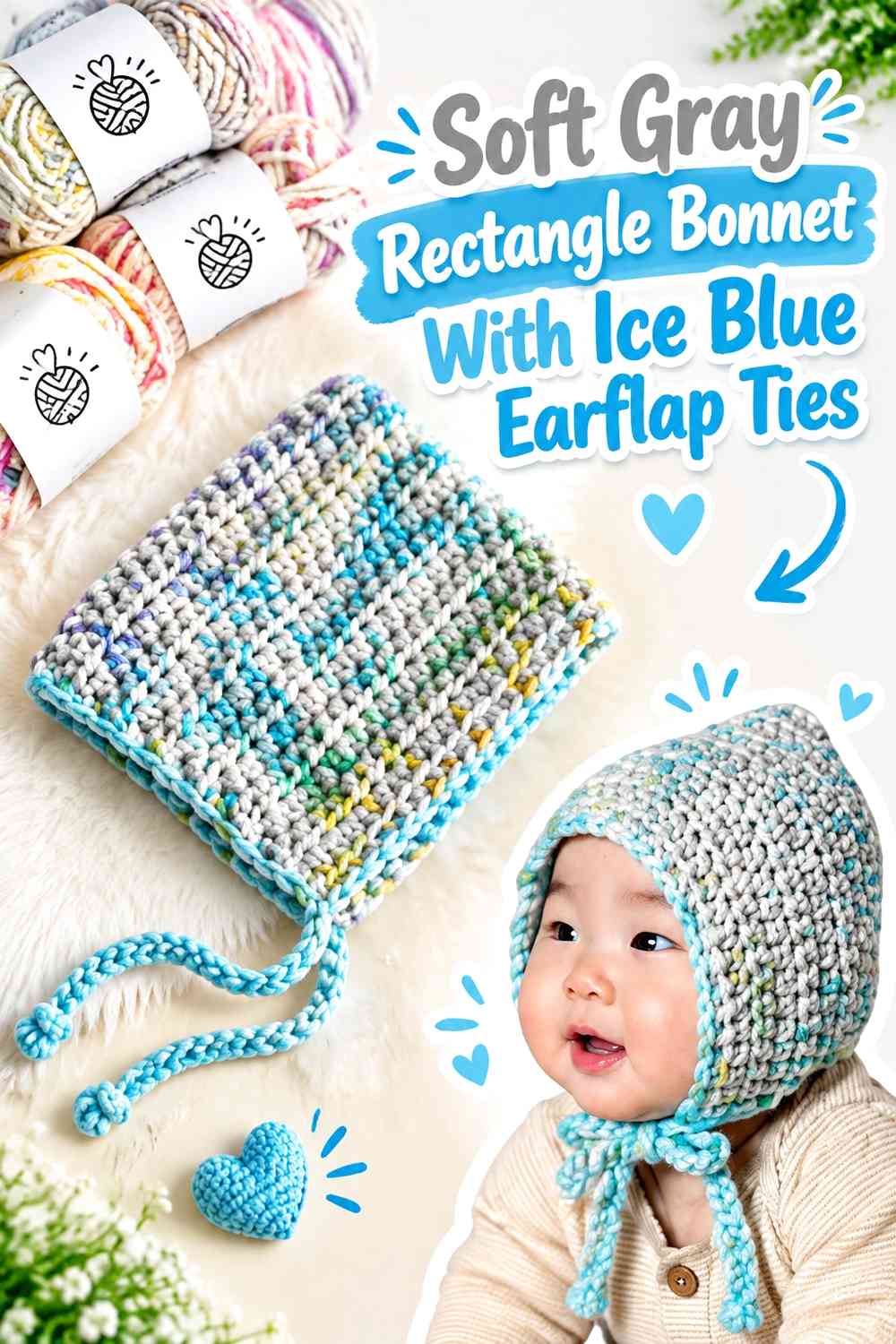
A rectangle-based bonnet creates a clean neutral canvas for blue lower details. Soft gray can form the main head section while ice blue is introduced around the ear edges and through the ties.
Ice Blue Ties Can Give a Soft Gray Bonnet a Clear Winter Accent
Use blue from the lower edge into the ties so the color has a continuous structural role. This is more effective than placing one small blue patch in the middle of an otherwise gray bonnet.
Soft Gray Should Stay Continuous Above the Ice Blue Ear Areas
Keep the main rectangle gray so the simple geometry remains obvious before the fabric is shaped around the head.
A narrow ice blue face edge can connect the ties if more color repetition is wanted.
Creator Credit: Sweet Softies
15. Ice Blue Ribbed Balaclava Bonnet With Soft Gray Side Flaps
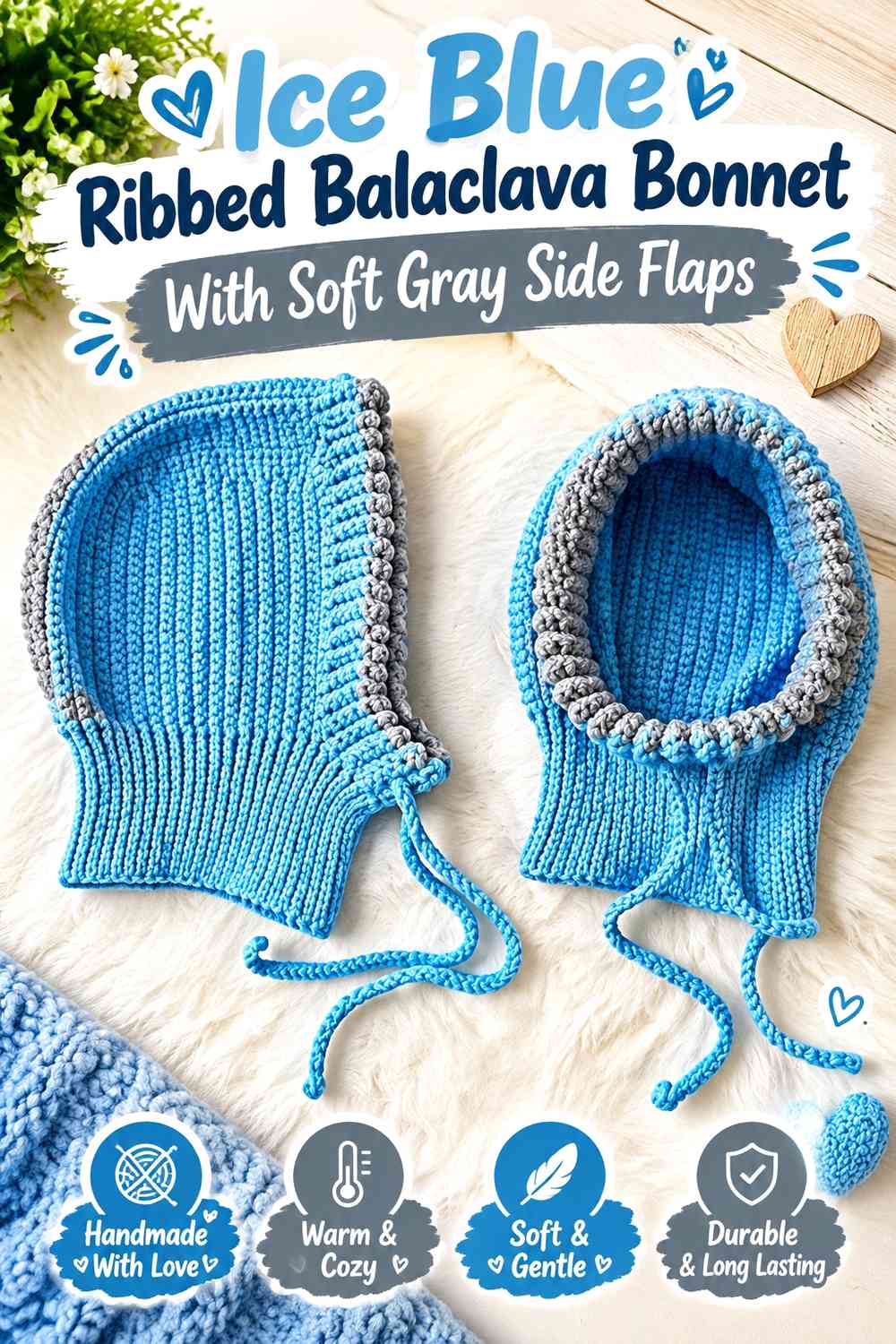
A fitted bonnet-balaclava hybrid can use soft gray to visually create deeper side coverage even when the underlying source construction is more hood-like. Ice blue remains the main face frame and crown color.
Soft Gray Side Flaps Can Break Up the Ice Blue Ribbed Surface
Place gray around the lower side sections rather than alternating every rib. Broad side blocks remain easier to read and keep the ribbing from becoming overly striped.
Ice Blue Ribbing Should Continue Around the Soft Gray Face Transition
Keep blue around much of the face opening so the accessory still reads as ice-blue dominant from the front. Gray can then emphasize the ears and lower sides without enclosing the entire face in a dark frame.
Creator Credit: Kenikse Crochet
16. Soft Gray Hooded Bonnet With Ice Blue Ear and Neck Panels
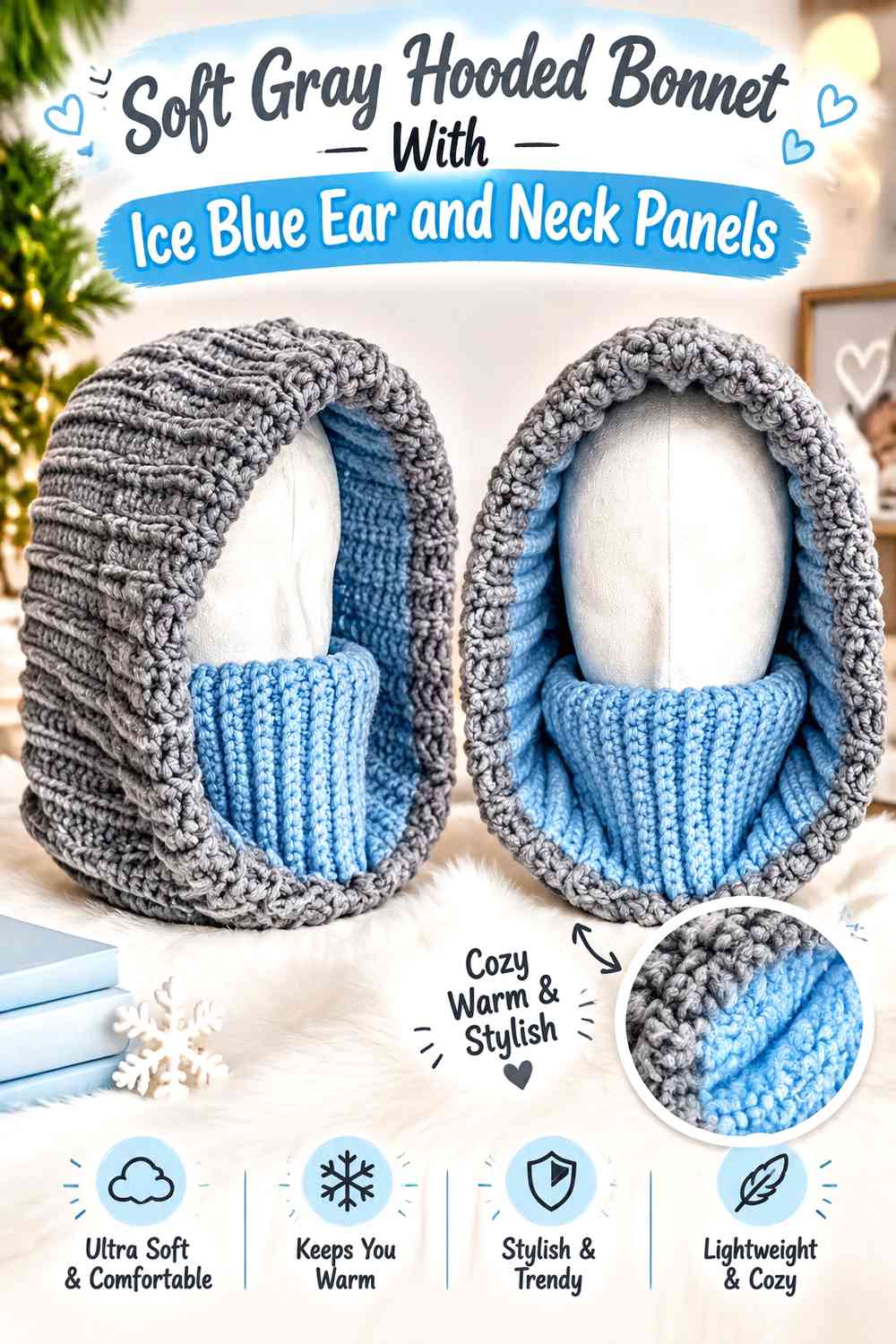
A bonnet that continues toward the neck offers more surface for color blocking. Soft gray can cover the hood and crown while ice blue marks the lower side panels where ear coverage transitions toward the neck.
Ice Blue Ear Panels Can Connect a Soft Gray Hood to the Neck
Allow the blue sections to extend slightly below the ears instead of stopping abruptly at jaw level. That gives the contrast a purposeful vertical path through the longer winter silhouette.
Soft Gray Should Remain Broad Above the Ice Blue Lower Panels
Keep the crown and most of the hood gray so the design does not become equally divided from top to bottom.
A small ice blue neckline repeat can finish the lower section without spreading the accent through the whole hood.
Creator Credit: Diving Ducks Crochet
17. Ice Blue Drawstring Bonnet With Soft Gray Ear Coverage
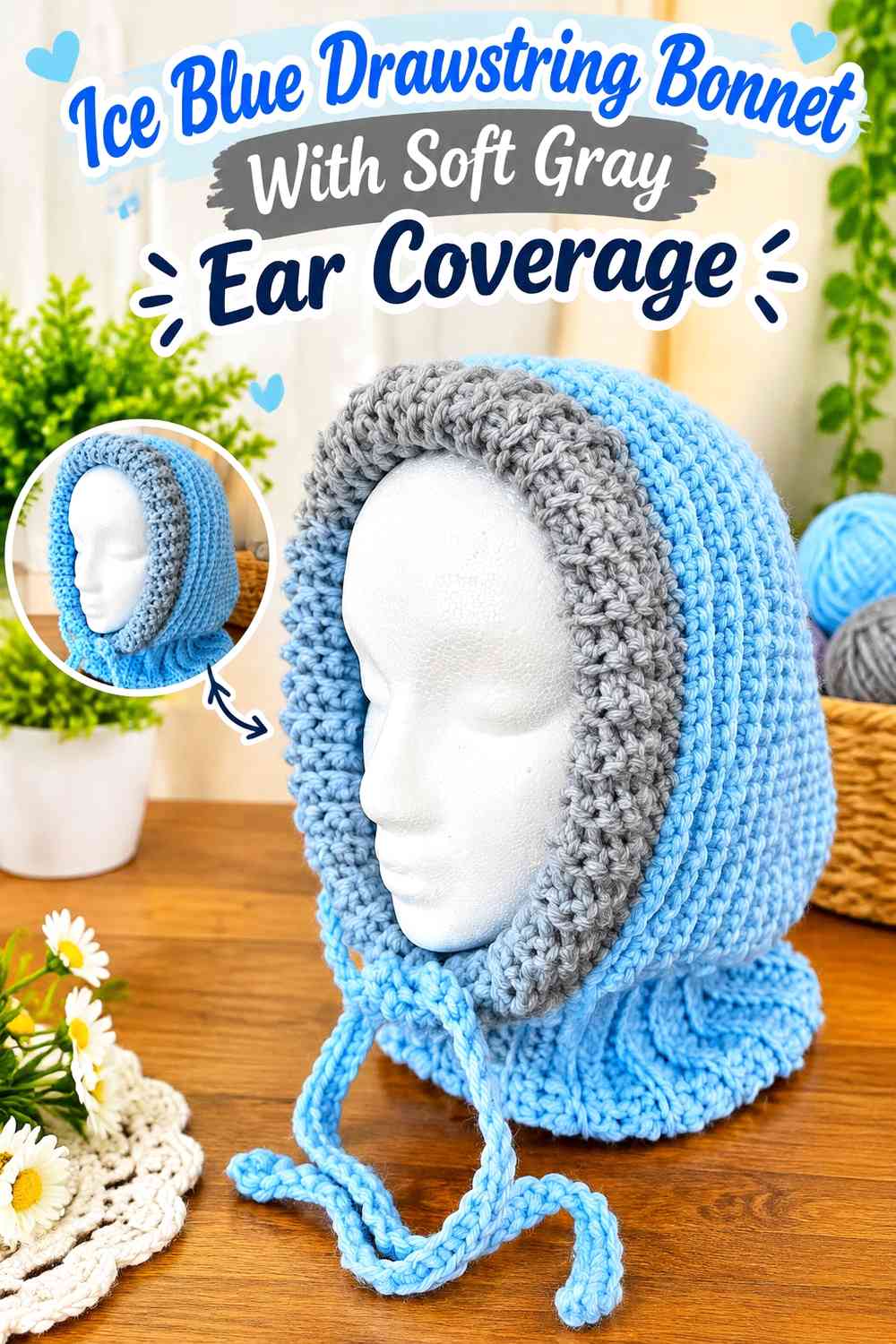
The final idea uses the adjustable face edge as another color opportunity. Ice blue can cover the crown and main hood, while soft gray appears through the side ear areas and drawstring channel.
Soft Gray Drawstring Edging Can Frame the Ice Blue Bonnet
Use gray around the adjustable opening where it can form one continuous border. The darker or more neutral edge helps define the face while connecting visually to the ear coverage below.
Ice Blue Needs Enough Crown Space Above the Soft Gray Drawstring
Keep the broad upper hood blue so the adjustable gray frame does not become the dominant color. The blue field should still be what the viewer notices first from the front and back.
Creator Credit: Cozy Loop Crochet
Comparing the Ice Blue and Soft Gray Winter Bonnet Directions
For the clearest earflap emphasis, choose the ice blue crown with soft gray earflaps, the reversed gray crown with blue flaps, the braided-tie design, or one of the trapper-inspired versions. These put color contrast directly around the ears, where it reinforces the function of the silhouette.
The ribbed, textured, marled, and slouchy designs place more emphasis on the crown surface. In those versions, keeping the ear sections in larger solid color blocks prevents the palette from competing with the stitches.
For maximum coverage, the scarf-flap, balaclava, hooded, and drawstring versions extend farther toward the neck. The pixie and bow-tie options lean more decorative, so simple ice-blue-and-gray blocking keeps their distinctive silhouettes from becoming visually overloaded.
Conclusion
Ice blue and soft gray work particularly well on a winter earflap bonnet when one shade establishes the crown and the other explains the lower structure. Ice blue can create the colder, brighter main field while soft gray defines earflaps, forehead bands, ties, and edges. Reversing those roles produces a quieter neutral bonnet with more noticeable blue side coverage.
If the construction already includes strong ribbing, texture, a visor, a pointed crown, or long ties, keep the color placement relatively broad. The silhouette can provide much of the detail, leaving the two shades to clarify rather than complicate it.
The linked tutorials range from direct earflap and trapper hats to related bonnet and hood constructions. Use each source for the construction it actually demonstrates, and treat any added earflap treatment and the ice blue–soft gray placement as an independent adaptation.
Frequently Asked Questions
Should ice blue or soft gray dominate a winter crochet earflap bonnet?
Either can lead. Ice blue creates a brighter winter look and works well across the crown, while soft gray can ground the earflaps and edging. A soft-gray-dominant bonnet gives the blue ear sections stronger accent value.
Where should soft gray go on an ice blue earflap bonnet?
Useful locations include the earflaps, forehead band, lower edge, ties, visor, or face frame. Choosing two or three connected locations generally looks more deliberate than scattering gray through unrelated crown sections.
How can I keep ice blue and soft gray from blending together?
Compare the actual yarns side by side because their values can vary considerably. If they are similar in lightness, use larger color blocks such as complete earflaps or a broad forehead panel instead of relying on thin contrast lines.
Should ice blue earflaps match the bonnet ties?
They can. Continuing ice blue from the earflap into a tie creates a particularly clean color path. Another option is to keep the flap blue and introduce soft gray through one or more braided strands.
Can a trapper-hat tutorial work for an ice blue and soft gray bonnet idea?
Yes when you want substantial ear coverage, a forehead flap, or a more structured winter silhouette. Keep the original tutorial’s construction intact and use the ice blue and soft gray treatment as a separate color-planning decision.
How can I keep a ribbed ice blue and soft gray bonnet from looking too striped?
Let the ribbing supply the repeated visual lines and use broad color sections. An ice blue ribbed crown with complete soft gray earflaps is usually clearer than changing color on individual ribs.
Can a hood or balaclava tutorial support an earflap bonnet adaptation?
It can provide a useful reference for crown, face, or neck coverage, but a hood without distinct earflaps should not be treated as an exact earflap pattern. Plan any side-flap adaptation separately and preserve the original creator’s instructions for the construction they actually demonstrate.