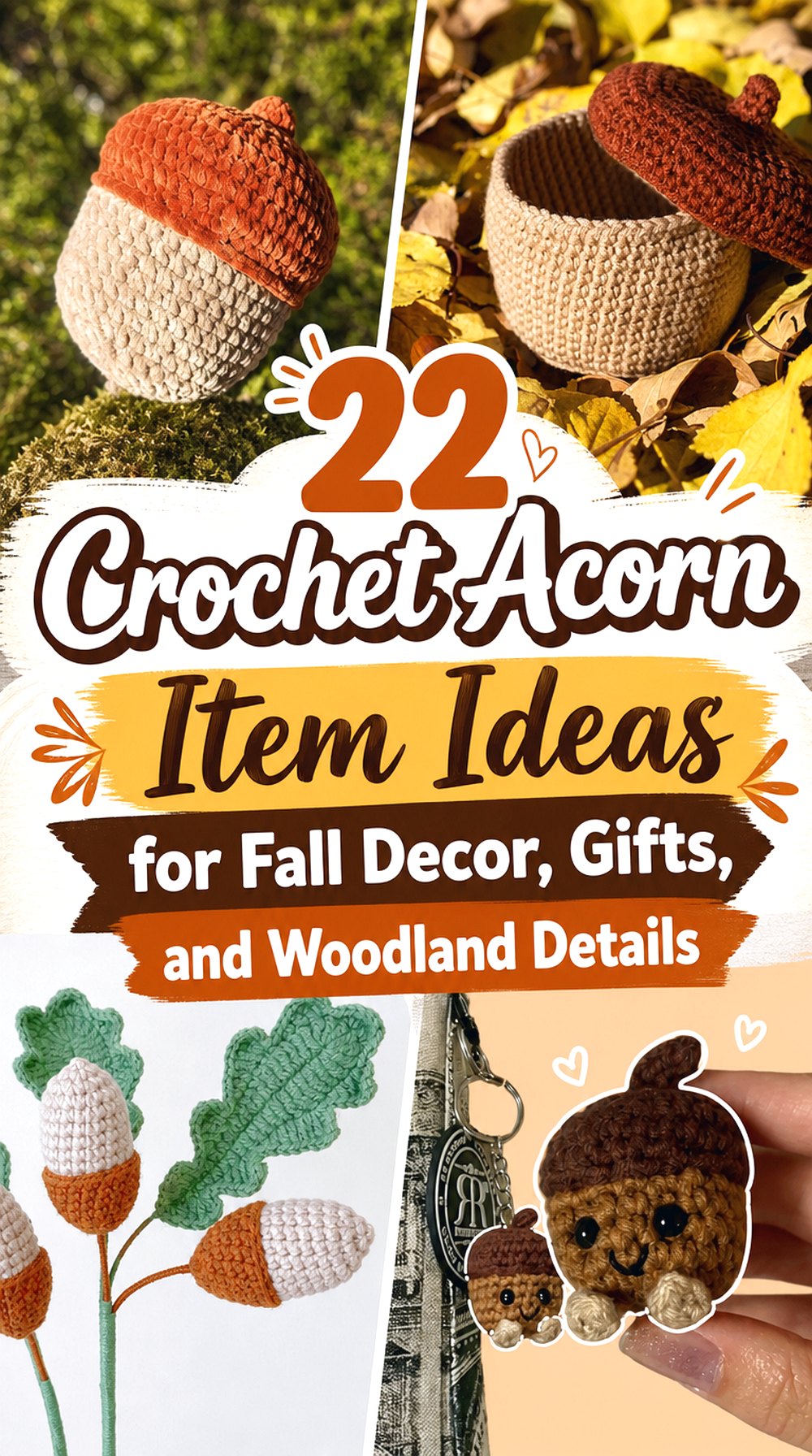

Crochet acorn items can be tiny, flat, stuffed, wearable, or made for display, so this collection gives readers more than one way to use the same woodland theme. Some ideas work as small embellishments for hats and blankets, while others become ornaments, garlands, coasters, storage pieces, or soft plush decor.
The biggest difference is how each acorn is meant to be used. A flat appliqué is useful when you want surface detail without bulk. A stuffed acorn works better for bowls, shelves, trees, or gift toppers. Larger choices, such as a pouch, hat, pillow, or beanie, turn the acorn shape into something more functional.
Each project below links to its original YouTube tutorial and uses a different creator, so readers can choose the format, size, and purpose that fits their fall project plans.
Quick List
- Crochet Mini Fall Acorn Appliqué
- Crochet Rustic Farmhouse Acorn Bowl Filler
- Crochet Country Charm Acorn Set
- Crochet Feather-Stitch Acorn Decoration
- Crochet Quick Two-Tone Acorn Accent
- Crochet Small Acorn with Oak Leaf
- Crochet Tiny Acorn Amigurumi Toy
- Crochet Acorn Keychain Charm
- Crochet Lidded Acorn Storage Box
- Crochet Acorn and Oak Leaf Garland
- Crochet Braided-Cord Acorn Ornament
- Crochet Mini Acorn Pouch with Leaf Top
- Crochet Baby and Kids Acorn Hat
- Crochet Flat Acorn Coaster
- Crochet Acorn Granny Square Block
- Crochet Twin Oak Acorn Bookmark
- Crochet Mini Acorn Earrings
- Crochet No-Sew Acorn Pillow Plush
- Crochet Acorn and Oak Leaf Ornament
- Crochet Wired Acorn Branch Stem
- Crochet Mini Acorn Plushie with Face
- Crochet Acorn Beanie with Ruffled Brim
What to Compare Before Choosing a Crochet Acorn Item
Before choosing one of these crochet acorn items, think about where the finished piece will go. Flat appliqués, granny squares, earrings, and coasters need clean edges and a readable acorn outline because they are viewed from the front. Stuffed acorns, ornaments, plushies, and bowl fillers need shape more than surface width, so the cap, body, and stem placement matter.
For practical projects, check the extra details first. A pouch needs an opening that suits what you plan to store. A hat or beanie needs size information, not just a cute acorn look. A garland or wired branch needs spacing, attachment, and hanging plans. When a tutorial uses extras such as wire, cord, stuffing, or jewelry findings, review the creator’s material list before buying supplies.
Crochet Mini Fall Acorn Appliqué
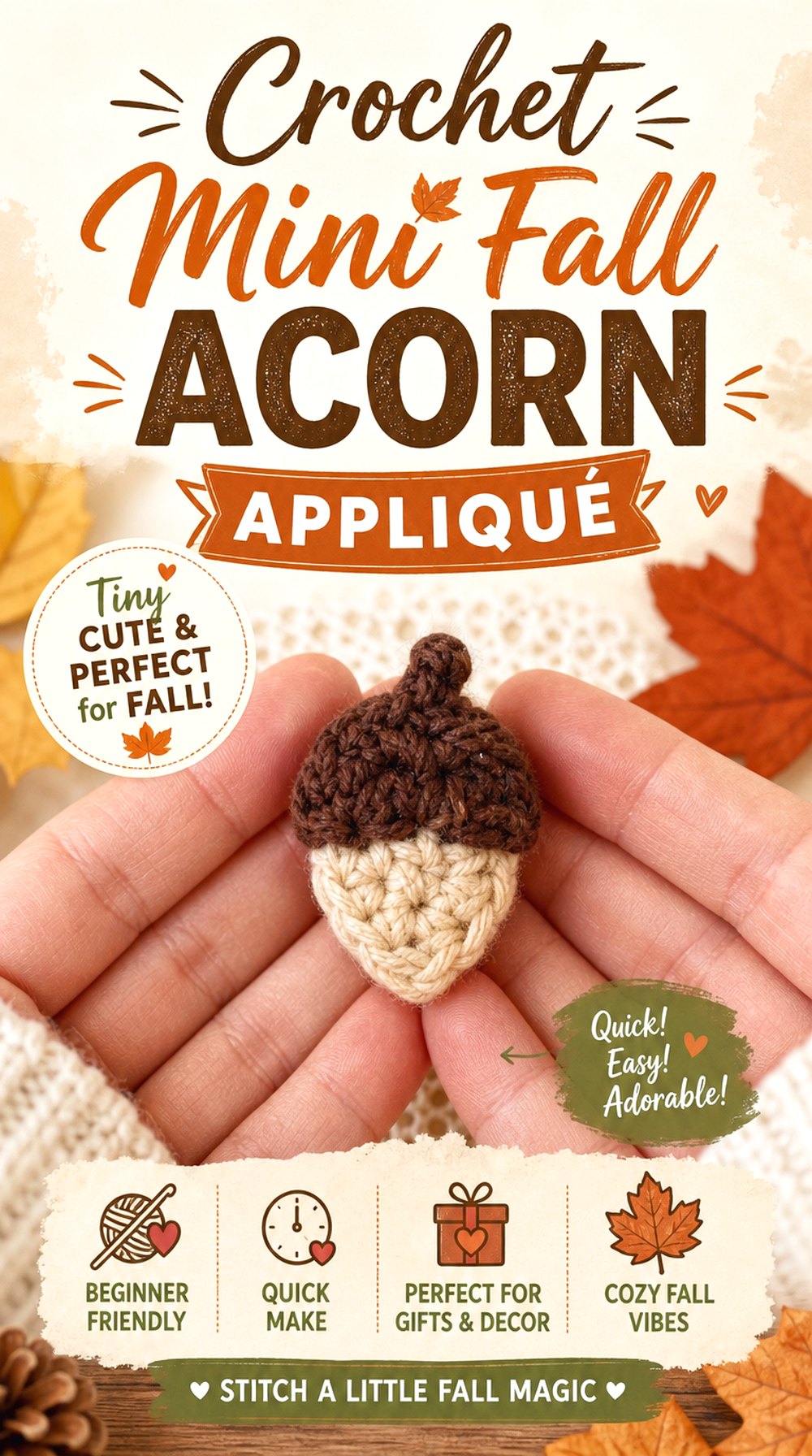
A flat acorn appliqué is one of the most flexible choices in this collection because it adds a fall detail without turning the whole project into a large decoration. This one is made as a small embellishment, so it may suit hats, scarves, blankets, booties, bags, or other projects where a raised acorn motif would be more useful than a stuffed shape.
The appeal is in the compact outline: a clear nut body, a cap area, and a small seasonal look that can sit on another crocheted or sewn item. It is different from the plush and ornament choices because the main purpose is surface decoration.
Best Use for a Flat Acorn Shape
A flat appliqué works well when the project underneath already has its own structure. It does not need shelf space, stuffing, or a hanging loop, so it can become a small accent on a larger piece. Readers should think about the background item first, then decide whether the acorn needs to sit centered, near an edge, or in a repeated group.
Attachment Placement Matters
The placement of a small appliqué changes how polished it looks. On a blanket, it may work as a corner accent. On a hat or scarf, it needs to sit where it will not fold awkwardly during wear. Before attaching it permanently, readers may want to pin it in place and check whether the cap and body still read clearly from a normal viewing distance.
Crochet Rustic Farmhouse Acorn Bowl Filler
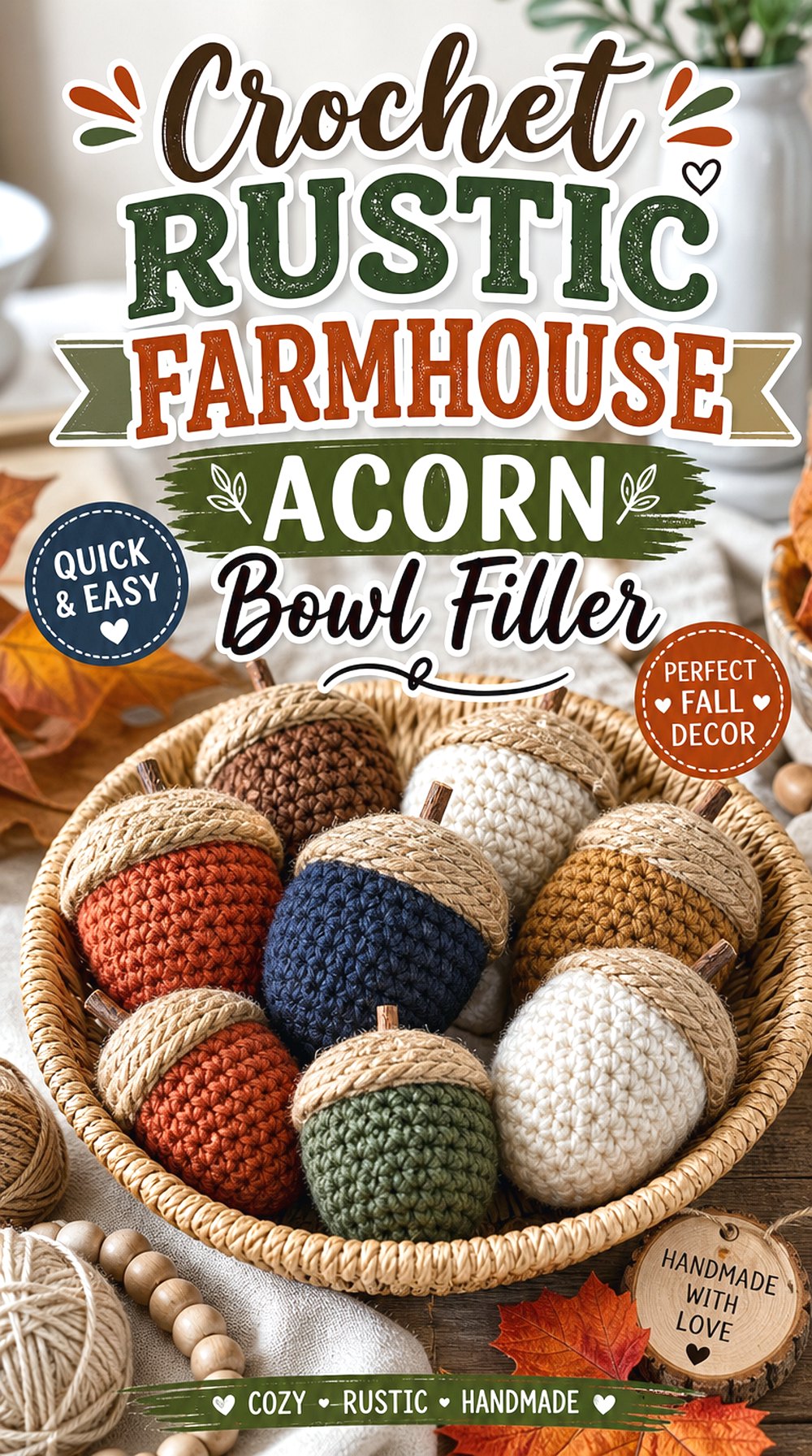
This rustic acorn project has a fuller decor style, making it a good option for trays, baskets, mantel displays, and autumn bowls. The finished look is more substantial than a tiny charm or appliqué, and the source shows a farmhouse direction with a textured acorn body and a separate-looking top finish.
Because this piece is meant for home display, the most important decision is how many acorns you want together. A single large acorn can sit as a small accent, while a group creates a stronger centerpiece effect. This choice stands apart from the tiny ornament projects because it is more about volume, texture, and display.
Displaying Several Sizes Together
A bowl filler usually looks more natural when the pieces do not all feel identical. This source supports a rustic decor approach, so readers may want to compare size options and think about whether they want a small group, a tray arrangement, or a fuller seasonal basket. The final display should have enough breathing room for each acorn shape to show.
Extra Decor Materials to Review
This project uses decorative finishing details, so the supply list matters more than it would for a plain stuffed acorn. Readers should check the original material list before buying yarn or extras, especially if they want the same farmhouse look. If substitutions are planned, it is worth confirming that the cap, stem, and body will still hold the intended visual balance.
Original Tutorial and Creator Credit
Creator: MJ’s Off The Hook Designs
Crochet Country Charm Acorn Set
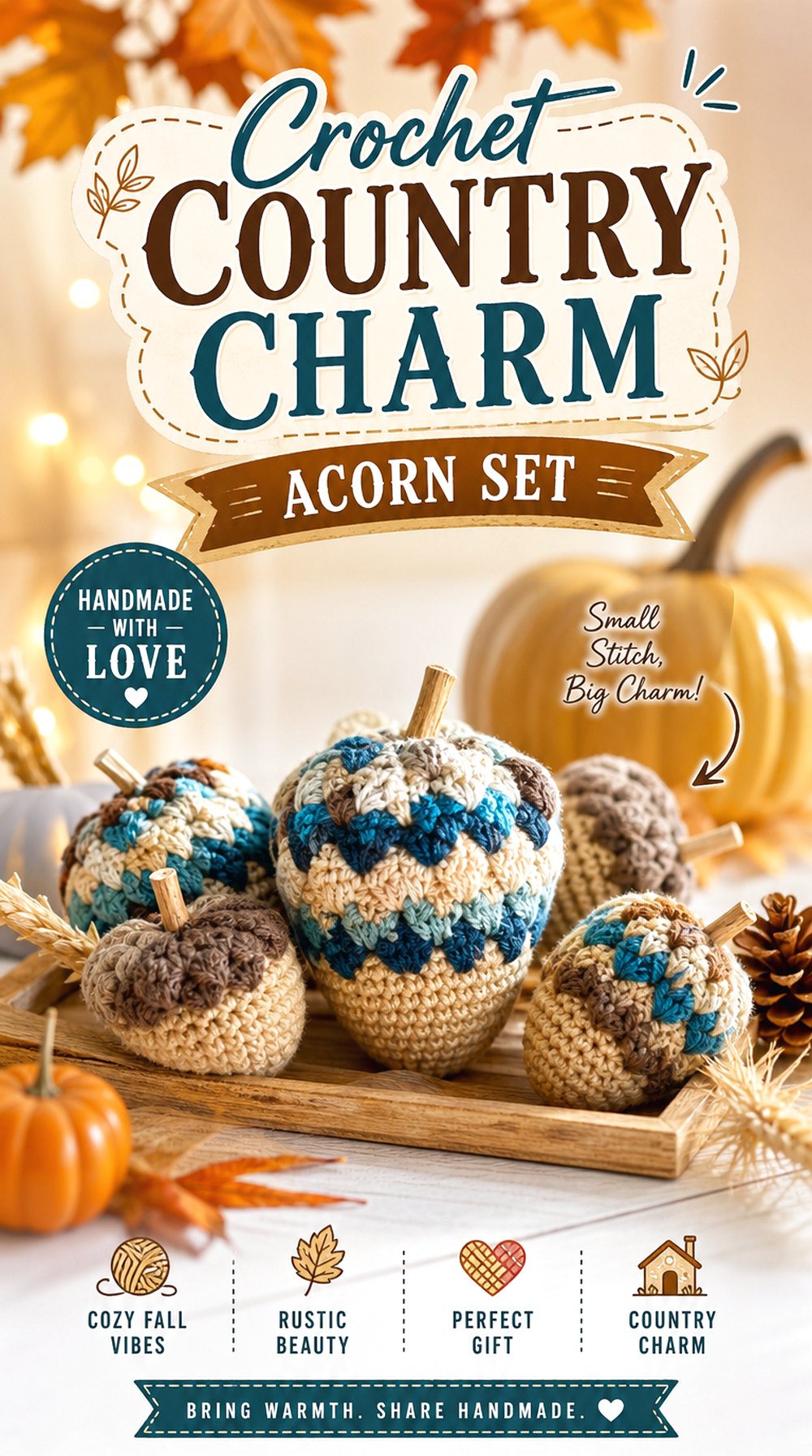
The Country Charm acorn project is useful for readers who want a coordinated set rather than just one single acorn. The source presents this acorn style with size variety, which makes it helpful for displays where one scale would feel too plain. A small version can work as a little accent, while larger pieces can carry more visual weight in a tray or shelf arrangement.
Its main difference is the set-building potential. Instead of focusing on jewelry, storage, or a wearable item, this choice is mainly about making several acorns that share the same design language but can be used in different fall decor placements.
Size Variety Changes the Display
When a project includes more than one size direction, readers can build a display with depth. A taller acorn can sit behind a smaller one, while a mini version can fill gaps around candles, pumpkins, or leaves. The key is to choose size based on the final location instead of making every acorn first and trying to place them later.
Solid or Patterned Cap Decisions
This style can support a more playful or classic finish depending on how the cap is handled. A solid cap gives a traditional acorn look, while a more textured or color-shifted cap can make the piece stand out in a mixed fall display. Readers should decide whether they want the acorns to blend quietly with other decor or become the main feature.
Original Tutorial and Creator Credit
Creator: Pretty Darn Adorable Crochet Tutorials
Crochet Feather Stitch Acorn Decoration
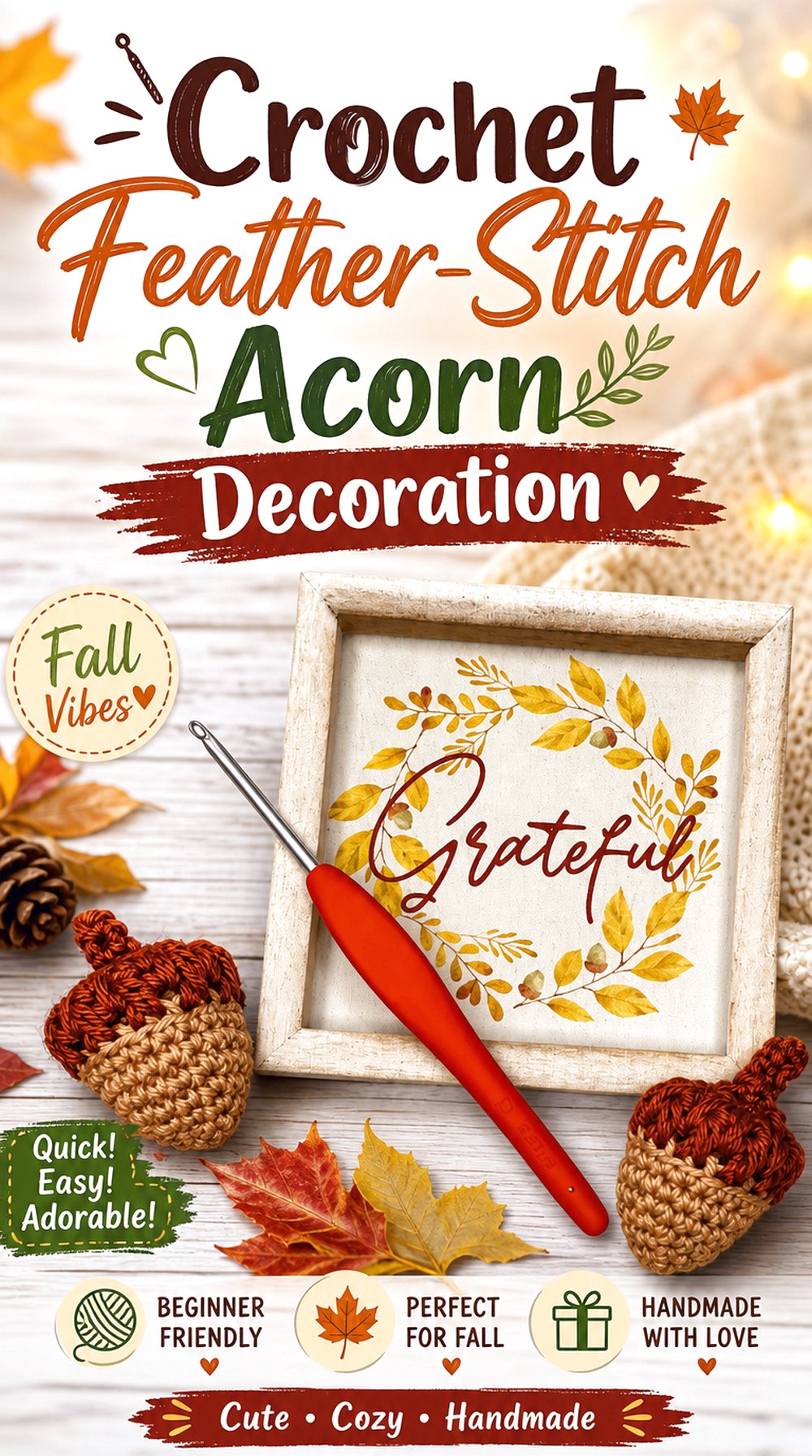
This small stuffed acorn stands out because the cap uses a more noticeable textured look. That makes it a good option for readers who want a compact acorn that still has visible surface interest. The source describes it for uses such as garlands, basket fillers, or simple decoration, so it can move between hanging and tabletop ideas.
Compared with the smoother acorn options, this one puts more attention on the cap. That detail may matter if the finished acorn will be viewed up close, such as in a bowl, on a shelf, or as part of a small handmade gift presentation.
Texture Is the Main Feature
The cap texture gives this acorn more definition than a completely smooth top. That can help the shape read clearly, especially when the body and cap are made in similar autumn tones. Readers who like close-up stitch detail may prefer this option over a plain mini acorn, while those wanting a very simple silhouette may choose a flatter project instead.
Small Decor Needs Careful Placement
A small acorn can disappear if it is placed among too many large props. For a garland, spacing matters. For a basket filler, grouping several pieces may make the design easier to notice. Before starting a batch, readers should decide whether they want one accent, a repeated strand, or a cluster for a bowl.
Original Tutorial and Creator Credit
Creator: love.life.yarn. by Amanda Saladin
Crochet Quick Two Tone Acorn Accent
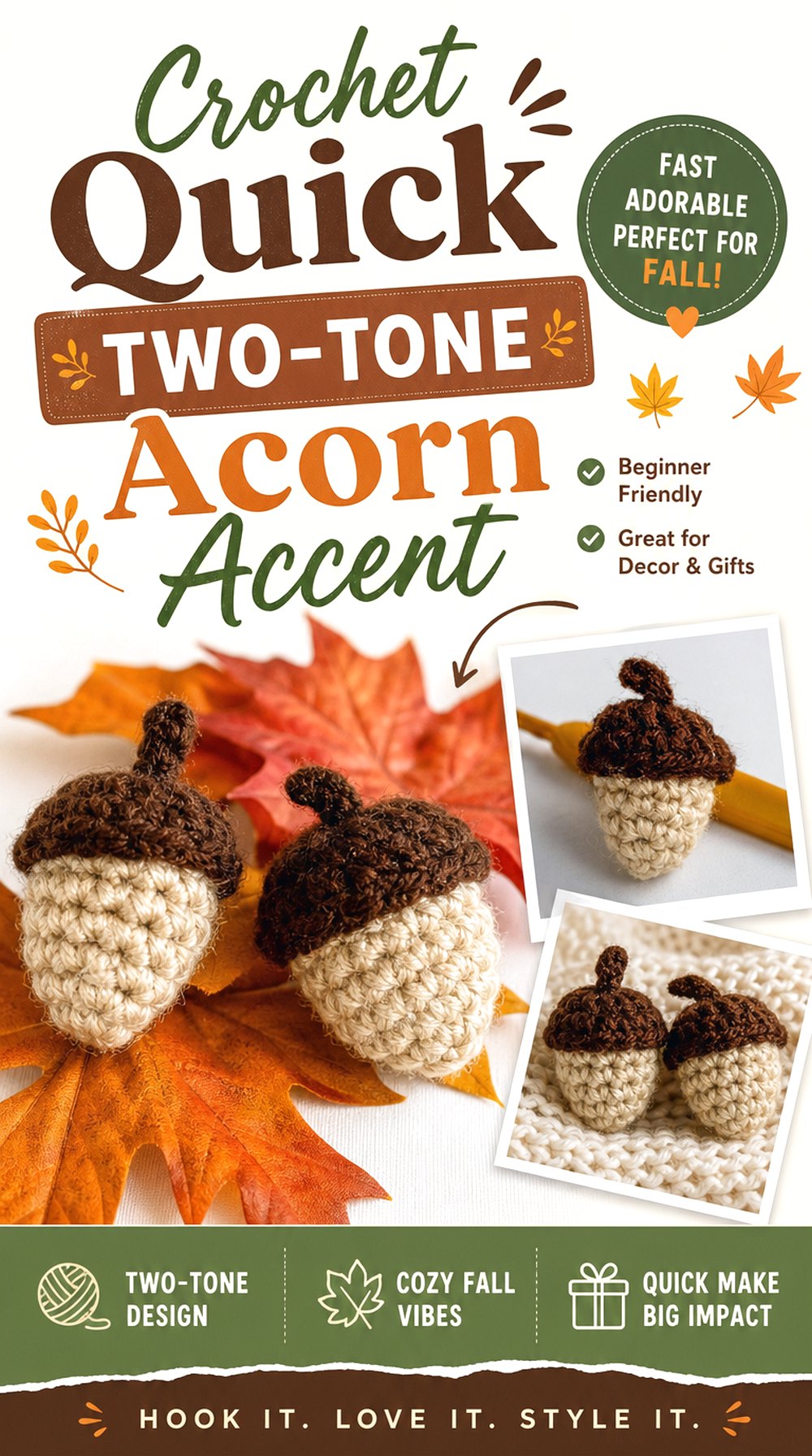
This small two-tone acorn is a straightforward fall accent for readers who want a recognizable acorn shape without choosing a large decor piece. It has the classic contrast of a darker cap and lighter body, which makes the acorn easy to identify even at a small scale.
The project is different from the appliqué because it has more dimension, but it is not as large or involved as a pillow, pouch, or storage box. That middle ground makes it useful for gift toppers, loose fall decorations, small bowl fillers, or a group of simple seasonal accents.
Two Colors Define the Shape
The color break between the cap and the body is important because it does much of the visual work. Readers should choose shades with enough contrast so the acorn does not become one blended oval. Traditional browns work well for a natural look, while muted autumn colors can make the piece feel more decorative.
Batch Projects Need Consistency
Small acorns are often most effective in groups. If making several, readers may want to keep the same yarn weight and hook choice throughout the batch so the pieces stay visually related. Color can change from acorn to acorn, but the size and shape should stay close enough to look intentional in one display.
Original Tutorial and Creator Credit
Creator: Winding Road Crochet
Crochet Small Acorn with Oak Leaf
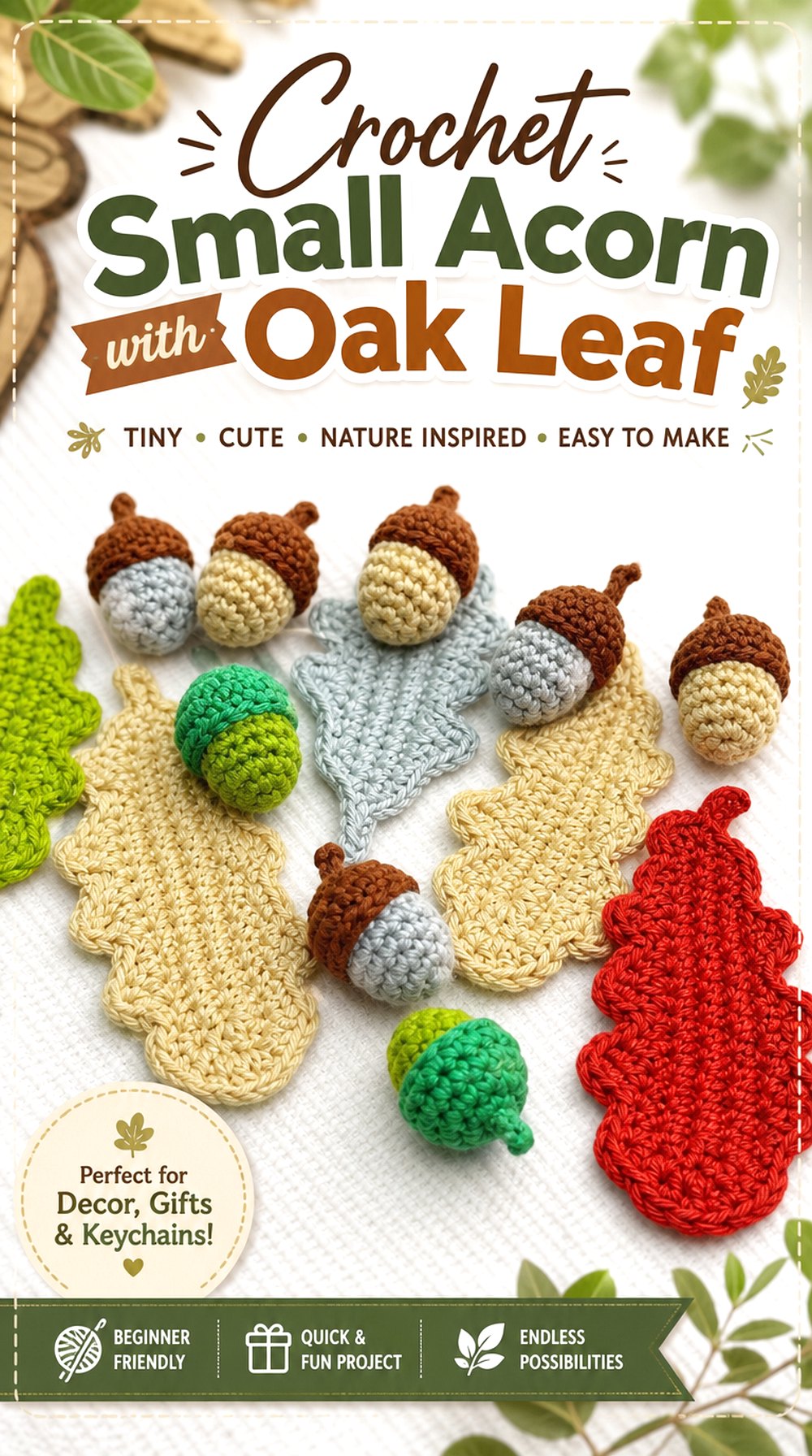
Pairing an acorn with an oak leaf gives this project a more complete woodland look. The leaf adds direction and movement, while the acorn supplies the rounded seasonal shape. This makes the finished piece useful for autumn displays where a single acorn might feel too plain.
This tutorial is presented in German with English subtitles, so it may also suit readers who are comfortable following visual instruction with translated support. It differs from the garland project because it focuses on the acorn-and-leaf unit itself, rather than spacing several pieces along a hanging strand.
The Leaf Adds Placement Options
An attached or paired leaf can change how the finished item sits. It may angle naturally across a table display, hang nicely on a branch, or become part of a larger fall arrangement. Readers should look at the final leaf direction before deciding where to place it, because the whole piece may have a clear top, bottom, and side.
Following Subtitled Instruction
Because the presentation uses subtitles, viewers should make sure captions are turned on and easy to read before starting. This matters most when the project shifts between the acorn and leaf portions. Pausing at major shape changes can help keep the two pieces looking balanced without needing to rely only on spoken instruction.
Original Tutorial and Creator Credit
Creator: PetersCrochetArt
Crochet Tiny Acorn Amigurumi Toy
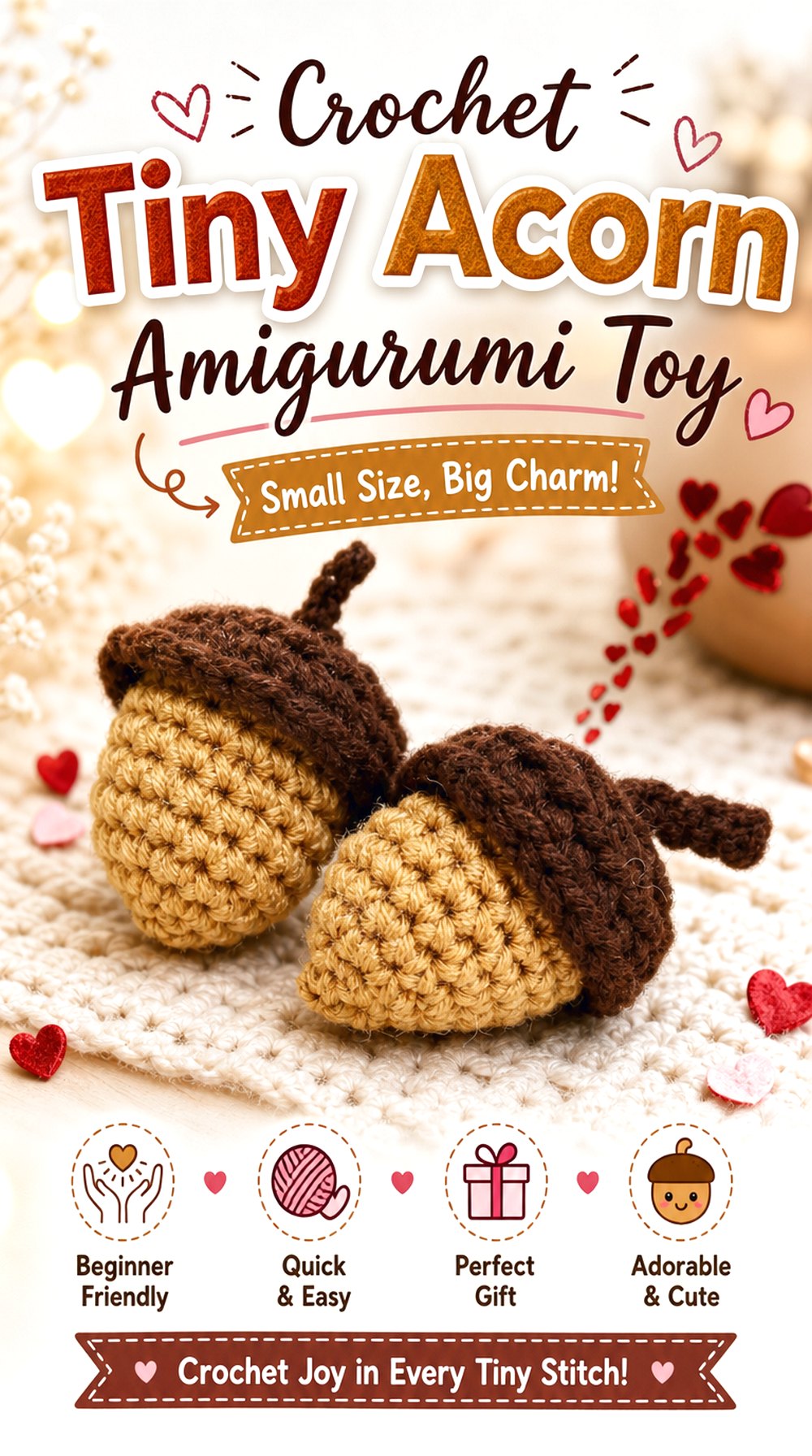
This tiny acorn amigurumi has a rounded toy-like shape, making it different from the flat appliqués and practical items in the list. The source describes it as a small acorn toy or decoration, so it can work for readers who like miniature woodland pieces, shelf accents, or playful fall displays.
The finished item is simple in concept: a small stuffed acorn with a clear cap and body. Its strength is scale. It does not need to become a pouch, coaster, or wearable item to be useful. It can sit with other amigurumi pieces, autumn decorations, or small handmade gifts.
A Miniature Shape Needs Clear Contrast
For a tiny amigurumi piece, the acorn shape has to be readable without much size to help it. Strong contrast between the cap and body can make the design clearer. Readers should also notice how the cap sits on the body, because that placement is what makes the small round form look like an acorn rather than a plain stuffed ball.
Display Use Versus Play Use
The source presents this as a toy or decoration, but readers should still think carefully about the intended recipient. If a finished piece includes small attached details or stuffing, it may be better treated as display decor unless the creator gives specific safety guidance. For gifts, review the finishing details and choose the use responsibly.
Original Tutorial and Creator Credit
Creator: Fuad Azmat / YARNutopia by Nadia
Crochet Acorn Keychain Charm
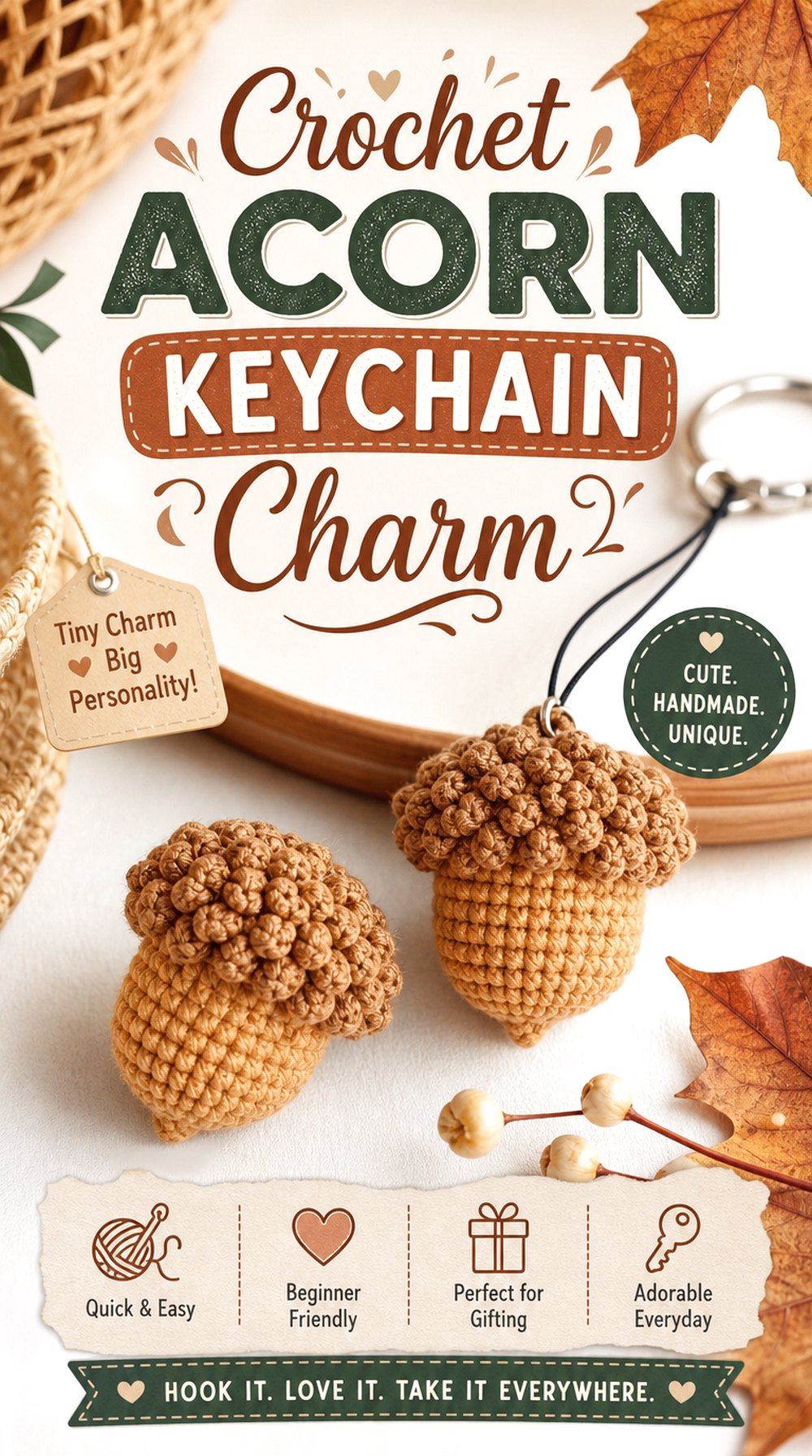
A crochet acorn keychain turns the woodland theme into something portable. This project is smaller and more practical than a bowl filler, but it still gives the same seasonal shape. It may work as a keyring, bag charm, or small hanging accent, depending on the hardware and finishing choices used with it.
The main difference from a plain mini acorn is the intended attachment. A charm needs a secure top area and a size that will not feel too bulky on a bag or keys. Readers should treat the hanging point as an important part of the finished project, not just an afterthought.
Hardware Changes the Final Use
A keychain needs more than a crocheted acorn shape. Readers should check what hardware or attachment method the creator uses, then decide whether it suits keys, a purse, a backpack, or decorative hanging. If the piece will be handled often, the connection point is especially important to review in the original tutorial.
Keep the Charm Light Enough
A small charm should not feel oversized for its purpose. A larger stuffed acorn may look cute on a shelf but feel awkward on keys. Before choosing yarn or adding extra stuffing, readers may want to think about where the charm will hang and how much movement it will get during daily use.
Original Tutorial and Creator Credit
Creator: Knot So Hard
Crochet Lidded Acorn Storage Box
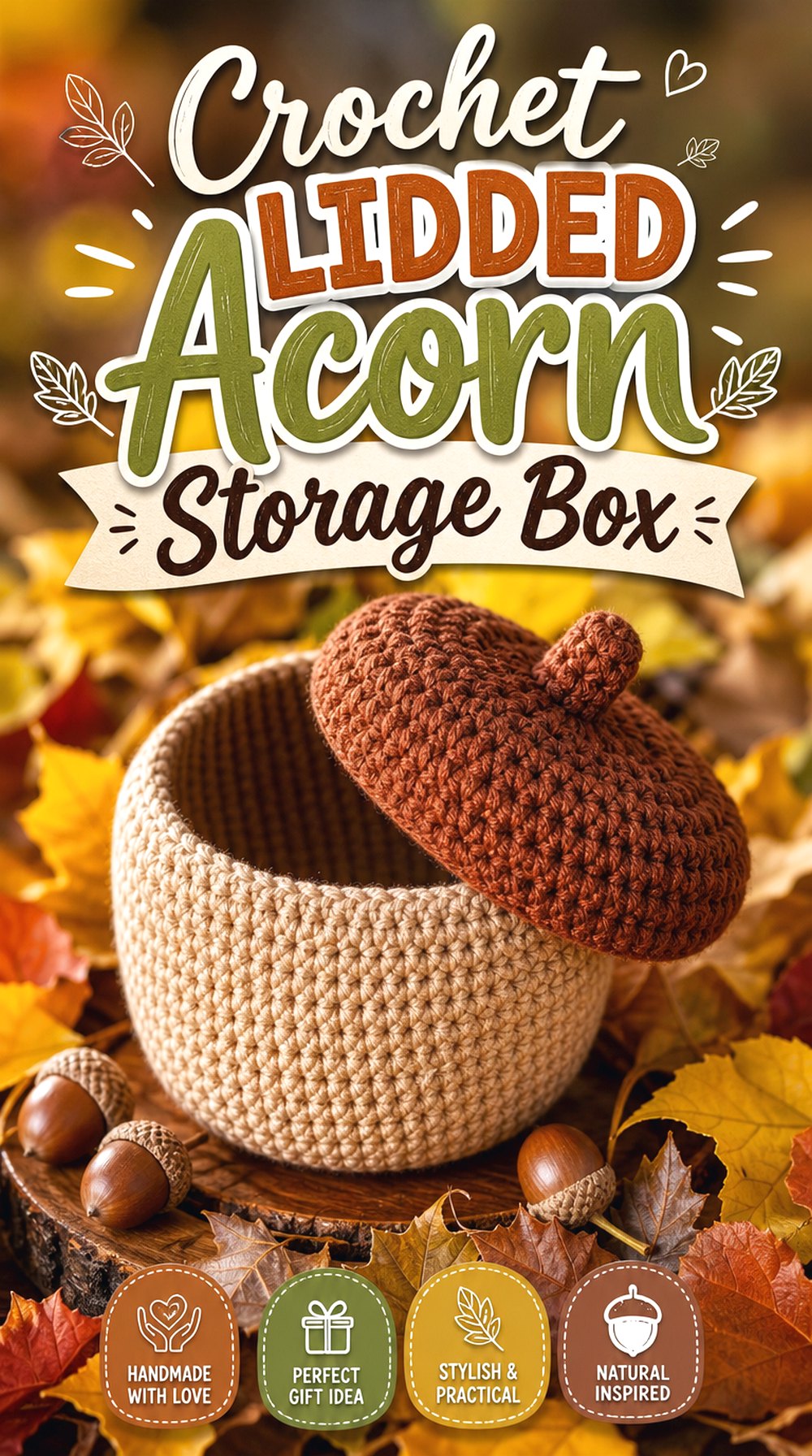
This acorn box is one of the most functional ideas in the collection. Instead of being only decorative, it creates a small container shape that can hold little supplies or keepsakes. The acorn form gives it a seasonal look, while the box format makes it useful on a craft table, shelf, or desk.
It is different from the stuffed acorn projects because the inside matters. Readers should pay attention to the opening, lid fit, and finished size before choosing it for storage. It may be especially appealing for small crochet notions, buttons, beads, stitch markers, or other lightweight items.
The Lid Fit Is the Key Detail
For a decorative box, the lid needs to sit neatly enough that the piece still looks like an acorn when closed. Readers should watch how the top and bottom relate to each other in the source. If the box will be opened often, a smooth fit matters more than it would for a purely decorative ornament.
Match the Size to the Contents
A small acorn container is best planned around what it will hold. Stitch markers, beads, buttons, and tiny craft supplies need less space than yarn scraps or larger tools. Before starting, readers should compare the source’s finished size information with their intended use so the box does not end up too small for the items they had in mind.
Structure Matters More Than Softness
Unlike a plush acorn, this project benefits from a more defined form. A soft or floppy box may not work as well for storage. Readers should review the material choices and finishing shown in the tutorial, especially if they plan to substitute yarn. The finished acorn should be decorative, but it also needs enough shape to act like a container.
Crochet Acorn and Oak Leaf Garland
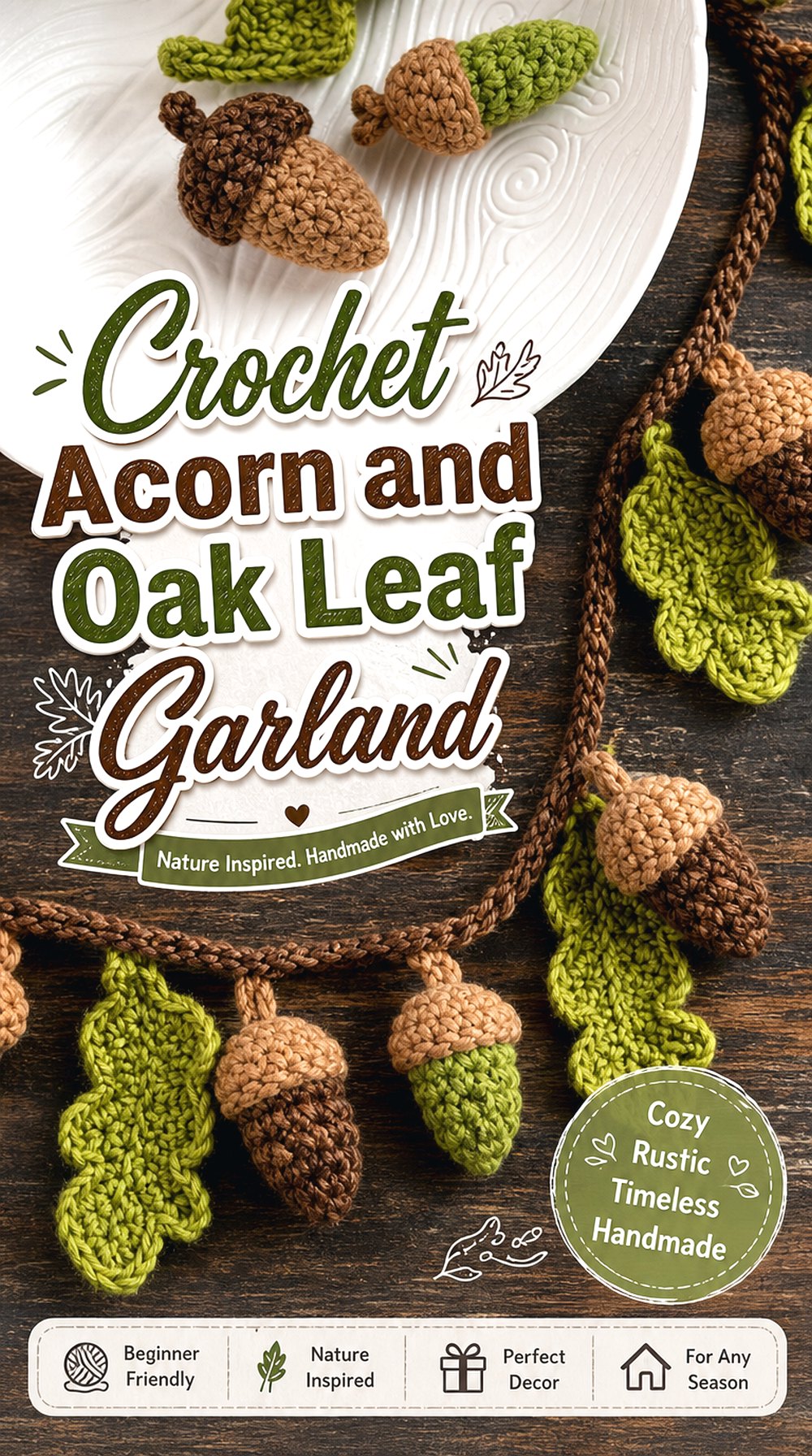
An acorn and oak leaf garland is useful when readers want fall decor that stretches across a mantel, shelf, doorway, or wall. The repeated pieces create rhythm, and the mix of acorns and leaves gives more movement than an acorn-only strand.
This project differs from the single ornament and leaf-pair tutorials because placement is the main concern. The finished result depends on how the pieces are arranged along the garland, not just on one acorn’s shape. Readers should think about the final hanging spot before deciding how long or full the garland should be.
Spacing Controls the Look
A garland can look sparse, balanced, or crowded depending on how close the acorns and leaves sit together. Readers should compare the finished sample and decide whether they want a delicate strand or a fuller seasonal display. The spacing should fit the surface where it will hang, especially on narrow shelves or small mantels.
Component Tutorials May Matter
This source focuses on creating the garland using crocheted acorn and oak leaf pieces. Readers should review the linked or related component information before beginning so they understand what pieces are needed for the full strand. This is especially important if they want the garland to match the creator’s sample rather than using their own existing motifs.
Original Tutorial and Creator Credit
Creator: Jess Nicole Handmade
Crochet Braided Cord Acorn Ornament
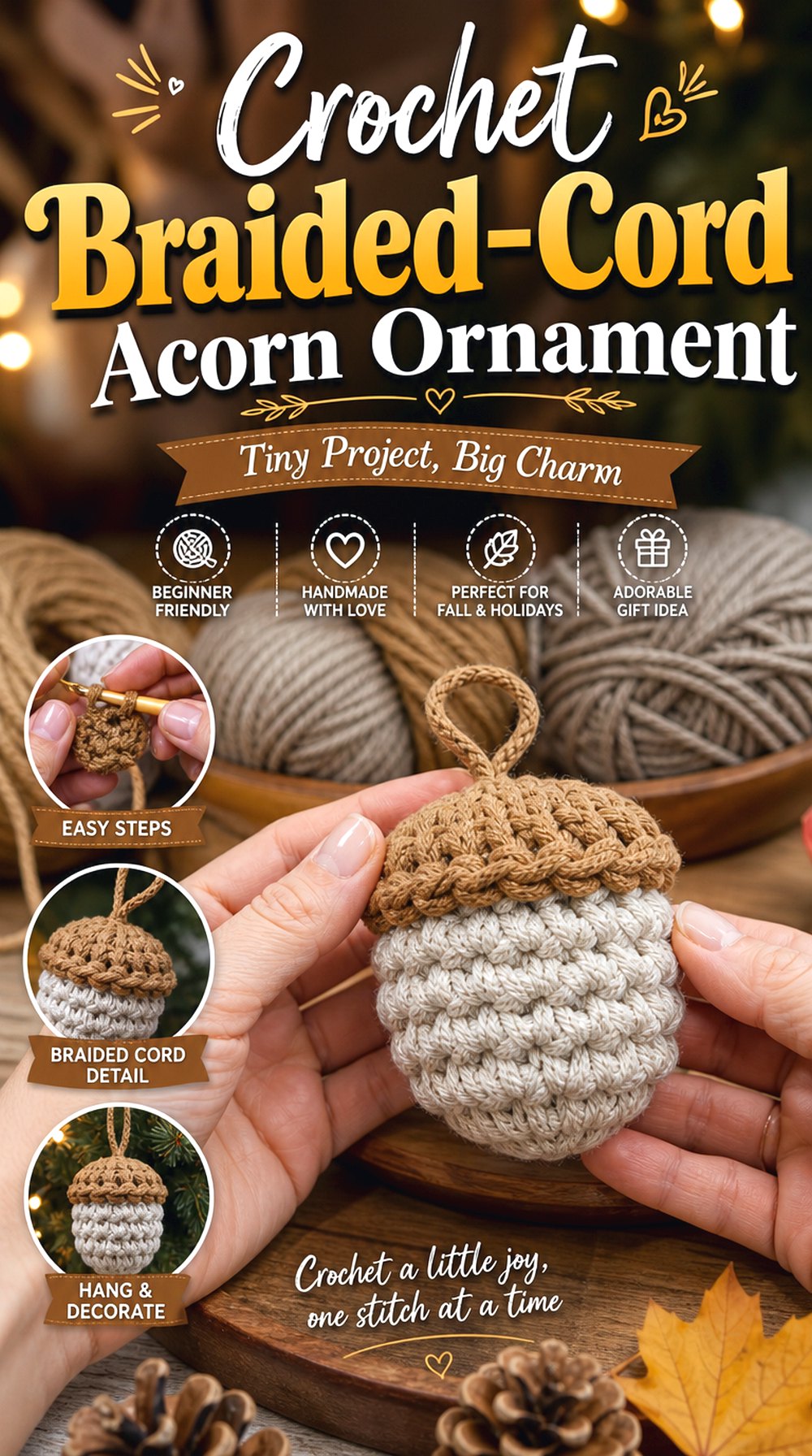
This small acorn ornament has a different texture direction because the source uses braided cord rather than ordinary yarn. That gives the finished piece a firmer, more decorative look that can suit holiday trees, fall branches, gift wrapping, or small hanging displays.
It stands apart from the soft amigurumi acorns because the material choice is part of the design. The shape still reads as an acorn, but the surface has a more structured fiber look. Readers who want a crisp ornament rather than a plush object may find this option more suitable.
Cord Gives a Different Finish
Braided cord can make stitches look more defined and less fuzzy than many yarns. That may help a tiny ornament hold a clean acorn outline. Readers should check the creator’s material list carefully, because switching from cord to a soft yarn could change the scale, firmness, and overall look of the finished piece.
Hanging Use Needs a Clear Top
An ornament has to hang in a way that keeps the acorn upright. The stem, loop, or attachment point should support the shape without hiding the cap. Before finishing, readers may want to hold the piece up and check whether the acorn hangs straight enough for a tree, branch, or wrapped package.
Original Tutorial and Creator Credit
Creator: Floral Feather Fiber Art
Crochet Mini Acorn Pouch with Leaf Top
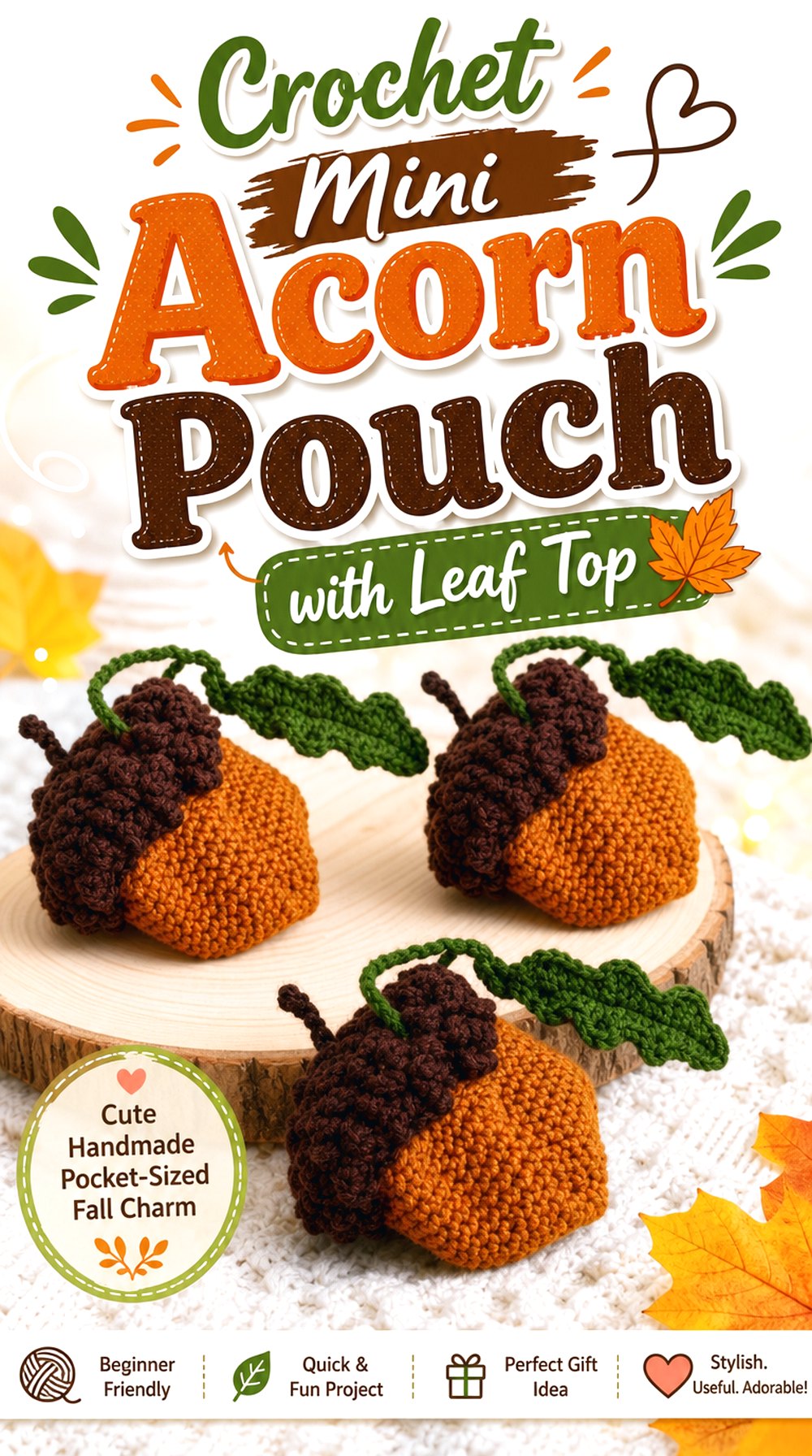
This acorn pouch is a practical small item with a seasonal shape. It has a body, a top section, and a leaf detail, so it feels more like a tiny container than a simple stuffed decoration. It may suit small gifts, lightweight accessories, or decorative storage when the opening size matches the intended contents.
The project is different from the lidded acorn box because the pouch shape is softer. It also differs from the keychain because it has an inside space to consider. Readers should look closely at the opening and the way the top closes or sits.
The Opening Decides the Use
A pouch is only useful if the opening works for the items you want to place inside. Small jewelry, tiny notes, or lightweight gift pieces may need a different opening than coins or craft notions. Readers should check the finished view and decide whether the pouch is mainly decorative or something they will open and close often.
Leaf Detail Adds Direction
The leaf top gives this pouch extra charm, but it also creates a clear front and top orientation. That matters if the pouch will be displayed or gifted. Readers may want to think about whether the leaf should face forward, sit to the side, or remain visible when the pouch is filled.
Gift Presentation Needs Planning
Because this pouch can work as a small gift holder, the contents should be chosen before the final finishing decisions. A bulky item may distort the acorn shape, while something too small may not fill it nicely. The best use is likely a light, compact item that lets the pouch still look like an acorn.
Original Tutorial and Creator Credit
Creator: Club Crafteria
Crochet Baby and Kids Acorn Hat
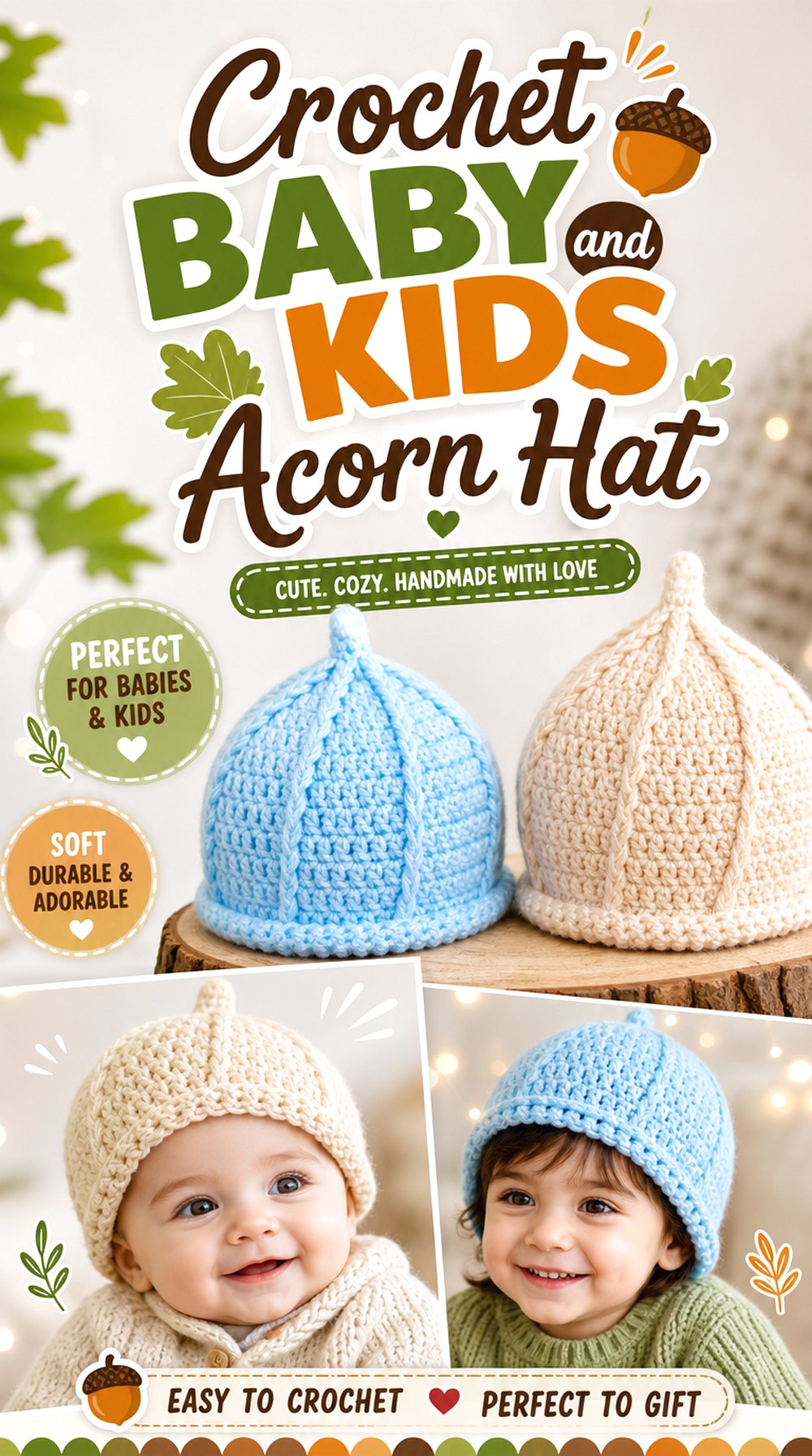
This acorn hat turns the theme into a wearable piece for babies and kids. The cap-like acorn shape makes the seasonal idea obvious, while the hat format gives it a practical purpose. It is very different from the decor projects because size, fit, and comfort questions matter more than display placement.
The source includes size information and notes about making the hat bigger or smaller, so readers should treat measurements as the main starting point. A cute acorn top is not enough for a wearable item; the hat needs to match the wearer’s head size and intended fit.
Fit Information Comes First
For a baby or child hat, finished size should be checked before choosing yarn or starting the project. Readers should compare the creator’s size notes with the wearer’s actual measurements. If the tutorial explains resizing, review that part before beginning rather than trying to adjust after the hat is nearly finished.
The Acorn Shape Should Stay Balanced
A themed hat works best when the acorn detail is visible but not overwhelming. The cap texture, stem, and body shape should feel balanced on the head. Readers may want to look at the final preview and decide whether they prefer a snug seasonal hat or a more costume-like acorn effect.
Wearable Projects Need Extra Verification
Unlike a shelf decoration, a hat has to be worn. Readers should check the creator’s material list, size notes, and final fit views before starting. If making it for a child, avoid adding any unsupported decorative parts or assumptions about safety; follow the source details and use common caution with finishing.
Original Tutorial and Creator Credit
Creator: Nukumori Crochet
Crochet Flat Acorn Coaster
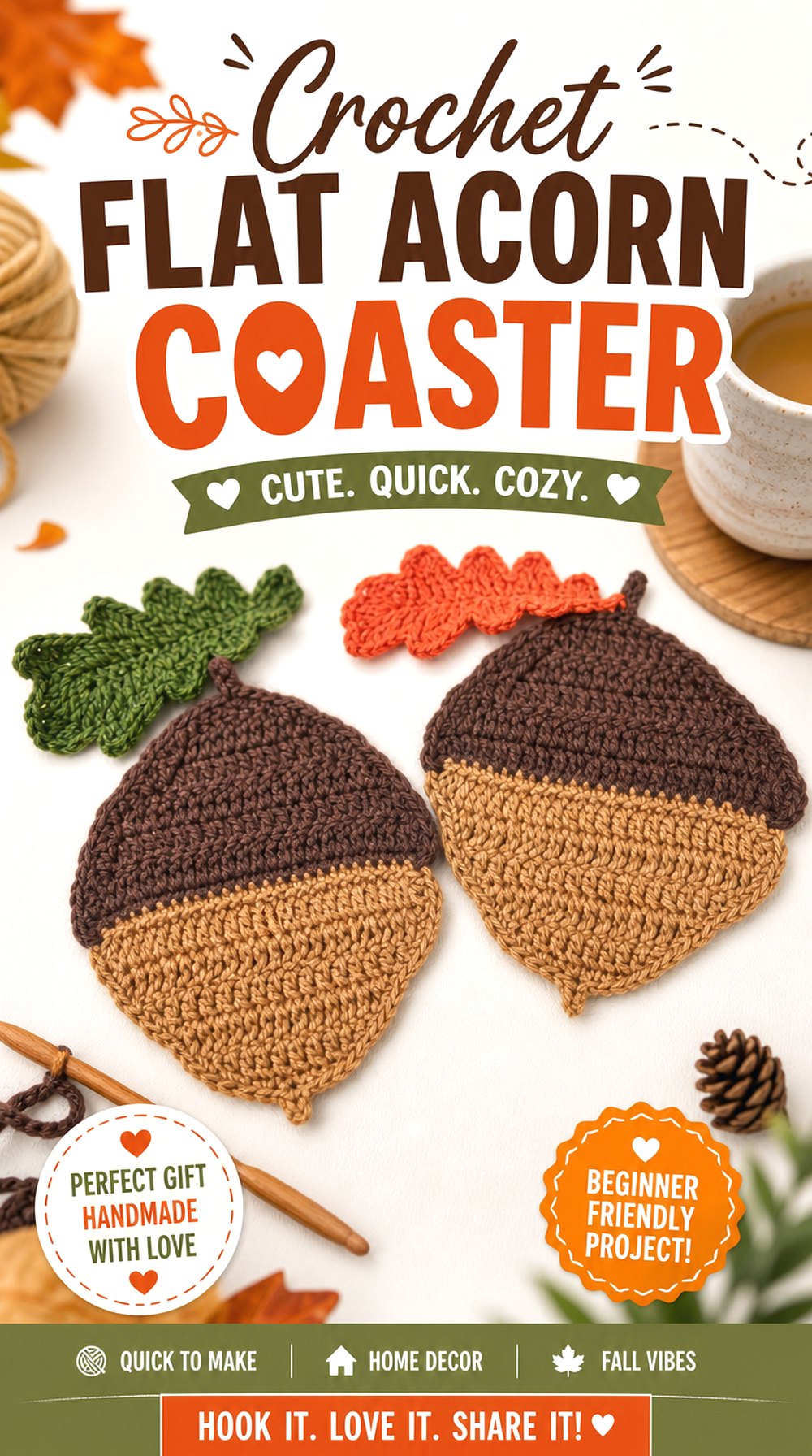
A flat acorn coaster brings the seasonal shape to a table setting. This project is more practical than an appliqué because it is meant to sit under a cup or act as fall tabletop decor, yet it still keeps a flat profile. The acorn outline gives it a decorative edge without needing stuffing or hanging hardware.
This is a good option for readers who want something visible in everyday spaces, such as a coffee table, desk, or autumn place setting. It differs from the granny square because the shape itself is the feature, not a motif inside a square block.
Table Use Needs a Flat Finish
For a coaster, the finished surface should sit evenly enough for its intended use. Readers should look at the final shape and edges before deciding where to use it. If the coaster is more decorative than functional, it may still work well under a candle, small bowl, or seasonal mug display.
Edges Define the Acorn Silhouette
A flat acorn needs clean outer edges because the outline is what makes it recognizable. The cap and body should be easy to tell apart from above. Readers who plan to make a set may want consistent blocking or finishing so each coaster looks related when placed together on a table.
Original Tutorial and Creator Credit
Creator: Crochetwithsumi
Crochet Acorn Granny Square Block
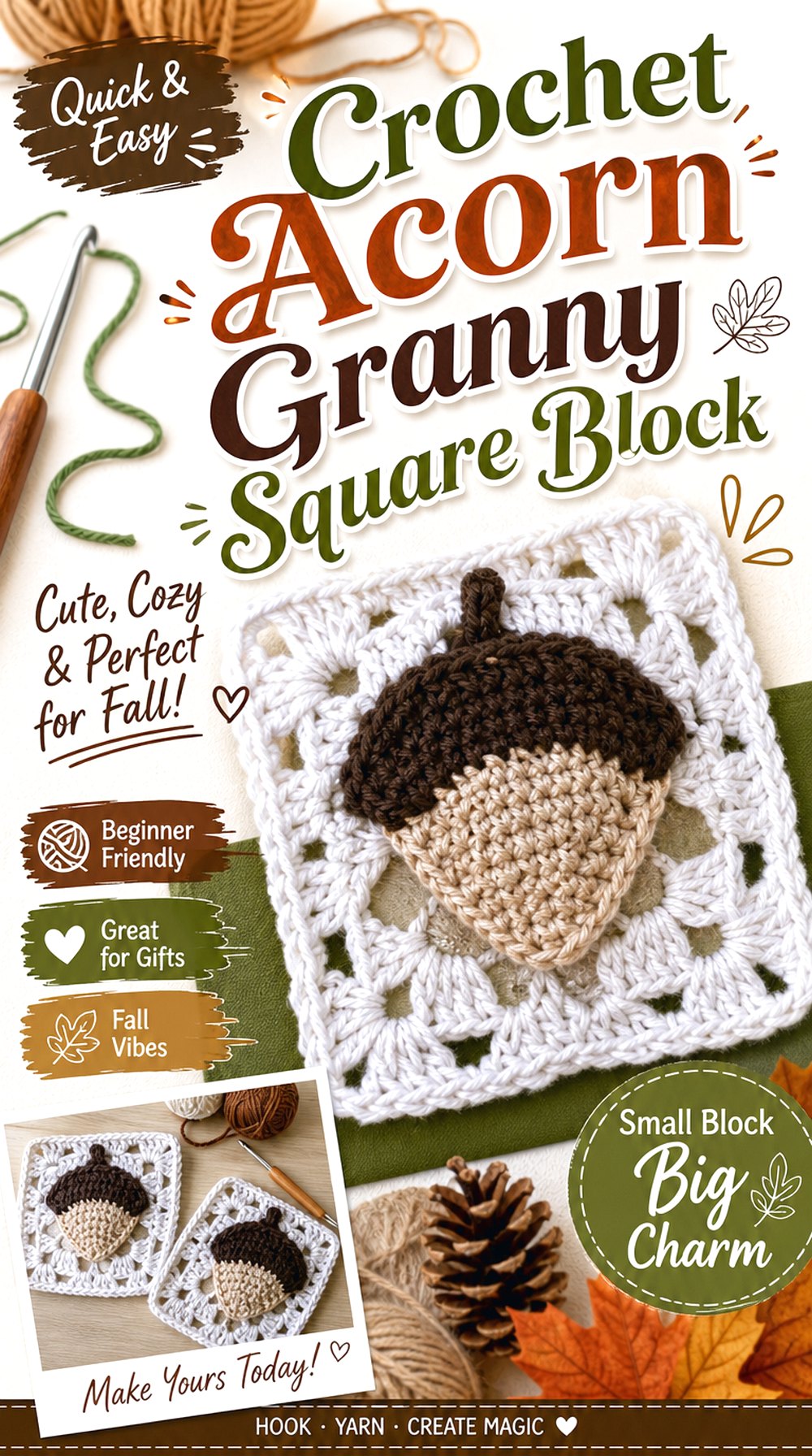
This acorn granny square is a useful choice when readers want the woodland motif inside a square format. Unlike a loose appliqué, the acorn becomes part of a block that can be repeated, joined, or displayed as a single motif. The square frame makes it easier to plan for blankets, pillows, wall pieces, or sampler-style projects.
Its main difference is structure. The acorn is not floating alone, hanging from a loop, or stuffed. It is set into a defined square, so the reader should focus on motif placement, border shape, and whether the block format suits the larger project idea.
A Square Format Helps With Larger Projects
A granny square gives the acorn a built-in frame. That can make planning easier if the finished item needs repeated blocks or straight edges. Readers should think about whether they want one statement square or several matching squares before choosing colors, because a single motif and a repeated blanket layout may need different contrast.
Motif Visibility Depends on Color
The acorn should stand out clearly from the square background. If the body, cap, and border are too close in value, the design may lose definition. Readers may want to choose background colors that make the acorn readable while still fitting their autumn palette.
Original Tutorial and Creator Credit
Creator: crochetcakes**
Crochet Twin Oak Acorn Bookmark
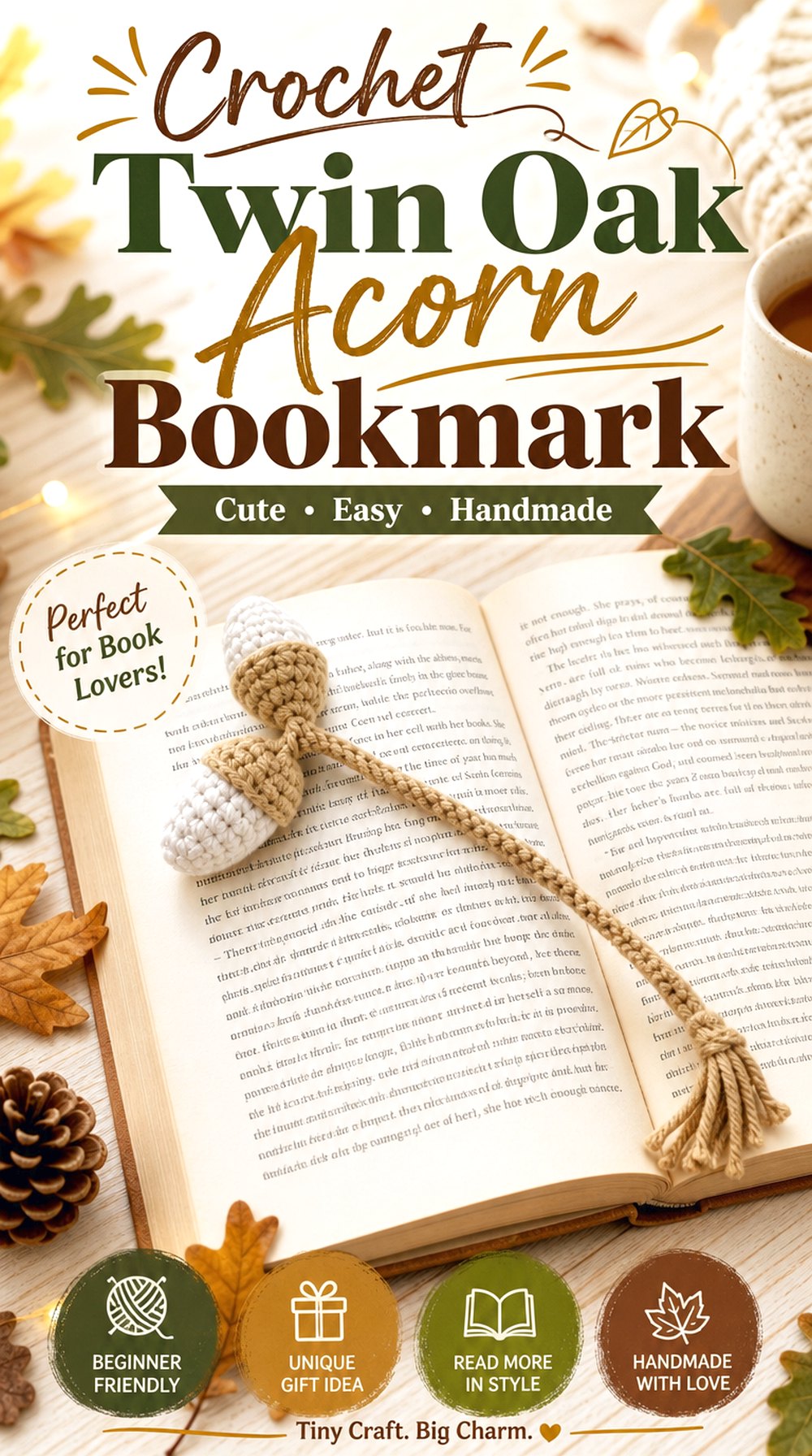
This bookmark uses the acorn theme in a narrow, practical format for book lovers. The twin acorn idea gives it more detail than a plain cord bookmark, while still keeping the project small enough to sit between pages or hang from a book.
It stands apart from the keychain and earrings because it is made for reading use rather than wearing or carrying. Readers should look at the length, thickness, and end details before starting, especially if the bookmark will be used in smaller books, journals, or study materials.
Thickness Matters for Books
A bookmark should not be so bulky that it strains the spine or leaves a heavy lump between pages. Readers should check how the acorn ends are shaped and whether the center section lies flat enough for the books they use most. A decorative bookmark may be handled differently than one used every day.
Twin Motifs Need Balance
With acorns on the bookmark, balance is important. If one end is much heavier or larger than the other, the finished piece may not hang or sit evenly. Readers should watch the final display and decide whether the acorns should show outside the book, rest on the cover, or act mainly as decorative ends.
Original Tutorial and Creator Credit
Creator: Mimosa Handmade
Crochet Mini Acorn Earrings
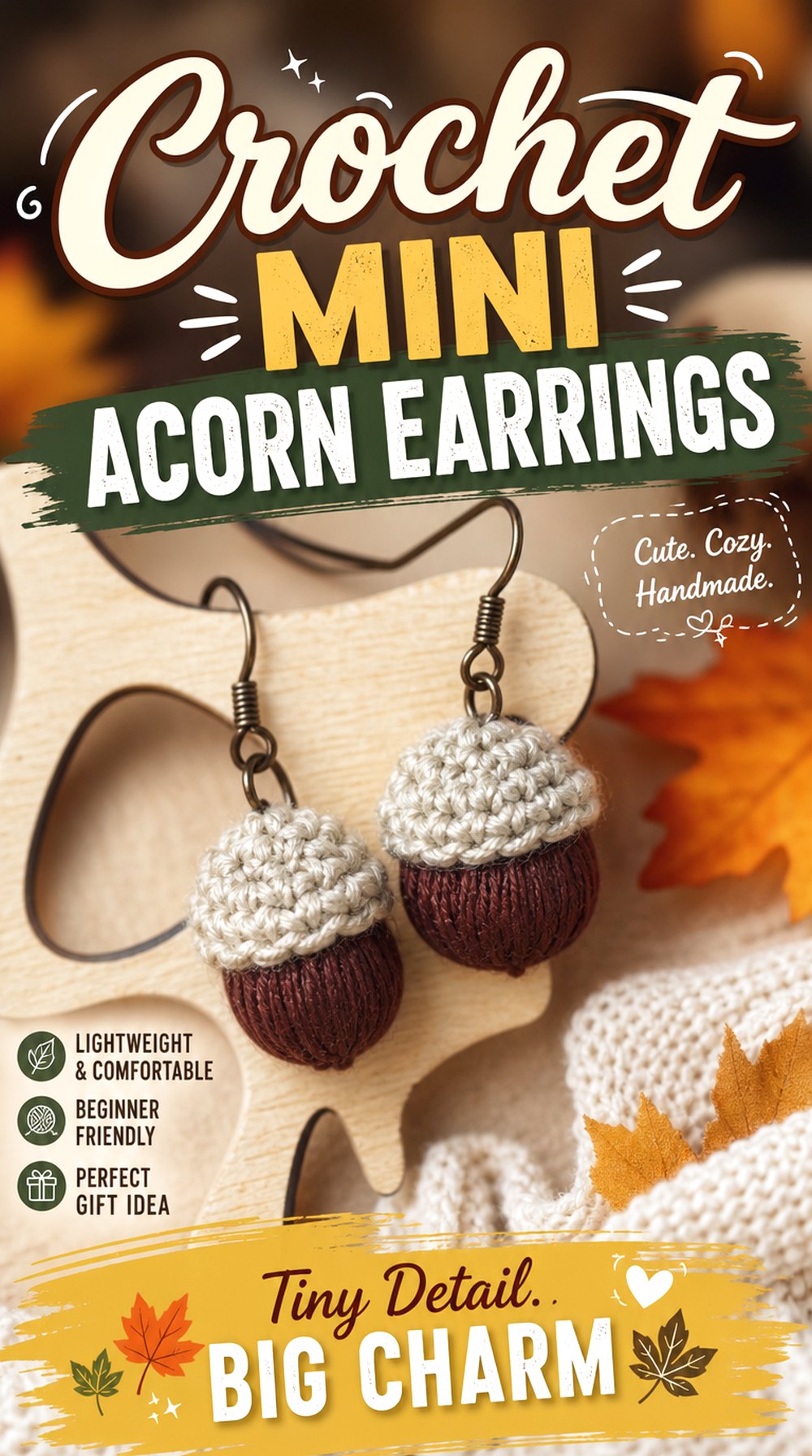
Crochet acorn earrings are one of the smallest wearable ideas in this list. They bring the autumn theme into jewelry form, so scale and neat finishing matter more than stuffing or display size. A tiny acorn shape can look charming as earrings, but it needs to stay light, tidy, and balanced.
This option is different from the beanie and hat because it is an accessory rather than a warm wearable. It is also different from a keychain because the final pair needs to match closely. Readers should pay attention to symmetry and jewelry findings before planning this project.
Matching the Pair Is Important
Earrings need to look like a pair, not just two similar acorns. Readers may want to keep notes on yarn, hook, and finishing choices so the second earring matches the first. Even small differences can show when the pieces are worn side by side.
Jewelry Findings Need Review
The crochet portion is only one part of the finished earrings. Readers should check what findings or attachment pieces are used and make sure they are comfortable with that finishing method. Weight also matters; a tiny acorn is usually more practical for earrings than a larger stuffed shape.
Original Tutorial and Creator Credit
Creator: MeOlka Art
Crochet No Sew Acorn Pillow Plush
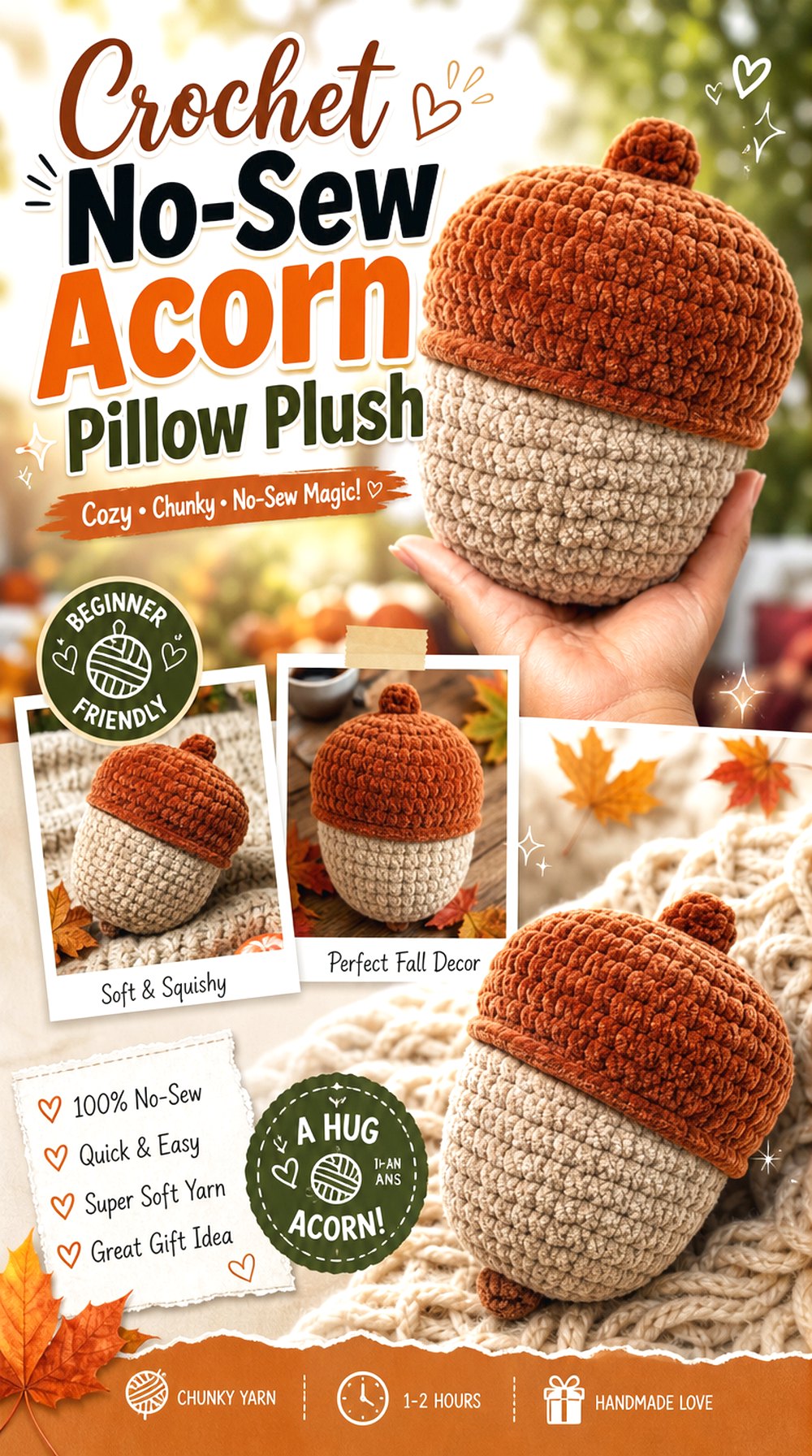
This no-sew acorn project is one of the larger soft choices in the collection. The source describes it for fall decor, pillow use, or plush display, so it works well for readers who want a more substantial acorn than a charm or ornament. Its rounded form gives it a cozy shelf, bed, or couch presence.
The no-sew format also sets it apart from plushies that require several attached pieces. Readers who dislike sewing small parts may prefer this option, but they should still review the full tutorial because a larger acorn requires more attention to shaping and stuffing.
Bigger Scale Changes the Look
A pillow-sized acorn has more visual weight than a tiny amigurumi piece. It can become a main seasonal accent instead of a small supporting detail. Readers should choose this project when they have space for a soft decor item and want the acorn shape to be noticeable from across the room.
No-Sew Does Not Mean No Finishing
Even when a project avoids sewn assembly, the final shape still needs careful finishing. Stuffing level, closure, and cap definition all affect whether the acorn looks smooth or lumpy. Readers should follow the original source for exact construction details and avoid rushing the final shaping stage.
Original Tutorial and Creator Credit
Creator: ~ comfy cozy naoetry ~
Crochet Acorn and Oak Leaf Ornament
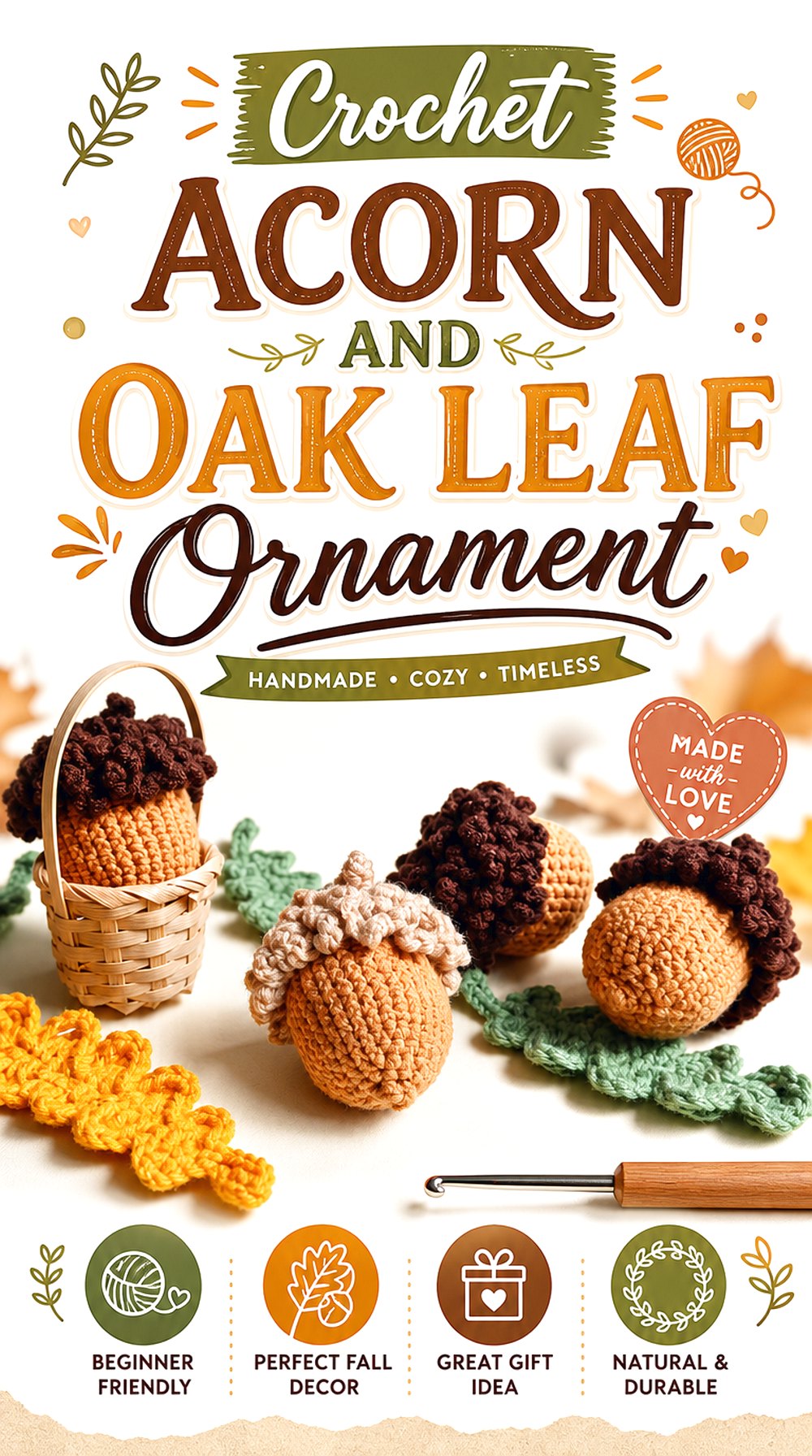
This acorn and oak leaf ornament has a decorative hanging direction, with the source noting use as a Christmas tree ornament. The acorn-and-leaf pairing gives it more movement than a single stuffed acorn, while the ornament purpose makes the top, loop, and overall balance important.
It differs from the garland because it is a single hanging piece rather than a repeated strand. It also differs from the PetersCrochetArt acorn-and-leaf option because this one is especially useful for readers thinking about tree decor or individual seasonal ornaments.
Ornament Balance Comes From the Top
A hanging ornament needs to sit nicely when suspended. The acorn, leaf, and stem should not twist in a way that hides the main shape. Readers should check the final hanging view and decide whether the piece is better for a tree, branch arrangement, window display, or gift topper.
Leaf and Acorn Should Work Together
The leaf should support the acorn visually instead of covering it. If readers change colors, they may want the leaf to contrast softly with the cap and body. A very dark leaf beside a dark cap could make the top look crowded, while a lighter leaf may help separate the shapes.
Original Tutorial and Creator Credit
Creator: Laia Crochet
Crochet Wired Acorn Branch Stem
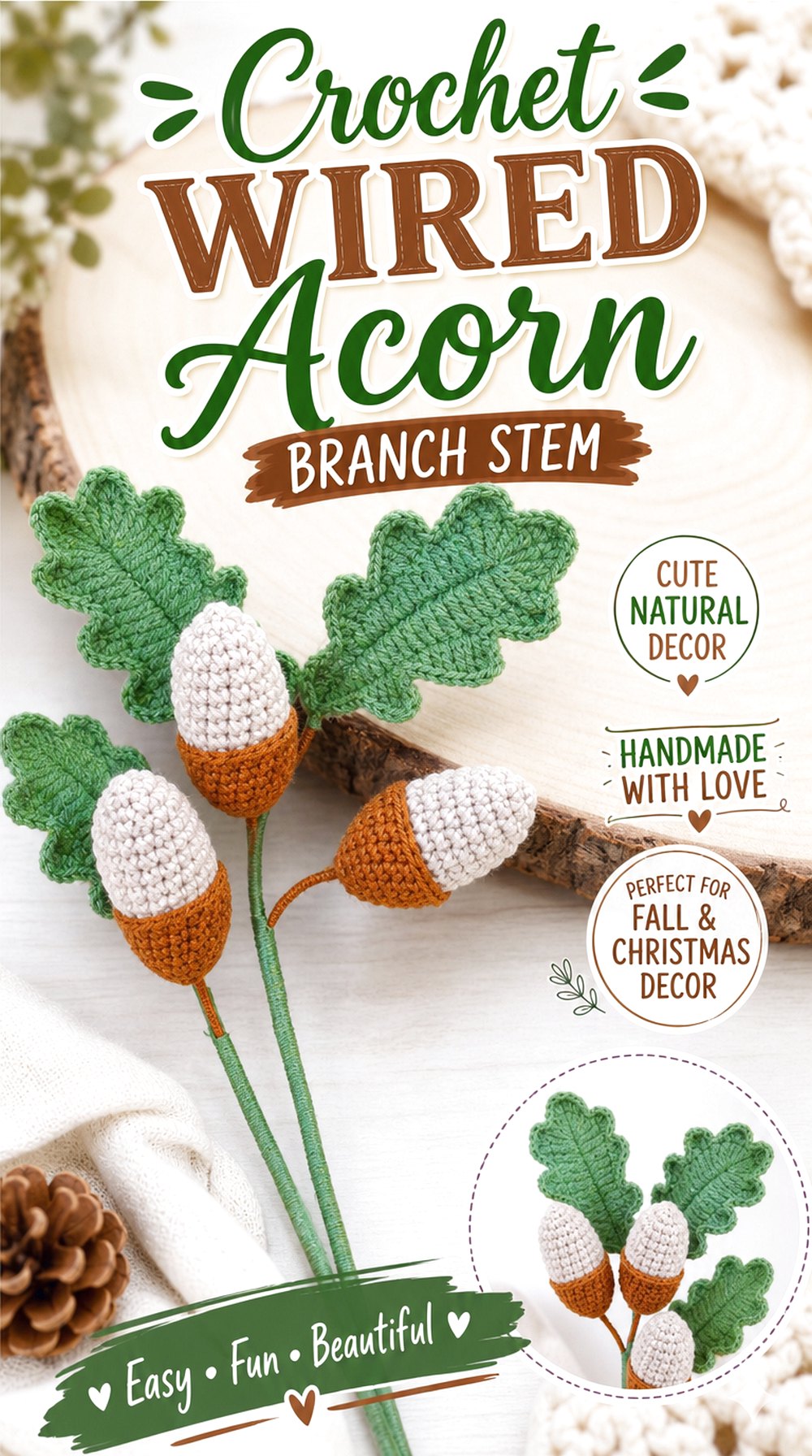
This acorn branch-style project is different from the loose acorns because it includes a stemmed arrangement with acorn and leaf elements. The wired structure makes it useful for bouquets, seasonal vases, wreath accents, or holiday displays where the acorn needs to stand up or bend into position.
Because the source uses wire-related materials, readers should review the supply list before beginning. This is not just a soft crochet piece; it is a decorative arrangement. The final effect depends on the acorns, leaves, stem support, and how the pieces are positioned together.
Wire Support Changes the Project
Wire allows the finished piece to hold a stem or branch-like shape, but it also adds planning. Readers should check the type of wire or floral support the creator lists and decide whether they are comfortable using it. Substituting without checking may change how the stem bends, stands, or supports the acorn and leaf pieces.
Best for Arrangements, Not Loose Bowls
This project makes the most sense when the acorns need height or direction. It can sit in a vase, tuck into a wreath, or join other crocheted stems. Readers who only want bowl filler may prefer a stuffed acorn instead, while those building a fall floral-style display may find this option more useful.
Assembly View Is Worth Watching Closely
The final arrangement depends on how the acorn, shell, leaf, and stem come together. Readers should watch the full assembly portion before starting so they understand the finished orientation. This helps avoid making pieces that look fine separately but do not sit the way they want in the final branch.
Original Tutorial and Creator Credit
Creator: Lingzhi Handmade
Crochet Mini Acorn Plushie with Face
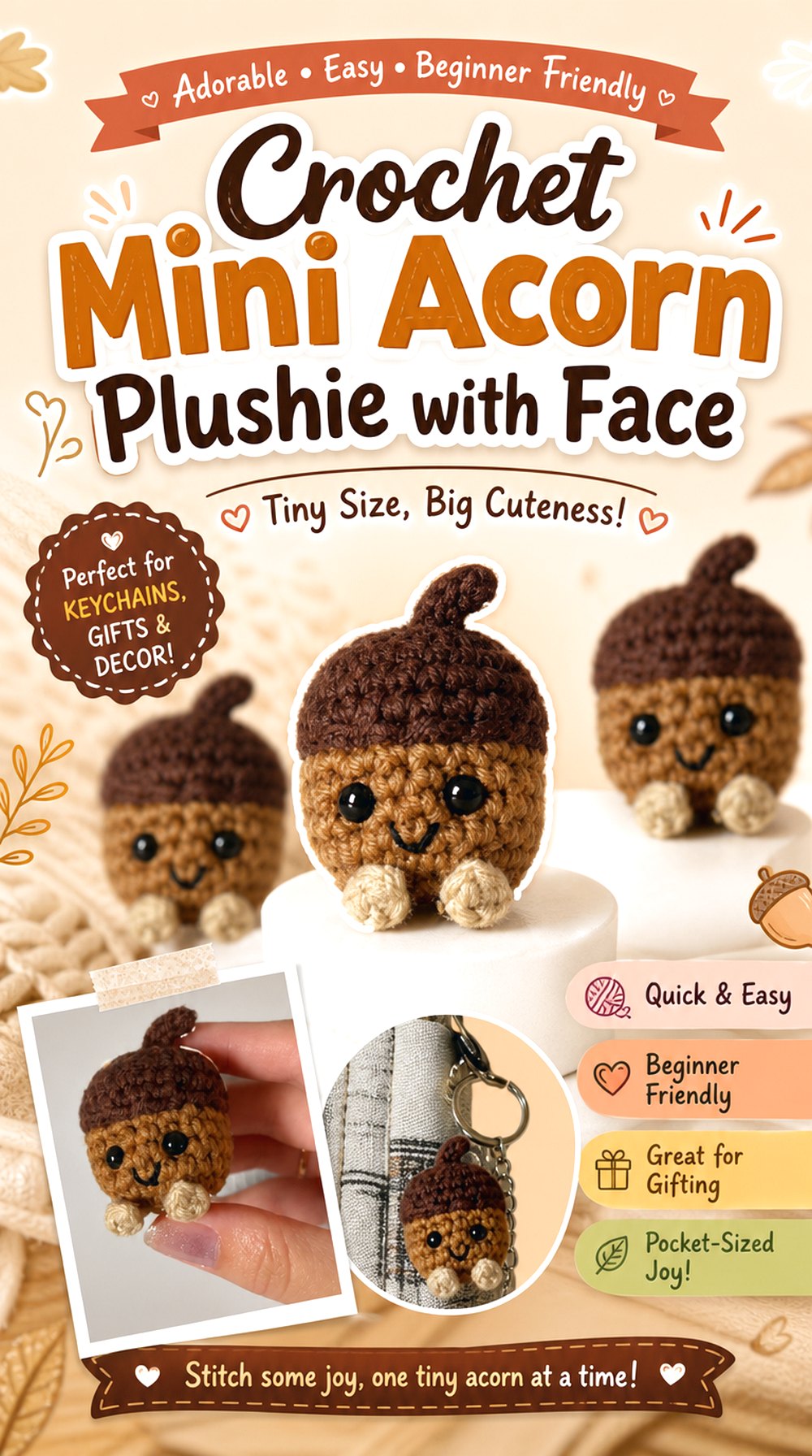
This mini acorn plushie has a character look, with a face and small body details that make it feel more like a display buddy than plain fall decor. The source describes it as inspired by Jellycat-style acorn plushies, so it suits readers who enjoy cute amigurumi with personality.
It differs from the no-sew pillow because this one is smaller and more character-based. It also differs from the tiny YARNutopia acorn because the face and extra features become part of the appeal. Readers should focus on neat detail placement and whether they want a decorative plush rather than a realistic acorn.
Face Placement Sets the Mood
Small changes in face placement can make a plushie look cheerful, sleepy, surprised, or uneven. Readers should take time with the final detail placement and compare both sides before attaching anything permanently. The acorn shape still matters, but the face is what gives this project its character.
Small Parts Need Careful Use
A plushie with extra details should be considered carefully if it is meant as a gift. The source shows a cute finished result, but readers should not assume it is suitable for every age or use. If safety eyes, sewn details, or small attached pieces are involved, check the creator’s instructions and choose the recipient wisely.
Original Tutorial and Creator Credit
Creator: CrochetTreasure
Crochet Acorn Beanie with Ruffled Brim
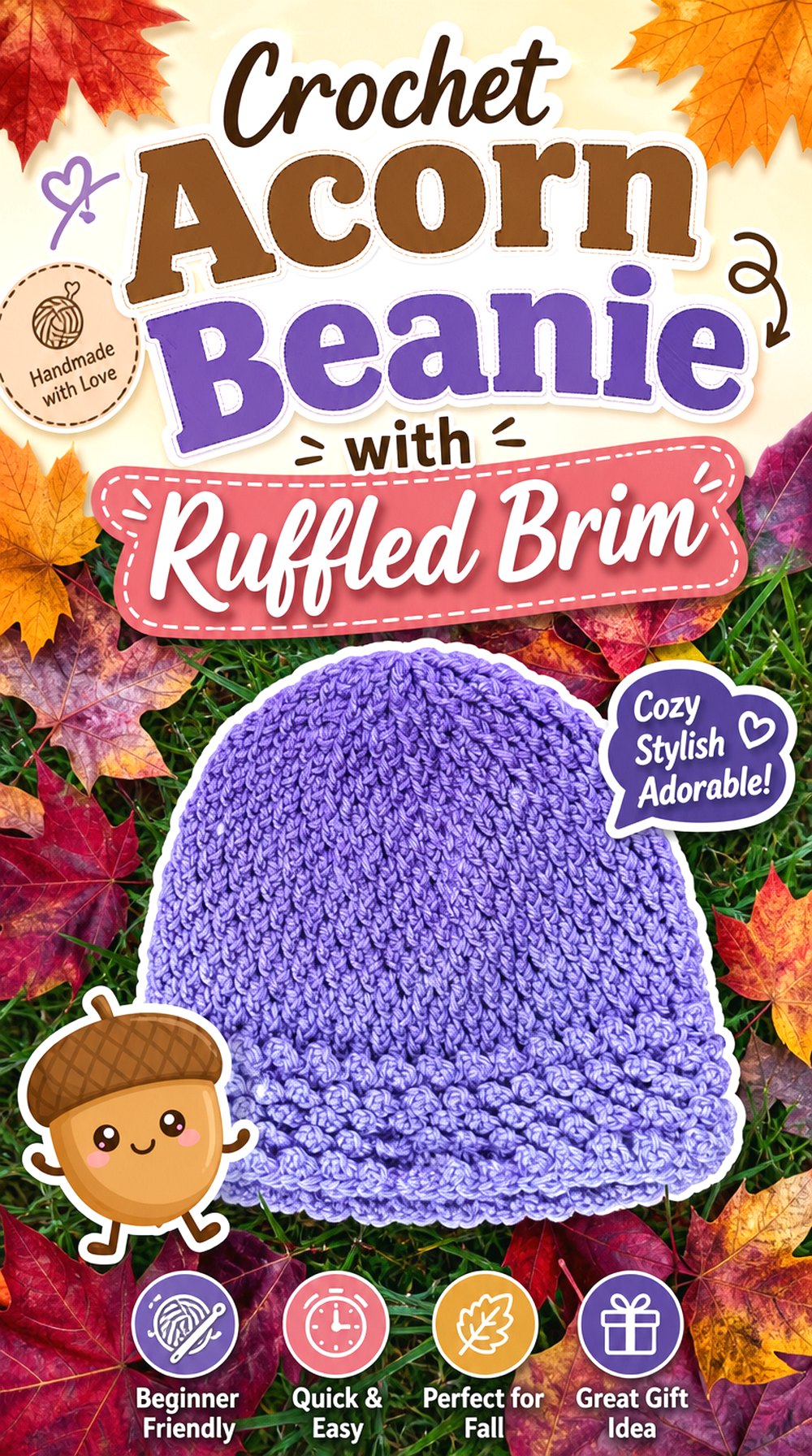
This acorn beanie is a wearable take on the theme, using the “Acorn Beanie” name with an alpine-style texture and ruffled brim. It is not shaped like a tiny acorn ornament, but it belongs in this collection as an acorn-named crochet accessory with a fall-friendly look.
The beanie differs from the baby acorn hat because it is less costume-like and more like a textured everyday hat. Readers should compare the brim, stitch texture, and sizing information before starting. Wearable acorn items need more fit planning than shelf decor or small ornaments.
Texture Is the Main Style Feature
The beanie’s surface texture gives it a stronger visual identity than a plain crochet hat. Readers who want a subtle acorn-inspired accessory may prefer this over a hat with a clear stem or novelty shape. The texture and ruffled brim create the style, so color choice should support those details rather than hide them.
Brim Shape Affects Wear
A ruffled brim changes how the hat frames the face and sits at the edge. Readers should review the final look and decide whether they like that softer, more decorative edge. If they prefer a simple ribbed or straight brim, this may not be the best option in the list.
Fit Notes Should Be Checked Early
As with any crochet hat, size should be reviewed before starting. Readers should check the creator’s notes, hook information, and final fit views so the beanie matches the intended wearer. A decorative brim and textured body will not help if the finished hat is not the right size.
How to Choose Among These Crochet Acorn Items
For the smallest projects, choose the appliqué, earrings, keychain, bookmark, or tiny amigurumi. These work best when you want a quick woodland detail without taking over a whole room or outfit. For home decor, the farmhouse acorns, Country Charm set, braided-cord ornament, garland, coaster, storage box, and oak leaf ornaments give more visible fall style.
The pouch, hat, beanie, pillow plush, and wired branch are better when you want the acorn theme to become the main project. Choose the pouch for small storage, the hats for wearables, the pillow for soft decor, and the branch for a vase or wreath-style arrangement. When in doubt, start with where the finished item will live.
Conclusion
These 22 crochet acorn items show how much variety can fit inside one small woodland theme. Flat pieces like the appliqué, coaster, and granny square work well when you want surface detail. Stuffed acorns, ornaments, garlands, and bowl fillers are better for seasonal displays. The pouch, storage box, hats, bookmark, earrings, and plushies give the acorn idea a more practical or giftable direction.
The best choice depends on scale, use, and finishing details. Use the original YouTube tutorials for the exact construction steps, materials, and any size or assembly notes before starting your chosen project.
FAQs
What can I use crochet acorn items for?
Crochet acorn items can be used for fall decorating, gift toppers, ornaments, garlands, table accents, small accessories, and wearable seasonal pieces. The best use depends on the type of project. A flat appliqué works well on another item, while a stuffed acorn is better for bowls, shelves, trees, or display baskets.
How do I choose between a flat acorn and a stuffed acorn?
Choose a flat acorn when you want an embellishment, coaster, square, earring, or bookmark detail. Choose a stuffed acorn when you want a three-dimensional item for shelves, garlands, ornaments, plushies, or bowl fillers. Flat pieces depend on clean outlines, while stuffed pieces depend more on shaping, cap placement, and stuffing level.
Should I check the finished size before starting?
Yes, especially for pouches, boxes, hats, beanies, pillows, bookmarks, and ornaments. Finished size affects how the item will be used. A charm needs to stay small, a pouch must fit its contents, and a hat needs to match the wearer. When a creator gives measurements or size notes, review them before choosing supplies.
Are crochet acorn plushies safe for children?
Do not assume a crochet acorn plushie is child-safe unless the creator clearly discusses safe materials and age-appropriate finishing. Small parts, eyes, stuffing, stems, and sewn-on details can matter. If the project is meant for a baby or young child, review the tutorial carefully and use safety-focused finishing choices.
Can I sell crochet acorn items made from YouTube tutorials?
Do not assume selling is allowed just because the tutorial is public. Check the creator’s pattern terms, video description, linked written pattern, and shop policies. Some creators allow selling finished items with conditions, while others limit use. Local labeling, safety, and business rules may also apply depending on the item.