

Cool Blue and Wasabi Green give a crochet mesh layering top a strong two-color identity without taking attention away from the openwork itself. Cool Blue can provide a calmer main field across large mesh panels, while Wasabi Green can define cuffs, necklines, ties, hems, sleeves, or selected blocks where stronger color interruption helps explain the garment shape.
Mesh changes how color behaves because the layer underneath remains visible through the crochet. A Cool Blue panel worn over a dark base can appear visually stronger than the same panel over a pale layer, while a Wasabi Green border may look more substantial when it is worked more densely than the surrounding mesh. Judge the palette on a worked sample and, when possible, against the kind of layer you expect to wear beneath it.
The supporting tutorials include mesh pullovers, tanks, cardigans, raglan sweaters, and shrug-style layering pieces. The Cool Blue and Wasabi Green palettes below are editorial adaptations rather than colors attributed to the creators.
Quick List
- Wasabi Green Sleeve and Cool Blue Body Crochet Modern Mesh Layering Top
- Cool Blue Tie-Front and Wasabi Green Trim Crochet Modern Mesh Layering Top
- Wasabi Green Cropped and Cool Blue Sleeve Crochet Modern Mesh Layering Top
- Cool Blue Oversized and Wasabi Green Cuff Crochet Modern Mesh Layering Top
- Cool Blue Raglan and Wasabi Green Lower-Body Crochet Modern Mesh Layering Top
- Wasabi Green Body and Cool Blue Open-Sleeve Crochet Modern Mesh Layering Top
- Cool Blue Long-Sleeve and Wasabi Green Shoulder Crochet Modern Mesh Layering Top
- Wasabi Green Panel and Cool Blue Relaxed Crochet Modern Mesh Layering Top
- Cool Blue Cropped Tank and Wasabi Green Border Crochet Modern Mesh Layering Top
- Wasabi Green Tank and Cool Blue Neckline Crochet Modern Mesh Layering Top
- Cool Blue Mesh Shrug and Wasabi Green Cuff Crochet Modern Layering Top
- Wasabi Green Fishnet Sleeve and Cool Blue Shoulder Crochet Modern Mesh Layering Top
Decide Whether Cool Blue or Wasabi Green Should Lead the Mesh
Cool Blue works well across large openwork areas because it gives the eye a continuous color field without making every mesh opening compete for attention. Wasabi Green can then take a smaller but visually stronger role at cuffs, edges, shoulders, or ties.
The reverse arrangement creates a much brighter top. A Wasabi Green mesh body with Cool Blue finishing makes green the immediate focal color, so the blue needs to appear in enough repeated locations to look intentional rather than incidental.
Check Cool Blue and Wasabi Green Against the Layer Underneath
Unlike dense crochet, mesh incorporates the shirt, camisole, dress, or other garment beneath it into the final appearance. That background can change the perceived contrast between Cool Blue and Wasabi Green.
Before committing to a major color division, place a sample over both light and dark fabric. If the mesh top will be styled over several layers, favor a color arrangement that remains clear under more than one background rather than relying on a single outfit combination.
Keep Cool Blue and Wasabi Green Color Changes Structural
Mesh already creates a repeated grid. Too many narrow color stripes can compete with that texture. Larger zones—one sleeve color, a contrasting raglan, a solid neckline, a broad hem, or a separate front panel—usually make the two-color plan easier to understand.
When one color occupies only a small area, repeat it once elsewhere. A Wasabi Green cuff can connect to a green neckline, for example, without requiring green stripes across the entire Cool Blue torso.
1. Wasabi Green Sleeve and Cool Blue Body Crochet Modern Mesh Layering Top

Keep the body Cool Blue and change both sleeves to Wasabi Green. This gives the brighter shade substantial presence without dividing the front and back into smaller blocks, and the sleeve color remains visible from multiple angles.
Wasabi Green Sleeves Can Frame a Cool Blue Mesh Body
Two green sleeves form strong vertical boundaries around the blue torso. Keep the shoulder color change consistent on both sides so the contrast reads as a planned garment feature.
Cool Blue Should Stay Simple Beside Wasabi Green Sleeves
Because the sleeves already add a large amount of Wasabi Green, the body usually needs fewer additional green accents. A small neckline repeat can connect the sections without competing with the sleeve blocks.
Creator Credit: Brunaticality
2. Cool Blue Tie-Front and Wasabi Green Trim Crochet Modern Mesh Layering Top
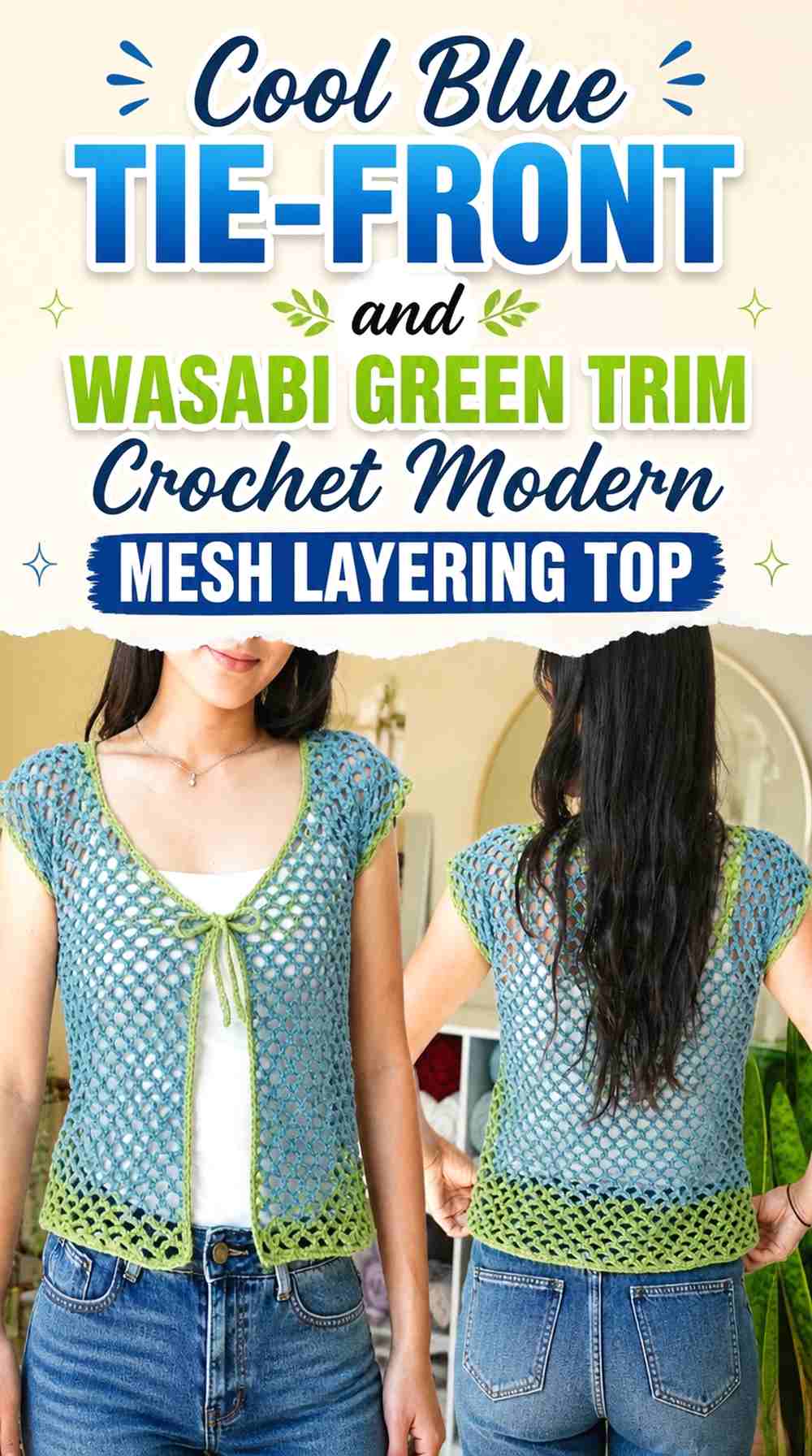
A tie-front mesh construction gives Wasabi Green a natural place to appear without interrupting the main fabric. Work the broad panels in Cool Blue and use green around the front edges and ties so the opening becomes the central two-color feature.
Wasabi Green Ties Can Focus the Cool Blue Open Front
Use Wasabi Green consistently through the ties and nearby edging. Because the ties sit at the center of the top, they can establish the second color even when they use relatively little yarn.
Cool Blue Should Remain Visible Between Wasabi Green Front Edges
Do not make the contrasting front borders so wide that they reduce the Cool Blue panels to narrow strips. The mesh body needs enough blue surface for the top to remain clearly blue-led.
Creator Credit: VivCrochets
3. Wasabi Green Cropped and Cool Blue Sleeve Crochet Modern Mesh Layering Top

Use Wasabi Green through the cropped torso and Cool Blue across longer mesh sleeves. The shorter body prevents the strong green from occupying too much total surface, while the blue sleeves create a cooler frame around it.
Cool Blue Sleeves Can Balance a Wasabi Green Cropped Body
Long sleeves contribute significant visual area even when the torso is the dominant garment section. Keep Cool Blue continuous through most of each sleeve if you want that balancing effect to remain obvious.
Wasabi Green Needs a Clean Lower Edge Beside Cool Blue
A cropped Wasabi Green body already creates a strong horizontal endpoint. Avoid adding several blue bands across the torso unless you specifically want a striped look; let sleeve color provide most of the contrast.
Creator Credit: Chenda DIY
4. Cool Blue Oversized and Wasabi Green Cuff Crochet Modern Mesh Layering Top

Use Cool Blue for a relaxed oversized mesh body and long sleeves, then finish the cuffs in Wasabi Green. The small green areas gain extra impact because they contrast with a much larger blue surface.
Wasabi Green Cuffs Give Cool Blue Oversized Sleeves an Endpoint
Wide or long mesh sleeves can visually blend into the rest of an oversized top. A Wasabi Green cuff creates a clear boundary at each wrist and gives the second color a practical location.
Cool Blue Should Carry Most of the Wasabi Green Oversized Silhouette
Keep the torso and sleeves largely Cool Blue if the cuffs are meant to be the accent. Adding equally strong green sections at the hem, shoulders, and neckline can make the palette much more balanced than originally intended.
Creator Credit: Crochet with Linni
5. Cool Blue Raglan and Wasabi Green Lower-Body Crochet Modern Mesh Layering Top

Use Cool Blue across the upper raglan and sleeves, then transition into Wasabi Green through the lower torso. The construction lines provide a natural place for a color change, making the division feel related to the garment rather than placed randomly across the mesh.
Cool Blue Can Keep the Wasabi Green Raglan Area Visually Light
Let the blue cover enough of the shoulder and upper body for the raglan section to remain a recognizable zone. A very shallow blue area may resemble neckline trim instead of a major color block.
Wasabi Green Needs Enough Depth Below Cool Blue
Carry Wasabi Green through a substantial portion of the lower body so it reads as the second major field. Avoid switching repeatedly back to blue once the main transition has occurred.
Creator Credit: Granny Gaia
6. Wasabi Green Body and Cool Blue Open-Sleeve Crochet Modern Mesh Layering Top

Reverse the usual hierarchy by making Wasabi Green the main torso color and using Cool Blue for open sleeves. This gives the brighter shade a strong central block while blue prevents the whole garment from becoming equally vivid.
Cool Blue Sleeves Can Soften a Wasabi Green Mesh Body
Broad Cool Blue sleeves place a cooler field on both sides of the green torso. Keep the sleeve transition clean at the armhole so the color change reinforces the garment construction.
Wasabi Green Should Stay Broad Between Cool Blue Sleeves
Let the body remain mostly uninterrupted green. A Cool Blue neckline can repeat the sleeve color, but additional large blue torso sections can weaken the strong center block.
Creator Credit: Jennyandteddy crochet.
7. Cool Blue Long-Sleeve and Wasabi Green Shoulder Crochet Modern Mesh Layering Top

Use Cool Blue from the main torso through most of the sleeves, then introduce Wasabi Green around the shoulder or upper sleeve area. The green placement draws attention to width and upper-body structure without breaking the entire top into multiple horizontal sections.
Wasabi Green Can Mark the Cool Blue Shoulder Line
Keep the green section connected from front to back or across a clear upper zone. Small disconnected patches near the shoulders can look accidental on an otherwise simple mesh top.
Cool Blue Should Continue Below the Wasabi Green Shoulder Block
An uninterrupted blue torso preserves vertical length and gives the green upper section enough contrast. If another green repeat is needed, use a small cuff or neckline detail rather than another broad body stripe.
Creator Credit: mahum 🎀
8. Wasabi Green Panel and Cool Blue Relaxed Crochet Modern Mesh Layering Top
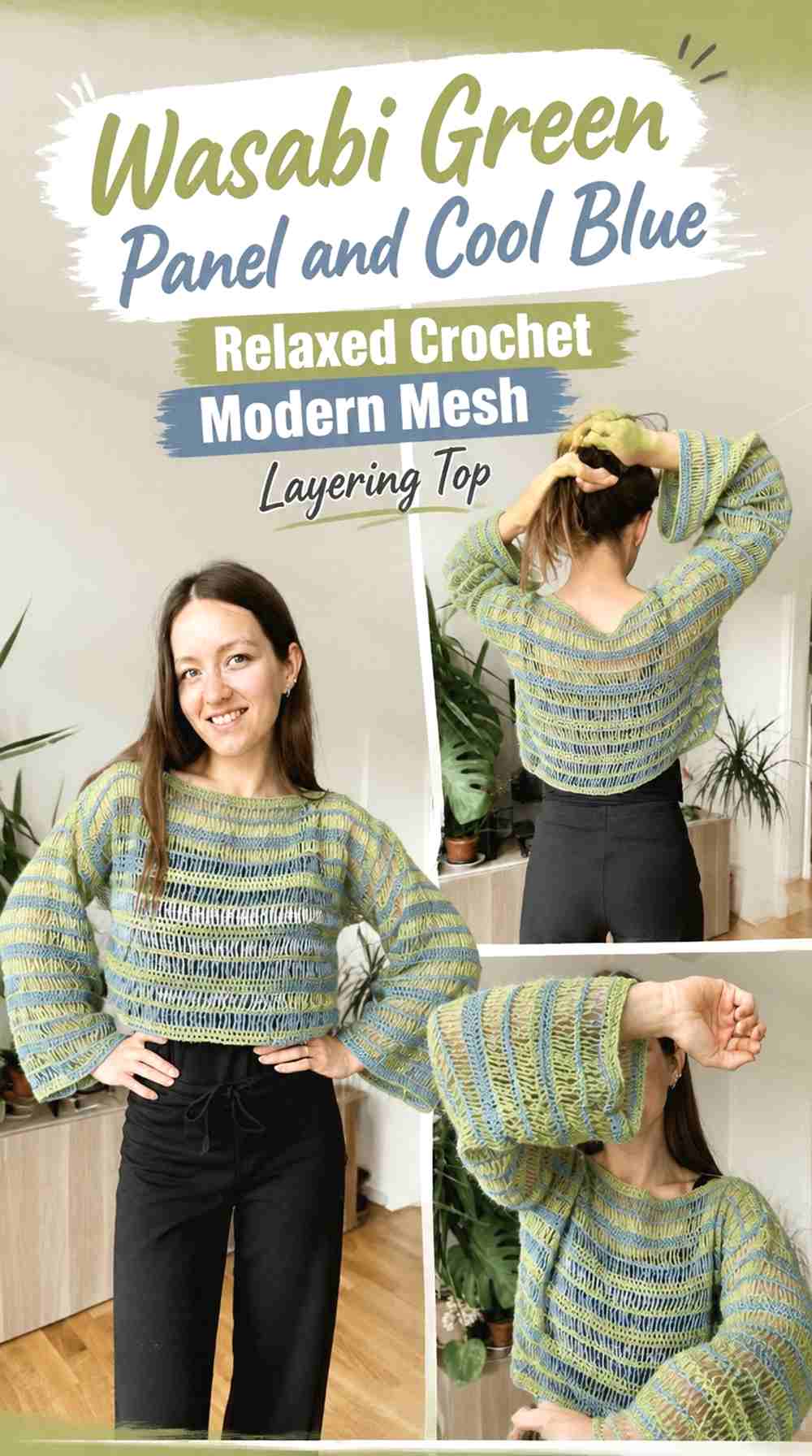
Build the relaxed top around large Cool Blue mesh sections and insert one substantial Wasabi Green front or side panel. The single stronger block creates asymmetry without requiring every panel to use a different arrangement.
Wasabi Green Needs Enough Width Inside the Cool Blue Mesh Top
A very narrow green panel can read like a stripe. Give it enough width to look like part of the garment construction, particularly if the surrounding mesh openings are large.
Cool Blue Can Keep the Wasabi Green Panel From Overloading the Top
Leave the neighboring front, back, or sleeve surfaces Cool Blue so the green feature has visual space. One controlled Wasabi Green block often creates more impact than several smaller disconnected ones.
Creator Credit: by Kristine
9. Cool Blue Cropped Tank and Wasabi Green Border Crochet Modern Mesh Layering Top

For a sleeveless interpretation, use Cool Blue through the main mesh tank and Wasabi Green around the neckline, armholes, and lower edge. Because the body is compact, each border contributes more to the final color ratio than it would on a long-sleeve top.
Wasabi Green Armholes Can Outline the Cool Blue Mesh Tank
Green edging around the armholes makes the sleeveless shape easier to read. Keep both sides visually consistent so the brighter border does not make one shoulder appear heavier than the other.
Cool Blue Needs Enough Area Inside Wasabi Green Borders
If every edge is green, protect a broad central Cool Blue field. Deep edging around a cropped tank can quickly reduce the apparent blue surface and turn the garment into a nearly balanced two-color design.
Creator Credit: Antisocial Club
10. Wasabi Green Tank and Cool Blue Neckline Crochet Modern Mesh Layering Top

Reverse the sleeveless palette with Wasabi Green across the body and Cool Blue around the upper opening. The blue neckline creates a cooler focal area while the yellow-green mesh remains the most visible part of the top.
Cool Blue Can Separate a Wasabi Green Mesh Neckline From the Layer Beneath
A more solid Cool Blue edge can clarify the neckline when the Wasabi Green mesh overlaps a similarly colored underlayer. Keep the border controlled so it defines the opening without becoming a broad blue yoke.
Wasabi Green Should Remain Continuous Below Cool Blue
A large uninterrupted green body makes this idea distinct from the equal-block versions. If Cool Blue needs repetition, use a narrow lower edge or armhole detail rather than dividing the torso.
Creator Credit: AC Crochets
11. Cool Blue Mesh Shrug and Wasabi Green Cuff Crochet Modern Layering Top

A shrug-style mesh top puts most of the crochet around the shoulders and arms rather than the torso. Work that large open sleeve span in Cool Blue and reserve Wasabi Green for cuffs or a narrow central connection.
Wasabi Green Cuffs Can Finish Cool Blue Shrug Sleeves Cleanly
Because the sleeves make up most of the garment, contrasting cuffs become important endpoints. Keep the green sections comparable on both wrists unless deliberate asymmetry is part of the design.
Cool Blue Should Dominate Between Wasabi Green Shrug Edges
Let Cool Blue run continuously across the shoulder and sleeve span. Too many green interruptions can break up the long horizontal line that makes the shrug construction visually distinctive.
Creator Credit: Belina Bellwood
12. Wasabi Green Fishnet Sleeve and Cool Blue Shoulder Crochet Modern Mesh Layering Top
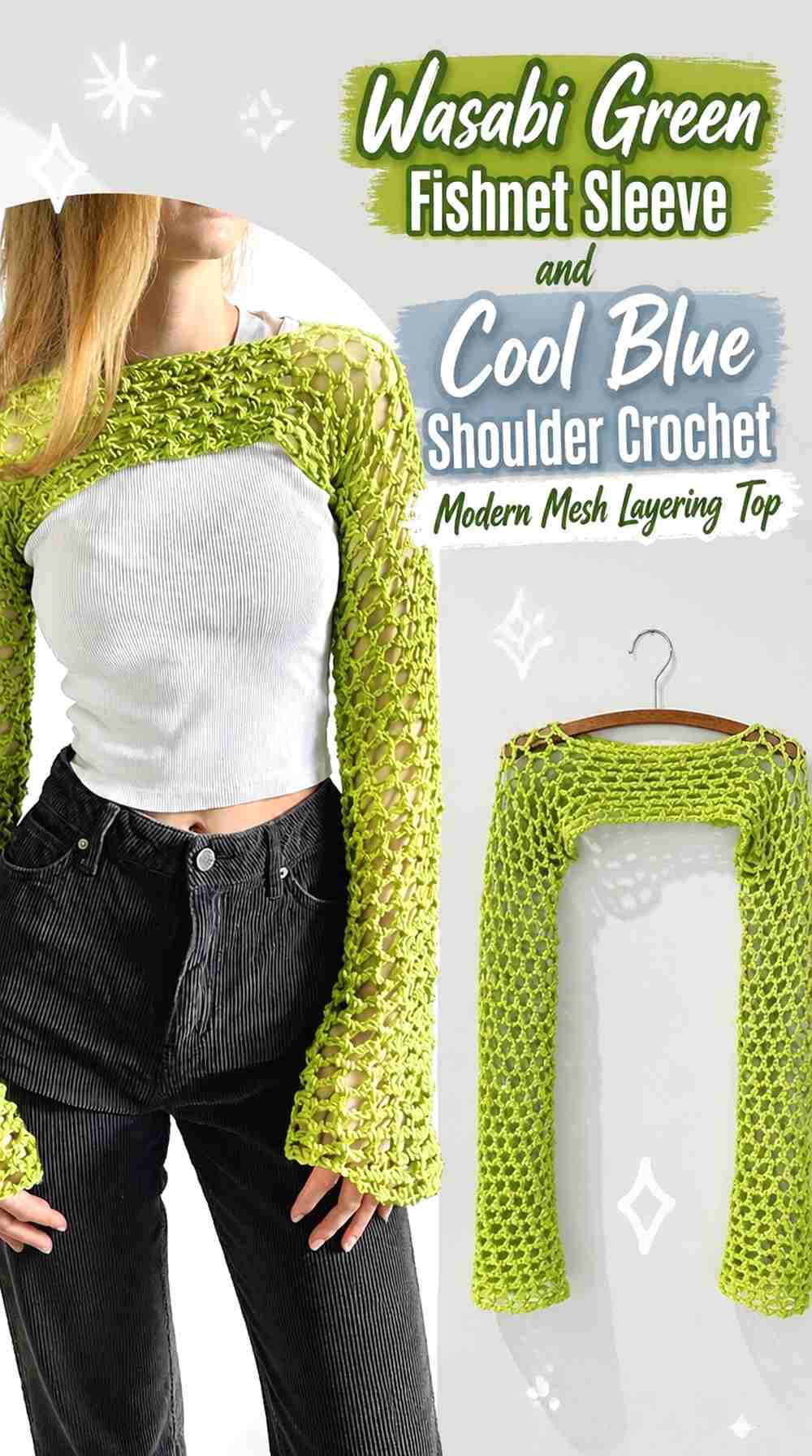
Finish with a stronger open-grid treatment: Wasabi Green fishnet-style sleeves attached through a Cool Blue shoulder or upper-back area. This gives each color a large, easily understood role and makes the sleeve mesh the most energetic element.
Wasabi Green Fishnet Sleeves Need a Clear Cool Blue Transition
Open fishnet sections can look visually lighter than denser crochet even when the yarn color itself is stronger. Use a clear Cool Blue joining or shoulder area to make the change from one section to the other easy to recognize.
Cool Blue Can Stabilize the Wasabi Green Upper Layer Visually
Keep the shoulder or central section relatively simple so it acts as an anchor between two bright open sleeves. A heavily colorblocked Cool Blue-and-green center could compete with the fishnet rather than support it.
Wasabi Green Should Be Judged Over the Intended Cool Blue Layering Background
Because large fishnet openings expose so much of the clothing underneath, test the green sleeves over likely base garments. The apparent color balance can shift significantly depending on what shows through the openings.
Creator Credit: Anna Greene
Which Cool Blue and Wasabi Green Mesh Layering Top Should You Choose?
For the calmest two-color result, start with a Cool Blue body and restrict Wasabi Green to edges, cuffs, ties, or one panel. The blue provides a continuous mesh field while the green clarifies selected structural details.
For a brighter top, make Wasabi Green responsible for the torso or sleeves and use Cool Blue as the framing color. The green-body, cropped-body, and fishnet-sleeve ideas give Wasabi Green enough area to become the first color noticed.
If the garment will be worn primarily for layering, pay particular attention to mesh scale. Oversized openings make the underlayer a major visual component, while tighter mesh lets Cool Blue and Wasabi Green control more of the finished appearance themselves.
Conclusion
Cool Blue and Wasabi Green work best on a modern mesh layering top when each color has a defined job. Cool Blue can carry large openwork surfaces without overwhelming the garment, while Wasabi Green is useful for structural interruptions such as cuffs, ties, shoulders, lower blocks, or borders.
The open fabric means color cannot be evaluated in isolation. Test the palette over likely base layers, check whether the two yarns remain distinct from normal viewing distance, and decide which shade should dominate before distributing accents.
Use the credited tutorials for their exact mesh top, tank, cardigan, raglan, sweater, or shrug construction. Treat the Cool Blue and Wasabi Green layouts as independent color adaptations rather than replacements for the creators’ pattern instructions.
Frequently Asked Questions
Should Cool Blue or Wasabi Green dominate a crochet mesh layering top?
Either can lead. Cool Blue creates a quieter main field and allows Wasabi Green details to stand out strongly. A Wasabi Green body creates a brighter overall top and makes Cool Blue useful as a balancing neckline, sleeve, cuff, or border color.
Where should Wasabi Green go on a mostly Cool Blue mesh top?
Useful locations include cuffs, the neckline, ties, shoulders, a lower body block, one vertical panel, or edging. Choose a few connected placements rather than scattering small green sections through every mesh row.
Does the layer underneath affect Cool Blue and Wasabi Green mesh?
Yes. Open crochet reveals the garment or skin beneath it, so the background becomes part of the visual result. Test a mesh swatch over light and dark layers if you want to understand how strongly each color will appear.
Can Cool Blue and Wasabi Green be used in equal amounts?
Yes, but equal coverage creates a more graphic two-color effect. If you prefer a calmer modern look, give one shade the main mesh field and use the other for structural sections such as sleeves, cuffs, borders, or panels.
How can I keep Cool Blue and Wasabi Green mesh from looking too busy?
Use fewer, larger color zones. A solid sleeve color, contrasting raglan, broad lower block, or clean edge usually works better than changing color across many narrow rows when the mesh pattern already provides strong repetition.
Which color is better for dense edging around open mesh?
Either can work. Wasabi Green makes a stronger accent around a Cool Blue body, while Cool Blue can calm a vivid green mesh field. Remember that dense edging often looks visually heavier than the same amount of color worked in open mesh.
How should I substitute Cool Blue or Wasabi Green yarn?
Preserve the relationship between the shades rather than matching a commercial color name. Choose a clear cool blue for the Cool Blue role and a yellow-green for Wasabi Green, then check that the two remain sufficiently different in lightness if the design relies on crisp panel or border separation.