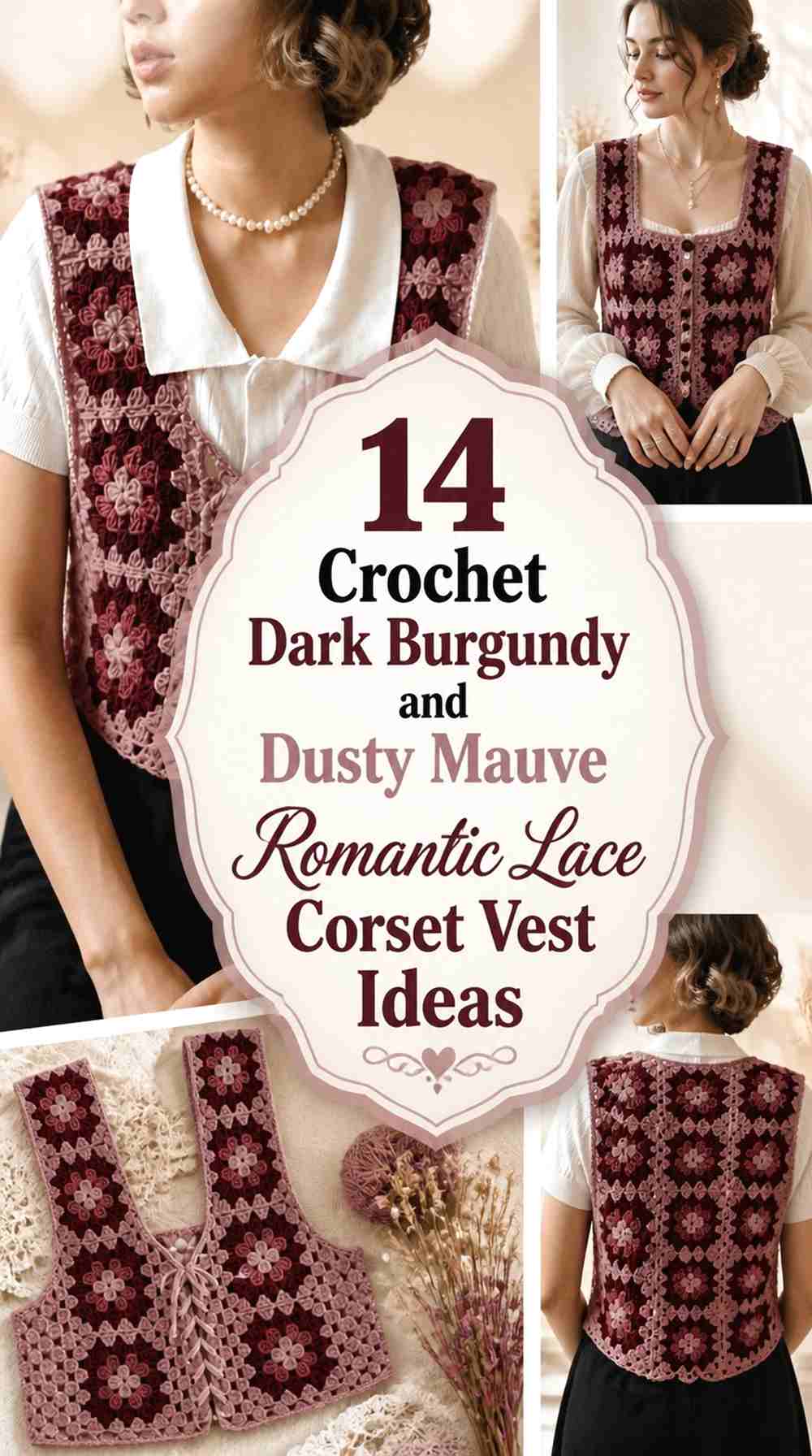

Dark Burgundy and Dusty Mauve create a naturally layered palette for a romantic crochet lace corset vest. Dark Burgundy can give fitted panels, lacing edges, underbust sections, and shaped hems enough visual weight to define the silhouette, while Dusty Mauve can reveal openwork, cups, scallops, or narrow trim that might disappear inside a uniformly dark vest.
The most useful color decision is where the eye should go first. A Dark Burgundy body with Dusty Mauve lacing keeps the vest deep and dramatic, while Dusty Mauve center panels framed by Burgundy make the construction lines much more visible. Lace adds another consideration because open stitches expose the garment underneath, so contrast should be judged on the finished fabric rather than from the yarn alone.
The supporting tutorials include exact corset tops and bustiers, a corset-style vest, and closely related lace or fitted vest constructions. The Dark Burgundy and Dusty Mauve schemes below are independent color adaptations; the tutorial creators should not be assumed to have used these exact colors.
Quick List
- Dark Burgundy Body and Dusty Mauve Lace-Up Crochet Corset Vest
- Dusty Mauve Center and Dark Burgundy Side-Panel Crochet Corset Vest
- Dark Burgundy Cup and Dusty Mauve Underbust Crochet Corset Vest
- Dusty Mauve Body and Dark Burgundy Back-Lace Crochet Corset Vest
- Dark Burgundy Shell-Lace and Dusty Mauve Edge Crochet Corset Vest
- Dark Burgundy Ribbed and Dusty Mauve Boning-Line Crochet Corset Vest
- Dark Burgundy Granny-Lace and Dusty Mauve Join Crochet Corset Vest
- Dusty Mauve Lace Body and Dark Burgundy Frame Crochet Corset Vest
- Dark Burgundy Fitted Front and Dusty Mauve Side-Lace Crochet Corset Vest
- Dusty Mauve Romantic Lace and Dark Burgundy Scallop Crochet Corset Vest
- Dark Burgundy Structured Body and Dusty Mauve Strap Crochet Corset Vest
- Dusty Mauve Corset Panel and Dark Burgundy Ribbed Crochet Vest
Let Dark Burgundy Define the Corset Structure
Dark Burgundy is especially useful where the vest needs visual definition: along side panels, back-lacing edges, underbust areas, front borders, or a pointed lower hem. Because it is the deeper shade, even a relatively narrow Burgundy section can look substantial beside Dusty Mauve.
Avoid placing Dark Burgundy on every structural line automatically. If the neckline, straps, sides, lacing, and hem are all dark, the Dusty Mauve center can become visually boxed in. Choose the two or three boundaries that matter most to the particular corset shape.
Use Dusty Mauve Where Romantic Lace Needs More Visibility
Dusty Mauve can keep shells, mesh, granny motifs, scallops, and other openwork easier to distinguish than the same detail worked entirely in Dark Burgundy. This is especially useful when the lace is a major feature rather than simply a small decorative edge.
A worked swatch is more useful than comparing skeins. Open stitches expose the blouse, camisole, or dress underneath the vest, and that background can alter the apparent difference between Dark Burgundy and Dusty Mauve.
Balance Dark Burgundy and Dusty Mauve Around Lacing
Corset-style lacing is both structural and decorative. A Dusty Mauve lace running through Dark Burgundy edges creates obvious separation, while Burgundy lacing over a mauve body produces a stronger dark line.
Keep the surrounding panel colors simple when the lacing is already high contrast. A busy sequence of alternating colors around every eyelet can compete with the crossed-lace pattern rather than clarifying it.
1. Dark Burgundy Body and Dusty Mauve Lace-Up Crochet Corset Vest
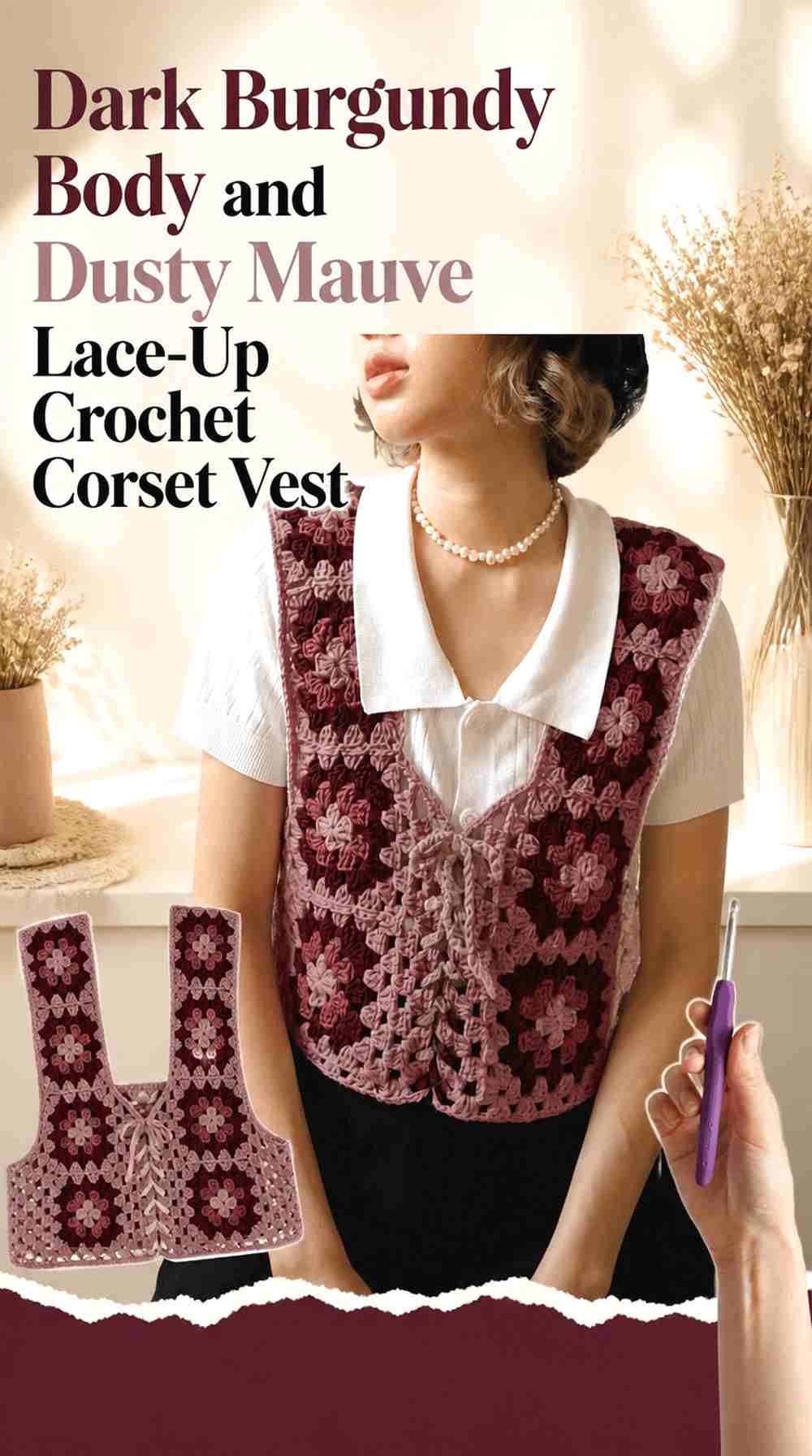
Let Dark Burgundy cover most of the fitted vest and reserve Dusty Mauve for the visible lacing. This is one of the cleanest two-color approaches because each shade receives a distinct role: Burgundy defines the body while Mauve emphasizes adjustability and the romantic corset reference.
Dusty Mauve Can Make Dark Burgundy Corset Lacing Easier to Read
Use Dusty Mauve through the lacing where it crosses a Dark Burgundy edge or back panel. The lighter softened purple creates separation between each diagonal line without requiring another decorative color.
Keep the sections around the lacing predominantly Burgundy so the Mauve cord remains a purposeful focal detail.
Dark Burgundy Should Stay Broad Around Dusty Mauve Lacing
Leave enough Burgundy on both sides of the lace-up opening for the vest to remain dark-led. Narrow dark strips surrounding a wide Dusty Mauve gap can reverse the intended hierarchy and make the lacing area appear to dominate the entire back or front.
Dusty Mauve Can Repeat Once Beyond the Dark Burgundy Lacing
A narrow Dusty Mauve neckline or lower edge can connect the lacing to the rest of the vest. One controlled repeat is usually enough; extensive mauve edging around every opening would weaken the concentrated lace-up effect.
Creator Credit: OHMYHANH
2. Dusty Mauve Center and Dark Burgundy Side-Panel Crochet Corset Vest
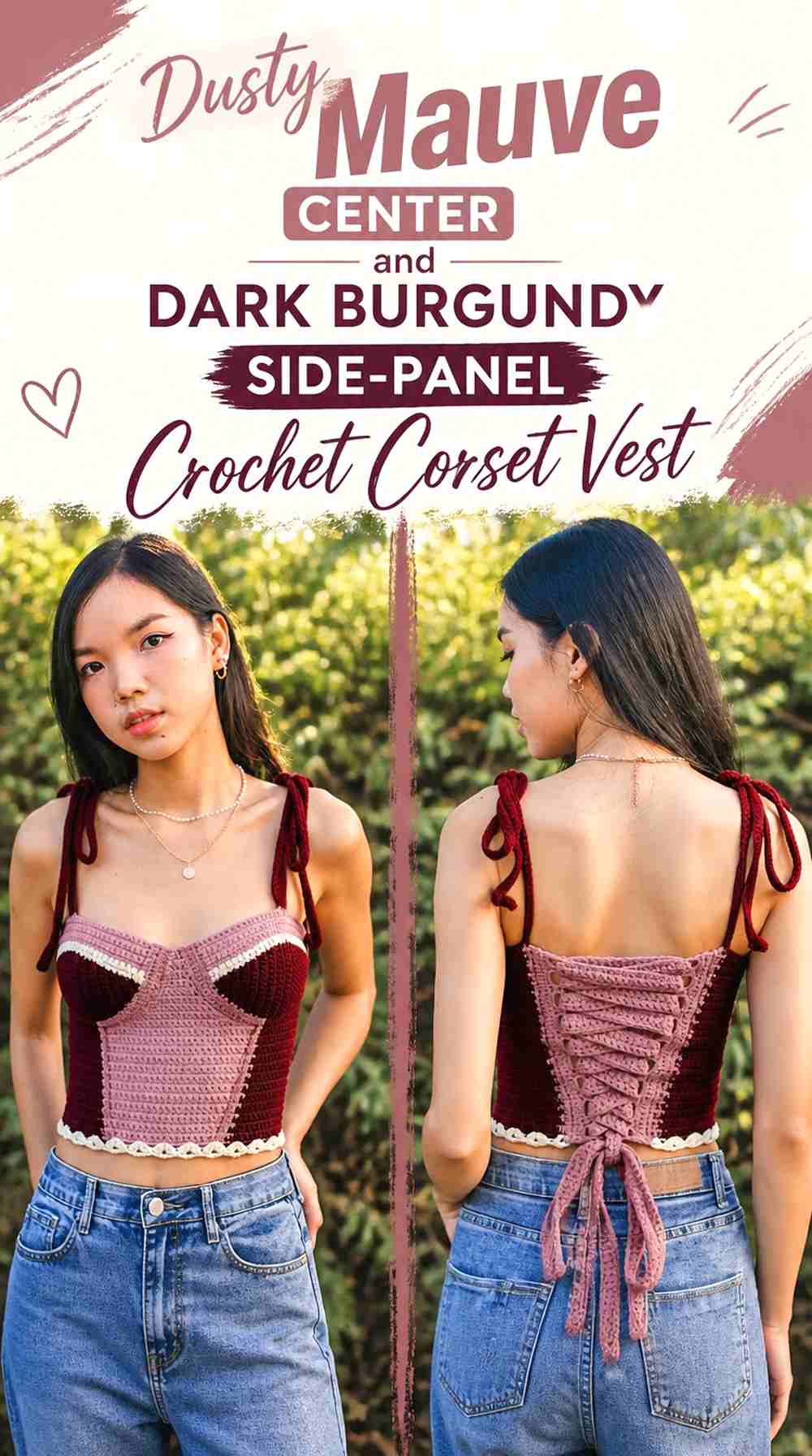
Place Dusty Mauve through the central front and use Dark Burgundy along both side sections. The deeper sides create a strong frame while the lighter center gives lace or other decorative stitches enough visual space.
Dusty Mauve Needs Enough Width Between Dark Burgundy Panels
A very narrow Mauve section can resemble a vertical stripe rather than the main front panel. Judge its width on the complete vest front, especially after the Dark Burgundy sides curve around the torso.
Dark Burgundy Side Panels Can Define a Dusty Mauve Corset Shape
Use Burgundy consistently from the underarm toward the lower vest when you want the side sections to reinforce the fitted silhouette. Breaking those dark panels with several additional Mauve bands can make the construction look less deliberate.
Dusty Mauve Can Carry Lace Detail Inside the Dark Burgundy Frame
If the center contains shells, mesh, or another decorative texture, Dusty Mauve can help that surface remain visible. Keep the side panels comparatively simple so the center—not every section at once—carries the romantic detail.
Creator Credit: Chenda DIY
3. Dark Burgundy Cup and Dusty Mauve Underbust Crochet Corset Vest
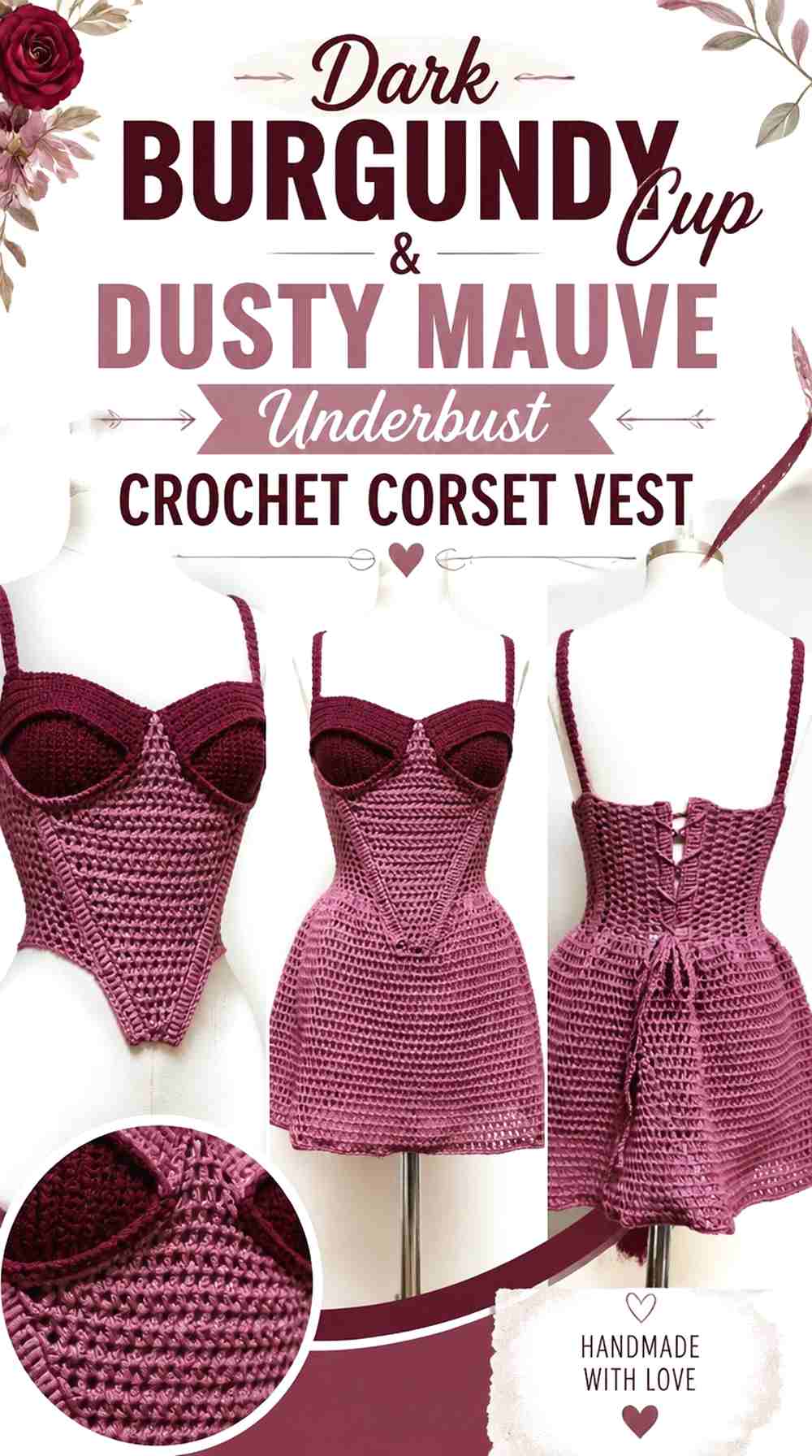
Use Dark Burgundy across shaped upper sections or cups and transition into Dusty Mauve beneath them. This concentrates the deeper color at the top while allowing the lower fitted body to feel lighter and more lace-oriented.
Dark Burgundy Cups Need a Clear Dusty Mauve Boundary
Keep the color transition consistent beneath the shaped upper sections. An uneven change can make one cup or upper panel appear visually larger even when the construction itself is symmetrical.
Dusty Mauve Can Lighten the Dark Burgundy Underbust Area
Let Mauve continue through enough of the lower vest to establish a real body section rather than a narrow stripe. The lighter area can also provide a useful field for lace or subtle surface texture.
Dark Burgundy Can Repeat at the Dusty Mauve Lower Edge
A narrow Burgundy hem can reconnect the dark upper section to the bottom of the vest. Keep that repeat smaller than the cup area if you want the top to remain the primary Burgundy feature.
Creator Credit: Alem knit and Crochet
4. Dusty Mauve Body and Dark Burgundy Back-Lace Crochet Corset Vest
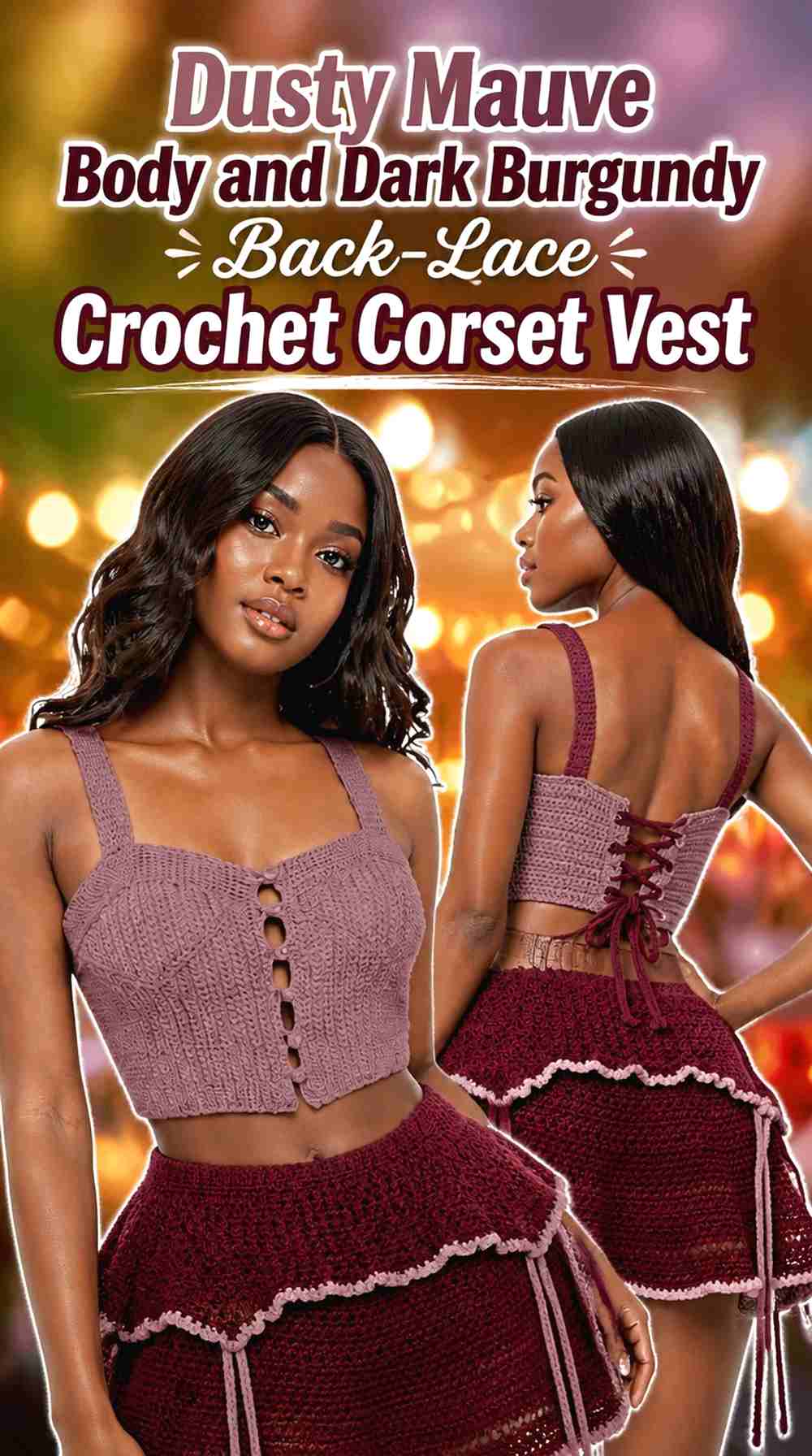
Make Dusty Mauve responsible for the broad body panels and use Dark Burgundy along the back opening and lacing. The deeper red-purple line becomes highly visible against the softer vest and gives the back its own focal feature.
Dark Burgundy Can Strengthen Dusty Mauve Back Lacing
A Burgundy cord or lace creates a clear crossed pattern against Mauve. Keep the surrounding lacing edges in one controlled color so the eye can follow the closure without competing borders.
Dusty Mauve Should Remain Continuous Around Dark Burgundy
Allow the Mauve body to extend broadly around the front and sides. This preserves the softer romantic direction and prevents the dark back detail from spreading into an equal two-color split.
Dark Burgundy Can Finish the Dusty Mauve Lower Point
If the vest has a shaped or pointed lower edge, a restrained Burgundy finish can connect that hem to the lacing. Avoid making the lower dark section too deep unless you deliberately want a second major Burgundy block.
Creator Credit: Nitah Crochets
5. Dark Burgundy Shell-Lace and Dusty Mauve Edge Crochet Corset Vest
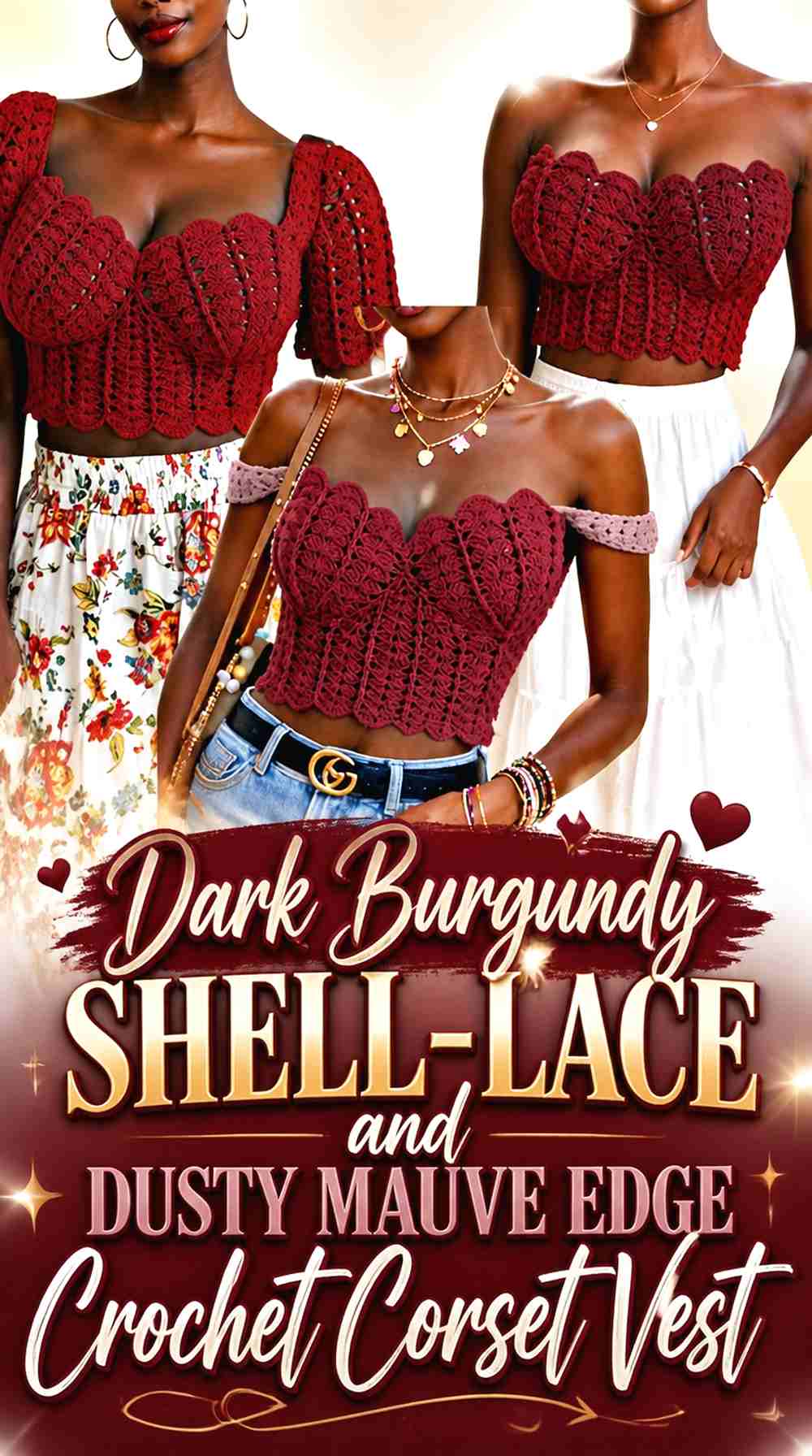
Use Dark Burgundy through a shell or lace-patterned body and Dusty Mauve around the outer edges. The Mauve frame can separate the dark openwork from the garment underneath while keeping most of the corset vest richly colored.
Dusty Mauve Can Reveal the Dark Burgundy Lace Perimeter
Place Mauve around the neckline, front opening, or another important boundary instead of outlining every possible edge. Selective contrast keeps the lace surface visually spacious.
Dark Burgundy Lace Needs Enough Dusty Mauve Negative Space
If the openwork itself is dark and detailed, avoid filling every gap with additional Burgundy trim. Dusty Mauve at the edge gives the lace a softer stopping point and can make the individual shell shapes easier to distinguish.
Dusty Mauve Should Not Overframe the Dark Burgundy Corset Vest
A broad pale edge repeated around neckline, armholes, and hem may become the dominant feature. Keep the Mauve width proportional when Burgundy is supposed to carry the body.
Creator Credit: Shyler crochets
6. Dark Burgundy Ribbed and Dusty Mauve Boning-Line Crochet Corset Vest
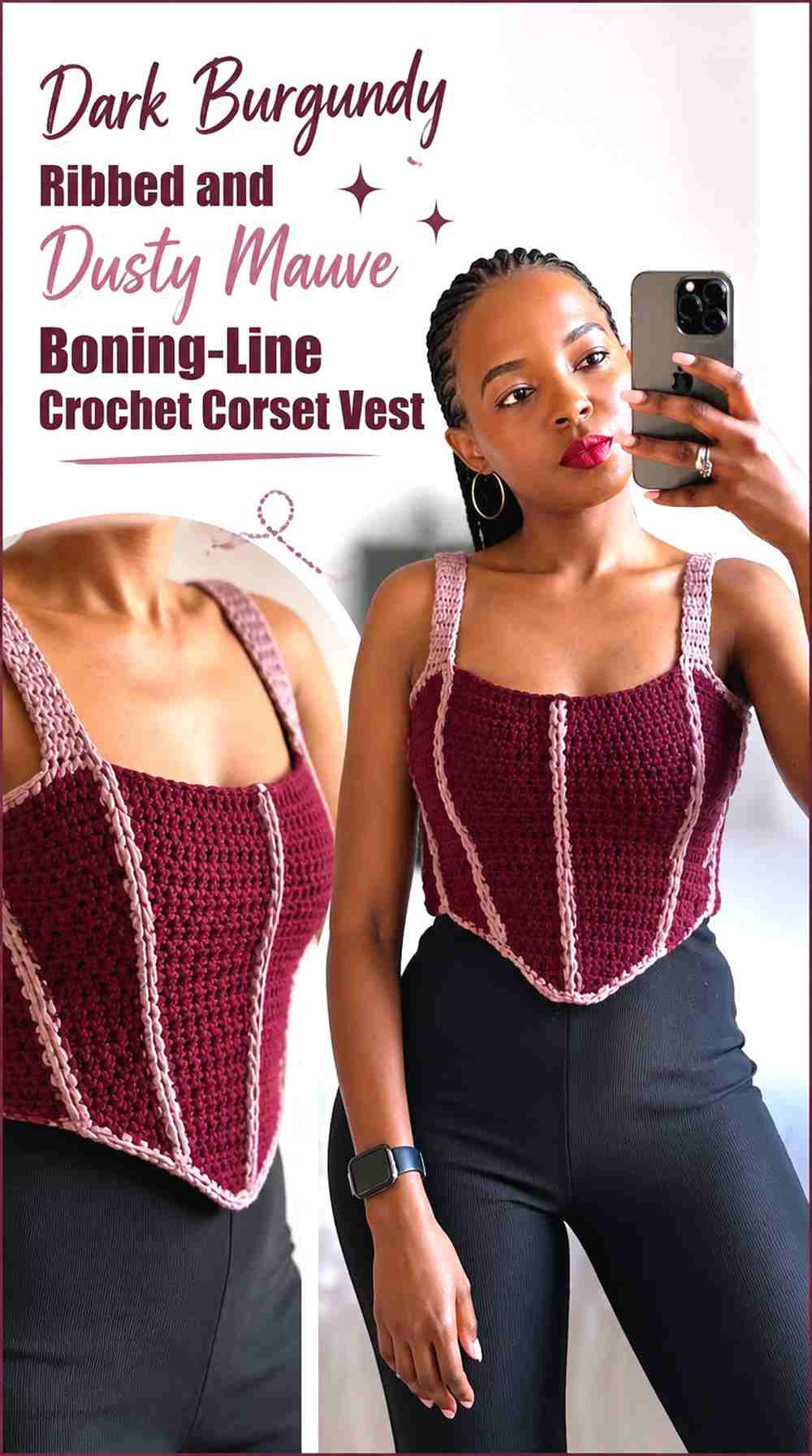
Use Dark Burgundy across a ribbed or strongly textured fitted body and place Dusty Mauve along selected vertical lines. The pale sections can suggest the visual rhythm of corset channels without requiring the whole vest to alternate colors.
Dusty Mauve Vertical Lines Need Restraint on Dark Burgundy
Choose a limited number of lines rather than highlighting every rib. Too many Mauve divisions can turn a structured vest into narrow striping and reduce the impact of the overall corset shape.
Dark Burgundy Ribbing Can Carry More Weight Than Dusty Mauve
Because deep color plus texture already creates substantial visual density, leave the Burgundy field wide enough for the ribbing to remain continuous. Use Mauve primarily where a vertical line helps explain the construction.
Dusty Mauve Can Connect Dark Burgundy Structure to the Neckline
A small Mauve repeat at the upper edge can tie the vertical accents into the rest of the garment. Keep it narrow if the ribbed body remains the intended focal surface.
Creator Credit: AC Crochets
7. Dark Burgundy Granny-Lace and Dusty Mauve Join Crochet Corset Vest
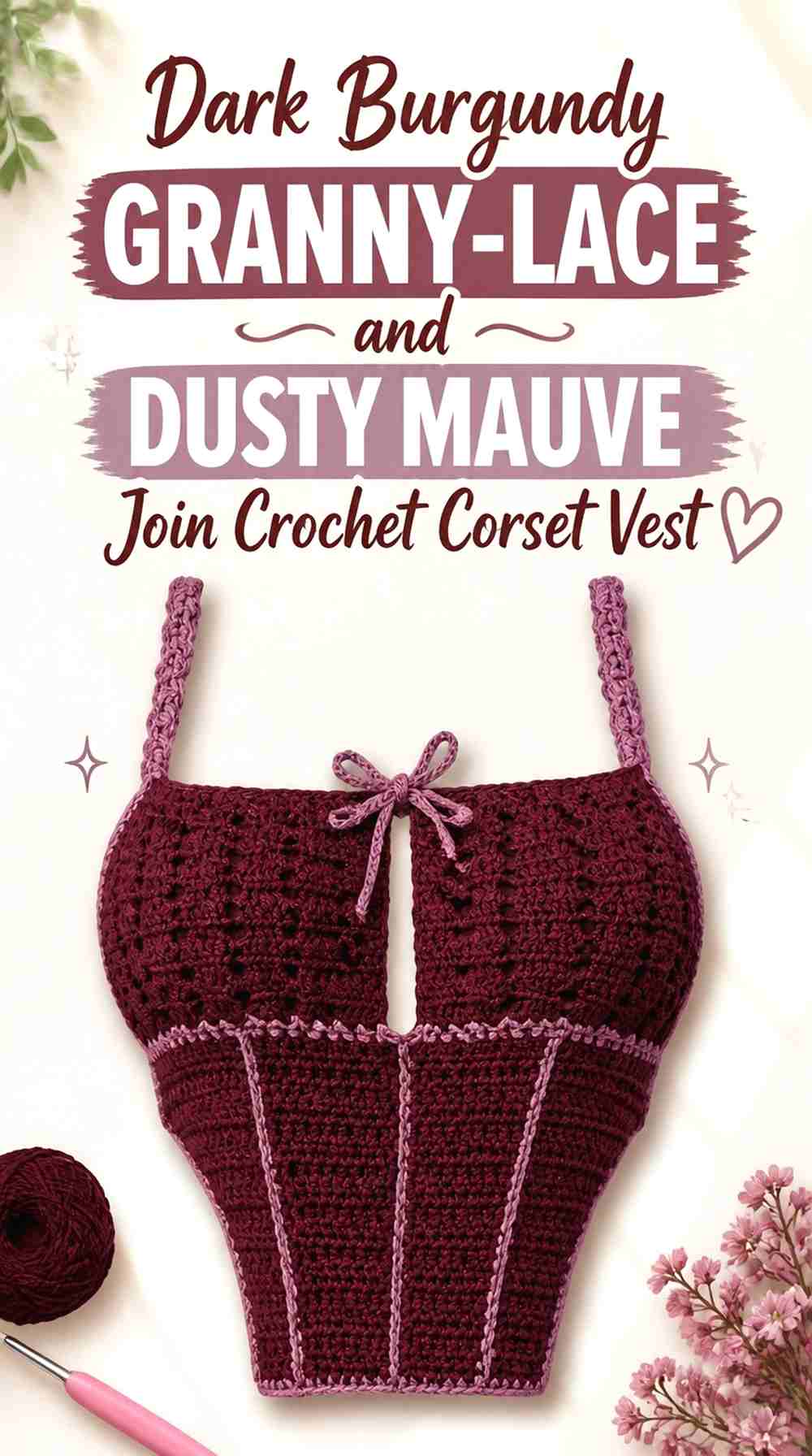
Use Dark Burgundy across granny-style or modular motifs and Dusty Mauve for the joins. The lighter join lines can make individual motif shapes easier to see while preserving a dark overall vest.
Dusty Mauve Joins Can Organize Dark Burgundy Corset Motifs
Keep the joining color consistent throughout the layout. Irregular Mauve widths can make otherwise matched Burgundy motifs look different in size once assembled.
Dark Burgundy Motifs Need Enough Area Beside Dusty Mauve
Avoid overly wide joins if Burgundy is intended to dominate. A little Mauve repeated between every motif already accumulates into a substantial part of the garment.
Dusty Mauve Can Extend Into Dark Burgundy Lacing Carefully
Using Mauve for both motif joins and the corset lace can connect the visual system. Keep the actual lacing easy to distinguish from the joining grid by using placement, not additional colors.
Creator Credit: The Crochet Channel
8. Dusty Mauve Lace Body and Dark Burgundy Frame Crochet Corset Vest
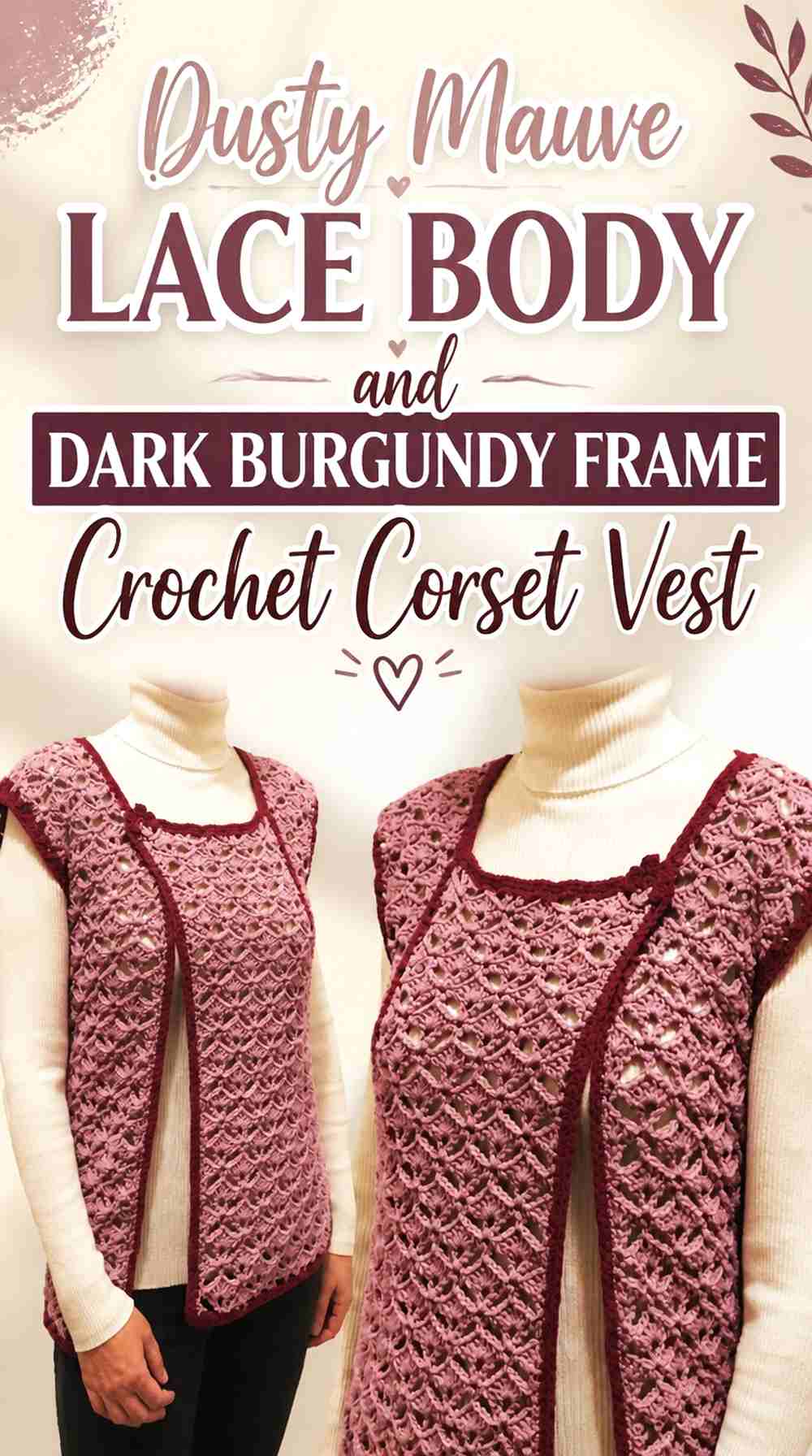
Let Dusty Mauve carry a delicate lace vest surface and use Dark Burgundy at the front opening, armholes, and selected outer edges. The deep frame creates a corset-inspired visual structure around the softer openwork.
Dark Burgundy Can Give Dusty Mauve Lace Stronger Boundaries
Choose the front opening and one other important boundary, such as the lower edge, for Burgundy contrast. Outlining every seam can make the frame heavier than the lace itself.
Dusty Mauve Should Remain Visible Inside the Dark Burgundy Vest Frame
Keep a broad Mauve field between Burgundy borders. This is particularly important across narrow front panels, where two dark edges can quickly consume much of the visible surface.
Dark Burgundy Can Make Dusty Mauve Openwork Easier to Layer
A deep edge distinguishes the vest itself from the layer visible through the lace. Check the effect over both light and dark underlayers before deciding whether more Burgundy is necessary.
Creator Credit: Wool Story
9. Dark Burgundy Fitted Front and Dusty Mauve Side-Lace Crochet Corset Vest
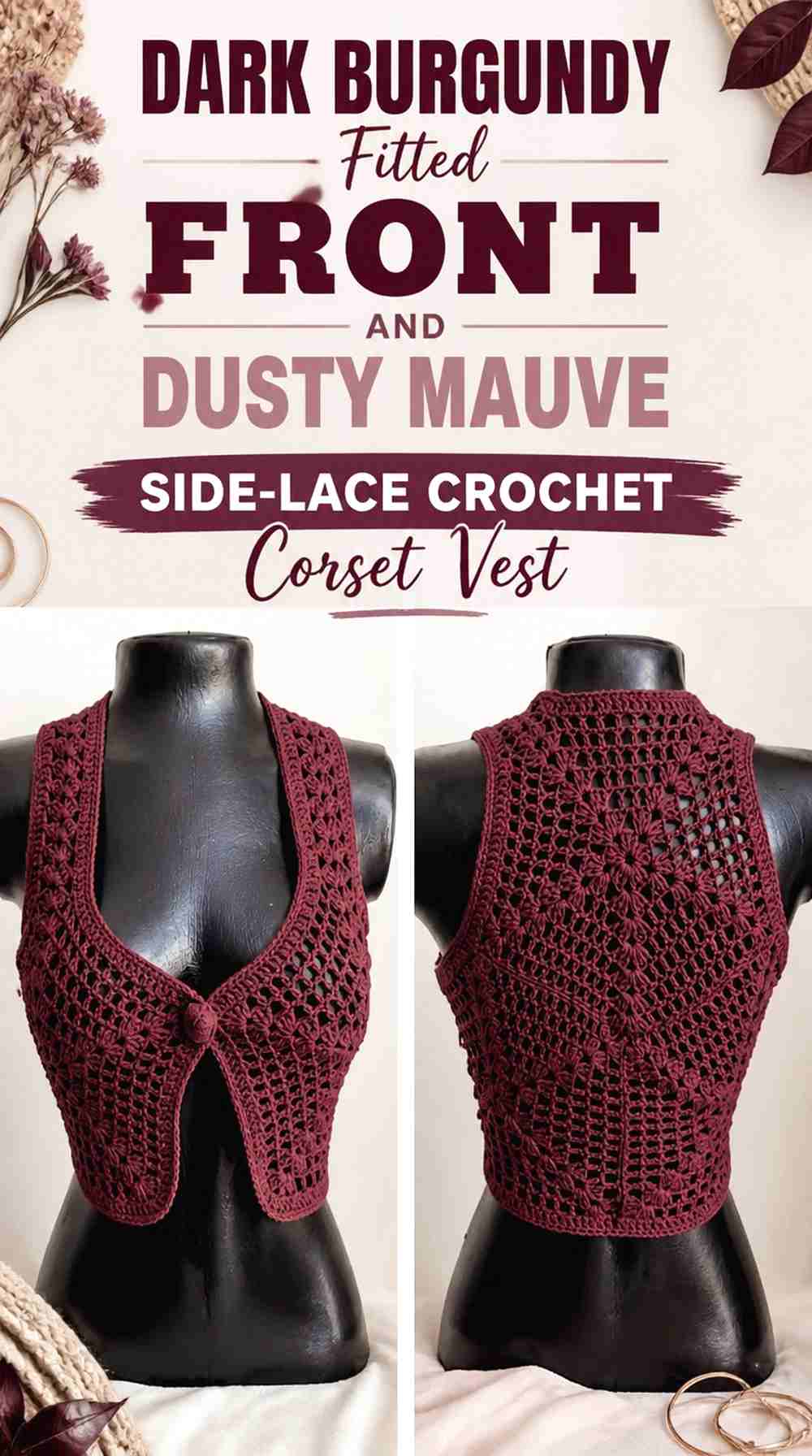
Use Dark Burgundy across the main fitted front and move Dusty Mauve toward the sides, where openwork or lacing can create a softer transition around the torso. This keeps the strongest color centered while allowing the side sections to feel lighter.
Dusty Mauve Side Lace Needs to Stay Visible Beside Dark Burgundy
Make the Mauve side areas wide enough to be seen from a front or three-quarter view. If all the lace sits directly on the side seam, its color contribution may nearly disappear from the front.
Dark Burgundy Can Keep the Dusty Mauve Corset Front Focused
Leave the front predominantly Burgundy rather than inserting several competing Mauve vertical bands. The side contrast works best when the central field remains strong.
Dusty Mauve Can Soften the Dark Burgundy Armhole Transition
A small Mauve repeat near the armhole can visually connect the side lace to the upper vest. Keep it secondary so the lighter color does not expand into a full shoulder block.
Creator Credit: Joyka Jiménez
10. Dusty Mauve Romantic Lace and Dark Burgundy Scallop Crochet Corset Vest
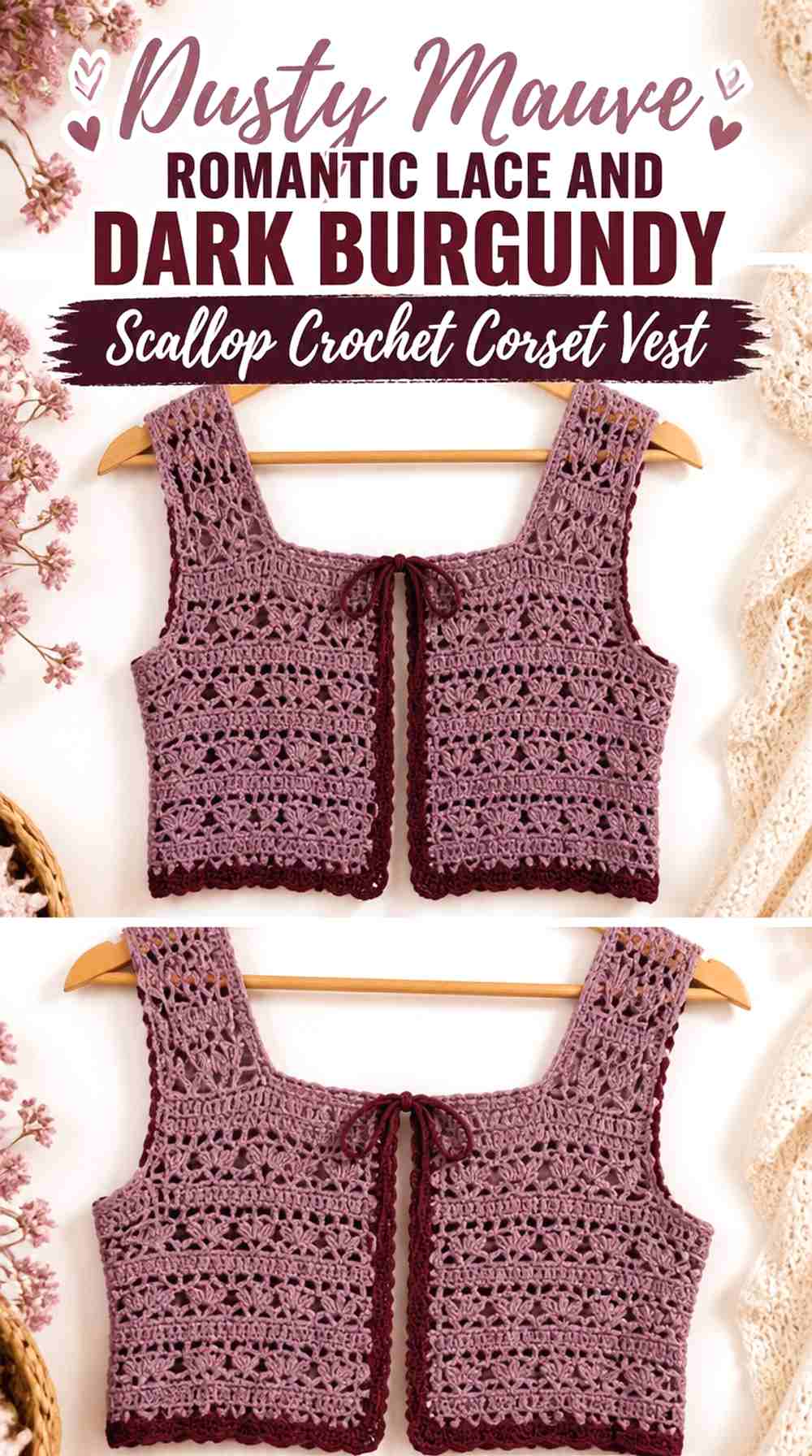
Use Dusty Mauve throughout a delicate romantic lace vest and finish it with Dark Burgundy scallops or shaped edging. This creates a softer overall garment with concentrated dark detail along the perimeter.
Dark Burgundy Scallops Can Define a Dusty Mauve Lace Hem
A deep scalloped finish makes each lower curve easier to see. Keep the Burgundy section narrow enough that it follows the lace silhouette rather than replacing the lower portion of the vest.
Dusty Mauve Lace Needs Space Above Dark Burgundy
Let the Mauve openwork continue broadly before the scallop begins. The contrast works because the main body remains light and delicate while the Burgundy edge acts as a clear endpoint.
Dark Burgundy Can Repeat Around a Dusty Mauve Front Opening
A small Burgundy front border can connect the scalloped hem to the upper vest. Avoid outlining all lace edges if you want the hem to remain the primary dark decorative feature.
Creator Credit: VCcrochet
11. Dark Burgundy Structured Body and Dusty Mauve Strap Crochet Corset Vest
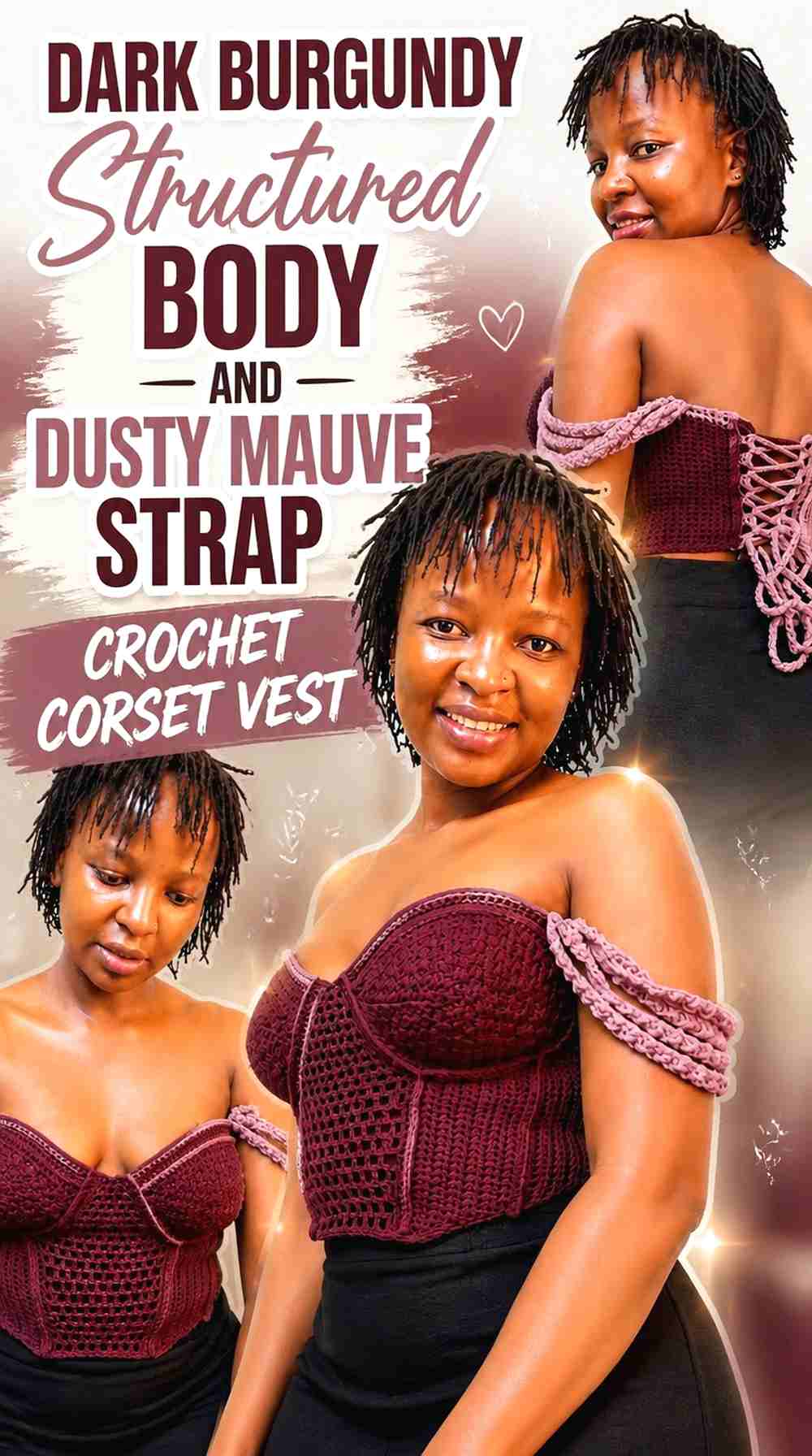
Use Dark Burgundy across a more structured corset-style body and reserve Dusty Mauve for shoulder straps and lacing. This creates pale vertical details above and behind a deep fitted vest.
Dusty Mauve Straps Need Enough Width Against Dark Burgundy
Very narrow Mauve straps may appear almost like cords beside a substantial Burgundy body. Give them enough visual presence to look intentionally connected to the palette while keeping their scale appropriate to the vest.
Dark Burgundy Should Remain Continuous Beneath Dusty Mauve
A broad Burgundy torso creates the strong foundation this layout depends on. Keep Mauve out of most of the lower front if the straps and lacing are supposed to carry the secondary color.
Dusty Mauve Lacing Can Connect the Dark Burgundy Back to the Straps
Using Mauve for both features creates a repeated light detail without adding another color block to the body. Check that the strap and lace tones remain distinct enough from Burgundy after the fabric is worked.
Creator Credit: LaDenser Crochets
12. Dusty Mauve Corset Panel and Dark Burgundy Ribbed Crochet Vest
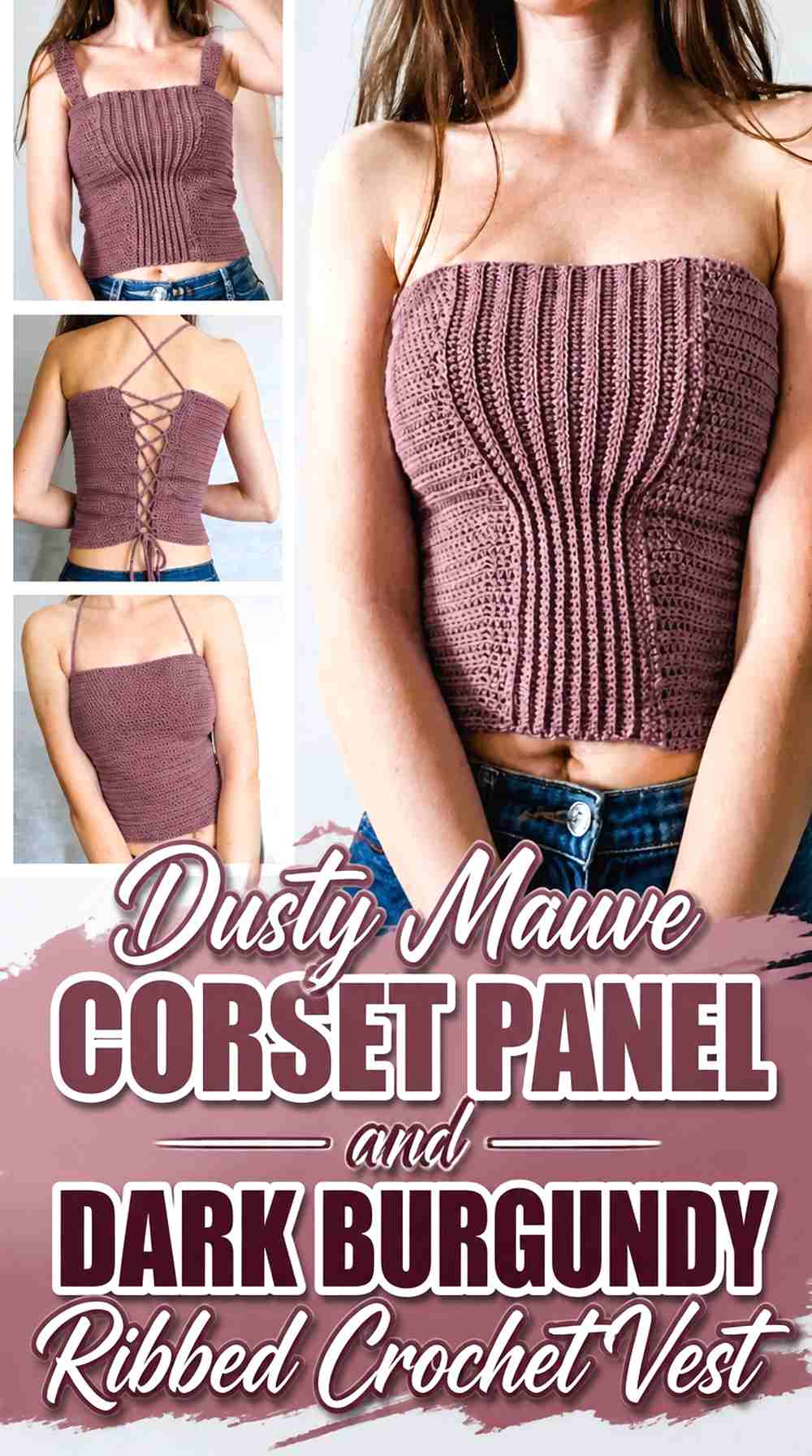
Finish with a Dusty Mauve central corset panel surrounded by Dark Burgundy ribbing or fitted side sections. The lighter center becomes the romantic feature, while the deeper outer color keeps the silhouette defined.
Dusty Mauve Should Stay Broad Inside Dark Burgundy Ribbing
Give the Mauve center enough width to remain a panel rather than a decorative stripe. Dark Burgundy ribbing naturally creates strong vertical boundaries, so it does not need excessive width to frame the center.
Dark Burgundy Can Give the Dusty Mauve Corset Panel More Structure
Use Burgundy consistently along side boundaries and lower finishing. This makes the outer color behave like a frame instead of scattered trim and can keep the softer center from visually spreading across the entire vest.
Dusty Mauve Lace Can Stay Focused Within the Dark Burgundy Vest
If lace or openwork is added to the central panel, keep it predominantly Mauve. Moving the same detailed treatment into the Burgundy sides would reduce the distinction between romantic center and structured frame.
Creator Credit: Amigurumi Forge
Which Dark Burgundy and Dusty Mauve Lace Corset Vest Direction Should You Choose?
For the darkest romantic result, use Dark Burgundy across the main body and reserve Dusty Mauve for lacing, joins, straps, edging, or one center panel. The corset shape remains deep and defined while Mauve highlights the most important construction details.
For a softer lace-led vest, reverse the hierarchy. Dusty Mauve can carry openwork, shaped upper panels, or the whole body while Dark Burgundy frames the opening, hem, side panels, or scallops.
If lacing is the detail you want noticed first, choose a strong color contrast at the closure and simplify the surrounding body. If lace is more important, use the lighter of your actual yarns on the detailed section and keep the corset frame comparatively solid.
Conclusion
Dark Burgundy and Dusty Mauve create several distinct directions for a romantic crochet corset vest without requiring a third shade. Burgundy can define the fitted structure, side panels, hem, and closure edges, while Mauve can reveal lace, straps, cups, joins, and crossed lacing.
The best color map depends on what you want the garment to emphasize. A lace-up back needs different contrast than a shell-stitch bustier, granny corset vest, or delicate lace vest. Give the dominant construction feature the clearest color relationship instead of applying the same border treatment everywhere.
Use the credited tutorials for their exact corset, bustier, lace, vest, ribbing, motif, or lacing construction. Where a tutorial shows a related top rather than an exact romantic lace corset vest, treat it as construction support and plan the final vest coverage, layering, length, and color placement separately.
Frequently Asked Questions
Should Dark Burgundy or Dusty Mauve dominate a romantic crochet corset vest?
Either can lead. Dark Burgundy creates a deeper, more dramatic vest and makes Dusty Mauve lace or lacing easy to notice. Dusty Mauve produces a softer body and lets Burgundy framing, side panels, or scallops become stronger structural accents.
Where should Dusty Mauve go on a mostly Dark Burgundy corset vest?
Useful placements include the lacing, central lace panel, straps, cup sections, motif joins, neckline, or narrow hem edging. Pick a few connected areas rather than scattering Mauve across every structural seam.
Is Dark Burgundy suitable for crochet lace?
Yes, but very deep yarn can make subtle lace details less obvious under some lighting. Work a representative swatch and compare it with Dusty Mauve before assigning Burgundy to the most intricate openwork.
How can I keep Dark Burgundy and Dusty Mauve lacing easy to see?
Give the lacing a clear value difference from the panel behind it. If the two yarns appear similar in grayscale, choose a slightly lighter Dusty Mauve or deeper Burgundy while preserving the same overall color relationship.
Can Dusty Mauve and Dark Burgundy be used equally on a corset vest?
Yes, but near-equal coverage creates a strong two-color statement. For a more romantic, cohesive result, one shade can carry the major body panels while the second handles lacing, lace inserts, upper shaping, or edges.
Should the lace panel be Dusty Mauve or Dark Burgundy?
Use Dusty Mauve when you want openwork and individual stitch shapes to be more visible. Use Dark Burgundy when you want the lace to blend more closely into a deep corset body. The actual value and texture of your yarns should guide the final decision.
Can a crochet bustier or lace-vest tutorial be adapted into this Dark Burgundy and Dusty Mauve corset-vest look?
It can provide useful construction guidance for fitted panels, cups, lacing, openwork, or vest edges, but the source should still be followed for its actual construction. Plan the final layering coverage, color distribution, and corset-vest silhouette separately rather than assuming every related top converts directly.