

Ruby red and frosted pink can give a crochet hooded sweater dress a clear Valentine direction without requiring every part of the garment to alternate between the two colors. Ruby red works well as the stronger visual anchor across body panels, sleeves, lower hems, or a statement hood, while frosted pink can lighten cuffs, heart details, neckline transitions, pockets, and selected color blocks.
Because a hooded sweater dress has much more surface area than a standard sweater, color distribution matters. A small frosted-pink stripe that looks substantial in a swatch may barely register across a long body panel, while a wide pink hood can become the first thing noticed. Decide whether the Valentine focal point should sit around the face, across the chest, at the sleeves, or closer to the dress hem before dividing the colors.
The tutorials below include hooded-dress, sweater-dress, hoodie, hooded-cardigan, and hood-construction references. Not every source is already a finished hooded sweater dress, so where necessary, the hood or dress-length element is an editorial adaptation rather than a feature attributed to the original creator.
Quick List
- Ruby Red, Frosted Pink, and Cream Crochet Heart-Panel Valentine Hooded Sweater Dress
- Ruby Red, Frosted Pink, and Burgundy Crochet Color-Block Valentine Hooded Sweater Dress
- Ruby Red, Frosted Pink, and Antique Ivory Crochet Cold-Shoulder Valentine Hooded Sweater Dress
- Ruby Red, Frosted Pink, and Charcoal Crochet Houndstooth Valentine Hooded Sweater Dress
- Ruby Red, Frosted Pink, and Soft White Crochet Valentine Pooling Hooded Sweater Dress
- Ruby Red, Frosted Pink, and Dusty Mauve Crochet Granny Valentine Hooded Sweater Dress
- Ruby Red, Frosted Pink, and Wine Red Crochet Ribbed Valentine Hooded Sweater Dress
- Ruby Red, Frosted Pink, and Soft Black Crochet Oversized Valentine Hooded Sweater Dress
- Ruby Red, Frosted Pink, and Oatmeal Crochet Hexagon Valentine Hooded Sweater Dress
- Ruby Red, Frosted Pink, and Raspberry Crochet Chunky Valentine Hooded Sweater Dress
- Ruby Red, Frosted Pink, and Cocoa Crochet Panel Valentine Hooded Sweater Dress
- Ruby Red, Frosted Pink, and Blush Crochet Bean-Stitch Valentine Hooded Sweater Dress
- Ruby Red, Frosted Pink, and Plum Crochet Ribbed Valentine Hooded Sweater Dress
- Ruby Red, Frosted Pink, and Silver Gray Crochet Relaxed Valentine Hooded Sweater Dress
- Ruby Red and Frosted Pink Crochet Turtleneck Valentine Hooded Sweater Dress
Decide Whether Ruby Red or Frosted Pink Should Lead the Valentine Dress
Ruby red naturally carries more visual weight than a pale frosted pink, so an equal amount of each color does not always look equally balanced once the garment is worn. If you want a darker Valentine dress, let ruby cover most of the torso and skirt-length section, then reserve pink for the hood, cuffs, hearts, or selected sleeve bands.
For a lighter result, reverse that relationship. A frosted-pink body with ruby-red edges, pockets, cuffs, and hood framing still reads strongly as a red-and-pink Valentine palette because the deeper shade creates distinct checkpoints across the garment.
Use Ruby Red and Frosted Pink to Connect the Hood With the Dress Body
The hood should not feel like a separate accessory attached at the neckline. If the hood is frosted pink, repeat pink somewhere lower on the sweater dress, such as the cuffs, pocket trim, hem, or a chest motif. If the hood is ruby red, allow red to reappear through the body even when pink dominates the main panels.
This repetition does not need to be symmetrical. A red hood, one red heart motif, and red lower edging can connect the garment without requiring identical color blocks on both sleeves.
Protect Ruby Red and Frosted Pink Texture From Weak Contrast
Different hues can still have similar light-dark value. Before planning small hearts, lettering, raised motifs, or narrow stripes, compare the selected ruby red and frosted pink directly. A grayscale photo can help reveal whether the colors separate strongly enough for fine detail.
Texture also changes how color reads. Shadows around bobbles, ribbing, bean stitches, or other raised crochet surfaces can deepen ruby red considerably. Frosted pink usually reveals those shadows more clearly, so it can be useful in areas where stitch texture should remain visible.
1. Ruby Red, Frosted Pink, and Cream Crochet Heart-Panel Valentine Hooded Sweater Dress
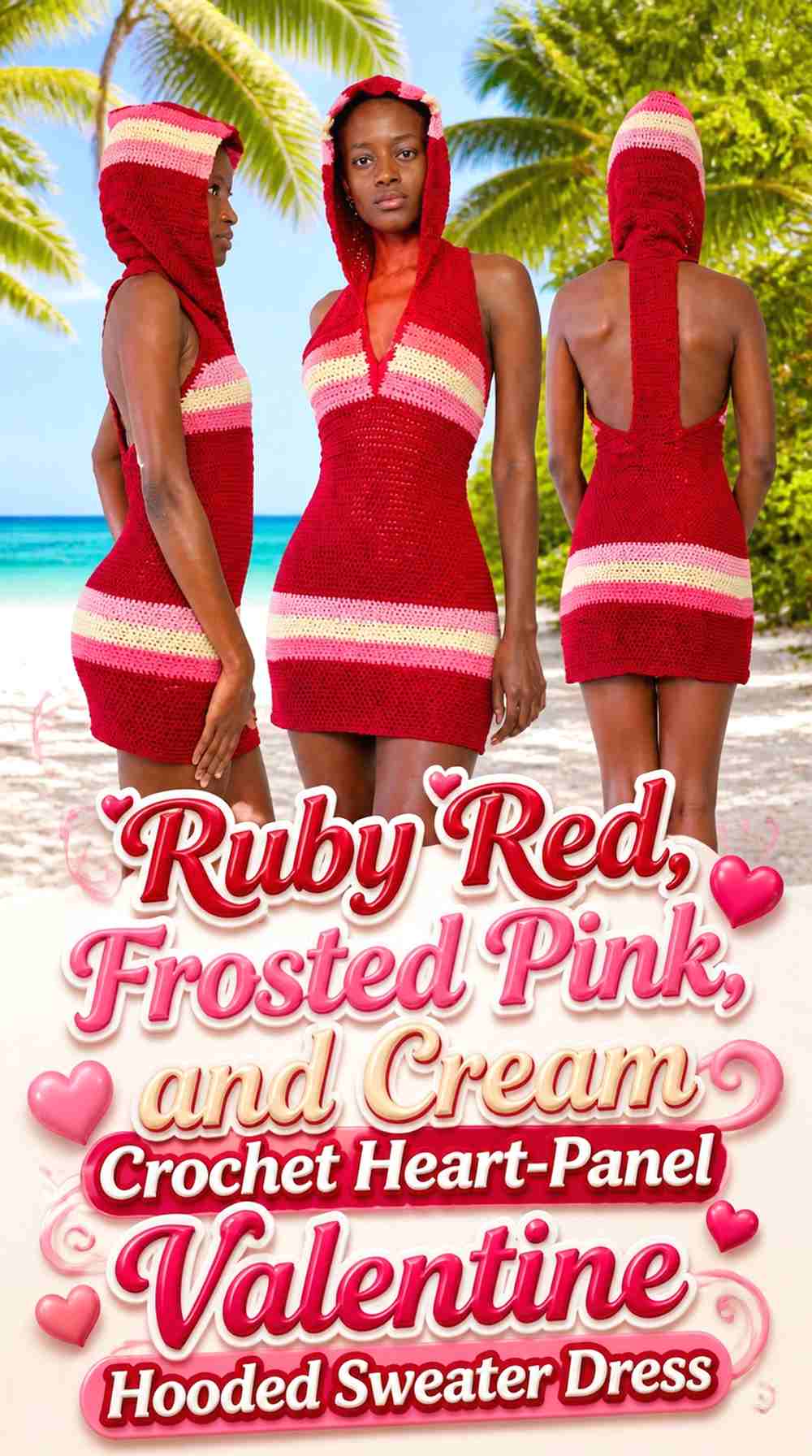
This version puts ruby red across most of the sweater-dress body and uses a frosted-pink heart panel as the main Valentine feature. Cream stays limited to narrow outlines or a smaller heart detail, giving the pink enough separation from the red without turning the garment into a three-color stripe design.
Let Ruby Red Carry the Main Valentine Sweater Dress Body
Keep the long front and back areas predominantly ruby red so the garment has one clear foundation. This also gives a frosted-pink heart enough surrounding space to remain a focal point rather than one element among many competing blocks.
Make Frosted Pink Large Enough for the Ruby Red Heart Panel to Read
A sweater dress provides a broad front surface, so a very small heart may look disconnected from the garment scale. Keep the pink motif proportionate to the front panel and check its position before adding the hood.
Use Cream Only to Separate Frosted Pink From Ruby Red
A cream outline can sharpen a pink heart against a red field. Keep that light accent narrow so the Valentine palette still reads first as ruby red and frosted pink.
Creator Credit: Cynthie Croche
2. Ruby Red, Frosted Pink, and Burgundy Crochet Color-Block Valentine Hooded Sweater Dress
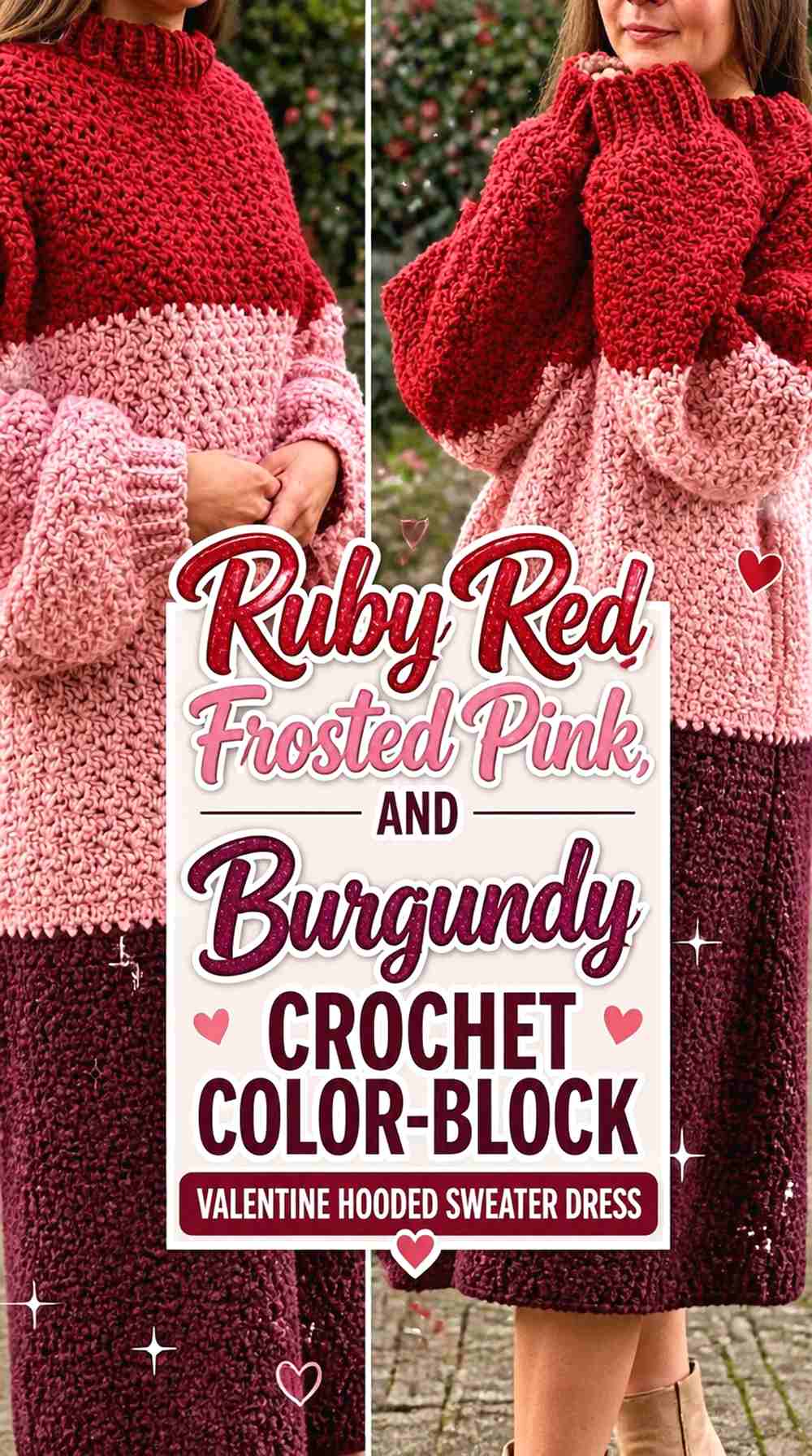
Burgundy makes the red side of the palette deeper without introducing a neutral. Use ruby red as the dominant middle value, frosted pink as the light accent, and burgundy around lower panels or sleeve sections where extra visual weight helps anchor the longer silhouette.
Keep Ruby Red Between Burgundy and Frosted Pink Color Blocks
Ruby red can act as the transition between the palest and darkest shades. This keeps the dress from jumping directly from very light pink to a deep wine tone across every panel.
Put Frosted Pink Higher on the Ruby Red Sweater Dress
Pink around the shoulders, upper sleeves, or hood draws attention upward and prevents the longer garment from feeling visually bottom-heavy.
Reserve Burgundy for the Ruby Red Dress Hem or Lower Sleeves
A darker lower section can ground a long sweater dress. Keep burgundy away from every edge so ruby red remains clearly identifiable as the principal red.
Creator Credit: Crochet with Gabi
3. Ruby Red, Frosted Pink, and Antique Ivory Crochet Cold-Shoulder Valentine Hooded Sweater Dress
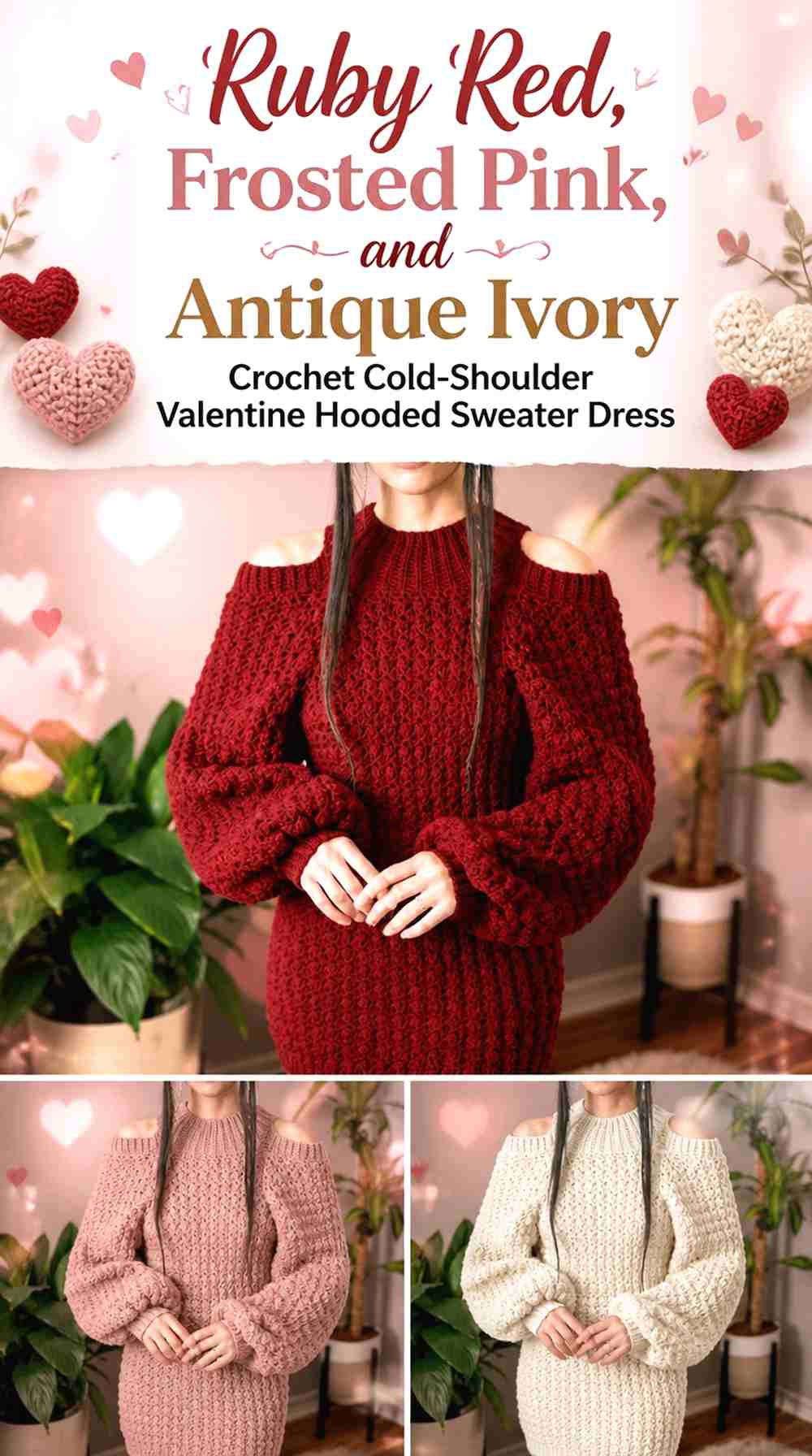
Antique ivory creates a much lighter separator than the two main Valentine colors. This palette works best when ruby red carries most of the garment, frosted pink softens the shoulder or hood area, and ivory appears only as a narrow accent.
Let Ruby Red Stay Continuous Around the Sweater Dress Torso
A large red torso provides visual stability when the neckline or shoulder area already has extra shaping. Avoid dividing the body into too many short horizontal bands.
Use Frosted Pink Around the Ruby Red Hood and Shoulder Area
Placing pink close to the face gives the lighter shade a clear purpose. Repeat it at the cuffs or hem so the upper color does not appear isolated.
Keep Antique Ivory Narrow Beside Frosted Pink and Ruby Red
Ivory attracts attention quickly. Use it as a separator around the hood edge, shoulder detail, or one Valentine motif instead of giving it a broad body panel.
Creator Credit: TCDDIY
4. Ruby Red, Frosted Pink, and Charcoal Crochet Houndstooth Valentine Hooded Sweater Dress
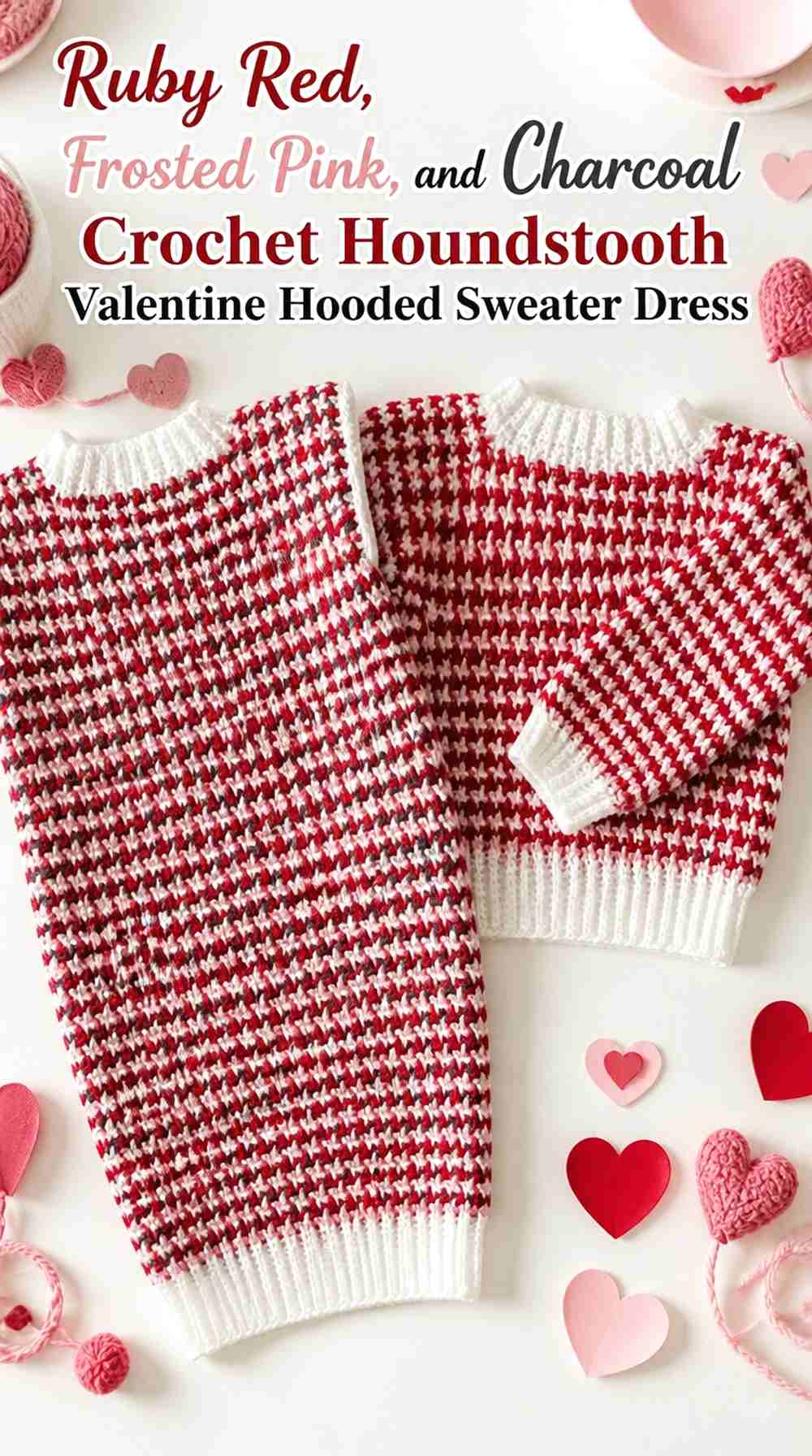
A graphic stitch pattern needs strong color control. Ruby red and frosted pink can form the Valentine pairing, while charcoal appears only where a darker neutral helps define cuffs, hood framing, or selected pattern sections.
Keep Ruby Red and Frosted Pink Repetition Consistent in the Houndstooth Dress
When two colors create a repeated graphic surface, changing their proportions randomly can make the pattern look interrupted. Decide which shade repeats through the main body before adding other accents.
Use Charcoal Around Ruby Red Rather Than Across Every Frosted Pink Detail
Charcoal works best as a frame or occasional separator. Too much dark neutral can shift the dress away from its red-and-pink Valentine focus.
Repeat Frosted Pink on the Ruby Red Hood
Even if the body carries the main pattern, a pink hood edge or inner hood section can connect the neckline to the rest of the two-color repeat.
Creator Credit: Daisy Farm Crafts
5. Ruby Red, Frosted Pink, and Soft White Crochet Valentine Pooling Hooded Sweater Dress

This is one of the lighter Valentine directions. Frosted pink can cover the largest area, ruby red can create concentrated bands or pooled-looking sections, and soft white can provide small breaks between the stronger colors.
Let Frosted Pink Cover More of the Valentine Sweater Dress
A pink-dominant body creates a noticeably softer result than a ruby-led version. Keep ruby red in repeated sections so the darker Valentine color still has a clear presence.
Repeat Ruby Red From the Frosted Pink Body Into the Hood
A red hood border, inner hood, or stripe can keep the neckline connected to the stronger color appearing elsewhere in the dress.
Keep Soft White Smaller Than Ruby Red and Frosted Pink
White should function as breathing room rather than a third equal color. Too much can dilute the specific red-and-pink character of the garment.
Creator Credit: The Knotty Lace
6. Ruby Red, Frosted Pink, and Dusty Mauve Crochet Granny Valentine Hooded Sweater Dress
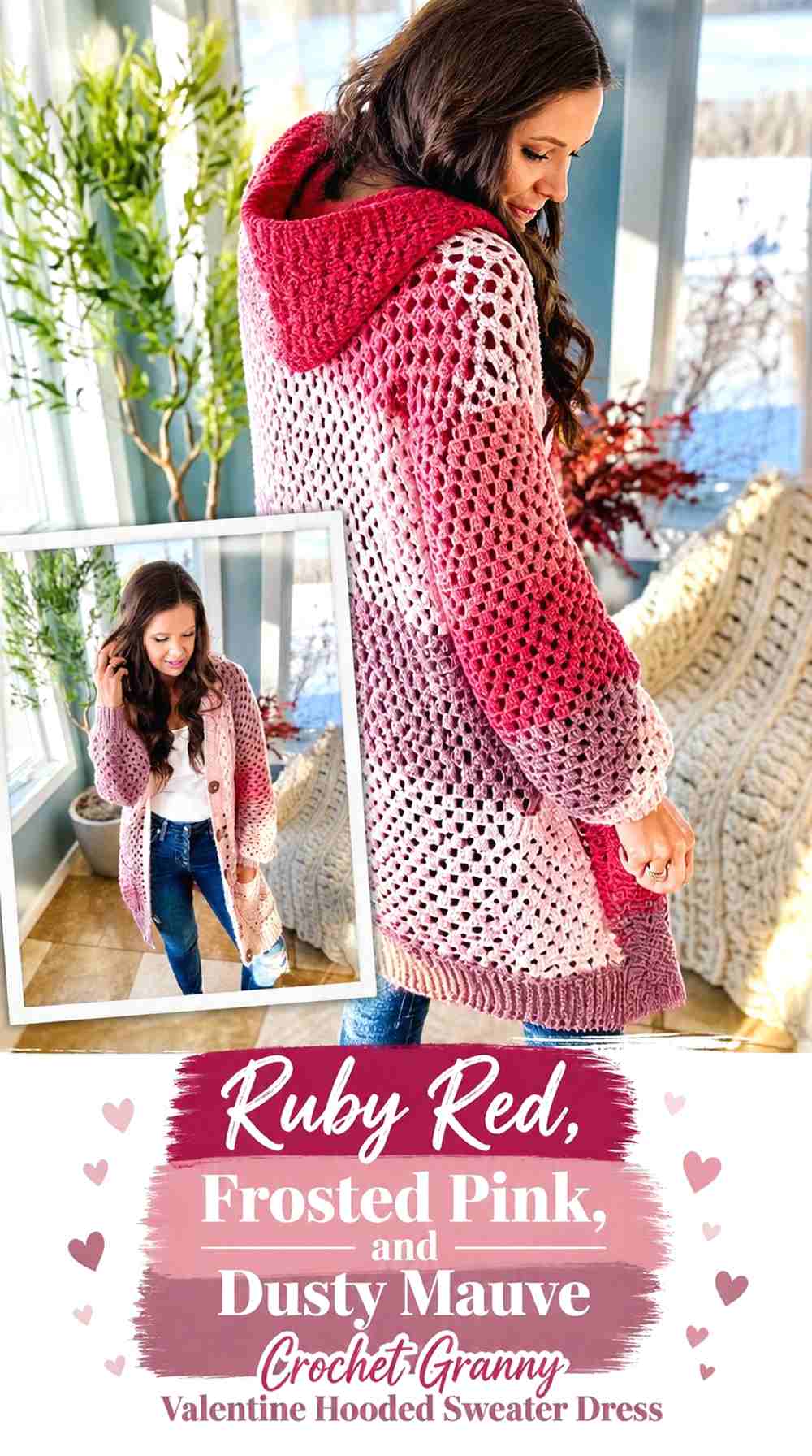
Granny-style fabric gives you many color-placement opportunities, which makes hierarchy particularly important. Ruby red can dominate the body clusters, frosted pink can repeat around the hood and selected body sections, and dusty mauve can soften transitions.
Repeat Ruby Red Through the Granny Sweater Dress Body
Keep red appearing across more than one large section so it does not become concentrated only near the hem or shoulders.
Use Frosted Pink Around the Ruby Red Hood Opening
A lighter hood frame gives the neckline definition and creates a Valentine focal point close to the face. Repeat pink on the cuffs or lower edge to connect it with the body.
Keep Dusty Mauve Secondary to Frosted Pink in the Granny Color Sequence
Mauve is useful as a bridge, but giving it too much area can reduce the contrast between the principal red and pink. Let it occupy narrower bands or occasional repeats.
Creator Credit: MJ’s Off The Hook Designs
7. Ruby Red, Frosted Pink, and Wine Red Crochet Ribbed Valentine Hooded Sweater Dress
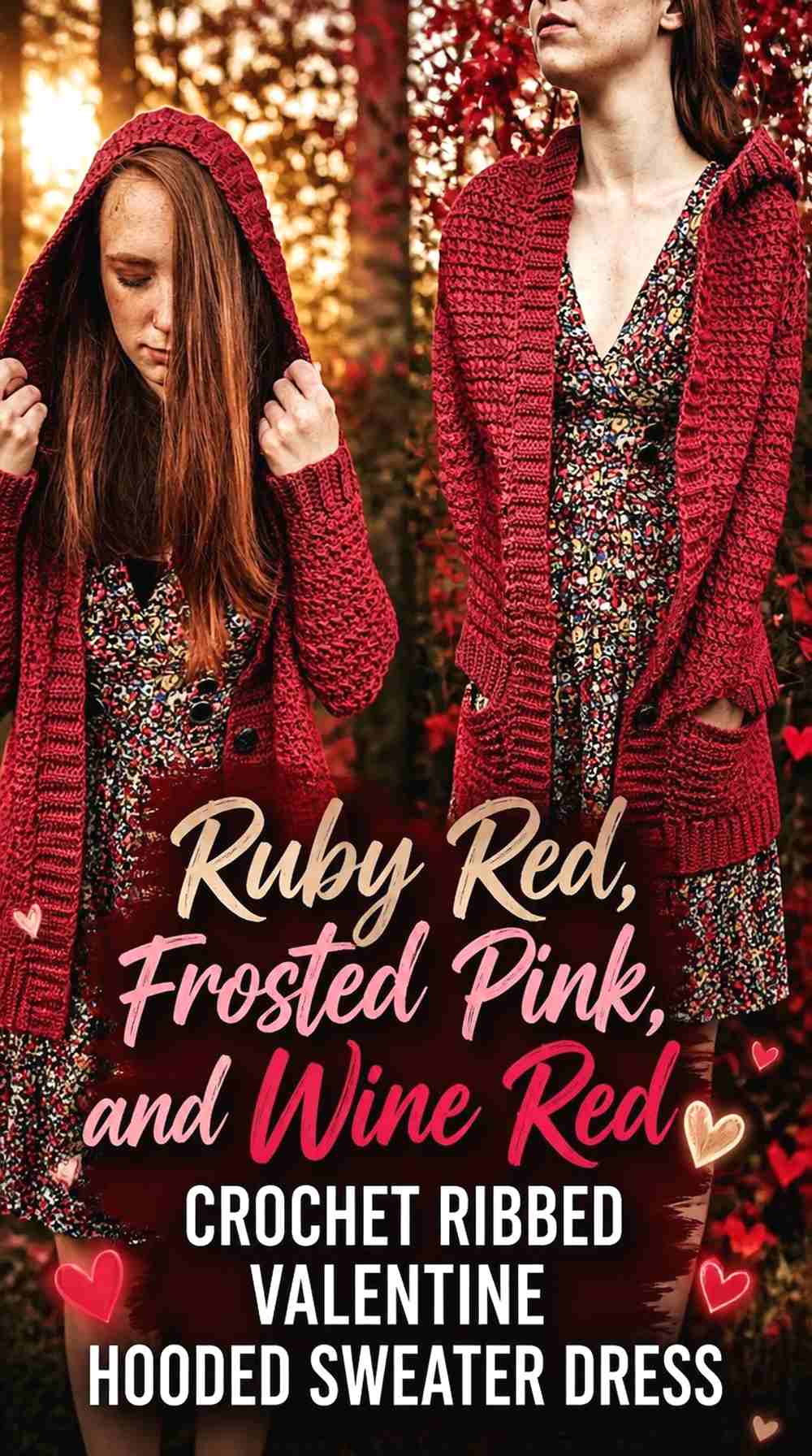
Wine red deepens the garment without introducing black or gray. The best balance is a ruby-red main body, frosted-pink ribbing or hood accents, and wine concentrated in areas that need a heavier edge.
Keep Ruby Red Broad Across the Sweater Dress Panels
Large uninterrupted red areas help the long silhouette remain cohesive. The ribbed texture already adds visual movement, so constant color switching is unnecessary.
Use Frosted Pink on Ruby Red Cuffs and Hood Ribbing
Pink ribbing can make the finishing areas visible without covering too much of the garment. Repeating it on both cuffs and the hood creates a deliberate connection.
Put Wine Red Below the Ruby Red Body Rather Than Around Every Edge
A wine-red hem can ground the dress, but wine at the hem, cuffs, hood, and neckline simultaneously may make ruby red look secondary.
Creator Credit: Hey Carrie
8. Ruby Red, Frosted Pink, and Soft Black Crochet Oversized Valentine Hooded Sweater Dress
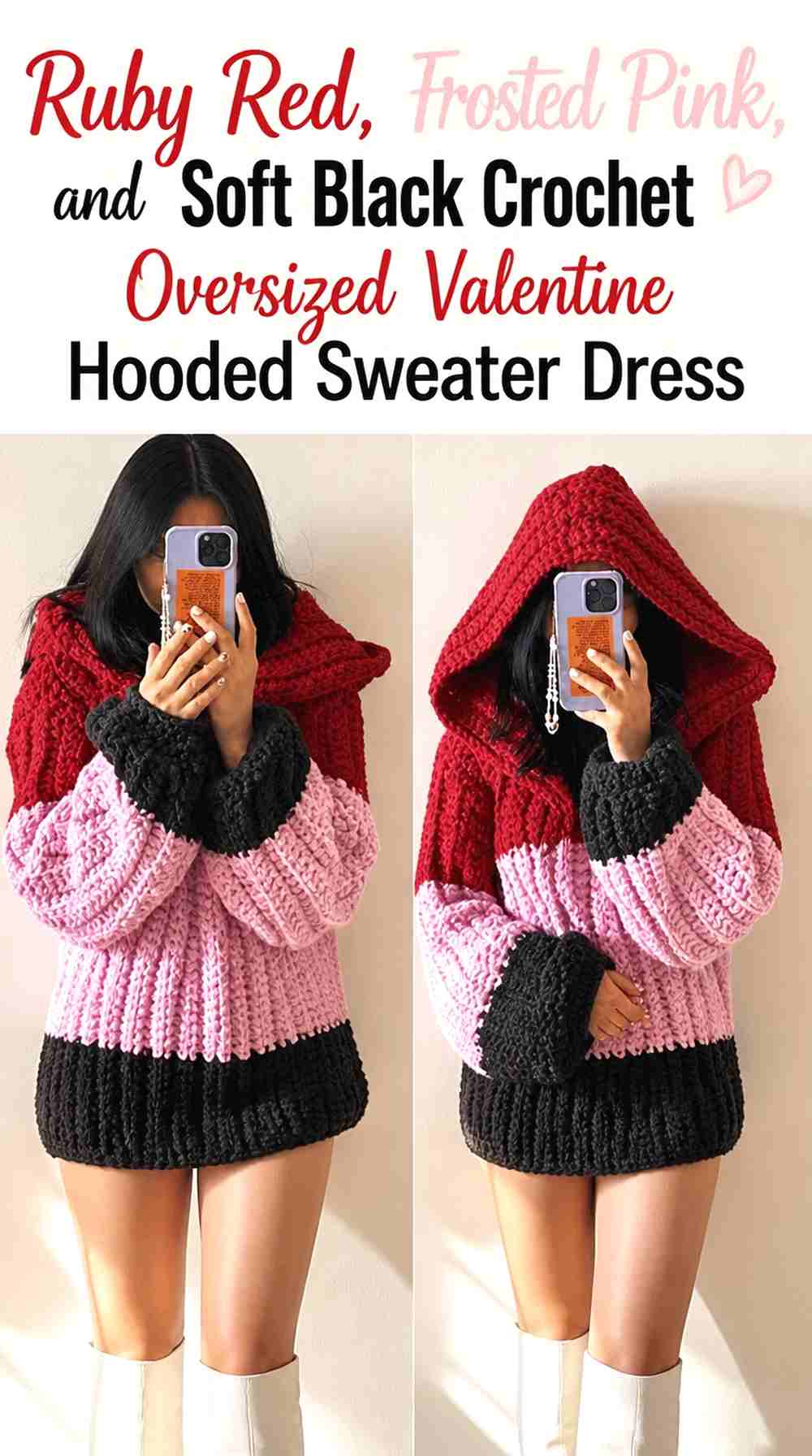
Soft black gives this palette the strongest dark contrast. Keep the garment Valentine-focused by limiting black to framing details instead of allowing it to cover half of the body.
Let Ruby Red Dominate the Oversized Sweater Dress
An oversized silhouette already creates substantial visual volume. A large ruby-red field keeps that volume cohesive and prevents the garment from turning into several disconnected blocks.
Put Frosted Pink Across the Ruby Red Hood or Front Pocket
A large pink hood lining or pocket is easier to read on an oversized garment than several tiny accents. Choose one strong placement and repeat pink more subtly elsewhere.
Keep Soft Black Outside the Frosted Pink Valentine Focal Area
Use black around cuffs, a narrow hem, or outer hood framing. Keeping it away from the main pink feature prevents the dark neutral from becoming the strongest contrast.
Creator Credit: Dana B
9. Ruby Red, Frosted Pink, and Oatmeal Crochet Hexagon Valentine Hooded Sweater Dress
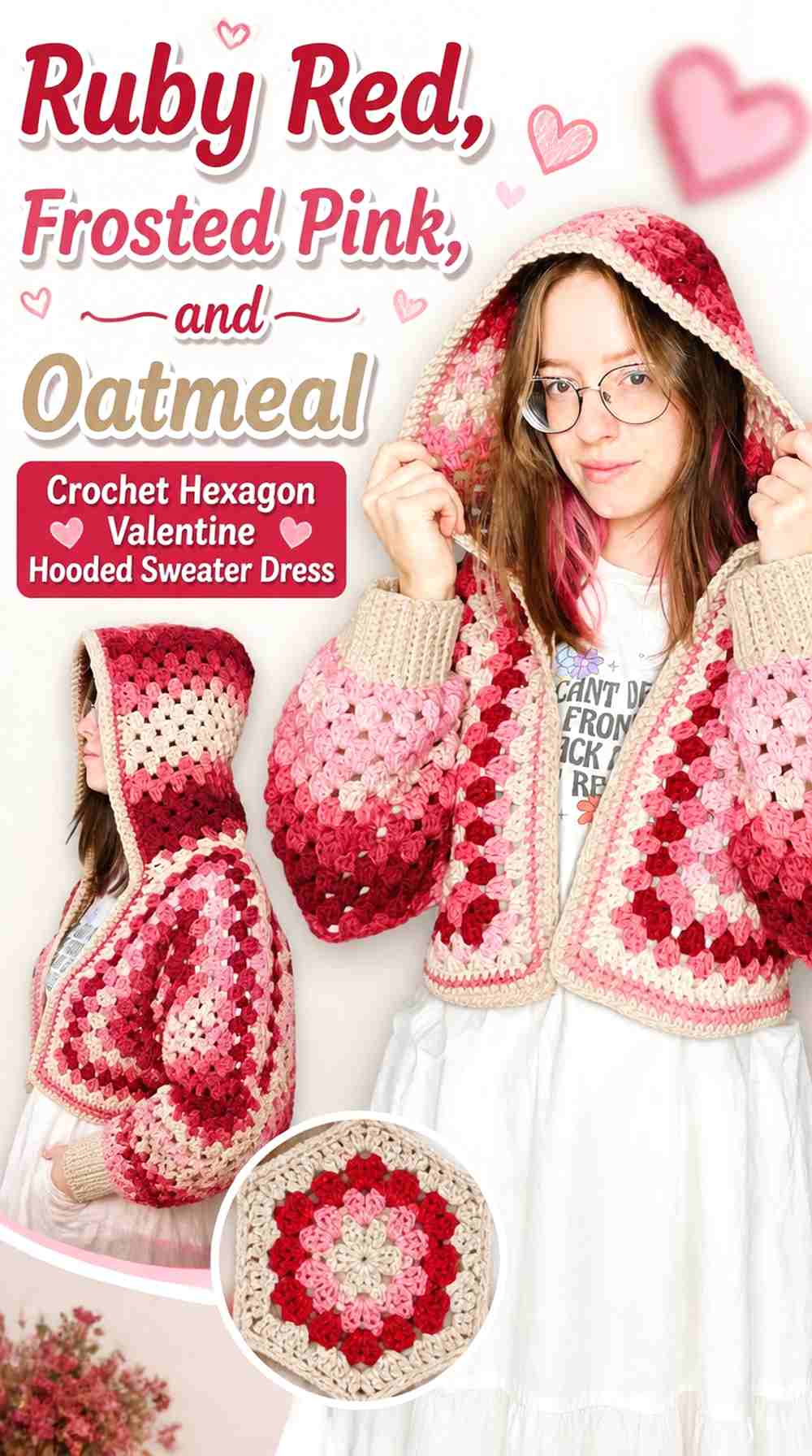
A hexagon-inspired construction naturally creates broad zones where color can change. Ruby red can anchor the main sleeve and body sections, frosted pink can mark the hood or selected rounds, and oatmeal can break up the strongest red-pink transitions.
Keep Ruby Red Repeating Through Both Hexagon Sides
If one side becomes mostly red and the other mostly pink, the finished sweater dress can look unintentionally split. Repeat ruby across both sides even when the exact sequence differs.
Use Frosted Pink to Link the Ruby Red Hexagons to the Hood
A pink round near the upper body can transition naturally into a pink hood detail. This makes the hood feel part of the garment rather than an added feature.
Limit Oatmeal Around Ruby Red and Frosted Pink Seams
Oatmeal can separate the two stronger colors, but broad neutral areas can weaken the Valentine theme. Use it mainly where the construction already creates visible joins or boundaries.
Creator Credit: PassioKnitKelsie
10. Ruby Red, Frosted Pink, and Raspberry Crochet Chunky Valentine Hooded Sweater Dress
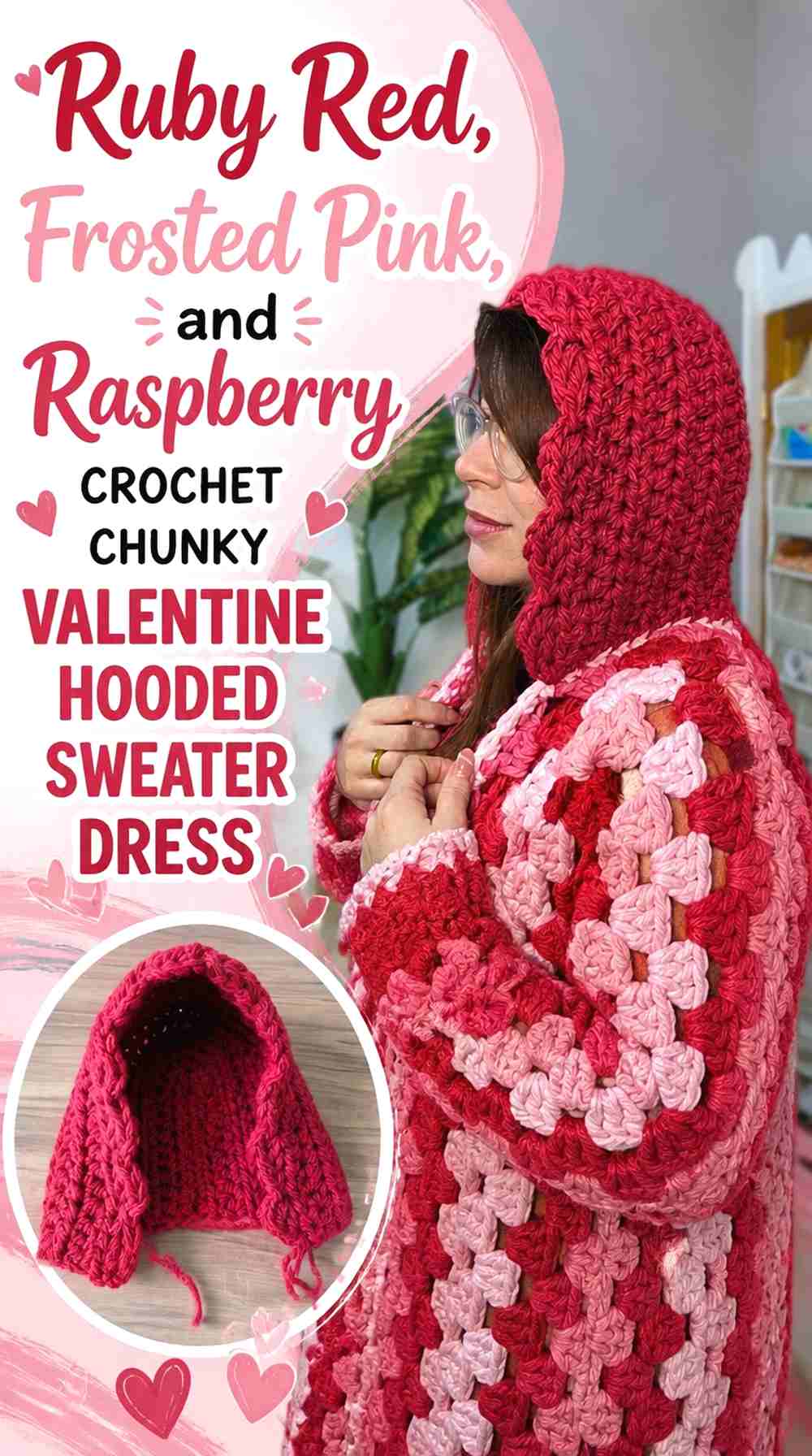
Raspberry adds another saturated pink-red tone, making this a color-rich Valentine palette. Because chunky crochet increases the visual size of every stitch, keep the color zones broad rather than overly intricate.
Give Ruby Red the Largest Chunky Sweater Dress Area
A strong red foundation keeps raspberry and frosted pink from competing equally. This is especially important when thick stitches make each color change more noticeable.
Put Frosted Pink Around the Ruby Red Chunky Hood
The lighter color can frame the face and clearly separate the hood from the darker body. A matching pink cuff is enough to repeat the shade lower on the garment.
Use Raspberry Between Frosted Pink and Ruby Red
Raspberry creates a useful middle step when a direct red-to-pale-pink transition feels too sharp. Keep it to a secondary band or panel so the two requested colors remain obvious.
Creator Credit: Brunaticality
11. Ruby Red, Frosted Pink, and Cocoa Crochet Panel Valentine Hooded Sweater Dress
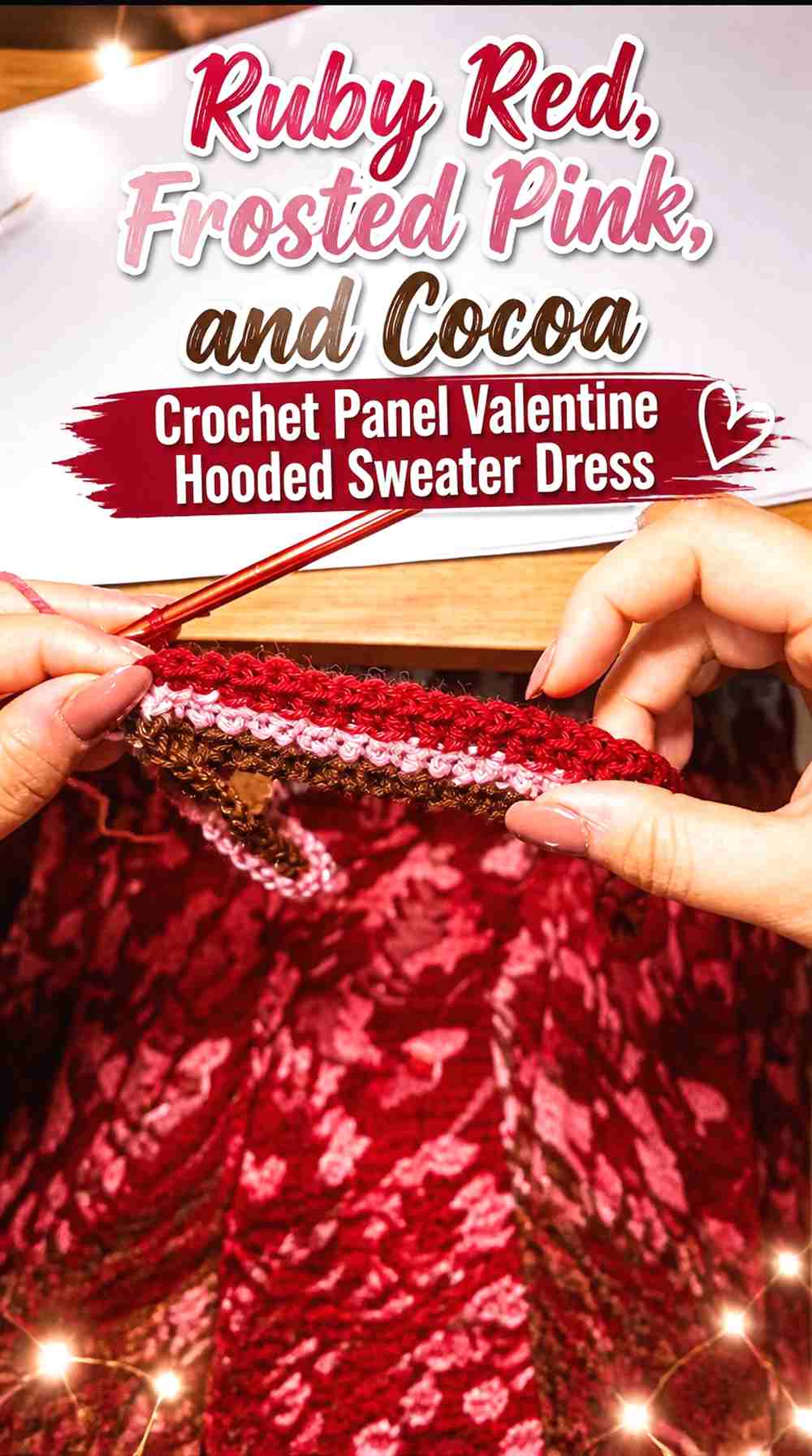
Cocoa introduces a warm neutral rather than another red or pink. It can work around side panels, cuffs, or a narrow hood edge while ruby red controls the front and frosted pink provides the brighter Valentine details.
Keep Ruby Red Across the Main Front Sweater Dress Panel
A strong red front gives the garment an immediate Valentine identity. Cocoa can stay closer to the sides where it adds depth without taking over the front view.
Use Frosted Pink on the Ruby Red Hood and Sleeve Details
A pink hood interior or edging can provide the major light contrast. Repeating it at sleeve cuffs helps distribute that color vertically through the garment.
Keep Cocoa Narrow Beside Frosted Pink and Ruby Red
Because cocoa is not part of the central Valentine pairing, give it a supporting job such as edging or side-panel definition rather than a full competing front panel.
Creator Credit: Tips and Threads
12. Ruby Red, Frosted Pink, and Blush Crochet Bean-Stitch Valentine Hooded Sweater Dress
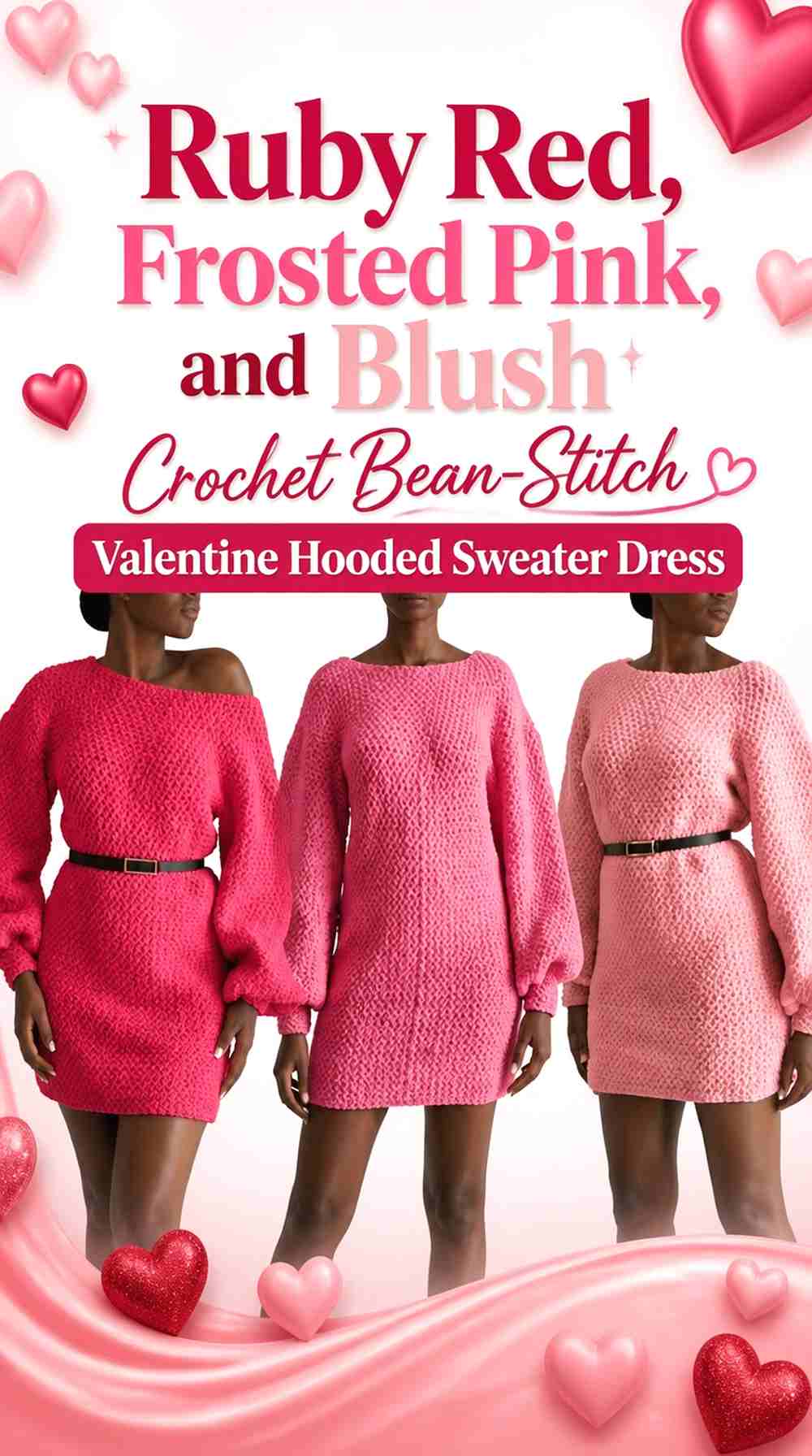
Bean-stitch texture creates a substantial surface, so a tonal pink arrangement can show the stitch definition without introducing harsh neutral contrast. Ruby red should remain the anchor, frosted pink can provide the main light section, and blush can soften smaller transitions.
Use Frosted Pink Where Ruby Red Bean-Stitch Texture Needs Emphasis
A pale pink hood, yoke, or sleeve section can make raised stitch shadows more visible. Keep the larger ruby sections simple enough that the texture is not competing with frequent stripes.
Let Ruby Red Ground the Frosted Pink Sweater Dress Body
If pink occupies the upper body, bring ruby red into the lower dress area so the garment has enough dark visual weight from neckline to hem.
Keep Blush Close to Frosted Pink Instead of Mixing It Through Ruby Red
Blush works best as a tonal extension of pink. Place it beside frosted pink in one section rather than inserting narrow blush stripes everywhere across the red body.
Creator Credit: Shyler crochets
13. Ruby Red, Frosted Pink, and Plum Crochet Ribbed Valentine Hooded Sweater Dress
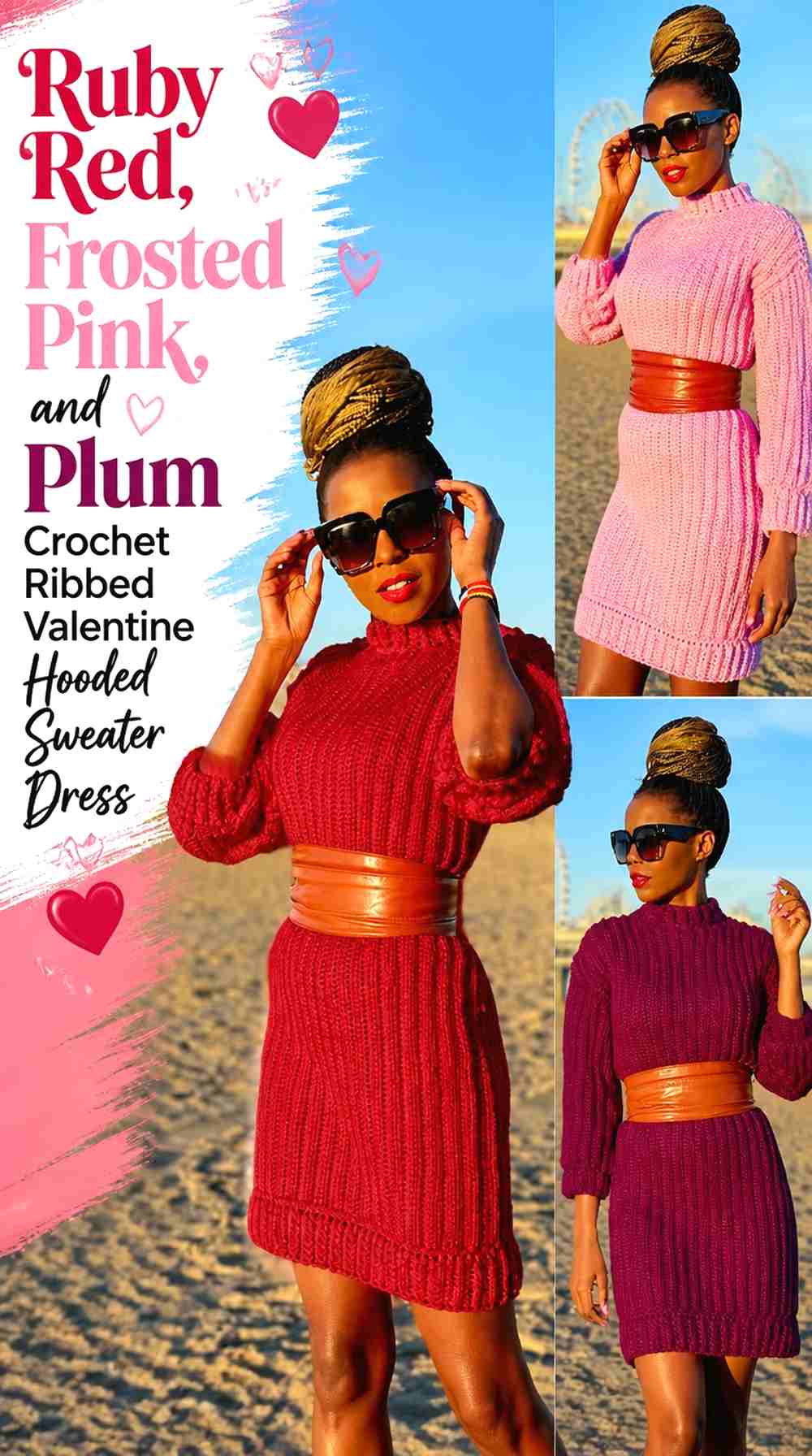
Plum gives the palette a cooler dark accent than burgundy. Use it around a hem, lower sleeve, or small hood feature while ruby red continues to dominate the long ribbed body.
Let Ruby Red Remain the Main Ribbed Sweater Dress Color
Long vertical or horizontal ribbing already changes how the surface catches light. Keeping most of it ruby red prevents a three-color palette from becoming too fragmented.
Put Frosted Pink at the Ruby Red Cuffs and Hood Opening
Frosted pink creates a clear endpoint on the sleeves and a visible frame around the hood. Those repeated finishing areas can connect without requiring pink across the entire torso.
Use Plum Below Ruby Red Instead of Between Every Frosted Pink Stripe
A deeper plum hem or lower-body block gives the dress weight. Scattering plum throughout the pink sections can make the Valentine palette appear muddier.
Creator Credit: AC Crochets
14. Ruby Red, Frosted Pink, and Silver Gray Crochet Relaxed Valentine Hooded Sweater Dress
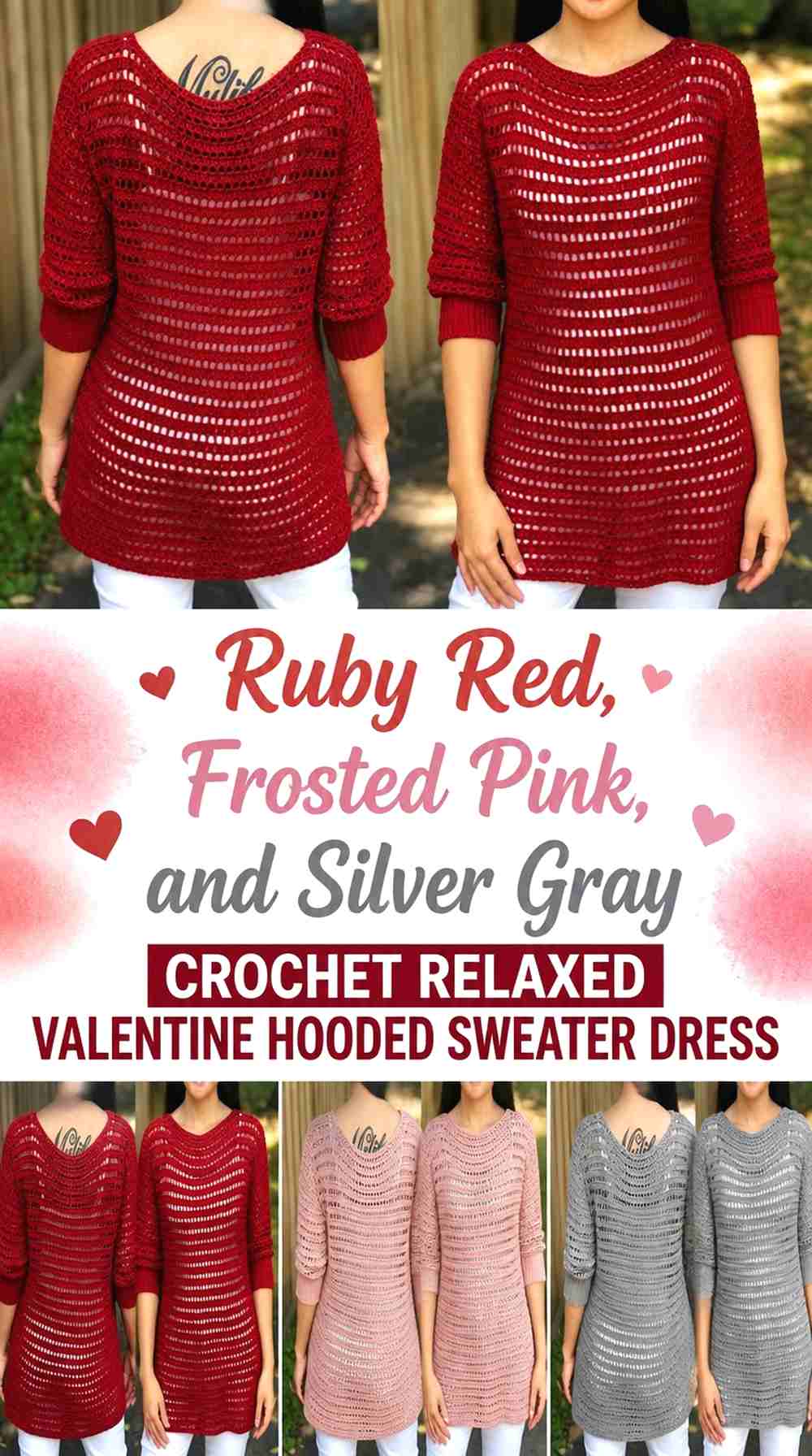
Silver gray cools the palette while leaving ruby red and frosted pink clearly recognizable. It works especially well as a quiet separator around the neckline, hood attachment area, or sleeve edges.
Keep Ruby Red Across the Relaxed Sweater Dress Panels
The looser silhouette benefits from broad color fields. A large ruby-red body gives the garment continuity even when pink and gray appear at separate finishing points.
Use Frosted Pink to Brighten the Ruby Red Hooded Neckline
Frosted pink around the hood or upper chest draws attention upward. Repeat the same shade on a lower hem detail or cuff so it does not remain isolated.
Keep Silver Gray Thin Between Frosted Pink and Ruby Red
Gray can provide useful separation, but large gray blocks may pull the dress away from its Valentine identity. A narrow boundary or limited sleeve detail is usually enough.
Creator Credit: KnitcroAddict
15. Ruby Red and Frosted Pink Crochet Turtleneck Valentine Hooded Sweater Dress
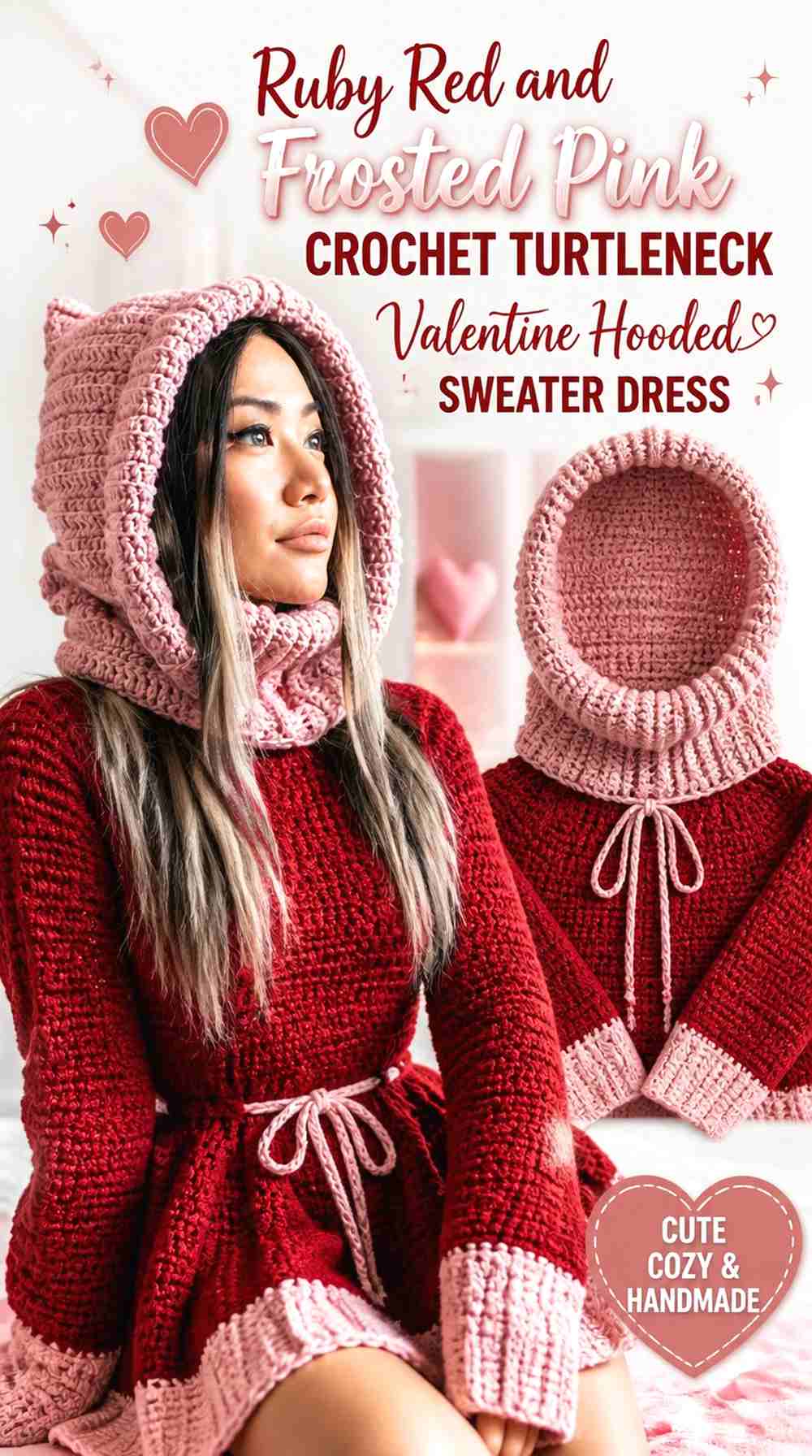
The final palette removes every supporting color and relies completely on ruby red and frosted pink. Give each shade a clearly different job: ruby red can cover the dress body and outer hood, while frosted pink defines the turtleneck, hood opening, cuffs, and selected hem details.
Let Ruby Red Cover Most of the Valentine Sweater Dress
Keeping the largest body area red creates a strong base and prevents the two-color garment from looking randomly striped. The longer the dress, the more important that uninterrupted field becomes.
Use Frosted Pink Around the Ruby Red Turtleneck and Hood
A pink turtleneck flowing into the hood opening gives the lighter shade a substantial upper-body role. This also keeps the color close to the face instead of concentrating all pink near the hem.
Repeat Frosted Pink Below the Ruby Red Body
Use pink again at the cuffs, pocket edge, or lower hem. Repetition connects the hood to the dress without requiring equal red-and-pink coverage.
Check Ruby Red and Frosted Pink Before Adding Small Valentine Details
If the colors are closer in value than expected, tiny hearts or narrow stripes may disappear. Increase their scale or use broader blocks instead of introducing a third shade solely for contrast.
Creator Credit: Cherilyn Q
Which Ruby Red and Frosted Pink Valentine Hooded Sweater Dress Palette Should You Choose?
For the clearest classic Valentine direction, choose cream, antique ivory, soft white, or the two-color ruby-and-pink version. These palettes preserve strong red-and-pink recognition and use lighter accents only for separation.
Burgundy, wine, raspberry, deep rose, and plum create richer tonal variations. These are useful when you want several related romantic shades without introducing a strong neutral. Keep ruby red or frosted pink clearly dominant so the related colors do not merge into one indistinct red-purple field.
Charcoal and soft black produce the darkest contrast, while cocoa and oatmeal create a softer neutral balance. Silver gray cools the palette without becoming as visually heavy as charcoal.
Placement can matter more than the third color. A frosted-pink hood makes the garment look lighter around the face, while a ruby-red hood increases the visual weight of the upper body. Pink cuffs and hems create repeated light accents; ruby cuffs and hems create stronger framing.
Conclusion
Ruby red and frosted pink can support far more than one Valentine hooded sweater dress look. The main difference comes from deciding which color leads and where the lighter and darker sections appear across the hood, torso, sleeves, cuffs, and hem.
Choose a ruby-red-dominant layout when you want the dress to stay deep and saturated, then place frosted pink around the hood, cuffs, hearts, or pockets. Reverse the balance when you want a softer Valentine garment, using red at the edges and focal details to prevent the larger pink area from appearing visually flat.
Cream, ivory, and white provide clearer separation; burgundy, wine, rose, and plum keep the palette tonal; charcoal and black create a darker statement; and oatmeal, cocoa, or gray introduce quieter neutral structure.
For any tutorial that does not already combine both a hood and sweater-dress length, use the creator’s original construction as the reference for the feature it actually demonstrates. Plan length, hood attachment, fit, and color distribution as separate adaptations rather than assuming measurements from one garment form will automatically transfer to another.
Frequently Asked Questions
Should Ruby Red or Frosted Pink dominate a Valentine hooded sweater dress?
Ruby red works well as the dominant shade when you want a deeper, more saturated garment. Frosted pink can dominate when you prefer a lighter appearance. Whichever leads, repeat the secondary color in at least two garment areas so it feels integrated rather than added at the end.
Where should Frosted Pink go on a Ruby Red hooded sweater dress?
Useful placements include the hood lining or edge, cuffs, pockets, chest motifs, sleeve bands, or lower hem. Concentrating pink around the hood draws attention upward, while placing it toward the hem emphasizes dress length.
Can the hood be Frosted Pink if the sweater dress is mostly Ruby Red?
Yes. Repeat frosted pink somewhere else—such as the cuffs, pocket trim, or hem—to connect the hood visually to the body. Otherwise, a completely pink hood above an uninterrupted red dress can look like a separate component.
How can I tell whether Ruby Red and Frosted Pink have enough contrast for crochet hearts?
Compare the yarns side by side and view them from a short distance. A grayscale photo can help reveal their value difference. If the heart loses definition, enlarge the motif, add a narrow separator, or avoid using the two colors for very fine adjacent details.
What third color works with Ruby Red and Frosted Pink for Valentine’s Day?
Cream, ivory, or soft white gives clearer contrast. Burgundy, raspberry, deep rose, or plum keeps the palette richer and more tonal. Charcoal or soft black creates a darker direction, while oatmeal, cocoa, or silver gray provides quieter balance.
Should Ruby Red or Frosted Pink be used for sweater-dress cuffs?
Use ruby red when you want darker framing at the ends of the sleeves. Frosted pink works when the cuffs should connect visually to a light hood, heart motif, or hem detail. The best choice depends on which color already dominates the sleeves.
Can a regular crochet sweater dress tutorial be adapted with a Frosted Pink hood?
Potentially, but treat the hood as a separate construction problem. The sweater-dress neckline must provide an appropriate attachment area, and the hood’s scale and weight need to work with that neckline. Use a dedicated hood tutorial for the hood itself rather than inventing stitch counts from the dress pattern.
How do I keep a Ruby Red and Frosted Pink Valentine sweater dress from looking too busy?
Assign each color a role before starting. One can dominate the body, the other can control the hood and finishing details, and any third shade can stay limited to separators or selected motifs. Avoid giving several saturated colors equal coverage across every panel.