

Jade green and cocoa brown give a crochet lace gilet an earthy woodland base without making the garment look overly literal. Jade green can carry leafy lace, floral centers, openwork panels, and delicate edging, while cocoa brown provides darker definition around borders, ties, motif joins, armholes, and hems.
The balance between those colors matters especially on an openwork garment. Lace already creates visual gaps, so a color does not need to cover half the gilet to feel important. A narrow cocoa-brown edge around jade-green floral lace can produce stronger definition than alternating the colors evenly through every row. Reversing the arrangement creates a darker woodland layer in which jade appears more like moss, vines, and foliage.
The tutorials supporting these ideas cover several vest and gilet constructions rather than one exact “woodland fairy” garment. The jade-green and cocoa-brown palettes, floral placements, scalloped edging, and woodland adaptations below are independent color directions. Use the linked creator tutorial for its construction and check how your chosen lace or motif treatment fits that garment before making major changes.
Quick List
- Jade Green Floral Lace and Cocoa Brown Tie-Front Crochet Gilet
- Cocoa Brown Mesh Flower and Jade Green Vine Crochet Gilet
- Jade Green Openwork Granny and Cocoa Brown Ruffle Crochet Gilet
- Cocoa Brown Side-Tie Mesh and Jade Green Woodland Crochet Gilet
- Jade Green Granny Square and Cocoa Brown Forest Floral Crochet Gilet
- Cocoa Brown Boho Lace and Jade Green Fairy-Edge Crochet Gilet
- Jade Green Panel Mesh and Cocoa Brown Scallop Crochet Gilet
- Cocoa Brown Circle Lace and Jade Green Woodland Crochet Gilet
- Jade Green Shell Lace and Cocoa Brown Hem Crochet Gilet
- Cocoa Brown Tie-Front Mesh and Jade Green Leaf-Edge Crochet Gilet
- Jade Green Long Lace and Cocoa Brown Woodland Border Crochet Gilet
Let Jade Green or Cocoa Brown Clearly Lead the Lace Gilet
Choose the dominant color before deciding where every flower, leaf, or border will go. A jade-green-dominant gilet feels lighter and more botanical when cocoa brown is restricted to edging, ties, joins, and small motif centers. A cocoa-brown-dominant version creates a darker forest direction, allowing jade to behave like moss or foliage against the deeper field.
On an openwork garment, judge color by visible area rather than yarn quantity alone. A cocoa border may appear surprisingly prominent because it forms an uninterrupted outline around several jade lace sections. If the garment begins to look evenly split between the two colors when you intended jade to dominate, reduce the number of repeated cocoa accents rather than removing the defining outer edge.
Use Cocoa Brown to Keep Jade Green Lace Motifs Visible
Jade green floral or leaf-inspired lace can lose definition when every surrounding section is similar in value. Cocoa brown can help separate motifs when it is placed around flower centers, joins, front edges, or the hem.
The actual light-and-dark relationship matters more than the color names. If your cocoa brown and jade green appear nearly identical in a grayscale photo, small floral details may blend. Preserve either a darker cocoa or a lighter jade when replacing yarns so that intricate lace has enough separation to remain visible.
Keep Jade Green and Cocoa Brown Woodland Details Wearable
Woodland-fairy styling often suggests vines, pointed hems, flowers, scallops, ties, and ruffles, but a gilet still needs to layer comfortably. Concentrate the most decorative jade-green and cocoa-brown details where they have visual space: around the front edges, lower hem, shoulder line, back panel, or tie ends.
Armholes need particular restraint. Heavy ruffles or dimensional motifs can add visual and physical bulk exactly where the garment needs to move around another layer. A narrow cocoa edge or small jade scallop can continue the woodland theme without crowding the opening.
1. Jade Green Floral Lace and Cocoa Brown Tie-Front Crochet Gilet
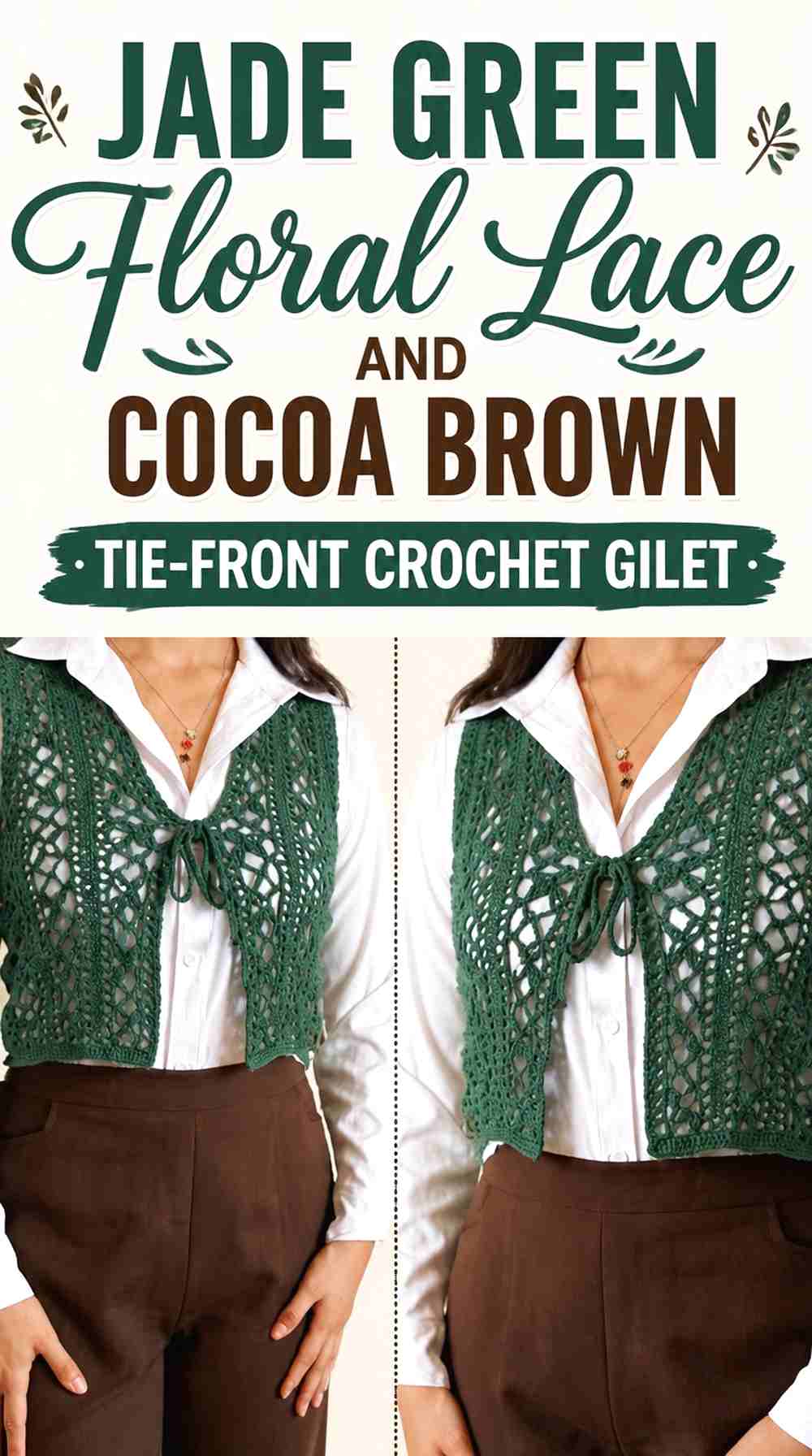
This version makes jade green the main lace field and reserves cocoa brown for the front ties, flower centers, and narrow outer finishing. The arrangement suits a floral openwork gilet because the darker brown defines the garment without filling the negative space that gives the lace its light appearance.
Jade Green Can Carry the Main Floral Lace
Use jade green across most of the front and back floral pattern so the botanical theme is visible before any smaller woodland details are added. Repetition of the same green also helps individual flowers read as part of one continuous fabric rather than a collection of disconnected motifs.
If your jade is particularly dark, check the completed flower repeat against the layer you expect to wear underneath. Lace visibility depends partly on the contrast created by the clothing seen through the openings.
Cocoa Brown Can Define Jade Green Flower Centers
Small cocoa-brown centers can separate repeated flowers without converting the entire gilet into two-color striping. This is especially useful when adjacent petals visually merge within an all-jade lace repeat.
Keep the centers consistent in size and placement. Random brown additions can interrupt the repetition that makes an all-over floral fabric feel coherent.
Cocoa Brown Ties Can Frame the Jade Green Front Opening
Front ties are an effective place to repeat cocoa brown because they already sit on the garment’s central visual line. The dark color gives the opening definition while allowing the larger panels to remain jade green.
If the ties end in decorative tassels or leaves, keep those elements relatively small so they do not become heavier focal points than the floral lace itself.
Creator Credit: Lina Crochet
2. Cocoa Brown Mesh Flower and Jade Green Vine Crochet Gilet

A cocoa-brown flower-mesh base creates a darker fairy-forest direction. Jade green can then appear in flower centers, narrow vertical details, edging, or vine-like accents. Because the mesh already has a floral structure, the green should emphasize selected parts rather than cover every opening.
Cocoa Brown Can Give the Floral Mesh a Deep Woodland Base
Let cocoa brown cover most of the mesh when you want a gilet that layers like a darker woodland accessory. The open spaces stop the brown from becoming visually solid, so the garment can still look airy even with a deep dominant shade.
Avoid interrupting every flower with a color change. Continuous brown sections make the actual lace structure easier to recognize.
Jade Green Can Highlight Selected Cocoa Brown Flowers
Use jade in flower centers or selected repeated blooms to create the impression of foliage growing through the darker mesh. A small amount of green can be effective because the surrounding cocoa gives it clear contrast.
If every flower becomes half jade, the gilet may shift from woodland accenting to regular two-color patterning. Keep the green selective when you want a more organic result.
Jade Green Ties Can Bring the Cocoa Brown Gilet Back to the Forest Palette
Jade-green front ties provide another visible green area without altering the main fabric. They also distribute the secondary color vertically, balancing small green details scattered across the floral mesh.
A cocoa-brown edge around the tie attachment can help it look integrated rather than appearing to be an unrelated cord added afterward.
Creator Credit: Sarah
3. Jade Green Openwork Granny and Cocoa Brown Ruffle Crochet Gilet
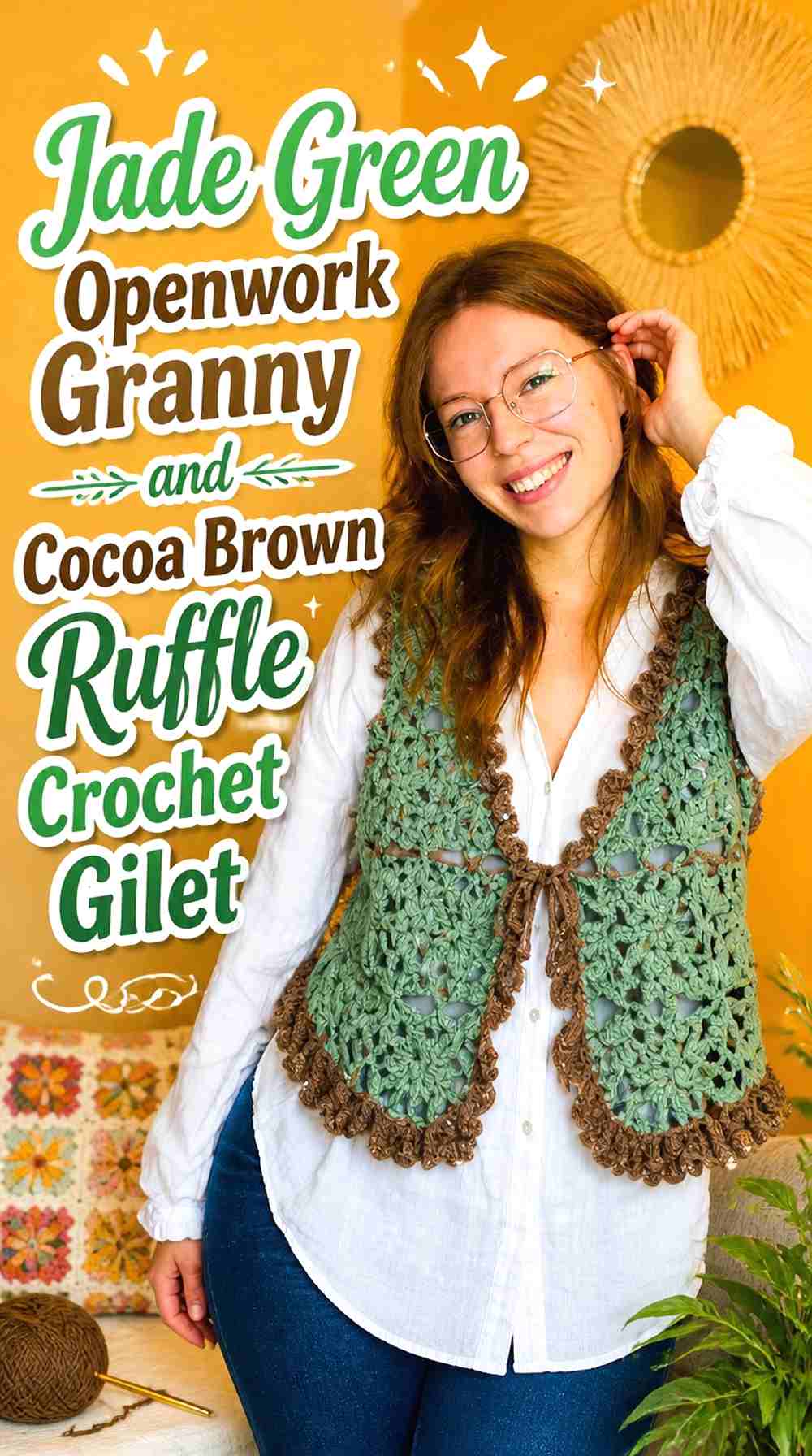
An openwork granny construction gives the colors larger individual zones than fine lace does. Use jade green across the square centers or main motifs, then add cocoa brown along the joins, ruffled front edge, and tie. This creates a visible forest framework around lighter botanical sections.
Jade Green Granny Motifs Can Form the Main Gilet Surface
Let jade occupy most of each square if you want the vest to remain strongly green even after cocoa edging is added. Large motif centers establish the dominant color more effectively than scattering small green rounds between several brown ones.
Before joining, arrange the completed motifs as garment panels. This shows whether the green still dominates once every square is viewed together.
Cocoa Brown Joins Can Separate Jade Green Motifs
A cocoa joining color can make the boundaries between individual squares part of the design. That suits a woodland-fairy gilet because the dark lines can resemble a branching framework around green openwork.
Keep the joins visually narrower than the jade centers. When brown occupies too much of every motif edge, the garment can start to look checkerboard-like instead of leafy and open.
Cocoa Brown Ruffles Can Give Jade Green a Fairy-Style Edge
Use cocoa brown on the ruffled or scalloped outer finish to create a darker frame around the jade body. Since the ruffle already adds texture and movement, it does not need additional frequent color changes.
If you want to repeat jade at the edge, a small final detail is usually enough. Let the cocoa ruffle remain a distinct finishing zone.
Creator Credit: Carlota Fiaño
4. Cocoa Brown Side-Tie Mesh and Jade Green Woodland Crochet Gilet
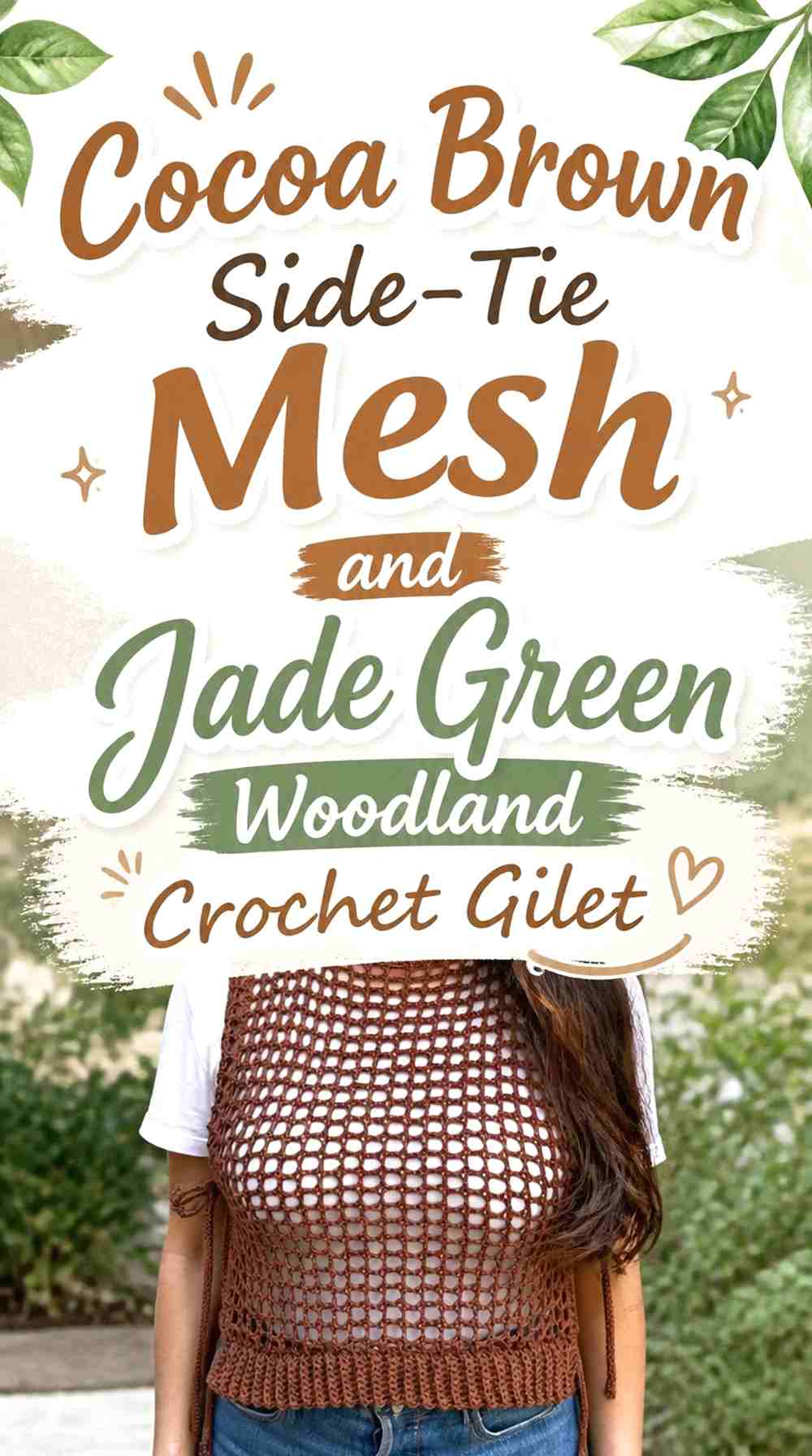
A one-piece mesh gilet with side ties gives you a relatively uninterrupted lace field. Use cocoa brown for the central garment and jade green on the lower band, ties, or selected mesh sections. The result has fewer floral motifs and relies more heavily on color placement for its woodland character.
Cocoa Brown Can Keep the Open Mesh Visually Grounded
Work the largest central portion in cocoa brown when you want the openwork itself, rather than a flower motif, to be the focus. The darker field produces a clear silhouette even though the fabric contains large openings.
This is a useful approach when the garment will be layered over lighter clothes, because the layer underneath can help reveal the mesh.
Jade Green Side Ties Can Break Up the Cocoa Brown Silhouette
Using jade green for side ties adds color precisely where the garment’s fit is visually adjusted. That gives the green a structural role instead of treating it as surface decoration.
If you want leaf-shaped tie ends, keep them compatible with the tie’s function and avoid adding so much bulk that the knot becomes awkward.
Jade Green Lower Bands Can Soften a Cocoa Brown Mesh Body
A green lower section creates a moss-like transition near the hem. Keep this area narrower than the cocoa body when brown is meant to remain dominant.
You can also repeat a thin jade line around the neckline so the lower color does not appear only once on the garment.
Creator Credit: Andrea Quinteros
5. Jade Green Granny Square and Cocoa Brown Forest Floral Crochet Gilet
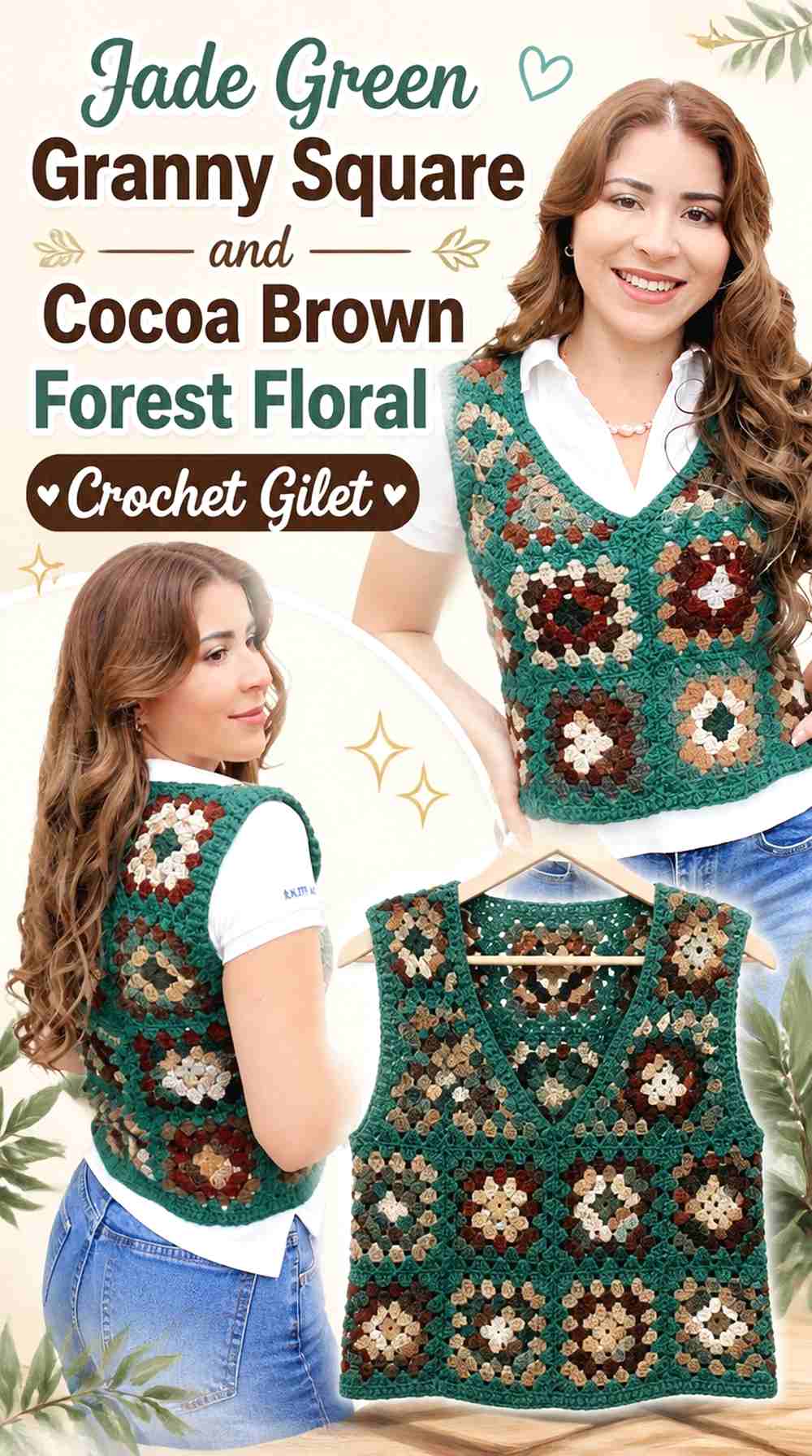
This motif-led gilet can use jade green as the connecting background and cocoa brown in flower centers, outer rounds, or selected squares. The modular layout makes it easier to control where the darker color appears across the front, back, and shoulders.
Jade Green Can Connect the Granny Squares Across the Gilet
Use the same jade green in the final round of multiple motifs if you want separate squares to read as a unified garment. Repetition around each motif creates a continuous green field once the squares are assembled.
This works particularly well when flower centers contain cocoa brown because the eye reads the brown as decoration inside a larger jade framework.
Cocoa Brown Can Anchor Jade Green Floral Centers
A dark cocoa center gives flower-inspired squares an obvious visual starting point. Surrounding it with jade petals or outer rounds creates more separation than making both center and border the same green.
Keep the darkest brown areas reasonably distributed across the garment so one side does not appear visually heavier than the other.
Cocoa Brown Edging Can Control a Busy Jade Green Motif Layout
A solid cocoa-brown neckline, armhole, or front edge can calm a gilet made from several open motifs. The uninterrupted dark line gives the eye somewhere to rest between repeated granny openings.
Do not make every edge equally wide. A slightly stronger front or hem frame can be enough to organize the motif field.
Creator Credit: Brunaticality
6. Cocoa Brown Boho Lace and Jade Green Fairy-Edge Crochet Gilet
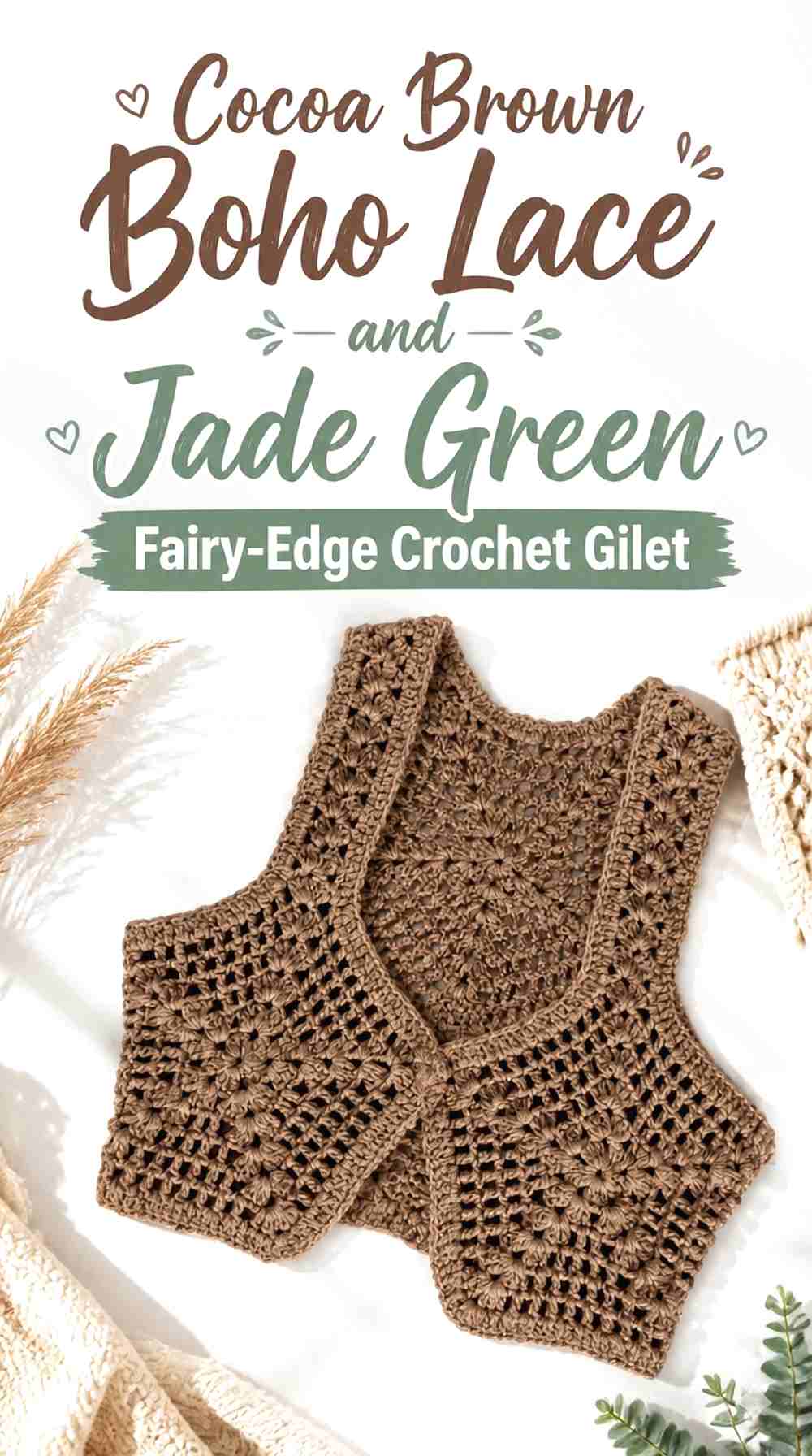
A festival-style boho vest gives the woodland palette room for a looser interpretation. Cocoa brown can dominate the main panels while jade green appears along the front edges, lower lace, or decorative points. This creates a darker forest layer with green concentrated at the boundaries.
Cocoa Brown Can Make the Boho Crochet Gilet Feel More Woodland
Use cocoa brown continuously across the largest panels rather than inserting regular jade stripes. The deeper field keeps the garment earthy and lets any openwork pattern remain the main surface feature.
Because boho constructions can already contain several textural elements, color restraint prevents the finished gilet from becoming visually overloaded.
Jade Green Can Follow the Cocoa Brown Front Edge
A continuous jade-green edge gives the open front a clear vertical line. This placement also makes the green visible whether the gilet is viewed from the front or at an angle.
If the front edge already contains strong texture, keep the green color change simple rather than adding another elaborate stitch treatment.
Jade Green Can Finish a Cocoa Brown Pointed or Open Hem
A lower jade accent can suggest moss or foliage gathering around the edge of the darker garment. This works particularly well when the hem has visible points, scallops, or open spaces.
Keep the strongest green detail toward the bottom if you want the gilet to become more decorative as it moves away from the shoulders.
Creator Credit: Stitched_goddess
7. Jade Green Panel Mesh and Cocoa Brown Scallop Crochet Gilet
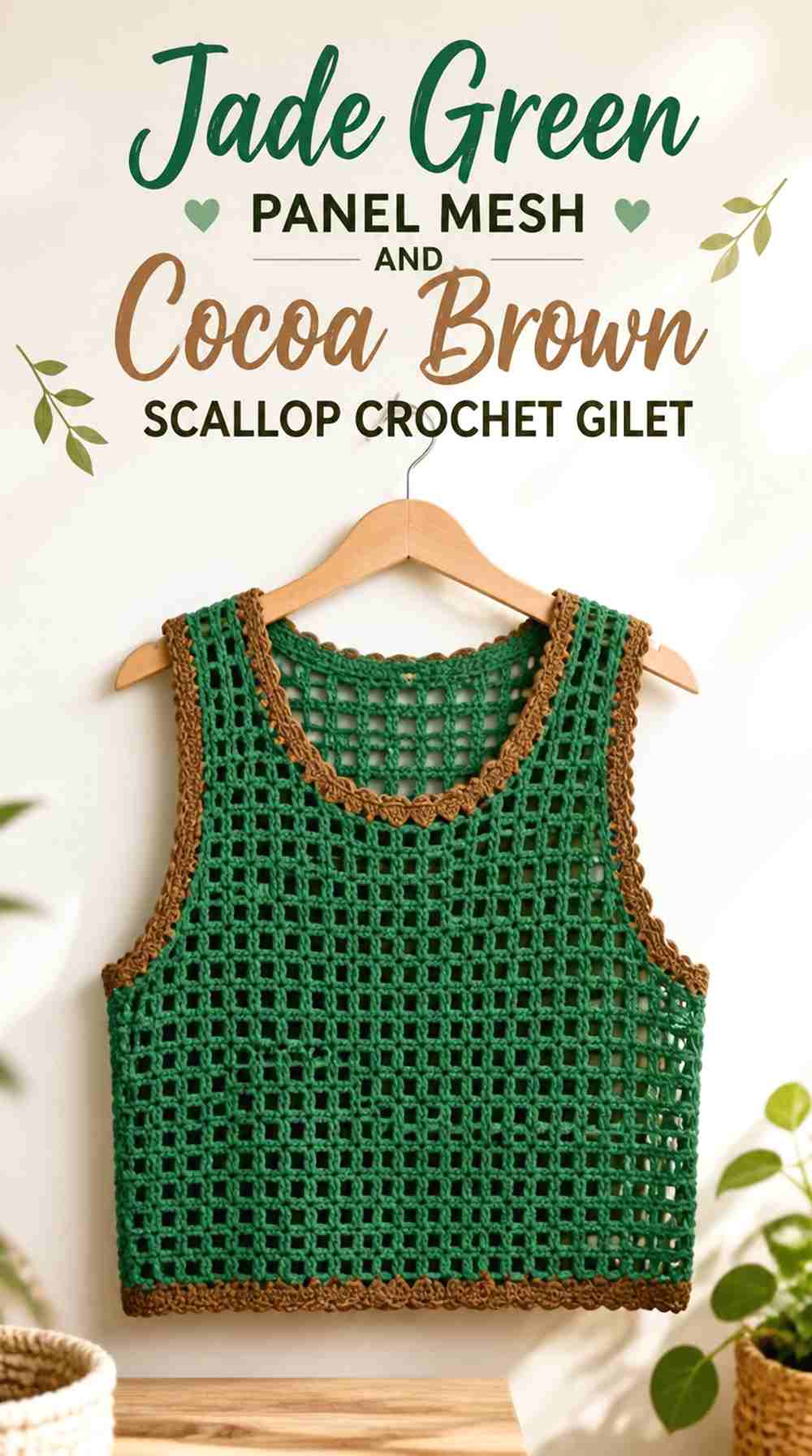
A two-panel mesh construction offers long, clean areas for color blocking. Use jade green throughout the major panels and reserve cocoa brown for neckline ribbing, armholes, or a scalloped lower edge. This is a simpler fairy-lace direction than an all-over floral vest.
Jade Green Can Keep Large Mesh Panels Botanical
A continuous jade-green mesh produces a strong leafy impression without requiring literal leaf appliqués. The open fabric supplies enough texture that the dominant color can remain consistent over a large area.
If you intend to layer the gilet over dark clothing, check whether your jade remains distinct enough from that background for the mesh to show clearly.
Cocoa Brown Can Define the Jade Green Armholes
A narrow cocoa-brown armhole finish can sharpen the transition between the open vest and the garment underneath. This is a practical place for dark contrast because it follows an existing structural line.
Avoid an overly deep border if you want the gilet to stay visually light around the shoulders.
Cocoa Brown Scallops Can Give Jade Green Mesh a Woodland-Fairy Hem
A small scalloped brown edge adds a more decorative lower finish without altering the whole mesh panel. Against jade, cocoa creates enough contrast for individual curves or points to remain recognizable.
Repeat a very small amount of cocoa near the neckline if the lower edging otherwise feels detached from the upper garment.
Creator Credit: Brenda DIY
8. Cocoa Brown Circle Lace and Jade Green Woodland Crochet Gilet
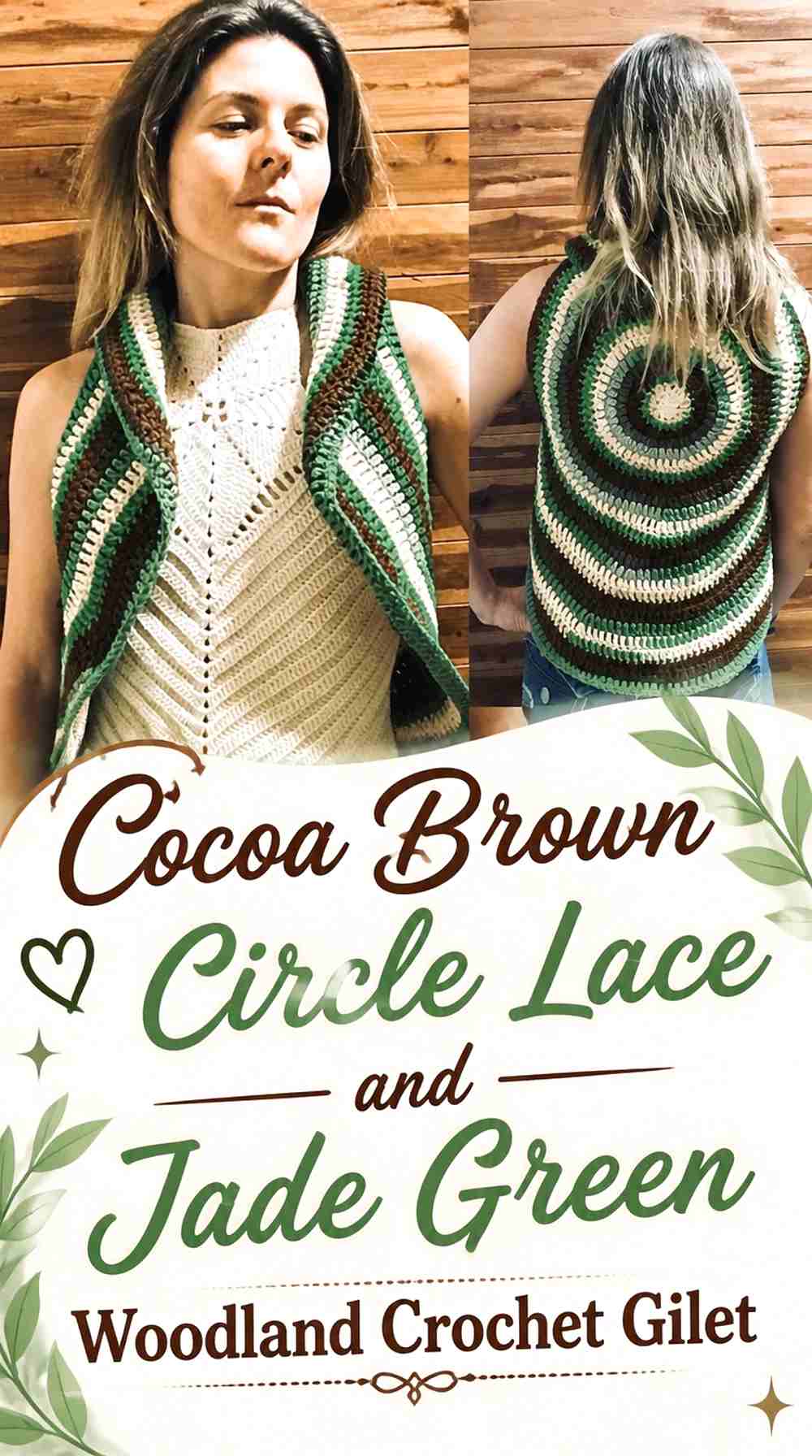
A circle-vest construction creates a different visual flow because much of the crochet radiates around the back. Cocoa brown can form the central circular field while jade green appears in outer lace rounds, creating a forest-ring effect across the back.
Cocoa Brown Can Anchor the Center of the Circle Gilet
Use cocoa brown through the innermost visible section so the back has a definite focal point. A dark center also gives subsequent jade rounds somewhere to expand from visually.
If the circular stitch pattern is highly textured, solid cocoa may show the structure more clearly than frequent color changes.
Jade Green Can Expand Around the Cocoa Brown Back
Introduce jade in the outer rounds to create a gradual shift toward foliage at the sides and lower edge. Because the construction itself radiates outward, the color placement follows the garment rather than fighting it.
Keep the change between shades deliberate. One broad jade zone will usually look more organic than many narrow alternating rings.
Cocoa Brown Can Return Around the Jade Green Front Openings
Repeat cocoa along the front edges so the center-back shade is visible from the front as well. This connects the two sides of the garment’s color story.
A narrow brown border is usually enough; a very wide one could reduce the impact of the outer jade section.
Creator Credit: Treasured Hometown
9. Jade Green Shell Lace and Cocoa Brown Hem Crochet Gilet
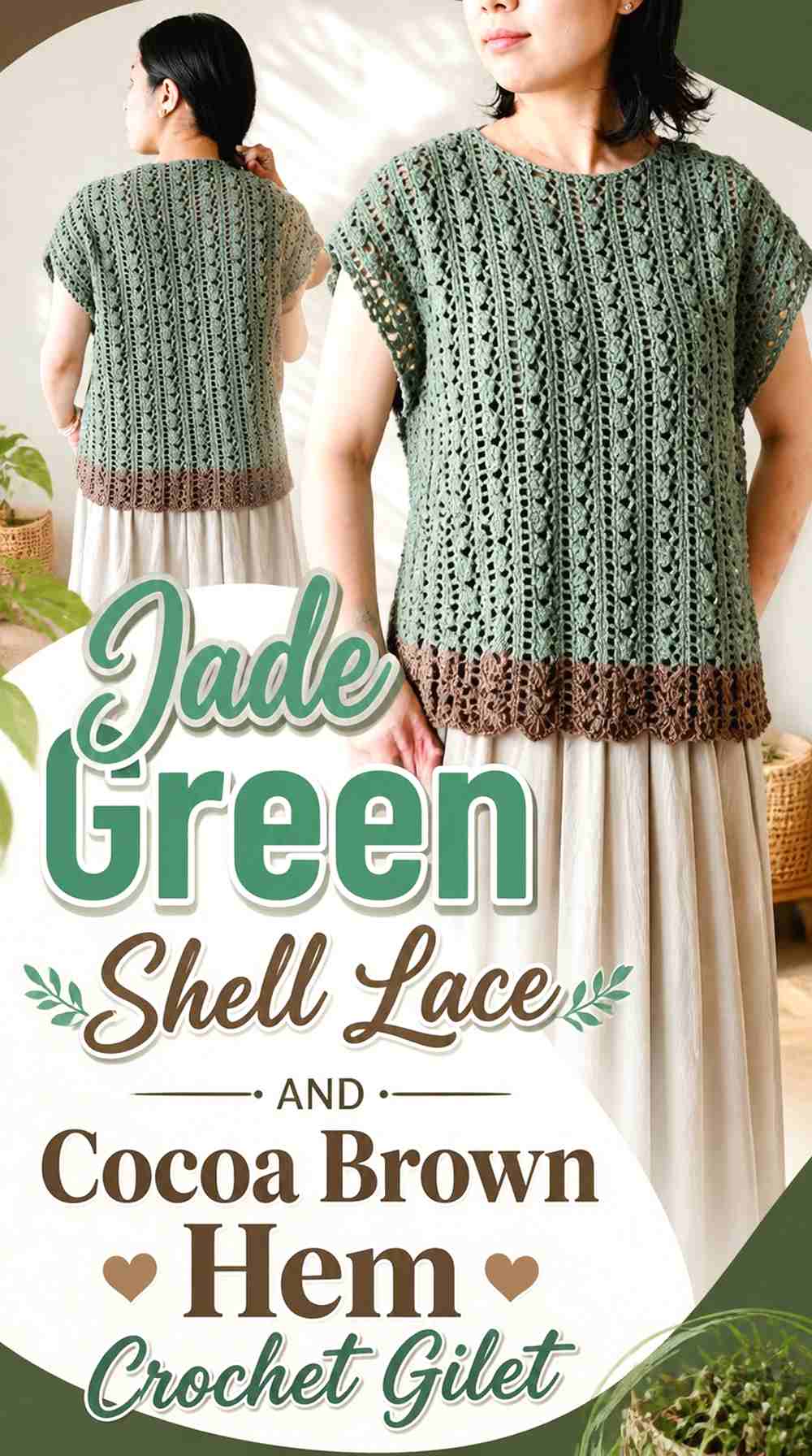
Shell lace gives jade green a more textured appearance than simple mesh. Make jade the main fabric and let cocoa brown appear at the hem, neckline, or selected shell rows. This produces a refined woodland layer without requiring separate floral motifs.
Jade Green Can Show the Repeated Shell Lace Clearly
Use jade through several consecutive shell repeats so the eye can follow the lace structure. Frequent color changes inside every shell may make the texture harder to distinguish from the palette.
If the jade is dark, test the fabric against the clothing you expect to wear underneath to make sure the open sections remain visible.
Cocoa Brown Can Separate Selected Jade Green Shell Rows
A narrow cocoa band can interrupt a broad green field and emphasize the horizontal rhythm of the stitch pattern. Use it sparingly so the garment does not turn into a regularly striped vest.
One stronger brown band near the lower portion can be enough to establish the second color.
Cocoa Brown Can Give the Jade Green Hem More Visual Weight
A cocoa-brown lower edge grounds the light shell fabric and gives the garment a definite ending. This works particularly well if the shells create a naturally decorative lower contour.
Repeat cocoa in a narrow neckline or front finish to tie the darker hem back into the rest of the gilet.
Creator Credit: ゆうなのニットラボ
10. Cocoa Brown Tie-Front Mesh and Jade Green Leaf-Edge Crochet Gilet
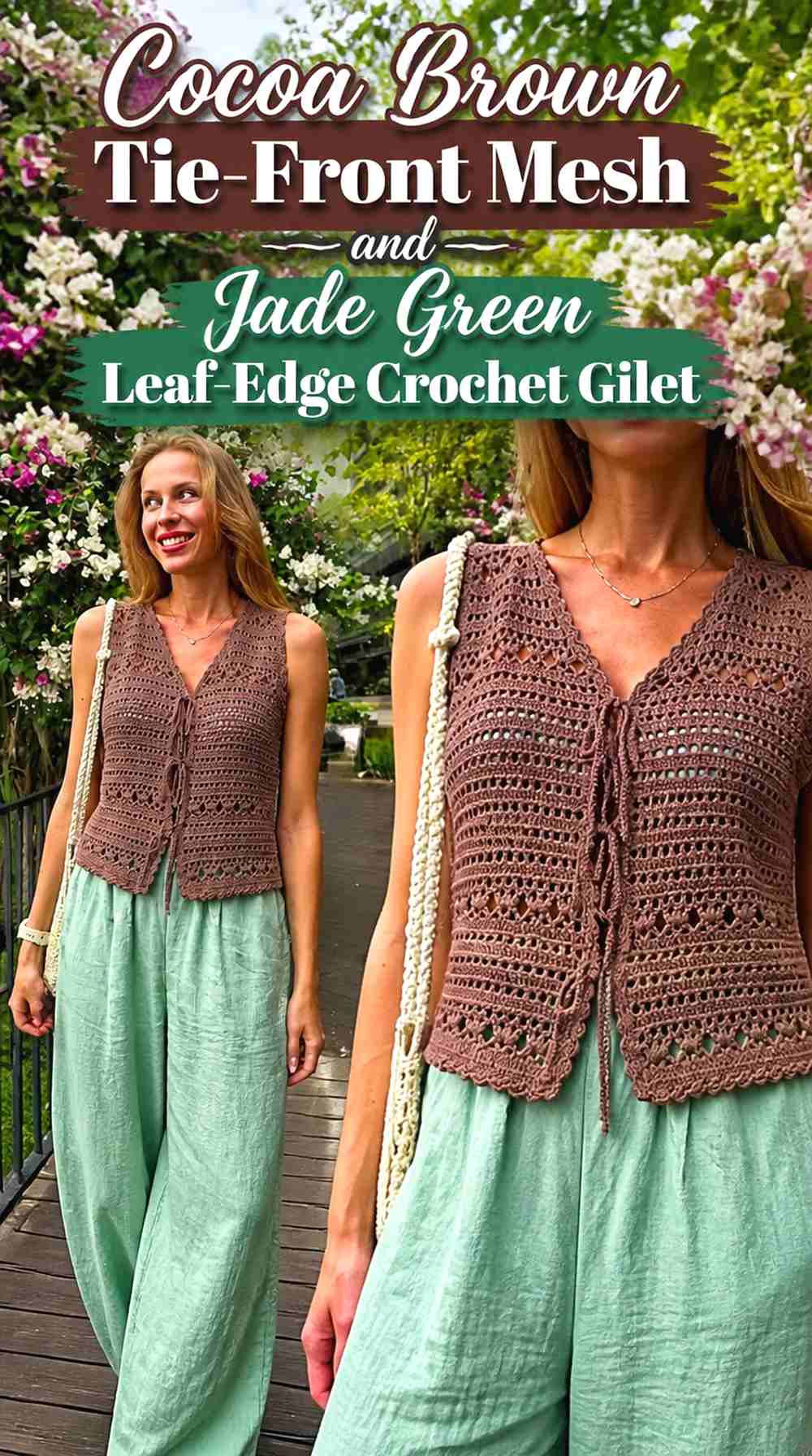
This version combines a dark cocoa mesh with a much more visible jade-green edge. Instead of scattering green throughout the body, concentrate it along the front opening and ties, where it can suggest a continuous vine running down the garment.
Cocoa Brown Can Keep the Tie-Front Mesh Calm
Let cocoa cover most of the open fabric so the mesh remains visually consistent from front to back. The dark color provides a neutral forest-floor base for stronger green finishing.
This is useful when you want fairy styling from the edges rather than from an all-over motif.
Jade Green Can Trace the Cocoa Brown Front Like a Vine
Use jade continuously around the front opening so the secondary shade becomes an obvious vertical design feature. A simple scallop or leaf-inspired edge can reinforce the botanical idea without adding multiple colors.
Keep both front edges similar in visual weight so the garment does not appear unintentionally unbalanced when worn open.
Jade Green Ties Can Continue Beyond the Cocoa Brown Mesh
Matching the ties to the green front edge makes them look like an extension of the border. This is more cohesive than introducing brown ties after establishing a strong jade opening.
If decorative ends are added, keep them small enough for the ties to remain functional.
Creator Credit: Мария Хмель | Вязание, вышивание и шитье
11. Jade Green Long Lace and Cocoa Brown Woodland Border Crochet Gilet
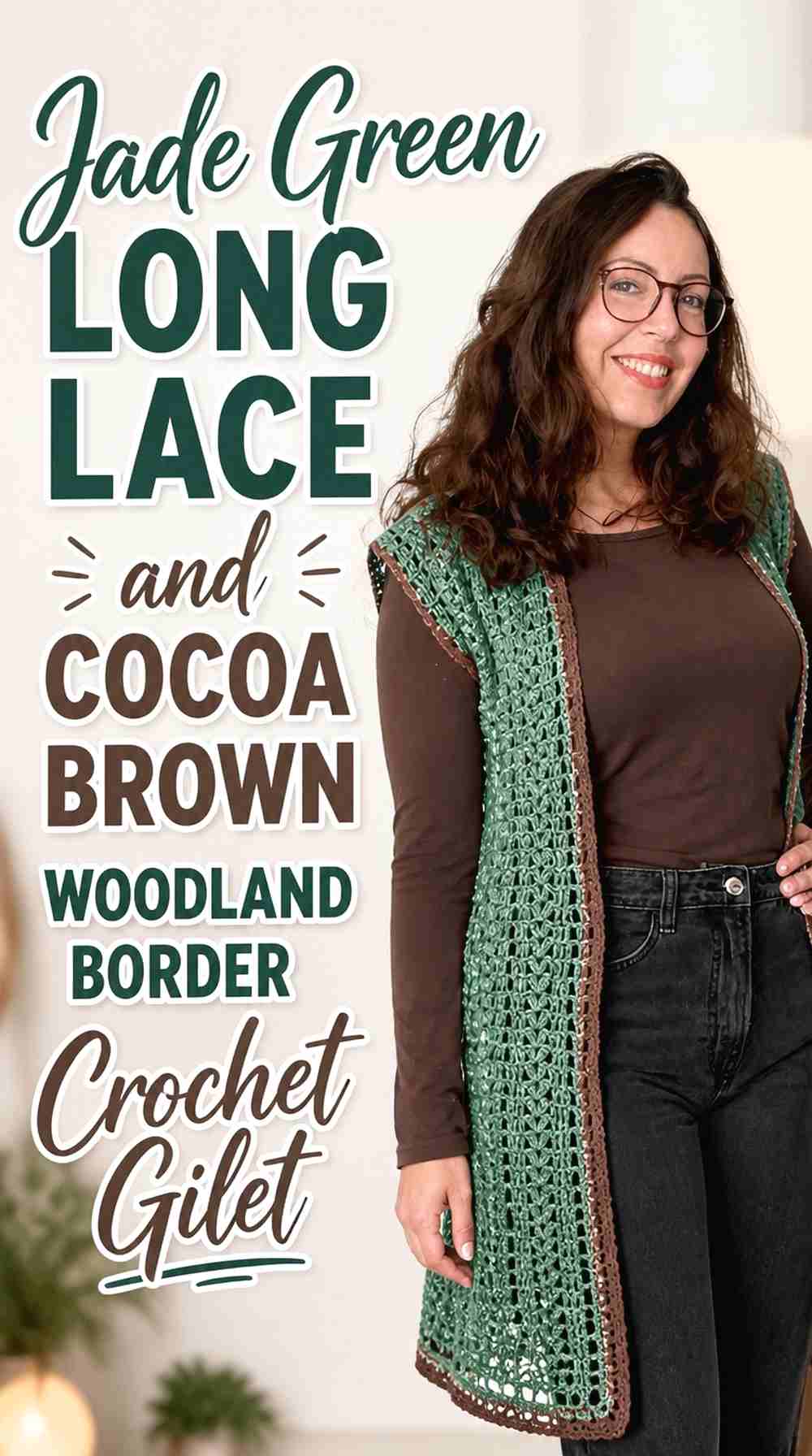
A longer lace gilet gives both colors more vertical space. Jade green can run through most of the lace from shoulder to lower body, while cocoa brown forms the front borders, side accents, and hem. The extended silhouette makes this the most dramatic layering option in the collection.
Jade Green Can Create a Continuous Long Lace Field
Keep the majority of the long body jade if you want the eye to travel vertically without interruption. Repeated brown stripes across the entire length could shorten that visual line.
The open lace itself supplies enough variation, so the dominant color does not need constant changes to remain interesting.
Cocoa Brown Can Frame the Long Jade Green Front Panels
Dark brown front borders give the garment two strong vertical lines and help organize a large amount of green lace. This is especially useful on a longer gilet, where an undefined open edge can visually disappear into the patterned body.
Keep the border width proportional to the lace panel so it frames rather than overtakes it.
Cocoa Brown Can Ground the Jade Green Lower Lace
Repeat cocoa at the hem to connect the two front borders across the bottom of the garment. The darker lower edge can help a long, airy lace piece feel visually complete.
If the hem already has elaborate lace texture, use a simple brown color change rather than adding an equally elaborate second edging pattern.
Creator Credit: Lana Loca – moderne Handarbeiten
Which Jade Green and Cocoa Brown Woodland Fairy Gilet Should You Choose?
For the lightest and most floral direction, the jade-green floral lace, openwork granny, shell-lace, and panel-mesh ideas keep green across most of the garment while cocoa brown provides structure around the edges.
For a darker forest look, choose the cocoa-brown flower mesh, boho vest, circle gilet, or tie-front mesh version. In those designs, jade green becomes more noticeable because it occupies less space and is concentrated around vines, borders, ties, and outer lace.
The granny-square and circle constructions create the strongest motif-based statements. The simple mesh and shell versions are better suited to a quieter interpretation where color, open fabric, and edging establish the woodland-fairy direction without relying on numerous appliqués. The long lace gilet gives the palette the most vertical presence and can work well when you want the crochet layer itself to be a major part of the outfit.
Conclusion
Jade green and cocoa brown can create several distinct woodland-fairy gilet directions depending on which shade owns the main lace and which one defines the edges.
Let jade green dominate when you want the garment to feel leafy, botanical, and lighter. Cocoa brown works particularly well for motif centers, front borders, joins, scallops, ties, armhole finishing, and lower hems because those placements give the openwork definition without covering it.
Reverse the hierarchy when you want a deeper forest effect. A cocoa-brown body with jade-green vines, outer rounds, or ties makes the green feel more like foliage appearing through a shaded woodland base.
Before committing to the full garment, test the actual colors in a representative lace or motif section. Openwork changes how much of each shade the eye sees, so a small swatch gives a more useful picture of the final balance than comparing two untouched yarns. Follow the linked creator tutorial for the garment construction and adapt the color placement only where it remains compatible with the chosen gilet.
Frequently Asked Questions
Should Jade Green or Cocoa Brown Be the Main Color in a Woodland Fairy Crochet Gilet?
Jade green is a useful dominant color when you want the garment to look more botanical and foliage-led. Cocoa brown creates a darker forest direction and can make smaller jade accents stand out more clearly. Choose the dominant shade according to the amount of light or dark color you want across the largest panels.
Where Should Cocoa Brown Go on a Jade Green Lace Gilet?
Cocoa brown works well around front edges, motif centers, joins, ties, armholes, necklines, scallops, and hems. These structural areas let the darker shade define the jade lace without breaking the main green field into too many small sections.
How Can I Make Jade Green Lace Visible Against Cocoa Brown?
Make sure the two yarns have enough light-and-dark separation, especially when the green appears in small flowers or leaves. Viewing a photograph of the yarns in grayscale is a useful check. If the colors merge, choose a lighter jade or deeper cocoa while preserving the same earthy palette.
Can Jade Green and Cocoa Brown Work in a Granny-Square Fairy Gilet?
Yes. Jade can form the outer rounds or connecting color while cocoa brown appears in flower centers and selected borders. Using one consistent outer color across multiple squares helps separate motifs while also making the finished garment look connected.
Should a Cocoa Brown Woodland Gilet Have Jade Green Around Every Edge?
Not necessarily. Repeating jade on every neckline, armhole, front border, tie, and hem can make it compete with the brown body. Choose the edges where green contributes most to the design, such as the front opening and lower hem, and leave other finishing areas cocoa when a quieter result is wanted.
How Do I Keep a Jade Green and Cocoa Brown Fairy Gilet From Looking Too Busy?
Limit the number of decorative zones. For example, combine jade floral lace with cocoa edging and ties instead of adding contrasting flowers, joins, ruffles, appliqués, and borders everywhere. Give one color most of the garment and let the other perform a few clear functions.
What Should I Preserve When Substituting Jade Green or Cocoa Brown Yarn?
Preserve the color roles and contrast relationship. A substitute jade should still have the muted or earthy green quality needed for the woodland direction, while the cocoa replacement should remain a warm brown that is visibly distinct from it. Maintaining dominant and accent roles is more important than matching an exact commercial shade name.