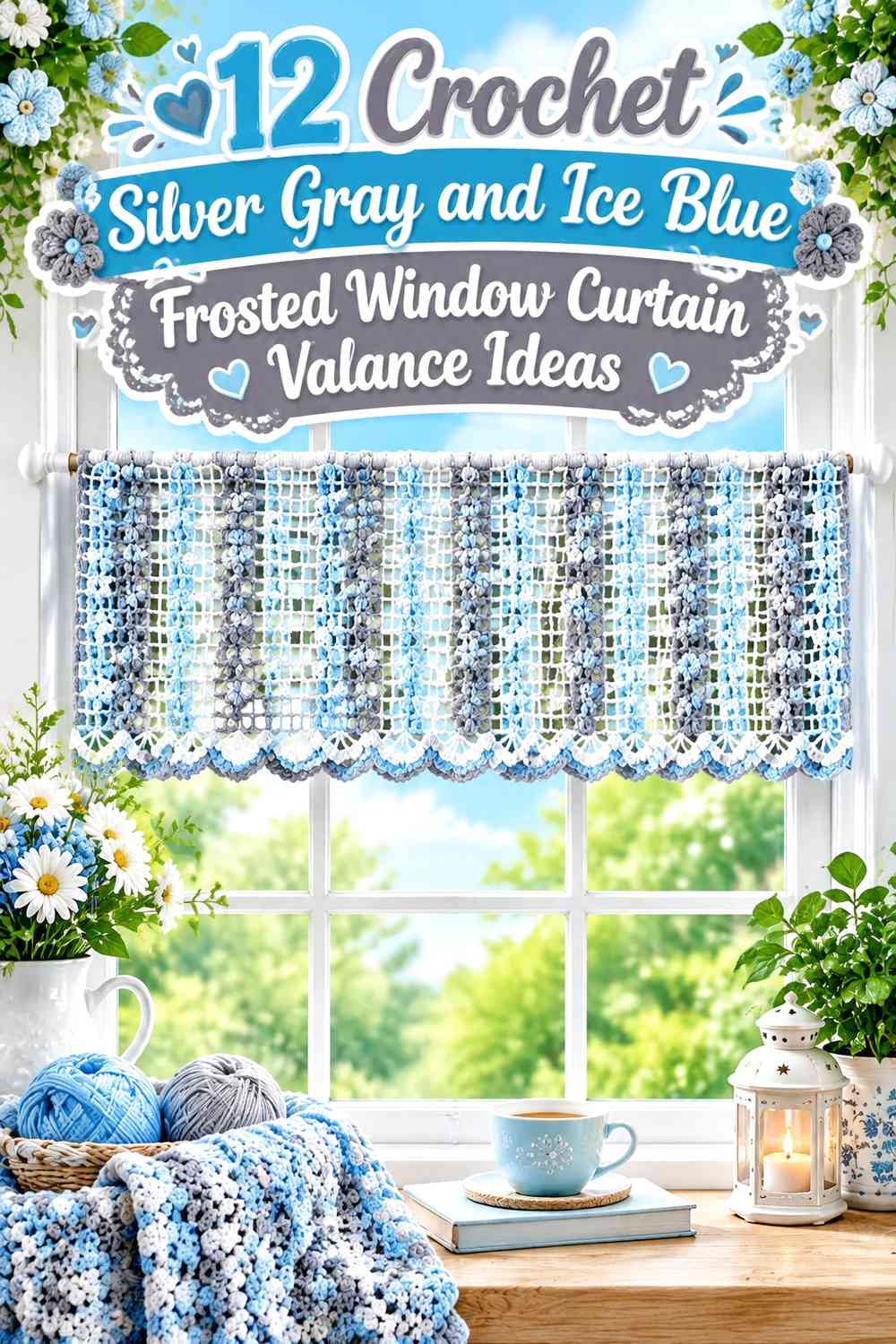

Silver gray and ice blue give a crochet window valance a cool winter palette without requiring stark white. Silver gray can anchor the rod band, filet sections, geometric borders, or hanging loops, while ice blue can lighten scallops, lace motifs, snowflakes, and the lower decorative edge.
A valance is viewed against daylight, so subtle color differences can disappear more easily than they do on a blanket or pillow. Two yarns that look clearly different on a table may appear much closer once sunlight shines through open crochet. Broad color zones usually hold up better than tiny alternating details.
The lower edge deserves particular attention because it defines the valance silhouette. Ice-blue scallops can soften a silver-gray field, while a gray lower border can give pale blue lace stronger definition. Snowflake motifs can reinforce the frosted theme, but they should support the curtain structure rather than turn the entire valance into a row of disconnected ornaments.
The tutorials below support café curtains, window curtains, motif panels, rod loops, floral hanging structures, and snowflake motifs. The silver-gray and ice-blue palettes and specific frosted-valance arrangements are independent adaptations, so the credited creators should not be assumed to have used these exact colors.
Quick List
- Silver Gray and Ice Blue Crochet Frosted Scallop Window Valance
- Ice Blue Crochet Café Window Valance With Silver Gray Rod Loops
- Silver Gray Motif Crochet Window Valance With Ice Blue Lower Points
- Ice Blue Crochet Frosted Window Valance With a Silver Gray Border
- Silver Gray Filet Crochet Valance With Ice Blue Frosted Accents
- Ice Blue Lace Crochet Window Valance With a Silver Gray Lower Band
- Silver Gray Floral Crochet Valance With Ice Blue Hanging Drops
- Ice Blue Openwork Crochet Valance With Silver Gray Motif Centers
- Silver Gray Crochet Window Valance With an Ice Blue Snowflake Border
- Ice Blue Crochet Frosted Valance With Silver Gray Snowflake Medallions
- Silver Gray Crochet Frosted Valance With Ice Blue Snowflake Points
- Framed Silver Gray and Ice Blue Crochet Frosted Window Valance
Decide Whether Silver Gray or Ice Blue Should Lead the Valance
Silver gray creates the quieter structural base, making it useful across the rod band, upper rows, and repeated joining sections. Ice blue can then take the more decorative areas such as scallops, points, or snowflakes without turning the entire window treatment bright blue.
An ice-blue-dominant valance feels lighter and more obviously wintry. Silver gray can define its top edge, motif centers, or final border and prevent pale blue openwork from visually disappearing against a bright window.
Do not rely only on hue difference. Hold the yarns near the window and compare their lightness before committing to narrow contrast details.
Use Silver Gray and Ice Blue to Clarify Open Crochet
Openwork creates part of its pattern through empty space, so frequent color changes can compete with the lace itself. Keep larger sections in one shade when shell stitches, filet grids, or clustered motifs already create a strong visual rhythm.
Silver gray can stabilize the denser top section, while ice blue works well where the crochet becomes more open toward the lower edge. Reversing those roles produces a paler top with a stronger gray frame below.
Keep Silver Gray and Ice Blue Balanced Across the Window Width
A valance repeats horizontally, so a small color accent can become a dominant stripe after it extends across the entire window. Plan several pattern repeats together before deciding how much silver gray or ice blue to use.
Rod loops, motif centers, and scallop points are especially useful for repetition because they distribute the accent color at regular intervals rather than concentrating it in one corner.
1. Silver Gray and Ice Blue Crochet Frosted Scallop Window Valance
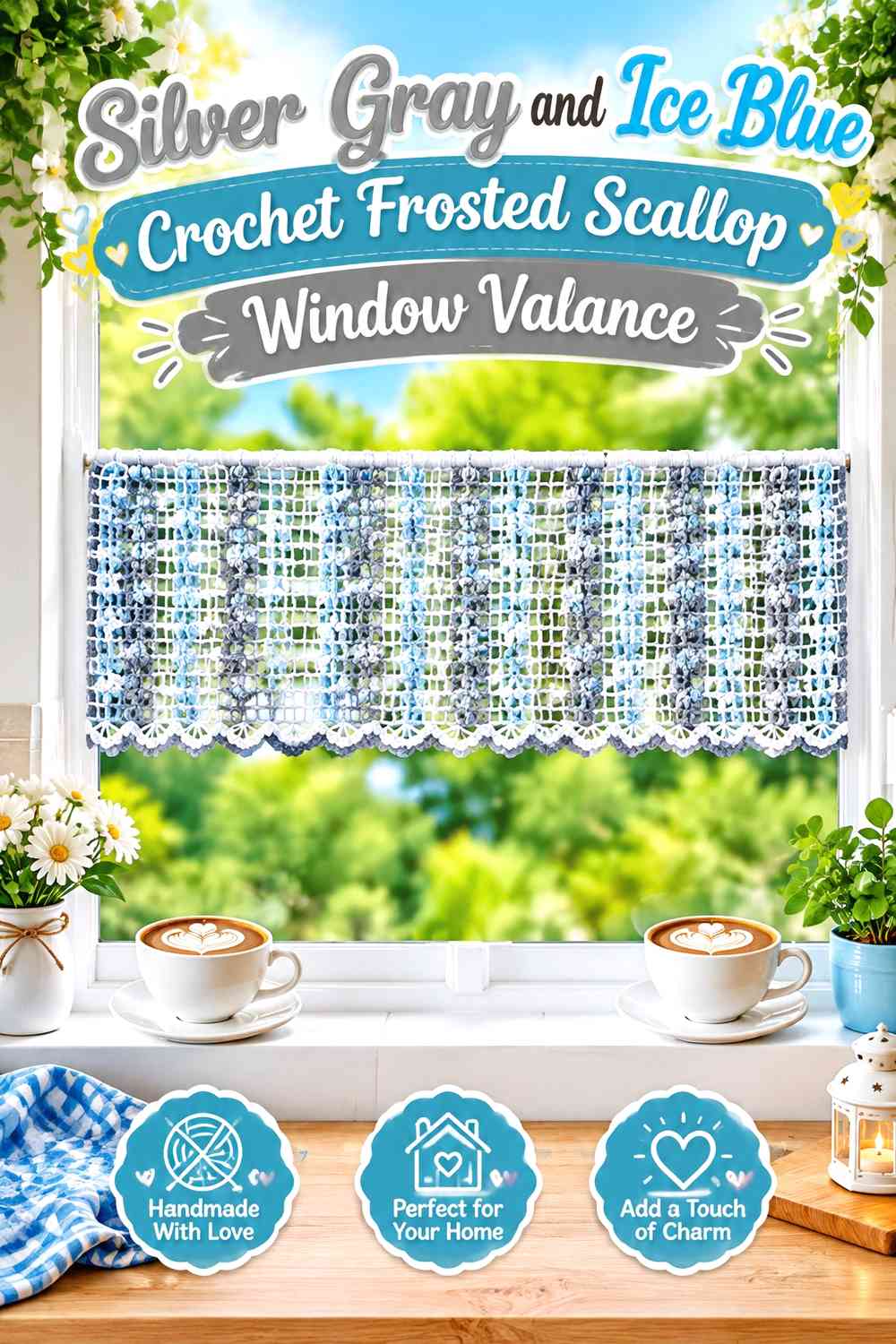
Use silver gray across the denser upper band and shift to ice blue through the scalloped lower edge. This gives the valance a stable neutral top while the lighter color defines the part that hangs most visibly against the window.
Silver Gray Should Anchor the Ice Blue Valance Top
Keep the upper section broadly silver gray rather than breaking it into many pale-blue stripes. A continuous top band visually connects the individual pattern repeats across the width of the curtain.
Ice Blue Scallops Need a Clear Silver Gray Transition
Introduce ice blue at a deliberate horizontal boundary before the scallops begin. The change in both shape and color makes the lower silhouette easier to see.
Creator Credit: HandmadebyRaine — YouTube tutorial
2. Ice Blue Crochet Café Window Valance With Silver Gray Rod Loops
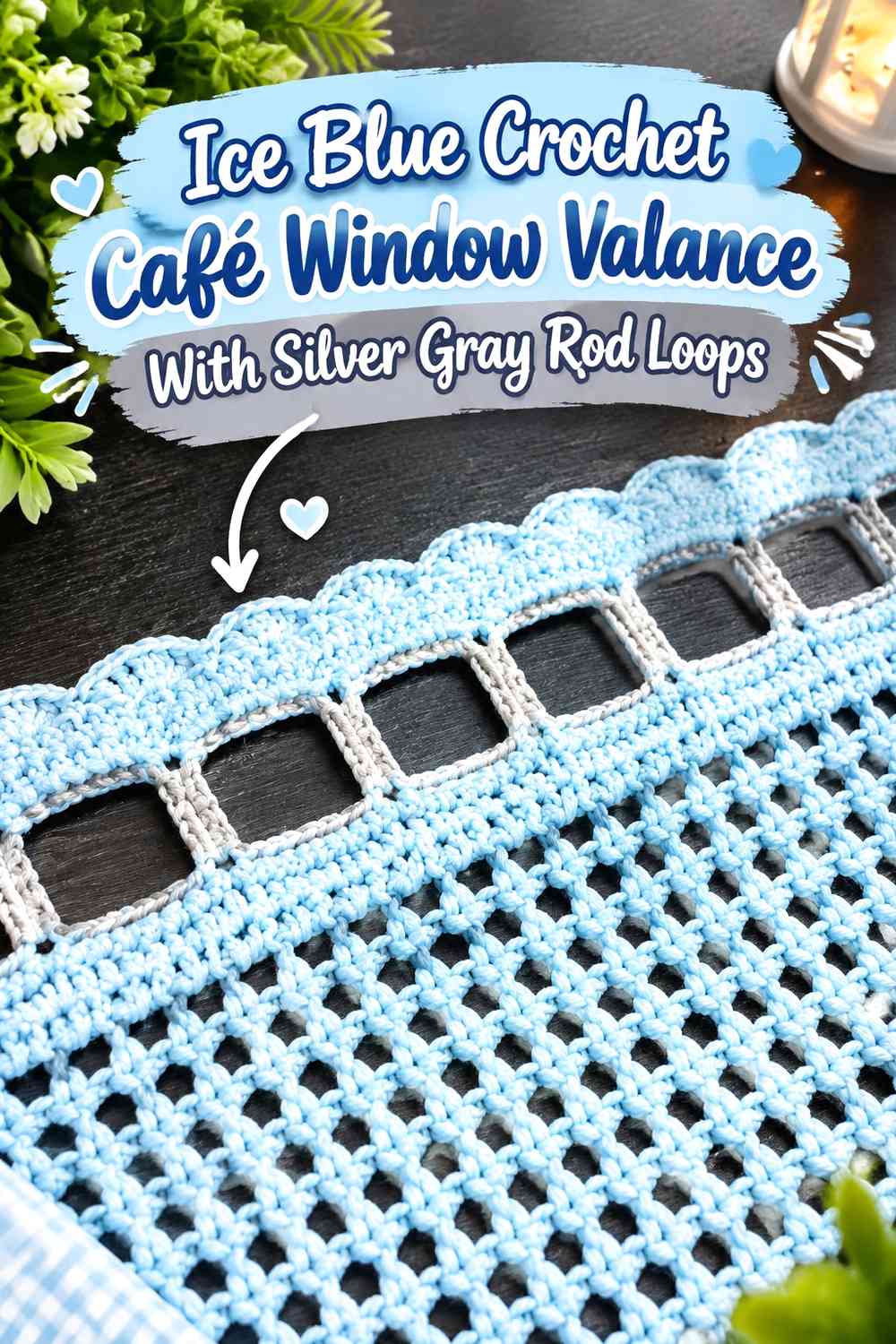
Let ice blue cover the main café-style valance and use silver gray in the repeated loops or upper hanging section. This puts the darker neutral at the functional attachment points while leaving the lace below visually light.
Silver Gray Rod Loops Can Define the Ice Blue Hanging Line
Repeat silver gray consistently at each loop so the top edge forms a clear rhythm across the curtain rod. Because the loops are separated, the gray remains noticeable without creating one heavy solid stripe.
Ice Blue Should Continue Broadly Beneath Silver Gray
Keep the main curtain field predominantly blue so the upper gray details stay secondary. A small gray repeat at the lower edge can connect the palette if the loops otherwise feel isolated.
Creator Credit: AmyCore Crochet — YouTube tutorial
3. Silver Gray Motif Crochet Window Valance With Ice Blue Lower Points
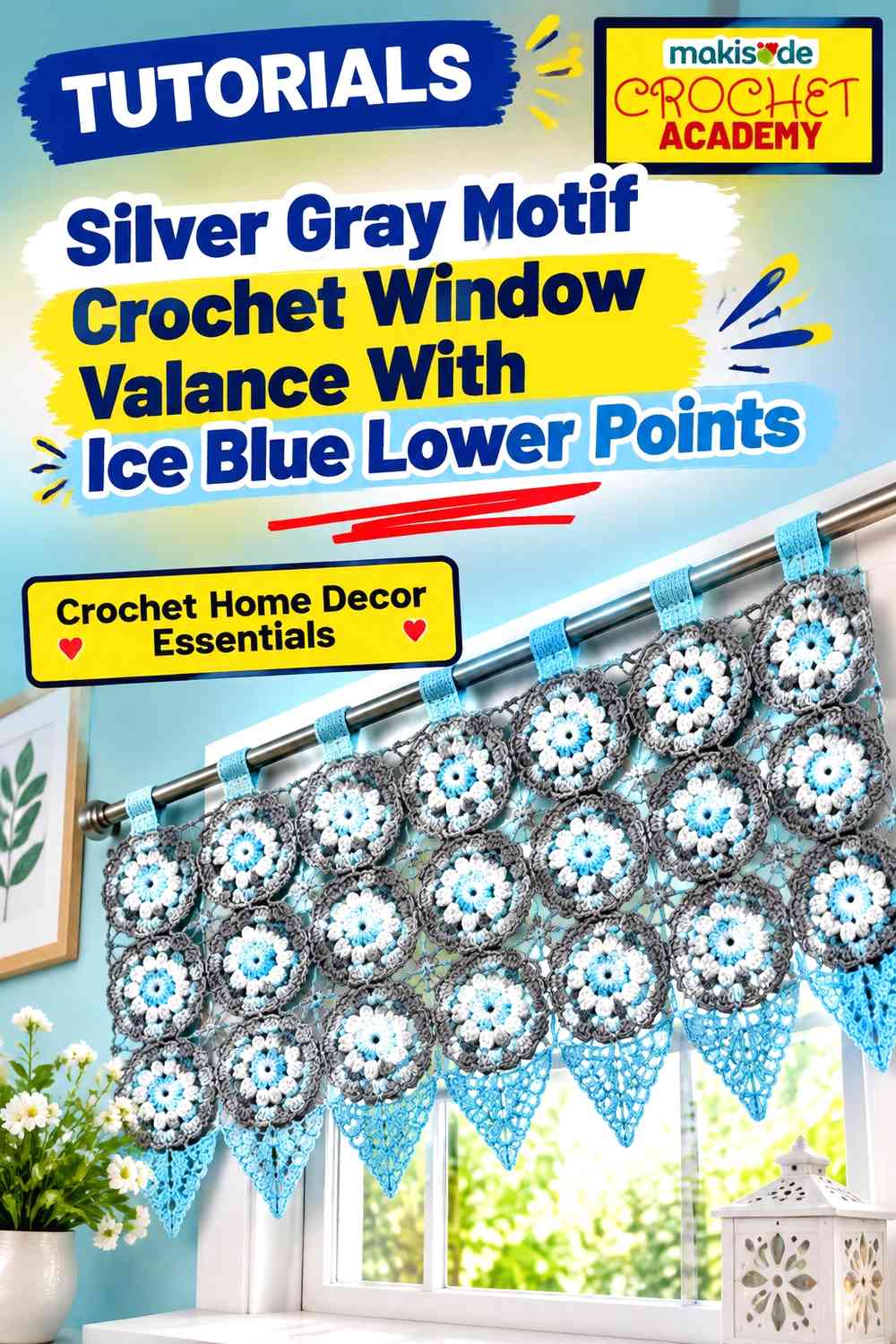
Build the valance from repeated silver-gray motifs and introduce ice blue where the lower shapes taper into points or decorative drops. The pale accent gives the bottom edge a frosted look without disrupting every motif round.
Ice Blue Should Emphasize the Silver Gray Valance Points
Use blue consistently on the same lower portion of each repeat. Irregular placement can make the row of points look less organized when viewed across the full window.
Silver Gray Should Connect Every Ice Blue Point
Keep the motif joins and most of the upper crochet gray. The shared structural shade is what turns several blue-tipped motifs into one continuous valance.
Creator Credit: Makisode Crochet Academy — YouTube tutorial
4. Ice Blue Crochet Frosted Window Valance With a Silver Gray Border
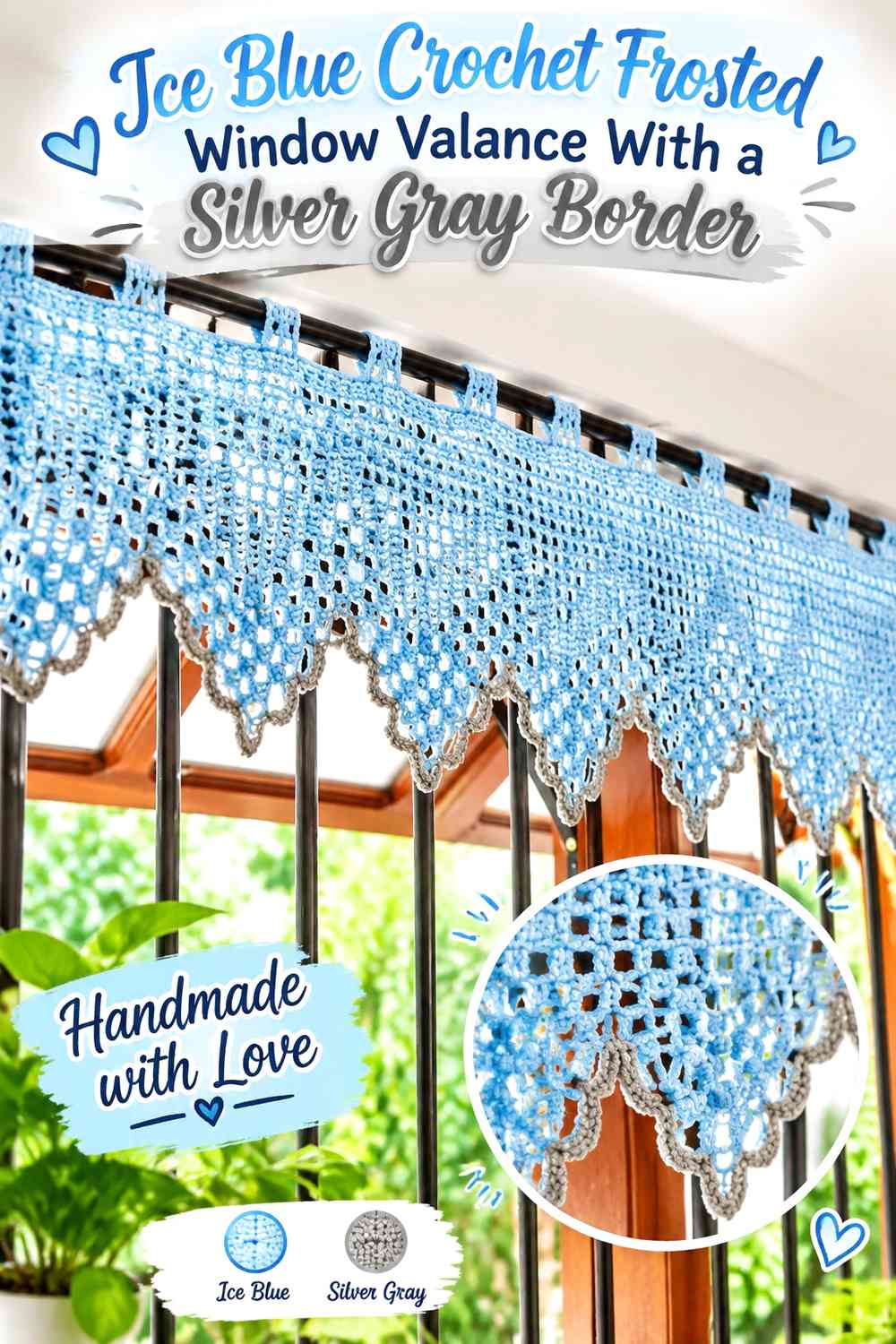
Use ice blue across the full curtain body and add silver gray around the outer edge. This is one of the simplest ways to maintain a light winter appearance while ensuring the valance has enough definition against pale daylight.
Silver Gray Can Frame the Ice Blue Crochet Without Darkening It
Keep the gray border narrow compared with the main blue field. Its purpose is to clarify the outer shape rather than make the curtain look equally divided between both colors.
Ice Blue Needs Broad Openwork Inside Silver Gray
Preserve enough uninterrupted blue for shell, lace, or pointed texture to remain visible. If gray enters every motif, the clean framed effect becomes less obvious.
Creator Credit: Vó Tita Crochês — YouTube tutorial
5. Silver Gray Filet Crochet Valance With Ice Blue Frosted Accents
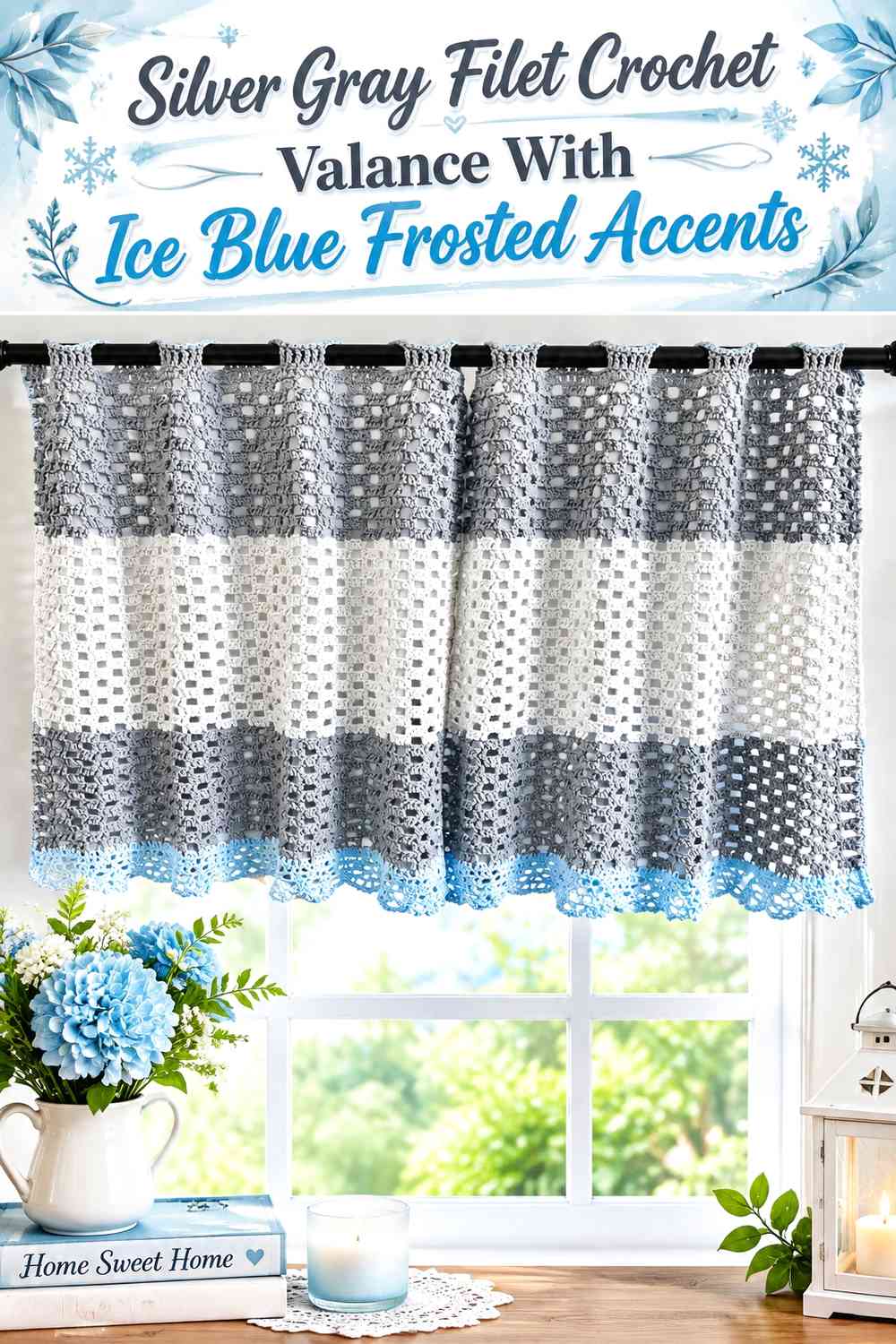
Use silver gray throughout the primary filet-style grid and introduce ice blue only in selected motif rows or lower sections. Filet already depends on the contrast between filled and open spaces, so restrained color placement keeps the pattern from becoming visually overloaded.
Silver Gray Should Carry the Main Ice Blue Filet Structure
Keep consecutive gray rows through enough of the grid for its open-and-filled pattern to remain easy to understand. Rapid alternation between gray and blue can compete with the filet design.
Ice Blue Can Mark Selected Silver Gray Filet Repeats
Use pale blue at regular intervals or along the decorative lower section. A controlled repeat gives the valance its frosted color direction while preserving silver gray as the structural field.
Creator Credit: Crochê da Alessandra — YouTube tutorial
6. Ice Blue Lace Crochet Window Valance With a Silver Gray Lower Band
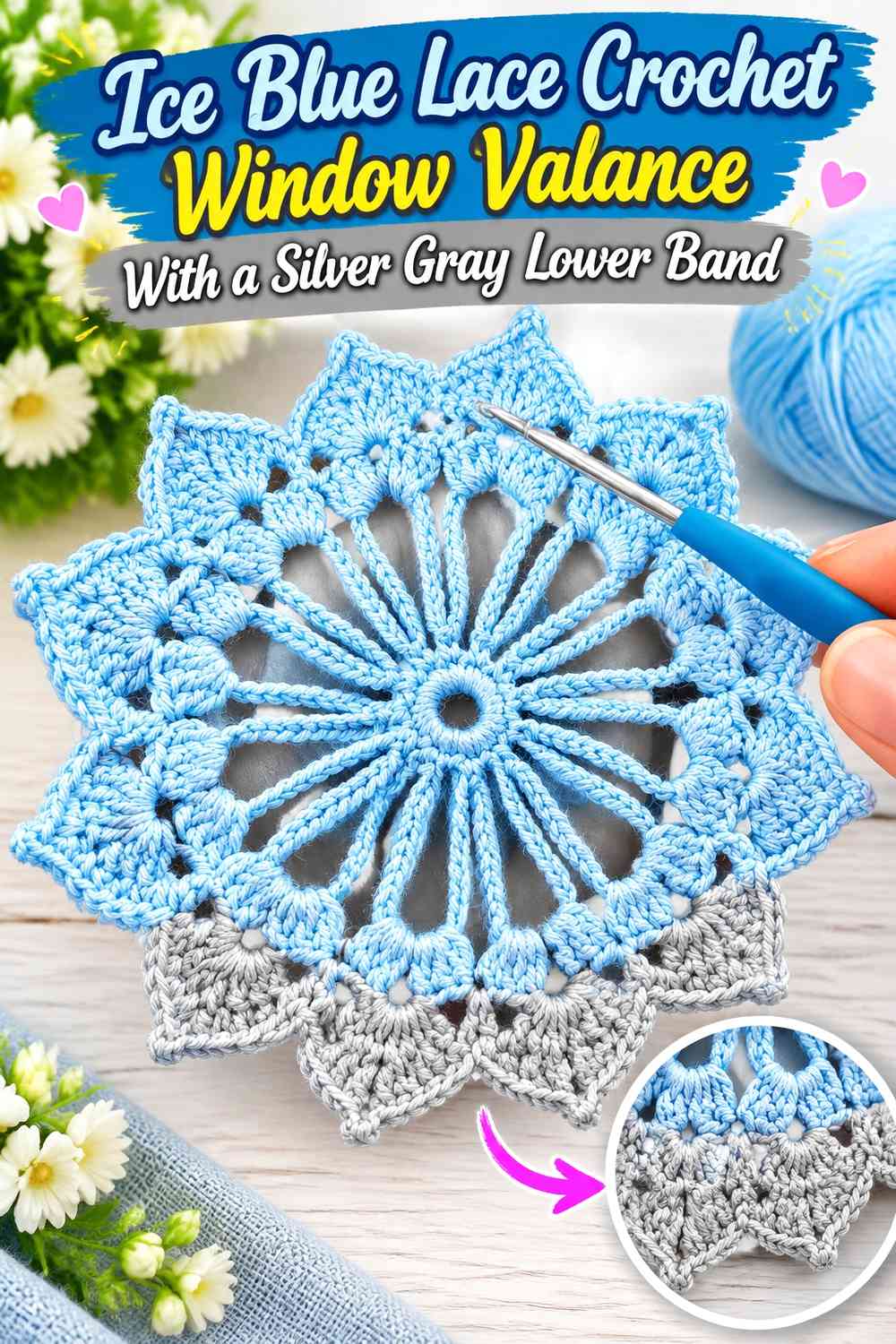
Make ice blue the primary lace shade and introduce one connected silver-gray section immediately above the bottom edge. This gives the pale openwork a firmer visual endpoint without outlining every lace repeat.
Silver Gray Should Stay Connected Beneath Ice Blue Lace
Use one clear lower band rather than scattered gray blocks. The darker line helps the eye understand where the open valance ends.
Ice Blue Should Remain Open Above Silver Gray
Leave enough uninterrupted blue height for the lace motif to develop fully. A deep gray band can visually shorten the valance and make the decorative upper portion feel compressed.
Creator Credit: Crochet Pattern Studio — YouTube tutorial
7. Silver Gray Floral Crochet Valance With Ice Blue Hanging Drops
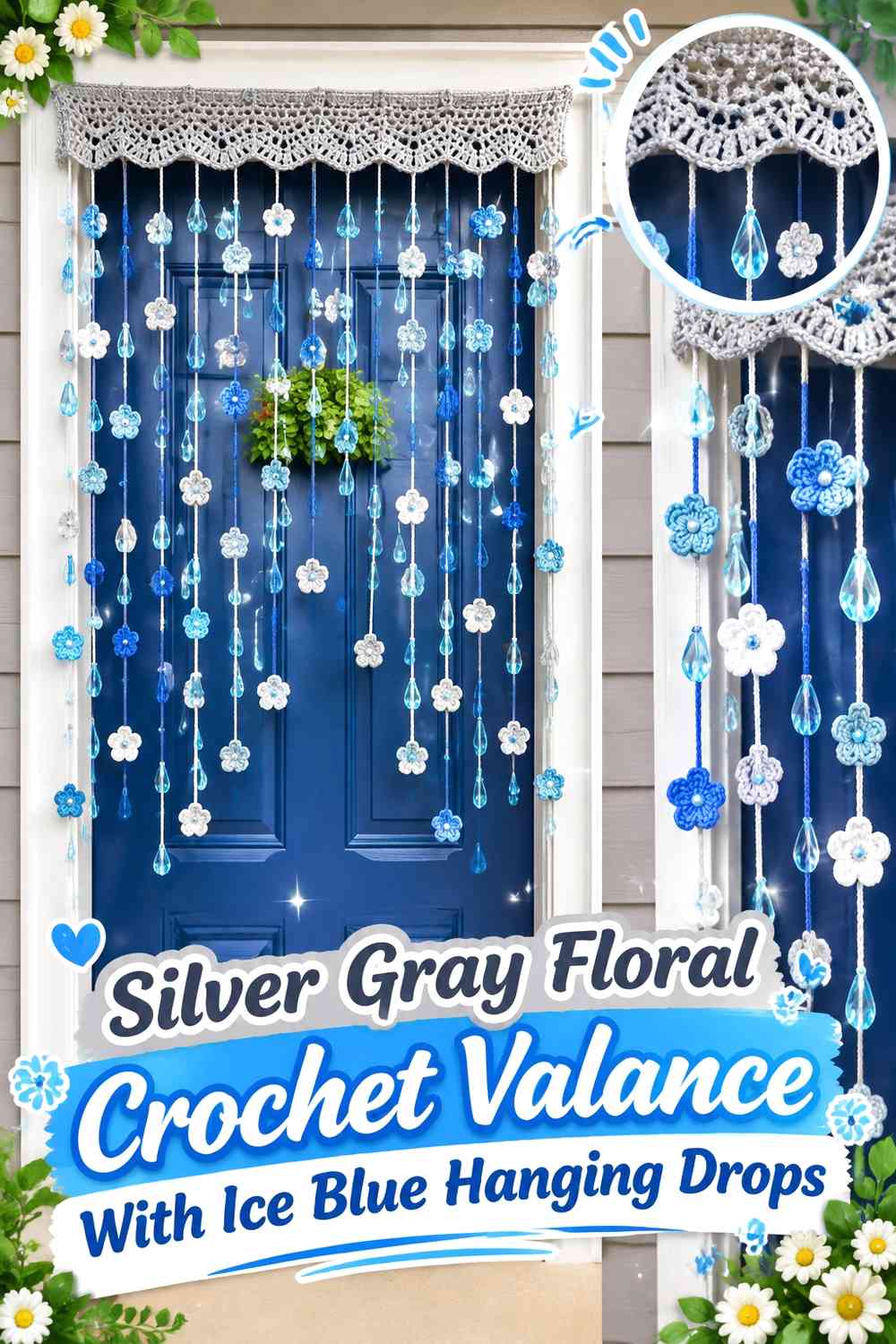
Use silver gray for a compact upper panel and let ice-blue flowers, bells, or other hanging motifs drop from the lower edge. The arrangement gives the valance more vertical movement than a conventional scallop while keeping the upper section visually grounded.
Ice Blue Drops Need Regular Silver Gray Spacing
Position the hanging motifs at predictable intervals across the window. Uneven spacing becomes especially noticeable when the separate pieces move independently.
Silver Gray Should Stay Simple Above Ice Blue Motifs
Avoid filling the top band with numerous additional blue decorations. A quieter gray field creates a stable visual base for the more active hanging section.
Creator Credit: DIY kraftz – The Ultimate Crochet Hub — YouTube tutorial
8. Ice Blue Openwork Crochet Valance With Silver Gray Motif Centers
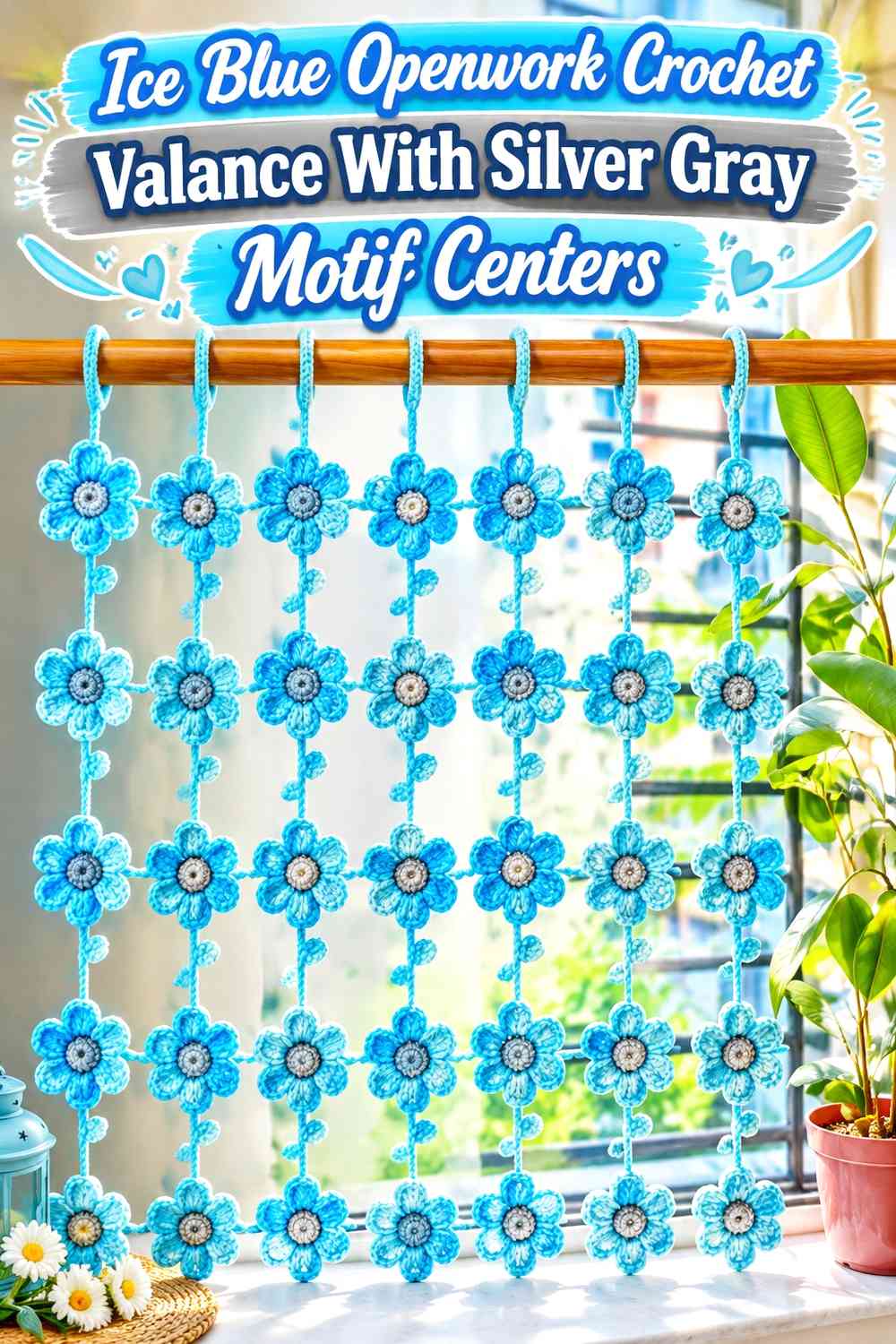
Use ice blue throughout a floral or motif-based hanging treatment and repeat silver gray in the centers or connecting rings. The darker neutral becomes a small but regular focal point across the width.
Silver Gray Centers Should Repeat Clearly Through Ice Blue
Keep the center color in the same relative position on each motif. Repetition allows a small amount of gray to influence the entire window treatment.
Ice Blue Needs Space Around Every Silver Gray Center
Preserve broad pale-blue petals, rings, or connecting sections. If gray expands too far outward, the motif will no longer read as ice-blue dominant.
Creator Credit: The Crochet Chemistry — YouTube tutorial
9. Silver Gray Crochet Window Valance With an Ice Blue Snowflake Border
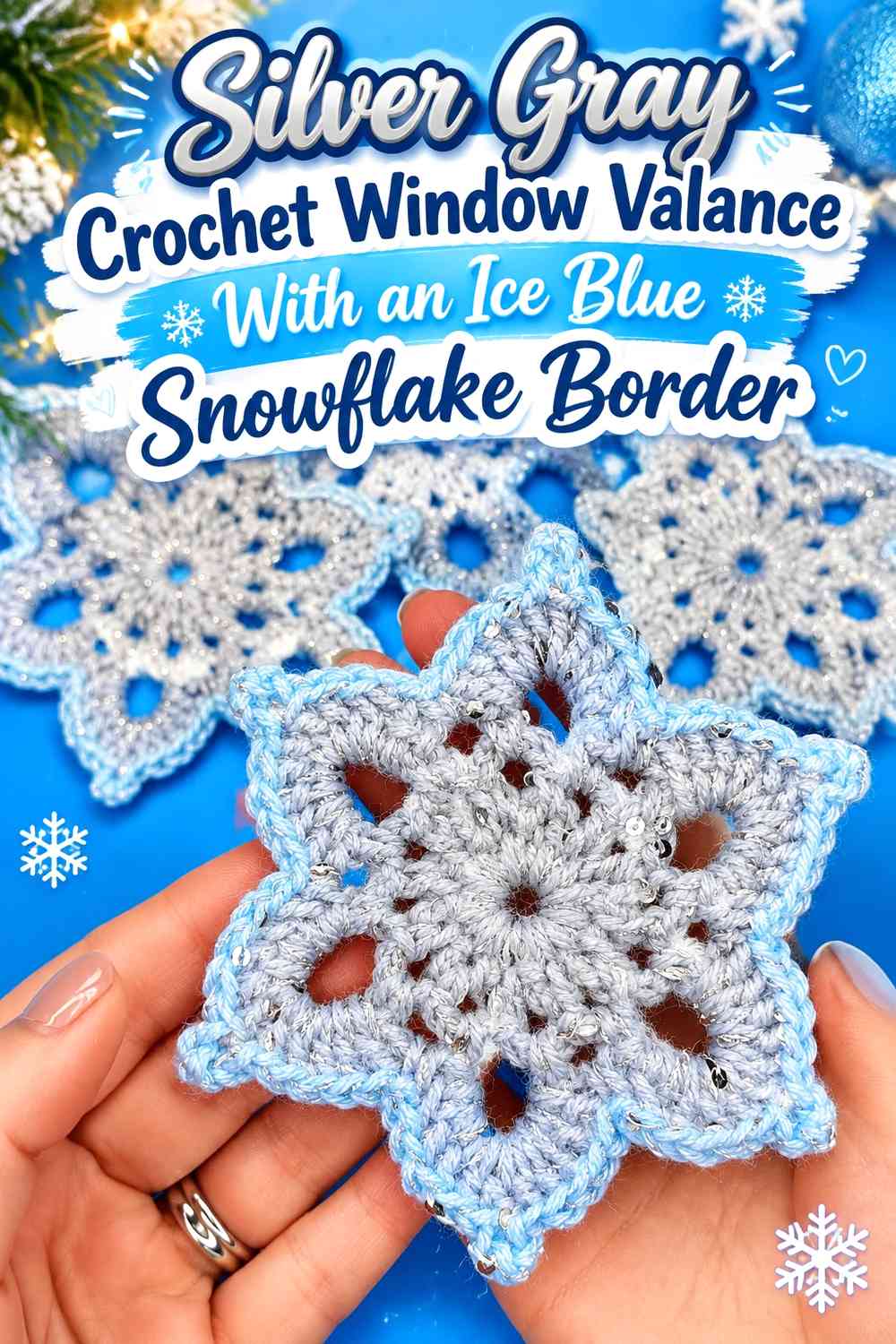
Use silver gray through the main valance panel and place a repeated row of ice-blue snowflakes along the lower edge. The pale motifs give the curtain a direct winter reference while the broad gray body prevents the row from becoming overly delicate against daylight.
Ice Blue Snowflakes Need Silver Gray Space Between Motifs
Leave visible gray or open connecting sections between neighboring snowflakes. When the points touch too closely, the row can merge into one irregular pale band.
Silver Gray Should Remain Broad Above Ice Blue Snowflakes
Keep the upper panel comparatively simple so the snowflake border becomes the main decorative feature rather than one of several competing motif rows.
Creator Credit: Hooked by Robin — YouTube tutorial
10. Ice Blue Crochet Frosted Valance With Silver Gray Snowflake Medallions

Reverse the snowflake treatment by using ice blue for the main valance and silver gray for several larger snowflake medallions. Fewer, larger motifs can remain more legible from across a room than a dense sequence of tiny gray flakes.
Silver Gray Snowflakes Need Ice Blue Negative Space
Position each medallion so the full branching shape remains visible against the pale-blue field. Do not crowd them against the outer edge or neighboring motifs.
Ice Blue Should Connect the Silver Gray Snowflake Row
Keep the surrounding valance blue from one motif to the next. That continuity makes separate gray snowflakes look like one coordinated winter design.
Creator Credit: Jayda InStitches — YouTube tutorial
11. Silver Gray Crochet Frosted Valance With Ice Blue Snowflake Points
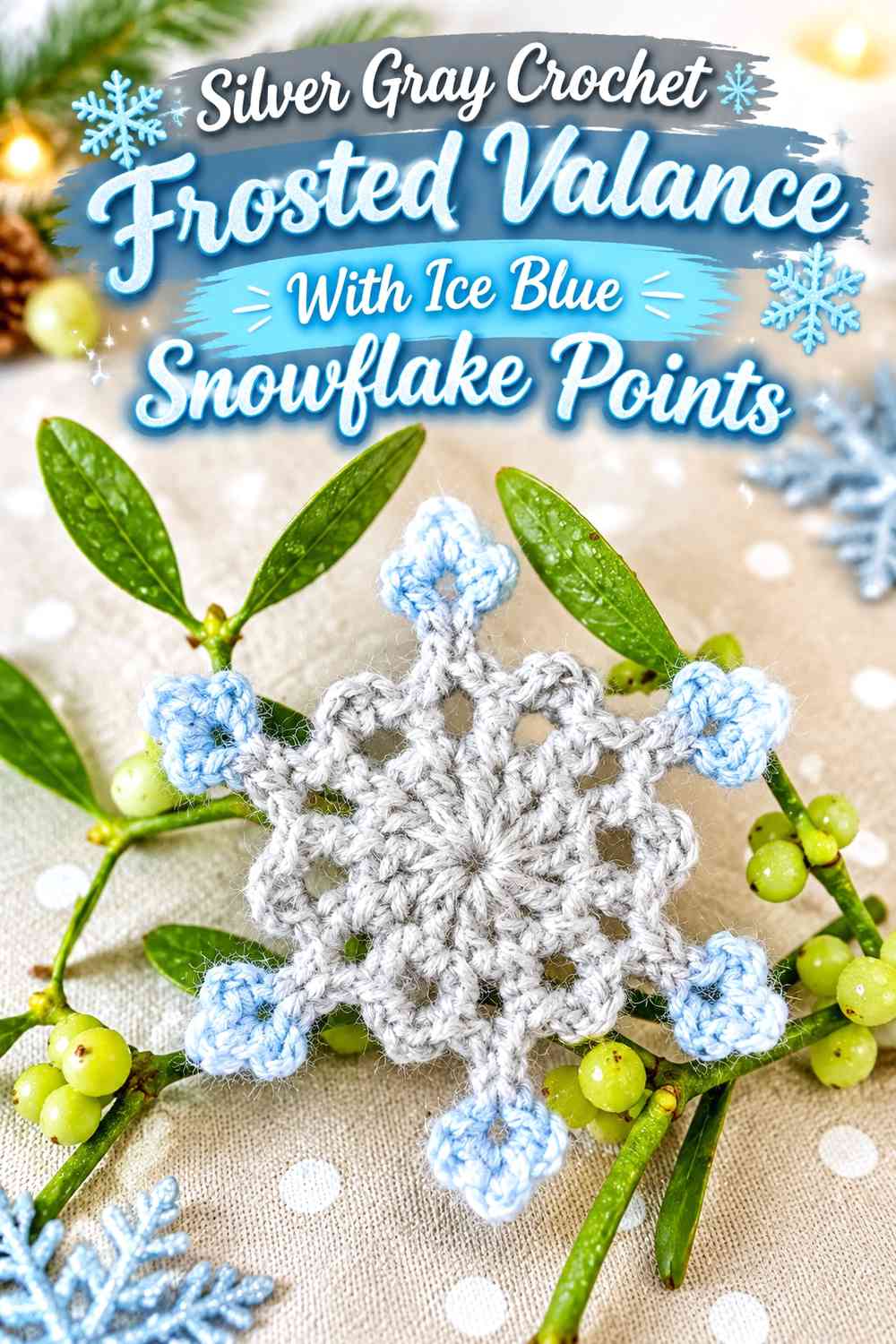
Use silver gray as the main curtain color and place smaller ice-blue snowflakes only at selected lower points or between scallops. This combines the frosted theme with a more restrained motif count.
Ice Blue Snowflakes Should Highlight Specific Silver Gray Points
Choose consistent locations, such as every scallop valley or every second point. Predictable placement makes the snowflakes look integrated into the valance edge rather than added afterward.
Silver Gray Should Stay Visible Around Ice Blue Snowflakes
Do not surround each pale motif with extra blue trim. The gray background provides the contrast that keeps the snowflake outline recognizable.
Creator Credit: HappyBerry Crochet — YouTube tutorial
12. Framed Silver Gray and Ice Blue Crochet Frosted Window Valance
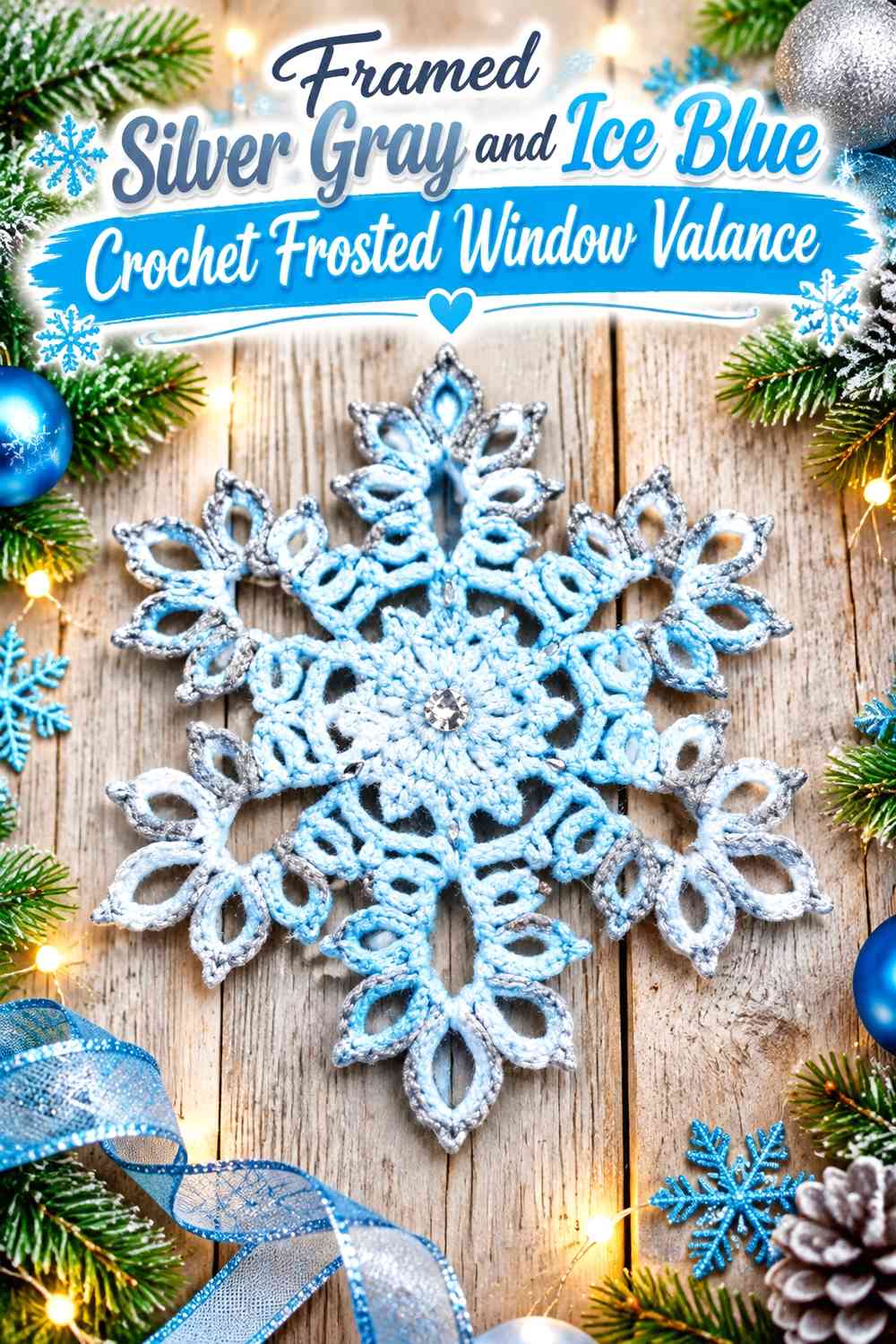
Combine a silver-gray rod band, broad ice-blue center, repeated gray dividing lines, and a controlled ice-blue snowflake or pointed lower edge. This creates the richest two-color treatment while maintaining a clear hierarchy: gray structure, blue decorative field, then winter detail.
Silver Gray Should Frame the Ice Blue Valance From the Top
Keep the upper structural area gray so the hanging line remains clearly defined. Repeat gray sparingly in one lower detail if the top otherwise feels disconnected.
Ice Blue Should Remain the Largest Field Inside Silver Gray
Give the blue center enough height and width to establish the overall frosted color direction. Too many gray bands can chop the window treatment into several narrow horizontal sections.
Silver Gray and Ice Blue Should Simplify at the Snowflake Edge
Once the valance includes a framed top and internal color division, keep the lowest motif treatment controlled. One repeated snowflake or pointed pattern is enough to finish the winter look.
Creator Credit: Bag-O-Day Crochet — YouTube tutorial
Which Silver Gray and Ice Blue Frosted Valance Should You Choose?
Choose a silver-gray-dominant valance if you want the window treatment to stay neutral while ice blue provides the winter accent. Blue scallops, lower points, snowflakes, or hanging drops can add a frosted direction without covering the whole curtain.
An ice-blue-dominant valance feels lighter and more obviously wintry. Silver-gray rod loops, borders, motif centers, or lower bands give the pale crochet enough structure to remain visible against daylight.
For a clean architectural look, choose the contrasting border, filet, or framed treatment. Snowflake edges and hanging motifs provide a more seasonal result, while café-style lace and scallops can remain useful beyond winter if the color palette is the main seasonal cue.
Conclusion
Silver gray and ice blue work especially well for a crochet frosted window valance because the neutral can define the structure while pale blue carries the lighter decorative movement.
Use silver gray at the rod line, motif joins, border, or dense filet sections when you need the curtain to stay visually grounded. Let ice blue take over scallops, openwork, hanging motifs, or snowflake details where a lighter color can reinforce the frosted theme.
Check the valance against the actual window before completing every repeat. Bright daylight can reduce subtle contrast, and the same colors may look different in evening room light. If silver gray and ice blue begin to merge, increase their light-dark separation or use each color in larger areas instead of adding more narrow changes.
Use the credited tutorials for their original curtain, motif, snowflake, or window-hanging guidance, then apply the silver-gray and ice-blue arrangement that best supports the frosted valance you want.
Frequently Asked Questions
Should Silver Gray or Ice Blue be the main color of a frosted window valance?
Either can lead. Silver gray creates a quieter structural field and makes ice-blue decorative details easier to isolate. Ice blue produces a lighter winter look and lets gray provide definition at the top band, borders, or motif centers.
Where should Silver Gray go on a mostly Ice Blue valance?
Useful placements include the rod loops, top band, lower border, filet sections, motif centers, or narrow dividing rows. Give gray a few consistent roles rather than scattering small accents throughout every lace repeat.
How can I keep Ice Blue visible against a bright window?
Use sufficiently broad blue sections and compare the yarn against daylight before making the full valance. If ice blue nearly disappears, choose a slightly deeper version or place silver gray beside it to strengthen the boundary.
Can Silver Gray and Ice Blue be used equally in a crochet valance?
Yes. Broad upper-and-lower sections or repeating motif blocks can give both shades similar coverage. Equal coverage is usually clearer in larger zones than in many narrow alternating rows.
Should snowflakes be Silver Gray or Ice Blue?
Ice-blue snowflakes work well on a silver-gray field because the motif stays light and frosted. Silver-gray snowflakes can provide stronger definition on an ice-blue valance. Choose the direction that gives the motif enough contrast against its background.
How do I keep a Silver Gray and Ice Blue valance from looking too busy?
Choose one primary decorative feature. For example, use a snowflake lower border with a plain upper band, or use detailed filet crochet with a simple contrasting edge. Avoid combining several complex motif systems simply to use more of both colors.
What should I preserve when substituting Silver Gray or Ice Blue yarn colors?
Preserve the cool winter relationship and enough value contrast for the lace or motifs to remain visible against daylight. Replace silver gray with another cool medium gray and ice blue with a pale cool blue that stays visually distinct from the gray.