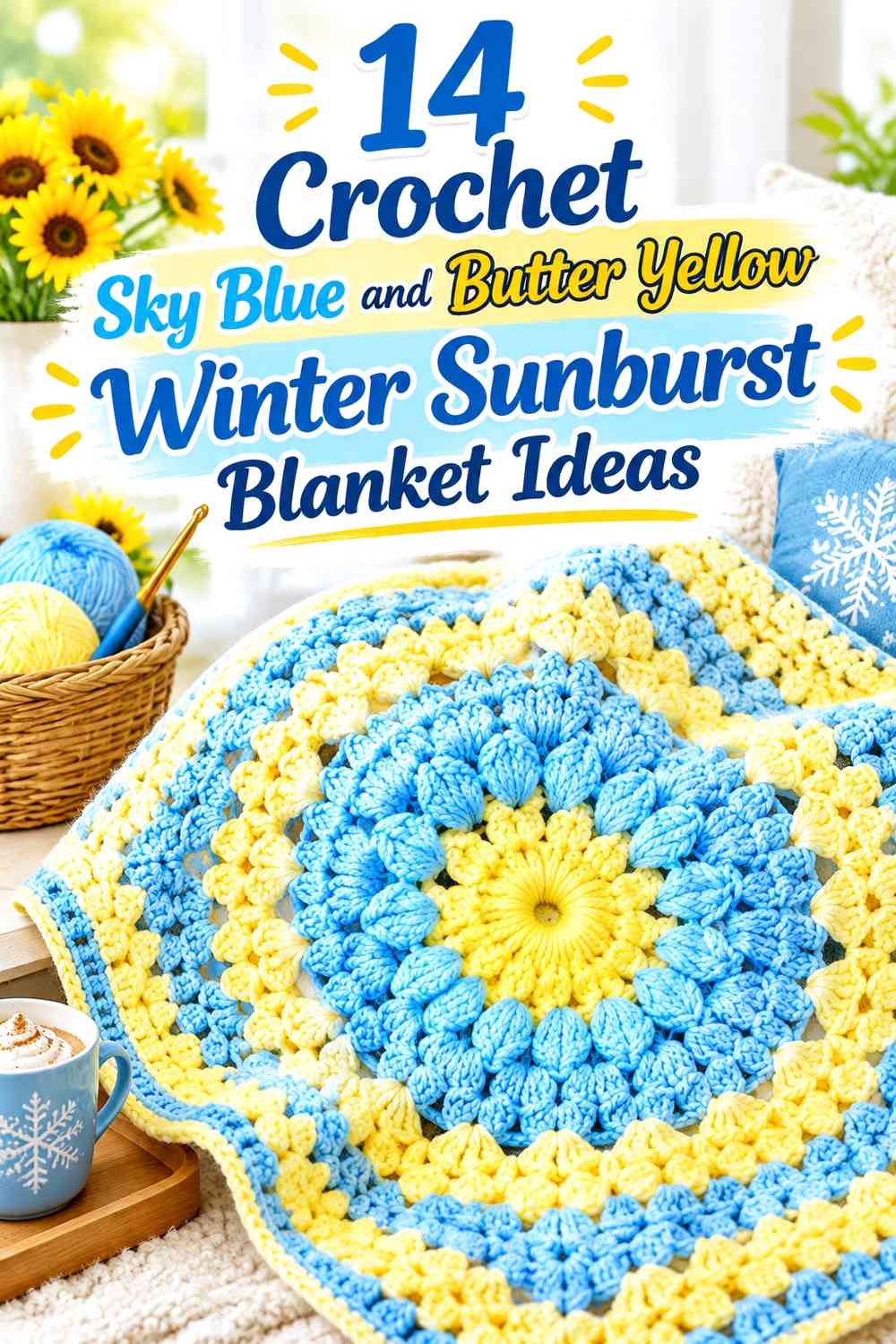

Sky blue and butter yellow give a crochet sunburst blanket an interesting winter balance. Sky blue can provide the cool, open background associated with clear winter skies, while butter yellow introduces warmth without turning the blanket into a strongly golden or autumnal palette. On textured sunburst motifs, the placement of those two colors matters as much as the shades themselves.
Because both colors can be relatively light, they may not always create enough value contrast to separate puff stitches, clusters, motif centers, and square edges. The ideas below vary which color dominates, where the second color appears, how joins frame the motifs, and when a restrained neutral or darker accent can make the sunburst pattern easier to read.
Quick List
- Sky Blue Field and Butter Yellow Center Crochet Winter Sunburst Blanket
- Butter Yellow Burst and Sky Blue Frame Crochet Winter Sunburst Blanket
- Reversed Sky Blue and Butter Yellow Crochet Sunburst Blanket
- Tonal Sky Blue and Butter Yellow Crochet Winter Sunburst Blanket
- Butter Yellow, Sky Blue, and Navy Crochet Winter Sunburst Blanket
- Sky Blue, Butter Yellow, and Silver Gray Crochet Sunburst Blanket
- Checkerboard Sky Blue and Butter Yellow Crochet Winter Sunburst Blanket
- Snowy White, Sky Blue, and Butter Yellow Crochet Sunburst Blanket
- Oatmeal, Sky Blue, and Butter Yellow Crochet Winter Sunburst Blanket
- Charcoal-Joined Sky Blue and Butter Yellow Crochet Sunburst Blanket
- Dusty Teal, Sky Blue, and Butter Yellow Crochet Winter Sunburst Blanket
- Butter Yellow-Bordered Sky Blue Crochet Winter Sunburst Blanket
- Sky Blue-Bordered Butter Yellow Crochet Sunburst Blanket
- Two-Color Sky Blue and Butter Yellow Crochet Sunburst Blanket
Balance Sky Blue and Butter Yellow Before Crocheting the Whole Blanket
Sky blue and butter yellow can sit fairly close in lightness, especially when both yarns are pale. Make one test motif before committing to the full blanket and look at it from several feet away. If the yellow center disappears into the blue surrounding round, either deepen one shade slightly or introduce a small separating color.
A grayscale photo can also help. Different hues sometimes look more distinct than they actually are in value. If sky blue and butter yellow become nearly identical in grayscale, use placement and repetition carefully so the sunburst texture does not flatten visually.
Decide Whether Sky Blue or Butter Yellow Should Control the Blanket
A sky-blue-dominant blanket usually reads cooler because the blue covers the square edges, joins, or larger background areas. Butter yellow then becomes the repeated light source at each sunburst center.
Reversing those roles produces a warmer blanket. Butter yellow can occupy larger motif rounds or edging while sky blue becomes the cooling contrast. Neither arrangement is automatically stronger; choose according to whether you want the finished throw to look predominantly blue with yellow highlights or evenly split between the two colors.
Use Winter Neutrals to Separate Sky Blue and Butter Yellow When Needed
White, ivory, oatmeal, pale gray, or another quiet neutral can give the two main colors breathing room. On a modular blanket, a neutral square-off round or join can prevent adjoining sunbursts from visually running together.
A much darker accent should be used more deliberately. Navy or charcoal can define motif edges effectively, but large amounts can make a light winter palette considerably heavier. Keeping the darkest shade mainly in seams, small centers, or narrow edging preserves the airy sky-blue-and-butter-yellow direction.
1. Sky Blue Field and Butter Yellow Center Crochet Winter Sunburst Blanket
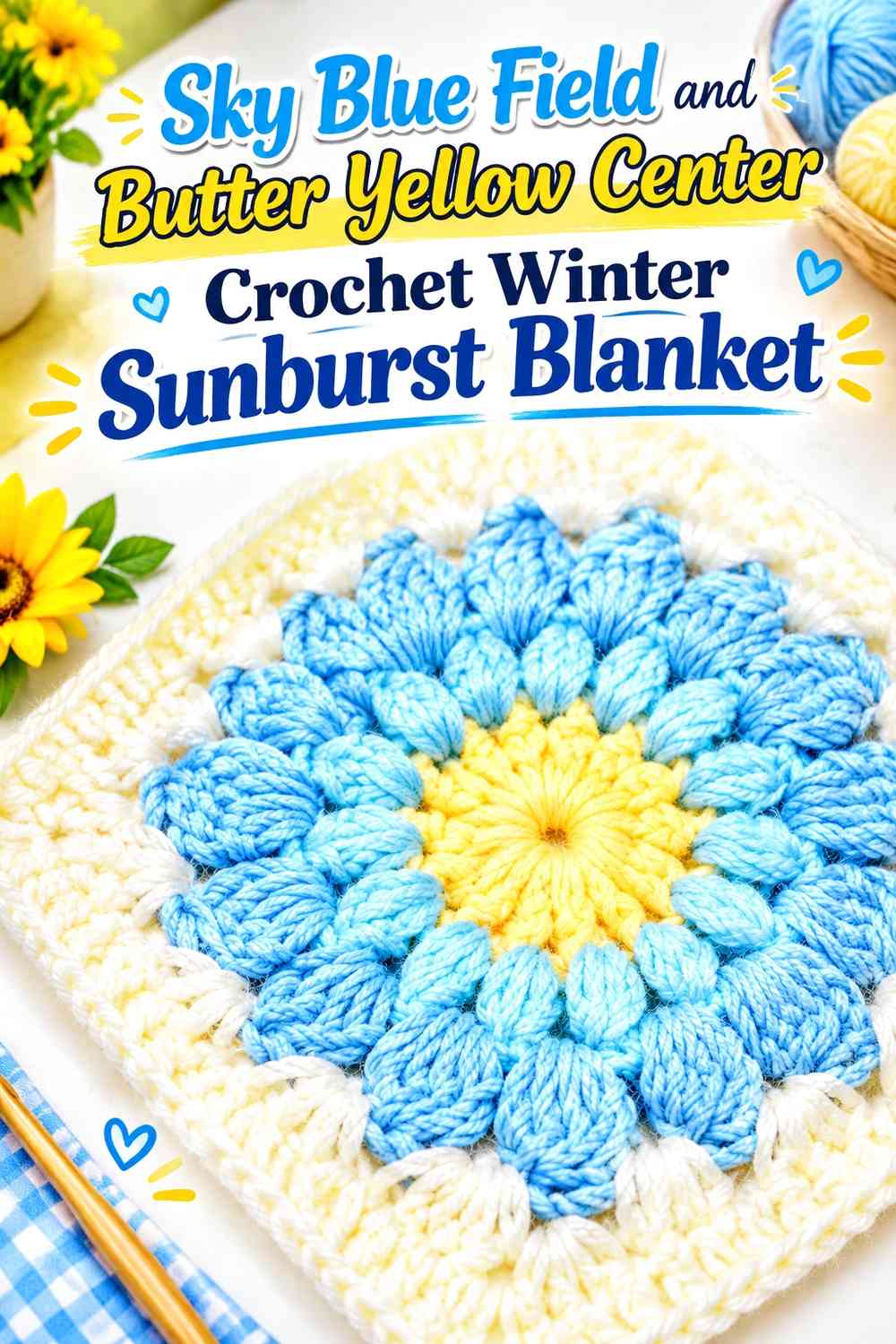
Make sky blue the largest visual area and reserve butter yellow for the radiating center of each sunburst square. This arrangement gives the blanket an immediately blue overall appearance when viewed from across the room, while the repeated yellow centers remain small points of warmth. A soft white or ivory join can be useful if the blue square edges need separation, but the neutral should remain secondary to the two requested colors.
Butter Yellow Centers Give Sky Blue Sunbursts a Clear Focal Point
Keep butter yellow concentrated around the central portion of each motif instead of distributing it evenly through every round. Repeated yellow centers create a recognizable rhythm across the blanket and allow the surrounding sky blue to function as one continuous winter background.
If the butter yellow is extremely pale, compare it directly against the sky blue before making dozens of squares. The center still needs enough separation for the radiating texture to remain visible.
Sky Blue Joins Can Create a Continuous Winter Blanket Field
Using sky blue for both square edges and joins reduces the visual interruption between motifs. The blanket can then read almost like yellow bursts floating over one large blue surface.
Check several joined test squares before committing to this approach. When the joining color exactly matches the final blue round, individual square boundaries become less prominent, which is useful when you want the sunbursts rather than the grid to dominate.
Creator Credit: Bella Coco — Tutorial
2. Butter Yellow Burst and Sky Blue Frame Crochet Winter Sunburst Blanket
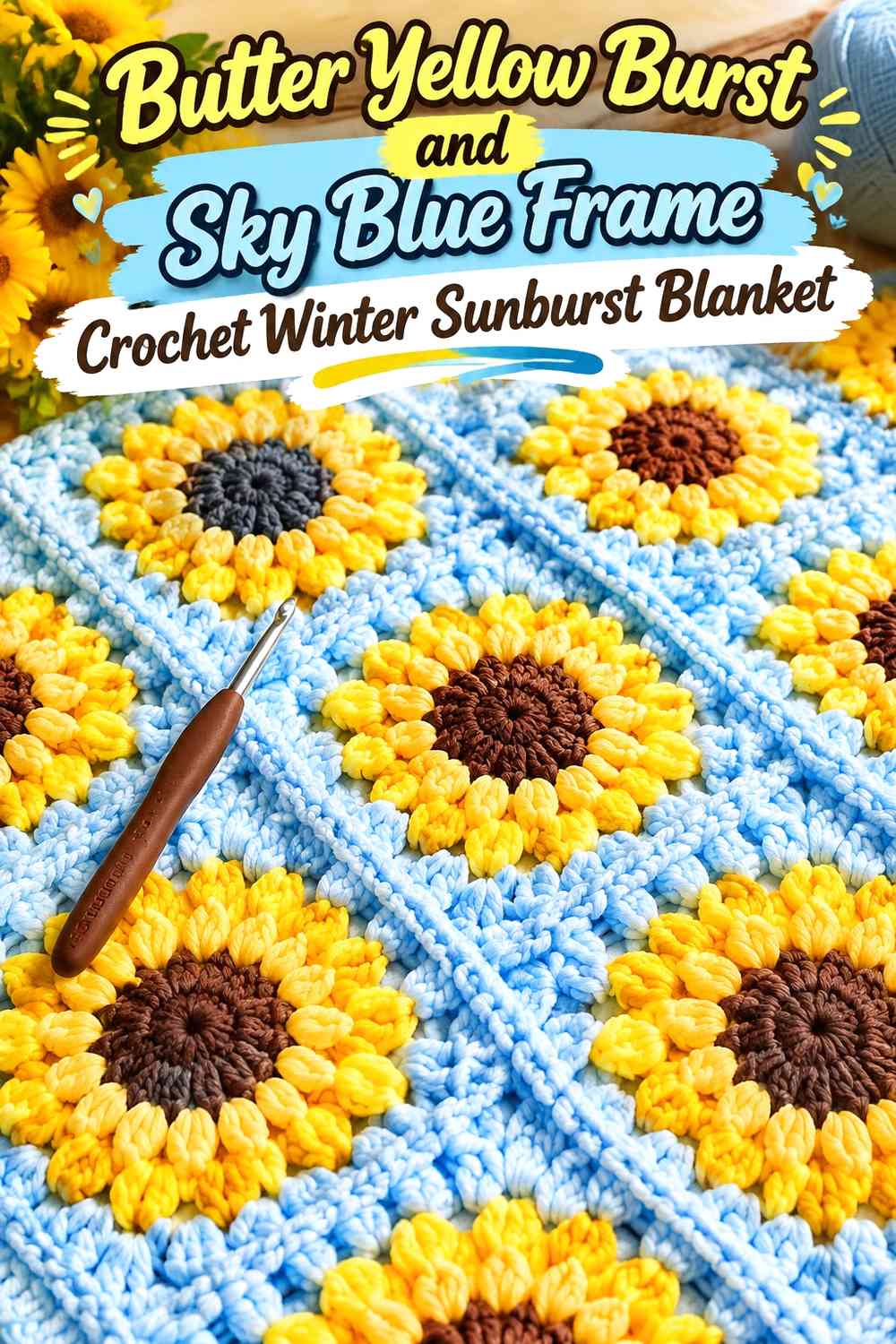
This version gives butter yellow more space within each motif while using sky blue to transform the round sunburst into a clearly defined square. The yellow becomes the visual subject and the blue provides consistent framing from motif to motif. Keep any additional neutral restricted to the final blanket border if you want the square grid itself to stay distinctly blue.
Butter Yellow Can Occupy More Than One Sunburst Round
Rather than limiting butter yellow to a tiny center, repeat it through adjacent textured areas so each burst has more visual weight. This is useful when a small yellow center feels lost against a large sky-blue square.
Avoid spreading yellow into every part of the motif, though. Leaving a noticeable transition into blue is what preserves the sunburst shape.
Sky Blue Square Frames Keep Butter Yellow Motifs Organized
Use sky blue consistently where the circular burst becomes a square. Repeating the same blue around every motif creates a stable grid even when the yellow portions vary slightly.
This placement is especially useful on a blanket containing pronounced puff or cluster texture because the blue outer area can act as visual space around the busier center.
Creator Credit: Hooked by Robin — Tutorial
3. Reversed Sky Blue and Butter Yellow Crochet Sunburst Blanket
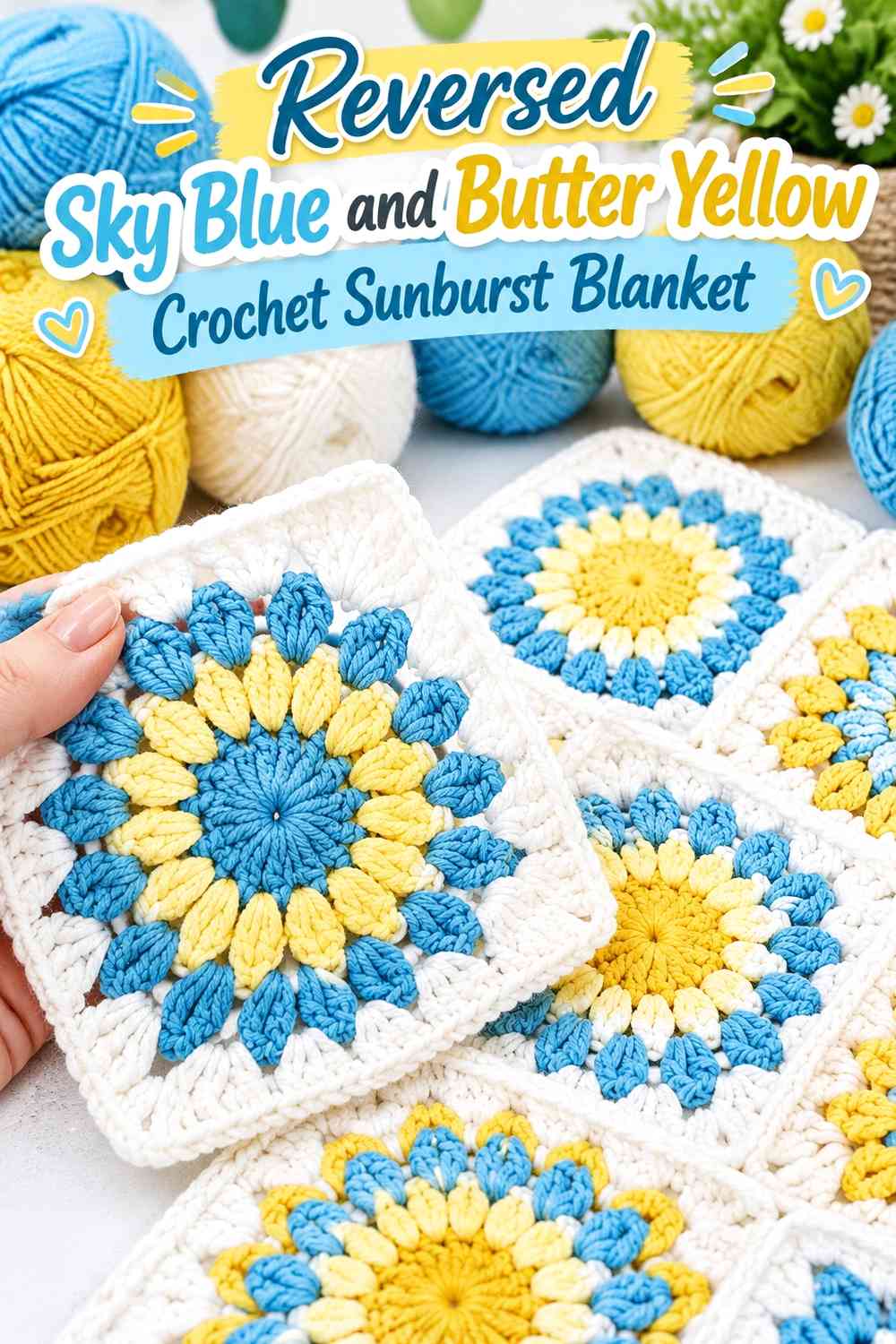
Instead of assigning one fixed role to each color, make two related motif types. One can use butter yellow toward the center and sky blue toward the edge; the second can reverse that relationship. Alternating them gives the blanket more movement while keeping the palette tightly controlled.
Sky Blue Centers Break Up Repeated Butter Yellow Sunbursts
Occasional sky-blue-centered motifs prevent every square from presenting the same yellow focal point. They are particularly effective when arranged in a controlled checkerboard or diagonal pattern rather than scattered randomly.
Keep enough butter yellow elsewhere in those reversed squares to maintain a clear relationship with the rest of the blanket.
Butter Yellow Frames Need Repetition Around Sky Blue Motifs
When butter yellow moves to the outer part of a reversed square, repeat that structure consistently. One isolated yellow-framed motif may look accidental, while a planned sequence reads as part of the blanket design.
Lay out all finished squares before joining so the two directions remain evenly distributed.
Creator Credit: Crochet with Yarnhild — Tutorial
4. Tonal Sky Blue and Butter Yellow Crochet Winter Sunburst Blanket
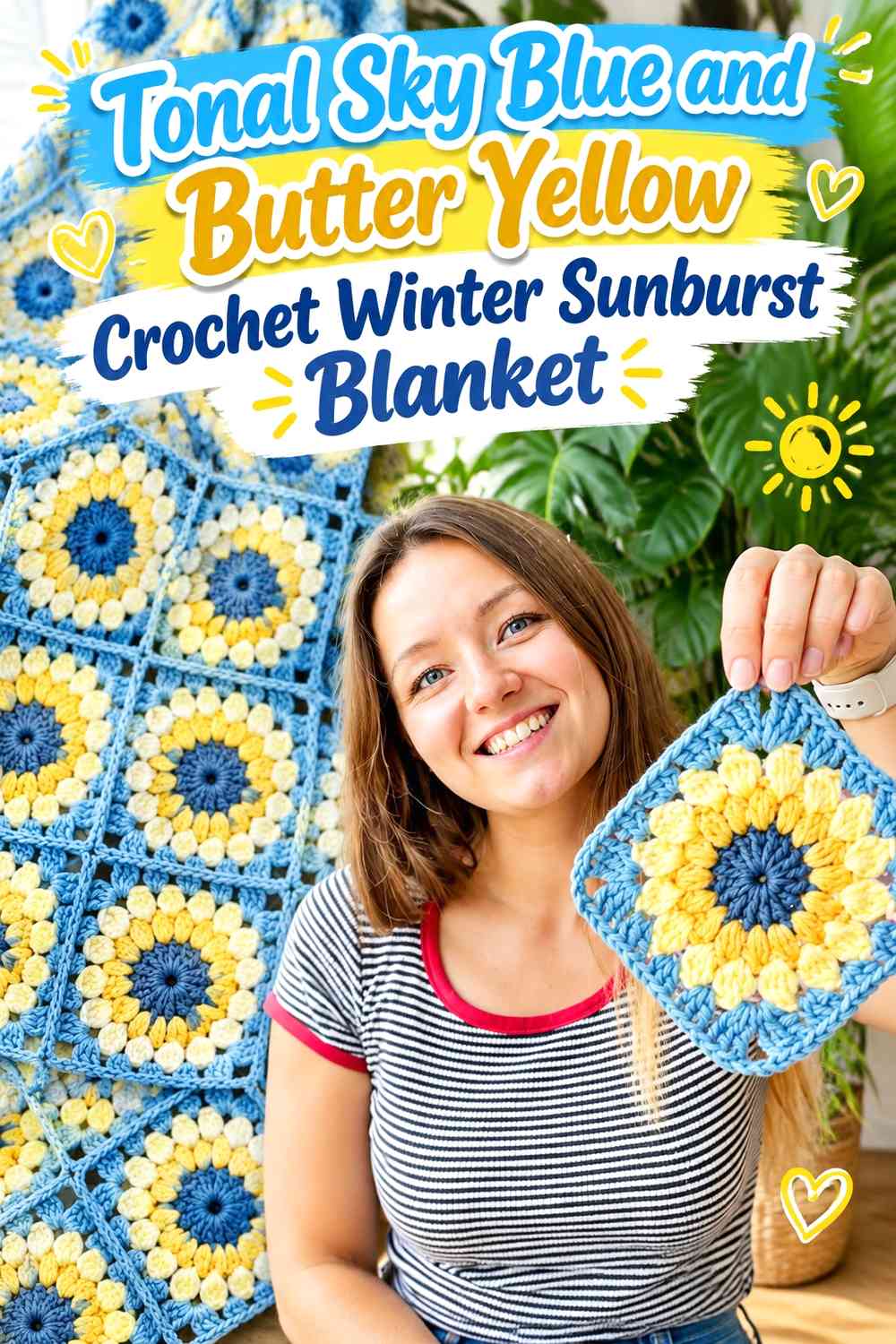
Introduce two neighboring blue values while keeping butter yellow as the warm highlight. A lighter sky blue can occupy one motif round and a somewhat deeper blue another, creating depth without moving away from the requested color family. Butter yellow should remain clearly identifiable rather than being diluted among too many similar pastels.
Sky Blue Tonal Changes Can Define Different Sunburst Layers
Use the lighter and deeper blue in adjacent motif areas when you want the sunburst construction itself to become more visible. The value change can distinguish one textured round from another even though both shades remain blue.
Keep the direction consistent across most squares if you want the blanket to feel orderly rather than scrappy.
Butter Yellow Should Remain the Warmest Repeated Point
Against multiple blues, butter yellow works well as the one clearly warm color repeated throughout the blanket. Concentrating it in centers or one major textured round keeps the palette recognizable.
If another warm neutral is introduced, use it sparingly so it does not compete with the yellow.
Creator Credit: by Kristine — Tutorial
5. Butter Yellow, Sky Blue, and Navy Crochet Winter Sunburst Blanket
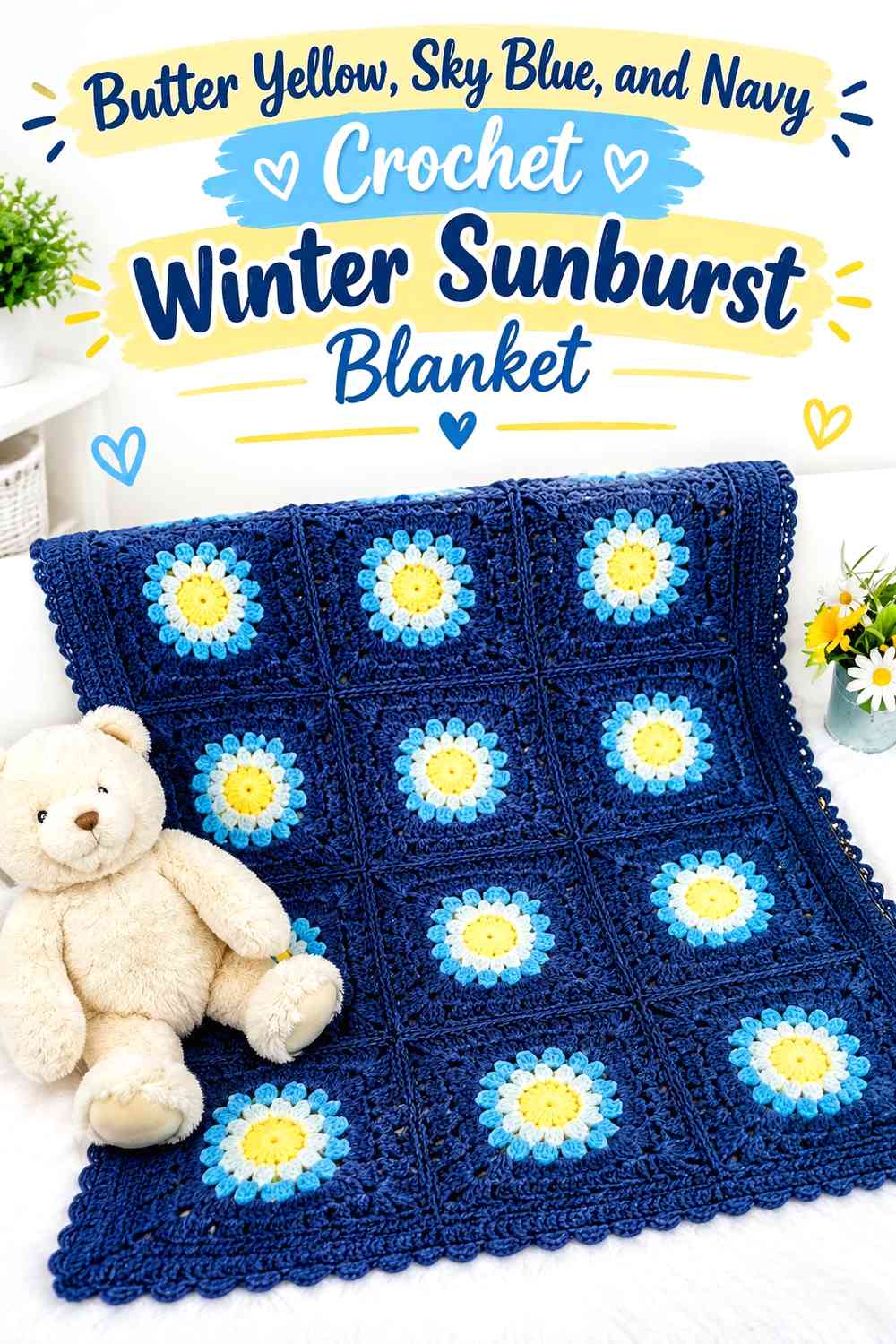
Adding a small amount of navy can solve a contrast problem when both sky blue and butter yellow are very pale. The navy should serve as definition rather than a third dominant color. Consider it for small motif centers, narrow joining lines, or a restrained outer edge.
Navy Can Separate Butter Yellow From Sky Blue Without Taking Over
Place navy where two pale areas need a crisp break. A small dark center surrounded by butter yellow, for example, can make the yellow sunburst more recognizable before it transitions into sky blue.
Avoid placing navy across broad outer rounds unless you deliberately want a much darker winter blanket.
Sky Blue Should Still Control the Larger Blanket Surface
Keep sky blue across square backgrounds or repeated framing areas so the dark accent never becomes the first color noticed from a distance. Butter yellow can remain the secondary focal color, with navy providing only punctuation.
View several finished motifs together before deciding how much navy to repeat.
Creator Credit: Jo to the World Creations — Tutorial
6. Sky Blue, Butter Yellow, and Silver Gray Crochet Sunburst Blanket
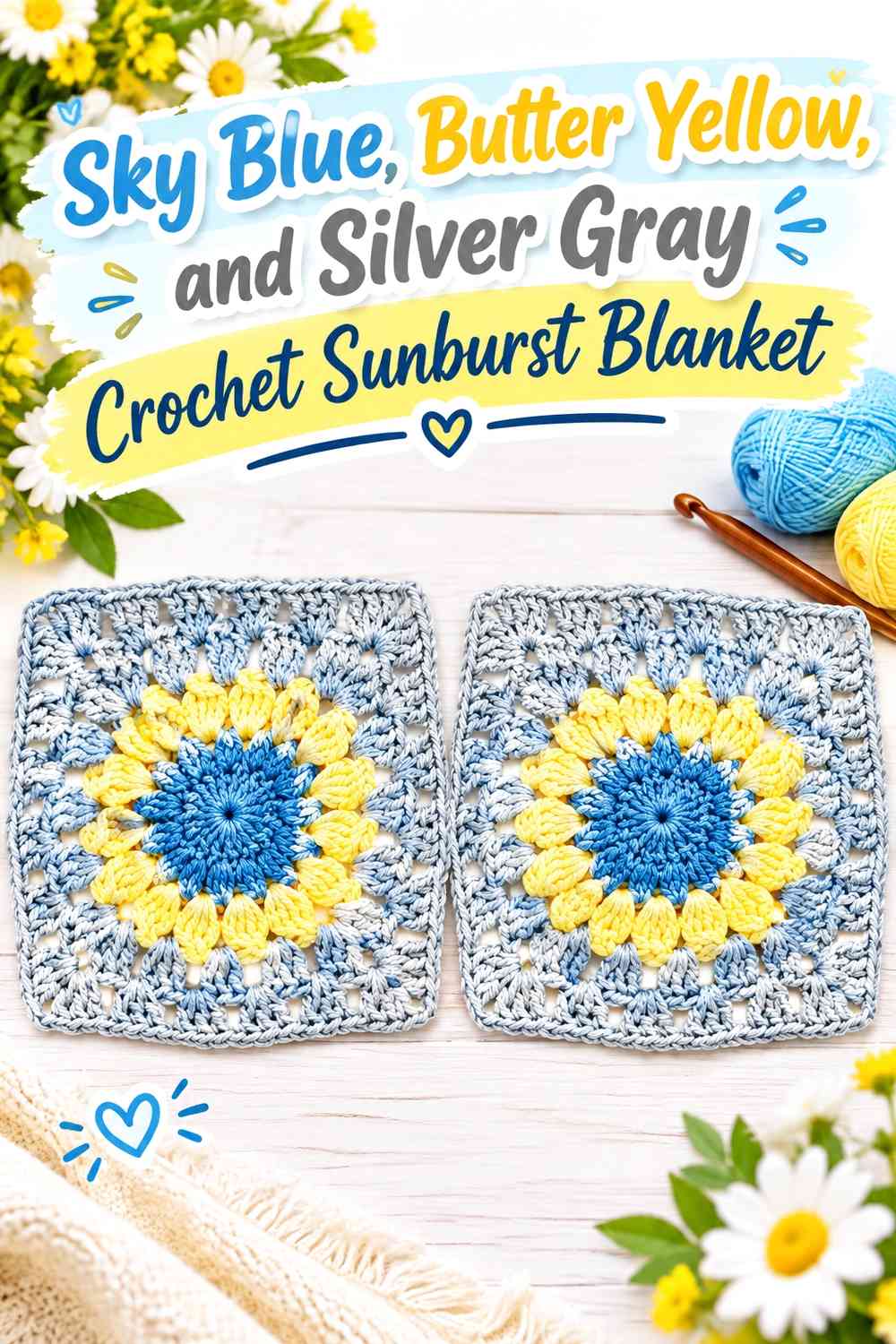
Silver gray creates a cooler neutral transition than cream or oatmeal. It can be useful for joining sky-blue-and-yellow squares when you want the seams to remain visible without introducing a strongly dark grid.
Silver Gray Gives Sky Blue and Butter Yellow Squares Quiet Separation
Use gray around the motif edges or in the joining area to prevent similar-value blues and yellows from touching everywhere. Because it is neutral, it can organize the blanket without becoming another competing focal color.
Check that the gray is actually distinguishable from your sky blue; two very similar cool light shades can merge.
Butter Yellow Prevents the Silver Gray and Sky Blue Palette From Becoming Flat
Repeat butter yellow at predictable points across the blanket rather than allowing gray and blue to occupy nearly all the surface. The warmer color is what keeps the sunburst centers visually distinct.
A limited yellow role often has more impact here than equal amounts of all three colors.
Creator Credit: Brunaticality — Tutorial
7. Checkerboard Sky Blue and Butter Yellow Crochet Winter Sunburst Blanket
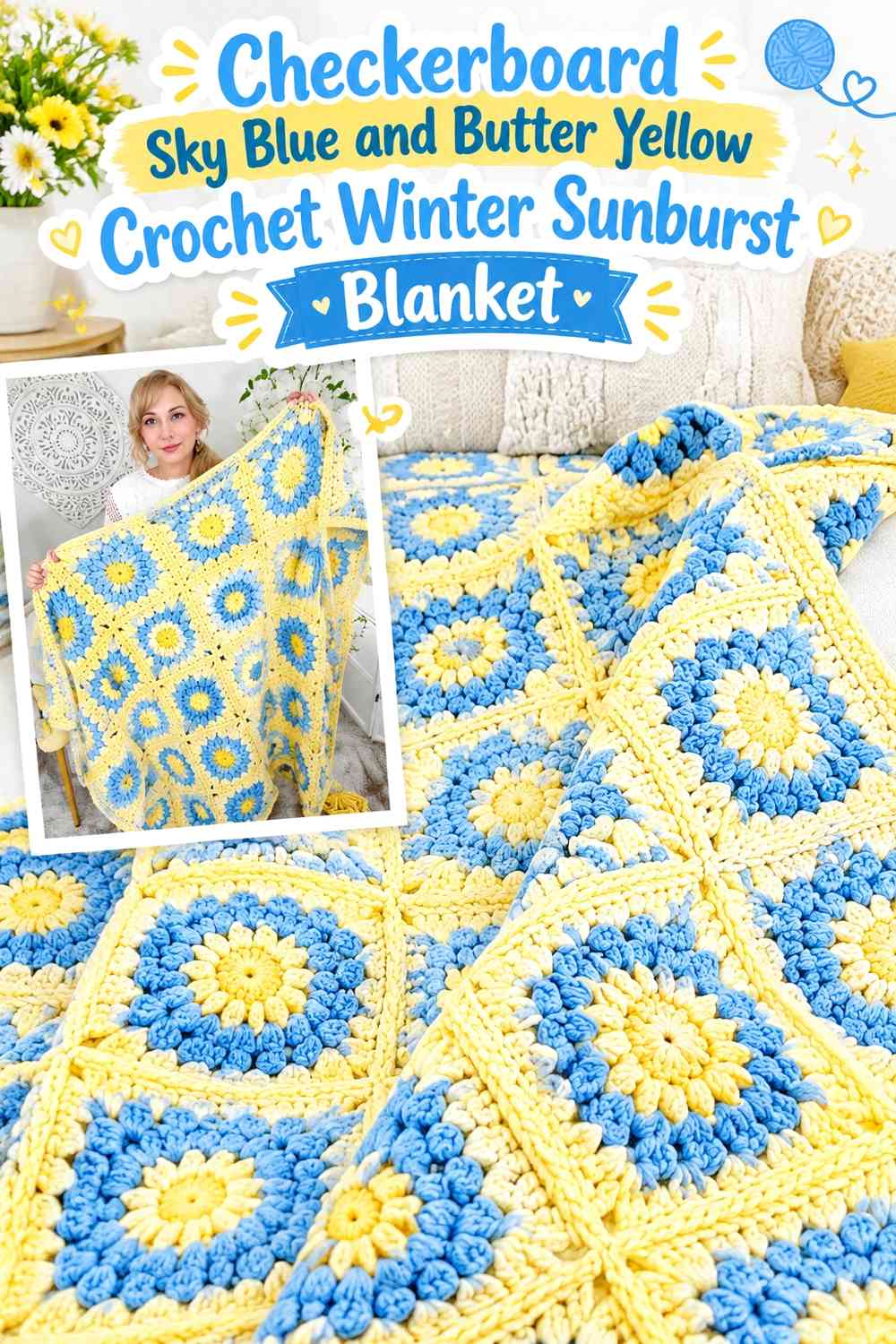
Build two color arrangements and alternate them across the blanket grid. One square can be sky-blue dominant and the next butter-yellow dominant. The construction can remain the same; the color reversal creates the difference.
Sky Blue and Butter Yellow Checkerboards Need a Planned Layout
Arrange all motifs before joining and photograph the layout once you are satisfied. This makes it easier to preserve the alternating pattern when individual squares are moved during assembly.
A strict checkerboard gives stronger structure, while diagonal bands create more directional movement.
Butter Yellow Dominant Squares Should Not Overpower Sky Blue Squares
If the yellow is considerably more saturated than the blue, the supposedly balanced checkerboard may still look yellow-heavy. Reduce the yellow area within those motifs or choose a softened butter yellow that stays compatible with the quieter blue.
Compare the whole arrangement from a distance rather than judging one square at a time.
Creator Credit: Treasurie — Tutorial
8. Snowy White, Sky Blue, and Butter Yellow Crochet Sunburst Blanket
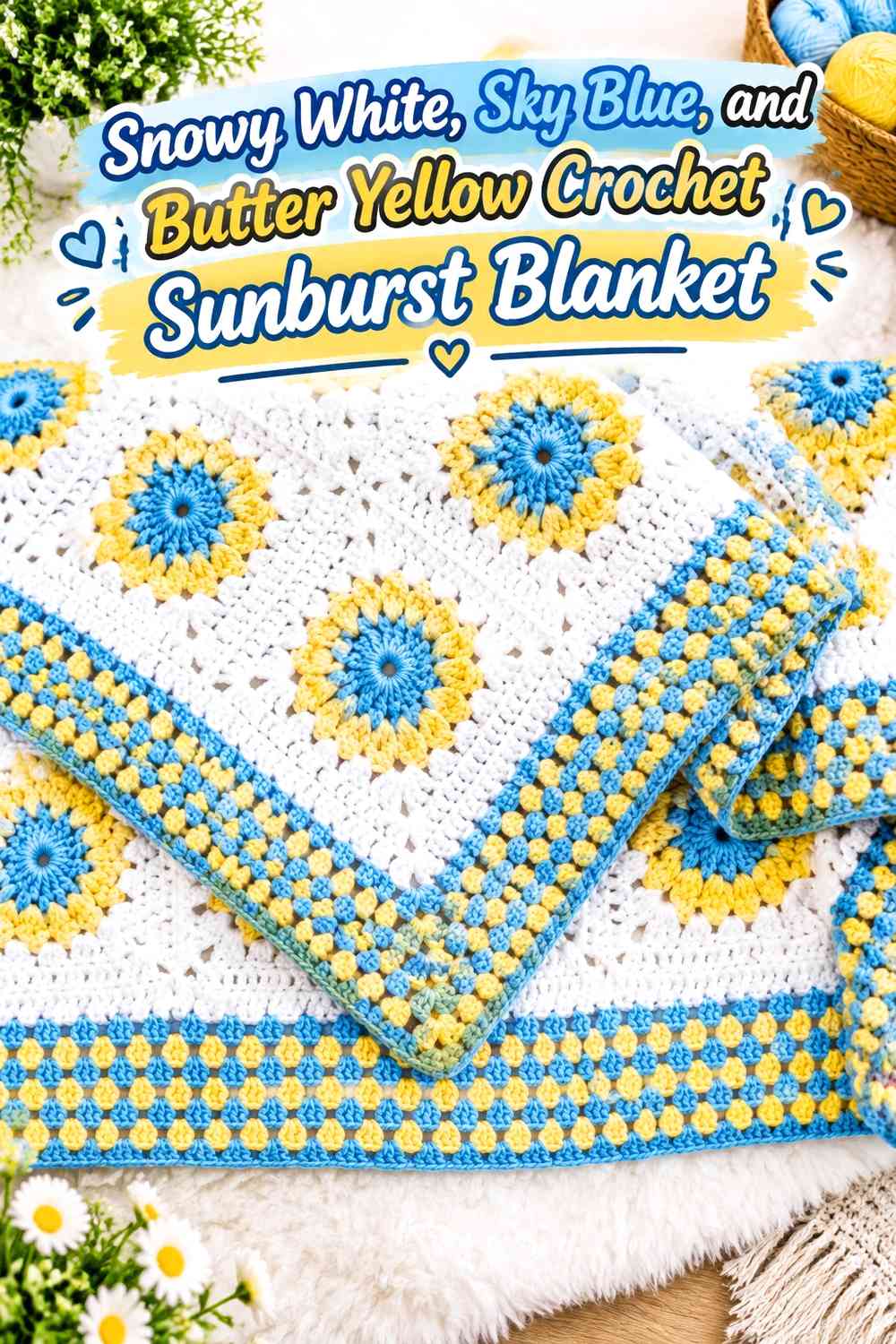
White can turn the palette toward a crisp snow-and-sunlight direction. Use it primarily as negative space around the sunbursts rather than in equal amounts with the two featured colors. Sky blue can form the cooler structural layer while butter yellow occupies the raised centers.
White Makes Sky Blue and Butter Yellow Sunbursts Feel More Separated
A white outer square round gives each burst its own frame before the motifs meet. This is useful when the sky blue and yellow portions already contain considerable texture and need a calmer surrounding area.
Keep the white placement consistent so the blanket develops a unified grid.
Butter Yellow Needs Enough Contrast Against White Borders
Very pale yellow can disappear beside bright white. If your chosen butter yellow is extremely light, place sky blue between the yellow burst and the white frame or choose a slightly deeper butter yellow while preserving its soft character.
Testing one full square can prevent the center from becoming visually washed out.
Creator Credit: Sirin’s Crochet — Tutorial
9. Oatmeal, Sky Blue, and Butter Yellow Crochet Winter Sunburst Blanket
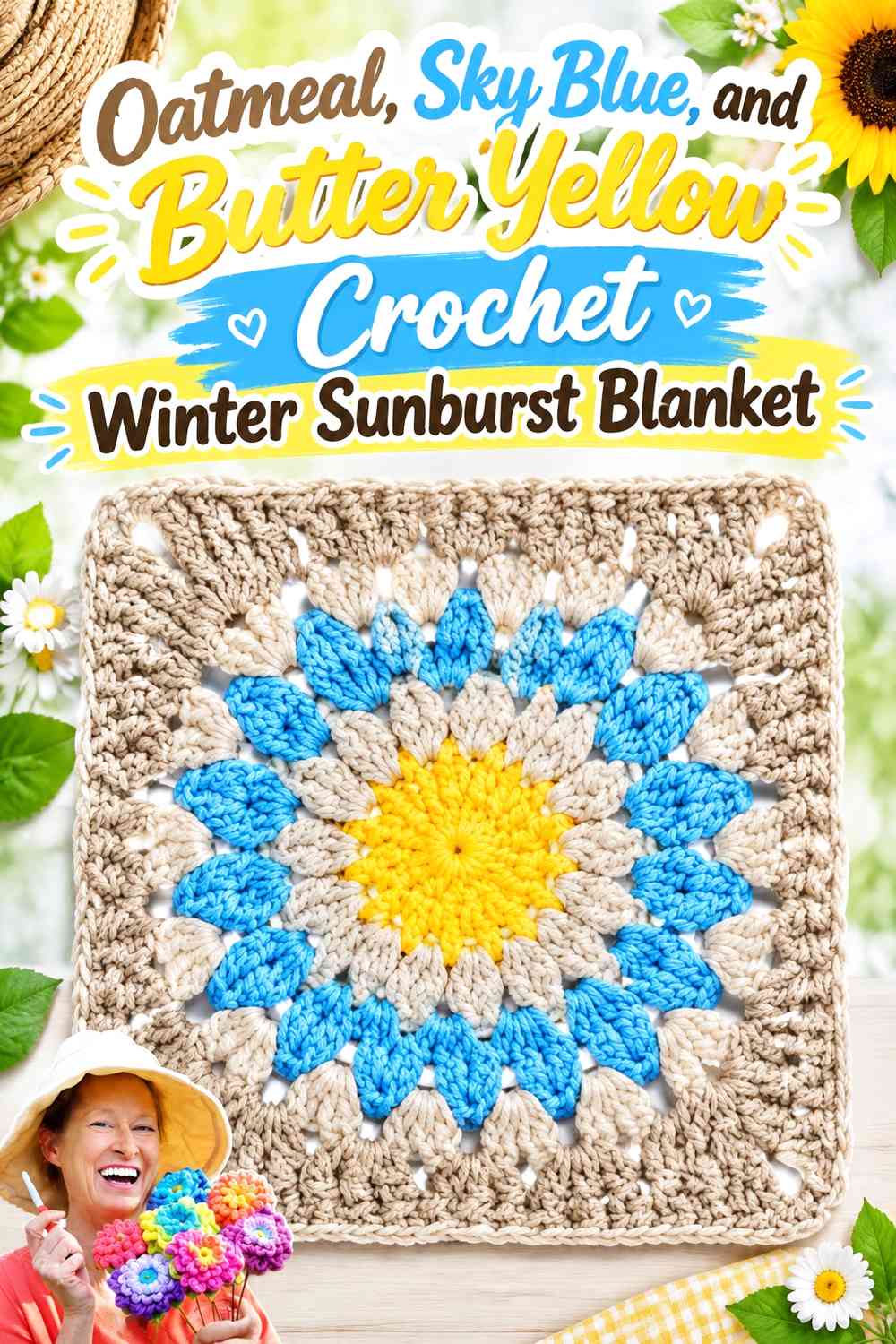
Oatmeal provides a warmer neutral than white or silver gray. It works particularly well when you want the blanket to retain a winter palette without looking icy throughout. Keep sky blue prominent so the warmer oatmeal and butter yellow do not shift the entire blanket toward beige.
Oatmeal Softens the Jump Between Butter Yellow and Sky Blue
Place oatmeal between the yellow burst and the blue framing round when the two colors feel too abrupt together. The neutral can create a quieter transition while still allowing the sunburst layers to remain distinct.
Choose an oatmeal that does not visually merge with butter yellow when placed side by side.
Sky Blue Should Occupy More Area Than Oatmeal in This Winter Palette
Use blue for joins, outer square rounds, or the main border so the blanket still reads clearly as sky blue. Oatmeal works better here as supporting space than as the blanket’s largest color.
This balance preserves the requested cool-and-warm contrast.
Creator Credit: Secret Yarnery — Tutorial
10. Charcoal-Joined Sky Blue and Butter Yellow Crochet Sunburst Blanket
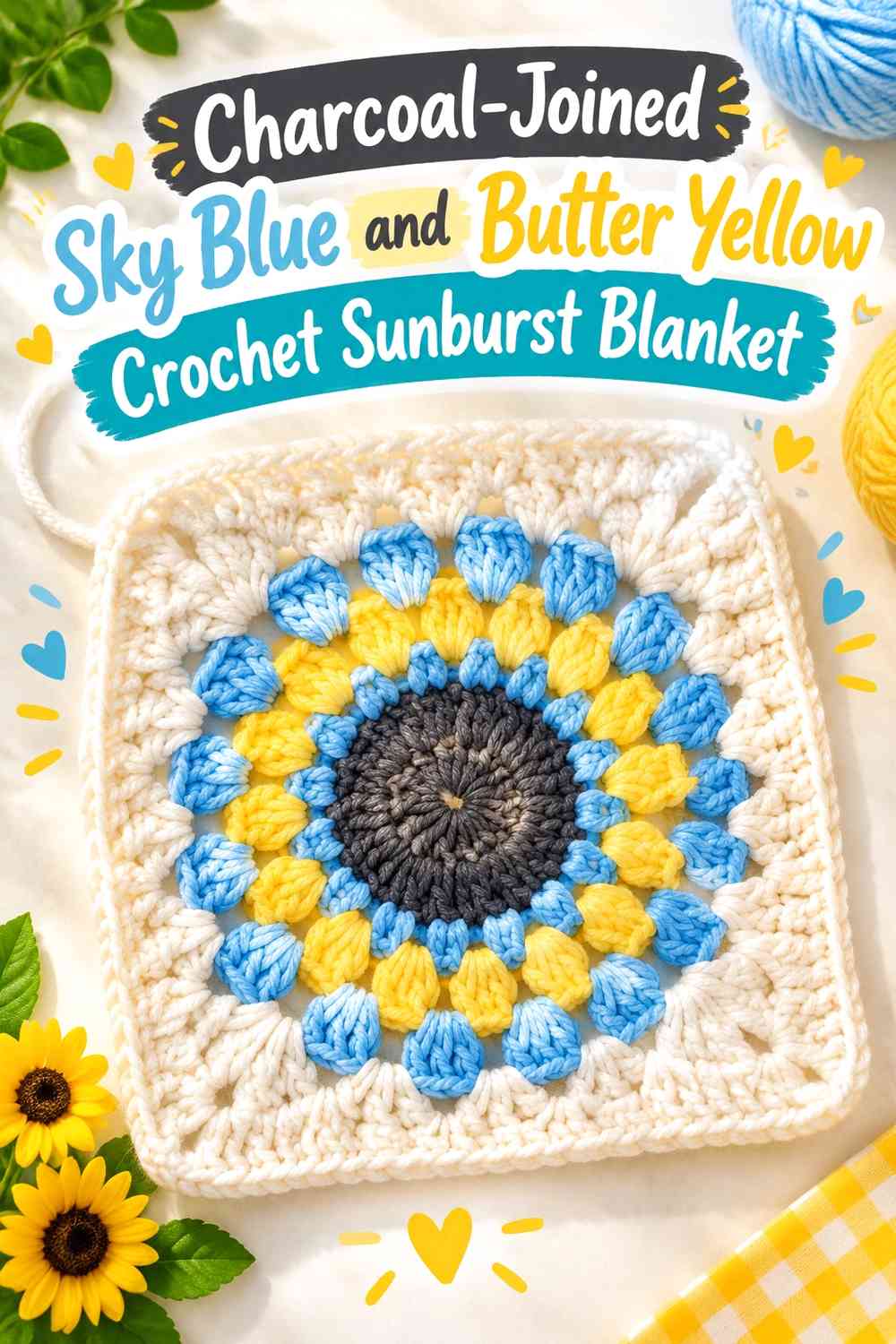
A narrow charcoal join creates the strongest contrast in this collection. It can outline every square and make pale sky blue and butter yellow easier to distinguish, but it also gives the grid much more visual authority.
Charcoal Can Outline Sky Blue and Butter Yellow Without Filling the Motifs
Keep charcoal mostly between squares rather than inside every burst. Thin dark seams define the modular construction while leaving the two pale colors responsible for the larger visual areas.
Before committing, join four sample squares. A dark seam can appear substantially stronger once it repeats across an entire blanket.
Butter Yellow Centers Keep Charcoal and Sky Blue From Feeling Too Heavy
Repeated yellow centers interrupt the darker grid and draw attention back toward each sunburst. Using yellow consistently is especially important if charcoal also appears in the outer blanket border.
Avoid adding several other dark accents; the join already supplies enough definition.
Creator Credit: Offthehookforyou Vicki Roberts — Tutorial
11. Dusty Teal, Sky Blue, and Butter Yellow Crochet Winter Sunburst Blanket
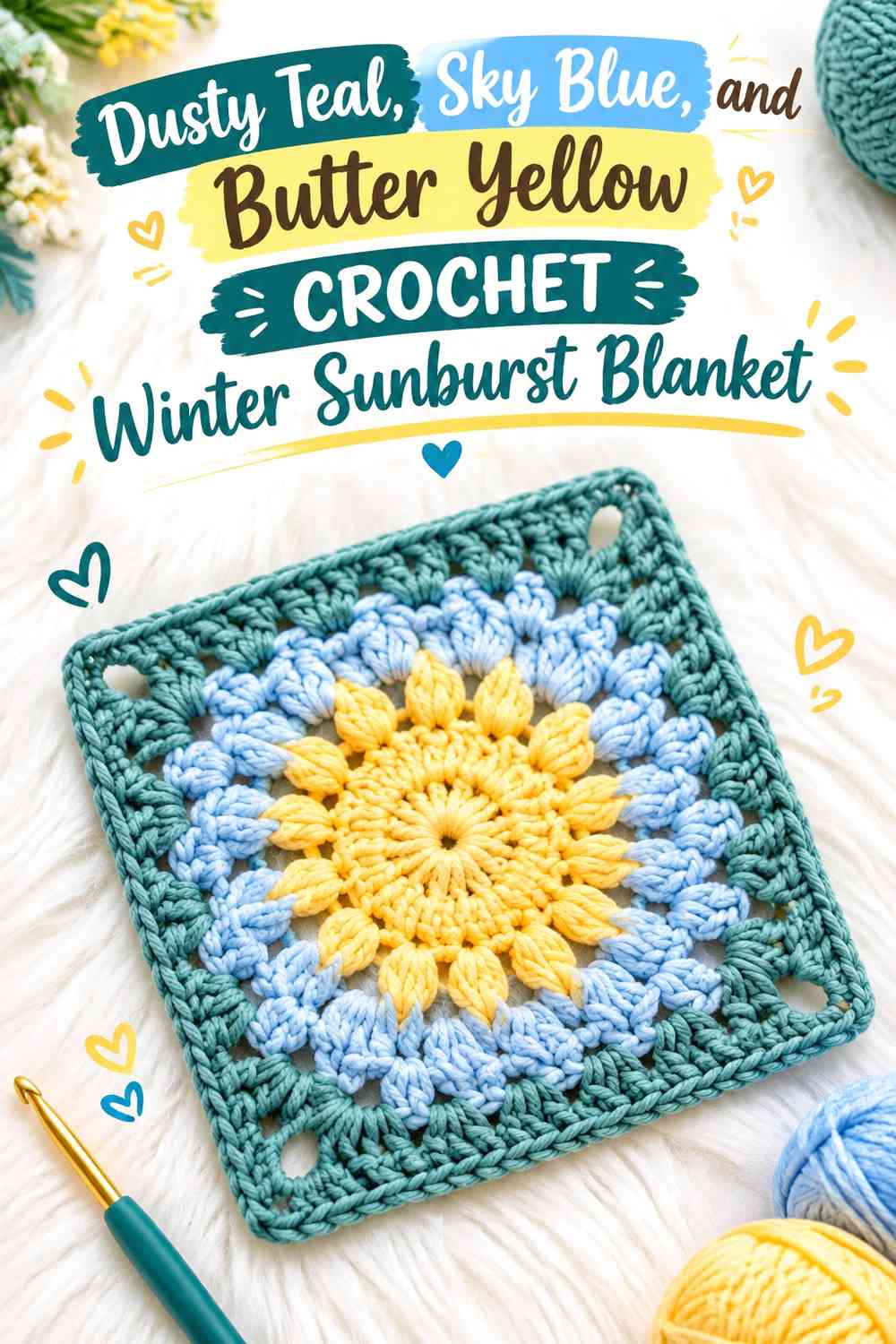
Dusty teal can add depth while staying in the blue-green side of the palette. Use it selectively so sky blue remains the primary cool color. Butter yellow can then provide the contrasting warm points across the motifs.
Dusty Teal Can Deepen Sky Blue Sunburst Edges
Reserve teal for one outer motif round, a narrow join, or selected squares. Its deeper value can distinguish the edges of a sunburst when sky blue and butter yellow are too similar in lightness.
Keeping teal away from every round prevents it from replacing sky blue as the main color.
Butter Yellow Should Repeat Consistently Against Sky Blue and Teal
The blue and teal areas already create tonal variation, so yellow works best when its placement is predictable. Repeating the same yellow center across the grid gives the eye a stable pattern to follow.
This is more controlled than randomly changing the yellow position from square to square.
Creator Credit: Theodore And Rose — Tutorial
12. Butter Yellow-Bordered Sky Blue Crochet Winter Sunburst Blanket
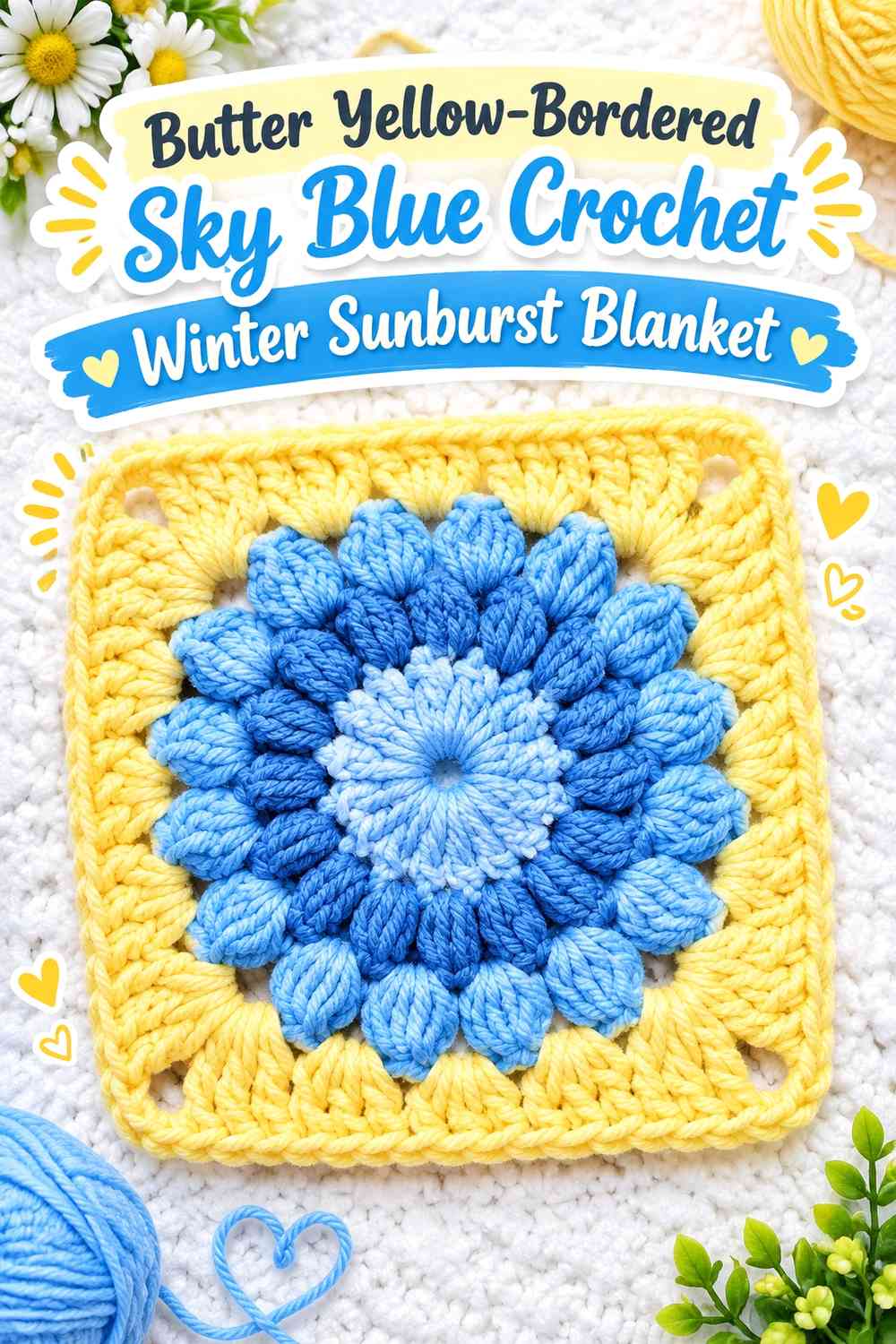
Most blue-and-yellow blanket plans place the cooler color around the outside. Reversing that decision and finishing with butter yellow gives the blanket a warmer final frame while the inner grid can remain predominantly sky blue.
Butter Yellow Borders Pull Warmth Toward the Blanket Edge
A yellow outer border repeats the sunburst color beyond the individual motifs and visually reconnects the centers with the perimeter. This can be especially useful when yellow appears only in relatively small areas inside the blanket.
Keep the border proportionate to the rest of the design so it does not overwhelm the blue field.
Sky Blue Joins Keep a Butter Yellow Border From Dominating the Grid
If the outer border is yellow, using sky blue through the internal joins maintains enough cool color across the larger surface. The blue seams also connect neighboring motifs before the eye reaches the warmer outer frame.
Evaluate the full blanket layout before deciding whether another neutral edging round is necessary.
Creator Credit: Crochet Me Lovely — Tutorial
13. Sky Blue-Bordered Butter Yellow Crochet Sunburst Blanket
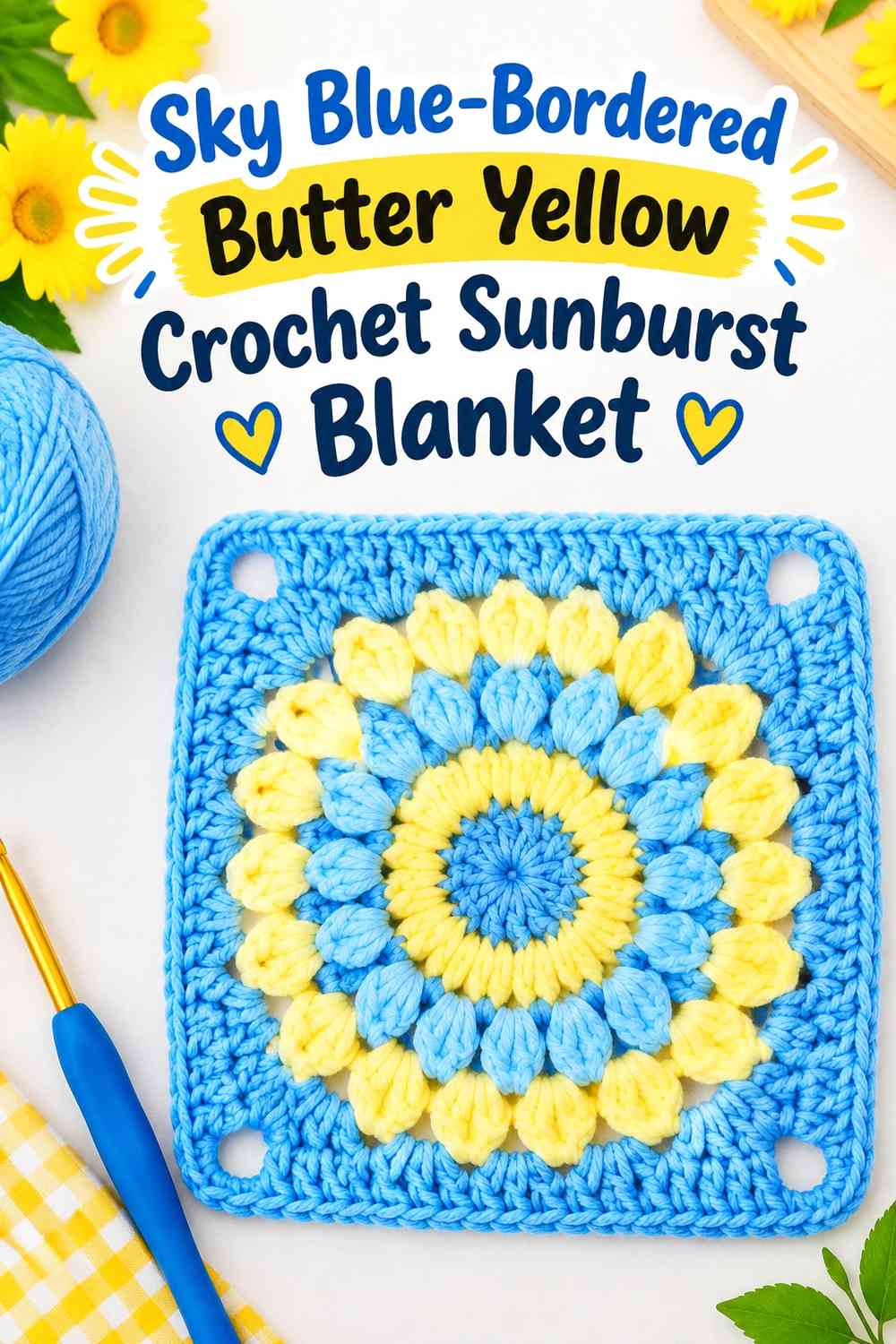
This version does the opposite: butter yellow carries more of the motif interior while sky blue provides the joining structure and final perimeter. The finished piece reads warmer inside but cooler around its edges.
Sky Blue Borders Give Butter Yellow Sunbursts a Cooler Outer Frame
Repeating sky blue around the blanket edge visually connects the perimeter to the blue already used within individual squares. This keeps the yellow motifs from feeling isolated inside an unrelated border.
A blue border also works well when yellow occupies multiple rounds within each sunburst.
Butter Yellow Motifs Need Controlled Repetition Inside the Sky Blue Grid
When yellow covers more of each square, avoid introducing many additional warm colors. Repeating the same butter yellow through the interior gives the blanket enough variation through texture and motif placement alone.
Use the sky-blue joins as the consistent organizing element.
Creator Credit: nautikrallcrochet — Tutorial
14. Two-Color Sky Blue and Butter Yellow Crochet Sunburst Blanket
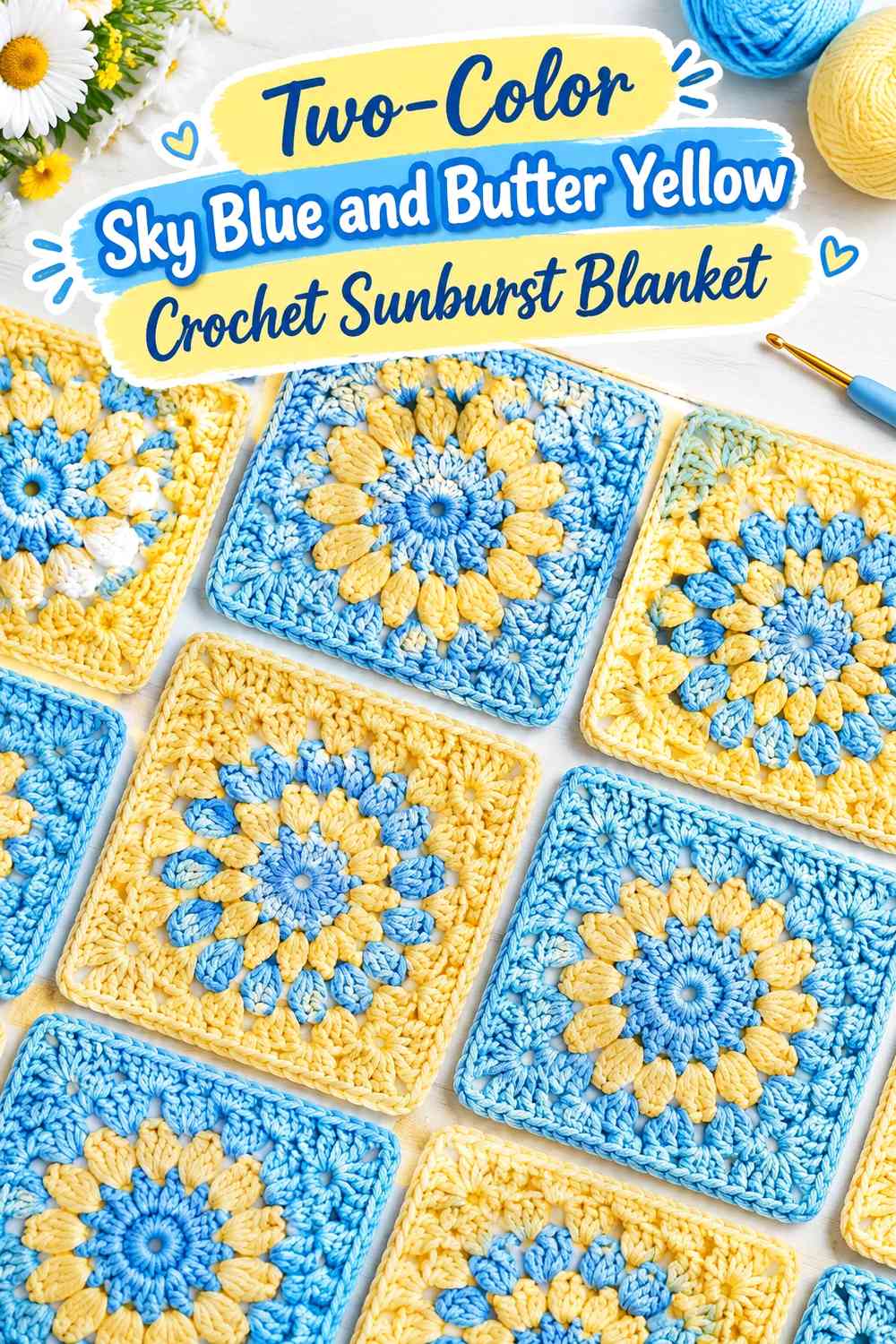
A strict two-color approach removes the assistance of white, gray, navy, or oatmeal. That makes color placement especially important. Use the structure of the motif itself to create separation by assigning one color to central textured areas and the other to squaring rounds, joins, and borders.
Butter Yellow and Sky Blue Need Distinct Roles in a Two-Color Blanket
Avoid changing colors randomly from round to round. A dependable hierarchy—such as yellow burst and blue frame—makes the motif easier to understand and keeps the whole blanket coherent.
You can still reverse selected squares, but repeat those reversals in a recognizable layout.
Sky Blue and Butter Yellow Should Pass a Value Check Before You Commit
Place the two yarns together and photograph them in grayscale. If they become almost indistinguishable, the finished sunburst may rely mostly on texture rather than color contrast.
That may be intentional, but if you want the motifs clearly defined, adjust one shade lighter or darker while keeping the sky-blue-and-butter-yellow identity intact.
Creator Credit: B.Hooked Crochet — Tutorial
Which Sky Blue and Butter Yellow Winter Sunburst Blanket Direction Should You Choose?
For the coolest overall blanket, start with the sky-blue-field, silver-gray, or sky-blue-bordered directions. They give blue more of the visual surface while allowing butter yellow to appear as controlled warmth.
For a softer, warmer winter look, consider oatmeal, a butter-yellow outer border, or motifs with larger yellow sections. If you want the sunburst structure to read very clearly, the navy- or charcoal-accented ideas provide stronger definition.
For the cleanest palette, the final two-color version keeps the entire project centered on sky blue and butter yellow. It places more responsibility on value contrast and color placement, but it also gives the finished blanket a particularly unified appearance.
Conclusion
A sky blue and butter yellow winter sunburst blanket can range from cool and snowy to softly warm without changing the underlying motif. The biggest decision is where each color carries visual weight. Sky-blue frames and joins create a cooler field; larger butter-yellow centers make the sunbursts more prominent; and restrained neutrals can separate the two when their values are too similar.
Before making a full stack of motifs, crochet one complete test square in the intended palette and place several copies or yarn samples together. Check the center, outer square, planned join, and border as one color system. Once those relationships are working, follow the credited tutorial for the exact construction of the sunburst motif or blanket.
Frequently Asked Questions
Do sky blue and butter yellow have enough contrast for a crochet sunburst blanket?
They can, but it depends on the exact shades. Two pale colors may have different hues while remaining similar in lightness. Compare the yarns side by side and use a grayscale photo if you want to check value contrast before making the full blanket.
Should sky blue or butter yellow dominate a winter sunburst blanket?
Sky blue is a useful dominant color when you want the blanket to read cooler overall. Butter yellow can dominate when you want more warmth. For a balanced approach, let one color cover the square frames and joins while the other controls the centers.
What neutral works with a sky blue and butter yellow crochet blanket?
White gives the crispest contrast, silver gray keeps the palette cool, and oatmeal creates a softer transition. Choose according to what the neutral needs to do rather than adding one automatically.
Can I use only sky blue and butter yellow for the sunburst squares?
Yes. A two-color blanket can work well when the colors have clearly defined roles. For example, one can form the center and textured burst while the other creates the square frame, joins, and border.
How can I keep butter yellow details visible against pale sky blue?
Increase the value difference between the two shades or introduce a small separating area. A darker center, thin neutral round, or clearer change between the burst and square frame can prevent the colors from merging.
Should the crochet blanket border be sky blue or butter yellow?
Use sky blue when you want the perimeter to reinforce the cooler winter field. Choose butter yellow when you want the warmth of the sunburst centers repeated around the outside. The better option is the one that balances whichever color already occupies more of the blanket.