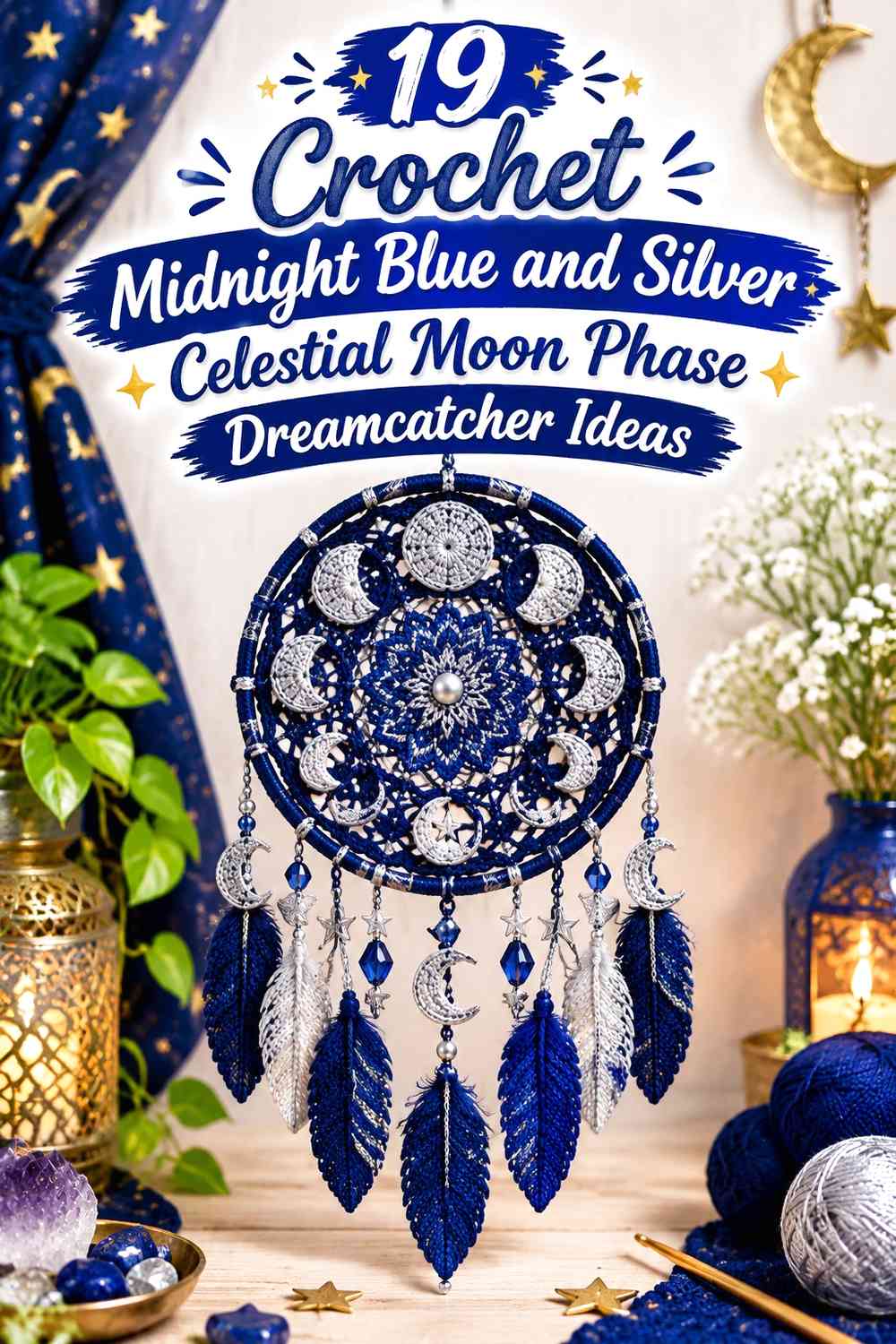

Midnight blue and silver give a crochet moon phase dreamcatcher a clear night-sky structure. Midnight blue can carry the visual weight through the hoop, mandala, webbing, or hanging strands, while silver can define crescents, full moons, stars, and smaller details that need to remain visible against the darker field.
The two colors are especially useful for moon-phase designs because they can be assigned clear roles rather than scattered evenly. A dark center with silver lunar shapes creates a graphic celestial focal point, while a silver-dominant mandala with midnight-blue crescents produces a lighter and more decorative result.
The tutorials supporting these ideas include complete crochet dreamcatchers, mandala wall hangings, moon-phase pieces, and celestial motifs. When a source teaches an individual moon or star rather than a finished dreamcatcher, use it for that component and plan the hoop arrangement independently rather than assuming the tutorial covers the entire wall hanging.
Quick List
- Midnight Blue Web With Silver Crochet Moon Phase Dreamcatcher
- Silver Mandala With a Midnight Blue Lunar Center Crochet Dreamcatcher
- Midnight Blue and Silver Concentric Crochet Moon Phase Dreamcatcher
- Midnight Blue Star Web With Silver Crochet Moon Phase Dreamcatcher
- Alternating Midnight Blue and Silver Crochet Celestial Ring Dreamcatcher
- Midnight Blue Floral Mandala With Silver Crochet Moon Details Dreamcatcher
- Silver Mandala on a Midnight Blue Wrapped Hoop Crochet Dreamcatcher
- Silver Radial Bands With Midnight Blue Moon Accents Crochet Dreamcatcher
- Midnight Blue Doily and Silver Fringe Crochet Celestial Dreamcatcher
- Midnight Blue Hoop With a Silver Openwork Crochet Dreamcatcher Web
- Midnight Blue Crescent and Silver Star Crochet Celestial Dreamcatcher
- Midnight Blue and Silver Multi-Hoop Crochet Celestial Dreamcatcher
- Midnight Blue Moon and Silver Star Curtain Crochet Dreamcatcher
- Midnight Blue Crescent With a Silver Star Focal Crochet Dreamcatcher
- Midnight Blue Hoop With Silver Crochet Moon Phase Appliqué Dreamcatcher
- Silver Moon Phase Garland With Midnight Blue Crochet Dreamcatcher Details
- Midnight Blue Lace Crochet Dreamcatcher With Silver Tassels
- Two-Color Midnight Blue and Silver Crochet Celestial Moon Phase Dreamcatcher
Decide Whether Midnight Blue or Silver Should Lead the Dreamcatcher
Midnight blue is the natural choice for the largest color field when you want the hanging to resemble a dark sky. It can cover the central crochet web, outer hoop wrapping, or most of the hanging strands while silver is reserved for recognizable lunar shapes.
A silver-dominant version changes the effect substantially. Silver across the central mandala makes the crochet openings and radial pattern more prominent, while midnight-blue moons or rings provide darker interruptions. Before choosing, consider whether you want the first impression to be a dark celestial circle with pale moons or a light lace circle surrounded by darker night-sky details.
Keep Silver Moon Phases Visible Against Midnight Blue Crochet
Silver works most effectively when it has enough uninterrupted space to form a recognizable crescent, half moon, or full moon. Small pieces of silver scattered through a highly textured midnight-blue mandala can lose their lunar meaning and simply look like highlights.
If the two yarns do not differ strongly enough in value, increase the size of the silver lunar details or place them against simpler midnight-blue areas. Openwork can also affect visibility because the wall behind the dreamcatcher becomes part of the composition.
Plan Midnight Blue and Silver From Hoop to Fringe
The center is only one part of a dreamcatcher-style wall hanging. Hoop wrapping, lower strands, tassels, stars, moons, beads, and fringe can all add more color repetition.
Choose one or two places for each color to recur. For example, silver moons can connect to silver tassel tips, while the midnight-blue web can connect to midnight-blue hanging strands. This creates a deliberate top-to-bottom color path without requiring every component to alternate both shades.
1. Midnight Blue Web With Silver Crochet Moon Phase Dreamcatcher
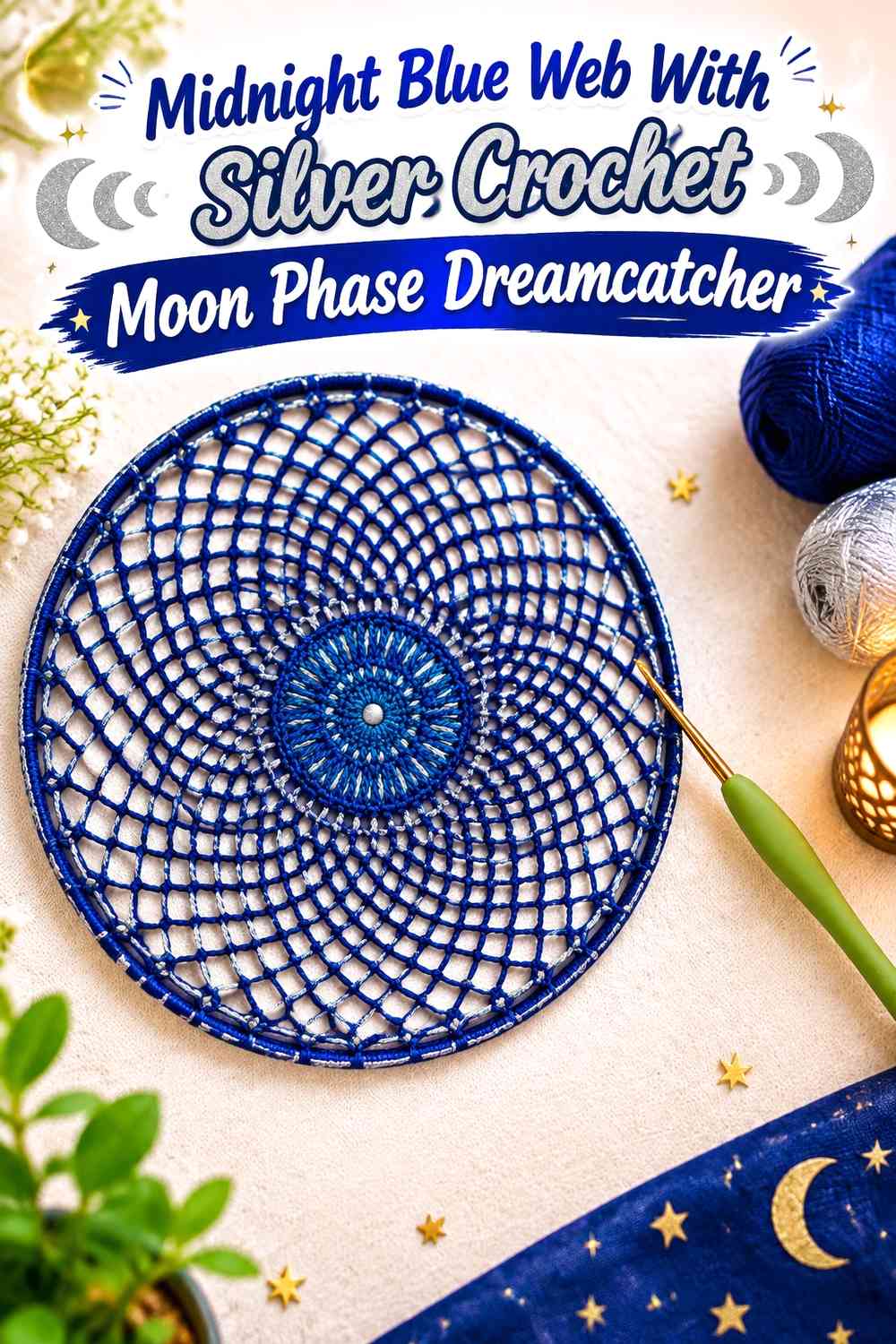
Use midnight blue across most of the circular crochet center and treat silver as the lunar color. Small silver crescents, partial moons, or a central full-moon-inspired area can interrupt the dark field while the hoop remains blue or neutral. This approach gives the project one of the clearest night-sky directions in the collection.
Midnight Blue Should Create an Uninterrupted Celestial Background
Let enough midnight blue remain visible between silver details for the circular web or mandala structure to read clearly. Filling every opening with another moon, star, or bead can weaken the strong dark-background effect.
The largest midnight-blue area should visually connect the individual lunar elements rather than competing with them.
Silver Moon Details Need a Clear Sequence Across Midnight Blue
When several phases are included, arrange them intentionally rather than scattering crescent shapes randomly around the hoop. A planned progression gives the silver pieces a reason to repeat and helps the viewer recognize the moon-phase theme.
Keep decorative stars smaller than the primary silver moons so both motifs do not compete equally.
Creator Credit: Wizard of Loops
2. Silver Mandala With a Midnight Blue Lunar Center Crochet Dreamcatcher
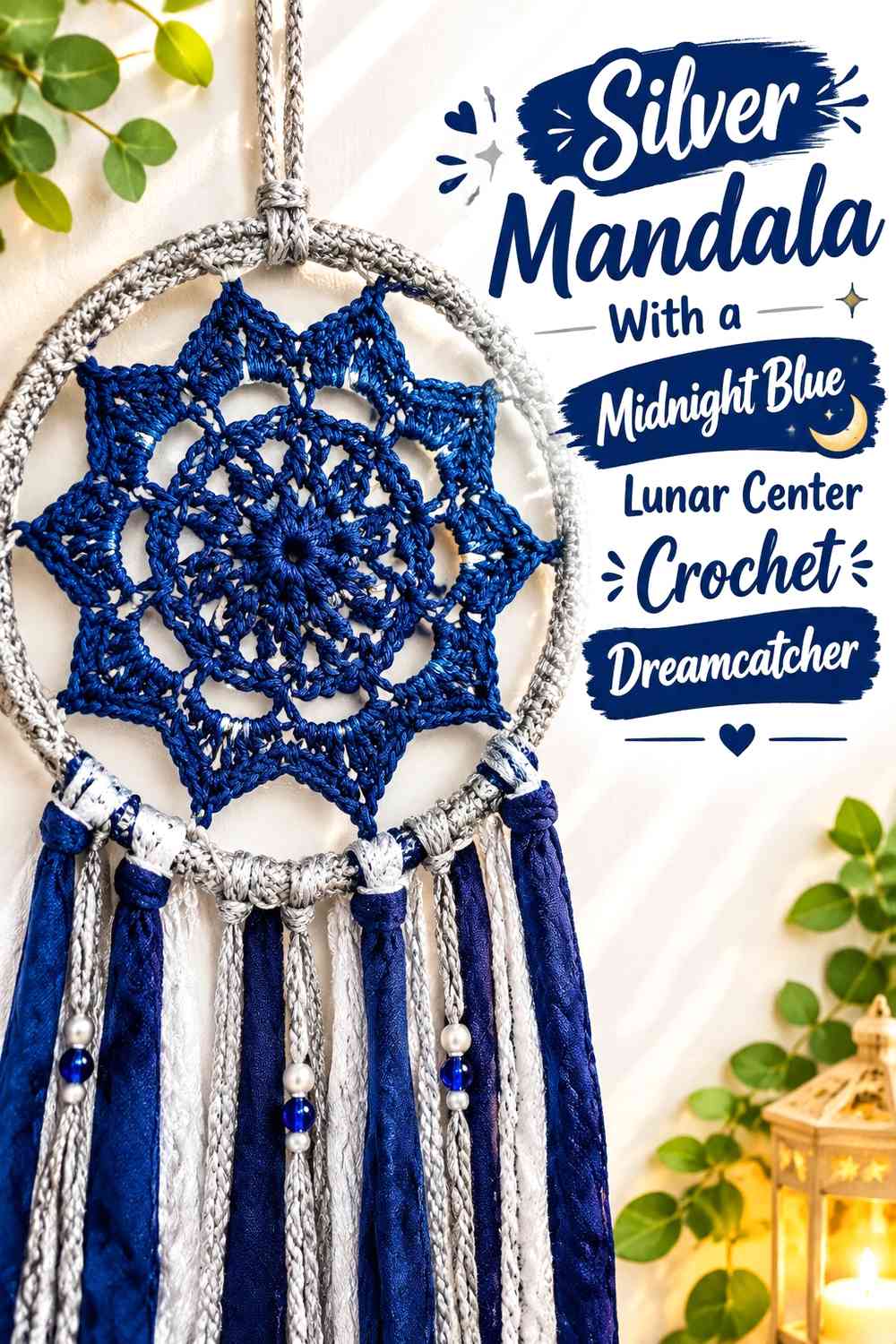
Reverse the palette by making silver the major mandala color and reserving midnight blue for the center and lunar accents. The lighter crochet center can reveal openwork clearly against a darker wall, while the dark blue center gives the radial design a firm focal point.
Silver Openwork Can Carry Most of the Crochet Dreamcatcher Center
Allow silver to continue across several radial sections rather than switching repeatedly back to blue. A larger silver area lets lace openings and repeated crochet shapes become part of the color design.
If the wall behind the hanging is very pale, use more midnight blue along the outer edge to preserve the circular silhouette.
Midnight Blue Gives a Silver Mandala a Strong Celestial Anchor
Place midnight blue near the center, along selected moon shapes, or in a controlled outer round. These darker sections stop an otherwise pale mandala from becoming visually flat.
Repeating midnight blue once in the fringe can connect the center to the bottom of the wall hanging.
Creator Credit: Ahuyama Crochet
3. Midnight Blue and Silver Concentric Crochet Moon Phase Dreamcatcher
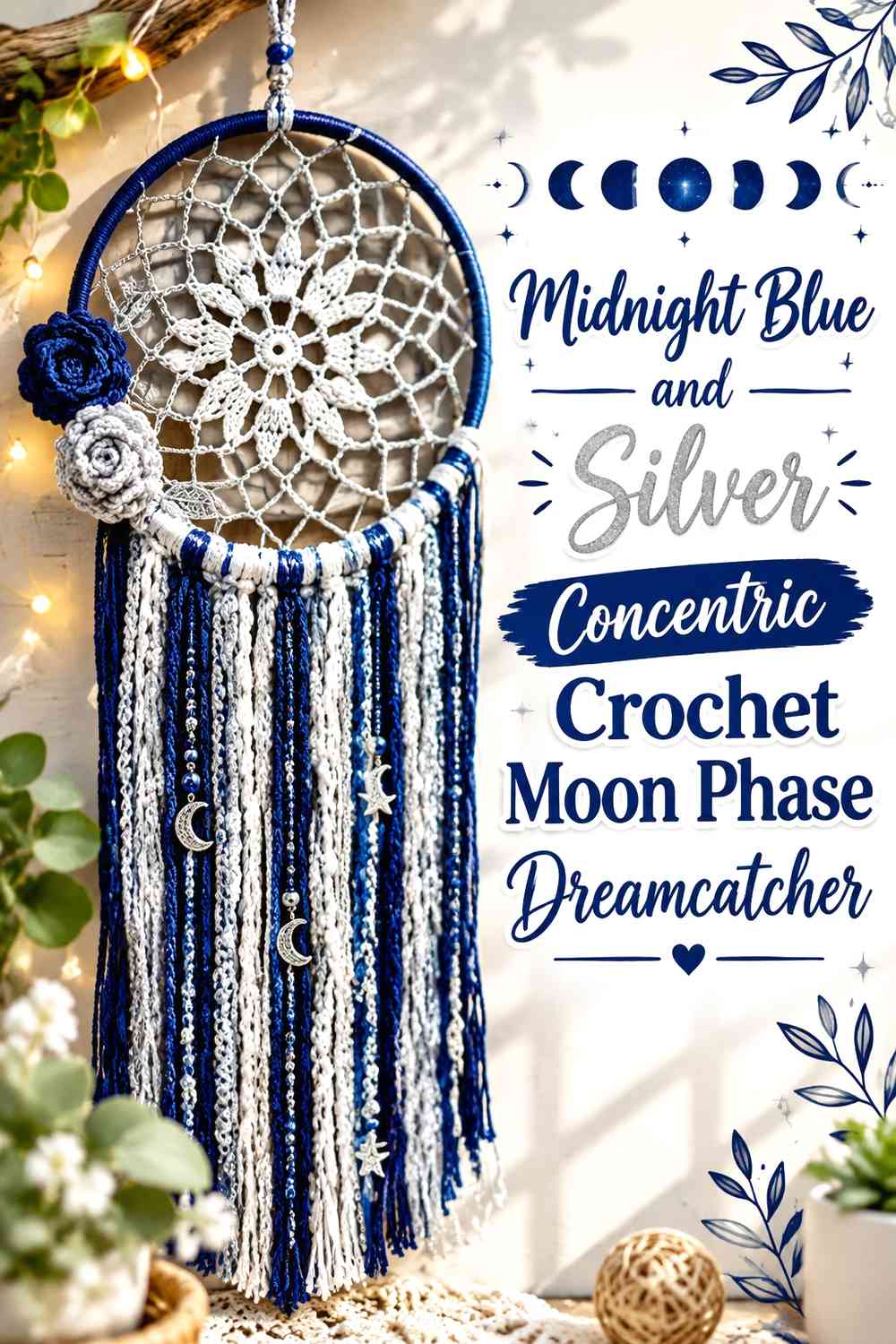
Use alternating color zones rather than individual scattered accents. A midnight-blue center can transition into a silver ring, return to midnight blue, and finish with silver near the hoop. Moon shapes can follow those circular divisions so the lunar idea remains connected to the radial construction.
Midnight Blue Rings Give the Silver Dreamcatcher More Depth
Use midnight blue for selected broad rounds rather than extremely narrow stripes. Wider dark areas create breathing space between silver sections and prevent the mandala from looking overly busy.
Keep the most important moon shapes away from places where frequent color changes already create strong pattern.
Silver Rings Should Highlight the Midnight Blue Radial Structure
Place silver where the crochet construction naturally creates a noticeable radial change. This lets color reinforce the circular geometry instead of fighting against it.
If silver appears at the hoop edge, repeat a little silver in the hanging strands so the outer ring does not feel isolated.
Creator Credit: Pequeña Mania
4. Midnight Blue Star Web With Silver Crochet Moon Phase Dreamcatcher
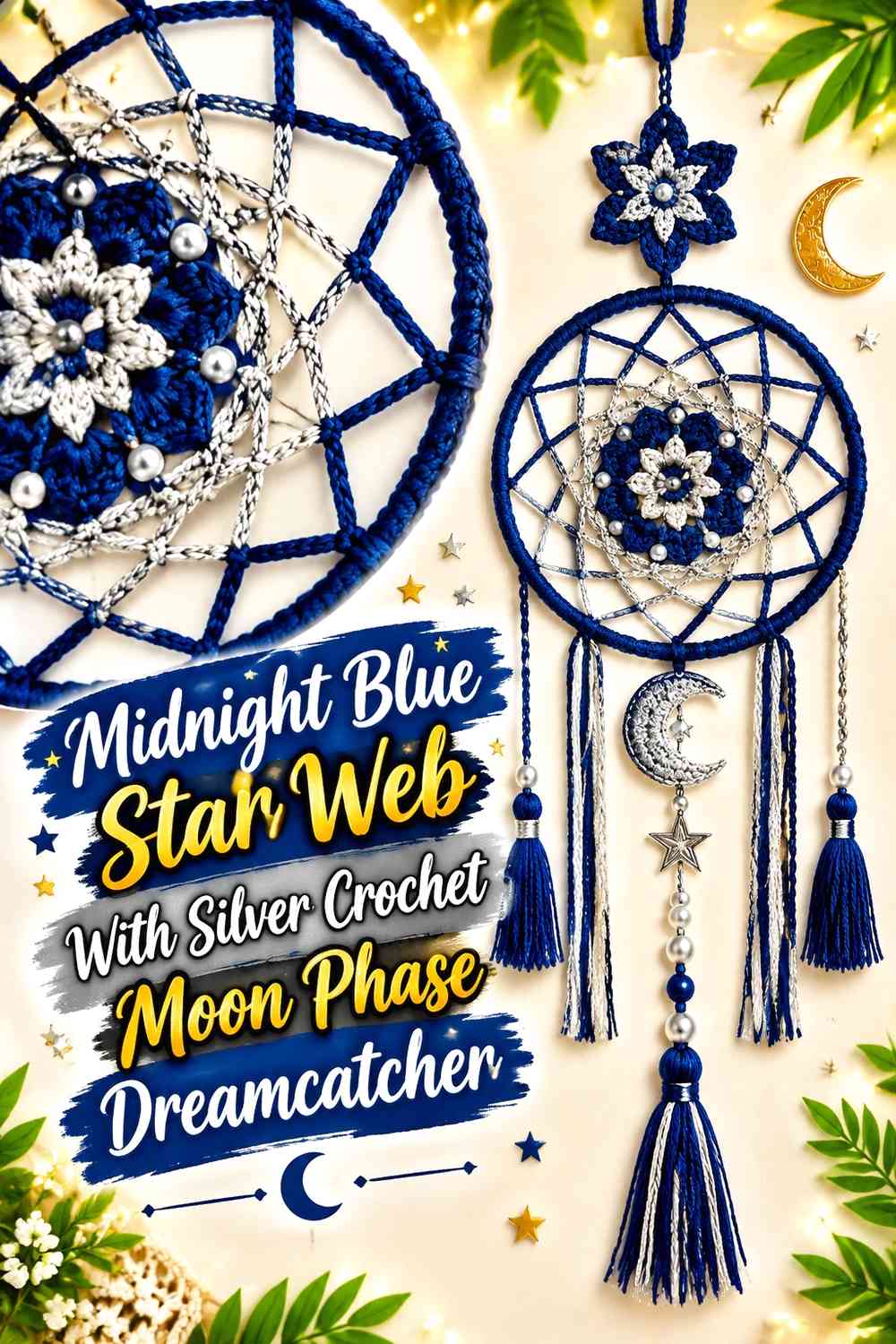
Give the center a star-like visual direction and place silver moon elements around or beneath it. Midnight blue should remain the primary web color so the star structure feels like part of the night sky, while silver becomes the lighter celestial layer.
Midnight Blue Star Points Need Enough Space Around Silver Moons
Do not place a silver moon directly over every point of a detailed central star. Leaving some blue points unobstructed preserves the radial shape and prevents the center from becoming visually congested.
Use lunar embellishments in the open spaces around the primary star instead.
Silver Moon Phases Should Stay Smaller Than the Midnight Blue Star
If the center already creates a strong star silhouette, make the phases supporting elements. A few clearly recognizable silver shapes are more useful than many small decorations with similar visual weight.
Silver can then reappear in tassel ends or a narrow hoop detail.
Creator Credit: DIYmoda withEmíl
5. Alternating Midnight Blue and Silver Crochet Celestial Ring Dreamcatcher
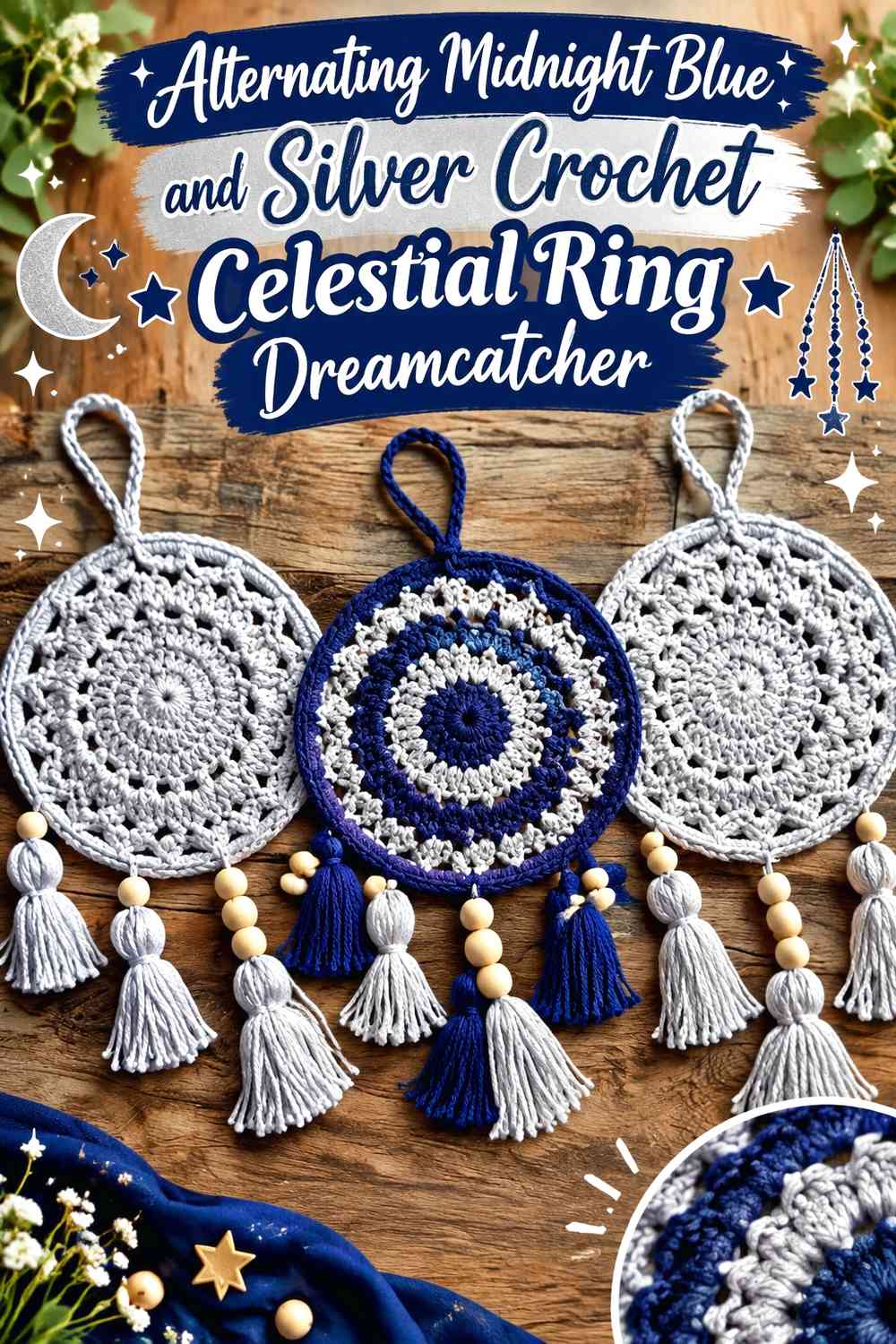
Build the palette around alternating circular bands. Midnight blue can occupy one radial section, silver the next, and the pattern can continue outward. This option emphasizes the dreamcatcher’s round form more than separate appliqués.
Midnight Blue Bands Need Different Visual Weight From Silver Bands
Avoid making every colored ring exactly equal if you want midnight blue to remain dominant. Give blue broader areas and use silver as narrower interruptions.
That hierarchy preserves the night-sky identity while still making the radial color changes noticeable.
Silver Rings Can Mark Important Midnight Blue Transitions
Use silver around a change in texture, at the boundary before the hoop, or near the central focal point. Strategic placement makes the light color feel connected to the crochet structure.
Avoid adding numerous silver stars on top of already active silver rings unless the shapes remain clearly distinguishable.
Creator Credit: CreationsMisfit
6. Midnight Blue Floral Mandala With Silver Crochet Moon Details Dreamcatcher
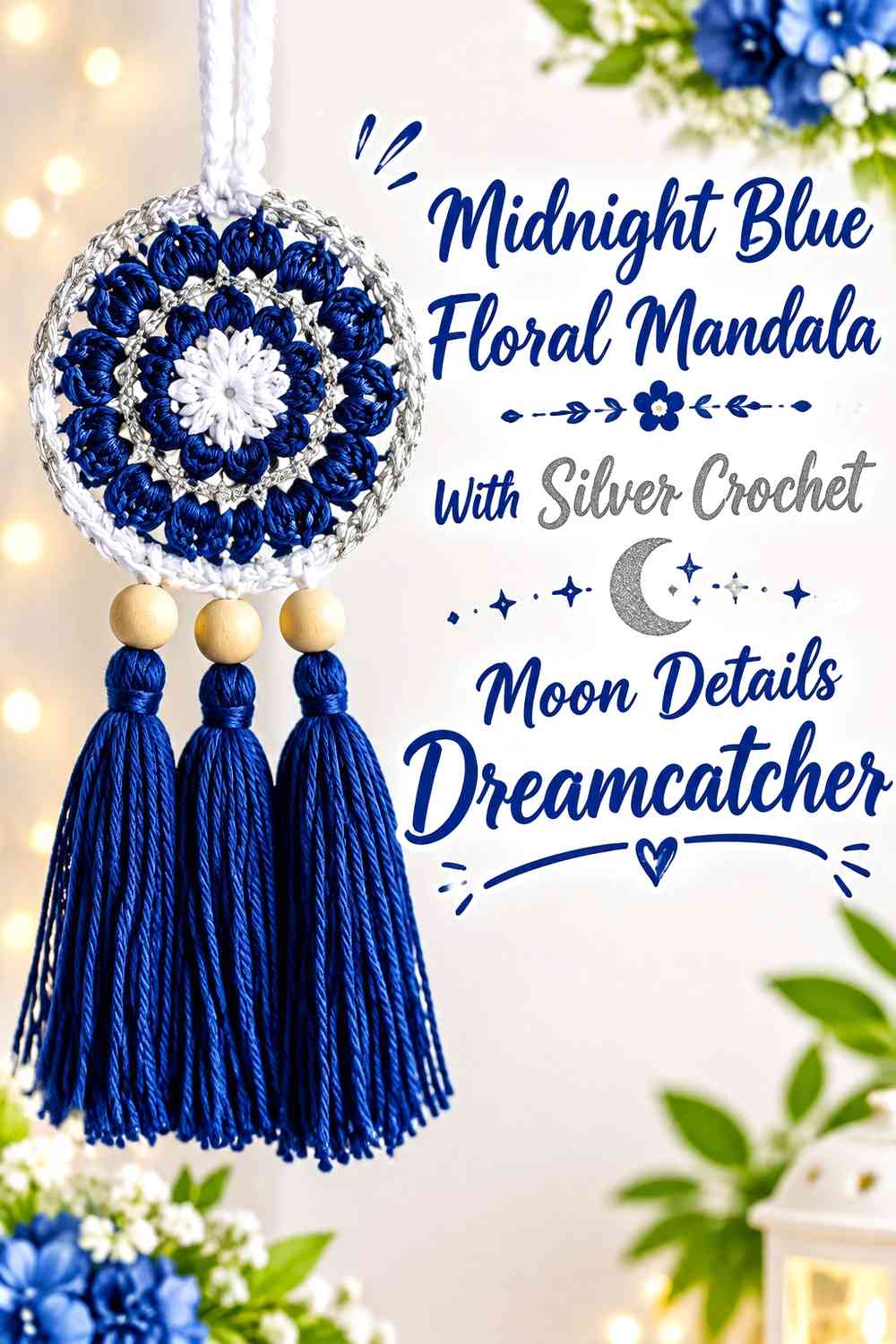
A floral-style central mandala can still become celestial through color and surrounding motifs. Work the flower-like center primarily in midnight blue, then introduce silver moons or stars outside the petals so the floral geometry becomes the web rather than the main theme.
Midnight Blue Floral Texture Can Replace Extra Celestial Pattern
If the center already contains puffed or raised floral texture, avoid adding silver to every petal. Let the midnight-blue stitches provide complexity while the celestial symbolism comes from separate silver details.
This prevents the central flower and moon phases from competing.
Silver Moons Should Sit Outside the Midnight Blue Floral Focal Point
Use silver near the hoop or among the lower hanging elements where the lunar shapes have enough plain space around them. This separates the two decorative languages while preserving one coordinated palette.
A silver full moon directly below the blue flower can provide a useful transition into the fringe.
Creator Credit: Sweet Softies
7. Silver Mandala on a Midnight Blue Wrapped Hoop Crochet Dreamcatcher
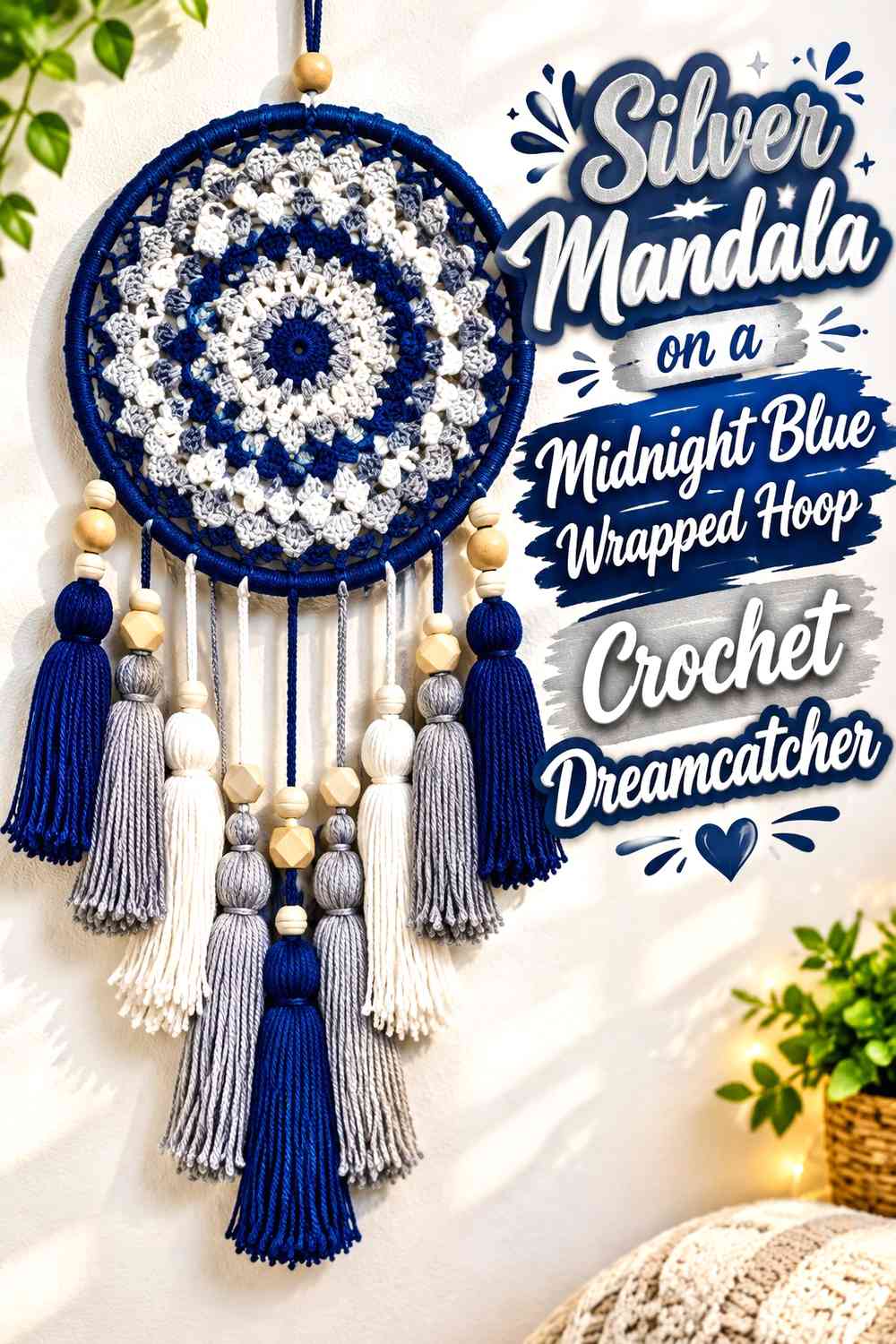
Use silver for the entire crochet mandala and midnight blue around the supporting hoop. The contrast clearly separates the lace interior from the structural edge and allows the circle itself to become part of the color scheme.
Midnight Blue Hoop Wrapping Frames the Silver Crochet Center
A dark outer ring gives a pale mandala a defined limit, particularly when the hanging is displayed against a light wall. Keep the hoop color continuous so the circular frame does not become fragmented.
Repeat midnight blue below the hoop if you add tassels or strands.
Silver Should Remain Continuous Across the Midnight Blue Frame
Because the hoop already provides strong contrast, the central crochet does not need frequent blue interruptions. Let silver carry the lace pattern so the texture remains easy to follow.
A small midnight-blue center is enough if additional depth is wanted.
Creator Credit: Ophelia Talks Crochet
8. Silver Radial Bands With Midnight Blue Moon Accents Crochet Dreamcatcher
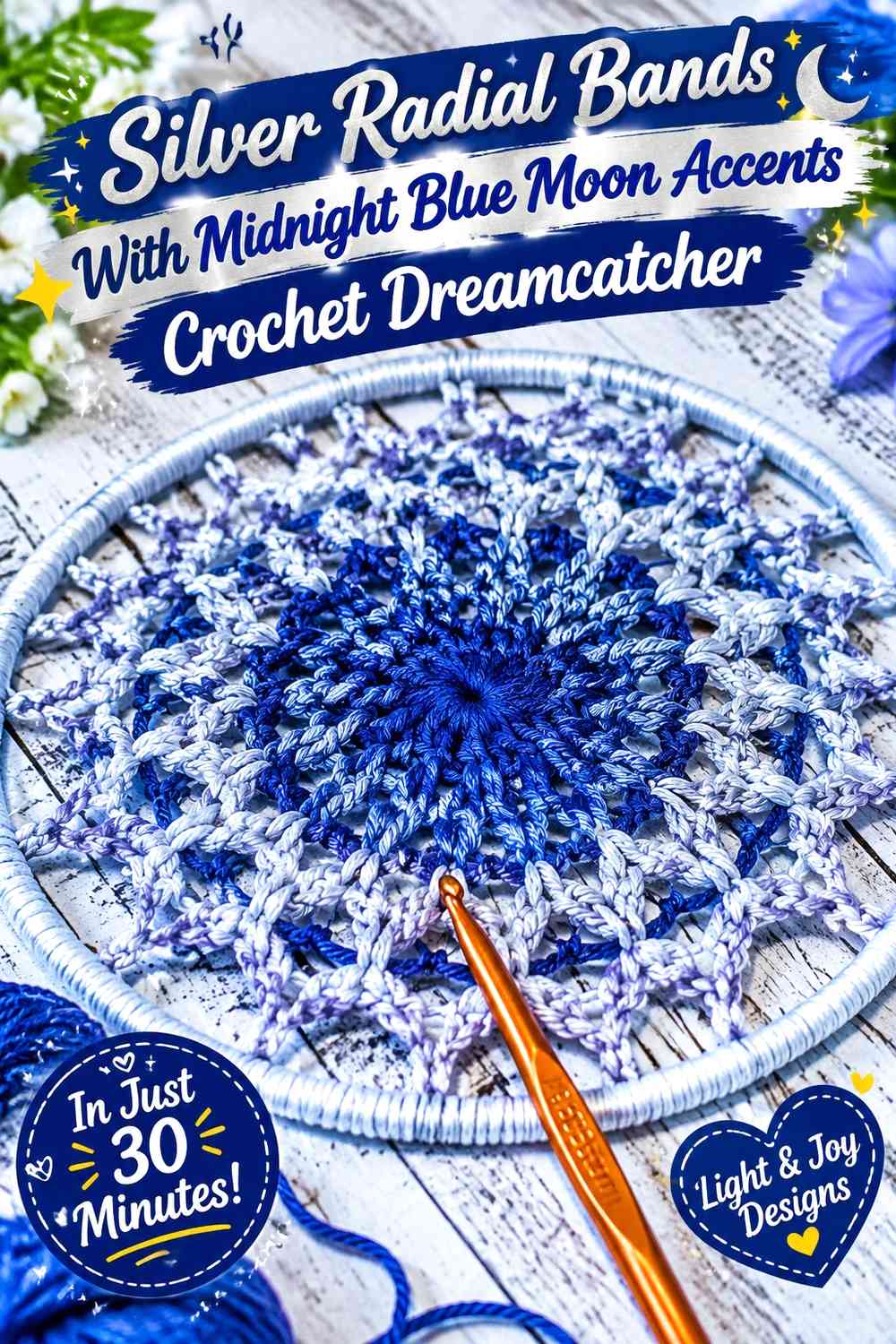
Use silver through the main radial design and place midnight-blue moon-inspired accents within selected sections. This makes the lighter yarn responsible for the web while the darker shade creates recognizable celestial interruptions.
Silver Radial Bands Need Midnight Blue Areas for Contrast
Do not reduce midnight blue to tiny dots if the central crochet is extensively silver. Larger dark sections at the center, edge, or selected moon shapes help the mandala retain visual depth.
A dark full-moon-shaped center can work as the main anchor.
Midnight Blue Moon Accents Should Follow the Silver Circle
Position the dark lunar details so they reinforce the circular composition rather than forming an unrelated horizontal row. Curving the visual sequence around part of the hoop can make the phases feel integrated into the mandala.
Keep lower fringe simpler if the center already carries several phases.
Creator Credit: Light and Joy Designs
9. Midnight Blue Doily and Silver Fringe Crochet Celestial Dreamcatcher
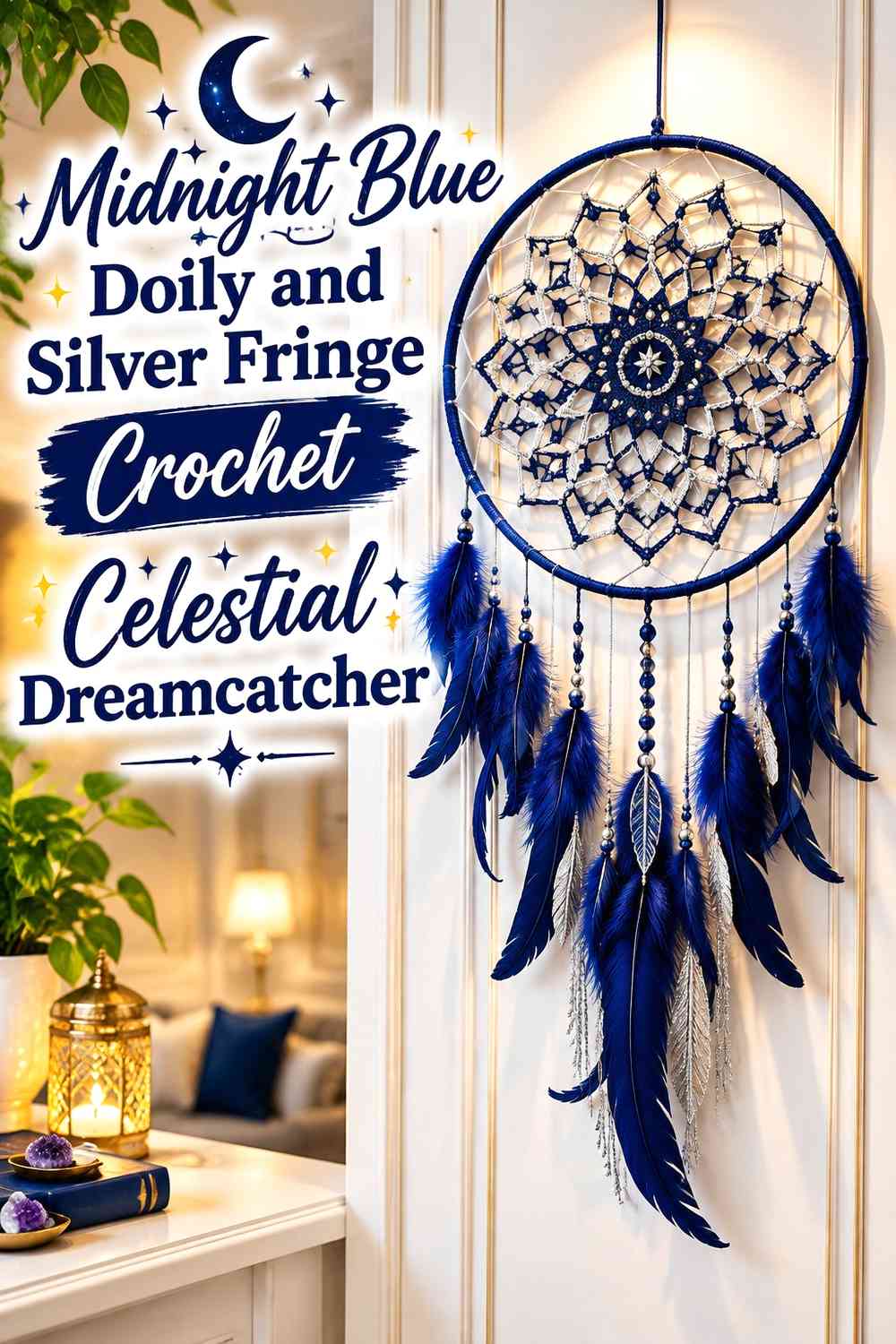
Make a lace-style midnight-blue center the main feature and move most of the silver toward the lower part of the hanging. Silver fringe, tassel sections, or small suspended moons create a light visual finish beneath the darker circular top.
Midnight Blue Lace Needs Simple Silver Details Below It
An intricate doily center already contains repeated openings and edges. Keep the silver hanging elements comparatively straightforward so the lower section does not compete with the crochet lace.
A few longer silver strands can provide contrast without requiring another complex pattern.
Silver Fringe Should Connect Back to the Midnight Blue Center
Mix a limited number of midnight-blue strands into predominantly silver fringe or repeat a small silver detail at the center of the hoop. This prevents the top and bottom from looking like two separate projects.
Check the hanging vertically before deciding how much silver fringe to add.
Creator Credit: cc crochet
10. Midnight Blue Hoop With a Silver Openwork Crochet Dreamcatcher Web
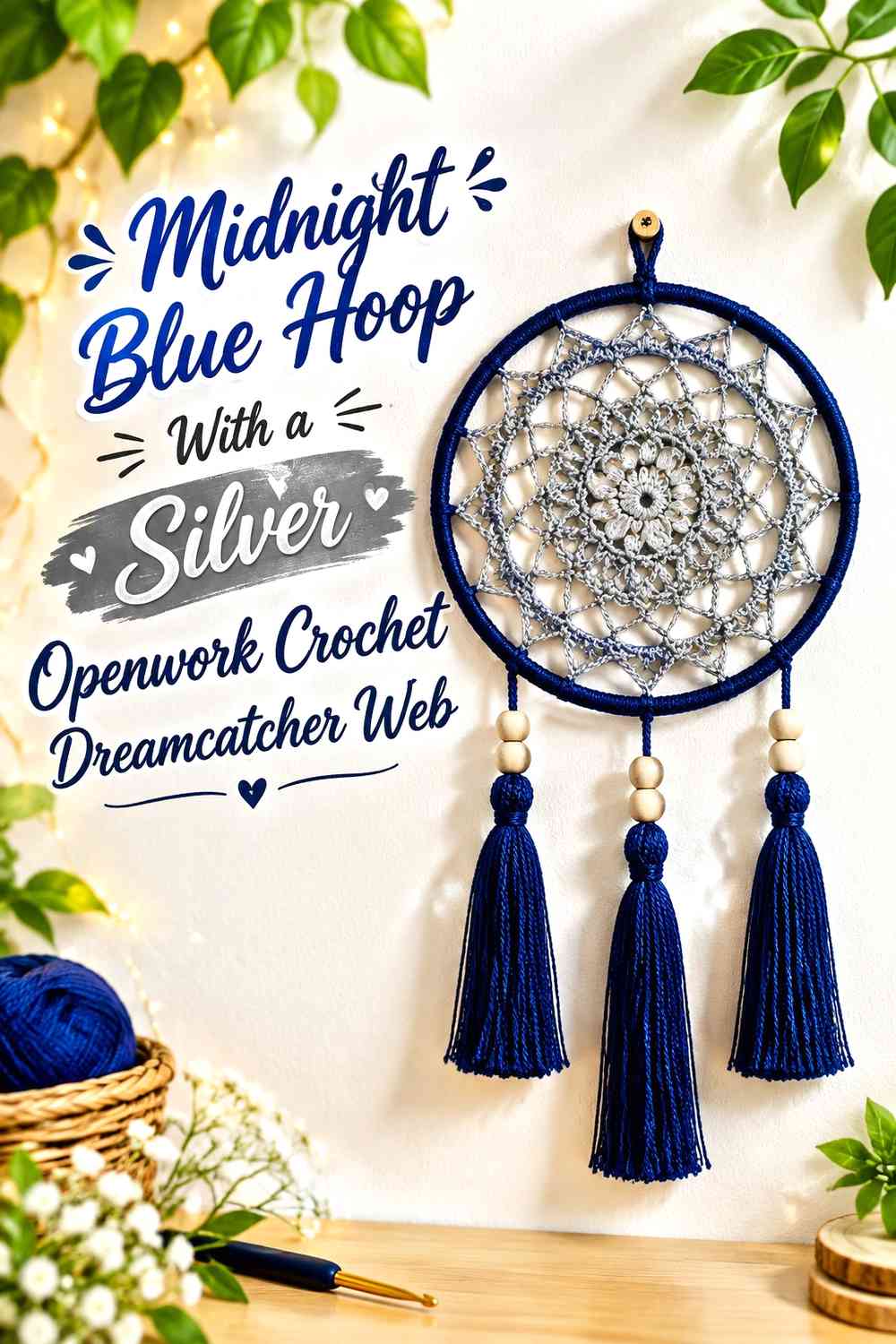
Let midnight blue define the hoop and hanging structure while silver fills the center as an airy web. This creates one of the strongest frame-to-center contrasts and works well when the crochet pattern itself contains plenty of open space.
Midnight Blue Should Outline the Entire Silver Crochet Web
Keeping the hoop consistently blue makes the silver center appear contained and intentional. Breaking the hoop into many alternating sections can reduce the strength of this simple contrast.
Carry the same blue into the top hanging loop for continuity.
Silver Openwork Needs a Clear Midnight Blue Boundary
Leave enough space between the silver center and additional hanging decorations so the lace edge remains visible. If silver tassels begin directly at every point around the bottom of the hoop, the boundary can become difficult to read.
Use midnight-blue attachment points when stronger separation is needed.
Creator Credit: mum2makes
11. Midnight Blue Crescent and Silver Star Crochet Celestial Dreamcatcher
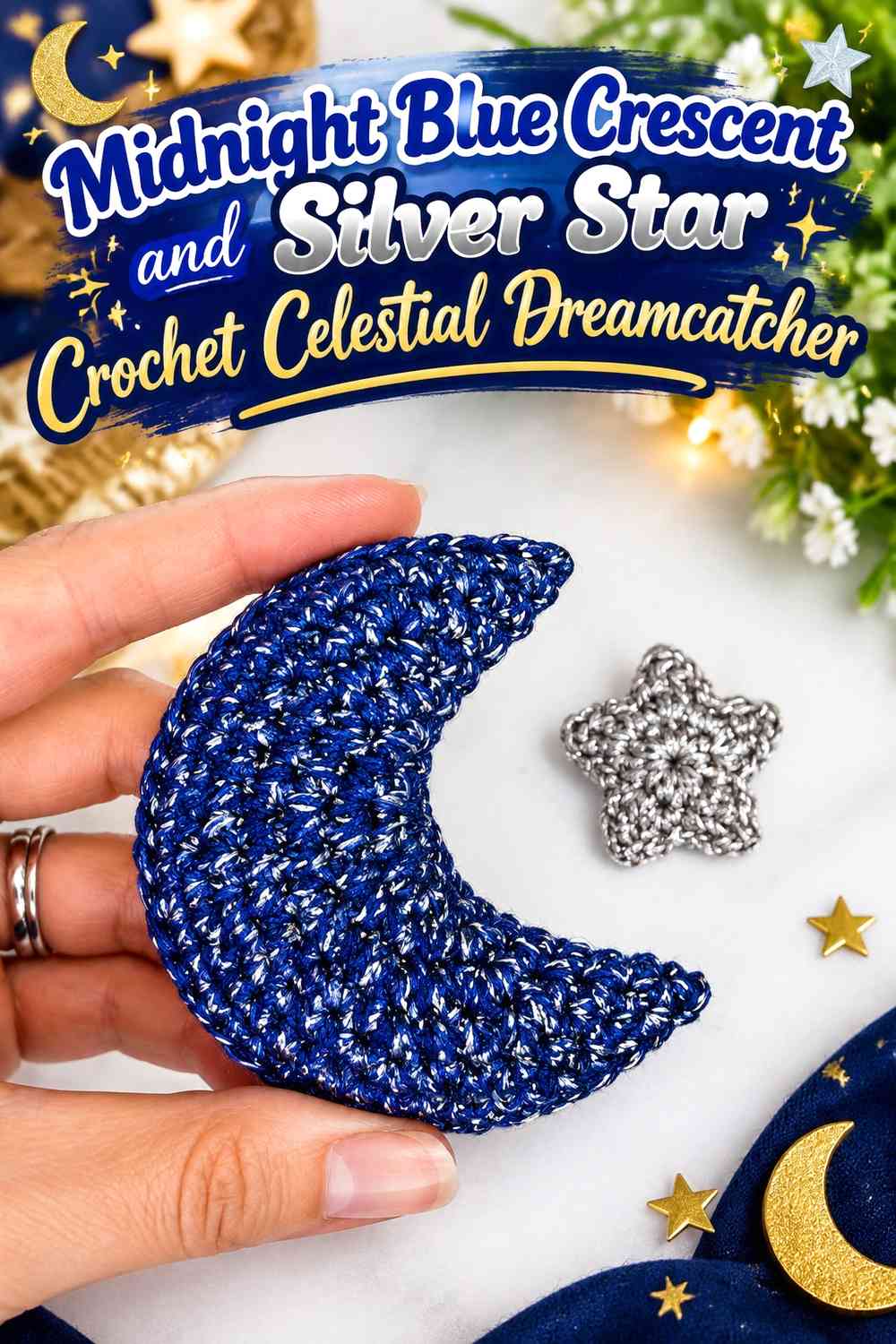
Build the composition around two recognizable shapes rather than a complex moon sequence. A midnight-blue crescent can become the largest focal element, while one or several silver stars supply smaller points of contrast within or below the hoop.
Midnight Blue Crescent Should Remain Larger Than Silver Stars
Give the moon enough visual area to establish the theme before adding stars. Several large silver stars can compete with the crescent and make the composition feel evenly divided rather than intentionally hierarchical.
Use smaller stars to lead the eye toward the hanging strands.
Silver Stars Need Open Space Around the Midnight Blue Crescent
Avoid placing a star against every part of the crescent edge. A few separated stars are easier to recognize and allow the moon silhouette to remain clean.
Repeat silver once in the fringe or hoop to connect the stars with the rest of the dreamcatcher.
Creator Credit: Blossom Crochet
12. Midnight Blue and Silver Multi-Hoop Crochet Celestial Dreamcatcher
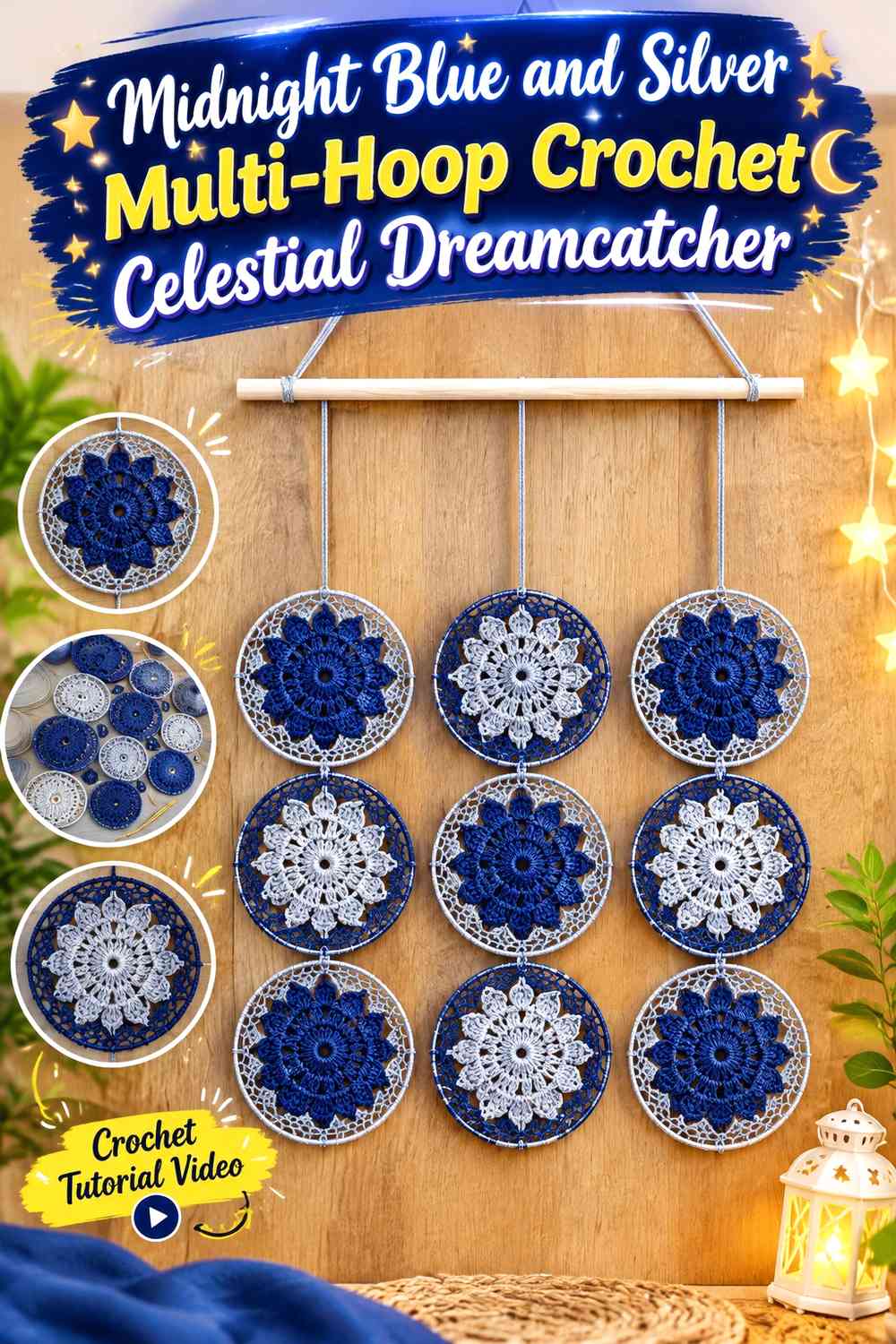
Instead of one large circle, combine several smaller crochet hoops into a vertical or clustered wall hanging. Alternate midnight-blue-centered and silver-centered mandalas so the palette changes from hoop to hoop without requiring excessive color changes inside each motif.
Midnight Blue Hoops Need Even Distribution Among Silver Hoops
Arrange the darker circles before connecting the finished pieces. Clustering all midnight-blue hoops on one side can make the wall hanging look unbalanced even when the number of each color is equal.
A vertical sequence can alternate blue and silver for a more controlled rhythm.
Silver Hoops Can Represent Different Moon Phases Against Midnight Blue
Treat the lighter circles as full moons or other lunar focal points while darker hoops provide the surrounding night-sky structure. The idea can remain abstract without forcing a literal phase into every mandala.
Keep the connecting yarn consistent to unify the group.
Creator Credit: The Crochet Swirl
13. Midnight Blue Moon and Silver Star Curtain Crochet Dreamcatcher
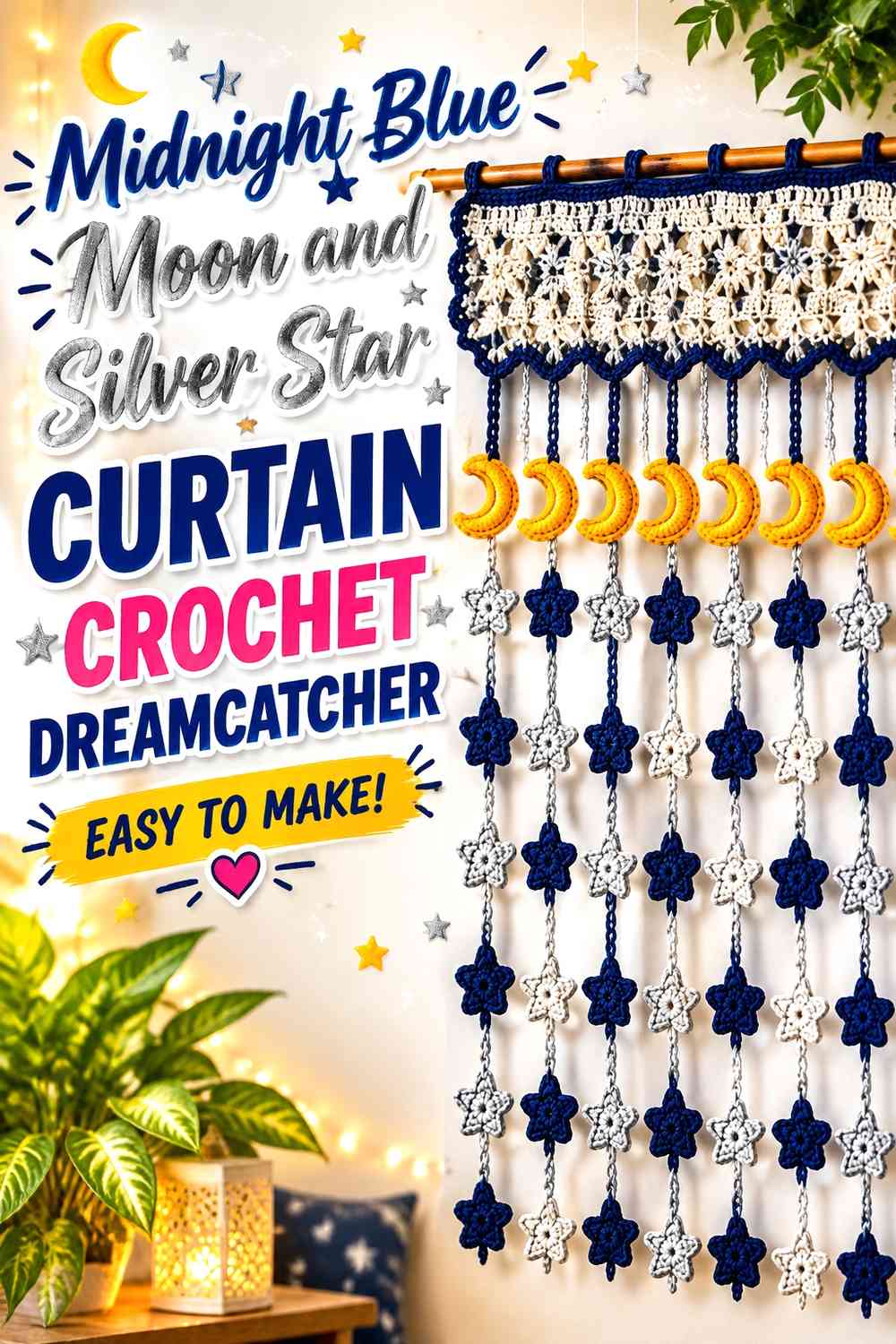
Create a wider celestial hanging by suspending several strands of crochet moons and stars from a hoop or horizontal support. Midnight-blue crescents can alternate with silver stars while the central hoop remains comparatively simple.
Midnight Blue Moons Should Repeat Across More Than One Hanging Strand
Spread the dark moons through the width of the arrangement rather than assigning them to one side. This gives the whole hanging a consistent night-sky rhythm and prevents one strand from becoming visually heavier.
Mix the phase shapes if desired, but keep their color role consistent.
Silver Stars Can Lighten the Spaces Between Midnight Blue Moons
Place silver stars between larger lunar elements so they function as smaller visual pauses. If every star is as large as the moons, the hanging can lose its moon-phase emphasis.
Use silver in the top structure as well if the lower stars feel disconnected.
Creator Credit: Crochet Anne
14. Midnight Blue Crescent With a Silver Star Focal Crochet Dreamcatcher
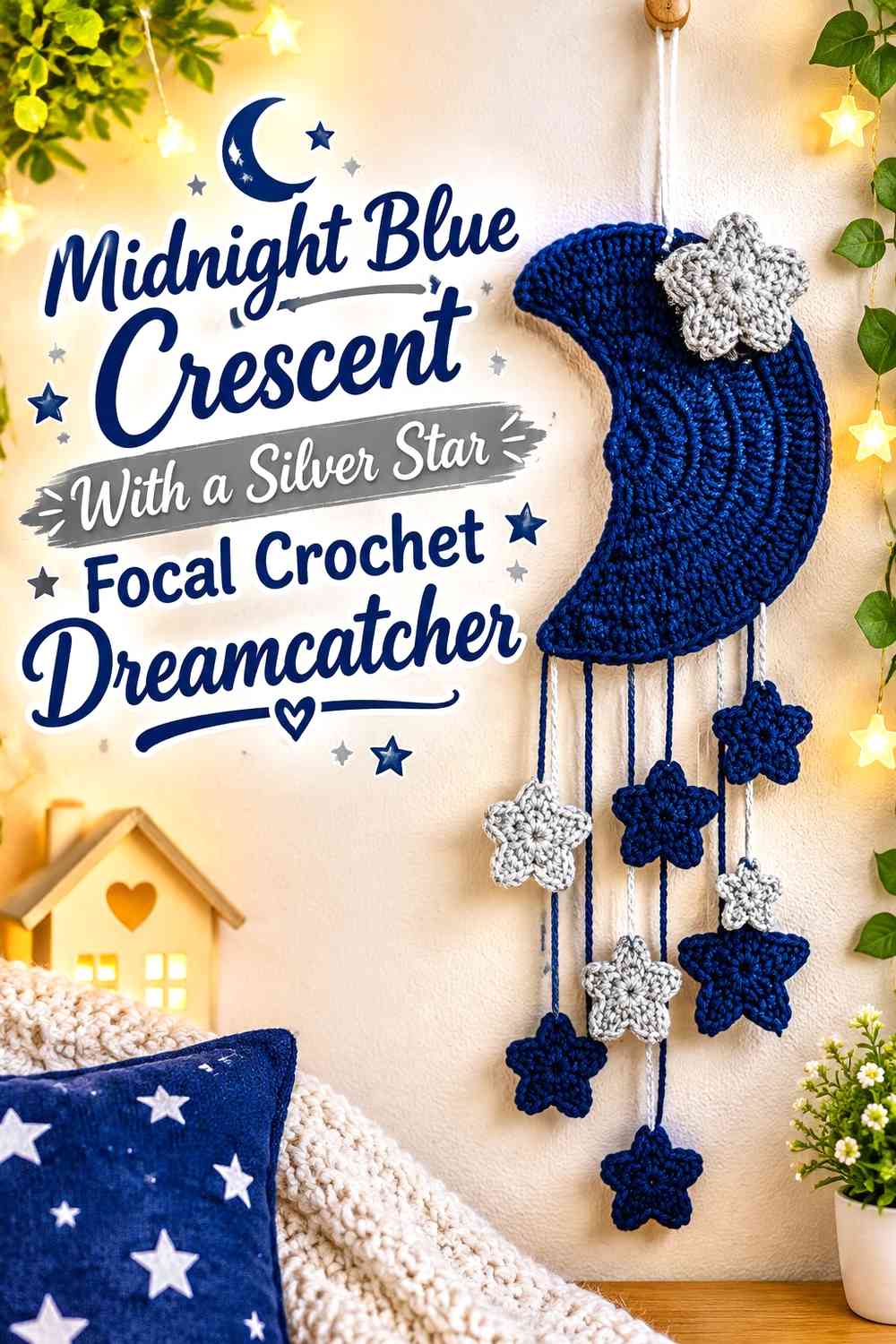
Use a large midnight-blue crescent and one prominent silver star rather than many small celestial pieces. This simpler arrangement puts more emphasis on silhouette and is useful when the surrounding mandala or hoop already contains visible crochet texture.
Midnight Blue Crescent Shape Should Stay Clean Around the Silver Star
Position the star where it complements rather than interrupts the curved moon outline. Leaving open space around both forms helps each remain recognizable from normal wall-viewing distance.
Avoid adding another equally large celestial motif nearby.
Silver Star Placement Can Balance a Midnight Blue Hoop
If the crescent occupies one side of the composition, place the silver star slightly toward the opposite area to distribute visual weight. The star can also guide the eye toward a tassel or hanging strand below.
Keep smaller silver details subordinate to that main star.
Creator Credit: Habijabi Ideas
15. Midnight Blue Hoop With Silver Crochet Moon Phase Appliqué Dreamcatcher
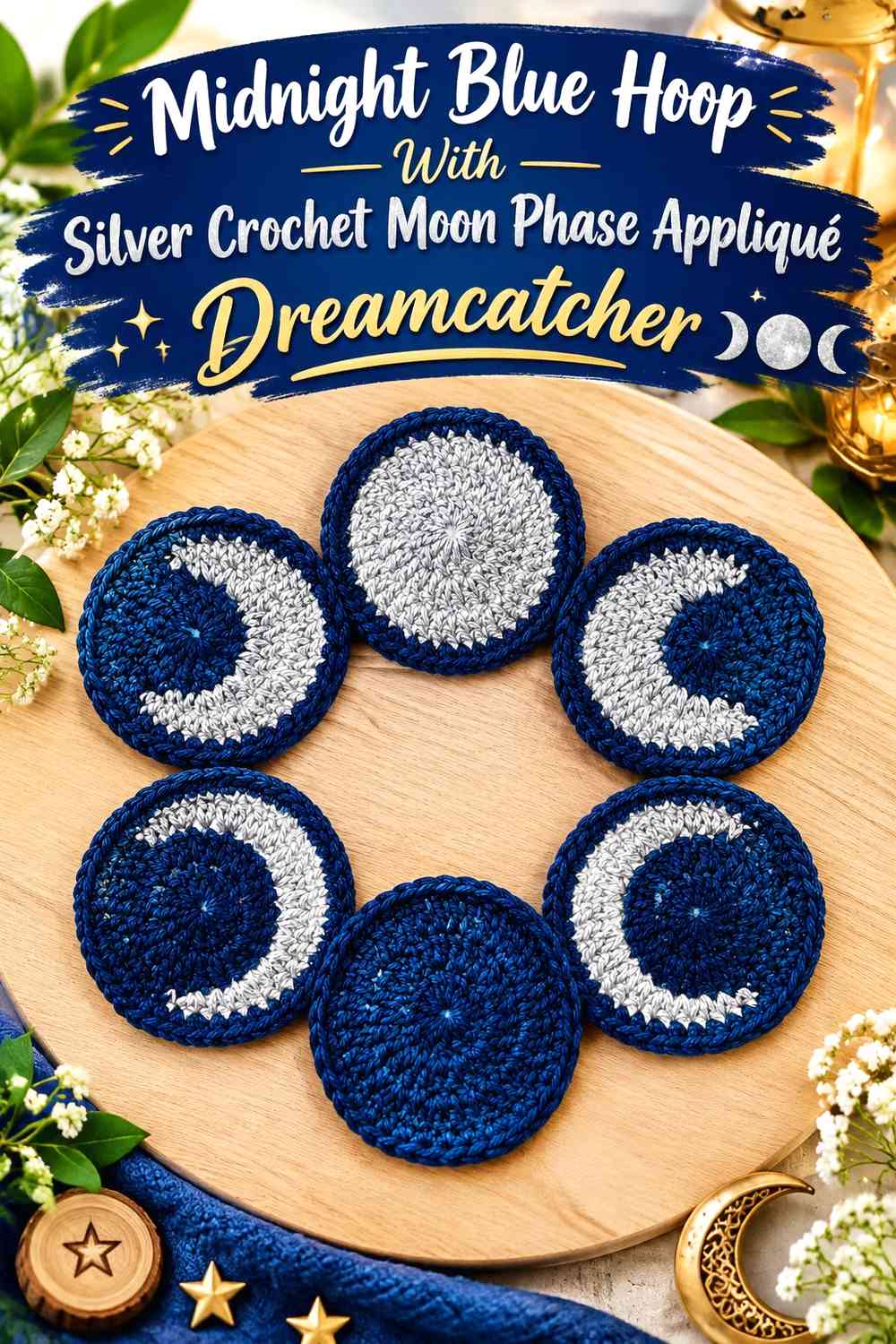
Crochet individual lunar phases in silver and arrange them around or beneath a midnight-blue hoop. This approach separates the moon construction from the central web and gives you more control over phase spacing.
Silver Moon Phases Need Consistent Spacing Around Midnight Blue
Lay out the finished moons before permanently attaching them. A full moon occupies more visual area than a thin crescent, so equal physical gaps do not always create equal-looking spacing.
Check the whole sequence from a distance before fixing the final arrangement.
Midnight Blue Should Remain Visible Between Every Silver Moon
Do not allow adjoining silver shapes to create one continuous light band. The blue spaces between phases help each lunar silhouette remain distinct.
Midnight-blue attachment strands can reinforce those visual breaks.
Creator Credit: Crochet Bits
16. Silver Moon Phase Garland With Midnight Blue Crochet Dreamcatcher Details
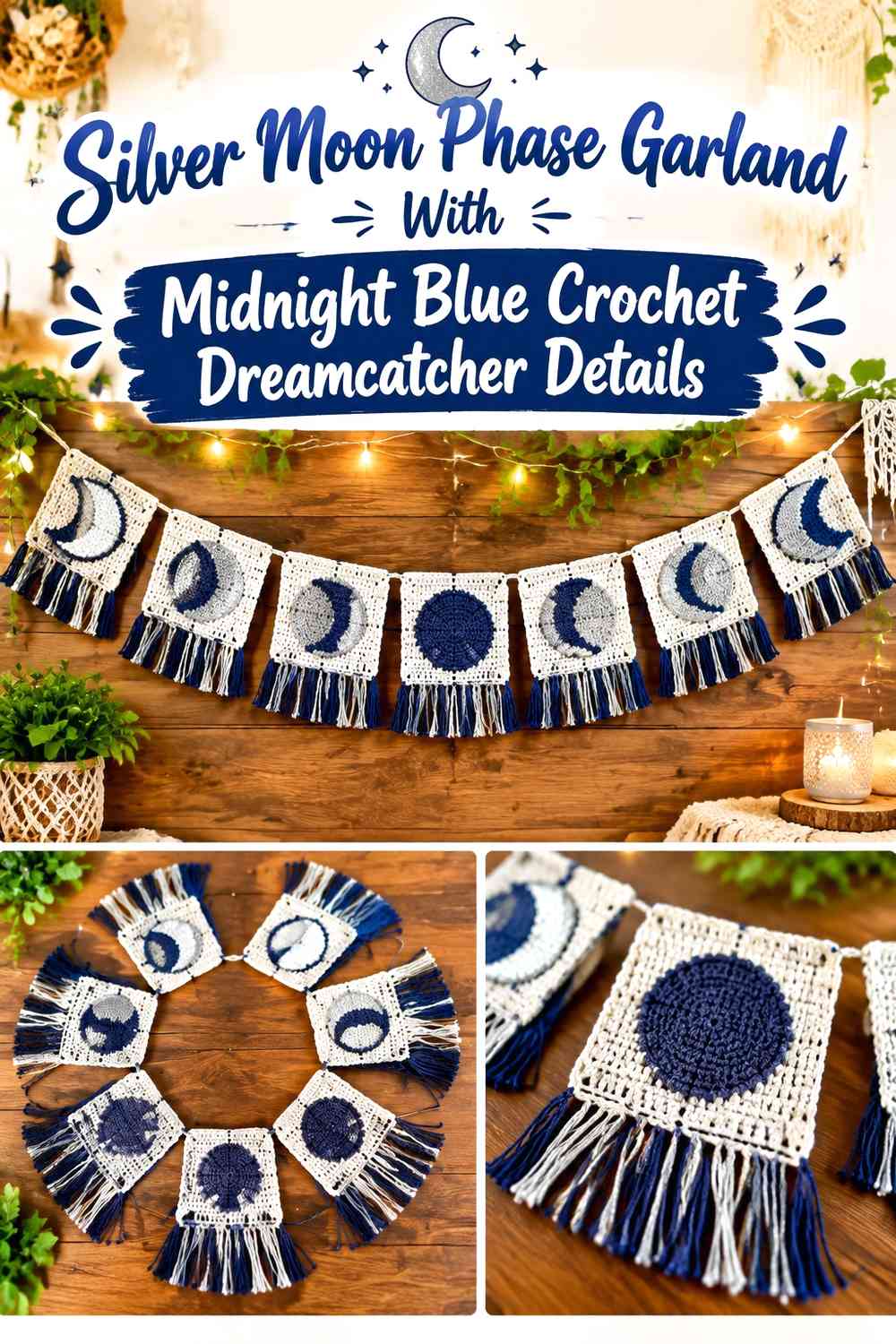
Use individually worked moon-phase panels or motifs as the lower celestial sequence beneath a midnight-blue hoop. Silver can dominate the moons while midnight blue connects the phases to the main circular structure.
Silver Moon Phases Should Form the Main Sequence Beneath Midnight Blue
Keep the lunar pieces arranged in an understandable progression rather than mixing them randomly among stars and tassels. The repeated silver gives the lower section unity while the midnight hoop provides a strong visual starting point above.
If the sequence becomes long, keep additional fringe limited.
Midnight Blue Connectors Can Organize the Silver Moon Garland
Use the darker shade for suspension cords or joining sections so each silver moon has a clear boundary. This also brings midnight blue below the hoop without requiring blue inside every lunar motif.
Repeat the same connector treatment throughout the sequence.
Creator Credit: Happy Heartsy
17. Midnight Blue Lace Crochet Dreamcatcher With Silver Tassels
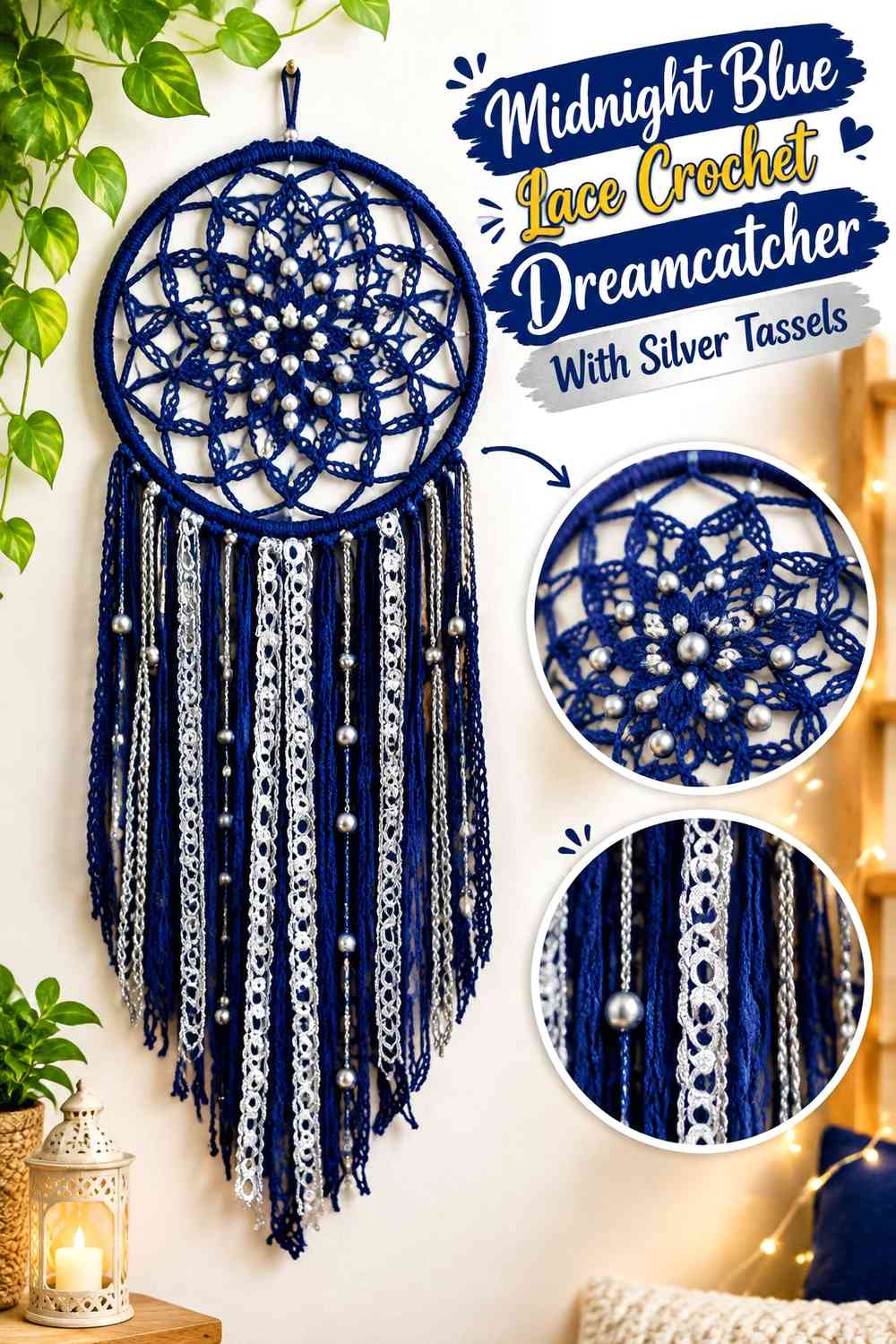
Make the crochet center and most of the hoop treatment midnight blue, then give silver a concentrated role along the bottom. Tassels, narrow strands, or small suspended accents can create a pale transition away from the dark circular center.
Midnight Blue Lace Should Remain the Largest Visual Area
Do not compensate for the dark center by covering the lower half with a very dense wall of silver. The blue mandala should remain the primary object, with the hanging details extending rather than overpowering it.
Leave gaps between tassel groups when the center is especially intricate.
Silver Tassels Can Brighten the Midnight Blue Lower Edge
Place silver beneath selected areas of the hoop rather than uniformly around the full circle. Concentrating the light shade at the bottom reinforces the vertical hanging direction.
A few midnight-blue strands mixed among the silver can keep the fringe connected to the center.
Creator Credit: AlineCrochet
18. Two-Color Midnight Blue and Silver Crochet Celestial Moon Phase Dreamcatcher
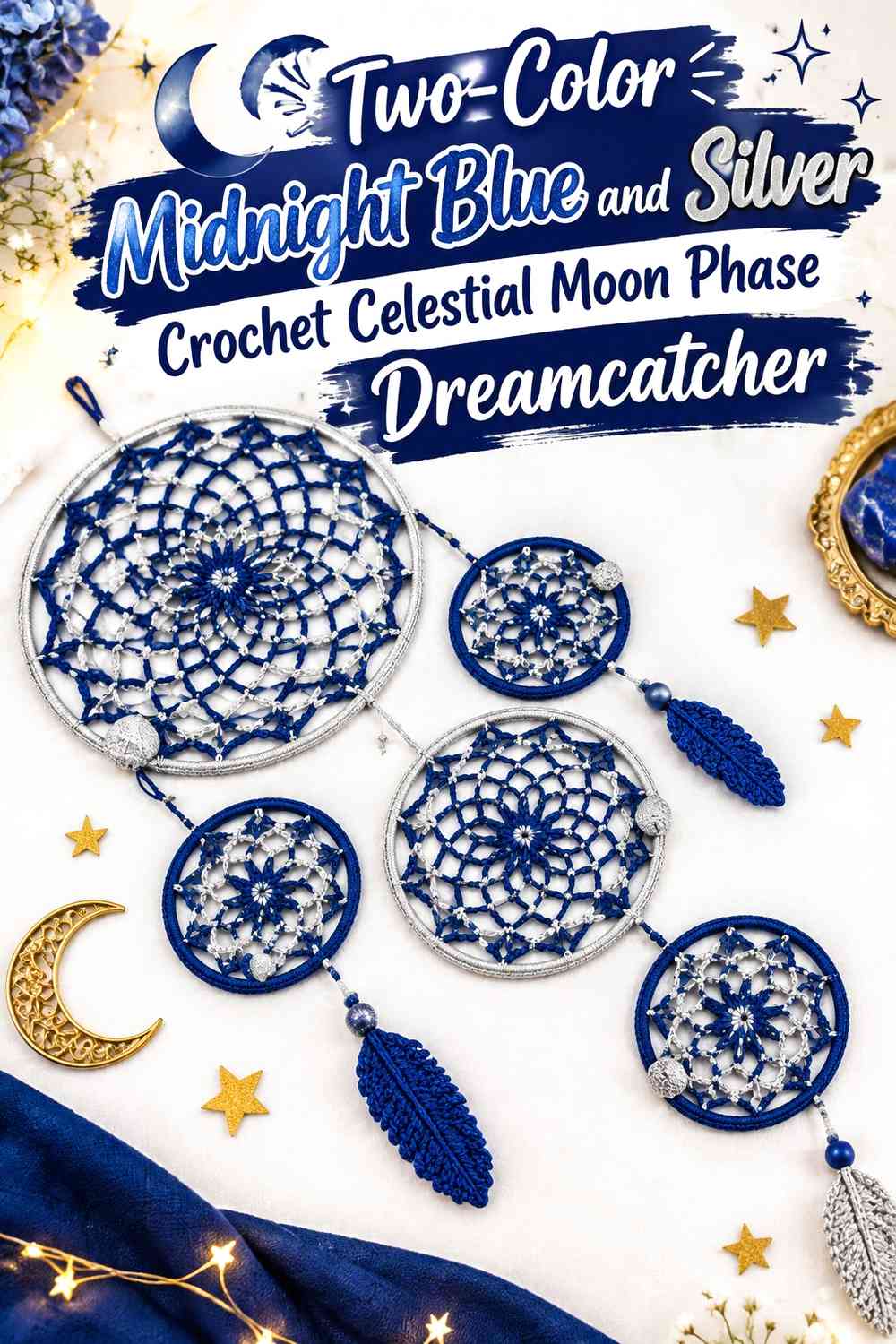
Use only midnight blue and silver throughout the entire piece. Without a third neutral or accent, each color needs a clear job: midnight blue can form the web, hoop, and major hanging strands, while silver creates the phases, stars, selected edging, and lighter fringe details.
Midnight Blue Should Establish the Two-Color Dreamcatcher Structure
Give the dark shade the largest continuous areas rather than alternating colors at every opportunity. A midnight-blue framework makes it immediately clear which parts form the main dreamcatcher structure.
That continuity also gives the silver lunar elements stronger contrast.
Silver Should Mark Celestial Details Instead of Filling Every Midnight Blue Gap
Reserve silver for places where it communicates something: a moon phase, star, outer halo, tassel tip, or selected radial section. When silver appears in every available opening, the hierarchy disappears.
Make one complete center and test a few hanging elements together before committing to the entire two-color layout.
Creator Credit: Francesca Uncinettando Crochet&Love
Which Midnight Blue and Silver Celestial Dreamcatcher Direction Should You Choose?
For the clearest moon-phase theme, choose the midnight-blue web with silver phases, silver moon appliqué, or moon-phase garland directions. These give the lunar sequence enough visual space to remain recognizable rather than treating moons as minor decoration.
For a more lace-focused piece, the silver mandala with midnight-blue frame, midnight-blue doily with silver fringe, or textured midnight-blue mandala with silver edging lets crochet structure provide most of the detail.
If you prefer a simpler celestial composition, the midnight-blue crescent with silver stars or single silver-star focal point avoids crowding the hoop with every possible moon phase. The strict two-color version is the most unified choice when you want every component to reinforce the midnight-blue-and-silver palette.
Conclusion
Midnight blue and silver work particularly well for a celestial crochet dreamcatcher because the colors can perform different visual jobs. Midnight blue creates the night-sky field and gives the hoop, web, or mandala weight, while silver can identify moon phases, stars, halos, edging, and selected hanging details.
The most important choice is not how many celestial decorations to add, but where the silver needs to interrupt the midnight blue. A few well-separated moons can communicate the theme more clearly than filling every opening with stars, beads, phases, and tassels.
Before final assembly, place the finished center inside or against the planned hoop and arrange the moon pieces, stars, and hanging strands around it. View the entire composition vertically and from several feet away. If the moon sequence is immediately readable and neither color overwhelms the other, the palette is doing its job.
Frequently Asked Questions
Should Midnight Blue or Silver Dominate a Crochet Moon Phase Dreamcatcher?
Midnight blue is useful as the dominant color when you want a strong night-sky appearance. Silver can then identify the moons and smaller celestial details. A silver-dominant center works well when you prefer lighter lace, provided midnight blue is used strongly enough around the hoop or focal areas to maintain contrast.
How Can I Make Silver Moon Phases Stand Out Against Midnight Blue Crochet?
Give each phase enough uninterrupted midnight-blue background and avoid placing several other silver details immediately around it. If the two yarn colors are similar in value, enlarge the lunar shapes or simplify nearby texture instead of automatically adding another color.
Should the Crochet Hoop Be Midnight Blue or Silver?
A midnight-blue hoop creates a darker frame and works well around a silver mandala. A silver hoop can create a lighter halo around a midnight-blue center. Choose the option that gives the central crochet the strongest boundary against both the hoop and the wall.
Can I Use Only Midnight Blue and Silver for a Celestial Dreamcatcher?
Yes. A two-color design can be especially cohesive when midnight blue carries the structure and silver is reserved for lunar or star details. Texture, openwork, phase shapes, tassels, and different color proportions can provide variety without introducing additional shades.
Where Should Silver Stars Go on a Midnight Blue Moon Phase Dreamcatcher?
Use stars in spaces that are not already needed to distinguish one moon phase from another. They can work beside a large crescent, within open hoop areas, or among hanging strands. Keep them smaller than the primary lunar shapes if moon phases are the main theme.
How Do I Stop a Midnight Blue Dreamcatcher From Looking Too Dark?
Increase silver in strategic areas such as the outer mandala round, moon sequence, hoop edge, or lower tassels rather than scattering tiny silver stitches everywhere. Larger pale areas generally create more useful separation than numerous small highlights.
Can Separate Crochet Moon Tutorials Be Used for a Dreamcatcher?
Yes, but treat the moon tutorial as instruction for the individual motif rather than for the complete wall hanging. Make the moon pieces first, compare their finished scale with the hoop and central crochet, and then plan the suspension and overall composition separately.