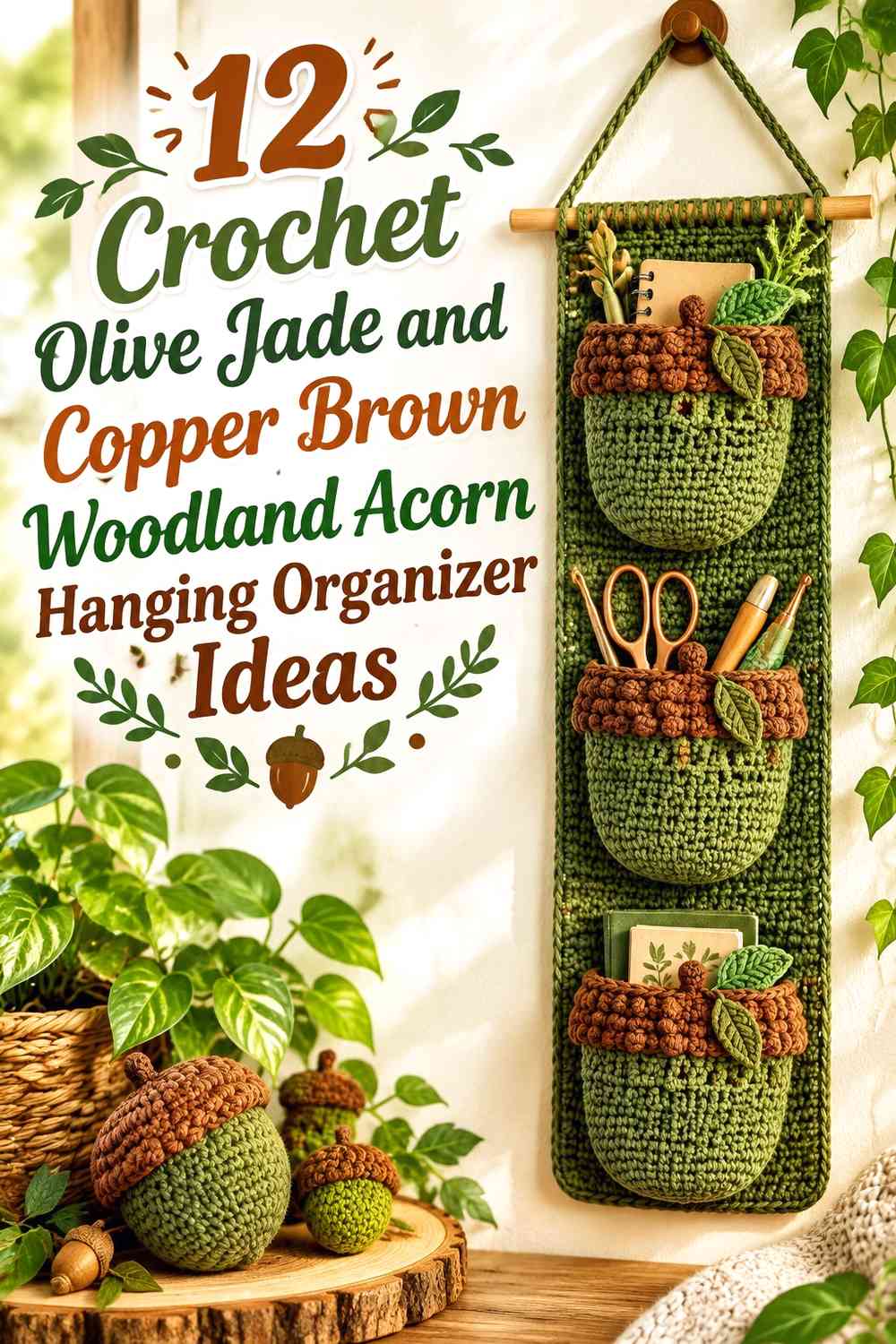

Olive jade and copper brown give a crochet hanging organizer a woodland palette that can separate decorative foliage from the parts that actually create storage. Olive jade can carry oak leaves, vines, hanging cords, borders, and leafy pocket details, while copper brown can define acorn bodies, textured caps, pocket bases, and darker structural sections.
The acorn theme works best when it remains connected to the organizer rather than covering every pocket with decoration. One large acorn-shaped pouch can become the focal storage section, while smaller oak leaves and acorn appliqués repeat the woodland idea around simpler pockets. That balance keeps the piece practical and makes the nature motifs easier to recognize.
The supporting tutorials include complete wall organizers and hanging baskets alongside acorn, acorn-pouch, oak-leaf, vine, and leaf-appliqué tutorials. When a source teaches only an acorn or leaf component, use it for that motif and plan the organizer panel, pocket attachment, hanging system, and final dimensions separately.
Quick List
- Copper Brown Acorn Pocket and Olive Jade Crochet Hanging Organizer
- Copper Brown Crochet Acorn Pouch Trio With Olive Jade Leaves
- Olive Jade Crochet Hanging Basket Organizer With Copper Brown Acorn Details
- Copper Brown Crochet Organizer Panel With Olive Jade Oak Leaf Vines
- Olive Jade Crochet Pocket Organizer With Copper Brown Acorn Appliqués
- Copper Brown Acorn-Cap Crochet Pockets With Olive Jade Bodies
- Olive Jade Vine Crochet Organizer With Copper Brown Woodland Pockets
- Copper Brown Crochet Acorn Organizer With Olive Jade Oak Leaf Borders
- Olive Jade Crochet Hanging Pods With Copper Brown Acorn Bases
- Copper Brown Crochet Pocket Organizer With Olive Jade Leaf Clusters
- Two-Color Olive Jade and Copper Brown Crochet Woodland Acorn Organizer
Decide Whether Olive Jade or Copper Brown Should Lead the Organizer
Olive jade is useful as the dominant color when you want the entire hanging to feel leafy and woodland-inspired. It can cover the back panel, hanging straps, and vines while copper brown is concentrated in acorn pockets or darker trim.
A copper-brown-dominant organizer feels more grounded and makes olive-jade leaves stand out more strongly. In that arrangement, use green where the eye needs botanical definition rather than scattering it through every structural row.
Use Olive Jade and Copper Brown to Separate Storage From Decoration
A hanging organizer becomes easier to read when the pockets and decorative motifs do not all share the same color. Copper-brown pockets against an olive-jade panel are immediately identifiable as storage areas, while green leaves can remain decorative without visually blending into the pockets.
If an acorn pocket uses both shades, keep the body and cap clearly differentiated. A brown acorn body with a green leaf cluster reads differently from a green pouch with a brown cap, so decide which component should be the focal detail before repeating the motif.
Keep Olive Jade and Copper Brown Motifs Clear Around Pocket Openings
Acorn caps, oak leaves, and vines can add woodland character, but they should not visually crowd the openings of pockets. Concentrate dimensional or layered motifs on pocket fronts, lower corners, side borders, or the main backing panel.
Before attaching every decoration, place a few sample items into the organizer and check which areas fold, stretch, or become partially hidden. Move the most detailed olive-jade and copper-brown motifs to places that remain visible in use.
1. Copper Brown Acorn Pocket and Olive Jade Crochet Hanging Organizer
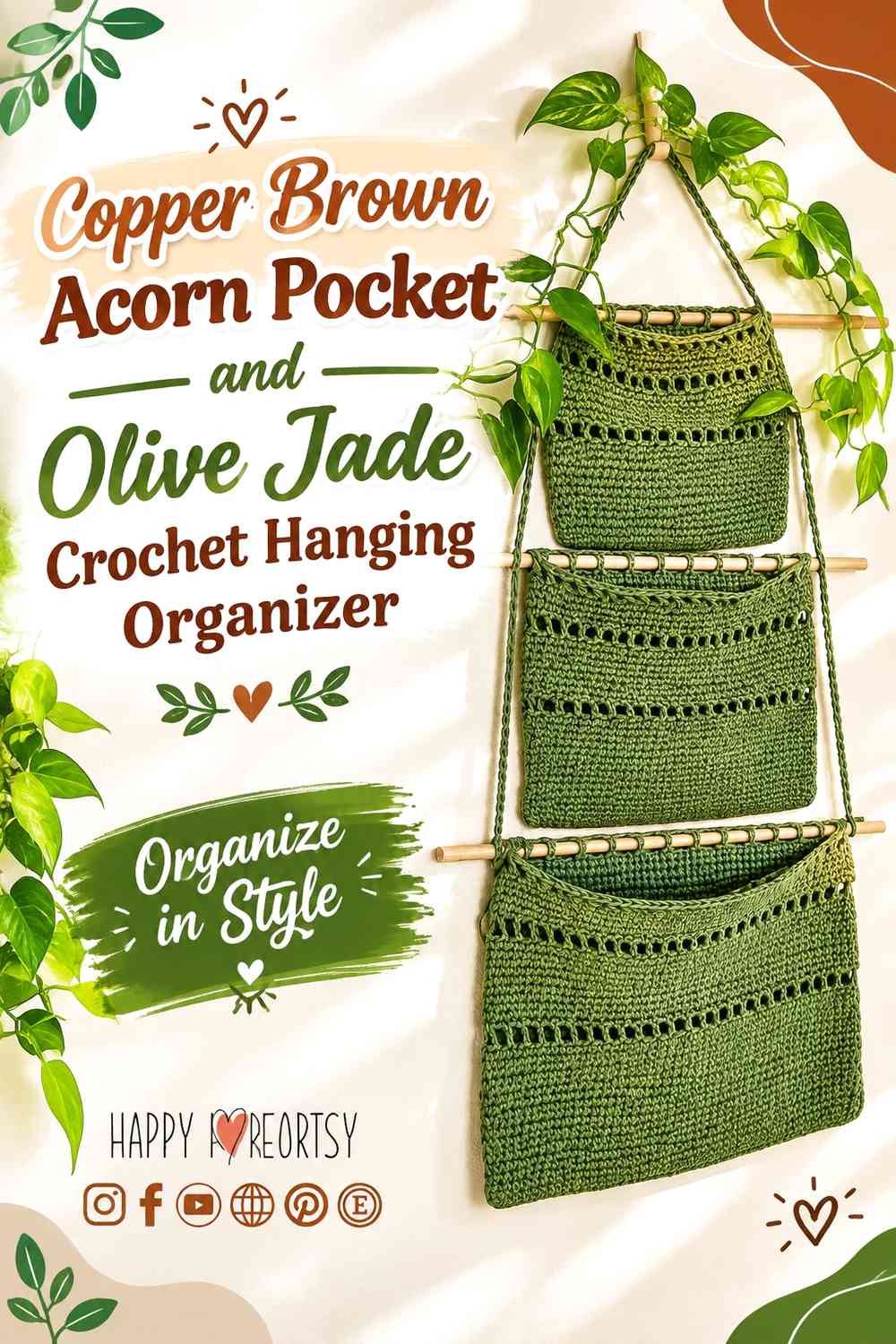
Use olive jade for the organizer panel and make the pockets predominantly copper brown so each storage section resembles an acorn body against a leafy background. The contrast makes the pockets easy to locate while keeping the overall hanging connected to the woodland palette.
Copper Brown Acorn Pockets Need Olive Jade Space Around Them
Leave enough green backing visible between neighboring pockets for each brown shape to remain distinct. If several acorn pockets touch, they can merge into one broad brown block and lose their individual silhouettes.
Use olive jade between the pockets as deliberate negative space rather than filling every gap with extra decoration.
Olive Jade Leaves Can Identify Copper Brown Acorn Pocket Tops
Place small olive-jade leaf clusters near selected pocket tops or corners rather than attaching leaves to every edge. The green detail can reinforce the acorn theme without interfering with the pocket opening.
Keep the leaf placement consistent across repeated pockets if you want the organizer to feel orderly.
Creator Credit: Happy Heartsy
2. Copper Brown Crochet Acorn Pouch Trio With Olive Jade Leaves
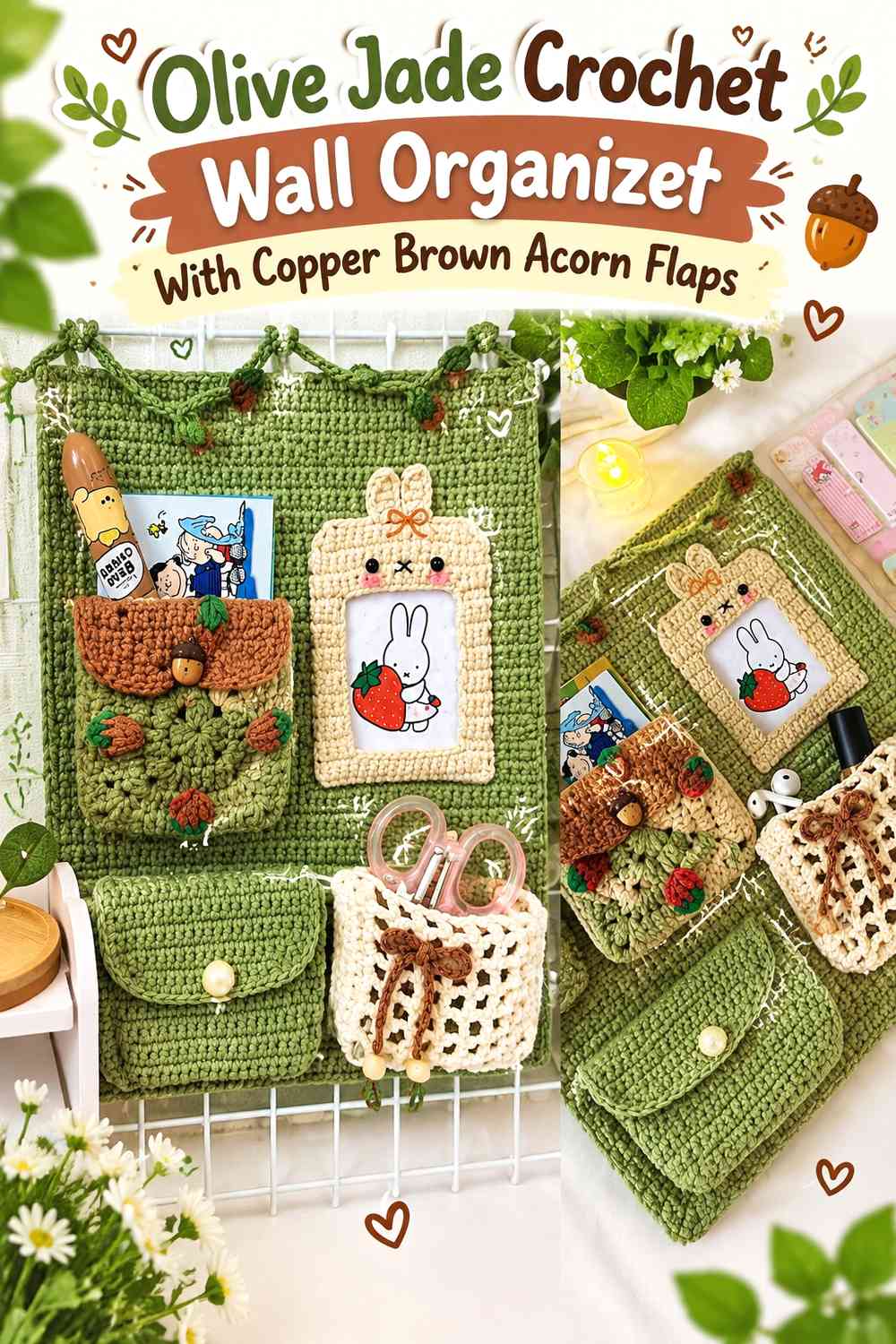
Build the hanging organizer around three separate acorn-inspired pouches. Use copper brown for most of each pouch and olive jade for leaves, hanging connectors, or small cap-adjacent details so the storage pieces read as a coordinated set.
Copper Brown Acorn Pouches Should Repeat Consistently Against Olive Jade
Keep the major pouch color the same across all three pieces if you want the organizer to feel unified. Variations can come from size, placement, or leaf position rather than changing the dominant color of every pouch.
A consistent brown body also makes the green connectors easier to follow vertically.
Olive Jade Leaves Can Link Separate Copper Brown Pouches
Place olive-jade leaves along the connecting cord or near the top of each acorn. The repeated green motifs visually tie separate pouches together without requiring a solid backing panel.
Keep enough space between leaves and pocket openings for the organizer to remain easy to use.
Creator Credit: Club Crafteria
3. Olive Jade Crochet Hanging Basket Organizer With Copper Brown Acorn Details
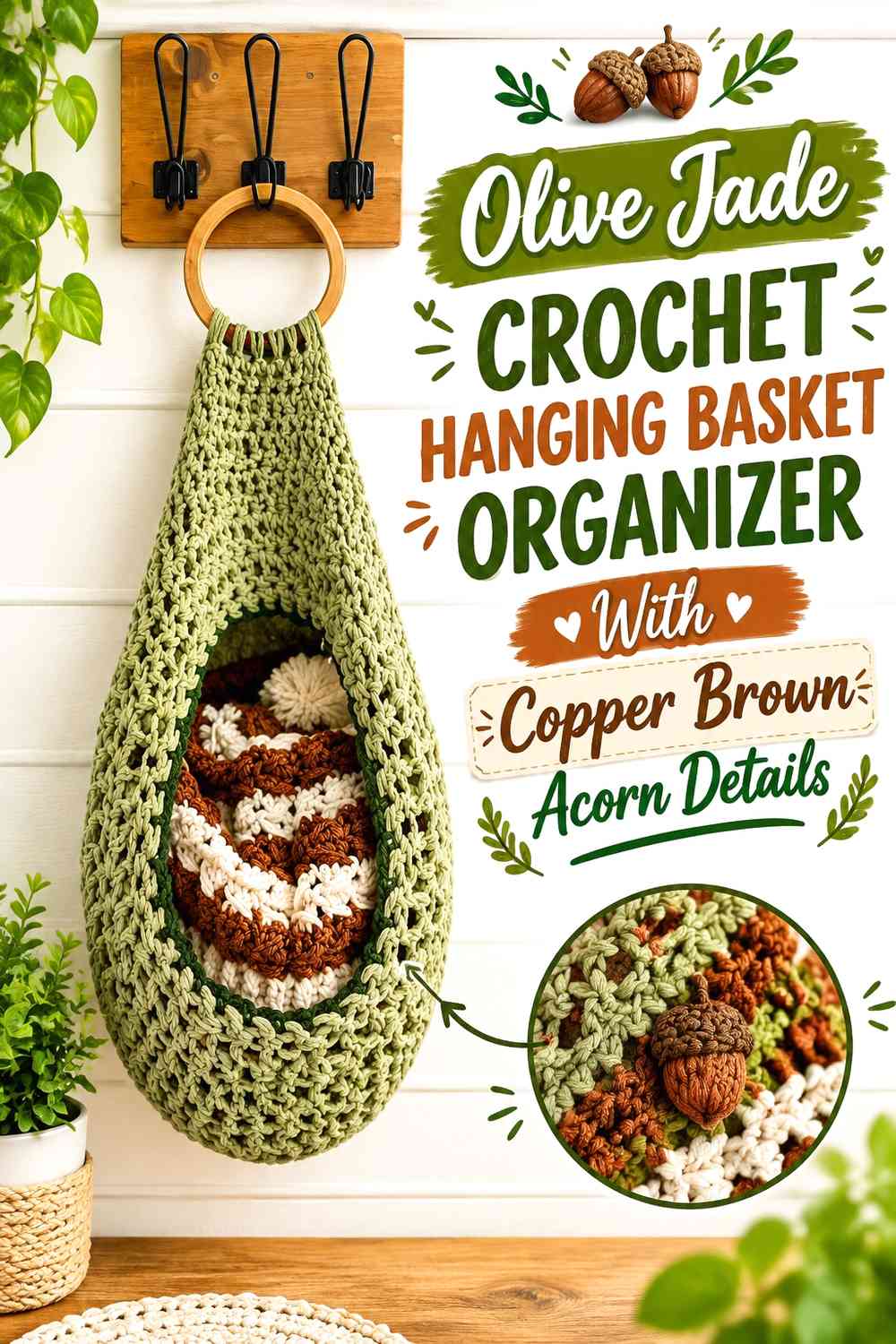
Use an olive-jade hanging basket as the main storage form and add copper-brown acorn motifs to the front. This creates a more three-dimensional organizer than a flat wall panel while keeping the woodland decoration concentrated where it remains visible.
Copper Brown Acorns Need a Clear Olive Jade Basket Background
Place one larger acorn or a small cluster on the visible front rather than covering the entire basket with repeated motifs. The plain green surface makes the brown shapes easier to recognize.
Avoid positioning dimensional acorns directly where the basket opening needs to flex.
Olive Jade Should Remain the Main Basket Color Around Copper Brown
Keep the handle and most of the basket green so the organizer retains a strong woodland identity. Copper brown can then be reserved for the acorn embellishment and perhaps one narrow rim detail.
This gives the two shades different jobs rather than splitting every row evenly.
Creator Credit: Crochet With Julie
4. Copper Brown Crochet Organizer Panel With Olive Jade Oak Leaf Vines
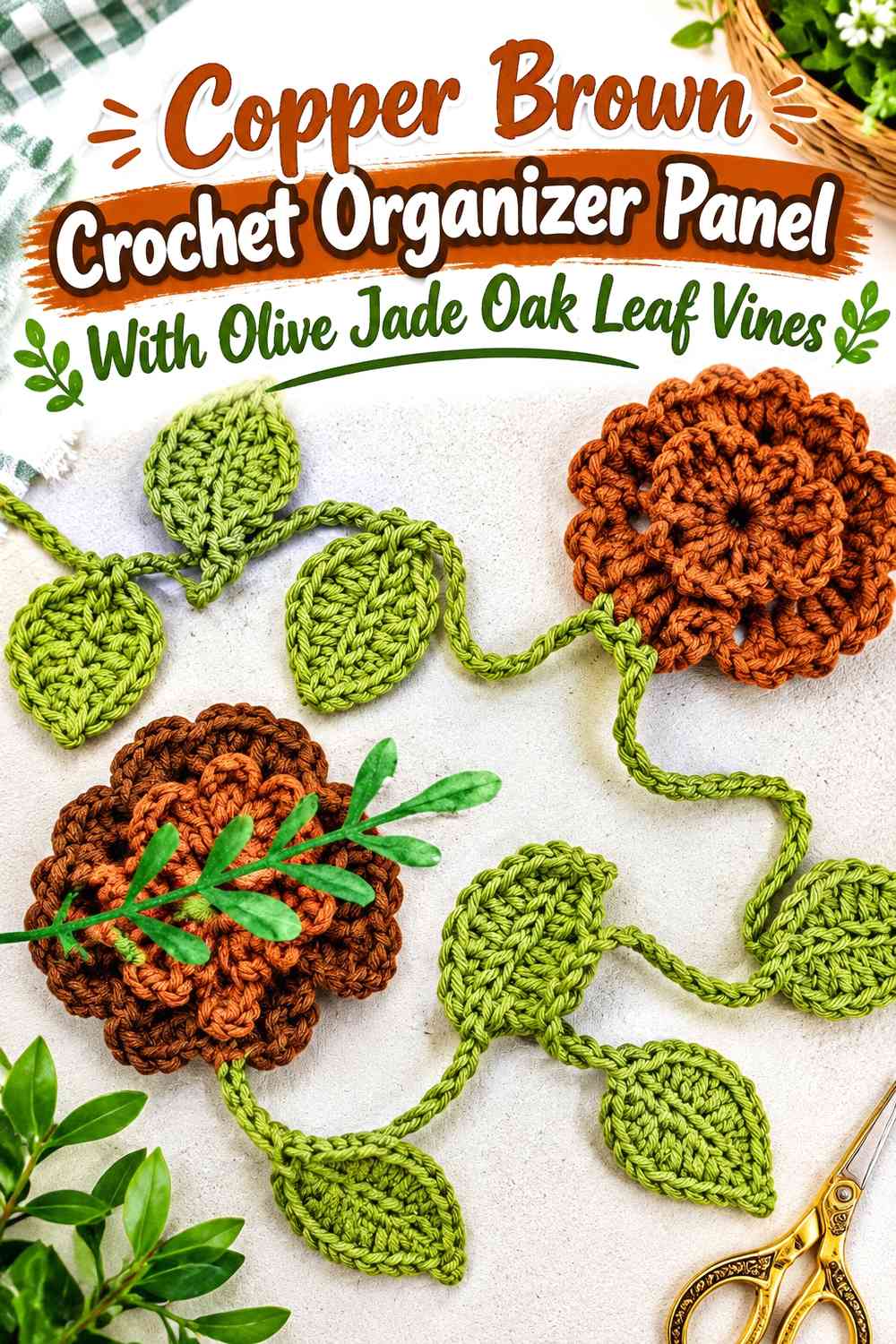
Make the main hanging panel copper brown and run olive-jade leaf vines down one or both sides. Simple brown pockets can sit inside the leafy frame, creating a woodland organizer without turning every storage compartment into an acorn shape.
Olive Jade Vines Should Frame Copper Brown Pockets Instead of Crossing Them
Keep the leafy strands mainly along the sides or between pocket columns. A vine running across an opening can make a functional area look visually cluttered and may partially hide whatever is stored there.
Let the greenery act as a border rather than a cover.
Copper Brown Panels Give Olive Jade Leaves Strong Contrast
A broad brown backing makes the leaf silhouettes easy to read. Keep some uninterrupted brown space around each vine so individual leaves remain recognizable.
If additional green is needed, repeat it at the hanging loop instead of adding more leaves across the center.
Creator Credit: Hooked by Robin
5. Olive Jade Crochet Pocket Organizer With Copper Brown Acorn Appliqués
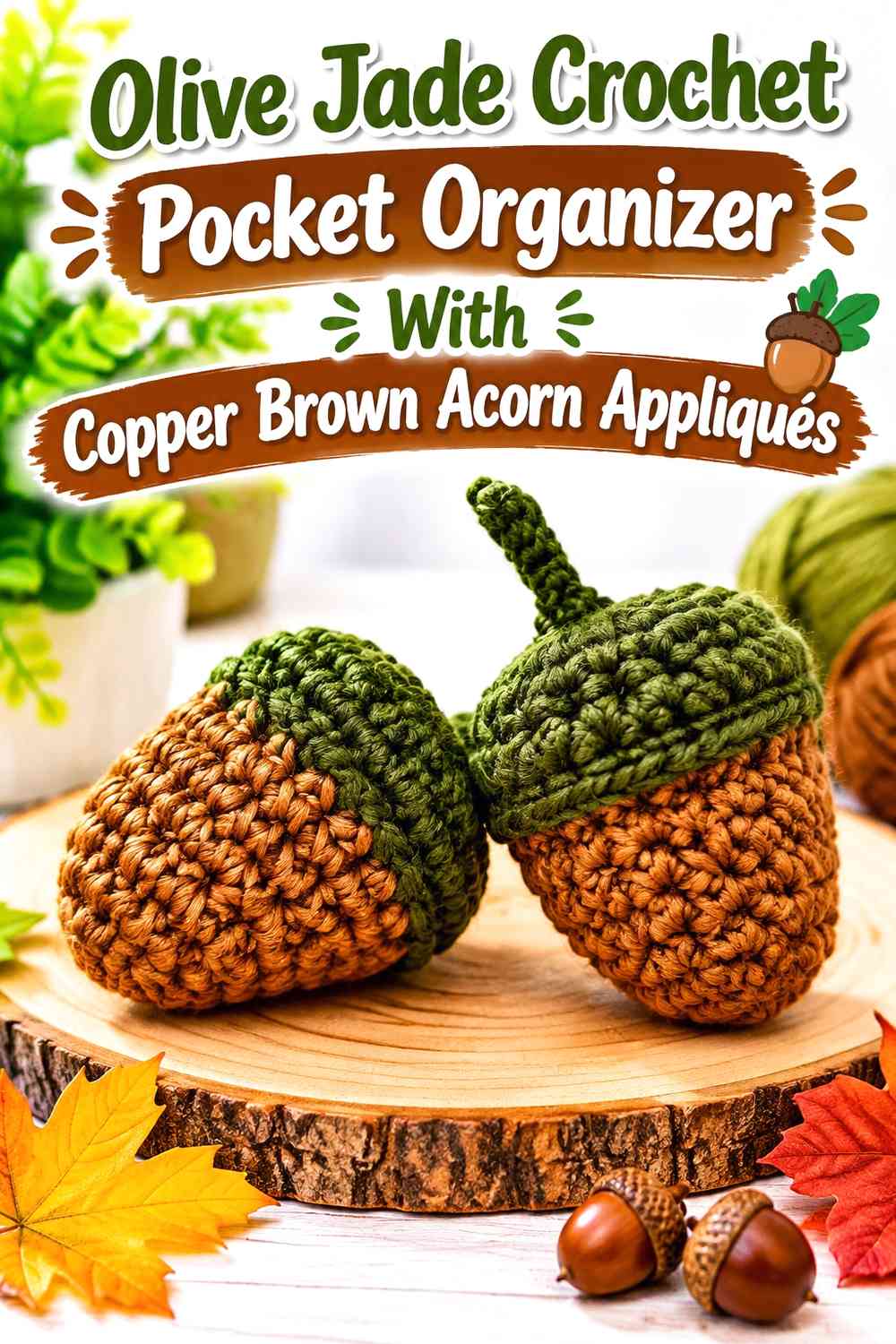
Use olive jade for a straightforward pocket organizer and attach small copper-brown acorns only to selected pocket fronts. This is a useful direction when you want the acorn theme to remain decorative rather than dictate the entire storage shape.
Copper Brown Acorns Should Stay Smaller Than Olive Jade Pockets
Keep each motif proportionate to the pocket so it remains an accent instead of covering most of the usable front surface. One acorn per pocket can create a clearer woodland repeat than several overlapping decorations.
Leave enough green visible around every motif for its outline to remain distinct.
Olive Jade Pocket Repetition Can Organize Copper Brown Motifs
Use the same green across all pockets so the brown acorns become the changing focal details. You can vary their position slightly while preserving a consistent overall layout.
If the panel already contains vines or leaves, reduce the number of acorn appliqués to prevent crowding.
Creator Credit: Crochet Crafters 1
6. Copper Brown Acorn-Cap Crochet Pockets With Olive Jade Bodies
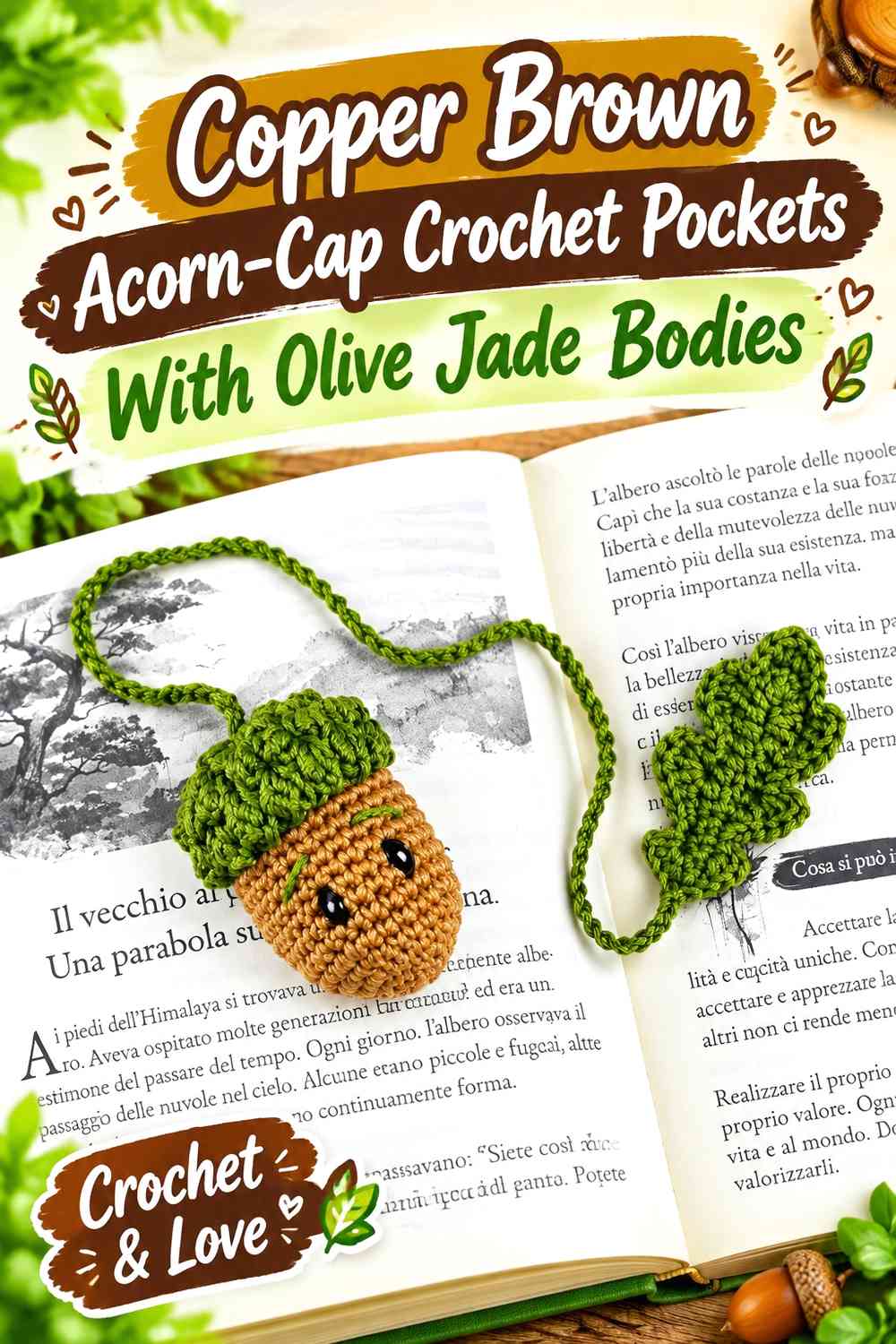
Reverse the expected acorn palette by making the main pocket body olive jade and using copper brown only at the cap-like top. The organizer remains green-dominant while the darker cap gives every pocket a recognizable woodland cue.
Copper Brown Caps Should Clearly Contrast With Olive Jade Pocket Bodies
Keep the color boundary near the pocket top and repeat it at a similar height across matching pockets. A consistent cap proportion is what makes the acorn reference readable.
Do not add multiple brown stripes below the cap unless you want a more general colorblock design.
Olive Jade Pocket Bodies Need Enough Area Below Copper Brown
Leave the green section broad so the reversed palette remains obvious. If the brown cap becomes too deep, the pocket will return to a brown-dominant appearance.
A small green leaf at the cap edge can reinforce the botanical direction.
Creator Credit: Francesca Uncinettando Crochet&Love
7. Olive Jade Vine Crochet Organizer With Copper Brown Woodland Pockets
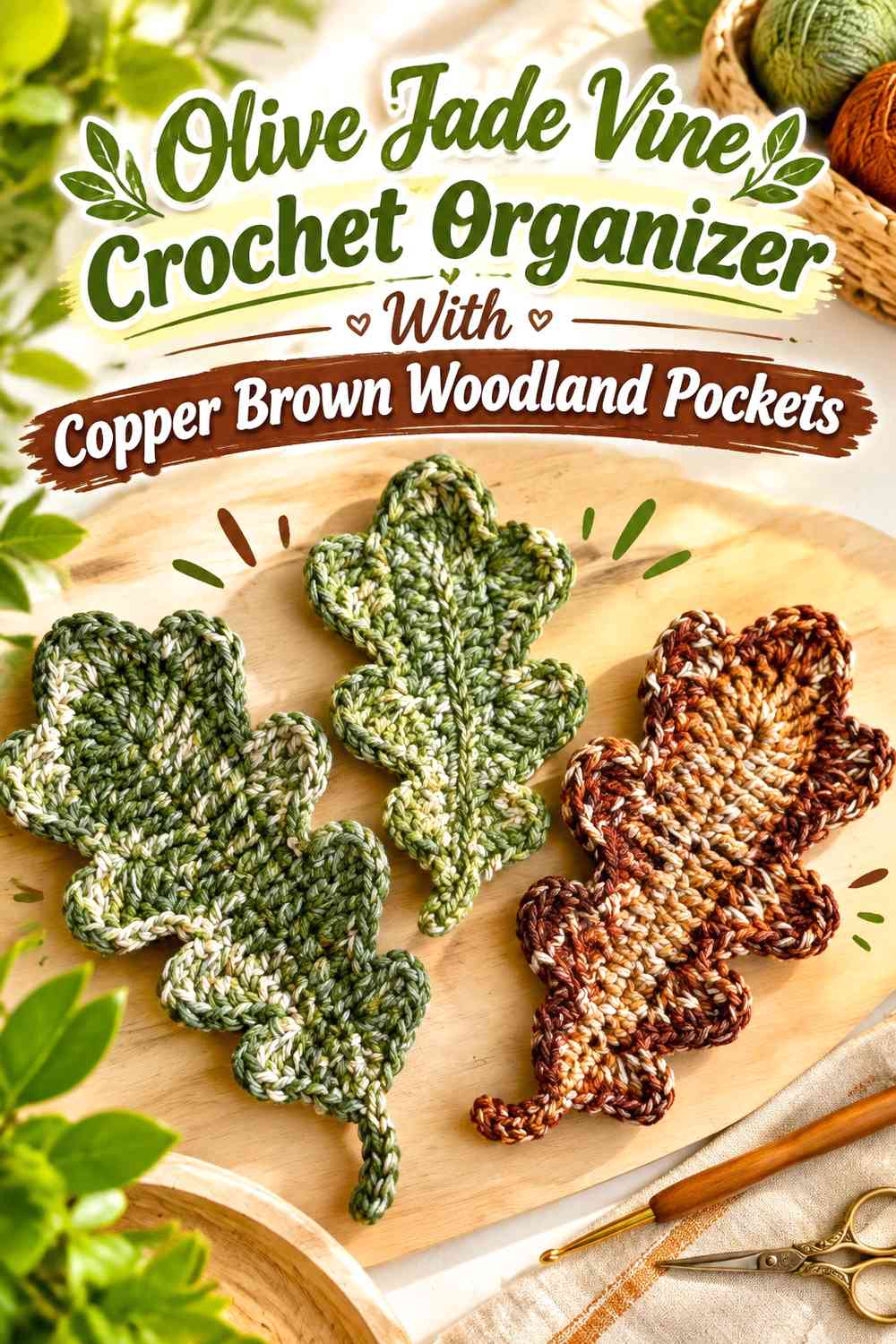
Use olive-jade vines as visible connectors between several copper-brown pockets. Rather than mounting every pocket on a broad backing panel, let the hanging structure itself contribute to the woodland effect.
Olive Jade Vines Need Strong Attachment Points Around Copper Brown Pockets
Keep the green connectors visually simple where they meet the storage sections so the transition does not become a dense cluster of leaves and seams.
More decorative leaves can appear between pockets where they do not compete with the openings.
Copper Brown Pockets Should Remain the Main Storage Shapes Beside Olive Jade
Use brown consistently for the pocket bodies so the eye can distinguish storage from the green connecting system. This division becomes especially useful in a vertical hanging with several separate compartments.
Repeat copper brown in the top hanging tab if the pockets feel disconnected from the support structure.
Creator Credit: OhMeOhMyCrochet
8. Copper Brown Crochet Acorn Organizer With Olive Jade Oak Leaf Borders
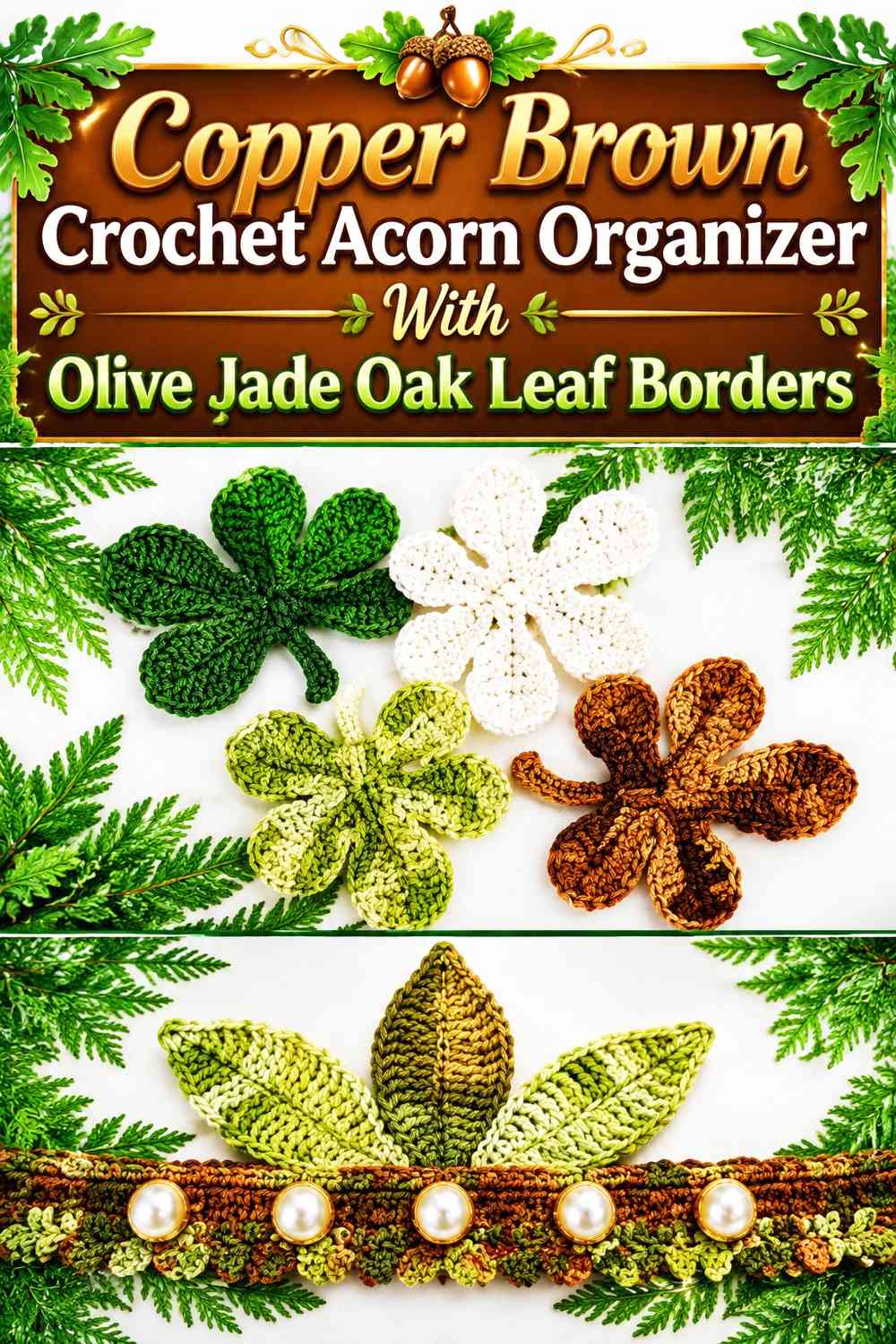
Make copper brown the dominant organizer color and decorate the outer edges with olive-jade oak leaves. The green border creates a woodland frame while leaving the central pockets comparatively simple and practical.
Olive Jade Oak Leaves Should Stay Along Copper Brown Organizer Edges
Place the leaves where they reinforce the outer silhouette rather than scattering them across every pocket. Edge placement keeps the center easier to read and gives the organizer a more deliberate framed appearance.
Vary leaf direction slightly while maintaining a consistent overall border.
Copper Brown Should Remain Visible Between Olive Jade Oak Leaves
Do not attach leaves so densely that the brown edge disappears completely. The alternating green-and-brown boundary is what gives the frame depth.
Larger spacing also prevents individual leaf shapes from visually merging.
Creator Credit: Edirin Croche
9. Olive Jade Crochet Hanging Pods With Copper Brown Acorn Bases
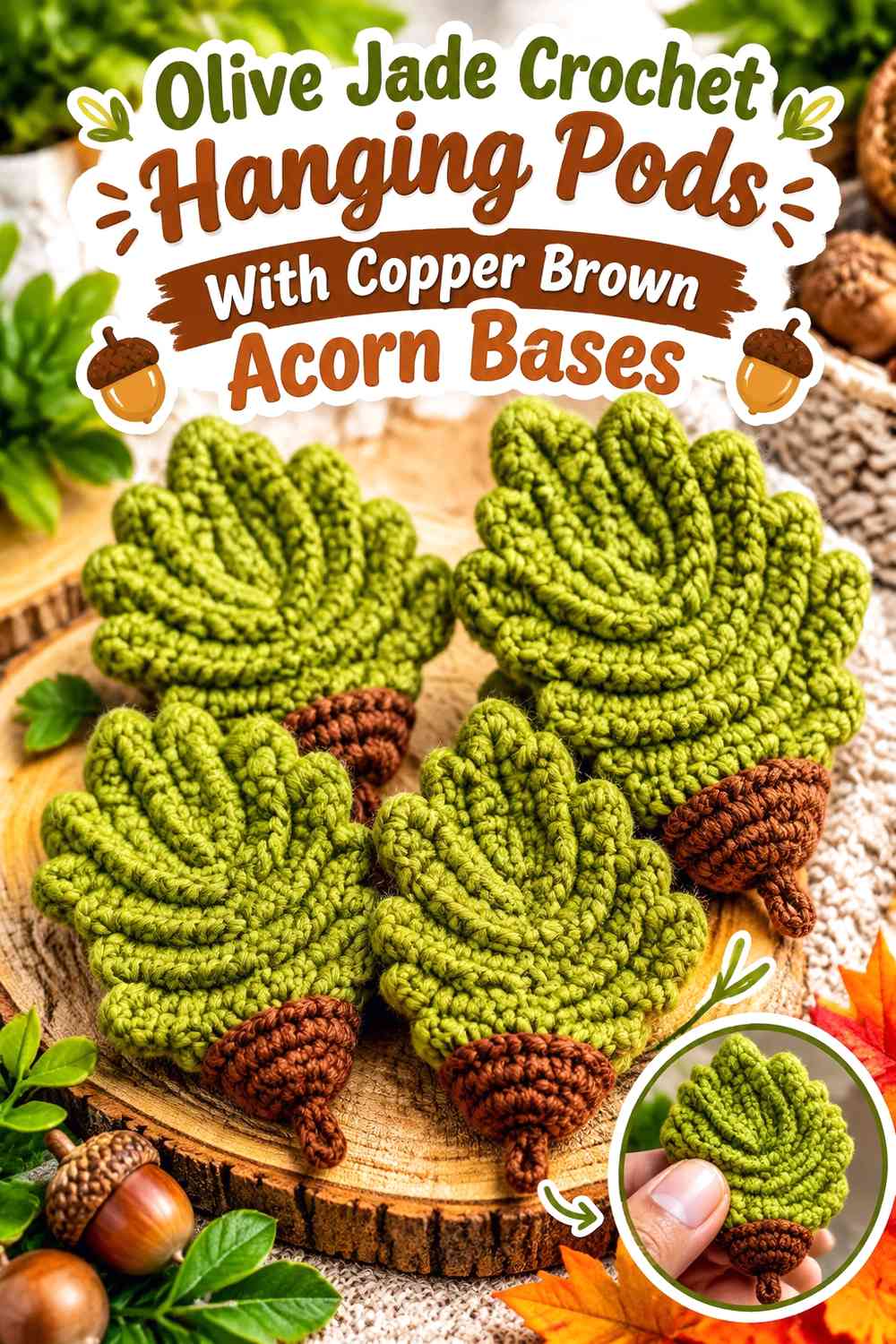
Create several hanging pod or basket shapes in olive jade and give each one a copper-brown lower section or base. The result suggests acorns through color placement without requiring literal acorn-shaped pockets.
Copper Brown Bases Should Stay Consistent on Olive Jade Pods
Use a similar brown depth across each hanging basket so the set feels coordinated. A different color proportion on every pod can make the arrangement look accidental rather than intentionally acorn-inspired.
The darker base can remain simple while the green upper section provides most of the woodland character.
Olive Jade Handles Can Continue Above Copper Brown Bases
Keep the upper body and hanging loop green to draw the eye upward. This creates a natural green-to-brown relationship from leafy top to earthy base.
If you add leaves, attach only a few near the loop rather than covering the whole pod.
Creator Credit: Made by Yuma
10. Copper Brown Crochet Pocket Organizer With Olive Jade Leaf Clusters
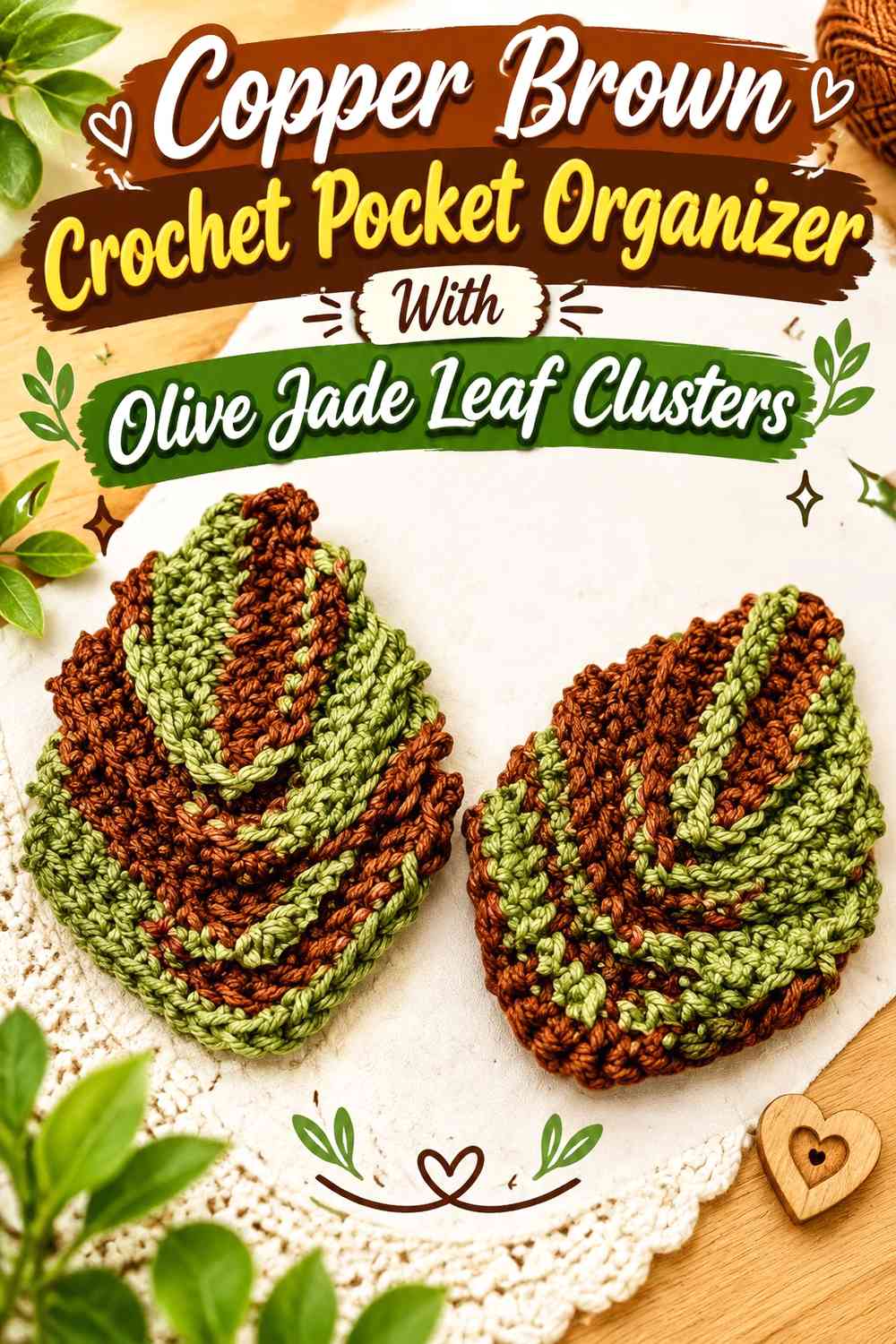
Use copper brown for a simple hanging panel and pockets, then concentrate olive-jade leaves in small clusters at pocket corners or along the top. This produces a darker woodland organizer with green used as a controlled botanical accent.
Olive Jade Leaf Clusters Need Open Copper Brown Background
Leave brown visible around every group of leaves so their shapes can be read separately. Several clusters placed too close together can turn into one continuous green strip.
A small cluster on alternating pockets can provide enough repetition.
Copper Brown Pockets Should Stay Functional Beneath Olive Jade Leaves
Position the leaves away from the central opening and any area likely to fold when the pocket is used. Corners and lower fronts usually provide clearer decorative zones.
Use the leaf tutorial for the motif itself, then determine attachment according to your finished organizer construction.
Creator Credit: Claudia Lima
11. Two-Color Olive Jade and Copper Brown Crochet Woodland Acorn Organizer
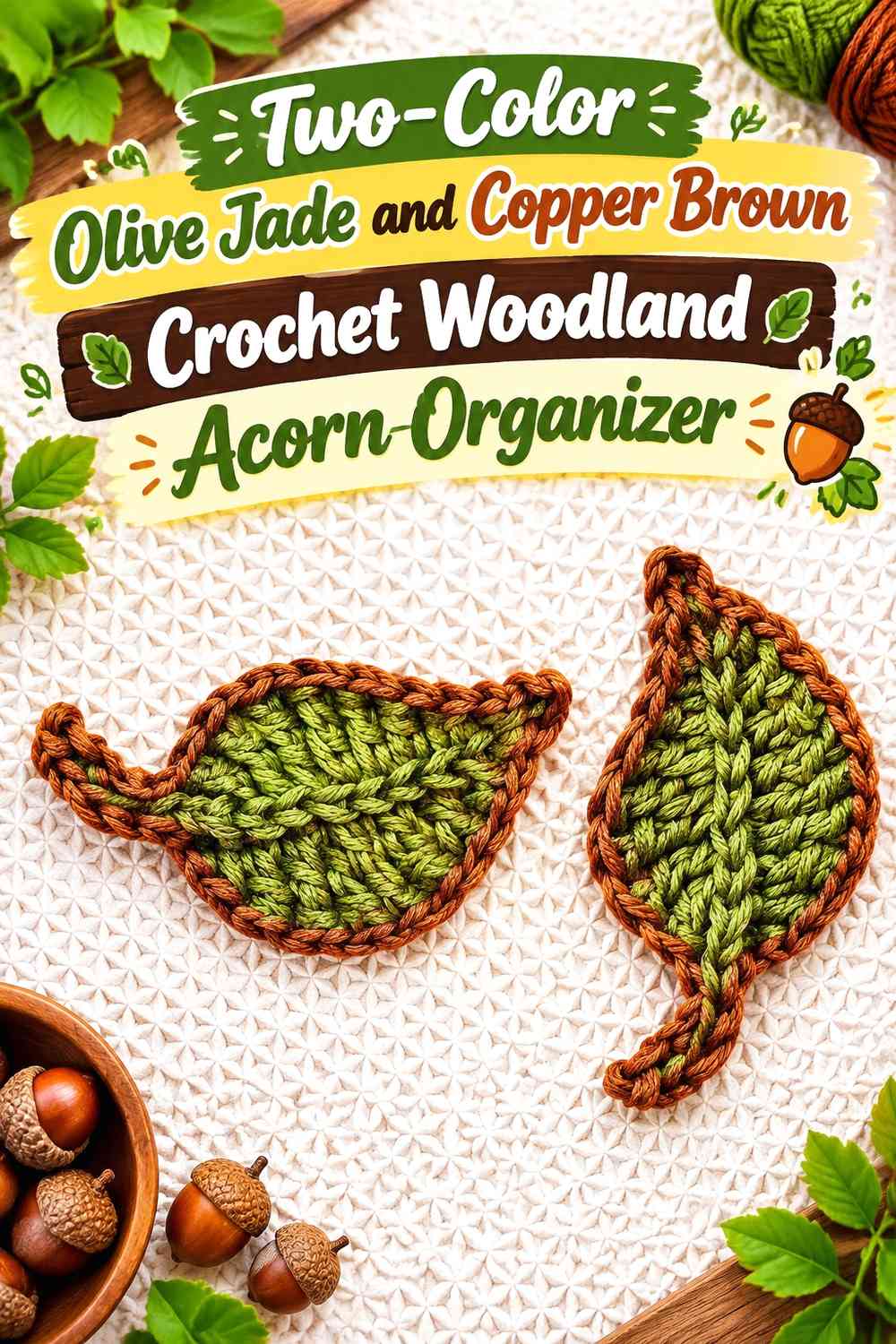
Use only olive jade and copper brown throughout the organizer, assigning olive jade to foliage, hanging cords, joins, and selected pocket bodies while copper brown carries acorns, caps, bases, and darker framing. With no cream, gold, or rust accent, the two colors need consistent roles.
Olive Jade Should Establish the Botanical Structure Around Copper Brown
Use green where it communicates leaves, vines, and connecting sections rather than changing to olive jade randomly inside every brown pocket. A consistent botanical role makes the limited palette easier to understand.
The same green can repeat at the top hanging loop and lower decorative leaves to connect the full vertical piece.
Copper Brown Should Define the Main Acorn Details Against Olive Jade
Keep the most recognizable acorn bodies or caps brown so the woodland theme remains clear. Larger brown shapes will usually communicate more effectively than many tiny scattered stitches.
Let some green space remain around each acorn.
Olive Jade and Copper Brown Need a Full Organizer Layout Check
Lay out the pockets, acorns, leaves, and connectors before final assembly. Check whether all the brown shapes have collected near the bottom, whether green leaves are hiding pocket openings, and whether both colors repeat through the full height of the hanging.
Move whole motifs or larger color areas when the balance feels uneven instead of adding extra small accents everywhere.
Creator Credit: Raji’s Craft Hobby
Which Olive Jade and Copper Brown Woodland Acorn Organizer Should You Choose?
For the clearest acorn theme, choose the copper-brown acorn pocket organizer, acorn-pouch trio, reversed cap pockets, or olive-jade pockets with brown appliqués. These make the acorn itself a recognizable part of the storage design.
For a more practical organizer-first look, the olive-jade wall organizer with brown flaps, hanging basket, woodland pocket panel, and hanging pod versions keep the storage construction simple and use the woodland palette through specific details.
If you want foliage to play a larger role, the leaf-vine organizer, oak-leaf border, and leaf-cluster pocket organizer give olive jade more visible surface while copper brown grounds the pockets. The final strict two-color version is the most controlled choice when you want every structural and decorative section to stay inside olive jade and copper brown.
Conclusion
Olive jade and copper brown work especially well for a woodland acorn hanging organizer because they can divide botanical and storage roles clearly. Olive jade can establish leaves, vines, hanging loops, and connecting sections, while copper brown defines acorns, caps, pockets, bases, and darker structural areas.
The organizer does not need an acorn on every pocket. One or two strong acorn-shaped storage pieces combined with simpler pockets, oak leaves, and green vines can communicate the theme more clearly than covering every available surface with motifs.
Build or choose the storage structure first, then position the woodland details where they remain visible without interfering with the pocket openings. Use each credited organizer, hanging-basket, acorn, vine, or leaf tutorial for the component it actually demonstrates and plan the final assembly around your chosen organizer format.
Frequently Asked Questions
Should Olive Jade or Copper Brown Dominate a Woodland Acorn Hanging Organizer?
Use olive jade as the dominant shade when you want a leafy, botanical organizer with brown acorns as focal details. Copper brown works well as the dominant color when you want darker pockets and panels with green leaves providing contrast.
Where Should Copper Brown Go on an Olive Jade Acorn Organizer?
Copper brown works particularly well on acorn bodies, caps, pocket fronts, basket bases, borders, and selected hanging details. Keeping it in larger intentional areas usually looks clearer than scattering small brown stitches through every green section.
How Can I Keep Olive Jade Leaves Visible on Copper Brown Pockets?
Leave enough plain brown around each leaf or cluster. Avoid attaching several leaves so closely that their edges overlap, and position them away from heavily textured brown sections if the shapes become difficult to distinguish.
Can Acorn-Shaped Crochet Pouches Be Used in a Hanging Organizer?
They can provide individual storage compartments when incorporated into a separately planned hanging structure. Use an acorn-pouch tutorial for the pouch construction it teaches, then decide how the finished pieces will be supported and arranged rather than assuming the pouch tutorial includes a wall-organizer system.
Should Every Pocket in an Olive Jade and Copper Brown Organizer Look Like an Acorn?
No. A few acorn-shaped or acorn-decorated pockets can establish the woodland theme while simpler pockets handle the rest of the storage. This also gives oak leaves and vines enough visual space to remain recognizable.
Where Should Olive Jade Vines Go on a Hanging Pocket Organizer?
Side borders, spaces between pockets, and sections leading toward the hanging loop are useful locations. Avoid running thick vines directly across pocket openings where they may visually or physically interfere with access.
Can I Use Only Olive Jade and Copper Brown for the Entire Organizer?
Yes. Give olive jade consistent botanical roles such as leaves, vines, or connectors and use copper brown for acorn and storage areas. The contrast between motif shape, texture, and placement can create enough variety without adding cream, rust, or mustard.
How Do I Keep a Woodland Acorn Organizer From Looking Too Busy?
Limit the number of decorated areas. Use one large acorn pocket, a few smaller appliqués, or a leaf border rather than combining dense vines, acorns, tassels, and leaves on every pocket. Plain olive-jade or copper-brown areas help the functional organizer structure remain easy to understand.