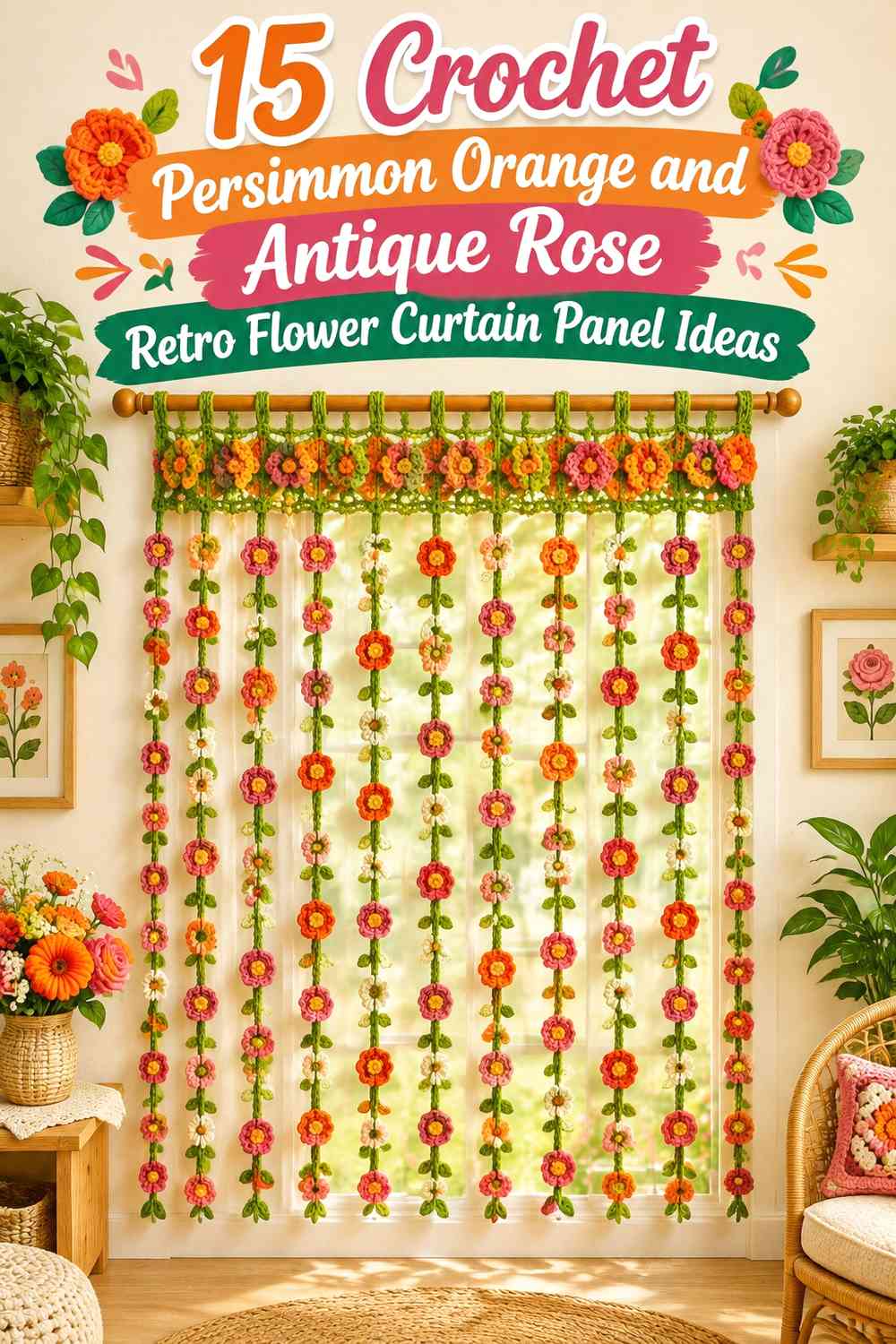

Persimmon orange and antique rose give a crochet flower curtain panel a warm retro palette without requiring a long list of vintage colors. Persimmon orange has enough strength to define flower centers, outer frames, borders, and selected petals, while antique rose can soften larger floral areas and keep an entire window panel from feeling overly saturated.
Curtain panels need different color planning than cushions or blankets because light passes through the crochet and the motifs are viewed vertically. A small persimmon-orange center repeated through several rows can create a strong dotted rhythm across the window, while antique-rose joins can spread the softer color across the entire panel even when the individual flowers are orange-dominant.
The supporting tutorials include complete crochet flower curtains as well as retro flower, daisy, sunflower, and dimensional flower squares. When a source teaches only a flower square, use it for that motif and plan the curtain dimensions, joining layout, top hanging section, and border separately rather than assuming the creator demonstrates the complete panel described below.
Quick List
- Persimmon Orange Flower and Antique Rose Crochet Curtain Panel
- Antique Rose Flower and Persimmon Orange Crochet Curtain Panel
- Antique Rose Center and Persimmon Orange Daisy Crochet Curtain Panel
- Persimmon Orange and Antique Rose Alternating Flower-Strand Crochet Curtain
- Persimmon Orange Retro Flower Square Crochet Curtain With Antique Rose Joins
- Antique Rose Flower Square Crochet Curtain With Persimmon Orange Frames
- Persimmon Orange 3D Flower Crochet Curtain With an Antique Rose Lower Border
- Antique Rose Sunburst Flower Crochet Curtain With Persimmon Orange Centers
- Persimmon Orange Flower Grid and Antique Rose Openwork Crochet Curtain Panel
- Antique Rose Vertical Flower Band Crochet Curtain With Persimmon Orange Dividers
- Persimmon Orange Statement Flower Crochet Curtain With an Antique Rose Lace Field
- Antique Rose Raised Flower Crochet Curtain With Persimmon Orange Borders
- Persimmon Orange and Antique Rose Checkerboard Crochet Flower Curtain Panel
- Two-Color Persimmon Orange and Antique Rose Crochet Retro Flower Curtain
Decide Whether Persimmon Orange or Antique Rose Should Dominate the Curtain
Persimmon orange is visually stronger, so it does not need to cover half the curtain to have equal impact. A mostly antique-rose panel can still feel distinctly orange-accented when every flower center, outer motif ring, or vertical divider uses persimmon.
An orange-dominant curtain feels considerably warmer. Antique rose can then provide quieter areas in the mesh, flower centers, joins, or border so the panel does not become one continuous block of saturated color.
Plan Persimmon Orange and Antique Rose Across the Whole Window
Make several representative flowers or squares and arrange them in rows before committing to the complete panel. Repetition changes color balance: a modest orange center can become visually dominant when dozens of centers align across the curtain.
Also consider the edges. Repeating the joining color at the top or side borders can visually contain the motif grid, while a contrasting hem can deliberately draw attention toward the bottom of the window.
1. Persimmon Orange Flower and Antique Rose Crochet Curtain Panel
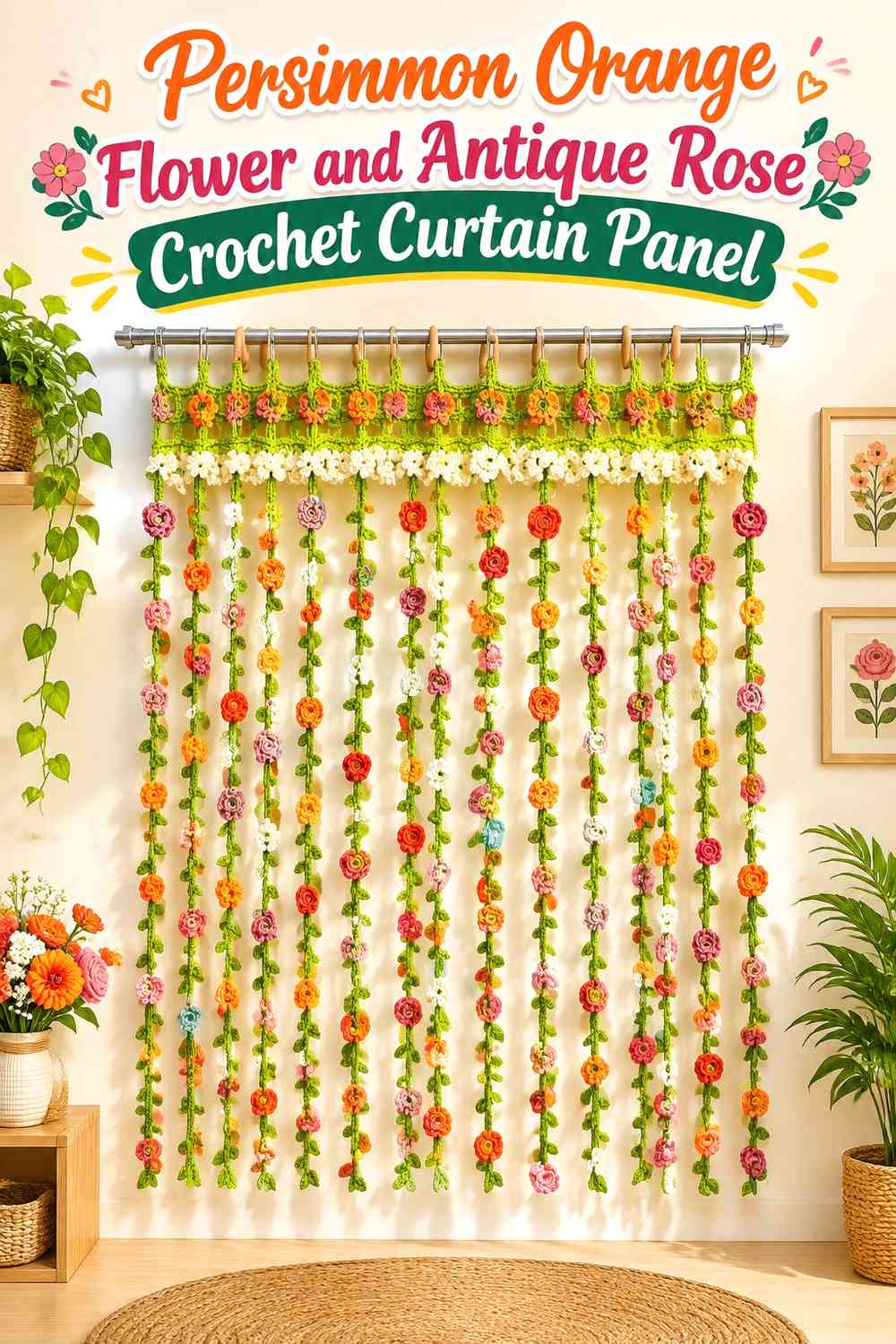
Use antique rose as the main curtain field and place persimmon-orange flowers throughout it. This gives the panel a softer overall color while letting orange become the repeated retro focal point. The arrangement works particularly well when open sections of antique rose remain visible around every flower.
Persimmon Orange Flowers Need Antique Rose Negative Space
Leave enough rose around each orange flower for its petals to stay distinct. If neighboring persimmon motifs nearly touch, they can become one broad warm pattern instead of separate flowers.
A regular amount of rose between motifs also makes the vertical curtain grid easier to follow.
Antique Rose Should Connect the Persimmon Orange Flowers
Use antique rose through the joining areas, upper band, or surrounding mesh so the entire panel feels continuous. The softer shade becomes the structure that carries the stronger flowers.
Avoid adding orange to every join if the flowers already provide substantial warm color.
Creator Credit: Crochet Anne
2. Antique Rose Flower and Persimmon Orange Crochet Curtain Panel
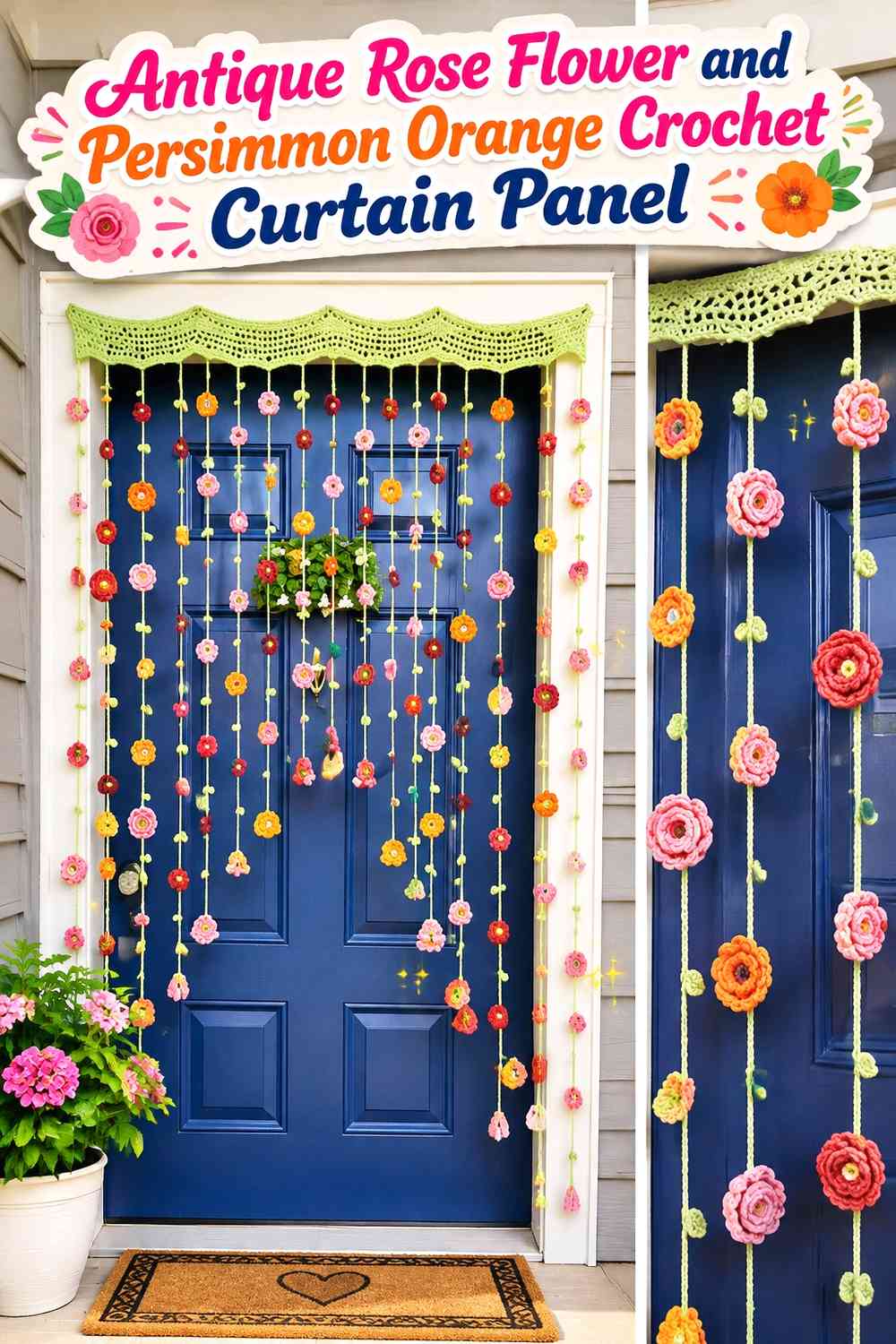
Reverse the palette by using persimmon orange for the larger panel areas and antique rose for the flowers. The curtain becomes warmer overall, while the dusty pink motifs create softer interruptions in the orange field.
Antique Rose Flowers Need a Clear Persimmon Orange Background
Keep enough uninterrupted orange around each rose bloom to make the floral silhouette visible. The softer flower color may need more surrounding space than a stronger orange motif would.
Avoid placing several rose flowers edge to edge unless you intentionally want a continuous floral band.
Persimmon Orange Should Stay Consistent Around Antique Rose
Use orange through the connecting structure so the curtain retains one dominant background color. Changing the joins repeatedly between orange and rose can weaken the simple flower-on-field effect.
A rose lower border is optional if the flower color needs another point of repetition.
Creator Credit: DIY kraftz – The Ultimate Crochet Hub
3. Persimmon Orange Center and Antique Rose Petal Crochet Retro Flower Curtain
Give every flower a persimmon-orange center and antique-rose petals. The small orange cores become a repeated visual rhythm across the window, while the larger rose petals keep the panel comparatively soft.
Persimmon Orange Centers Should Repeat Consistently Inside Antique Rose
Use the same orange placement in each major flower if you want a strong retro repeat. When the panel hangs vertically, those centers can form visible rows or columns.
Keep the orange center compact enough for antique rose to remain the dominant flower color.
Antique Rose Petals Need Space Around Persimmon Orange Centers
Allow a broad rose petal area before the motif transitions into its join or surrounding mesh. If the petal round is too narrow, the flowers may read primarily as orange dots.
The larger rose area also helps distinguish flower shape from the panel structure.
Creator Credit: crochet and knitting tutorial
3. Antique Rose Center and Persimmon Orange Daisy Crochet Curtain Panel
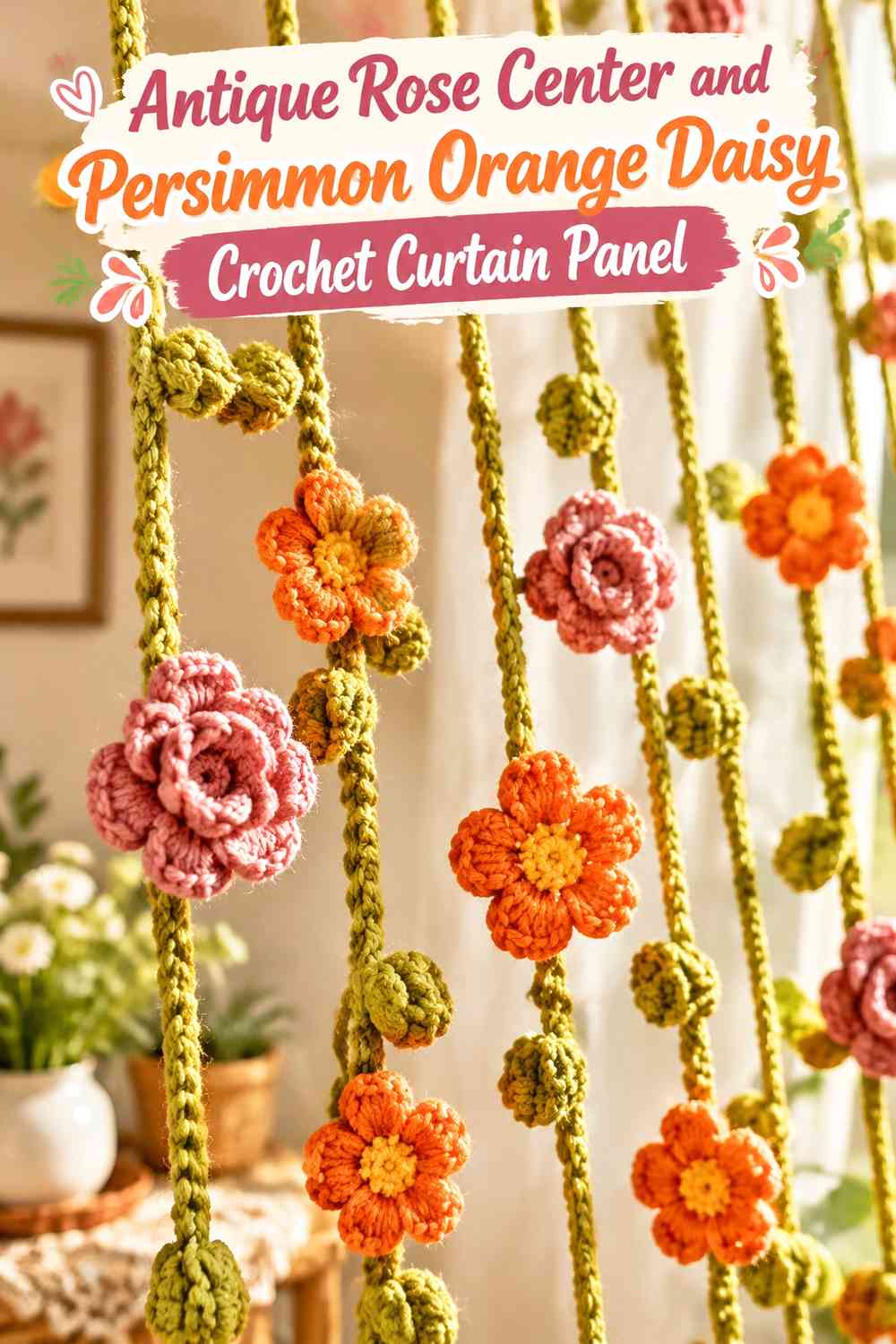
Use antique rose in the center and persimmon orange through the petals. This reverses the visual emphasis: the flower becomes strongly orange, but the softer center prevents it from becoming one uninterrupted warm shape.
Persimmon Orange Daisy Petals Need Antique Rose Centers for Separation
Keep the rose center clearly visible between the orange petals. That central contrast helps the petal ring remain recognizable from across the room.
If the flowers already occupy a large portion of the curtain, use a quieter joining color from the same two-color palette rather than adding more orange.
Antique Rose Centers Should Remain Smaller Than Persimmon Orange Petals
Preserve enough orange area for the floral motifs to read as persimmon-dominant. Large rose centers can turn the flowers into mostly pink circles with a narrow orange edge.
Compare several motifs together before deciding on the final balance.
Creator Credit: てしごとにっき
4. Persimmon Orange and Antique Rose Alternating Flower-Strand Crochet Curtain
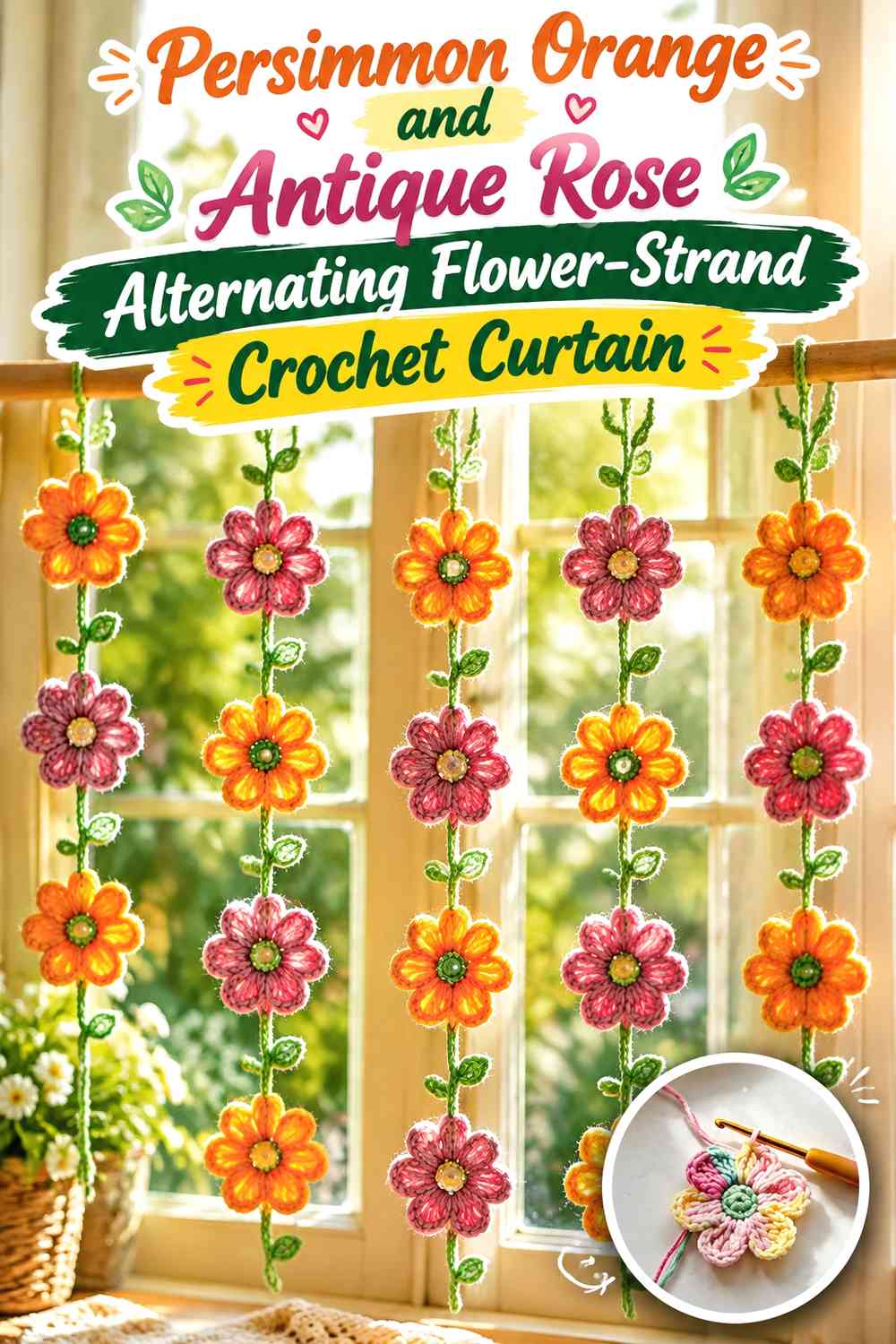
Instead of building one continuous square grid, alternate persimmon-orange and antique-rose flower sequences through vertical strands or open floral sections. The changing color gives the panel movement without requiring every individual flower to contain both shades.
Persimmon Orange Strands Need Antique Rose Between Them
Separate orange-heavy vertical sections with rose-heavy ones so the curtain does not become visually concentrated on one side.
Plan the full left-to-right order before assembling the panel, especially if the number of vertical strands is uneven.
Antique Rose Flower Strands Should Match Persimmon Orange Visual Weight
A softer rose strand may need larger flowers or more visible surface to feel balanced beside saturated orange. Equal numbers of motifs do not always create equal visual weight.
Judge the hanging from several feet away rather than only comparing the individual flowers.
Creator Credit: Daily Crochet & Knit Free Patterns
5. Persimmon Orange Retro Flower Square Crochet Curtain With Antique Rose Joins
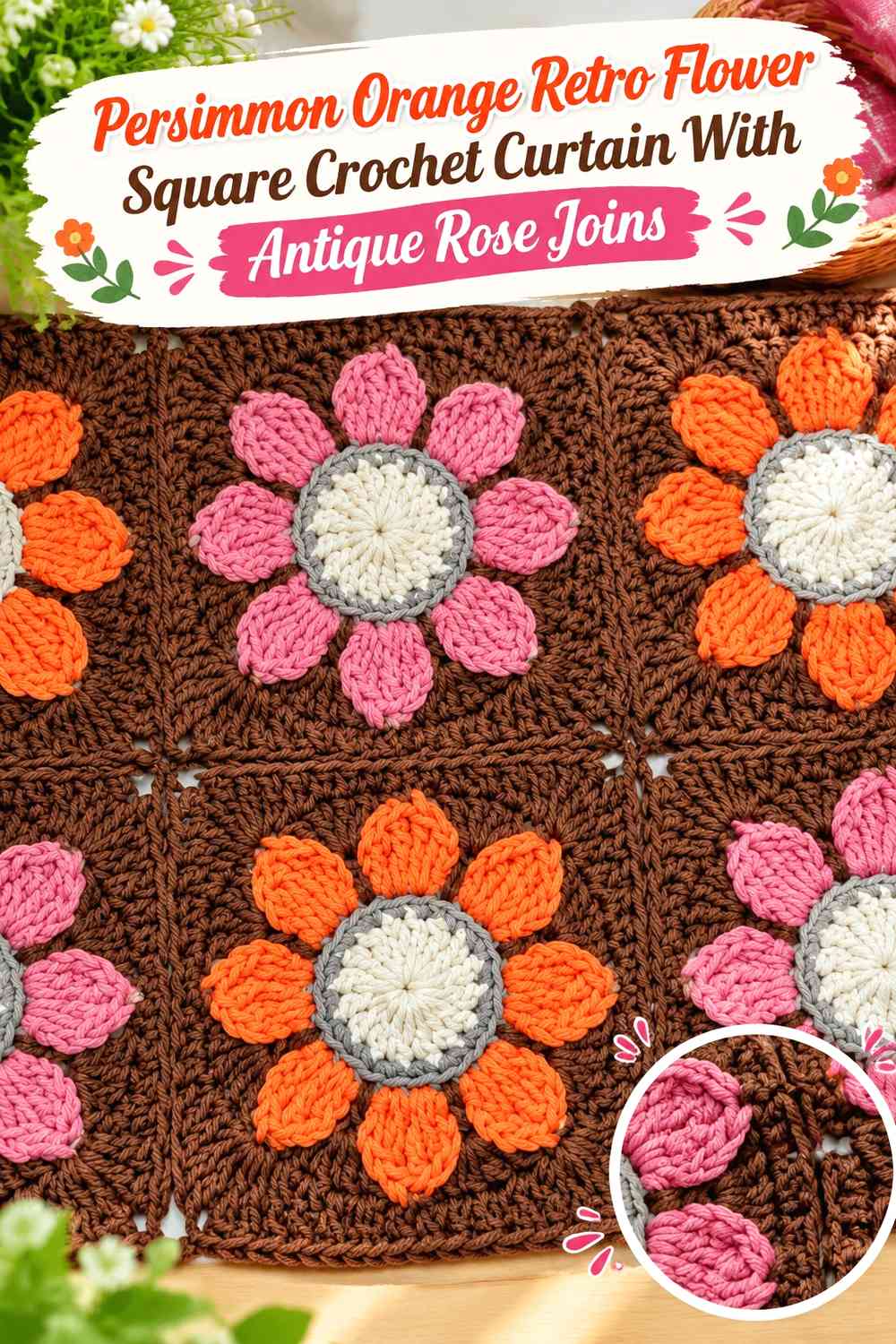
Use persimmon orange prominently inside retro flower squares and connect the motifs with antique rose. Once the squares are assembled, the rose joins become a visible grid around the warmer flowers.
Antique Rose Joins Should Clearly Separate Persimmon Orange Squares
Keep enough rose visible at the motif edges for neighboring flowers to remain distinct. Very narrow joins can allow orange-heavy squares to merge visually.
The joining color can also be repeated around the side borders to contain the grid.
Persimmon Orange Flowers Should Stay Centered Inside Antique Rose
Avoid pushing the strong orange color all the way to every square edge. Leaving a transition area around the flower makes the motif easier to read once several squares are joined.
Use the credited tutorial for the retro flower square itself and plan the curtain-panel arrangement separately.
Creator Credit: Mezzacraft
6. Antique Rose Flower Square Crochet Curtain With Persimmon Orange Frames
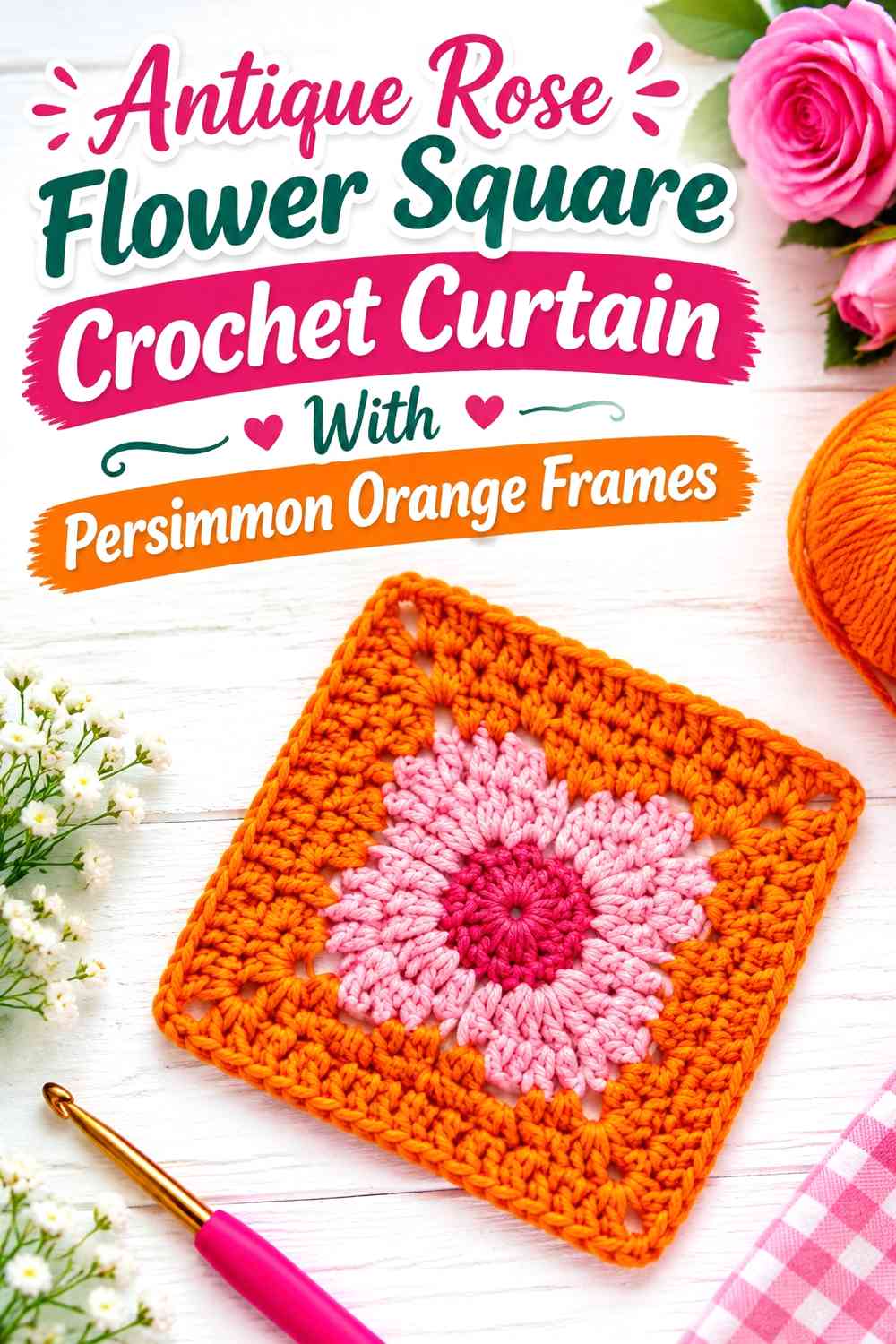
Use antique rose for the main flower motif and place persimmon orange around the outside of each square. When the motifs are joined, the orange outer rounds form a warm grid around softer pink flowers.
Persimmon Orange Frames Should Stay Narrow Around Antique Rose Flowers
Keep the orange framing proportional so it outlines rather than overwhelms the flower. Once repeated across the whole panel, even a narrow orange square edge becomes visually prominent.
Make several motifs and place them together before deciding whether another orange round is necessary.
Antique Rose Flowers Need Enough Space Inside Persimmon Orange
Give the flower enough interior area to remain the main content of each square. A broad orange frame surrounding a tiny rose center will reverse the intended hierarchy.
This layout is useful when you want the curtain to look structured from a distance but floral up close.
Creator Credit: Adore Crea Crochet
7. Persimmon Orange 3D Flower Crochet Curtain With an Antique Rose Lower Border
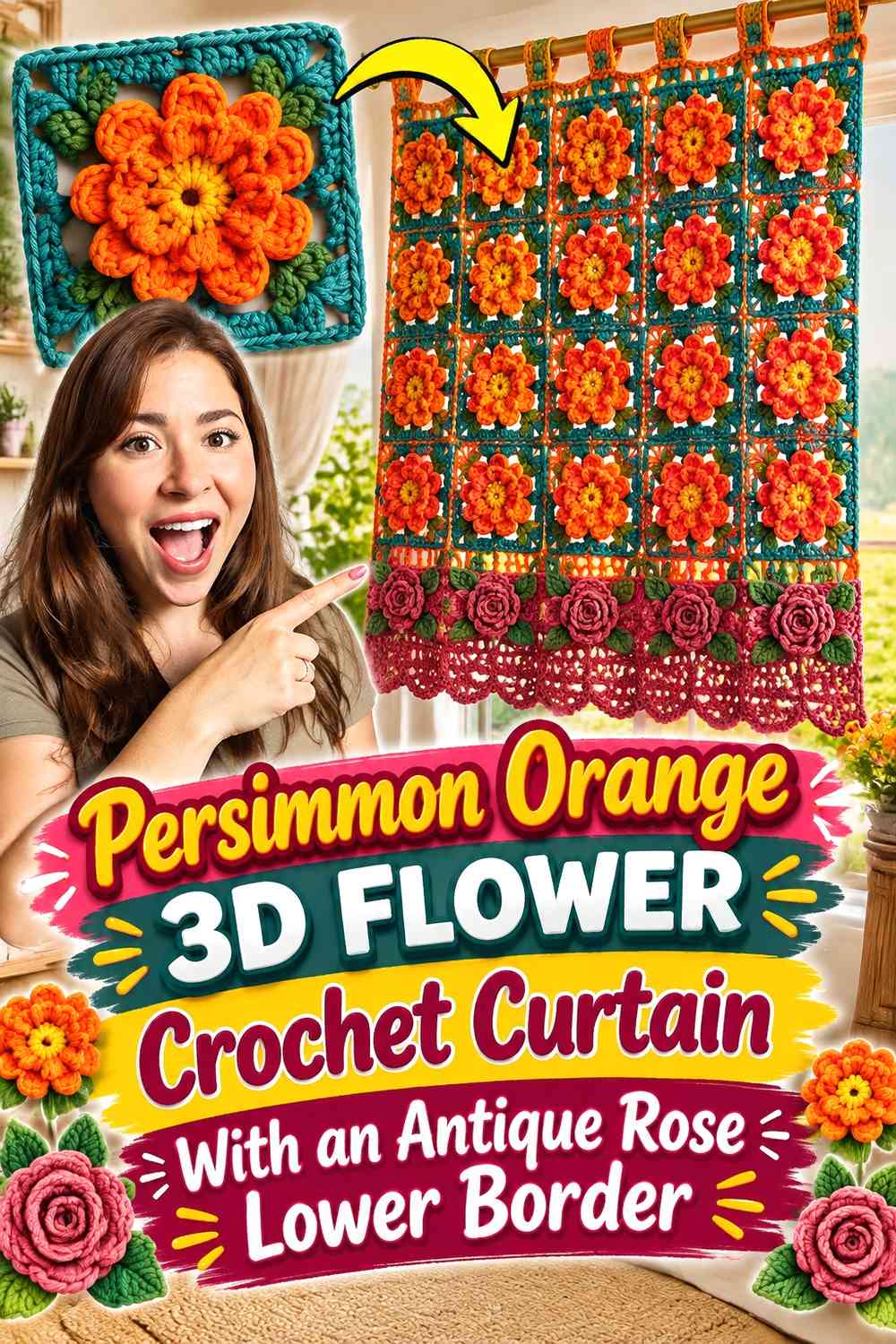
Keep most of the curtain relatively flat and place dimensional persimmon-orange flowers toward the lower portion, framed by antique rose. Concentrating raised flowers near the hem creates a distinct decorative zone without making the entire window panel heavily textured.
Persimmon Orange 3D Flowers Need Plain Antique Rose Around Them
Raised flowers already create shadow and depth. Leave enough uncomplicated rose surface around each one so the dimensional petals remain readable.
Adding 3D motifs to every square can make the curtain visually dense, especially when backlit.
Antique Rose Should Carry the Persimmon Orange Flower Border
Use rose through the lower joining area or border so the raised orange motifs sit within one connected band. This gives the bottom of the curtain a deliberate finish.
The credited tutorial teaches a dimensional flower square rather than a full curtain, so use it for the motif and plan the panel construction independently.
Creator Credit: Brunaticality
8. Antique Rose Sunburst Flower Crochet Curtain With Persimmon Orange Centers
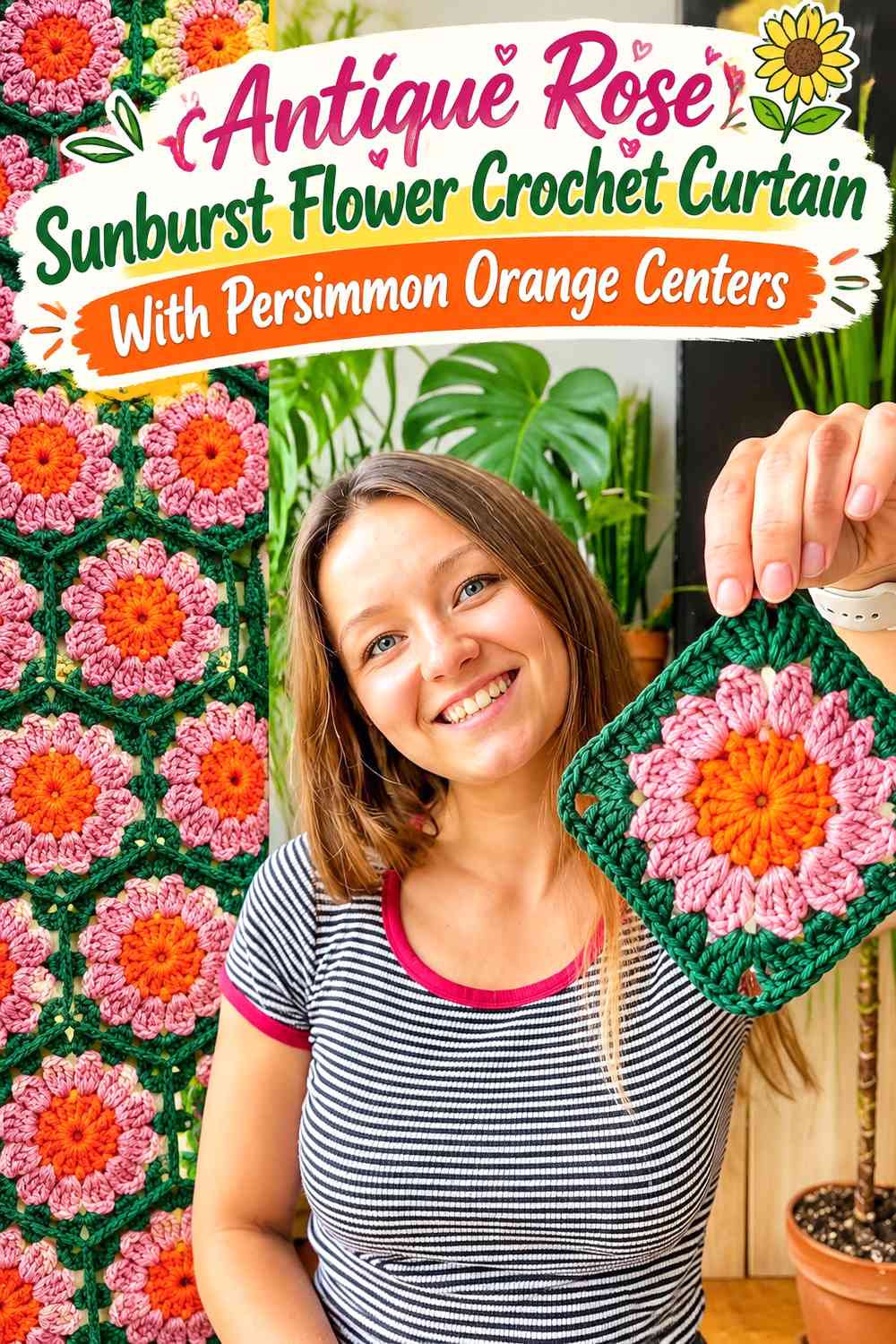
Adapt a sunburst-style flower so antique rose radiates outward from a persimmon-orange center. The longer petal or cluster shapes create a more expansive retro flower than a compact daisy and can become the main motif across a simpler curtain grid.
Persimmon Orange Centers Should Anchor Antique Rose Sunbursts
Keep orange concentrated at the center so the eye has one strong focal point inside every larger flower. Repeating the same warm core can organize a panel containing many radiating petals.
Avoid extending orange into every outer round if the sunburst itself is meant to remain rose-dominant.
Antique Rose Sunbursts Need Space Between Persimmon Orange Centers
Leave enough surrounding area for each radiating flower to finish before the next orange center begins. A dense pattern can turn multiple sunbursts into one continuous textured surface.
Use the sunflower-square tutorial for the floral motif concept and determine curtain joining separately.
Creator Credit: by Kristine
9. Persimmon Orange Flower Grid and Antique Rose Openwork Crochet Curtain Panel
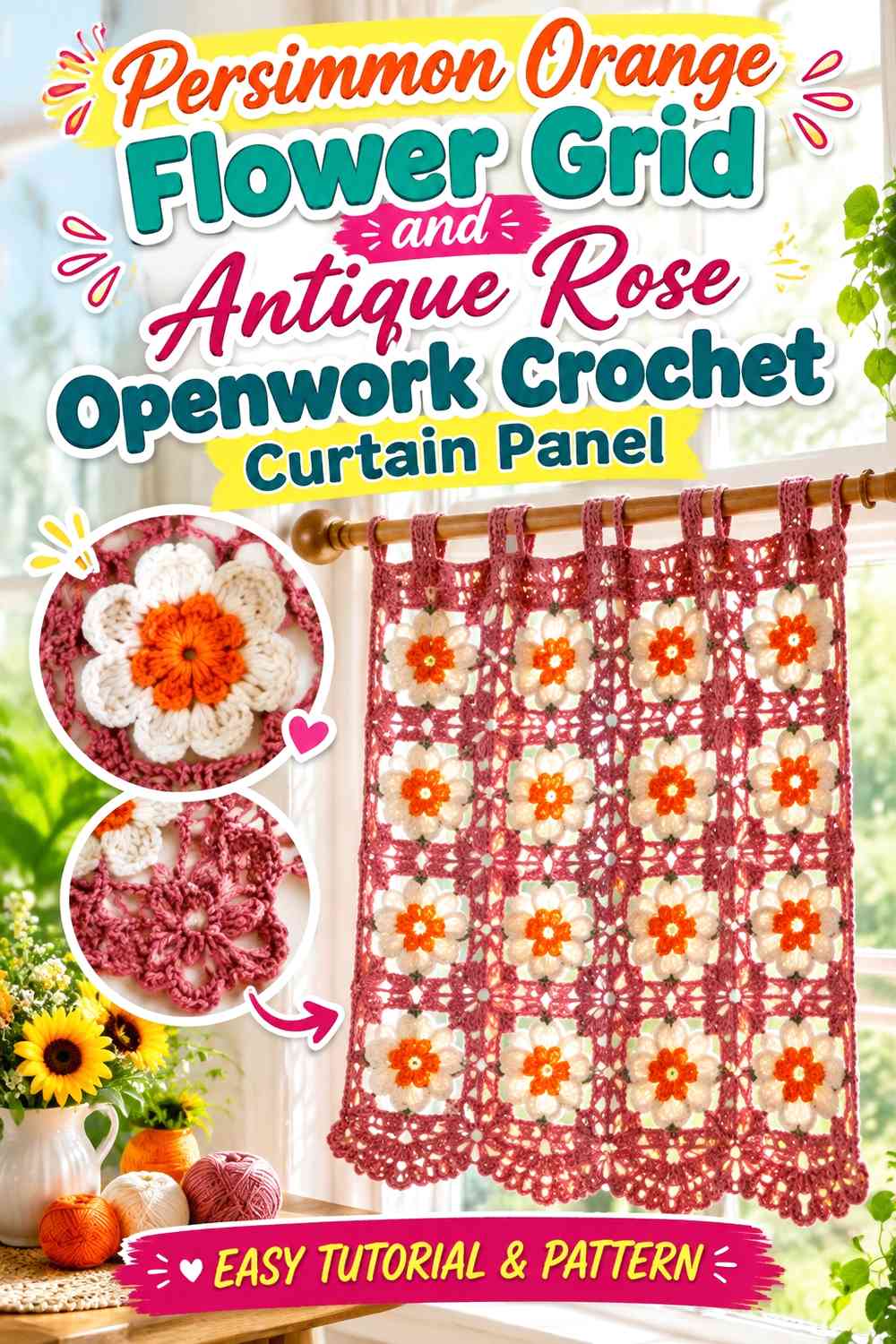
Use persimmon-orange flowers at planned intersections and antique rose through the more open sections between them. The contrast creates a strong floral grid while still allowing light to pass through substantial areas of the panel.
Persimmon Orange Flowers Should Mark Key Points in Antique Rose Openwork
Place the stronger color at a predictable rhythm instead of filling every open area with a flower. The repeated orange focal points can organize the panel without eliminating the lightness of the mesh.
Keep the motif spacing related from one vertical section to the next.
Antique Rose Openwork Needs to Remain Broad Around Persimmon Orange
Allow the softer color to create sizeable open areas between motifs. Narrowing the rose sections too much can make the curtain feel like a dense orange flower blanket hung at the window.
The full flower-curtain tutorial can support the panel concept while you adapt the palette.
Creator Credit: Crochet For You
10. Antique Rose Vertical Flower Band Crochet Curtain With Persimmon Orange Dividers
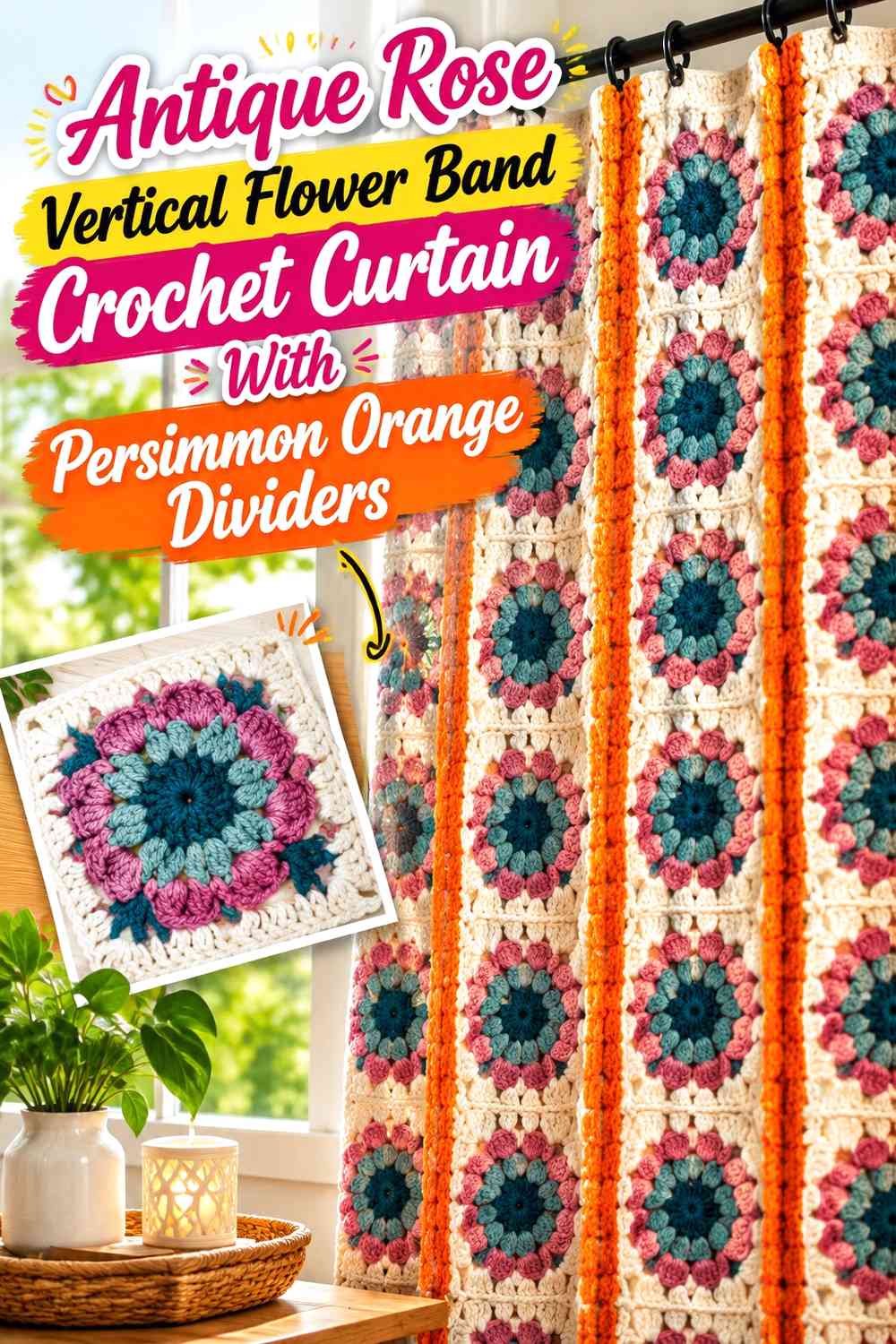
Arrange antique-rose flower motifs in vertical bands and use persimmon orange between those bands. The orange divisions create a stronger top-to-bottom rhythm than a conventional square grid.
Persimmon Orange Dividers Should Stay Narrow Beside Antique Rose Flowers
Keep the warm separators slimmer than the floral bands so they organize the curtain rather than becoming the main surface.
The vertical orange lines can be especially effective when the antique-rose flowers have rounded or soft edges.
Antique Rose Flower Bands Need Consistent Persimmon Orange Spacing
Plan the width of each band and divider before constructing the full panel. An unexpectedly broad orange section in the middle can pull attention away from the repeated flowers.
Use the flower-square source for individual motifs and build the curtain layout independently.
Creator Credit: Hope Corner Farm Crochet
11. Persimmon Orange Statement Flower Crochet Curtain With an Antique Rose Lace Field
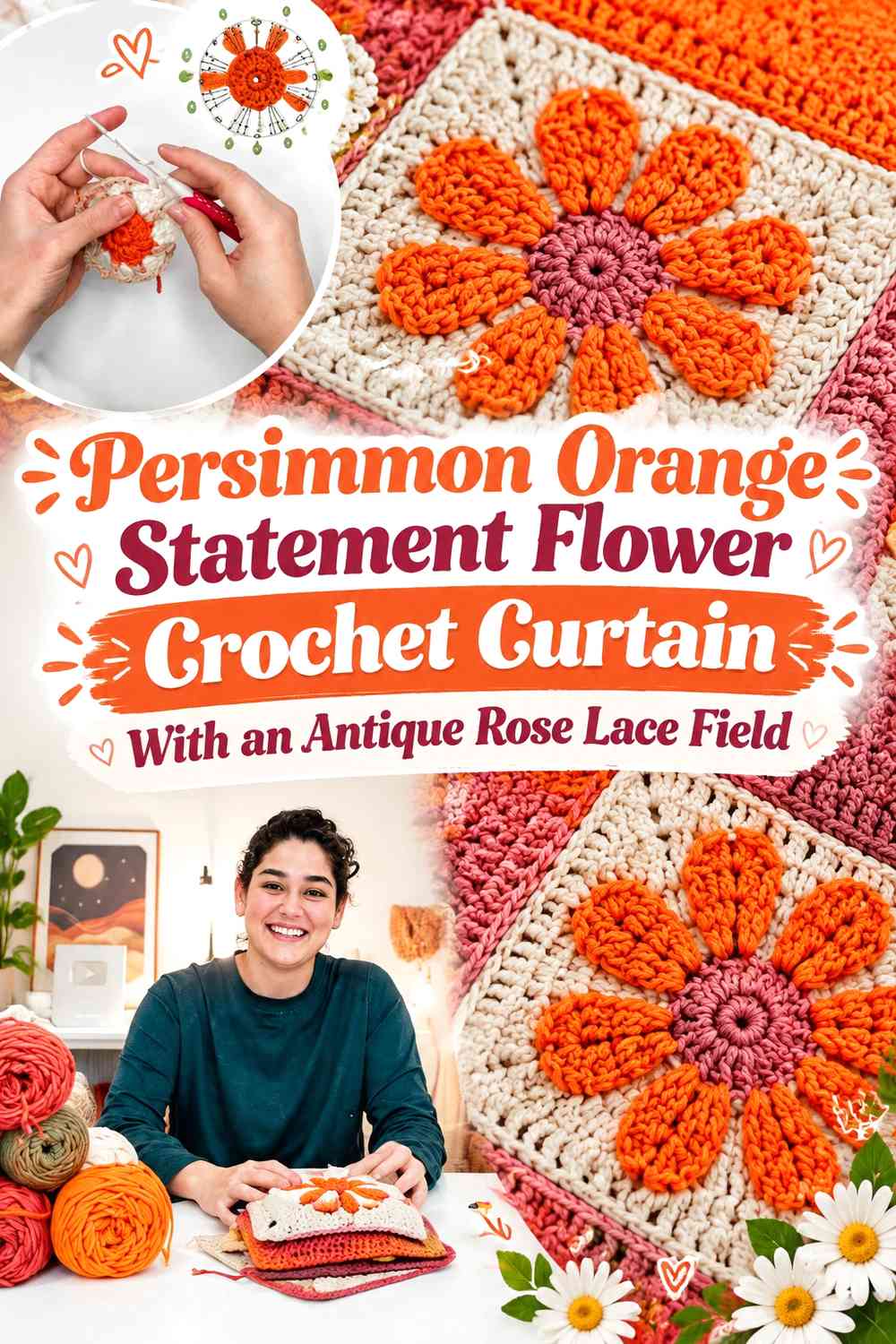
Use only a limited number of larger persimmon-orange flower motifs and surround them with a predominantly antique-rose curtain field. This gives the stronger color fewer but more important focal areas.
Persimmon Orange Statement Flowers Need Broad Antique Rose Backgrounds
Do not fill the empty rose areas simply because they appear quieter. That negative space is what allows a small number of orange flowers to become true focal motifs.
Position the flowers where their repetition feels deliberate rather than randomly scattered.
Antique Rose Lace Should Stay Simpler Around Persimmon Orange
If the surrounding lace already has a complex repeat, reduce additional color changes near the flower. The orange motif and rose texture should not compete equally for attention.
The retro-daisy tutorial supports the flower component; curtain shaping and joining are separate decisions.
Creator Credit: Elyse Myers
12. Antique Rose Raised Flower Crochet Curtain With Persimmon Orange Borders
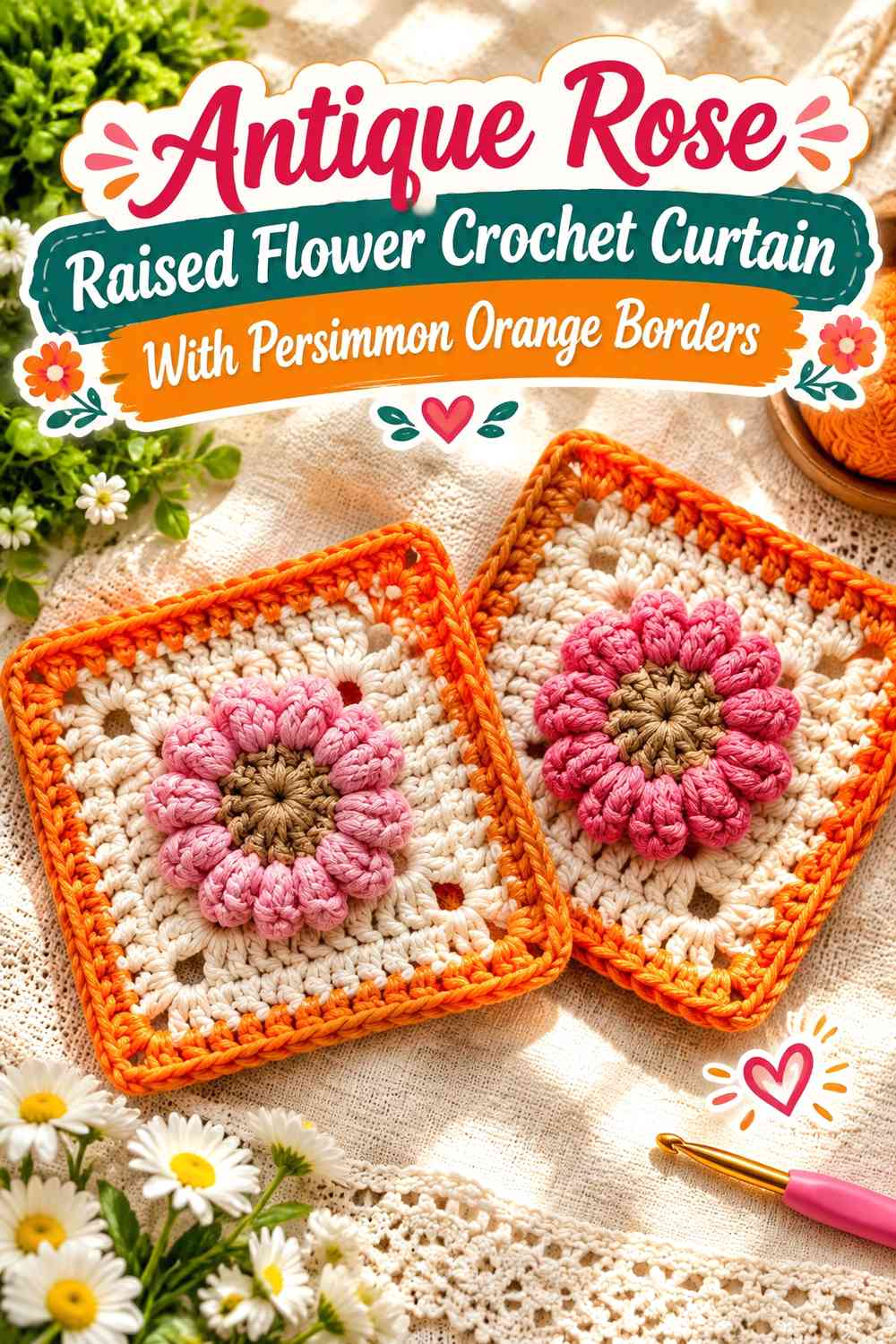
Make antique rose the color of raised or popcorn-like flowers and use persimmon orange around the outer square, panel sides, or lower border. This places the softer shade in the textured areas while the stronger orange defines the panel structure.
Persimmon Orange Borders Should Frame Antique Rose Raised Flowers
Keep orange near the perimeter or motif boundaries rather than inserting it into every raised petal. A controlled frame makes the texture easier to appreciate.
Once repeated around a whole curtain, even a relatively narrow orange border can become a significant part of the palette.
Antique Rose Raised Flowers Need Plain Persimmon Orange-Free Centers
Let the flower surface remain predominantly rose so the dimensional construction is easy to see. Frequent internal color changes can compete with the shadow created by raised stitches.
Use the flower-square tutorial for the motif and test several motifs together before planning the complete curtain width.
Creator Credit: VivCrochets
13. Persimmon Orange and Antique Rose Checkerboard Crochet Flower Curtain Panel
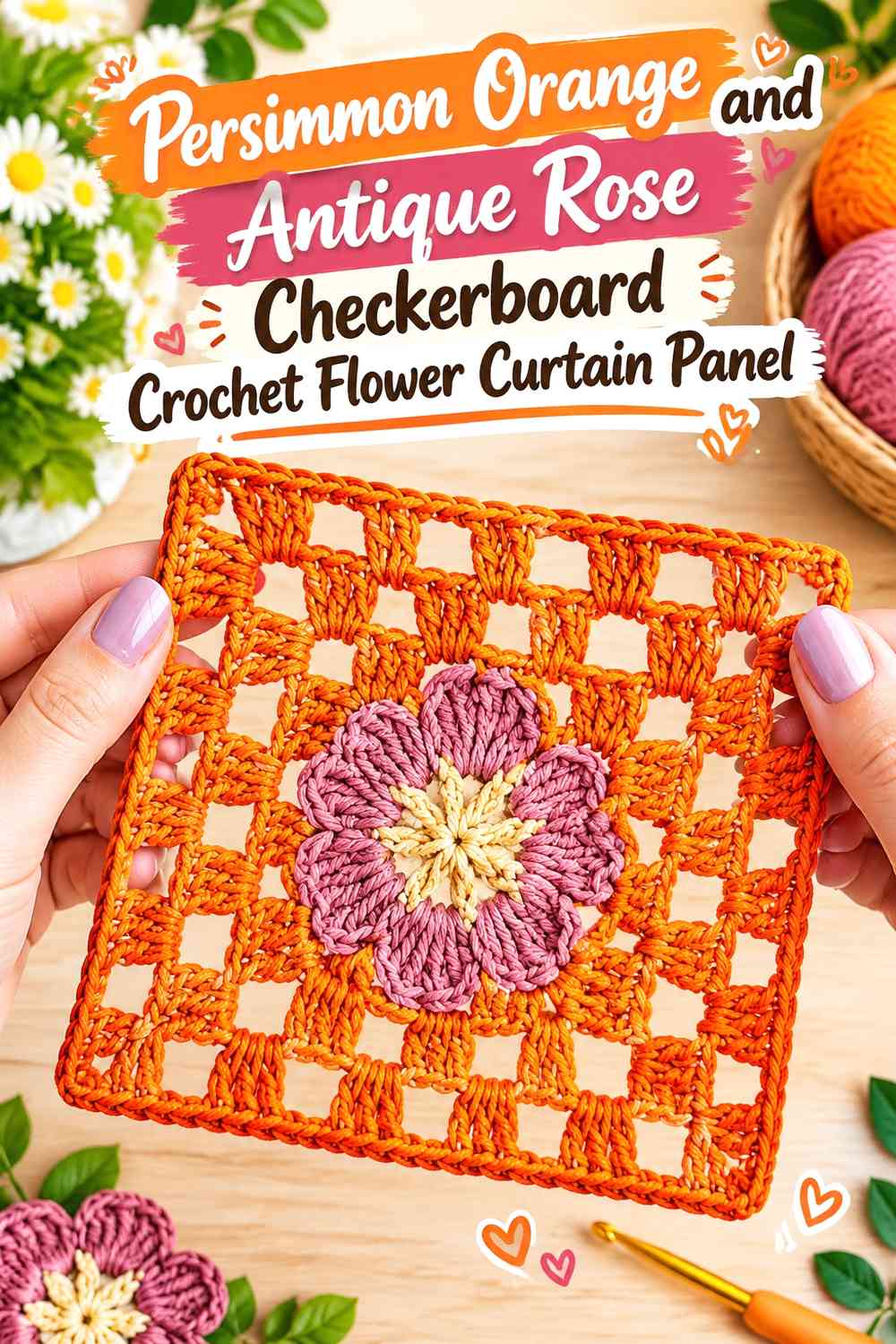
Make two related flower-square colorways: one persimmon-orange dominant and the other antique-rose dominant. Alternate them across the curtain so the retro effect comes from color reversal rather than introducing more shades.
Persimmon Orange Squares Need Even Distribution Among Antique Rose
Lay the complete grid out before joining. Several orange-heavy motifs clustered together can create an unintended warm block that breaks the checkerboard rhythm.
A simple alternating layout keeps the two shades visually balanced.
Antique Rose Squares Should Mirror the Persimmon Orange Color Roles
If the first square uses orange petals with a rose background, reverse those same roles in the second version. Keeping the flower construction consistent makes the checkerboard about palette rather than unrelated motifs.
Use the tutorial for its flower-square construction and decide the final curtain grid separately.
Creator Credit: yoyo crochet
14. Two-Color Persimmon Orange and Antique Rose Crochet Retro Flower Curtain
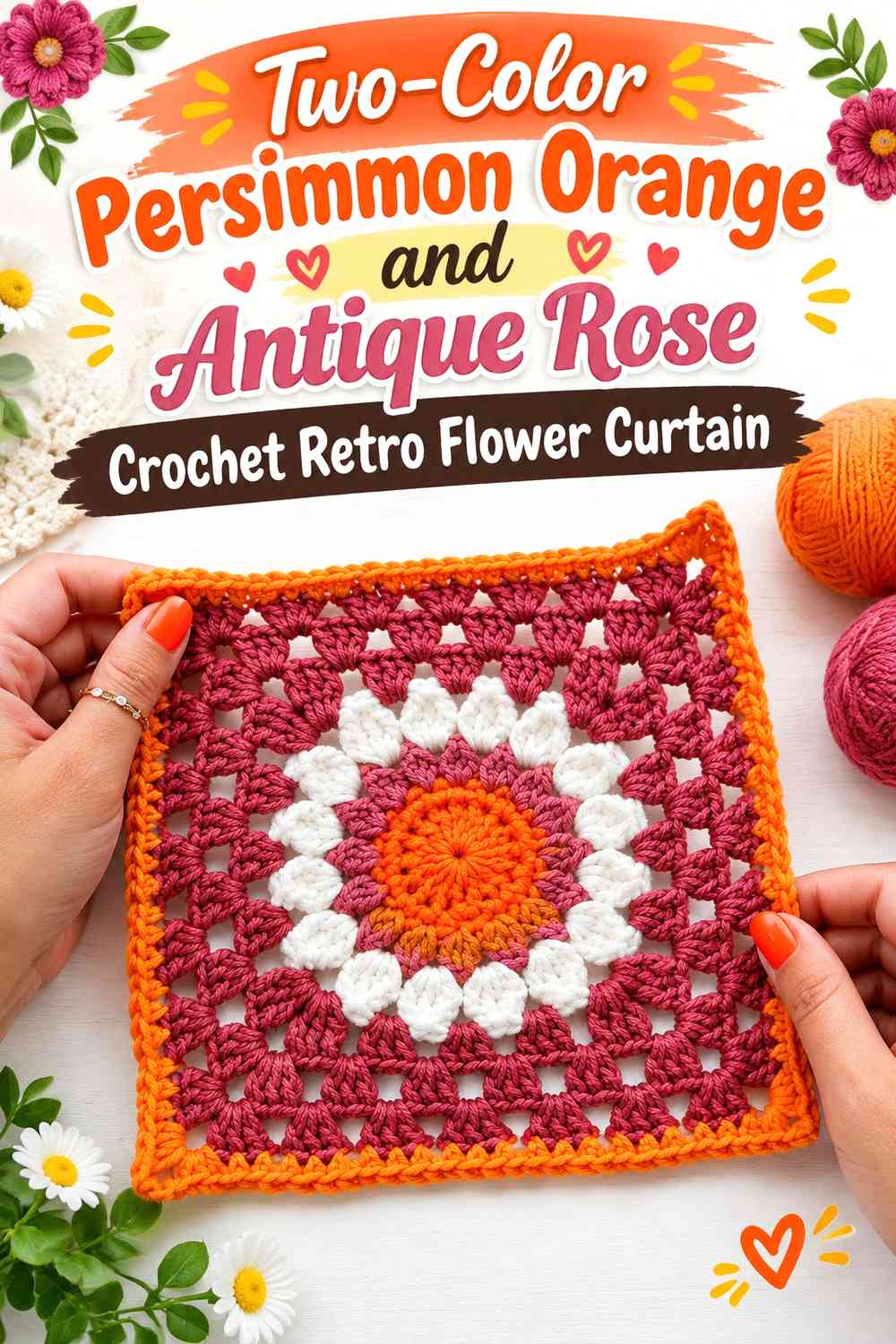
Use only persimmon orange and antique rose throughout the flowers, joining areas, top section, side borders, and hem. Without cream, green, or brown to separate the motifs, the two shades need consistent roles and enough open space to stay readable.
Persimmon Orange Should Have One Clear Role Against Antique Rose
Choose whether orange controls the flower centers, petals, outer frames, or structural borders before making the full motif set. Giving it every role at once will make antique rose look secondary even if both yarns appear in similar amounts.
A repeated orange focal feature creates stronger visual organization.
Antique Rose Should Separate Persimmon Orange Across the Curtain
Use broader rose areas between orange motifs or along the joins. The softer field prevents several warm flowers from merging into one large block when the panel is viewed from across the room.
Keep that separation consistent through the main body of the curtain.
Persimmon Orange and Antique Rose Need a Window-Light Check
Hang or temporarily hold several joined motifs at the window before completing the entire panel. Backlighting can change how strongly the two shades contrast and can make open stitches appear more prominent than they do on a table.
If the flowers lose definition, adjust larger color zones or surrounding space rather than adding a third color automatically.
Creator Credit: Jennifer Noelle
Which Persimmon Orange and Antique Rose Retro Flower Curtain Should You Choose?
For the clearest floral effect, choose the persimmon-orange flowers on antique rose, orange centers with rose petals, rose sunbursts with orange centers, or statement-flower panel. These give each flower an obvious dominant and supporting color.
For stronger retro geometry, the flower-square panel with rose joins, orange-framed rose squares, vertical flower bands, and checkerboard curtain use the grid itself as part of the design.
If you want the curtain to feel lighter, the flower-strand, openwork, and limited statement-flower versions leave more visual space between colored motifs. The final strict two-color version is the most unified choice when you want every flower, border, and join to remain within persimmon orange and antique rose.
Conclusion
Persimmon orange and antique rose work particularly well for a retro flower curtain panel because the palette can create both strong floral focal points and softer connecting areas. Persimmon orange naturally draws attention to centers, petals, borders, and framing rounds, while antique rose gives the panel enough visual rest for repeated flowers to remain distinct.
The most important planning step is viewing several motifs together. A color ratio that works beautifully in one flower can look completely different when repeated across an entire window.
Use complete curtain tutorials for the hanging and panel constructions they actually demonstrate, and use flower-square tutorials for the motifs they teach. Once the first few motifs are complete, test them vertically at the window before committing to the full persimmon-orange-and-antique-rose layout.
Frequently Asked Questions
Should Persimmon Orange or Antique Rose Dominate a Retro Flower Curtain Panel?
Use antique rose as the dominant color when you want a softer panel with stronger orange floral accents. Persimmon orange can dominate when you want a warmer, more graphic curtain, with antique rose creating quieter centers, petals, joins, or borders.
Where Should Persimmon Orange Go on an Antique Rose Flower Curtain?
Useful locations include flower centers, selected petals, motif frames, vertical dividers, the lower border, or a narrow outer edge. Concentrating orange in a few repeated roles usually creates a clearer retro pattern than scattering it randomly.
How Can I Keep Antique Rose Flowers Visible Against Persimmon Orange?
Leave enough uninterrupted orange around each rose flower and avoid making the two colors alternate in very tiny sections. Larger petals or a complete rose flower round usually provide stronger shape definition.
Can I Make a Curtain Entirely From Persimmon Orange and Antique Rose Flower Squares?
Yes. Use one shade for the flowers and the other for backgrounds or joins, or alternate reversed versions of the same square. Make representative motifs first and plan the complete panel layout before joining.
Should the Granny Square Joins Be Persimmon Orange or Antique Rose?
Antique-rose joins soften orange-heavy flowers and spread the quieter color through the panel. Persimmon-orange joins create a stronger visible grid around rose-dominant motifs. Choose the shade that supports the overall balance you want.
How Can I Keep a Persimmon Orange and Antique Rose Curtain From Looking Too Busy?
Reduce the number of color switches and leave more open or single-color space around the flowers. One consistent flower treatment repeated across the panel usually looks more cohesive than several unrelated floral motifs competing together.
Can I Use a Retro Flower Granny Square Tutorial for a Curtain Panel?
Yes. Use the tutorial for the flower-square construction it teaches, then plan the curtain layout, joining method, border, top hanging section, and finished dimensions separately. A motif tutorial does not automatically provide a complete curtain pattern.
Should I Test Persimmon Orange and Antique Rose at the Window Before Finishing?
Yes. Light passing through open crochet can change the apparent contrast between the two shades. Test several completed motifs in the intended window position so you can adjust color balance before making the entire panel.