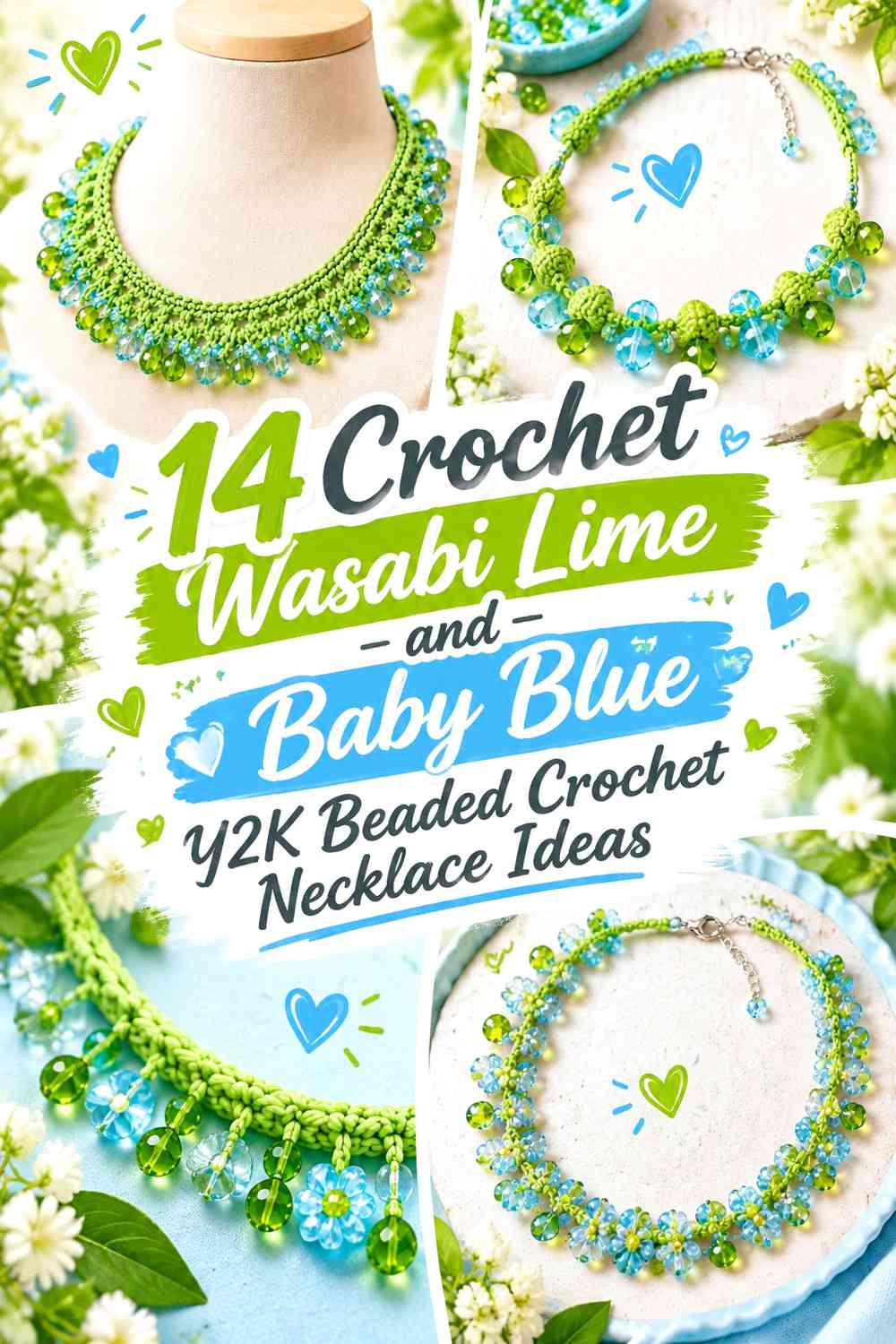

Wasabi lime and baby blue create a playful Y2K palette for a beaded crochet necklace because either color can become the bright focal shade. Wasabi lime can provide sharp bead accents against a baby-blue crochet cord, while baby-blue beads can cool down a lime choker or flower strand.
The small scale of jewelry makes color distribution especially important. A necklace does not need equal amounts of both shades to look intentionally two-colored. A few repeated wasabi-lime beads can have strong impact along a baby-blue strand, while one large blue focal bead can balance an otherwise lime-dominant necklace.
Bead placement also affects more than color. Closely packed beads create a different visual rhythm from widely spaced accents, and larger focal components can influence how the necklace hangs. The credited tutorials below provide beaded necklaces, crochet chokers, flower necklaces, and related crochet-jewelry constructions. The wasabi lime and baby blue Y2K palettes are independent adaptations rather than claims that the creators used these exact colors.
Quick List
- Wasabi Lime and Baby Blue Alternating-Bead Crochet Y2K Necklace
- Baby Blue Crochet Y2K Choker With Wasabi Lime Beads
- Wasabi Lime Crochet Y2K Choker With Baby Blue Beads
- Baby Blue and Wasabi Lime Flower-Bead Crochet Y2K Necklace
- Wasabi Lime and Baby Blue Double-Wrap Crochet Beaded Necklace
- Baby Blue Crochet Cord Necklace With Wasabi Lime Bead Clusters
- Wasabi Lime Crochet Cord Necklace With Baby Blue Focal Beads
- Baby Blue and Wasabi Lime Crystal-Style Crochet Y2K Necklace
- Wasabi Lime and Baby Blue Long-Wrap Crochet Beaded Necklace
- Baby Blue Crochet Y2K Necklace With Wasabi Lime Center Bead
- Wasabi Lime Crochet Y2K Necklace With Baby Blue Pendant Drop
- Baby Blue and Wasabi Lime Multi-Strand Crochet Beaded Necklace
- Wasabi Lime Flower Crochet Y2K Necklace With Baby Blue Bead Centers
- Baby Blue Crochet Y2K Choker With Wasabi Lime Asymmetrical Beads
Decide Whether Wasabi Lime or Baby Blue Should Lead the Necklace
A baby-blue crochet base creates the calmer version of this palette and gives wasabi-lime beads plenty of visibility. This works particularly well when the lime color is meant to appear as repeated dots, flower centers, or one central bead cluster.
A wasabi-lime cord creates the stronger Y2K statement. Baby blue can then appear through larger focal beads, alternating accents, or a pendant section. You do not need a 50/50 split; one shade can clearly dominate the crochet while the other dominates the beads.
Balance Wasabi Lime and Baby Blue Beads Around the Neckline
Bead spacing affects the apparent color balance. Ten tiny baby-blue beads distributed across a lime necklace may look lighter than one larger blue center bead, even if the total amount of blue material is similar.
Arrange the proposed beads beside a short crochet sample before committing to the full strand. Check whether the sequence feels evenly distributed, intentionally asymmetrical, or unexpectedly concentrated on one side.
Match Wasabi Lime and Baby Blue Beads to the Crochet Cord
Check the actual bead openings against the thread or yarn required by the chosen construction. A color combination is not useful if the selected beads cannot be incorporated cleanly into the crochet method.
Also consider scale. Large novelty beads can create a stronger Y2K effect, but they should not make a fine crochet strand hang awkwardly or become rigid. Test a short decorated section before repeating the arrangement around the whole necklace.
1. Wasabi Lime and Baby Blue Alternating-Bead Crochet Y2K Necklace
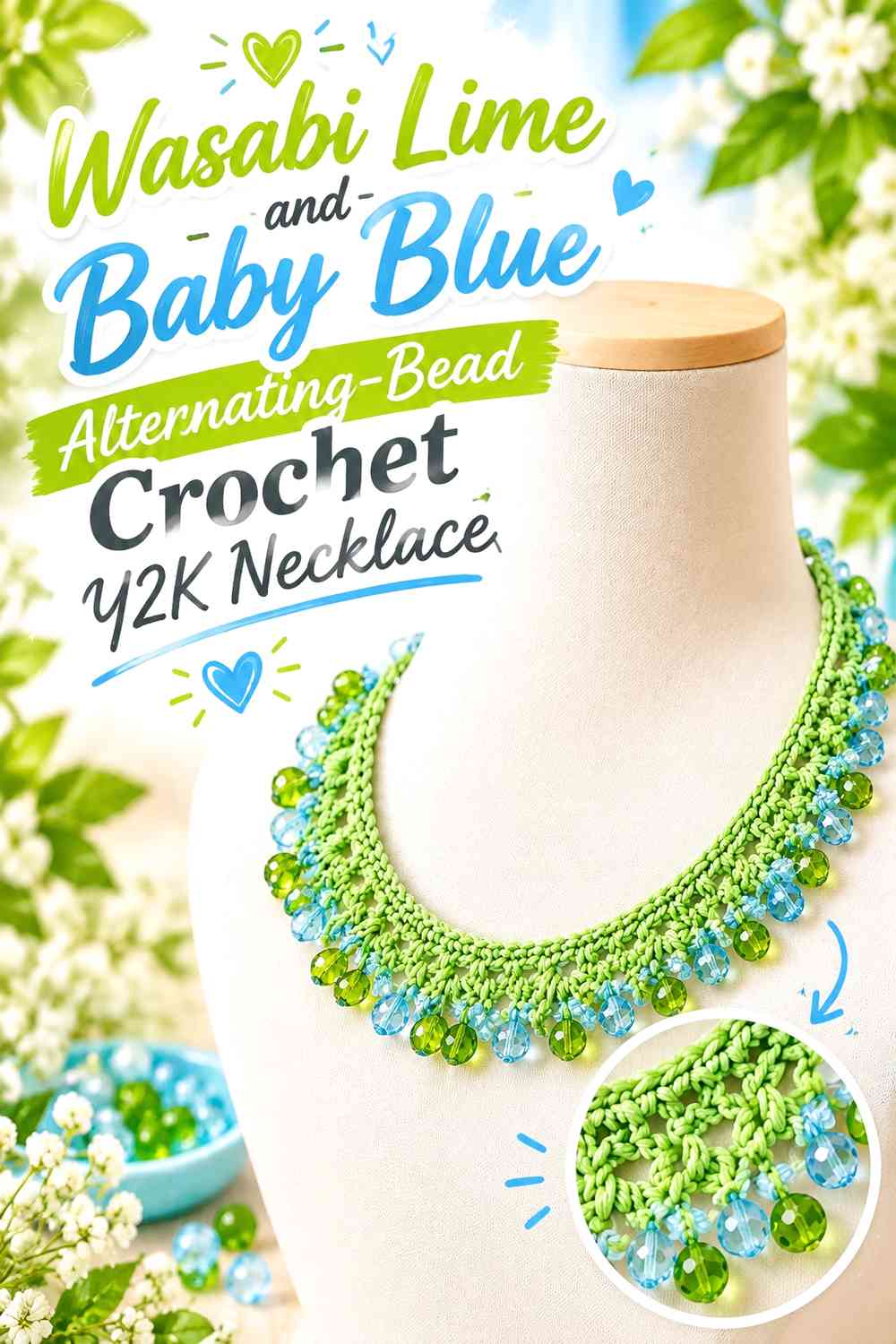
This version treats both colors almost equally. Use a baby-blue crochet strand and alternate wasabi-lime and blue beads through a regular sequence, or reverse the cord color if you want lime to lead. The repeated two-color rhythm gives the necklace a clear Y2K graphic quality without requiring a pendant.
Wasabi Lime and Baby Blue Need a Consistent Crochet Bead Rhythm
Choose a recognizable sequence and repeat it around the visible front portion of the necklace. Random switching can work for a deliberately chaotic style, but an alternating rhythm makes the two-color concept easier to read.
Check the complete curve of the necklace rather than judging the sequence while it lies in a straight line.
Baby Blue Can Calm Repeated Wasabi Lime Crochet Beads
If lime becomes visually dominant, use baby blue for the crochet strand and closure area. That gives the brighter beads a quieter foundation.
If the necklace still feels lime-heavy, increase the size or frequency of selected blue beads instead of introducing a third color.
Creator Credit: AlineCrochet
2. Baby Blue Crochet Y2K Choker With Wasabi Lime Beads
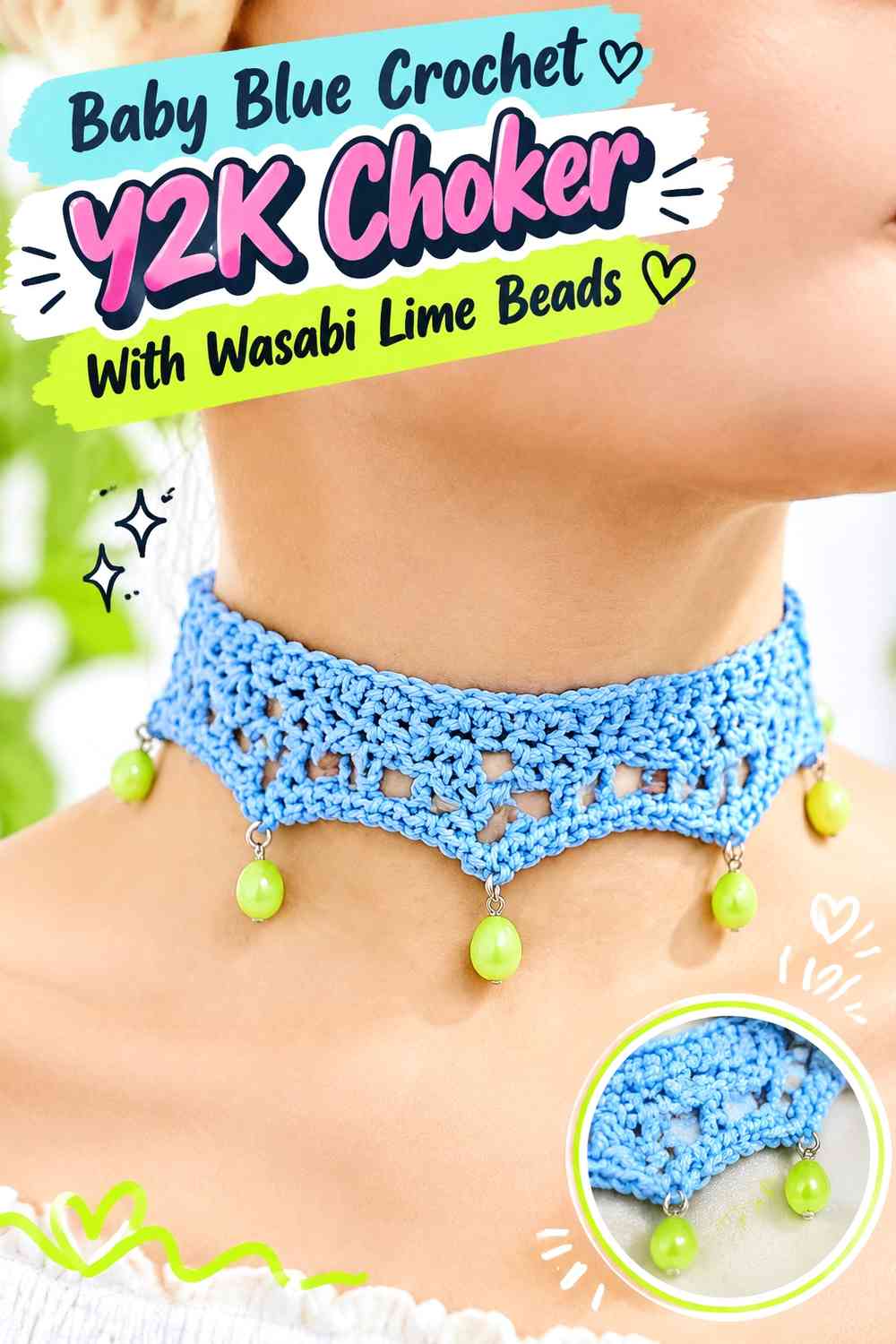
A close-fitting choker makes bead spacing highly visible. Keep the crochet section baby blue and distribute wasabi-lime beads across the lower or outward-facing edge where they can create a bright repeated border.
Baby Blue Should Keep the Wasabi Lime Crochet Choker Visually Continuous
Use baby blue across the main choker fabric or cord so the necklace remains soft in overall color.
Because a choker sits close to the neck, keep the reverse side comparatively simple rather than placing bulky bead attachments where they could face inward.
Wasabi Lime Beads Can Create a Sharp Baby Blue Y2K Edge
Place lime beads along one clear line instead of scattering them through every part of the choker.
A repeated lower-edge arrangement keeps the brighter shade visible while preserving a baby-blue field around it.
Creator Credit: Littlejohn’s Yarn
3. Wasabi Lime Crochet Y2K Choker With Baby Blue Beads
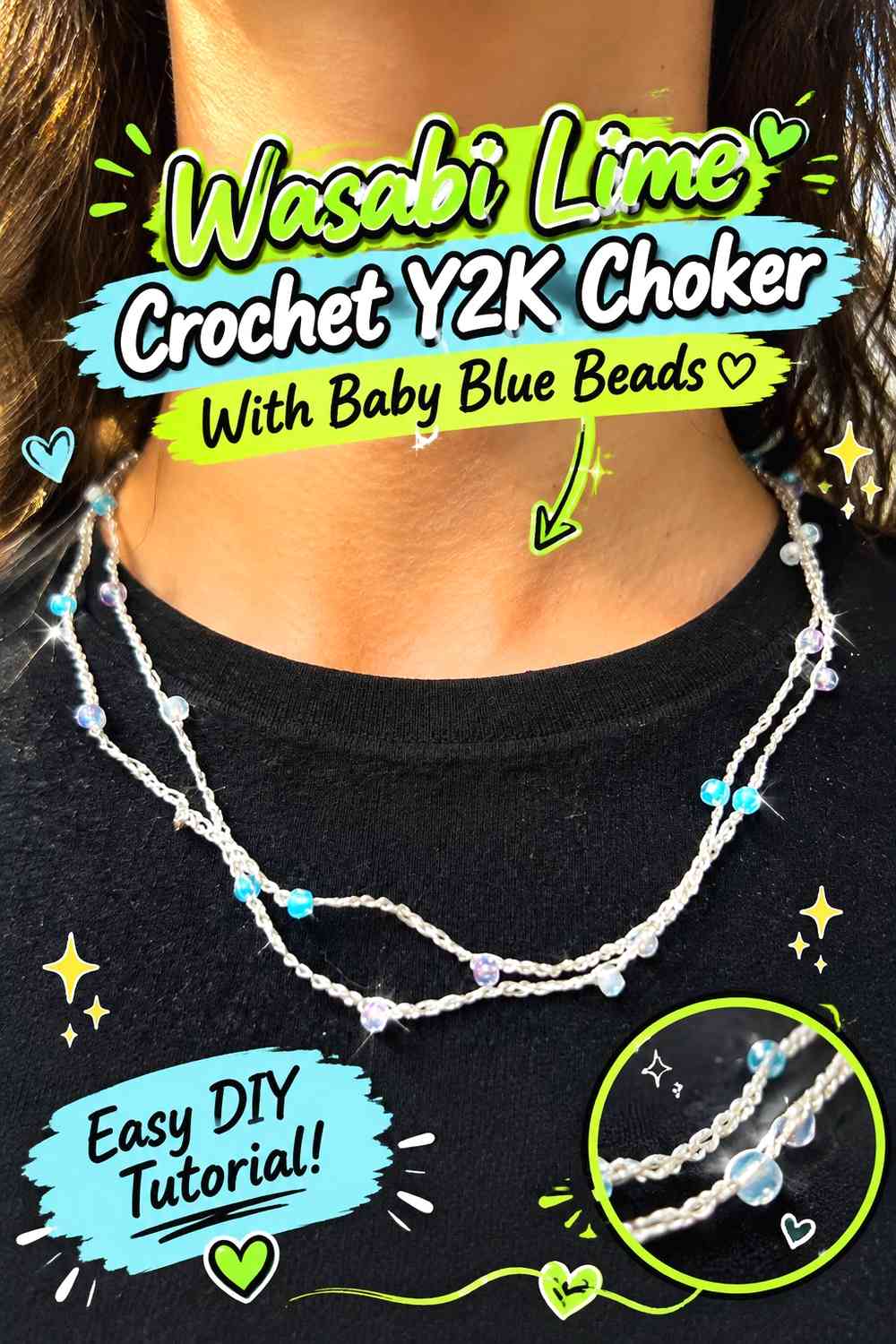
Reverse the hierarchy by making the crochet choker wasabi lime and using baby blue as the bead color. The result is brighter overall, while the blue beads create cooler interruptions across the neckline.
Wasabi Lime Should Remain Broad Between Baby Blue Crochet Beads
Give the lime crochet enough visible space that the necklace still reads as lime-led. Closely packing blue beads can turn the crochet into little more than a connector.
Use larger gaps between beads if you want the bright green-yellow cord to remain part of the design.
Baby Blue Can Break Up the Wasabi Lime Y2K Choker
Repeat baby-blue beads at regular points rather than clustering all of them near the center.
If you want one focal area, make the central blue bead slightly more visually prominent while keeping the surrounding blue accents smaller.
Creator Credit: vivi e cuci
4. Baby Blue and Wasabi Lime Flower-Bead Crochet Y2K Necklace
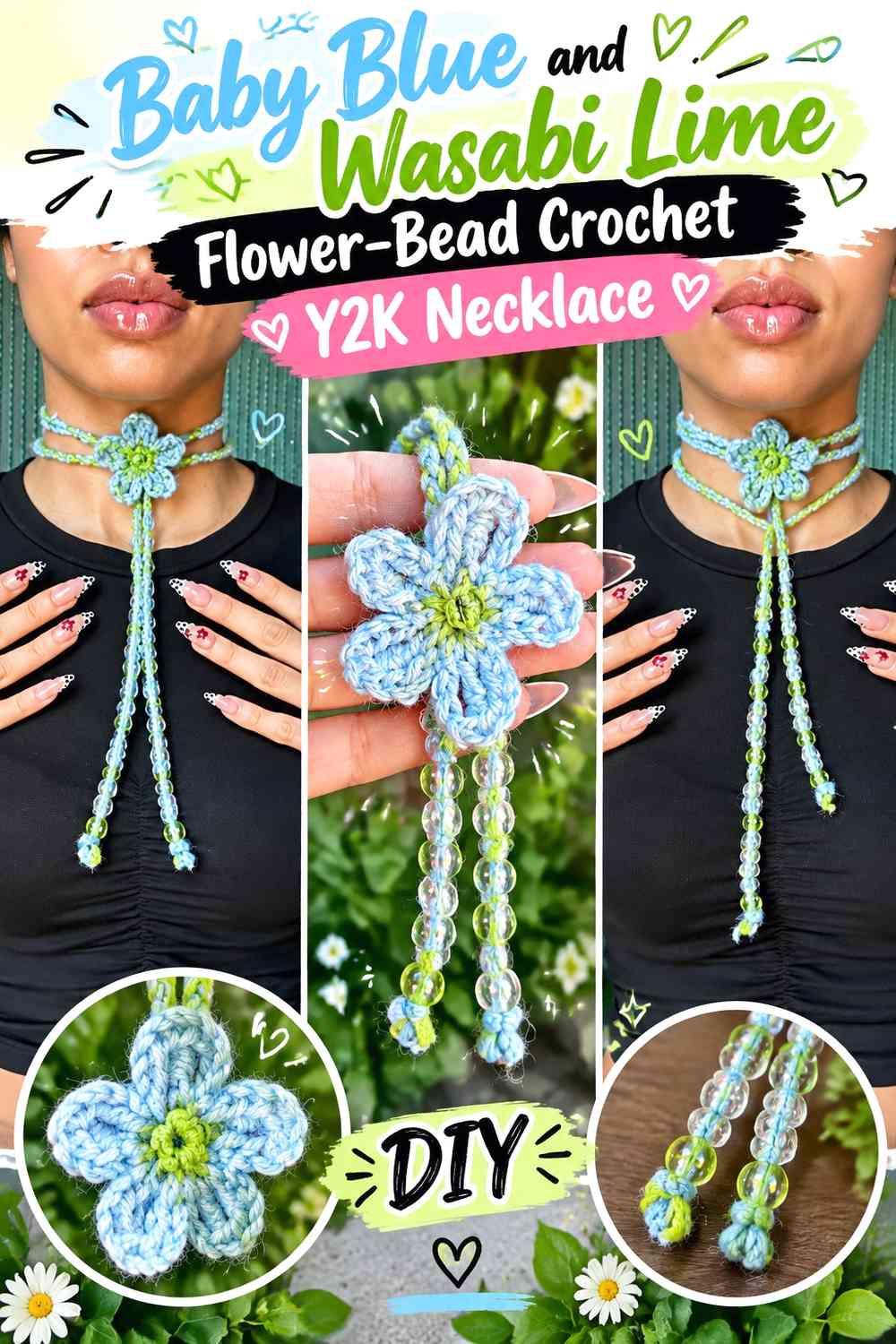
A flower necklace naturally creates places for beads at motif centers. Use baby blue for the petals and wasabi lime for the centers, or reverse the arrangement for a more unconventional Y2K color treatment.
Baby Blue Flowers Can Keep Wasabi Lime Crochet Bead Centers Clear
Use baby blue consistently across the petal shapes so the lime centers repeat as a recognizable decorative rhythm.
If every flower has a bead, keep the components light enough that the repeated centers do not pull the floral strand unevenly.
Wasabi Lime Can Turn Baby Blue Crochet Flowers Into Y2K Motifs
Use lime at the flower centers instead of adding lime to every petal edge. The concentrated color gives each motif one bright focal point.
A lime closure or short end section can repeat the accent without interrupting the floral pattern.
Creator Credit: Sol Josephine
5. Wasabi Lime and Baby Blue Double-Wrap Crochet Beaded Necklace
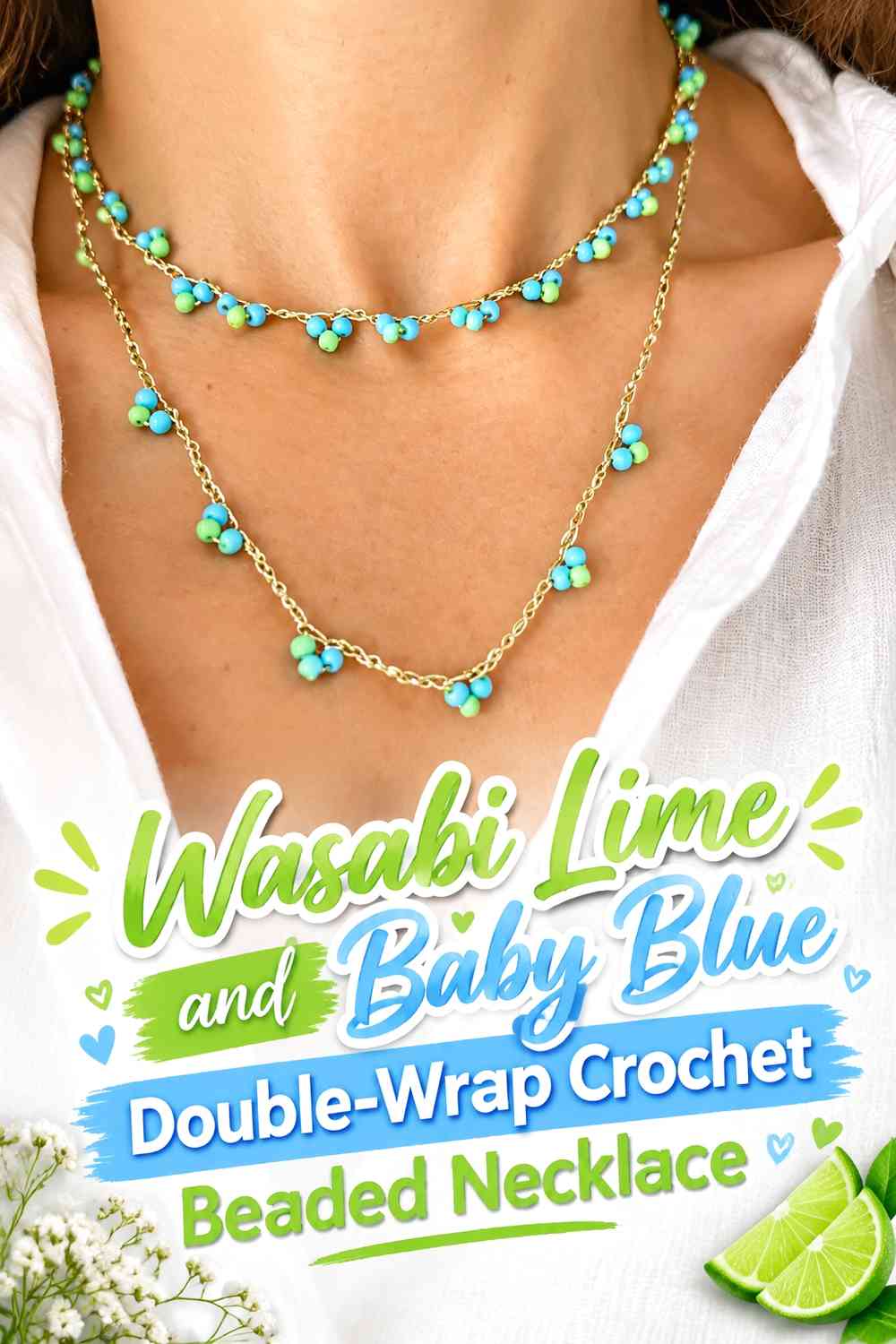
A longer strand that can wrap twice creates color density through layering rather than through large beads. Alternate lime and blue accents along the strand so the colors overlap differently depending on how the necklace is worn.
Wasabi Lime and Baby Blue Need Balance in Both Crochet Wraps
Test the necklace in its intended layered configuration before finalizing focal bead placement. A bead that appears centered on a single long strand may shift when the necklace is doubled.
Distribute both colors across enough of the length that one wrap does not become almost entirely lime while the other appears blue.
Baby Blue Can Separate Repeated Wasabi Lime Beads in the Double Crochet Layer
Use baby blue between stronger lime accents to prevent the wrapped necklace from becoming visually crowded.
A simplified repeating sequence is often easier to read once two strands sit close together.
Creator Credit: Azunudo
6. Baby Blue Crochet Cord Necklace With Wasabi Lime Bead Clusters
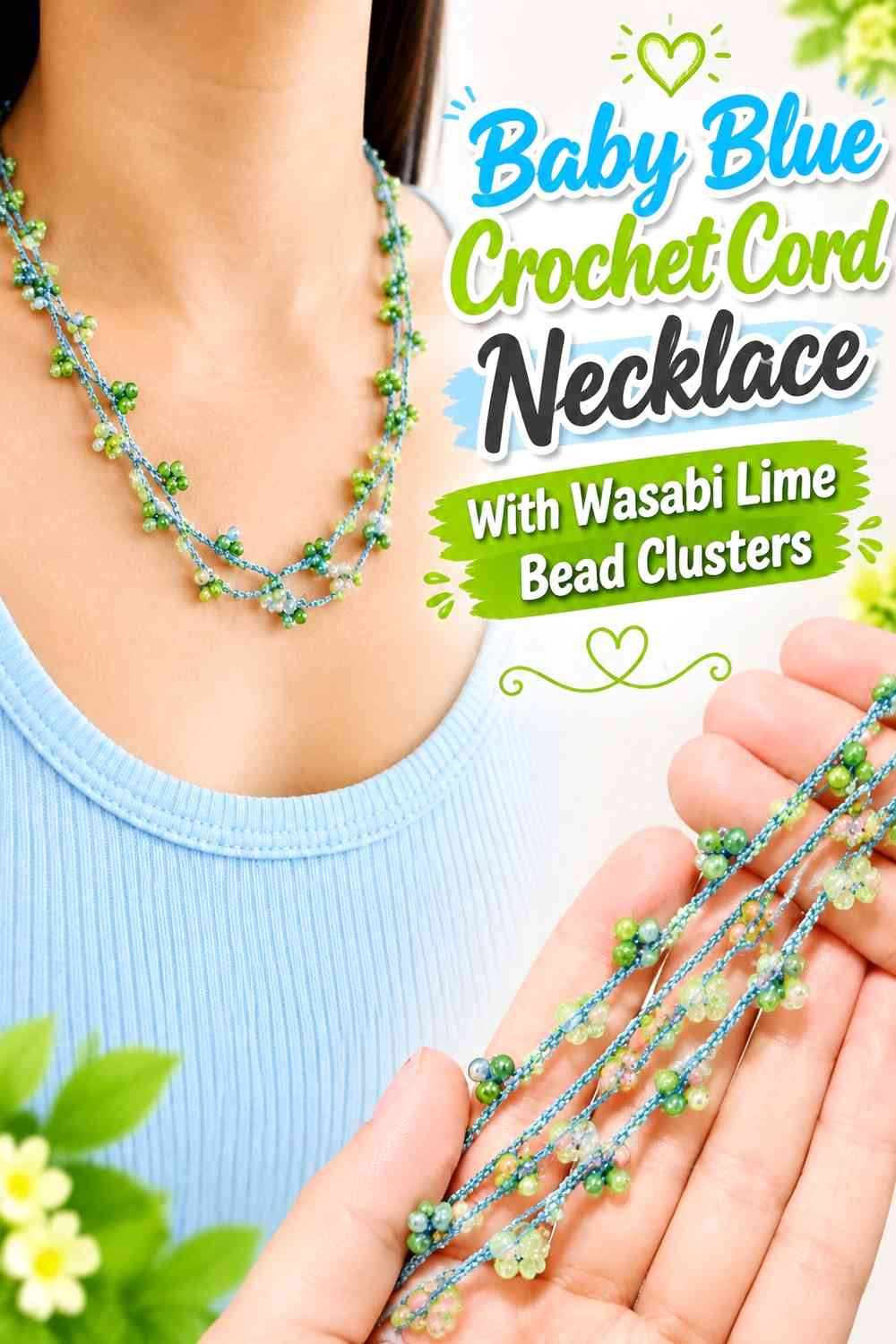
Instead of spacing individual beads evenly, group wasabi-lime beads into a few distinct clusters along a baby-blue cord. This creates visible gaps between focal areas and makes the necklace less uniform than a standard alternating strand.
Baby Blue Should Stay Visible Between Wasabi Lime Crochet Clusters
Leave clear blue sections between the bead groups so each lime cluster has its own space.
If the clusters are too close together, they can merge visually into one long lime band and reduce the impact of the crochet cord.
Wasabi Lime Bead Clusters Need Balanced Placement on Baby Blue
Arrange the clusters symmetrically for a cleaner necklace or intentionally offset one group for a stronger Y2K asymmetry.
Whichever direction you choose, test the strand while curved around the neckline before permanently fixing the focal placement.
Creator Credit: Franci Artesanato
7. Wasabi Lime Crochet Cord Necklace With Baby Blue Focal Beads
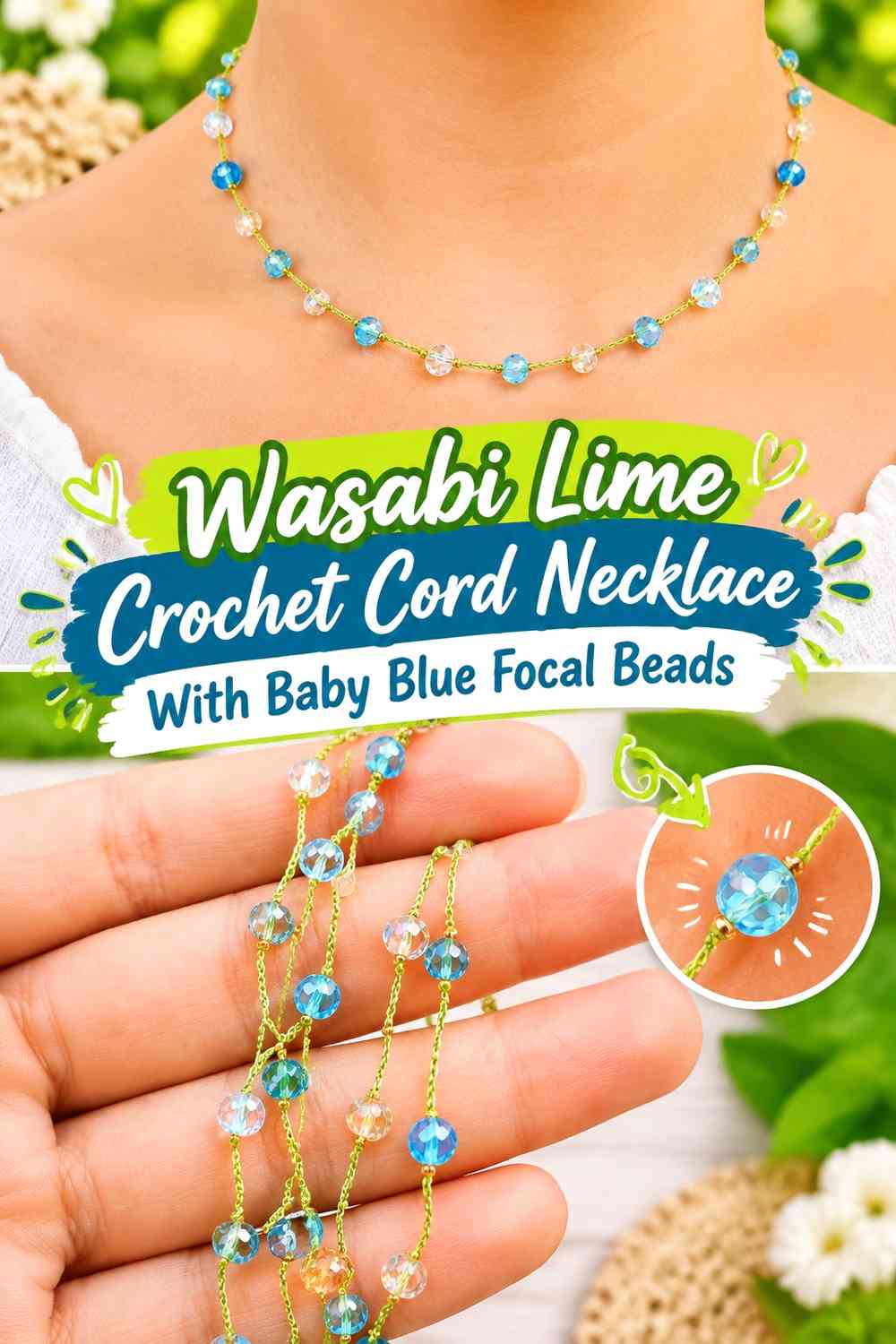
This version keeps most of the crochet visible. Use wasabi lime for a defined cord and place a small number of larger baby-blue beads near the center, allowing the blue to function as focal jewelry rather than repeated decoration.
Wasabi Lime Should Keep the Baby Blue Crochet Necklace Structure Visible
Leave enough lime cord exposed on both sides of the focal section so the crochet remains an important part of the finished jewelry.
Do not automatically fill the side sections with additional beads just because the cord has open space.
Baby Blue Focal Beads Can Center the Wasabi Lime Crochet Necklace
Use one larger center bead or a small blue group where the necklace naturally hangs lowest.
Test the weight before completing the strand. A focal bead that pulls the cord sharply downward may need a lighter component or different arrangement.
Creator Credit: Dezinha
8. Baby Blue and Wasabi Lime Crystal-Style Crochet Y2K Necklace
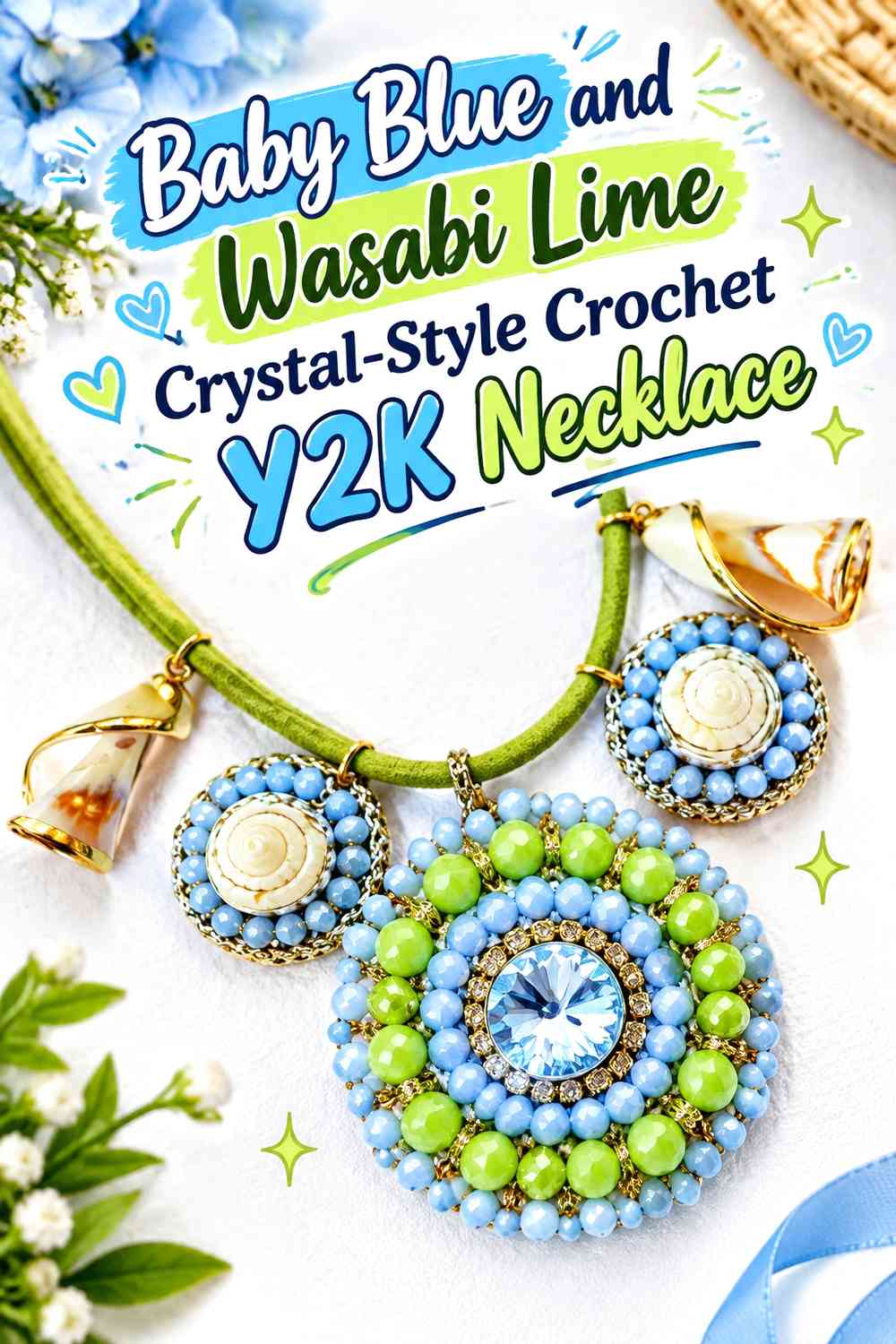
A jewelry-focused crochet necklace can use reflective or translucent beads while preserving the same two-color palette. Let baby blue dominate the strand and use wasabi lime through selected bead groups, or reverse the arrangement if lime should be the stronger first impression.
Baby Blue Can Keep Wasabi Lime Crochet Sparkle From Becoming Too Busy
Use baby blue across the connecting crochet and some of the bead sequence so the brighter lime elements have visual pauses.
Reflective components can attract more attention than similarly sized matte ones, so judge the finished effect rather than assuming equal bead counts create equal color balance.
Wasabi Lime Should Have a Clear Role Among Baby Blue Crochet Beads
Use lime as the center cluster, repeated accent, or end detail—not all three at maximum intensity.
A clear hierarchy keeps a highly embellished necklace from becoming visually crowded.
Creator Credit: La MAMU ®️ – EMANUELA ESPOSITO Crochet Bijoux
9. Wasabi Lime and Baby Blue Long-Wrap Crochet Beaded Necklace
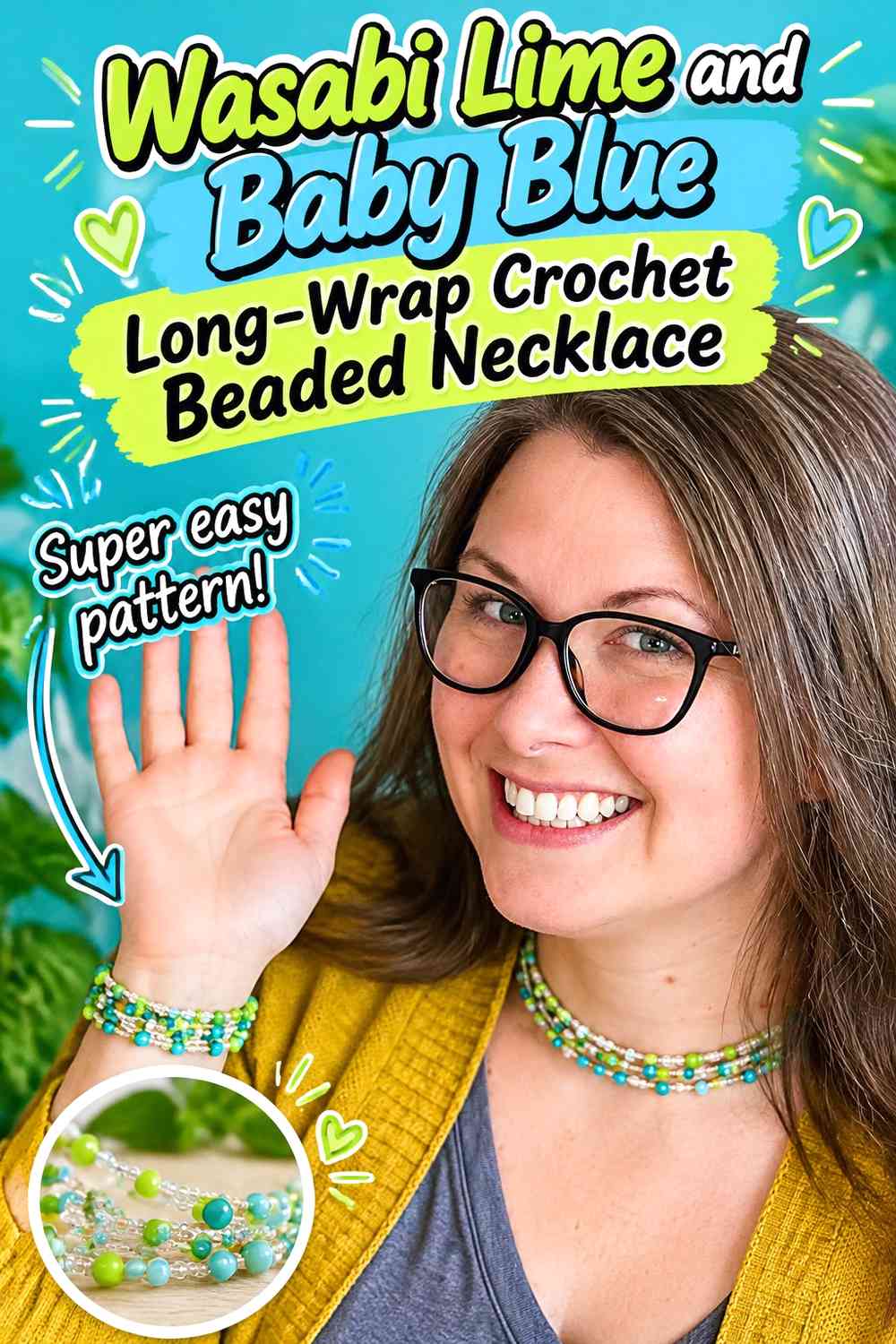
A long necklace creates room for a repeating bead sequence and can also be layered for a denser Y2K effect. Use wasabi lime and baby blue in alternating groups rather than changing color at every possible bead position.
Wasabi Lime and Baby Blue Need a Repeat That Survives a Long Crochet Strand
Choose a simple color rhythm that remains recognizable across the full necklace. Overly complicated sequences are harder to read once the strand curves, overlaps, or wraps.
A short sample can reveal whether the bead spacing feels too dense before you repeat it many times.
Baby Blue Can Create Resting Space Between Wasabi Lime Crochet Accents
Use broader blue stretches between lime groups if you want the long necklace to feel calmer.
If the necklace is wrapped, check whether those quieter blue areas remain visible or disappear beneath the second layer.
Creator Credit: Yarn Stash with Marching North
10. Baby Blue Crochet Y2K Necklace With Wasabi Lime Center Bead
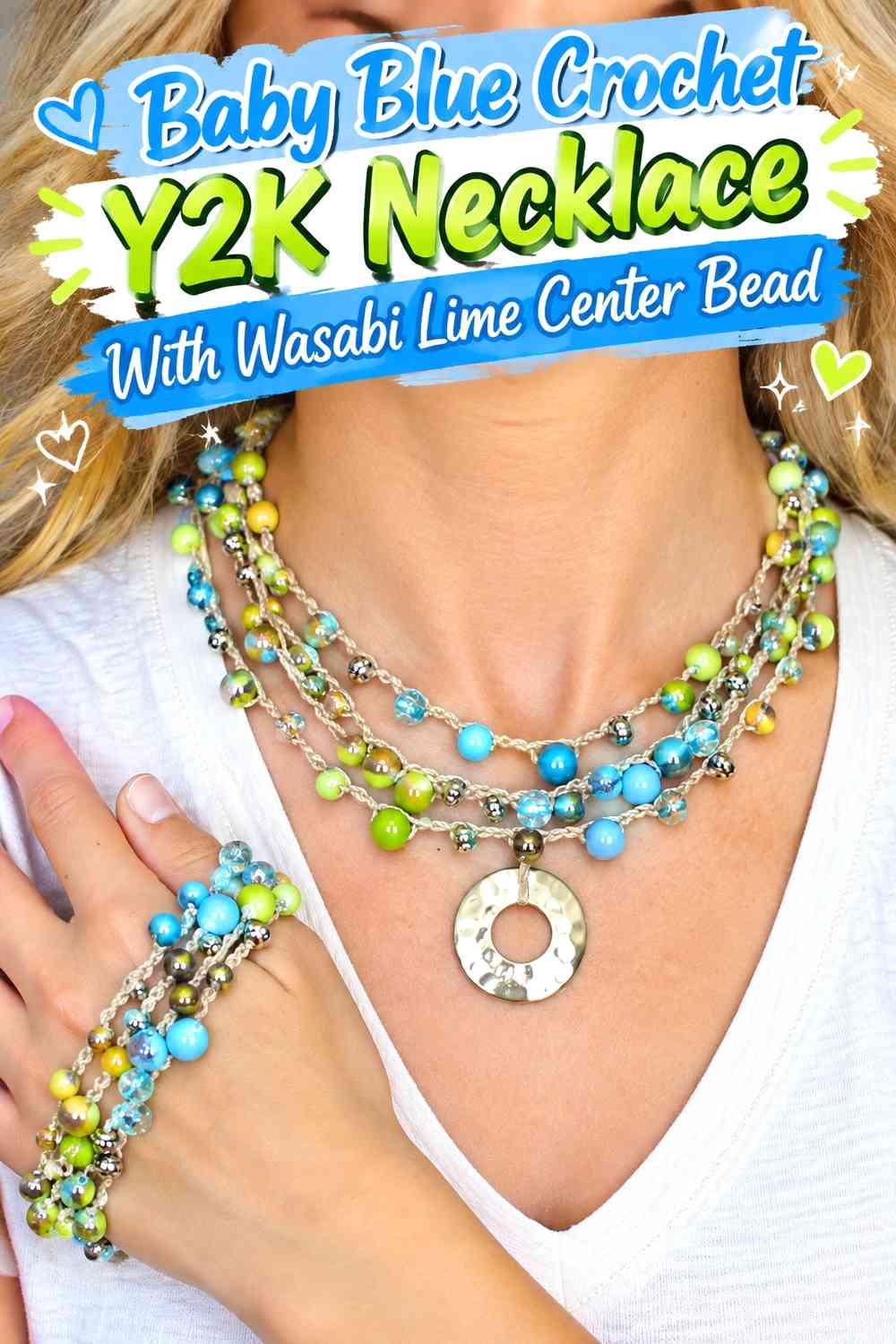
This is one of the simplest color hierarchies: a predominantly baby-blue crochet necklace with one strong wasabi-lime focal bead. The contrast is concentrated instead of repeated, which makes the lime center especially noticeable.
Baby Blue Should Keep the Wasabi Lime Crochet Necklace Calm
Use baby blue across most of the strand and avoid unnecessary lime accents near the sides.
The restrained color field gives the center component more visual importance than it would have in a heavily alternating necklace.
Wasabi Lime Can Become the Baby Blue Crochet Necklace Focal Point
Place the lime bead where the finished necklace naturally centers rather than assuming the geometric middle of the flat strand is always the visual center.
Check the necklace while hanging before securing the focal component permanently.
Creator Credit: naztazia
11. Wasabi Lime Crochet Y2K Necklace With Baby Blue Pendant Drop
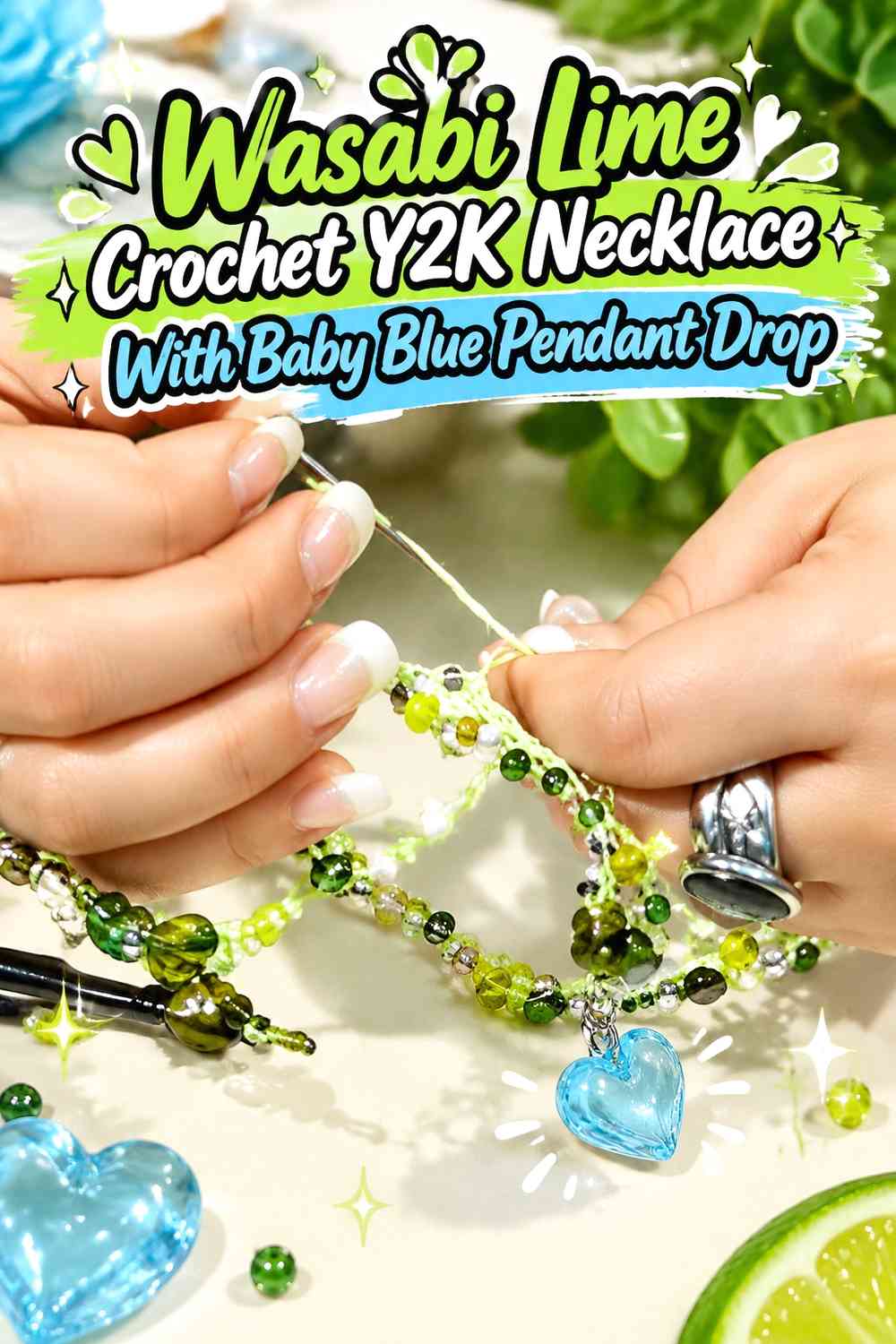
A pendant-style necklace separates the crochet color from the main focal color. Use wasabi lime for the cord and a baby-blue bead, charm, or bead cluster at the lowest point.
Wasabi Lime Should Keep the Baby Blue Crochet Pendant Supported
Use a cord construction that stays visually coherent around the focal piece. The pendant opening or attachment also needs to be compatible with the finished crochet thickness.
Check the actual completed cord rather than the unworked yarn when judging whether it fits the focal component.
Baby Blue Can Give the Wasabi Lime Crochet Necklace One Strong Drop
Keep the baby-blue element at the center and avoid distributing equally large blue components around the entire strand.
One focal drop creates a cleaner Y2K pendant effect while the lime cord remains clearly visible.
Creator Credit: Auntie’s Beads Direct (Online Store)
12. Baby Blue and Wasabi Lime Multi-Strand Crochet Beaded Necklace
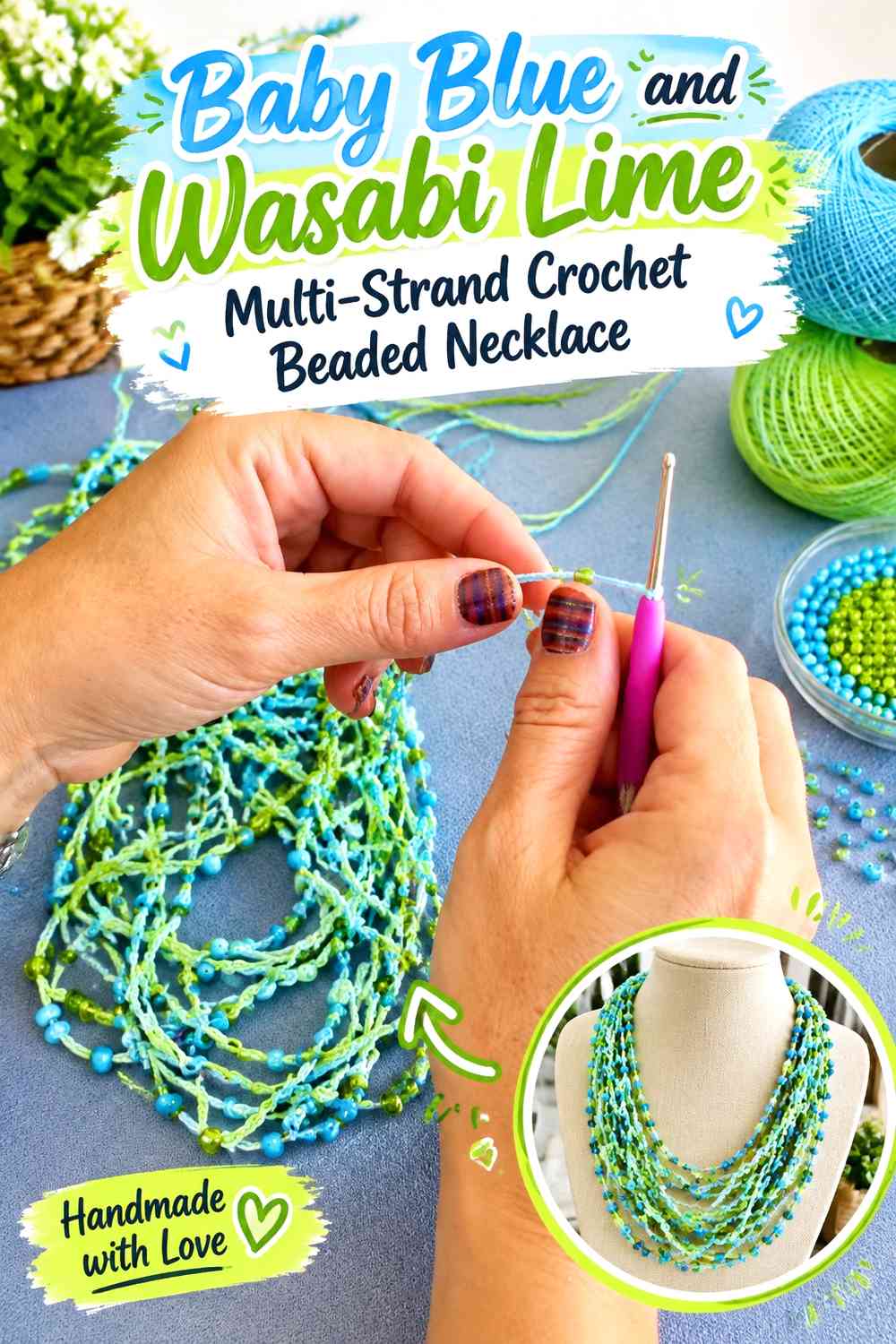
Multiple crochet chains can create fullness without using very large beads. Use baby blue on most strands and introduce one wasabi-lime strand or repeated lime bead groups to keep the palette intentionally uneven.
Baby Blue Should Keep the Wasabi Lime Crochet Strands From Competing
Let baby blue appear across the majority of the layered structure so the necklace has one clear base color.
If every strand has a different bead sequence, the result can become overly busy. Repeat one simple lime treatment instead.
Wasabi Lime Can Identify One Baby Blue Crochet Necklace Layer
Use lime more strongly on a single strand or focal section. This creates depth because the eye can distinguish one layer from the others.
Arrange all strands together before completing the closure so the lime section does not disappear behind the blue layers.
Creator Credit: Kristin Omdahl
13. Wasabi Lime Flower Crochet Y2K Necklace With Baby Blue Bead Centers
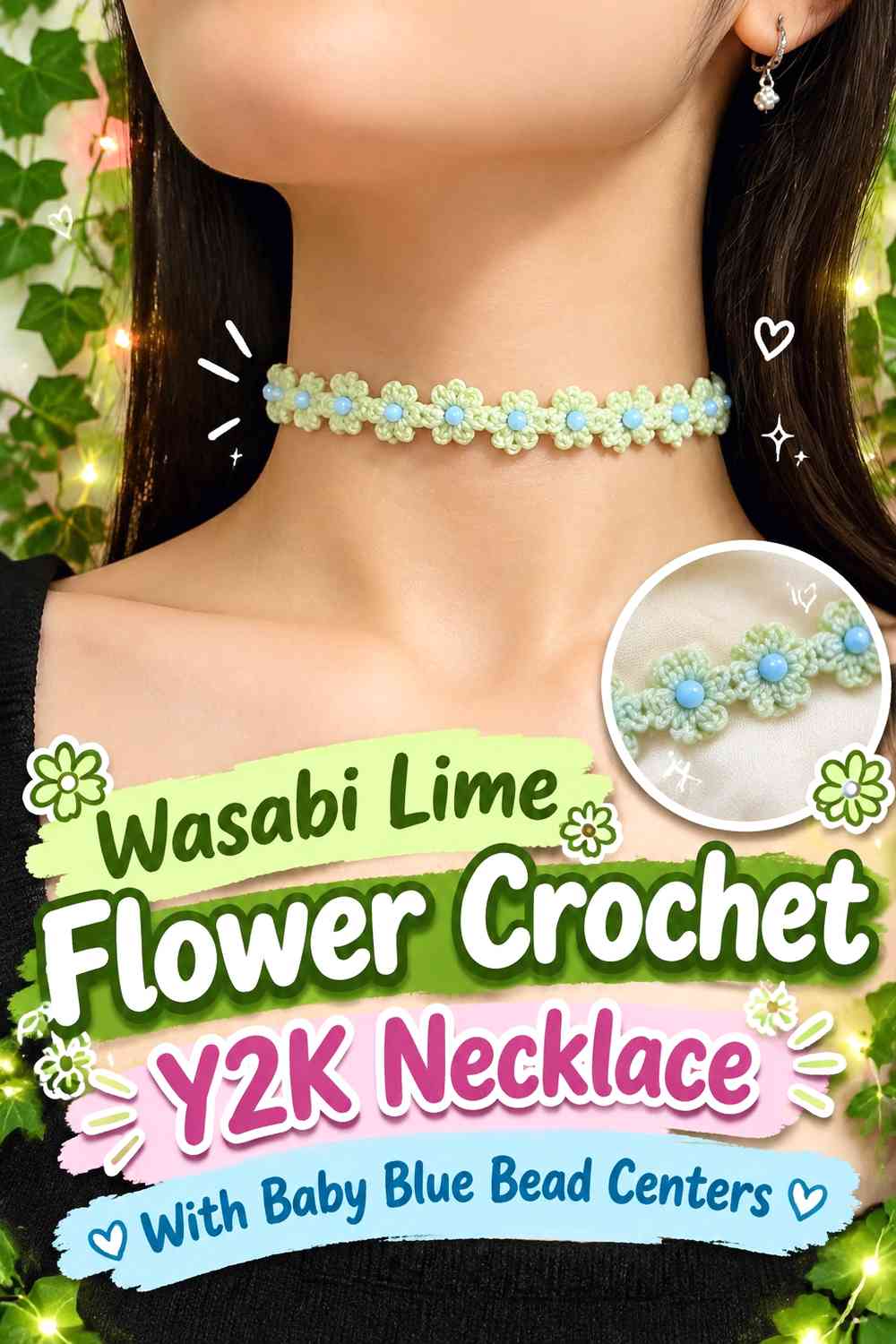
Move wasabi lime into the flower motifs themselves and use baby-blue beads as their centers. This reversal creates one of the strongest Y2K combinations because the unconventional lime petals carry most of the visual surface.
Wasabi Lime Flowers Should Repeat Clearly Around Baby Blue Beads
Keep the flower motifs consistently lime so the necklace has a strong recognizable rhythm.
If some flowers are substantially larger than others, decide whether that variation should mark the center rather than allowing inconsistent size to appear accidental.
Baby Blue Beads Can Cool the Wasabi Lime Crochet Flower Centers
Use a blue center in each selected flower to break up the bright lime petals.
You do not need to bead every motif. Alternating beaded and unbeaded flowers can create a lighter rhythm if full repetition feels too dense.
Creator Credit: VivCrochets
14. Baby Blue Crochet Y2K Choker With Wasabi Lime Asymmetrical Beads
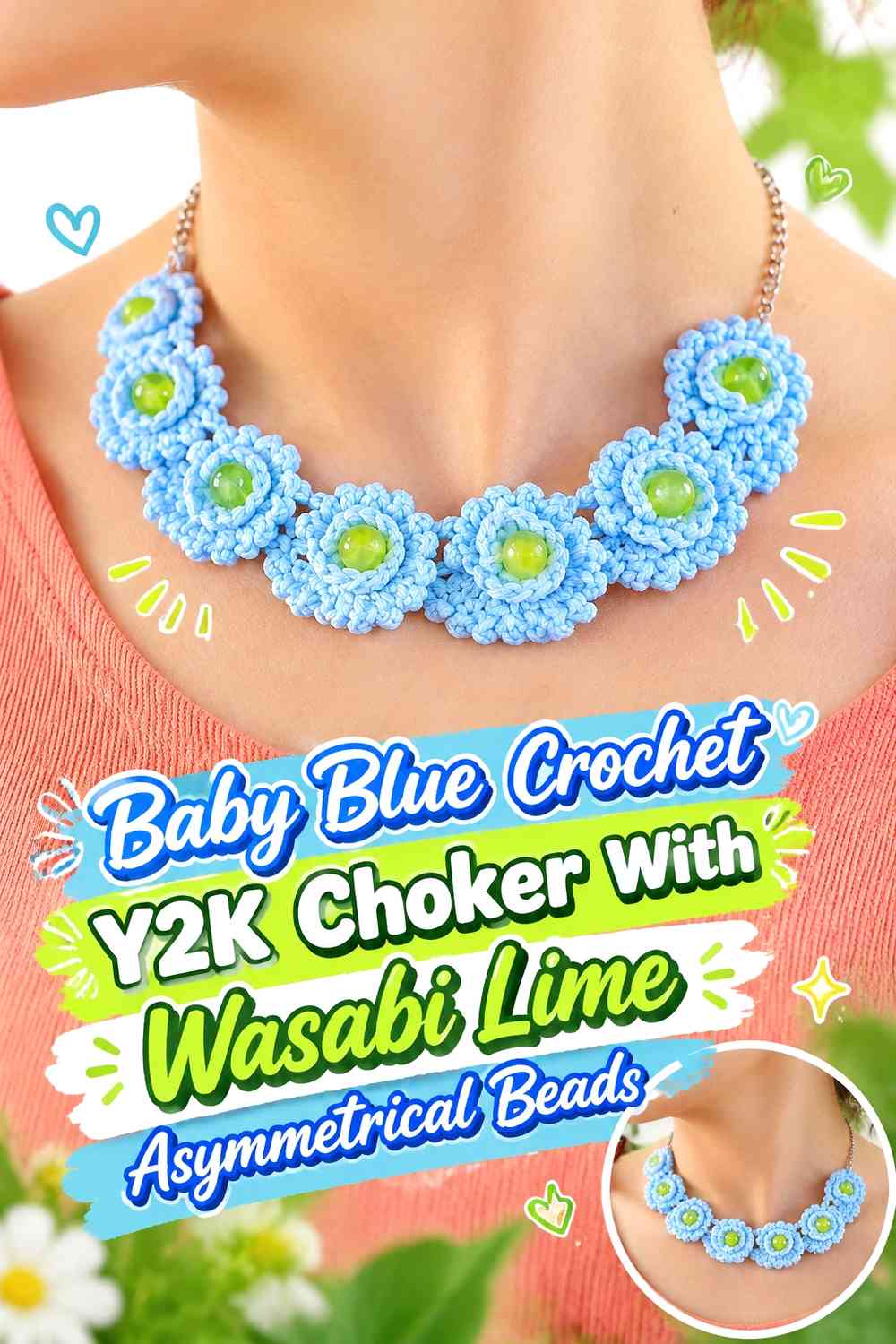
The final idea deliberately moves the bead emphasis away from the center. Use a baby-blue crochet choker or flower strand and place a stronger wasabi-lime bead cluster toward one side, balanced by smaller lime accents elsewhere.
Baby Blue Should Keep the Wasabi Lime Asymmetry Easy to Read
Use blue continuously across the necklace so the off-center lime group has a clear background.
If several blue motifs or textures already compete for attention, simplify the side opposite the bead cluster.
Wasabi Lime Should Look Deliberately Off-Center on the Baby Blue Crochet Necklace
Place the lime cluster after viewing the necklace along a curved neckline. A position that appears dramatically offset while flat may move closer to center when worn.
Repeat one small lime accent on the opposite side if the composition needs balance without becoming symmetrical.
Creator Credit: Banoris Crafts
Which Wasabi Lime and Baby Blue Y2K Beaded Crochet Necklace Should You Choose?
Choose alternating beads or a double-wrap strand if you want both colors to have similar importance. These versions make the lime-blue repetition the main visual feature.
For a calmer necklace, use baby blue as the crochet base and concentrate wasabi lime in a center bead, small clusters, or flower centers. Reverse the hierarchy for a brighter Y2K result in which lime dominates the cord or motifs and baby blue supplies cooler focal accents.
Flower necklaces feel softer and more playful, while multi-strand, crystal-style, and pendant constructions lean more toward jewelry. Asymmetrical bead placement gives the palette a particularly Y2K feel without requiring additional colors.
Conclusion
Wasabi lime and baby blue can create 14 noticeably different Y2K beaded crochet necklaces even within a strict two-color palette. The main differences come from deciding whether color is carried by the crochet, the beads, or both.
Use baby blue as the main cord color when you want wasabi lime to function as a bright accent. Let wasabi lime dominate when you want the necklace to feel more energetic, then use blue in focal beads, flower centers, or pendant drops. For an equal two-color design, repeat both shades in a consistent bead sequence or layered-strand arrangement.
Before completing the necklace, test a short section with the actual thread and beads. Check bead-hole compatibility, spacing, flexibility, and how the decorated strand hangs around the neckline. Follow the credited tutorial for its exact crochet-jewelry construction rather than treating these color-placement ideas as replacement patterns.
Frequently Asked Questions
Should Wasabi Lime or Baby Blue Dominate a Y2K Crochet Beaded Necklace?
Either can lead. Baby blue gives the necklace a calmer base with lime acting as a bright accent, while wasabi lime creates a stronger statement and lets baby blue provide cooler focal details.
Where Should Wasabi Lime Beads Go on a Baby Blue Crochet Necklace?
Useful placements include the center, repeated flower centers, evenly spaced accents, one side cluster, or selected sections of a layered strand. Choose a recognizable system instead of scattering lime beads without a pattern.
Can Baby Blue Beads Work on a Wasabi Lime Crochet Choker?
Yes. Baby blue can break up a bright lime cord or choker and create a cooler two-color balance. Keep enough lime crochet visible between the beads if you want green-yellow to remain the dominant shade.
How Can I Make Wasabi Lime and Baby Blue Look More Y2K?
Use playful contrast, visible bead repetition, flower motifs, close-fitting chokers, asymmetrical clusters, layered strands, or one deliberately oversized focal element. The two-color palette itself can carry the Y2K direction without adding several extra shades.
Should Wasabi Lime and Baby Blue Beads Alternate One by One?
They can, but they do not have to. Alternating one by one creates a regular graphic rhythm, while grouped colors create clusters or broader focal sections. Choose the arrangement according to whether you want order or deliberate asymmetry.
Can I Add Beads to a Baby Blue Crochet Flower Necklace Tutorial?
Yes as an adaptation, provided the motif can support the planned bead and the attachment remains secure. Test one finished flower with its bead before repeating the embellishment across the entire necklace.
How Do I Know Whether My Wasabi Lime or Baby Blue Beads Will Fit the Crochet Thread?
Check the actual bead openings against the thread and the construction method before beginning. Do not assume beads of similar outside size have identical holes.
Can Large Wasabi Lime or Baby Blue Beads Make a Crochet Necklace Too Heavy?
They can change the way a necklace hangs, particularly when many large components are repeated. Make a short representative sample and let it hang before committing to the complete bead sequence.