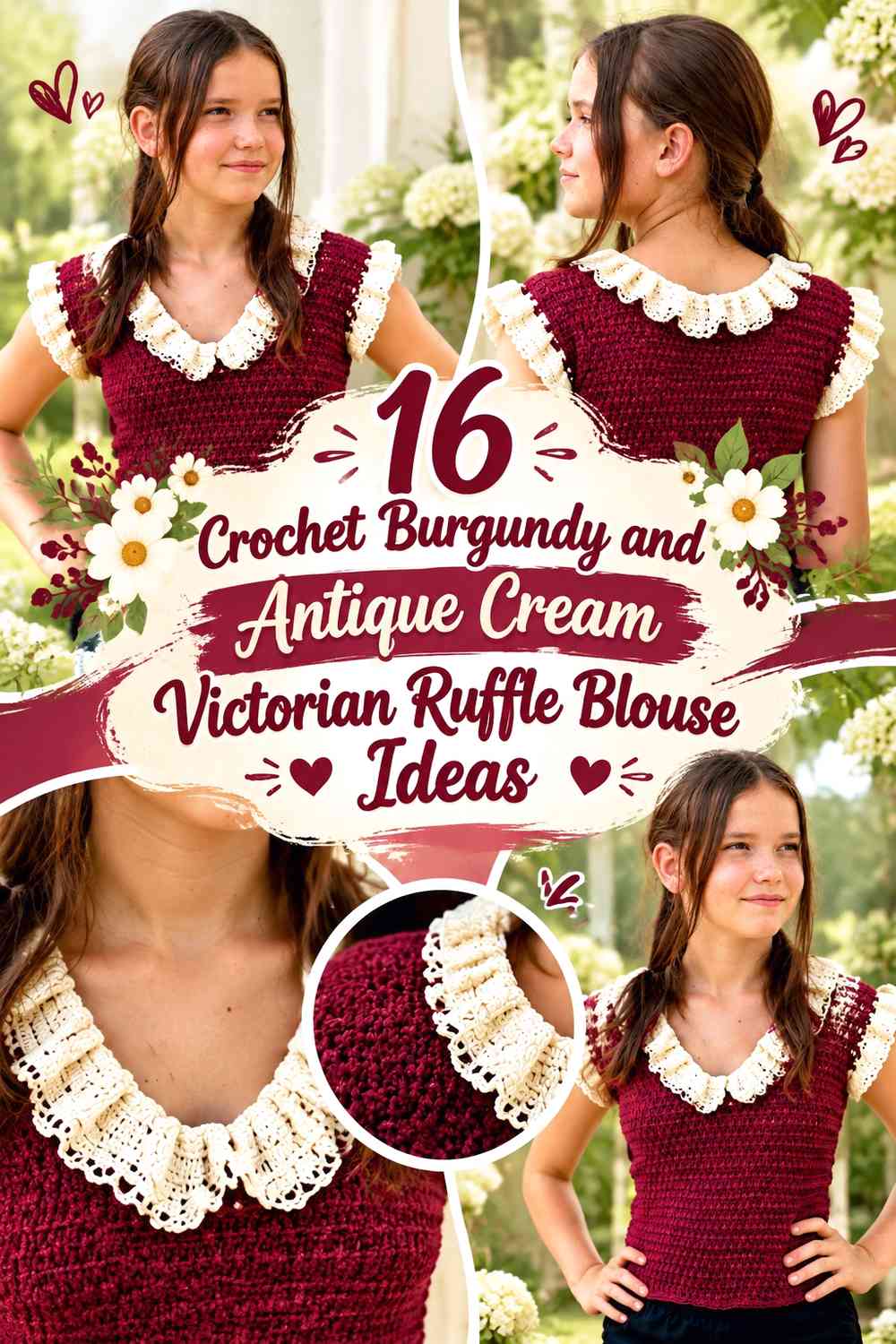

Burgundy and Antique Cream suit a Victorian-inspired crochet blouse especially well when the two colors are given different visual jobs. Burgundy can provide the dark foundation across the bodice, sleeves, or button area, while Antique Cream can draw attention to ruffled collars, lace yokes, cuffs, and other decorative sections.
The reverse arrangement creates a very different blouse. An Antique Cream body makes the garment lighter and allows even narrow Burgundy edging to become noticeable around the neckline and sleeves. For a more ornate effect, the two colors can alternate through floral motifs, lace panels, bell sleeves, or layered ruffles.
The important decision is where the contrast belongs. Victorian-inspired details already contain plenty of texture, so color should clarify the collar, sleeve shape, yoke, or ruffle rather than compete with every decorative stitch.
Quick List
- Burgundy Bodice and Antique Cream Ruffle Crochet Blouse
- Antique Cream Lace-Ruffle and Burgundy Yoke Crochet Blouse
- Burgundy Victorian Body and Antique Cream Shoulder-Ruffle Crochet Blouse
- Antique Cream Lace Body and Burgundy Ruffle-Sleeve Crochet Blouse
- Burgundy Vintage Bell-Sleeve and Antique Cream Cuff Crochet Blouse
- Antique Cream Openwork and Burgundy Collar Crochet Blouse
- Burgundy Tie-Front and Antique Cream Bell-Ruffle Crochet Blouse
- Antique Cream Wrap Front and Burgundy Bell-Sleeve Crochet Blouse
- Burgundy Cropped Bodice and Antique Cream Bell-Sleeve Crochet Blouse
- Antique Cream Decorative Body and Burgundy Ruffle-Edge Crochet Blouse
- Burgundy Floral Lace and Antique Cream Bell-Sleeve Crochet Blouse
- Antique Cream Granny Lace and Burgundy Victorian Trim Crochet Blouse
- Burgundy Pullover Body and Antique Cream Ruffle-Cuff Crochet Blouse
- Antique Cream Puff-Sleeve and Burgundy Collar Crochet Blouse
- Burgundy Relaxed Body and Antique Cream Bell-Cuff Crochet Blouse
- Antique Cream Mesh and Burgundy Tie-Front Crochet Blouse
Give Burgundy and Antique Cream Clear Blouse Roles
Victorian-inspired crochet already has visual complexity from lace, ruffles, gathered-looking sleeves, decorative collars, and shaped cuffs. Using Burgundy and Antique Cream in equal amounts across every detail can make those elements harder to distinguish.
Instead, decide which color belongs to the structural areas and which belongs to the ornament. Burgundy can visually anchor a bodice while Antique Cream highlights the collar and cuffs. On a pale blouse, Burgundy can become the outlining shade around the neckline, button area, sleeve edges, or waist.
Use Antique Cream Where Burgundy Texture Needs Separation
A dark Burgundy fabric can make small crochet details less obvious from a distance, particularly when several textured sections sit close together. Antique Cream can separate a ruffle from the bodice or define the transition between a sleeve and cuff.
The contrast does not need to cover a large area. A relatively narrow Antique Cream edge can be enough when it sits directly beside Burgundy. Compare the yarns side by side, and use a grayscale photo if you want to check their light-dark separation before starting a large blouse panel.
Repeat Burgundy or Antique Cream Around the Whole Blouse
A Victorian-inspired blouse usually has several natural accent locations: neckline, sleeve cuffs, ruffles, front opening, hem, and sometimes a yoke. Repeating the supporting color across two or three of these locations makes the palette feel deliberate.
Avoid decorating every edge simply because a second color is available. A Burgundy bodice with Antique Cream collar, cuffs, and one narrow hem detail can look more controlled than outlining every seam and ruffle.
1. Burgundy Bodice and Antique Cream Ruffle Crochet Blouse
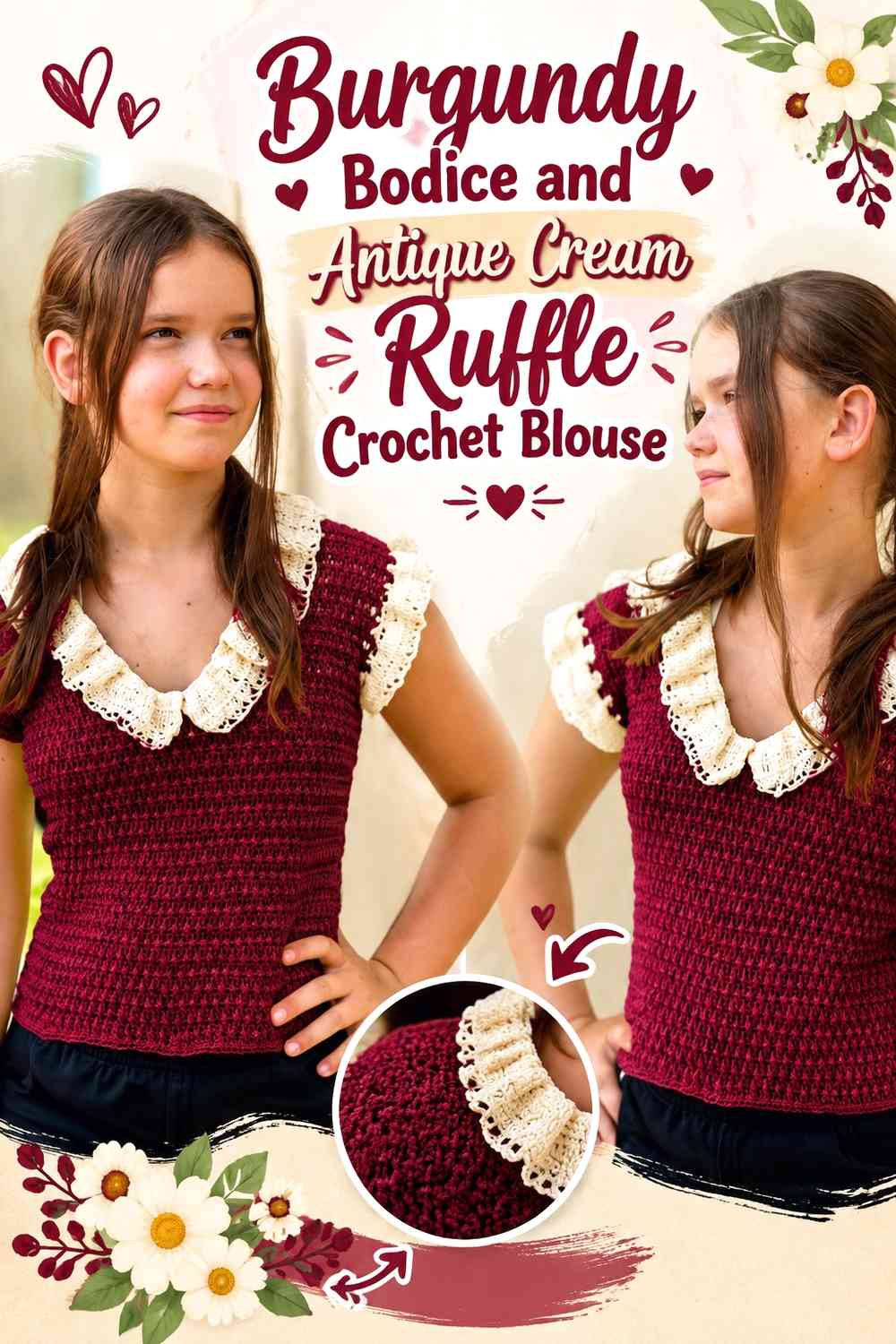
Let Burgundy cover the main front and back panels while Antique Cream is reserved for prominent ruffles. This gives the blouse a dark, substantial center and makes the lighter decorative areas easier to distinguish. It is particularly effective when the neckline and arm area already carry layered or flared crochet detail.
Burgundy Should Keep the Victorian Crochet Bodice Visually Continuous
Use Burgundy across large bodice sections when the blouse already contains noticeable ruffles. A continuous dark field gives those decorative elements a clear background instead of introducing additional stripes through the torso.
If the Burgundy fabric also contains strong texture, view it from several feet away before deciding whether more color changes are necessary. The stitchwork may already provide enough variation.
Antique Cream Can Separate the Burgundy Neckline and Arm Ruffles
Place Antique Cream where ruffles meet the Burgundy body. The light-dark change makes the edge of each ruffle easier to identify and prevents several layers of texture from visually collapsing together.
Repeating Antique Cream at both the neckline and sleeve area connects those details without requiring equal amounts of cream and Burgundy.
Creator Credit: Nebeska Crochet with Love
2. Antique Cream Lace-Ruffle and Burgundy Yoke Crochet Blouse
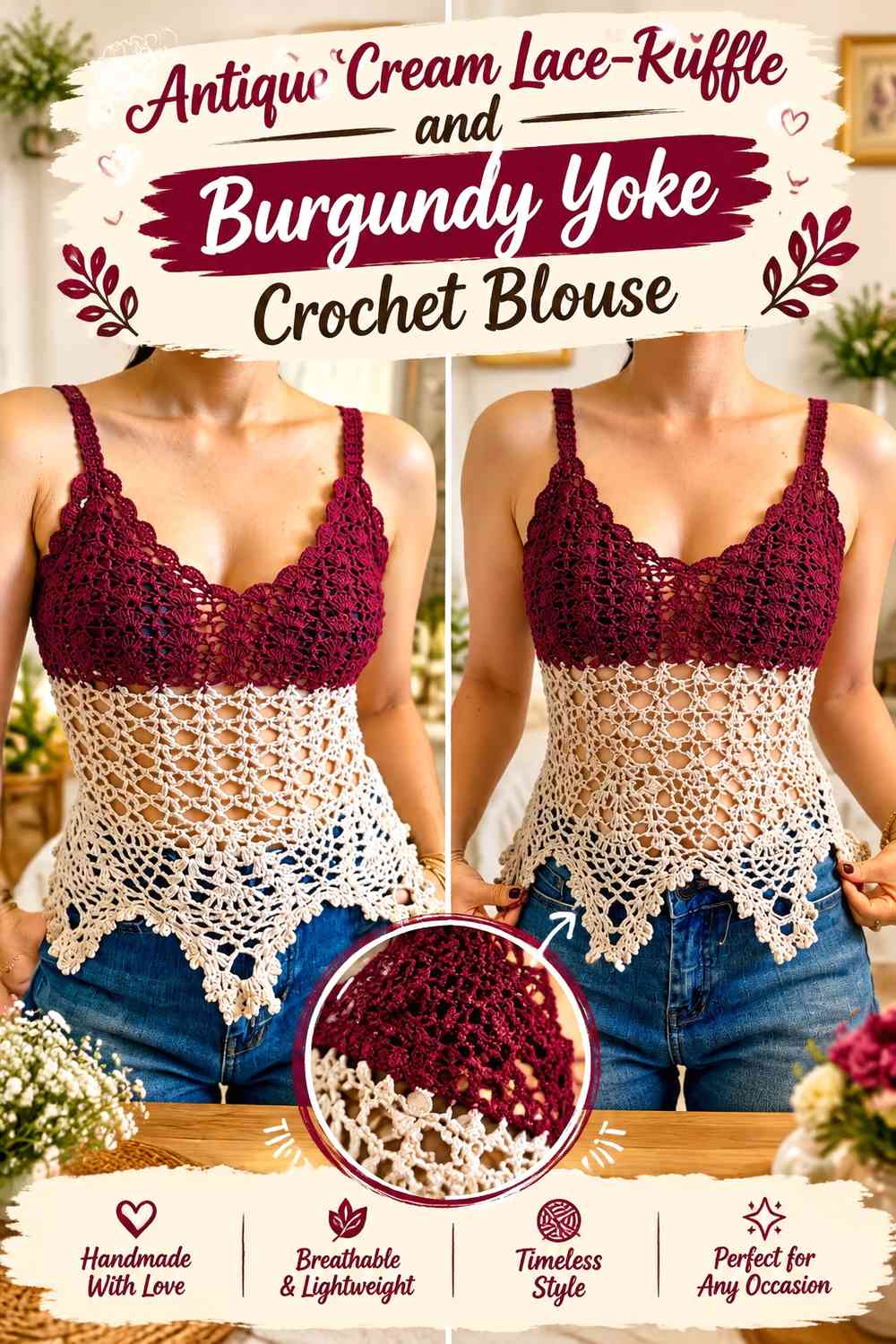
This direction makes Antique Cream more prominent through the lace and ruffled sections while Burgundy is concentrated higher on the blouse. A darker yoke gives the pale decorative fabric a visual anchor and creates a strong transition into the neckline.
Antique Cream Lets the Crochet Ruffle Remain the Lightest Blouse Detail
Keep Antique Cream consistent through the main ruffle rather than alternating colors inside every wave. The shaped edge already supplies plenty of movement, so a single pale shade helps the ruffle remain readable.
If you want additional Burgundy in this area, a narrow joining or finishing line is usually enough to connect it to the yoke.
Burgundy Can Ground an Antique Cream Lace Yoke
Burgundy works well around a yoke, shoulder line, or upper bodice because the darker value creates a clear boundary above lighter lace.
Watch the proportion carefully. If Burgundy extends too far down the body, the blouse may shift from Antique Cream-dominant to Burgundy-dominant before the decorative ruffle has enough visual space.
Creator Credit: Casttañaz Crochets
3. Burgundy Victorian Body and Antique Cream Shoulder-Ruffle Crochet Blouse
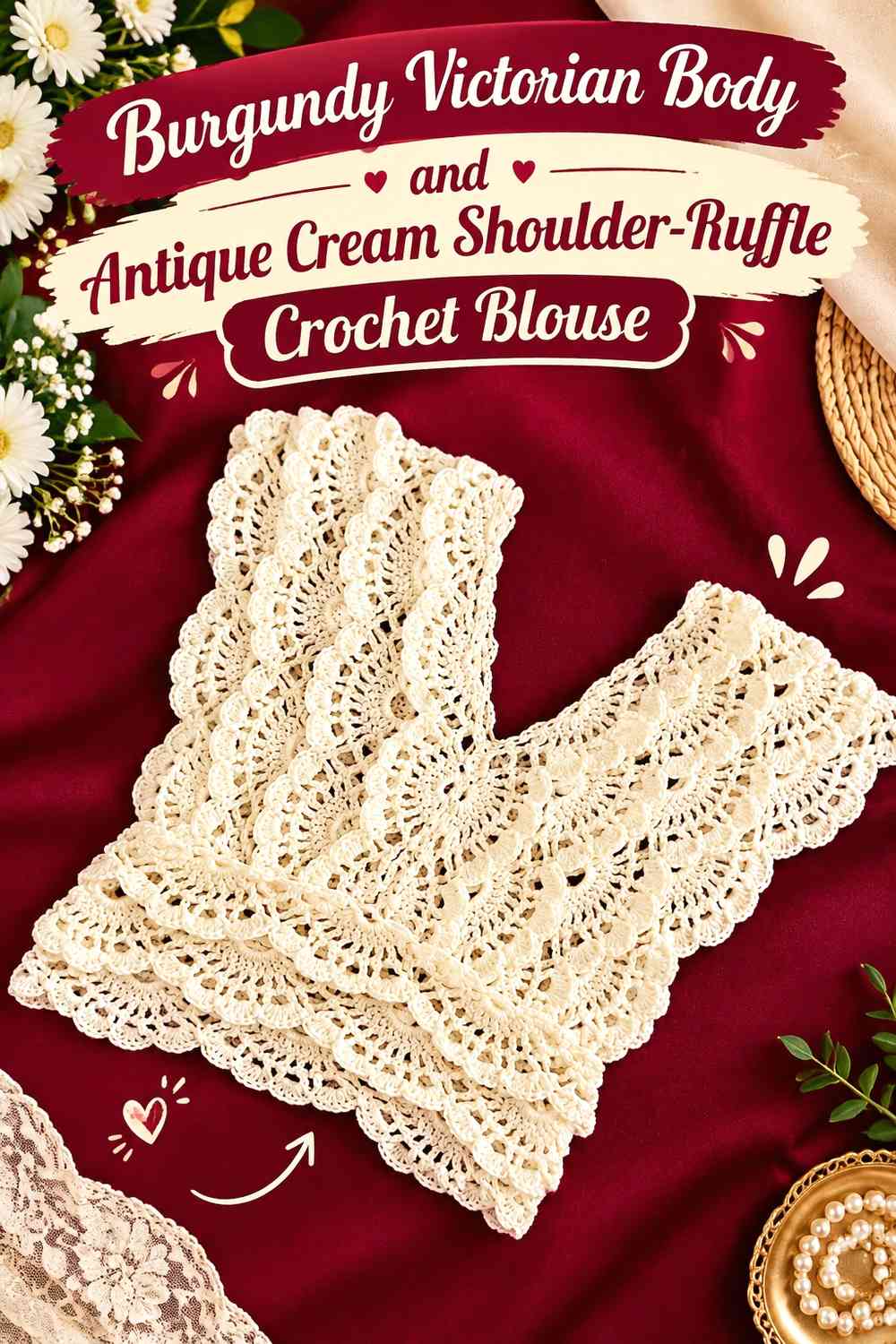
A Burgundy body paired with Antique Cream shoulder or upper-body ruffles puts the strongest contrast close to the neckline. This makes the upper blouse decorative while leaving the torso visually quieter.
Burgundy Keeps the Crochet Blouse Body from Competing With the Ruffles
Allow Burgundy to cover the larger torso area without frequent Antique Cream interruptions. This gives the blouse a clear hierarchy: dark body first, light ornamental ruffle second.
If additional detailing is wanted near the hem, keep it narrower than the shoulder treatment so the ruffle remains the main pale feature.
Antique Cream Gives Burgundy Shoulder Ruffles a Distinct Outline
Antique Cream is especially useful on a ruffle that overlaps Burgundy because the color change remains visible even where the fabric folds.
Repeat a small amount of Antique Cream at the cuffs if you want the upper and lower sleeve areas to relate without covering the whole sleeve in cream.
Creator Credit: Majovel crochet english
4. Antique Cream Lace Body and Burgundy Ruffle-Sleeve Crochet Blouse
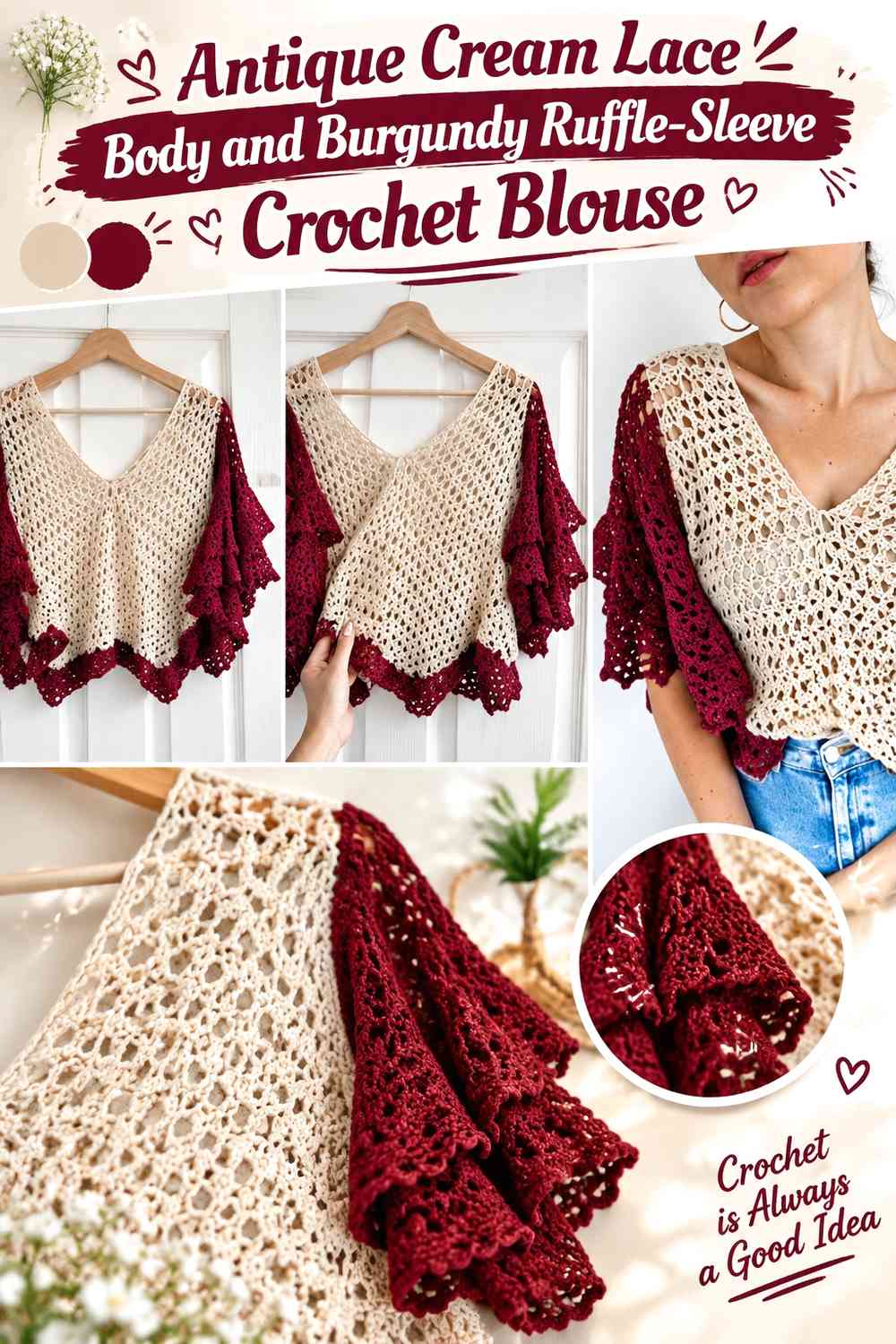
Use Antique Cream across most of the lace body and reserve Burgundy for ruffled sleeves or their outer edges. This reverses the heavier Victorian palette and makes the sleeve treatment the darkest area.
Antique Cream Keeps the Crochet Lace Bodice Light and Continuous
An uninterrupted Antique Cream body lets openwork provide the surface pattern. Frequent Burgundy stripes across the torso could compete with the lace openings and make the blouse appear more segmented.
Instead, keep Burgundy near areas that already have a different construction or silhouette.
Burgundy Gives Antique Cream Ruffle Sleeves More Visual Weight
Burgundy can define the outer part of a ruffled sleeve and make the sleeve shape easier to see against the light bodice.
If a full Burgundy ruffle feels too dominant, move the dark shade to the final edge while retaining Antique Cream through most of the sleeve.
Creator Credit: MIGAIA
5. Burgundy Vintage Bell-Sleeve and Antique Cream Cuff Crochet Blouse
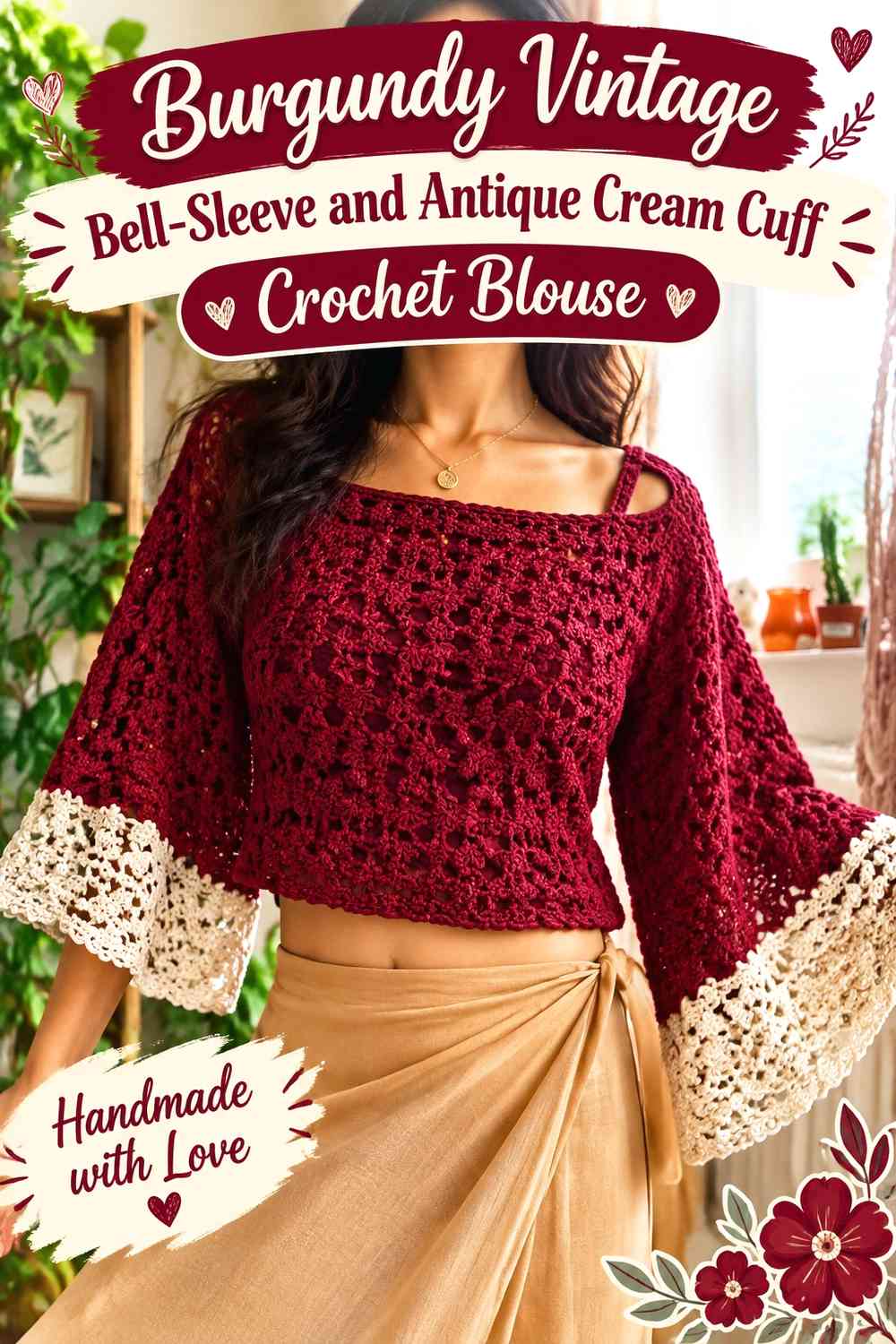
A bell-sleeve construction provides more room for Burgundy than a narrow sleeve does. Keep the sleeve and body primarily dark, then let Antique Cream mark the flared lower edge for a controlled Victorian-inspired finish.
Burgundy Should Carry the Main Vintage Crochet Sleeve
Use Burgundy continuously from the upper sleeve into most of the flare when the silhouette is the main attraction. Multiple color bands can interrupt the long visual line of a bell sleeve.
The deep field also gives Antique Cream a strong background when it finally appears near the wrist.
Antique Cream Can Define the Final Burgundy Bell-Sleeve Flare
Place Antique Cream at the widest lower section or around the final cuff edge. The pale color makes the flare more obvious without changing the entire sleeve.
Echo Antique Cream at the neckline if the cuffs otherwise look disconnected from the blouse body.
Creator Credit: MayaLunaCorazon DIY CROCHET & BUSINESS
6. Antique Cream Openwork and Burgundy Collar Crochet Blouse
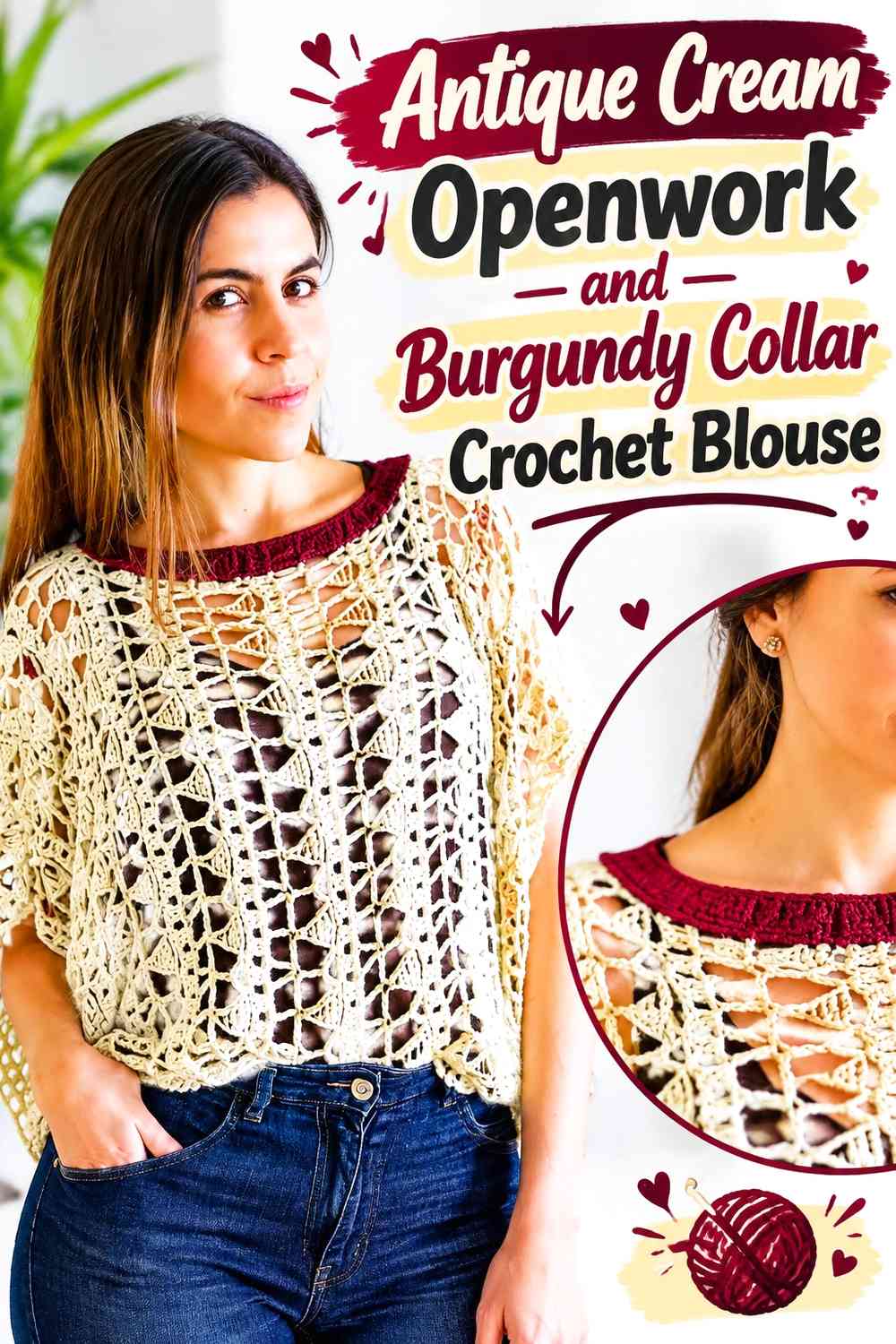
A loose lace or openwork blouse can remain mostly Antique Cream while Burgundy forms a stronger neckline or collar treatment. This keeps the broad fabric light and makes the upper edge easier to distinguish.
Antique Cream Lets the Openwork Crochet Blouse Stay Uninterrupted
Large lace sections already create a pattern through open and solid areas. Keeping Antique Cream continuous lets that texture remain visible without adding another competing stripe sequence.
Consider the color of the layer worn underneath as well, because it will show through the openwork and affect how Antique Cream appears.
Burgundy Frames the Antique Cream Neckline
Use Burgundy around a collar or neckline when you want a distinct boundary between the blouse and the skin or underlayer.
A dark collar has strong visual weight, so it may need only a small repeat at the sleeve cuffs or hem to connect it to the rest of the garment.
Creator Credit: Ahuyama Crochet
7. Burgundy Tie-Front and Antique Cream Bell-Ruffle Crochet Blouse
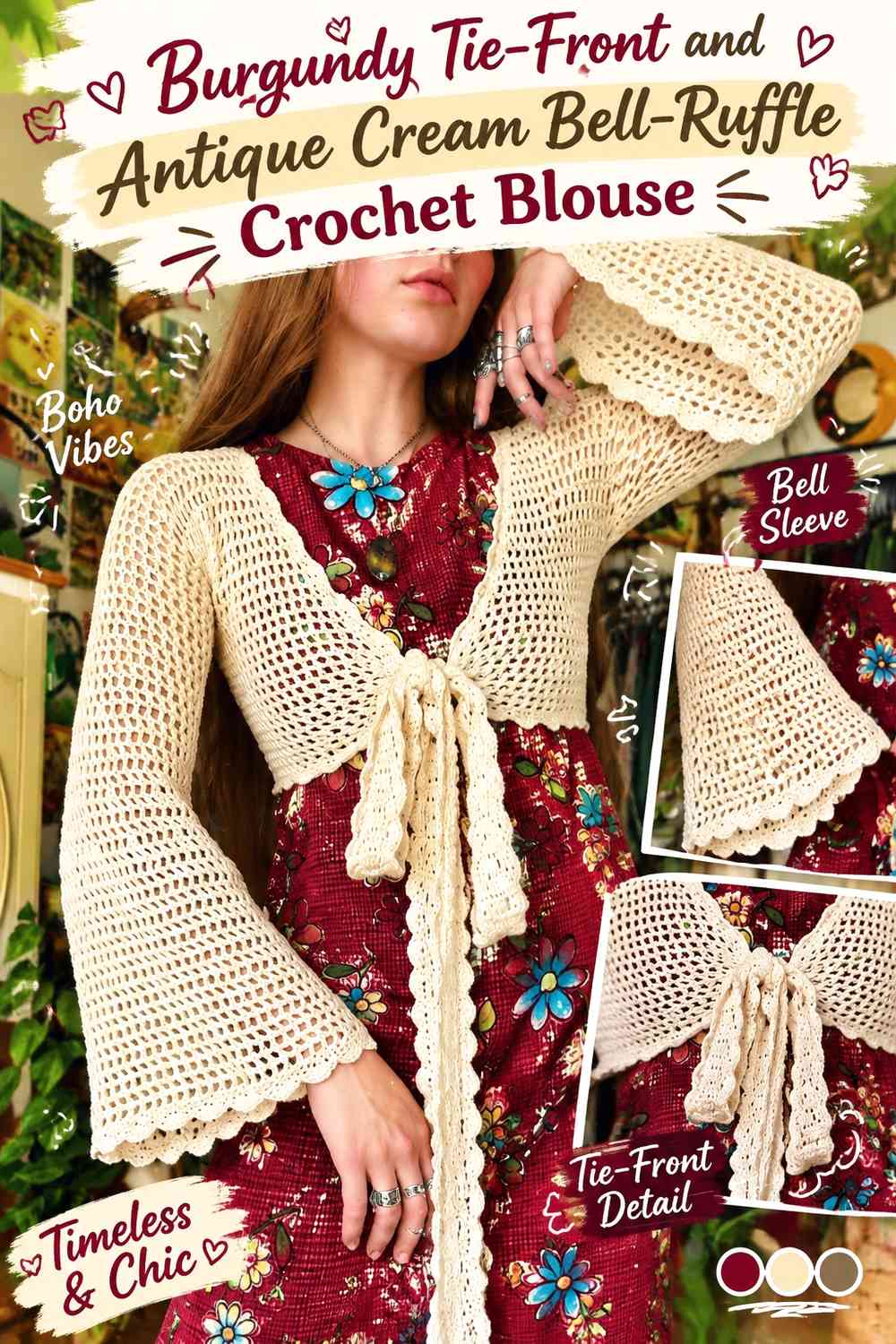
This version uses Burgundy around the body and tie-front area while Antique Cream is concentrated toward the sleeve flare. The central dark closure and pale outer sleeves create two different focal zones without covering the entire garment in stripes.
Burgundy Keeps the Crochet Tie Front Connected to the Bodice
Work the tie or front-edge area in the same Burgundy as the bodice if you want the closure to feel integrated rather than decorative.
That leaves Antique Cream available for the larger sleeve detail, where its lighter value will have more impact.
Antique Cream Can Soften a Burgundy Bell-Sleeve Edge
Use Antique Cream toward the lower sleeve or in a final ruffled section. The change from dark Burgundy to pale cream emphasizes the sleeve’s widening silhouette.
If the transition looks abrupt, add a small Antique Cream neckline repeat instead of inserting additional bands through the entire sleeve.
Creator Credit: Hannah Drapinski
8. Antique Cream Wrap Front and Burgundy Bell-Sleeve Crochet Blouse
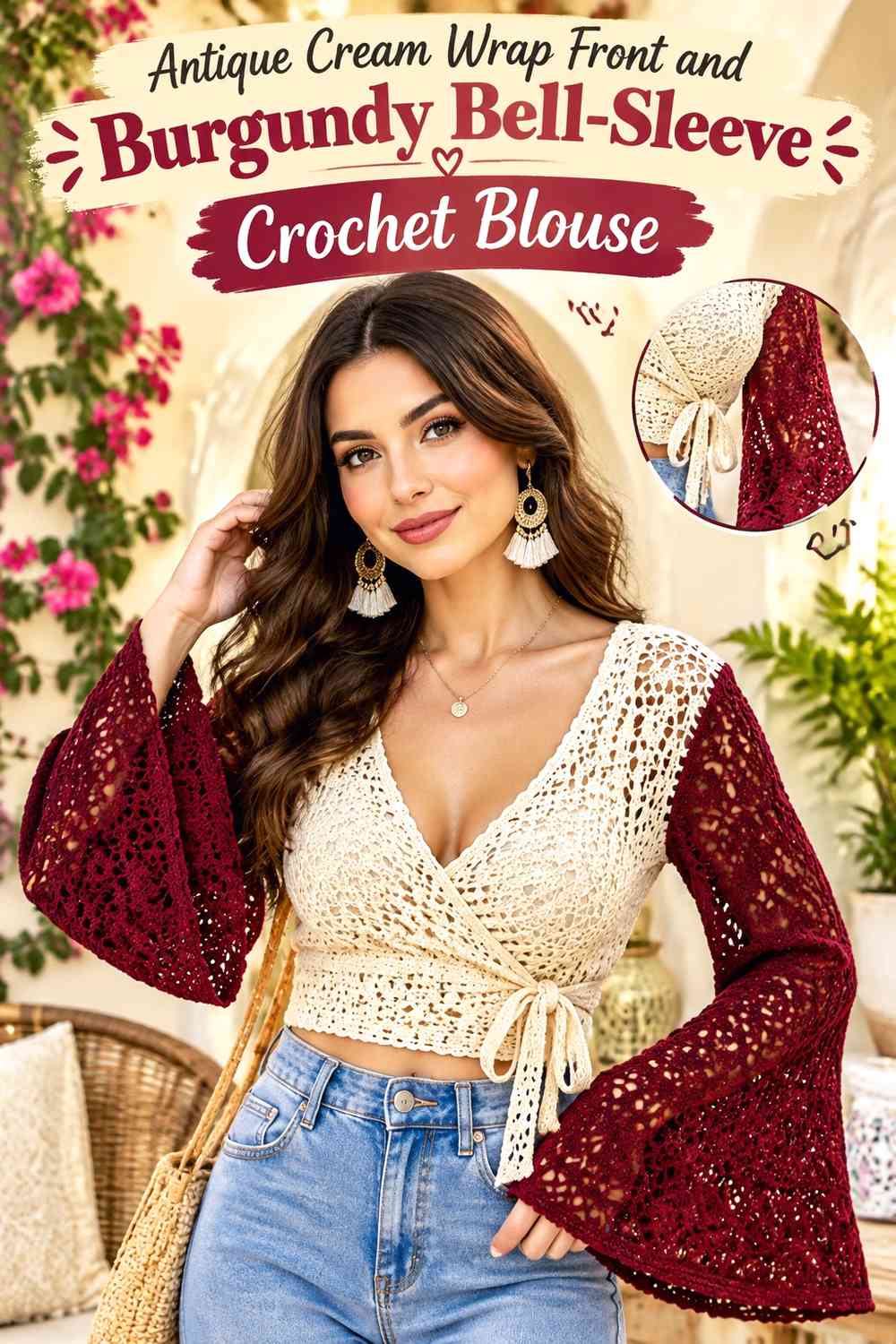
A wrap-style front creates a diagonal neckline, giving Burgundy a useful line to emphasize. Keep most of the overlapping body Antique Cream and move Burgundy into the wrap border and lower bell sleeves.
Antique Cream Keeps the Crochet Wrap Panels Visually Soft
Using Antique Cream across both overlapping front areas prevents the wrap itself from becoming overly busy. The diagonal opening already adds a strong line to the blouse.
This pale base also gives Burgundy edging enough contrast to outline the crossover clearly.
Burgundy Can Connect the Antique Cream Wrap Edge to the Bell Sleeves
Repeat Burgundy around the wrap neckline and again toward the sleeves. That links the front detail to the sides of the garment rather than concentrating all of the dark color in one place.
Keep the Burgundy sleeve area controlled if the wrap border is already substantial.
Creator Credit: Muchacha Ganchillo
9. Burgundy Cropped Bodice and Antique Cream Bell-Sleeve Crochet Blouse
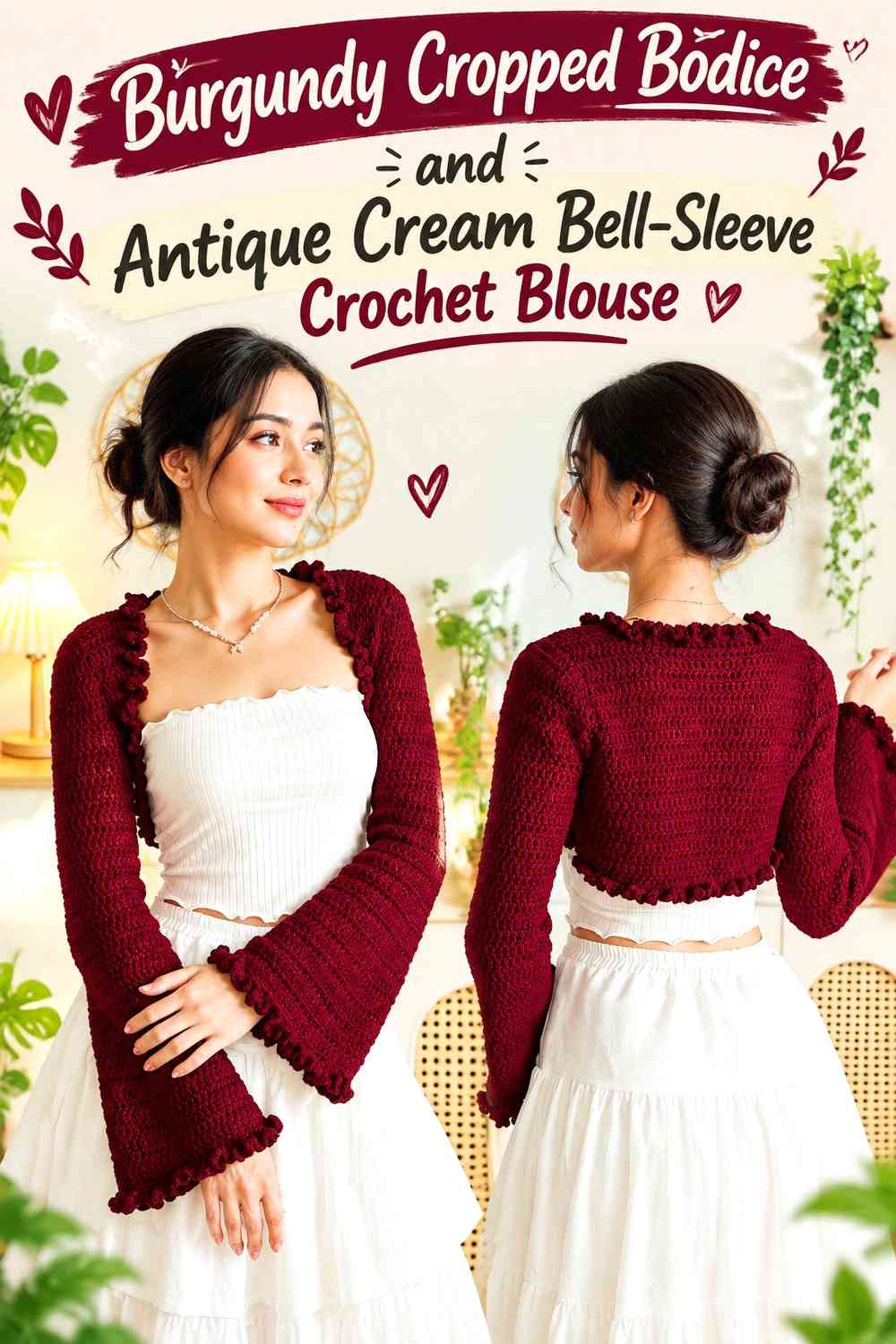
A shorter blouse offers less torso area, so the sleeves can carry more of the palette. Make Burgundy the compact center and let Antique Cream occupy much of the flared sleeve.
Burgundy Gives the Short Crochet Bodice a Strong Center
Keep the cropped torso Burgundy so the body reads as one clear block rather than a collection of small color sections.
This provides enough visual weight to balance pale sleeves that may occupy substantially more width than the body.
Antique Cream Can Make Burgundy Bell Sleeves Feel Lighter
Begin Antique Cream after the upper sleeve or use it throughout most of the flare. The lighter value distinguishes the sleeve volume from the dark body.
Check both sleeves together before finalizing the distribution; uneven amounts of Antique Cream can make one side appear visually heavier.
Creator Credit: Chenda DIY
10. Antique Cream Decorative Body and Burgundy Ruffle-Edge Crochet Blouse

This blouse direction keeps Antique Cream across most of the garment and uses Burgundy only where the silhouette needs definition. On a decorative or textured top, a dark final edge can be more effective than several internal color changes.
Antique Cream Lets Decorative Crochet Texture Remain the Main Feature
Use Antique Cream through the torso and sleeves if the stitchwork already contains visible texture. A single body color prevents the surface pattern from competing with Burgundy striping.
This is particularly useful for a blouse intended to feel pale and ornamental rather than dark and dramatic.
Burgundy Can Outline Antique Cream Ruffles Without Filling Them
Instead of making an entire ruffle Burgundy, use the darker shade only along the final edge. This produces a fine outline that follows every curve in the ruffle.
Repeat the same idea at the sleeve or neckline if one isolated dark edge feels unfinished.
Creator Credit: ChaoticCurl Crafts
11. Burgundy Floral Lace and Antique Cream Bell-Sleeve Crochet Blouse
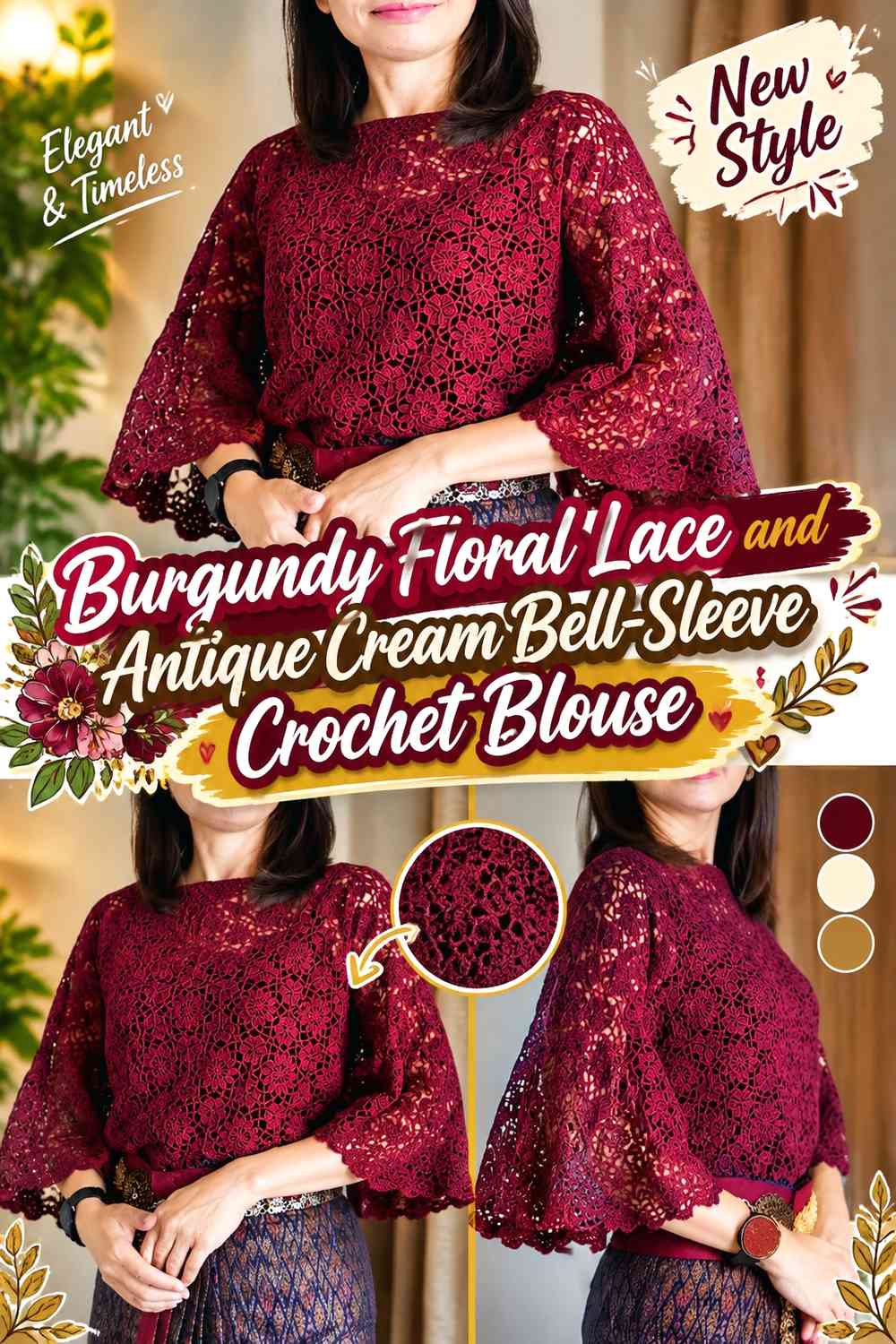
Floral crochet introduces another layer of detail, so the palette needs restraint. Burgundy can define flower centers or larger motif areas while Antique Cream connects the motifs and expands into the bell sleeves.
Burgundy Gives Antique Cream Floral Crochet Clear Focal Points
Place Burgundy consistently in a repeated part of the floral design rather than changing its position from motif to motif. Repetition makes the blouse look planned and keeps the flowers easy to identify.
Before producing many motifs, arrange several together to see whether Burgundy becomes heavier than expected through repetition.
Antique Cream Keeps Burgundy Floral Motifs From Merging
Use Antique Cream between darker motif areas and through the sleeve flare. The pale space separates Burgundy flowers and prevents adjacent motifs from forming one dense dark field.
This is especially helpful where several motifs meet around the upper body or sleeves.
Creator Credit: Crochet by Somjit
12. Antique Cream Granny Lace and Burgundy Victorian Trim Crochet Blouse
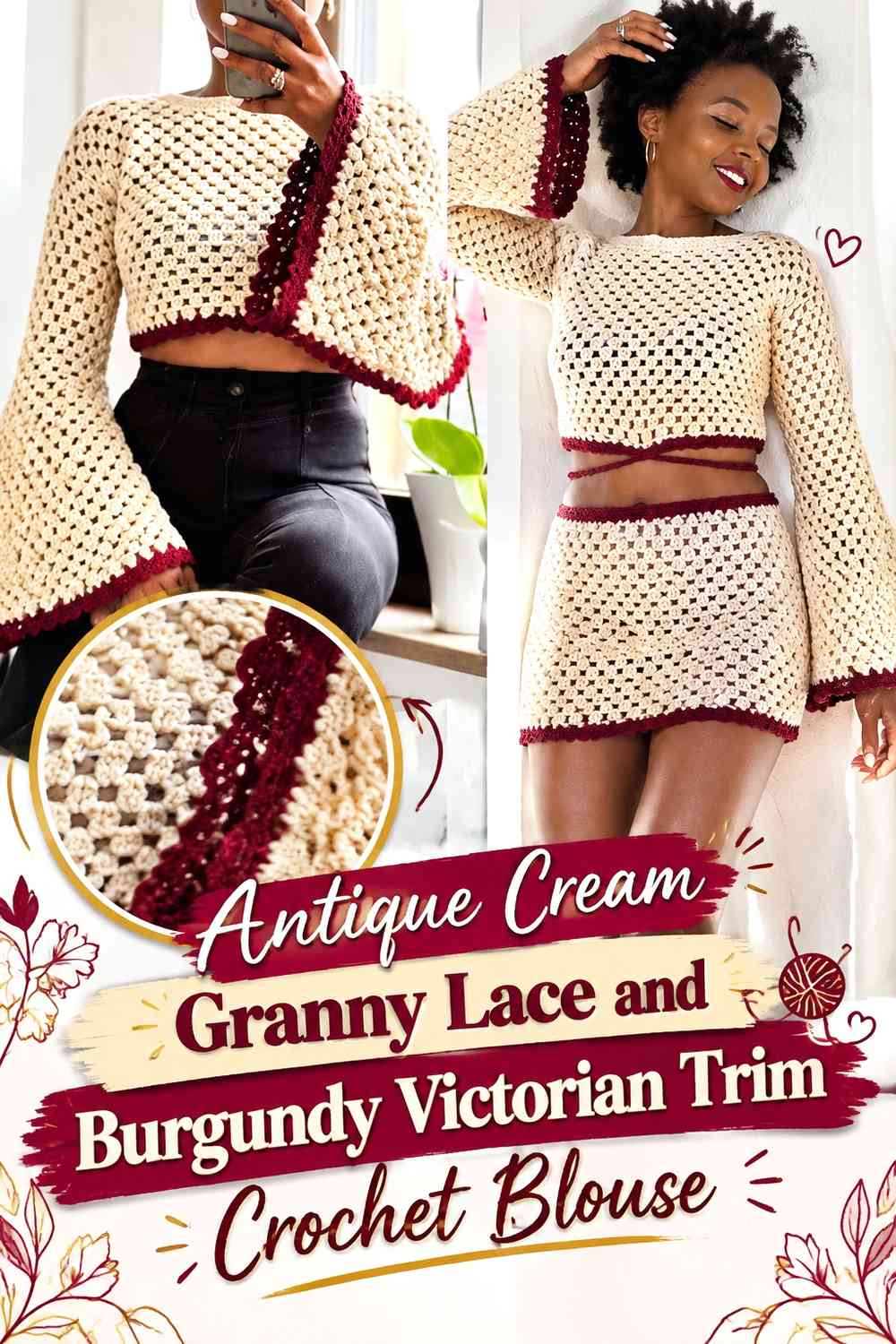
Granny-style openwork can take on a more Victorian-inspired direction when the color plan is restrained. Keep the stitch field Antique Cream and use Burgundy around selected outer edges rather than turning the blouse into multicolor patchwork.
Antique Cream Keeps the Granny Crochet Blouse Cohesive
Work most of the granny-style surface in Antique Cream so the clusters and spaces provide the texture.
This gives the blouse a quieter background that can support ruffles, bell sleeves, or other decorative Victorian-inspired details without introducing extra colors.
Burgundy Trim Can Give Antique Cream Granny Lace a Formal Border
Use Burgundy around cuffs, neckline, or the lower blouse edge to create a darker frame around the pale openwork.
Avoid outlining every cluster individually unless a stronger graphic effect is intentional. A few larger Burgundy boundaries are usually easier to read.
Creator Credit: AC Crochets
13. Burgundy Pullover Body and Antique Cream Ruffle-Cuff Crochet Blouse
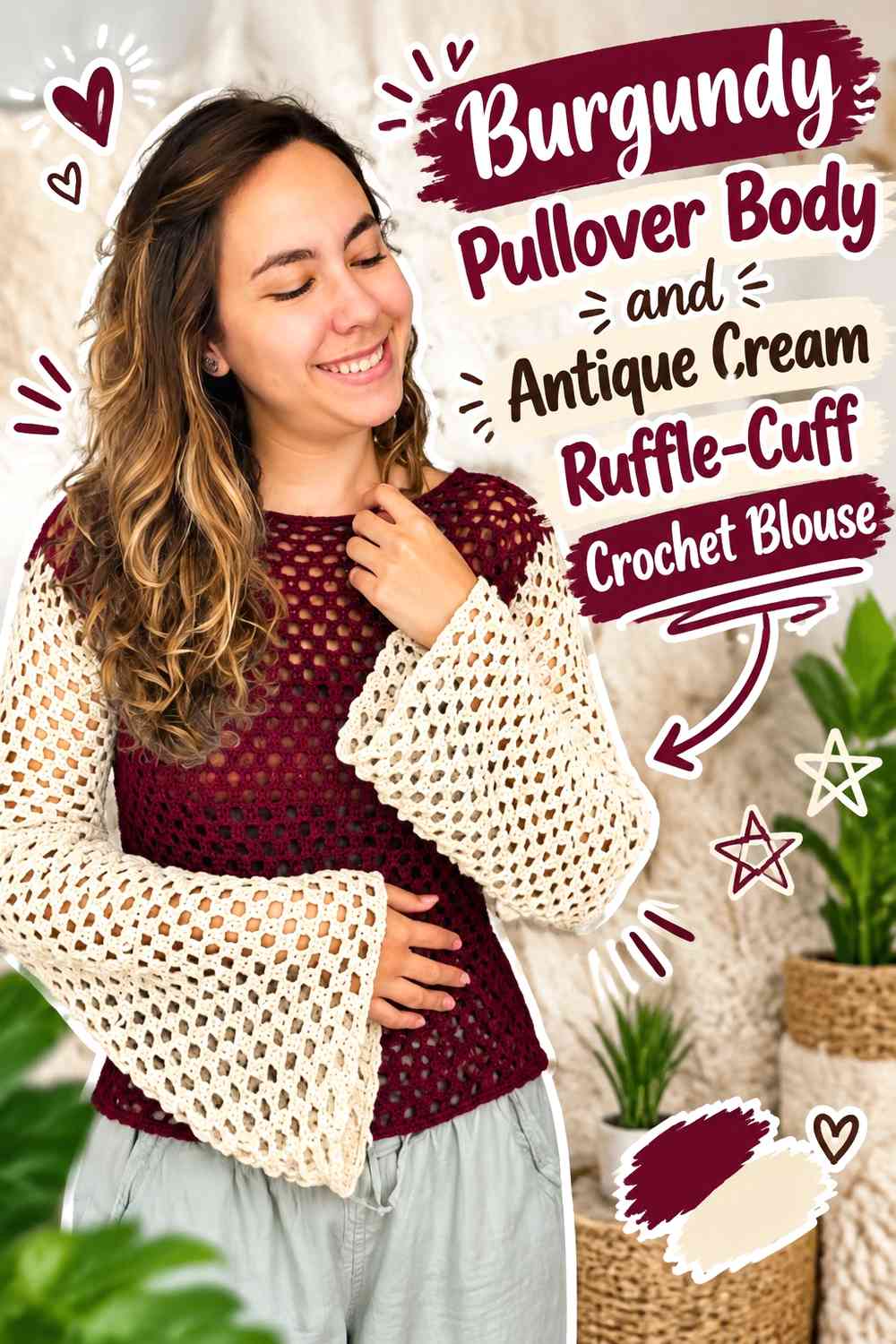
A closed pullover construction provides a broad central field for Burgundy. Antique Cream can then be used to transform simple sleeve endings into more decorative blouse cuffs.
Burgundy Keeps the Pullover Crochet Blouse Visually Unified
Carry Burgundy across most of the front and back rather than inserting frequent Antique Cream bands. A continuous torso makes the blouse feel more structured and leaves visual space for ornate cuffs.
If you also want cream at the neckline, keep it narrower than the sleeve treatment.
Antique Cream Ruffle Cuffs Add Contrast to Burgundy Sleeves
Use Antique Cream where the sleeves end and let the pale section become a deliberate cuff or ruffled finish.
Because both wrists repeat the same light area, the accent already has built-in balance. Only a small Antique Cream neckline detail may be needed elsewhere.
Creator Credit: Yarnmaide
14. Antique Cream Puff-Sleeve and Burgundy Collar Crochet Blouse
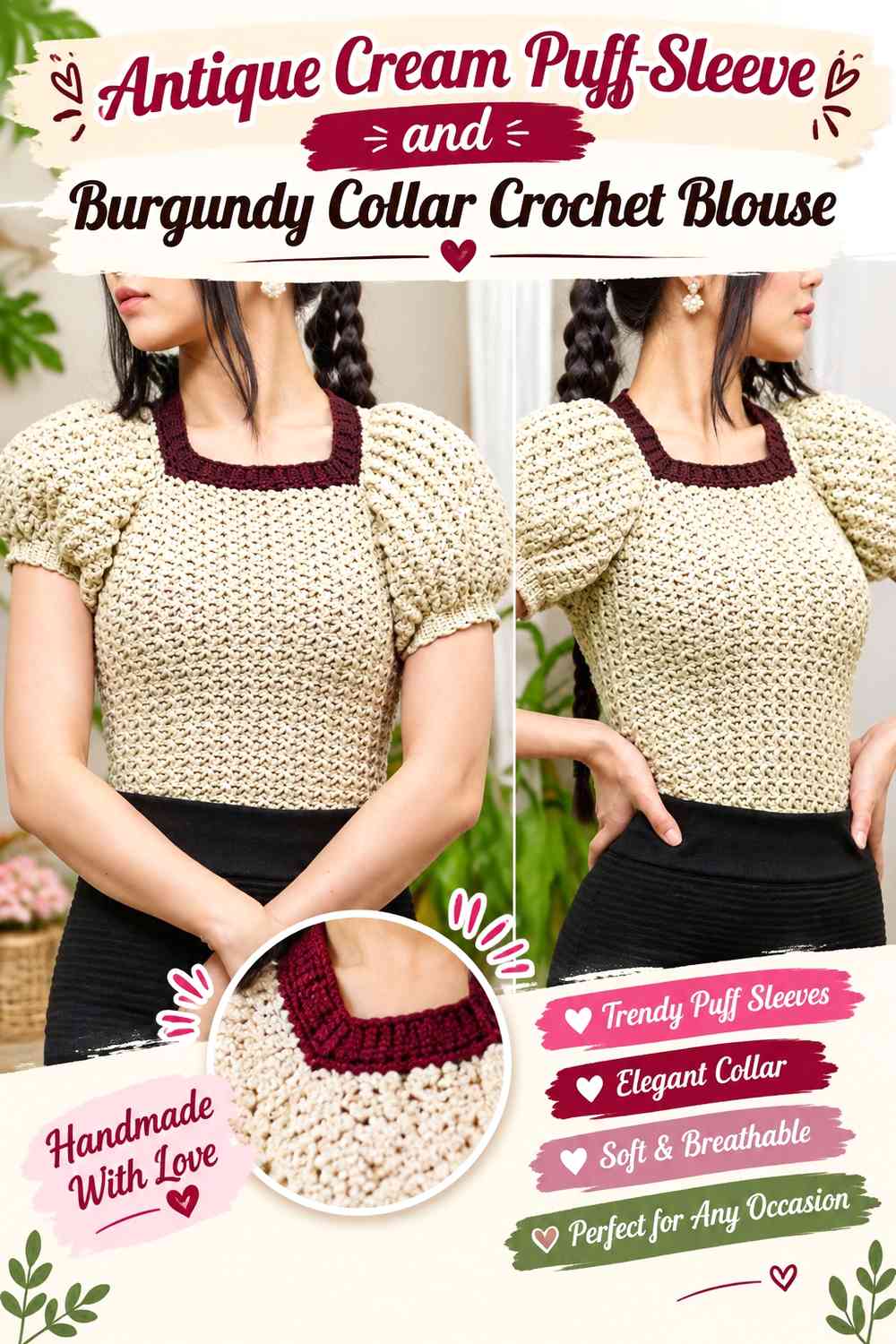
Puff sleeves add volume near the shoulders, so keeping them Antique Cream can prevent the upper blouse from becoming visually too dark. Burgundy can instead define the neckline, collar, and perhaps a smaller cuff detail.
Antique Cream Keeps Puff-Sleeve Volume Visually Light
Use Antique Cream across the puffed part of the sleeve rather than dividing it into several Burgundy bands. The sleeve shape already creates enough visual movement.
A pale sleeve also allows a dark collar to remain the strongest upper-body line.
Burgundy Can Anchor the Antique Cream Puff-Sleeve Blouse at the Neckline
Place Burgundy around the collar or upper neckline so the blouse has a clear central frame.
If the collar is wide or highly decorative, use less Burgundy at the cuffs. Otherwise the upper body can accumulate too many equally strong dark accents.
Creator Credit: TCDDIY
15. Burgundy Relaxed Body and Antique Cream Bell-Cuff Crochet Blouse
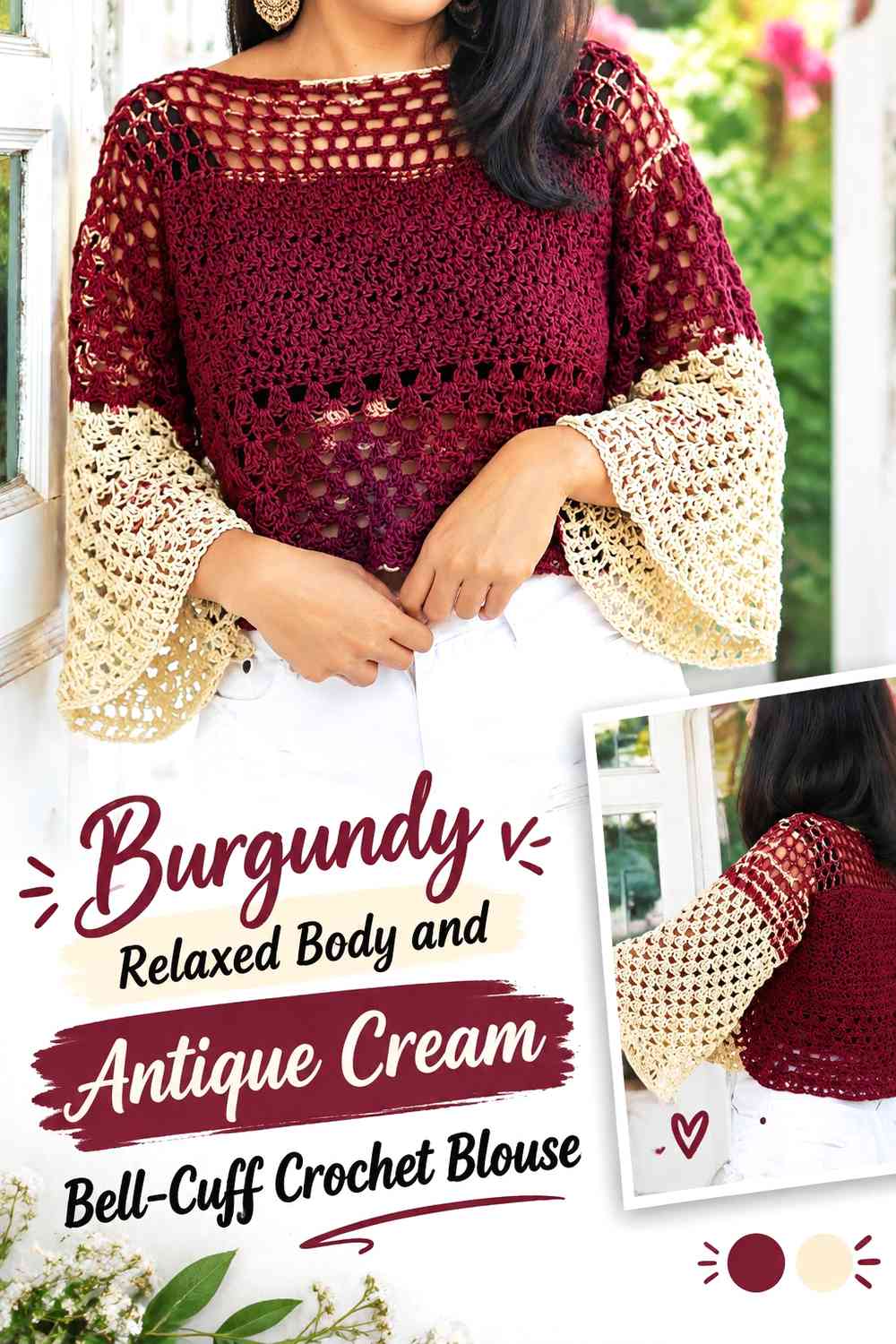
A straighter or more relaxed blouse body gives Burgundy plenty of uninterrupted surface. Antique Cream can concentrate attention at the widened sleeve ends and create a decorative finish without changing the relaxed torso.
Burgundy Works Well Across a Relaxed Crochet Blouse Shape
Keep Burgundy continuous through the body if the construction has a straighter silhouette. The dark field makes the blouse feel cohesive and allows sleeve flare to become the main shape change.
A large pale torso panel is unnecessary when the cuffs already provide noticeable contrast.
Antique Cream Bell Cuffs Can Break Up Long Burgundy Sleeves
Use Antique Cream at the lower flare to create a clear transition after a long Burgundy sleeve.
If you want a more elaborate Victorian direction, repeat Antique Cream around the neckline rather than introducing a third or fourth color.
Creator Credit: Jennyandteddy crochet.
16. Antique Cream Mesh and Burgundy Tie-Front Crochet Blouse
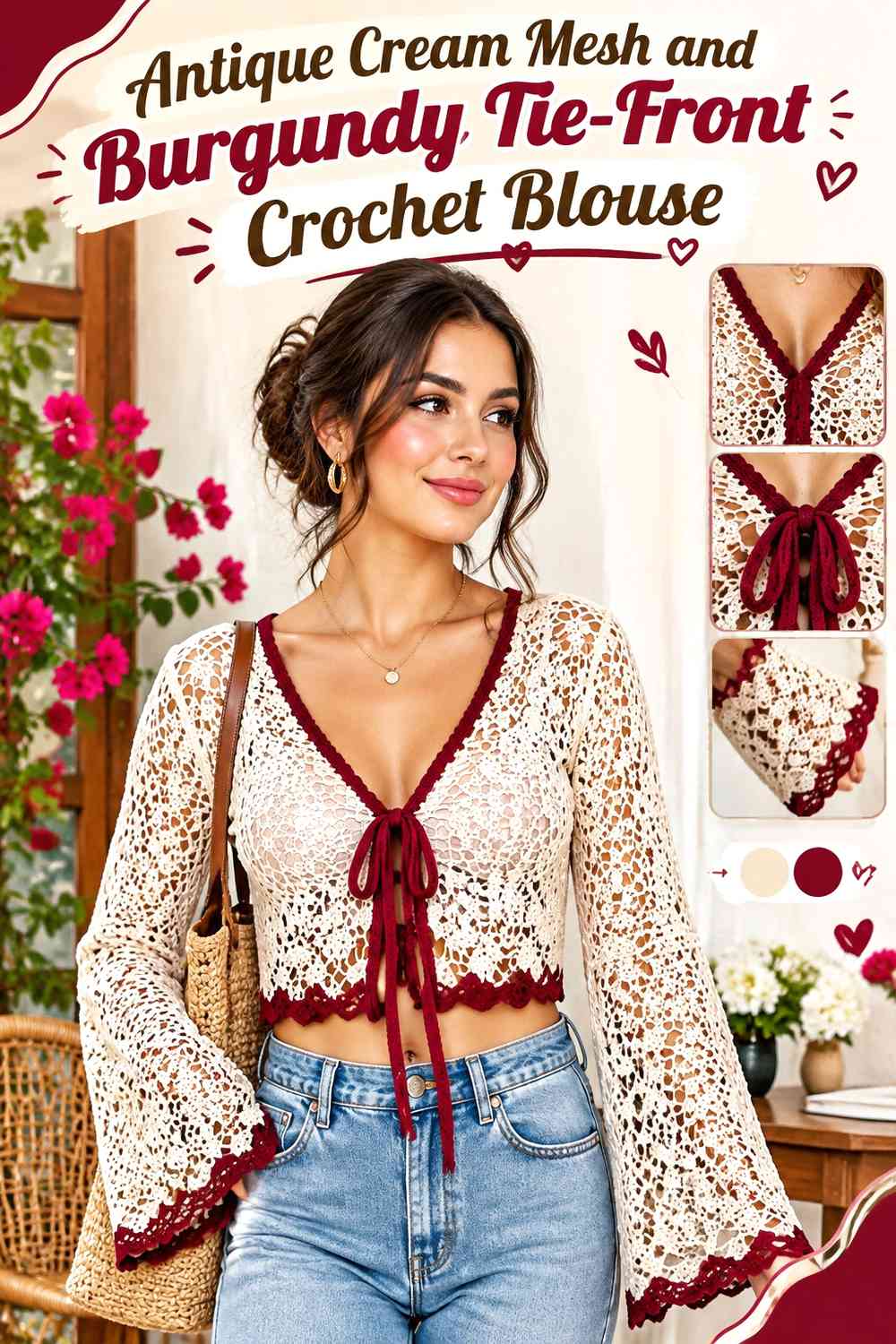
For the lightest and most open blouse in the collection, use Antique Cream through the mesh body and sleeves while Burgundy defines the front ties and selected edges. The open fabric keeps the pale body visually delicate, while the darker front detail gives the blouse a clear center.
Antique Cream Keeps the Mesh Crochet Blouse Airy
Allow Antique Cream to dominate the mesh rather than alternating colors through every opening. The garment will already change visually depending on the layer worn underneath.
A simple color field also prevents the open stitch pattern from becoming overly busy.
Burgundy Makes the Antique Cream Tie Front Easy to See
Use Burgundy for ties, narrow front edges, or another central finishing element. Against Antique Cream, even a relatively small dark section will remain noticeable.
Repeat Burgundy once at the cuffs or sleeve edges if the front ties otherwise become the only dark feature.
Creator Credit: Priya Crochets
Comparing the Burgundy and Antique Cream Victorian Blouse Directions
For the darkest, most dramatic blouse, ideas 1, 3, 5, 7, 11, 13, and 15 give Burgundy the largest share of the garment. Antique Cream mainly highlights ruffles, sleeve edges, floral spaces, or cuffs.
For a lighter antique-lace direction, ideas 2, 4, 6, 8, 10, 12, 14, and 16 allow Antique Cream to dominate. Burgundy then becomes a framing shade around collars, wrap fronts, motifs, ties, or finishing edges.
If ruffles are the priority, ideas 1 through 4 provide the clearest starting points. Ideas 5, 7, 8, 9, 11, 12, and 15 shift more attention toward bell sleeves. Idea 14 emphasizes puffed sleeve volume, while idea 16 offers the most open layering direction.
Conclusion
Burgundy and Antique Cream work best on a Victorian-inspired crochet blouse when one shade establishes the garment and the other clarifies its ornament. A Burgundy-dominant blouse emphasizes the depth of the bodice and lets cream collars, cuffs, and ruffles stand forward. An Antique Cream-dominant blouse creates a lighter lace field and gives Burgundy edging, ties, or neckline details more authority.
For an ornate result, concentrate contrast where the blouse already changes shape: around a ruffled neckline, flared cuff, puff sleeve, yoke, wrap front, or floral motif. For a quieter interpretation, keep the body almost entirely one color and repeat the second shade only at two or three finishing points.
The linked tutorials provide the underlying blouse and top construction concepts. Use their original instructions for exact construction and sizing while treating the Burgundy and Antique Cream placements here as independent palette adaptations.
Frequently Asked Questions
Should Burgundy or Antique Cream dominate a Victorian crochet blouse?
Either can lead. Burgundy creates a darker central field and makes Antique Cream ruffles especially visible. Antique Cream produces a lighter lace-focused blouse and lets Burgundy collars, cuffs, ties, and borders become stronger accents.
Where should Antique Cream go on a mostly Burgundy ruffle blouse?
Antique Cream is particularly useful around a ruffled neckline, sleeve cuffs, yoke edges, lace inserts, or a narrow hem. Choose a few repeated locations rather than outlining every element.
Does Burgundy work well for a Victorian crochet collar?
Yes, especially on an Antique Cream blouse. Because Burgundy is much darker, a collar can become a strong focal point. Keep other Burgundy details smaller if you want the collar to remain the main dark feature.
How can I keep Burgundy and Antique Cream ruffles from looking too busy?
Avoid changing colors inside every small ruffle section. Let one shade cover most of the ruffle and use the other along its attachment area or final edge. This preserves the ruffle’s shape without turning it into multiple competing stripes.
Should Victorian-style crochet cuffs match the collar?
They can, but they do not have to use equal amounts of color. A wide Antique Cream collar can be paired with narrow cream cuffs on a Burgundy blouse, for example. Repeating the shade is usually enough to connect the areas.
How do I check whether Burgundy and Antique Cream have enough contrast?
Place the actual yarns together and view them from a distance. A grayscale photo is another useful check. Strong light-dark separation is particularly helpful for narrow borders, small floral motifs, and layered ruffles.
How can I substitute another color for Antique Cream?
Choose a light, softened neutral that remains clearly lighter than Burgundy. Preserving the contrast relationship is more important than matching a commercial shade name exactly. A much darker neutral could reduce the separation around lace, cuffs, and ruffles.