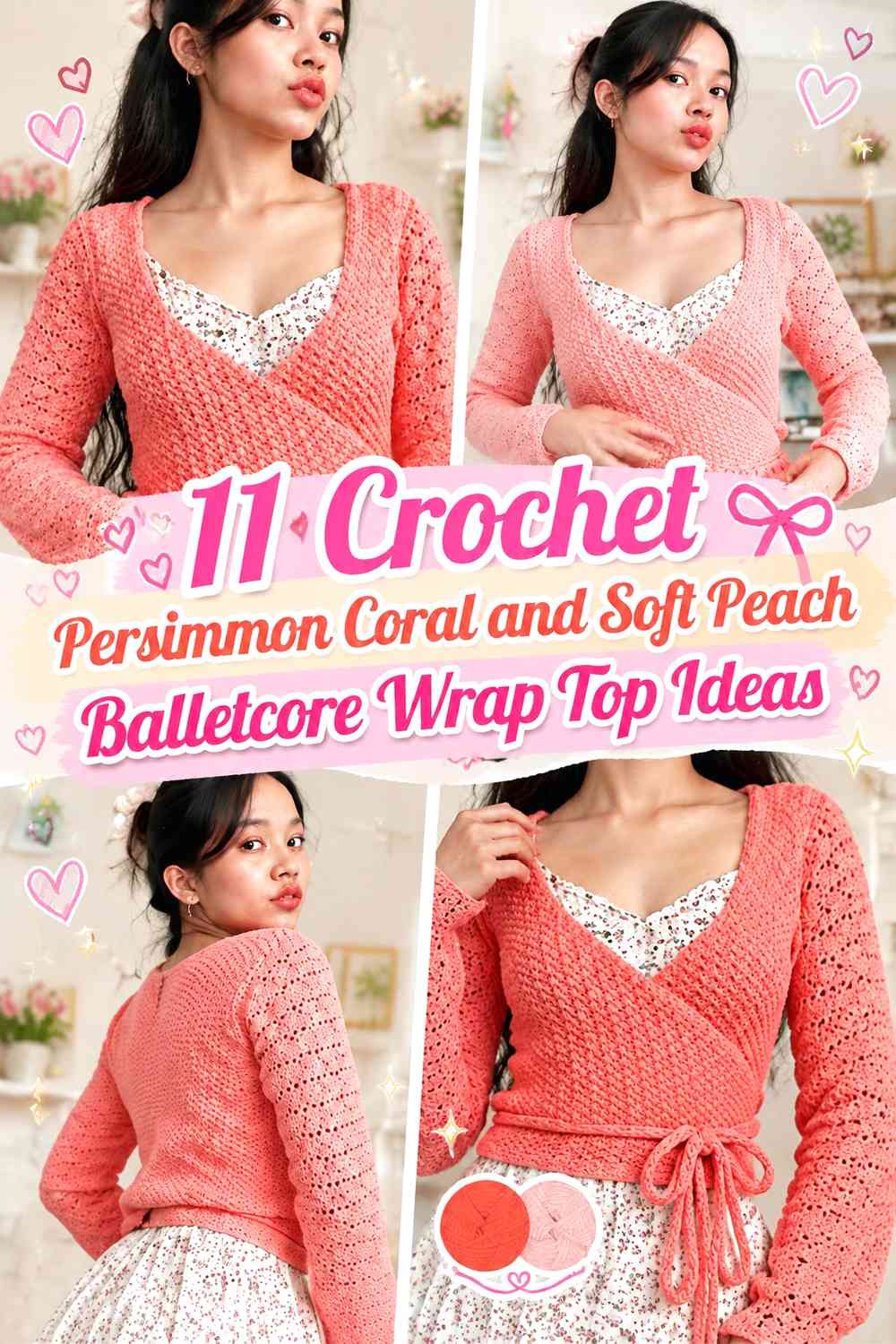

Persimmon Coral and Soft Peach give a crochet wrap top enough tonal variation to create a romantic balletcore look without depending on a large palette. Persimmon Coral can provide the stronger visual anchor across crossover panels, sleeves, or waist ties, while Soft Peach can lighten necklines, cuffs, bows, and narrow finishing bands.
The wrap construction makes color placement particularly noticeable. Two front panels overlap through the center of the body, ties extend beyond the main fabric, and a contrasting edge can trace the diagonal neckline from shoulder to waist. That means a relatively small amount of the supporting color can become an important part of the finished top.
These ideas use wrap tops, tie-front tops, cropped cardigans, and wrap-sweater tutorials as construction references. Not every source is specifically presented by its creator as a balletcore garment, and the Persimmon Coral and Soft Peach palettes below are independent color adaptations.
Quick List
- Persimmon Coral Crossover and Soft Peach Tie Crochet Balletcore Wrap Top
- Soft Peach Body and Persimmon Coral Edge Crochet Balletcore Wrap Top
- Persimmon Coral Sleeve and Soft Peach Crossover Crochet Balletcore Wrap Top
- Soft Peach Lace Body and Persimmon Coral Tie Crochet Balletcore Wrap Top
- Persimmon Coral Wrap Body and Soft Peach Cuff Crochet Balletcore Top
- Soft Peach Wrap Sweater and Persimmon Coral Waist-Band Crochet Balletcore Top
- Persimmon Coral Tie-Front and Soft Peach Bow Crochet Balletcore Wrap Top
- Soft Peach Openwork and Persimmon Coral Front-Edge Crochet Balletcore Wrap Top
- Persimmon Coral Lace Body and Soft Peach Ribbed-Edge Crochet Balletcore Wrap Top
- Soft Peach Floral Tie and Persimmon Coral Panel Crochet Balletcore Wrap Top
- Persimmon Coral Mesh and Soft Peach Tie-Edge Crochet Balletcore Wrap Top
Decide Whether Persimmon Coral or Soft Peach Should Lead the Wrap Front
The crossover front occupies more visual area than a narrow cuff or tie, so its color usually determines how the finished top reads. Persimmon Coral across both front panels creates a stronger, warmer center, while Soft Peach produces a lighter wrap with Coral acting as definition around the edges.
Consider the overlap as well. Where two crochet panels cross, the dominant color can appear visually denser because one section sits over another. If you want the center to stay lighter, Soft Peach can be useful there while Persimmon Coral moves toward the sleeves or finishing bands.
Use Soft Peach and Persimmon Coral to Clarify the Diagonal Neckline
A wrap top naturally creates diagonal lines, and contrasting edging can make those lines much more noticeable. Soft Peach around a Persimmon Coral front creates a gentle light border, while Coral around a Peach body gives the neckline stronger definition.
You do not need to outline every garment edge. If the crossover neckline is the main ballet-inspired feature, keeping the cuffs or hem quieter can stop the top from looking over-bordered.
Repeat Persimmon Coral or Soft Peach Through the Waist Ties
Waist ties may be narrow, but their length gives them considerable visual presence. If Soft Peach is used only in a long tie on an otherwise Coral top, it can look disconnected. Repeating Peach at the neckline or cuffs gives that tie color a clear relationship to the garment.
The same principle works in reverse. Persimmon Coral ties on a Soft Peach body can connect to a Coral front edge or sleeve finish without requiring large dark color blocks.
1. Persimmon Coral Crossover and Soft Peach Tie Crochet Balletcore Wrap Top
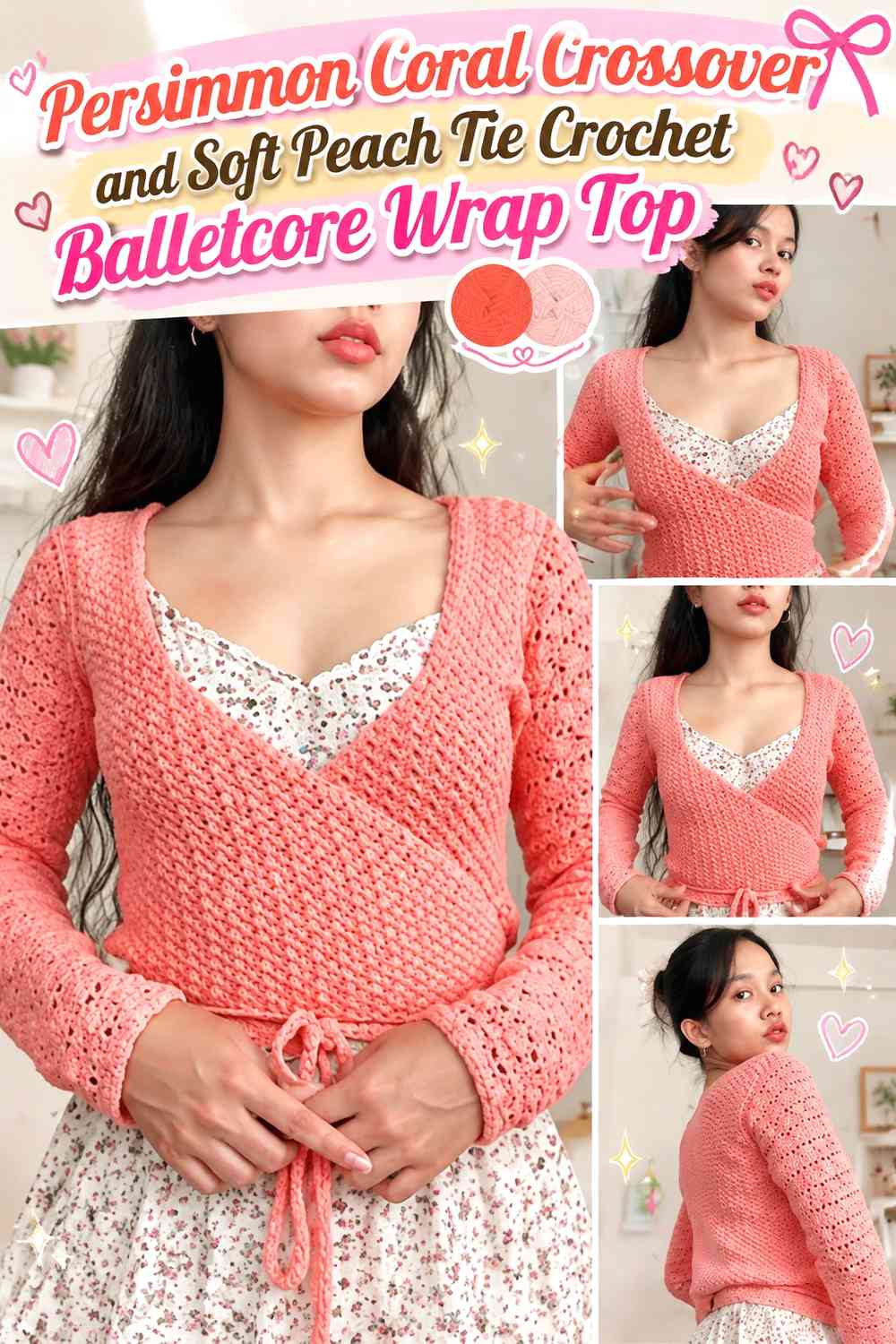
Let Persimmon Coral define the overlapping front panels and use Soft Peach around the ties and selected finishing details. The darker Coral center makes the crossover easy to read, while Peach introduces a lighter balletcore detail without splitting the main body into stripes.
Persimmon Coral Should Keep the Crochet Crossover Panels Continuous
Use Persimmon Coral through most of both overlapping fronts when you want the diagonal wrap shape to remain the central feature. Frequent Peach sections inside those panels can interrupt the line from shoulder to waist.
Keep any internal color changes limited enough that the viewer still notices the wrap construction before the color pattern.
Soft Peach Ties Can Lighten the Persimmon Coral Waist
Soft Peach works well on the long fastening ties because the pale color remains visible against a Coral body and can create a softer bow or knot at the waist.
Repeat a little Peach around the neckline or sleeve edge so the ties feel integrated rather than attached as a separate color element.
Creator Credit: Liyir
2. Soft Peach Body and Persimmon Coral Edge Crochet Balletcore Wrap Top
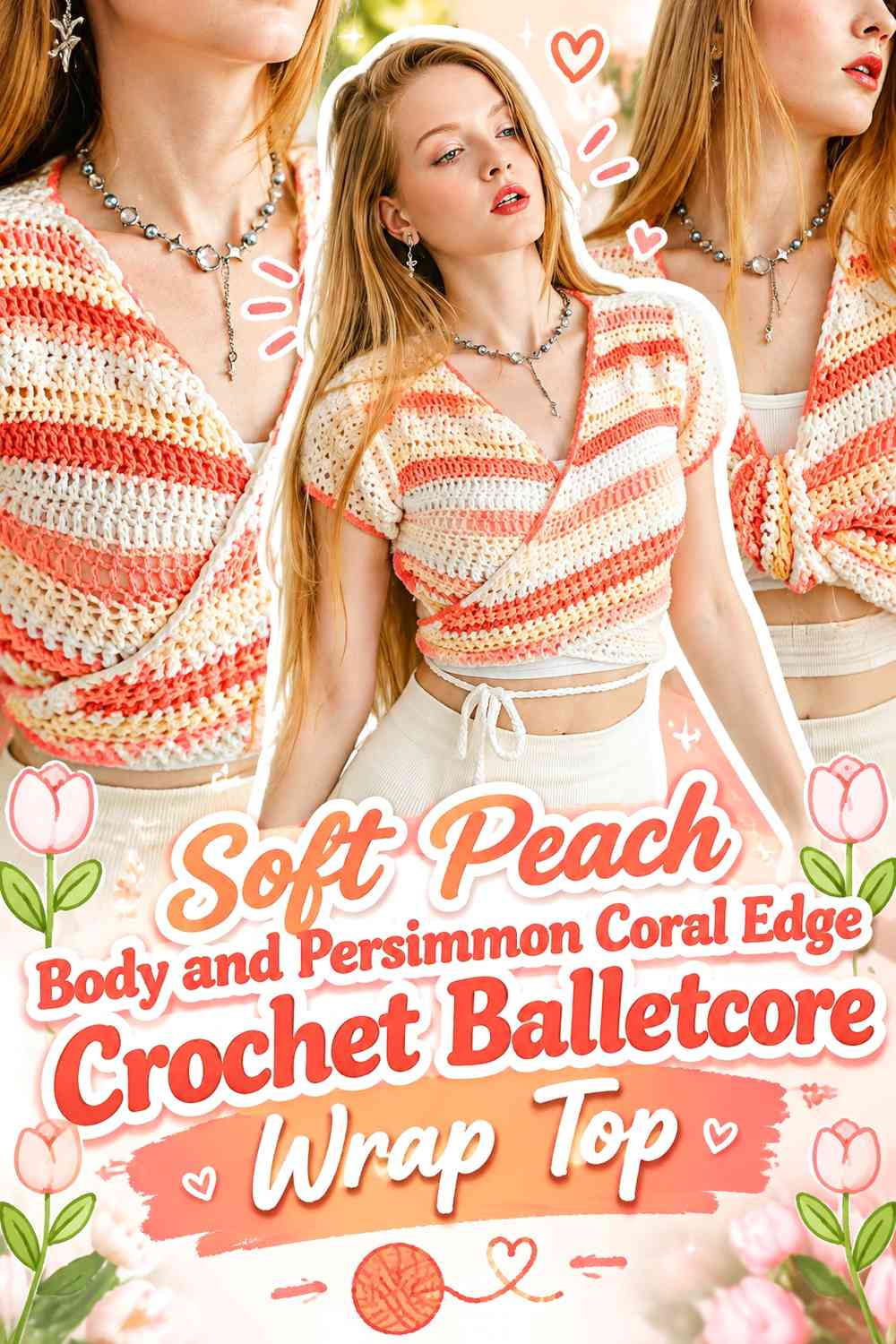
Make Soft Peach the main wrap color and concentrate Persimmon Coral around the crossover perimeter. This produces a lighter balletcore top while turning the darker shade into a precise outline around the front opening.
Soft Peach Keeps the Crochet Wrap Body Visually Light
Use Soft Peach across the back and larger front-panel areas when you want the garment to remain pale overall. The crossover itself already creates visual movement, so the body does not require frequent Coral stripes.
This also leaves enough quiet surface for a contrasting front edge to have a clear purpose.
Persimmon Coral Can Trace the Soft Peach Crossover
Apply Persimmon Coral along the diagonal front edges or another continuous finishing line. The stronger shade makes the wrap geometry easier to see against the pale body.
If the Coral edging becomes a substantial feature, keep the sleeve cuffs mostly Peach rather than creating another equally strong frame.
Creator Credit: WONDER NETTING
3. Persimmon Coral Sleeve and Soft Peach Crossover Crochet Balletcore Wrap Top
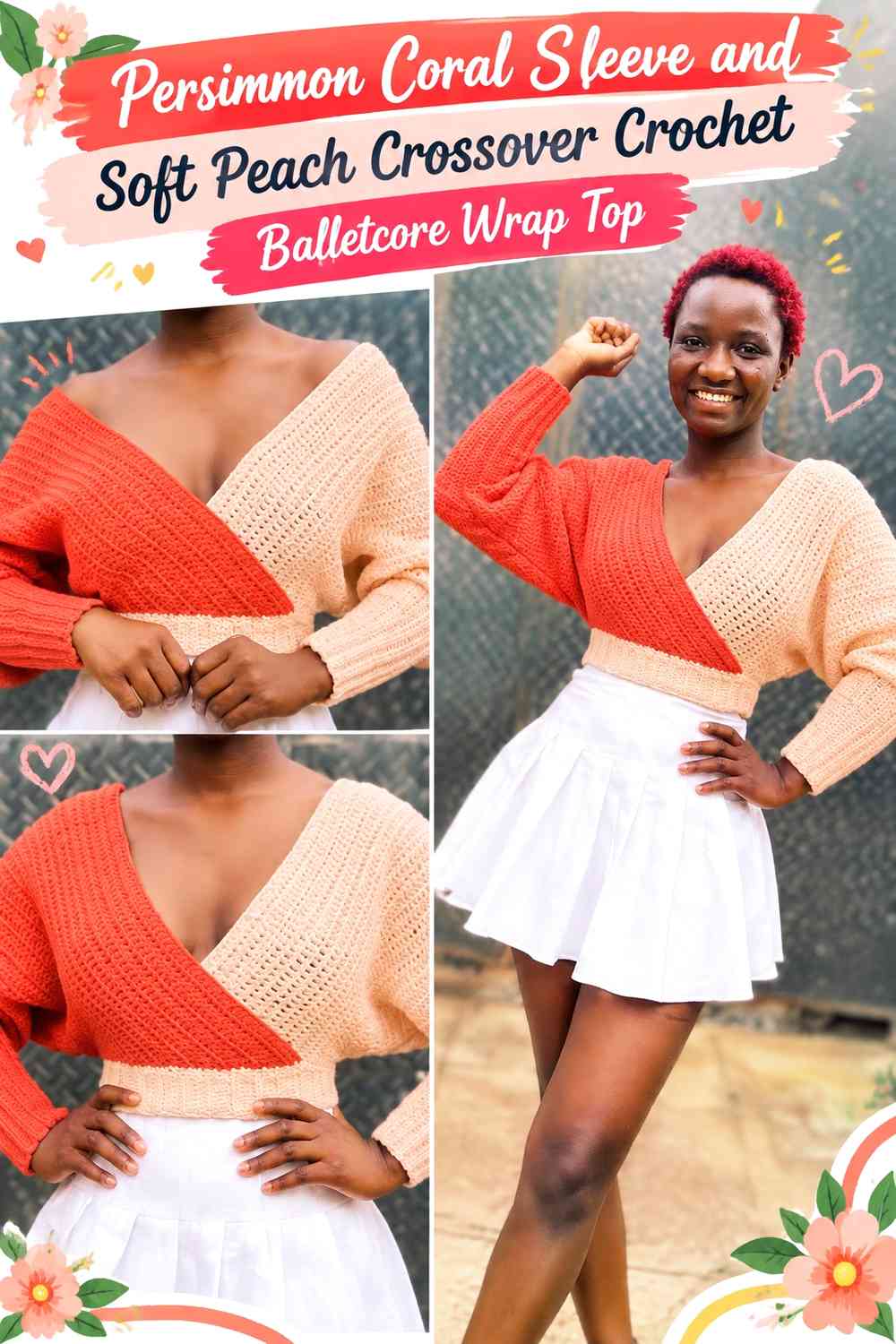
Shift the strongest color away from the torso by using Persimmon Coral across the sleeves and Soft Peach through most of the crossover body. This gives the arms more visual weight while maintaining a lighter center.
Soft Peach Lets the Crochet Crossover Remain the Lightest Area
Keep the two overlapping front sections predominantly Soft Peach so they form one connected pale field.
A small Coral line at the neckline can connect the body to the sleeves without changing the main Peach-led direction.
Persimmon Coral Sleeves Need a Soft Peach Repeat at the Cuffs
Long Coral sleeves can appear detached from a pale wrap body if the color changes abruptly at the shoulder. Soft Peach cuffs provide a simple way to bring the central body color back onto the arms.
The cuff does not need to be wide. Even a controlled Peach finish can visually reconnect the sleeve and torso.
Creator Credit: Kittie crochets
4. Soft Peach Lace Body and Persimmon Coral Tie Crochet Balletcore Wrap Top
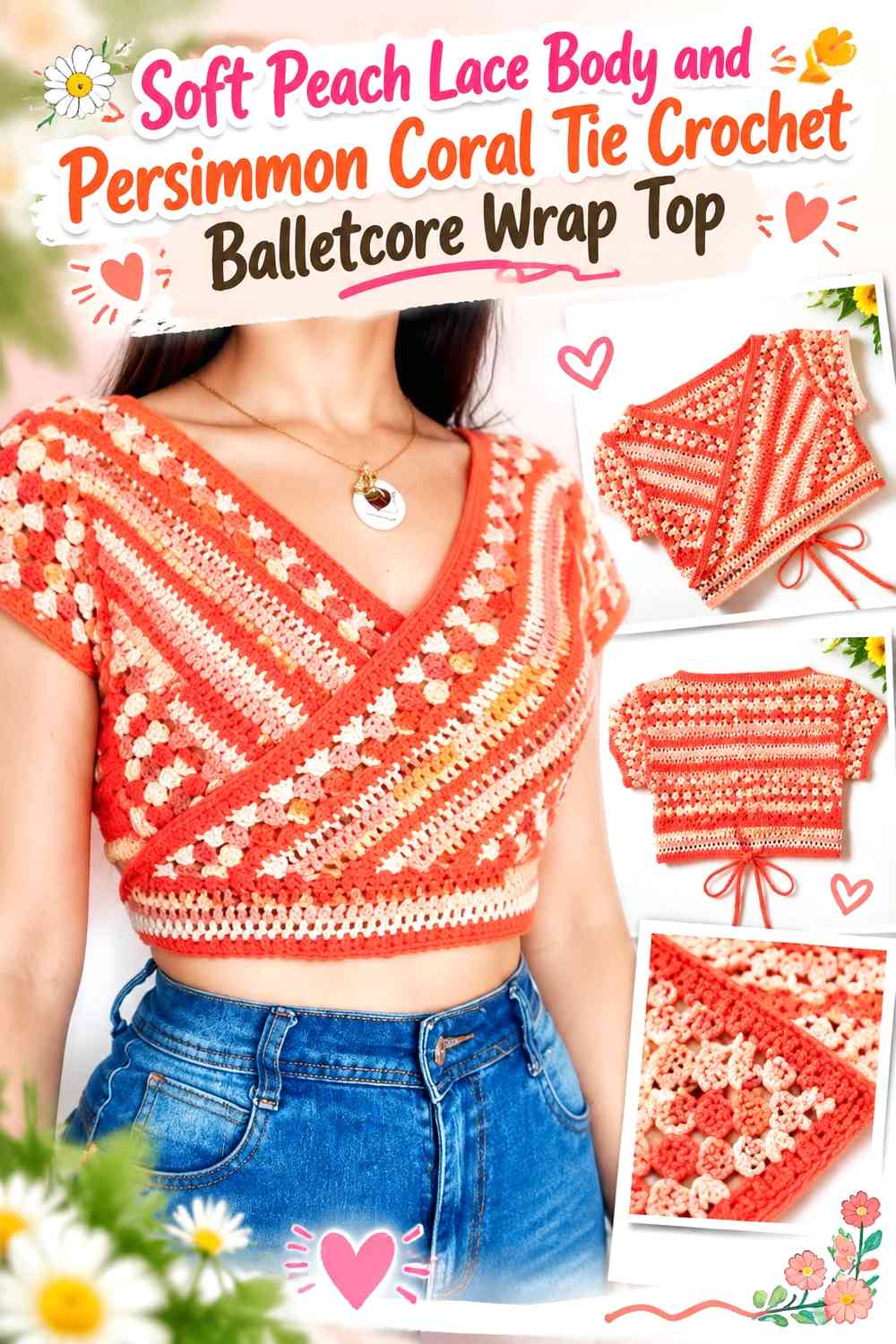
A lace-oriented wrap top can keep most openwork Soft Peach while using Persimmon Coral for the ties and narrow front details. This lets the stitch openings remain the main surface feature while Coral provides stronger accents at fastening points.
Soft Peach Allows Crochet Lace to Carry the Body Detail
Use Soft Peach consistently across the larger lace sections rather than changing colors inside every repeat. The openwork already creates enough visual variation through light and shadow.
If the top is worn over another layer, remember that the color underneath will also show through the lace and affect the final contrast.
Persimmon Coral Ties Can Anchor the Soft Peach Wrap Front
Coral ties create a clear fastening point against the paler body. Because they extend beyond the garment, they can provide enough dark contrast without requiring a large Coral panel.
Echo Persimmon Coral at the neckline or sleeve edge if the ties otherwise become the only strong-color feature.
Creator Credit: Ina Crochê Mania
5. Persimmon Coral Wrap Body and Soft Peach Cuff Crochet Balletcore Top
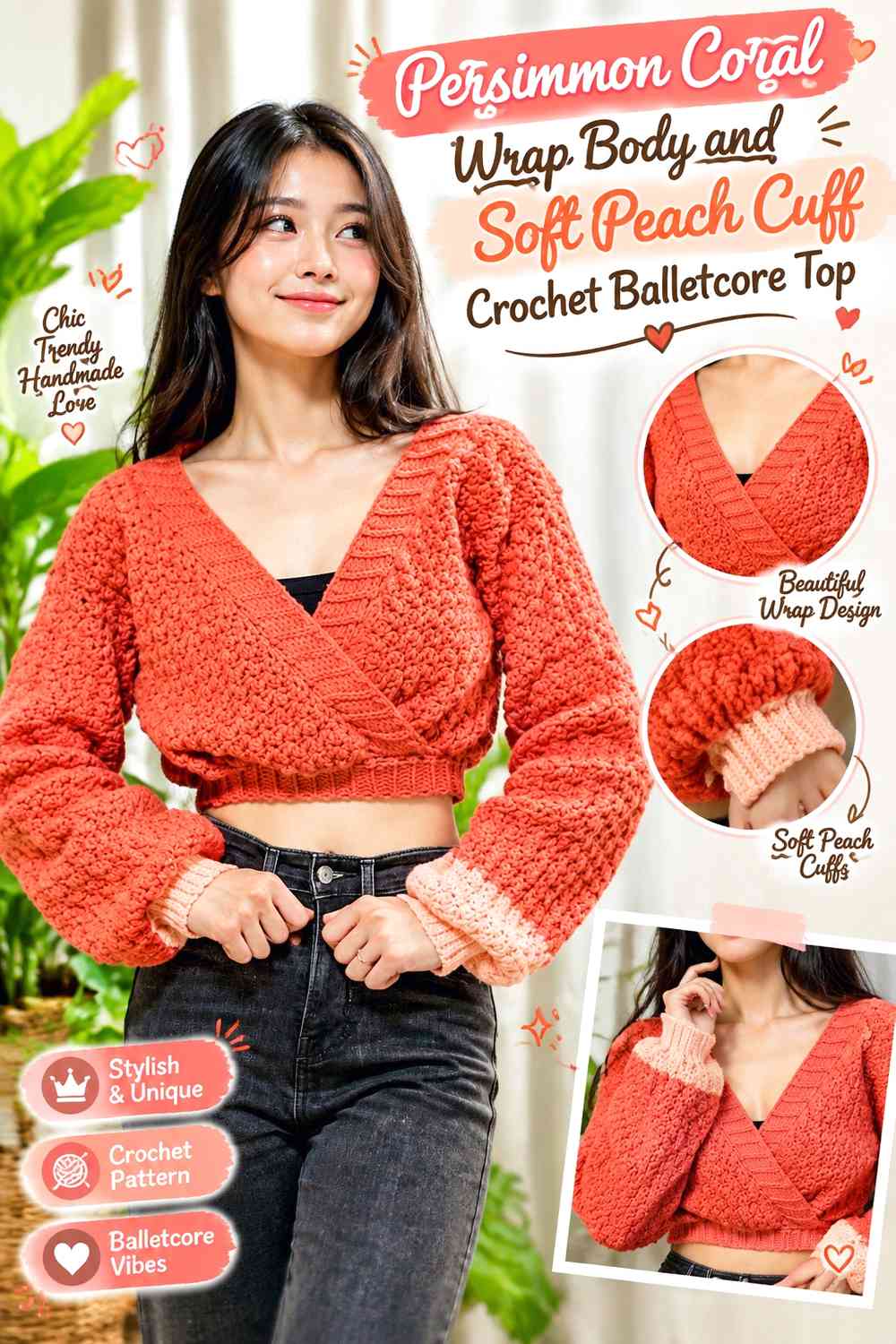
Let Persimmon Coral dominate a fuller wrap-sweater construction while Soft Peach appears at the cuffs and front finishing band. This is a richer interpretation of the palette, with Peach functioning primarily as a delicate finishing shade.
Persimmon Coral Gives the Crochet Wrap Body a Strong Center
Use Coral continuously through the substantial front and back areas so the garment does not become overly segmented.
A wrap top with larger panels already has strong diagonal construction lines, so a single body color allows those shapes to remain easy to understand.
Soft Peach Cuffs Can Soften Long Persimmon Coral Sleeves
Place Soft Peach at the wrist where the sleeve naturally ends. The lighter color creates a clear transition and can make a long Coral sleeve feel less visually heavy.
Repeat Peach along a narrow part of the wrap edge if you want the cuffs to relate more directly to the front.
Creator Credit: TCDDIY
6. Soft Peach Wrap Sweater and Persimmon Coral Waist-Band Crochet Balletcore Top
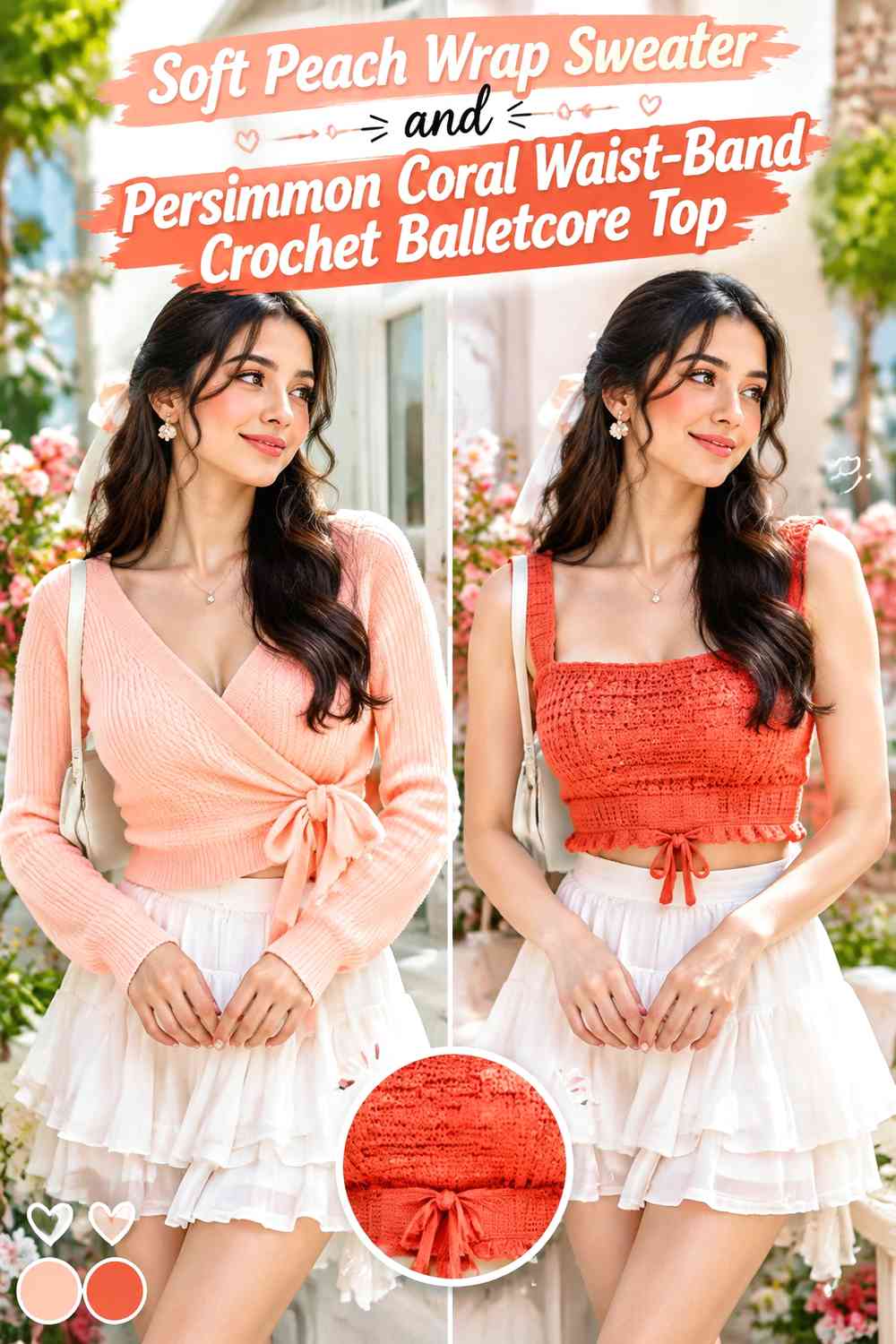
A Soft Peach wrap sweater provides a broad pale surface, leaving Persimmon Coral to define the waist and selected borders. This arrangement puts the strongest color where the overlapping fronts are secured.
Soft Peach Keeps the Crochet Wrap Panels Cohesive
Run Soft Peach through the main front, back, and sleeve areas when you want the wrap shape rather than color blocking to provide most of the structure.
The pale field also creates enough contrast for a relatively narrow Persimmon Coral waist treatment.
Persimmon Coral Can Ground the Soft Peach Waist
Use Coral along the waist band, tie area, or lower finishing edge. Placing the darker shade here creates a visual base beneath the crossover.
If the waist already carries a broad Coral section, use only a narrow Coral repeat around the neckline so the lower edge remains the main focal area.
Creator Credit: Twilescrochet
7. Persimmon Coral Tie-Front and Soft Peach Bow Crochet Balletcore Wrap Top
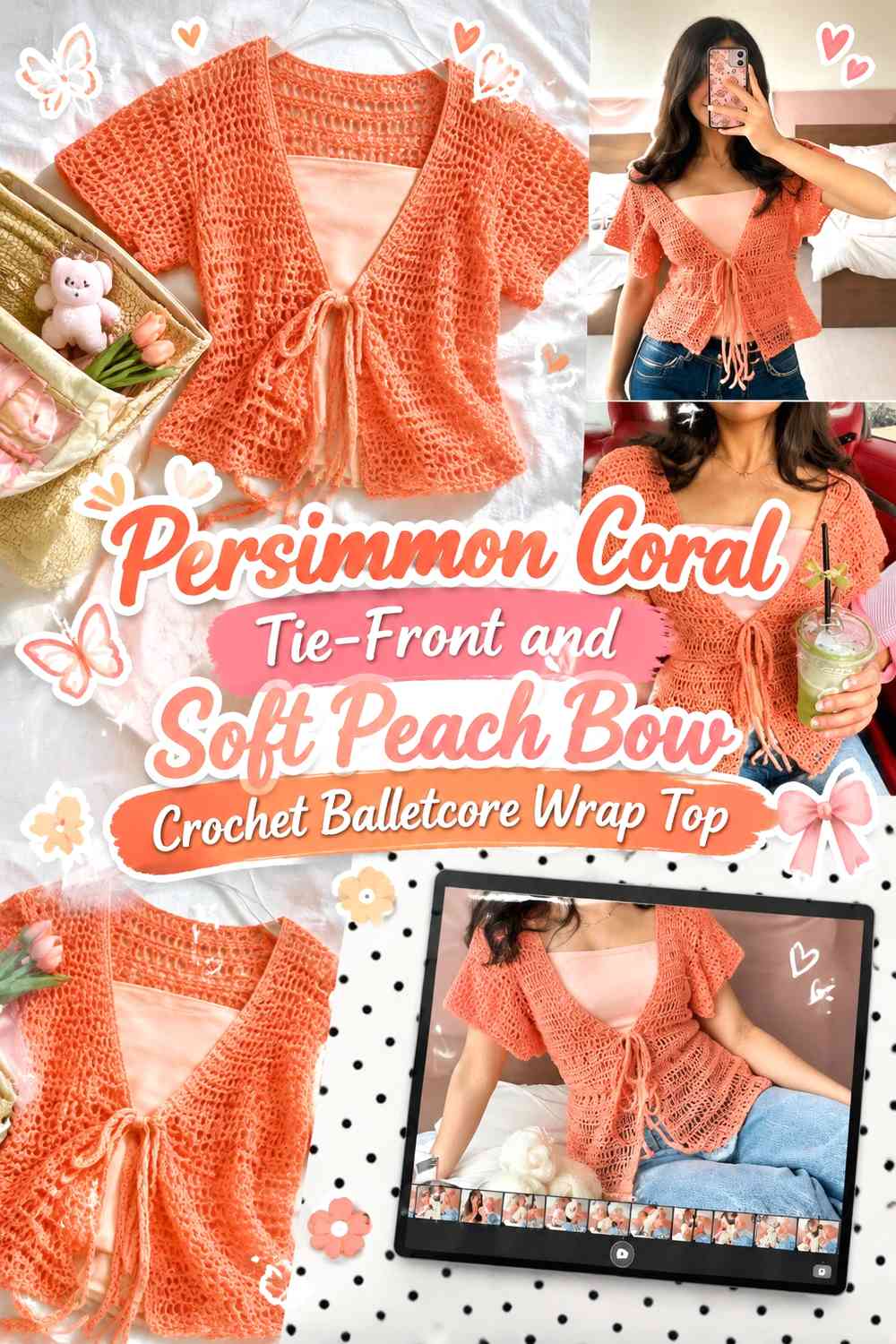
A tie-front construction naturally suits balletcore styling because the fastening itself becomes decorative. Make Persimmon Coral the main field and use Soft Peach for the bow-like ties and a few matching finishing details.
Persimmon Coral Keeps the Crochet Tie-Front Body Unified
Use Coral across the larger front, back, and sleeve sections so the ties remain visually distinct rather than disappearing into several different body colors.
This is particularly useful if the front already includes shaped edges that create their own lines.
Soft Peach Bows Can Become the Persimmon Coral Top’s Lightest Detail
Soft Peach ties create small focal points at the center front. If multiple ties or bows are used, keep the rest of the Peach placement restrained so they remain noticeable.
A matching Peach cuff or narrow neckline edge is enough to connect the bows to the full garment.
Creator Credit: mahum 🎀
8. Soft Peach Openwork and Persimmon Coral Front-Edge Crochet Balletcore Wrap Top
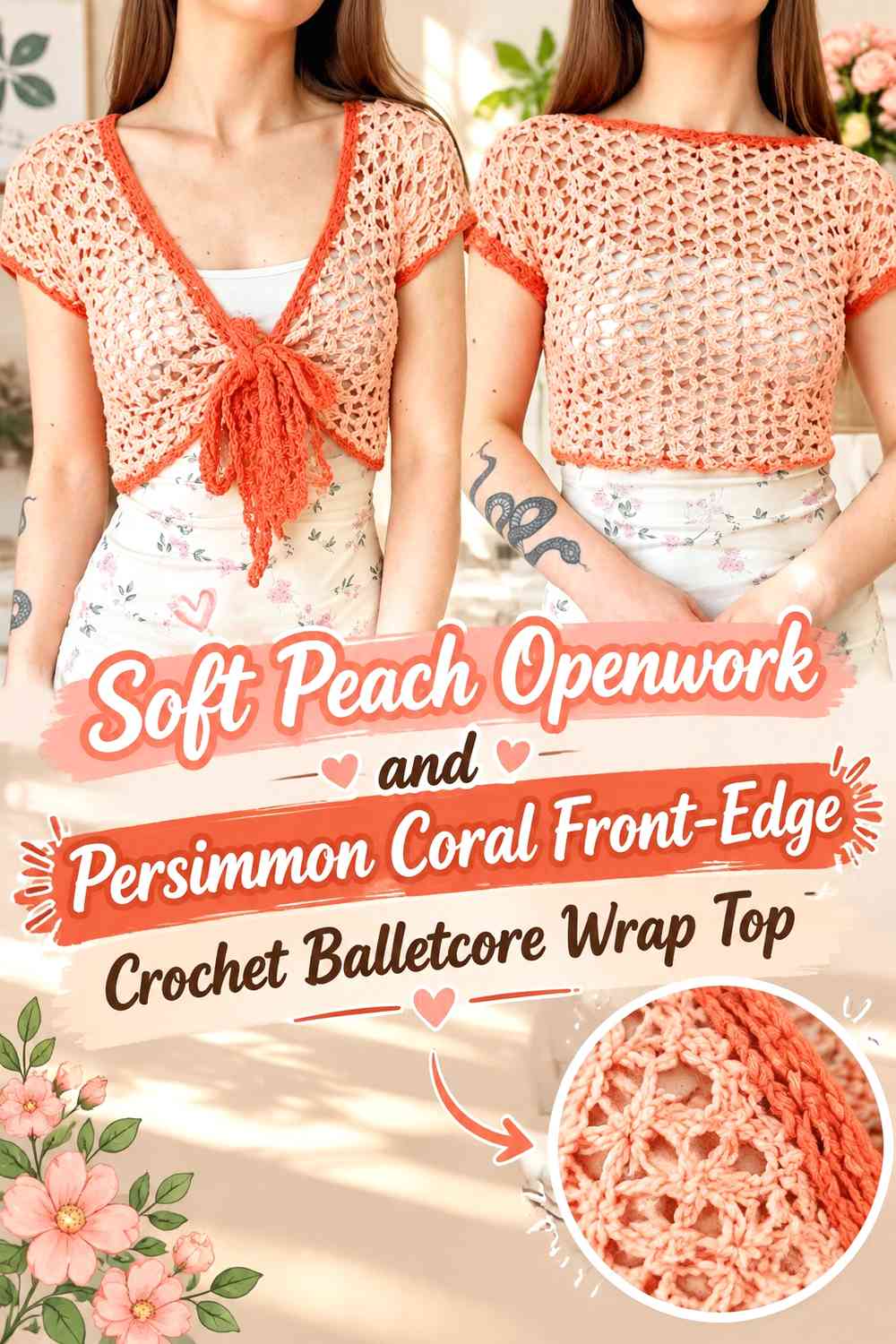
Use Soft Peach throughout an airy cropped construction and let Persimmon Coral define the sloping front edges. The darker outline gives structure to a lightweight surface without covering much of the openwork.
Soft Peach Lets the Crochet Openwork Stay Delicate
Keep the stitch field predominantly Peach so the openings and fabric drape provide the visual texture.
Introducing Coral in every lace repeat could make the top look more graphic and reduce the quiet balletcore effect.
Persimmon Coral Can Sharpen the Soft Peach Front Opening
Run Persimmon Coral along the neckline or tie-front border where it can trace the garment’s opening.
Because the contrast follows an important structural line, you may need very little additional Coral elsewhere. A cuff repeat can be enough.
Creator Credit: Alona crochets
9. Persimmon Coral Lace Body and Soft Peach Ribbed-Edge Crochet Balletcore Wrap Top
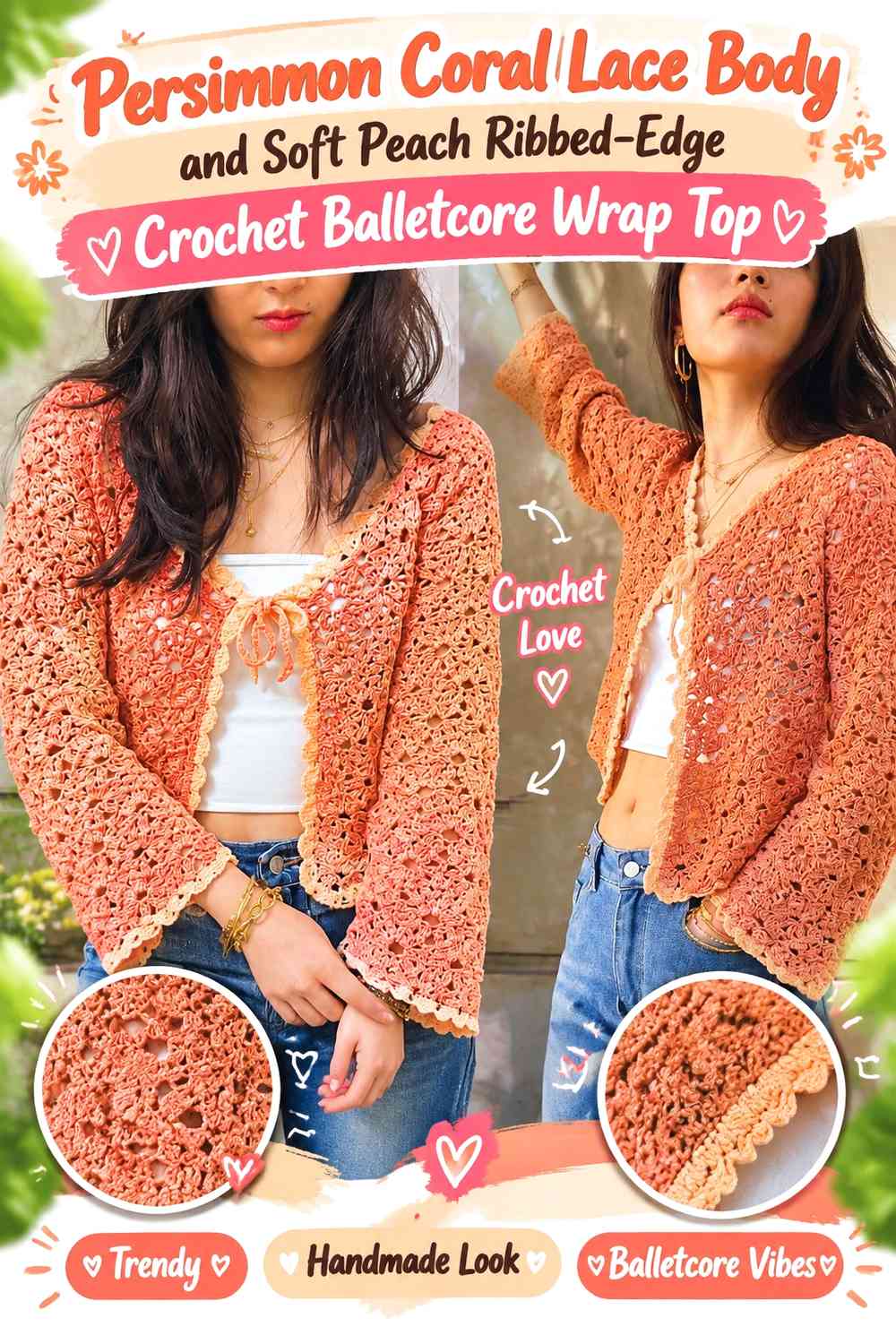
This direction combines a stronger Coral lace field with quieter Soft Peach finishing. Instead of putting Peach inside the openwork, keep it around ribbed or denser edges so both color and texture change together.
Persimmon Coral Should Remain Continuous Across the Crochet Lace Body
Use Coral through the larger lace areas so the stitch pattern stays readable from one panel to the next.
The garment underneath will influence how much of the Coral openwork is visible, so check a sample against likely layering colors before deciding that more Peach is needed.
Soft Peach Ribbing Can Define Persimmon Coral Without Overpowering It
Place Soft Peach around the neckline, cuffs, or another denser finishing section. Because the fabric density changes there, Peach may appear more visually substantial than the same amount worked in open lace.
Keep the edging proportional to the cropped body so the finishing does not become the dominant color.
Creator Credit: kiksandjackcrochet
10. Soft Peach Floral Tie and Persimmon Coral Panel Crochet Balletcore Wrap Top
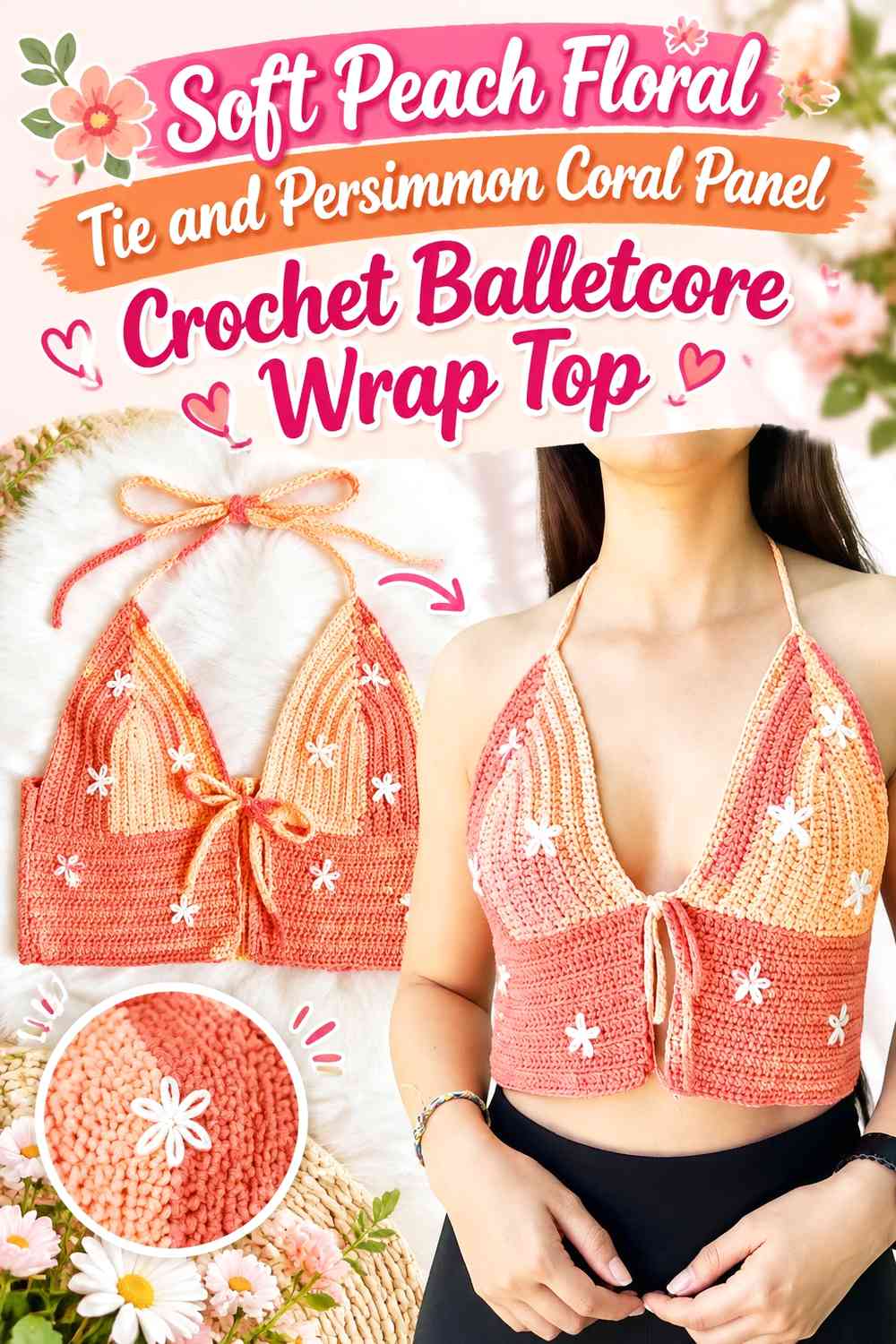
Use Persimmon Coral through the main body while introducing Soft Peach at floral or tie details near the front. This is a more decorative direction for readers who want the balletcore palette to include small romantic motifs rather than relying only on edging.
Persimmon Coral Gives Soft Peach Floral Details a Strong Background
Keep Coral across the larger body area so pale flower details remain easy to locate. Too many alternating body colors can make small floral elements disappear into the overall pattern.
If flowers repeat, place them deliberately rather than scattering them unevenly across one side.
Soft Peach Flowers Can Connect to Persimmon Coral Ties
Use the same Soft Peach for small floral details and selected ties so the decorative elements belong to one color system.
Avoid turning every border Peach as well. Leaving some edges Persimmon Coral prevents the pale decorative color from taking over the entire top.
Creator Credit: isabella.crochett
11. Persimmon Coral Mesh and Soft Peach Tie-Edge Crochet Balletcore Wrap Top
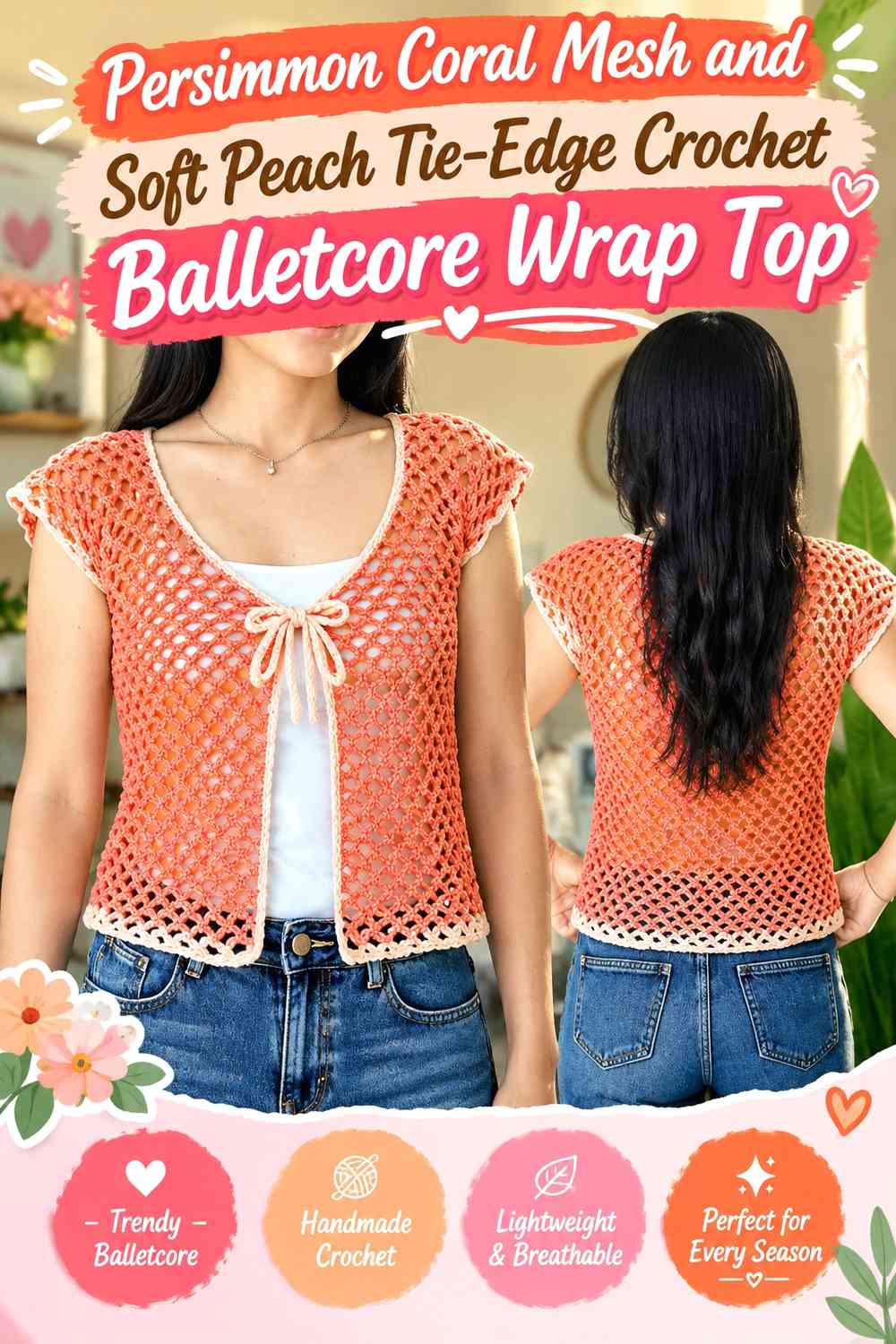
Finish with a very open mesh direction. Persimmon Coral can carry the mesh field while Soft Peach defines the straps, ties, and selected outer edges. Because so much background shows through mesh, the contrast remains visible without large solid color blocks.
Persimmon Coral Mesh Needs a Simple Color Structure
Keep most of the mesh Coral if the open grid already creates strong visual texture. Alternating every few rows with Peach can make the top appear striped rather than delicately open.
Test the Coral mesh over likely camisoles or tops because the underlayer becomes part of the visible palette.
Soft Peach Can Outline the Persimmon Coral Mesh Ties
Use Soft Peach at the tie-front edges, straps, or narrow perimeter where denser crochet naturally appears.
Repeating Peach at both the front ties and wrists creates enough continuity without taking color space away from the Coral mesh.
Creator Credit: VivCrochets
Comparing the Persimmon Coral and Soft Peach Balletcore Directions
For a stronger Persimmon Coral-led top, ideas 1, 5, 7, 9, 10, and 11 keep Coral across most of the body, sleeves, or mesh. Soft Peach becomes the delicate finishing shade through ties, bows, cuffs, flowers, or edging.
Ideas 2, 4, 6, and 8 give Soft Peach more surface area and use Persimmon Coral as the outlining or anchoring color. These options work especially well when you want the wrap top to feel lighter while preserving visible contrast at the neckline and waist.
Idea 3 creates the clearest body-versus-sleeve split. Ideas 1, 2, 5, and 6 emphasize the crossover itself, while ideas 7, 10, and 11 put more attention on ties and decorative front details.
Conclusion
Persimmon Coral and Soft Peach can create very different balletcore wrap tops depending on which shade controls the crossover panels. A Coral-dominant design creates a stronger center and leaves Peach available for bows, cuffs, and delicate finishing. A Peach-dominant wrap feels lighter, with Persimmon Coral acting as the line that defines the neckline, waist, or front opening.
For the quietest result, keep one shade across most of the body and use the second only at two or three connected finishing points. For a more decorative version, let the contrast appear through bows, floral accents, two-color sleeves, or a defined wrap band.
Before committing to the full top, view Persimmon Coral and Soft Peach in actual crochet fabric rather than only as loose yarn. Openwork, overlapping wrap panels, and denser borders can all change how much visual weight each color carries. Follow the credited tutorials for their exact construction methods while adapting the two-color placement independently.
Frequently Asked Questions
Should Persimmon Coral or Soft Peach dominate a balletcore crochet wrap top?
Either can lead. Persimmon Coral produces a stronger, warmer center and makes Soft Peach ties or cuffs stand out. Soft Peach creates a lighter wrap body and lets Coral neckline edges or waist bands become more defined.
Where should Soft Peach go on a mostly Persimmon Coral wrap top?
Waist ties, bow details, cuffs, diagonal neckline edging, and small floral accents are useful locations. Repeating Peach in two or three related areas usually looks more intentional than using it once.
Should the two crossover panels use the same Persimmon Coral and Soft Peach balance?
They do not have to, but matching color roles usually creates a calmer balletcore result. Using one Coral panel and one Peach panel produces a stronger asymmetrical color-block effect.
How can I make Persimmon Coral and Soft Peach look softer rather than striped?
Give one shade most of the body and restrict the other to narrow finishing areas. Avoid frequent alternating bands through the crossover panels or sleeves when you want a delicate result.
Can Soft Peach be used only for the crochet waist ties?
Yes, but repeat a small amount of Soft Peach somewhere else—such as the neckline or cuffs—if you want the contrasting ties to feel connected to the whole garment.
How do I check Persimmon Coral and Soft Peach contrast in an openwork top?
Make a small crochet sample and view it over the camisole or layer you expect to wear underneath. You can also photograph the two colors in grayscale to see whether they remain distinct in light-dark value.
How can I substitute another shade for Soft Peach?
Choose another light, softened peach or warm pale neutral that remains clearly lighter than Persimmon Coral. Preserve the contrast and supporting-color role rather than trying to match a specific commercial yarn shade.
Are tie-front crochet tops the same as wrap tops?
Not always. A true wrap top usually has overlapping front panels that cross the body, while a tie-front top may simply meet and fasten at the center. Some of the tutorials here demonstrate tie-front or wrap-cardigan constructions that can support the same balletcore color and styling direction, so follow each creator’s construction as shown rather than assuming every source is built identically.