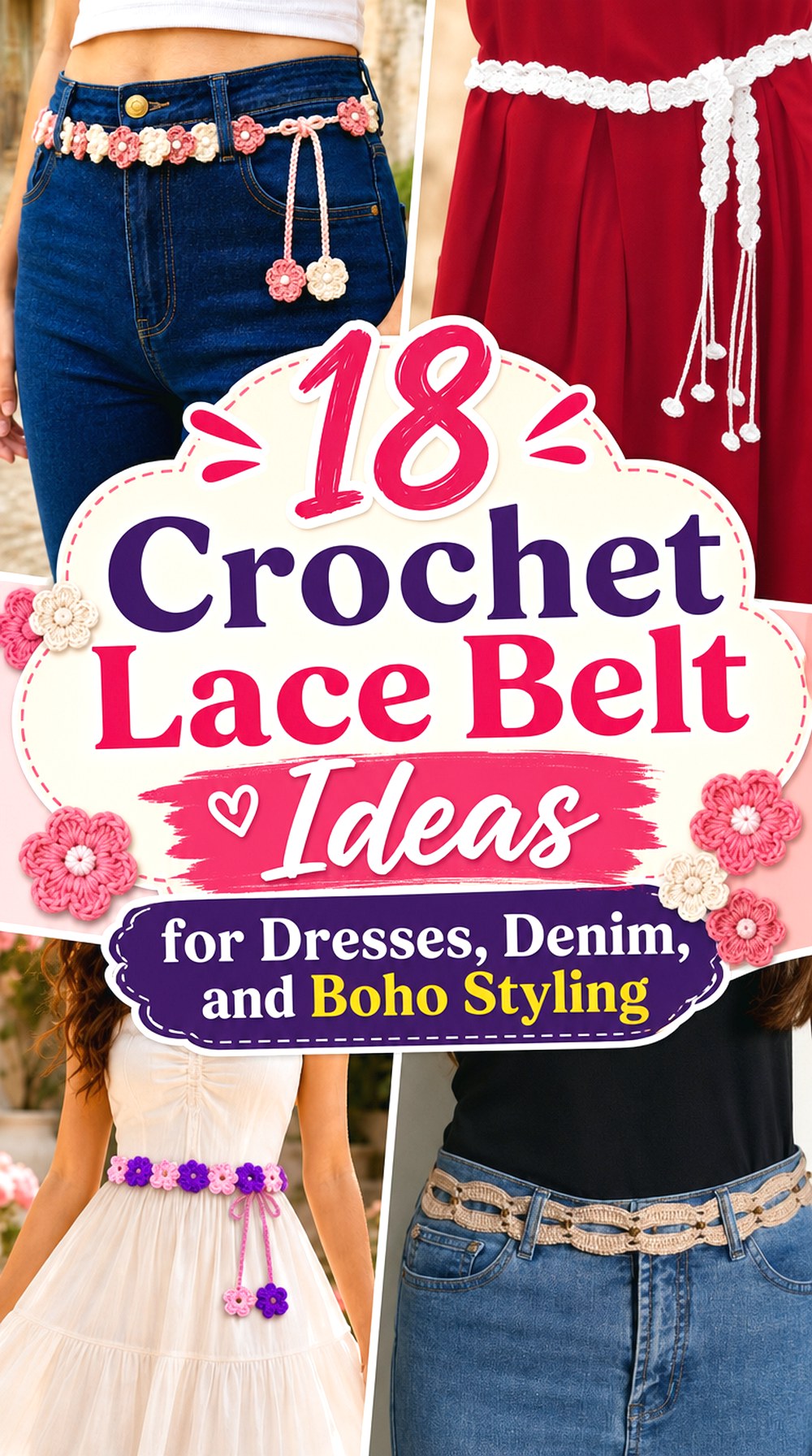

A crochet lace belt can be barely wider than a cord, built from repeating flowers, worked as a broad decorative band, or shaped into a lace-up waist piece. Those differences matter because a belt meant to slip through denim loops needs a very different width and closure from one designed to sit over a loose dress.
The 18 ideas below cover openwork strips, shells, floral tape lace, granny motifs, rings, beads, tassels, buckles, cords, and wider corset-style belts. Most are direct lace or decorative belt tutorials; a few more structured constructions are included because they offer useful closure and fit ideas for adapting lace. Each section highlights what to compare before committing to a style and points back to an original video for the actual construction.
Quick List
- Crochet Fan-Lace Wrap Belt
- Crochet Tassel-Tie Boho Lace Belt
- Crochet Shell-Lace Festival Belt
- Crochet Cord-Tie Boho Belt with Tassel Ends
- Crochet Floral Tape-Lace Waist Belt
- Crochet Irish-Lace Cord Belt
- Crochet O-Ring Lace Buckle Belt
- Crochet Flower-Square Tie Belt
- Crochet Linked Floral Motif Belt
- Crochet Granny-Square Buckle Belt
- Crochet Beaded Summer Lace Belt
- Crochet Tunisian Buckle Waist Belt
- Crochet Shaped Corset-Lace Waist Belt
- Crochet Compact Lace-Up Corset Belt
- Crochet Shell-Stitch Tie Belt
- Crochet Flower Belt for Denim
- Crochet Slim Ribbon-Cord Wrap Belt
- Crochet Continuous Flower-Lace Belt
Choose Lace Density by How You Plan to Wear the Belt
A decorative belt worn over a dress can tolerate more open space than one threaded through pants or expected to hold its shape around a buckle. Airy shells, flower chains, and tape lace emphasize texture and are especially useful when the belt itself is the focal point. Denser sections make more sense around hardware or anywhere repeated pulling could distort large openings.
Width changes the effect too. A slim lace strip reads more like jewelry for the waist, while joined squares or a corset-style panel occupy much more visual space. Before choosing, look at the tutorial’s finished shape rather than assuming every “belt” will work in standard belt loops. If loop compatibility matters, compare the blocked belt width with the actual loops on the garment you intend to wear.
Measure at the Wearing Point Before Choosing a Closure
Do not size a crochet belt from a general clothing size alone. First decide where it will sit: natural waist, lower waist, hips, or through existing belt loops. Measure over the clothing you expect to wear underneath it, because a belt fitted over a dress or cardigan may need a different finished length from one worn directly over a thin top.
Then account for the closure. Long ties require enough extra length to form the knot or bow you want. A buckle needs overlap and a section compatible with the hardware. Corset-style belts intentionally leave room for lacing rather than meeting edge to edge. With motif belts, it is usually smarter to compare the width of the blocked motifs with the required belt length before permanently joining the whole strip.
Yarn, Blocking, and Stretch Can Change a Lace Belt
The same lace design can look crisp, loose, heavy, or nearly invisible depending on yarn and tension. Smooth yarn generally makes open spaces and floral details easier to see, while fuzzy fibers can soften those edges. A thicker yarn may turn delicate lace into a substantial statement band; a finer yarn can make the same concept visually lighter.
Stretch deserves attention because belts are pulled around the body. Open chain spaces, long ties, and joined motifs can all change length under tension. Make a small sample when possible and see how the chosen yarn behaves after the care or blocking method appropriate for that fiber. For a buckle or clasp, also inspect the attachment area: decorative openwork may need a denser section or reinforcement rather than having hardware attached directly to a fragile lace opening.
Crochet Fan Lace Wrap Belt
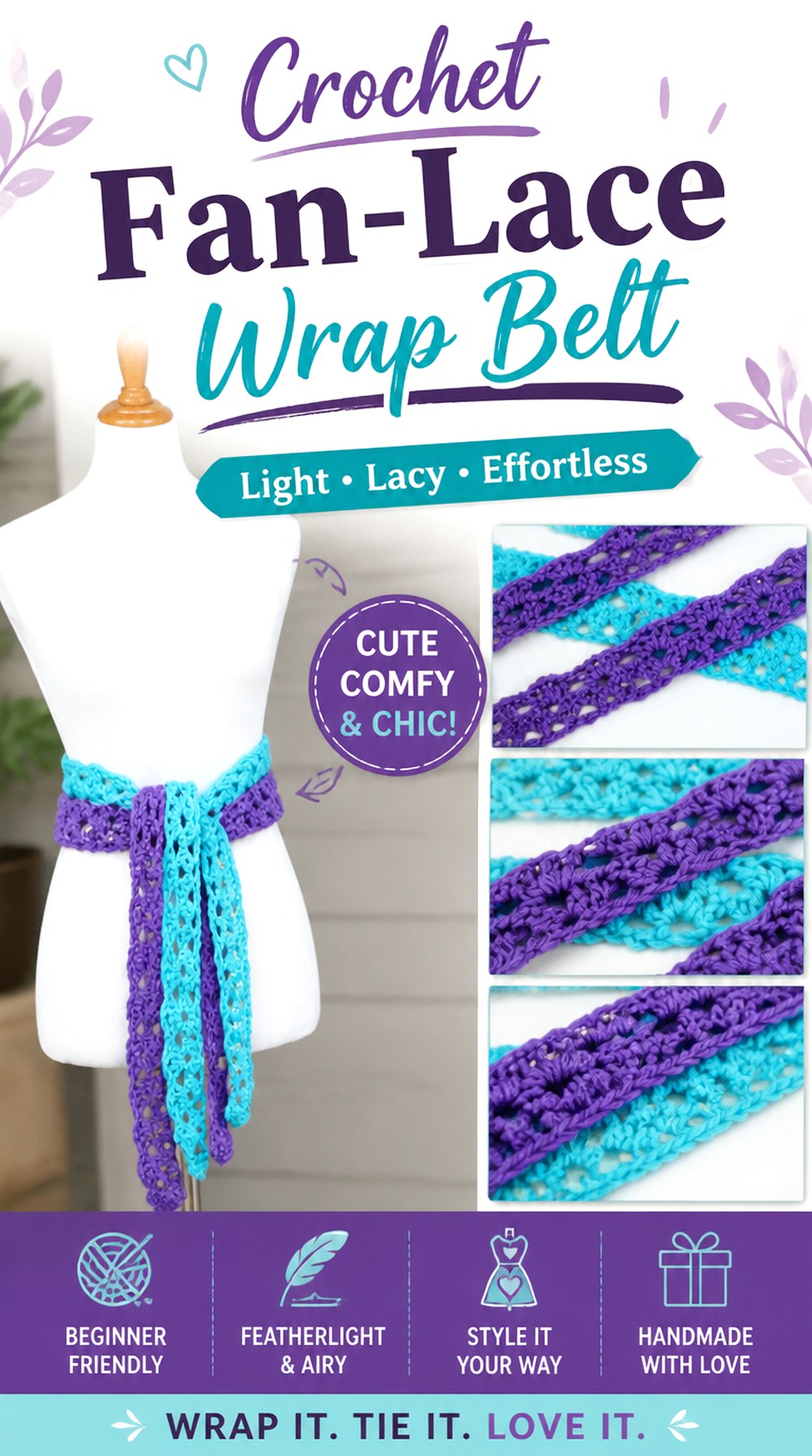
This narrow wrap belt is a good starting point when you want the lace itself to provide the interest without flowers, hardware, or a wide waistband. The Fiber Flux design uses a repeating openwork construction that creates a light, rhythmic strip rather than a dense conventional belt. It works especially well as an outfit accent over dresses, tunics, or tops where a long tie can remain visible.
Because the silhouette is simple, color and yarn texture have a stronger effect than they would in a busy motif belt. It is also one of the easier concepts to compare directly against wider options later in this list.
Long Ties Make Placement More Flexible
A wrap belt does not force the closure into one fixed position. Depending on the finished length, the ends can meet at the front, side, or back. Decide where you want the knot before settling on final length rather than simply matching the circumference of your waist.
The trade-off is that very long openwork sections may stretch differently once tied. Check the finished piece under light tension before trimming or permanently finishing the ends.
Openwork Needs a Straight Visual Edge
With a narrow lace band, uneven tension is easy to notice because there is no large motif to distract the eye. Lay the work flat periodically and look for one side gradually becoming tighter or looser.
Blocking can improve the presentation when appropriate for the yarn, but it should refine the lace rather than compensate for a noticeably inconsistent strip. A quick width check during the project can prevent a wavy finished belt.
Crochet Tassel Tie Boho Lace Belt
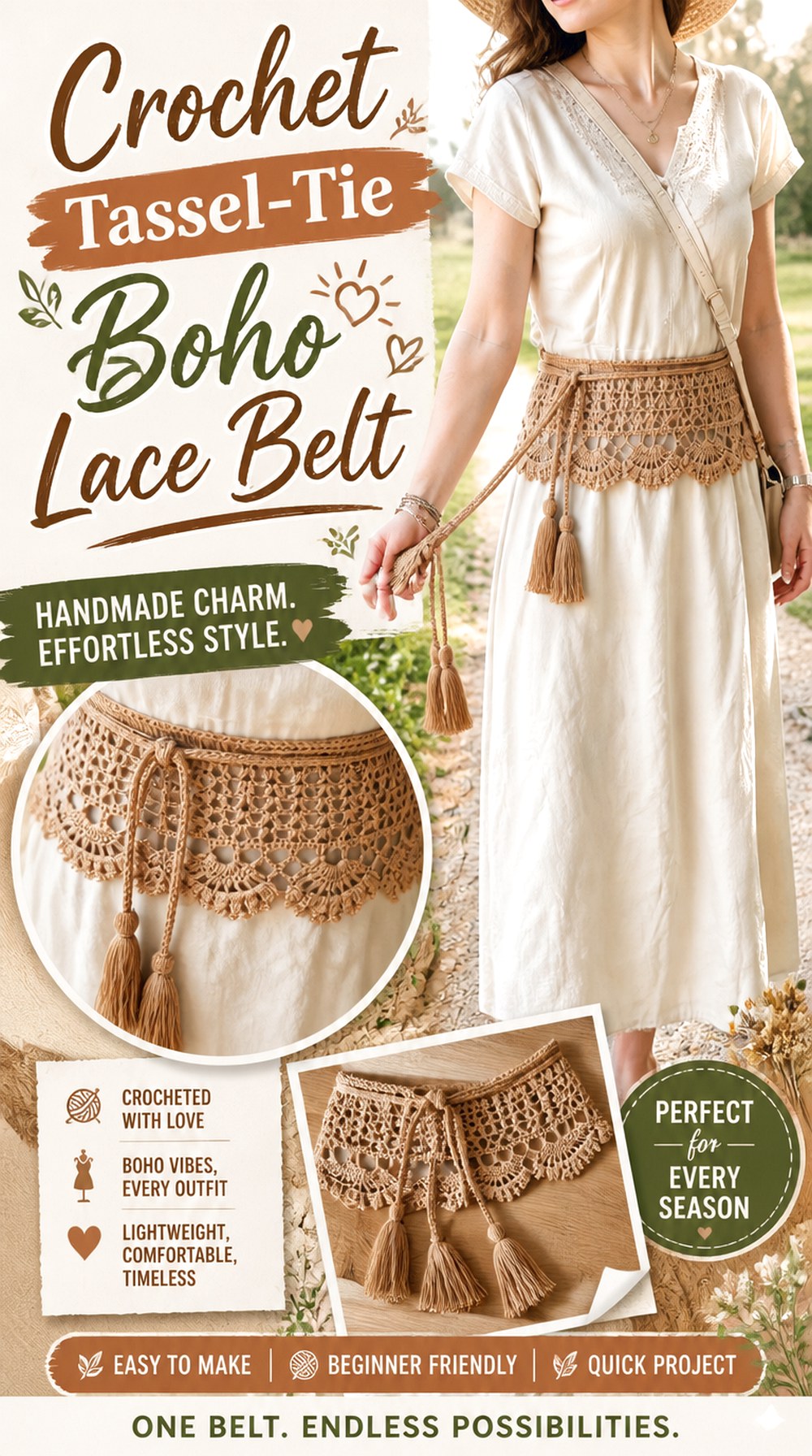
This version adds two elements that dramatically change a narrow lace belt: pronounced tie ends and tassels. KhrystyK Crochet’s finished belt is an airy boho accessory intended for styling with pieces such as dresses, skirts, and beachwear. The tassels give the hanging ends visual weight, so the closure remains part of the design instead of disappearing against the clothing.
Choose this direction when you want the belt to move with the outfit rather than resemble rigid waist hardware. It has a more relaxed finish than a buckle belt and a clearer lace body than the cord-focused designs farther down the list.
Tassels Change Where the Belt Should End
Do not judge the final appearance from the crocheted band alone. Tassels extend the visual length of each end, so unusually long ties can become cumbersome even if the waist section fits correctly.
Before finishing, hold temporary bundles at the ends and check where they fall against the intended outfit. A belt that looks balanced over a short dress may need different proportions when paired with a long skirt.
Keep the Lace and Ties Visually Related
A common design problem is making an airy belt body and then attaching ties that look disproportionately thick. Compare the visual weight of the cords with the lace before committing to them.
If you change yarn from the tutorial, reassess both components rather than assuming the same proportions will carry over. The goal is for the ties to look like an intentional continuation of the belt instead of separate ropes attached afterward.
Original Tutorial and Creator Credit
Creator: KhrystyK Crochet
Crochet Shell Lace Festival Belt
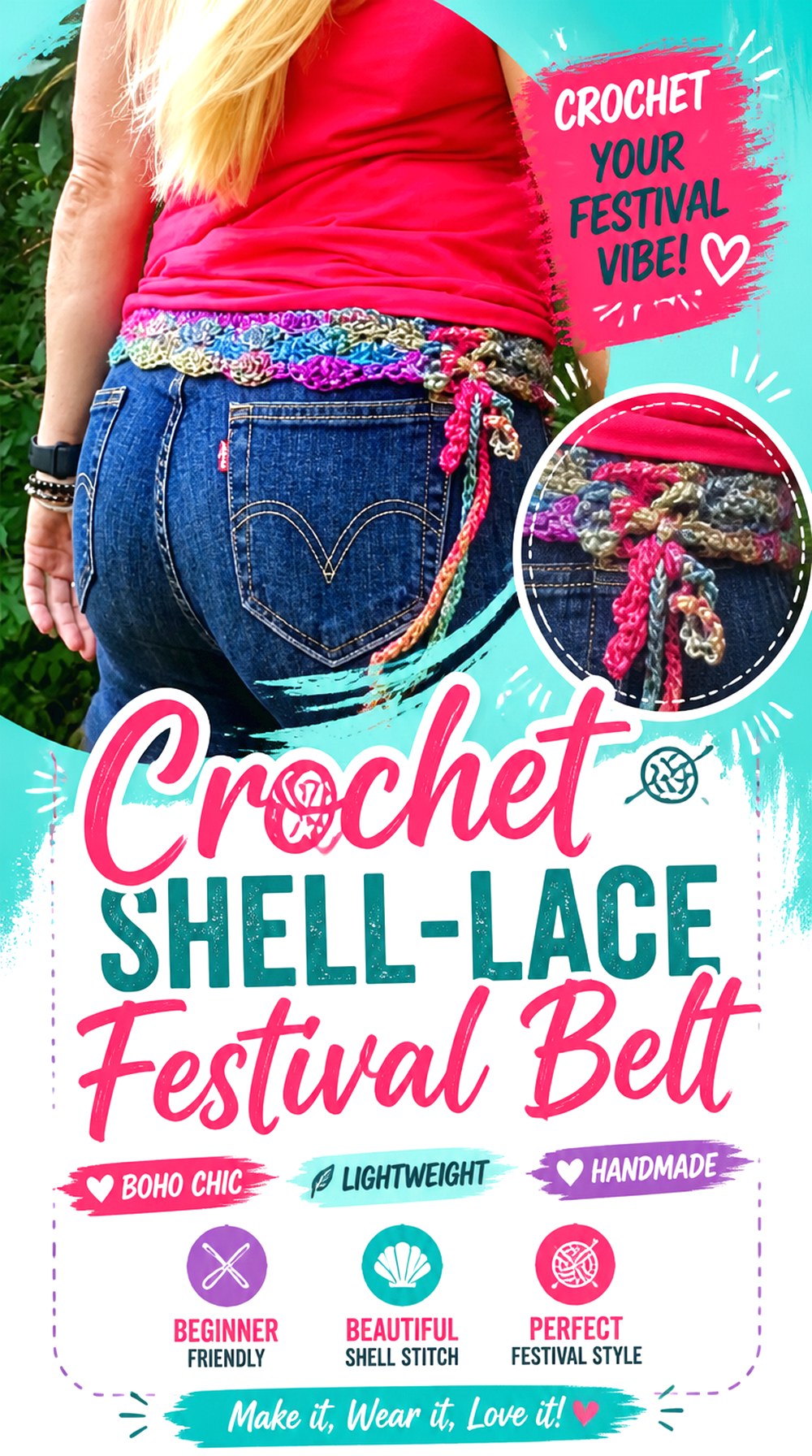
Shell-based crochet gives this belt a scalloped rhythm that is quite different from straight mesh or square motifs. The Light and Joy Designs tutorial presents a bohemian festival-style belt built around shell stitch, so the decorative edge is created directly by the stitch pattern rather than added as separate embellishment.
This is a useful choice when you want noticeable lace without the assembly involved in joining individual flowers or squares. Shells create stronger vertical and curved shapes than a simple open grid, making the belt visible even in a single color. The shape suits relaxed styling over dresses, tunics, or festival layers.
Shell Scale Controls How Busy the Belt Looks
Changing yarn thickness or hook choice can make a shell repeat look much larger or smaller even when the construction stays the same. That matters on a belt because only a limited number of repeats may be visible across the front of the body.
Make enough of the pattern to see several shells before deciding whether the scale works. A repeat that looks attractive as a swatch can feel oversized once wrapped around the waist.
Let the Scalloped Edge Remain the Feature
Shell lace already creates a strong outline, so excessive fringe, beads, or contrasting borders can compete with it. If you want additional decoration, consider whether it supports the shell shape rather than hiding it.
The same restraint applies to color. A solid shade emphasizes the stitch architecture, while frequent color changes break the continuous scalloped line. Neither is inherently better, but they create very different finished belts.
Original Tutorial and Creator Credit
Creator: Light and Joy Designs
Crochet Cord Tie Boho Belt with Tassel Ends

Hook & Loop Crochet Tutorials takes a slightly different route from the earlier lace-and-tassel belt by separating the belt body, cord, and tassel portions in the tutorial. That makes this idea worth considering if the finishing details are as important to you as the central band.
Visually, it stays in the boho family, but the distinct cord construction creates a stronger transition from the main belt to the hanging ends. This can work well when you want a decorative waist tie that still has clear, intentional end treatments rather than simply fastening with the ends of the main lace strip.
The Cord Is a Functional Transition Point
Pay attention to the point where the wider belt becomes the narrower cord. Abrupt changes in thickness can pull unevenly or make the belt twist when tied.
When adapting the design, check that both sides transition symmetrically and that the cord can take normal tying tension without distorting the last section of the decorative band. This checkpoint becomes especially important if you substitute a significantly different yarn.
Tassels Need Enough Weight to Hang Cleanly
A tassel should finish the cord without overpowering it. Very bulky tassels can drag on a lightweight belt, while sparse tassels may look accidental beside a substantial band.
Before permanently attaching them, compare their length and fullness against the entire belt laid flat. Also consider the clothing underneath: textured tassels can catch more easily on highly textured garments than on smooth fabric.
Original Tutorial and Creator Credit
Creator: Hook & Loop Crochet Tutorials
Crochet Floral Tape Lace Waist Belt
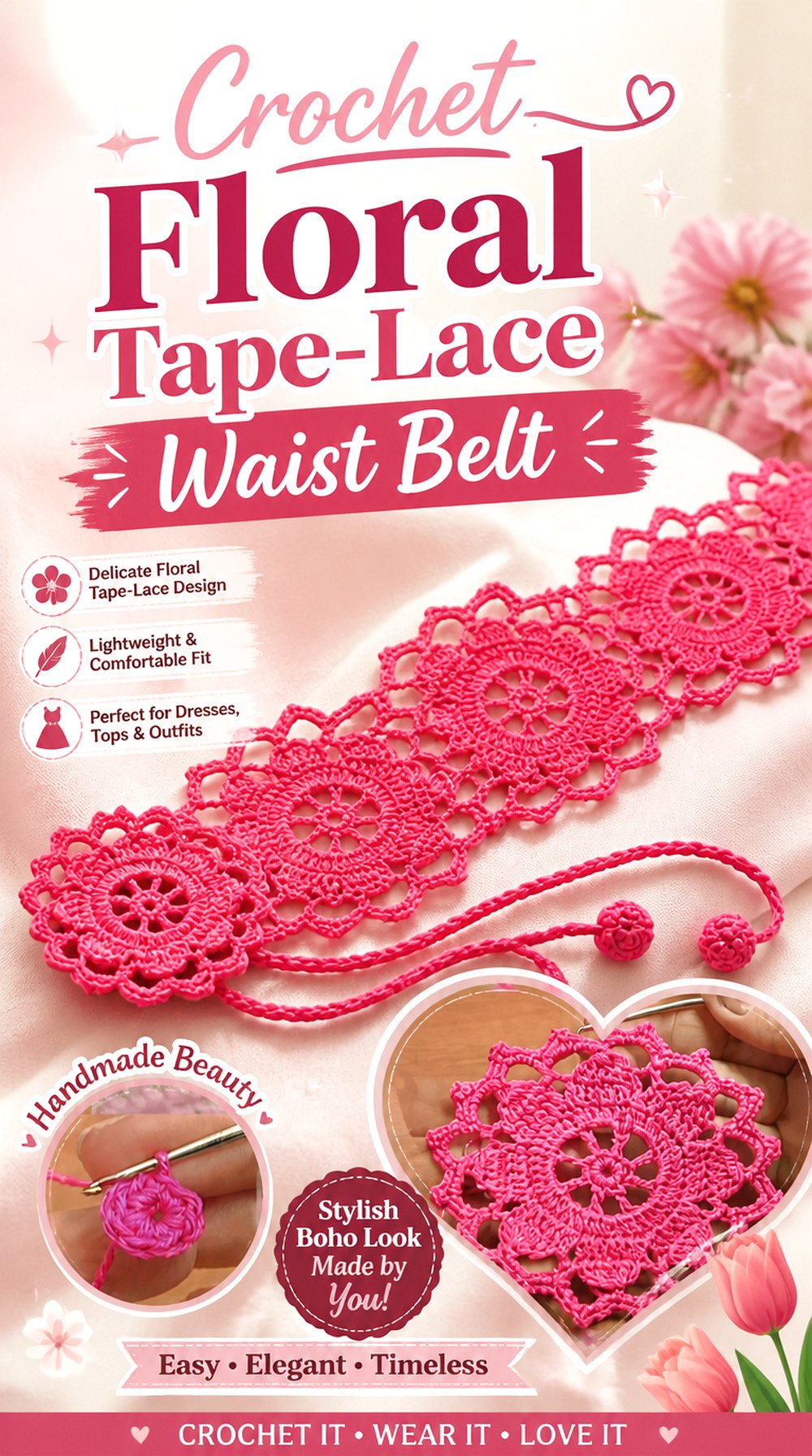
For a much more intricate appearance, this floral tape-lace belt uses a repeating lace structure built from round floral forms that continue into a strip. Crochet.ElenaRugalStudio’s tutorial is especially relevant when the goal is unmistakable crochet lace rather than a plain strap with decorative ends.
The finished effect is closer to traditional lace trim enlarged into a wearable accessory. That makes it well suited to simple clothing where the stitchwork can remain visible. Compared with square motifs, continuous tape lace creates fewer obvious joining breaks and can produce a more flowing visual line around the waist.
Floral Direction Matters Around the Body
Repeating floral tape has an obvious orientation. Before reaching full belt length, wrap a section around the body or a dress form and check whether the motifs still read cleanly from the front and sides.
If the lace naturally curves or has a directional edge, that behavior should influence where the belt sits. Forcing a decorative tape into a position it does not naturally want to follow can cause rippling.
Fine Lace Deserves a Closure That Does Not Crush It
A heavy buckle can visually and physically overwhelm delicate floral tape. Tie closures, narrow cords, or carefully planned hardware may suit the fabric better, depending on how the original construction is finished.
If you do adapt the lace to different hardware, place the load on a reinforced section rather than directly on a large open flower or chain space. Decorative lace and hardware serve different structural jobs.
Original Tutorial and Creator Credit
Creator: Crochet.ElenaRugalStudio
Crochet Irish Lace Cord Belt
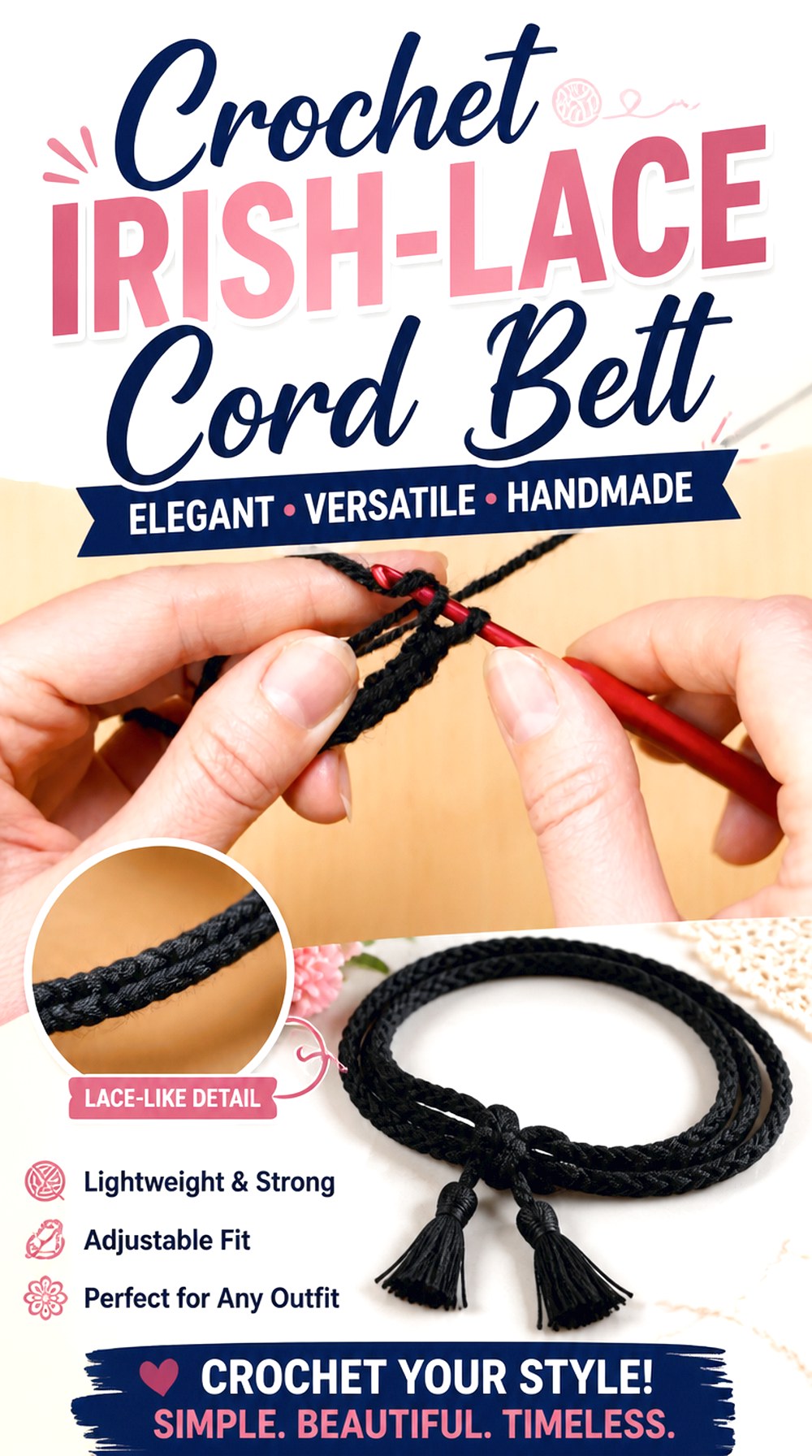
Not every lace belt needs a broad patterned band. LaceVibes demonstrates a slim crochet cord intended for use as a belt or drawstring and notes its usefulness with Irish lace and other crochet designs. The result is minimal compared with shells and flowers, which is exactly why it earns a separate place here.
A cord belt works when you want a subtle waist definition, a closure for another handmade garment, or a narrow accessory that can be wrapped more than once. It also leaves room for adding a pendant-like motif or decorative ends later without making the whole belt visually heavy.
Test Thickness Against the Intended Use
A cord used over a loose cardigan can be thicker than one intended to pass through tiny loops or openings in another crocheted garment. Rather than choosing thickness by appearance alone, test it through the actual opening or around the garment first.
A thicker cord can feel more substantial but may create bulky knots. A finer cord makes smaller ties but may cut more sharply into soft fabric under tension.
Long Cords Need Stretch Checked Before Finishing
Small amounts of stretch add up over a long narrow piece. Measure the cord relaxed, then gently tension it in the way it will be worn and compare the result.
If it lengthens noticeably, account for that before adding permanent end embellishments. This is particularly useful when the belt will wrap more than once or when the knot position needs to remain predictable.
Original Tutorial and Creator Credit
Creator: LaceVibes
Crochet O Ring Lace Buckle Belt
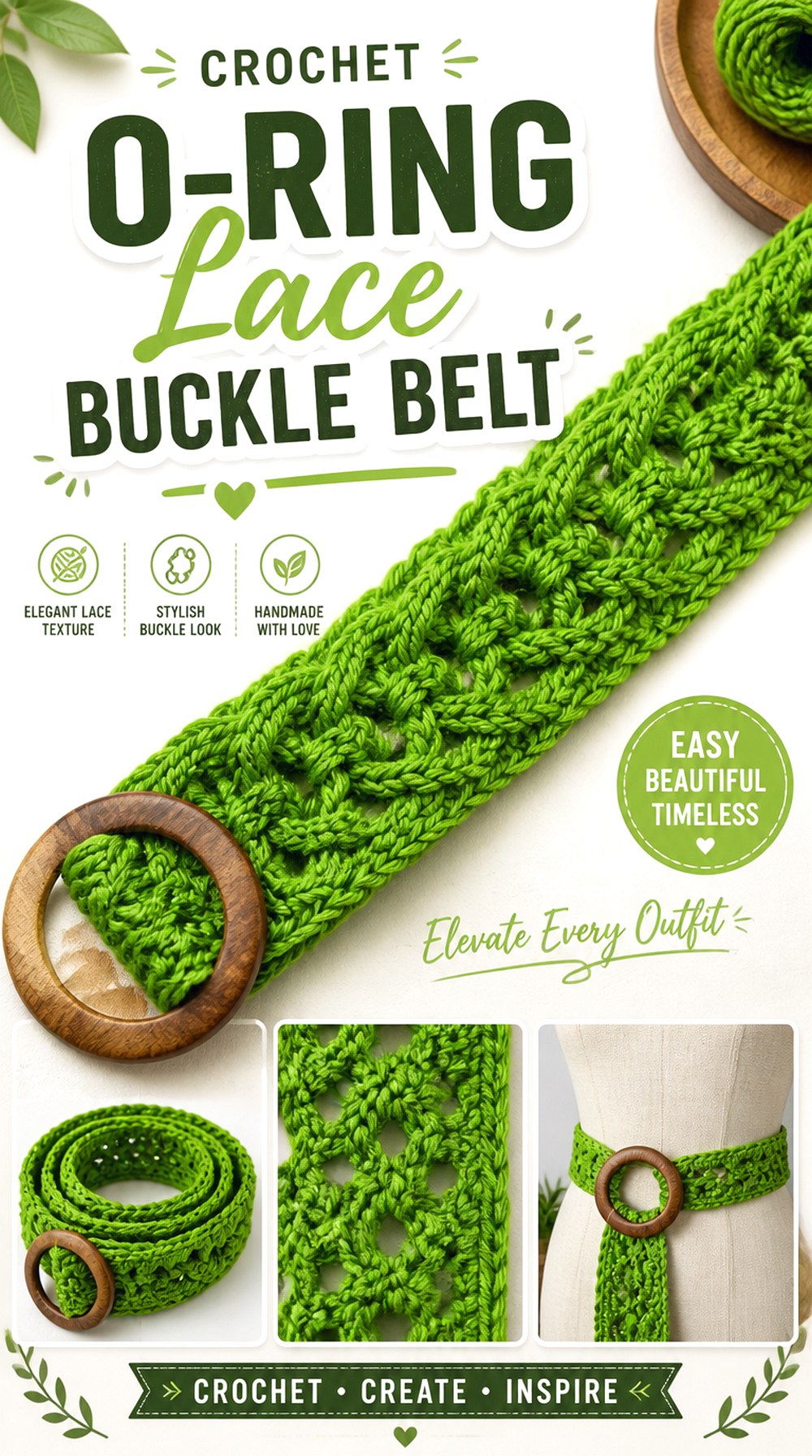
This vintage-inspired belt from Crochet Bits changes the structure entirely by creating repeated open rings across the band. The design has overlapping O-ring forms with lace connecting them through the center and uses a buckle, giving it both negative space and recognizable belt hardware.
It is a strong option when ordinary mesh feels too uniform. The large circular openings make the belt graphic from a distance, while the backing and joining areas give the piece more structure than a loose flower chain. It can work particularly well over a solid-color dress where the clothing shows through the openings.
Ring Repetition Makes Consistency Critical
When identical circles sit next to one another, differences in tension become obvious. Compare each newly formed ring with the previous ones instead of waiting until the full belt is finished.
The important checkpoint is not only diameter but also how the rings overlap and sit along the center line. If one begins twisting, correct it before additional repeats make the distortion harder to redistribute.
Buckle Width Must Suit the Finished Band
A buckle can look undersized beside large rings or too dominant beside delicate lace. Check the internal opening of the actual buckle against the belt section that must pass through it.
If you substitute hardware, do not rely on the labeled buckle size alone. Physically test the finished or blocked band through the opening and make sure the fastening section stays flat instead of bunching.
Original Tutorial and Creator Credit
Creator: Crochet Bits
Crochet Flower Square Tie Belt
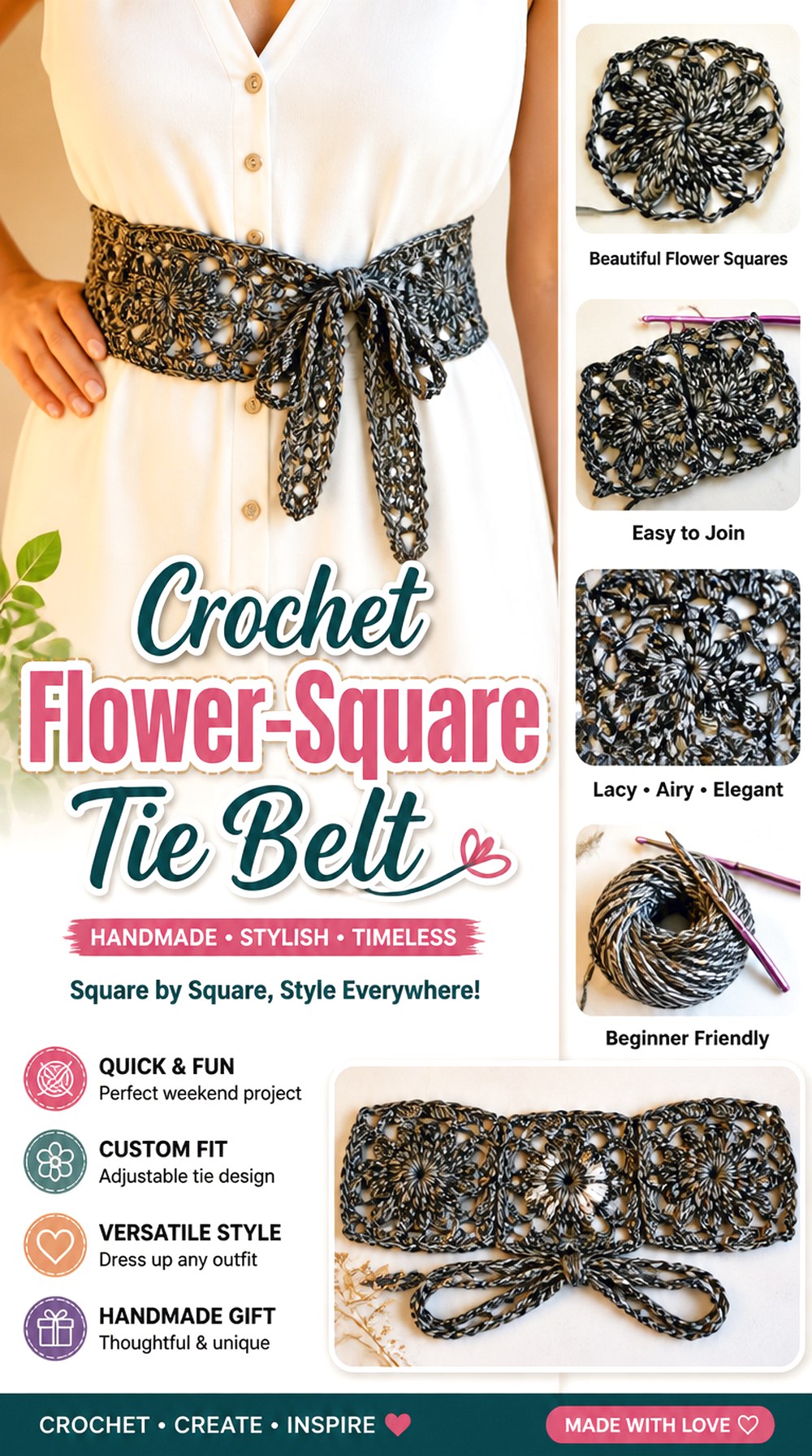
Nebeska Crochet with Love uses flowers framed inside squares, giving this belt more structure than a row of unsupported blossoms. The square outlines create predictable joining edges while the centers preserve a floral lace effect. Tapered end areas lead into ties, so the closure remains softer than a buckle.
This construction makes sense if you enjoy motif crochet but want the finished belt to lie in a relatively straight band. It is also visually different from a classic granny square because the flower is the focal point. Each motif becomes a discrete design unit, which makes color planning especially noticeable.
Block the Squares Before Final Layout
Motif belts magnify small differences in finished square size. If blocking is appropriate for your yarn, bring the motifs to consistent dimensions before deciding how many belong in the final belt.
Lay them edge to edge at the intended wearing point. This lets you judge both total length and visual balance before joining. It is easier to rearrange colors or replace an inconsistent motif at this stage.
Tapered Ends Reduce the Bulk of the Ties
Attaching a narrow cord directly to the side of a full square can make the transition look abrupt. A tapered section narrows the belt gradually, allowing the ties to emerge more naturally.
When adapting the motif size, check the taper as well. A much larger flower square may need a proportionally different transition so the end does not fold or flare when tied.
Original Tutorial and Creator Credit
Creator: Nebeska Crochet with Love
Crochet Linked Floral Motif Belt
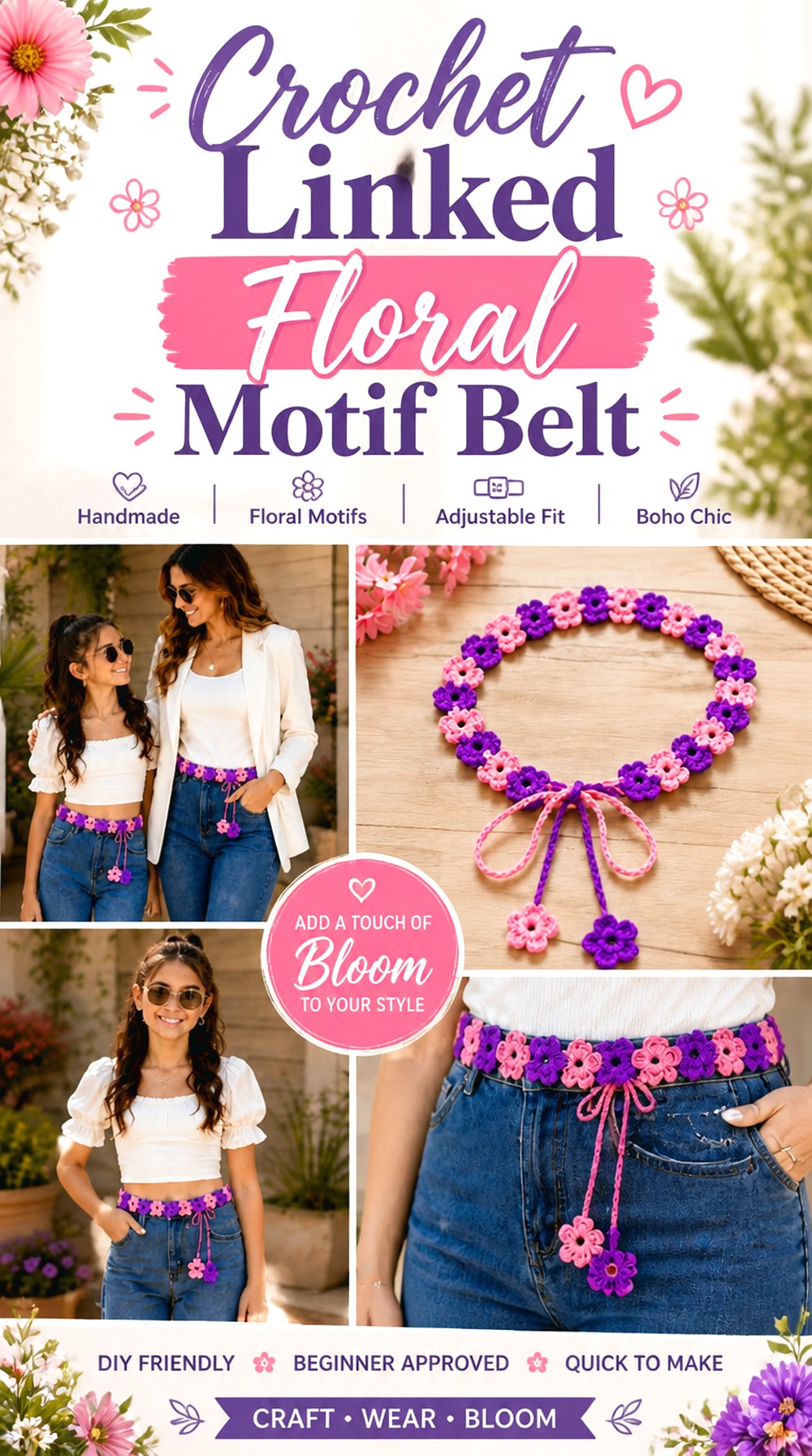
This floral design from 𝐊𝐧𝐢𝐭𝐭𝐢𝐧𝐠 𝐛𝐲 𝐖𝐚𝐣𝐢𝐝𝐚 uses a sequence of handmade flower motifs to turn the belt itself into a line of blossoms. Unlike flowers enclosed in square frames, the floral silhouette remains exposed, creating a lighter and more decorative edge.
That makes this approach well suited to simple denim, dresses, or tunics where the belt functions almost like waist jewelry. It is less visually rigid than a granny-square strip, but exposed petals also deserve more attention during finishing because they become the outer edge of the accessory.
Exposed Petals Need a Clean Layout
Before joining all the motifs, arrange them in a straight row and look at the spaces between flowers. Uneven gaps can make an otherwise consistent set of motifs look irregular when worn.
Also check whether the flowers naturally rotate. If they do, decide whether that movement is part of the desired handmade look or whether the joins need adjustment to keep each motif facing forward.
Tie Placement Can Protect the Last Motifs
Repeated pulling directly on a flower can distort it over time. When using long ties, look at how the original tutorial transitions from decorative motifs into the fastening area.
If adapting the design, keep the strongest attachment point in mind. The final flower should remain decorative rather than becoming the only point carrying all the tension from the knot.
Original Tutorial and Creator Credit
Creator: 𝐊𝐧𝐢𝐭𝐭𝐢𝐧𝐠 𝐛𝐲 𝐖𝐚𝐣𝐢𝐝𝐚
YouTube Video: 🌸💖 Beautiful Handmade Floral Crochet Belt 🌸🧶
Crochet Granny Square Buckle Belt

Crochet&Copy’s belt uses traditional granny-square construction but finishes the accessory with recognizable buckle hardware. That combination creates a much more structured result than a flower chain or long tie belt. Individual squares can carry different colors, while the buckle gives the finished piece a conventional front fastening.
This is a practical idea for anyone who likes motif crochet but wants the accessory to read clearly as a belt rather than a sash. It is also a useful reminder that motif dimensions directly control total belt length, so the fit should be planned before all the squares are permanently joined.
Motif Count Is a Fit Decision, Not Just a Color Decision
Make and block a representative square before committing to the entire layout. Once you know its real finished width, you can estimate how a row of motifs will span the wearing point.
Remember that joining and buckle sections also contribute to final dimensions. Do not simply multiply square width and assume that number is the complete belt length.
A Buckle Needs a More Stable End Section
Granny-square centers are open, while hardware attachment benefits from controlled edges. Look closely at how the tutorial transitions from motifs to the buckle and opposite fastening end.
If you change the square design, confirm that the new motif still leaves enough structure for that transition. A very open lace square may require a different finishing strategy before hardware is added.
Original Tutorial and Creator Credit
Creator: Crochet&Copy
Crochet Beaded Summer Lace Belt
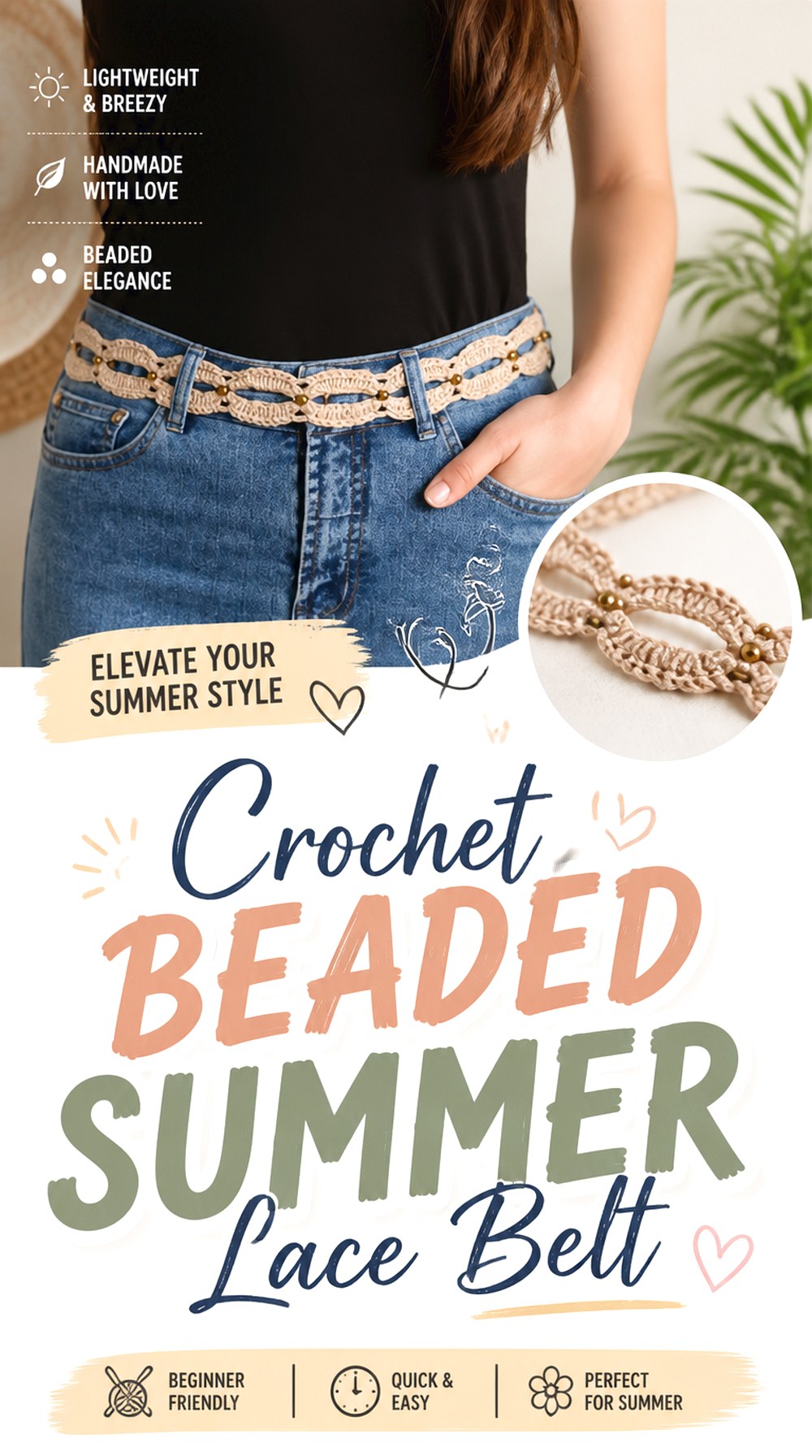
Sarah’s summer belt brings beads and a clasp into the design, producing a finer accessory feel than tassels or a large buckle. Beads introduce small points of weight and shine while the clasp keeps the fastening relatively compact.
This style works when you want a crochet belt that feels closer to handmade jewelry. Because the embellishment is concentrated rather than spread across large motifs, the band can stay visually light. It also offers a useful direction for anyone who likes lace but does not want dangling tie ends at the front or side of an outfit.
Bead Holes Must Match the Yarn System
If you substitute beads, check that their holes are compatible with the method shown in the tutorial before making the entire band. Appearance alone is not enough; a beautiful bead is useless if it cannot be incorporated without damaging or compressing the yarn.
Also consider weight. A much heavier bead can alter how a delicate belt hangs and may pull on the surrounding stitches.
Clasp Placement Should Stay Flat
Compact closures work best when the two belt ends meet without twisting. Test the clasp temporarily and put the belt around the intended wearing point before securing everything permanently.
If one end flips, look first at the alignment of the attachment rather than tightening the whole belt. A flat closure makes the lace look more intentional and reduces unnecessary strain at the ends.
Original Tutorial and Creator Credit
Creator: Sarah
Crochet Tunisian Buckle Waist Belt
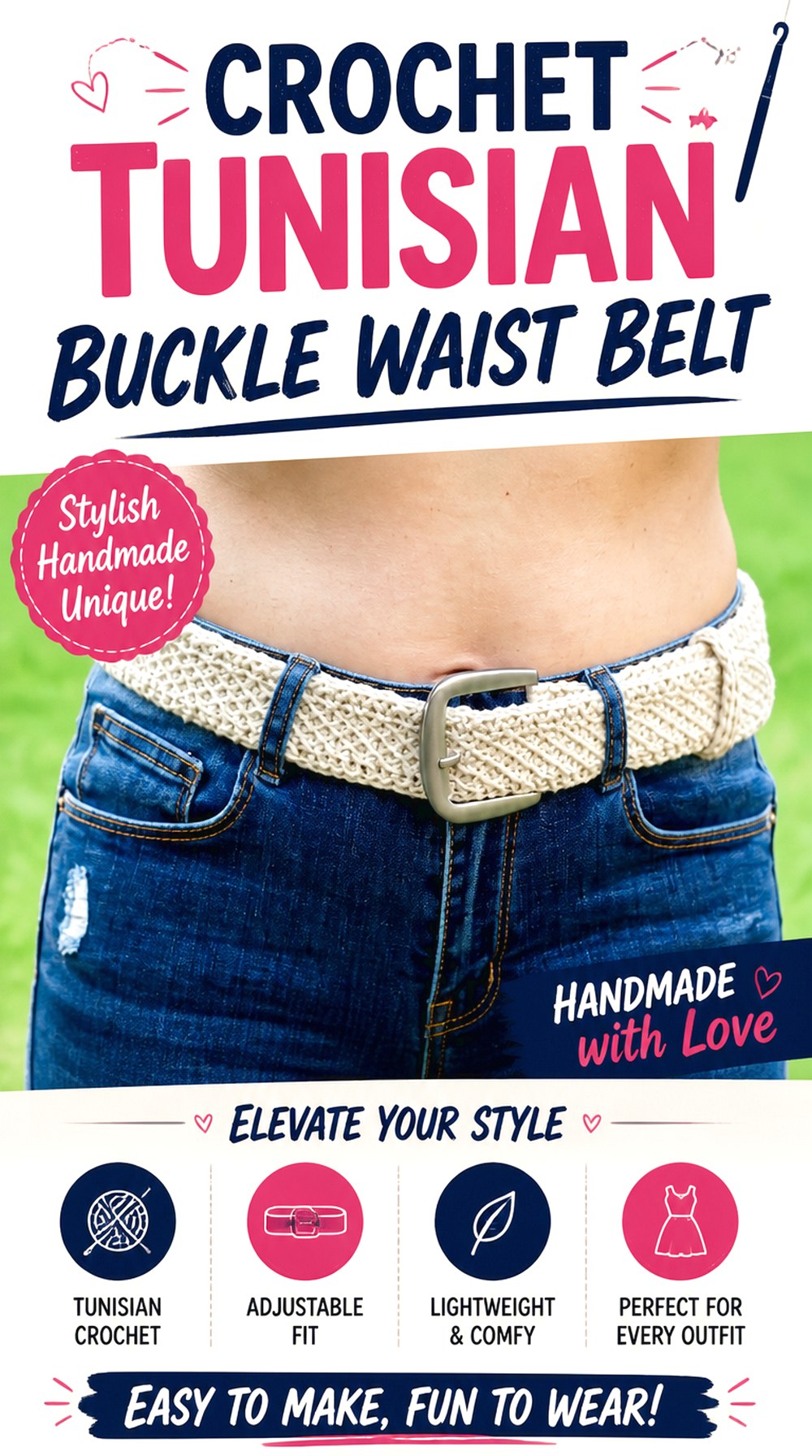
This tutorial from Francesca Uncinettando Crochet&Love is the structured contrast in the collection. It uses Tunisian crochet and repurposes an existing belt buckle, creating a denser waist strap rather than open lace. Its value for a lace-belt reader is the closure logic: it shows what a stable buckle area looks like when function is prioritized.
That makes it a useful construction reference if you want to combine a decorative lace center with firmer end sections. It can also stand on its own when an outfit needs the handmade texture of crochet without the transparency of openwork.
Dense Ends Can Support Delicate Centers
If you are adapting a lace idea to a buckle, consider using a denser end treatment rather than expecting highly open stitches to carry the hardware directly. The Tunisian belt demonstrates the opposite end of the structure spectrum and makes that contrast easy to see.
Any hybrid adaptation should be sampled first so the dense and lacy sections do not have dramatically incompatible stretch.
Reused Hardware Has Fixed Dimensions
An existing buckle dictates the maximum band width that can pass through it. Measure its usable opening and compare that with your crocheted sample before building a full belt around the hardware.
This is especially important with vintage or salvaged buckles, which may not match current standardized dimensions. Inspect reused hardware for rough edges that could snag yarn as well.
Original Tutorial and Creator Credit
Creator: Francesca Uncinettando Crochet&Love
Crochet Shaped Corset Lace Waist Belt

A corset-style waist belt changes the project from a narrow line into a shaped panel. Kemunto crochets demonstrates decreases, straight sections, increases, openings, straps, and lacing, so the finished piece follows the waist more deliberately than a rectangular lace strip.
This design is useful when the belt needs to occupy significant visual space over a loose dress, shirt, or costume layer. The lacing provides adjustment while also becoming a major design element. Treat it as a fashion accessory rather than assuming a crocheted waist piece provides the structural support of a purpose-built corset or medical garment.
Shaping Should Match the Intended Wearing Point
A wide panel reacts much more strongly to body curves than a narrow belt does. Take measurements where the top, center, and lower edge will actually sit rather than relying on a single waist circumference.
During construction, hold the panel around the body over the intended clothing. This can reveal whether an edge is flaring, folding, or landing somewhere different from the original design.
Leave the Lacing Room to Do Its Job
A lace-up closure is meant to bridge a gap. If the panel already meets tightly edge to edge, the lacing has little room to adjust. If the gap is excessive, the cords may carry too much tension and the sides can distort.
Follow the creator’s sizing approach for the actual construction, then check fit with the lacing threaded before treating the dimensions as final.
Wide Crochet Belts Are Styling Pieces, Not Support Devices
A handmade yarn waist cincher can change the silhouette of loose clothing, but that does not make it equivalent to structured shapewear. Avoid over-tightening simply to force a smaller circumference.
The most useful fit is one that remains comfortable during ordinary movement and keeps the crochet panel lying cleanly rather than buckling under excessive tension.
Original Tutorial and Creator Credit
Creator: Kemunto crochets
Crochet Compact Lace Up Corset Belt

AC Crochets offers another corset-waist approach, but this one is valuable as a more compact comparison. The broad crocheted band is sized with space left for the lace-up closure, creating a straightforward waist cincher rather than a long decorative tie.
Choose this idea when you want the look of front or back lacing without the exposed flower and shell motifs seen elsewhere in the article. Because the body is comparatively solid, color and the contrast of the lacing become the main design features. It is also easier to visualize under a jacket or over a simple top than a belt with long fringe.
The Gap Is Part of the Finished Fit
Do not treat the open lacing space as missing belt length. It is an intentional part of the closure and should remain visually controlled when the belt is comfortably worn.
When adapting the size, follow the creator’s measurement guidance rather than copying someone else’s finished dimensions. Bodies and preferred wearing positions differ, particularly with a wide accessory.
Watch the Top and Bottom Edges While Lacing
A cord tightened unevenly can pull the upper edge more strongly than the lower one, causing the panel to tilt. Lace gradually and compare the spacing from top to bottom.
If the belt only looks flat when pulled very tight, the underlying size or shaping may need reconsideration. Comfortable, even tension is a better target than maximum compression.
Original Tutorial and Creator Credit
Creator: AC Crochets
Crochet Shell Stitch Tie Belt
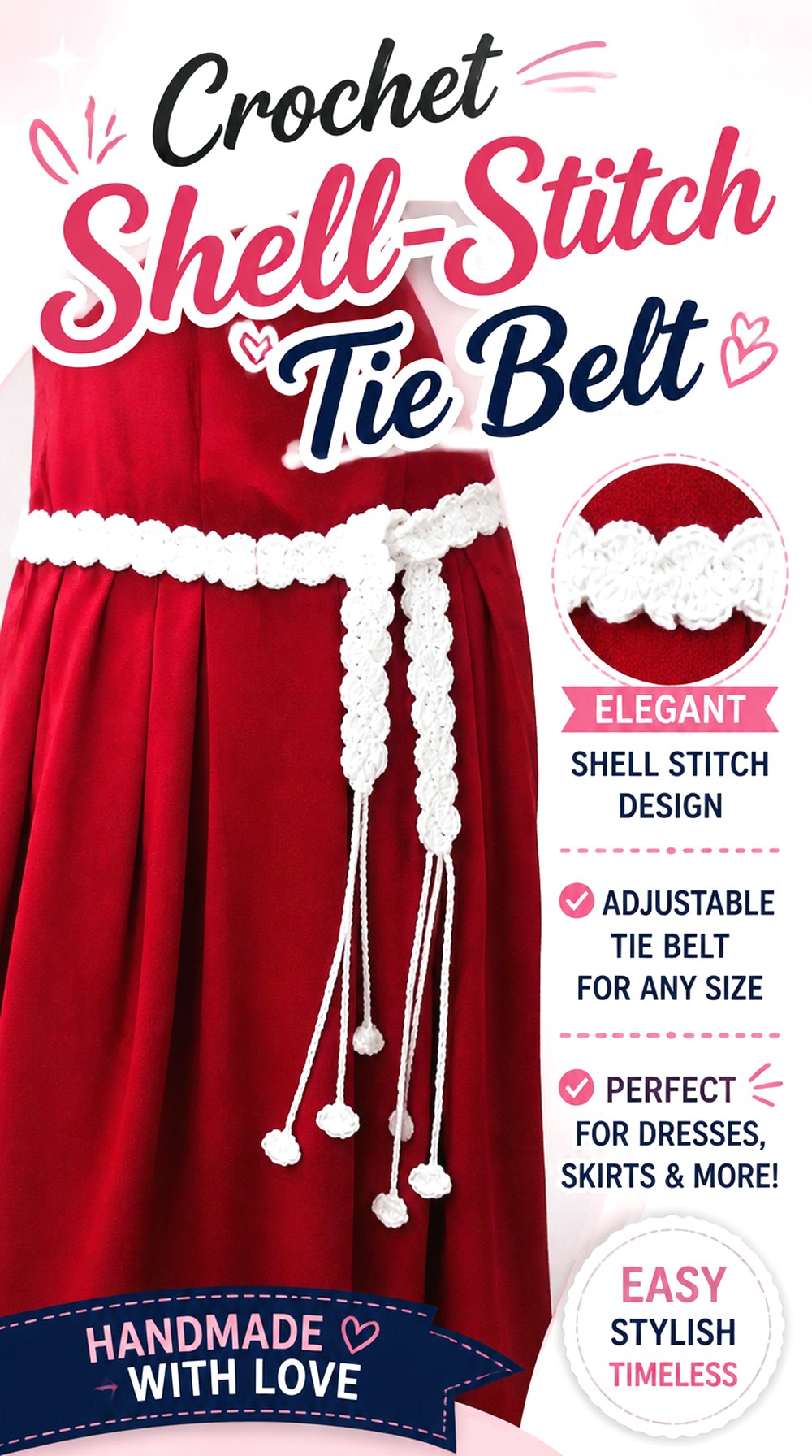
Gloriarte’s shell belt is a direct, recognizable belt project built from a decorative crochet stitch rather than separate motifs. The shell effect gives the band a repeating curved texture while keeping the construction visually continuous from one end to the other.
Compared with the earlier festival belt, this tutorial offers another way to interpret shell-based crochet in a finished accessory. It is worth considering if you prefer lace created inside a single band rather than flowers, rings, or granny squares assembled afterward. A single-color version also makes the pattern easy to pair with printed or textured clothing.
Check Whether the Shells Sit Flat When Wrapped
A lace pattern can lie perfectly flat on a table and still ripple when curved around the waist. Once you have enough length to test, wrap the band around the intended wearing point without pulling it tight.
Look at both edges. If one repeatedly flares, consider whether the belt is being worn higher or lower than the shape naturally suits or whether your tension differs from the tutorial.
Cotton Gives a Different Result From Soft, Springy Yarn
The tutorial specifies cotton, which provides useful context for the crisp appearance of the finished stitchwork. If you substitute another fiber, expect the drape and stretch to change rather than assuming the shells will behave identically.
Make a short sample first when the substitute is significantly softer, heavier, or more elastic. For lace accessories, appearance under slight tension is often more informative than the relaxed swatch alone.
Original Tutorial and Creator Credit
Creator: Gloriarte
Crochet Flower Belt for Denim

I Mogal Art’s tutorial centers the decorative effect on crochet flowers and specifically presents the finished belt as an accessory for jeans as well as other outfits. That gives this floral option a slightly more casual styling direction than the framed flower squares or fine flower lace elsewhere in the list.
It is worth choosing when you want visible blossoms against a relatively plain waistband. The floral forms can bring color to denim without requiring the entire belt to become a broad patchwork strip. Because the public description does not provide detailed finished sizing, plan to verify the construction and fit directly in the video before scaling it.
Compare the Flowers With Your Belt Loops
A flower that looks small on its own may still be wider than the loops on a pair of jeans. Decide whether you want the belt to pass through the loops or sit decoratively above them.
That single choice changes the project considerably. A belt worn over the waistband can use larger motifs freely, while a loop-threaded version needs compatible width throughout the sections that must pass through.
Confirm the Joining Method Before Changing Scale
Floral belts can be joined through petals, connecting chains, or a separate supporting band. Those approaches respond differently when motif size changes.
Watch how this tutorial connects and finishes the flowers before substituting a much heavier or finer yarn. A connection that is stable at the original scale may look sparse or bulky after a major size change.
Original Tutorial and Creator Credit
Creator: I Mogal Art
Crochet Slim Ribbon Cord Wrap Belt

Crochet with marmara demonstrates a versatile strip that can function as a belt, strap, rope, or ribbon depending on how it is used. For this collection, the belt interpretation offers a streamlined alternative to obvious lace motifs: the texture comes from the narrow crochet construction itself.
This is a good choice when you want the handmade effect without a wide band covering the clothing underneath. It can also be wrapped, knotted, or combined with another crochet piece more easily than a large buckle belt. Because the same construction has multiple uses, final length and thickness should be chosen specifically for waist styling rather than copied from another application.
A Multiuse Cord Still Needs Belt-Specific Sizing
A bag handle and a waist tie experience different tension and need different lengths. Decide how many times the cord should wrap, where it should knot, and how much end length you want visible.
Test those proportions with a temporary length of yarn or ribbon before committing. This simple mock-up can prevent making a beautiful cord that is awkwardly short or excessively long as a belt.
Decorative Texture Can Twist on Long Narrow Pieces
Slim crochet strips may naturally rotate depending on the stitch construction. A small amount of twist can look intentional in a cord, but excessive twisting makes a waist tie harder to position consistently.
As the piece grows, let it hang freely and see whether it settles flat. If your version behaves differently from the tutorial, tension or yarn characteristics may be contributing.
Original Tutorial and Creator Credit
Creator: crochet with marmara
Crochet Continuous Flower Lace Belt
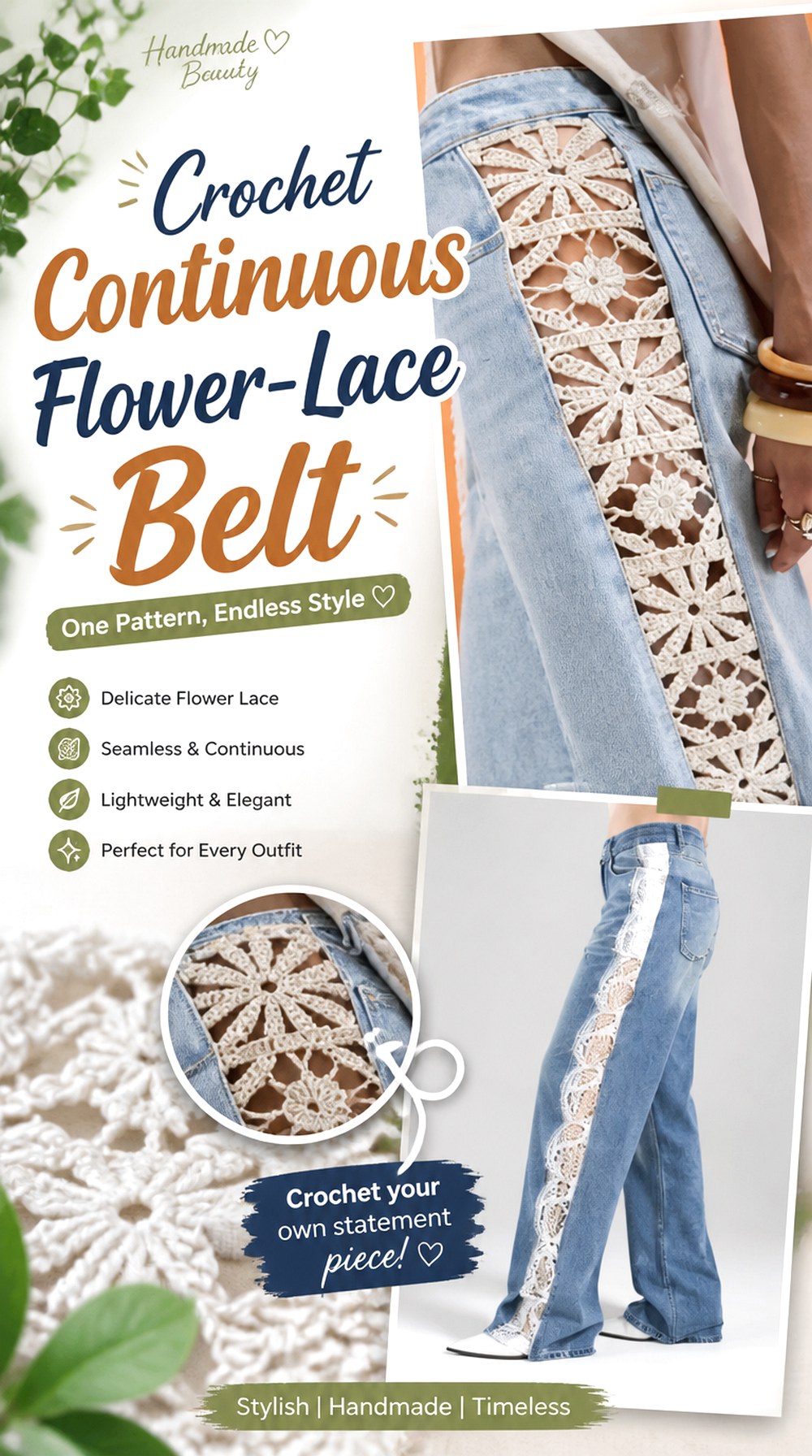
Hobbi CROCHET’s flower-lace tutorial provides one of the clearest adaptation options in this collection because the creator explicitly presents the lace as suitable for a belt among other uses. The finished strip features connected floral lace rather than framed motifs, giving it a lighter silhouette than the flower-square belts.
This is an appealing option if you like flowers but want the spaces around them to remain part of the design. It can be extended to the needed length and finished as a simple tie-style accessory. The continuous construction also reduces the visual interruption caused by seams between separately framed squares.
Continuous Flowers Create a Softer Edge
Without square borders, petals and connecting lace define the top and bottom outline. That makes the belt look delicate, but it also means edge irregularities are more visible.
Work enough of the repeat to see how the strip naturally settles before deciding whether you want an additional border. A heavy border may make the lace more stable but can also erase the airy floral silhouette that makes this version distinctive.
Decide on the Closure Before the Final Repeat
A continuous floral strip does not automatically provide a reinforced fastening area. If you want ties, plan how they will connect to the final flowers. If you prefer hardware, decide whether a denser end section is needed.
Making that decision before the last repeat usually produces a cleaner transition than improvising a bulky closure after the decorative lace is already complete.
Choosing Between Narrow Lace, Motif Belts, and Wide Cinchers
The easiest way to narrow these 18 ideas is by deciding how much visual space you want the belt to occupy. For a subtle accent, the fan lace, Irish-lace cord, ribbon cord, or continuous floral lace keeps the silhouette light. Shells, beads, tassels, and O-rings add more detail without turning the belt into a full waist panel.
Choose flower squares or granny squares when you want the motifs to become the main feature and do not mind planning joins carefully. The two corset-style options suit outfits that need a broad waist accent rather than a narrow line. For actual belt-loop use, prioritize blocked width and closure compatibility before appearance; many of the wider floral and corset styles are better worn over clothing instead.
Conclusion
These crochet lace belt ideas range from quiet openwork ties to flower-covered motif bands and broad lace-up waist pieces, so the right choice depends less on color than on how you want the accessory to function. Choose cords or narrow lace for light layering, shell and flower designs when stitch detail should stand out, and buckles or corset closures when a more defined fastening system matters.
Before committing, check the intended wearing point, blocked width, stretch, and how the closure interacts with the lace. Motif belts deserve extra layout planning, while hardware styles need stable attachment areas. Once you choose a construction, use the original tutorials linked above for the creators’ exact crochet methods and finishing details.
Frequently Asked Questions
What type of yarn works well for a crochet lace belt?
There is no single best yarn because the desired structure varies. Smooth yarn makes openwork and floral shapes easier to see, while highly fuzzy yarn can soften stitch definition. Fiber choice also affects stretch, drape, blocking, and care.
Before making a full belt, crochet a small section in the intended yarn and gently tension it. The useful question is not only whether the lace looks attractive flat, but whether it keeps the appearance you want when wrapped around the body.
How do I determine the length of a tie-on crochet lace belt?
Measure the exact place where you plan to wear it while wearing the type of clothing that will sit underneath. Then decide how the ends should fasten. A simple knot, small bow, dramatic bow, side tie, and double wrap all require different amounts of extra length.
For openwork designs, make the final decision after sampling or blocking because the fabric may change dimensions. Do not use someone else’s waist measurement or finished belt length as a universal sizing rule.
Can a crochet lace belt be worn through jeans belt loops?
Some can, but check the finished blocked width against the actual loops first. Narrow cords and slim lace bands have the best chance of fitting, while flowers, large shells, granny squares, O-rings, and corset panels may be far too wide.
Also inspect the closure. A decorative buckle, tassel, or large motif may not pass through the loops even if the central band does. When loop use is essential, plan width and hardware before starting the full project.
Should crochet motifs be blocked before joining them into a belt?
When blocking is appropriate for the chosen yarn, doing it before the final layout can make motif planning much easier. It lets you compare the true finished dimensions of flowers or squares and identify pieces that are noticeably smaller, larger, or more distorted than the others.
Arrange the blocked motifs around the intended wearing measurement before joining. This gives you a chance to adjust the number, order, or color placement without having to undo a completed belt.
How can I reduce stretching in an openwork crochet belt?
Start by identifying where the stretching occurs. Long chain spaces, narrow cords, soft fibers, and unsupported tie sections can behave differently. A denser border or end section may help in some designs, while a reinforced backing may make sense for a belt carrying hardware.
Do not automatically add reinforcement everywhere, because that can change the drape and appearance of delicate lace. Sample the proposed solution first and pay particular attention to the areas that experience pulling during fastening.
Can I replace a tie closure with a buckle or clasp?
Sometimes, but the belt needs a suitable attachment area. A buckle puts concentrated stress at the end of the band, while a tie distributes tension differently. Highly open flowers or chain spaces may not provide enough structure for hardware without modification.
First compare the buckle or clasp opening with the finished belt width. Then consider whether a denser end section or other reinforcement can be added without distorting the design. For exact attachment methods, use a tutorial that already includes the type of hardware you intend to use.
Is a crochet corset belt the same as supportive shapewear?
No. The corset-style projects here should be treated as fashion accessories unless a product has been specifically engineered and validated for another purpose. Crochet fabric and decorative lacing can shape the appearance of loose clothing, but that does not make the piece a medical support garment or conventional structured corset.
Fit it for comfortable styling rather than extreme compression. If the edges buckle, the lacing gap becomes severely distorted, or ordinary movement is uncomfortable, reassess the fit instead of simply tightening the ties further.