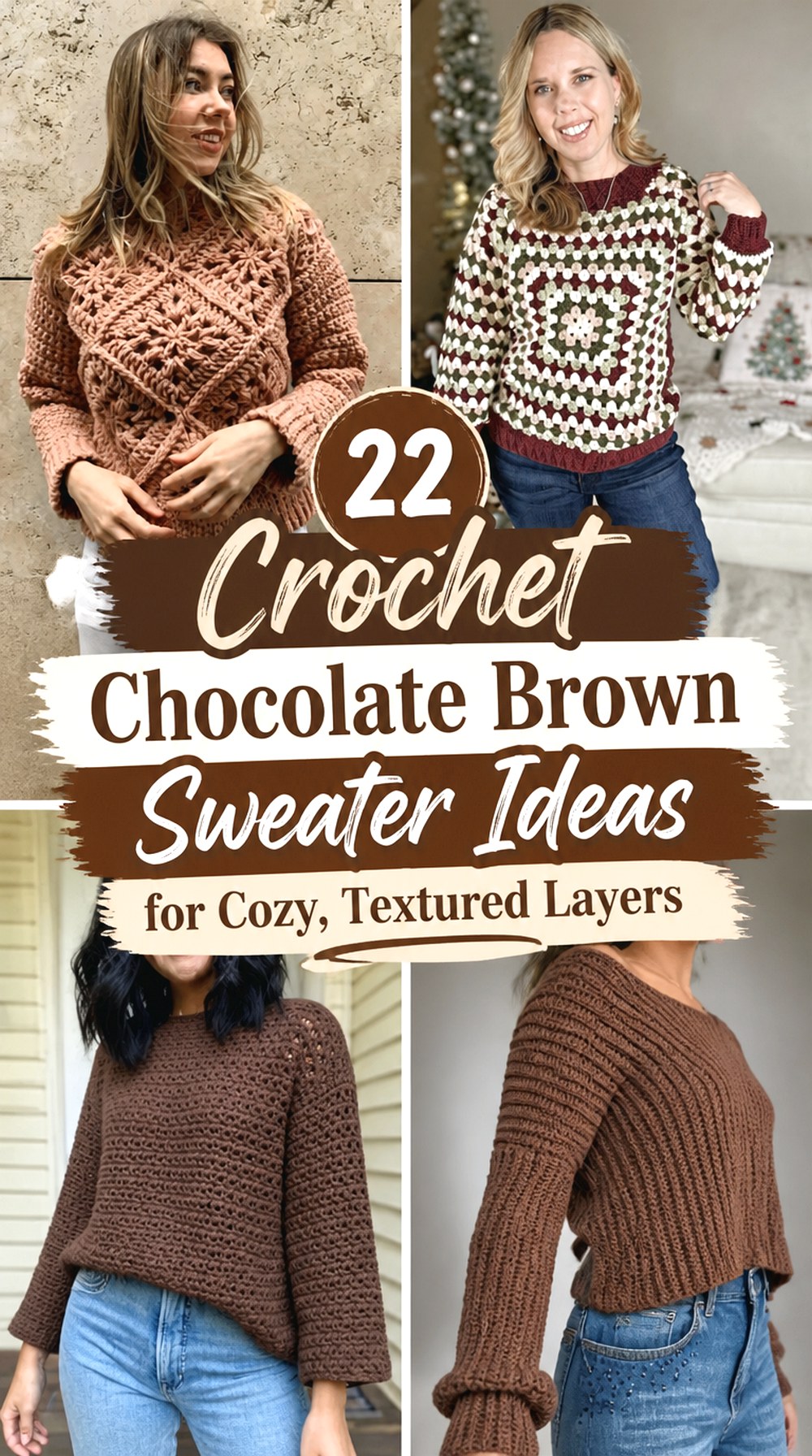

Chocolate brown can take a crochet sweater in several directions. In a smooth yarn, the color can make ribbing, cables, granny clusters, and raised stitches look especially defined. In an airier fabric, the same deep neutral feels lighter because the openings become part of the design. Sweater construction matters just as much: a boxy four-panel pullover behaves very differently from a top-down raglan, fitted V-neck, cropped balloon-sleeve sweater, or modular granny-square design.
The tutorials below cover those different construction routes. Their original samples are not necessarily chocolate brown, so think of them as construction references rather than 22 brown-specific patterns. Before substituting a brown yarn, confirm the creator’s recommended yarn category, gauge information, measurements, and other project requirements. That way, the color change supports the design instead of unexpectedly changing its fit or drape.
Quick List
- Oversized Rectangle Crochet Pullover
- Airy Mesh Crochet Sweater
- Clean V-Neck Crochet Sweater
- Collared V-Neck Crochet Sweater
- Alpine Texture Cropped Crochet Sweater
- Relaxed Panel Crochet Pullover
- Sweetheart Cable Crochet Sweater
- Floral Lace Crochet Sweater
- Made-to-Measure Crochet Jumper
- Seamless Raglan Crochet Sweater
- Two-Square Granny Crochet Sweater
- Balloon-Sleeve Crochet Crop Sweater
- Circular-Yoke Textured Crochet Sweater
- Crochet Polo Sweater
- Simple Long-Sleeve Crochet Sweater Top
- Romantic Tie-Front Crochet Sweater Top
- Unisex Oversized Crochet Sweater
- Four-Square Crochet Pullover
- Tulip Motif Crochet Sweater
- Sand Dune Textured Crochet Sweater
- Top-Down Granny V-Neck Crochet Sweater
- Bulky Four-Panel Crochet Sweater
Choose Chocolate Brown by Stitch Definition, Not Just Shade
A chocolate-brown yarn may look rich in the skein yet behave differently once crocheted. Very deep browns can visually soften small stitch changes in low light, while smoother yarns often make ribbing, cables, raised texture, and granny clusters easier to distinguish. Fuzzy or heavily haloed fibers can produce a softer surface but may blur intricate stitch definition.
Before committing to an entire sweater, make a useful fabric sample in the brown yarn you are considering and view it in daylight as well as ordinary indoor light. The question is not simply whether the shade is attractive. Check whether you can still see the feature that gives the sweater its character. That matters particularly for the alpine, cable, textured-yoke, and motif-based options later in this list.
Fit Changes More With Construction Than With Color
A chocolate-brown sweater can look sleek, slouchy, cropped, tailored, or romantic depending on how it is built. Rectangle and separate-panel sweaters make the garment shape easy to visualize before assembly, but shoulder width, armhole placement, and intended ease still need attention. Top-down raglans and yokes offer another advantage: you can often evaluate developing proportions while more of the sweater is still accessible.
Motif garments need a different check. Their fit is strongly influenced by the blocked dimensions of each square or other module, plus joins and edging. For any construction, compare the tutorial’s measurement guidance with your body and with a sweater whose fit you already enjoy. Avoid treating a size label or the word “oversized” as a universal measurement.
Check Yarn Weight, Drape, and Stretch Before Substituting Brown Yarn
Matching the color does not make two yarns interchangeable. A heavier yarn can create a more substantial sweater, while a thinner or more fluid fabric may change how sleeves, necklines, and cropped hems hang. Openwork designs also depend on the relationship between yarn, hook, and spacing; simply changing yarn without checking the resulting fabric can alter both coverage and drape.
Use the creator’s yarn and gauge information as your starting reference whenever it is provided. Swatching becomes particularly valuable when you want to substitute a different chocolate-brown fiber. Block the sample as you intend to treat the garment, then assess its dimensions, flexibility, stitch definition, and recovery. This small check can prevent a color substitution from becoming an unwanted fit substitution.
Oversized Rectangle Crochet Pullover
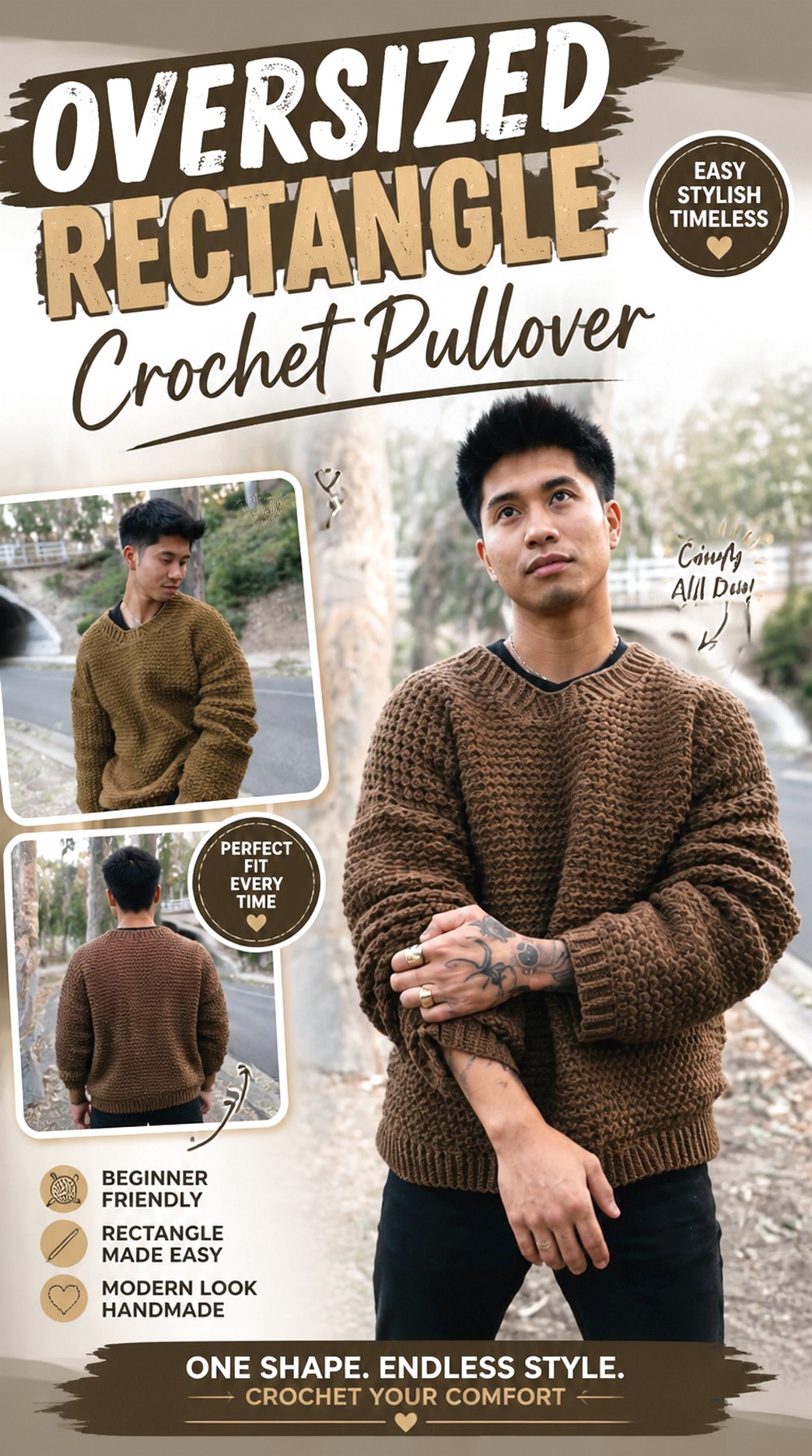
A boxy pullover is one of the clearest ways to make chocolate brown feel modern rather than overly decorative. The tutorial from it’s erin b. demonstrates an oversized sweater assembled from four main rectangular pieces, giving the finished garment a straightforward body-and-sleeve silhouette. That simple geometry leaves room for the brown fabric itself to become the visual focus.
This route suits readers who like relaxed layering and want an uncomplicated shape rather than waist shaping or a dramatic neckline. Because “oversized” can mean very different things from one person to another, the useful planning decision is how much room you actually want through the chest, shoulders, and sleeves.
A Boxy Brown Silhouette Needs Deliberate Ease
Instead of choosing width simply because the project is described as oversized, compare the intended sweater dimensions with a loose pullover you already wear comfortably. A little extra width can read as relaxed; much more can shift the shoulder line and change how the sleeves hang. Chocolate brown makes the overall silhouette visually strong, so proportion becomes more noticeable when there are few decorative distractions.
Ribbing Keeps a Dark Neutral From Looking Flat
A monochrome sweater does not need multiple colors to create contrast. Ribbed edges can separate the cuffs, neckline, and lower body from the main fabric through texture alone. With a deep brown yarn, check the fabric under good light before committing to subtle details. If the yarn has a heavy halo, some of that ribbed definition may appear softer than it would in a smoother yarn.
Airy Mesh Crochet Sweater

A mesh sweater gives chocolate brown a noticeably lighter personality. Rather than presenting the color as one uninterrupted surface, the open fabric lets the layer underneath show through, creating contrast without adding another crochet color. FTK Crochet’s tutorial focuses on a mesh sweater and encourages working from personal measurements, making it a useful reference for readers interested in a more open, adaptable silhouette.
This idea works particularly well as a transitional or layering piece. It is less about plush coverage and more about proportion, negative space, and what you pair beneath it. Before choosing it, decide whether you want the openings to remain a major visible feature or prefer a denser brown sweater.
The Layer Underneath Becomes Part of the Color Story
With mesh, a tank, camisole, tee, or dress worn below the sweater can dramatically change how the brown reads. A similar neutral creates a quieter tonal look, while a contrasting underlayer emphasizes every opening. Think about that interaction before choosing a mesh scale, because the finished sweater cannot be evaluated in isolation in quite the same way as an opaque pullover.
Mesh Fabric Needs a Different Drape Check
Open fabric can lengthen or relax once it carries the weight of a full garment. A useful swatch should therefore tell you more than whether you like the stitch appearance. Check how easily it stretches vertically and whether it returns toward its original shape. If the brown yarn produces a noticeably heavier fabric than the tutorial sample, sleeve and body proportions may need closer attention.
Original Tutorial and Creator Credit
Creator: FTK Crochet
Clean V Neck Crochet Sweater
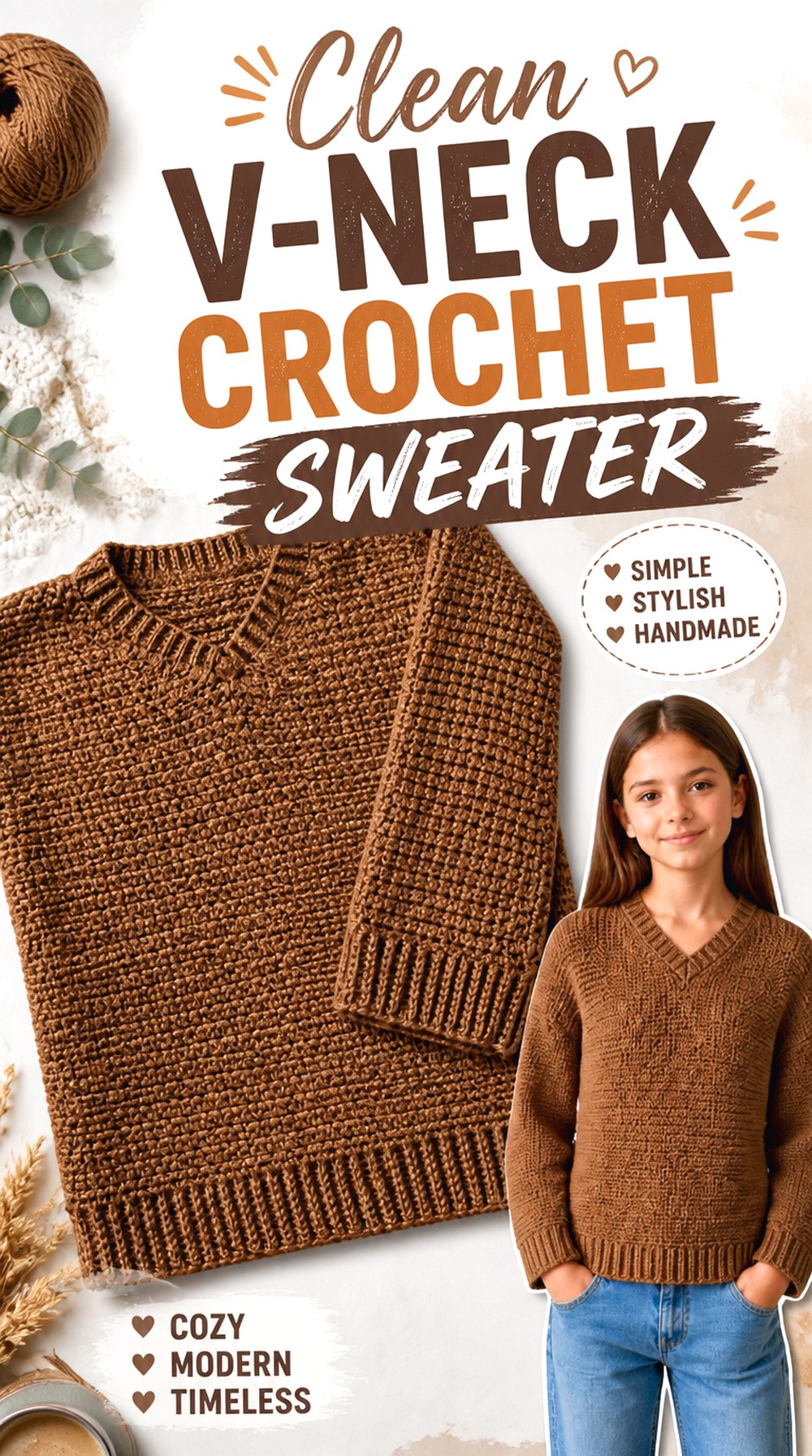
A simple V-neck is a strong choice when you want chocolate brown to look streamlined rather than bulky. Tommy’s sheep crochet and knitting demonstrates a V-neck sweater using a straightforward stitch vocabulary, with the neckline providing the main change in shape.
Compared with a high crew neck, the V creates more open space around the chest and can make a deep neutral feel less visually dense. It also gives you more options for layering over shirts and contrasting necklines. When planning your version, pay close attention to the V itself rather than judging fit only by body width. Its width and depth strongly influence the finished style.
V-Neck Depth Changes How the Sweater Layers
A shallow V can behave much like a conventional pullover neckline, while a deeper opening gives more visual space to whatever is worn underneath. Before adapting the sweater, decide whether the brown layer should stand alone or regularly sit over tees and collared shirts. That styling decision helps you recognize whether the tutorial’s neckline proportions match the look you have in mind.
A Smooth Brown Yarn Keeps the Neckline Crisp
The edges of a V form a prominent visual line, particularly in one solid color. A highly textured or fuzzy yarn may soften that line, while clear stitch definition can make the shape more graphic. If substituting yarn, work enough of a sample to see how the edge behaves and whether the fabric feels stable enough to maintain the intended neckline rather than spreading excessively.
Original Tutorial and Creator Credit
Creator: Tommy’s sheep crochet and knitting
Collared V Neck Crochet Sweater

Adding a collar changes the character of a V-neck immediately. JeggoCrochet’s sweater combines a collared neckline with front-and-back panel construction and ribbed details, producing a more structured appearance than a plain V-neck pullover.
In chocolate brown, this can lean toward a polished, vintage, or collegiate look depending on yarn and styling. It is a good alternative for someone who likes an open neckline but wants more visual architecture around it. The extra collar also means you should evaluate neck and shoulder proportions as a group instead of treating the neckline as a decorative finishing detail.
The Collar Adds Structure Around a Soft V
A collar introduces extra fabric at an area that already changes direction. If the yarn is too limp, the collar may not frame the V as distinctly as expected; if the fabric is very firm, it can feel more substantial around the neck. A blocked swatch can help you judge whether your chosen chocolate-brown yarn produces the balance of drape and definition you want.
Check Shoulder Width Before Committing to the Polo Shape
Collars attract attention toward the shoulders and upper chest. That makes an overly wide or narrow shoulder line more noticeable than it might be on a plain sweater. Compare the tutorial’s fit approach with the shoulder width of a garment you already like, especially if you intend to wear this sweater over another layer rather than directly against the body.
Brown-on-Brown Ribbing Can Still Read Clearly
A single-color version can use stitch direction instead of contrast yarn. Ribbing around the hem, cuffs, and neckline can break the chocolate-brown surface into distinct zones while keeping the palette quiet. If your yarn is very dark, photograph or view the swatch in daylight to make sure those changes remain visible enough to justify the extra textural detail.
Original Tutorial and Creator Credit
Creator: JeggoCrochet
Alpine Texture Cropped Crochet Sweater
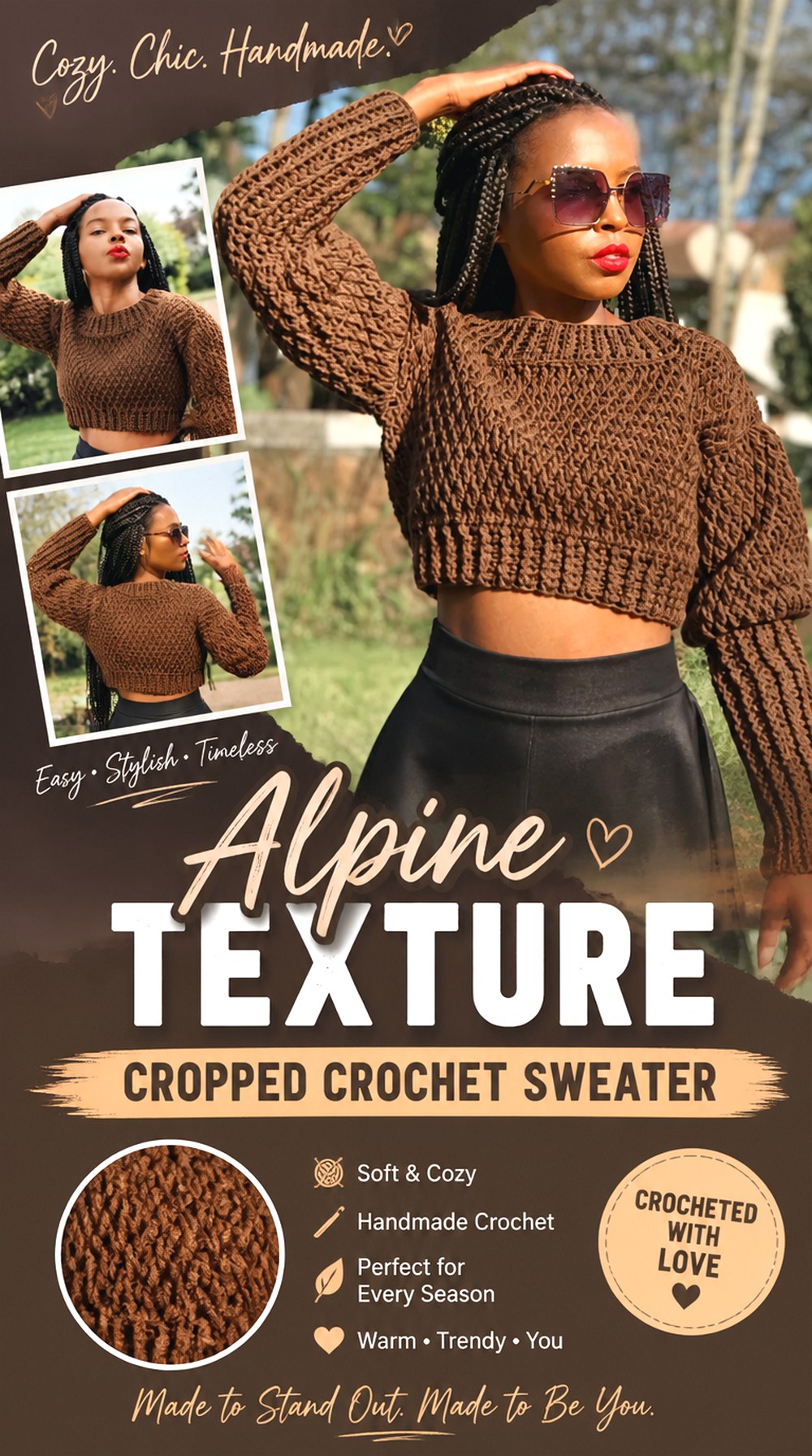
Raised alpine-style texture gives a chocolate-brown sweater depth without relying on color changes. AC Crochets demonstrates a cropped sweater with prominent texture, ribbed finishing, and fuller sleeves, creating a silhouette that feels substantially different from the flatter panel pullovers in this collection.
This is a good direction when you want the yarn color to behave almost like shading: raised and recessed areas catch light differently and create tonal variation across one brown shade. The crop and sleeve volume also make proportion important. Decide whether you want the shorter body to meet a waistband, sit above it, or be lengthened within the construction options offered by the creator.
Alpine Texture Shows Best When the Yarn Is Not Too Fuzzy
A strongly haloed yarn can soften the peaks and shadows that make raised stitch patterns interesting. If the texture is your main reason for choosing this sweater, compare several brown yarn samples for clarity rather than deciding by softness alone. The strongest choice is the fabric that gives you the balance of comfort, stitch definition, and drape you want after blocking.
Cropped Length Shifts Attention to the Waist Ribbing
When a sweater ends higher on the torso, the bottom edge becomes more visually prominent. Check where you actually want that line to sit with the trousers, skirts, or dresses you wear most often. If you adapt the length, consider the entire body proportion rather than simply adding fabric; the relationship between torso length and sleeve fullness is part of this design’s character.
Full Sleeves Balance the Shorter Body
Fuller sleeves can make a cropped body feel intentionally balanced, but they also place more fabric at the sides of the garment. A heavier brown yarn may exaggerate that effect. Before committing, hold or pin your fabric sample against the arm and consider whether you prefer dramatic volume or a more restrained sleeve, then confirm what the tutorial allows you to adjust.
Original Tutorial and Creator Credit
Creator: AC Crochets
Relaxed Panel Crochet Pullover

Brunaticality’s sweater tutorial offers another panel-built route, useful for readers who like the predictability of making recognizable garment sections before assembly. The creator presents the project as adaptable across sizes, with separate pieces forming the finished pullover.
In chocolate brown, this type of sweater can become a practical everyday neutral. Its strength is not an elaborate motif but the opportunity to fine-tune width, length, and overall looseness. That makes it worth comparing with the more visibly oversized first idea: both use approachable shapes, but you can aim for a cleaner or closer relaxed fit here rather than maximum slouch.
Flat Panels Make Width Easy to Compare
A separate front or back panel can be laid against an existing sweater as a visual checkpoint before assembly. That comparison is often more informative than relying only on a generic size name. Remember that seams and edging affect the final result, so use the comparison to detect obvious proportion problems rather than treating it as an exact substitute for the tutorial’s sizing information.
Seams Need Flex at the Shoulder
The shoulder area carries both garment weight and arm movement. If your substituted brown yarn creates a stiffer fabric, a seam can feel more noticeable than it does in a softer sample. Before finishing every join, check how the assembled area bends and whether the shoulder sits where you intended. A clean seam should support the shape without making the upper body feel rigid.
Original Tutorial and Creator Credit
Creator: Brunaticality
Sweetheart Cable Crochet Sweater
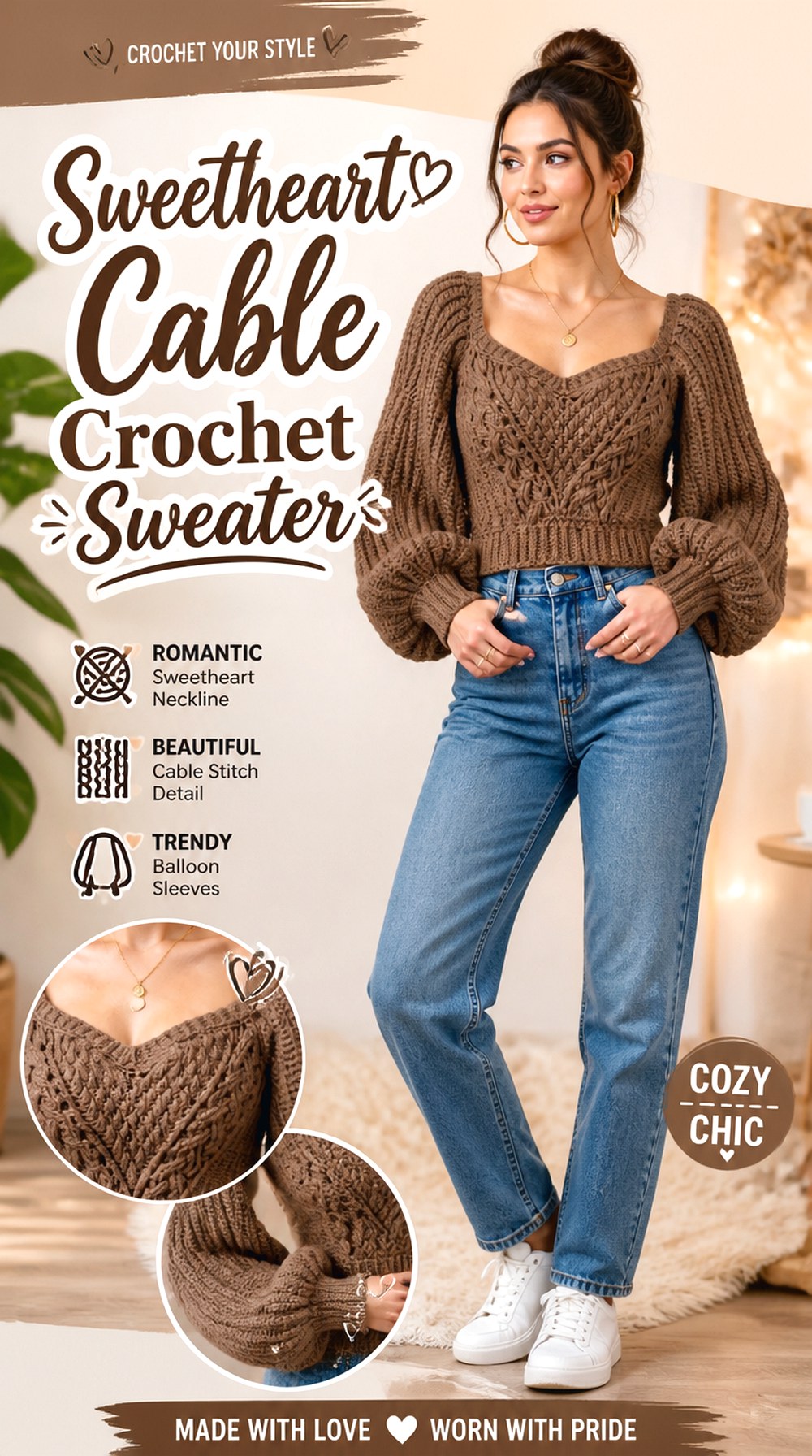
For a more decorative chocolate-brown sweater, TCDDIY’s design combines cable texture with a sweetheart neckline and statement sleeves. The resulting garment offers much more surface detail than a plain pullover, making it a strong choice when you want a single brown shade to carry a clearly visible pattern.
The neckline is another major difference. Instead of a horizontal crew opening or straight V, the sweetheart shape creates a curved central focal point. That means symmetry, stitch definition, and how the upper edge sits on the body deserve as much attention as overall sweater width.
Cable Relief Gives Chocolate Brown a Tonal Pattern
Cable-style crochet can create highlights and shadows even when every stitch is the same brown. That makes yarn surface particularly important. A smooth or moderately textured yarn may show the relief more clearly than one with a strong halo. Make a representative sample and look at it from several angles; texture that disappears straight on may become much more obvious in side light.
A Sweetheart Neckline Needs Symmetry at Center Front
The visual success of a sweetheart shape depends on the two sides looking intentional together. While working, periodically lay the upper section flat and inspect the center rather than waiting until all finishing is complete. This is a general alignment checkpoint, not a replacement for the creator’s instructions, but it can help you notice uneven tension before the neckline becomes harder to adjust.
Balloon Sleeves Add Weight Away From the Torso
Full sleeves can beautifully offset a shaped neckline, yet the amount of fabric at the arms affects how the entire sweater hangs. If your chocolate-brown substitute is substantially heavier or less fluid than the demonstrated yarn, the sleeves may appear more structured. Swatch first and decide whether that stronger shape fits your intended look before making both sleeves.
Original Tutorial and Creator Credit
Creator: TCDDIY
Floral Lace Crochet Sweater
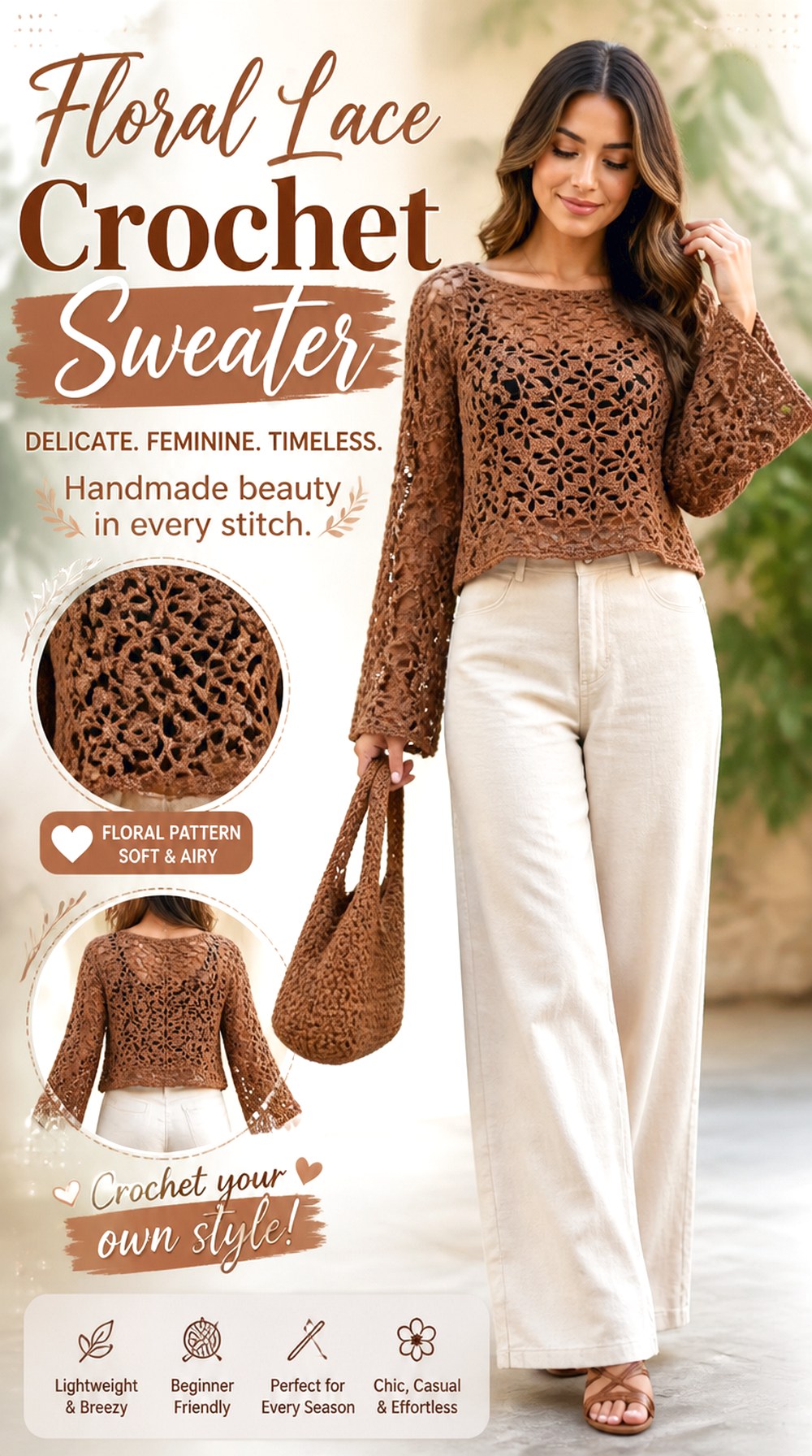
Chenda DIY’s floral lace sweater takes chocolate brown in a more delicate direction. Instead of dense fabric, the design uses decorative openwork to create the main visual interest. The original tutorial demonstrates the lace sweater in mercerized cotton, which is an important reminder to check material behavior carefully before substituting a different brown yarn.
A deep brown floral lace can be striking because the motif edges become almost silhouette-like over a lighter underlayer. It can also look much softer over a similarly dark layer. This makes the sweater particularly adaptable through styling, although the open fabric means fit and stretch should be assessed differently from a dense pullover.
Floral Openwork Softens a Deep Brown Palette
Chocolate brown can feel visually substantial in a solid fabric. Open floral shapes interrupt that mass and let skin or an underlayer become part of the composition. If you want the motif itself to stand out, test your brown yarn over the colors you are likely to wear beneath it. The same lace may look subtle over black and much more graphic over cream.
Motif Openings Change What You Wear Underneath
Coverage is not determined only by sweater measurements when the fabric contains larger openings. Look at the finished tutorial result from the front, side, and back and decide whether the openness suits your intended setting. This is especially relevant if you want the piece for work or everyday layering rather than as a decorative top over a deliberate base layer.
Blocking Matters More When Lace Defines the Shape
Openwork often becomes clearer when the fabric is allowed to settle after washing or blocking according to the yarn’s care needs. Test that process on a swatch first. You are looking for whether the floral shapes open attractively, whether the dimensions change substantially, and whether the fabric recovers enough to support the sweater rather than becoming unexpectedly loose.
Original Tutorial and Creator Credit
Creator: Chenda DIY
Made to Measure Crochet Jumper

Kali’s Threads approaches sweater making without relying on a fixed conventional pattern format, making this tutorial particularly relevant if your priority is fitting the garment to your own proportions.
For a chocolate-brown wardrobe basic, that flexibility can be more valuable than a dramatic stitch motif. You can focus on the outline you actually want: shorter or longer body, relaxed or closer fit, and sleeve proportions that relate to your own measurements. This approach also places more responsibility on the maker, because measuring, comparing fabric, and checking progress become central parts of the project rather than optional refinements.
Start From a Garment You Already Like
A well-fitting sweater from your wardrobe can provide useful visual context for width, shoulder placement, body length, and sleeve proportion. It does not replace the tutorial’s method, but it gives you a concrete target instead of an abstract idea of “relaxed” or “fitted.” Use a garment with a fabric behavior reasonably similar to the crochet sweater you hope to make.
Measure Again After the Fabric Has Some Weight
A small starting section may not hang like a completed sweater. As more fabric accumulates, the developing garment can stretch under its own weight. Rechecking key dimensions during construction gives you a chance to notice that change early. This matters even more if your chocolate-brown yarn is heavier or more elastic than the yarn demonstrated in the tutorial.
Keep the Brown Yarn Substitution Close to the Planned Fabric
Color is the easiest part of a substitution to match visually, but weight and fiber behavior influence fit more. If the original design depends on drape, replacing it with a much firmer brown yarn can change the result even when measurements appear similar. Compare the blocked fabric, not just the label, and use the creator’s material guidance as the main technical reference.
Original Tutorial and Creator Credit
Creator: Kali’s Threads
Seamless Raglan Crochet Sweater
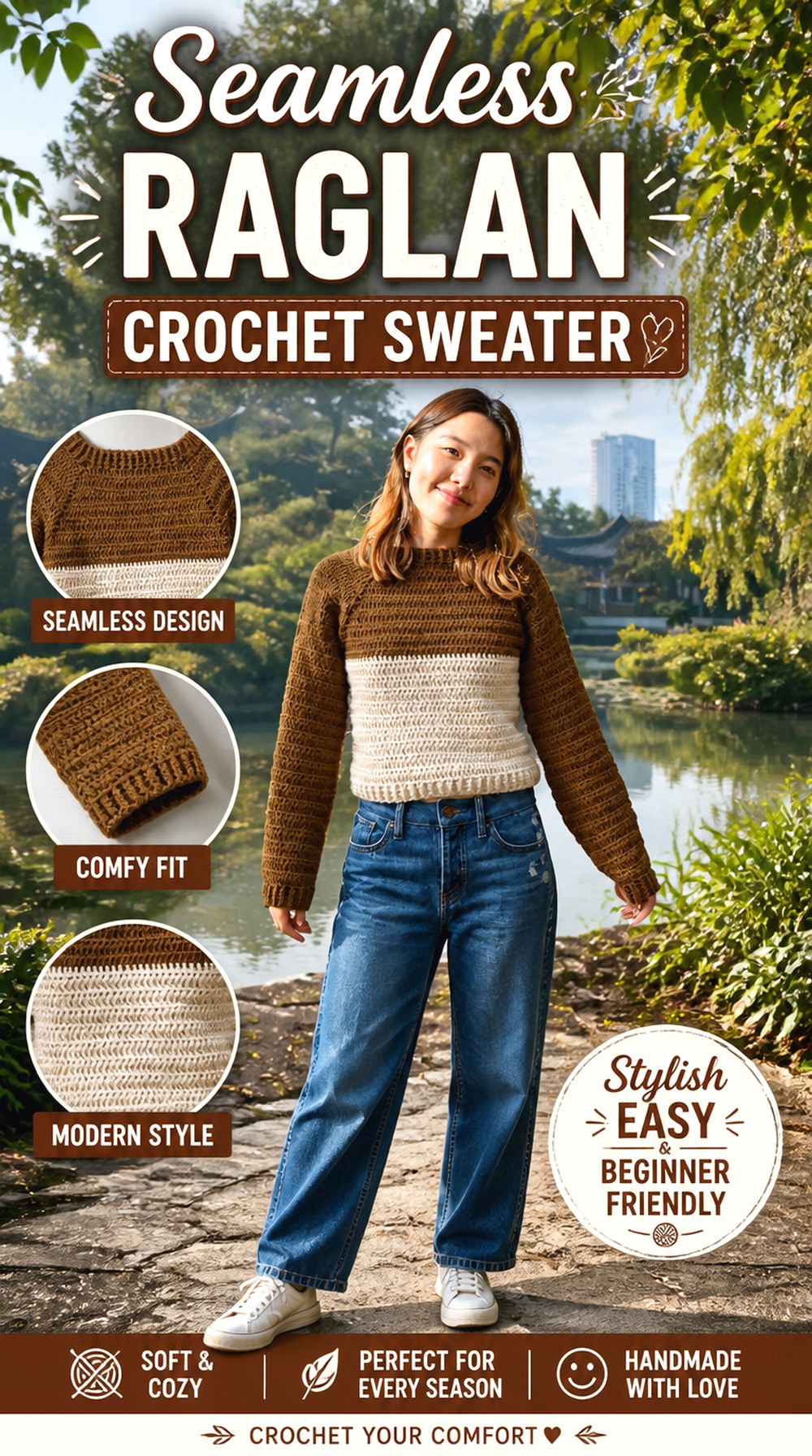
A raglan construction changes both the making process and the finished appearance. VivCrochets demonstrates a no-sew raglan sweater in which the upper body develops as a connected structure rather than as separate front, back, and sleeve pieces that all need later assembly.
Chocolate brown works well with this construction because the raglan lines create subtle direction across an otherwise solid-color surface. The design is worth considering if you dislike extensive seaming or want more opportunities to assess upper-body proportions while the sweater is taking shape. It still requires measurement discipline; “no-sew” does not mean the fit automatically adjusts itself.
Raglan Lines Create Built-In Visual Direction
The diagonal lines running from the neckline toward the underarm can become a quiet design feature in one-color crochet. On a smooth chocolate-brown fabric, they may show as changes in texture and direction without requiring contrast yarn. Check that these lines sit similarly on both sides as the yoke grows, because uneven tension can make symmetry problems easier to see in a solid color.
Try-On Points Matter Before Sleeve Separation
A major advantage of connected top-down construction is the possibility of evaluating developing proportions before the body and sleeves become fully independent. When the tutorial reaches appropriate checkpoints, look at where the underarm area sits and how much room exists across the upper torso. Make any allowed adjustment according to the creator’s guidance rather than discovering the mismatch after finishing the body.
A Solid Brown Yoke Highlights Construction
Variegated yarn can disguise small structural lines, while chocolate brown makes the architecture itself more noticeable. That can be an advantage if you like understated detail. It also means consistent tension matters around increases and transitions. If your swatch shows every small irregularity strongly, choose the hook and yarn combination that gives the fabric a more even surface before starting the full garment.
Original Tutorial and Creator Credit
Creator: VivCrochets
Two Square Granny Crochet Sweater

Hooked on Homemade Happiness uses two large granny squares as major body elements in this sweater tutorial, making the construction visually and structurally different from a sweater assembled from many small motifs.
Worked in chocolate brown, the large-scale granny structure can create a geometric surface without the patchwork effect usually associated with multicolor squares. This idea suits someone who likes granny construction but wants fewer major modules to plan and join. Because the squares influence the dimensions of the body, their blocked size matters directly to the final garment rather than functioning as a minor decorative accent.
Two Large Squares Create a Graphic Front and Back
A single large granny structure across each major panel gives the sweater broad radiating lines. In one brown color, those lines remain visible through stitch direction instead of color changes. Before committing to a completely solid version, make enough fabric to decide whether you enjoy that subtle effect or would prefer to emphasize the geometry with a second neutral at the edging.
Block Both Squares to Matching Dimensions
If the front and back modules relax to different sizes, joining them can introduce puckering or uneven side seams. Compare the squares after treating them consistently according to the yarn’s care requirements. Minor differences may sometimes be addressed within the creator’s finishing method, but it is much easier to identify the issue before the garment is fully assembled.
Neckline Planning Prevents an Overly Open Top
Large square construction can make the upper opening feel generous if the neckline is not evaluated in relation to your shoulders. Follow the creator’s neckline instructions, then compare the developing opening with how you intend to wear the sweater. A brown sweater meant for layering may tolerate a different amount of openness from one intended to be worn directly over a camisole.
Original Tutorial and Creator Credit
Creator: Hooked on Homemade Happiness
Balloon Sleeve Crochet Crop Sweater

MayaLunaCorazon DIY CROCHET & BUSINESS demonstrates a cropped sweater with balloon sleeves, giving this option a noticeably more dramatic sleeve-to-body proportion than the straighter pullovers above. The tutorial sample is shown in a specific size, while the creator references a broader size range for the accompanying pattern information.
Chocolate brown can make this silhouette feel grounded despite its volume. The short body keeps the sweater from becoming visually heavy, while the sleeves create movement and presence. Readers considering this style should plan body length and sleeve fullness separately instead of assuming that enlarging or lengthening one part should automatically change the other.
Balloon Sleeves Need Enough Cuff Contrast
The narrowed cuff is what makes a fuller sleeve read as intentional rather than simply oversized. In one-color brown, that change is defined through silhouette and texture. Check whether your chosen yarn has enough elasticity or structure for the cuff area to visually distinguish itself from the sleeve above, and follow the tutorial’s finishing guidance rather than making arbitrary reductions.
Keep Body Length Separate From Sleeve Volume
A cropped torso and large sleeve are two independent style choices. If you prefer more coverage, see whether the creator’s instructions or pattern support length modification instead of scaling the entire sweater indiscriminately. Lengthening only the body may preserve the sleeve drama while creating a version that works better with your wardrobe and preferred rise of trousers or skirts.
Original Tutorial and Creator Credit
Creator: MayaLunaCorazon DIY CROCHET & BUSINESS
Circular Yoke Textured Crochet Sweater
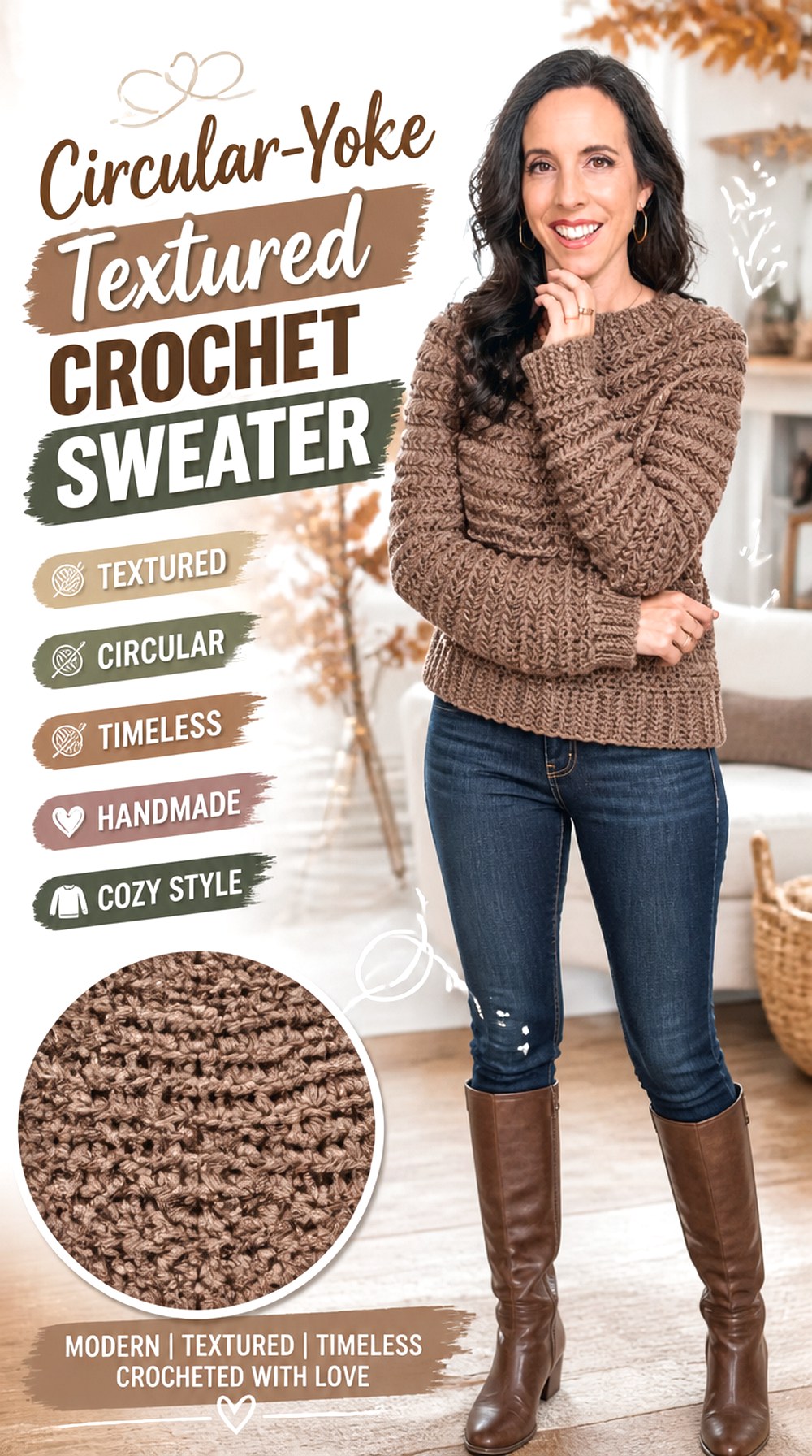
Briana K’s Wheat Stitch Sweater combines a top-down circular-yoke approach with pronounced surface texture and short-row shaping. That gives it a different fit logic from both raglans and rectangular panel sweaters.
A chocolate-brown version can make the textured yoke especially effective because the changing stitch surface wraps around the shoulders instead of sitting only on the front. This is a good option if you want decorative detail integrated into the garment architecture. Pay close attention to the neck and yoke fit early, since those upper sections establish how the rest of a top-down sweater hangs.
A Circular Yoke Spreads Texture Around the Shoulders
Instead of creating obvious diagonal raglan lines, a circular yoke distributes shaping more continuously around the upper body. That makes the textured stitch pattern a broad visual feature. In chocolate brown, side lighting can reveal the relief beautifully. Check your swatch for both horizontal and vertical flexibility, since shoulder fabric needs to follow the body while retaining enough definition to show the texture.
Short-Row Shaping Affects How the Neck Sits
Short rows can help redistribute fabric around the neckline and upper back rather than leaving the yoke perfectly symmetrical front to back. Because this is functional shaping, follow the creator’s instructions closely rather than treating those sections as optional decoration. When evaluating fit, look at whether the neckline sits comfortably and whether the front hangs where the design intends before moving much farther down the body.
Dense Texture Can Feel Heavier in Dark Yarn
Texture adds physical fabric as well as visual interest. If your preferred chocolate-brown yarn makes the stitch pattern noticeably dense, assess the weight of the sample and how easily it bends. A sweater that looks beautifully sculpted flat can feel different once the full yoke and sleeves are present, so yarn choice should balance definition with comfortable drape.
Original Tutorial and Creator Credit
Creator: Briana K
Crochet Polo Sweater
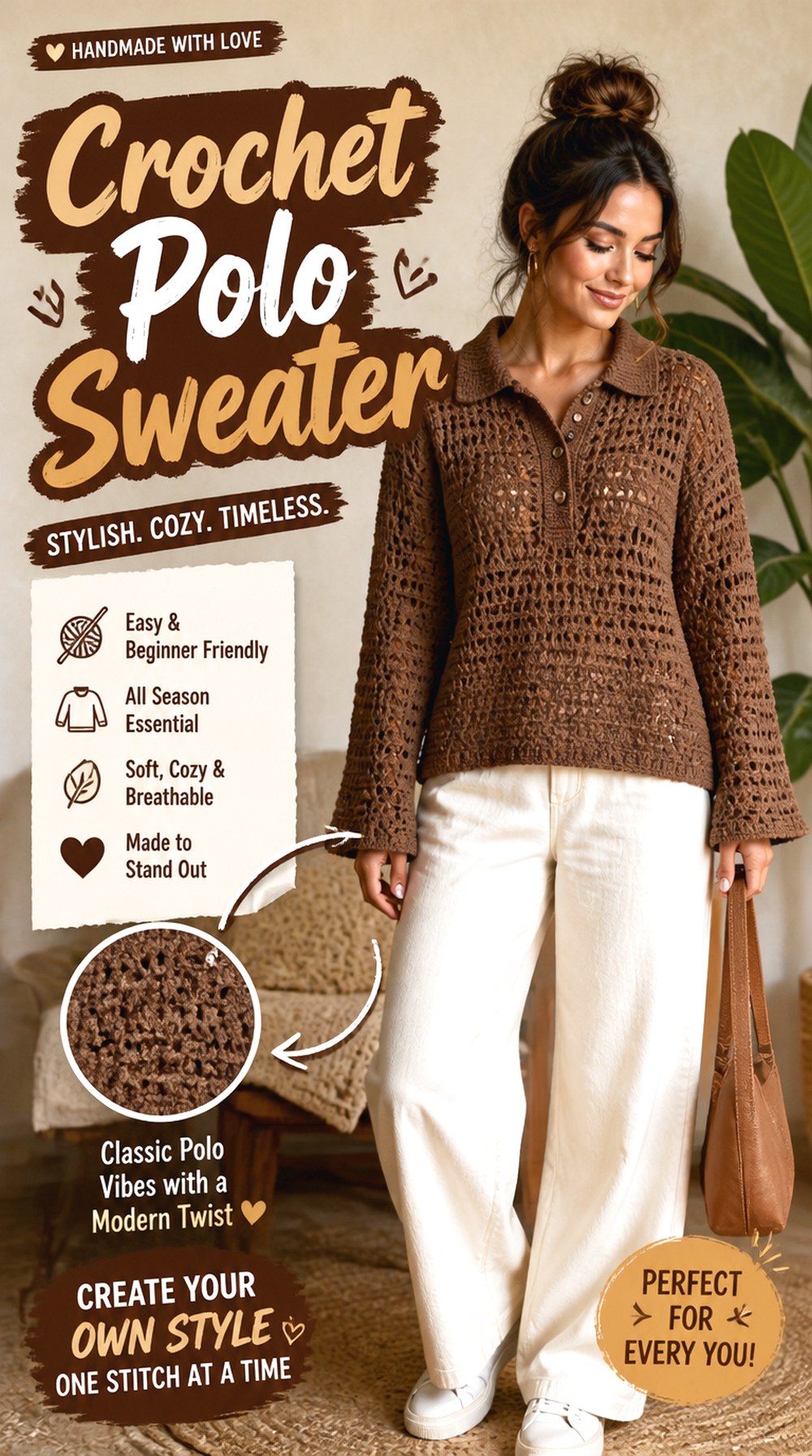
A polo neckline gives chocolate brown a tailored, casual feel that stands apart from both crew-neck pullovers and romantic openwork designs. HookedByJessica’s tutorial demonstrates a unisex polo sweater and describes the finished look as suitable across seasons.
The key reason to choose this project is the neckline architecture. The collar and front opening bring attention upward, while the rest of the sweater can remain comparatively simple. Brown reinforces that understated look, making this a useful route if you prefer garments that can sit between casual knitwear and a more put-together collared layer.
A Polo Collar Makes Brown Feel More Tailored
Chocolate brown already pairs easily with cream, denim, black, camel, and other neutrals. Adding a collar gives those combinations a sharper outline without requiring extra colorwork. For the collar to hold that effect, check whether your yarn produces enough definition after blocking. Excessively floppy fabric may make the neckline look softer than the tutorial sample.
Check the Front Opening Before Final Edging
The depth and width of a polo opening influence both comfort and how much of an underlayer remains visible. Evaluate that area while the neckline is still accessible for finishing, using the creator’s tutorial as your technical guide. If you often wear collared shirts or tees underneath, compare the opening with those layers rather than judging it only on a flat surface.
Original Tutorial and Creator Credit
Creator: HookedByJessica
Simple Long Sleeve Crochet Sweater Top

Ima 🧶 demonstrates a long-sleeve sweater top with relatively minimal shaping and a customizable approach to sizing. That makes this one of the cleaner silhouettes in the roundup and a good canvas for a rich brown yarn without a competing motif.
The appeal here is proportion rather than ornament. A narrow, regular, or relaxed torso and different sleeve width can each change the same basic concept significantly. If you want a chocolate-brown sweater that works as a wardrobe foundation, this understated construction may make more sense than a cable, floral, or granny design.
Minimal Shaping Makes Proportion the Main Decision
When decorative details are limited, small differences in length and width have more impact on the finished look. Decide whether you want the sweater to skim the body or leave clear room for layering, then compare that target with the creator’s measurement approach. A neutral brown color will not disguise a fit you dislike, so proportion deserves attention from the beginning.
Sleeve Width Determines Sleek or Relaxed Styling
A simple long sleeve can sit close to the arm or create an intentionally relaxed line. Consider what you usually wear under sweaters and whether you want room for a long-sleeve base layer. If your brown yarn creates a stiffer fabric, the sleeve may stand farther from the arm than a drapier sample, even at similar dimensions.
Original Tutorial and Creator Credit
Creator: Ima 🧶
Romantic Tie Front Crochet Sweater Top
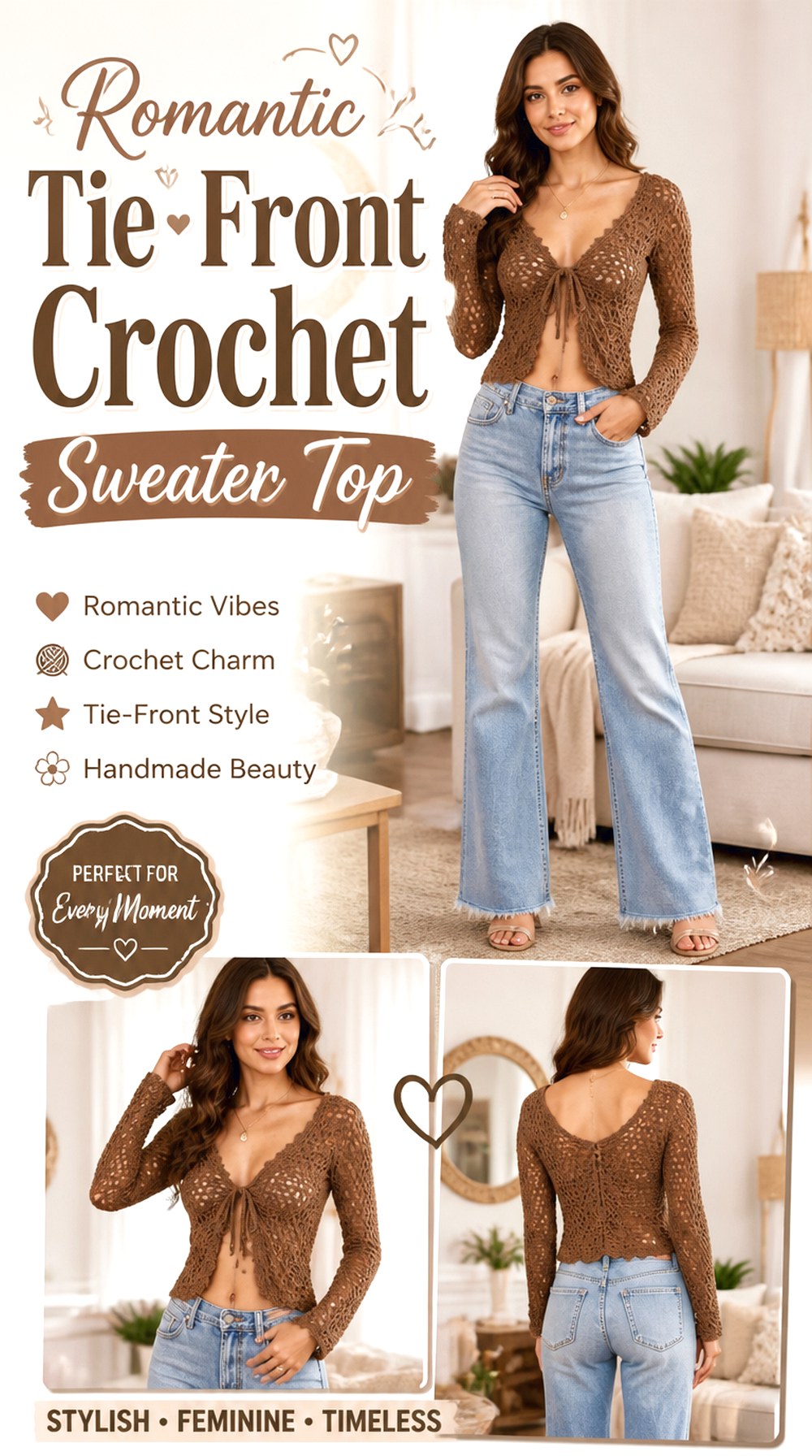
Petpetcrochets’ Romantic Top offers an open-front alternative to the closed pullovers in this list. The tutorial uses a tie-front format with decorative mesh and picot-like detailing, allowing the garment to function somewhere between a sweater top and a light cardigan-style layer.
Chocolate brown gives the romantic construction a grounded neutral palette while still allowing the openwork to remain visible. It is a strong option if you enjoy adjustable front styling and want a piece that intentionally reveals the layer underneath. Because the tie changes coverage, evaluate the sweater both open and secured rather than judging only the flat dimensions.
A Tie Front Changes Coverage and Styling
Unlike a fixed V-neck, a tie closure allows the fronts to move relative to each other. That can change how much of the torso is covered and where the visual focal point sits. Before finishing the ties, think about whether you expect to wear the sweater mostly closed, loosely tied, or open, because those uses place different emphasis on the front edges.
Mesh-and-Picot Texture Benefits From Softer Drape
Decorative open stitches tend to look more fluid when the fabric can move rather than standing rigidly away from the body. If your chocolate-brown yarn forms a firm sample, decide whether you enjoy that more structured effect or would rather choose a substitution closer to the behavior shown in the tutorial. Always use the creator’s gauge and material information where provided.
Check the Back and Bust Connection Before Adding Sleeves
An open-front top can appear adjustable at first, but the back width and upper-body connection still control much of the fit. At an appropriate construction checkpoint, evaluate how the fronts fall when the back sits correctly. If the back is too wide or narrow for you, adjusting only the tie will not solve the underlying proportion issue.
Original Tutorial and Creator Credit
Creator: petpetcrochets
Unisex Oversized Crochet Sweater

Sirin’s Crochet demonstrates an oversized unisex sweater with a broad, relaxed silhouette. That makes it useful for anyone whose chocolate-brown sweater goal is comfort and easy layering rather than a fitted waist or decorative neckline.
The unisex description is helpful stylistically, but fit should still be based on actual garment and body measurements rather than assuming one amount of ease works for everyone. Chocolate brown is especially effective here because the color supports the simple shape: it can work over tees, button-down shirts, or lighter knit layers without relying on a seasonal motif.
Unisex Oversizing Works Best From Garment Measurements
Rather than relying on gender labels, compare the finished dimensions or sizing information supplied by the creator with a sweater that gives you the looseness you prefer. Look at chest width, shoulder placement, and length as a group. A silhouette can be roomy through the torso yet still feel wrong if the sleeves or neckline do not align with your proportions.
Keep the Neck Opening Comfortable Under Layers
An oversized body often encourages layering, which means the neck opening has to accommodate what you actually plan to wear underneath. A high, firm edge may feel different over a shirt collar than over a thin tee. Test the developing neckline against realistic layers before completing all finishing, following the tutorial’s construction guidance.
Dark Brown Makes This a Strong Everyday Neutral
An oversized sweater already creates substantial visual area. A solid chocolate shade keeps that volume calm and versatile, while stitch texture prevents it from becoming featureless. If the brown is extremely dark, make sure you can see your stitches comfortably while working; good task lighting can also make seam and tension checks easier during construction.
Original Tutorial and Creator Credit
Creator: Sirin’s Crochet
Four Square Crochet Pullover

Fiber Flux takes large-motif construction in another direction by building a sweater around four granny squares: major squares become the body and sleeve components.
That gives this idea a bold geometry distinct from the two-square sweater and from garments assembled from many smaller motifs. In chocolate brown, the square construction becomes textural rather than multicolored, making the garment look more unified while retaining the radiating granny structure. Because each large square controls a substantial part of the sweater, getting its scale right is one of the most important planning decisions.
Four Large Squares Make Scale the Fit Control
When a single square occupies most or all of a major garment section, a small difference in its finished dimension can become a large difference in fit. Use the creator’s sizing guidance and compare blocked dimensions before assembly. Do not assume you can simply join an extra small motif later without changing the geometry of the original construction.
Sleeve Squares Can Dominate the Silhouette
A large motif used as a sleeve component can create a different shape from a conventional long rectangular sleeve. Look carefully at the finished tutorial garment and decide whether that geometry matches how you like sleeves to sit. The strong lines may be especially noticeable in a solid brown version because there are no color changes to distract from the shape.
A Single Brown Shade Emphasizes the Geometry
Multicolored granny squares direct the eye toward color placement. Using one chocolate brown instead shifts attention toward holes, clusters, joins, and the changing stitch direction. That can make the sweater feel more minimalist while preserving its crochet identity. Swatch enough of the square to make sure the chosen shade does not obscure the internal structure under normal indoor lighting.
Original Tutorial and Creator Credit
Creator: Fiber Flux
Tulip Motif Crochet Sweater
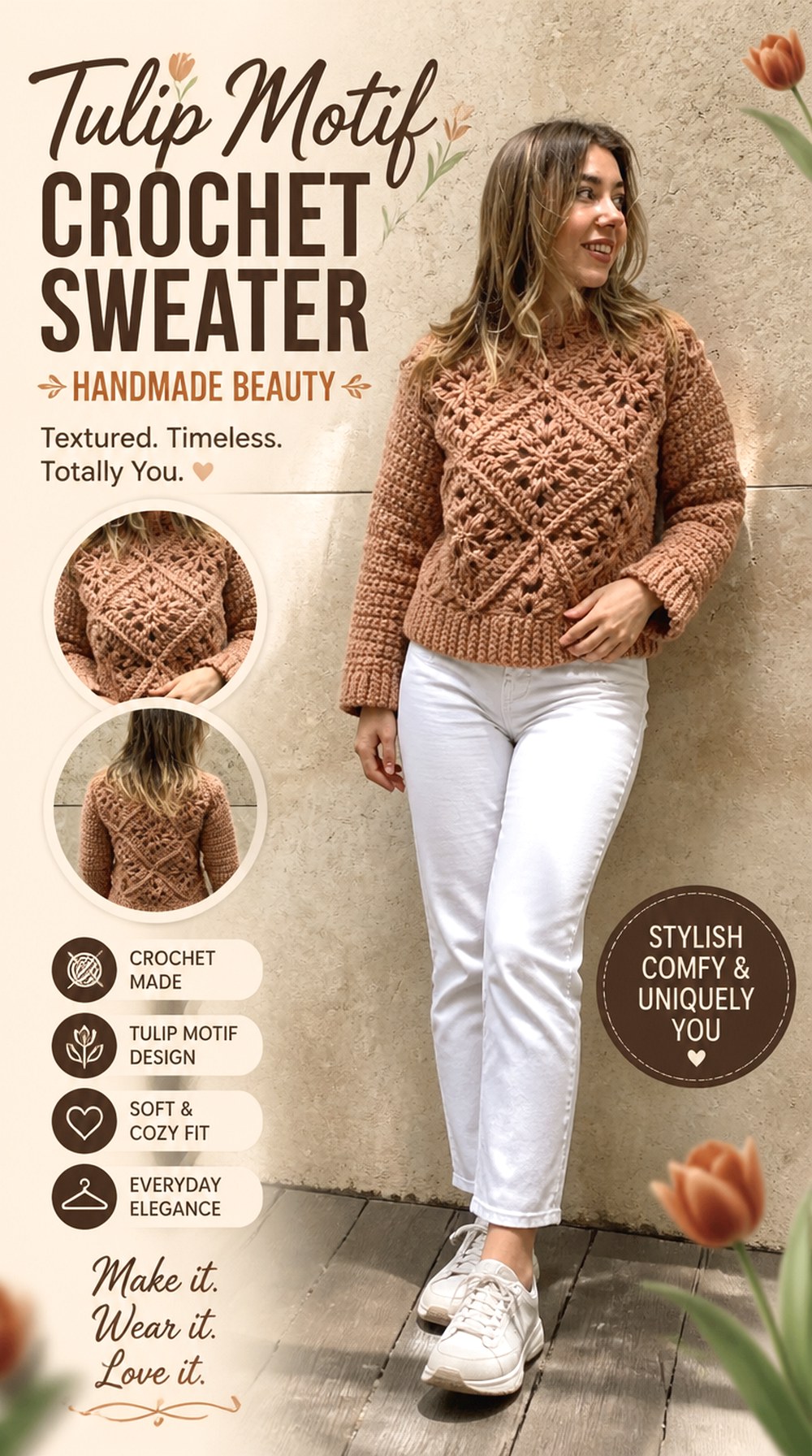
Wilma Westenberg’s Tulip Square Sweater uses motif-based construction with squares and complementary triangular elements, creating a more intricate layout than the previous large-square ideas. Separate sleeves and ribbed finishing complete the garment.
A monochrome chocolate-brown version would shift attention away from color changes and toward motif shape, puffed texture, joins, and negative space. This is a good route for someone who likes modular crochet but wants the finished sweater to have more detailed motif architecture. Careful blocking becomes particularly important because different module shapes must cooperate in the same garment.
Motif and Triangle Sizes Must Agree Before Joining
Squares and triangles have to meet along shared edges without forcing one piece to stretch excessively. Before final assembly, treat the modules consistently and compare the edges that are intended to connect. If one shape repeatedly differs, address the reason using the creator’s guidance rather than relying on tight seaming to pull mismatched pieces together.
Puff Details Keep One-Color Brown Visually Active
Dimensional motif details can create small shadows across a solid-color sweater. This makes chocolate brown a practical choice if you want texture without the visual busyness of many yarn colors. A smooth enough yarn will usually let dimensional areas read more clearly, while a fuzzy surface may produce a softer, less graphic motif.
Join Lines Become Part of the Finished Design
With modular garments, joining is not merely hidden construction. The seams form a visible network across the sweater and influence how the motifs align. Lay out the pieces in their final orientation before committing to all joins, especially if the motifs have a clear top and bottom. A rotation error can be much harder to overlook once every piece is connected.
Original Tutorial and Creator Credit
Creator: Wilma Westenberg
Sand Dune Textured Crochet Sweater
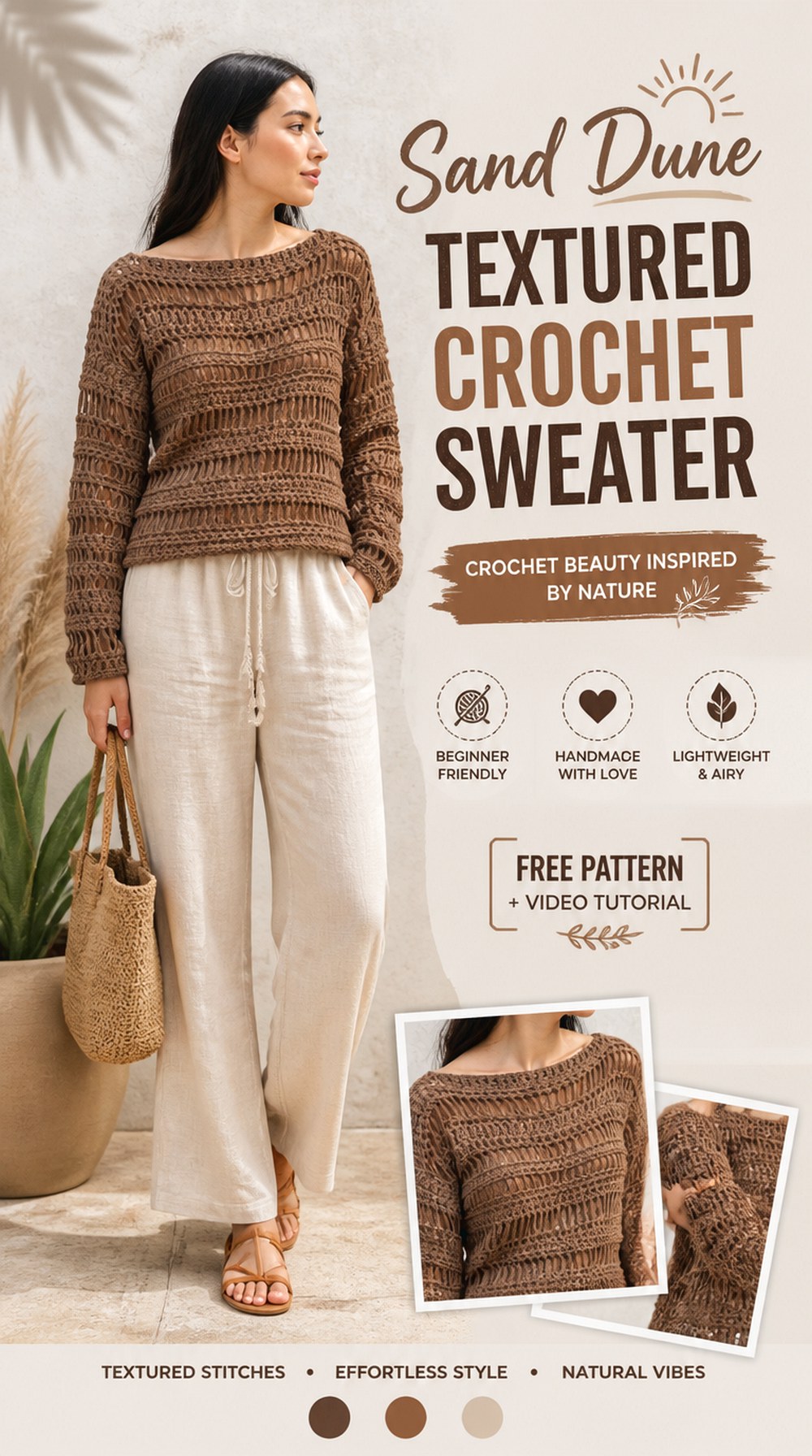
Forthefrills’ Sand Dune sweater offers a cropped, airy construction with an open looped texture, giving chocolate brown another way to feel light rather than dense. The creator provides the project as a sweater pattern and video tutorial with multiple size information available through the associated pattern resources.
Compared with floral lace, this texture reads less like a motif and more like an allover surface treatment. It works well for someone who wants an obvious crochet texture but not granny-square geometry. The relaxed cropped body also makes it worth checking garment length and armhole proportions before committing to a brown yarn with very different weight or drape.
Loop Texture Adds Airiness Without Losing Warm Color
The open surface lets light and the underlayer interrupt the deep brown fabric, which can prevent the color from feeling too visually heavy. Make your sample large enough to see several repeats of the texture. A tiny swatch may show the stitches but not reveal how transparent or drapey the overall fabric feels once the openings accumulate.
A Cropped Loose Body Needs Balanced Armhole Depth
A wide cropped body can look intentionally relaxed, but excessive depth around the armhole can make movement feel different from a closer-fitting top. Compare the tutorial’s proportions with an existing cropped sweater you enjoy. If you change body width or length, check whether that adjustment interacts with sleeve placement before assuming each measurement can be altered independently.
Dark Yarn Requires Better Lighting During Openwork Sections
Chocolate brown is attractive but can make loops and spaces harder to distinguish when you crochet in dim conditions. Strong, even task lighting is useful for catching skipped openings or accidental placement changes before they repeat across a large section. This is a working-visibility issue rather than a design limitation; the finished texture can still show clearly in normal daylight.
Original Tutorial and Creator Credit
Creator: forthefrills
Top Down Granny V Neck Crochet Sweater

MJ’s Off The Hook Designs combines three useful features in one sweater: top-down construction, granny stitch, and a V neckline. The video demonstrates the sweater construction while the associated pattern covers a wider size range than the single demonstration size shown in the tutorial.
This is a strong chocolate-brown option if you like the rhythm and texture of granny clusters but do not want a joined-square garment. The continuous stitch pattern produces a more unified fabric, while the V keeps the upper body visually open. It also offers a useful contrast with the earlier basic V-neck because the surface texture is much more pronounced.
Top-Down V Shaping Lets You Watch the Opening Develop
When the neckline grows as part of the top-down construction, you can see its proportions emerge rather than cutting into a finished panel later. Use the tutorial’s prescribed shaping and evaluate the opening at suitable checkpoints. The goal is not to improvise counts, but to notice whether the creator’s intended fit corresponds with how you want to layer the sweater.
Granny Clusters Keep Chocolate Brown From Feeling Solid
Repeated clusters form lines of texture and small spaces across the fabric, breaking up a large brown surface. This makes a single-color version visually richer than a plain stitch fabric without introducing separate motifs. If your chosen brown is very dark, compare the sample in daylight and artificial light to make sure the cluster definition remains visible enough for your preference.
Sleeve and Body Length Are Easier to Judge During Construction
One practical appeal of top-down garments is that length decisions happen after much of the upper-body relationship is established. Where the construction allows, compare developing body and sleeve lengths with your preferred garments before finishing. Follow the designer’s instructions for any modifications, especially because changing length can alter yarn requirements even when width remains unchanged.
Original Tutorial and Creator Credit
Creator: MJ’s Off The Hook Designs
Bulky Four Panel Crochet Sweater
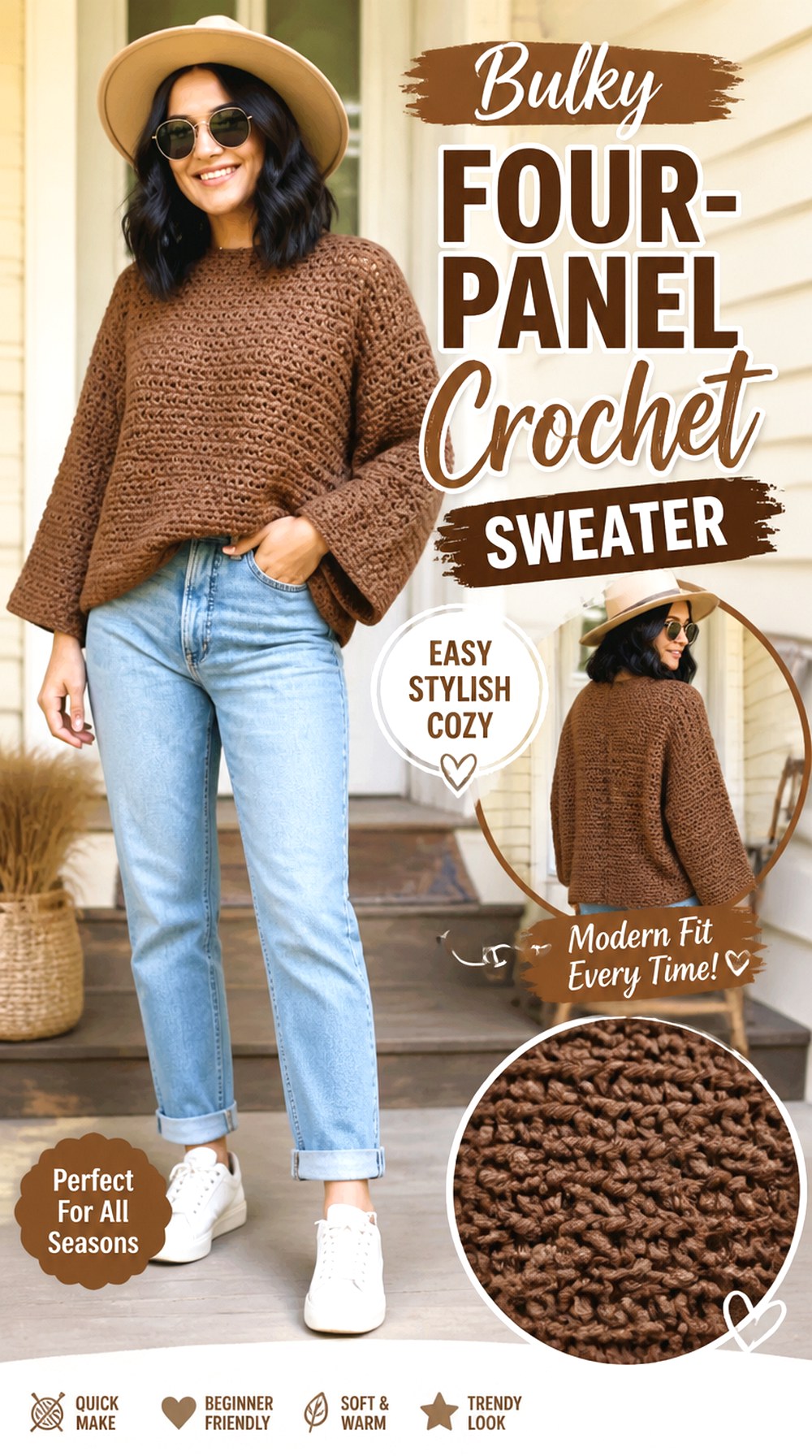
KnitcroAddict’s simple sweater tutorial demonstrates a bottom-up garment worked flat as four separate pieces and then assembled. The example uses bulky yarn and a repeating stitch pattern, giving the finished sweater a more substantial surface than the lace, mesh, and finer-textured options above.
A bulky chocolate-brown version can make a strong cold-weather statement because both color and fabric have visual weight. That also makes careful swatching important: a yarn substitution that is merely “brown and bulky” may still create a different density or stiffness. This is a useful final option for readers who prefer recognizable flat pieces and a heavier sweater feel.
Bulky Brown Yarn Creates a More Structured Surface
Thicker yarn can make every stitch larger and the overall sweater more substantial. Before choosing it solely for warmth or speed, check whether the resulting fabric bends and drapes the way you want. A rigid sample may produce a boxier garment, while a more flexible bulky fabric can fall closer to the body even when both are worked to comparable dimensions.
Four Pieces Make Seaming Accuracy More Visible
When the front, back, and sleeves are constructed independently, corresponding edges need to meet cleanly during assembly. Compare lengths before seaming rather than assuming they will align because the same instructions were followed. Small tension differences can accumulate across a large panel, and identifying them before joining gives you more options than forcing one edge to fit another.
Neckline Edging Can Soften the Boxy Body
A flat-built sweater can create a strong geometric outline, especially in bulky dark brown. Finishing around the neck provides an opportunity to visually soften that shape and make the opening look intentional. Follow the creator’s edging instructions and check that the finished neckline still has enough give for comfortable dressing without becoming loose enough to distort the shoulders.
Which Chocolate Brown Crochet Sweater Style Should You Choose?
| If you want… | Good directions from this list | Main thing to check |
|---|---|---|
| A relaxed everyday pullover | Oversized Rectangle, Relaxed Panel, Unisex Oversized | Desired ease and shoulder placement |
| Fit you can evaluate as construction progresses | Seamless Raglan, Circular-Yoke, Top-Down Granny V-Neck | Yoke depth, neckline, and upper-body proportions |
| Strong surface texture in one brown shade | Alpine Texture, Sweetheart Cable, Wheat Stitch | Stitch definition and fabric weight |
| A lighter layering sweater | Airy Mesh, Floral Lace, Sand Dune | Transparency, drape, and underlayer |
| Modular crochet construction | Two-Square Granny, Four-Square, Tulip Motif | Blocked module dimensions and join compatibility |
| A more defined neckline | Clean V-Neck, Collared V-Neck, Polo, Tie-Front | Opening depth, collar behavior, and layering plans |
The biggest distinction is not which sweater looks nicest in chocolate brown; it is which construction fits the way you prefer to make and wear clothes. If seaming helps you understand garment shape, start with panels. If you value checking the upper-body fit as you work, investigate a top-down route. If texture is the priority, choose a yarn that actually reveals it rather than selecting the darkest brown available.
Conclusion
For a simple chocolate-brown wardrobe layer, the rectangle, relaxed-panel, long-sleeve, or oversized constructions keep attention on shape and yarn. The alpine, cable, and textured-yoke sweaters make better use of chocolate brown when you want light and shadow to reveal surface detail. Mesh, floral lace, and the Sand Dune design give the same color a lighter look, while granny-square and motif sweaters emphasize crochet geometry.
Choose the construction first, then select a brown yarn whose weight, drape, and stitch definition suit that construction. Swatching and checking real garment measurements will tell you more than a color label alone. Use each original creator’s tutorial for the exact construction details, sizing information, materials, and project-specific instructions.
Frequently Asked Questions
What shade of chocolate brown shows crochet texture most clearly?
There is no single ideal shade because yarn surface and lighting matter as much as color depth. Medium-to-deep warm browns can show raised texture well when the yarn has clear stitch definition, while an extremely dark brown may hide small details indoors. Make a sample of the actual stitch pattern and view it in daylight and typical room lighting before buying enough yarn for the sweater.
Can I use a different brown yarn than the tutorial uses?
Possibly, but match more than color. Compare the yarn category, gauge, fiber behavior, stretch, surface texture, and the fabric produced after blocking. A substitution that looks similar in the skein can create a heavier, firmer, or more fluid sweater. Use the creator’s yarn and gauge recommendations as the technical reference, and confirm your own sample before committing to the full garment.
Which construction is easiest to resize for a chocolate brown crochet sweater?
That depends on how you prefer to control fit. Measurement-led and top-down constructions can make certain adjustments easier to evaluate during the project, while separate panels are simple to compare with an existing garment before assembly. Motif sweaters require another approach because square or module dimensions strongly control final size. Whichever method you choose, follow the designer’s modification guidance rather than assuming every section can be independently enlarged.
How can I keep a dark brown crochet sweater from looking visually heavy?
Use structure to create lightness. A V neckline, cropped body, mesh, lace, open granny stitch, or strategically placed texture can interrupt a large solid area of brown. You can also choose a yarn with good drape rather than an extremely firm fabric. The goal is not necessarily to use a lighter shade; changing negative space, silhouette, and texture can alter the visual weight substantially.
Should I block a chocolate brown sweater before seaming it?
Follow the specific designer’s finishing instructions, but blocking or otherwise treating a representative sample before construction is valuable because it shows how the yarn changes after care. For motif and panel garments, consistent finished dimensions are particularly important before permanent joins. If the fabric grows, relaxes, or loses definition after washing, discovering that from a swatch is much easier than discovering it after the whole sweater is assembled.
Can granny-square or lace sweaters work in one solid chocolate brown?
Yes. Removing color changes shifts the focus toward stitch direction, openings, joins, raised details, and overall silhouette. A solid chocolate-brown granny sweater can look more graphic and understated, while brown lace can become especially striking over a contrasting underlayer. Before making the full garment, check that the shade is not so dark or the yarn so fuzzy that the motif details you like become difficult to see.