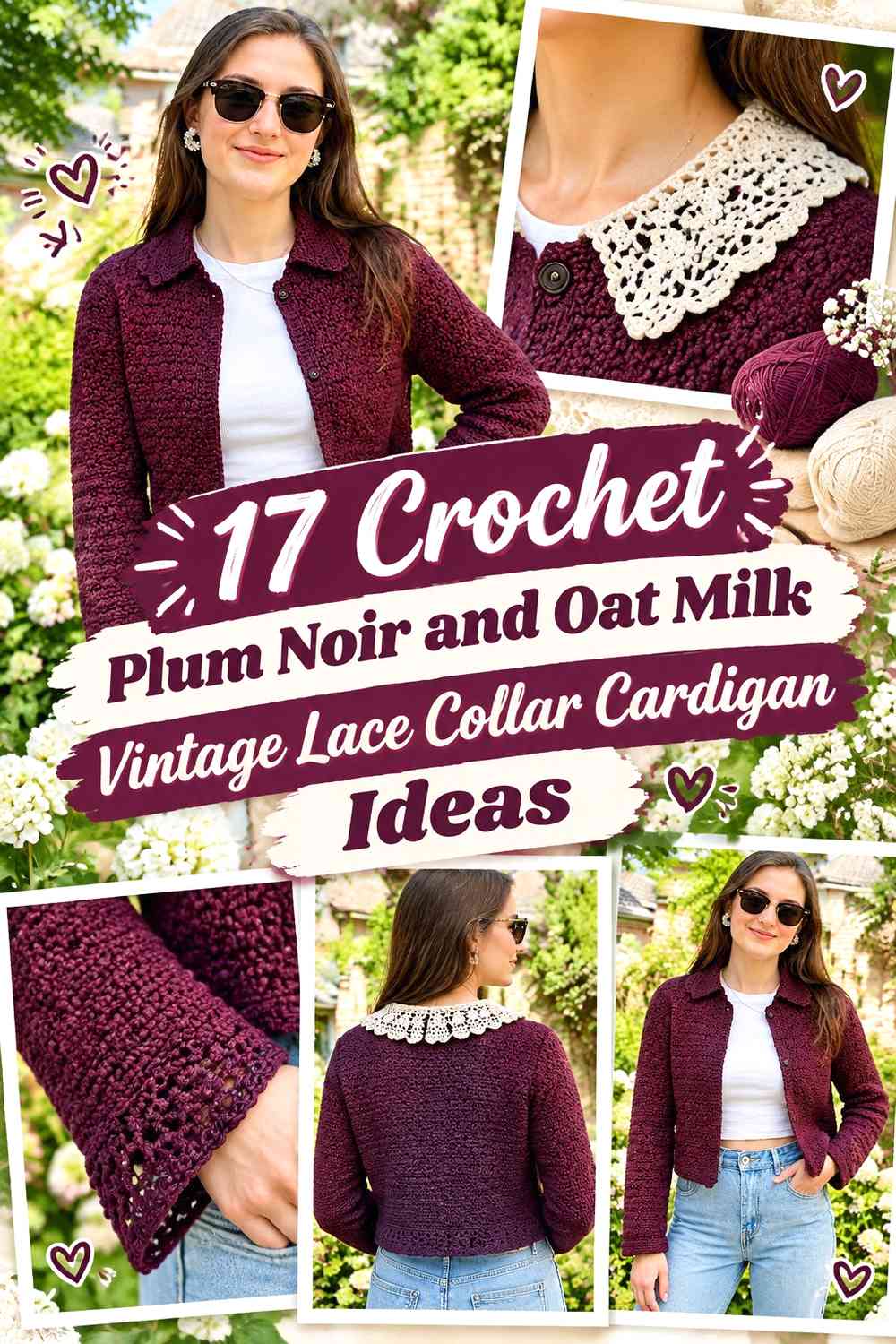

Plum Noir and Oat Milk create a strong light-and-dark pairing for a vintage-inspired crochet lace collar cardigan. In this article, Plum Noir refers to a very deep plum direction rather than a specific commercial yarn shade, while Oat Milk describes a warm, pale neutral. The useful question is not simply whether the colors look good together, but how much of each color to use and where the contrast should appear.
A cardigan gives this palette several useful placement zones. Plum Noir can dominate the body panels or sleeves, while Oat Milk can clarify a scalloped collar, button band, cuffs, motif joins, or lace edging. The balance can also be reversed when a lighter garment with a darker neckline is preferred.
The tutorials linked below support the cardigan, collar, lace, or motif construction concepts. The Plum Noir and Oat Milk color placements are independent adaptations, so check the original creator’s tutorial for exact construction details before changing a neckline, collar, or panel layout.
Quick List
- Plum Noir Body and Oat Milk Scalloped Lace Collar Crochet Cardigan
- Oat Milk Body and Plum Noir Vintage Lace Collar Crochet Cardigan
- Plum Noir Crochet Cardigan with an Oat Milk Peter Pan Lace Collar
- Oat Milk Yoke and Plum Noir Floral Lace Collar Crochet Cardigan
- Plum Noir Cropped Crochet Cardigan with an Oat Milk Cape Lace Collar
- Plum Noir Raglan Crochet Cardigan with an Oat Milk Deep Lace Collar
- Oat Milk Lace Collar and Plum Noir Button-Band Crochet Cardigan
- Plum Noir Openwork Crochet Cardigan with an Oat Milk Lace-Edged Collar
- Plum Noir Granny-Lace Crochet Cardigan with Oat Milk Collar and Joins
- Plum Noir Crochet Cardigan with an Oat Milk Motif Lace Collar
- Plum Noir Crochet Cardigan with a Fine Oat Milk Picot Lace Collar
- Plum Noir Center-Panel Crochet Cardigan with Oat Milk Collar and Hem
- Oat Milk Vintage Lace Collar Crochet Cardigan with Plum Noir Cuffs and Hem
- Plum Noir Floral-Panel Crochet Cardigan with an Oat Milk Lace Collar
- Plum Noir Draped Crochet Cardigan with an Oat Milk Inner Lace Collar Edge
- Plum Noir Longline Crochet Cardigan with an Oat Milk V-Stitch Lace Collar
- Plum Noir and Oat Milk Color-Block Vintage Lace Collar Crochet Cardigan
Keep Plum Noir From Hiding Fine Crochet Lace
A near-black plum can make the silhouette of a lace collar very clear while allowing smaller openings to become quieter, especially when the cardigan is viewed against another dark layer. Before committing the entire collar to Plum Noir, work enough of the intended lace to judge the actual negative space rather than relying on the yarn ball alone.
Oat Milk can be useful around small scallops, picots, motif borders, or the final collar edge because the lighter value separates those details from the dark cardigan. It does not need to occupy much space to change how clearly the lace reads.
Decide Where Oat Milk Should Interrupt the Dark Cardigan
Oat Milk becomes more noticeable when it appears only at the neckline, so decide whether the collar is supposed to be the single pale focal point or part of a repeated garment-wide color system.
Repeating Oat Milk at cuffs, a narrow hem, or selected front-edge details can make the collar feel connected to the rest of the cardigan. Keeping every other area Plum Noir produces a more concentrated vintage-collar effect. Neither approach is automatically better; the important point is to make the repetition deliberate.
1. Plum Noir Body and Oat Milk Scalloped Lace Collar Crochet Cardigan
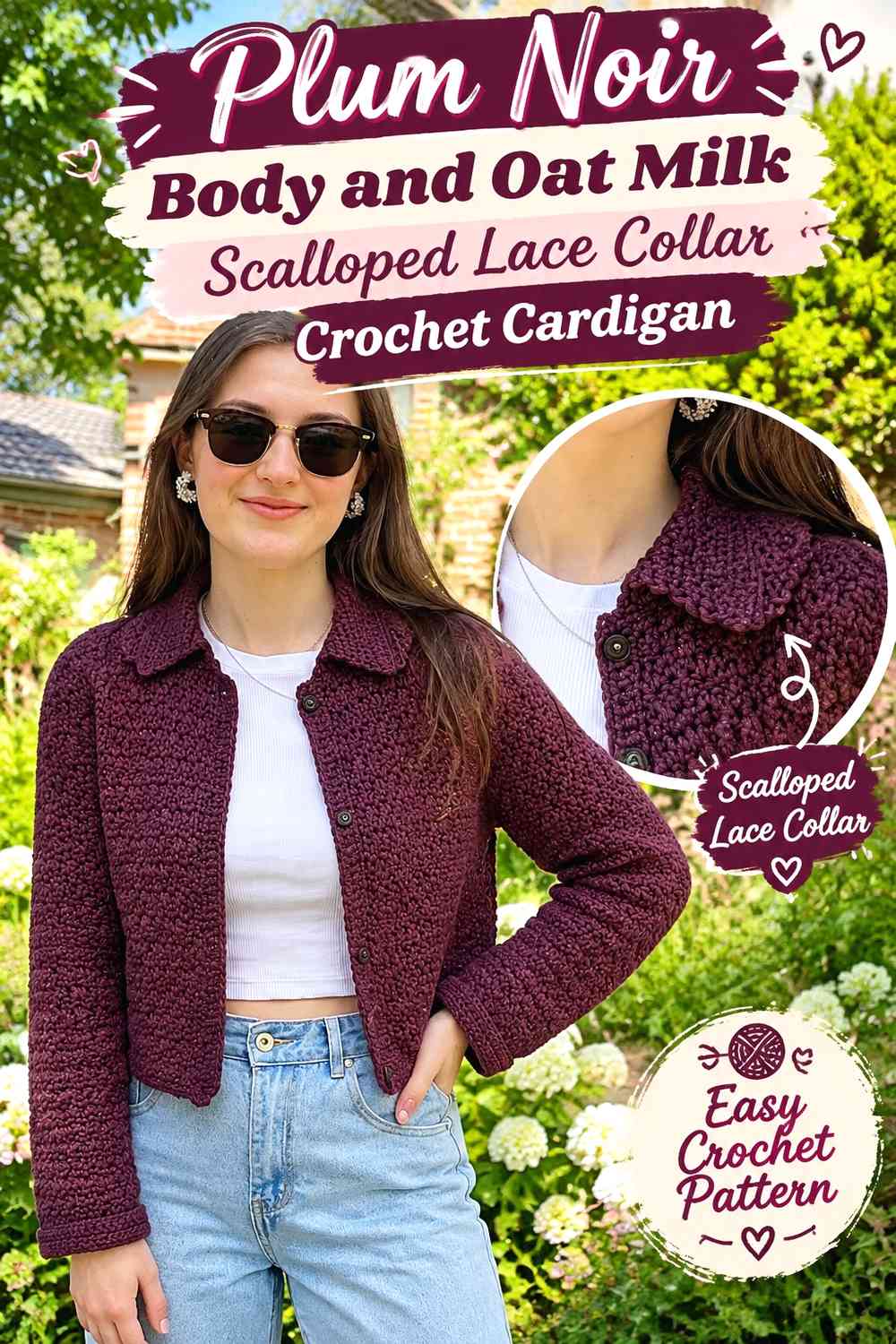
This arrangement gives Plum Noir the largest visual share across the front, back, and sleeves while reserving Oat Milk for the neckline. Because the light color is concentrated in one area, the scalloped lace collar becomes the clearest feature of the cardigan. It is a useful direction when you want the deep plum body to remain visually simple and the vintage detail to be recognized immediately.
Let Plum Noir Carry the Main Crochet Cardigan Panels
Keeping the body and sleeves Plum Noir prevents the light collar from competing with multiple pale blocks across the garment. This is especially useful if the body fabric already has noticeable texture. Let the deep plum provide one continuous background, then evaluate the collar against it before deciding whether additional Oat Milk is necessary.
Use Oat Milk to Separate the Plum Noir Scalloped Collar Edge
Oat Milk is most effective where individual scallops need definition. A light outer row can trace the collar shape without turning the entire neckline pale. If the collar already contains large, clearly visible openings, reduce the Oat Milk area so the contrast frames the lace instead of overpowering it.
Creator Credit: Stephanie Tashi
2. Oat Milk Body and Plum Noir Vintage Lace Collar Crochet Cardigan
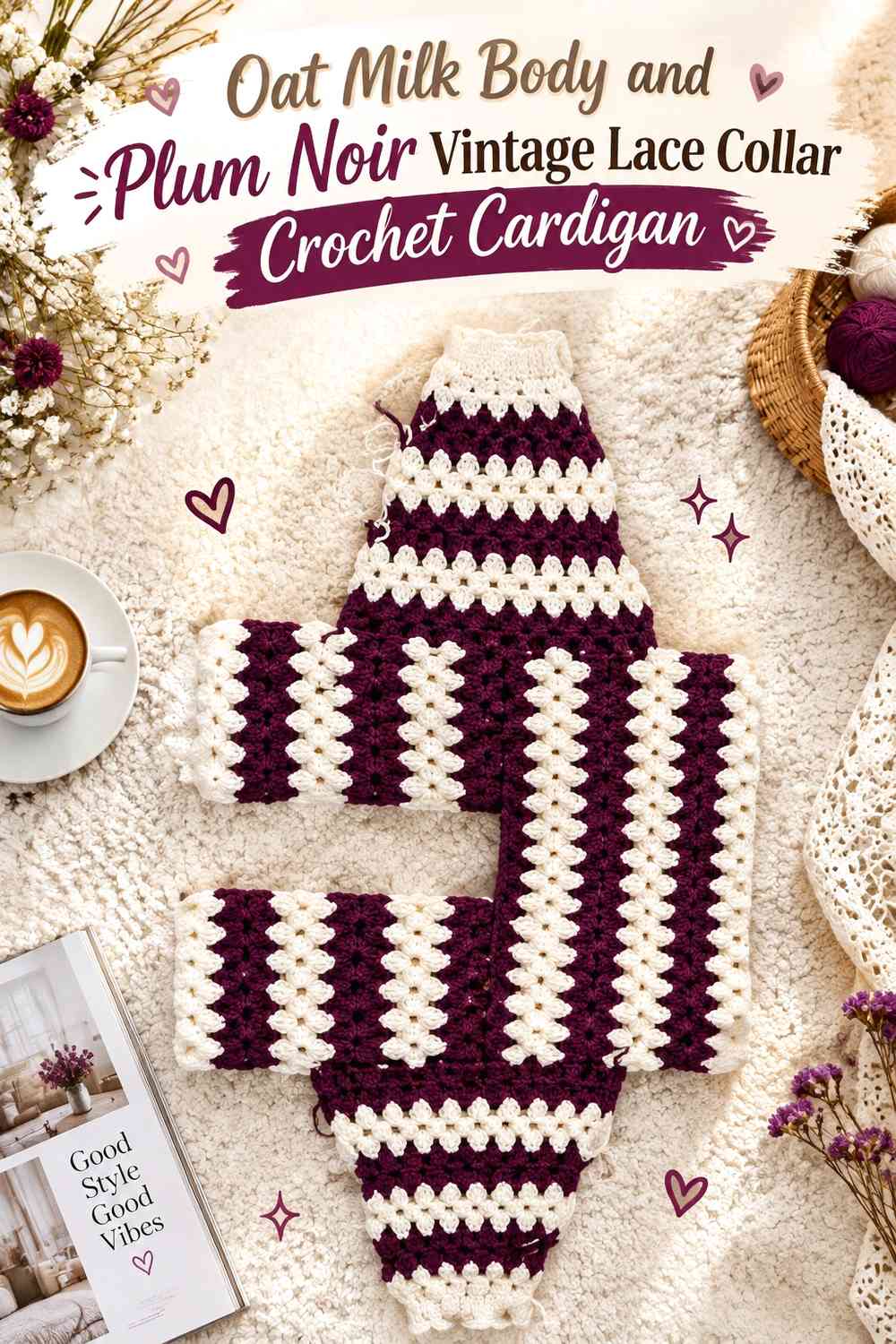
Reversing the palette changes the visual hierarchy. Oat Milk becomes the broad garment color, while Plum Noir concentrates the darkest value around the neckline. This makes the collar feel more graphic and gives the cardigan a lighter overall appearance than a Plum-Noir-dominant version.
Keep Oat Milk Continuous Behind the Plum Noir Crochet Collar
A mostly Oat Milk front provides strong separation around dark lace points, curves, and openings. Avoid scattering small Plum Noir patches across every panel unless you deliberately want a busier garment. A calm pale body gives the collar enough space to remain the focal point.
Plum Noir Can Define the Oat Milk Cardigan Opening
If the dark collar feels isolated, repeat Plum Noir narrowly along the front opening or a small finishing detail. That creates a visual route from the neckline down the cardigan without requiring equal amounts of both colors. Keep the dark band restrained if maintaining the pale-body effect is important.
Creator Credit: AC Crochets
3. Plum Noir Crochet Cardigan with an Oat Milk Peter Pan Lace Collar
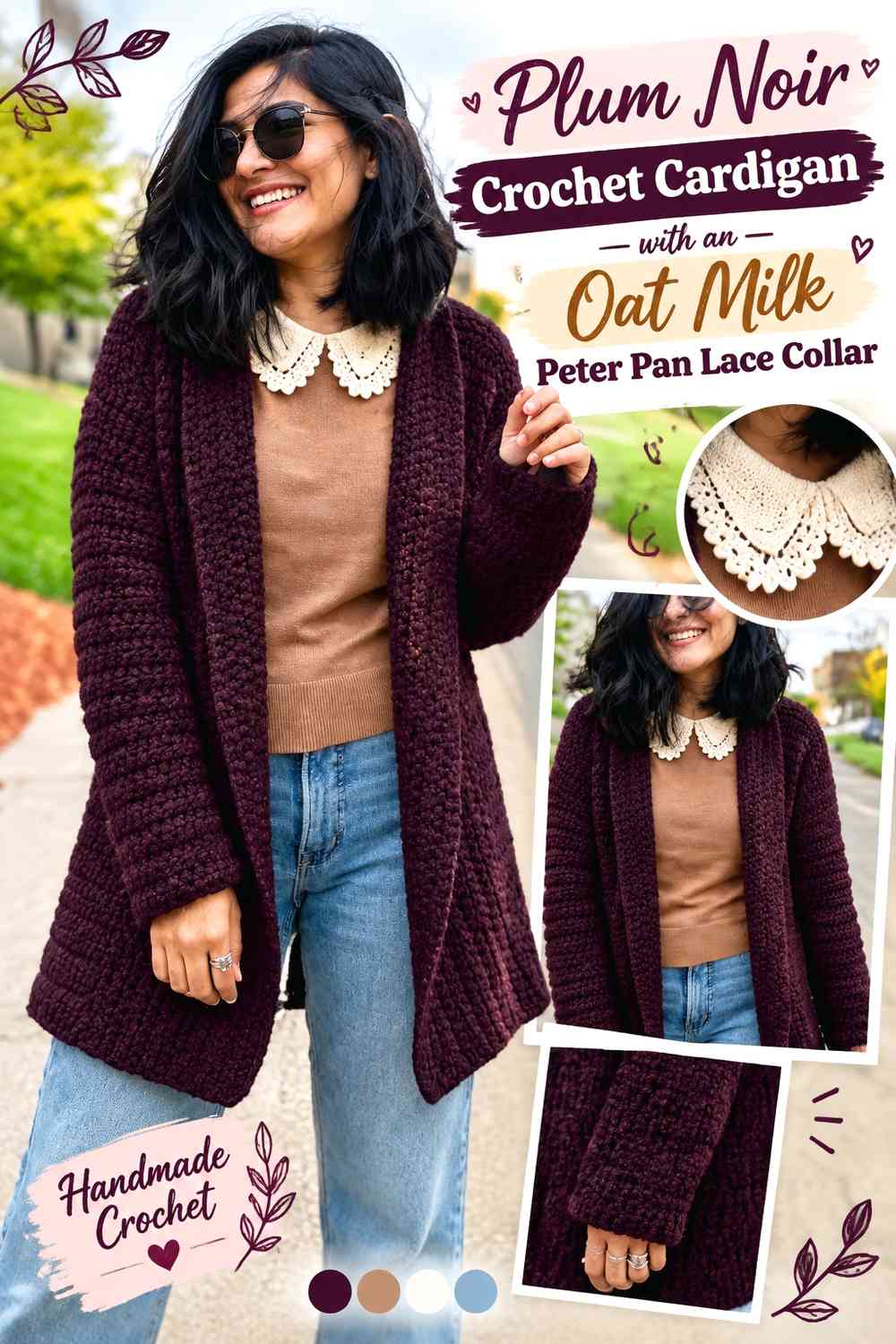
A rounded Oat Milk Peter Pan-style collar gives a Plum Noir cardigan a particularly clear neckline shape because the pale curves sit directly against the dark body. The contrast works best when the two halves of the collar read as one balanced feature rather than several unrelated light accents.
Oat Milk Makes the Plum Noir Peter Pan Collar Shape Easy to Read
Keep Oat Milk consistent across the rounded collar sections if the curve itself is the main vintage detail. Too many alternating dark and light rows can interrupt the smooth outline. If additional Plum Noir is wanted within the collar, use it where it supports the edge or fastening area rather than dividing the rounded sections unevenly.
Repeat Plum Noir Near the Oat Milk Collar Without Crowding It
A Plum Noir button band, front edge, or small neckline finish can connect the collar back to the main garment. Avoid placing a wide dark border directly over every Oat Milk scallop if you want the pale collar silhouette to remain distinct.
Creator Credit: KnitcroAddict
4. Oat Milk Yoke and Plum Noir Floral Lace Collar Crochet Cardigan
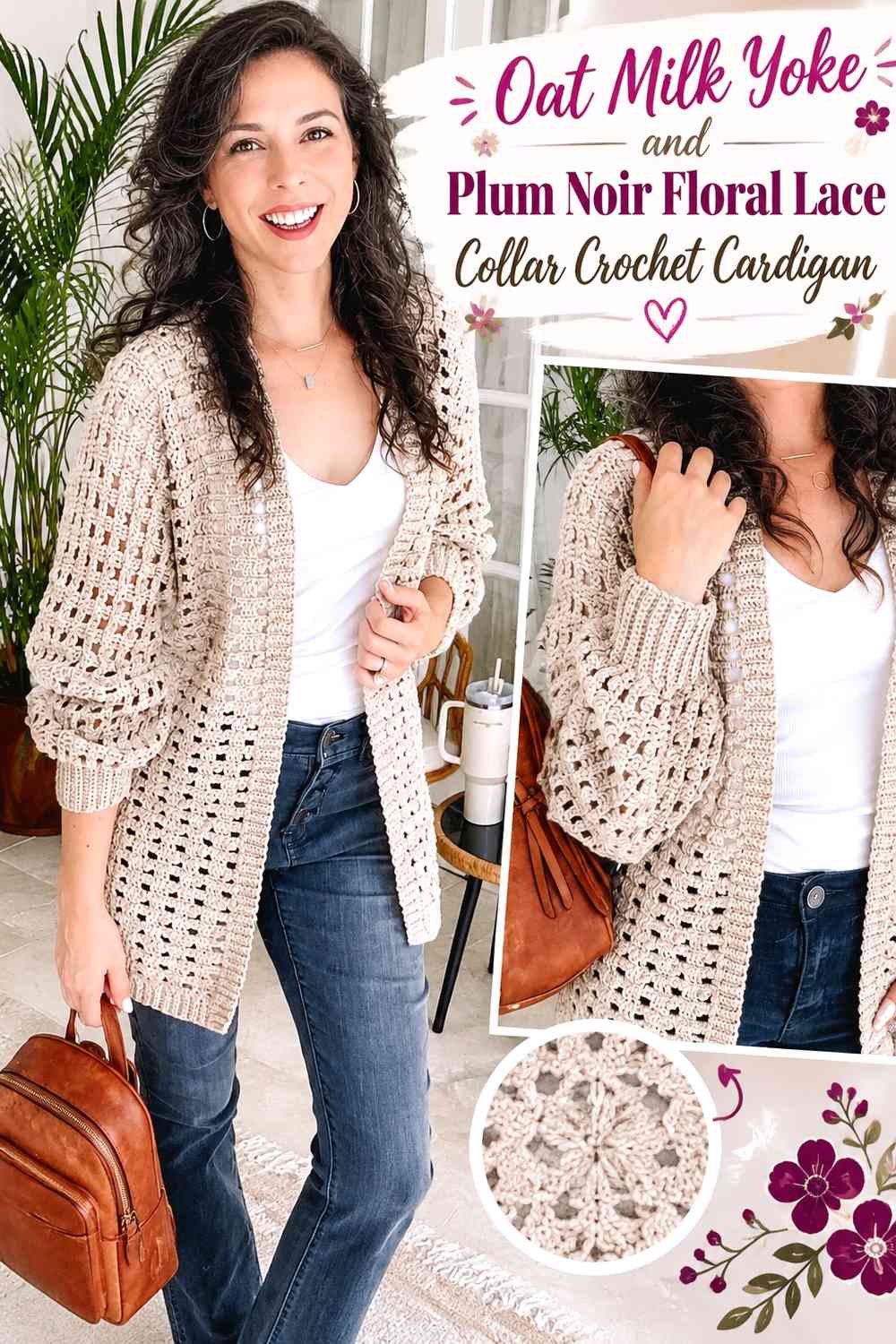
This version uses Oat Milk as a transition between a dark floral collar and the main cardigan. The light yoke gives Plum Noir flower shapes or repeated lace elements more room to separate visually, particularly when the collar contains several small motifs rather than one continuous stitch pattern.
Plum Noir Floral Lace Benefits From an Oat Milk Background Break
When multiple floral elements touch a dark body, their outlines can merge into the surrounding cardigan. An Oat Milk yoke or narrow neckline field creates a lighter area behind the Plum Noir motifs so individual petals and openings remain easier to distinguish.
Keep Oat Milk Secondary to the Plum Noir Floral Collar
The yoke should support the neckline rather than become an unrelated color block. Repeat its width consistently across the upper garment and check how it meets the front edges. If the pale area becomes visually dominant, reduce it and let Plum Noir return sooner on the body panels.
Creator Credit: Briana K
5. Plum Noir Cropped Crochet Cardigan with an Oat Milk Cape Lace Collar
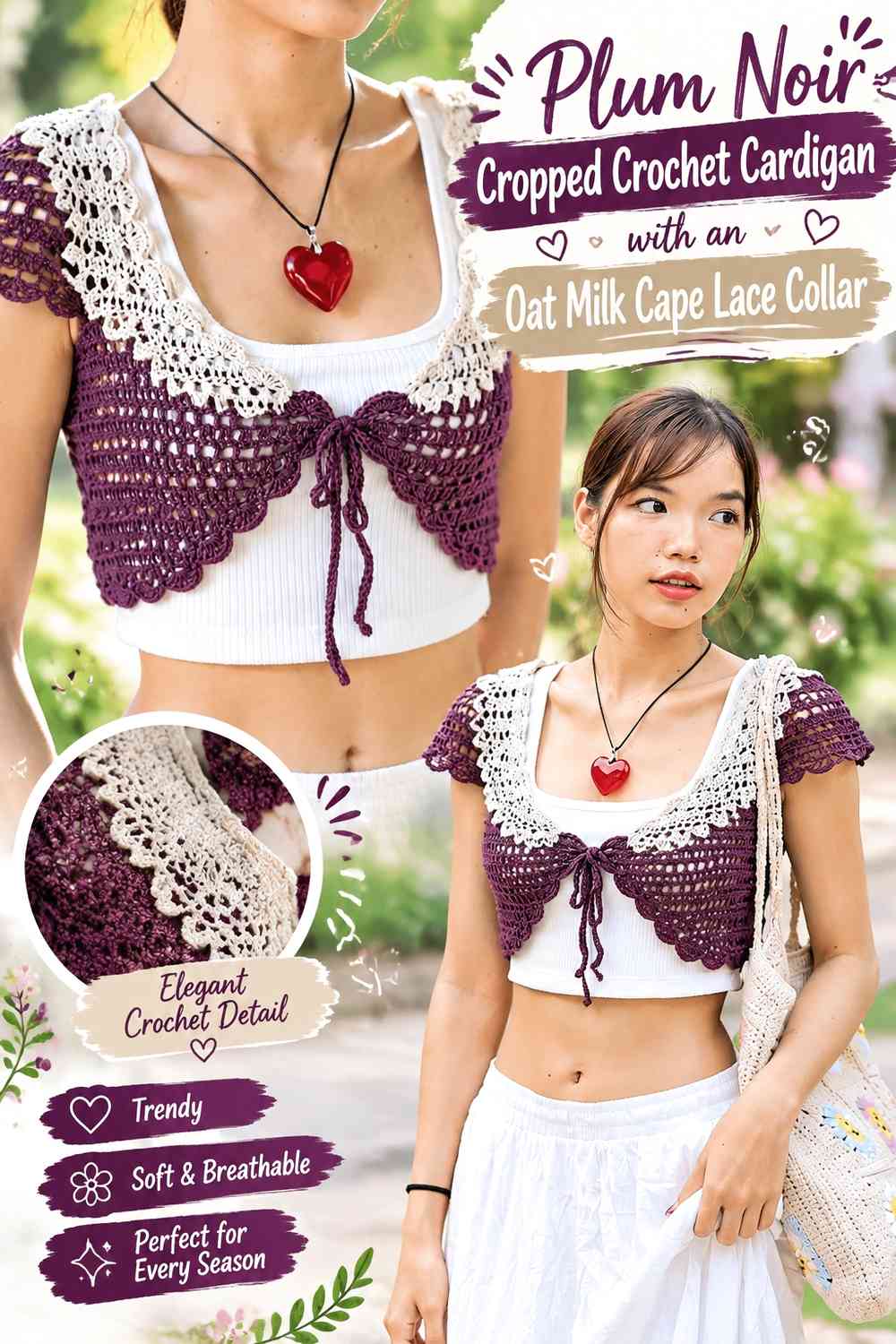
A wider lace collar occupies more visual area than a compact Peter Pan shape, so Oat Milk becomes a substantial part of the palette even when Plum Noir still covers most of the cardigan. This balance can work particularly well on a cropped silhouette because the neckline and body each have a clear visual role.
Let Plum Noir Ground the Wide Oat Milk Crochet Collar
Use Plum Noir consistently through the cropped body and sleeves so the broad pale collar has a stable background. Introducing several additional Oat Milk blocks below the collar can make the upper half feel disconnected from the lower garment unless that repetition is carefully planned.
Keep the Oat Milk Cape Collar From Overwhelming Plum Noir
The wider the collar spreads toward the shoulders, the less additional pale trim the cardigan may need. Before repeating Oat Milk at the hem and cuffs, assess the finished collar area. A large collar may already supply enough light value to balance the dark body.
Creator Credit: Chenda DIY
6. Plum Noir Raglan Crochet Cardigan with an Oat Milk Deep Lace Collar
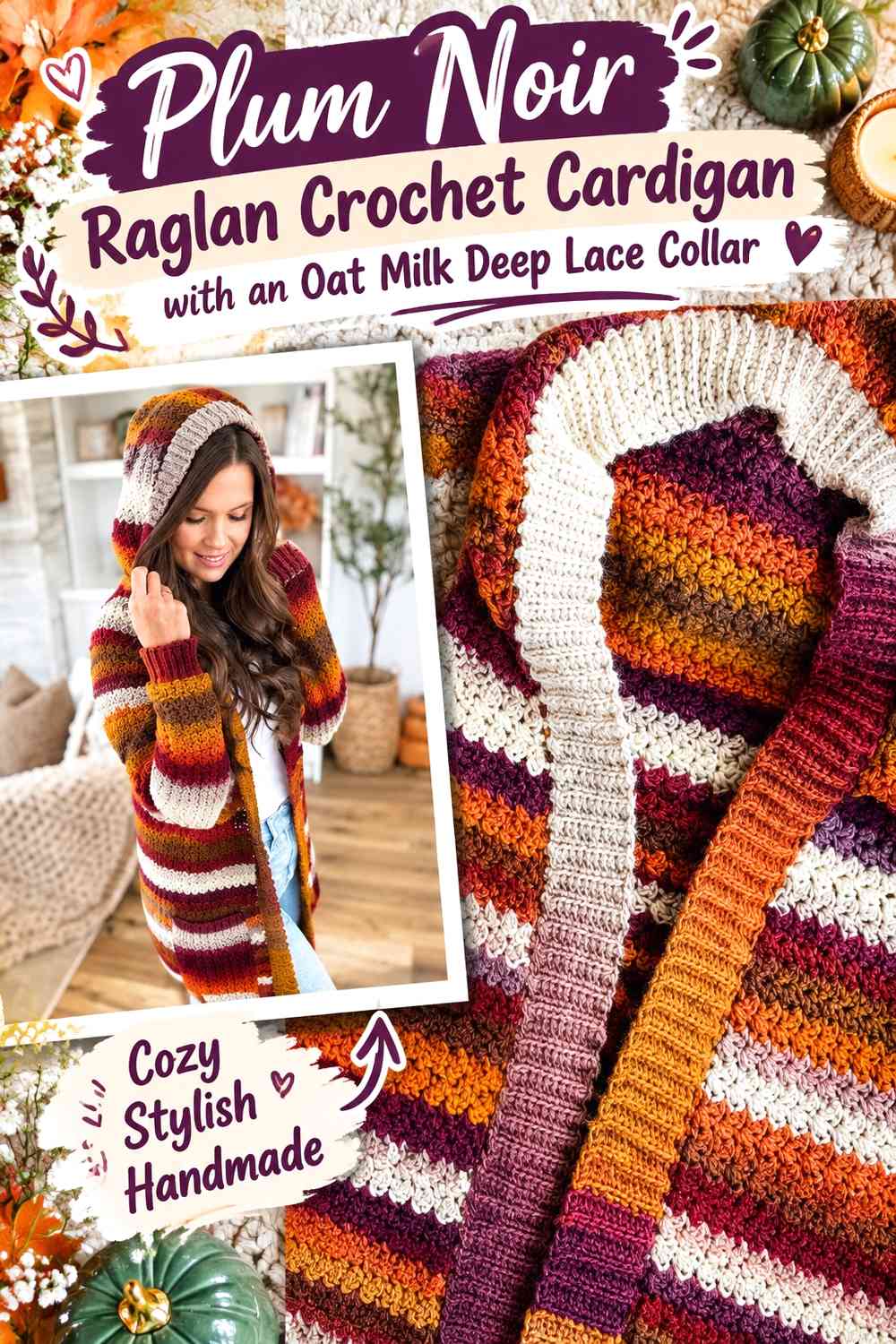
A deeper collar creates a longer area of contrast down the upper front. Plum Noir can remain dominant across the raglan body and sleeves, while Oat Milk follows the neckline into a more extended lace band. This gives the light neutral more presence without turning it into the main garment color.
Plum Noir Keeps an Oat Milk Deep Collar Visually Contained
A continuous Plum Noir body acts as the boundary around the pale collar. If the Oat Milk band extends far down the front, keep the neighboring panels dark so the collar retains a recognizable shape instead of becoming an oversized pale front section.
Oat Milk Cuffs Can Echo the Plum Noir Cardigan Neckline Contrast
A small amount of Oat Milk at the wrists can balance a deep pale collar without matching its width. Think of the cuffs as a repeat rather than a second focal point. Narrower repetition generally keeps attention near the vintage neckline while preventing the accent color from appearing only once.
Creator Credit: MJ’s Off The Hook Designs
7. Oat Milk Lace Collar and Plum Noir Button-Band Crochet Cardigan
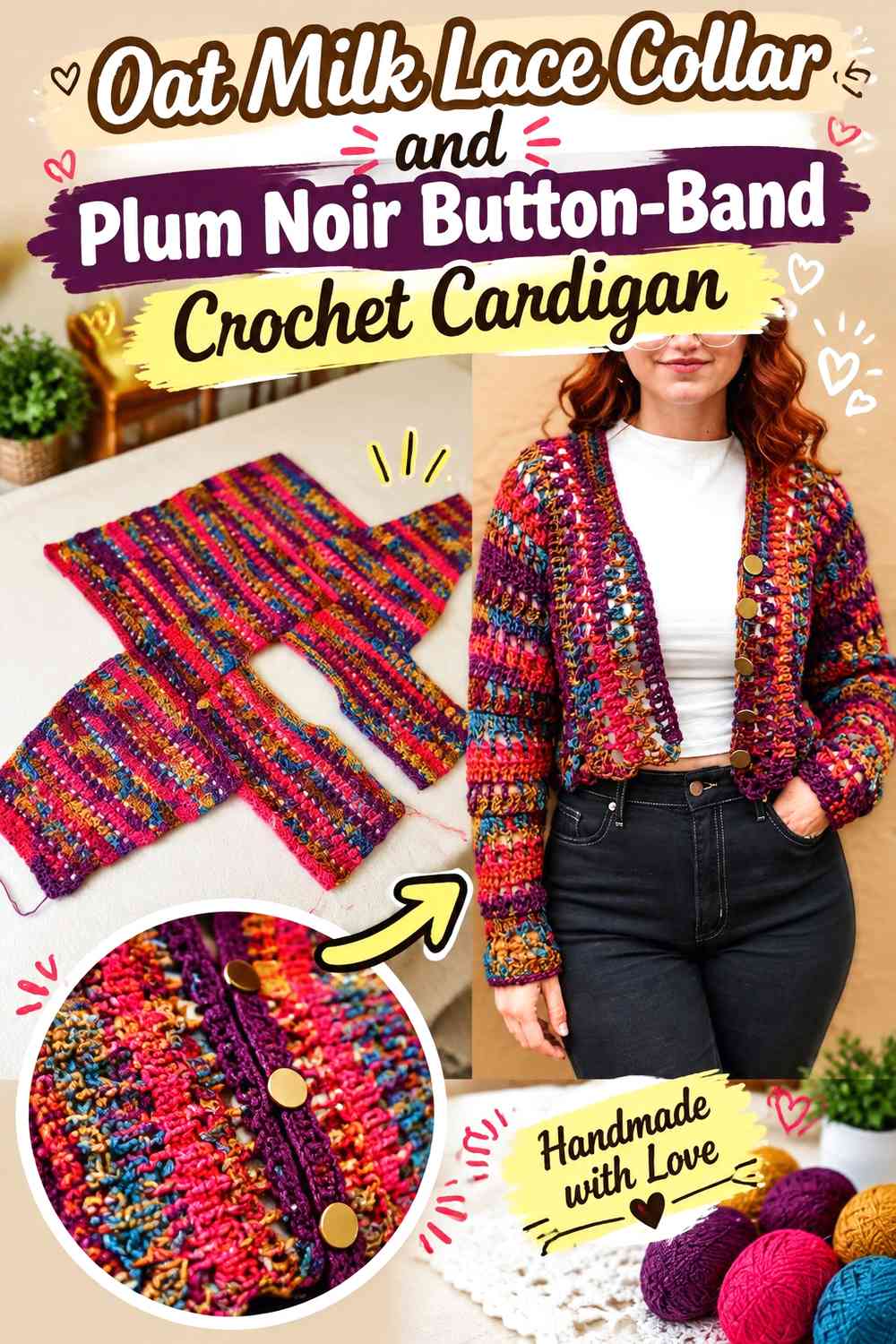
This direction separates two neighboring cardigan features by role: Oat Milk carries the decorative lace, while Plum Noir defines the front opening. The contrast is useful when a lace collar and button band meet closely and could otherwise blend together.
Oat Milk Should Remain Visible Beside the Plum Noir Button Band
Keep enough light space around the lace edge that the Plum Noir opening does not swallow small scallops or mesh details. If the dark band is broad, test the collar beside it before completing all the edging so you can see whether the pale lace still has enough visual width.
Plum Noir Can Make the Oat Milk Cardigan Opening Feel Deliberate
Repeating Plum Noir down both front edges creates a strong vertical frame around the lighter collar. Keep those dark edges symmetrical when symmetry suits the construction, because uneven color width can attract more attention than the lace itself.
Creator Credit: Brunaticality
8. Plum Noir Openwork Crochet Cardigan with an Oat Milk Lace-Edged Collar
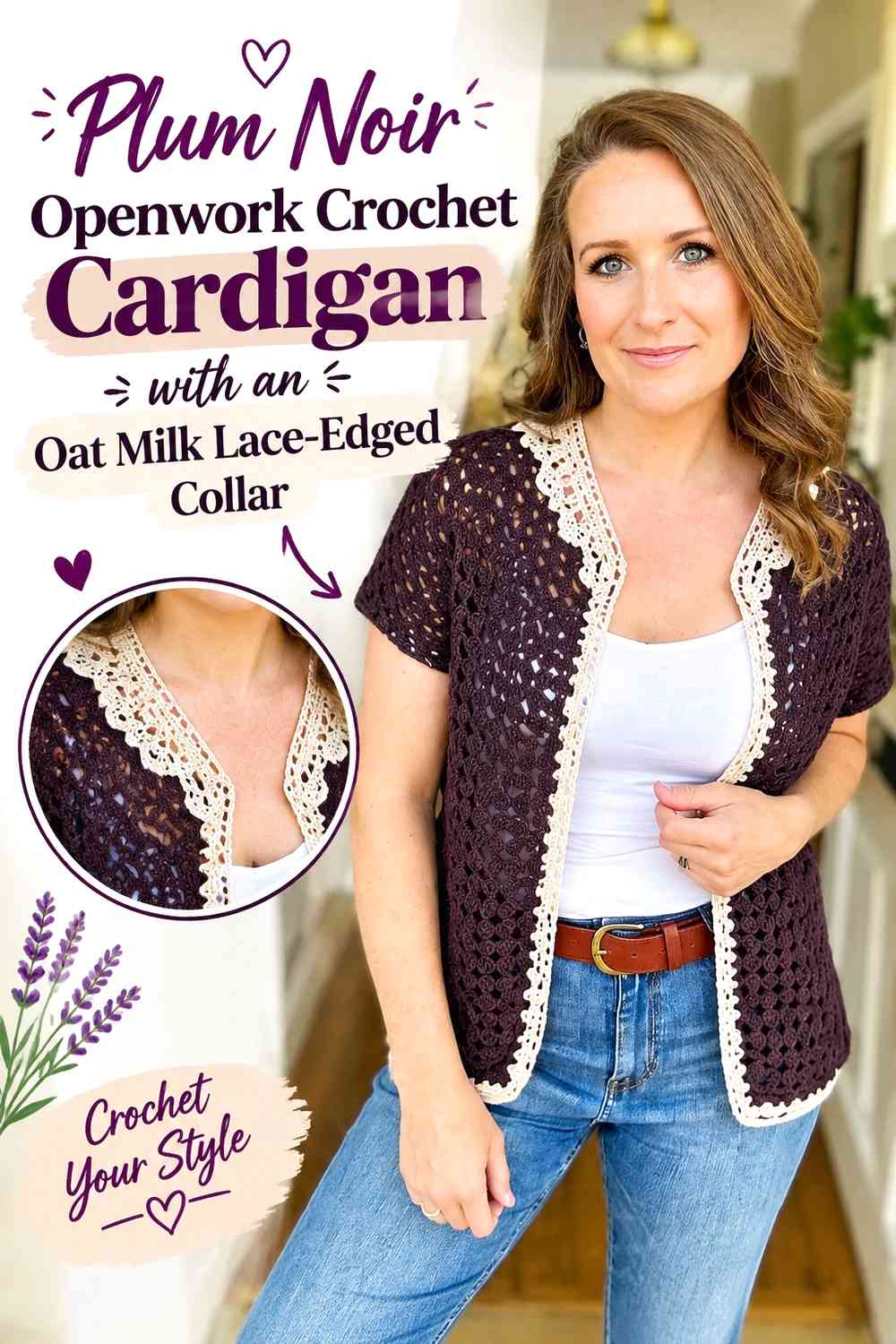
When the cardigan body already contains openwork, a highly decorative collar can compete with the texture below it. Here, Plum Noir keeps the body visually unified while Oat Milk is reserved for a clearer collar edge rather than a large multicolor lace section.
Plum Noir Openwork Needs a Controlled Oat Milk Accent
Use Oat Milk where the neckline needs definition instead of outlining every openwork repeat across the cardigan. Concentrating the light color at the collar helps separate garment texture from neckline detail.
Oat Milk Can Calm a Busy Plum Noir Crochet Neckline
A relatively consistent Oat Milk collar band followed by a smaller lace edge can provide a visual break between the face-framing neckline and the darker openwork body. If the body pattern is especially prominent, simpler color placement around the collar can keep the two textures from competing.
Creator Credit: HanJan Crochet
9. Plum Noir Granny-Lace Crochet Cardigan with Oat Milk Collar and Joins
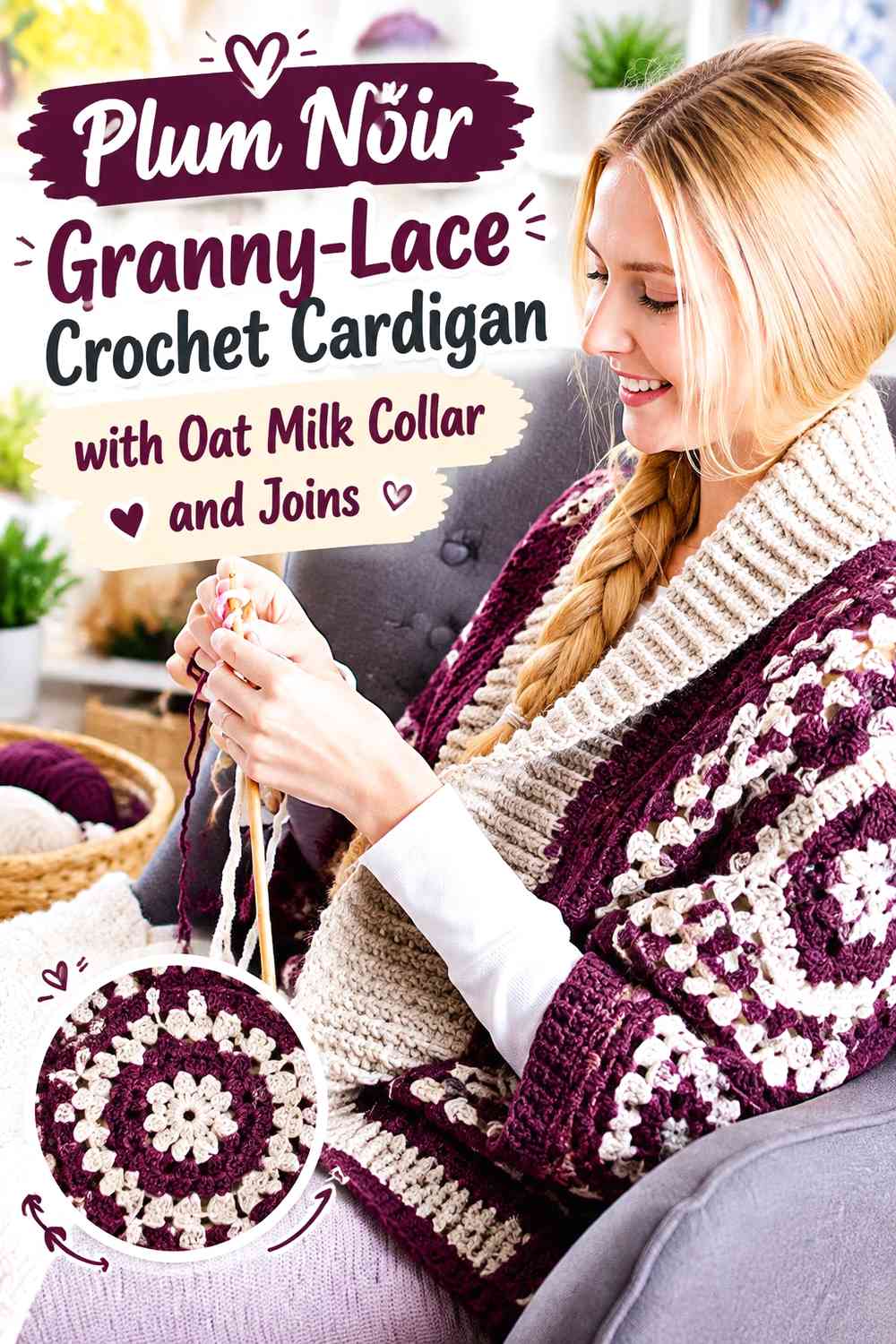
Granny-style construction introduces repeated boundaries throughout the garment, which makes Oat Milk useful for more than the collar alone. Using the pale neutral selectively at joins can connect the vintage neckline to the motif layout without requiring half the cardigan to become light.
Plum Noir Should Repeat Consistently Across the Crochet Motifs
Give each major motif enough Plum Noir that the cardigan still reads as one dark-plum garment. Randomly reversing every motif can make the color hierarchy harder to follow. Consistent Plum Noir outer sections or repeated dark centers are two general ways to establish order without copying a creator-specific layout.
Oat Milk Joins Can Connect the Plum Noir Motifs to the Collar
If Oat Milk already defines the lace collar, repeating it between selected motifs can prevent the neckline from looking detached. Keep the joining color consistent enough to create rhythm, and check that pale seams do not become more prominent than the motifs themselves.
Creator Credit: Yarnspirations
10. Plum Noir Crochet Cardigan with an Oat Milk Motif Lace Collar
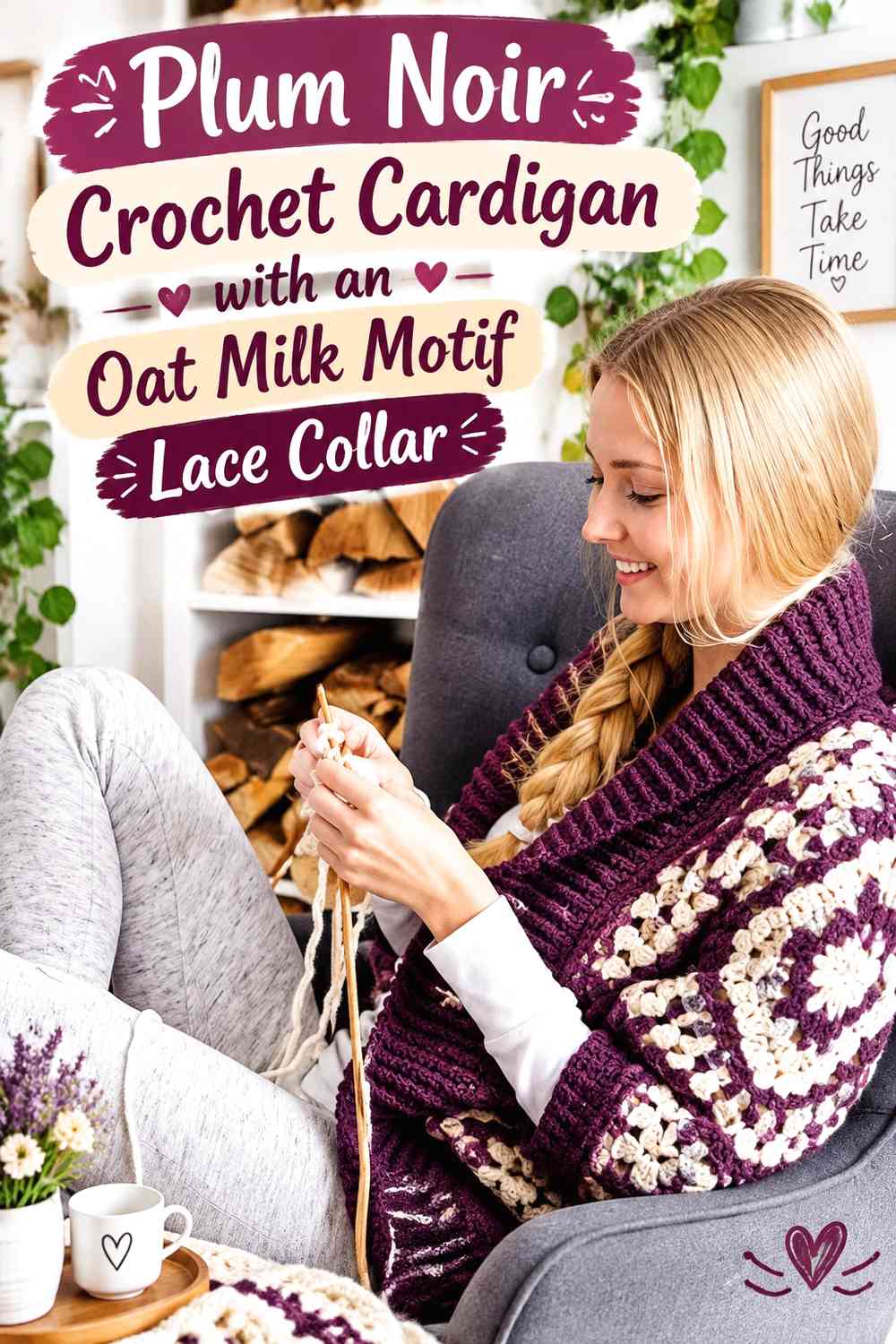
A motif-built collar provides natural places to alternate the two colors. Oat Milk can dominate the outer shapes while Plum Noir appears in motif centers or connecting areas, tying the decorative neckline back to the cardigan body.
Oat Milk Motifs Need Enough Separation From the Plum Noir Cardigan
Keep pale motif borders visible where they touch the body. If too much Plum Noir is added to the motif perimeter, its shape can disappear against the dark garment. Reserve the deeper shade for centers or selected internal details when the motif outline is important.
Plum Noir Motif Centers Can Anchor the Oat Milk Lace Collar
Small Plum Noir centers repeat the body color without giving up the light collar effect. Use the dark centers consistently across the collar rather than introducing them on only one side, unless deliberate asymmetry is part of the design.
Creator Credit: The Crochet Crowd
11. Plum Noir Crochet Cardigan with a Fine Oat Milk Picot Lace Collar
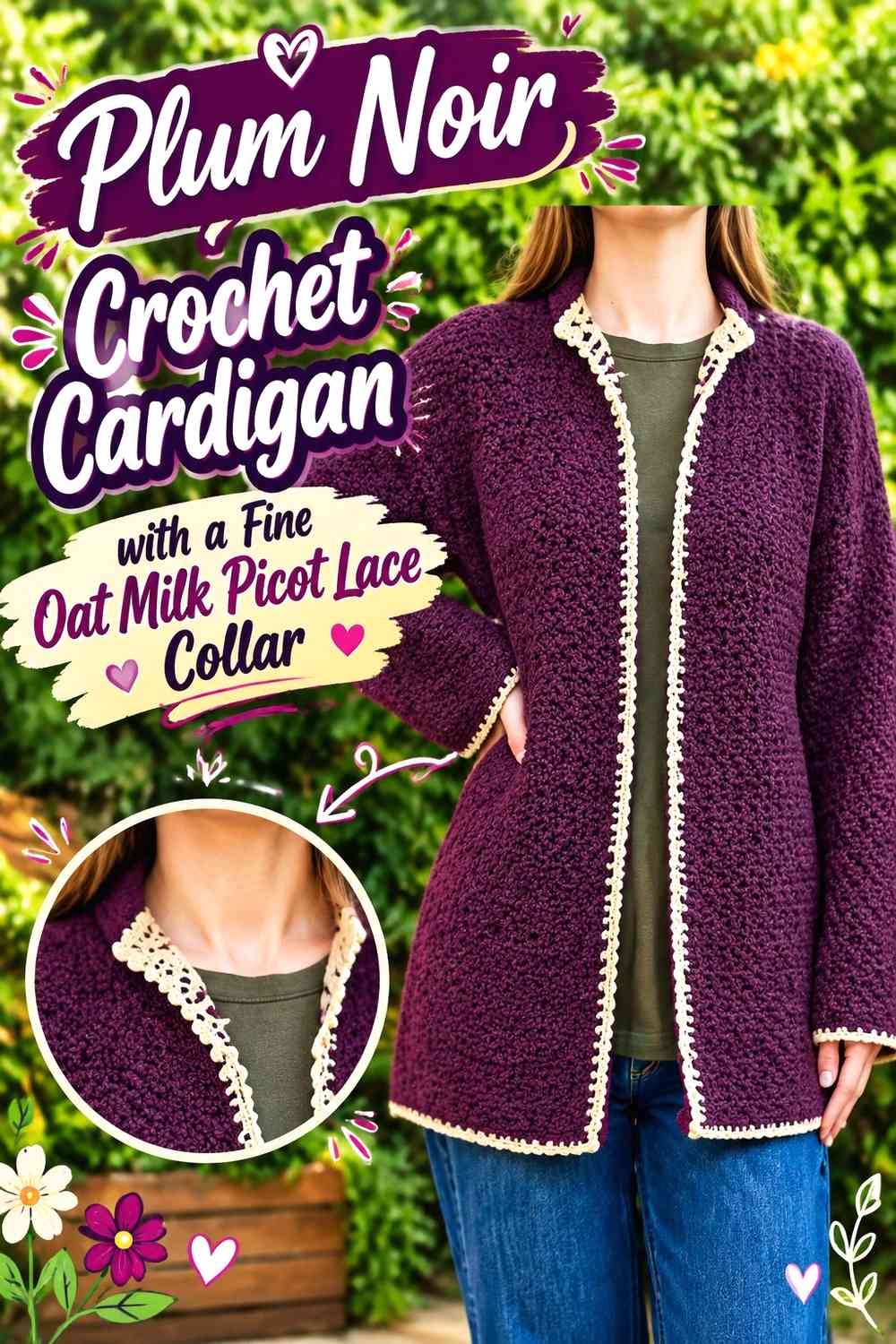
This is one of the most restrained versions of the palette. Plum Noir occupies almost the entire garment and most of the neckline, while Oat Milk appears only as a narrow picot or delicate finishing edge. It suits a cardigan where the vintage influence should come from a small neckline detail rather than a large contrasting collar.
Plum Noir Can Stay Dominant With Only a Fine Oat Milk Edge
Do not widen the light border automatically. A narrow Oat Milk line can be enough to reveal the tips or points of a dark lace collar. Check the cardigan from normal viewing distance; if the edge is already visible, additional pale rows may reduce the near-monochrome effect.
Repeat Oat Milk Sparingly Across the Plum Noir Cardigan
If the collar trim feels isolated, repeat the same light neutral in a very small cuff or hem detail. Avoid making each repeat progressively wider, because the palette can quickly shift from dark-led to evenly divided.
Creator Credit: Bag-O-Day Crochet
12. Plum Noir Center-Panel Crochet Cardigan with Oat Milk Collar and Hem
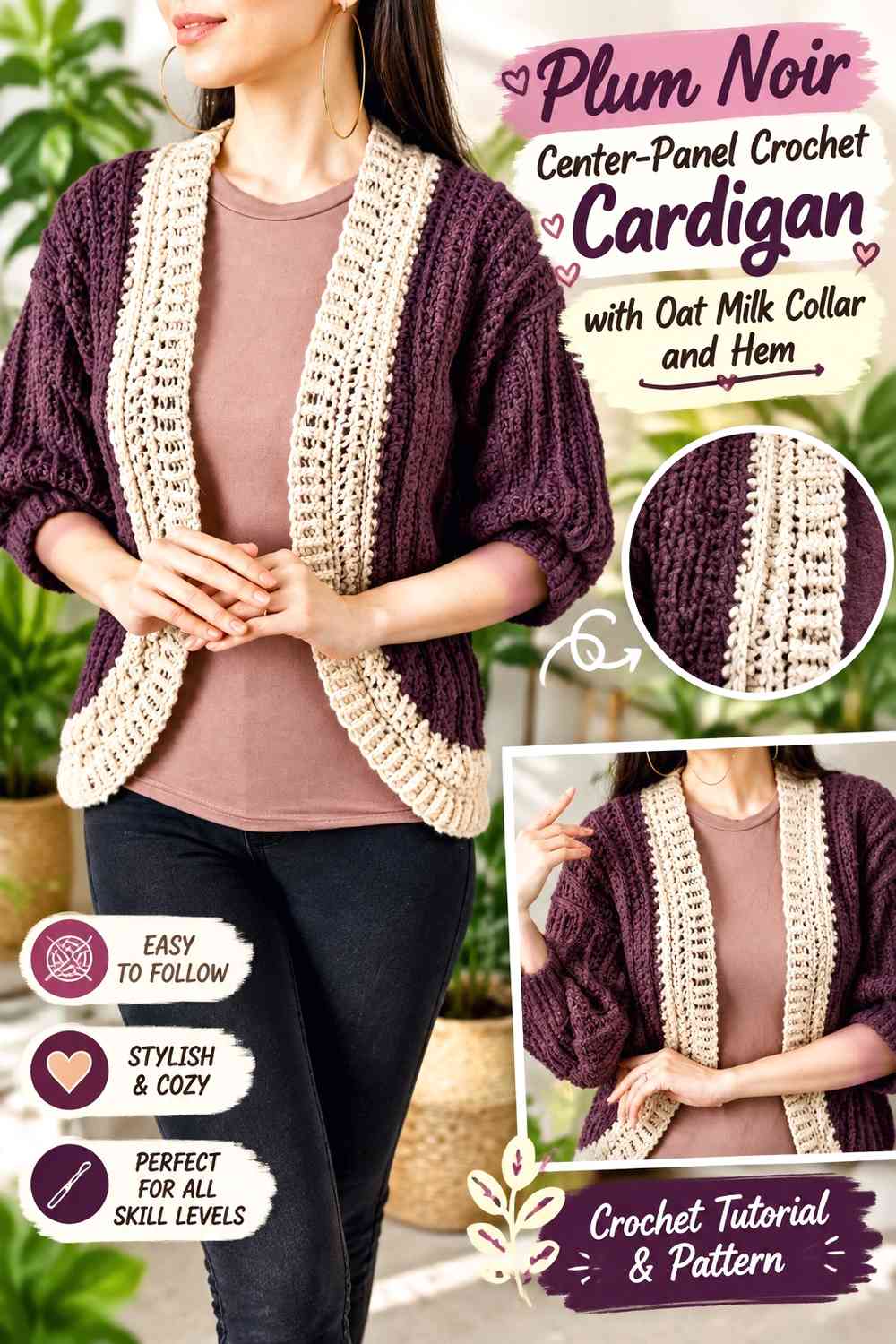
Here, Oat Milk appears at both the top and bottom of the garment, while Plum Noir remains concentrated through the main front and back panels. Repeating the light neutral at two separated points creates a more deliberate garment-wide palette than using it only at the neckline.
Plum Noir Center Panels Should Remain the Largest Color Area
Keep the middle of the cardigan dark enough that the Oat Milk collar and hem read as framing elements. If the pale hem grows too deep, it can compete with the neckline and divide the garment into similarly sized color blocks.
Oat Milk Can Link the Plum Noir Collar Area to the Hem
Use related proportions rather than necessarily identical widths. The collar may need more visual area because it contains lace, while the hem can repeat Oat Milk more narrowly. That connection is usually enough to make the palette feel intentional from top to bottom.
Creator Credit: TCDDIY
13. Oat Milk Vintage Lace Collar Crochet Cardigan with Plum Noir Cuffs and Hem
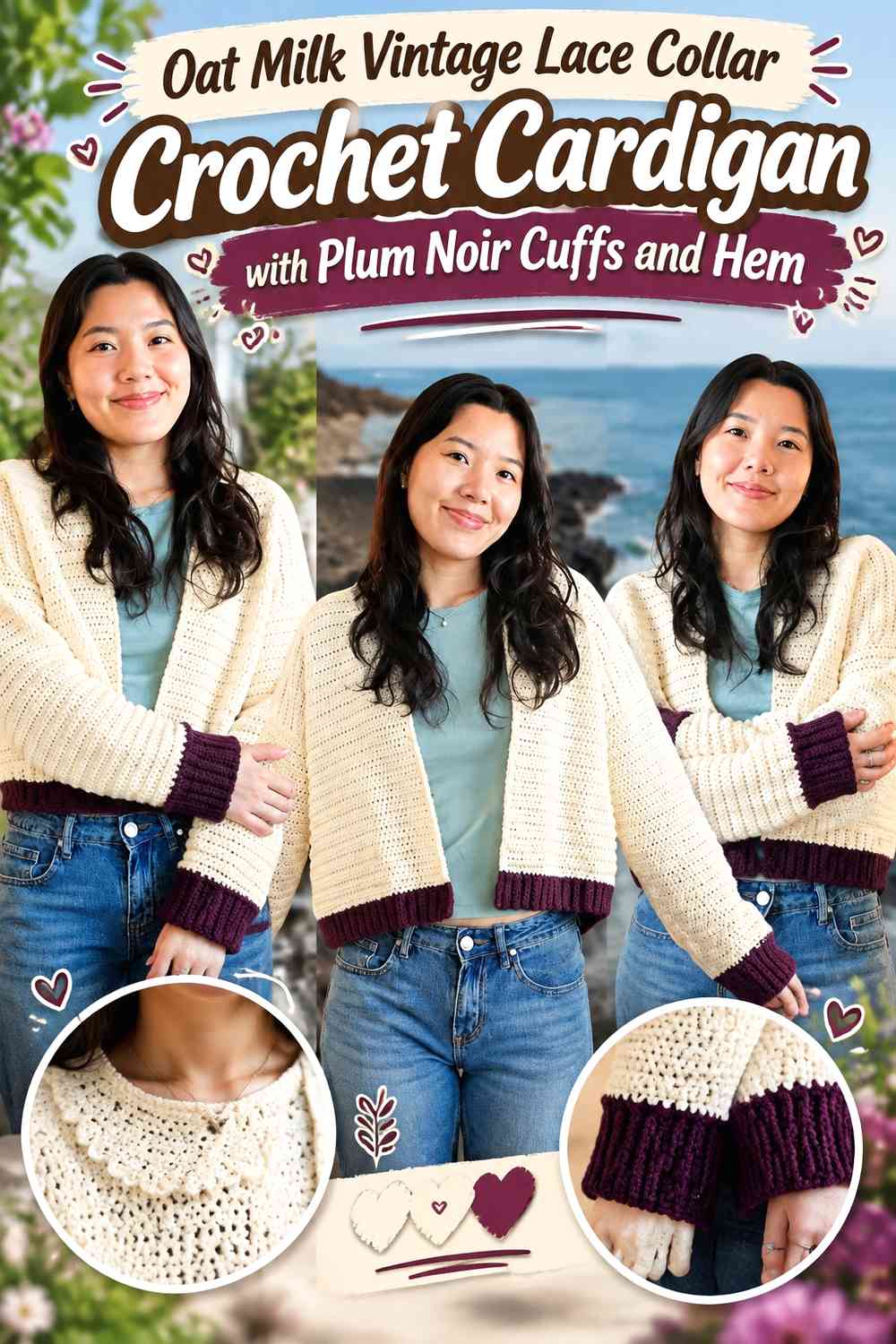
This arrangement gives Oat Milk the upper focal point while using Plum Noir to frame the lower edges of the garment. It is a useful alternative when you want more than one dark area but do not want to interrupt the body with stripes or scattered blocks.
Oat Milk Keeps the Plum Noir Cardigan Focus at the Vintage Collar
Because the cuffs and hem are dark, the pale collar remains the strongest light area near the face. Keep the main body relatively consistent so the viewer can read the neckline and lower dark frame as separate but related features.
Plum Noir Cuffs and Hem Can Balance a Large Oat Milk Collar
A wide lace collar may otherwise place most of the contrast at the top of the garment. Plum Noir cuffs and a dark lower edge distribute visual weight farther down without introducing another color. Check the cuff width against the collar before making both equally prominent.
Creator Credit: VivCrochets
14. Plum Noir Floral-Panel Crochet Cardigan with an Oat Milk Lace Collar
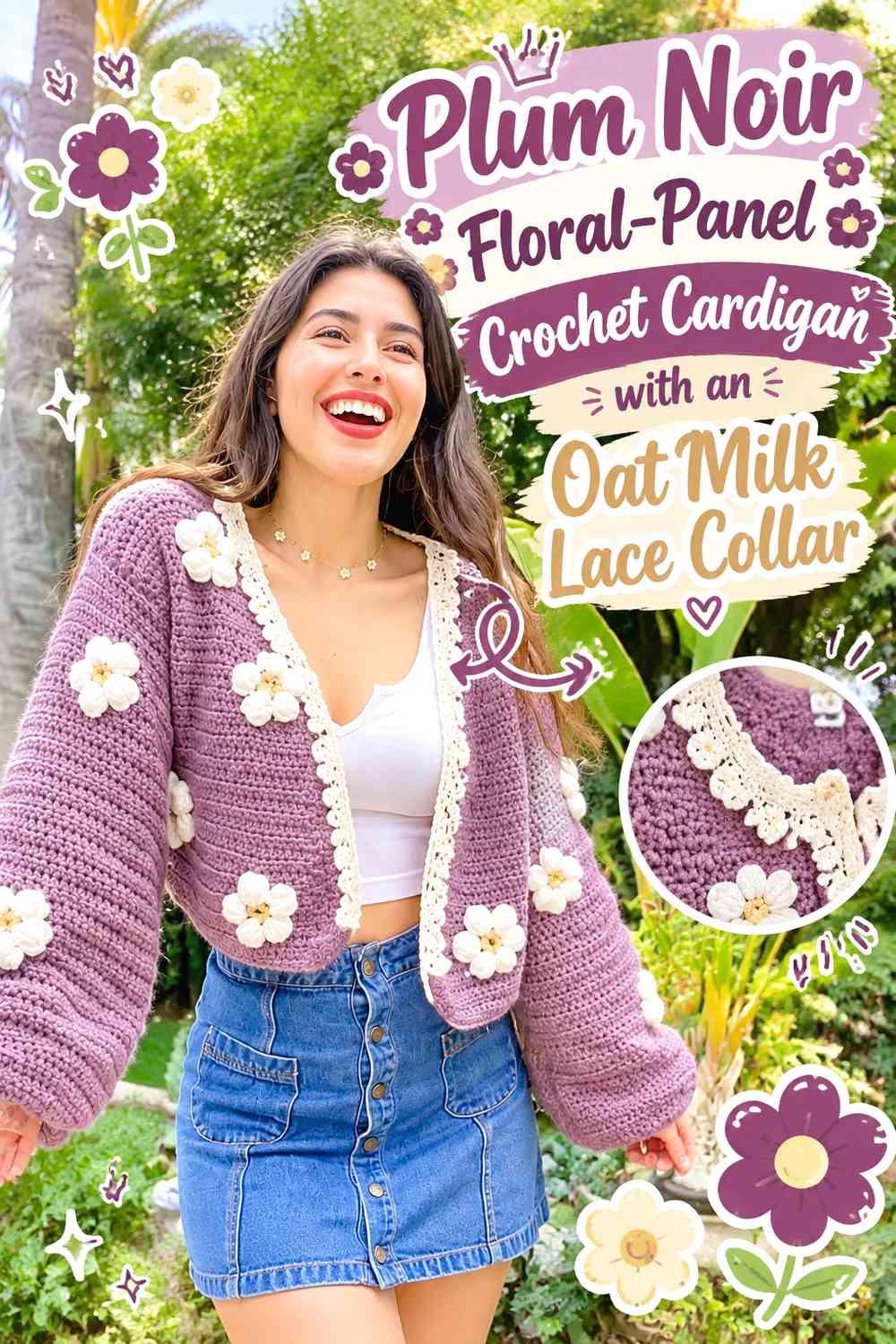
Floral crochet introduces internal shapes that can benefit from the same high-value contrast as a lace collar. Plum Noir can form the main floral field while Oat Milk is used around the neckline and selected flower details rather than filling every motif equally.
Plum Noir Gives Oat Milk Floral Details a Dark Crochet Background
If Oat Milk appears inside selected flowers, keep enough Plum Noir around each pale detail for the floral shapes to remain distinct. Repeating the light neutral in too many neighboring motifs can merge them into one larger pale patch.
Oat Milk Can Tie Plum Noir Floral Panels Back to the Lace Collar
Repeat Oat Milk in a controlled number of floral centers or edges so the collar is connected to the rest of the cardigan. The repetition works best when it is predictable enough to look intentional but limited enough that Plum Noir still controls the garment.
Creator Credit: Krystal Everdeen
15. Plum Noir Draped Crochet Cardigan with an Oat Milk Inner Lace Collar Edge
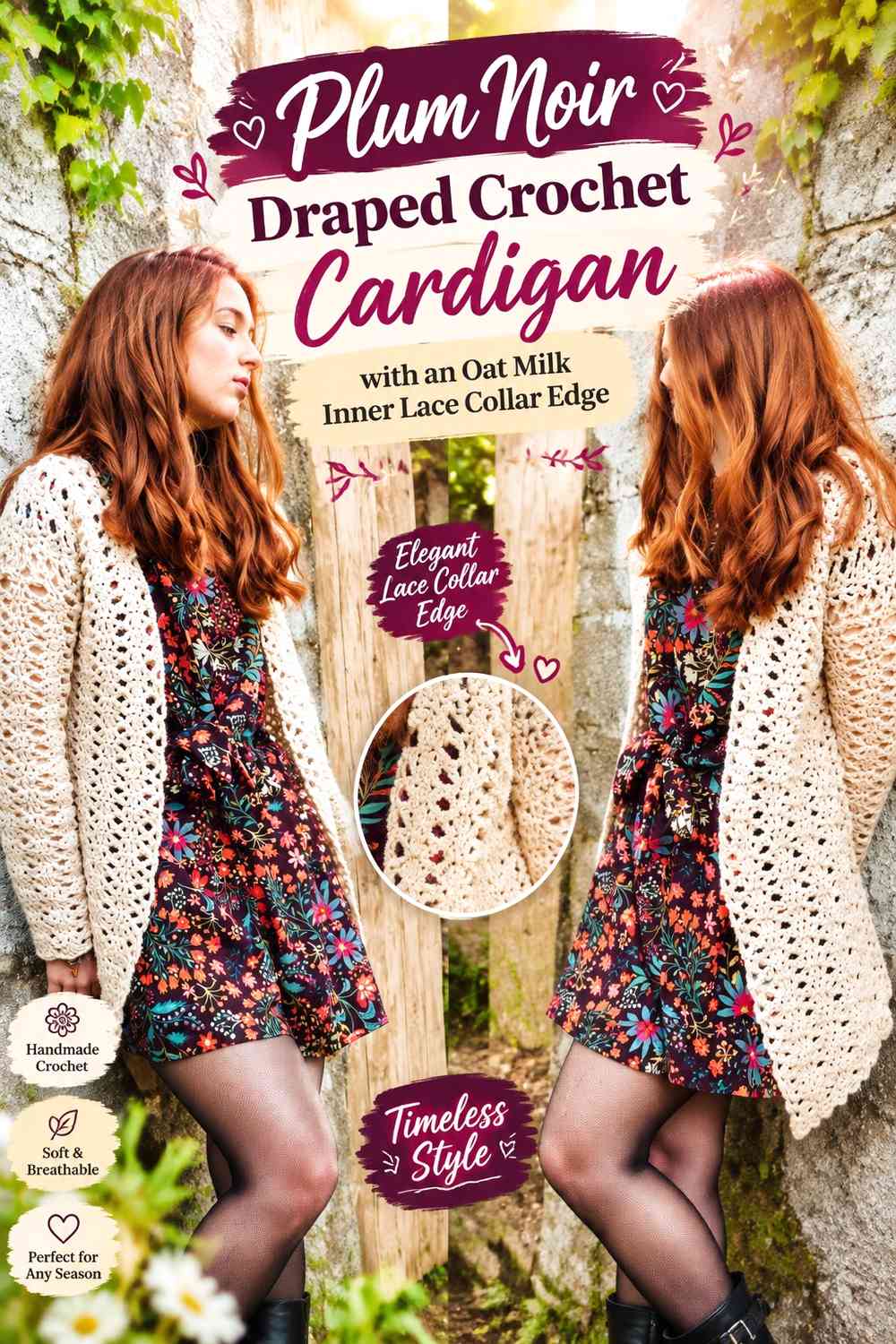
A draped front produces folds and shadows that can make a very dark Plum Noir collar appear even deeper. Placing Oat Milk along the inner collar edge gives the fold a visible boundary without requiring a full pale collar.
Plum Noir Draping Needs Enough Oat Milk Contrast at the Neckline
Concentrate Oat Milk where the collar turns or folds inward. The lighter line can help separate overlapping dark sections, particularly when the cardigan is layered over another dark garment.
Keep Oat Milk Narrow if Plum Noir Should Remain Dramatic
Because a draped collar has considerable surface area, a broad pale edge can become a major color block. Start with a restrained Oat Milk proportion when the goal is to preserve the Plum Noir-dominant look, then judge whether more repetition is actually needed elsewhere.
Creator Credit: Hey Carrie
16. Plum Noir Longline Crochet Cardigan with an Oat Milk V-Stitch Lace Collar
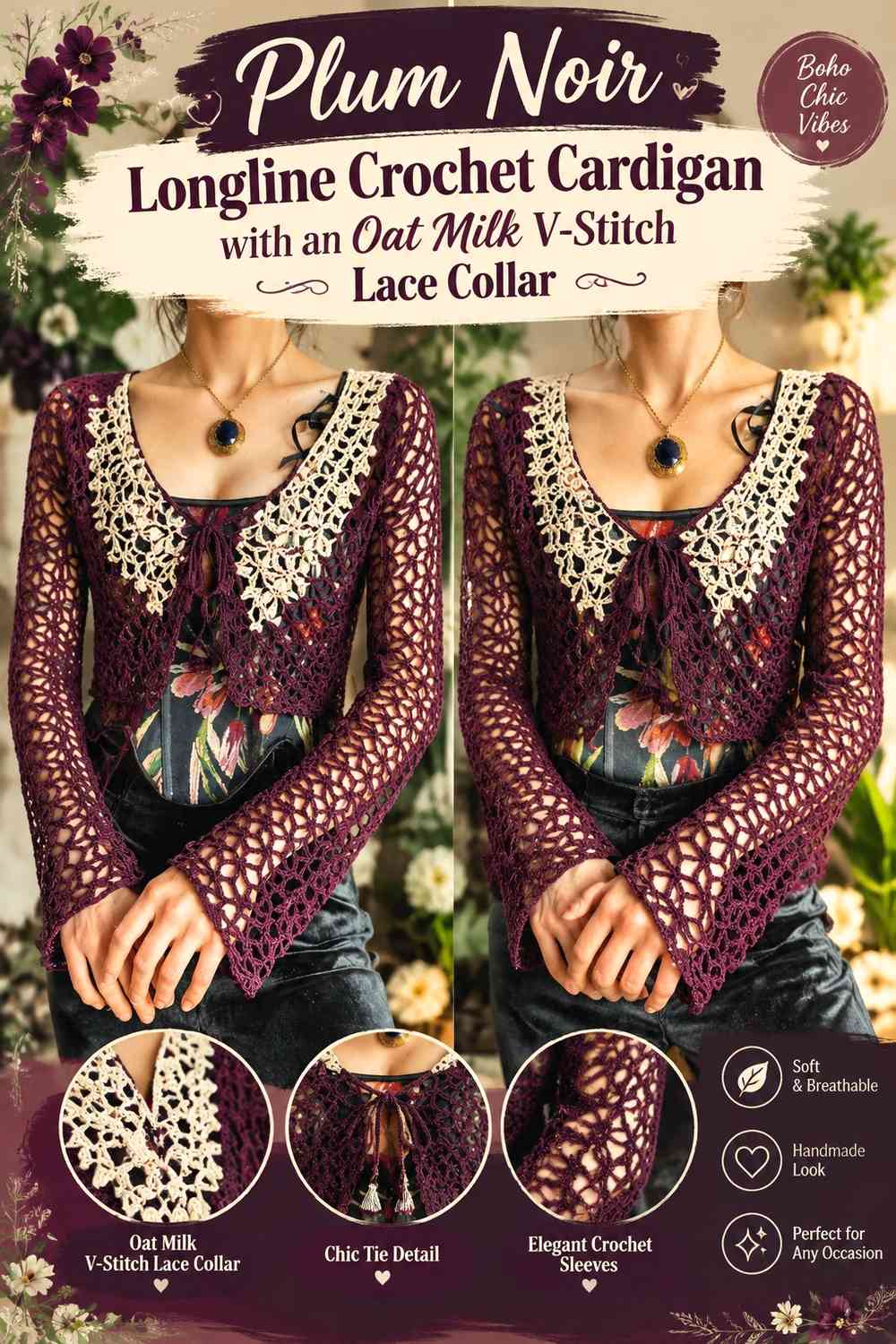
A long cardigan gives Plum Noir a large uninterrupted field, so an Oat Milk openwork collar can provide contrast without making the garment feel evenly split between two colors. V-shaped or similar open lace also allows the dark body to show through parts of the pale neckline.
Oat Milk Openwork Should Stay Clear Against the Plum Noir Cardigan
Check whether the holes in the collar are large enough for the Plum Noir beneath them to become part of the visual design. If the Oat Milk lace is extremely dense, the neckline may read as a solid pale band rather than an open vintage detail.
Plum Noir Can Extend Through the Longline Body Without More Oat Milk
A long silhouette does not automatically need repeated pale stripes down its full length. If the collar already provides sufficient contrast, keeping the remaining body Plum Noir preserves a cleaner two-zone composition. Add Oat Milk elsewhere only when it solves a specific balance problem.
Creator Credit: Hannah Drapinski
17. Plum Noir and Oat Milk Color-Block Vintage Lace Collar Crochet Cardigan
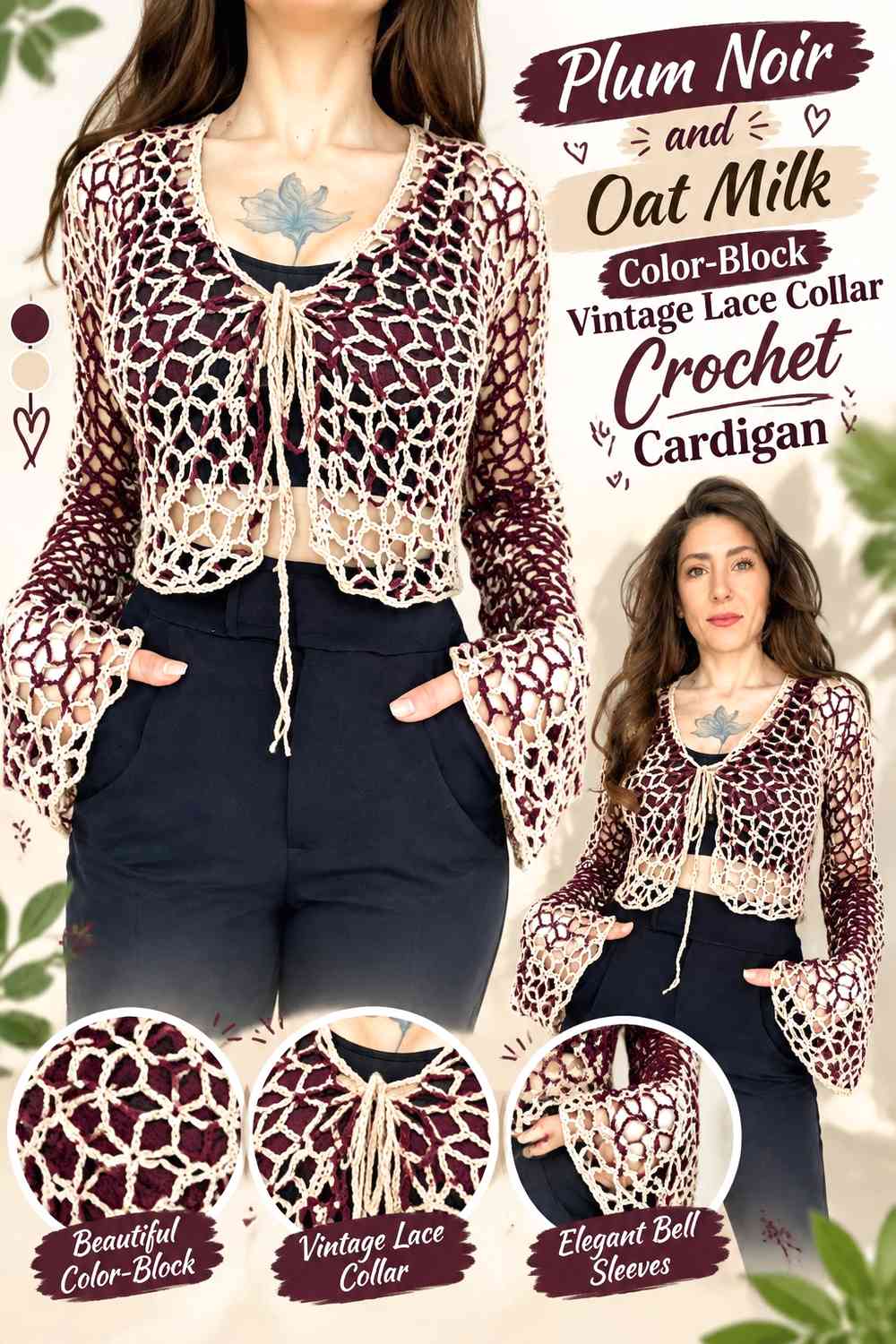
The final direction gives Plum Noir and Oat Milk more comparable visual weight. Instead of treating one as a tiny accent, assign each color a clearly defined garment area: for example, dark sleeves and front sections with a pale collar and selected body panels. Strong color blocking works best when the divisions follow recognizable cardigan features rather than changing unpredictably.
Give Plum Noir and Oat Milk Clear Crochet Cardigan Roles
Decide which sections belong to each color before beginning the visible layout. Sleeves, front panels, collar, cuffs, and hem provide natural boundaries. Avoid switching colors simply because another shade has not appeared recently; repeated structural placement produces a more coherent result.
Keep Oat Milk Lace Visible Where Plum Noir Color Blocks Meet
The lace collar should not disappear at the boundary between major color sections. If Plum Noir sits directly beneath the collar, the contrast will be strong. Where Oat Milk body sections touch an Oat Milk collar, introduce enough Plum Noir nearby to preserve the neckline outline rather than allowing the two light areas to merge.
Creator Credit: Deniz Tunçalp
Conclusion
The strongest Plum Noir and Oat Milk vintage lace collar cardigan direction depends on where you want the eye to settle. For the clearest neckline contrast, use a Plum Noir body with an Oat Milk scalloped, Peter Pan, or motif collar. For a lighter garment, reverse the balance and place Plum Noir mainly around the neckline and front opening.
If you prefer a subtle two-color result, keep the cardigan almost entirely Plum Noir and limit Oat Milk to picots or a narrow collar edge. Granny motifs, floral panels, joins, cuffs, and hems give you more opportunities to repeat Oat Milk when you want the palette to travel across the whole garment.
Whichever arrangement you choose, compare the yarns in the actual crochet texture before committing to a large color area. Lace, shadows, openwork, and raised texture can change how strongly the two values separate. Use the linked creator tutorials for the exact cardigan construction, then plan the Plum Noir and Oat Milk distribution around the neckline, panels, sleeves, and finishing details.
Frequently Asked Questions
Does Oat Milk Give Plum Noir Crochet Lace Enough Contrast?
It can when the Oat Milk yarn is clearly lighter than the Plum Noir yarn. The difference matters most around small scallops, picots, motif centers, and other lace details. Compare the two worked samples side by side rather than judging only the yarn balls. A grayscale photo can also help reveal whether the light-and-dark difference is strong enough.
Should Plum Noir or Oat Milk Be the Main Cardigan Color?
Use Plum Noir as the dominant color when you want the cardigan to feel dark with the lace collar acting as a pale focal point. Use Oat Milk across more of the body when you want a lighter garment with Plum Noir defining the neckline, front edges, or selected trims. The choice is primarily about visual hierarchy rather than a universal rule.
Can I Use Only Plum Noir and Oat Milk on a Vintage Lace Collar Cardigan?
Yes. Two colors are enough when their roles are clear. Plum Noir can cover the main panels while Oat Milk marks the collar, or the balance can be reversed. Additional shades are not necessary simply to create variety; changing the proportion and placement of the same two colors can produce noticeably different cardigans.
Where Should I Repeat Oat Milk if the Collar Is the Main Accent?
Cuffs, a narrow hem, motif centers, joins, or a small front-edge detail can repeat Oat Milk without competing with the collar. Choose one or two locations that make sense for the actual cardigan rather than adding pale accents everywhere.
How Can I Stop a Plum Noir Lace Collar From Looking Too Flat?
Check whether the lace openings and edge shape are visible in the dark yarn. If fine details disappear, use Oat Milk on the outer scallops, motif borders, inner collar edge, or another small structural area. You do not necessarily need to recolor the entire collar.
Can I Substitute Different Shades for Plum Noir and Oat Milk?
Yes. Preserve the relationship more than the exact names. For Plum Noir, choose a very deep plum or purple-toned dark shade if you want a similar effect. For Oat Milk, choose a warm light neutral that remains clearly lighter than the dark color. Maintaining that value separation will preserve much of the original palette logic.