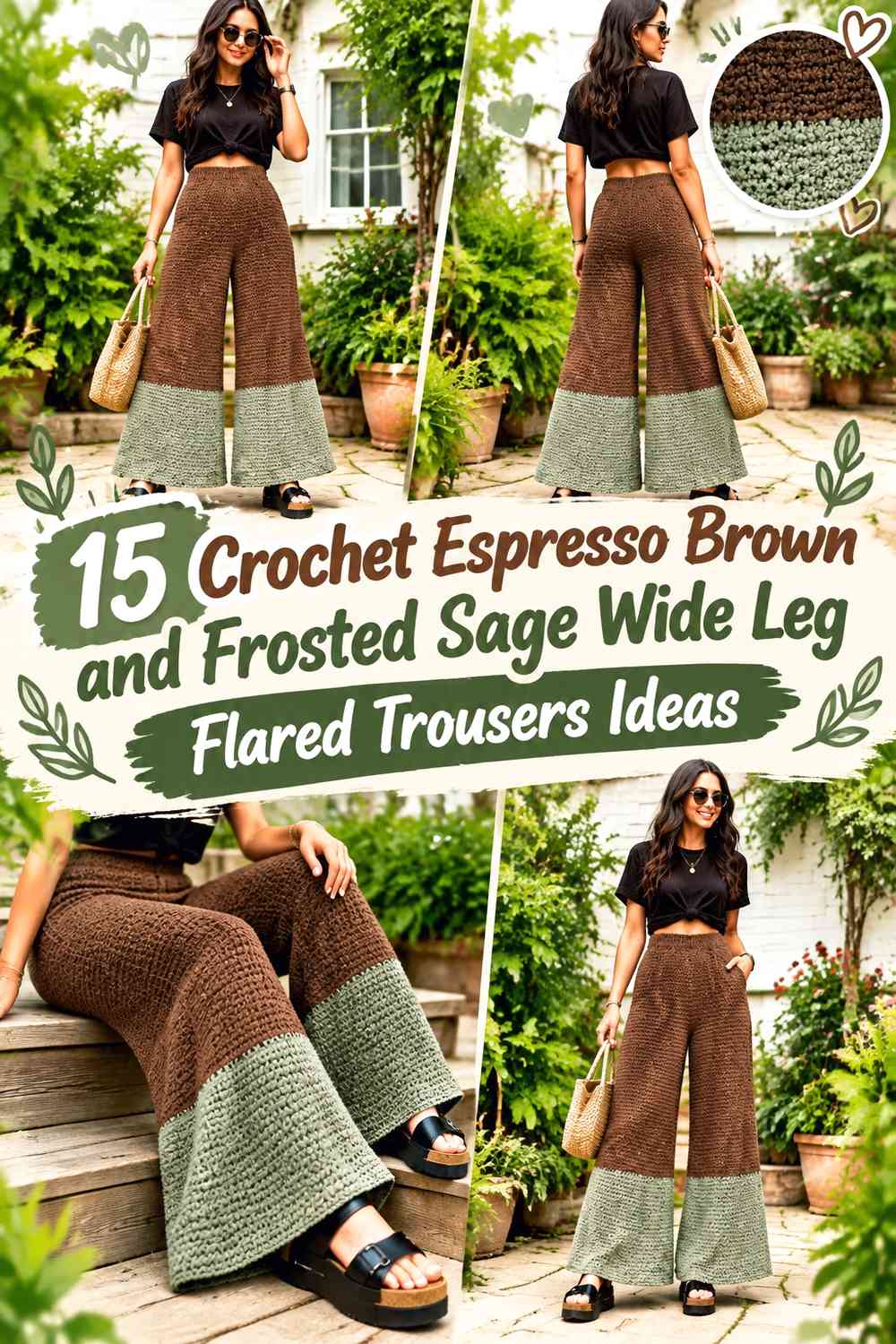

Espresso Brown and Frosted Sage create a grounded two-color direction for crochet wide leg flared trousers. Espresso Brown can provide a deep visual base through the waistband, hips, or upper leg, while Frosted Sage can lighten expanding flare sections and make openwork, motifs, side panels, or hem details easier to distinguish.
Here, Espresso Brown describes a deep coffee-brown color direction rather than a specific commercial yarn shade. Frosted Sage describes a softened, pale sage-green direction. The useful decision is how those values travel down a long trouser leg. A dark upper section with a pale flare produces a very different result from pale trousers framed by narrow Espresso Brown side details.
Wide leg trousers also create considerable visual area below the knee. That means the color assigned to the flare can become just as important as the waistband or hip color. Before choosing equal amounts of both shades, decide whether the trouser should read primarily as Espresso Brown, primarily as Frosted Sage, or as an intentionally balanced two-color garment.
The tutorials below support wide-leg, flared, bell-bottom, palazzo, mesh, motif, and other compatible crochet trouser constructions. Not every source uses this exact wide-leg flared silhouette, and the Espresso Brown and Frosted Sage placements are independent adaptations. Use the original creator tutorial for its construction details before changing leg shape, stitch repeats, or fit.
Quick List
- Espresso Brown Crochet Wide Leg Flared Trousers with Frosted Sage Lower Flares
- Frosted Sage Crochet Wide Leg Flared Trousers with Espresso Brown Waist and Hips
- Espresso Brown and Frosted Sage Vertical-Panel Crochet Flared Trousers
- Espresso Brown Crochet Flared Trousers with Frosted Sage Side Panels
- Frosted Sage Crochet Wide Leg Trousers with Espresso Brown Flared Hems
- Espresso Brown Crochet Bell-Bottom Trousers with Frosted Sage Mesh Flares
- Espresso Brown Crochet Palazzo Trousers with Frosted Sage Floral Accents
- Frosted Sage Crochet Wide Leg Trousers with Espresso Brown Waistband and Trim
- Espresso Brown Lace Crochet Flared Trousers with Frosted Sage Under-Flare Accents
- Espresso Brown Crochet Wide Leg Trousers with Frosted Sage Crossover Stripes
- Espresso Brown and Frosted Sage Granny-Square Crochet Flared Trousers
- Frosted Sage Shell-Stitch Crochet Wide Leg Trousers with Espresso Brown Bands
- Espresso Brown Mesh Crochet Flared Trousers with Frosted Sage Solid Panels
- Frosted Sage Granny-Motif Crochet Wide Leg Trousers with Espresso Brown Joins
- Espresso Brown and Frosted Sage Color-Block Crochet Wide Leg Flared Trousers
Decide Whether Espresso Brown or Frosted Sage Should Control the Trouser Length
Espresso Brown creates the strongest visual weight when it covers the waistband, hips, and upper leg. Moving into Frosted Sage farther down can then emphasize the point where the trousers begin to flare.
The reverse arrangement makes the whole garment lighter. Frosted Sage can cover most of the leg while Espresso Brown is restricted to the waistband, side details, or final hem. Because the trousers are long, even a relatively narrow Espresso Brown section can still have considerable visual presence.
Use Espresso Brown and Frosted Sage to Clarify the Flare
A crochet flare can be created through shape, stitch pattern, or both. Color can help make that transition visible. Changing from Espresso Brown to Frosted Sage near the beginning of the flare makes the expanding lower section immediately recognizable, while staying in one color creates a more continuous silhouette.
If the lower leg already uses dramatic mesh, shells, or another decorative stitch, a full color change may not be necessary. A Frosted Sage border beside an Espresso Brown flare can sometimes provide enough contrast.
Plan the Espresso Brown and Frosted Sage Waistband Separately
The waistband occupies less space than the legs but establishes the color hierarchy from the top. An Espresso Brown waistband gives a Frosted Sage garment a defined dark starting point. A Frosted Sage waistband keeps an Espresso Brown body from becoming uninterrupted from waist to knee.
Check how the waistband connects to the hip section rather than choosing its color in isolation. A strong contrast band can draw considerable attention, so it should support the rest of the trouser palette.
1. Espresso Brown Crochet Wide Leg Flared Trousers with Frosted Sage Lower Flares
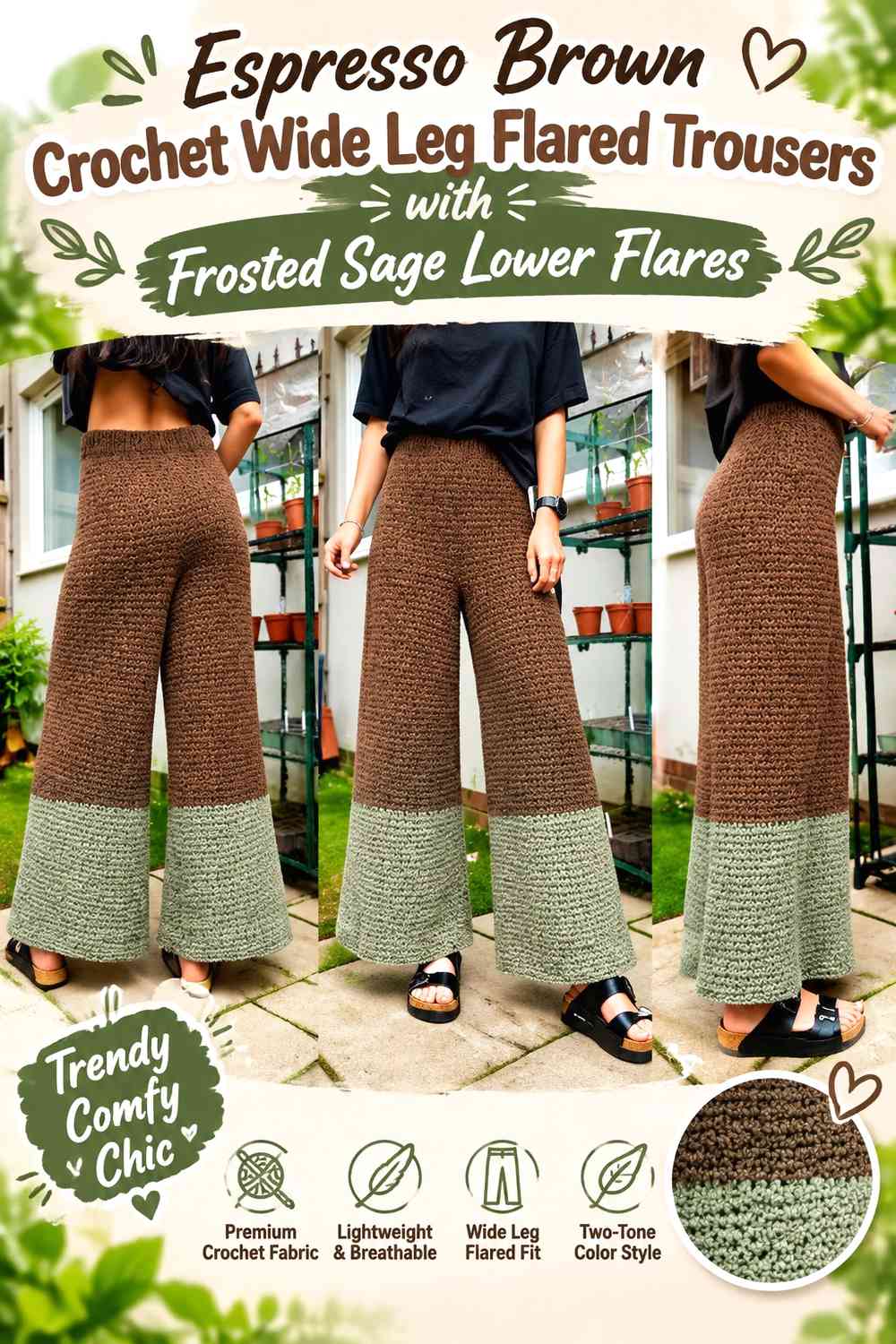
This arrangement establishes Espresso Brown from the waist through much of the leg before introducing Frosted Sage where the trousers widen. The color transition reinforces the change in silhouette, making the pale lower sections a deliberate focal point rather than simply another stripe.
Espresso Brown Should Ground the Upper Crochet Trousers
Keep Espresso Brown continuous through the waistband, hips, and upper legs if the goal is a dark-led pair of trousers. The uninterrupted brown creates a stable visual column before the flare begins.
Avoid inserting several Frosted Sage bands above the flare unless you want the lower color change to feel less dramatic.
Frosted Sage Can Mark the Espresso Brown Flare Transition
Introduce Frosted Sage near the point where the lower leg noticeably expands. The lighter shade makes the added width easier to recognize and separates the flare from the straighter upper section.
If the flare is very broad, consider retaining a narrow Espresso Brown final edge so the hem reconnects with the upper trousers.
Creator Credit: JeggoCrochet
2. Frosted Sage Crochet Wide Leg Flared Trousers with Espresso Brown Waist and Hips
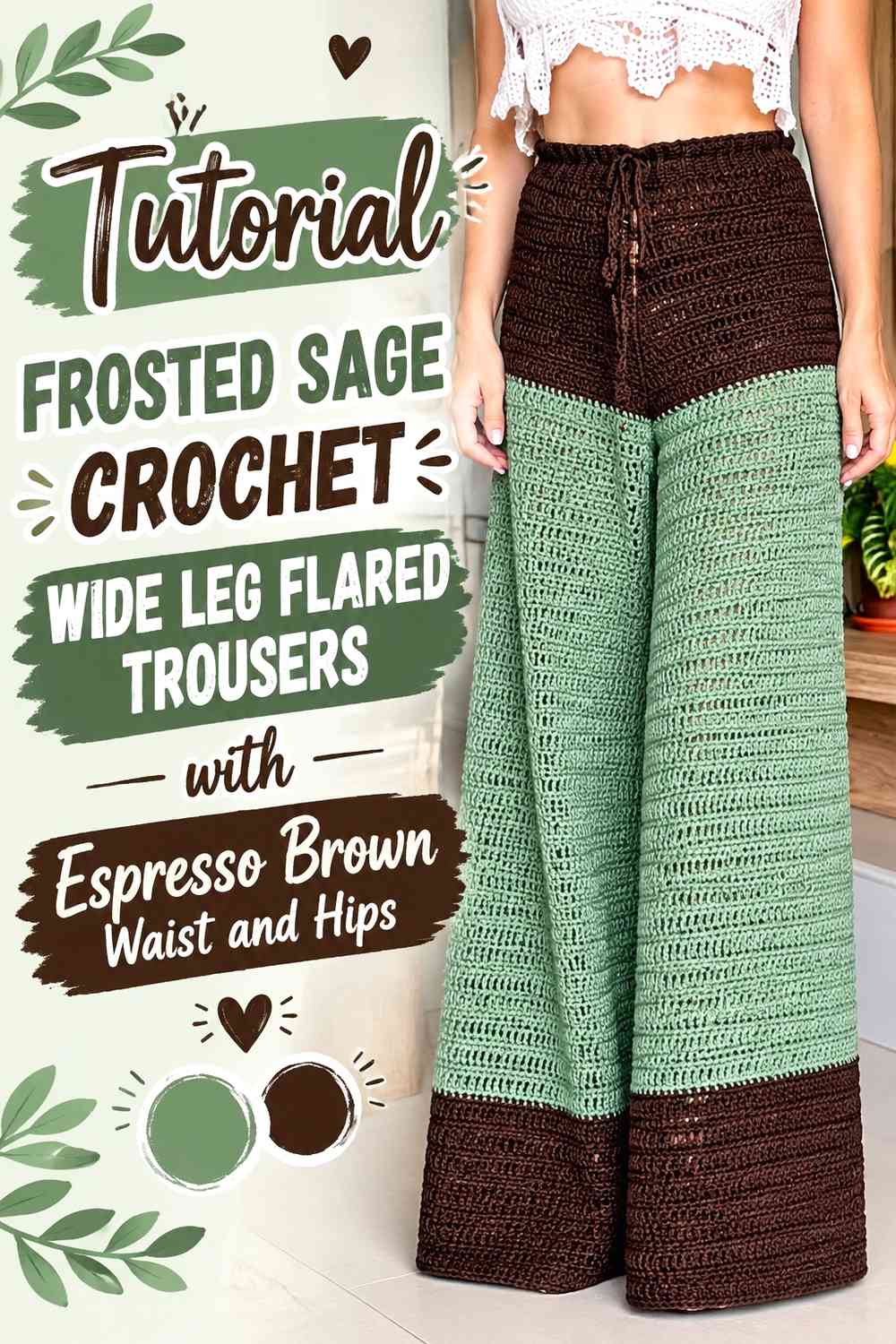
This version reverses the visual balance. Espresso Brown is concentrated around the top of the trousers, while Frosted Sage carries most of the wide leg and flare. It produces a lighter overall garment without losing the strong dark anchor at the waist.
Espresso Brown Can Define the Frosted Sage Waist and Hip Area
Use Espresso Brown where the trousers need their darkest continuous section. Keeping that color around the waistband and upper hip creates a clear starting point before Frosted Sage begins.
The dark section does not need to extend far down the thigh. A compact Espresso Brown area can provide enough contrast if the remainder of the leg stays pale.
Frosted Sage Should Remain Broad Through the Espresso Brown Trouser Flare
Once Frosted Sage begins, letting it continue through the wide legs makes the lower silhouette feel uninterrupted. Repeated Espresso Brown bands through the flare would change this into a striped concept.
If you want a second brown repeat, keep it narrow at the hem or outer edge.
Creator Credit: Juliana Faz Crochê 🧶
3. Espresso Brown and Frosted Sage Vertical-Panel Crochet Flared Trousers
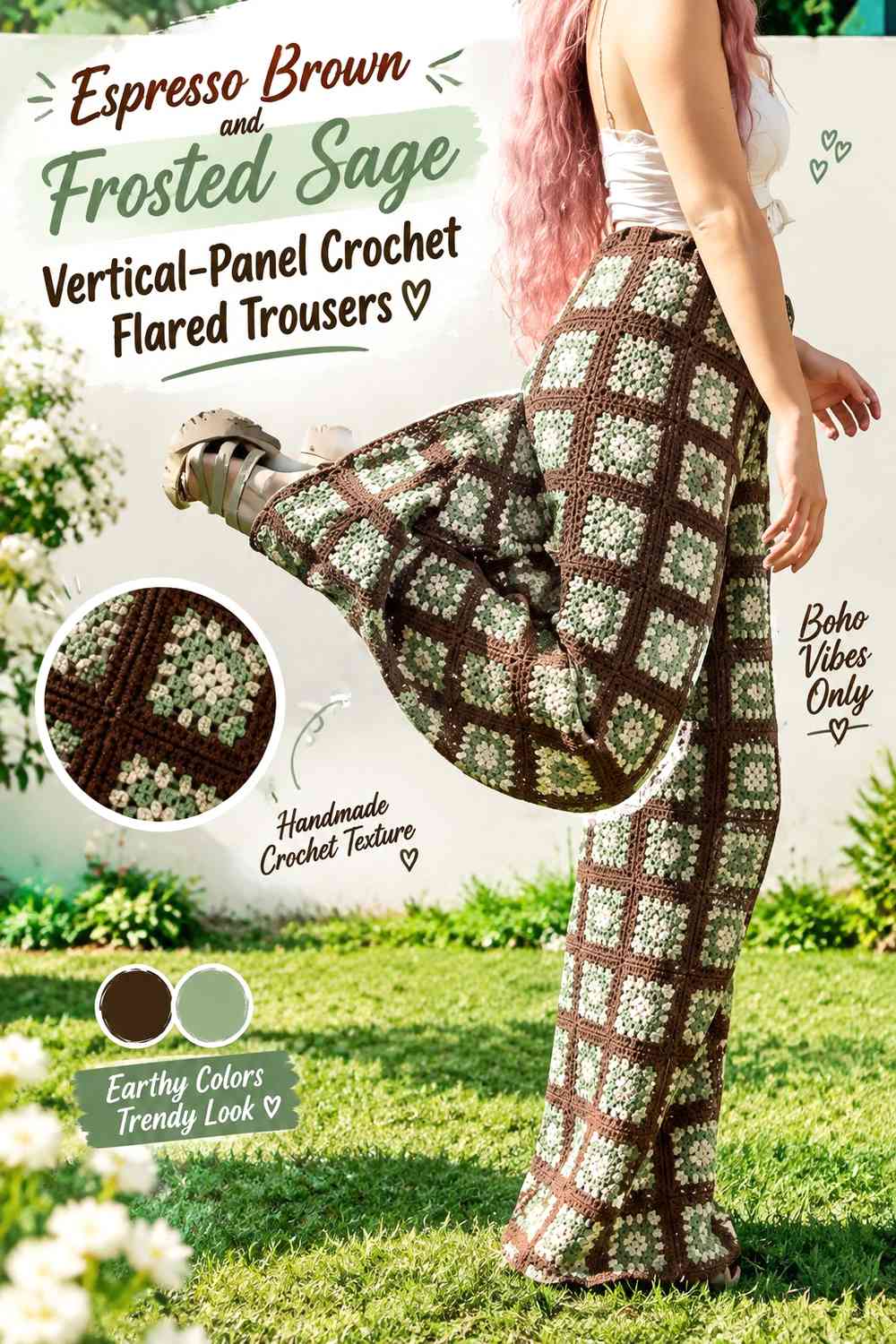
Vertical color placement changes the way the two shades interact with a wide leg. Instead of dividing the trousers horizontally, Espresso Brown and Frosted Sage travel from waist toward hem in long panels, allowing the flare to widen both colors simultaneously.
Espresso Brown Vertical Panels Can Structure Frosted Sage Wide Legs
Use Espresso Brown along one consistent portion of each leg, such as an outer panel, when you want a dark line to continue through the flare. A repeated vertical placement can keep the long silhouette visually connected from hip to hem.
Avoid making the brown panel progressively irregular unless asymmetry is intentional.
Frosted Sage Panels Need Enough Width Beside Espresso Brown
Give Frosted Sage enough surface area to remain a true second panel rather than a narrow decorative stripe. As the leg widens, decide whether the Frosted Sage section should widen proportionally or remain comparatively narrow.
That choice changes whether the bottom reads as balanced color blocking or Espresso Brown trousers with sage accents.
Creator Credit: caroleena’s closet
4. Espresso Brown Crochet Flared Trousers with Frosted Sage Side Panels
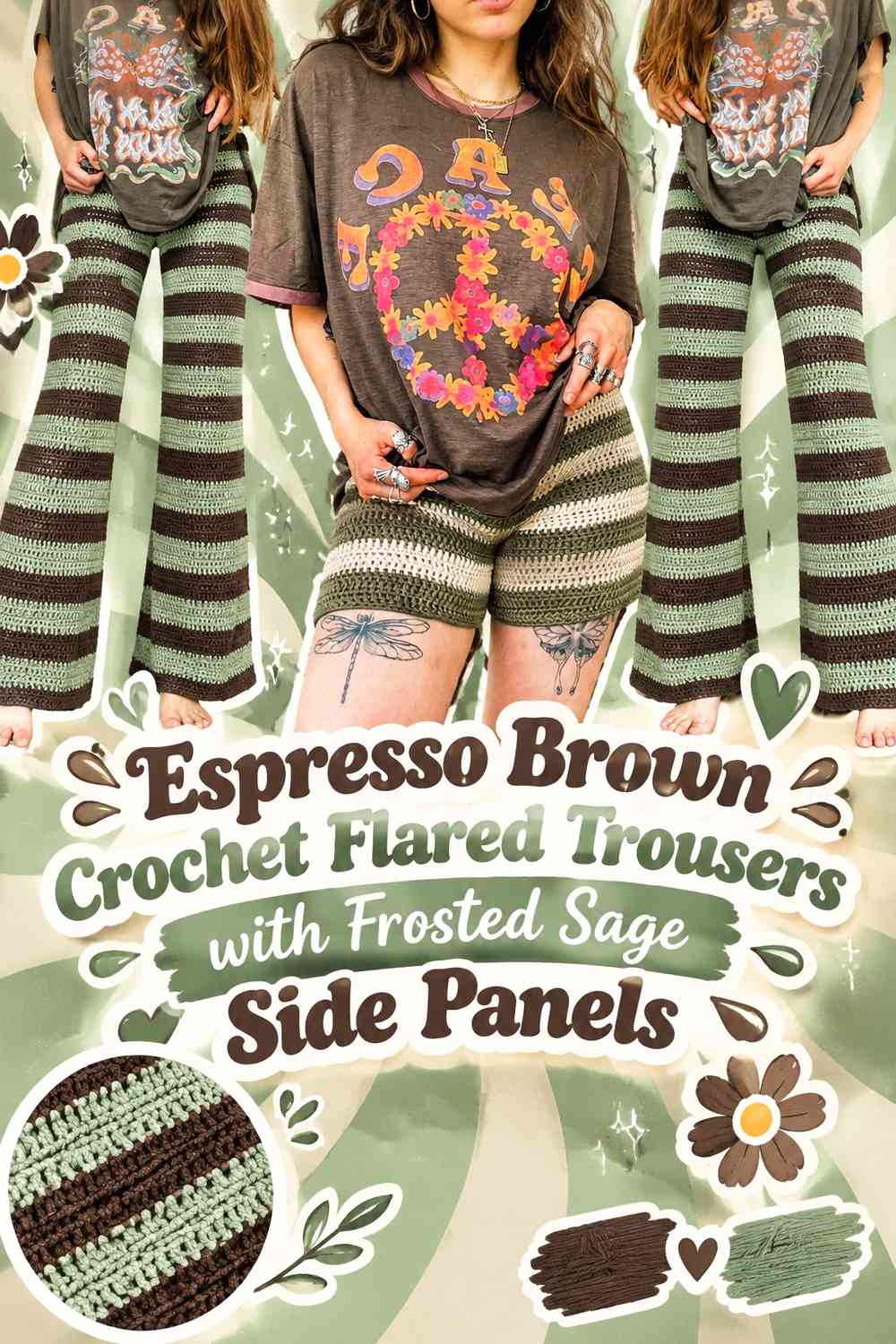
This approach keeps most of each trouser leg Espresso Brown and concentrates Frosted Sage along the outer sides. The lighter panel can continue through the flare, giving the lower leg a vertical accent without dividing the garment into horizontal bands.
Espresso Brown Should Remain Continuous Beside Frosted Sage Side Panels
Keep the center-front and center-back leg areas predominantly Espresso Brown if you want the trousers to remain dark-led. The broad brown field gives the narrow sage detail enough contrast to remain visible.
Frosted Sage Can Emphasize the Espresso Brown Outer Flare
Allow the Frosted Sage panel to widen slightly with the silhouette if you want it to participate in the flare rather than ending as a thin line.
Check both trouser legs together before committing to the full length. Matching panel placement helps the Frosted Sage accents feel intentionally paired.
Creator Credit: Hannah Drapinski
5. Frosted Sage Crochet Wide Leg Trousers with Espresso Brown Flared Hems
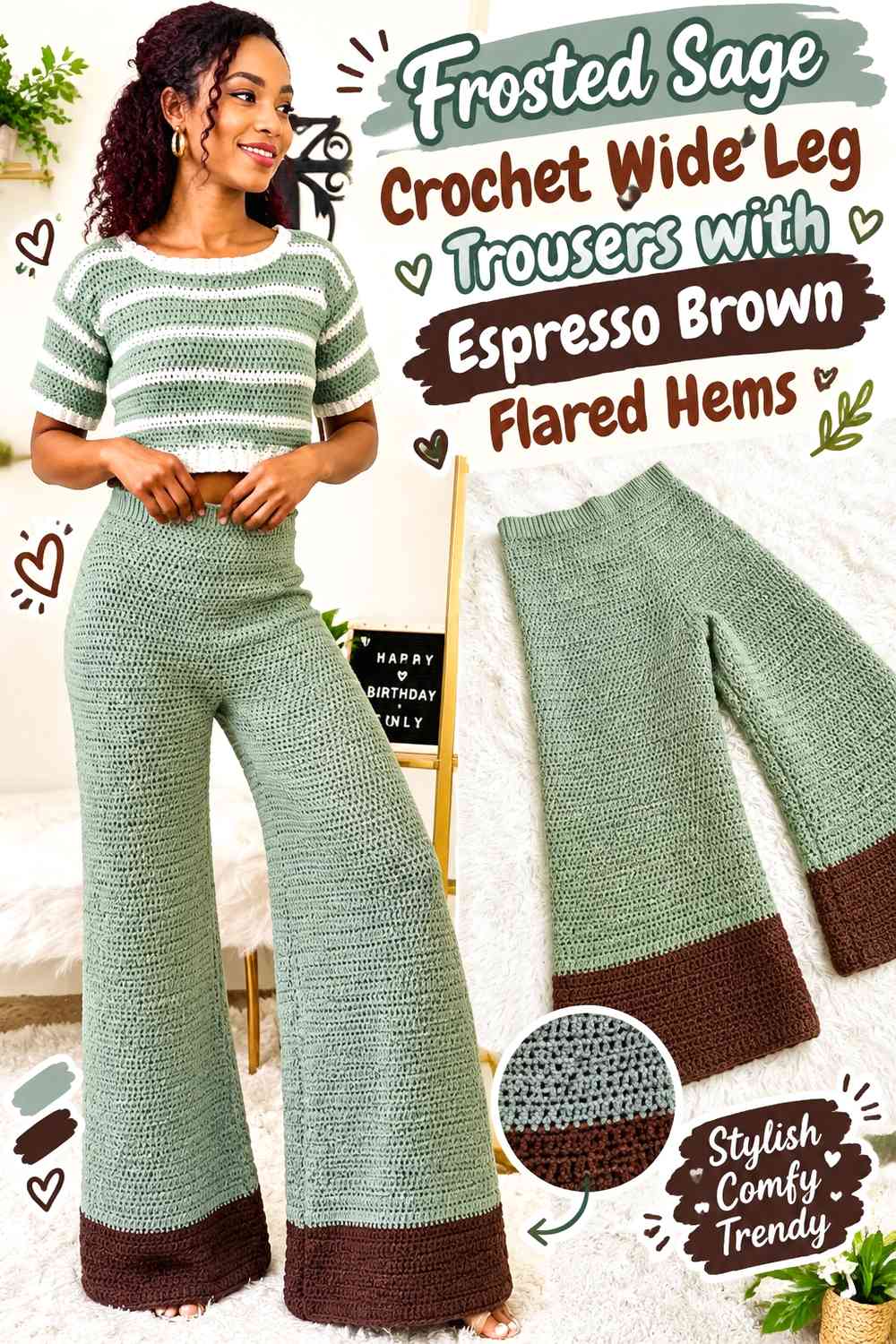
Frosted Sage can cover the waistband, hips, and most of each leg, while Espresso Brown appears only near the widest lower section. Because the dark color is concentrated at the hem, it gives the bottom of the trousers considerably more visual weight.
Frosted Sage Should Stay Uninterrupted Above the Espresso Brown Flare
Maintain a broad pale field through the upper and middle legs so the Espresso Brown lower section feels deliberate. Too many brown accents above the knee can weaken the clean light-to-dark progression.
Espresso Brown Can Ground the Frosted Sage Wide Hem
Use Espresso Brown across enough of the lower flare that it reads as a major color zone rather than a narrow edging line. This is especially effective when the hem has a large circumference.
Step back and evaluate both legs together because a deep Espresso Brown hem can become the strongest element in the entire garment.
Creator Credit: Kali’s Threads
6. Espresso Brown Crochet Bell-Bottom Trousers with Frosted Sage Mesh Flares
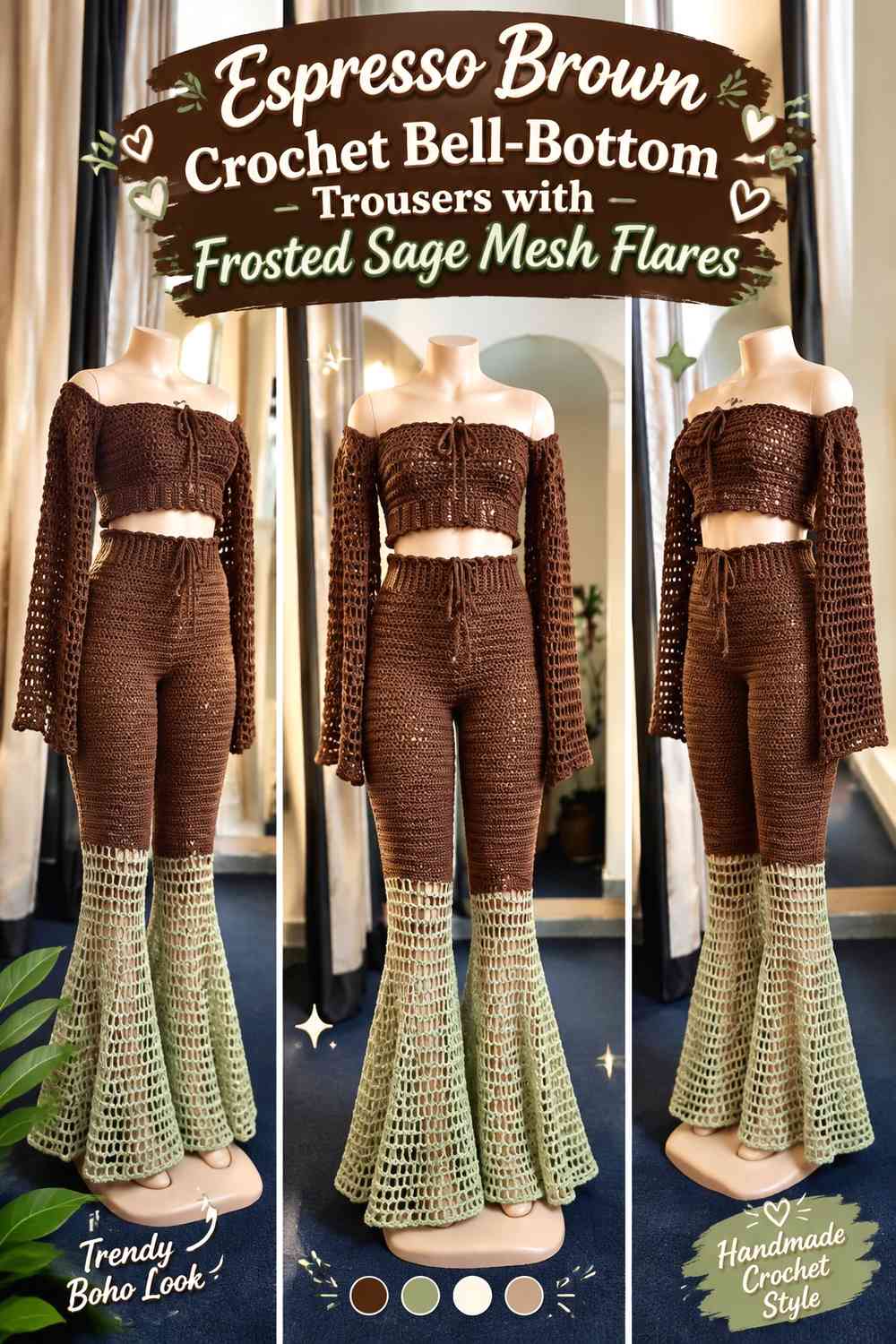
Mesh provides a natural point for changing both texture and color. Espresso Brown can form the more solid upper trousers, while Frosted Sage is introduced when the lower leg becomes open and flared.
Espresso Brown Solid Sections Can Anchor Frosted Sage Mesh
Keeping the denser upper fabric Espresso Brown clearly separates the fitted or straighter section from the decorative lower leg. The contrast comes from both stitch density and color, so additional striping is usually unnecessary.
Frosted Sage Mesh Should Stay Visible Against Espresso Brown
Because openwork reveals the layer or skin underneath, judge the Frosted Sage in the finished mesh rather than only in the yarn ball. The background showing through the holes can change the apparent strength of the pale green.
If the mesh needs a stronger boundary, finish the lower edge with a restrained Espresso Brown repeat.
Creator Credit: LaDenser Crochets
7. Espresso Brown Crochet Palazzo Trousers with Frosted Sage Floral Accents
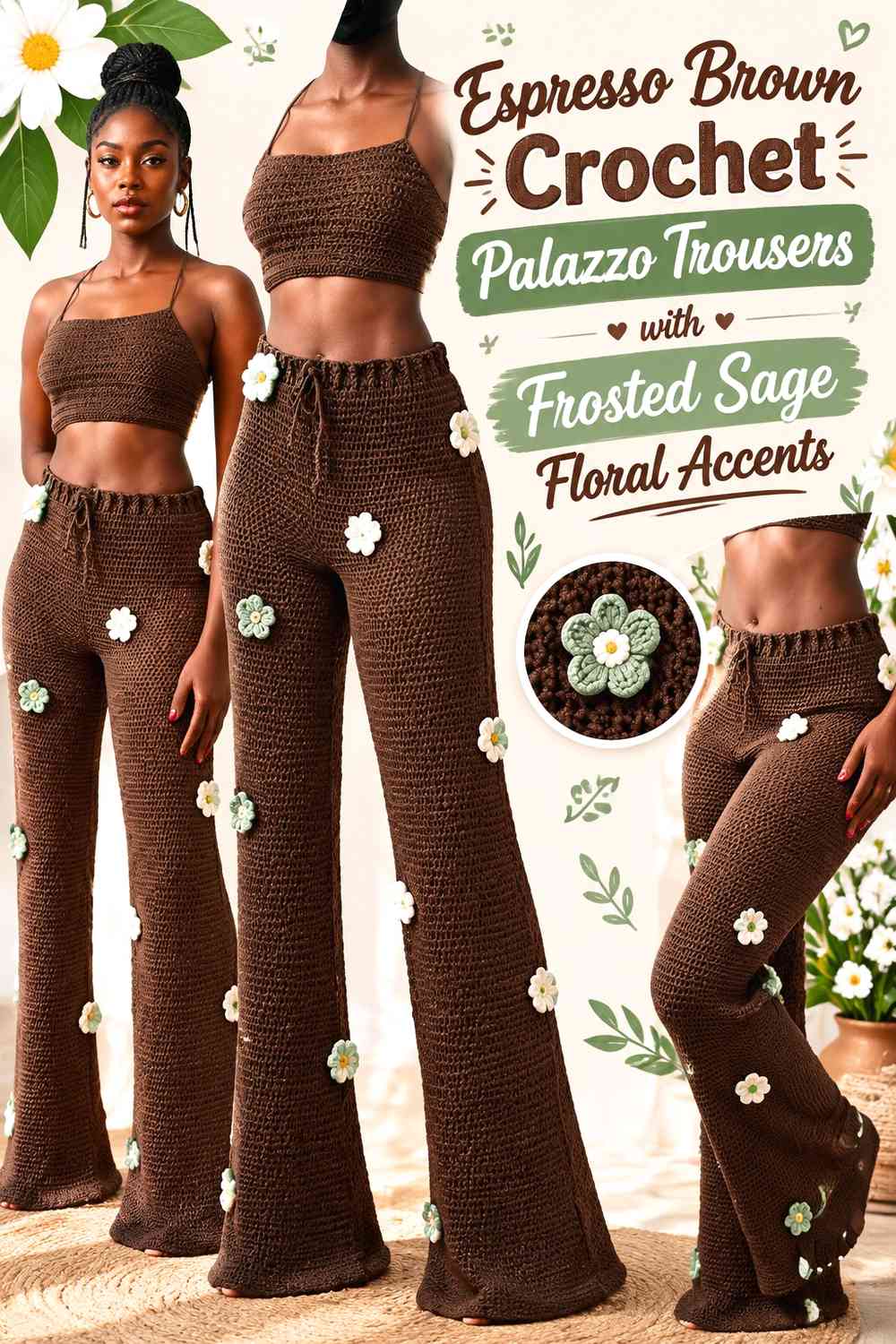
A wide palazzo-style leg provides considerable space for decorative details. Espresso Brown can remain the dominant field while Frosted Sage appears in selected floral motifs, allowing the botanical detail to stand apart without covering the entire trousers in color changes.
Espresso Brown Gives Frosted Sage Flowers a Consistent Trouser Background
Keep the principal leg surface Espresso Brown so each Frosted Sage flower remains easy to identify. Scattering equal amounts of both colors throughout the fabric can reduce the visual distinction between the motifs and their background.
Frosted Sage Floral Details Should Repeat Purposefully on Espresso Brown
Place the sage accents according to a repeatable idea, such as outer-leg placement or selected lower-flare motifs. Avoid filling every available space simply because the wide leg provides room.
Fewer repeated Frosted Sage flowers can preserve more of the deep Espresso Brown surface and keep the flare from becoming visually crowded.
Creator Credit: Shyler crochets
8. Frosted Sage Crochet Wide Leg Trousers with Espresso Brown Waistband and Trim
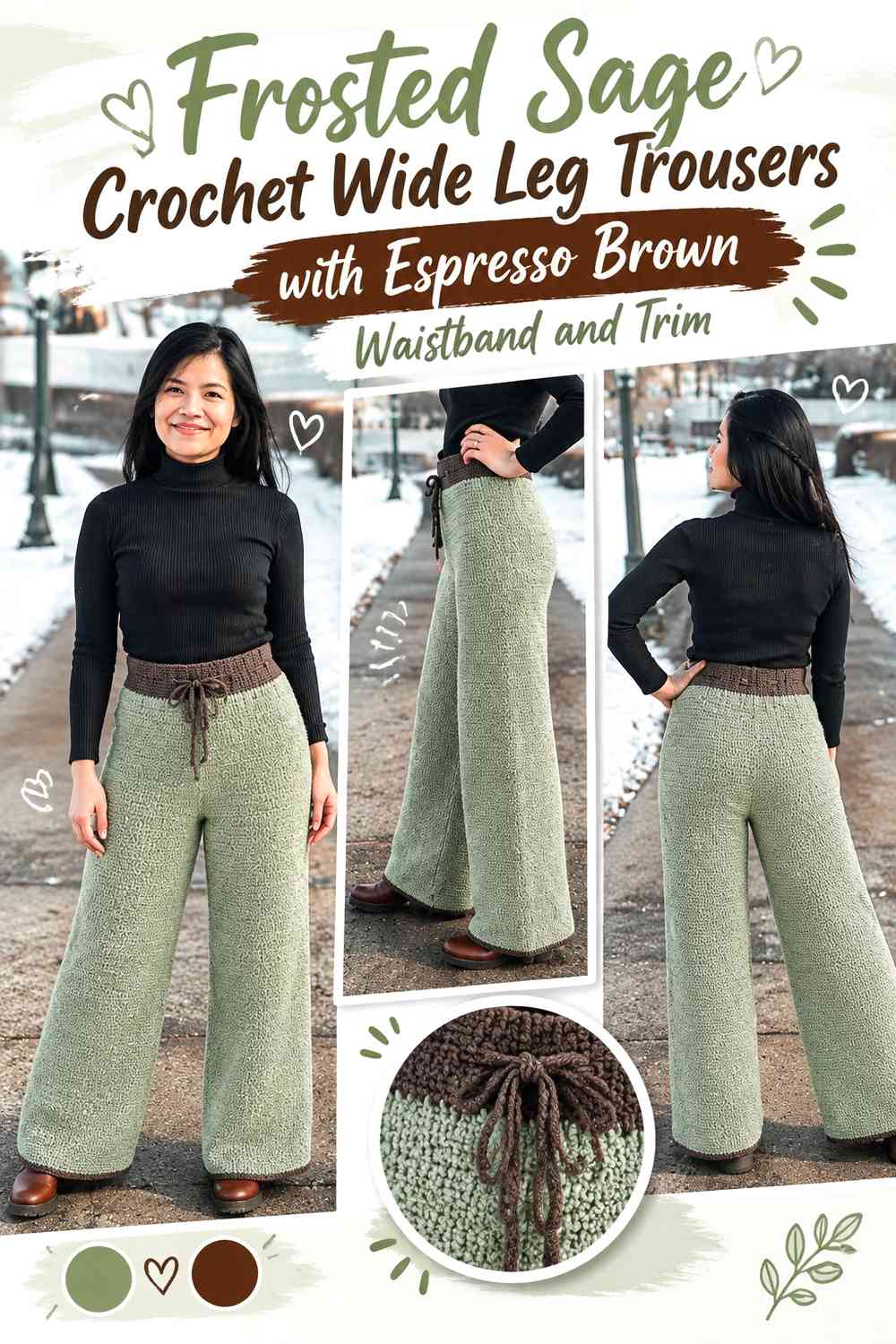
This is one of the most restrained ways to use Espresso Brown. Frosted Sage controls nearly the entire garment, while the dark brown appears only at the waistband and selected finishing edges.
Espresso Brown Can Frame the Frosted Sage Waist Without Dividing the Legs
Use Espresso Brown around the top to establish a clear boundary before the Frosted Sage body begins. Because the waistband is relatively compact, it can be noticeably dark without making the whole garment feel brown-led.
Frosted Sage Should Remain Dominant Between Espresso Brown Borders
If Espresso Brown is repeated at the hem, leave a substantial Frosted Sage field between the upper and lower dark sections. The pale green should still occupy most of the visible leg length.
Keep the bottom trim narrower if the waistband is already visually strong.
Creator Credit: KnitcroAddict
9. Espresso Brown Lace Crochet Flared Trousers with Frosted Sage Under-Flare Accents
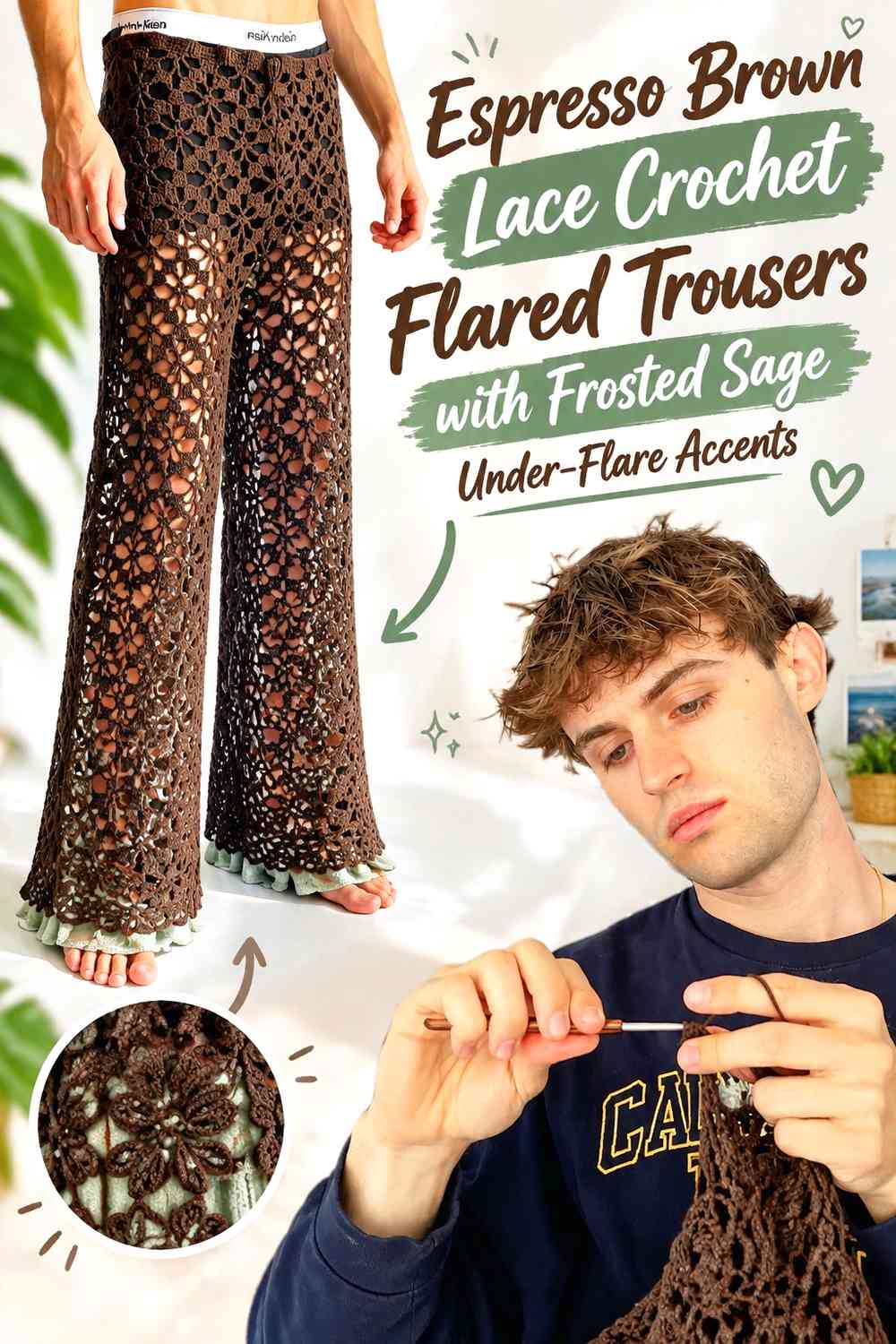
Lace trousers introduce negative space, which means color can be used more selectively. Espresso Brown can carry the main floral or lace pattern, while Frosted Sage appears near the lower flare where small details require additional separation.
Espresso Brown Lace Needs Clear Openings Before Frosted Sage Is Added
Test the dark lace at realistic viewing distance. If the openings and motifs already show clearly, keep most of the surface Espresso Brown rather than forcing Frosted Sage into every repeat.
This lets the lace pattern remain the primary source of visual variation.
Frosted Sage Can Clarify Espresso Brown Lace Near the Flare
Use Frosted Sage around motif centers, lower borders, or another limited area where dark lace sections would otherwise merge. Concentrating the pale shade toward the flare can also help the lower leg look visually broader.
Creator Credit: Henri Purnell
10. Espresso Brown Crochet Wide Leg Trousers with Frosted Sage Crossover Stripes
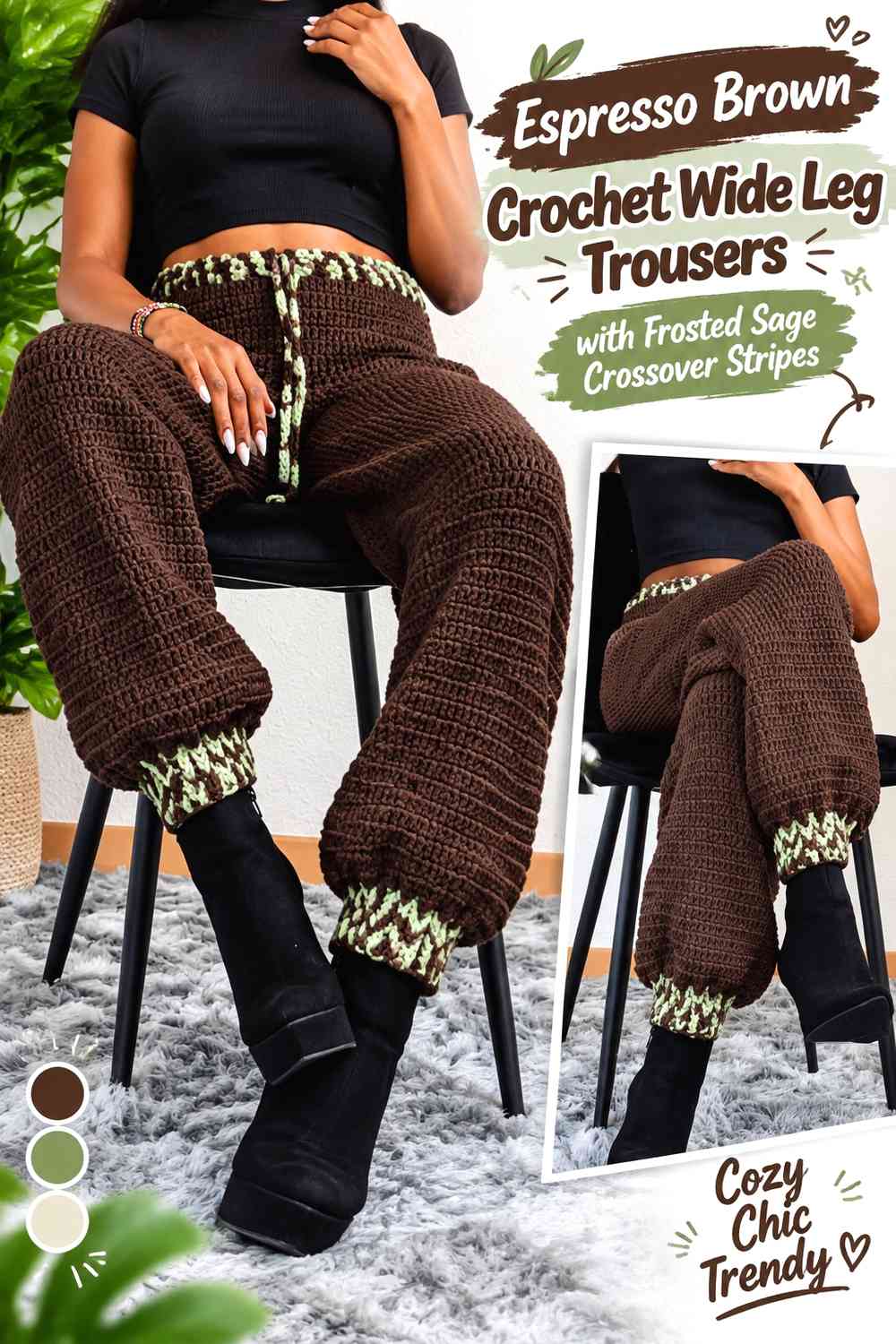
Instead of repeating regular horizontal bands, this direction uses Frosted Sage in selected stripe zones while Espresso Brown continues through most of the legs. The result can feel more graphic without turning every section into an equal stripe.
Espresso Brown Should Connect the Frosted Sage Stripe Sections
Use Espresso Brown between the pale bands so the overall garment maintains one dominant field. Wide uninterrupted brown sections prevent the trousers from becoming visually fragmented.
Frosted Sage Stripes Can Expand With the Espresso Brown Flare
A stripe positioned near the lower leg can become deeper or more noticeable where the silhouette widens. That lets the Frosted Sage color placement support the flare instead of ignoring it.
Keep the same stripe logic on both legs unless deliberate asymmetry is part of the design.
Creator Credit: AC Crochets
11. Espresso Brown and Frosted Sage Granny-Square Crochet Flared Trousers
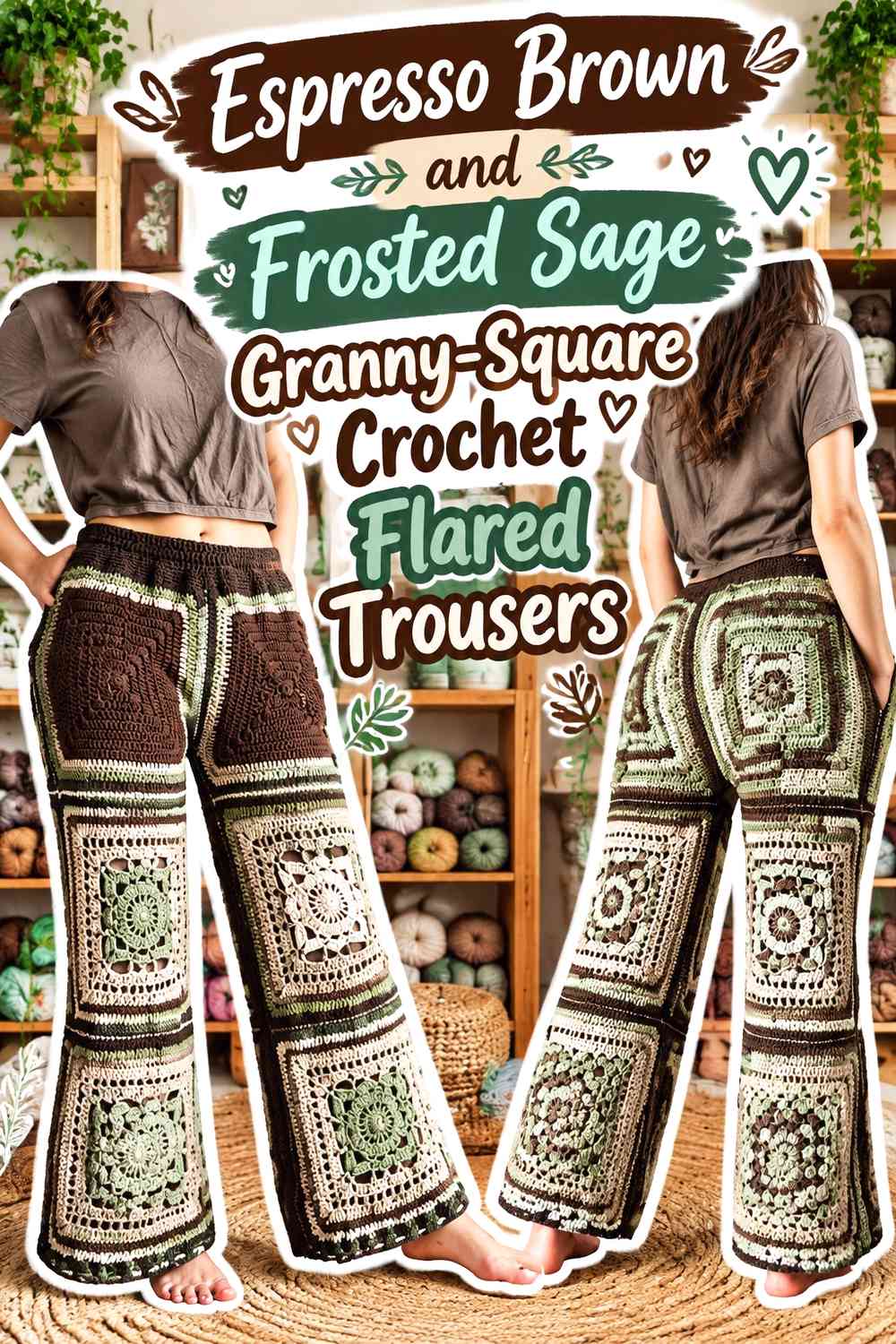
Granny motifs give both colors repeated roles across the full garment. Espresso Brown can provide consistent outer rounds or joining areas, while Frosted Sage can occupy motif centers or selected larger sections. The key is preventing the two-color motif system from becoming visually random.
Espresso Brown Can Organize Frosted Sage Granny-Square Trousers
Repeat Espresso Brown in the same general part of multiple motifs so the trouser layout remains connected. Using brown around outer motif sections can also help adjacent squares read as part of one garment.
Frosted Sage Motifs Can Widen the Espresso Brown Flare Visually
Increase the visible share of Frosted Sage toward the lower leg if you want the flare to appear lighter and broader. This can be done through motif placement rather than introducing unrelated additional colors.
Compare completed motif dimensions before final joining so color placement does not hide inconsistencies in the physical layout.
Creator Credit: Forest Lily
12. Frosted Sage Shell-Stitch Crochet Wide Leg Trousers with Espresso Brown Bands
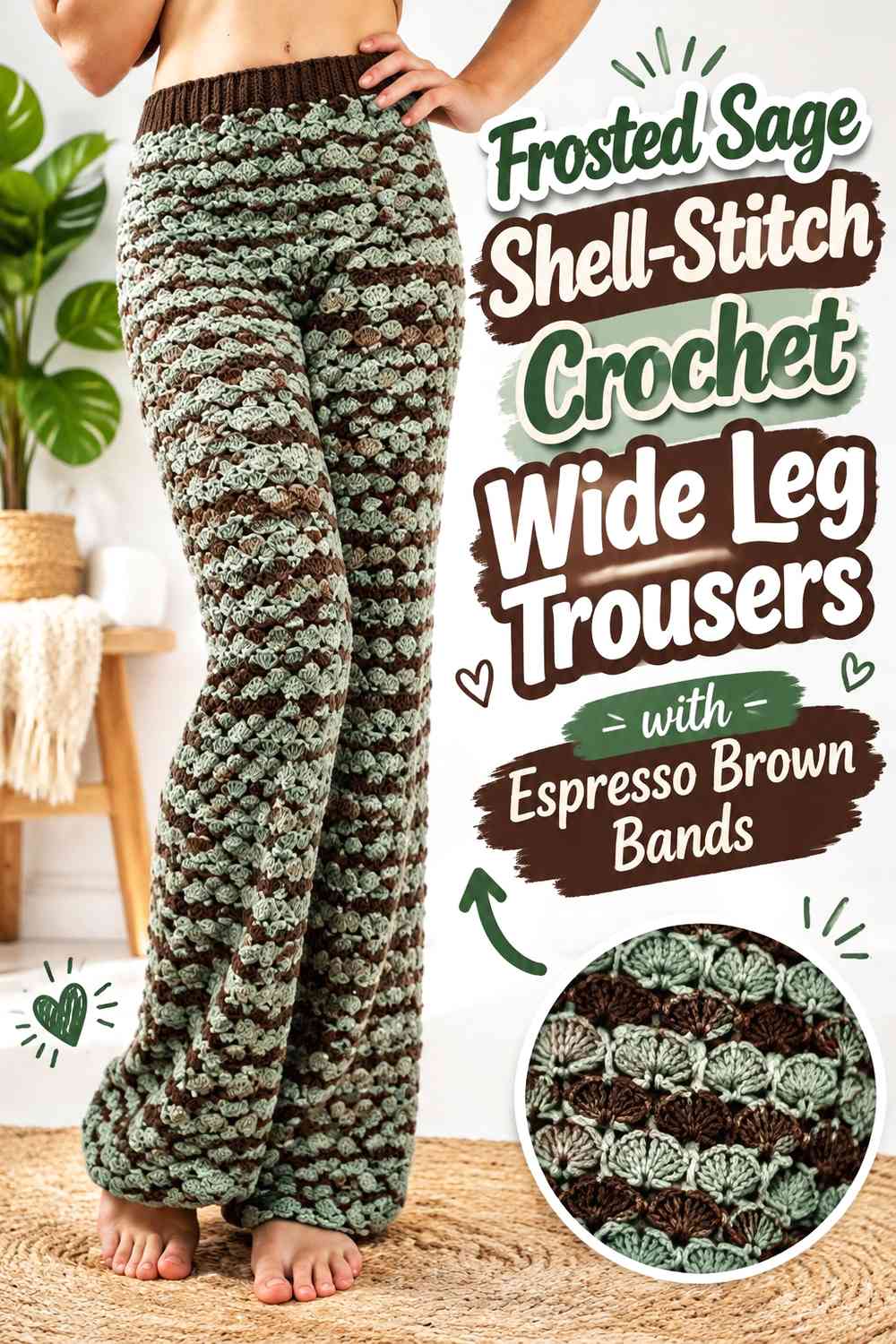
Shell texture gives Frosted Sage plenty of surface detail, allowing Espresso Brown to work mainly as a divider. This can produce a wide-leg trouser with clear texture and a controlled two-color rhythm.
Frosted Sage Helps the Crochet Shell Texture Stay Prominent
Use Frosted Sage across the broader shell sections if you want individual curves and openings to be easy to distinguish. Keeping those sections in one light shade also prevents color changes from competing with the stitch pattern.
Espresso Brown Bands Can Separate Frosted Sage Shell Sections
Narrow Espresso Brown bands can define where one shell section ends and another begins. Avoid making every brown band as broad as the Frosted Sage sections unless you deliberately want equal striping.
A darker final band at the hem can give the flare a stronger finish.
Creator Credit: Loops Only Crochet
13. Espresso Brown Mesh Crochet Flared Trousers with Frosted Sage Solid Panels
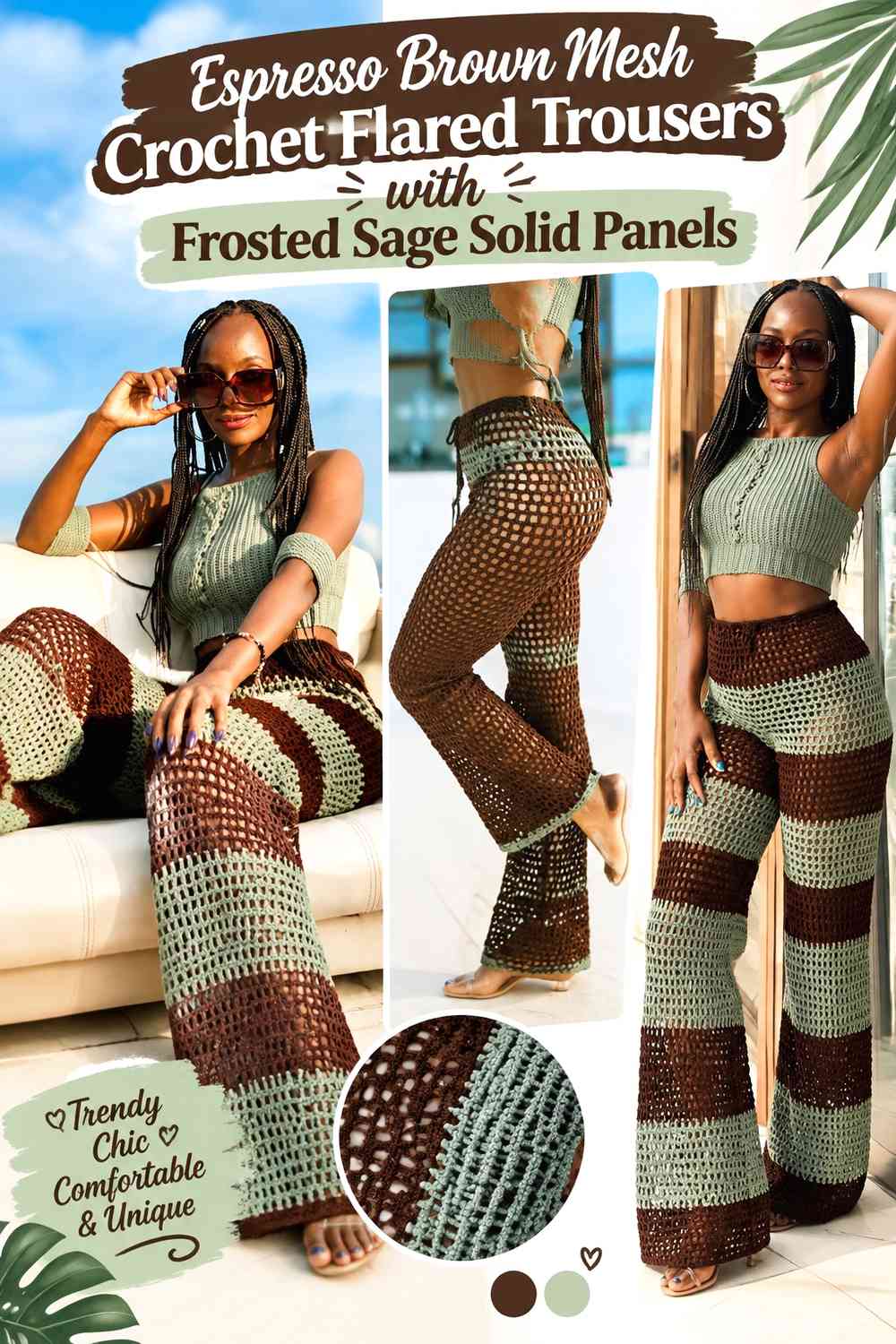
This design reverses the common light-mesh approach. Espresso Brown carries the openwork, while Frosted Sage appears in more solid panels at the waist, outer leg, or flare transition. The pale solid sections can make the construction easier to read against the dark mesh.
Espresso Brown Mesh Should Stay Continuous Around Frosted Sage Panels
Give the brown mesh enough uninterrupted area to establish a clear base. Frequent pale blocks can make the openwork appear secondary rather than the main fabric.
Frosted Sage Solid Panels Can Define Espresso Brown Flare Changes
Use Frosted Sage where you want a stronger visual checkpoint, such as the beginning of the flare or a vertical outer-leg section. A denser pale panel beside dark mesh creates contrast through both color and texture.
Make sure the panel placement follows the trouser construction rather than cutting through an important mesh repeat arbitrarily.
Creator Credit: DIY with gh crochets
14. Frosted Sage Granny-Motif Crochet Wide Leg Trousers with Espresso Brown Joins
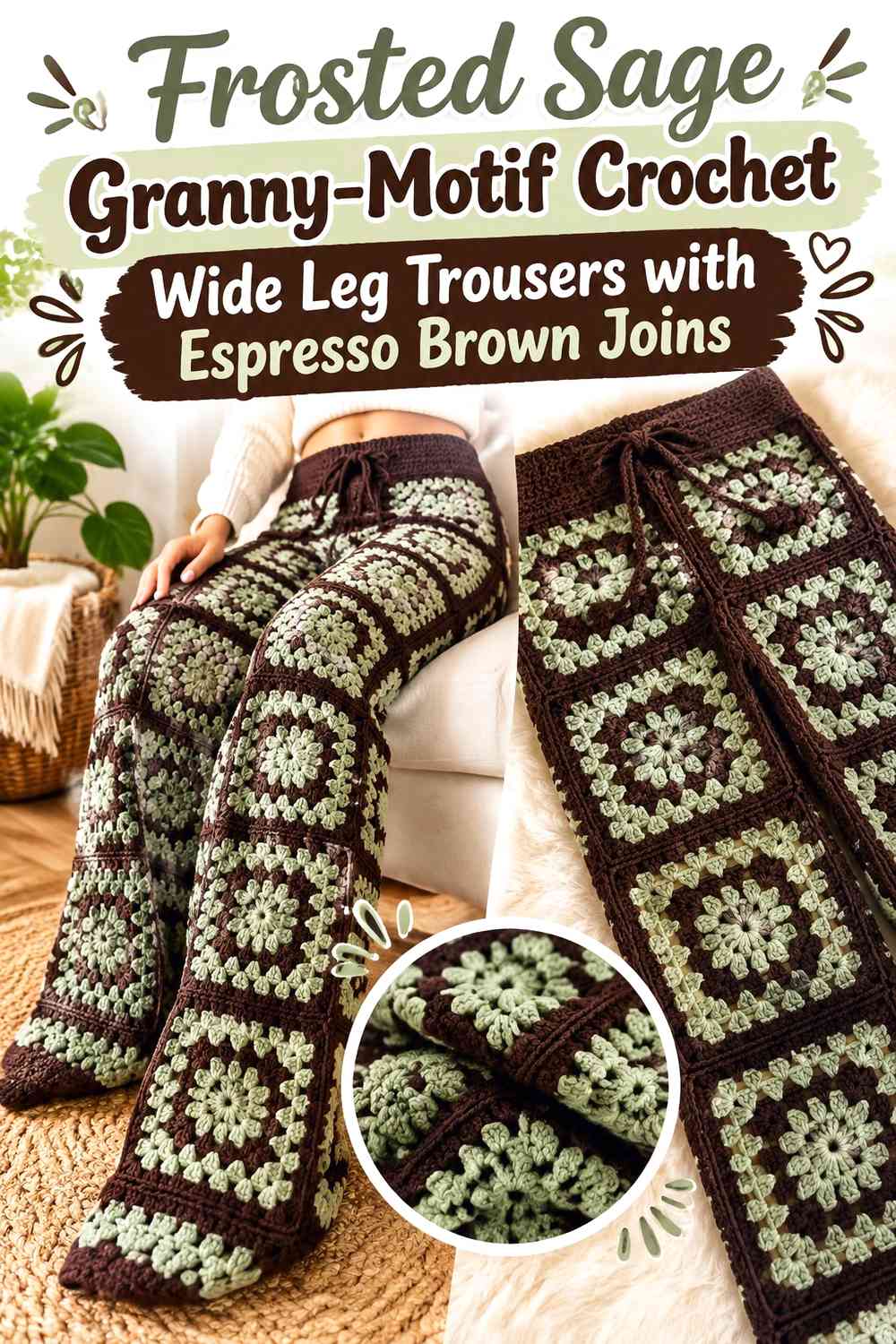
Frosted Sage can dominate the motif faces while Espresso Brown defines the joins between them. Across a full pair of trousers, those dark joining lines create considerable structure even though they occupy less physical area than the sage motifs.
Frosted Sage Should Cover Enough of Each Motif to Stay Dominant
Keep the larger visible parts of the squares Frosted Sage if you want the trousers to read as sage-led from a distance. Espresso Brown joins already create repeated dark boundaries, so additional brown inside every motif may not be necessary.
Espresso Brown Joins Can Shape the Frosted Sage Flared Layout
Use the dark joins to clarify how the motifs expand into the wide lower legs. A consistent joining color can make the grid easier to understand and connect the waistband visually to the hem.
Avoid adding a very heavy Espresso Brown border around every Frosted Sage square if the join lines already provide sufficient contrast.
Creator Credit: Fisayo & Crochet
15. Espresso Brown and Frosted Sage Color-Block Crochet Wide Leg Flared Trousers
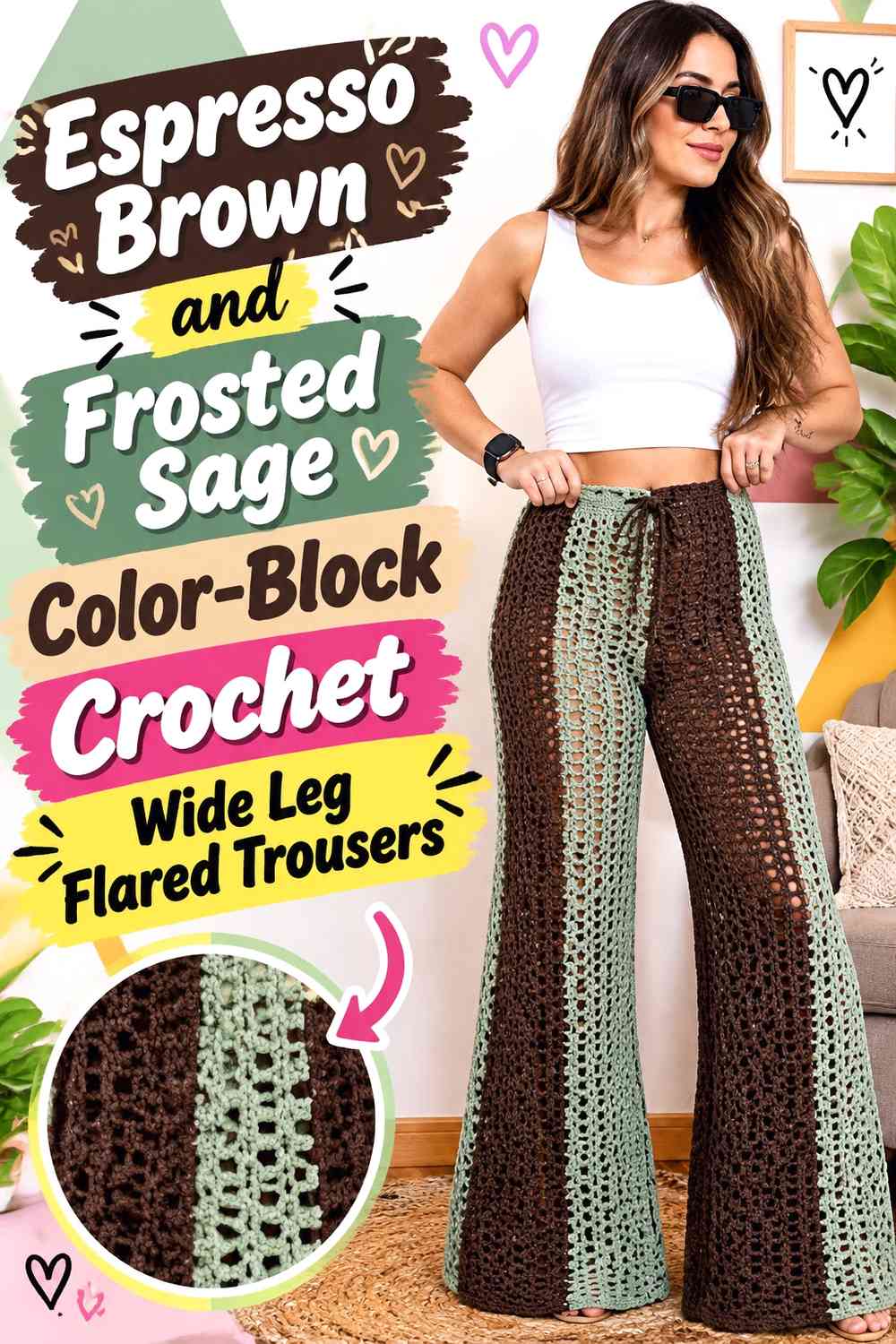
The final idea gives both colors large, clearly defined areas rather than treating one as a small accent. Espresso Brown can control the upper legs and one portion of each flare, while Frosted Sage occupies contrasting lower or side blocks.
Espresso Brown Color Blocks Should Follow Frosted Sage Trouser Structure
Place the dark brown around real garment boundaries such as the waistband, upper leg, side panel, or flare transition. Color blocks look more deliberate when they correspond with the shape instead of stopping at arbitrary points.
Frosted Sage Should Balance Espresso Brown Across Both Flared Legs
Distribute Frosted Sage so both legs feel related when viewed together. The blocks do not have to be perfectly equal, but the color system should have a repeatable logic.
Before committing to another color change, step back and assess the entire trouser length. With two wide legs, even one additional Frosted Sage block can substantially alter the balance.
Creator Credit: Espaco Chelmi
Which Espresso Brown and Frosted Sage Flared Trouser Palette Should You Choose?
For the strongest dark-to-light progression, choose Espresso Brown through the upper legs and Frosted Sage through the lower flares. The color change reinforces the widening silhouette and makes the lower section a clear focal point.
For a lighter overall garment, reverse the hierarchy. Frosted Sage can cover most of the trousers while Espresso Brown defines the waistband, side panels, joins, or final hem.
Vertical panels work well when you want both colors to travel through the entire trouser length. Motif and granny-square versions give you more opportunities to repeat both shades, but they need a consistent color hierarchy to prevent the full legs from becoming visually busy.
For the most restrained approach, use one shade across almost the entire garment and give the second color only one specific job. An Espresso Brown waistband on Frosted Sage trousers or a Frosted Sage lower flare on an Espresso Brown body can be enough to create a complete two-color design.
Conclusion
Espresso Brown and Frosted Sage can change the way crochet wide leg flared trousers are read from waist to hem. The strongest arrangements connect color placement to the actual silhouette.
Use Espresso Brown around the waist and upper legs when you want a dark anchor, then move into Frosted Sage where the flare expands. Reverse the arrangement for pale trousers with a stronger Espresso Brown hem or waistband. Side panels and vertical blocks keep both colors running through the length, while granny motifs, shells, lace, and mesh provide smaller places to repeat contrast.
The final hem deserves particular attention because a wide flare creates a large amount of visual area. A color that seems minor near the knee may become dominant once it fills the full lower leg.
Compare Espresso Brown and Frosted Sage in the actual crochet fabric before completing both legs. Openwork, shells, dense stitches, and motif joins can change how strongly the shades separate. Use the original tutorial for exact trouser construction and fit, then adapt the two-color placement to the finished silhouette.
Frequently Asked Questions
Should Espresso Brown or Frosted Sage Be the Main Color in Crochet Flared Trousers?
Choose Espresso Brown as the dominant shade when you want a darker trouser with Frosted Sage highlighting the flare, panels, or motifs. Make Frosted Sage dominant when you prefer a lighter garment with Espresso Brown defining the waistband, joins, stripes, or hem.
Where Should Frosted Sage Begin on Espresso Brown Flared Trousers?
One useful option is to introduce Frosted Sage near the point where the lower leg visibly starts widening. This makes the color change reinforce the flare. It can also begin earlier as a side panel if you want the sage to run through more of the trouser length.
Can Espresso Brown Be Used Only at the Waistband of Frosted Sage Trousers?
Yes. A compact Espresso Brown waistband can provide enough dark contrast to establish the two-color palette while leaving the rest of the trousers Frosted Sage. A narrow brown hem repeat is optional rather than necessary.
How Do I Keep Espresso Brown and Frosted Sage Granny Trousers From Looking Too Busy?
Give the two colors consistent roles. For example, use Frosted Sage across motif centers and Espresso Brown around joins or outer sections. Repetition usually creates more visual order than randomly reversing the colors from square to square.
Does Frosted Sage Work Well for Openwork Flared Sections?
It can. A lighter sage direction may make lace or mesh openings easier to distinguish, but openwork also allows the layer underneath to affect the final appearance. Judge the color in a worked sample rather than relying only on the yarn ball.
Should the Espresso Brown Hem Be Wide or Narrow?
That depends on the visual role you want it to play. A narrow Espresso Brown hem acts mainly as definition, while a deep brown lower section becomes a major color block and can make the trousers look more grounded toward the floor.
What Can I Substitute for Espresso Brown?
Choose another deep, warm brown if you want to preserve a similar palette relationship. Keep it noticeably darker than Frosted Sage when strong contrast between panels, motifs, or flare sections is important.
What Can I Substitute for Frosted Sage?
Choose another softened light or medium-light green that remains clearly lighter than Espresso Brown. If the substitute is much darker, the palette will become more tonal and some of the visual separation between the two colors may be reduced.