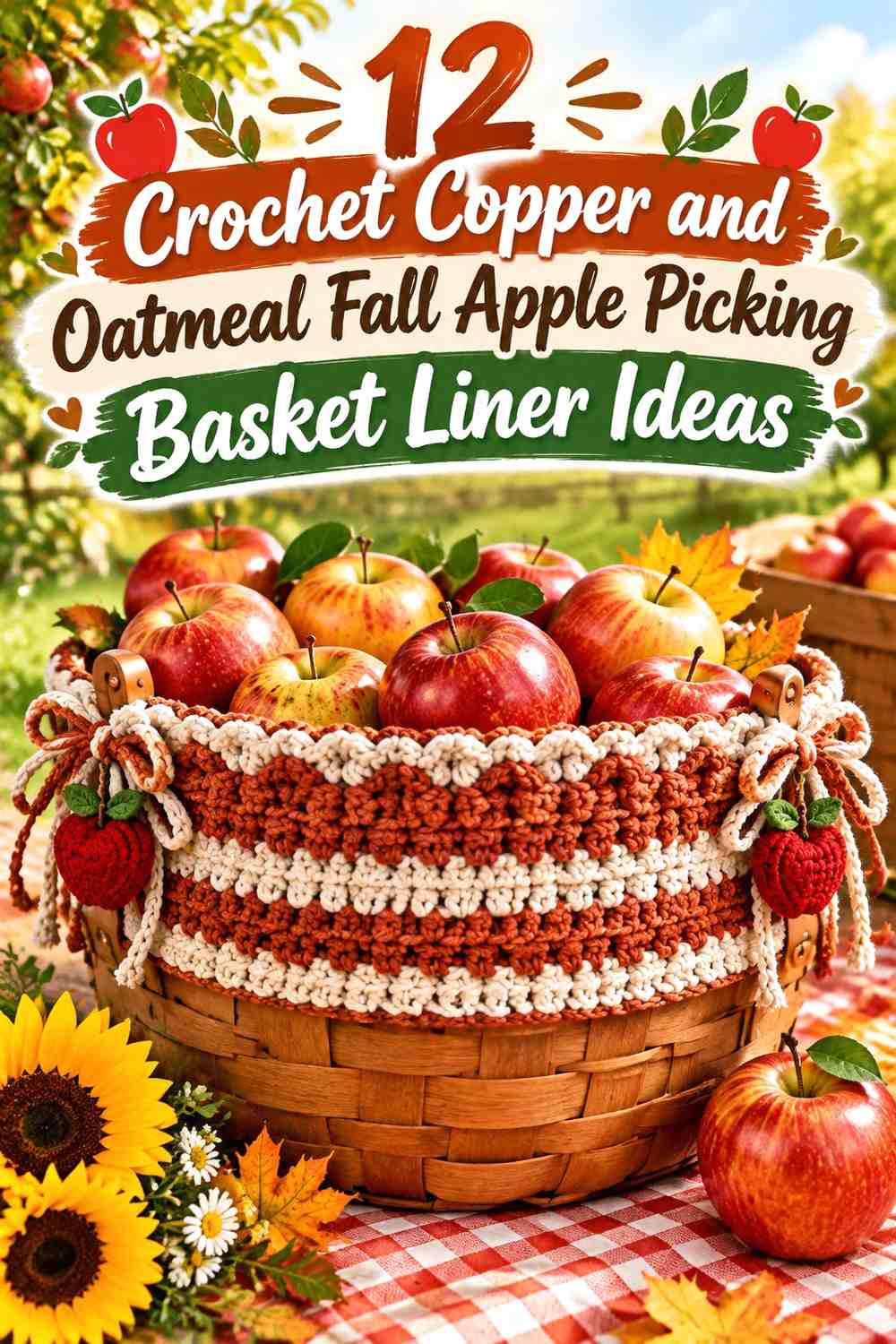

A copper and oatmeal crochet liner can turn a plain apple picking basket into a more intentional fall piece without relying on a complicated palette. Copper brings the stronger autumn note, while oatmeal gives that warmth enough lightness and separation to keep the basket from becoming one solid block of rusty color.
The most useful decisions happen at the basket itself. The base, sidewalls, rim, handle openings, and any fold-over cuff give you natural places to change color. A liner that is mostly copper will feel visually richer and darker, while an oatmeal-led version can make copper borders, stripes, or apple details more noticeable.
The tutorial links below support the construction concept through basket-liner, basket-cover, basket, rim, handle, and sidewall projects. Because picking baskets vary considerably in shape, compare every construction idea with your actual basket before adapting it as a removable liner. The copper-and-oatmeal schemes here are independent color plans rather than claims that the linked creators used these exact palettes.
Quick List
- Copper-First Crochet Apple Picking Basket Liner With an Oatmeal Fold-Over Rim
- Oatmeal-First Crochet Apple Picking Basket Liner With Copper Framing
- Copper and Oatmeal Striped Crochet Apple Picking Basket Liner
- Oatmeal Textured Crochet Apple Picking Basket Liner With Copper Handle Openings
- Copper-Base Crochet Apple Picking Basket Liner With Oatmeal Sidewalls
- Oatmeal-Base Crochet Apple Picking Basket Liner With a Copper Top Band
- Copper and Oatmeal Gingham-Inspired Crochet Apple Picking Basket Liner
- Oatmeal Crochet Apple Picking Basket Liner With Copper Vertical Panels
- Copper Crochet Apple Picking Basket Liner With Oatmeal Texture Breaks
- Oatmeal Crochet Apple Picking Basket Liner With Copper Apple Accents
- Copper-to-Oatmeal Tonal Crochet Apple Picking Basket Liner
- Copper and Oatmeal Crochet Apple Picking Basket Liner With Olive Fall Accents
Decide Whether Copper or Oatmeal Should Lead the Basket Liner
Start with the amount of each color rather than trying to make copper and oatmeal equally prominent. A copper-dominant liner concentrates the autumn color across the large sidewall area, while oatmeal works well as a rim, stripe, handle detail, or interior break. An oatmeal-dominant liner reverses that relationship and makes even a narrow copper band more noticeable.
The basket material also affects the visual result. Against medium or dark wicker, an oatmeal cuff can create a clearer boundary between crochet and basket. Against a pale woven basket, copper around the upper edge may provide more definition. This is a visual choice rather than a fixed rule, so place both yarns against the actual basket before deciding.
Use Copper and Oatmeal Contrast Around Rims and Handles
Handle openings and upper rims interrupt the liner surface, making them useful places to repeat the secondary color. If your copper is considerably darker than your oatmeal, an oatmeal edge around a copper body can make those openings easier to distinguish visually. On an oatmeal body, copper can perform the same framing role.
Do not judge the yarns only by hue. Copper and oatmeal shades can occasionally be closer in lightness than expected. Place them together or view a photo in grayscale before committing to small stripes or detailed colorwork. If the two shades merge in grayscale, use them in larger blocks rather than tiny motifs that depend on strong contrast.
Plan Copper and Oatmeal Placement Around Real Apple Picking Use
Decorative color placement should work with the inside of the basket rather than compete with it. Raised motifs and stronger texture can be concentrated around the fold-over cuff or visible upper section, leaving the main interior visually quieter. This is especially useful when the liner itself is intended to remain a supporting part of the basket rather than become the main focal point.
Check where the handle meets the rim before planning stripes or blocks. A narrow accent that disappears beneath a handle attachment can look accidental, while a copper or oatmeal band that continues clearly on both sides of the opening usually reads as a deliberate part of the palette.
1. Copper-First Crochet Apple Picking Basket Liner With an Oatmeal Fold-Over Rim
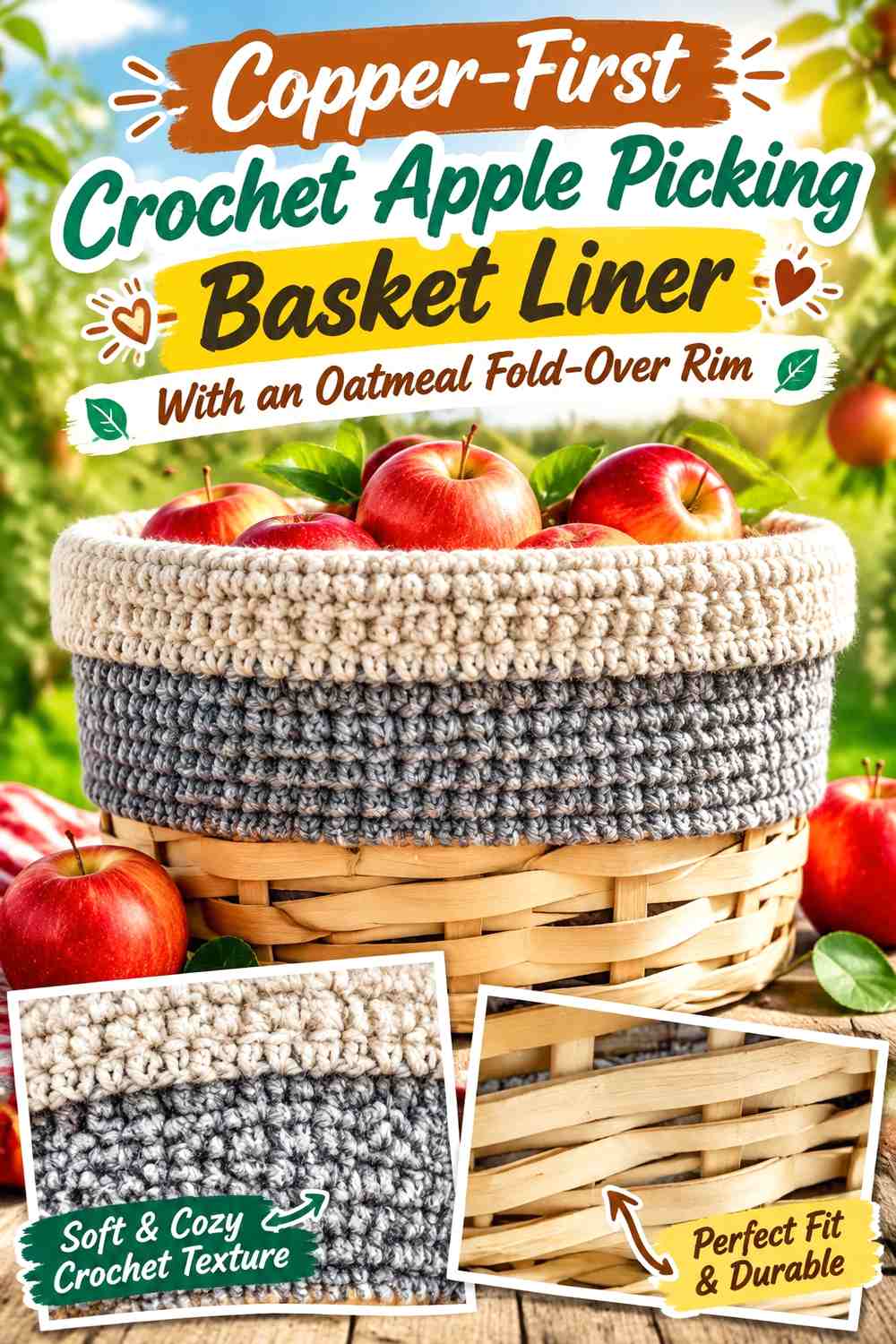
Let copper cover most of the liner when you want the strongest fall color to remain visible even after the basket begins filling with apples. An oatmeal fold-over rim gives the darker warm field a lighter stopping point and creates a clear visual division between the liner and the basket exterior. Keeping the two-color change near the top also avoids breaking the sidewalls into too many competing sections.
Let Copper Cover the Main Apple Picking Basket Liner
A large copper field makes the color direction immediately recognizable. Use it across the base and main sidewalls rather than scattering small copper sections throughout an oatmeal background. The uninterrupted area gives the liner a simpler appearance and allows the woven basket itself to provide additional visual texture.
If your chosen copper is especially dark or saturated, compare it with the basket before extending it over the entire visible cuff. You may prefer to stop the copper at the rim and let oatmeal handle the outer fold.
Use Oatmeal to Separate the Copper Rim From the Basket
Oatmeal becomes most useful where the liner changes direction at the top. A lighter fold-over section can visually separate copper from brown wicker, dark wood, or another warm basket material that might otherwise merge with it.
Keep the oatmeal section wide enough to look deliberate. A very thin line may disappear once the liner bends over the rim, especially near handle openings.
Repeat Copper Sparingly Across the Oatmeal Fold
If the oatmeal cuff feels disconnected from the copper interior, repeat copper in a narrow edge, small surface detail, or restrained motif on the visible fold. That repetition connects the two areas without taking the liner back to a copper-dominant exterior.
Creator Credit: Made by Andrada
2. Oatmeal-First Crochet Apple Picking Basket Liner With Copper Framing
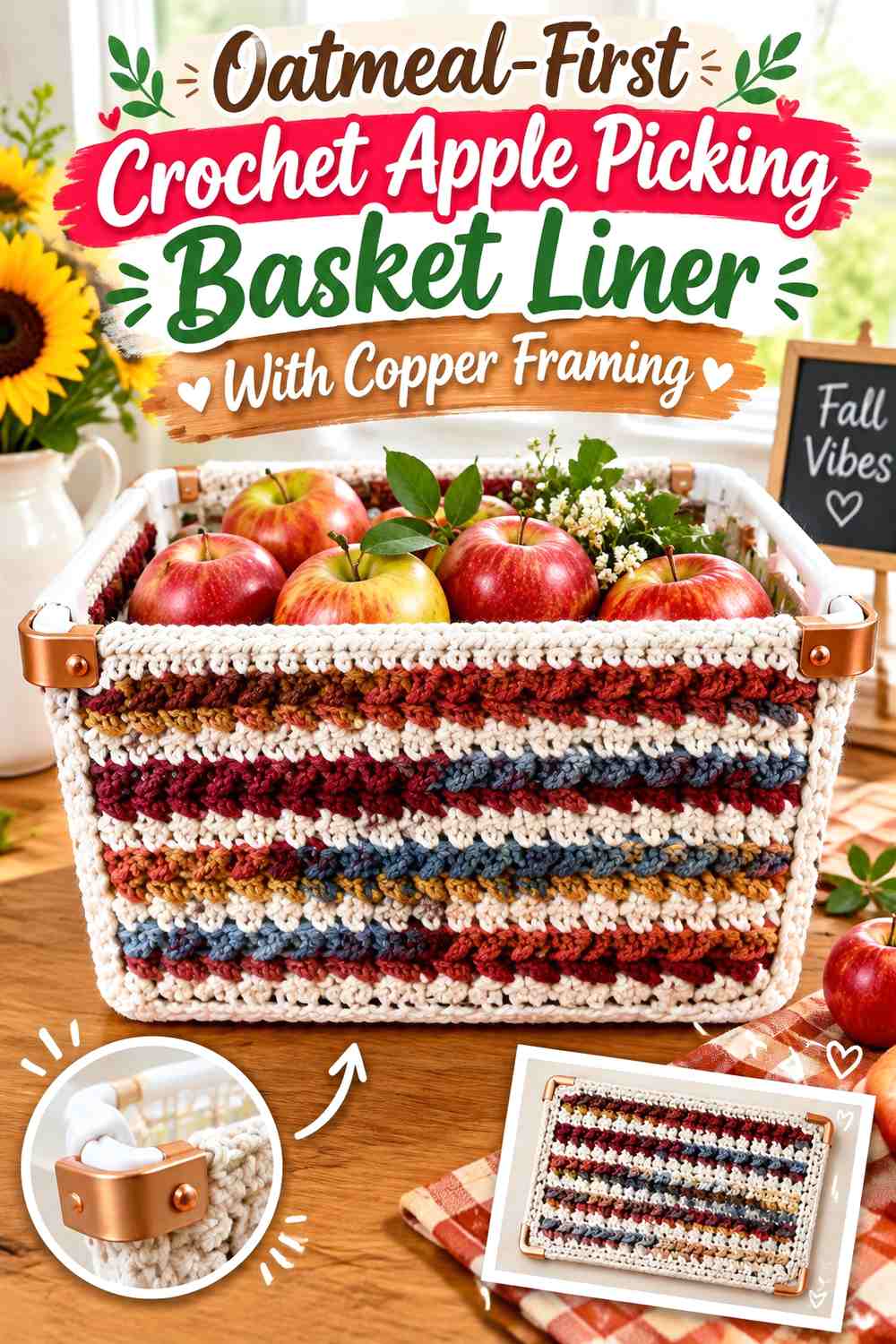
This version puts oatmeal across most of the basket interior and reserves copper for the boundaries. The lighter body makes the liner feel less visually heavy, while copper can outline the upper edge, lower transition, or handle areas. It is a useful direction when you want unmistakable fall color without covering every large surface with it.
Let Oatmeal Give the Basket Liner a Quiet Main Field
Use oatmeal across the larger base and sidewall areas so copper does not need to compete with every stitch. A broad neutral field also gives textured crochet more room to remain visible without being interrupted by frequent color changes.
If your oatmeal is close in value to the basket itself, check the combination from a few feet away. You may need a stronger copper edge to keep the liner visually distinct from its container.
Use Copper to Frame the Oatmeal Upper Edge
A copper rim gives the oatmeal body a defined stopping point. This placement is particularly useful when the top edge remains visible after the basket is filled because the autumn color stays noticeable without dominating the interior.
Carry enough copper around the rim to establish a continuous visual frame rather than introducing isolated patches that appear unrelated.
Repeat Copper Around Oatmeal Handle Openings
Handle openings naturally interrupt a rim. Repeating copper around those interruptions can make them part of the design instead of places where the color scheme appears to break.
Before committing, check how much of the opening remains visible once the liner is positioned inside the real basket.
Creator Credit: Crazy Cool Crochet
3. Copper and Oatmeal Striped Crochet Apple Picking Basket Liner
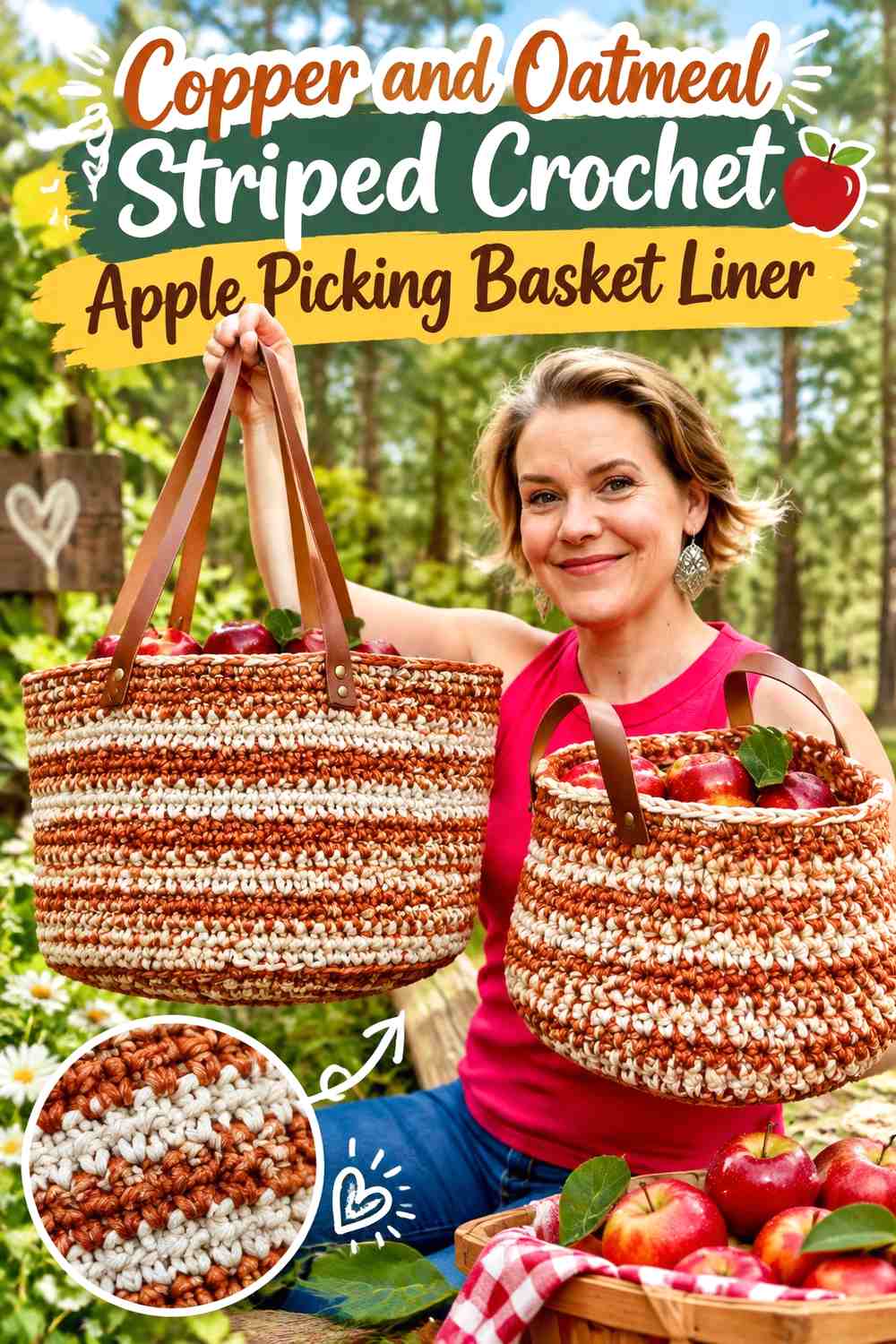
Broad copper and oatmeal stripes create a more graphic version of the fall palette. The key is giving the stripes enough width to remain readable once the liner curves around the basket. Narrow, frequent changes can become visually busy against wicker, especially if the basket already has a strong woven pattern.
Use Broad Copper and Oatmeal Stripes on the Sidewalls
Larger stripes let both colors register clearly without creating excessive transitions. Consider using fewer, wider sections rather than treating every small band as another color-change opportunity.
Look at the liner from the side rather than only from above. Sidewall stripes are most successful when their spacing still looks intentional after the liner follows the basket’s shape.
Keep Oatmeal Near the Rim When Copper Stripes Feel Heavy
If the copper stripes occupy more visual space than expected, finishing the upper area in oatmeal can lighten the section that is most visible from the outside.
This adjustment is especially helpful when the apples, basket material, and copper yarn all contribute additional warm color.
Let Copper Repeat Near the Oatmeal Border
A narrow copper repeat near an oatmeal finishing edge can tie the border back to the body. It works better when copper has already appeared elsewhere in a substantial area rather than being introduced only at the last moment.
Creator Credit: Pretty Peaceful
4. Oatmeal Textured Crochet Apple Picking Basket Liner With Copper Handle Openings
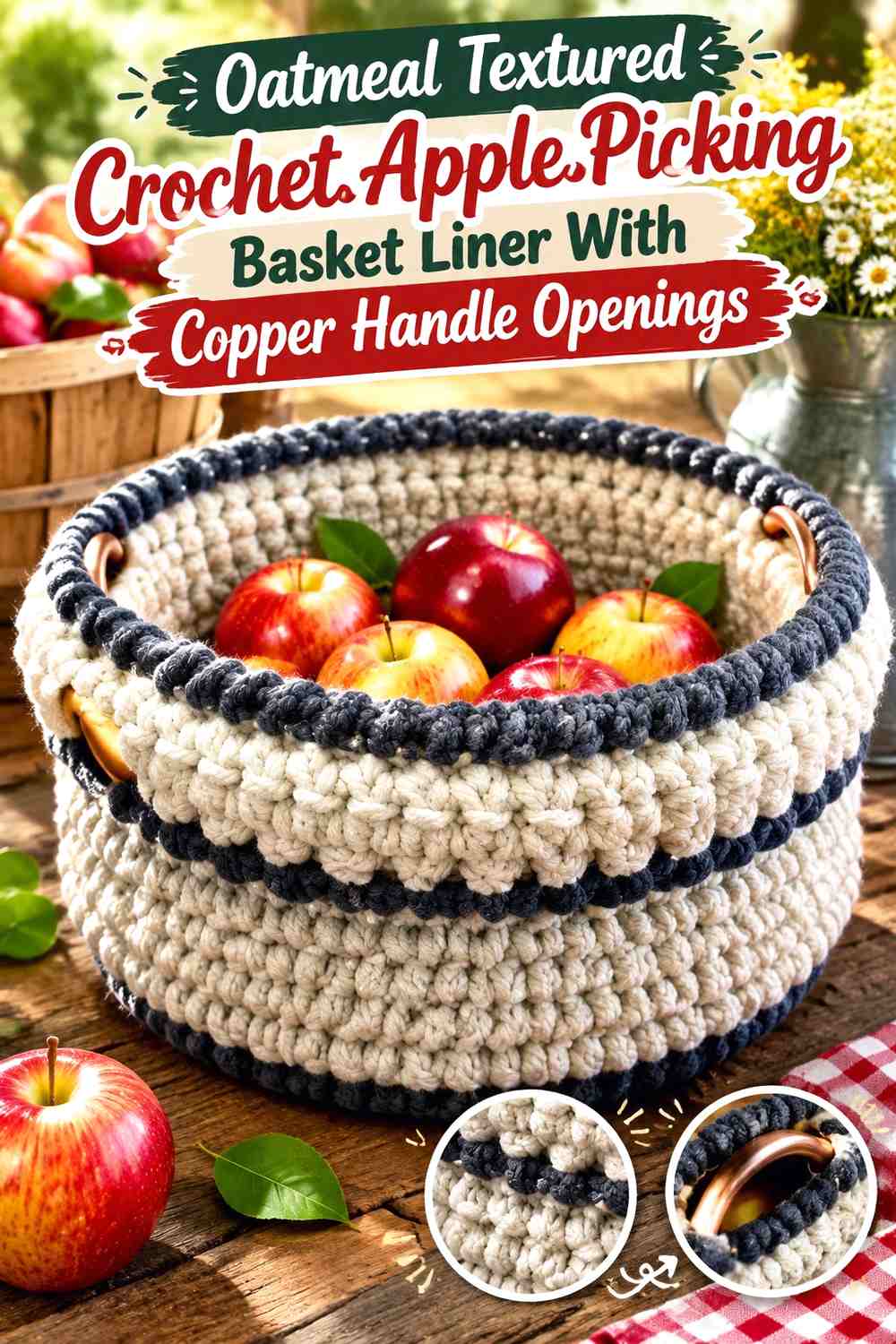
Texture can become the main feature of an oatmeal-led liner, while copper is reserved for structural-looking details near the handles. This arrangement keeps the broad surface neutral enough for stitch definition to remain noticeable and uses copper exactly where the basket construction already creates visual interruptions.
Use Oatmeal to Keep Crochet Texture Visible Across the Sidewalls
A consistent oatmeal field lets shadows from raised or dimensional texture provide much of the variation. Frequent copper interruptions can compete with that texture, so keeping the larger stitched area in one neutral shade makes the surface easier to read.
If the texture itself is elaborate, the color scheme can remain comparatively restrained.
Frame the Oatmeal Handle Area With Copper
Copper around a handle opening gives the interruption a deliberate outline. It can also connect an otherwise neutral sidewall with a small amount of strong fall color.
Check the liner in the basket before expanding the copper section. If the handle hides most of it, move some of the accent farther along the rim where it will remain visible.
Creator Credit: L’angolo di Criss
5. Copper-Base Crochet Apple Picking Basket Liner With Oatmeal Sidewalls
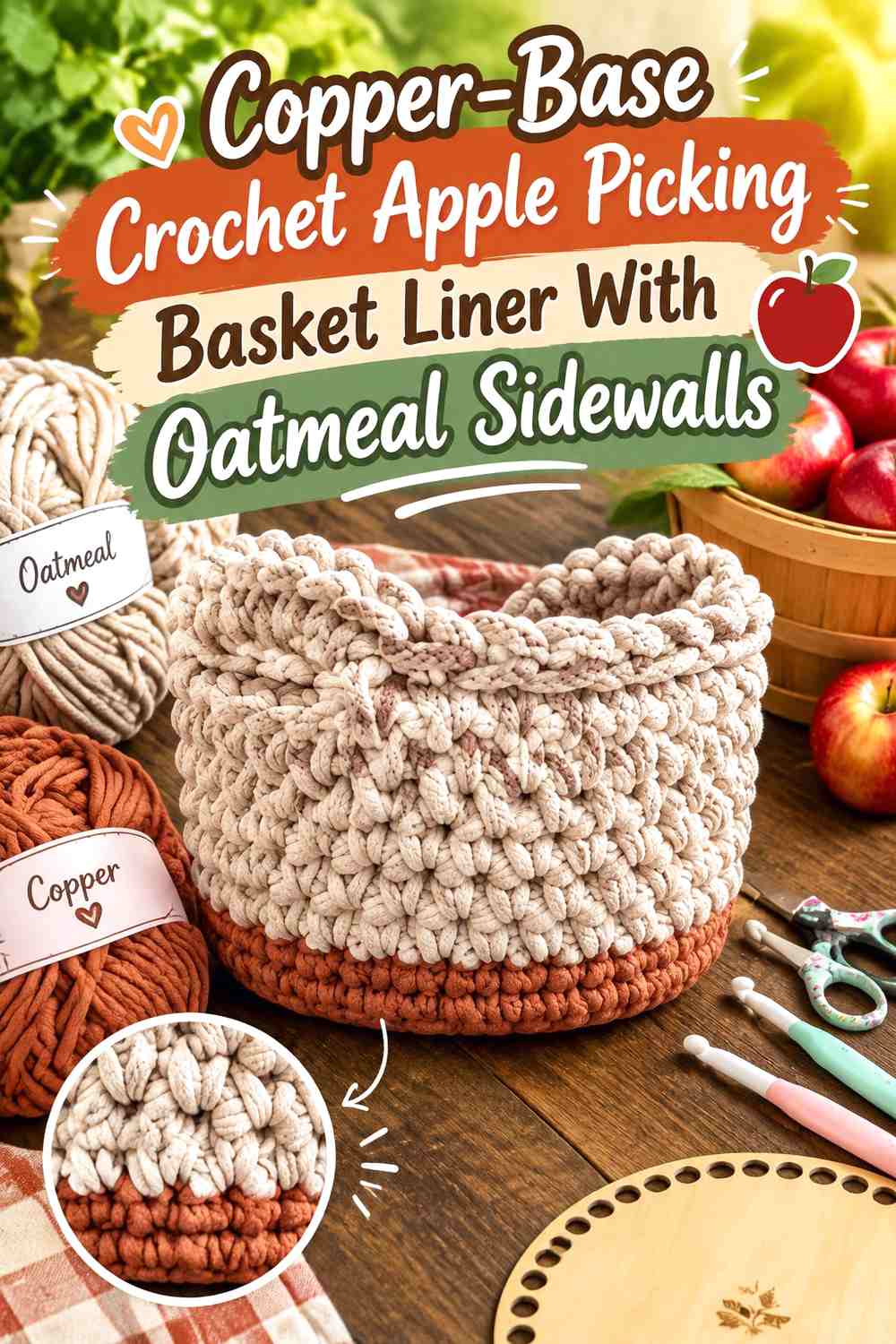
Moving copper to the base gives this palette a different visual hierarchy. Instead of announcing the fall color at the rim, the liner begins with a rich copper foundation and transitions to lighter oatmeal sidewalls. Only part of the copper may remain visible once the basket is full, so repeating it near the top can keep the color relationship apparent.
Let Copper Anchor the Basket Liner Base
Using copper across the base creates a concentrated block of warm color without requiring it to cover every visible sidewall. This works particularly well when you prefer oatmeal to dominate the exterior-facing portion of the liner.
Before choosing the exact division, place the liner conceptually in the basket and consider how much of the base is normally visible.
Move Oatmeal Up the Basket Sidewalls
Oatmeal sidewalls lighten the vertical surfaces and make the change from copper base to neutral body more noticeable. Keep the transition clean enough that it reads as purposeful color blocking rather than an accidental yarn change.
If the basket flares outward, judge the color balance after considering the greater visible area of the upper walls.
Repeat Copper Above the Oatmeal Sidewalls
A small copper repeat near the rim can prevent the base color from feeling isolated. It does not need to match the visual weight of the base; its job is simply to reconnect the upper section with the copper already used below.
Creator Credit: Mad4Macrame
6. Oatmeal-Base Crochet Apple Picking Basket Liner With a Copper Top Band
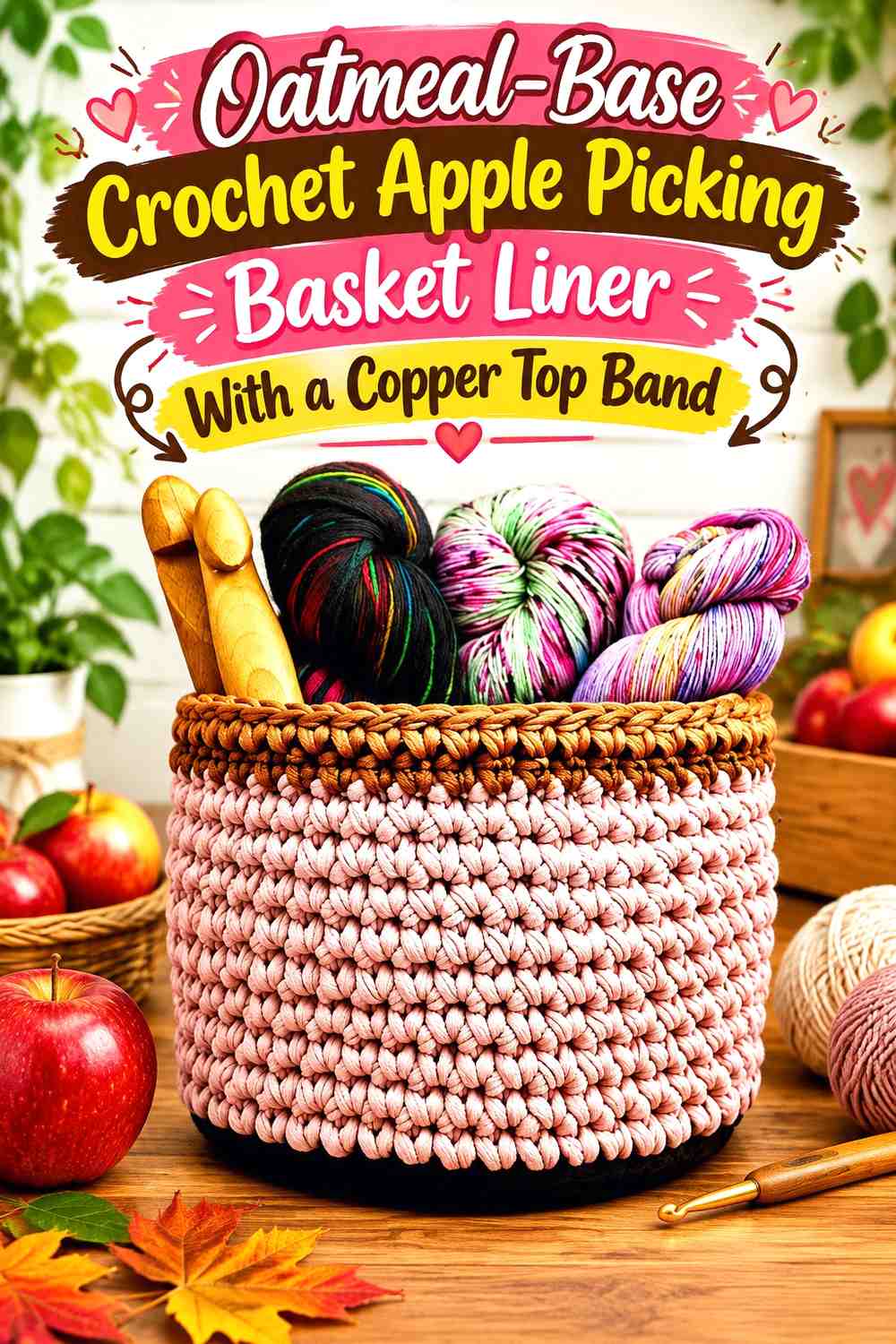
This arrangement reverses the previous idea. Oatmeal occupies the lower portion of the liner while copper becomes increasingly important toward the top. Because the rim is usually one of the most visible parts of a basket liner, even a moderate copper band can make this version appear more copper-forward than its actual color proportions suggest.
Keep Oatmeal Across the Basket Liner Base and Lower Walls
Starting with oatmeal establishes a light neutral foundation. This can be useful when the basket itself is already dark or strongly colored and you do not want every interior surface competing with it.
Let the oatmeal occupy enough area to establish itself before introducing the stronger upper color.
Use Copper Where the Oatmeal Sidewalls Meet the Rim
A copper top band focuses attention on the section most likely to remain visible when the basket is carrying apples. The band can also serve as a clean visual transition into a folded or finished edge.
Avoid making the copper band so narrow that the rim hides most of it.
Compare the Copper Band With the Oatmeal Proportion Before Finishing
Because copper generally attracts more attention than a pale neutral, equal yarn amounts are not necessary for equal visual presence. Step back from the basket before extending the copper farther down the sidewalls.
Creator Credit: Bag-O-Day Crochet
7. Copper and Oatmeal Gingham-Inspired Crochet Apple Picking Basket Liner
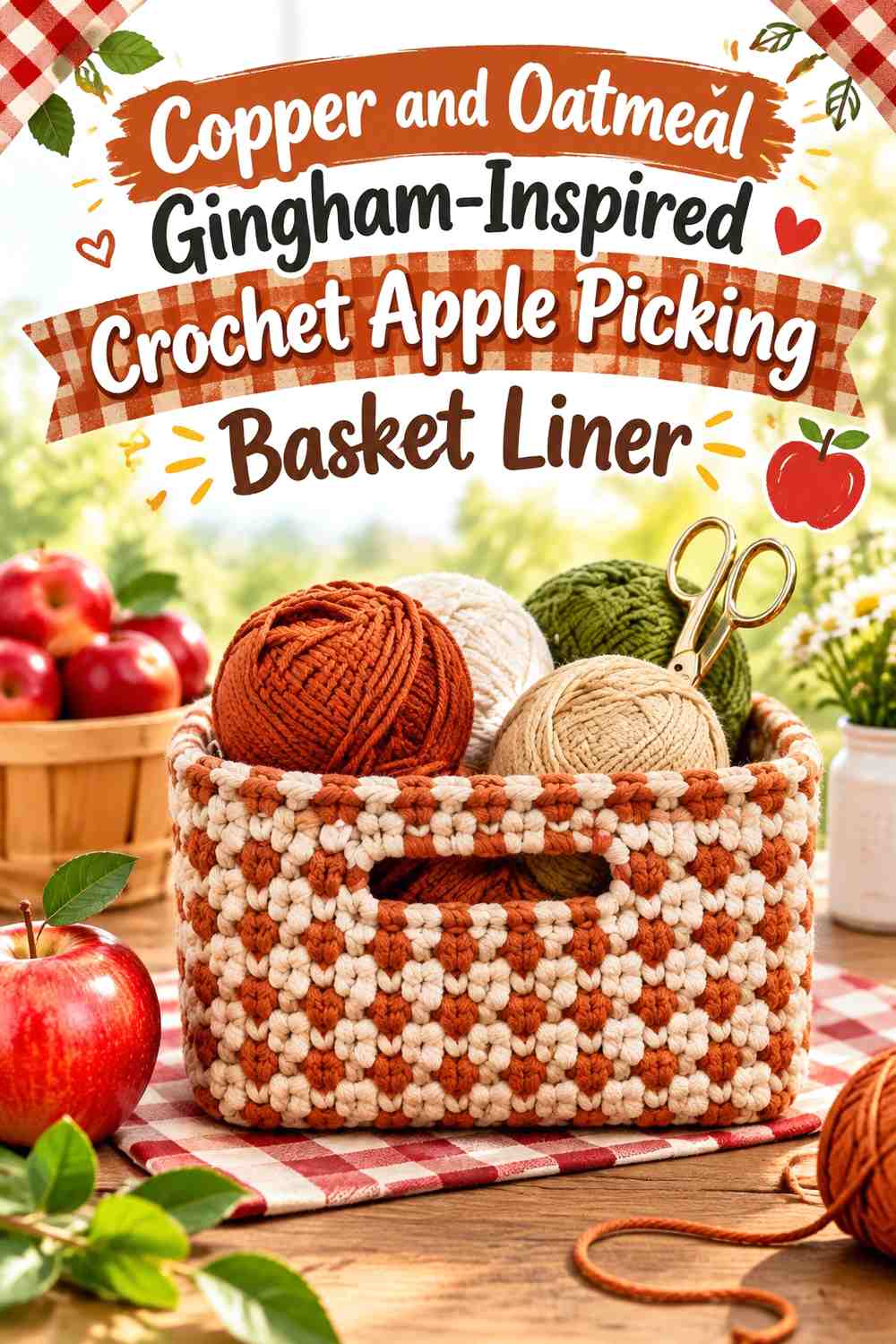
A gingham-inspired treatment gives copper and oatmeal a more patterned fall direction. Instead of relying on long horizontal bands, the colors alternate in repeated blocks. Because the basket itself may already have visible woven geometry, the color blocks need enough scale and value contrast to remain readable.
Give Copper and Oatmeal Blocks Enough Value Separation
Check the yarns in grayscale before committing to small blocks. If copper and oatmeal become almost the same gray, the pattern may look much flatter than it does when the skeins are viewed separately.
In that situation, either choose a darker copper or simplify the design into larger color areas.
Let Oatmeal Create Breathing Room Between Copper Blocks
Oatmeal can act as the visual pause that keeps repeated copper sections from becoming one dense field. This becomes more important when the liner pattern continues around every side of the basket.
Avoid adding another equally strong warm shade throughout the pattern unless you deliberately want a more complex multicolor result.
Repeat Copper at the Oatmeal Rim to Finish the Pattern
A copper edge or small rim repeat can connect the patterned sidewalls to the upper finish. If the rim is entirely oatmeal, check whether the last copper block ends too abruptly below it.
Creator Credit: Tuteate
8. Oatmeal Crochet Apple Picking Basket Liner With Copper Vertical Panels
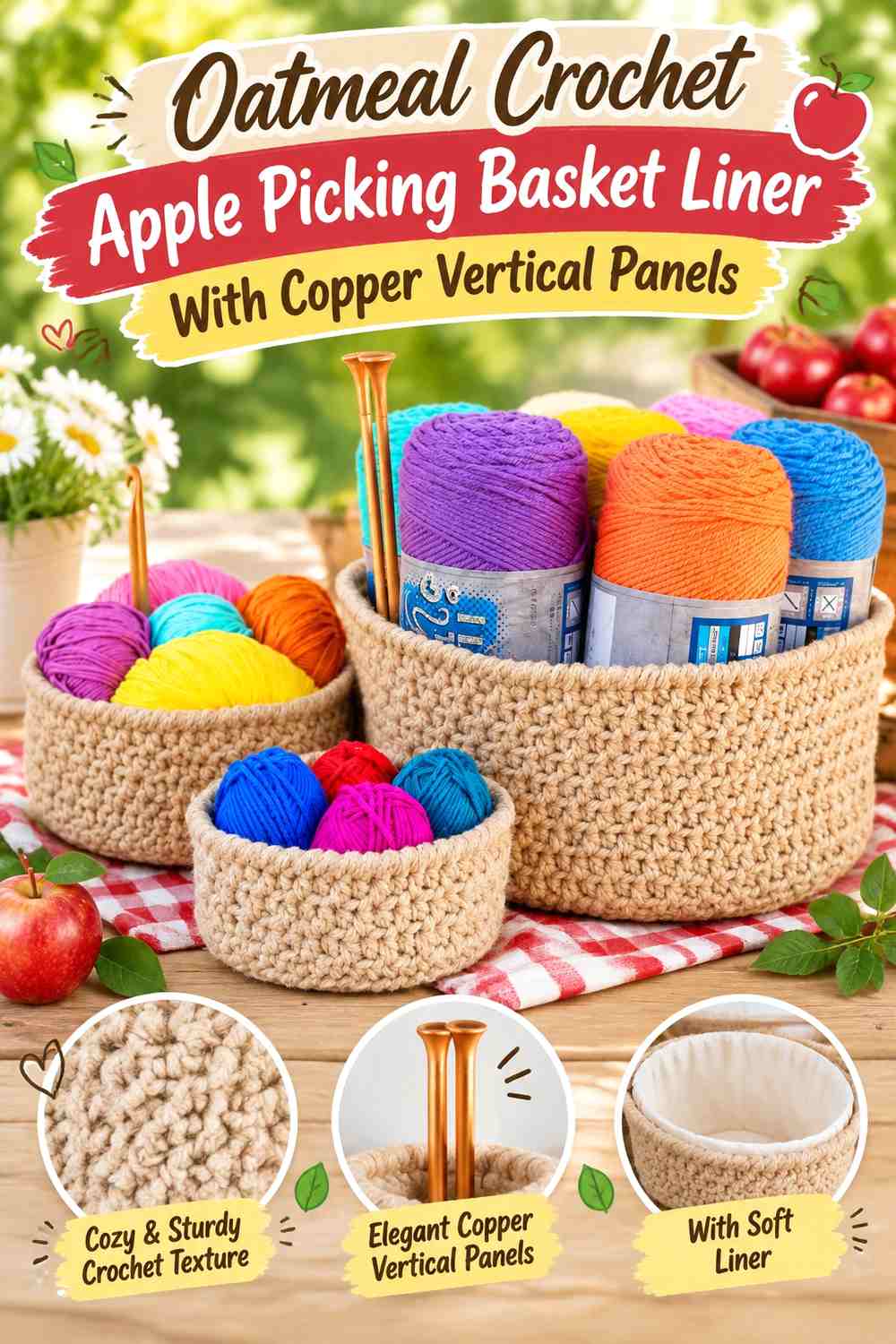
Vertical copper sections create a different effect from rings or stripes because they follow the height of the basket. On a tall or deep picking basket, they can visually connect the base with the rim while oatmeal remains the dominant background.
Let Oatmeal Remain the Main Basket Liner Background
Keep most sidewall sections oatmeal so the vertical copper panels have space to register. If copper sections become too numerous or too wide, the design can quickly shift from neutral-led to evenly divided.
Decide which color you want readers to notice first before adjusting panel width.
Use Copper Panels to Connect the Oatmeal Base and Rim
Copper that travels upward can link different parts of the liner without requiring a continuous horizontal border. Align the panels with visible basket features when that creates a cleaner composition, but avoid forcing symmetry when the handles or basket shape make it awkward.
Keep Copper Away From Crowded Oatmeal Handle Details
If a vertical copper panel meets a complicated handle opening, the color transition can become difficult to read. Ending or shifting the accent before the opening may give both the handle treatment and the copper panel clearer visual space.
Creator Credit: naztazia
9. Copper Crochet Apple Picking Basket Liner With Oatmeal Texture Breaks
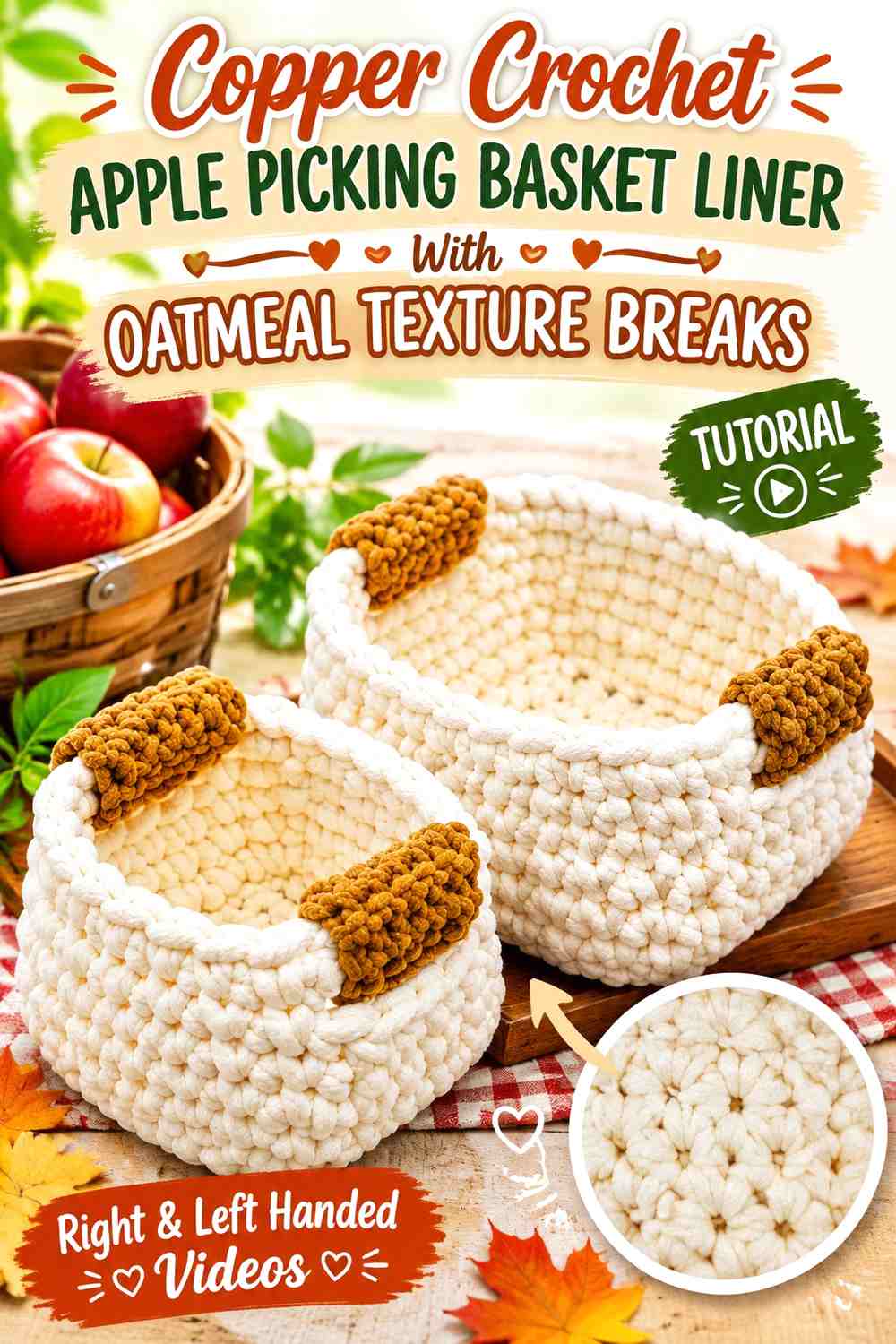
This copper-led idea uses oatmeal as a strategic interruption rather than a conventional border. Small oatmeal bands can divide areas of texture, separate the base from the walls, or create a pause before the rim. The approach keeps copper dominant while preventing a single warm color from covering every structural transition.
Keep Copper Dominant Across the Largest Crochet Areas
Let copper occupy the broad sections first. The oatmeal details will have more impact when they interrupt an established main color instead of competing with several other accents.
This is especially useful if your chosen copper has enough contrast with the basket to remain distinct without needing an oatmeal outline everywhere.
Use Oatmeal Between Copper Texture Zones
An oatmeal band can mark a change from one visual area to another. For example, it can separate a calmer lower section from a more textured upper section without requiring another strong fall shade.
Keep the neutral interruption purposeful. Too many oatmeal breaks can make the sidewall look segmented.
Reserve Oatmeal for Copper Details That Need More Separation
If raised copper texture begins to disappear into the larger copper field, position oatmeal near that feature rather than adding it randomly elsewhere. The lighter surrounding color can give the texture a clearer boundary.
Creator Credit: Tamara Kelly – Moogly
10. Oatmeal Crochet Apple Picking Basket Liner With Copper Apple Accents
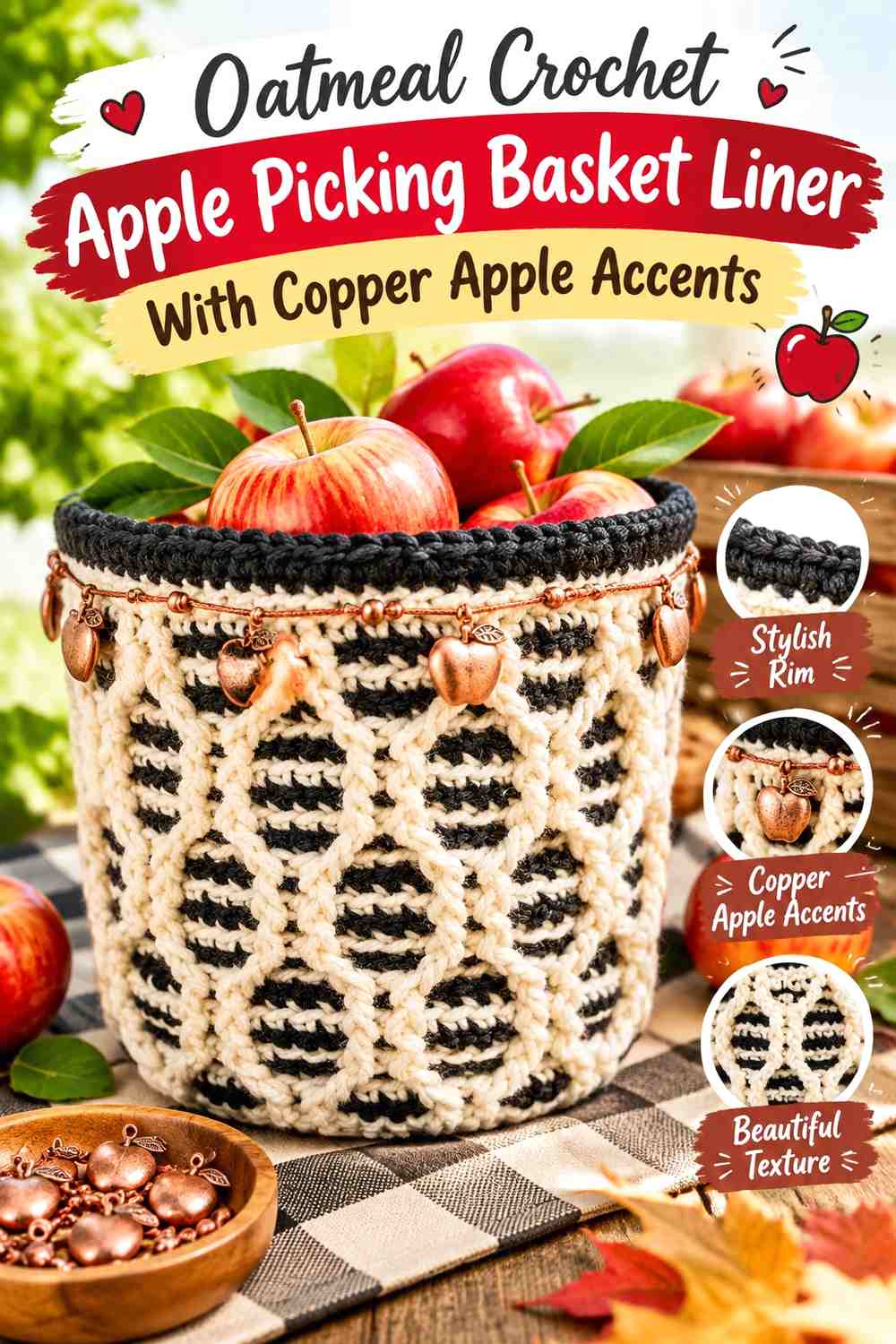
An oatmeal background gives small copper apple-inspired motifs or decorative details enough space to become visible without turning the whole liner into a novelty piece. Keep dimensional decoration toward the upper visible portion or outer fold so the central interior remains visually simpler.
Let Oatmeal Give Copper Apple Details a Clear Background
A light neutral field is particularly useful when the copper detail is relatively small. If the background becomes equally warm or equally dark, the apple shape can lose definition.
Check one sample detail against the oatmeal before repeating it around the entire liner.
Keep Copper Apple Accents Concentrated Near the Oatmeal Rim
Placing decorative copper details near the upper edge keeps them visible after the basket is filled and prevents them from being scattered through every interior surface.
A limited repeat usually creates a clearer theme than covering the liner with many small motifs.
Use an Oatmeal Border to Keep Copper Apples From Crowding the Edge
Leave some oatmeal space between the copper motifs and the actual basket rim. That neutral gap can stop the decoration from visually colliding with handles, woven edges, or another copper finishing band.
Creator Credit: Yarnspirations
11. Copper-to-Oatmeal Tonal Crochet Apple Picking Basket Liner
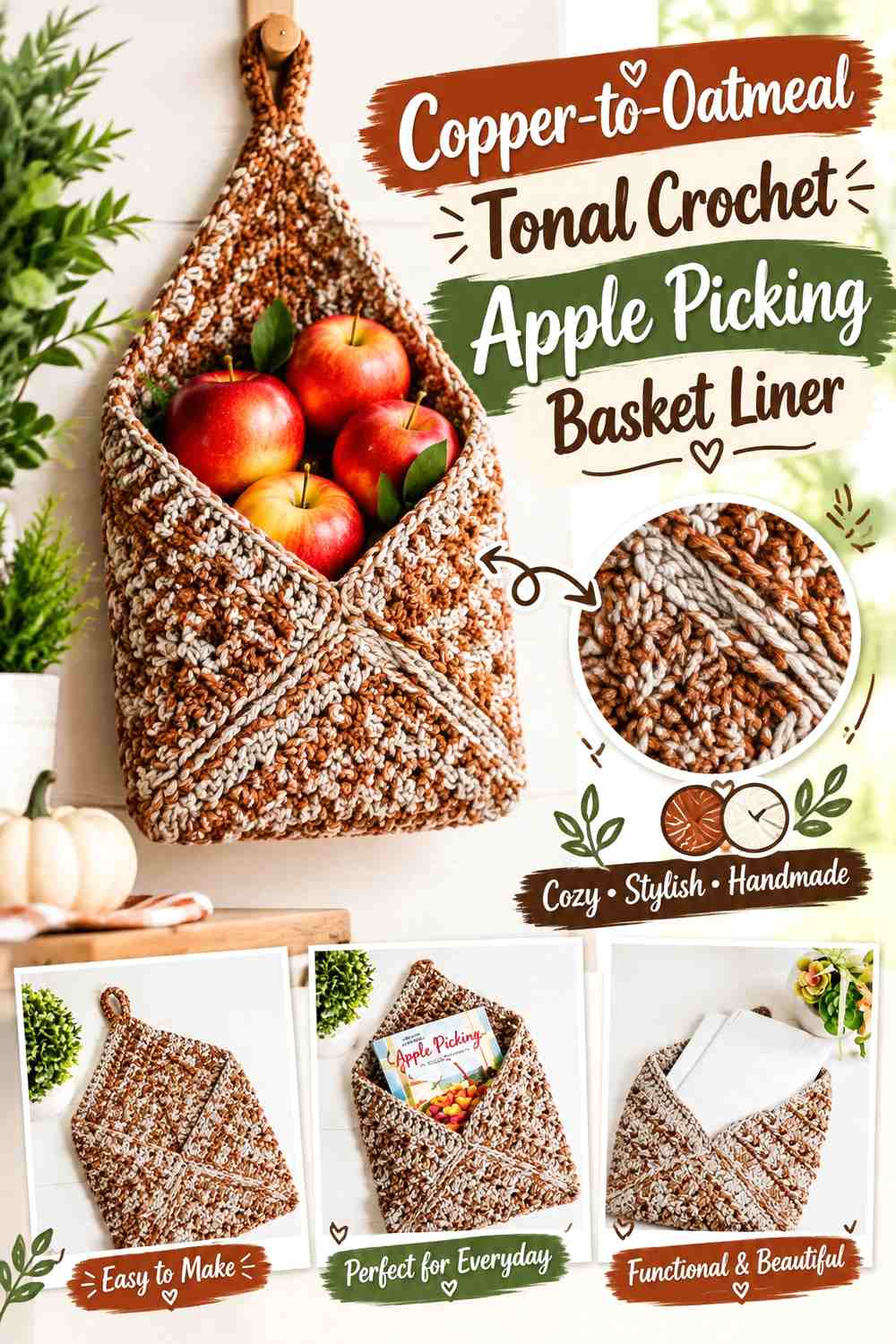
A gradual visual transition between copper and oatmeal creates a softer alternative to hard-edged blocking. A muted tan, camel, or similarly restrained middle neutral can bridge the two main colors if you want three shades, but it should remain secondary rather than becoming a competing third focal color.
Start the Copper-to-Oatmeal Transition With Clear Color Roles
Decide where copper ends as the dominant shade and where oatmeal takes over. A gradual palette still needs hierarchy; otherwise several related neutrals can merge into an indistinct middle range.
If you introduce a bridging shade, compare all three in grayscale and make sure you can still identify the intended lightest and darkest colors.
Let Oatmeal Finish the Copper Transition Near the Rim
Ending with oatmeal at the upper edge gives the palette a light finish and can create stronger separation from a dark woven basket. It also keeps the most neutral shade visible when the basket is full.
Reverse the direction if the basket itself is very pale and a copper rim provides better definition.
Keep Copper Visible After Oatmeal Becomes Dominant
A small copper repeat near the final section can keep the autumn color from disappearing once oatmeal takes over. This could be a narrow edge or restrained surface detail rather than another large block.
Creator Credit: Winding Road Crochet
12. Copper and Oatmeal Crochet Apple Picking Basket Liner With Olive Fall Accents
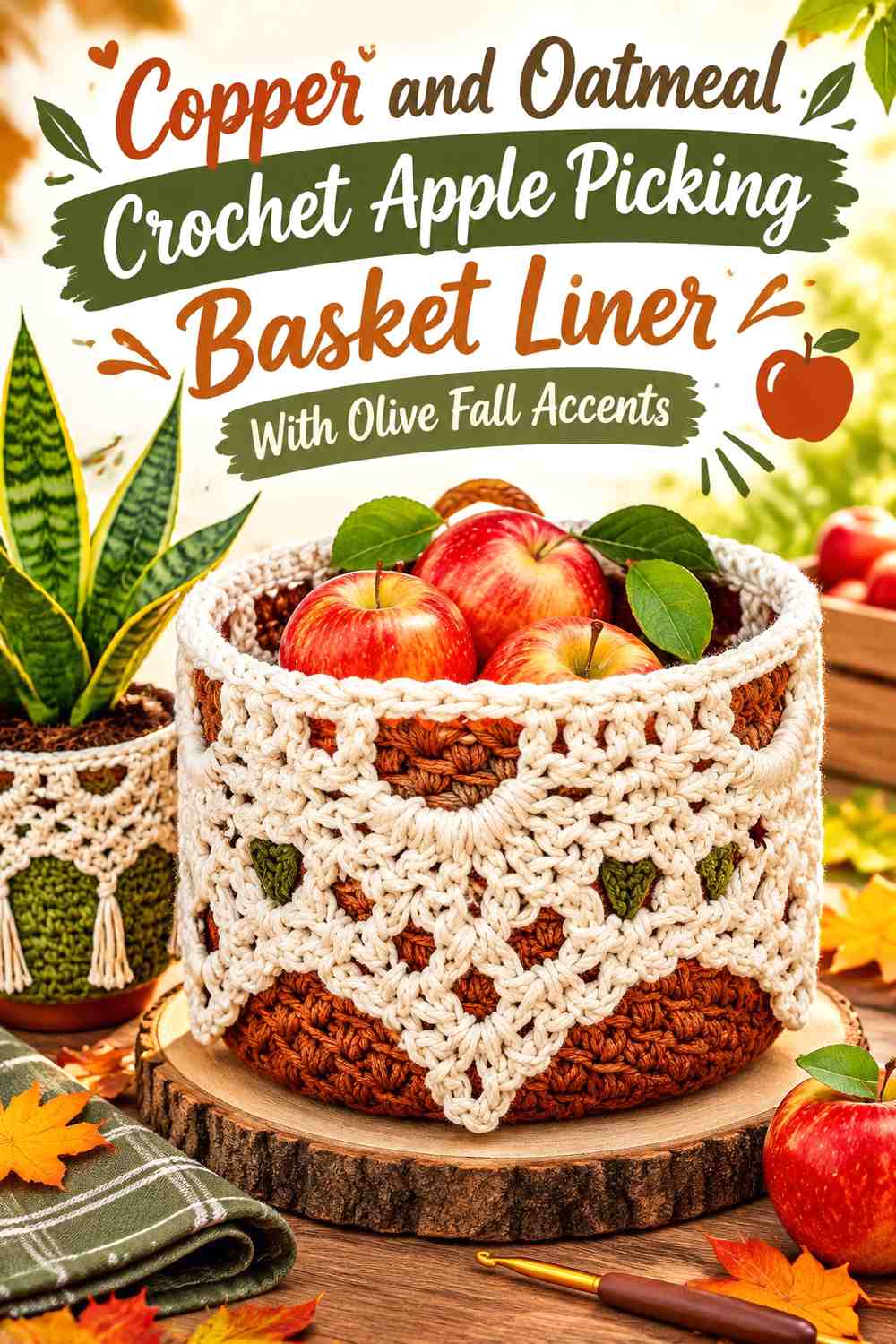
Copper and oatmeal do not have to remain an isolated two-color scheme. A small amount of muted olive can add a botanical fall note while keeping copper as the warm focal color and oatmeal as the controlling neutral. The important part is limiting olive so all three shades do not compete for equal space.
Keep Copper Stronger Than Olive in the Fall Basket Palette
Copper should remain the main seasonal accent if the article’s two-color identity is important. Use olive in smaller details rather than allowing it to replace copper across half of the liner.
The easiest checkpoint is visual: if your eye notices the green first from a distance, reduce its share unless that is the result you intentionally want.
Use Oatmeal Between Copper and Olive Details
Oatmeal can separate the two stronger hues around the rim, motifs, or color blocks. That neutral space prevents every copper section from sitting directly against olive and gives the three-color palette a clearer hierarchy.
Repeat Copper at the Oatmeal Rim Before Adding Olive
Establish the copper-and-oatmeal relationship first, then introduce olive as the smallest accent. This makes it much easier to remove or reduce the green if the finished basket starts to look busier than intended.
Creator Credit: Briana K
Which Copper and Oatmeal Apple Picking Basket Liner Direction Should You Choose?
For the richest autumn appearance, the copper-dominant first, fifth, and ninth ideas give the warm shade the most visual area. The oatmeal-led second, fourth, sixth, eighth, and tenth versions are better choices when you want a lighter liner with copper concentrated around visible details.
The striped and gingham-inspired third and seventh ideas create the strongest repeated pattern, so they make more sense when the basket itself is visually simple. If your basket already has pronounced wicker color or weaving, one of the larger color-block approaches may give the finished combination more breathing room.
The eleventh idea suits a softer tonal transition, while the twelfth is the clearest option when you want to expand beyond two colors without losing copper and oatmeal as the foundation.
Conclusion
Copper and oatmeal can produce very different crochet apple picking basket liners depending on which shade controls the large surfaces. Make copper dominant for a richer fall look, or let oatmeal lead when you want copper rims, stripes, panels, and apple details to carry more emphasis.
Before finalizing any version, place the yarn beside the real basket, check the contrast around handles and the rim, and consider which portions of the liner will still be visible once apples are inside. That simple check is more useful than choosing colors from the skeins alone.
Use the linked creator tutorials for their demonstrated construction concepts and refer back to the original videos for exact crochet steps. Then apply the copper-and-oatmeal placement that fits your particular basket shape and preferred fall direction.
Frequently Asked Questions
Should Copper or Oatmeal Dominate a Crochet Apple Picking Basket Liner?
Either can lead. Copper gives the liner a stronger warm autumn presence, while oatmeal creates a lighter neutral field that makes smaller copper details more noticeable. Choose the dominant shade based on the amount of fall color you want across the large sidewalls.
How Can I Check Whether Copper and Oatmeal Have Enough Contrast?
Place the yarns side by side and look at them from a distance. You can also photograph them and view the image in grayscale. If they become almost identical gray values, use larger blocks or select shades with greater light-and-dark separation when detailed colorwork needs to remain visible.
Where Should Copper Go on an Oatmeal Apple Picking Basket Liner?
The rim, handle openings, upper band, base transition, or a limited decorative motif are useful choices because those areas naturally divide the basket surface. You do not need to distribute copper evenly everywhere.
Can I Replace Copper With Another Fall Shade?
Yes. Preserve the role rather than matching an exact yarn name. Choose another warm rusty, orange-brown, or similarly autumnal shade with enough contrast against oatmeal to perform the same dominant or accent function you planned for copper.
What Can Replace Oatmeal Without Changing the Whole Palette?
Look for another soft light neutral that remains noticeably lighter than the copper. Cream, muted beige, or a similar natural-looking neutral can fill the same supporting role, but compare the substitute directly with your copper before committing.
Can Olive or Mustard Be Added to a Copper and Oatmeal Basket Liner?
Yes, but use the third shade deliberately. Keeping copper and oatmeal responsible for most of the visible area makes the additional fall color read as an accent instead of turning the liner into an unrelated three-color scheme.
Should the Copper or Oatmeal Color Be Used on the Crochet Border?
Use the color that gives the clearest separation from both the liner body and the basket. Copper can define an oatmeal body, while oatmeal can lighten a copper-heavy liner. Test the proposed edge against the actual basket because the basket’s own color changes how much contrast the border provides.