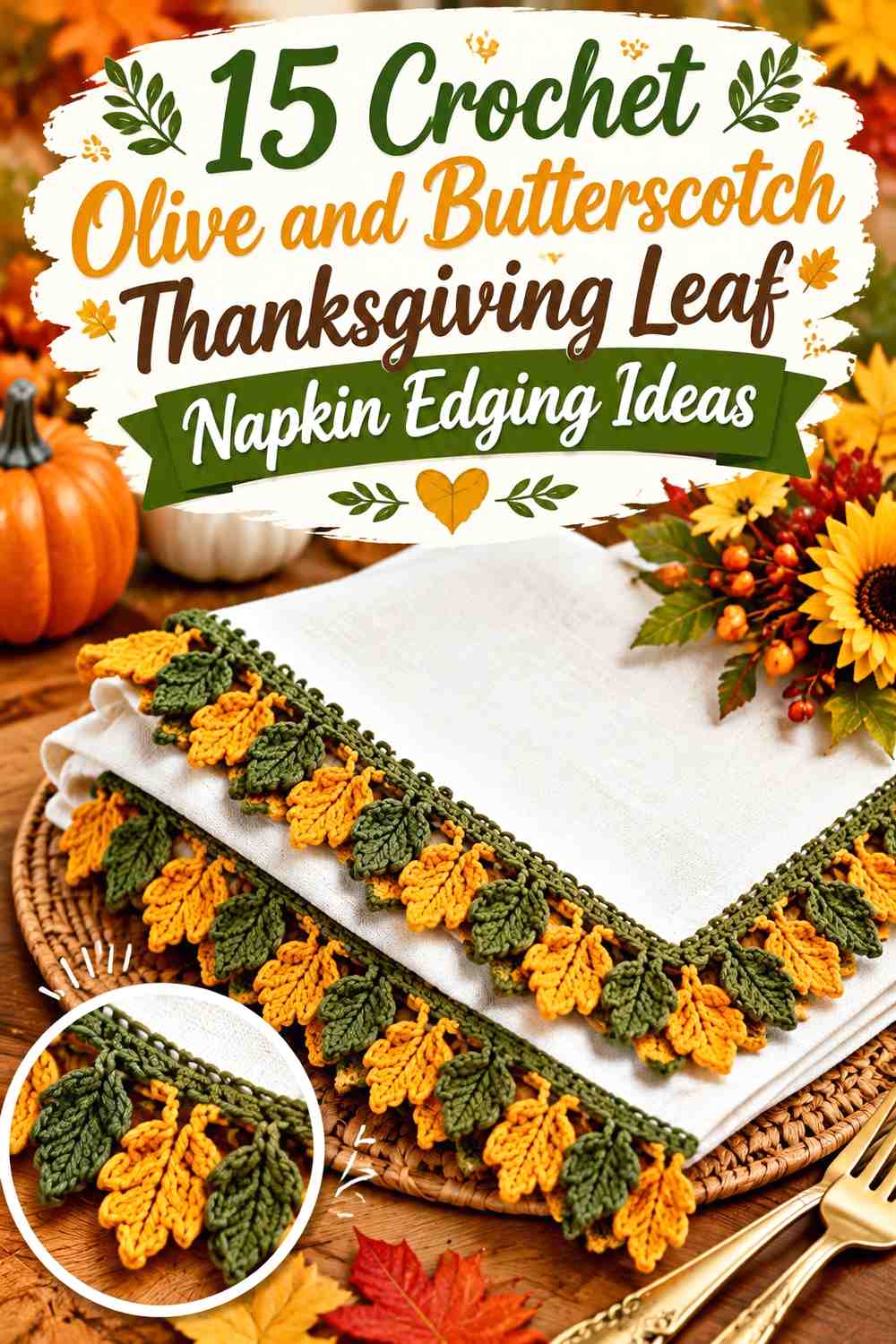

Olive and butterscotch give a crochet Thanksgiving napkin edge an autumn palette without making every detail orange or brown. Olive works naturally for stems, vines, foundation rows, and darker leaf sections, while butterscotch adds a warmer harvest accent that can remain visible against cream, ivory, tan, or other common table-linen colors.
A napkin edge has much less surface than a blanket border, so the color hierarchy matters. One continuous olive foundation with spaced butterscotch leaves can look clearer than changing colors at every small stitch. Corners also deserve separate planning because a leaf that fits comfortably along a straight side may bunch or overlap when four edges meet.
The tutorials linked below support crochet leaf borders, individual leaf motifs, vines, picot edging, or fabric and handkerchief borders. Not every creator demonstrates an exact Thanksgiving napkin edging, so use each source for the construction concept it actually teaches and apply the olive-and-butterscotch palette independently.
Quick List
- Olive Vine and Butterscotch Leaf Crochet Thanksgiving Napkin Edging
- Butterscotch Border and Olive Leaf Crochet Thanksgiving Napkin Edging
- Olive and Butterscotch Alternating Leaf Crochet Thanksgiving Napkin Edging
- Olive Stem and Butterscotch Maple Leaf Crochet Thanksgiving Napkin Edging
- Butterscotch Oak Leaf and Olive Vine Crochet Thanksgiving Napkin Edging
- Olive Leaf Garland With Butterscotch Links Crochet Napkin Edging
- Olive Inner Border and Butterscotch Outer Leaf Crochet Napkin Edging
- Olive and Butterscotch Small-Leaf Repeat Crochet Napkin Edging
- Olive-Tipped and Butterscotch-Centered Crochet Leaf Napkin Edging
- Butterscotch Maple Leaf Corner and Olive Side Crochet Napkin Edging
- Olive Leaf Cluster and Butterscotch Corner Crochet Napkin Edging
- Butterscotch Maple Leaf and Olive Point Crochet Napkin Edging
- Olive Mixed-Leaf and Butterscotch Accent Crochet Thanksgiving Napkin Edging
Decide Whether Olive or Butterscotch Should Lead the Napkin Edge
Olive is useful as the dominant color when you want the edging to resemble a continuous vine. It can run around all four sides while butterscotch appears only in leaves, corner motifs, or occasional warm repeats. This arrangement keeps the border connected even when individual leaves are spaced apart.
A butterscotch-led edge feels warmer and more harvest-focused. In that direction, use olive to define stems, inner border rows, or selected leaves rather than dividing every repeat equally. The darker green can provide enough contrast in small amounts.
Keep Olive and Butterscotch Leaves Proportional to the Napkin
Large autumn leaves may work beautifully as isolated corner features but feel crowded when repeated continuously along a dinner napkin. Smaller leaves can be distributed more frequently, while larger maple- or oak-inspired shapes benefit from extra fabric space around them.
Before making an entire set, test one repeat along a straight side and one corner. Check whether the leaf lies where you expect when the napkin is flat and whether adjacent motifs begin to overlap.
Use Olive and Butterscotch Repetition Consistently Around Four Sides
A four-sided napkin makes irregular color placement more noticeable. Decide whether the color sequence should repeat identically on every side or whether the corners will deliberately interrupt it.
If butterscotch leaves are the focal detail, keep their spacing reasonably consistent and let olive provide continuity between them. If the corners carry the largest leaves, simplify the straight edges so those corner motifs have enough visual space.
1. Olive Vine and Butterscotch Leaf Crochet Thanksgiving Napkin Edging
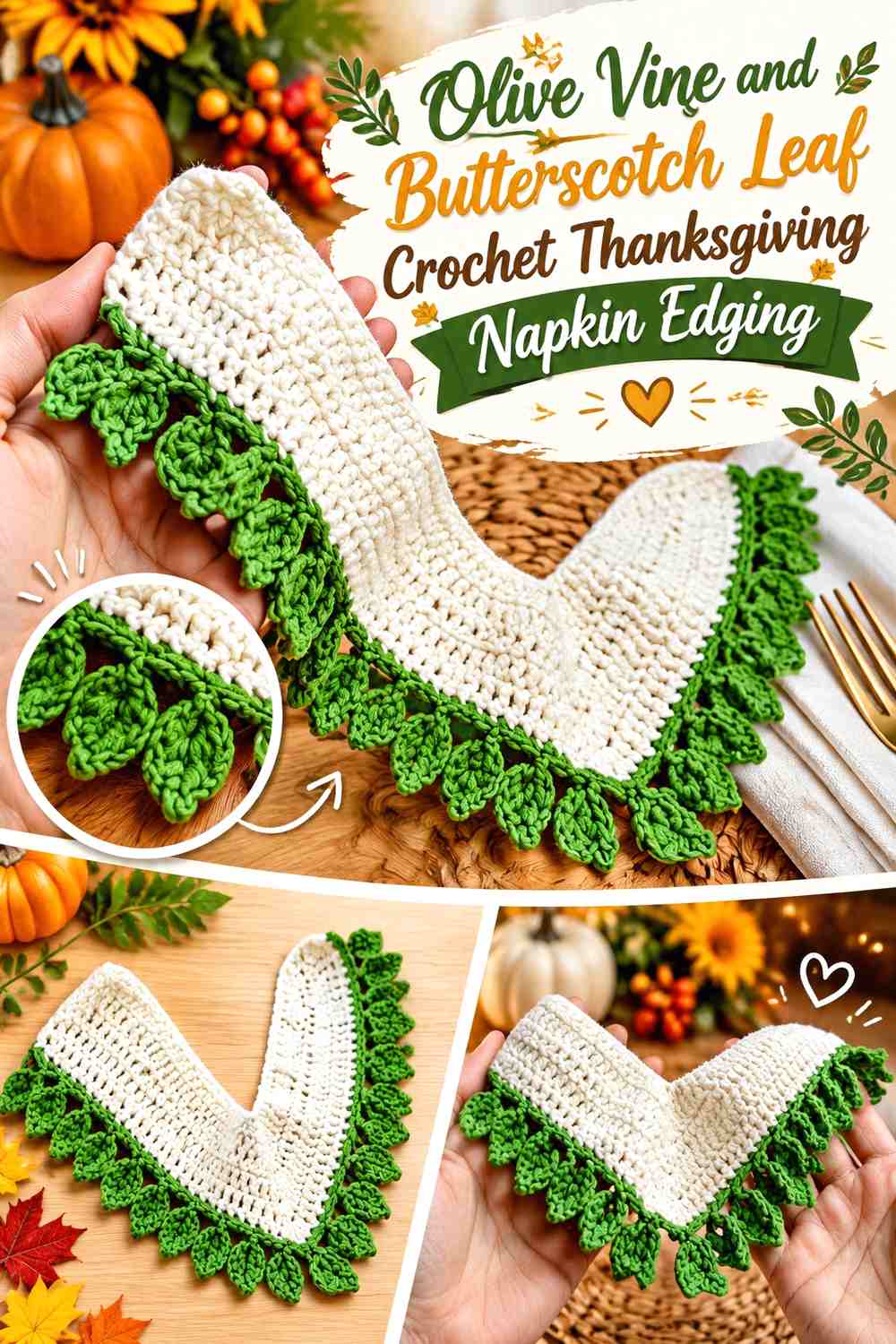
This arrangement gives olive the structural role and butterscotch the decorative one. A continuous olive edge or vine runs around the fabric while small warm leaves appear at intervals, creating a clear botanical border without covering the napkin in equal amounts of both colors.
Let Olive Form the Continuous Vine Beneath Butterscotch Leaves
Use olive where the edging attaches to or travels around the fabric. The uninterrupted darker line visually connects individual leaf motifs and prevents the butterscotch accents from looking like unrelated decorations.
Keep the vine comparatively narrow if the leaves are intended to be the focal point.
Space Butterscotch Leaves Clearly Along the Olive Edge
Leave visible olive between the warm leaves. If every butterscotch motif touches the next one, the border can become visually heavy and the vine itself may disappear.
At the corners, increase the spacing or use a single more prominent leaf rather than forcing the straight-side repeat into a smaller area.
Creator Credit: Ravella Design
2. Butterscotch Border and Olive Leaf Crochet Thanksgiving Napkin Edging
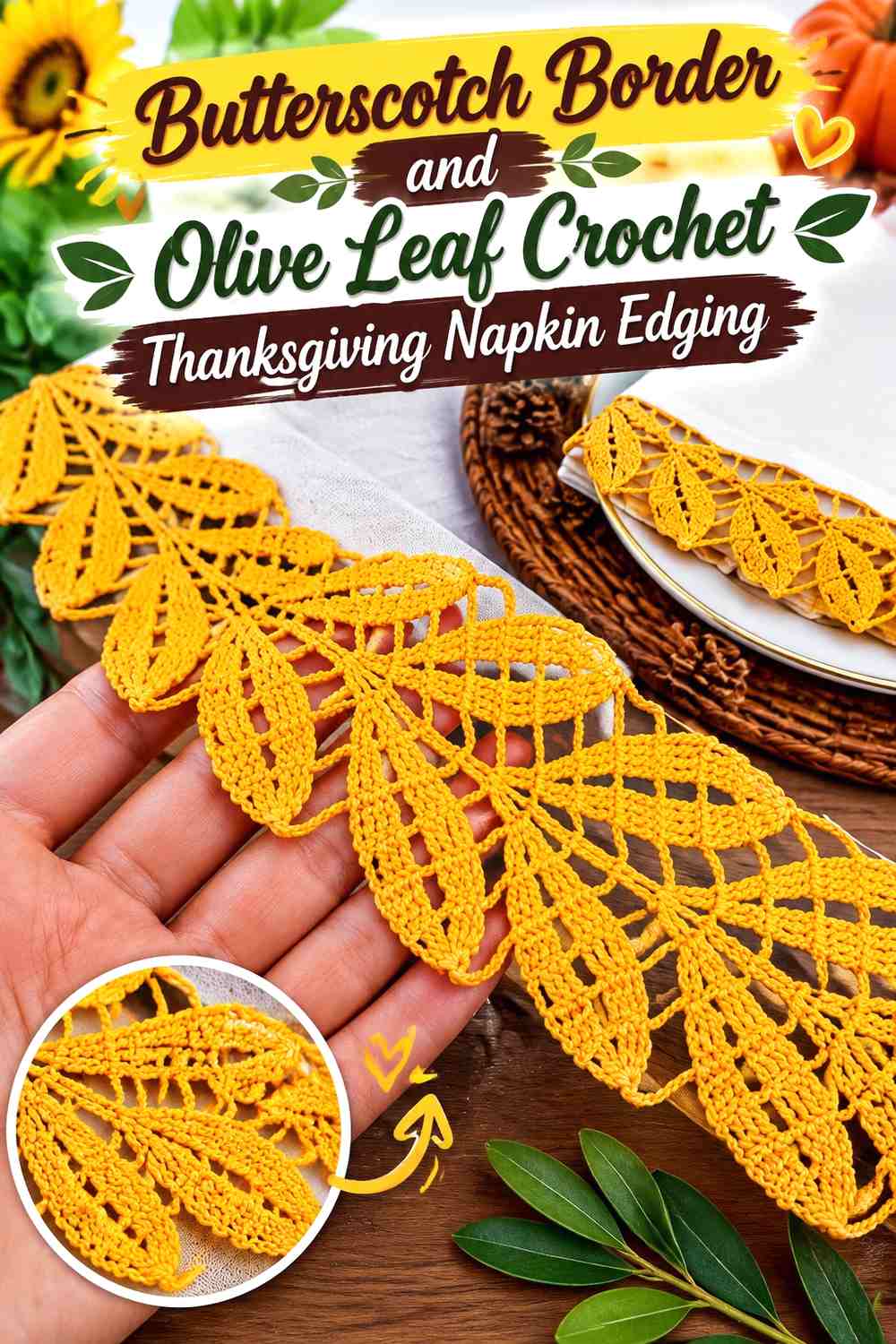
This idea reverses the hierarchy. Butterscotch creates a warm continuous edging around the napkin, while olive leaves provide darker botanical interruptions. It works well when you want the overall border to read as golden autumn color from across the table.
Keep Butterscotch Continuous Around the Olive Leaf Motifs
Use the warm shade through the foundation or main trim so the border remains visually connected. Olive leaves can then sit against that consistent background without needing to appear in every repeat.
Give Olive Leaves Enough Space Against Butterscotch
Because olive is the darker accent here, even a modest leaf can carry significant visual weight. Avoid clustering too many green motifs together unless you deliberately want a leafy corner.
One olive leaf between longer butterscotch sections can produce a calmer result than alternating the colors constantly.
Creator Credit: Crochet Magic Studio
3. Olive and Butterscotch Alternating Leaf Crochet Thanksgiving Napkin Edging
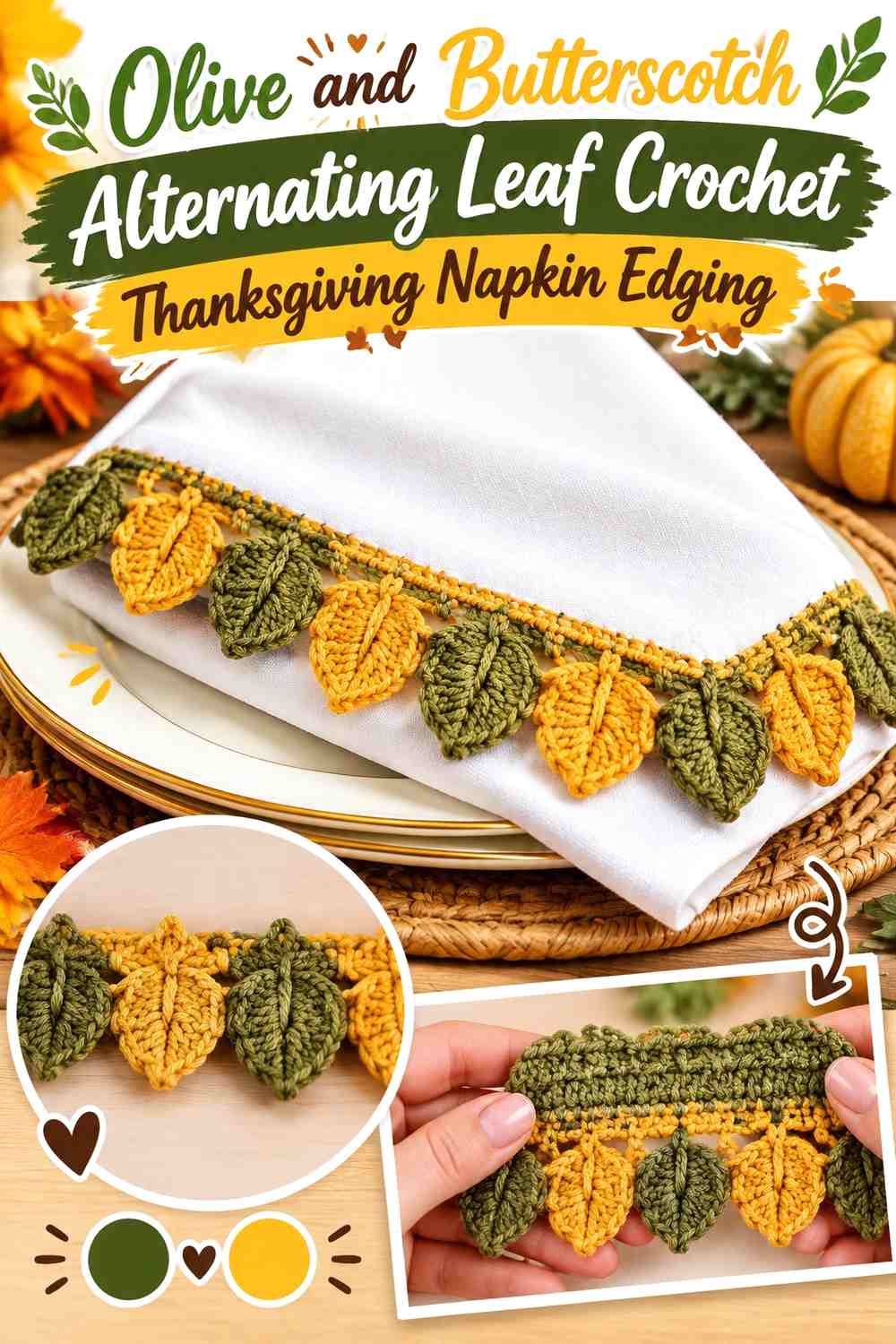
Alternating leaves give both colors comparable visibility without requiring stripes. The best result comes from keeping the attachment row simple so the repeated color change belongs to the leaves rather than every part of the edge.
Alternate Olive and Butterscotch Leaves in a Predictable Rhythm
A consistent green-gold-green-gold sequence makes the border easier to follow around long straight sides. If the sequence has to change at a corner, make the interruption deliberate rather than squeezing in one extra motif.
Use Olive Between Butterscotch Leaves to Prevent a Warm Color Block
Even when the leaves alternate, an olive foundation or connecting stitch can keep the edging from appearing mostly butterscotch. The darker connecting color also reinforces the botanical direction.
Creator Credit: Crochet.ElenaRugalStudio
4. Olive Stem and Butterscotch Maple Leaf Crochet Thanksgiving Napkin Edging
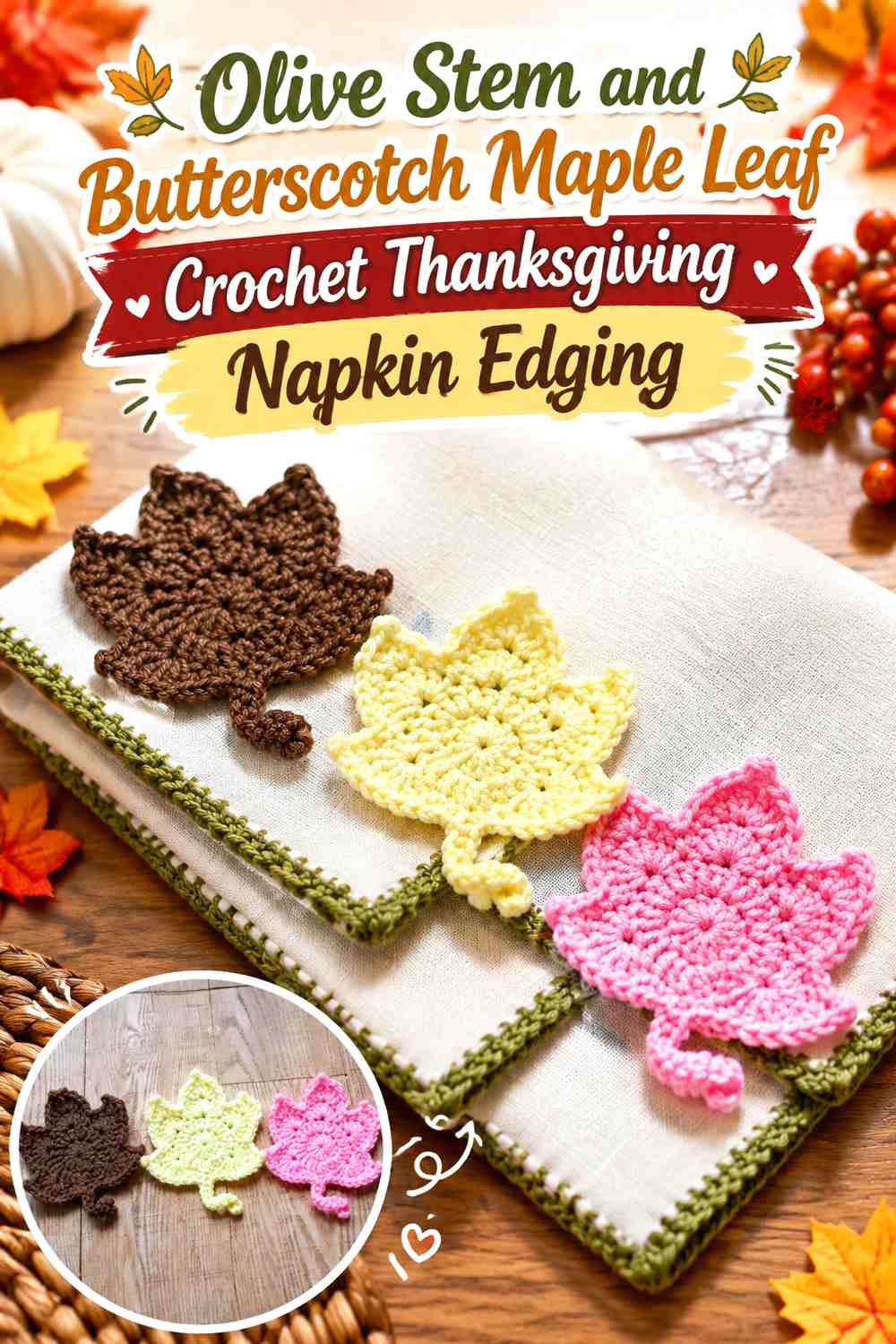
Maple-inspired leaves make the Thanksgiving theme more explicit. Use butterscotch for the broader leaf shape and olive for the stem or attachment point so the motif reads as one warm autumn leaf connected to a darker botanical edge.
Let Butterscotch Carry the Main Maple Leaf Shape
A maple-inspired motif has enough points and contour changes already, so one warm color across most of the leaf keeps the silhouette readable. Avoid dividing every lobe into alternating shades.
Use Olive Stems to Connect Butterscotch Maple Leaves to the Napkin
Olive is most useful where the motif meets the border. A darker stem or short connecting section keeps the leaf visually attached to the edging instead of appearing to float beside the fabric.
For a smaller napkin, consider using the maple form only at corners rather than repeating it continuously.
Creator Credit: Handmade By Mei
5. Butterscotch Oak Leaf and Olive Vine Crochet Thanksgiving Napkin Edging
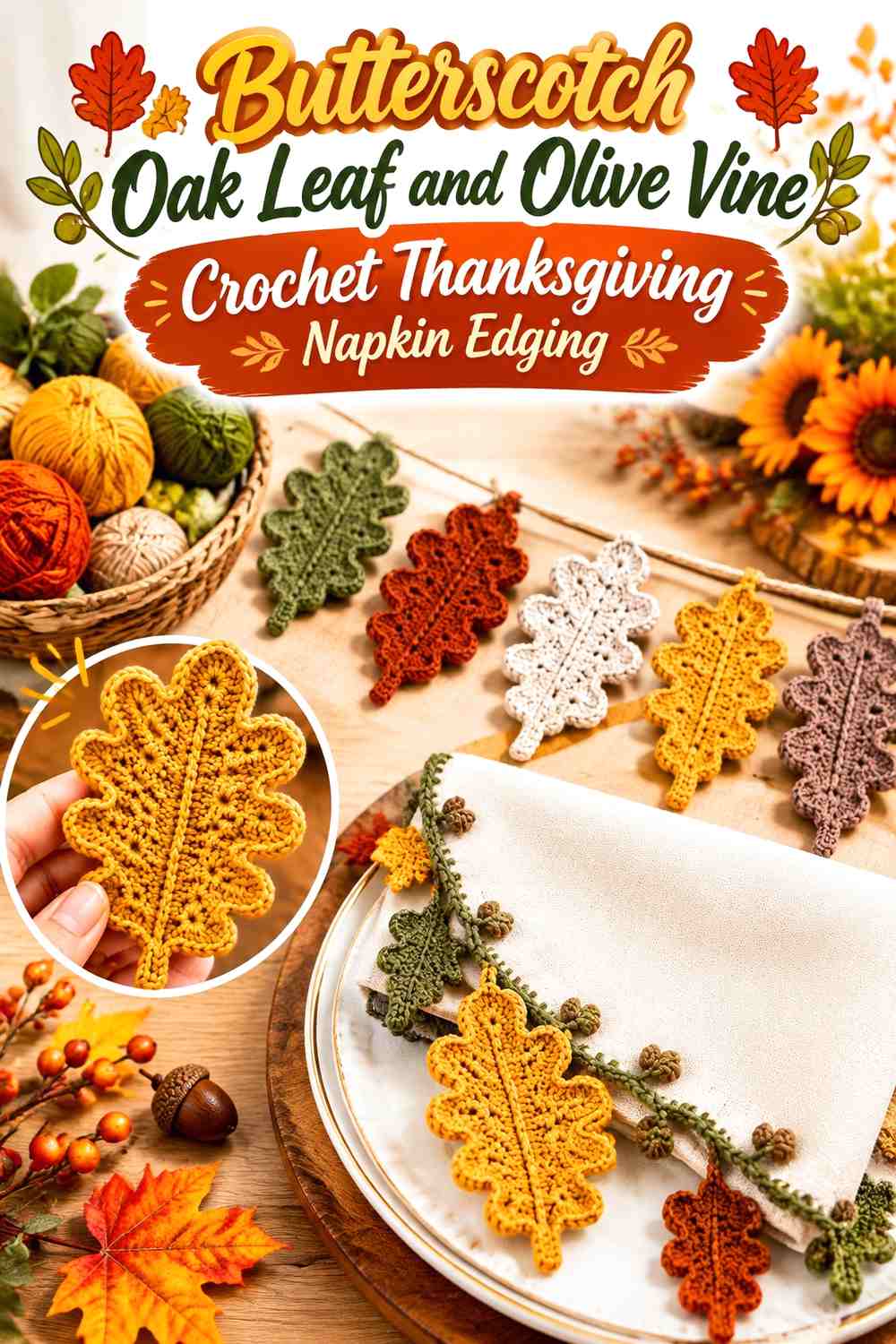
Oak-inspired leaves have a longer, lobed silhouette that creates a different rhythm from pointed maple leaves. Butterscotch can make those lobes the focal detail while olive supplies a thinner connecting vine.
Keep Butterscotch Oak Leaves Distinct Against Olive
Leave olive gaps between the lobed leaf shapes. If the leaves overlap, their characteristic outline becomes difficult to distinguish and the border starts to look like one continuous textured band.
Let Olive Carry the Butterscotch Oak Leaves Around Corners
Instead of bending a large oak motif tightly around each corner, continue the olive connector and position the next leaf after the turn. This protects the leaf shape and gives the corner more breathing room.
Creator Credit: Tuba Crochet
6. Olive Leaf Garland With Butterscotch Links Crochet Napkin Edging
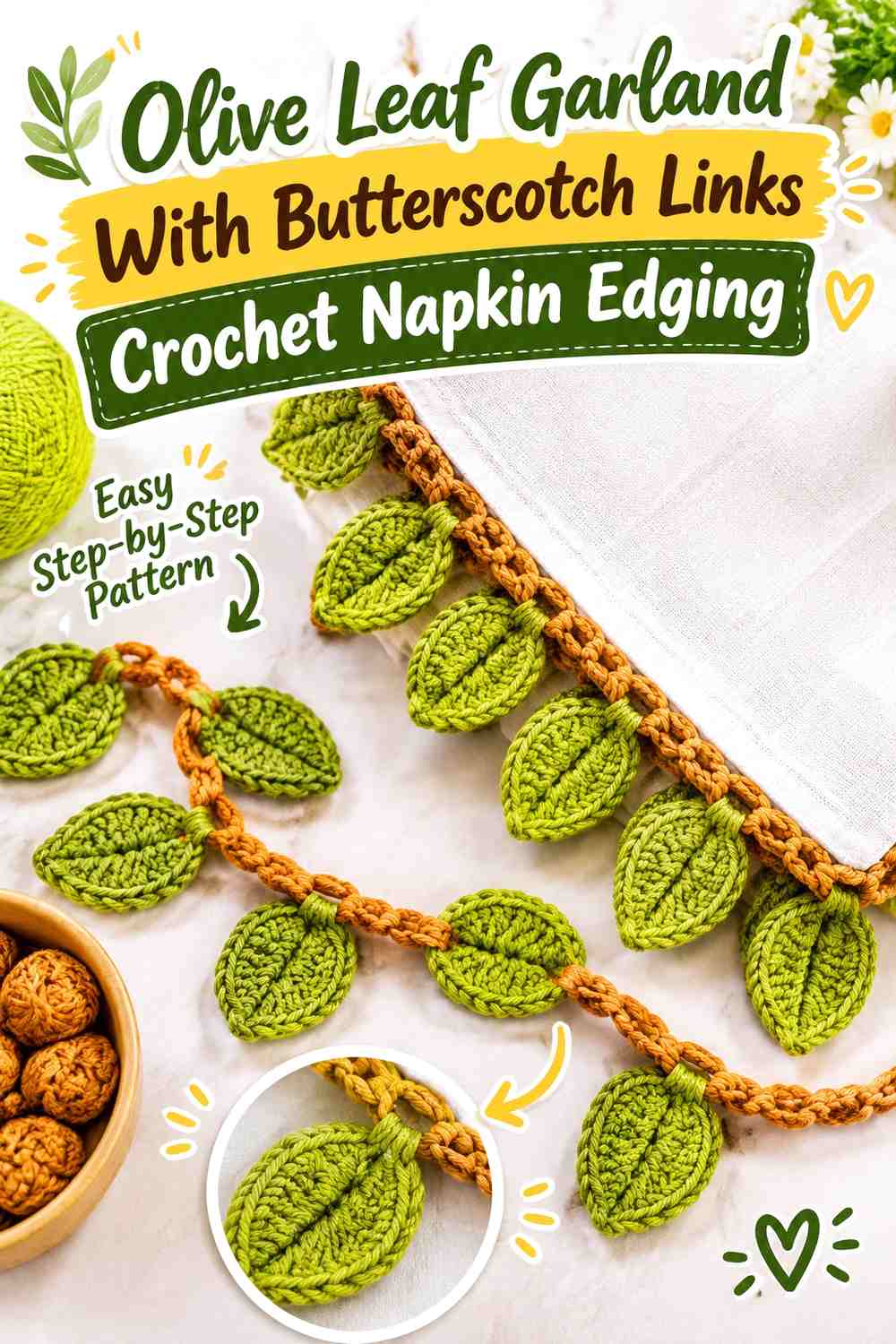
A garland-style edge connects leaves directly through a continuous chain or vine concept. Olive leaves can dominate while small butterscotch linking sections add warmth without changing every motif.
Keep Olive Leaves Consistent Along the Butterscotch-Linked Garland
Using one main leaf color gives the edge a strong repeated silhouette. The butterscotch connectors then become small flashes of harvest color rather than competing leaf motifs.
Place Butterscotch Links Where Olive Leaves Need Separation
Use the warm shade between leaves or near selected corners. Those short color breaks can make individual olive motifs easier to distinguish without introducing another large element.
Creator Credit: Hooked by Robin
7. Olive Inner Border and Butterscotch Outer Leaf Crochet Napkin Edging
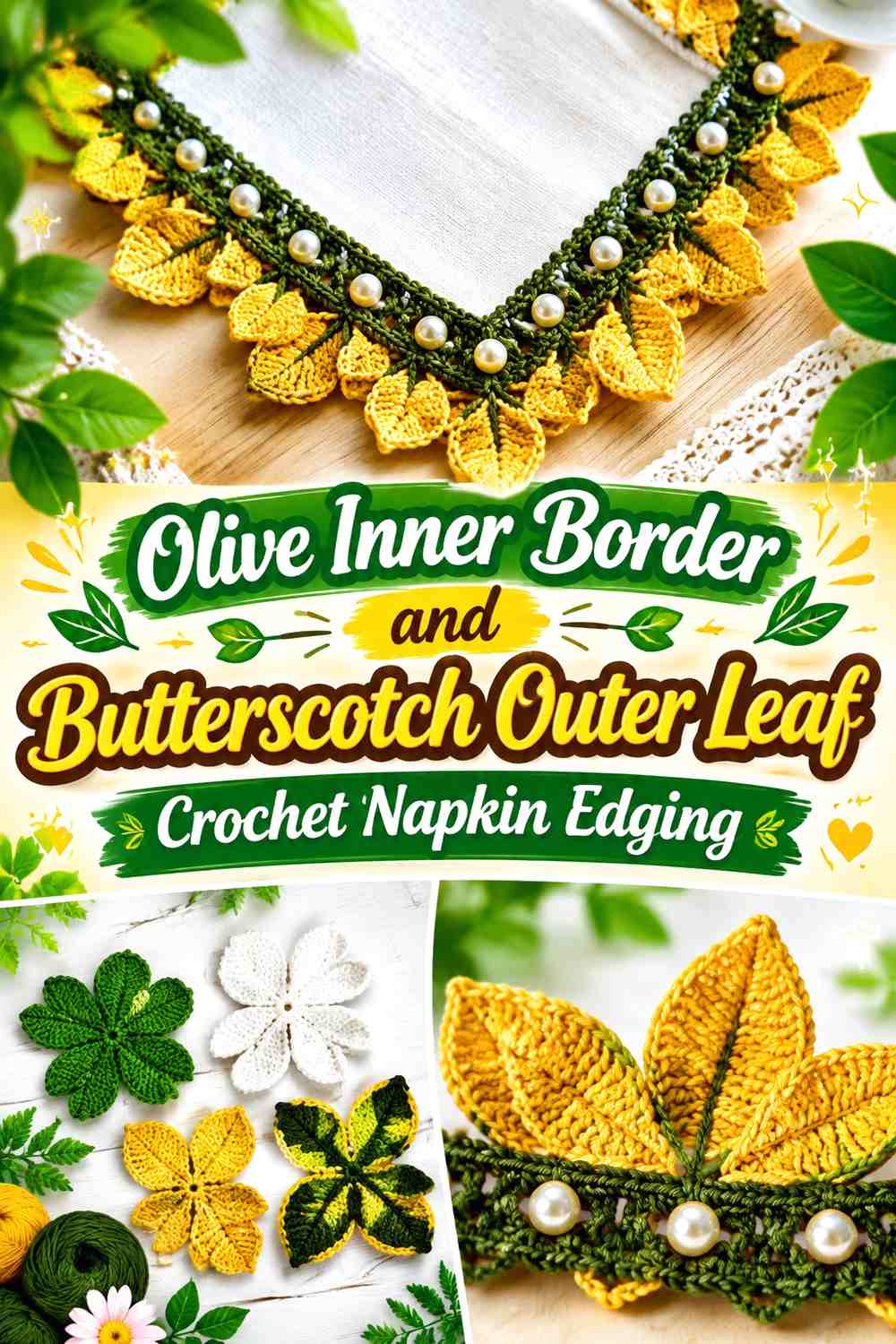
A two-level edging separates the attachment row from the decorative leaves. Olive sits directly against the fabric, while butterscotch forms the outermost leaf points.
Use Olive as the Stable Inner Edge Beneath Butterscotch
Keeping the inner row one color gives the entire napkin a clean visual boundary before the decorative motifs begin. This is especially useful when the napkin fabric is patterned or strongly colored.
Let Butterscotch Leaves Extend Beyond the Olive Border
The warmer motifs should project far enough beyond the inner edge to remain visually separate. If the butterscotch stays too close to the olive row, the two sections can merge into one thick band.
Creator Credit: Edinir Croche
9. Olive and Butterscotch Small-Leaf Repeat Crochet Napkin Edging
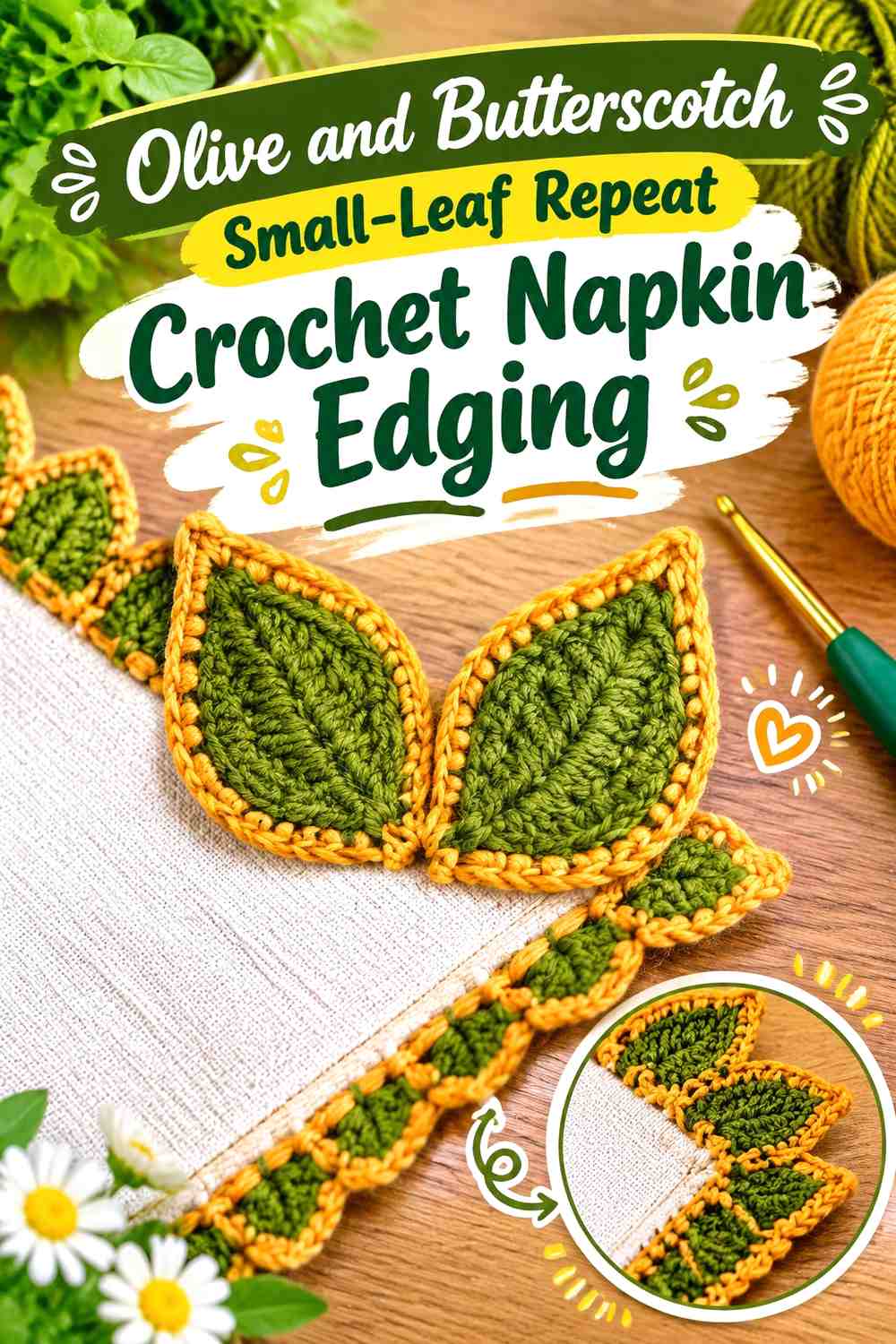
Small leaves allow more frequent repetition while keeping the border relatively shallow. Use olive and butterscotch in alternating pairs or short sequences rather than changing color unpredictably from leaf to leaf.
Keep Olive and Butterscotch Small Leaves Similar in Visual Scale
If the olive leaves are much larger than the butterscotch ones, the color balance will feel uneven even if the motif count is identical. Compare the finished leaf sizes before planning the full repeat.
Simplify Olive and Butterscotch Repeats at the Corners
Do not force a complete color sequence into a corner that lacks enough space. Let the connecting color turn the corner and resume the leaf rhythm on the next side.
Creator Credit: Crochet With Samra
10. Olive-Tipped and Butterscotch-Centered Crochet Leaf Napkin Edging
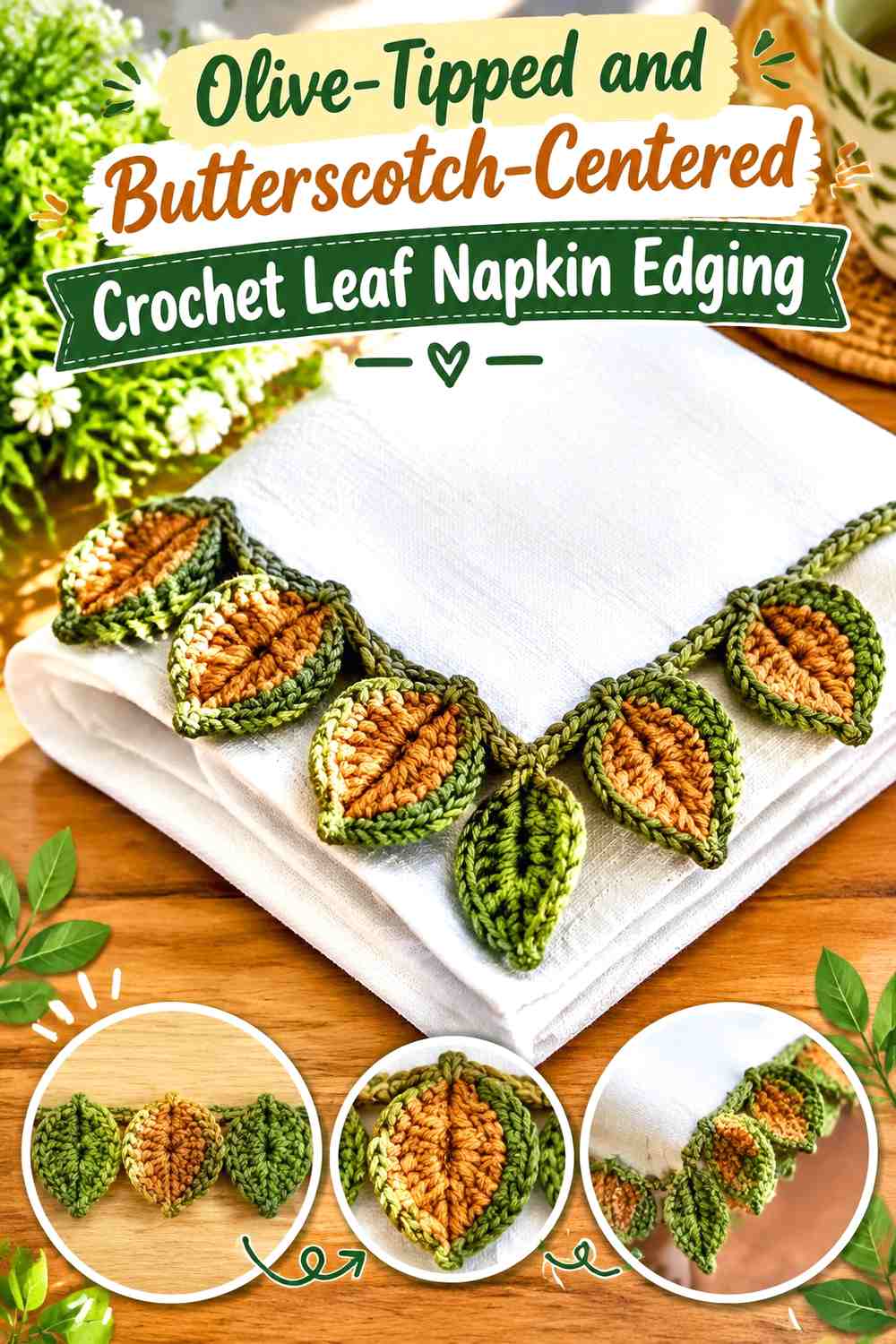
Instead of alternating whole leaves, this scheme puts both colors into each motif. Butterscotch occupies most of the leaf center, while olive appears along the tip, stem, or selected outer details.
Let Butterscotch Remain the Largest Part of Each Olive-Tipped Leaf
Keep the warm center broad enough that the edging still looks butterscotch-led. Too much olive around every side would turn each motif into a green leaf with only a small gold center.
Repeat Olive Tips Consistently Around Butterscotch Leaves
Place the green accent in the same part of each leaf. Consistency makes the two-color treatment look purposeful and helps the eye follow the border around all four sides.
Creator Credit: Crochet and Knitting Japan
11. Butterscotch Maple Leaf Corner and Olive Side Crochet Napkin Edging
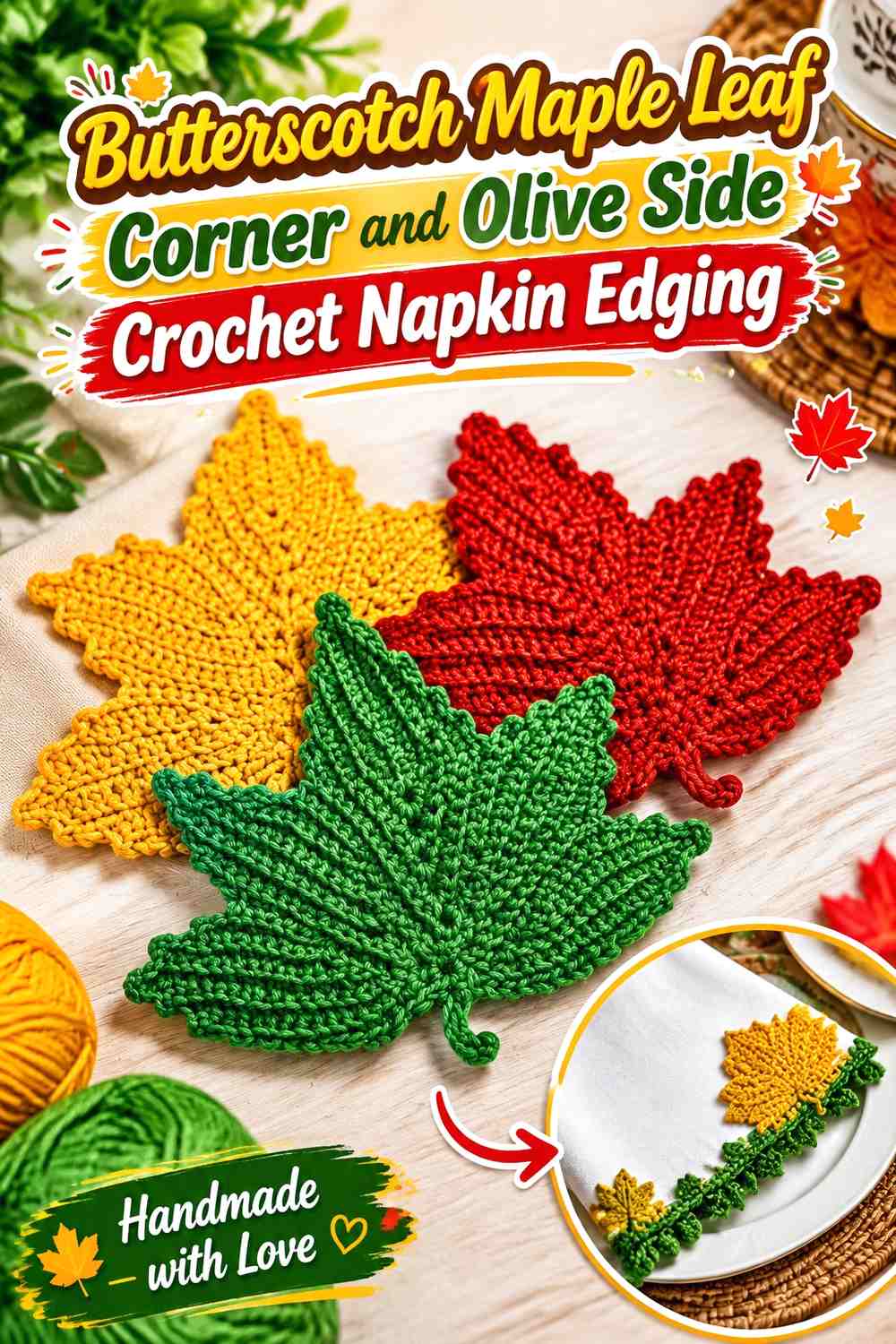
Large maple leaves can be reserved exclusively for the four corners while the straight edges use a slim olive trim. This gives the Thanksgiving motif plenty of room and reduces the amount of bulky decoration near plates and flatware.
Make Butterscotch Maple Leaves the Olive Border’s Corner Focal Points
A single warm maple shape at each corner can establish the seasonal theme without requiring many repeats. Keep the surrounding olive edge visually quieter so the corners remain distinctive.
Let Olive Continue Between Butterscotch Corner Leaves
A consistent green side border connects all four motifs and keeps the design from looking like four separate appliqués attached to one napkin.
Check the corner leaf orientation before making the full set so each motif faces consistently relative to the napkin.
Creator Credit: Crochet with me
12. Olive Leaf Cluster and Butterscotch Corner Crochet Napkin Edging
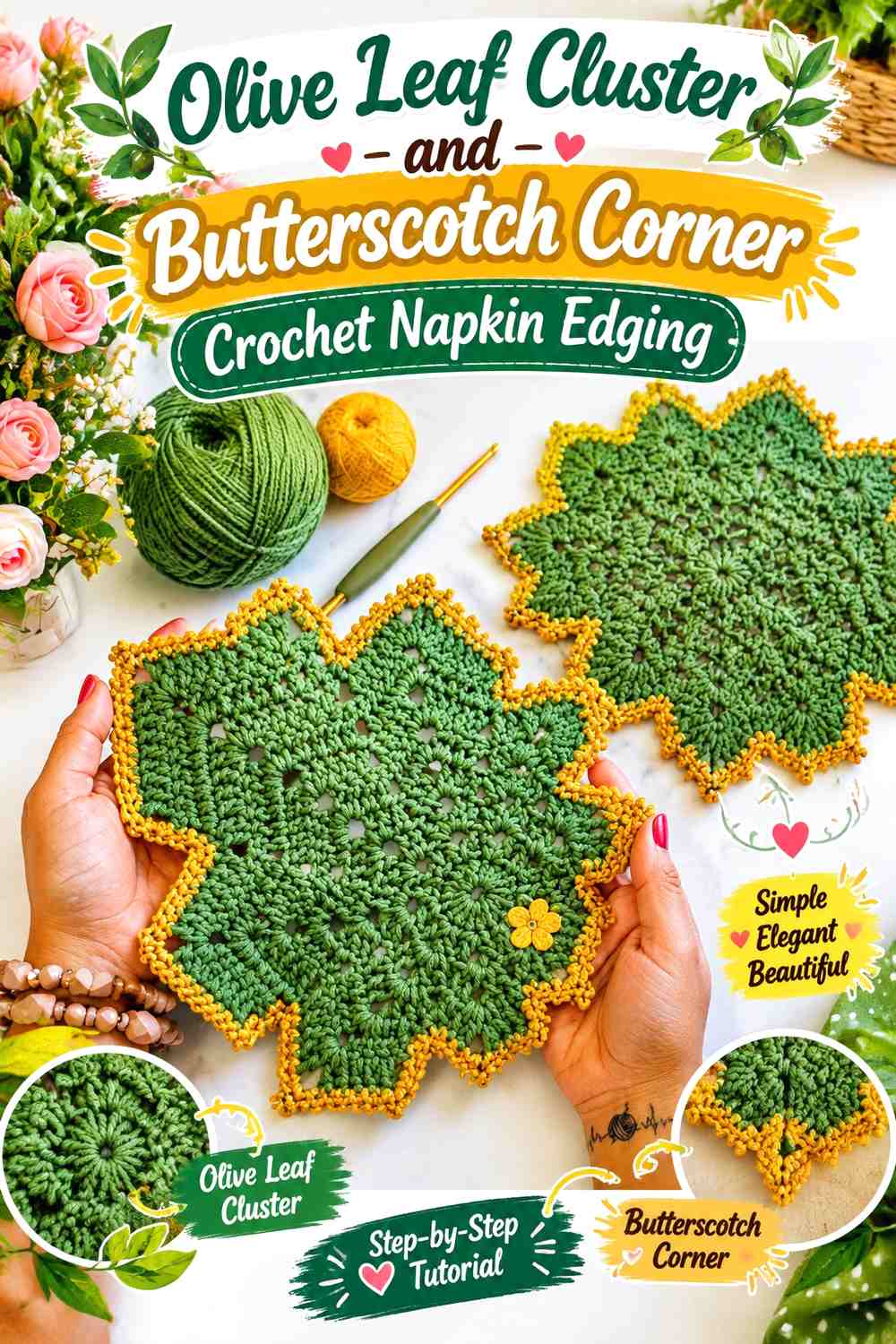
This version reverses the corner balance. Olive leaves gather near each corner, while butterscotch forms a warm central connector, corner cap, or short edging section.
Group Olive Leaves Around a Small Butterscotch Corner Accent
Keep the butterscotch section smaller than the leaves so it acts as the visual center rather than another full motif. The green cluster should remain identifiable as foliage.
Use Butterscotch to Separate Olive Leaves From the Straight Border
A warm transition at the corner can prevent a dark leaf cluster from merging into an olive side row. This is particularly useful if the straight edging also contains green.
Creator Credit: Vanessa Marcondes
13. Butterscotch Maple Leaf and Olive Point Crochet Napkin Edging
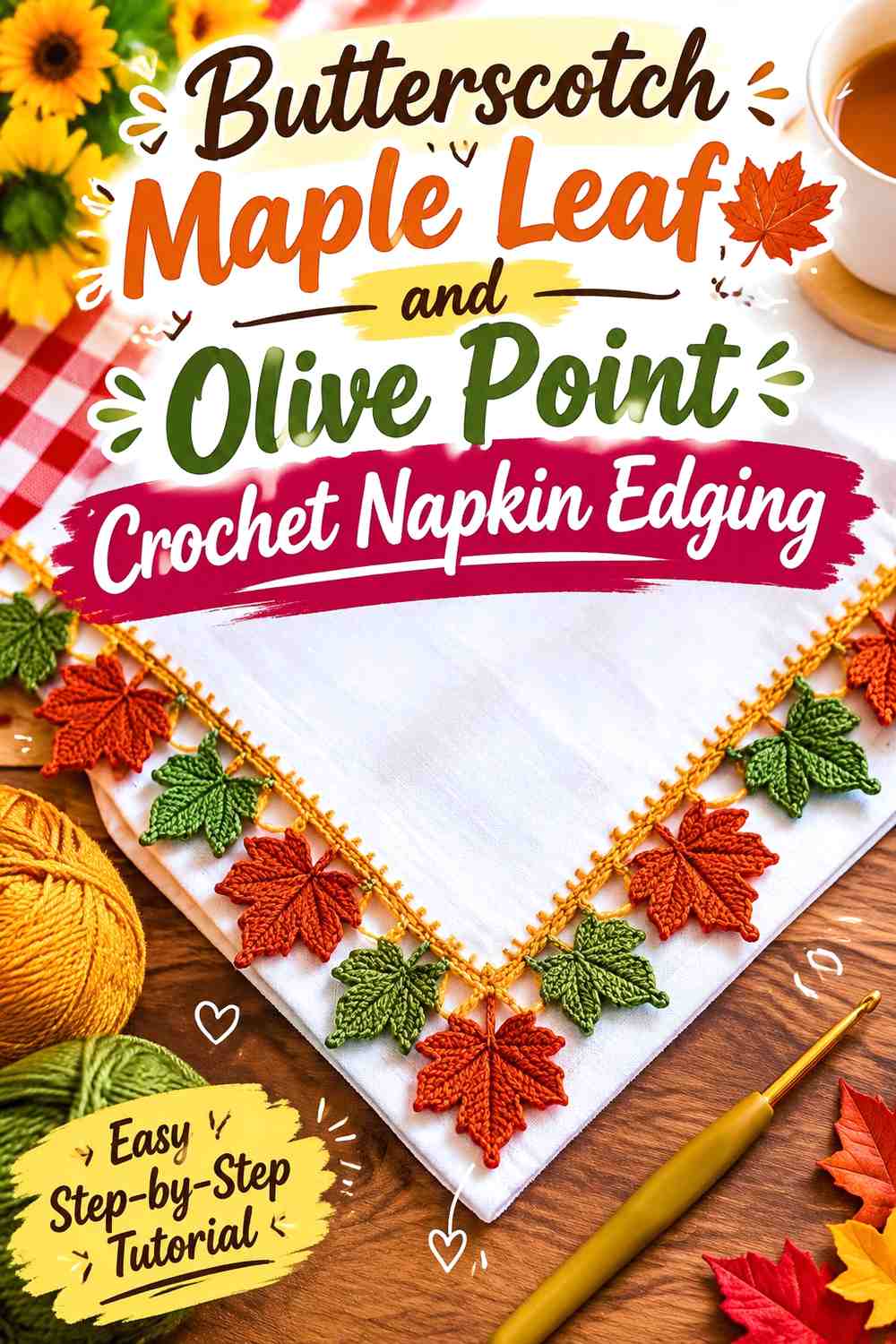
This design alternates recognizable butterscotch maple-inspired leaves with smaller olive points or leaflets. The difference in motif scale gives the border more rhythm than simply alternating two identical leaves in different colors.
Let Butterscotch Maple Leaves Stay Larger Than Olive Points
The maple motifs should remain the main Thanksgiving feature. Smaller olive details can fill the visual spaces between them without competing for equal attention.
Position Olive Points to Frame Each Butterscotch Leaf
Place the green details consistently on either side of the warm leaf or between consecutive leaves. A predictable arrangement helps the edging feel organized around the full napkin.
Creator Credit: Crafts by Archana
14. Olive Mixed-Leaf and Butterscotch Accent Crochet Thanksgiving Napkin Edging
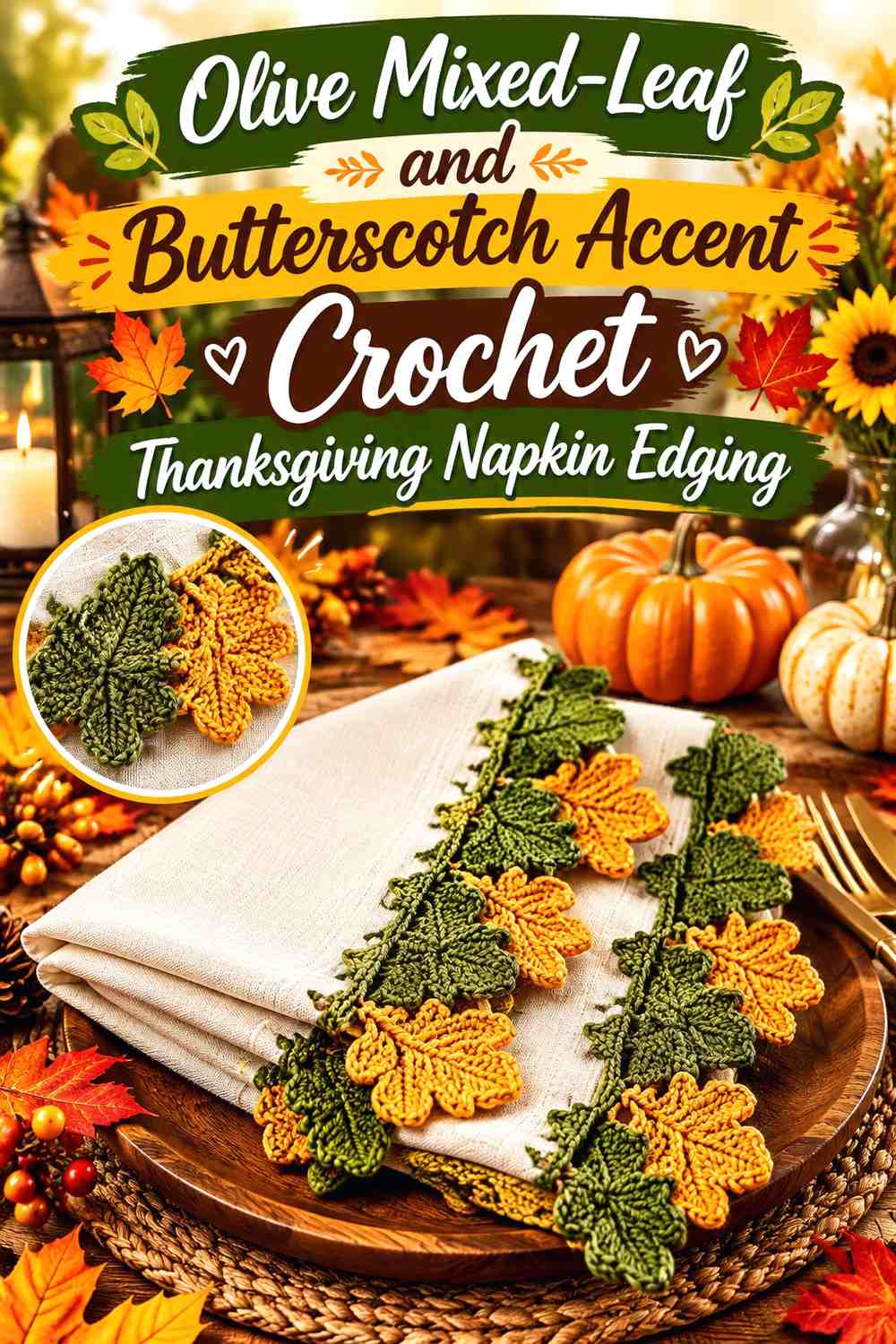
The final idea uses more than one leaf silhouette but keeps the palette controlled. Olive carries most of the mixed foliage, while butterscotch highlights selected leaves or corner motifs so the border does not become a collection of equally strong shapes and colors.
Keep Olive Dominant Across the Mixed Thanksgiving Leaves
Use the darker green to unify maple-like, simple, or elongated leaf forms. Repeating one color across different silhouettes gives the border consistency even when the shapes change.
Choose Butterscotch for Only the Most Important Olive-Leaf Accents
Reserve the warm shade for a larger corner leaf, one motif per side, or another predictable focal point. If every second leaf becomes butterscotch, the distinction between the mixed forms and the accent color becomes less useful.
Compare Olive and Butterscotch Against the Actual Napkin Fabric
A cream napkin, deep-colored napkin, and patterned cloth can each change how the two yarn colors appear. Place completed sample motifs directly against the fabric before making the full set and adjust which shade leads if either one loses too much definition.
Creator Credit: Alextitia Tuto Crochet
Which Olive and Butterscotch Thanksgiving Napkin Edging Should You Choose?
For the clearest continuous leaf border, Ideas 1, 2, 3, 6, and 10 distribute motifs along the straight sides. They work well when you want the crochet edging itself to be visible all around each napkin.
Ideas 4, 5, 12, 13, and 14 give individual autumn leaf shapes more visual importance. Larger maple- and oak-inspired motifs benefit from more spacing, so these designs are particularly useful when you prefer prominent corners or fewer repeats.
For a lighter edge, Ideas 8 and 9 keep most of the straight border relatively restrained. Ideas 7 and 11 use the two colors inside a layered border or individual leaf, while Idea 15 provides the most varied foliage arrangement without expanding beyond the olive-and-butterscotch palette.
Conclusion
Olive and butterscotch work especially well on Thanksgiving napkin edging when each shade has a defined role. Olive can provide the continuous vine, stem, inner border, or foliage color, while butterscotch highlights leaves and corners with a warmer harvest tone.
For a subtle table setting, keep the leaf motifs small and let a simple olive or butterscotch trim connect them. For a stronger Thanksgiving theme, reserve larger maple- or oak-inspired leaves for the corners where their silhouettes have enough room to remain clear.
Before making an entire napkin set, work one sample side and one corner against the actual fabric. Check motif scale, color contrast, corner spacing, and how much of the napkin remains visible. Use the linked creator tutorials for their demonstrated leaf or edging constructions and adapt the color placement independently.
Frequently Asked Questions
Should Olive or Butterscotch Be the Main Color in Thanksgiving Leaf Napkin Edging?
Olive works well as the main color when you want a continuous botanical vine or border. Butterscotch is effective as the dominant shade when you prefer a warmer harvest look. The two colors do not need equal coverage.
Where Should Butterscotch Go on an Olive Crochet Napkin Edge?
Use butterscotch for individual leaves, corner motifs, leaf centers, scallops, or occasional sections of the outer border. Concentrating it in a few recognizable places usually creates clearer contrast than scattering tiny warm details throughout the edge.
Are Olive and Butterscotch Maple Leaves Too Large for Napkins?
It depends on the finished motif and napkin dimensions. Larger leaves are often easier to use at the corners rather than repeating continuously along every side. Make one sample and compare it directly with the napkin before planning the complete border.
Can Olive and Butterscotch Leaves Alternate Around the Whole Napkin?
Yes. Keep the sequence consistent along the straight sides, but allow the corner to interrupt the repeat when necessary. Forcing an extra motif into limited corner space can make the edging bunch or look crowded.
How Can I Tell Whether Olive and Butterscotch Have Enough Contrast?
Place the yarns beside each other and against the actual napkin fabric. You can also photograph them and view the image in grayscale. If their lightness is very similar, use larger color areas or separate the shades with more background space.
Can I Add Cream or Brown to Olive and Butterscotch Thanksgiving Edging?
Yes, but keep a third color secondary if you want olive and butterscotch to remain the main palette. A small neutral connector or center detail will change the overall scheme less than adding another full border row.
Should the Largest Olive or Butterscotch Leaves Go at the Corners?
Corners are often useful locations for larger motifs because they provide a natural focal point and let the straight sides remain simpler. Make sure the leaf has enough space to lie neatly without colliding with motifs on the adjacent side.
What Should I Check Before Making a Full Set of Olive and Butterscotch Napkin Edges?
Test one straight repeat and one corner first. Check the scale against the napkin, the color contrast against the fabric, whether the edge lies neatly, and whether the motif placement will repeat consistently around the remaining napkins.