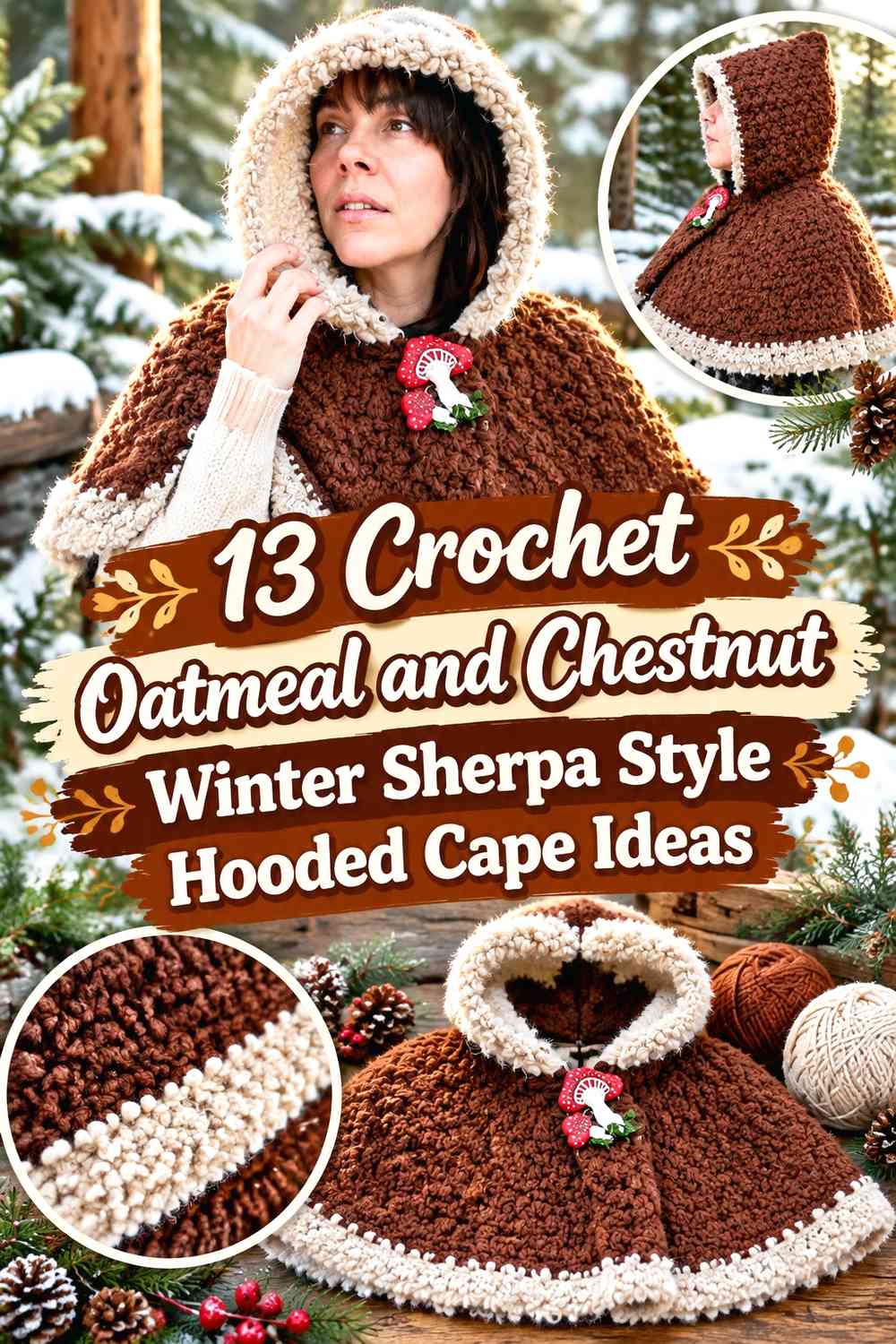

Oatmeal and chestnut give a crochet hooded cape a winter-neutral palette with enough contrast to make the hood, cape body, and finishing details read separately. Chestnut can provide the darker visual foundation across the shoulders and lower cape, while oatmeal can lighten the face opening, hood interior, hem, or front border.
For a sherpa-style direction, the important choice is not simply using a fuzzy-looking yarn. The effect can come from a broad oatmeal trim against a chestnut body, raised crochet texture, or a lighter hood edge that resembles the visual placement of shearling trim. If you do substitute a highly textured yarn, check the tutorial’s gauge and fabric requirements first because extra surface texture can affect stitch visibility, thickness, and drape.
The tutorials credited below provide hooded cape, capelet, or hooded poncho construction references. The oatmeal-and-chestnut palettes and sherpa-style placements are independent adaptations rather than claims about colors or fibers used by the creators.
Quick List
- Chestnut Crochet Hooded Capelet With Oatmeal Sherpa-Style Hood Trim
- Oatmeal Crochet Hooded Cape With Chestnut Winter Border
- Chestnut Textured Crochet Hooded Cape With Oatmeal Face Framing
- Oatmeal Yoke and Chestnut Crochet Hooded Cape
- Chestnut Panel Crochet Hooded Cape With Oatmeal Pocket and Hood Trim
- Oatmeal and Chestnut Square-Panel Crochet Hooded Cape
- Chestnut Granny-Stripe Crochet Hooded Cape With Oatmeal Hood
- Chestnut Crochet Hooded Cape With Oatmeal Front Opening
- Oatmeal Lace Crochet Hooded Cape With Chestnut Sherpa-Style Edging
- Chestnut Round-Yoke Crochet Hooded Cape With Oatmeal Hem
- Oatmeal Crochet Hooded Cape With Chestnut Hood and Ties
- Chestnut Child-Size Crochet Hooded Cape With Oatmeal Winter Trim
- Oatmeal Child-Size Crochet Hooded Cape With Chestnut Border
Use Oatmeal Where a Sherpa-Style Cape Needs Visual Softness
Oatmeal is especially effective around the face opening because it creates a lighter frame between a dark chestnut hood and the wearer’s face. The same shade can be repeated at the lower hem or front edges to make the trim feel integrated rather than confined to one isolated area.
Avoid placing oatmeal on every textured section simply because it is the lighter shade. If the cape has strong moss, cable, granny, or lace texture, one connected oatmeal trim may communicate the sherpa-style direction more clearly than numerous small color changes.
Let Chestnut Give the Hooded Cape Its Main Winter Structure
Chestnut works well across larger garment sections such as the shoulder cape, body panels, yoke, or hood exterior. Keeping those areas connected makes the cape look grounded and allows oatmeal to function as the softer highlight.
For a lighter version, reverse the arrangement and make oatmeal dominant. Chestnut can then define the hood, lower border, front opening, or ties. What matters is maintaining an obvious hierarchy rather than splitting both shades equally across every garment section.
Check Oatmeal and Chestnut Placement Before Changing Yarn Texture
Color and texture should be planned together. An oatmeal yarn with much more surface texture than the chestnut yarn will appear visually larger and may hide some stitch definition, especially around narrow borders or detailed edging.
Make a small sample if you are changing yarn type from the tutorial. Check whether the fabric still bends comfortably at the shoulders and hood, whether the stitches remain visible enough to follow the construction, and whether the oatmeal trim still looks proportional beside the chestnut body.
1. Chestnut Crochet Hooded Capelet With Oatmeal Sherpa-Style Hood Trim
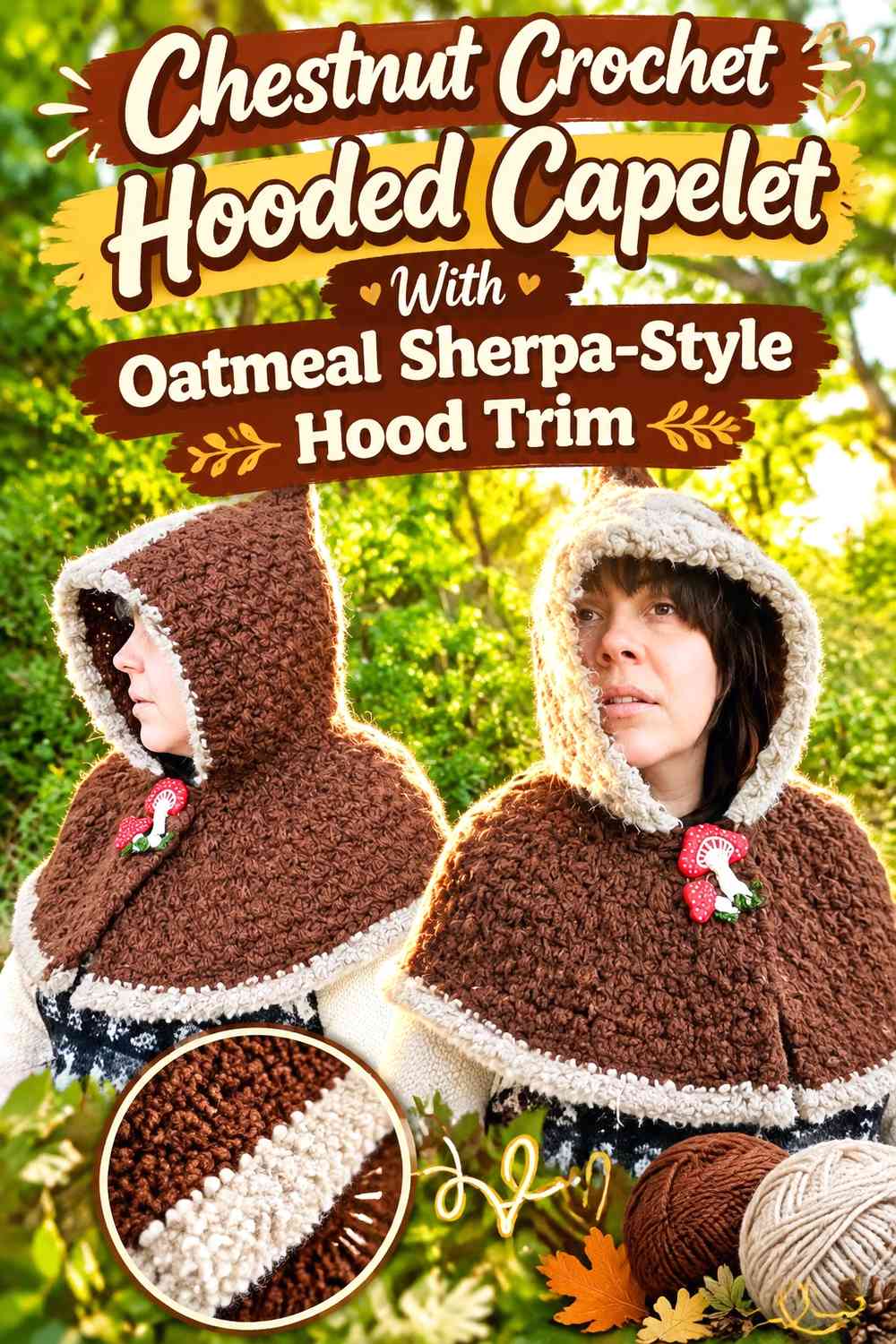
This compact direction puts chestnut across the capelet body and uses oatmeal around the hood opening and front neckline. The short shoulder coverage keeps the palette concentrated, so a relatively broad oatmeal trim can establish the sherpa-style effect without needing additional decorative colors.
Chestnut Should Carry the Main Hooded Capelet Texture
Keep the main shoulder fabric chestnut so any moss-like or raised stitch texture reads as one continuous surface. The darker neutral also separates the capelet from a lighter oatmeal border instead of allowing texture and color changes to compete in the same area.
If the cape has a front closure, keeping the surrounding body chestnut helps that closure remain visually secondary to the hood.
Oatmeal Can Frame the Chestnut Hood Like Sherpa Trim
Place oatmeal around the face opening or upper neckline where a lighter plush-looking edge has the greatest visual effect. A continuous border works better than scattered oatmeal stitches because it follows an actual garment boundary.
A narrow oatmeal repeat at the capelet hem can connect the upper trim to the lower garment without turning oatmeal into the dominant color.
Creator Credit: Lizfaerie Crafts
2. Oatmeal Crochet Hooded Cape With Chestnut Winter Border
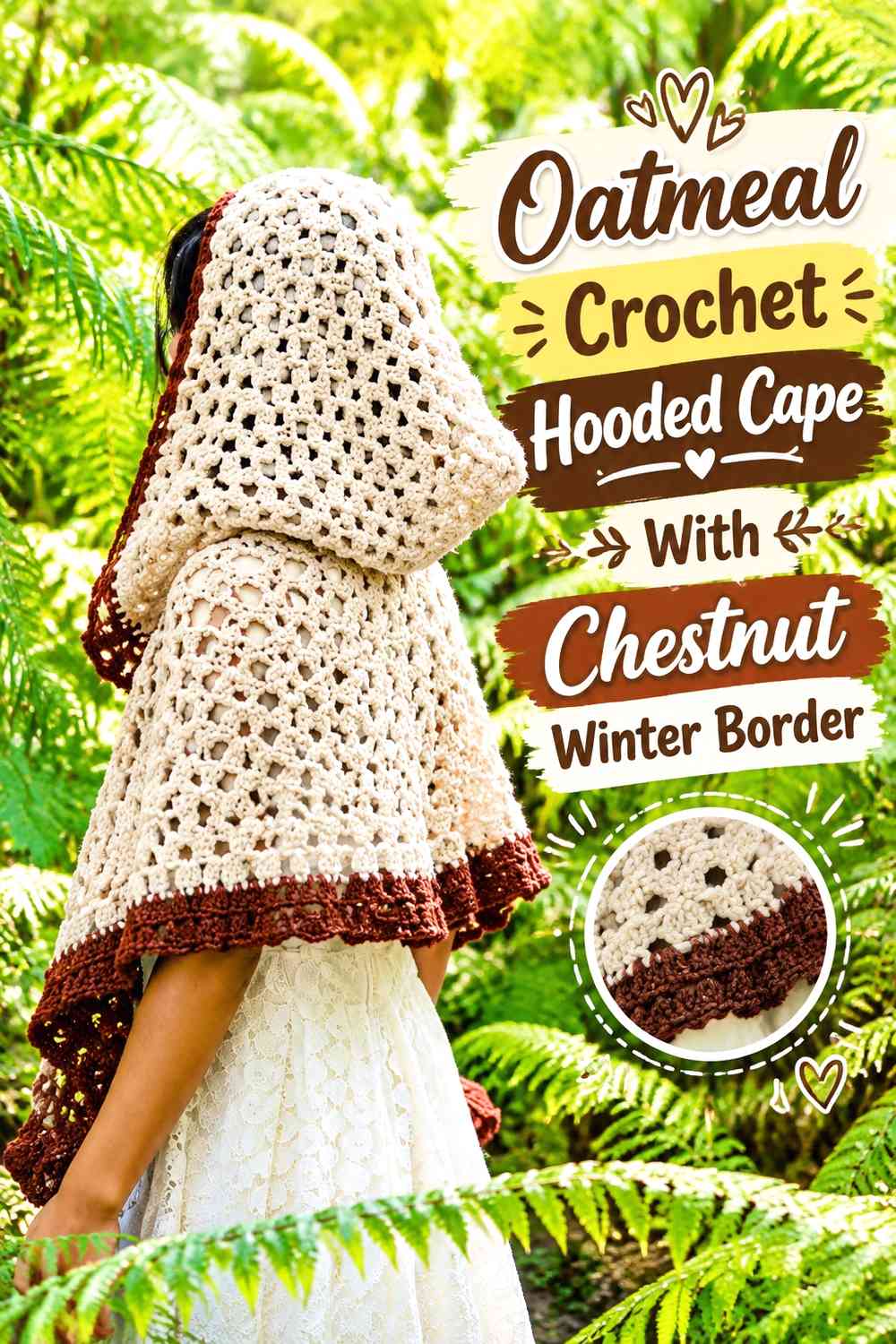
This idea reverses the palette so oatmeal covers the broad cape surface while chestnut defines the perimeter. The lighter body gives the garment a softer overall winter-neutral appearance, and the dark edge prevents the hood and lower cape from visually blending together.
Oatmeal Should Remain Broad Across the Hooded Cape Body
Give oatmeal enough uninterrupted space across the shoulders and lower cape to establish it as the dominant color. If chestnut stripes appear too frequently through the body, the design will shift from softly neutral to strongly color-blocked.
The lighter field also lets stitch openings and shadows create subtle variation without requiring another color.
Chestnut Can Outline an Oatmeal Hood and Cape Hem
Use chestnut around the hood opening, front edge, or final lower border. These locations naturally define the garment’s silhouette, so the darker shade has more impact than it would as isolated stitches in the middle of the cape.
If both hood and hem are chestnut, keep the remaining body mostly oatmeal so the framing effect stays clear.
Creator Credit: Jennyandteddy crochet
3. Chestnut Textured Crochet Hooded Cape With Oatmeal Face Framing
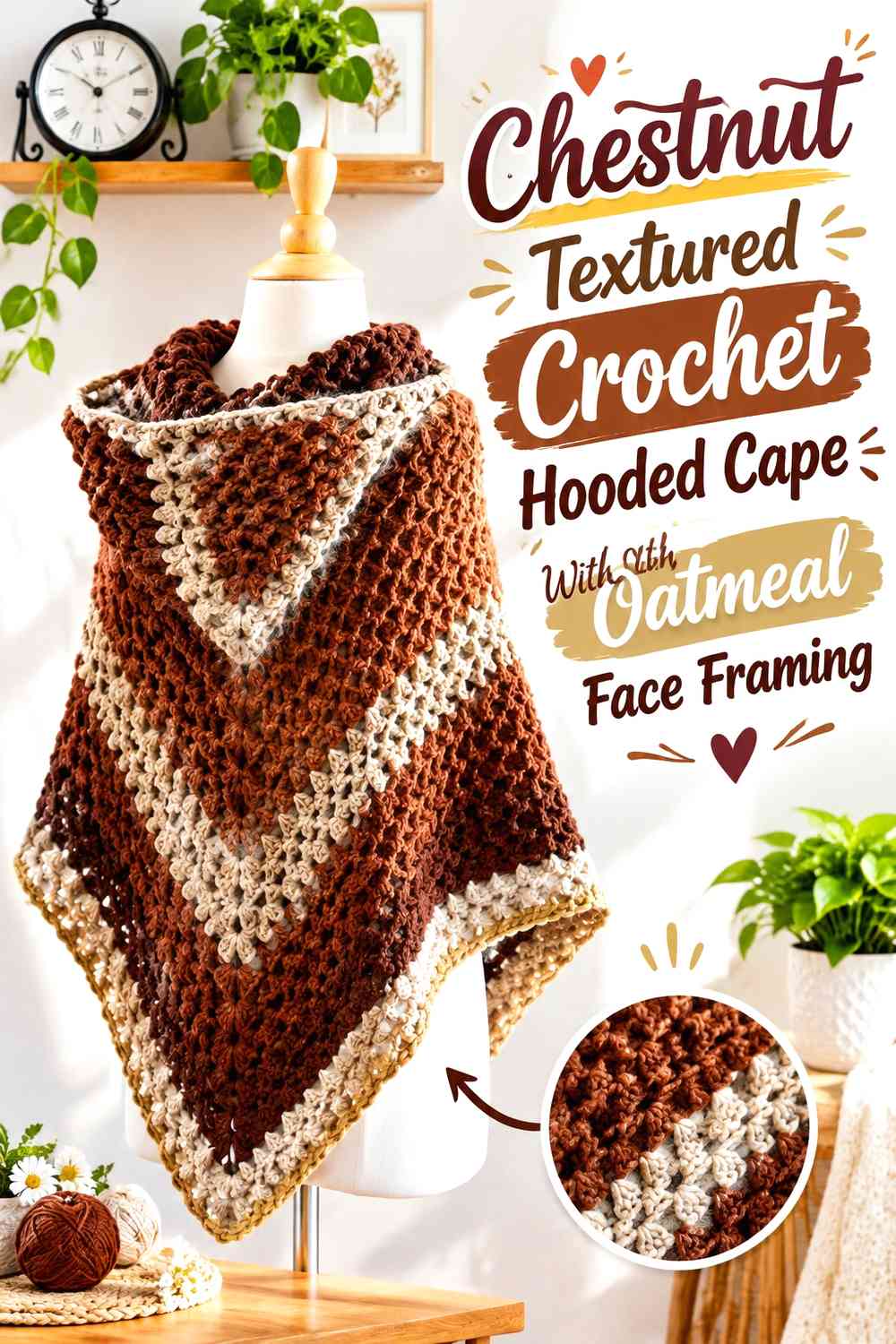
A textured cape gives chestnut enough depth to create the winter look without complicated striping. Oatmeal can stay concentrated at the hood opening, where the light-dark contrast makes the face frame easier to distinguish from the main garment.
Chestnut Lets the Crochet Hooded Cape Texture Do More of the Work
Keep raised or repeating body texture chestnut instead of switching between colors through every repeat. Shadows in the crochet surface already provide visual movement, and one dark neutral prevents the cape from becoming too busy.
This is especially useful across the upper shoulders, where texture and garment shaping are already competing for attention.
Oatmeal Gives the Chestnut Hood a Softer Outer Boundary
A broad oatmeal face edge can visually separate the dark hood from the wearer’s hair or layers underneath. It also provides the clearest place to suggest sherpa-style contrast without changing the construction itself.
If you repeat oatmeal lower on the cape, keep that second treatment narrower than the hood trim.
Creator Credit: crochetdreamz
4. Oatmeal Yoke and Chestnut Crochet Hooded Cape
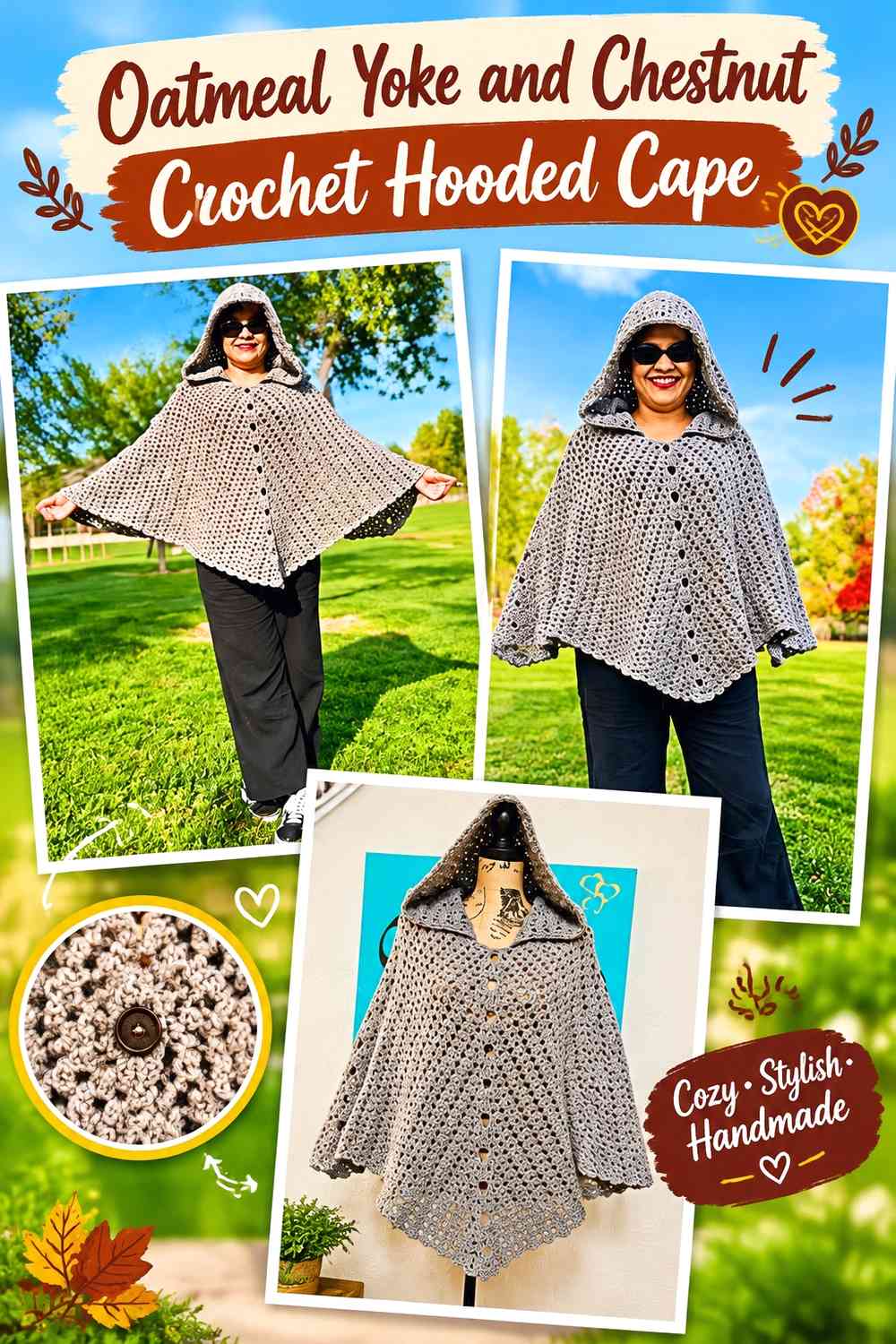
Here, oatmeal occupies the upper yoke and neckline while chestnut expands through the larger lower section. This moves the lightest color close to the face without requiring the entire hood to be oatmeal.
Oatmeal Can Lighten the Yoke Above a Chestnut Cape
Keep the oatmeal section concentrated around the upper shoulders and neckline. Because the yoke sits between the hood and main cape body, it creates a natural transition rather than an arbitrary stripe.
Check where the color change falls when the cape is worn. A transition that looks balanced while flat may sit differently once the fabric drapes over the shoulders.
Chestnut Should Expand Below the Oatmeal Winter Yoke
Use chestnut across most of the lower flare so it becomes the primary visual weight of the cape. The darker lower area grounds the light yoke and keeps oatmeal from making the whole garment look uniformly pale.
A small chestnut repeat on the hood can tie the lower body back into the upper silhouette.
Creator Credit: Crafting Shed
5. Chestnut Panel Crochet Hooded Cape With Oatmeal Pocket and Hood Trim
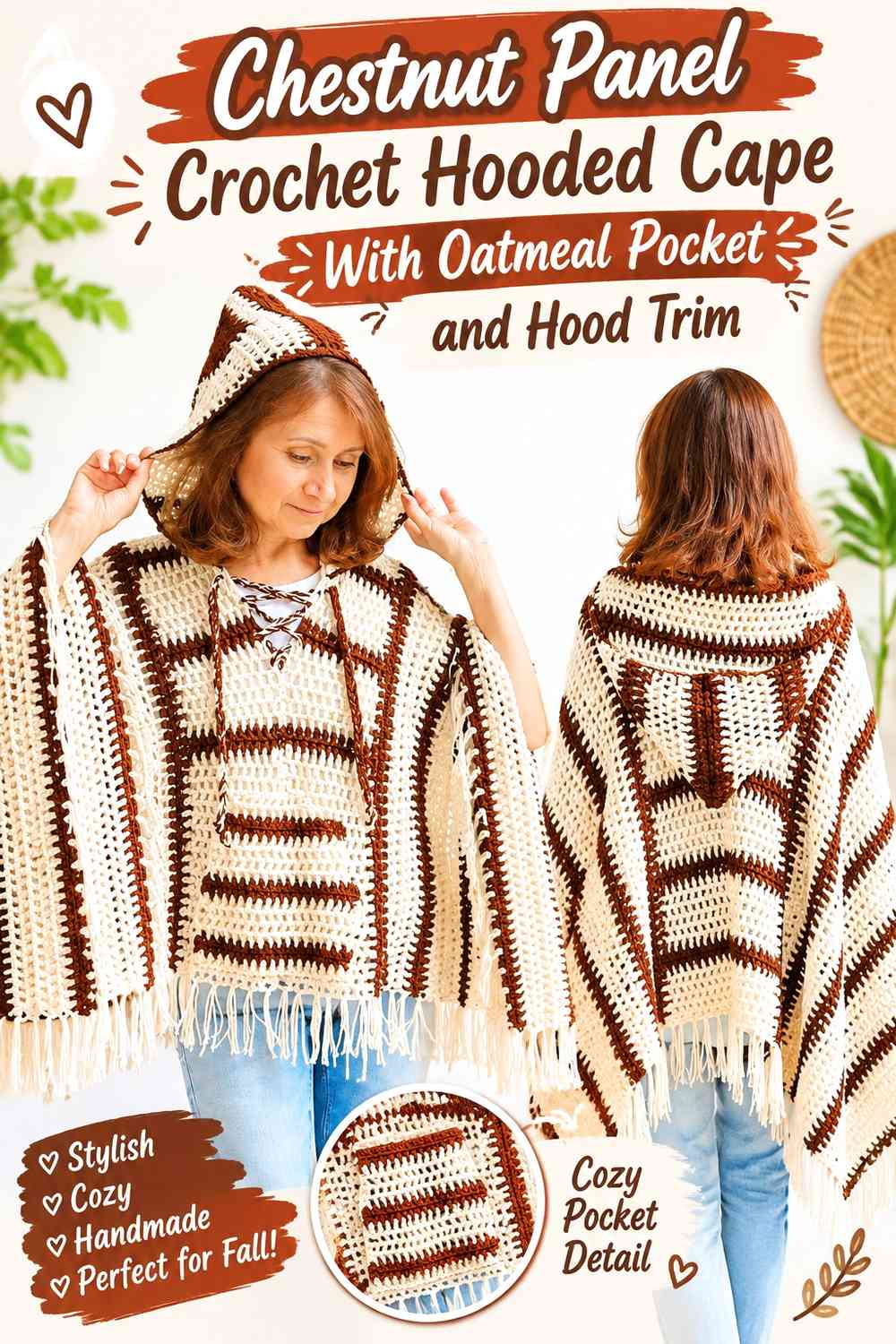
A paneled hooded design provides obvious places to separate colors. Chestnut can fill the main front and back panels, while oatmeal appears around the hood and on a front pocket or similarly contained detail.
Chestnut Panels Keep the Oatmeal Hooded Cape Visually Long
Use chestnut consistently through the largest vertical or flowing sections. Keeping those panels one color avoids visually shortening the garment with too many horizontal changes.
If the construction includes visible seams, do not automatically change color at every seam; the panel structure already supplies enough division.
Oatmeal Can Connect the Chestnut Hood Trim to a Front Pocket
Repeating oatmeal on one contained front feature creates a clear relationship between the hood and lower body. The two light areas should feel related rather than randomly placed.
Keep the pocket or accent smaller than the chestnut body so the sherpa-style trim remains a supporting feature.
Creator Credit: Crazy Cool Crochet
6. Oatmeal and Chestnut Square-Panel Crochet Hooded Cape
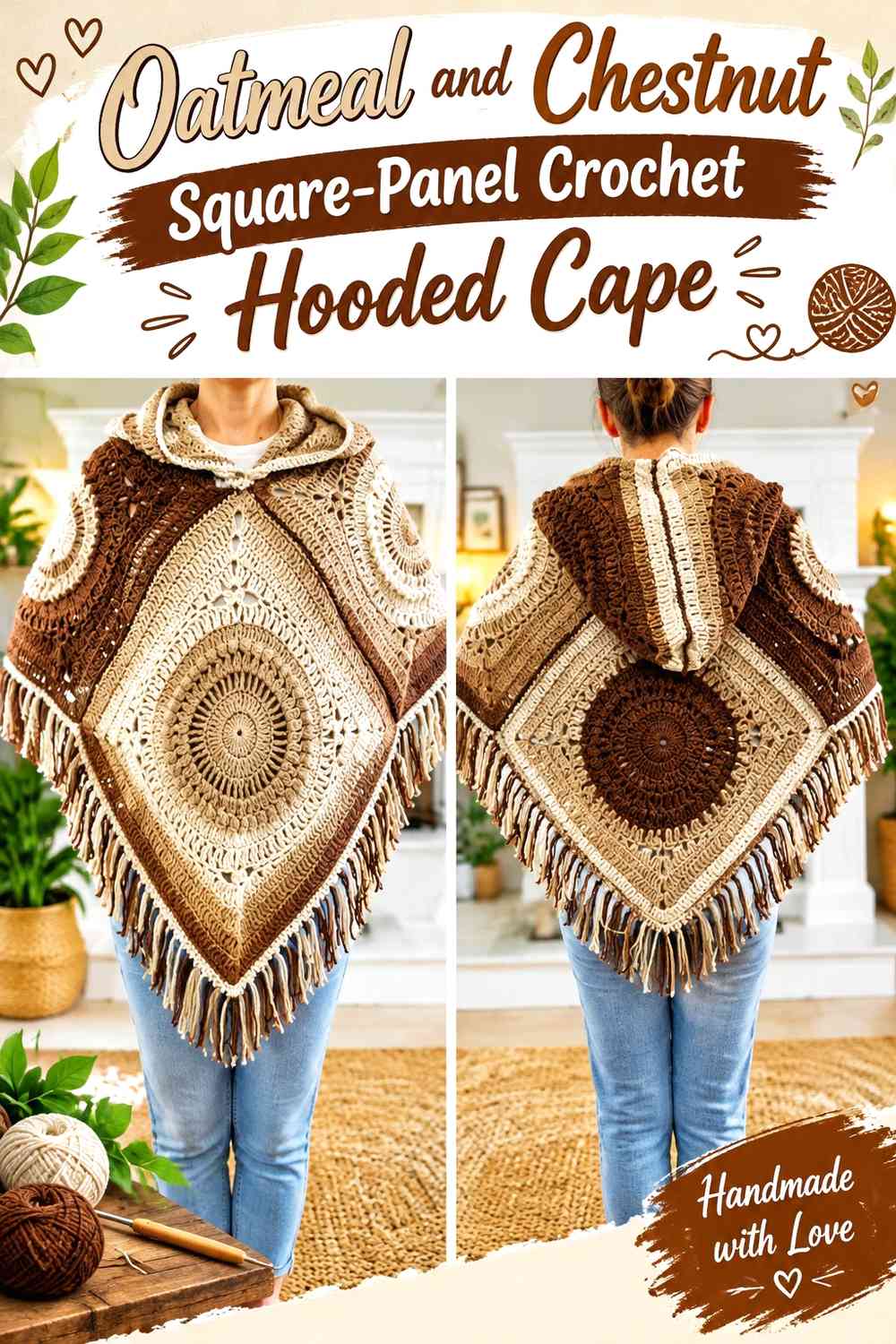
Square or block construction gives the two neutrals a more graphic direction. Instead of scattering oatmeal and chestnut randomly, assign them a predictable sequence so the finished hooded cape retains an organized winter look.
Chestnut Squares Need Consistent Oatmeal Separation
If chestnut forms the darker panels, place oatmeal between them in a repeatable arrangement. Consistent placement helps individual squares read as an intentional cape structure rather than a collection of unrelated blocks.
The hood can be kept mostly chestnut or oatmeal instead of repeating the entire square layout in a smaller area.
Oatmeal Should Not Disappear Inside a Chestnut Panel Layout
Give oatmeal full panels or substantial borders rather than reducing it to narrow joins everywhere. The light neutral needs enough surface area to balance chestnut when the cape contains several geometric sections.
Choose the hood color based on which shade needs more visual weight near the top of the garment.
Creator Credit: The Craft Nut
7. Chestnut Granny-Stripe Crochet Hooded Cape With Oatmeal Hood
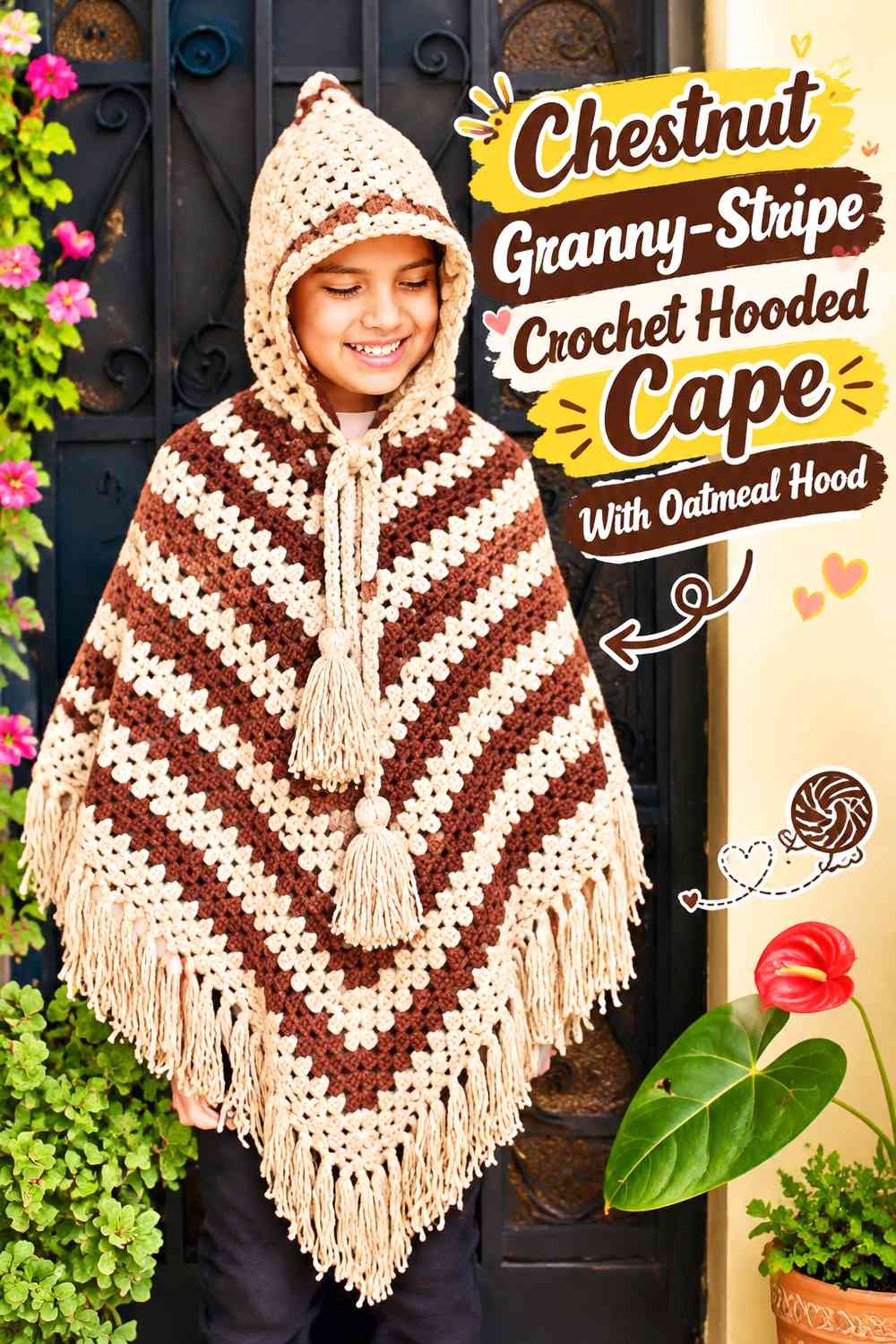
Granny-style repeats naturally create horizontal rhythm, so this version keeps most of those repeats chestnut and lets oatmeal take over the hood. Separating the colors by garment component prevents the striped construction from becoming overly busy.
Chestnut Granny Sections Should Remain Connected Below the Oatmeal Hood
Use chestnut through long runs of the cape body so the granny texture can repeat without constant interruption. The spaces between clusters already break up the surface visually.
If you want oatmeal in the lower cape, use one controlled band near the hem rather than alternating every row.
Oatmeal Can Make the Chestnut Granny Cape Hood a Distinct Feature
A mostly oatmeal hood clearly separates the face-framing section from the chestnut cape body. A narrow chestnut border around the opening can reconnect the hood to the lower garment if the contrast feels too abrupt.
This component-based color blocking also makes it easier to see where the hood ends and the shoulder section begins.
Creator Credit: Tejiendo Perú
8. Chestnut Crochet Hooded Cape With Oatmeal Front Opening
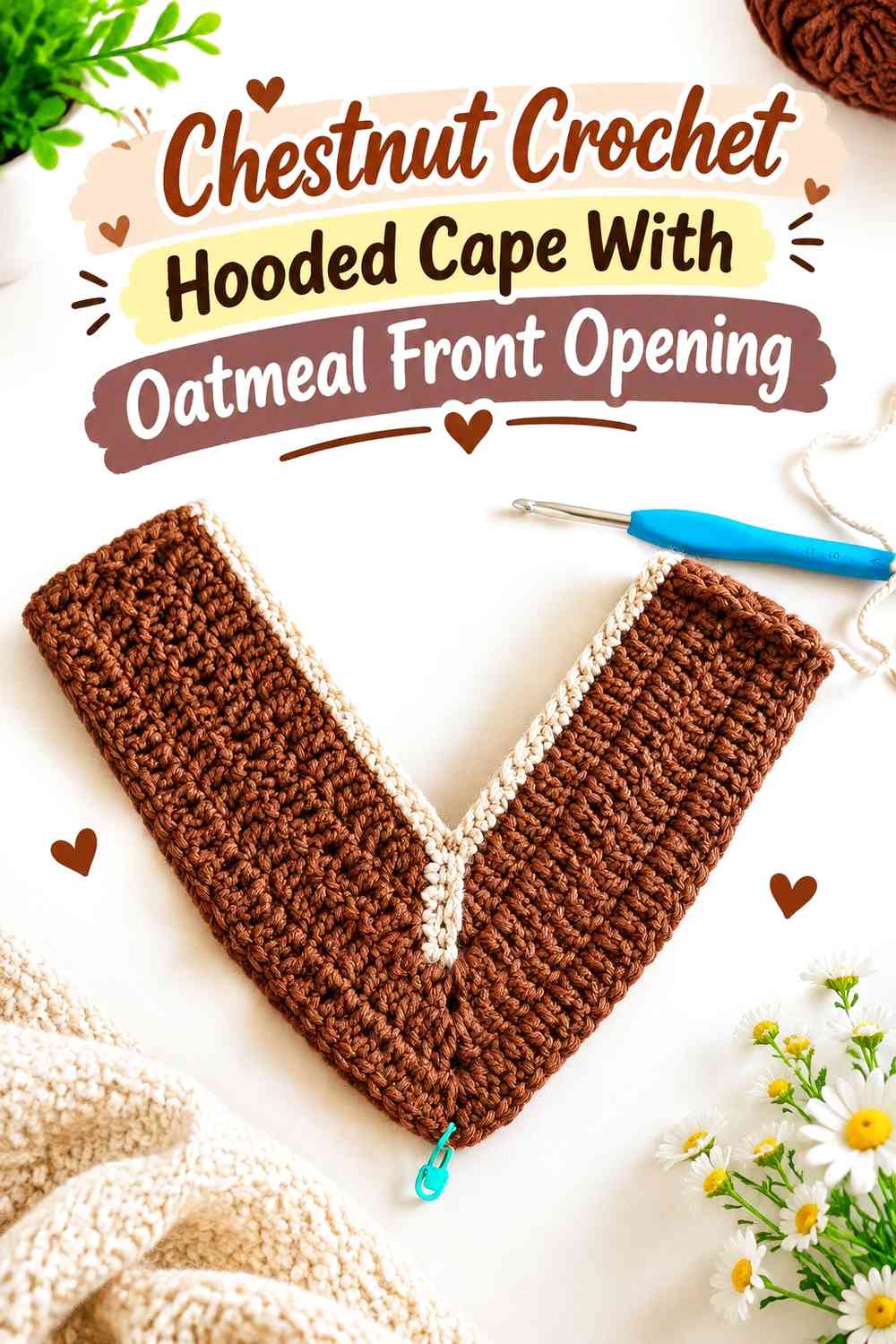
A chestnut-dominant cape can use oatmeal almost entirely along the front opening. That creates two pale vertical lines running from the hood toward the lower edge and gives the garment a strong, structured frame.
Oatmeal Can Define the Front of a Chestnut Hooded Cape
Run the lighter color continuously down the visible front edges where possible. This creates more impact than distributing the same amount of oatmeal through several unrelated stripes.
The front opening is also a practical place to repeat the hood trim because the two areas naturally meet.
Chestnut Should Stay Unbroken Across the Back of the Oatmeal-Trimmed Cape
Keep the back and broad shoulder area chestnut so the garment still reads as one dark winter layer from behind. An uninterrupted back also gives stitch texture room to remain visible.
If additional oatmeal is needed, a narrow hem can finish the lower edge without dividing the chestnut body.
Creator Credit: Frisian Knitting
9. Oatmeal Lace Crochet Hooded Cape With Chestnut Sherpa-Style Edging
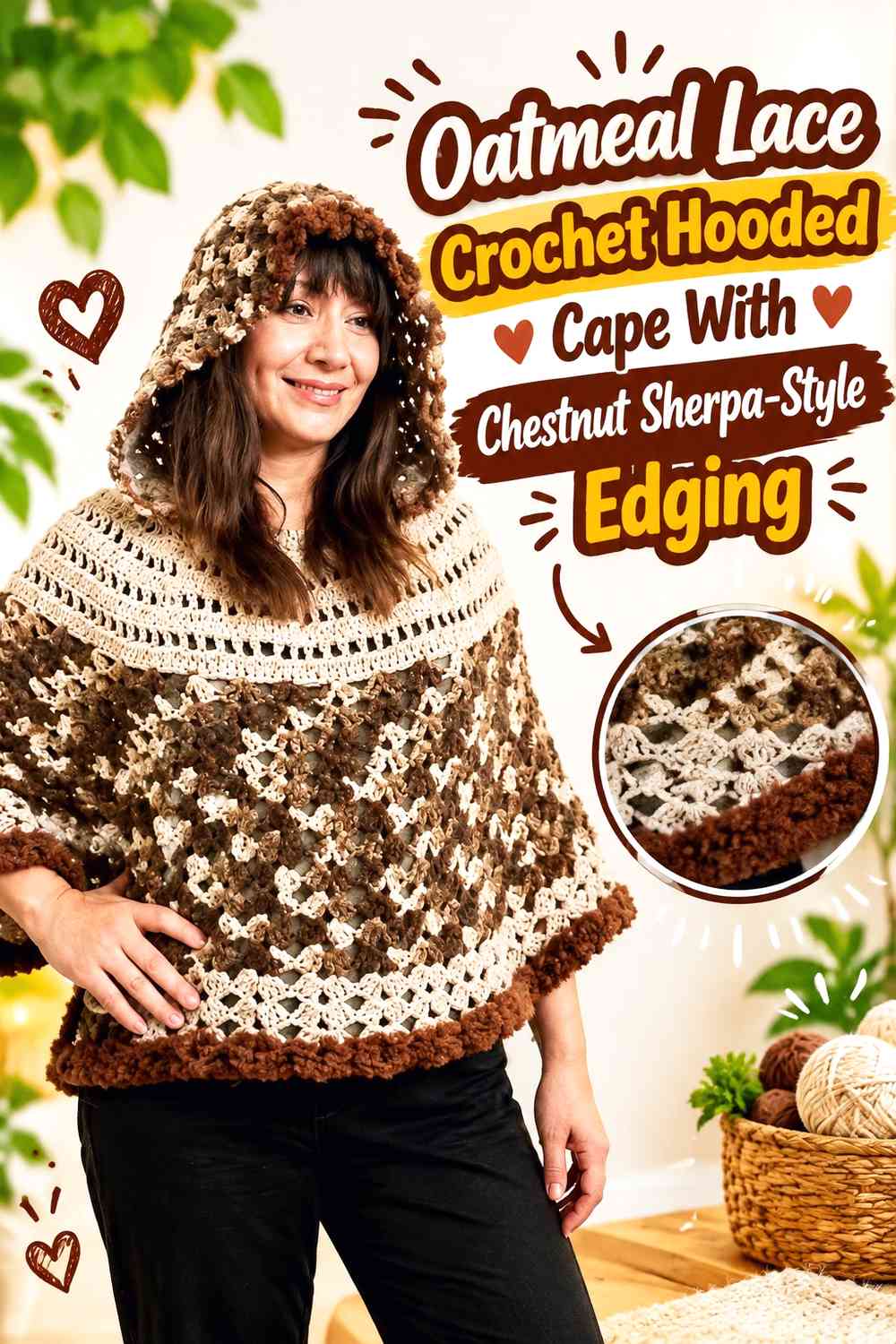
A lace-oriented cape creates a lighter visual result, so oatmeal works well across the open body while chestnut defines the outer edges. Instead of trying to make openwork look plush, reserve the sherpa-style influence for the more substantial hood and border.
Oatmeal Keeps the Crochet Lace Hooded Cape Visually Light
Use oatmeal through the broad lace sections so the holes, shells, or repeating openings remain easy to distinguish. Alternating chestnut throughout every lace repeat can make the pattern look busier and reduce the usefulness of the open space.
Let the stitch structure create most of the body decoration.
Chestnut Can Give Oatmeal Lace a Strong Winter Edge
Place chestnut around the hood, lower hem, or front border where a solid darker line can contain the openwork. This makes the garment look more grounded without filling the lace itself with dark color.
If a textured trim is added, check that it does not pull excessively on the lighter cape fabric.
Creator Credit: Mariie Crochet
10. Chestnut Round-Yoke Crochet Hooded Cape With Oatmeal Hem
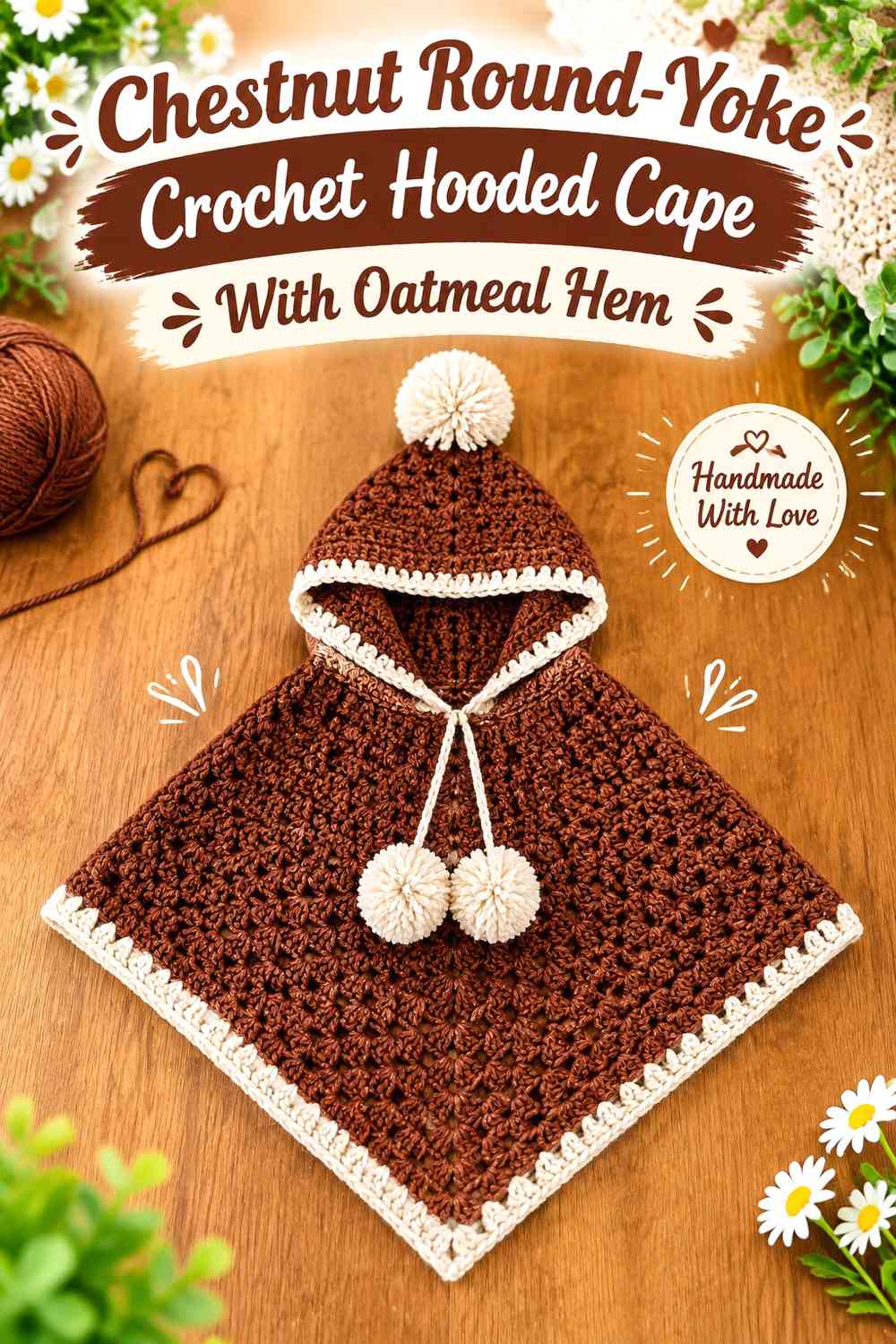
This color direction keeps chestnut from the neckline through most of the cape and introduces oatmeal only at the lower finish. The result is a dark upper silhouette with a pale band that emphasizes the flare of the hem.
Chestnut Can Keep the Round-Yoke Hooded Cape Cohesive
Use chestnut through the yoke and the majority of the body so increases and shaping remain visually connected. Frequent color changes near the shoulders can draw attention away from the way the cape expands.
A single dominant shade also works well if the hood has noticeable shaping of its own.
Oatmeal Can Emphasize the Chestnut Cape’s Lower Sweep
Use oatmeal around the final edge when you want to call attention to the width and movement of the lower cape. A continuous pale hem is more effective than occasional light stitches around the bottom.
Repeat a smaller amount of oatmeal around the hood opening if the lower trim feels disconnected from the upper garment.
Creator Credit: Crochet, tricot
11. Oatmeal Crochet Hooded Cape With Chestnut Hood and Ties
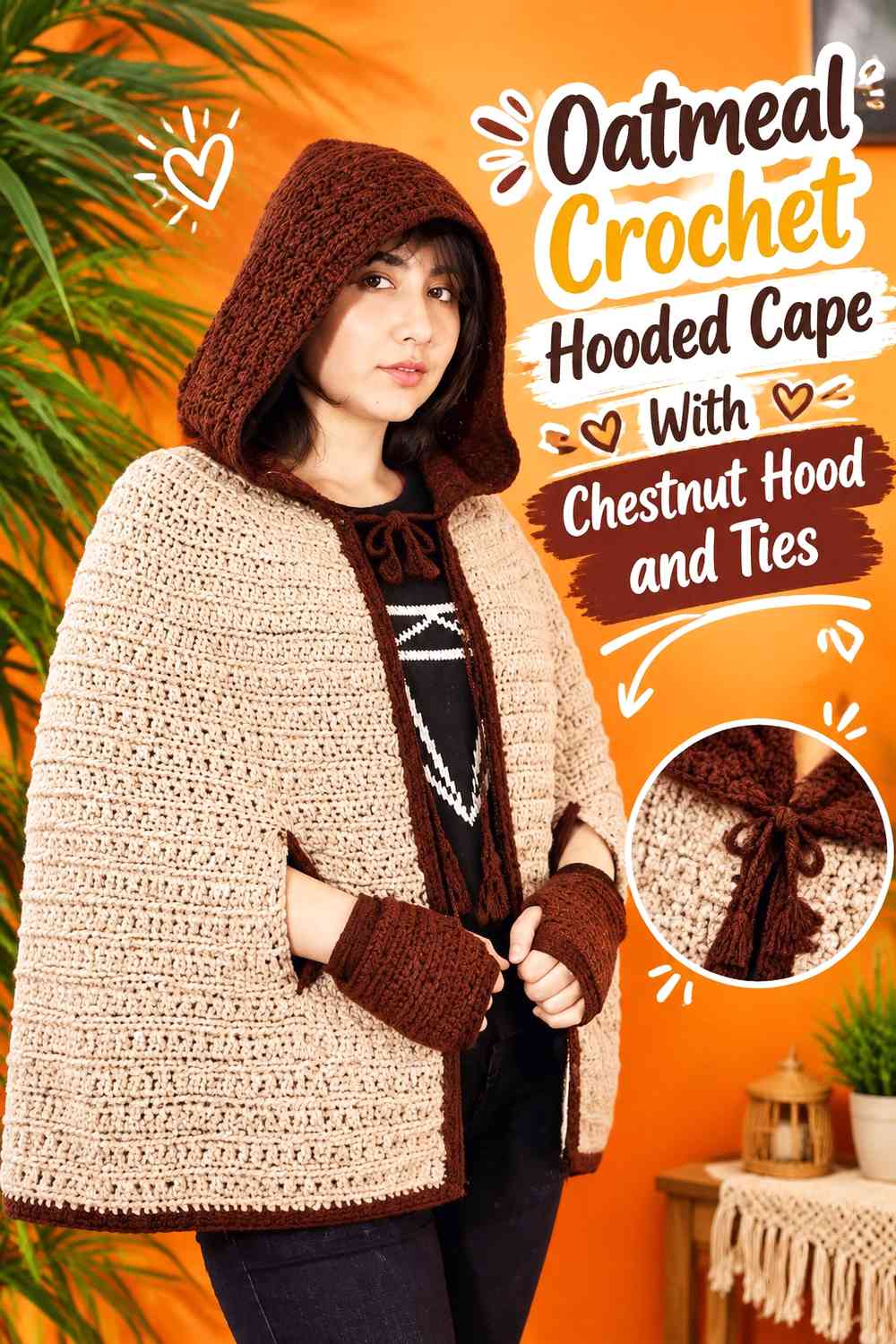
This design makes oatmeal the main cape color and shifts chestnut to the hood and front fastening details. The darker upper section gives the hood more visual weight while the pale body remains soft and neutral.
Chestnut Can Turn an Oatmeal Cape Hood Into the Main Focal Point
Use chestnut across most or all of the hood rather than limiting it to a narrow border. A full dark hood creates a clear contrast with the oatmeal shoulders and makes the color hierarchy immediately obvious.
If the hood is particularly textured, avoid adding extra oatmeal motifs inside it unless they serve a clear purpose.
Chestnut Ties Can Connect the Hood to the Oatmeal Cape Front
Repeating chestnut in ties, cords, or another small front detail helps the dark hood feel integrated with the rest of the garment. Because these elements are narrow, they can repeat the color without competing with the oatmeal body.
Keep any additional chestnut hem detail restrained if the hood already occupies a large dark area.
Creator Credit: Abuela Su
12. Chestnut Child-Size Crochet Hooded Cape With Oatmeal Winter Trim
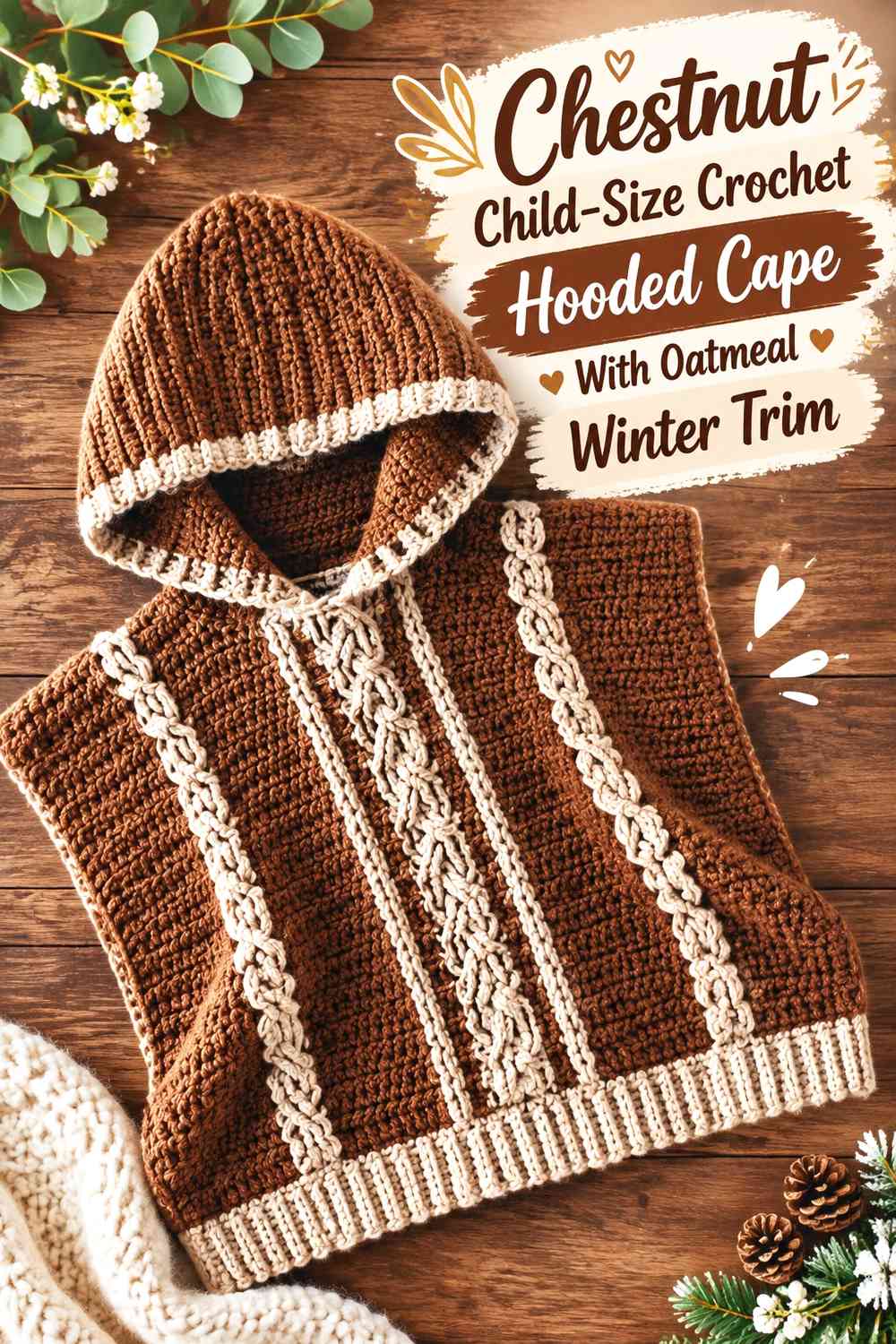
For a child-scale cape, keep the palette particularly simple because the garment has less surface area. Chestnut can cover the main body and hood exterior, while oatmeal highlights only the face edge, neckline, or lower border.
Chestnut Should Remain Broad on a Smaller Oatmeal-Trimmed Cape
Give chestnut enough uninterrupted area to keep the little cape from becoming visually chopped into many color bands. This is especially useful when the construction already includes decorative braid, cord, or other prominent details.
Large color zones are easier to read at a smaller garment scale.
Oatmeal Can Highlight the Chestnut Child-Size Hood Without Crowding It
Concentrate oatmeal around the face opening or another clear boundary. A soft-looking pale edge can establish the sherpa-style direction without covering the entire hood.
If you add oatmeal at the hem too, keep both treatments consistent so they look like part of one trim system.
Creator Credit: Kiri Kiri
13. Oatmeal Child-Size Crochet Hooded Cape With Chestnut Border
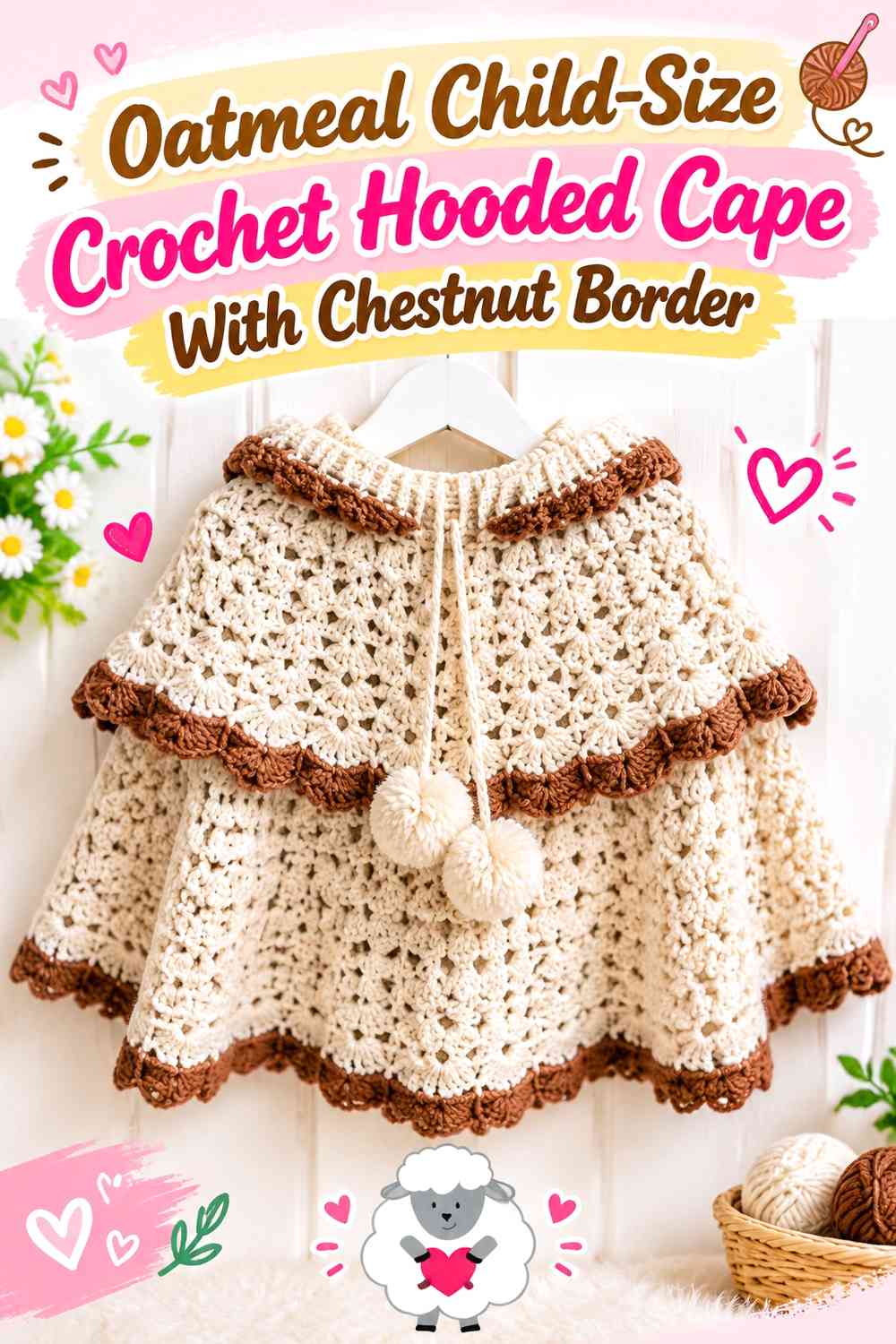
The final idea reverses the child-size palette. Oatmeal covers most of the cape and hood, while chestnut outlines the opening and lower edge. This creates the lightest design in the collection and uses dark color only where it improves definition.
Oatmeal Should Stay Dominant Across the Smaller Hooded Cape
Keep the main shoulder and hood surfaces oatmeal rather than inserting many chestnut stripes. On a compact garment, even a small dark area can attract considerable attention.
Let shaping, drape, and stitch texture provide variety through the pale field.
Chestnut Can Give the Oatmeal Hood and Hem Clear Definition
Use chestnut around the face opening and lower edge to create two strong boundaries. These areas naturally frame the garment from top and bottom and require less color than covering a full panel.
If the cape also has ties or pompom-style finishing, decide whether chestnut is needed there based on the finished balance rather than automatically repeating it on every detail.
Creator Credit: Crochet for Baby
Which Oatmeal and Chestnut Sherpa-Style Hooded Cape Direction Should You Choose?
For the strongest sherpa-style contrast, Ideas 1, 3, 8, and 12 keep chestnut across most of the cape while oatmeal traces the hood or front edges. This creates the clearest dark-body, pale-trim relationship.
Ideas 2, 9, 11, and 13 are lighter overall because oatmeal occupies more of the garment. Choose one of these when you want chestnut to provide definition rather than dominate the winter palette.
Ideas 4 and 10 divide the colors according to horizontal garment zones such as the yoke and hem. Ideas 5 and 6 use pockets, panels, or blocks to create more structural color separation, while Idea 7 lets the hood and granny-textured body carry different colors.
If your oatmeal and chestnut yarns are similar in lightness, use component-based color blocking. An oatmeal hood against a chestnut cape will remain clearer than small oatmeal details worked directly through a similarly valued chestnut stitch pattern.
Conclusion
Oatmeal and chestnut suit a winter crochet hooded cape because the two neutrals can separate the garment into clear body, hood, border, and trim areas without requiring a larger palette.
Choose a chestnut body with oatmeal hood edging when you want the clearest sherpa-style impression. Reverse the combination for a lighter cape, or divide the colors through the yoke, panels, hood, ties, and hem when the construction gives those areas distinct roles.
Texture should support the color plan rather than compete with it. Moss-like surfaces, granny repeats, lace, and other pronounced crochet textures often benefit from larger uninterrupted color fields. If you use a more heavily textured yarn to strengthen the sherpa-style appearance, make a sample and confirm that the resulting fabric still suits the tutorial’s fit, drape, hood shape, and finishing method.
Use the credited tutorials for their exact construction instructions, and treat the oatmeal-and-chestnut placements here as independent color adaptations.
Frequently Asked Questions
How can I give an oatmeal and chestnut crochet hooded cape a sherpa-style look?
Use oatmeal where shearling-style trim would visually make sense, such as around the hood opening, front edges, neckline, or hem, and let chestnut cover a broader garment area. Crochet texture can add softness and depth without requiring a particular commercial yarn or fiber.
Should oatmeal or chestnut dominate a winter crochet hooded cape?
Chestnut creates a darker, more grounded cape with oatmeal acting as pale trim. Oatmeal creates a lighter overall garment with chestnut providing structure around the hood, hem, yoke, or front opening. Choose the hierarchy before distributing smaller accents.
Where should oatmeal go on a chestnut crochet hooded cape?
The hood opening is one of the most useful locations because it frames the face and creates an obvious light-dark boundary. Oatmeal can also be repeated on the front opening, cuffs if the design has them, or the lower cape edge without taking over the chestnut body.
How can I keep oatmeal and chestnut from looking too similar?
Compare the actual yarns for light-dark value rather than relying on the color names. If the shades blend together in grayscale, use them on separate garment components or increase the size of the contrasting border instead of relying on very small color details.
Can I use fuzzy yarn only for the oatmeal sherpa-style trim?
Potentially, but treat it as a yarn substitution rather than a purely decorative change. Highly textured yarn can alter thickness, stitch visibility, and the way an edge sits. Make a sample and follow the original tutorial’s construction and sizing requirements rather than assuming a different yarn will behave identically.
Should the hood match the oatmeal or chestnut cape body?
Either approach can work. A matching chestnut hood creates one continuous dark silhouette, while an oatmeal hood creates stronger contrast near the face. On an oatmeal cape, a chestnut hood can become the main visual anchor. Choose based on whether you want the hood to blend with the body or stand apart.
How can I keep a two-color sherpa-style crochet cape from looking too busy?
Assign colors to complete structural areas. For example, use chestnut for the cape body and oatmeal for the hood trim, or oatmeal for the body and chestnut for the hood and hem. Avoid changing color through every textured stitch repeat unless striping or colorwork is intentionally part of the design.