Chestnut and sage create a natural fall palette for a crochet woodland owl doorstop without depending on brighter orange or pumpkin shades. Chestnut can give the owl a warm, grounded body, while sage can separate wings, belly panels, eye surrounds, and leaf details without looking overly bright against autumn decor.
A doorstop also needs a different color plan from a small owl ornament. The lower body and base occupy substantial visual space, and the owl is usually seen near the floor rather than at eye level. That makes broad color blocks more useful than tiny accents. A sage belly against a chestnut body can remain visible from a distance, while very small green feather marks may disappear.
The tutorials credited below include exact owl doorstops, weighted woodland owls, full owl amigurumi, and a few owl motifs that can support specific facial or decorative adaptations. Use the credited tutorial for its actual construction and apply the chestnut-and-sage palette independently. For a functional doorstop, follow an appropriate full doorstop or weighted-owl construction for the base and weighting rather than assuming a small plush or appliqué can simply be enlarged.
Quick List
- Chestnut Body and Sage Belly Crochet Woodland Owl Doorstop
- Sage Body and Chestnut Wings Crochet Woodland Owl Doorstop
- Chestnut Weighted Owl With Sage Wing Panels Crochet Fall Doorstop
- Chestnut Owl With Sage Eye Mask Crochet Woodland Doorstop
- Sage Owl With Chestnut Face and Wings Crochet Fall Doorstop
- Chestnut Round Owl With Sage Leaf Belly Crochet Woodland Doorstop
- Sage Owl With Chestnut Ear Tufts Crochet Fall Doorstop
- Chestnut Barrel Owl With Sage Scalloped Belly Crochet Doorstop
- Sage Woodland Owl With Chestnut Lower Base Crochet Doorstop
- Chestnut Owl With Sage Layered Eyes Crochet Fall Doorstop
- Sage Owl With Chestnut Feather Appliqués Crochet Woodland Doorstop
- Chestnut Owl With Sage Side Wings Crochet Fall Doorstop
- Sage Basket-Shape Owl With Chestnut Face Crochet Woodland Doorstop
- Chestnut and Sage Two-Tone Crochet Woodland Owl Doorstop
Let Chestnut Carry Enough of the Owl to Ground the Doorstop
Chestnut is especially useful across the broad body, lower half, or base because those sections visually connect the owl with the floor. A large brown field can also make the doorstop feel more woodland-oriented without requiring several additional earth tones.
If chestnut covers the body, give sage one clearly defined secondary area such as the belly or wings. Scattering small sage stitches across the entire owl can weaken the strong body-and-accent relationship.
Use Sage Where the Chestnut Owl Needs More Definition
Sage works well around facial discs, wings, belly panels, and leaf-inspired details because these features need separation from a darker chestnut body. On an owl with several layered facial elements, keeping the largest face panel sage can make the eyes easier to distinguish from the body.
The reverse also works. A sage owl can use chestnut around the wings, ear points, and base to create a darker outer framework. What matters is giving each color a consistent job.
Plan Chestnut and Sage Around a Stable Doorstop Base
The bottom of the owl needs to look visually substantial as well as suit the construction of the doorstop tutorial you choose. A chestnut lower section can make a sage-heavy owl appear more grounded, while a sage base can soften a predominantly chestnut body.
Do not improvise an exposed loose-weight filling simply for the sake of adapting a small owl pattern. For a functional doorstop, use a suitable construction that contains its weighting securely, and keep loose filling inaccessible to children and pets.
1. Chestnut Body and Sage Belly Crochet Woodland Owl Doorstop

This is the clearest chestnut-led palette. Use chestnut across most of the owl’s body and let sage form a broad belly panel. The division works particularly well on a doorstop because both color areas remain large enough to be visible from across a room. A small chestnut repeat inside the sage belly can connect the two zones without turning the front into stripes.
Chestnut Should Dominate the Main Woodland Owl Body
Keep chestnut connected from the outer head area down through most of the sides. That continuous dark field gives the owl a strong silhouette and allows the body shape to remain obvious even when the doorstop sits against furniture or a baseboard.
Avoid interrupting the outer body with many narrow sage rows unless striping is deliberately part of the design.
Sage Can Give the Chestnut Owl Belly a Clear Front Panel
Use sage in one substantial central area instead of scattering it across individual stitches. The belly then creates a recognizable front and can make the owl’s face-and-body orientation easier to read.
If the belly includes texture, keeping it sage throughout lets that texture create variation without additional color changes.
Chestnut Can Reappear Around the Sage Doorstop Base
A chestnut lower edge can visually reconnect the central belly with the darker body. Keep it broad enough to look intentional but not so high that the sage panel becomes a small patch.
Creator Credit: Crochê de A a Z
2. Sage Body and Chestnut Wings Crochet Woodland Owl Doorstop
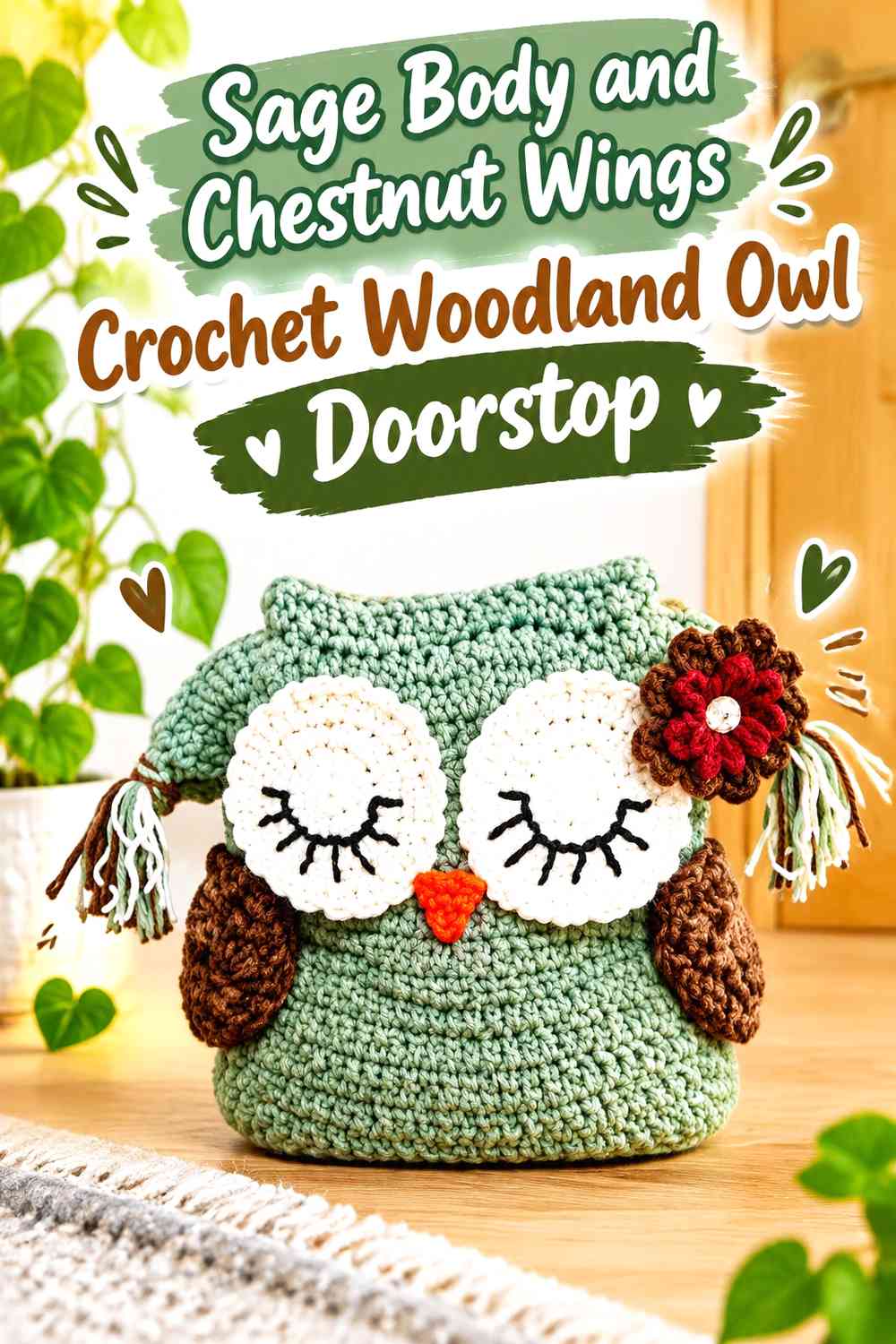
Reversing the palette creates a lighter woodland owl. Sage can cover the body while chestnut forms two strong side wings and selected facial details. The darker wings visually narrow the broad green body and give the owl a more defined outer structure.
Sage Should Stay Broad Between the Chestnut Owl Wings
Keep a substantial sage section visible through the middle of the owl. If the chestnut wings extend too far across the front, the sage body may look like a narrow belly rather than the dominant color.
Check the owl from the front after the wings are positioned because their apparent width changes once they sit against a rounded body.
Chestnut Wings Can Frame the Sage Woodland Owl
Use the same chestnut treatment on both sides so the wings act like matching visual brackets. The dark shapes can also connect with chestnut ear tufts or a small lower base.
Avoid putting another large chestnut panel directly in the center unless you intentionally want the palette to become chestnut-dominant.
Chestnut Facial Details Should Stay Smaller Than the Sage Owl Body
A chestnut beak area or outer eye ring can connect the wings to the face, but keep those accents compact. The green body should remain the first large color field the viewer notices.
Creator Credit: Crochetinlove Sicily Maria Bonfardeci
3. Chestnut Weighted Owl With Sage Wing Panels Crochet Fall Doorstop
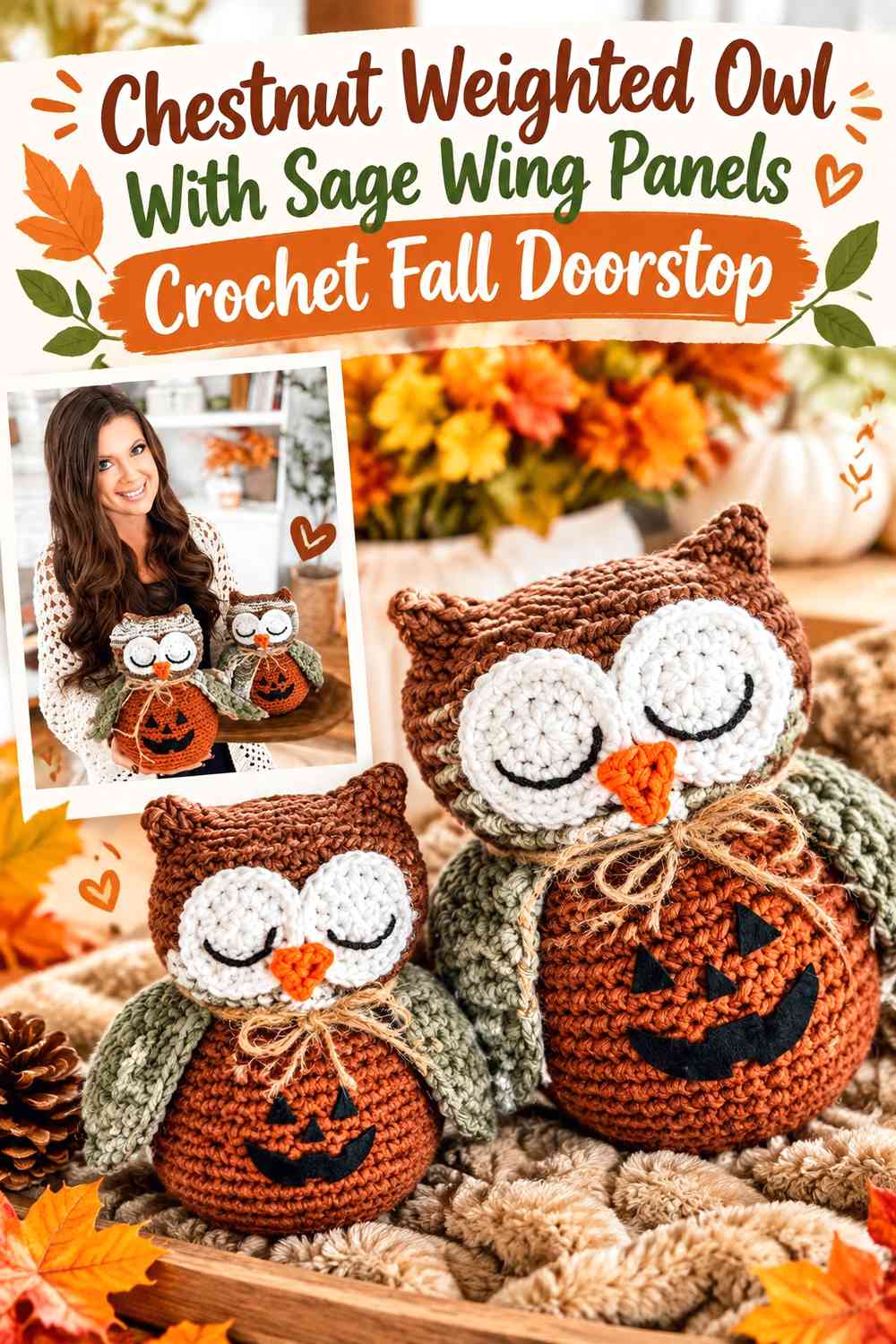
This color plan suits a broad, stable woodland owl form particularly well. Chestnut can cover the main weighted body while sage forms clearly separated side wings. Because the lower body has more visual mass than a small amigurumi owl, keep the wing color substantial enough to balance it.
Chestnut Can Give the Weighted Owl a Strong Fall Foundation
Let chestnut cover most of the lower body and central torso. The darker warm neutral visually reinforces the owl’s low, stable shape and prevents the weighted base from appearing like a separate attachment.
Keep the transition into the upper head area simple so the body remains one coherent form.
Sage Wing Panels Should Be Large Enough Against the Chestnut Body
Give each wing a recognizable shape rather than reducing sage to a narrow side stripe. From normal room distance, a larger green panel will remain more visible against the brown body.
If the wing has pronounced crochet texture, use one sage shade throughout and let the stitches provide the variation.
Sage and Chestnut Should Stay Balanced Above the Doorstop Base
When the lower chestnut area is particularly broad, repeat sage once near the face or ear area. A small upper repeat can prevent all of the green from sitting at one horizontal level.
Creator Credit: MJ’s Off The Hook Designs
4. Chestnut Owl With Sage Eye Mask Crochet Woodland Doorstop

Instead of putting sage on the belly, concentrate it around the face. A connected sage eye mask creates a strong expression against a chestnut body and keeps the rest of the owl relatively simple.
Sage Can Separate the Eyes From a Chestnut Owl Face
Use sage across the full eye-mask or facial-disc area so both eyes sit within one clear lightened zone. Two tiny isolated green circles may look disconnected on a larger doorstop.
The mask should remain visibly smaller than the chestnut head so the body color still frames the face.
Chestnut Should Surround the Sage Eye Mask Completely
Keep chestnut visible above, below, and beside the sage section wherever the owl construction allows. That outer frame helps the mask remain distinct from the body and makes the ear points easier to read.
If the owl has separate wings, matching them to chestnut maintains a simple outer silhouette.
Sage Can Repeat Once Below the Chestnut Owl Face
A small sage belly detail or narrow feather band can connect the face color to the body. Avoid duplicating the entire face-mask width lower down, which could create two competing focal panels.
Creator Credit: Maia Maia crochet
5. Sage Owl With Chestnut Face and Wings Crochet Fall Doorstop
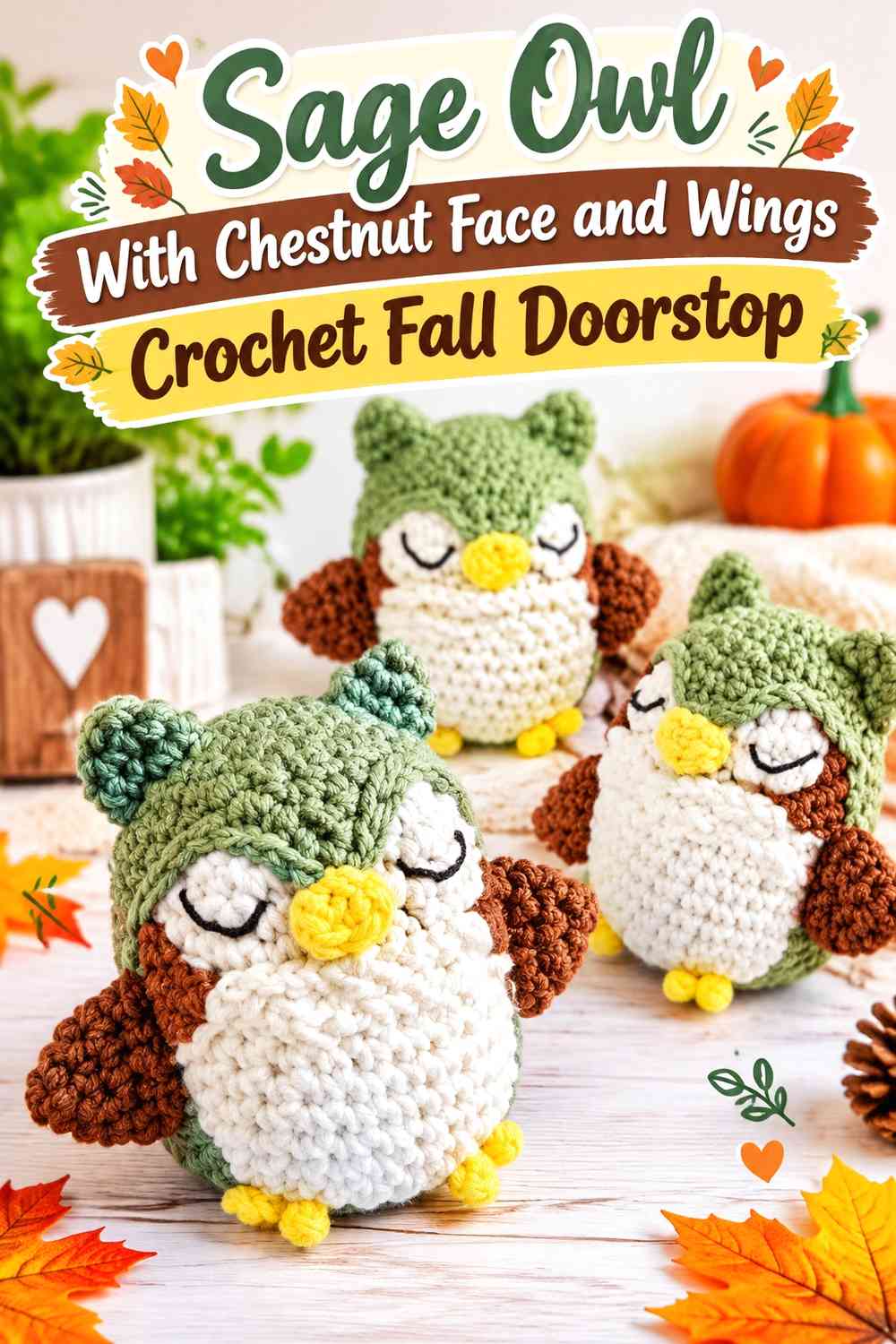
Here, sage becomes the broad background while chestnut concentrates around the owl’s most recognizable features. Chestnut wings and a warm face panel create enough structure to prevent the green body from looking like one uninterrupted oval.
Chestnut Can Give a Sage Owl a Warmer Woodland Face
Use chestnut around the main facial area or outer eye shapes while leaving sage visible around the top and sides. This moves the strongest warm color toward the viewer’s first point of attention.
Keep eye details themselves simple so the brown panel does not become crowded with several additional colors.
Sage Should Connect the Chestnut Face to the Doorstop Body
Leave an obvious sage field between the face and lower chestnut elements. This preserves sage as the dominant color and makes the face appear intentionally placed rather than part of a large brown front panel.
Chestnut Wings Should Echo the Face Without Hiding the Sage Body
Position the wings so a central sage belly remains visible. Using the same chestnut on the face and wings ties the features together while the green center prevents them from visually merging.
Creator Credit: Ami Amour
6. Chestnut Round Owl With Sage Leaf Belly Crochet Woodland Doorstop
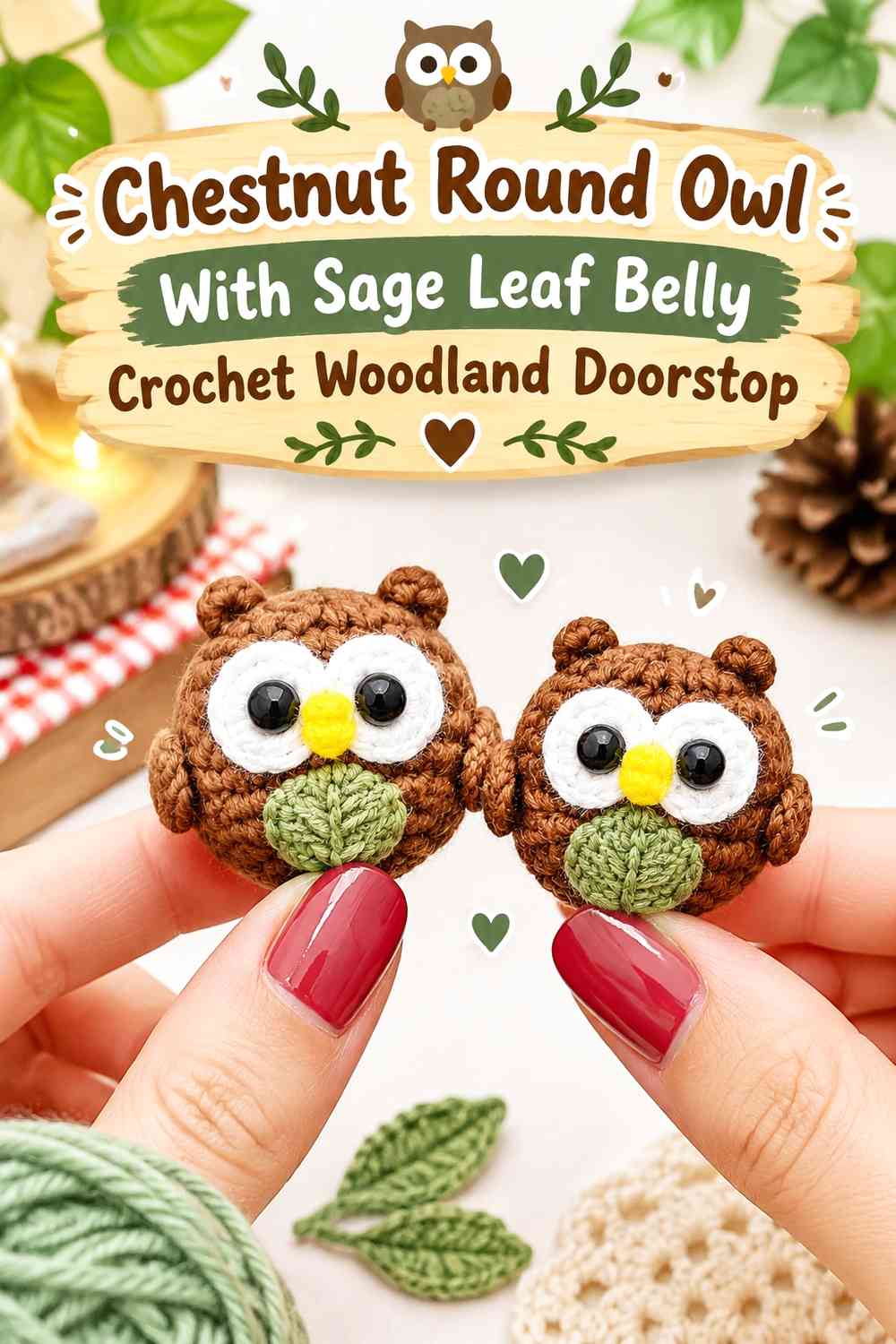
A round owl lends itself to a broad central belly motif. Keep the main body chestnut and use sage in a simplified leaf-inspired belly panel or a few larger leaf shapes rather than covering the front with numerous tiny botanical details.
Chestnut Should Keep the Round Owl Silhouette Simple
Use chestnut across the outer circumference so the body remains easy to recognize as one compact shape. A continuous dark perimeter is especially useful when the doorstop sits near patterned flooring or other fall decor.
Sage Leaves Need Clear Space on the Chestnut Owl Belly
If you add leaf-inspired shapes, keep enough chestnut between them to preserve their outlines. Several green leaves touching one another can turn into a single irregular patch from a distance.
A few larger sage forms often work better on a doorstop than many miniature leaves.
Sage Should Stay Secondary to the Chestnut Woodland Body
Avoid repeating the leaf motif across the wings, face, and ear tufts as well. The belly can carry the botanical theme while the rest of the owl remains quieter.
Creator Credit: Happygurumi
7. Sage Owl With Chestnut Ear Tufts Crochet Fall Doorstop
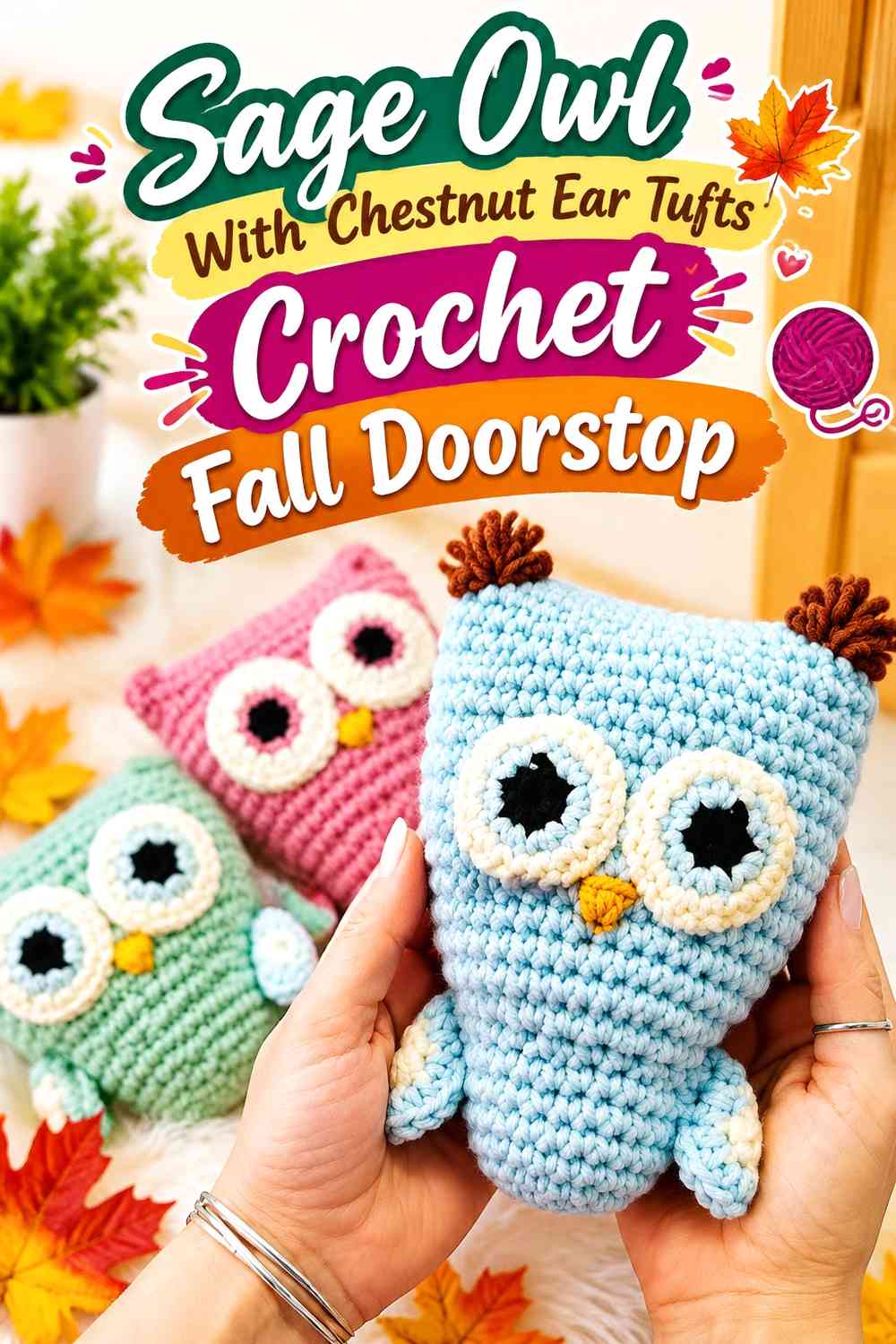
This idea moves chestnut toward the top of the owl. A sage body creates a muted woodland field, while chestnut ear tufts, upper head details, and perhaps the beak area add warmer definition around the silhouette.
Chestnut Ear Tufts Can Sharpen a Sage Owl Silhouette
Use chestnut on both upper points so the ears remain visible against the green head. Matching dark tufts can be particularly effective when the doorstop is viewed from farther away near the floor.
Keep them proportional to the owl rather than enlarging them simply to increase the amount of brown.
Sage Should Remain Continuous Below the Chestnut Ear Points
Let the green body run uninterrupted down the center. This prevents the upper brown details from spreading into several unrelated patches and preserves a clear sage-dominant design.
Chestnut Can Repeat at the Base of the Sage Doorstop
A low chestnut band balances the ear tufts from top to bottom. The two dark areas can frame the sage center without requiring chestnut wings as well.
Creator Credit: mum2makes
8. Chestnut Barrel Owl With Sage Scalloped Belly Crochet Doorstop
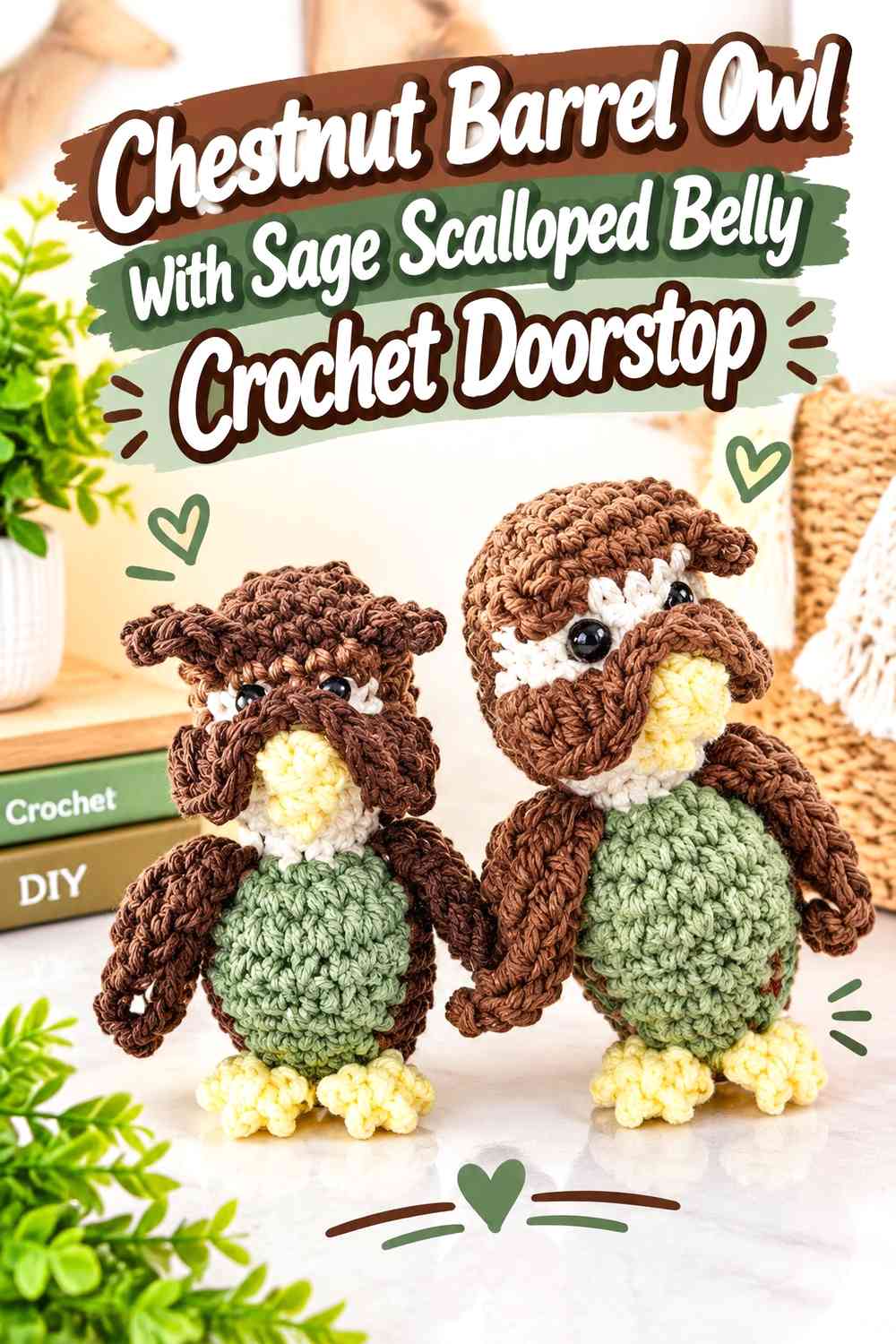
A barrel-shaped owl provides a long central front area that can support a feather-inspired scalloped panel. Chestnut can cover the outer body while sage forms the repeated belly texture.
Sage Scallops Should Stay Connected on the Chestnut Owl Belly
Keep the scalloped treatment within one central area instead of spreading individual green shapes around the sides. A defined panel makes the texture easier to read and keeps the outer chestnut body intact.
If the scallops cast strong shadows, avoid adding more colors inside them.
Chestnut Should Frame Both Sides of the Sage Belly
Leave enough brown visible beside the green panel that the owl retains a strong outer silhouette. A belly that reaches almost to the side edges can make the wings difficult to distinguish later.
Sage Belly Texture Should Not Overwhelm the Chestnut Doorstop Face
If the central scallops are visually busy, keep the face comparatively simple. A sage belly plus elaborate two-color eyes can make both halves of the owl compete.
Creator Credit: Pocket Yarnlings
9. Sage Woodland Owl With Chestnut Lower Base Crochet Doorstop
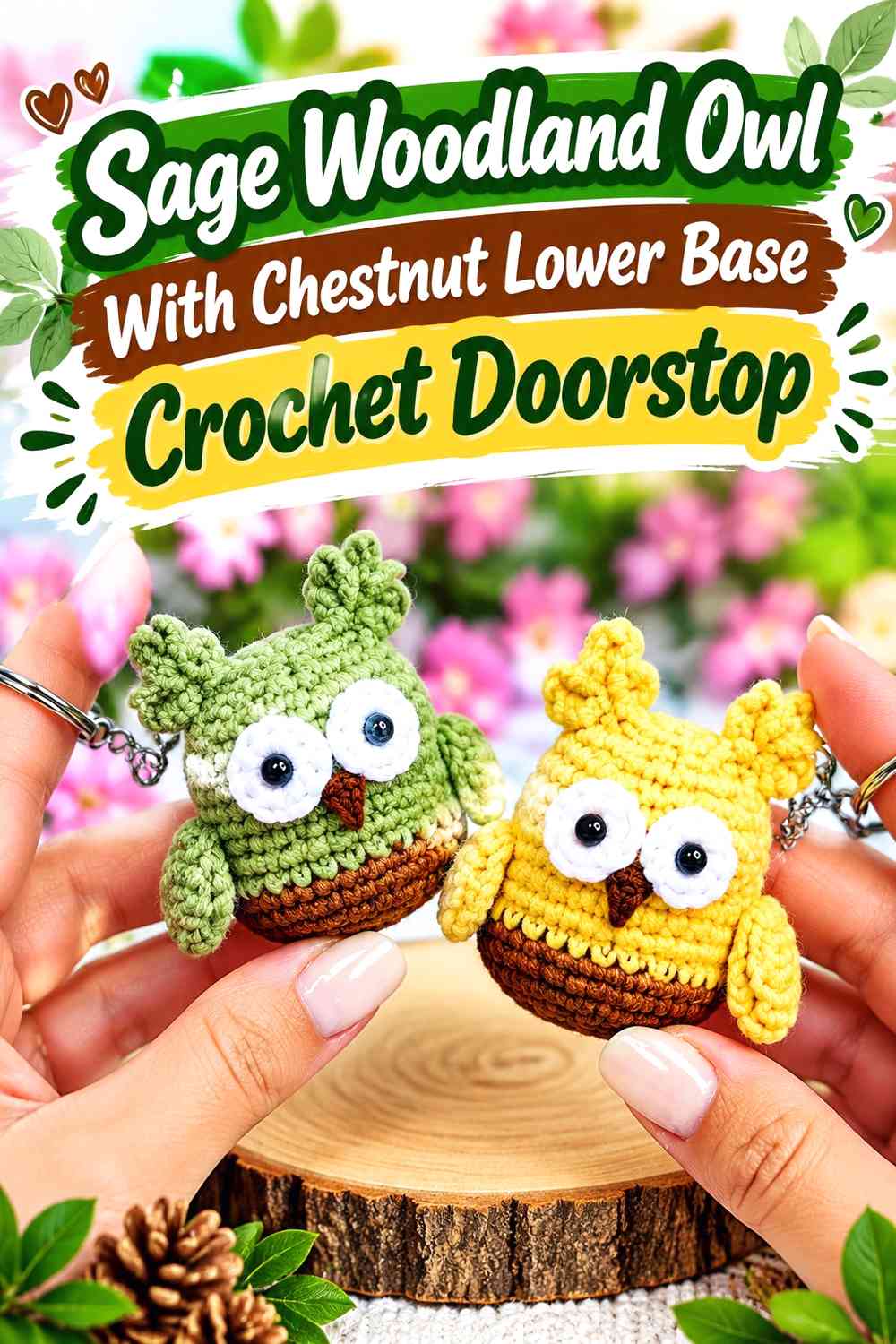
This version gives sage most of the owl while reserving chestnut for the lowest section. The dark base creates a grounded fall effect and can visually distinguish the functional doorstop area from the decorative upper body.
Chestnut Can Anchor the Bottom of a Sage Owl Doorstop
Use one continuous chestnut lower section instead of several narrow brown bands. A solid base gives the owl a clear visual foundation and is less likely to look striped when seen from across the room.
Sage Should Extend Far Enough Above the Chestnut Base
Keep most of the torso sage so the lower brown area remains a supporting feature. If the chestnut climbs halfway up the owl, the design will become evenly divided rather than sage-led.
Chestnut Can Repeat Sparingly on the Sage Owl Face
A small beak surround, eyebrow detail, or ear-tip treatment can connect the base with the upper owl. One repeat is enough; the lower band already provides substantial chestnut.
Creator Credit: DidyToys
10. Chestnut Owl With Sage Layered Eyes Crochet Fall Doorstop
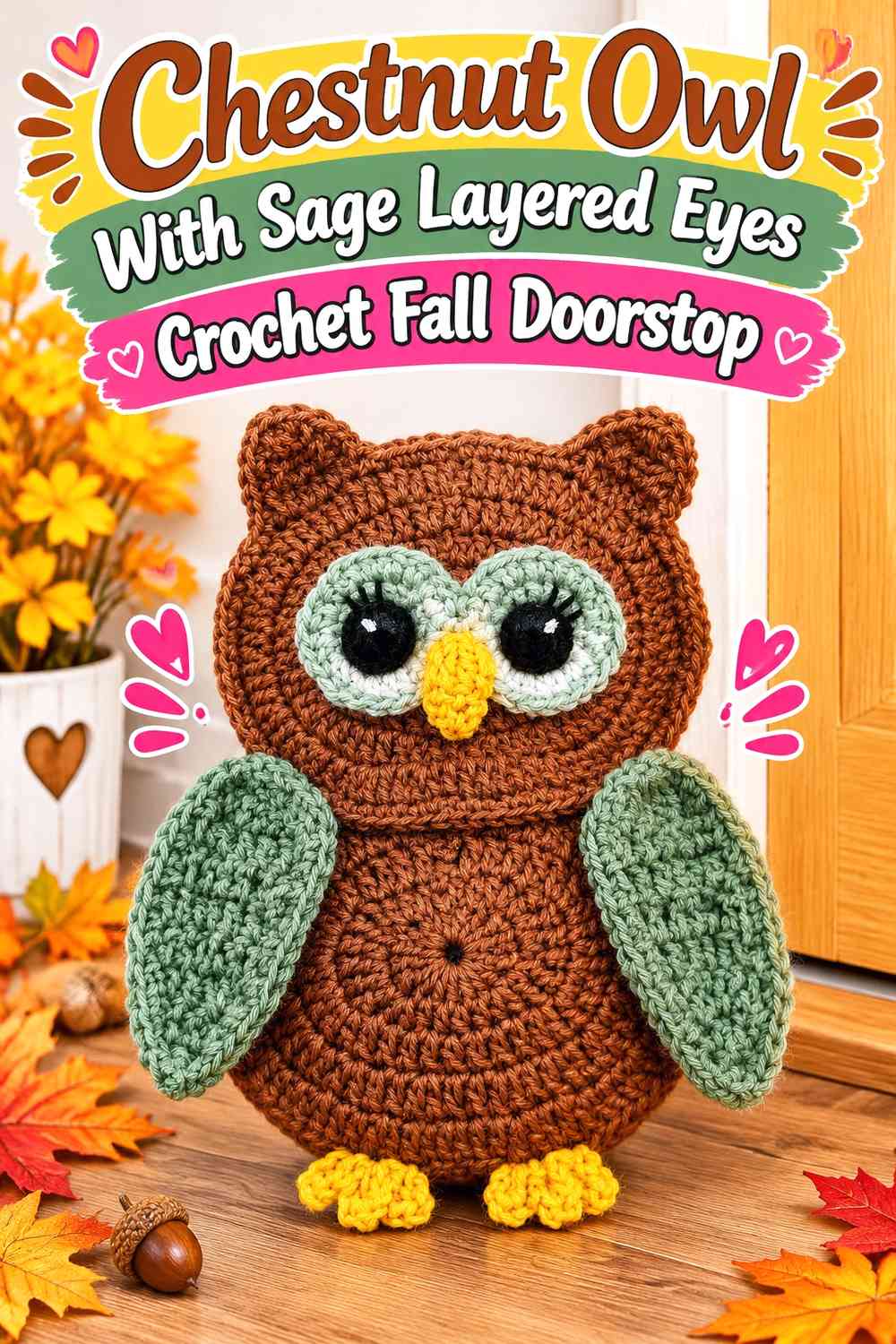
Large owl eyes naturally create several rings or layers that can carry color. Keep the body chestnut and use sage as the main contrasting eye surround, letting smaller neutral eye details sit inside it.
Sage Eye Surrounds Need Enough Width Against Chestnut
A narrow green ring may disappear on a large brown owl, especially near floor level. Give sage enough area to behave like a genuine facial feature rather than a fine outline.
Keep both sides consistent so one eye does not appear visually heavier.
Chestnut Should Remain Visible Between the Sage Owl Eyes
Do not enlarge the sage discs until they merge across the center of the face unless a mask effect is intentional. A chestnut gap helps the individual eye shapes remain distinct.
Sage Eyes Should Not Require Another Large Sage Belly Panel
The face already gives green a strong role in this design. Keep the belly chestnut or use only a restrained sage repeat so attention stays on the owl’s expression.
Creator Credit: Kerri’s Crochet
11. Sage Owl With Chestnut Feather Appliqués Crochet Woodland Doorstop

This design uses sage for the main owl and places chestnut feather-like appliqués or repeated shapes over a limited front area. The darker motifs create a decorative fall pattern without covering the entire doorstop in color changes.
Chestnut Feather Shapes Need Sage Space Between Them
Keep visible green around each darker motif. If the chestnut shapes touch or overlap too closely, they can look like one irregular brown panel instead of individual feathers.
Arrange the shapes temporarily before securing them so the spacing can be judged on the curved body.
Sage Should Stay Simple Behind Chestnut Owl Appliqués
Avoid strong stripes or another dense stitch pattern directly beneath the appliqués. The green body needs to act as negative space for the darker feather shapes.
Chestnut Should Repeat at the Sage Owl Wing or Ear Edge
One additional brown placement can connect the feather pattern to the rest of the owl. A narrow wing edge or ear point works better than introducing an entirely new large chestnut section.
Creator Credit: Pora Pora Crochet
12. Chestnut Owl With Sage Side Wings Crochet Fall Doorstop
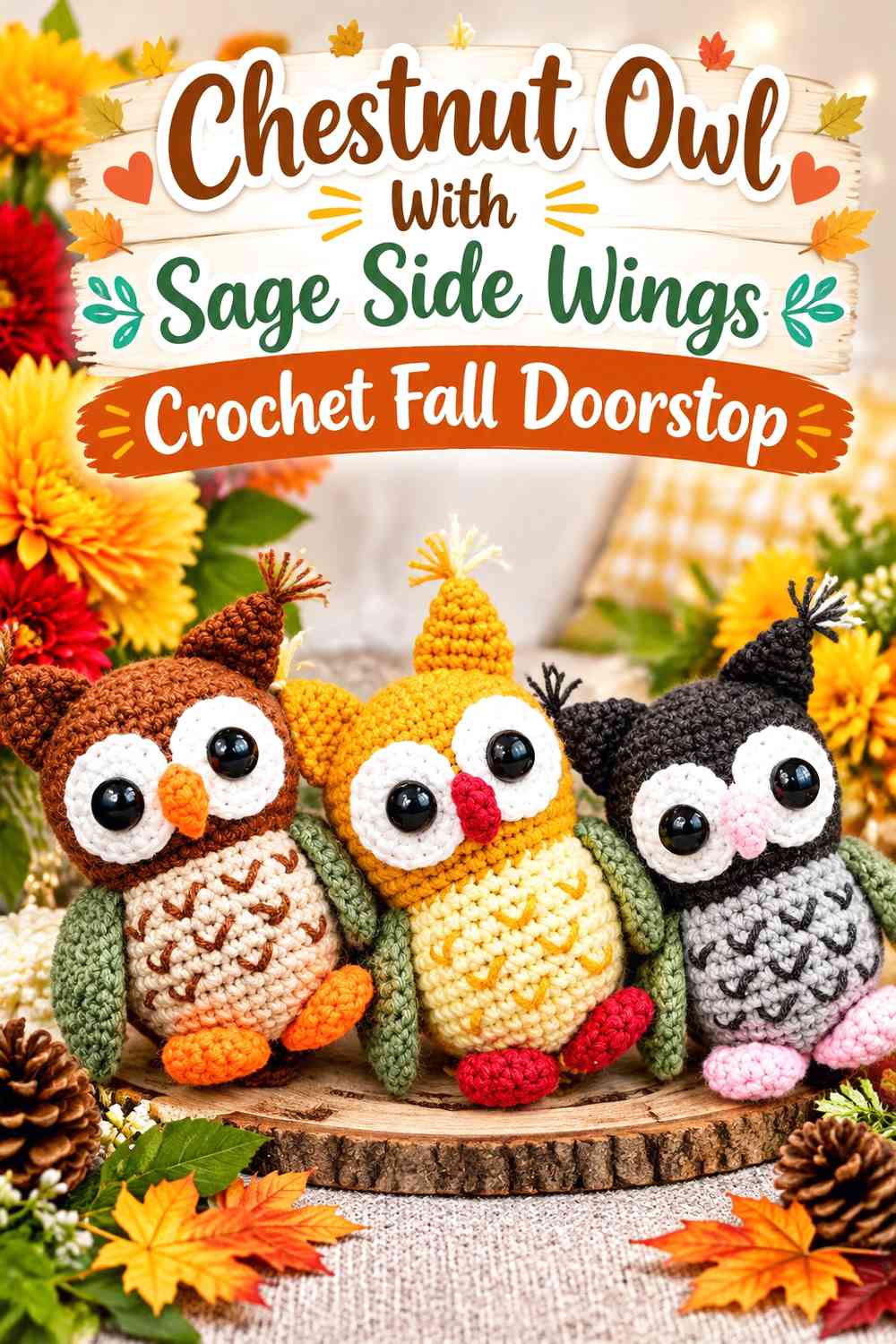
This is a wing-focused color plan. Chestnut covers the face, belly, and central body, while sage appears almost entirely on two side wings. The clear separation makes the owl easy to read and gives each color a specific structural role.
Sage Wings Should Have a Clear Edge Against Chestnut
Give each green wing a recognizable outer contour. A thin sage stripe down the side will not create the same woodland contrast as a complete wing shape.
Check both wings from the front before final attachment so their visible sage areas appear balanced.
Chestnut Should Connect the Face and Belly Between Sage Wings
Keep the full center brown so the eye travels vertically from the face down through the body. This creates a strong central column that visually stabilizes the two side accents.
Sage Can Stay Off the Chestnut Owl Face in This Version
Resist repeating green around the eyes simply because it appears elsewhere. Limiting sage almost entirely to the wings is what makes this palette meaningfully different from the eye-mask and sage-belly ideas.
Creator Credit: Мамины проделки
13. Sage Basket-Shape Owl With Chestnut Face Crochet Woodland Doorstop
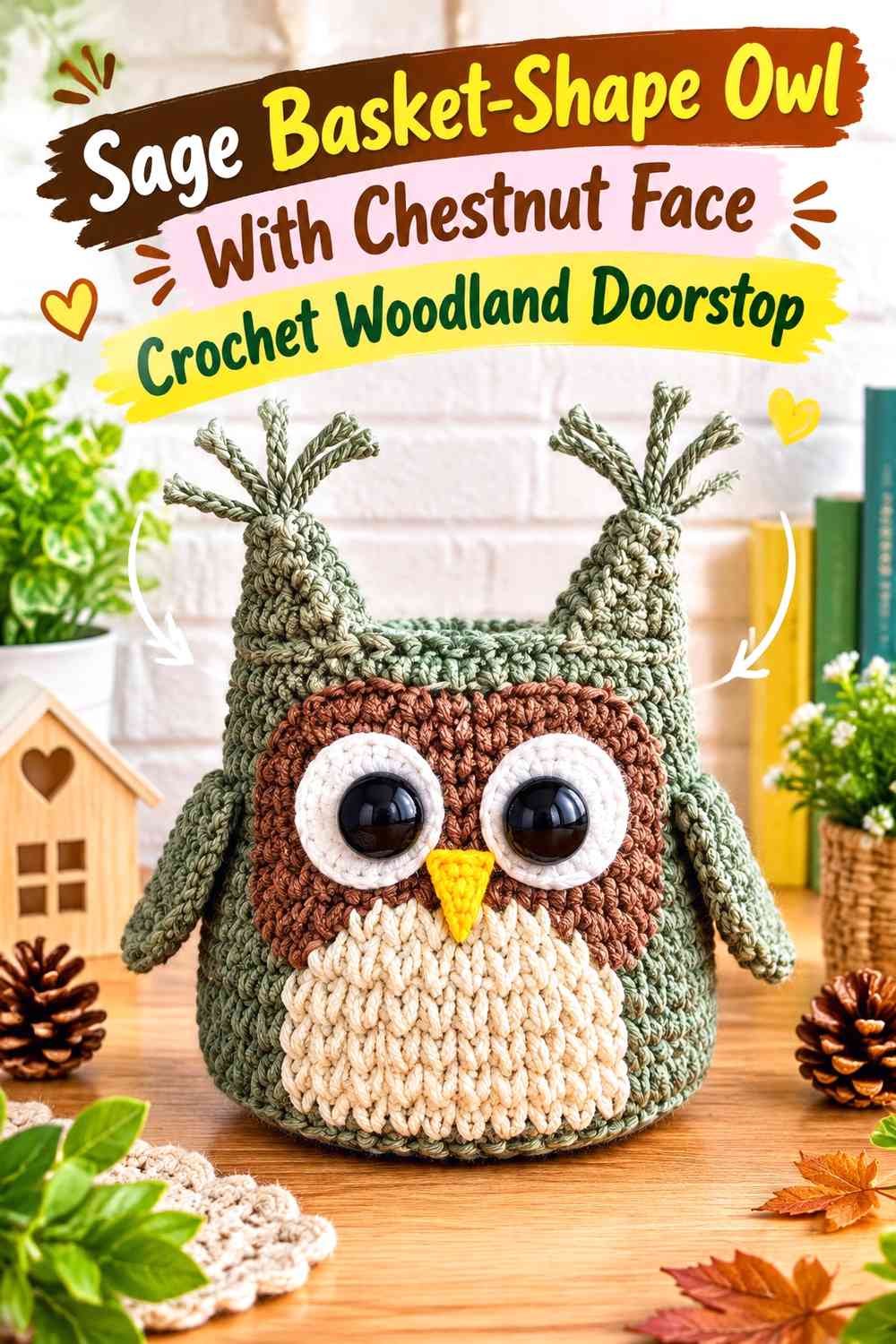
A basket-like owl form offers a wider, more structured base than a small plush. Sage can cover the outer container-style body while chestnut defines the face, eye surrounds, and upper trim. If adapting a basket structure into functional doorstop decor, use an appropriate secure weighting method rather than relying on the basket tutorial alone for doorstop functionality.
Sage Can Keep the Broad Owl Body Visually Calm
Use sage across the large lower structure so the wider form does not become overly dark or heavy-looking. The muted green also creates a woodland background for the warmer facial details above.
Chestnut Can Define the Face on a Sage Basket-Shape Owl
Place chestnut around the eyes, brow area, or another central face feature. Concentrating the warm neutral near the top keeps the wide green base from appearing disconnected from the owl identity.
Chestnut Should Stay Above Enough Sage Doorstop Base
Avoid carrying the facial brown all the way to the floor. A visible sage lower section maintains the intended color hierarchy and keeps the face from blending into the functional base.
Creator Credit: Crocheting with White Owl
14. Chestnut and Sage Two-Tone Crochet Woodland Owl Doorstop
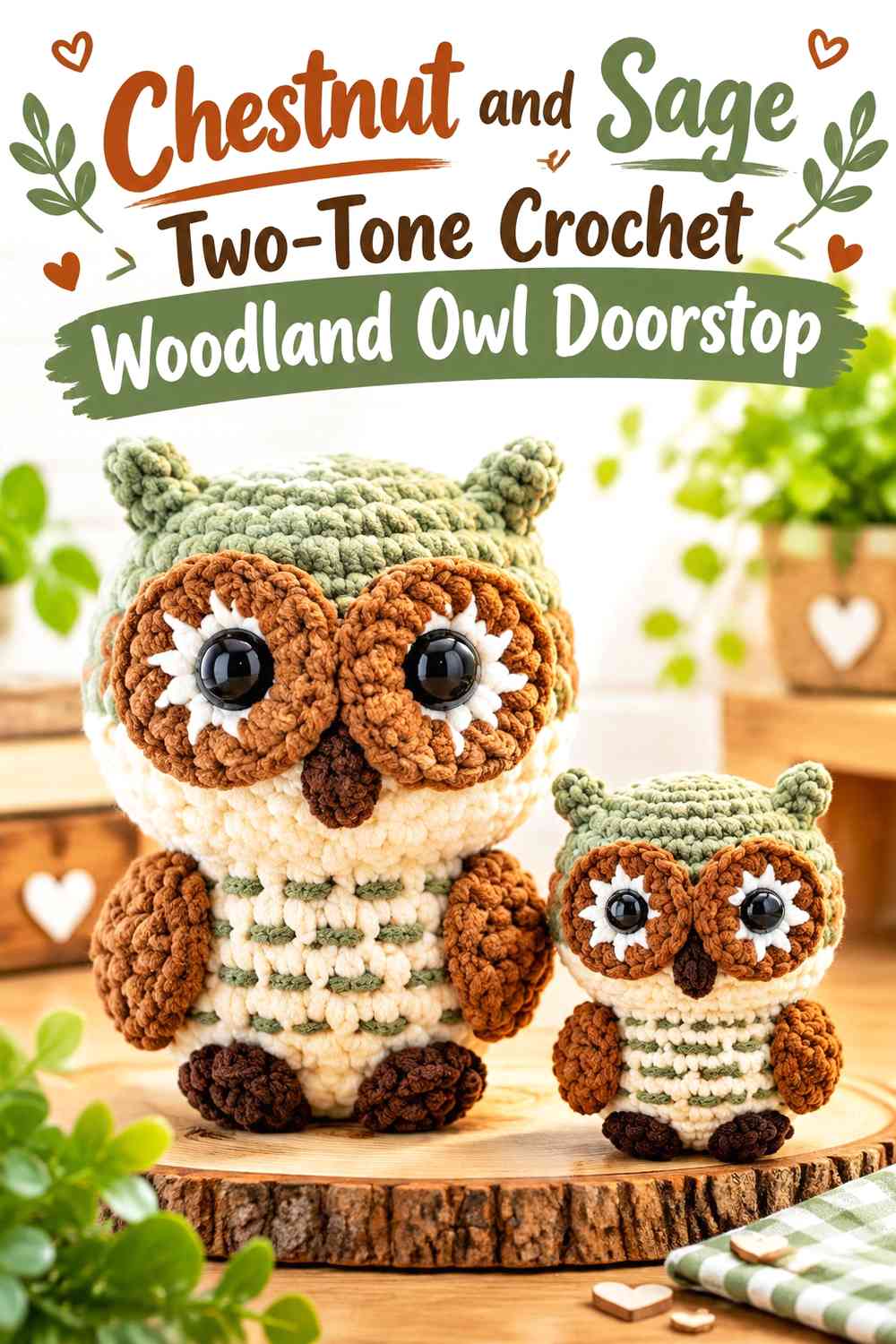
The final idea gives both colors substantial roles without simply splitting the owl in half. Use chestnut for the central body and upper head, then sage on the wings and a controlled lower belly section. Repetition across separate features makes the palette feel connected while preserving a clear hierarchy.
Chestnut Should Connect the Head and Center of the Sage-Accented Owl
Keep a continuous brown route from the upper head down through the middle of the body. That connection prevents the chestnut sections from looking like unrelated patches between the green features.
Sage Can Repeat From the Wings Into the Chestnut Owl Belly
Use the same green on both side wings and one central lower panel. Repetition creates a deliberate woodland palette while still leaving more chestnut than sage across the full silhouette.
Chestnut and Sage Need Clear Boundaries at the Doorstop Base
Do not alternate the two shades in many narrow bands near the bottom. The lower area should remain visually stable. Choose one main base color and allow the other to end above it.
Sage and Chestnut Details Should Still Read When the Owl Is Near the Floor
Stand back and view the finished color plan from normal room distance. If tiny sage facial marks or chestnut feather details disappear, enlarge the important color areas rather than adding more miniature decoration.
Creator Credit: DIY Fluffies
Which Chestnut and Sage Woodland Owl Doorstop Palette Should You Choose?
For the warmest fall direction, Ideas 1, 3, 4, 6, 8, 10, and 12 keep chestnut across most of the owl. Sage then provides contrast on bellies, wings, eyes, or botanical details without changing the overall brown woodland character.
Ideas 2, 5, 7, 9, 11, and 13 are more sage-forward. These work well when you want the doorstop to coordinate with muted green decor while chestnut supplies warmer outlines and structural accents.
Idea 14 gives both colors substantial presence while still assigning them to separate owl features. It is useful when you want an obvious two-color design without using narrow stripes.
For a functional doorstop, construction should narrow the choices further. Start with a source designed as a doorstop or stable weighted owl when possible. Owl plush, appliqué, and basket tutorials are better treated as references for shape, eyes, wings, or decorative details rather than substitutes for a secure doorstop base.
Conclusion
Chestnut and sage suit a fall woodland owl doorstop because both colors can cover substantial crochet areas without making the finished piece visually noisy. Chestnut is especially effective across bodies, bases, ear tufts, and facial framing, while sage can clarify wings, belly panels, eyes, leaves, and feather-inspired details.
Choose a chestnut-dominant owl when you want the warmest autumn result, or make sage the main body color when you prefer a softer woodland direction. For the clearest design, assign the secondary color to complete features rather than scattering it through tiny stitches.
The doorstop function also matters. Use the exact construction guidance from an appropriate weighted-doorstop source for the base and internal weighting, and treat the other owl tutorials as inspiration for shape or decorative components. Then apply the chestnut-and-sage palette independently.
Frequently Asked Questions
Should chestnut or sage dominate a crochet woodland owl doorstop?
Chestnut creates a warmer, more traditional fall woodland look and works especially well on the body or lower base. Sage creates a softer, greener direction. Either can dominate, but one should usually cover noticeably more area so the owl does not look randomly divided.
Where should sage go on a chestnut crochet owl doorstop?
Useful placements include the belly, wings, large eye surrounds, or a limited leaf-inspired detail. These are substantial features where sage can remain visible from normal room distance.
How can I make chestnut and sage owl eyes stand out?
Use the colors in larger facial zones rather than tiny alternating stitches. A sage eye mask or pair of broad sage eye surrounds against a chestnut head will usually remain clearer than very thin green outlines.
Should the base of a chestnut and sage owl doorstop be dark?
It does not have to be, but a chestnut base can visually ground a sage-heavy owl. If the body is already mostly chestnut, a sage lower panel can create a lighter variation. Choose the base color as part of the overall hierarchy rather than treating it as an unrelated final stripe.
Can I adapt a small crochet owl amigurumi into a doorstop?
Use the small owl for visual inspiration rather than assuming it can simply be enlarged and weighted. A functional doorstop needs a suitable stable base and securely contained weighting. Follow an appropriate doorstop or weighted-owl construction for those functional parts.
How can I make a chestnut and sage owl look more woodland-themed?
Use the colors on recognizable natural features rather than adding many extra shades. Sage wings or leaf-inspired belly details against a chestnut body can create a woodland direction, as can a sage body framed by warm chestnut wings and ear tufts.
What should I do if chestnut and sage look too similar in value?
Compare the yarns side by side or in grayscale. If they visually merge, use broader separate areas such as full wings, a complete belly panel, or a large facial mask. Preserving the light-dark distinction through placement is more useful than adding numerous tiny accents.