

Espresso and buttermilk give a crochet cable stitch bed runner a useful winter contrast. Espresso can create a deep brown foundation across the foot of the bed, while buttermilk can lighten borders, side panels, cable sections, and end bands so the raised texture remains easier to distinguish.
A bed runner also changes how cable placement works. Unlike a large blanket, it has a long, relatively narrow shape, so one oversized cable panel can dominate the whole piece. Several narrow cable columns create a different effect, while contrasting side borders or end bands can frame the runner without competing with the raised stitchwork.
The tutorials paired with these ideas demonstrate cable blankets, cable panels, cable squares, and related constructions. The espresso-and-buttermilk palettes and bed-runner proportions are independent adaptations rather than claims about the colors or exact finished dimensions used by the original creators.
Quick List
- Espresso Center-Cable and Buttermilk Border Crochet Bed Runner
- Buttermilk Field with Espresso Braided-Cable Crochet Bed Runner
- Espresso and Buttermilk Cabled-Block Crochet Bed Runner
- Espresso Victorian Braid with Buttermilk Side-Band Crochet Bed Runner
- Buttermilk Hidden-Cable with Espresso End-Band Crochet Bed Runner
- Espresso Triple-Twist with Buttermilk Panel Crochet Bed Runner
- Espresso Bulky Cable with Buttermilk Keyline Crochet Bed Runner
- Buttermilk Braided-Cable with Espresso Texture-Band Crochet Bed Runner
- Espresso Classic Cable with Buttermilk Ribbed-Border Crochet Bed Runner
- Buttermilk Cable-Square with Espresso Join Crochet Bed Runner
- Espresso Mock-Cable with Buttermilk Frame Crochet Bed Runner
- Buttermilk Cable-Column with Espresso Side-Edge Crochet Bed Runner
- Espresso One-Piece Cable with Buttermilk Integrated-Border Crochet Bed Runner
Let Espresso or Buttermilk Decide How Strongly the Cables Read
Cable texture depends on raised and recessed areas creating visible shadow. A very deep espresso can give a runner a rich dark surface, but subtle cable crossings may be less obvious under low bedroom lighting. Buttermilk gives the same kind of texture a lighter field where changes in relief may be easier to notice.
That does not mean every cable needs to be buttermilk. Another option is to keep the main cable field espresso and place buttermilk immediately beside it. The lighter neighboring panel can outline the darker raised section without interrupting the cable itself with repeated color changes.
Plan Espresso and Buttermilk Around the Bed Runner’s Long Shape
A bed runner is usually viewed horizontally across the lower portion of the bed, so color placement should reinforce that long line. Side borders can emphasize length, while contrasting bands at the two short ends create a framed appearance.
Before committing to several cable panels, sketch or lay out the planned color widths. If espresso occupies one very broad center section and buttermilk only appears as a narrow edge, the piece will read as strongly dark-led. Reversing those proportions produces a much lighter runner even when the same two shades are used.
Use Buttermilk and Espresso Borders Without Competing With the Cables
Borders should clarify the edge of the runner rather than become the busiest part. A buttermilk border can separate an espresso cable field from darker bedding, while an espresso frame can give a pale buttermilk runner more definition.
Keep the border visually subordinate when the cable panel is intended to be the focal point. If the border becomes nearly as wide as the main cable area, the runner can begin to look like several equal color blocks instead of one cable design with a supporting frame.
1. Espresso Center-Cable and Buttermilk Border Crochet Bed Runner

This direction gives espresso the largest visual role. Place a broad cable section through the center of the runner and use buttermilk along the long outer edges. The pale borders create separation around the deep cable field without interrupting the raised crossings themselves.
Because the runner is narrow, the espresso cable panel should still leave enough buttermilk visible on both sides to read as an intentional frame rather than a thin finishing line.
Espresso Should Keep the Central Cable Panel Continuous
Work the main cable area in espresso without repeatedly inserting buttermilk into individual crossings. A continuous dark field allows the cable shadows and raised ridges to form one coherent central feature.
Evaluate a sample under bedroom lighting before committing to the full length. If the espresso texture is difficult to see, a slightly broader buttermilk side margin can provide more visual separation around it.
Buttermilk Should Frame the Espresso Cable Without Overtaking It
Use similar buttermilk widths along both long sides so the espresso center appears balanced across the foot of the bed.
If you also add buttermilk at the short ends, keep those end sections proportionate to the side borders. An oversized pale end band can compete with the cable panel instead of simply completing its frame.
Creator Credit: The Crochet Crowd
2. Buttermilk Field with Espresso Braided-Cable Crochet Bed Runner
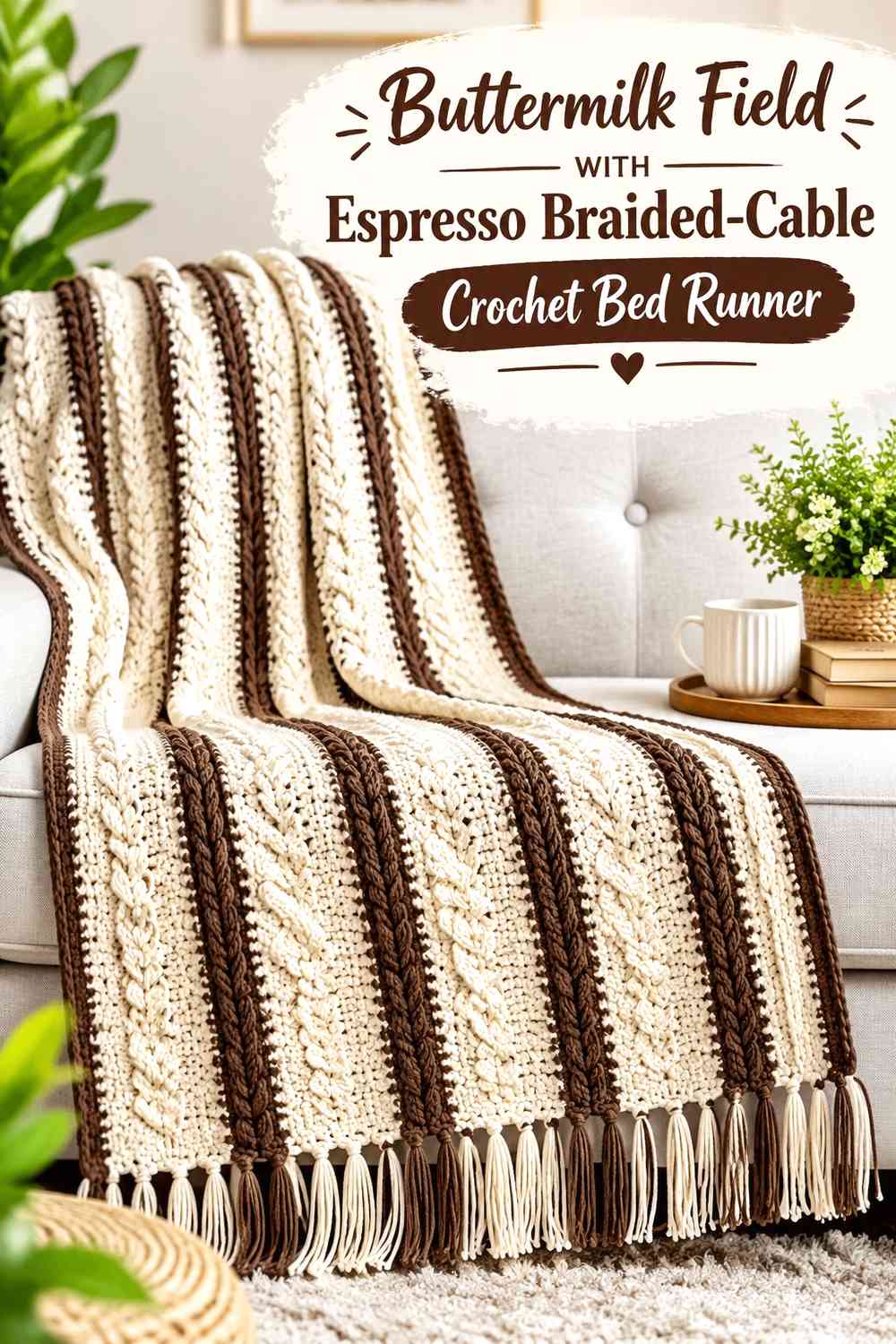
A light buttermilk field gives one or more espresso braided cables a strong graphic role. Keep substantial pale space between dark cable areas so each braid remains distinct when the runner is viewed from across the room.
This is a useful direction when you want the cable pattern itself, rather than the overall runner color, to provide most of the dark winter emphasis.
Buttermilk Gives Espresso Braided Cables Breathing Room
Allow buttermilk to remain visible on both sides of every major espresso cable section. The pale ground prevents several dark braids from visually merging into one heavy block.
If you use more than one cable column, compare their spacing before extending the full runner. Equal or deliberately graduated spacing will look more controlled than gaps that change accidentally.
Espresso Braids Should Repeat Deliberately Across Buttermilk
Decide whether the runner needs one statement cable or several narrower espresso braids. A single centered braid produces a quieter composition, while repeated columns increase the amount of dark visual rhythm.
Avoid adding a heavy espresso border at the same time unless you specifically want a strongly framed design. The braids should remain the principal dark feature.
Creator Credit: Yarnspirations
3. Espresso and Buttermilk Cabled-Block Crochet Bed Runner
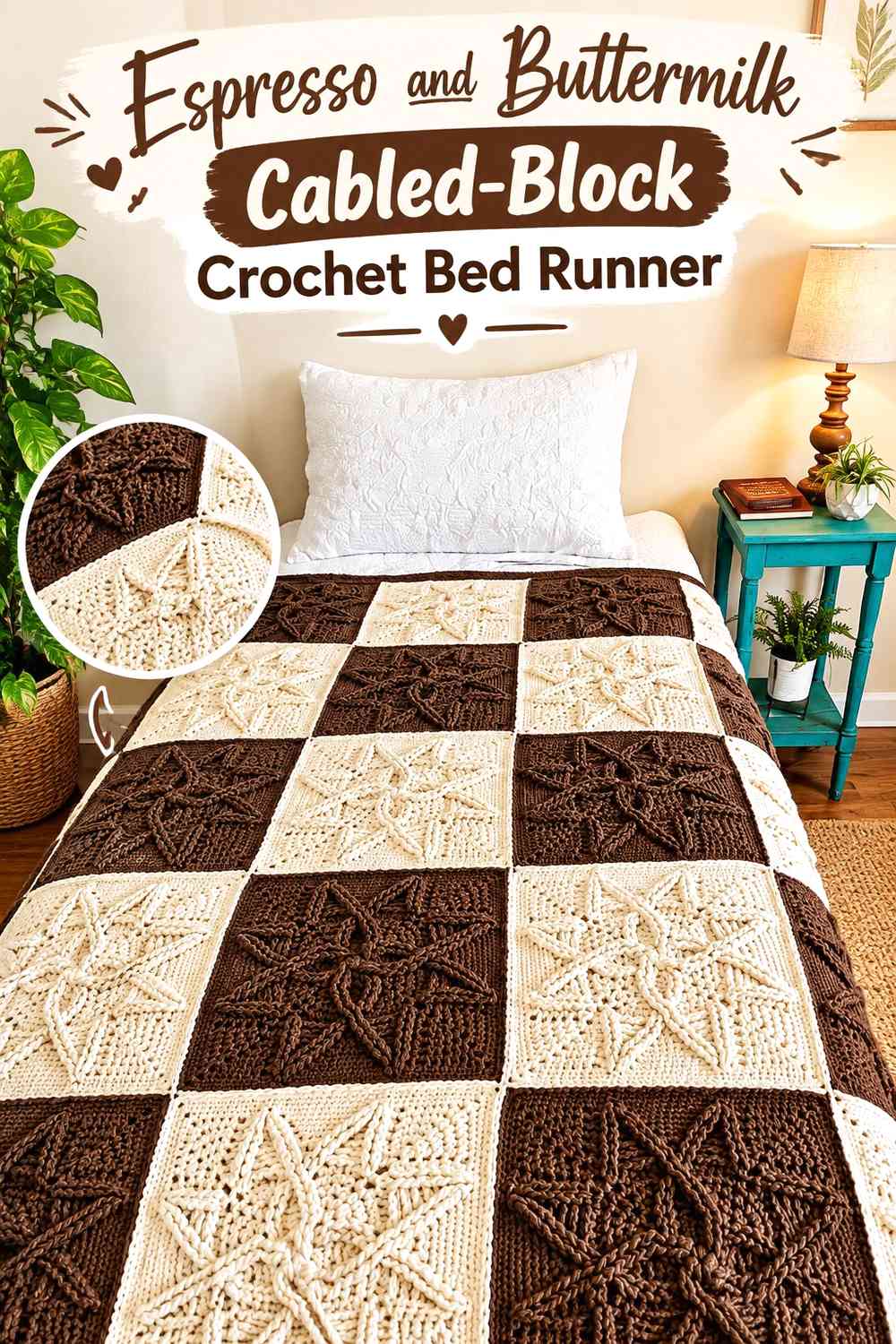
A block-based runner can alternate espresso and buttermilk without requiring stripes. Use cable squares or rectangular cable sections as modular units, then arrange them into a narrow row or compact grid suitable for the foot of the bed.
The strongest result comes from planning the full arrangement before joining. A random sequence can accidentally place several espresso blocks together and make one end of the runner much darker than the other.
Espresso Blocks Need Even Distribution Among Buttermilk Sections
Spread espresso cable blocks across the runner instead of clustering them in one area. Repetition gives the dark shade a predictable rhythm from end to end.
If the blocks contain strong raised texture, leave enough buttermilk between dark sections for their individual cable shapes to remain identifiable.
Buttermilk Blocks Can Make Espresso Cable Texture Easier to Compare
Alternating lighter blocks beside espresso ones creates an immediate texture comparison, especially when the cable designs vary.
Keep the block dimensions compatible before joining. Color can emphasize even small alignment differences, so a dark espresso square beside a light buttermilk square makes uneven edges easier to notice.
Creator Credit: A Crocheted Simplicity – Jennifer Renaud
4. Espresso Victorian Braid with Buttermilk Side-Band Crochet Bed Runner
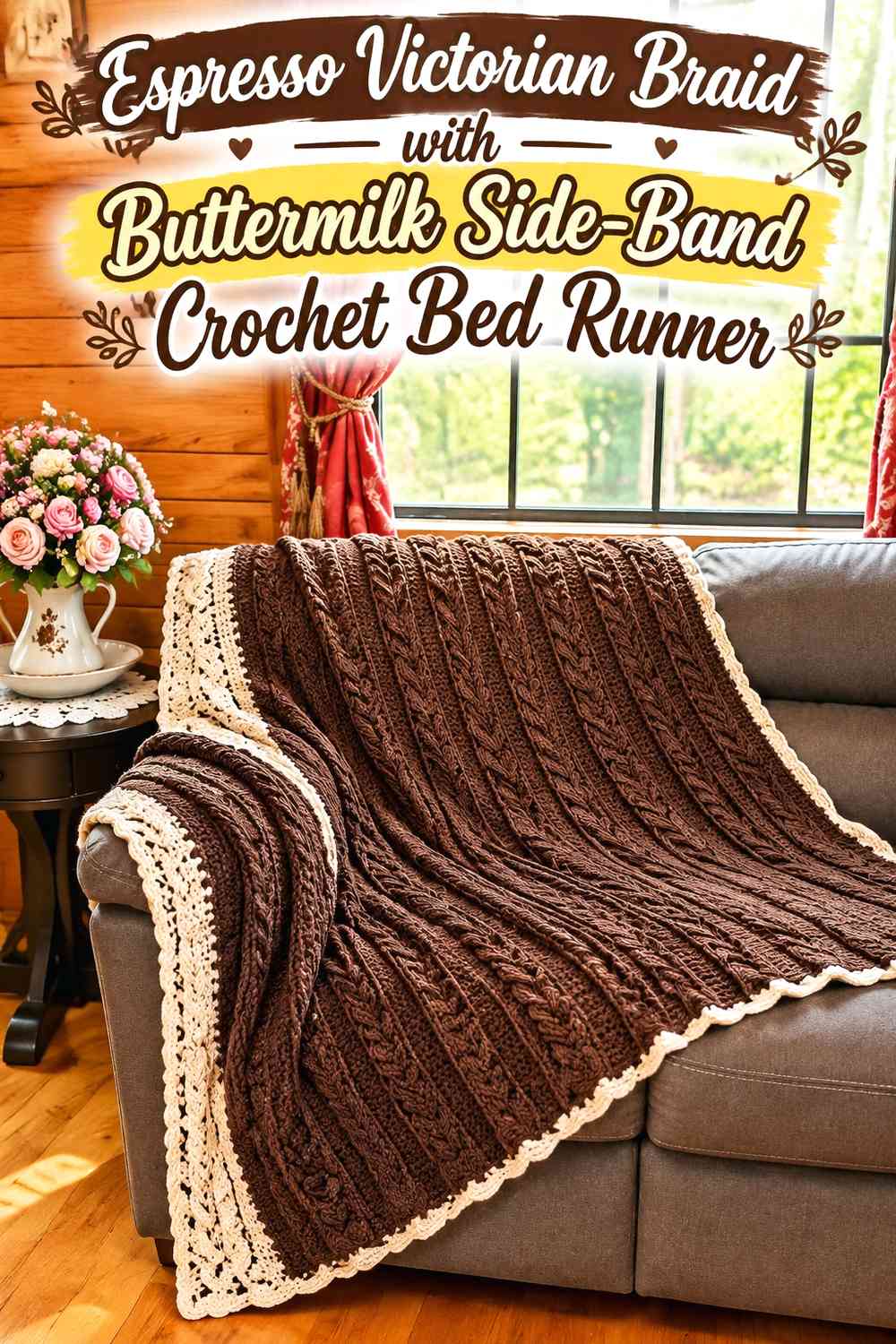
A large decorative braid can carry the center of a long runner without requiring multiple competing cable patterns. Use espresso for the braid and nearby central field, then place buttermilk in quieter side bands.
This keeps the deepest color exactly where the raised stitchwork has the most visual importance.
Espresso Should Stay Focused on the Main Braided Cable
Avoid breaking a complex braid with frequent color changes. Keeping it espresso lets the crossings form a continuous raised path along the runner.
If the braid already occupies much of the width, reduce any secondary dark texture so the center remains the clear focal section.
Buttermilk Side Bands Can Separate Espresso From the Bed Covering
Light side bands give the runner a visible outer boundary, particularly when it rests on dark brown, burgundy, charcoal, or similarly deep bedding.
Keep both buttermilk bands visually consistent so the central espresso braid does not appear shifted toward one side.
Creator Credit: Bag-O-Day Crochet
5. Buttermilk Hidden-Cable with Espresso End-Band Crochet Bed Runner

This light-led version keeps the cable texture buttermilk and reserves espresso for the short ends. The result places the darkest shade at the two outer points of the runner rather than through its central length.
That makes the runner especially useful when you want the cable relief to stay light while still giving the piece a definite winter frame.
Buttermilk Can Keep Hidden Cable Texture Visible Across the Center
Allow the cable field to remain one uninterrupted buttermilk surface. The changing shadows within the stitchwork provide detail without needing dark yarn inside every crossing.
Look at the runner from the normal viewing distance of the bed. If the cables still appear too subtle, a narrow espresso side line can add definition without dividing the main texture.
Espresso End Bands Can Anchor the Buttermilk Runner
Use espresso at both short ends to create matching dark stops across the width of the bed.
Keep the two bands consistent in depth. Because they sit far apart, unequal end sections can make the whole runner look visually off-center even when the cable field itself is symmetrical.
Creator Credit: Marly Bird
6. Espresso Triple-Twist with Buttermilk Panel Crochet Bed Runner

A triple-twist cable section has enough texture to function as a standalone feature. Use espresso for the raised twist and buttermilk for the flatter surrounding panel, creating a strong central contrast without needing several different cable styles.
This works particularly well for a runner built from repeated panel sections because the color hierarchy can stay consistent from one end to the other.
Espresso Triple Twists Need Buttermilk Space Around Their Edges
Keep a visible buttermilk margin beside each dark cable so the outer curves of the twist remain distinguishable.
If espresso spreads too far into the background, the raised cable and its field can merge into one dark strip when viewed from a distance.
Buttermilk Panels Should Repeat Predictably Between Espresso Cables
Use similar pale spacing between repeated twist sections. This turns buttermilk into an organizing color rather than empty background.
If you assemble multiple cable sections, arrange the complete runner first to make sure the dark espresso rhythm remains balanced at both ends.
Creator Credit: Cosy Rosie Crochet
7. Espresso Bulky Cable with Buttermilk Keyline Crochet Bed Runner
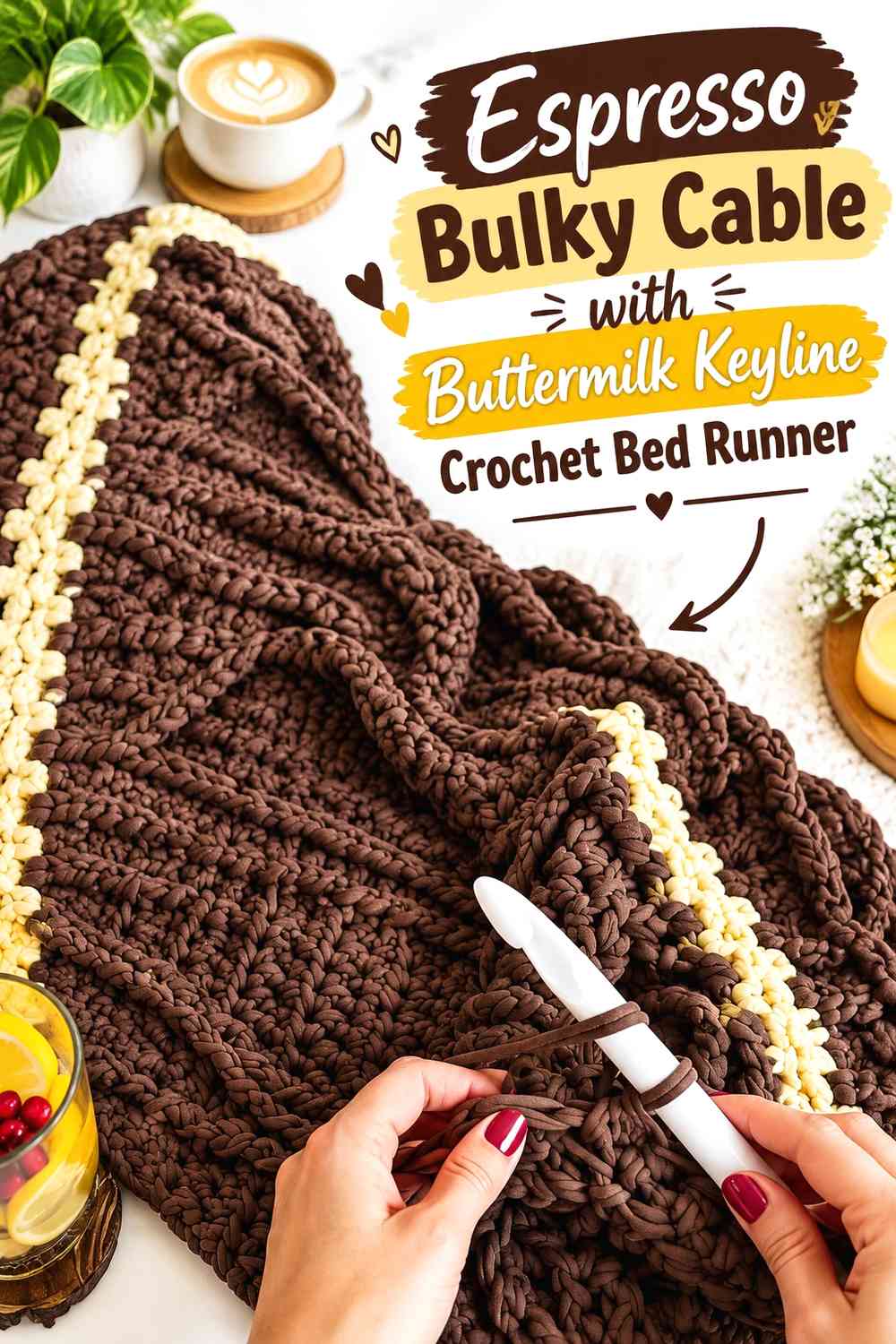
Large cable texture can already make a narrow runner visually substantial, so this palette keeps buttermilk restrained. Let espresso dominate the broad raised areas and add a thin buttermilk keyline immediately inside or outside the border.
The light line gives the dark runner definition without creating another wide color field.
Espresso Can Carry Large Cable Texture Without Extra Striping
Keep the bulky cable sections espresso so their scale, rather than alternating colors, remains the main feature.
Because large cables cast stronger-looking shadows, inspect the fabric from several angles before deciding whether the piece needs additional contrast through the center.
Buttermilk Keylines Should Stay Narrow Beside Espresso Cables
A thin buttermilk line can visually separate the cable field from the outer edge.
Avoid widening it gradually as the runner progresses. On a long rectangular piece, inconsistent keyline width can make the edges appear to wander even when the crochet itself remains straight.
Creator Credit: MJ’s Off The Hook Designs
8. Buttermilk Braided-Cable with Espresso Texture-Band Crochet Bed Runner
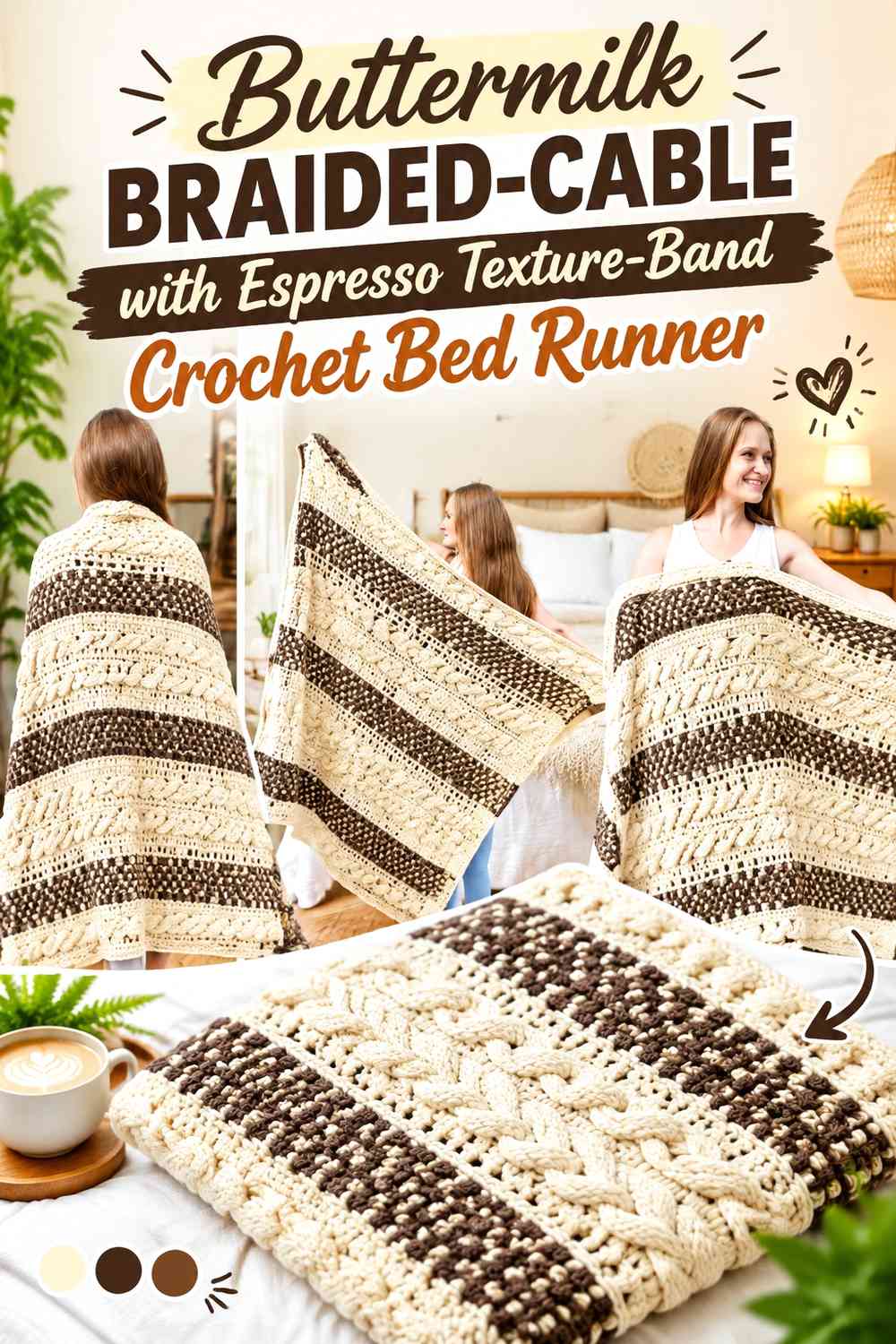
This idea lets buttermilk carry most of the cable work while espresso is reserved for flatter or differently textured bands. That reverses the common expectation that the darkest shade must contain the raised cable.
The result can help complex pale braids remain visible while espresso creates strong horizontal or end-to-end separators between sections.
Buttermilk Braided Cables Should Remain the Main Textured Feature
Keep the most elaborate braid areas buttermilk and avoid filling them with frequent dark accents. The relief itself should supply the detail.
A darker espresso section beside the braid provides enough contrast to clarify where one texture ends and the next begins.
Espresso Bands Can Organize Buttermilk Cable Sections
Use espresso at planned intervals rather than wherever a cable repeat happens to stop. Consistent placement helps the runner look designed as one long composition.
If the espresso bands become wide, reduce their number so they do not divide the runner into a sequence of short dark blocks.
Creator Credit: Life + Yarn
9. Espresso Classic Cable with Buttermilk Ribbed-Border Crochet Bed Runner
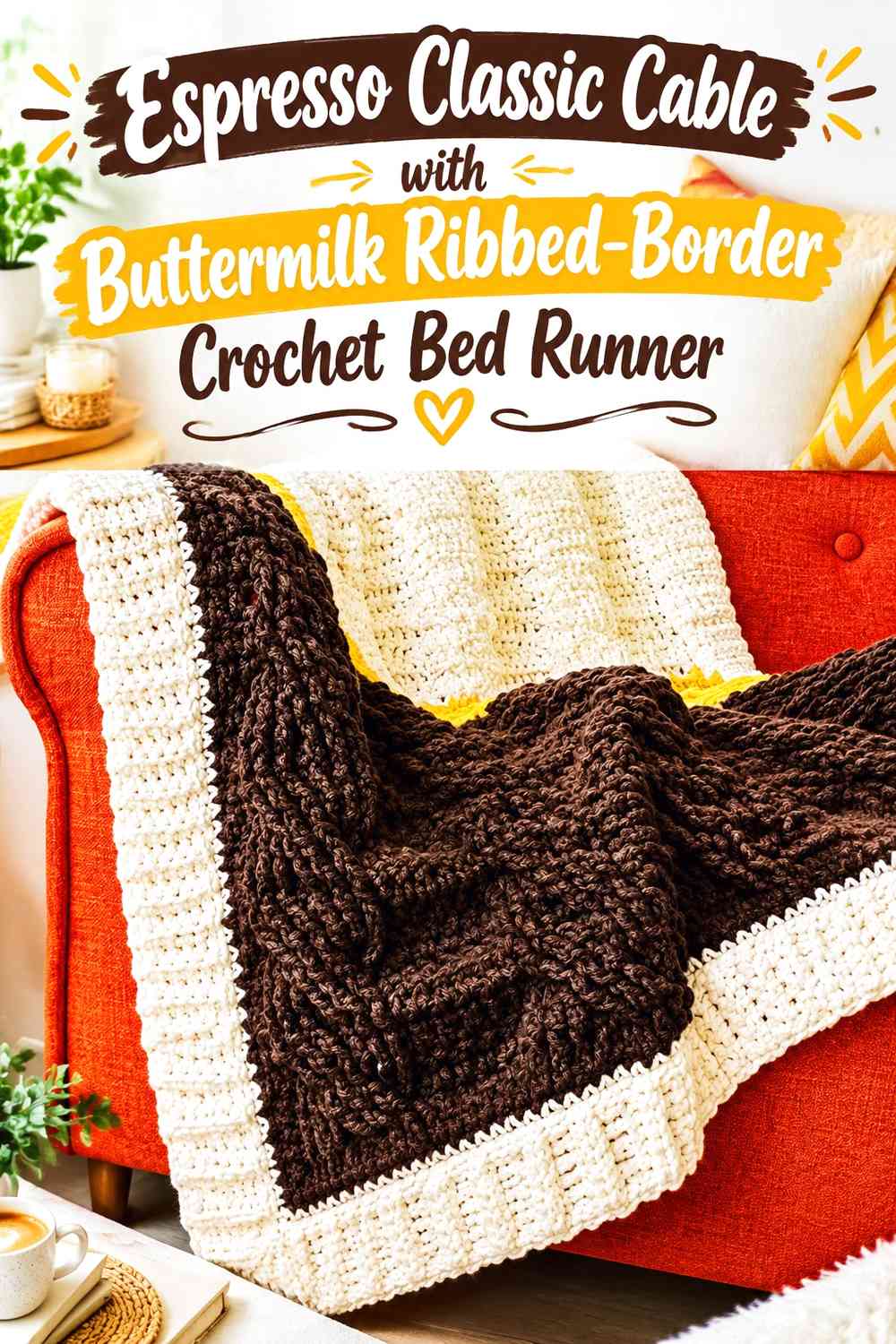
A traditional cable field paired with a contrasting ribbed border gives both texture types separate color roles. Use espresso for the central cables and buttermilk around the outer frame.
The lighter ribbing can distinguish the straight edges from the twisting center without demanding additional accent colors.
Espresso Keeps the Classic Cable Field Visually Unified
Work the central area in one deep shade so repeated cable crossings form a continuous pattern down the runner.
If you use several adjacent cables, preserve enough flatter espresso space between them that the individual columns do not collapse into one dense textured mass.
Buttermilk Ribbing Can Define the Espresso Runner Edge
Place buttermilk where the texture changes from raised cable work to the border. That shift in both color and stitch character creates a clear frame.
Keep the ribbed area narrower than the cable field unless you intentionally want a broad pale surround.
Creator Credit: YarnHookNeedles
10. Buttermilk Cable-Square with Espresso Join Crochet Bed Runner
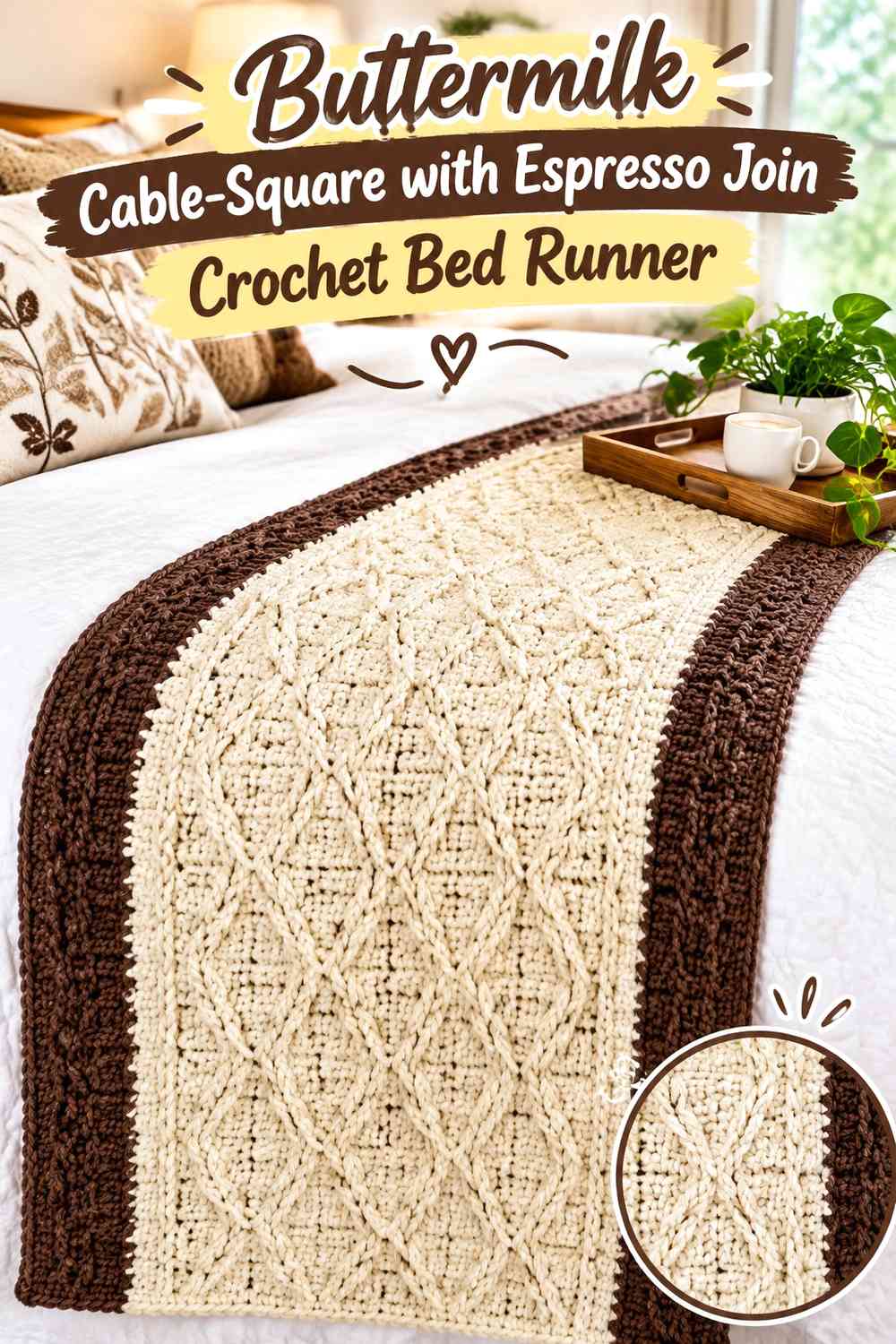
Modular cable squares offer a different way to use a light dominant color. Make the cable motifs buttermilk and use espresso at the joins, creating a dark grid around pale raised sections.
For a bed runner, keep the grid relatively narrow so the modular structure supports the long rectangle instead of making the piece look like a full checkerboard blanket.
Buttermilk Cable Squares Need Consistent Espresso Frames
Use similar espresso join widths around each section. Dark joins make irregular spacing easier to notice, so consistency matters more than it would with a low-contrast joining color.
Arrange all the modules in the intended runner shape before completing the final assembly.
Espresso Joins Should Support Buttermilk Cables Rather Than Divide Them
A narrow dark join can outline every pale cable section clearly. A very broad join, however, can become the primary pattern and reduce the importance of the raised motifs.
If you want more espresso overall, add it at the outer border rather than thickening every internal join.
Creator Credit: Rich Textures Crochet
11. Espresso Mock-Cable with Buttermilk Frame Crochet Bed Runner
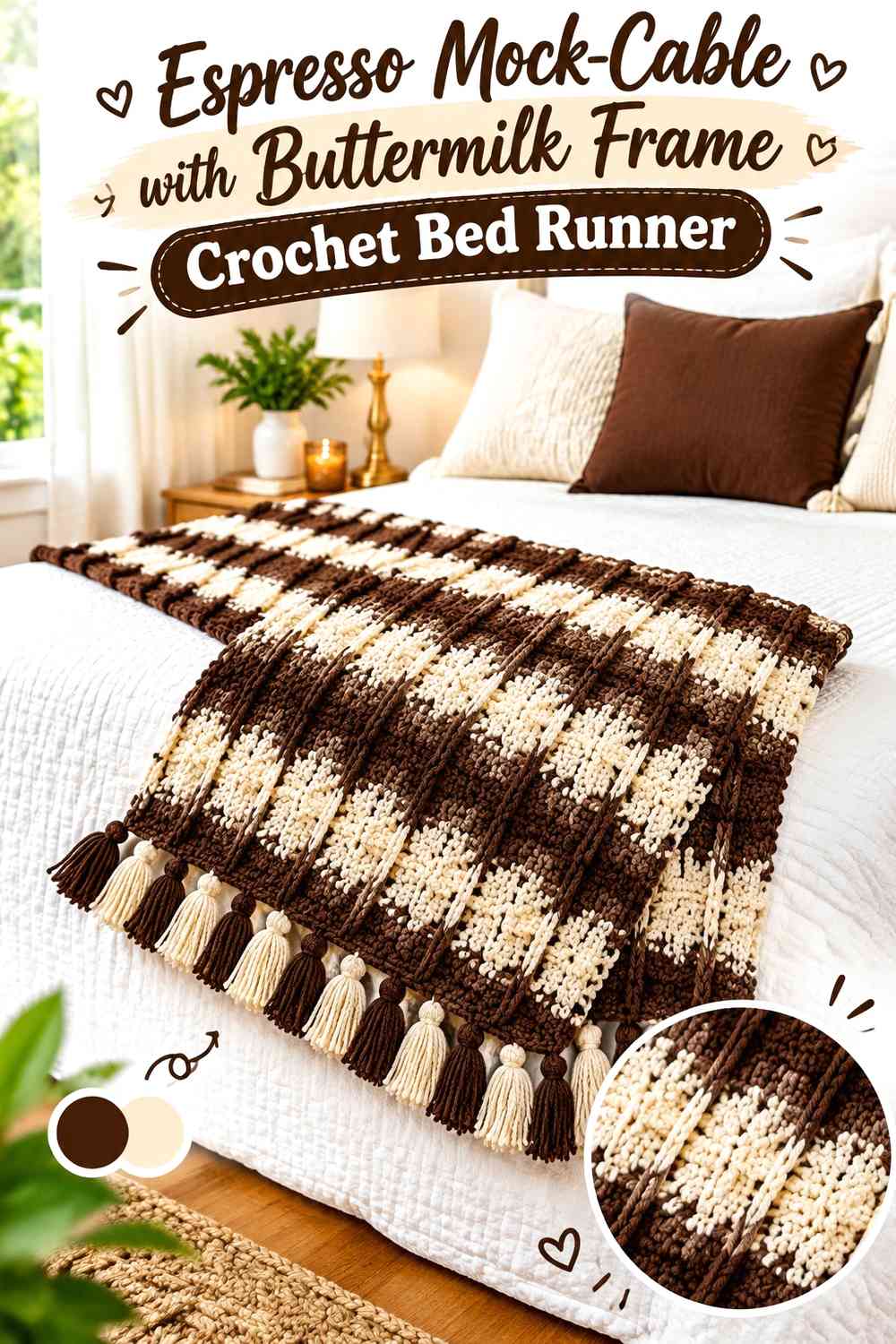
Mock-cable texture can create a cable-like surface without requiring the color scheme to become complicated. Keep the central textured field espresso and surround it with a buttermilk frame.
Because the runner uses only one major dark texture area, the pale edge becomes an important tool for keeping the long rectangle visually distinct on the bed.
Espresso Mock Cables Need a Clear Buttermilk Boundary
Let espresso occupy the full textured center rather than switching color within individual raised elements.
The buttermilk frame should begin where the main stitch character changes, reinforcing the separation between the cable-like field and finishing area.
Buttermilk Can Keep the Espresso Runner From Looking Too Heavy
If the center feels visually dense, increase the pale side margin slightly rather than introducing scattered light stripes inside the cable texture.
That preserves the cable field while adjusting the overall light-dark balance of the runner.
Creator Credit: Tamara Kelly – Moogly
12. Buttermilk Cable-Column with Espresso Side-Edge Crochet Bed Runner

Several narrow buttermilk cable columns create a lighter, more architectural runner. Espresso runs along the outside edges, giving the long piece a dark outline without interrupting the pale cable work.
This version is useful when you want more than one cable but do not want a high-contrast color change around every individual column.
Buttermilk Cable Columns Should Keep Similar Visual Spacing
Arrange the pale cables so the gaps between them look deliberate across the runner width. A narrow bed runner can become crowded quickly if too many columns are forced into the center.
Use fewer columns if necessary rather than reducing every buttermilk margin to almost nothing.
Espresso Side Edges Can Lengthen the Buttermilk Runner Visually
Dark lines along both long sides emphasize the horizontal span of the piece when it is laid across the bed.
Keep the espresso edges similar in width. Unequal dark framing is especially noticeable against a mostly buttermilk interior.
Creator Credit: Sunflower Cottage Crochet
13. Espresso One-Piece Cable with Buttermilk Integrated-Border Crochet Bed Runner
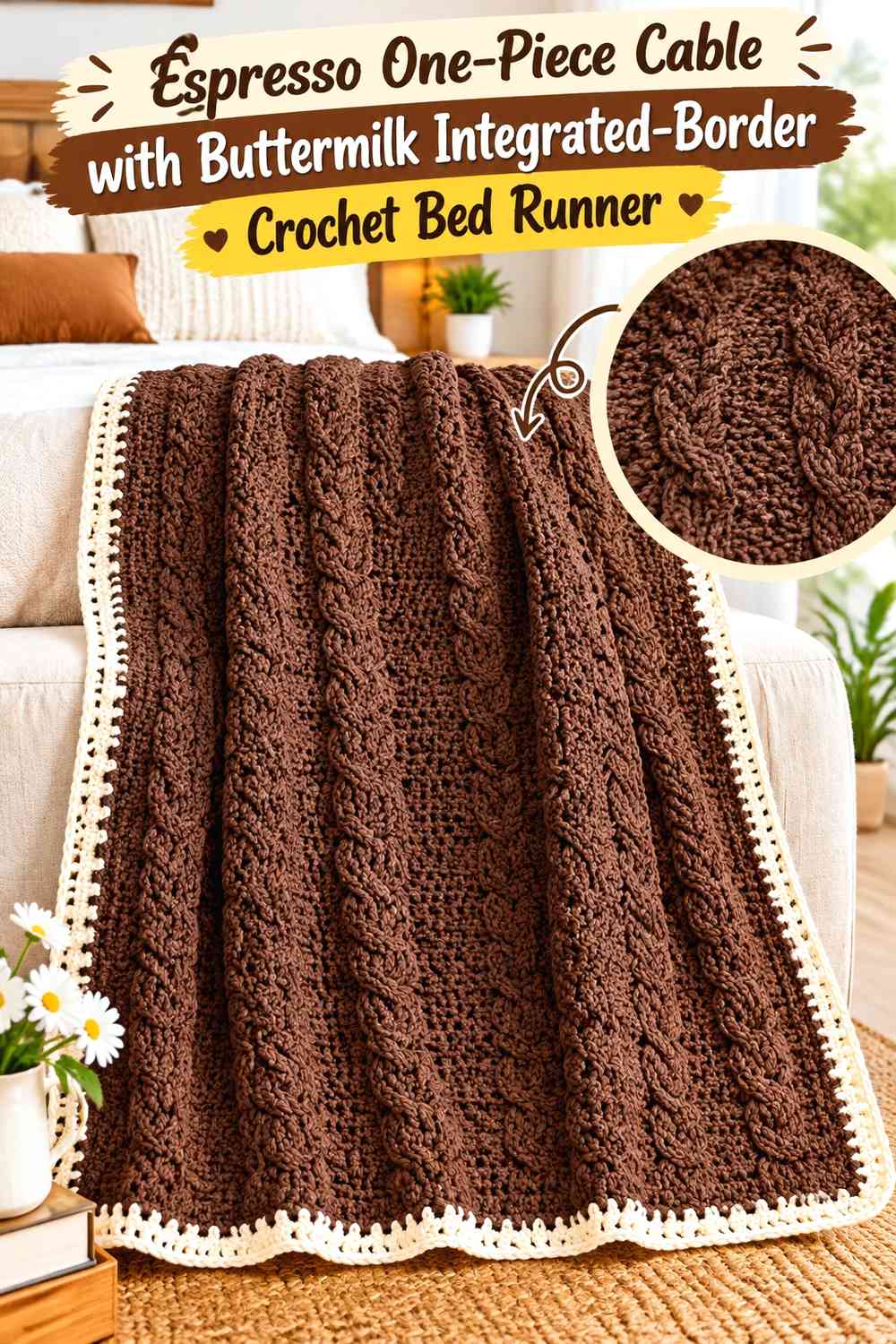
The final direction keeps construction and color planning straightforward. Use espresso through the central one-piece cable fabric and transition into a buttermilk border that follows all four sides.
The continuous frame makes the runner feel complete without requiring modular joins or separate color blocks through the center.
Espresso Should Carry the One-Piece Cable Field From End to End
Keeping the main area espresso allows the eye to follow the cable pattern continuously across the long runner.
If the texture becomes difficult to see in the dark shade, test whether slightly wider buttermilk side framing creates enough separation before changing the cable color itself.
Buttermilk Should Form a Consistent Frame Around Espresso
Carry the light border around the long sides and short ends with visually compatible proportions.
Pay particular attention to the corners, where a sudden increase in buttermilk can make the end sections look heavier than the sides. The frame should support the espresso center as one continuous feature.
Creator Credit: Sirin’s Crochet
Choosing Between the 13 Espresso and Buttermilk Cable Bed Runner Directions
For a darker winter runner, Ideas 1, 4, 7, 9, 11, and 13 keep espresso across most of the cable field. Buttermilk acts mainly as a border, keyline, side band, or frame, so the finished piece retains a deep brown visual base.
For clearer light-toned cable texture, Ideas 2, 5, 8, 10, and 12 give buttermilk more surface area. Espresso then defines cable sections, joins, end bands, or outer edges.
Choose Idea 3 or 10 if you like modular construction and want color distribution to happen block by block. Choose the centered-braid, triple-twist, or narrow-column directions when you want the long proportions of the runner itself to organize the cable placement.
Conclusion
Espresso and buttermilk can change a cable stitch bed runner dramatically even when the construction remains similar. Espresso produces a deeper winter field and gives the runner visual weight across the foot of the bed, while buttermilk can reveal borders, panel divisions, joins, and lighter cable sections.
Start by deciding whether the cable texture or the color contrast should attract attention first. Then plan the runner as one long rectangle: determine the center panel, side margins, border width, and end treatment before working too far into the piece.
Use the linked tutorials for their original cable blanket, panel, or square construction guidance, then adapt the espresso-and-buttermilk distribution and runner proportions separately for your bed.
Frequently Asked Questions
Should espresso or buttermilk be the main color for a cable stitch bed runner?
Use espresso as the dominant shade when you want a darker winter runner with buttermilk providing contrast around borders or panels. Use buttermilk when you want a lighter runner where espresso defines cable columns, joins, or end bands.
Does buttermilk make crochet cable texture easier to see than espresso?
It can, particularly when the cable relies on subtle shadows and the room has limited light. Very dark espresso may make small relief changes less obvious. Test a sample in the room where the runner will be used rather than assuming one shade will always show texture better.
Where should espresso and buttermilk color changes go on a bed runner?
Useful locations include the edges of a central cable panel, long side borders, short end bands, modular joins, or transitions between different texture sections. Structural boundaries generally produce a cleaner result than unrelated color changes through the middle of individual cables.
Should the cable panel run along the long direction of the bed runner?
It can, and that placement emphasizes the runner’s long horizontal span when the piece is laid across the foot of the bed. Other arrangements can work as well. Choose the direction according to the cable construction and how you want the texture to read from the main viewing angle.
How wide should a buttermilk border be around an espresso cable runner?
There is no universal width. Judge the border in proportion to the cable field. It should be broad enough to register as an intentional frame without becoming comparable in visual importance to the main textured center unless that wider framed look is deliberate.
How can I stop espresso cable texture from disappearing visually?
Work a generous sample and view it under your actual bedroom lighting. If the relief feels too subtle, consider a clearer cable scale, more open spacing around cable panels, or a neighboring buttermilk section that gives the dark texture a stronger boundary.
What should I preserve if I substitute another espresso or buttermilk shade?
Preserve the relationship between the colors. Choose a deep brown for the espresso role and a light warm cream for the buttermilk role, keeping enough difference in lightness for borders, joins, and cable sections to remain distinct. Exact commercial shade names are less important than maintaining that contrast.