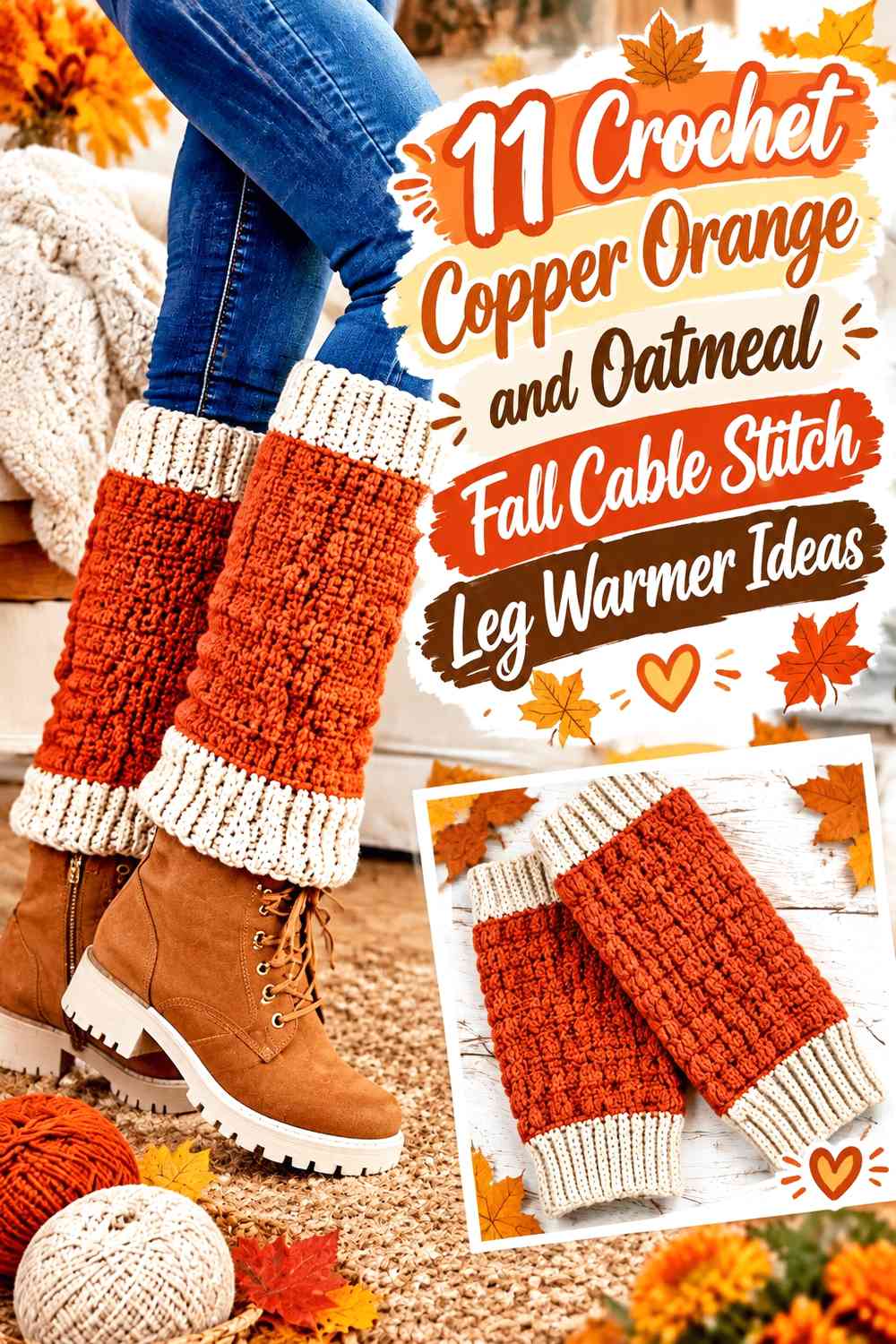

Copper orange and oatmeal are especially useful together on fall crochet leg warmers because they can separate raised cable texture without turning the project into a busy multicolor accessory. Copper orange supplies the stronger autumn color, while oatmeal can lighten cuffs, cable panels, borders, or background areas where stitch definition needs more room.
The biggest decision is not simply which shade you prefer. It is where each color sits on the leg warmer. Copper orange can dominate the calf, frame the edges, or isolate a central cable. Oatmeal can become the main neutral field, outline darker cable work, or keep thick textured areas from looking visually heavy.
The tutorials credited below support the leg-warmer construction concepts. The copper orange and oatmeal palettes and cable-placement directions are independent adaptations, so they should not be read as claims that each creator used these exact colors or cable treatments.
Quick List
- Copper Orange Body with Oatmeal Cable Column Crochet Leg Warmers
- Oatmeal Body with a Copper Orange Center Cable Crochet Leg Warmers
- Copper Orange Upper Calf and Oatmeal Lower Cable Crochet Leg Warmers
- Copper Orange Cable Body with Oatmeal Ribbed Cuff Crochet Leg Warmers
- Oatmeal Slouchy Body with Copper Orange Cable Framing Crochet Leg Warmers
- Oatmeal Cable Field with a Copper Orange Top Cuff Crochet Leg Warmers
- Copper Orange Cable Texture with Oatmeal Double-Cuff Crochet Leg Warmers
- Mirrored Copper Orange and Oatmeal Crochet Cable Stitch Leg Warmers
- Oatmeal Center Cable with Copper Orange Side-Panel Crochet Leg Warmers
- Copper Orange Center Cable with Oatmeal Side-Panel Crochet Leg Warmers
- Oatmeal Leg Warmers with Copper Orange Outer Cable Accent Crochet Panels
How Copper Orange and Oatmeal Affect Crochet Cable Visibility
Cable texture depends partly on light and shadow, so color placement should support the raised surface rather than interrupt it. A long cable is generally easier to read when its main path stays in one color. Frequent copper-orange-to-oatmeal changes across the same raised cable can divide that line into small pieces and make the texture compete with the color changes.
Value contrast matters as well as hue. Before committing to a full pair, place the copper orange and oatmeal yarns beside each other and check them from several feet away. A grayscale photo can also help reveal whether the two shades are clearly separated in lightness. If they appear surprisingly similar, use larger color blocks instead of relying on tiny oatmeal details to define copper orange cables.
Plan Copper Orange and Oatmeal Around Cuffs, Cables, and Boots
The lower part of a leg warmer may be partly hidden by footwear, while the upper cuff usually remains more visible. That makes cuff color an important part of the palette. If oatmeal is used only at the ankle and your boots cover that area, the finished pair may read almost entirely copper orange.
Cable placement deserves a fit check too. A raised cable section can behave differently from plain or ribbed crochet, particularly when stretched around the calf. Test the actual color-and-texture combination before committing to both pieces, and follow the credited tutorial for its construction and sizing guidance.
1. Copper Orange Body with Oatmeal Cable Column Crochet Leg Warmers
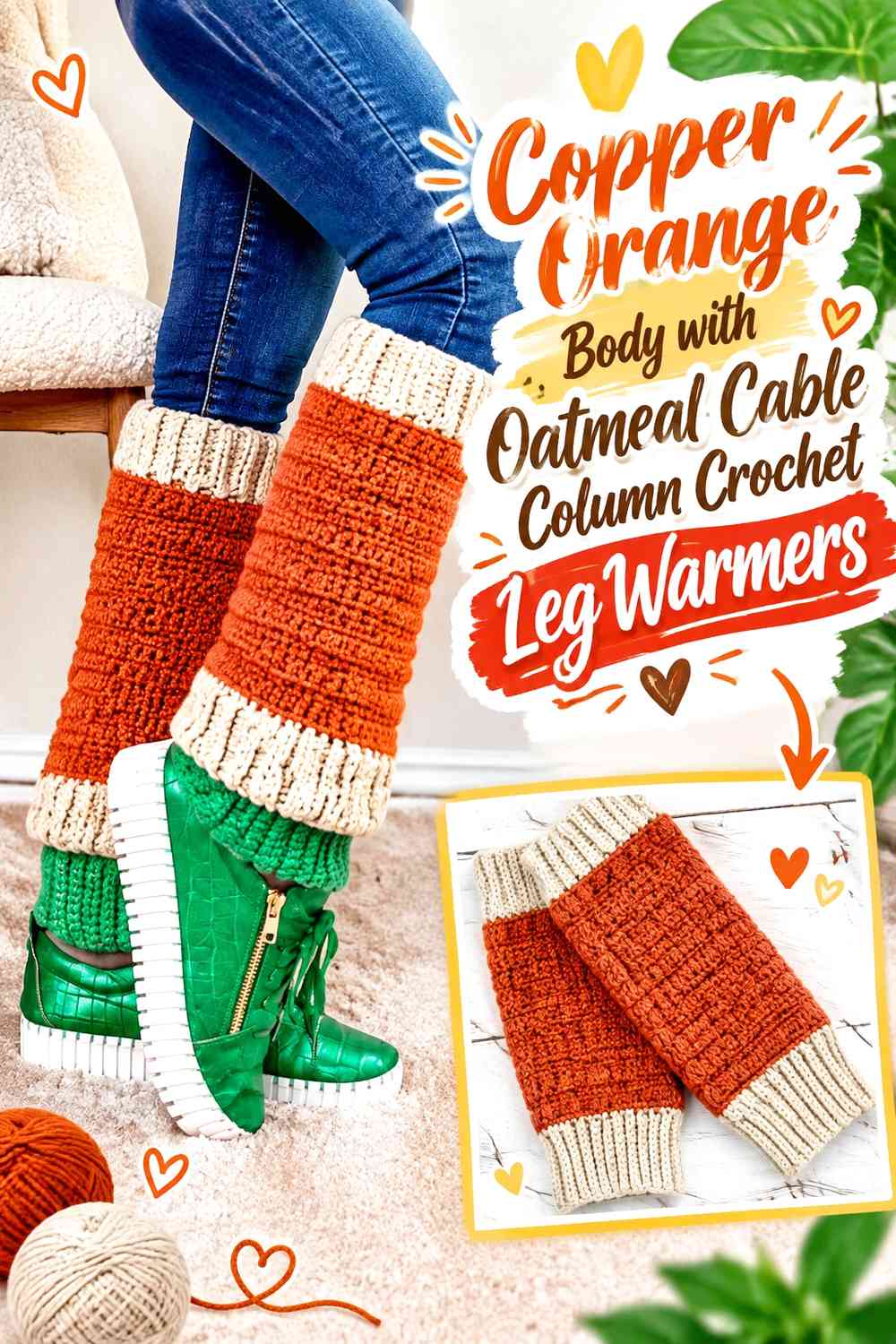
Let copper orange cover most of the leg warmer and reserve oatmeal for one prominent cable area. This gives the autumn shade the largest visual share while using the lighter neutral exactly where raised texture deserves attention. It is a useful direction when you want the pair to look unmistakably copper orange without allowing the cable work to disappear into one large warm-colored surface.
Copper Orange Gives the Crochet Leg Warmer a Continuous Fall Base
Keep broad areas around the cable copper orange instead of interrupting them with small oatmeal stripes. A continuous warm field makes the leg warmer easier to coordinate with brown, tan, charcoal, denim, or other simple fall layers while allowing the crochet surface itself to supply the detail.
Before repeating the layout on the second warmer, view the first one while worn. The copper orange should still feel like the dominant color after the fabric curves around the calf.
Oatmeal Can Isolate the Copper Orange Cable Area
Use oatmeal where you want the eye to find the principal cable. The lighter neutral creates a deliberate break from the copper orange field, which can be more effective than scattering oatmeal through multiple unrelated sections.
Keep the oatmeal area wide enough to look intentional. A very narrow light line beside a substantial cable may appear accidental rather than integrated with the texture.
Creator Credit: Treasurie
2. Oatmeal Body with a Copper Orange Center Cable Crochet Leg Warmers

Reverse the hierarchy by making oatmeal the main leg-warmer color and copper orange the concentrated cable accent. This creates a lighter overall pair while making the warm central detail much more noticeable. It works particularly well when you want the cable to be the visual focal point instead of treating it as texture spread evenly across the entire calf.
Oatmeal Gives Copper Orange Cable Texture a Quiet Background
An oatmeal field leaves more visual room around a copper orange center cable. Rather than asking two strong design features to compete, the neutral body acts as negative space around the warmer-colored texture.
Keep other copper orange additions restrained. If the cable, cuffs, borders, and several stripes all use copper orange, the supposedly concentrated accent can quickly become another dominant color.
Copper Orange Should Stay Continuous Through the Main Cable
Avoid repeatedly cutting the central copper orange cable with oatmeal changes if your main goal is cable visibility. Keeping the raised line in one warm shade lets the texture form a clear vertical path along the leg.
If you want to repeat copper orange elsewhere, a small cuff or narrow edge can connect the palette without dividing the cable itself.
Creator Credit: Crochet MC
3. Copper Orange Upper Calf and Oatmeal Lower Cable Crochet Leg Warmers
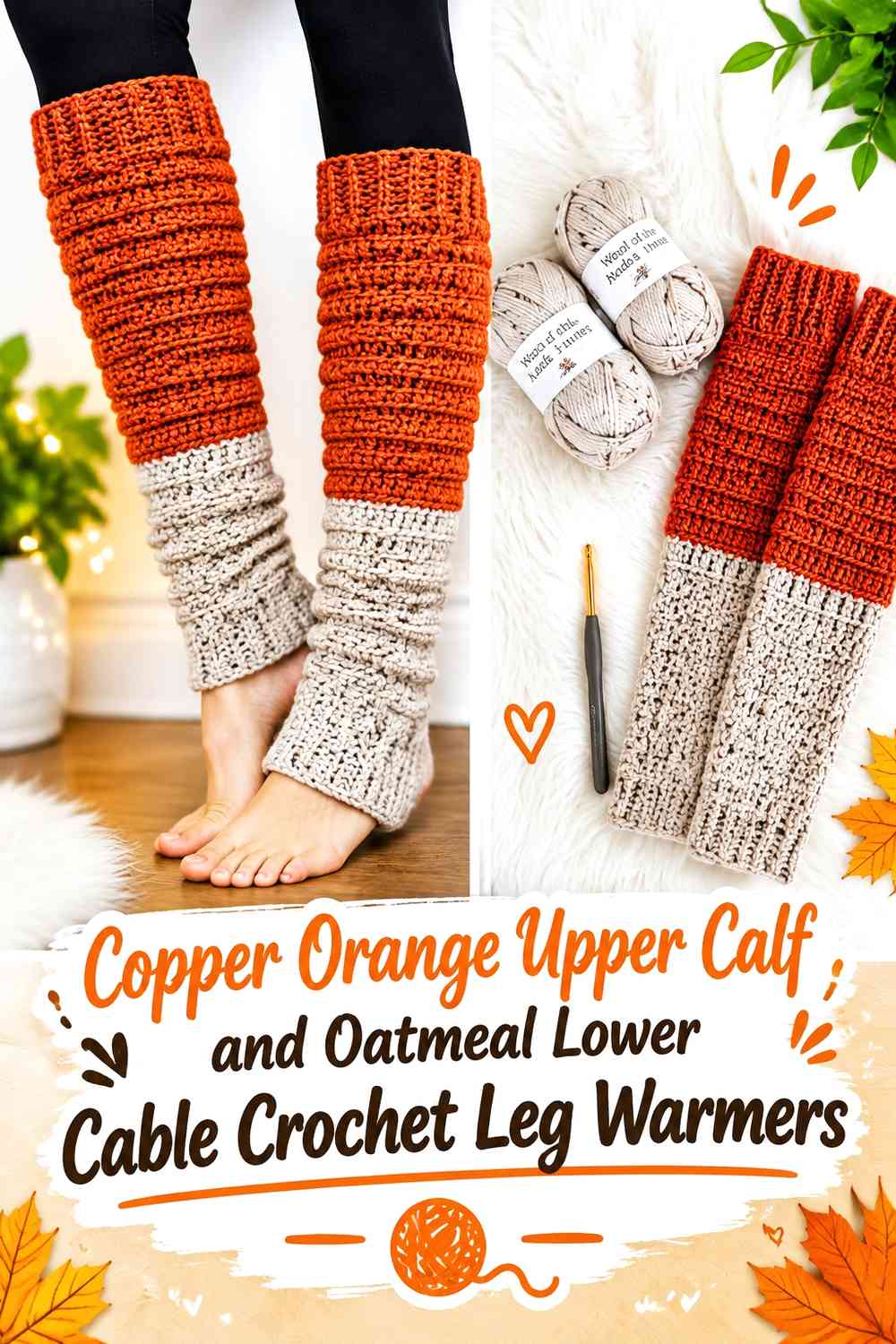
This layout divides the two colors by height instead of scattering them across the surface. Copper orange occupies the more visible upper calf, while oatmeal controls the lower textured area. It is useful for fall outfits with boots because the copper orange can remain visible even when some of the oatmeal section disappears near the footwear.
Copper Orange Works Well Where the Upper Leg Warmer Stays Visible
Place the larger copper orange block toward the top if you want the seasonal color to remain obvious with ankle or mid-height boots. This also prevents the strongest color from becoming concentrated entirely around the shoe.
Check both warmers side by side before finishing the transition. A strong horizontal change from copper orange to oatmeal makes even small differences in placement easier to notice.
Oatmeal Can Keep Lower Cable Texture from Looking Too Heavy
Dense-looking cable texture near the ankle can accumulate visual weight, especially when the fabric is allowed to slouch. Oatmeal lightens that lower section and gives shadows around the cable enough contrast to remain readable.
If the lower portion will sit mostly inside tall boots, reduce the amount of intricate color planning there and give the visible upper section more attention instead.
Creator Credit: Ned & Mimi
4. Copper Orange Cable Body with Oatmeal Ribbed Cuff Crochet Leg Warmers
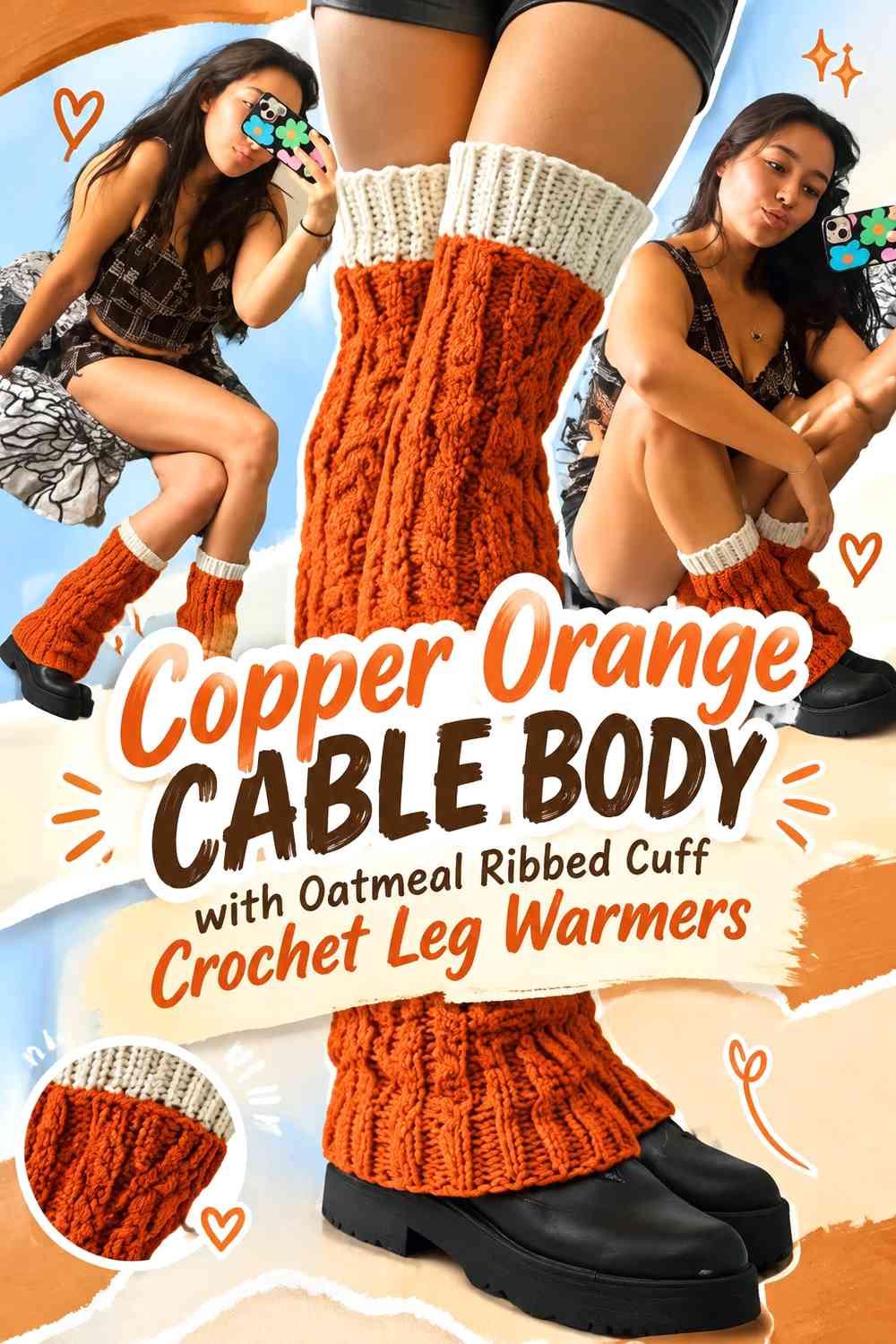
Here, copper orange carries the textured body while oatmeal is restricted to the structural edges. The contrast makes the cuffs look deliberate without interrupting the cable field. This is one of the cleaner two-color arrangements for readers who prefer recognizable fall color with neutral finishing.
Copper Orange Keeps the Main Cable Field Uninterrupted
Run copper orange through the largest textured area so shadows from the cable work provide variation within the same color. That gives you surface interest without relying on constant yarn changes.
A solid main field is especially useful when the cable arrangement is already elaborate. Too many oatmeal interruptions can make the leg warmer look divided into more sections than its construction actually requires.
Oatmeal Ribbing Gives Copper Orange a Clear Beginning and End
Oatmeal cuffs can act like a frame around the copper orange body. Repeating the neutral at both ends creates an obvious relationship between the upper and lower edges instead of making one cuff look like an unrelated color addition.
Compare the cuff depth with the amount of copper orange in the center. If the oatmeal sections become too deep, the neutral may start competing with the cable body for dominance.
Creator Credit: Kae Neebs
5. Oatmeal Slouchy Body with Copper Orange Cable Framing Crochet Leg Warmers

A slouchier leg warmer creates folds, and those folds can make a dark or saturated color feel visually denser. Making oatmeal the main field keeps the gathered fabric relatively light, while copper orange cable or edge sections supply enough structure to keep the neutral from looking flat.
Oatmeal Handles Slouch Without Overloading the Cable Texture
Judge oatmeal in the position where the finished warmer will actually be worn. Extra fabric that looks spacious when stretched vertically can overlap substantially once it is pushed down into folds.
Keeping most of those folds oatmeal lets shadows create the variation. You can then use copper orange where you want the structure of the warmer to remain visually clear.
Copper Orange Can Frame Oatmeal Instead of Filling Every Fold
Use copper orange beside major cable areas or at defined edges rather than distributing tiny orange accents throughout the slouch. Larger, repeated placements give the palette a stronger visual hierarchy.
If the copper orange starts appearing in every textured section, compare the warmer from a distance. Reduce one or two accent areas if the oatmeal no longer reads as the dominant neutral.
Creator Credit: Sigoni Macaroni
6. Oatmeal Cable Field with a Copper Orange Top Cuff Crochet Leg Warmers

This version keeps almost the entire cable surface oatmeal and gives copper orange one strong job at the top. The result is more restrained than a fully two-tone body, but the high-positioned accent stays visible with many types of footwear.
Oatmeal Lets Crochet Cable Shadows Supply Most of the Detail
When oatmeal covers the main surface, the raised and recessed areas can create their own variation. That makes extra color changes less necessary and can be helpful when the cable pattern is the main reason you chose the project.
Use a reasonably smooth-looking yarn if clearly visible cable structure matters to you. An extremely fuzzy surface may soften both the shadows and the boundary between adjacent raised stitches.
Copper Orange at the Top Keeps Oatmeal from Feeling Too Neutral
A copper orange upper cuff gives the eye one clear warm endpoint. Because the accent sits higher on the leg, it can still contribute to the outfit even when the lower portion is partly covered by boots.
Keep the cuff placement consistent on both pieces. A concentrated accent makes differences in height more noticeable than they would be in a single-color pair.
Creator Credit: Crochet With Akita
7. Copper Orange Cable Texture with Oatmeal Double-Cuff Crochet Leg Warmers
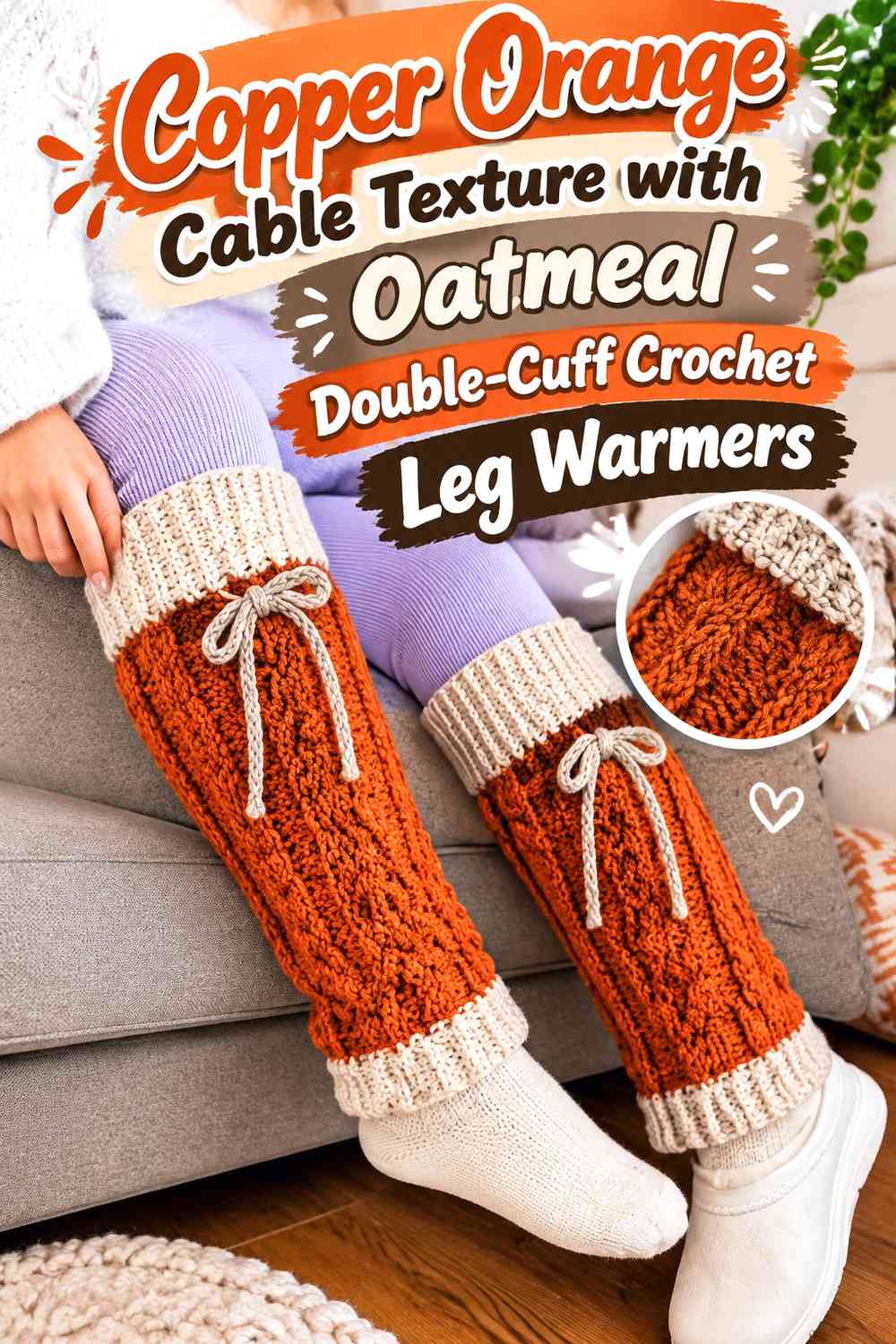
Make copper orange the central cable color and place oatmeal at both the upper and lower cuffs. Unlike Idea 4, where the neutral acts as simple edge framing, this direction can give the oatmeal cuffs more visual presence so the pair reads as a deliberate two-color accessory.
Copper Orange Needs Enough Center Space Between Oatmeal Cuffs
If both cuffs are substantial, leave enough copper orange body between them for the cable texture to remain the main feature. Otherwise the project may begin to look like an oatmeal warmer with a narrow orange insert.
This balance is especially important on shorter leg warmers, where every cuff occupies a larger percentage of the total height.
Oatmeal Double Cuffs Can Balance the Copper Orange Vertically
Repeating oatmeal at both ends prevents the neutral from feeling weighted toward only the shoe or only the knee. It also gives the eye two consistent reference points when comparing the matching leg warmers.
Keep additional oatmeal accents minimal if the cuffs already provide enough contrast. The central copper orange cable area should still have uninterrupted space to read clearly.
Creator Credit: petpetcrochets
8. Mirrored Copper Orange and Oatmeal Crochet Cable Stitch Leg Warmers

Instead of making both pieces identical, let one leg warmer be copper-orange dominant and the other oatmeal dominant. Repeat the secondary color in corresponding cable or cuff areas so the pair still looks coordinated. This creates the strongest asymmetrical option in the collection without introducing a third shade.
Copper Orange and Oatmeal Need Repeated Placement to Make the Pair Connect
A mirrored pair works better when each leg warmer contains both colors. For example, the copper-orange-dominant piece can use an oatmeal cable accent while the oatmeal-dominant piece repeats that location in copper orange.
That repetition establishes a visual rule. Making one leg entirely orange and the other entirely oatmeal would create contrast, but it would lose the color interaction that makes the cable placement useful.
Oatmeal and Copper Orange Should Keep Similar Visual Proportions Across the Pair
The pieces do not need identical color percentages, but compare them together before finishing. One should not contain so many additional accents that it looks much busier than its partner.
Mirrored placement is especially noticeable around upper cuffs and prominent front-facing cables, so use consistent heights and cable positions as visual anchors.
Creator Credit: Forest Lily
9. Oatmeal Center Cable with Copper Orange Side-Panel Crochet Leg Warmers

Move copper orange away from the center and let it run along the sides while oatmeal carries the main front-facing cable. This gives the leg warmer a lighter focal area without losing the stronger fall shade around the calf.
Oatmeal Can Put the Central Crochet Cable in the Brightest Position
A light center helps the raised cable remain easy to find visually. Keep that oatmeal field broad enough to include the important texture rather than reducing it to a thin line surrounded by copper orange.
View the leg warmer from the front while worn before duplicating the layout. The central oatmeal area should remain centered after the fabric stretches around the leg.
Copper Orange Side Panels Can Add Warmth Without Cutting Through Oatmeal Cables
Side placement gives copper orange substantial surface area while protecting the continuity of the oatmeal center. This can be more orderly than alternating narrow orange and oatmeal stripes across the full circumference.
If the copper orange starts wrapping too far toward the front, reassess the proportion before making the second leg warmer so the oatmeal cable remains the intended focal point.
Creator Credit: Vivi Crochet 🌷
10. Copper Orange Center Cable with Oatmeal Side-Panel Crochet Leg Warmers
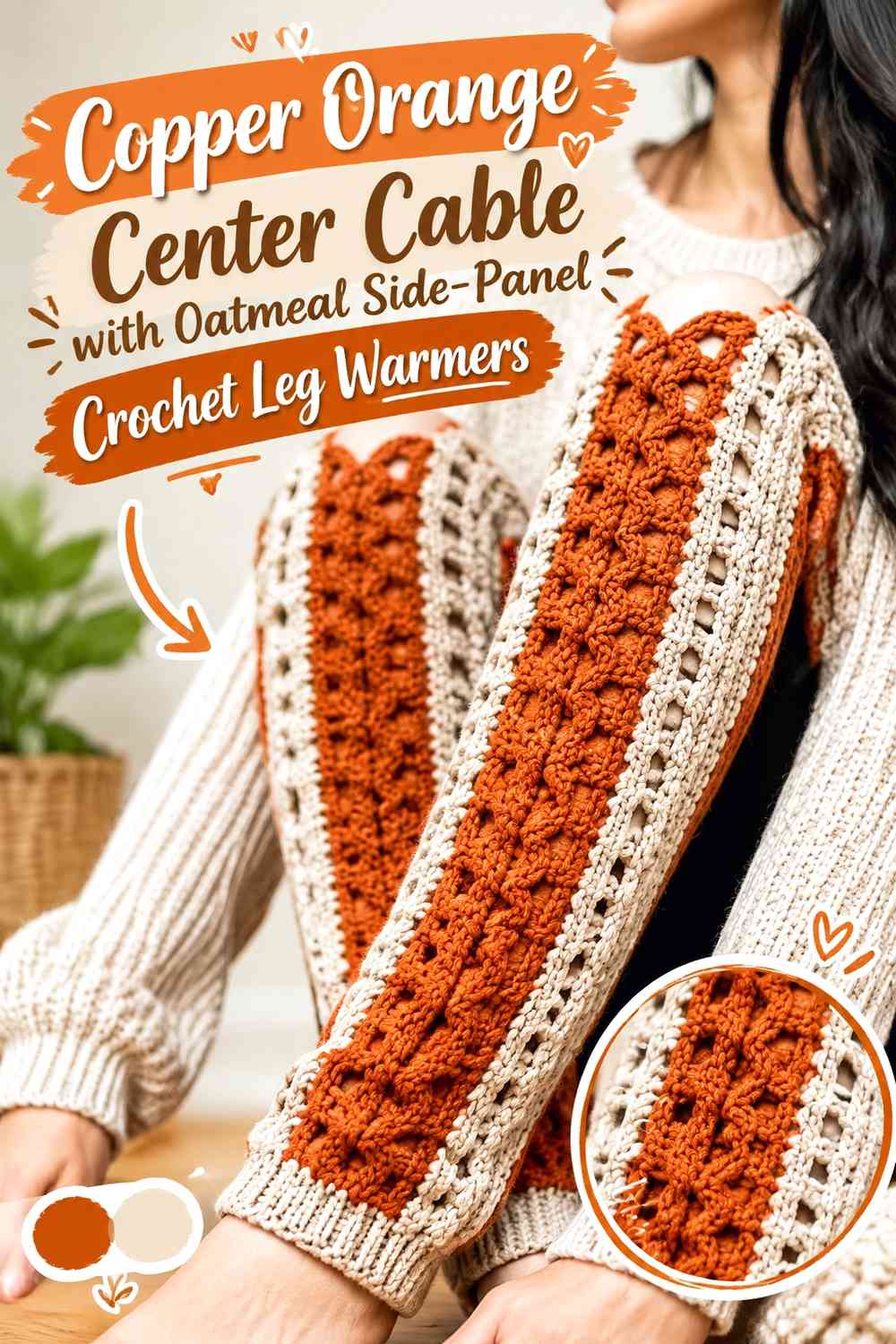
This is the inverse of Idea 9. Put the warmest color directly on the central cable and let oatmeal occupy the surrounding side areas. The result makes the cable the strongest color feature while keeping much of the total surface neutral.
Copper Orange Makes the Central Crochet Cable the Main Fall Accent
Give copper orange a continuous route through the front cable area so both color and texture point to the same focal line. This is stronger than using orange only in tiny cable crossings surrounded by several competing color changes.
If the cable is very wide, compare its visual weight against the oatmeal sides. You can reduce other copper orange accents so the front remains clearly dominant.
Oatmeal Side Panels Keep Copper Orange from Taking Over the Whole Calf
Oatmeal around the central cable creates breathing room and keeps the pair from becoming one solid block of orange. It can also make the transition to neutral leggings, socks, or lighter boots feel more deliberate.
Avoid adding unrelated third-color trim. The value of this arrangement comes from a simple central-versus-side relationship between copper orange and oatmeal.
Creator Credit: TCDDIY
11. Oatmeal Leg Warmers with Copper Orange Outer Cable Accent Crochet Panels

For the final idea, keep the center mostly oatmeal and move copper orange cable detail toward the outer calf. This creates an off-center focal point that feels different from symmetrical front-cable layouts while still using only the two requested fall colors.
Oatmeal Keeps the Main Crochet Leg Warmer Surface Calm
Give oatmeal the largest uninterrupted area so the overall pair remains neutral-led. This creates room for an outer copper orange cable to feel intentional instead of becoming one more colored element in an already divided surface.
Check the layout while worn rather than flat. A cable positioned at the outer calf should remain visible from the intended viewing angle after the fabric stretches.
Copper Orange Outer Cables Can Add Direction Without Dividing the Oatmeal Center
Keeping the orange accent away from the center lets the oatmeal field remain continuous. It also creates a useful place for the strongest fall color when you want something less conventional than matching orange cuffs.
Mirror the outer-calf positioning between the two legs rather than placing both accents on the same side. That keeps the pair visually balanced when viewed together.
Creator Credit: Melody Yarn Tinka
Choosing the Right Copper Orange and Oatmeal Balance
Choose a copper-orange-dominant version if you want the fall color to be immediately noticeable. Ideas 1, 4, 7, and 10 give orange enough uninterrupted surface to lead while oatmeal handles definition or framing.
Choose an oatmeal-dominant version if cable texture matters more than strong color coverage. Ideas 2, 5, 6, 9, and 11 use the neutral as breathing room around carefully placed copper orange.
For the most graphic color placement, the mirrored pair in Idea 8 creates the largest difference between the two pieces. For a cleaner traditional look, matching oatmeal cuffs around a copper orange cable body provide a more orderly repeat.
Whatever arrangement you choose, check the palette in the actual position where the leg warmers will be worn. Boots may hide lower accents, slouching can compress color blocks, and stretching around the calf can shift a cable panel away from where it appeared on a flat piece.
Conclusion
Copper orange and oatmeal can produce very different fall cable leg warmers without changing the basic two-color palette. The main variable is visual hierarchy.
Use copper orange across the body when you want an unmistakably autumnal accessory, and let oatmeal separate cuffs or important cable areas. Reverse that balance when you want lighter leg warmers with a concentrated orange focal point. Side panels, mirrored pairs, upper cuffs, double cuffs, and off-center cable accents give you additional ways to control where the contrast appears.
Before making the second leg warmer, check the first with the leggings, socks, and footwear you expect to use. That is the most practical point to correct the color balance, cable position, or amount of visible cuff. Follow the credited original tutorial for its exact construction details and use the color plans here as adaptation guidance.
Frequently Asked Questions
Does oatmeal show crochet cables better than copper orange?
It can, depending on the particular yarns and lighting. Oatmeal often creates a lighter field where shadows around raised stitches are easy to notice, but a solid copper orange can also show cables clearly. Compare small samples rather than assuming one color will always provide better definition.
Should copper orange or oatmeal dominate fall crochet leg warmers?
Choose copper orange as the dominant color when you want the warmer autumn shade to be the first thing people notice. Choose oatmeal as the dominant color when you want a quieter neutral accessory with copper orange concentrated around cables, cuffs, or side panels.
How can I check whether copper orange and oatmeal have enough contrast?
Place the yarns together in normal lighting and look at them from a distance. You can also photograph them in grayscale. If they become difficult to distinguish without color, use larger color blocks or keep one shade around the most important cable areas rather than depending on tiny contrasting details.
Should copper orange interrupt an oatmeal crochet cable?
It can, but frequent color changes may break the visual path of a long cable. If cable definition is the priority, keep the main raised section in one color and use the second color around cuffs, borders, backgrounds, or separate panels.
Where should oatmeal go if boots will hide the bottom of the leg warmers?
Use at least some oatmeal higher on the leg if you want the neutral to remain visible. An upper cuff, center cable, or side panel will contribute more to the visible palette than an oatmeal ankle edge that stays inside a boot.
Can I reverse the copper orange and oatmeal placement on the second leg warmer?
Yes. A mirrored pair can work well when both colors are repeated in corresponding areas so the two pieces still feel connected. Keep major cable positions, cuff heights, and overall proportions coordinated even when the dominant colors switch.