Cocoa Brown and Cream are a natural fit for crochet winter house slippers with a teddy sherpa-look finish. Cocoa Brown can give the main slipper body a grounded, warm appearance, while Cream can imitate the visual effect of a fluffy lining around cuffs, openings, seams, and selected toe details.
The strongest versions do more than add a Cream border to a brown slipper. The two colors can separate the sole from the upper, distinguish a folded cuff from the foot, emphasize a moccasin seam, or create the impression that a soft Cream lining is turning outward around the opening.
Texture matters just as much as color. If you use a fuzzy or highly textured yarn for the Cream areas, small stitch details may become less visible. Keep those sections simple enough that the cuff, opening, and trim still have a recognizable shape. The tutorials below support different slipper constructions; the Cocoa Brown and Cream sherpa-look palettes are independent color adaptations unless specifically stated otherwise.
Quick List
- Cocoa Brown Crochet House Slippers With a Cream Teddy Sherpa-Look Cuff
- Cocoa Brown Crochet House Boots With a Cream Fold-Over Sherpa-Look Cuff
- Cocoa Brown Ribbed Crochet Slippers With Cream Sherpa-Look Ankle Trim
- Cocoa Brown Low-Cut Crochet House Slippers With Cream Toe Edging
- Cream Ballet Crochet House Slippers With Cocoa Brown Sole Definition
- Cocoa Brown Rectangle Crochet Slippers With a Cream Plush Opening
- Cocoa Brown Hexagon Crochet Slipper Boots With Cream Motif Accents
- Cream Textured Crochet House Slippers With Cocoa Brown Sole and Toe
- Cocoa Brown Crochet Slipper Socks With a Cream Teddy Cuff
- Cocoa Brown Cable Crochet Slippers With Cream Sherpa-Look Trim
- Cream One-Hour-Style Crochet Slippers With Cocoa Brown Edge Contrast
- Cocoa Brown Crochet Slippers With Cream Teddy-Style Accent Sections
- Cocoa Brown Cottage Crochet Slippers With a Cream Plush Collar
- Cocoa Brown Winter Crochet Slippers With an Extra-Soft Cream Cuff
- Cocoa Brown Moccasin Crochet Slippers With Cream Sherpa-Look Seams
- Cocoa Brown Crochet Slipper Boots With a Cream High Sherpa-Look Cuff
Let Cocoa Brown Build the House Slipper Shape
Cocoa Brown is useful as the dominant shade because it can visually connect the toe, sides, heel, and lower edge into one clear slipper silhouette. That becomes especially helpful when Cream is textured or fuzzy, since the lighter surface can attract more attention than its actual size suggests.
For a teddy sherpa-look design, keep most of the foot Cocoa Brown and concentrate Cream around areas that could plausibly resemble exposed lining: the cuff, opening, tongue area, or a turned-back edge. This gives the Cream a purpose instead of scattering pale texture around the slipper.
If you want a lighter result, reverse the balance and use Cream over the main upper with Cocoa Brown at the sole and edges. In that version, make sure the dark trim still outlines the slipper rather than breaking the Cream surface into too many small sections.
Use Cream Where Teddy Sherpa-Look Texture Will Stay Visible
Cream can appear larger than Cocoa Brown when it is worked in a fluffy or high-loft texture. A narrow Cream cuff may therefore have as much visual impact as a much broader Cocoa Brown upper.
Keep the strongest sherpa-look texture away from tiny structural details that need precise stitch definition. A broad cuff, ankle collar, or opening edge is easier to read than a fuzzy line around several small toe seams.
You can also create a sherpa-inspired look through color placement alone. A soft Cream yarn beside a smooth Cocoa Brown body can suggest lining even when both yarns have similar surface texture.
Separate Cocoa Brown Uppers From Cream Slipper Soles Carefully
The sole is another useful color break, but it affects the apparent height of the slipper. A thick Cream-looking band beneath a Cocoa Brown upper can make the pale color look like part of the shoe rather than interior lining.
For a stronger teddy-slipper effect, Cocoa Brown often works well at the sole while Cream stays higher around the opening. If you reverse the arrangement, repeat Cocoa Brown at the toe or heel so the dark sole does not feel disconnected.
Crocheted soles should not automatically be assumed to provide traction on smooth floors. If floor grip matters, choose and test an appropriate finishing solution for the intended surface rather than relying on appearance alone.
1. Cocoa Brown Crochet House Slippers With a Cream Teddy Sherpa-Look Cuff
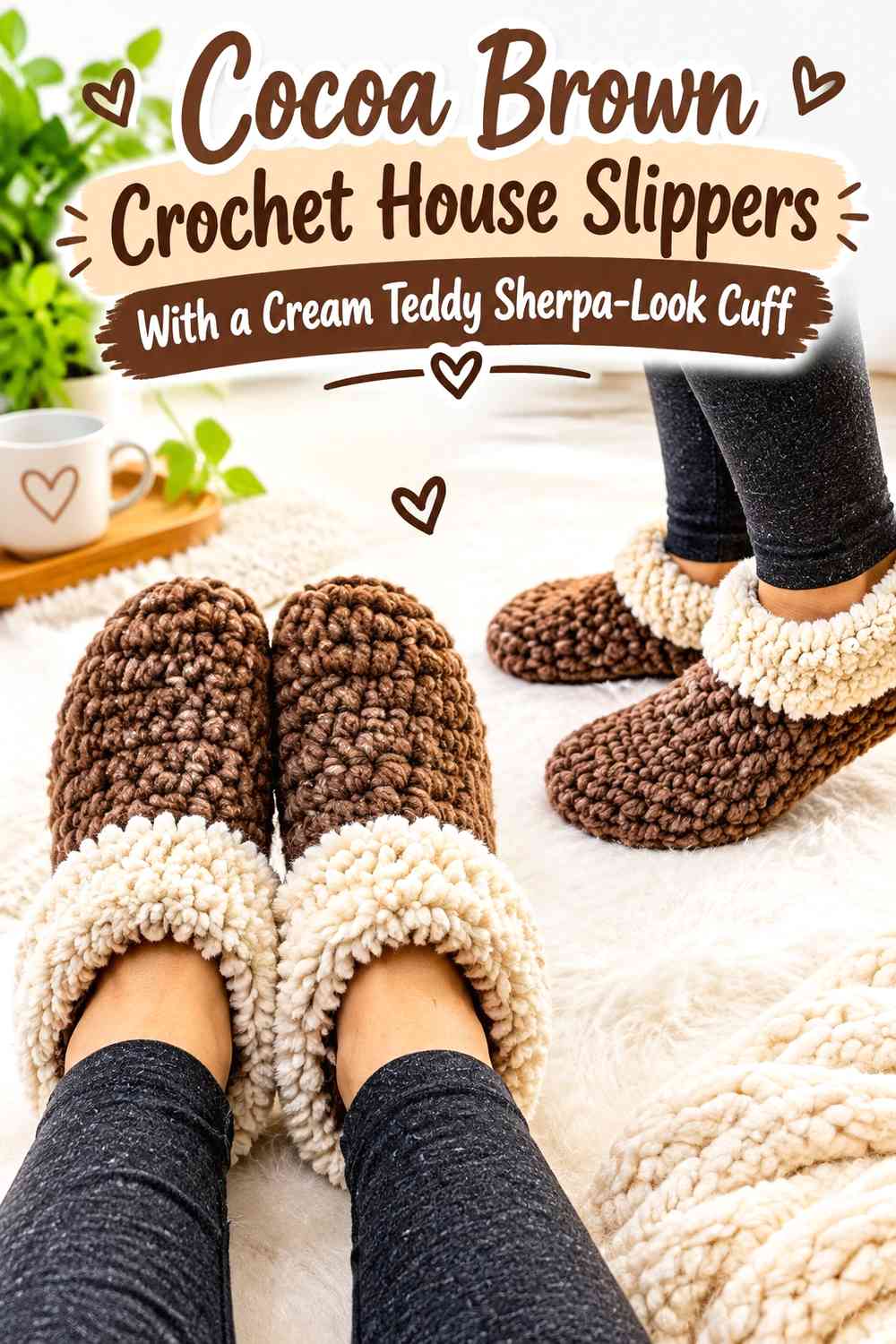
This palette keeps the construction straightforward: Cocoa Brown covers the toe, sides, heel, and sole area, while Cream forms a visibly softer collar around the ankle. The color division immediately suggests a dark slipper with pale lining turned outward.
Keep Cocoa Brown Continuous From Toe to Heel
A continuous Cocoa Brown body gives the Cream cuff a stable visual base. Avoid inserting pale stripes through the foot unless you deliberately want a patterned slipper rather than a teddy-lined look.
The uninterrupted brown area also makes the lighter collar easier to identify from above.
Make the Cream Cuff the Main Sherpa-Look Detail
Give Cream enough depth around the opening to read as a collar rather than a thin finishing line. If you use a highly textured yarn, the cuff can remain relatively simple because its surface already provides visual interest.
Keep the Cream from extending too far down the sides if Cocoa Brown is meant to remain dominant.
Repeat Cream Minimally Against the Cocoa Brown Toe
If the cuff feels disconnected, a small Cream detail near the toe can help. Keep it subordinate to the collar so the slipper still reads as Cocoa Brown with Cream lining rather than an evenly divided two-color shoe.
Creator Credit: KnitcroAddict
2. Cocoa Brown Crochet House Boots With a Cream Fold-Over Sherpa-Look Cuff
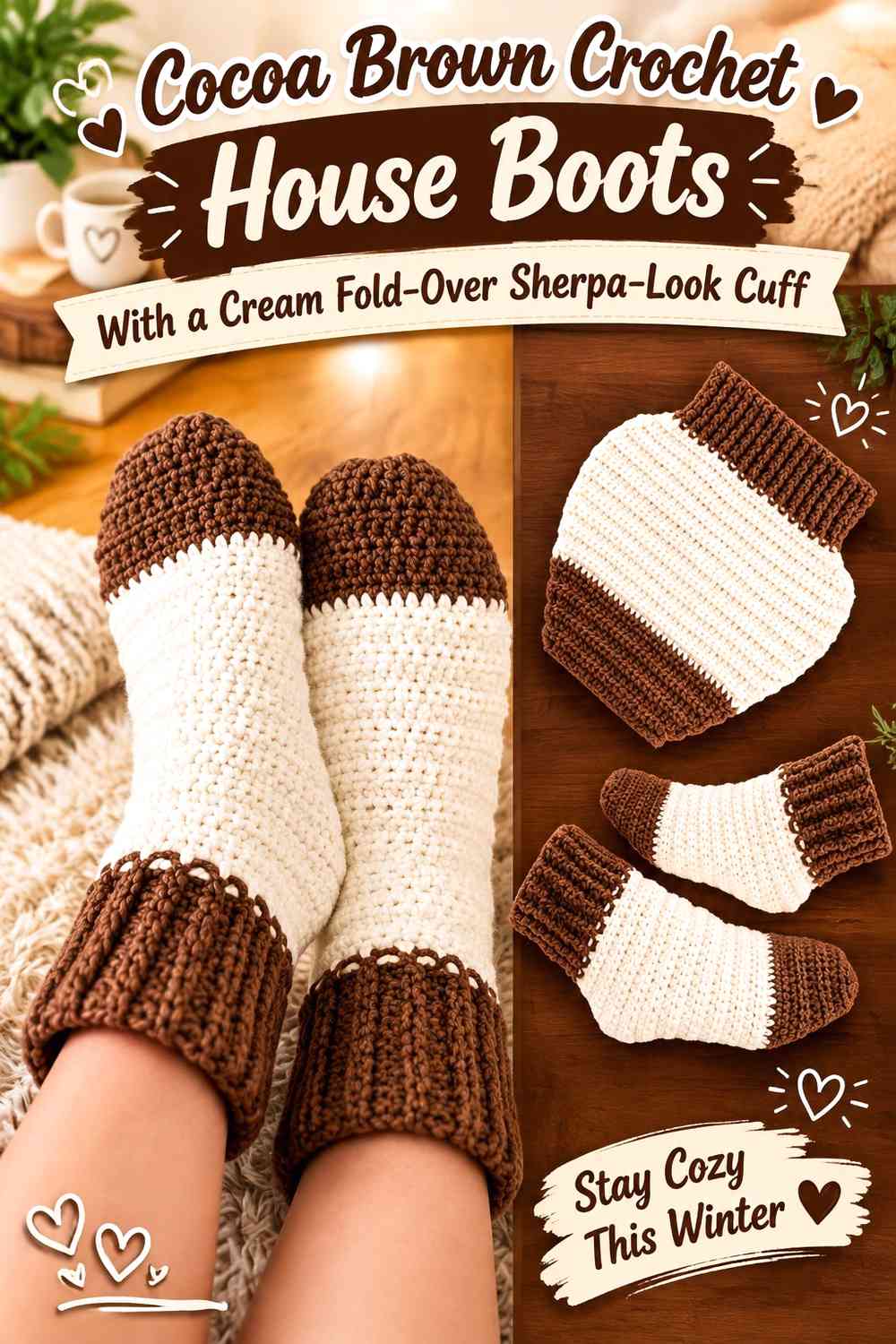
A taller slipper boot creates more room for Cream without covering the foot itself. Keep the lower boot Cocoa Brown and use Cream only after the ankle begins, then fold or visually emphasize that pale upper section.
Let Cocoa Brown Anchor the Tall Slipper Boot
Use Cocoa Brown across the foot and lower ankle so the taller shape does not become overwhelmingly pale. The dark lower area also distinguishes the house boot from the Cream cuff.
Use Cream on the Folded Cocoa Brown Boot Cuff
A Cream upper section creates a convincing turned-lining effect when it is visually separate from the Cocoa Brown body. The fold is an especially natural place for the color change because it already marks a structural transition.
Keep Cocoa Brown Visible Beneath the Cream Cuff
Do not let the Cream collar extend so low that only the toe remains brown. A substantial Cocoa Brown lower section keeps the boot visually balanced and preserves the two-color hierarchy.
Creator Credit: tallermanualperu
3. Cocoa Brown Ribbed Crochet Slippers With Cream Sherpa-Look Ankle Trim
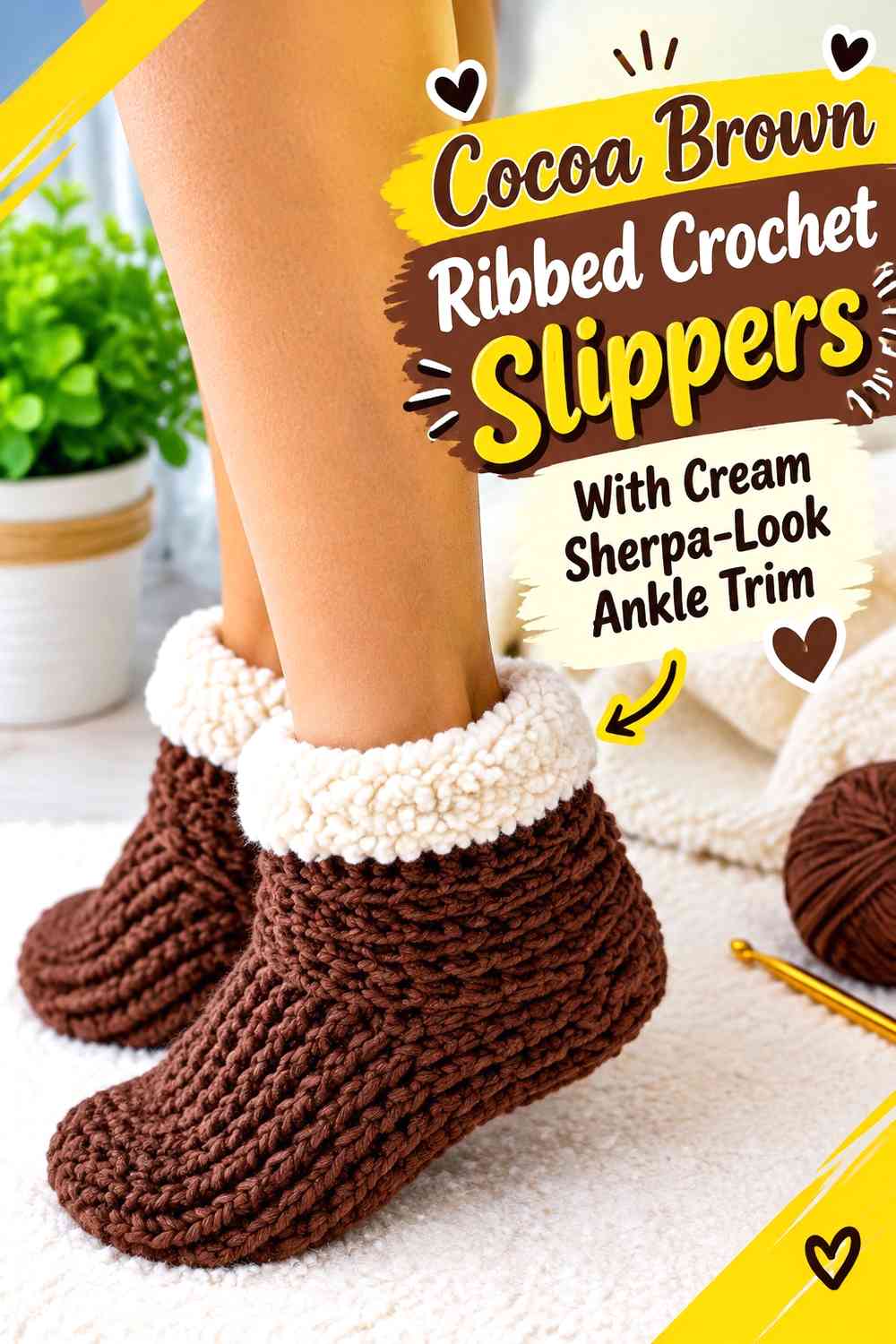
Ribbed slipper boots provide built-in texture, so the Cream accent does not need additional complicated stitchwork. Cocoa Brown can carry the ribbed body while Cream creates a softer-looking transition at the ankle.
Keep Cocoa Brown Ribbing Visible Across the Slipper
The ribbed structure gives a Cocoa Brown upper more definition than a completely smooth surface. Avoid covering large sections with Cream if you want that texture to remain part of the design.
Put Cream Above the Cocoa Brown Ribbed Section
Moving Cream toward the ankle keeps the two textures from competing. The dark ribbing can define the foot, while a softer pale cuff signals the teddy sherpa-look finish.
Use Cream Sparingly Around the Cocoa Brown Opening
If a full Cream cuff already surrounds the ankle, another thick pale edge around the opening may be unnecessary. Let one Cream area carry the plush effect instead of stacking several pale bands.
Creator Credit: Littlejohn’s Yarn
4. Cocoa Brown Low-Cut Crochet House Slippers With Cream Toe Edging
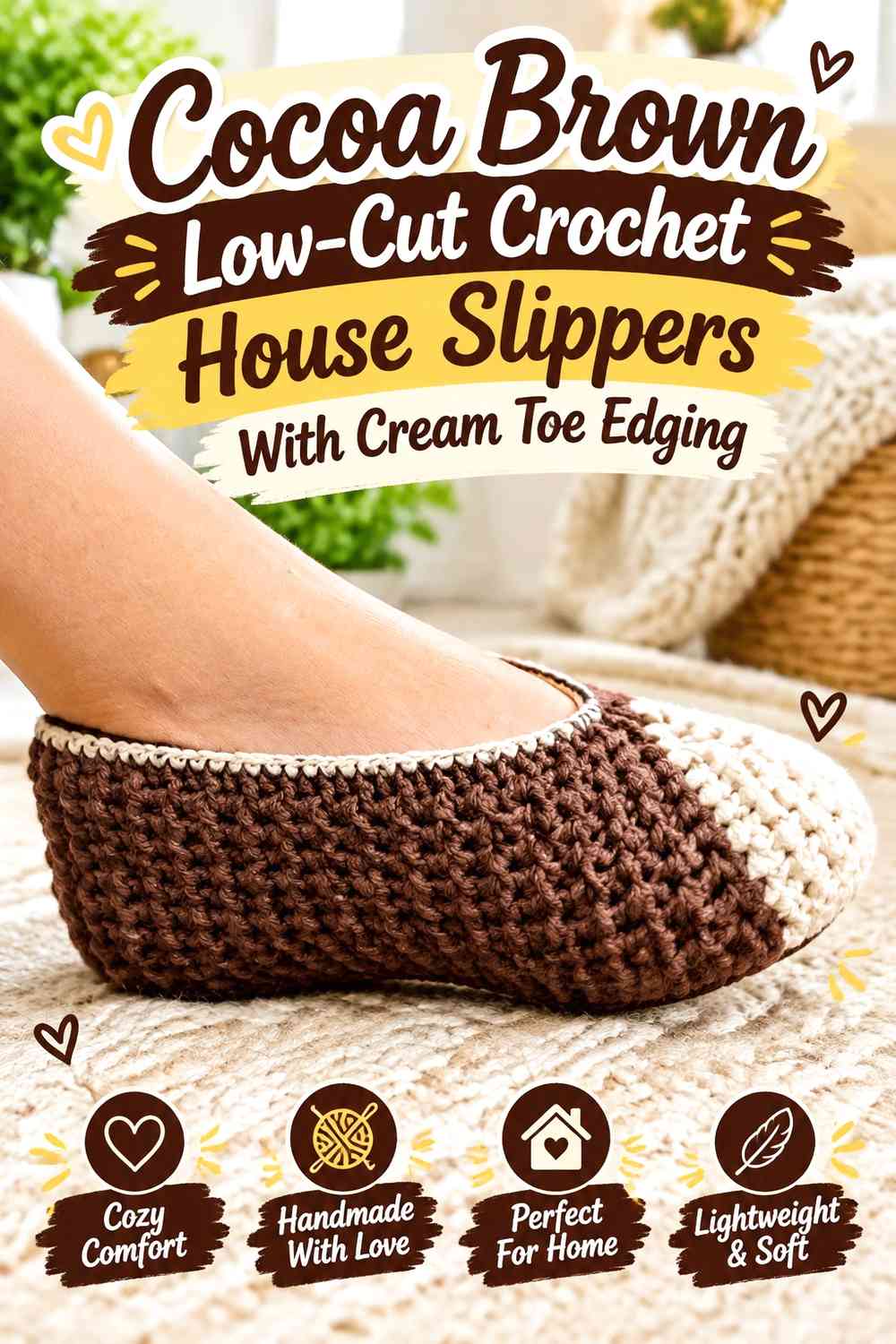
A low slipper has no tall cuff, so Cream needs a different role. Keep the foot Cocoa Brown and use the pale shade around the opening, with a smaller repeat near the toe to create a soft-lined effect without turning the design into a bootie.
Let Cocoa Brown Cover the Low-Cut Slipper Upper
A broad Cocoa Brown foot area keeps the low silhouette easy to recognize. Because less fabric rises around the ankle, frequent color changes can make the slipper feel visually fragmented.
Use Cream Around the Cocoa Brown Foot Opening
A Cream opening edge can mimic a small amount of visible lining. If the Cream yarn is fluffy, keep the edge neat enough that it does not close in visually around the foot opening.
Echo Cream Near the Cocoa Brown Toe Carefully
A small Cream toe edge can connect the front and opening, but avoid turning the entire toe pale. The main sherpa-look cue should remain at the opening.
Creator Credit: Di’s Handiwork (Crochet and Knitting)
5. Cream Ballet Crochet House Slippers With Cocoa Brown Sole Definition
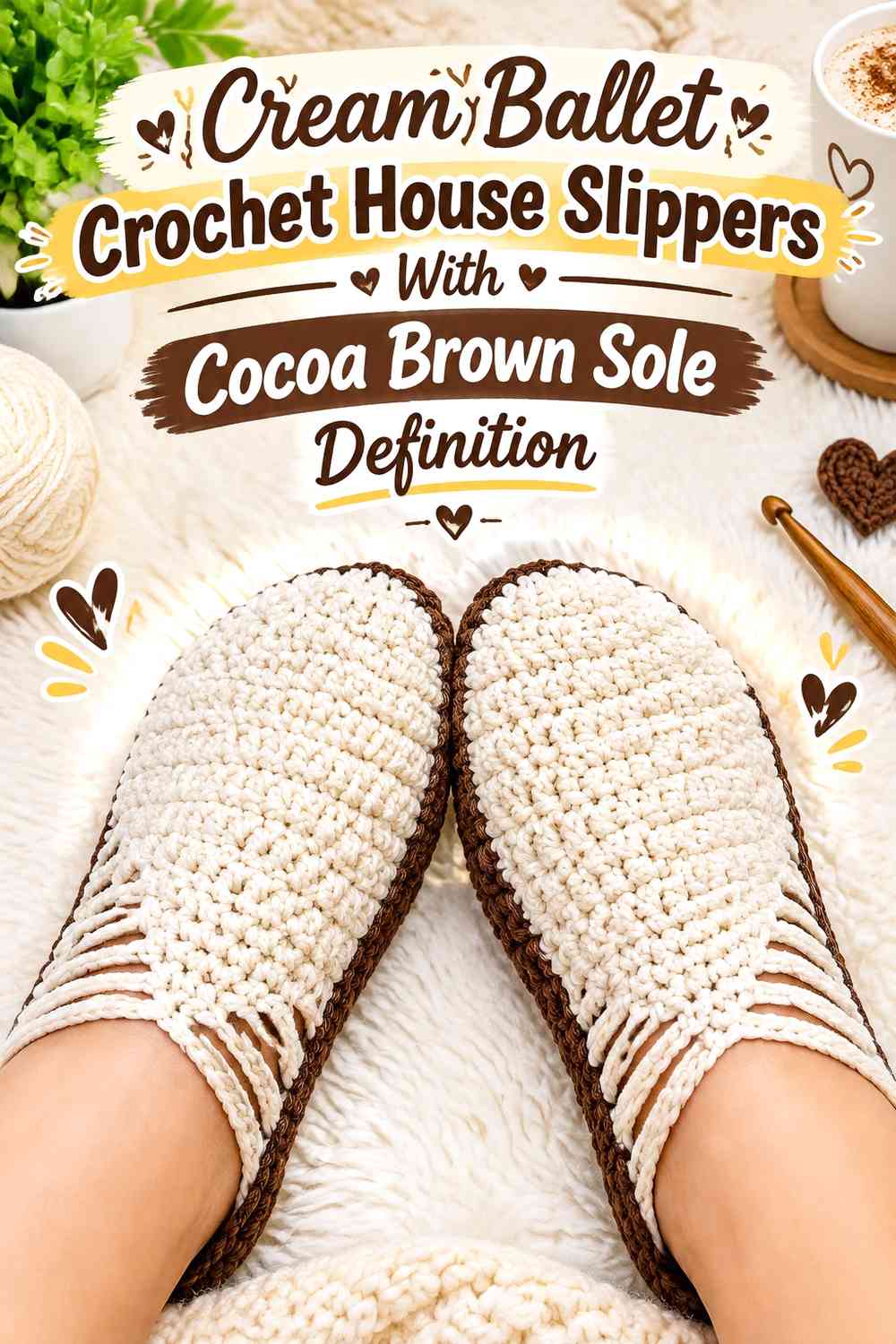
This idea reverses the usual hierarchy. Cream forms the low ballet-style upper, while Cocoa Brown defines the sole edge and selected opening details. The result is lighter overall but still grounded enough for winter styling.
Let Cream Dominate the Ballet Slipper Upper
Keep Cream uninterrupted over most of the foot so its pale teddy-like softness remains the main visual feature. Too many Cocoa Brown stripes can make a compact ballet slipper look busy.
Use Cocoa Brown Beneath the Cream Upper
A Cocoa Brown lower edge gives the pale slipper a clear base and helps outline its low profile. Keep that dark section visually narrower than the Cream upper if you want the slipper to remain Cream-led.
Repeat Cocoa Brown Around the Cream Opening Only if Needed
A very narrow Cocoa Brown edge can connect the sole to the upper opening. If it makes the Cream top look boxed in, leave the opening pale and let the sole carry the dark accent alone.
Creator Credit: Heart Hook Home
6. Cocoa Brown Rectangle Crochet Slippers With a Cream Plush Opening
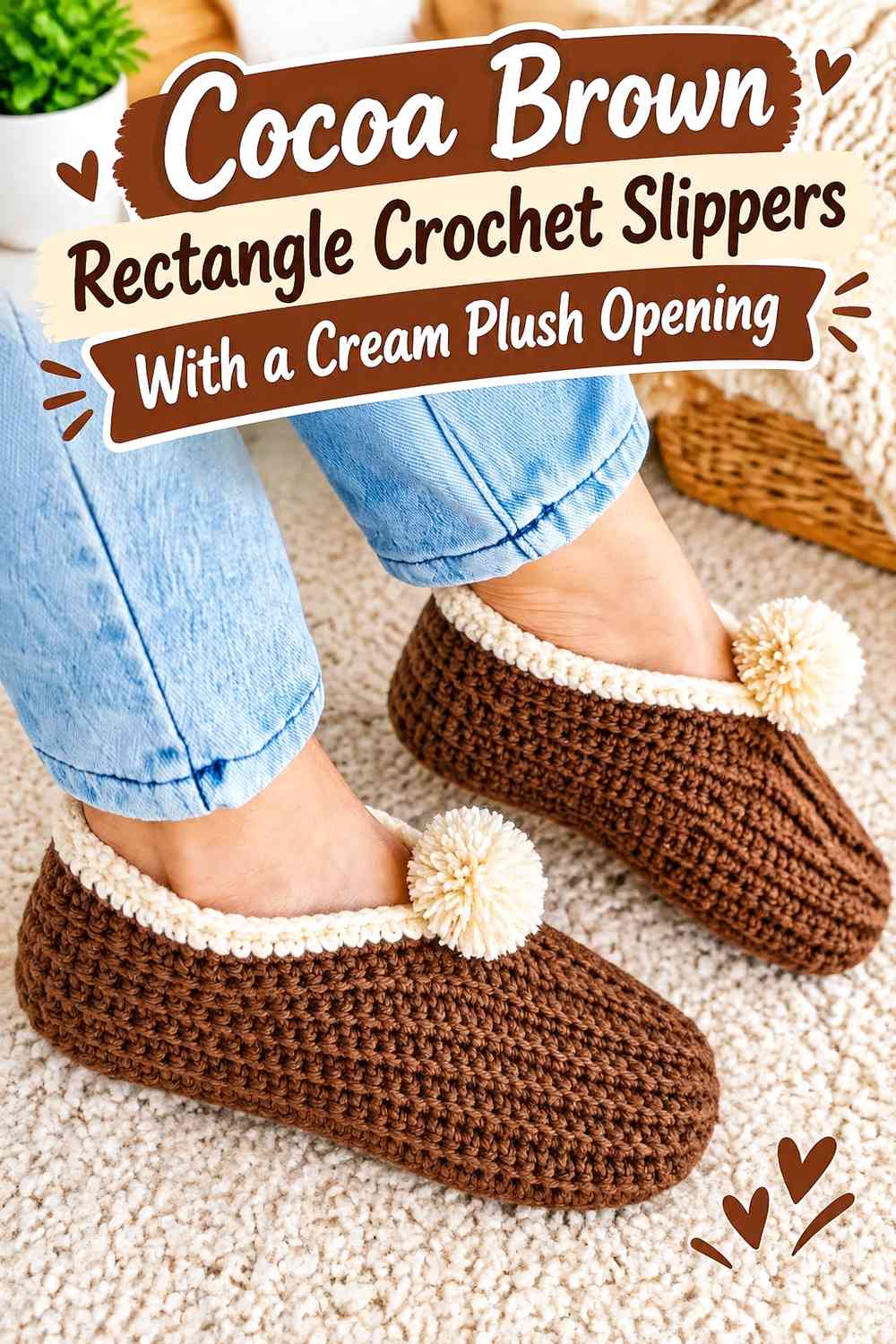
A rectangle-based slipper gives the palette a deliberately simple surface. Use Cocoa Brown across the rectangular body and add Cream only after shaping, concentrating it around the opening where it will have the strongest sherpa-look effect.
Keep Cocoa Brown Consistent Across the Rectangle Slipper
Because the construction begins from a simple panel, large uninterrupted Cocoa Brown areas keep the finished slipper cohesive after it is folded and joined.
Add Cream After the Cocoa Brown Shape Is Established
Treat Cream as a finishing color rather than dividing the original rectangle into frequent stripes. This helps the pale section look like added lining instead of part of the basic slipper fabric.
Make the Cream Opening Wide Enough to Read Against Cocoa Brown
A very fine Cream line may disappear from normal standing height. Give the opening enough pale surface to stay visible when looking down at the slippers.
Creator Credit: naztazia
7. Cocoa Brown Hexagon Crochet Slipper Boots With Cream Motif Accents

Hexagon-based slipper boots offer natural color breaks inside the construction. Cocoa Brown can dominate most motifs while Cream appears in selected outer sections, then returns at the ankle as a lining-like trim.
Keep Cocoa Brown Dominant Across the Hexagon Motifs
Too much alternating color can make the slipper look patchworked rather than sherpa-inspired. Keep most motif area Cocoa Brown and place Cream consistently at comparable structural points.
Use Cream Near the Cocoa Brown Hexagon Boot Opening
A Cream collar connects the geometric motif construction to the teddy-slipper concept. The pale opening should remain visually separate from smaller motif accents.
Limit Cream Inside Cocoa Brown Motifs
If Cream already forms the collar, one repeated Cream motif section is usually enough to connect the palette. Avoid using every hexagon round as a new color change.
Creator Credit: Örgücü Şirin
8. Cream Textured Crochet House Slippers With Cocoa Brown Sole and Toe
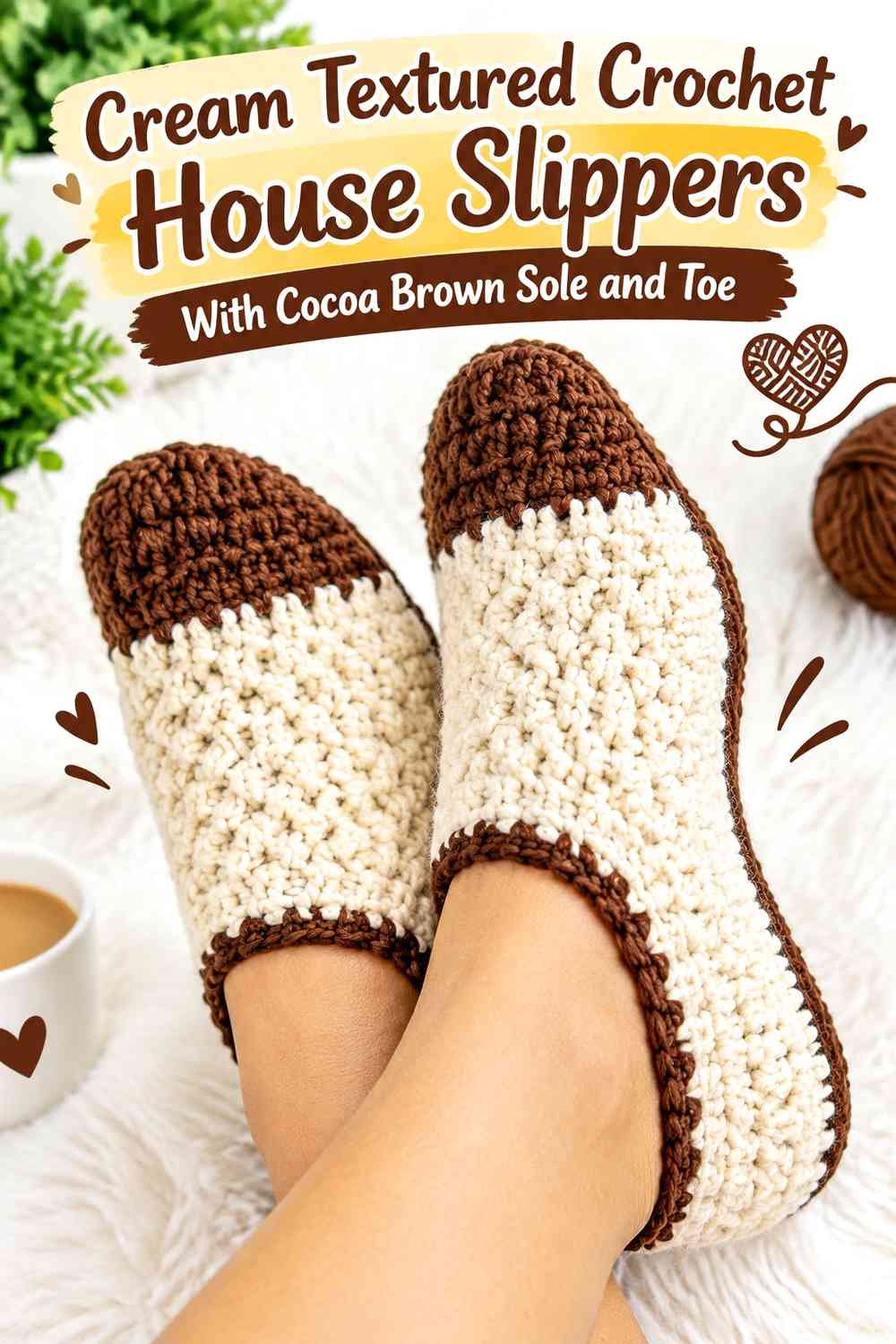
A strongly textured slipper can handle a light dominant color because the stitch relief prevents Cream from looking completely flat. Cocoa Brown can then define the areas most likely to benefit from a darker outline.
Let Cream Carry the Main Textured Slipper Surface
Use Cream across the feature stitch so texture and color reinforce each other. This creates a softer, fleece-inspired appearance without requiring every detail to use a fuzzy yarn.
Put Cocoa Brown Under the Cream Slipper
A dark lower section grounds the pale textured upper. It also gives the slipper a clear bottom edge when viewed from the side.
Use Cocoa Brown at the Cream Toe Only as an Accent
A small dark toe section can connect to the sole, but avoid covering too much of the textured Cream surface. The idea works because the pale area remains visually dominant.
Creator Credit: Handwork diy
9. Cocoa Brown Crochet Slipper Socks With a Cream Teddy Cuff
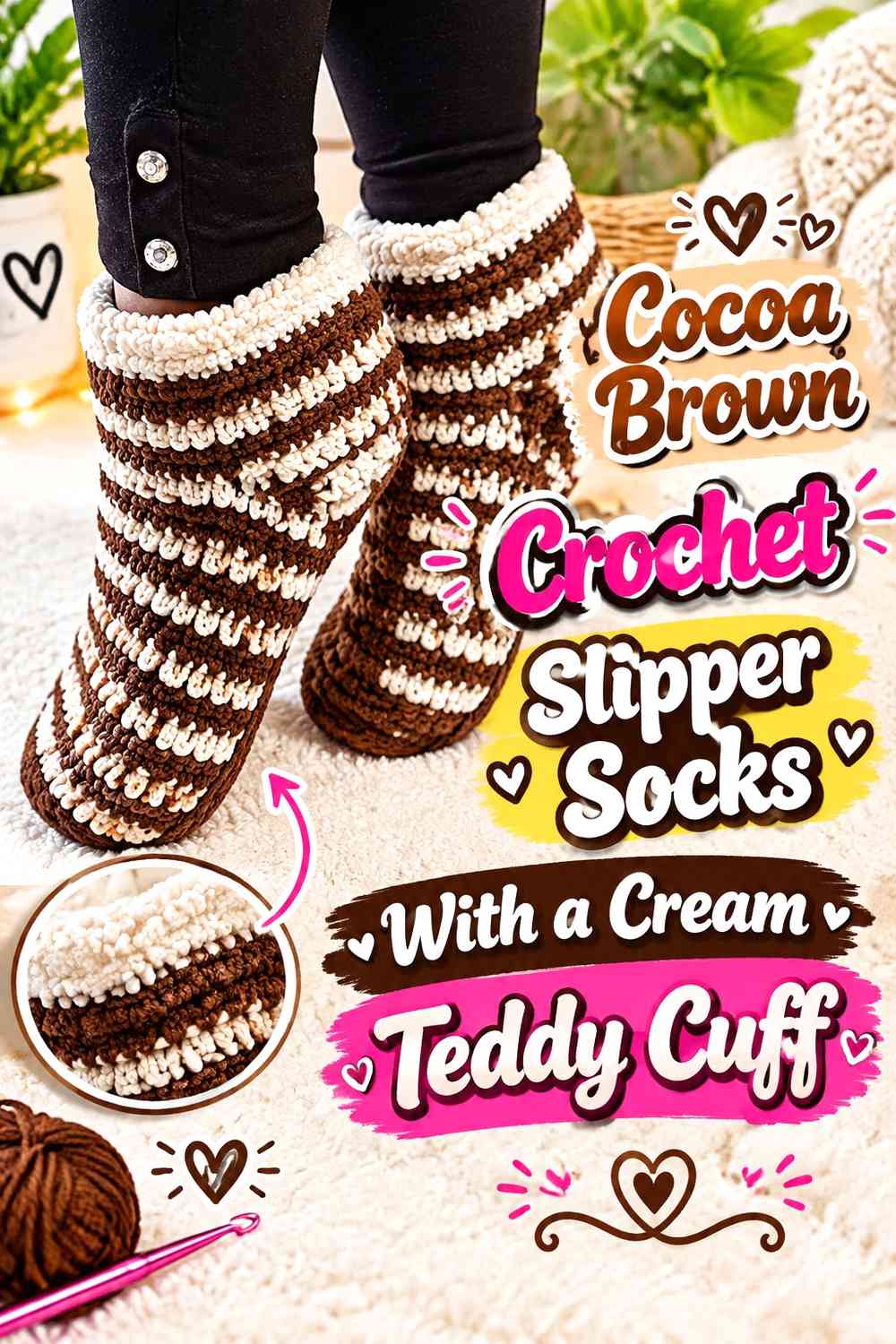
Slipper socks create a taller, softer silhouette than low house shoes. Cocoa Brown can run continuously from toe through ankle, while a Cream top cuff provides one concentrated sherpa-look section.
Keep Cocoa Brown Continuous Through the Slipper-Sock Ankle
A continuous dark column visually lengthens the slipper and gives the Cream cuff a clean starting point.
Add Cream Only at the Top of the Cocoa Brown Slipper Sock
The higher placement makes Cream look like turned-out lining rather than a decorative stripe. A plush texture is especially effective here because it does not interfere with the toe or heel shaping.
Keep the Cream Cuff Proportional to the Cocoa Brown Foot
An extremely deep pale cuff can make the foot section appear visually small. Check the full slipper from the side before deciding how much Cream to expose.
Creator Credit: Jayda InStitches
10. Cocoa Brown Cable Crochet Slippers With Cream Sherpa-Look Trim
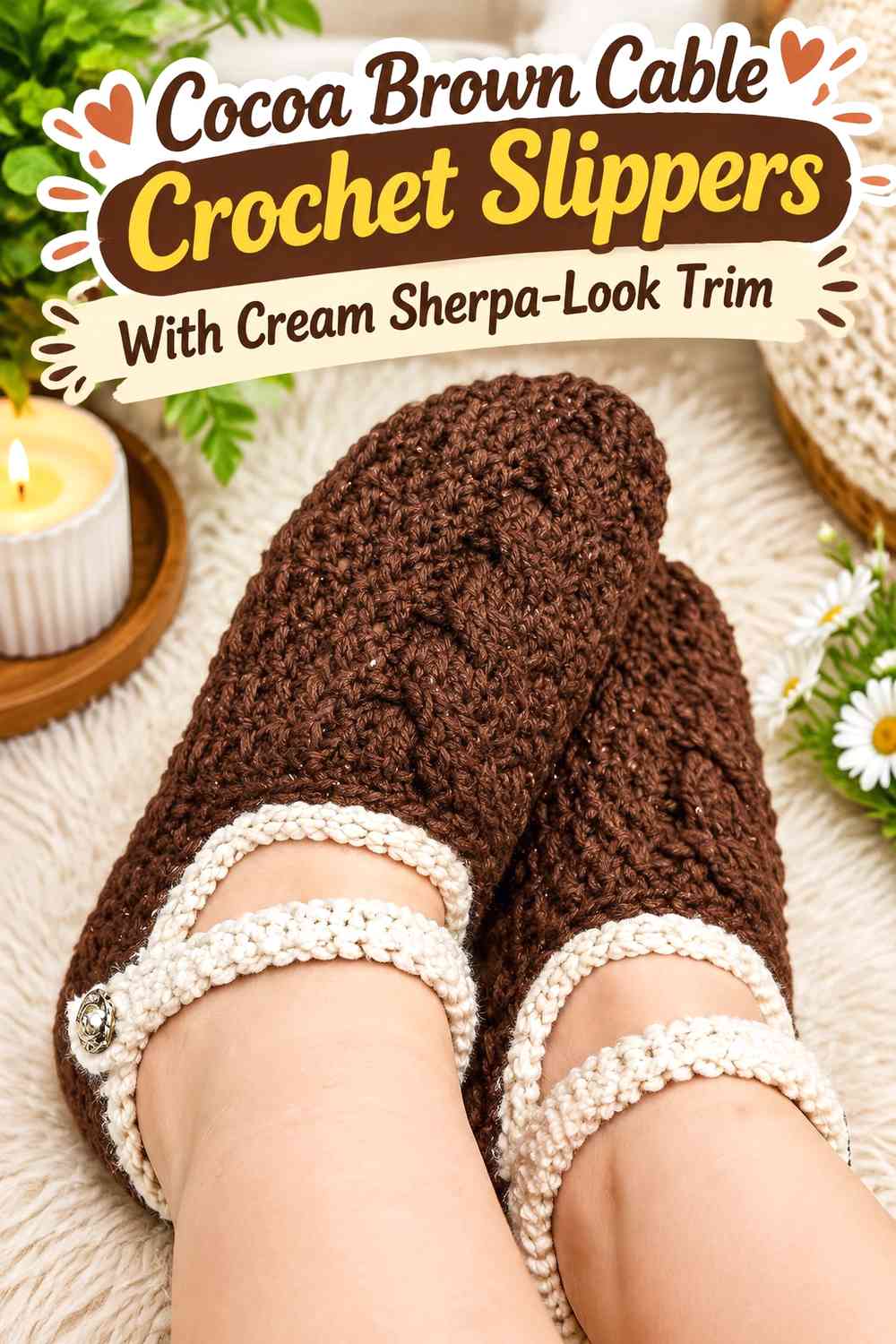
Cable texture deserves room to remain visible, so keep the main cable section Cocoa Brown and place Cream outside the most detailed area. The result combines dark structural texture with a softer-looking pale trim.
Let Cocoa Brown Cables Remain the Slipper Focal Point
Avoid running Cream through every cable change. A consistent Cocoa Brown field keeps the raised pattern legible and prevents the color contrast from competing with the texture.
Place Cream Beside the Cocoa Brown Cable Section
Use Cream at the opening or collar where it can soften the slipper without obscuring the cable structure.
Keep Cream Simple Against Detailed Cocoa Brown Texture
A very busy Cream stitch pattern can make the upper feel overloaded. Let the surface contrast come from plush-versus-cabled texture rather than giving both sections equal complexity.
Creator Credit: Bag-O-Day Crochet
11. Cream One-Hour-Style Crochet Slippers With Cocoa Brown Edge Contrast
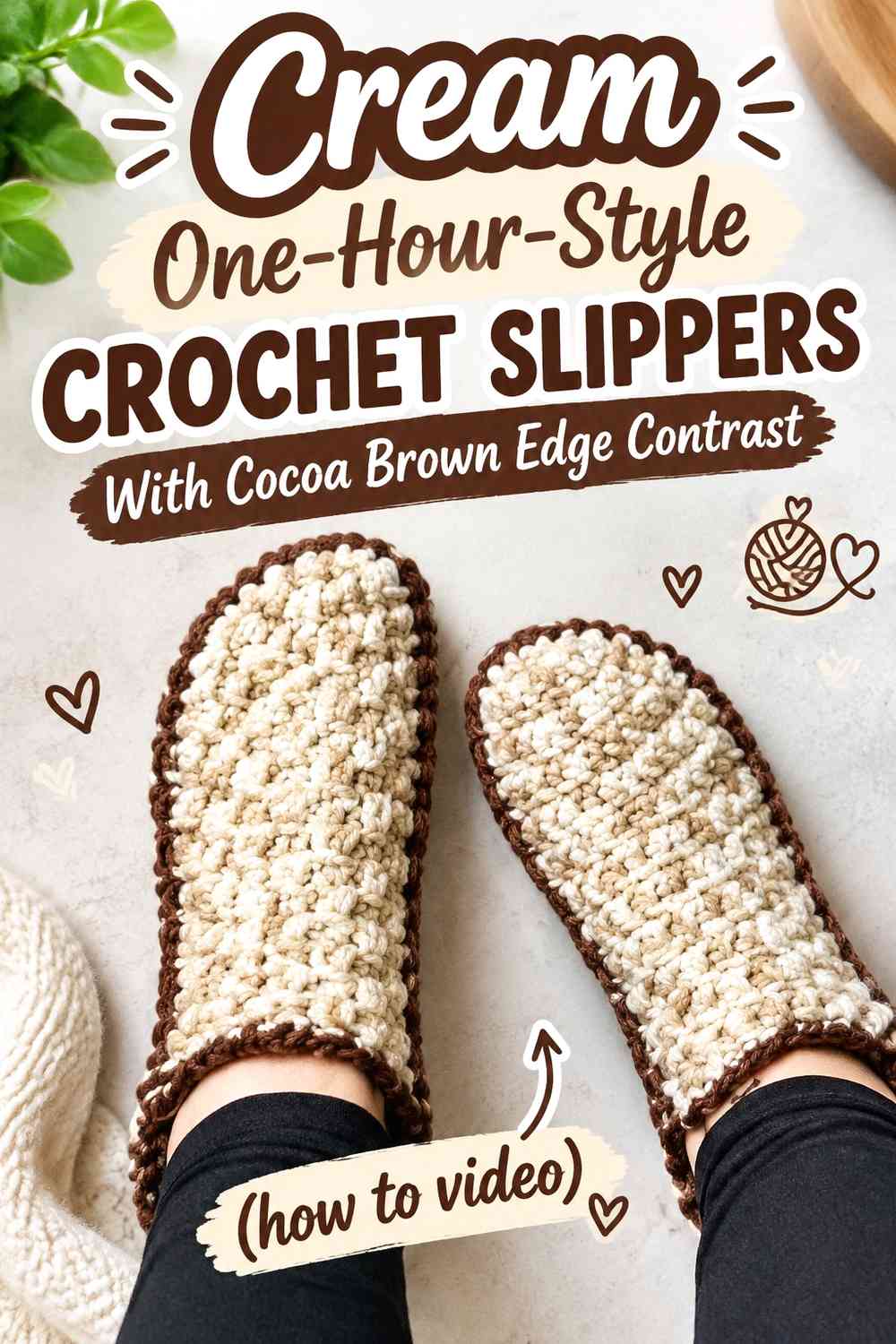
A straightforward bulky slipper can be adapted into a light sherpa-look version by making Cream dominant and using Cocoa Brown as an outlining color. This works best when the dark accents stay broad enough to remain visible but do not divide the upper repeatedly.
Keep Cream Broad Across the Main Slipper Body
Large Cream areas make a simple construction feel softer and more teddy-inspired. Let the uncomplicated shape support the palette instead of adding excessive color changes.
Use Cocoa Brown Around the Cream Sole Edge
The dark edge gives the Cream slipper a visual foundation and provides useful separation between the upper and floor.
Repeat Cocoa Brown Near the Cream Opening Sparingly
One narrow Cocoa Brown repeat can link the top and bottom edges. If it makes the slipper look heavily outlined, keep the opening entirely Cream.
Creator Credit: AllFreeCrochet
12. Cocoa Brown Crochet Slippers With Cream Teddy-Style Accent Sections
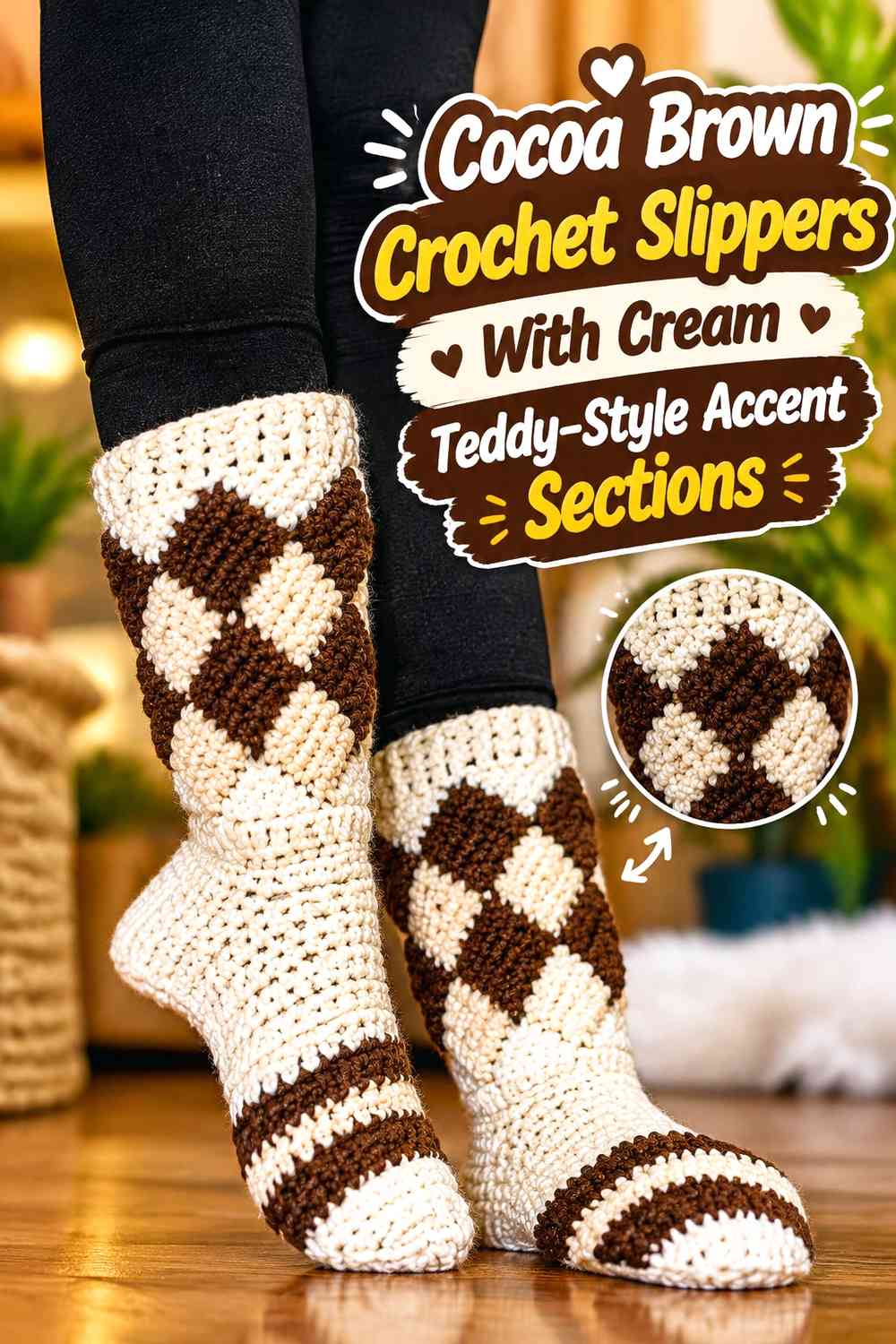
A construction designed for several colors can instead be simplified into Cocoa Brown and Cream. Use Cocoa Brown for the largest areas and convert only selected original color sections into Cream so the two-color result stays intentional.
Give Cocoa Brown the Largest Slipper Color Blocks
The main foot should remain visually connected despite the construction offering several places to change color. Keeping Cocoa Brown dominant prevents the finished slipper from looking overly segmented.
Group Cream Accents Across the Cocoa Brown Slipper
Place Cream in a small number of related areas, such as the opening and one toe or side detail. Grouping the pale color creates a clearer sherpa-inspired theme than scattering it through every section.
Keep Cream Repetition Predictable Against Cocoa Brown
If a pale accent appears on one slipper side, repeat it consistently on the other. Two-color designs make mismatched placement more noticeable.
Creator Credit: Fuad Azmat / YARNutopia by Nadia
13. Cocoa Brown Cottage Crochet Slippers With a Cream Plush Collar
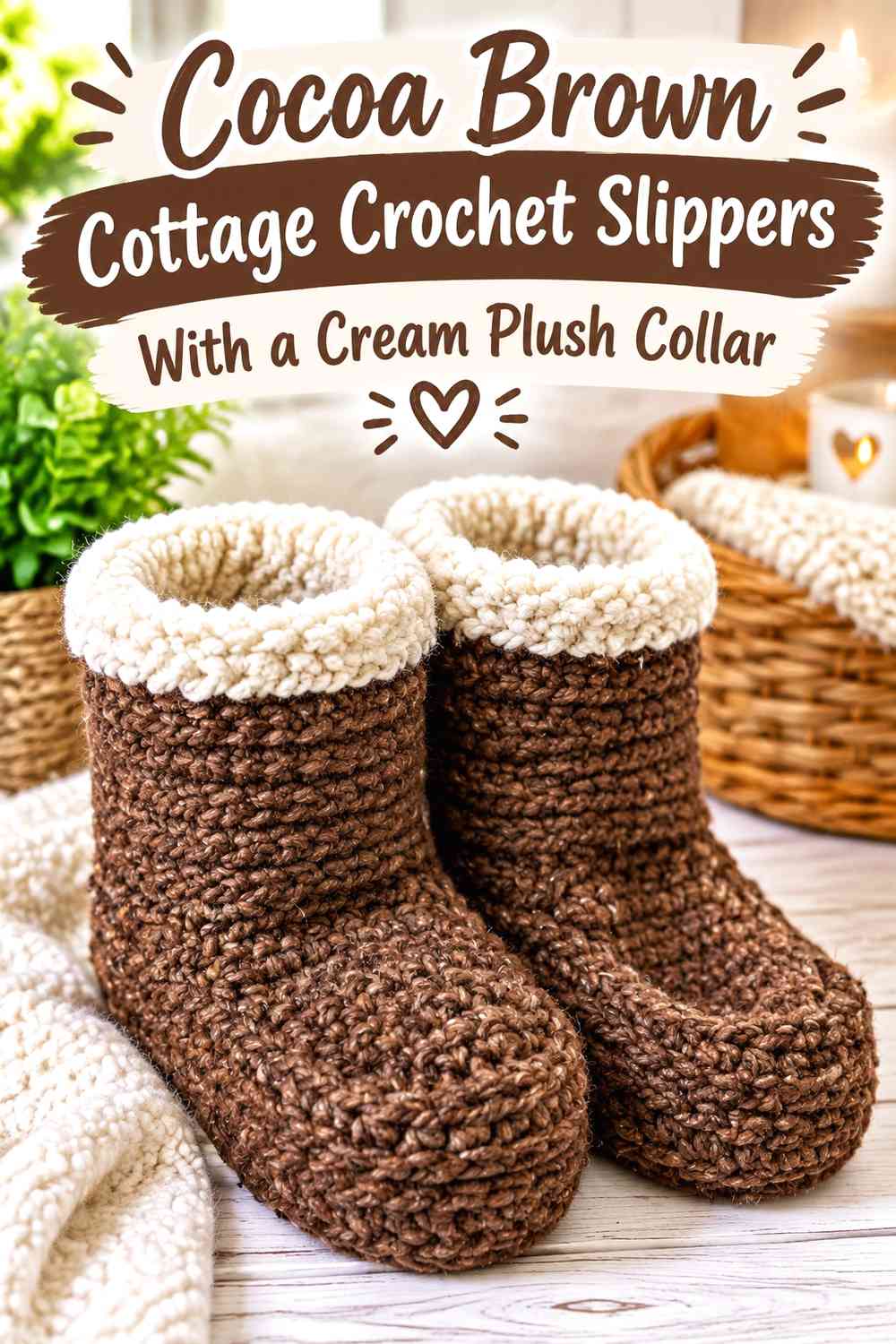
A cottage-style slipper with a substantial sole gives Cocoa Brown a strong structural role. Cream can be concentrated above the sides in a collar, creating a convincing dark-shoe-plus-light-lining combination.
Keep Cocoa Brown Around the Cottage Slipper Sole
A dark sole and lower side area can visually ground the thicker construction. Continue Cocoa Brown far enough upward that the Cream collar feels like a separate finishing layer.
Make Cream Softer-Looking Above the Cocoa Brown Sidewall
The transition between the sturdy-looking lower section and pale collar is what creates the teddy-slipper direction. A Cream yarn with stronger surface texture can emphasize that difference, but keep the collar shape simple enough to stay readable.
Repeat Cream Minimally Against the Cocoa Brown Toe
If additional pale color is wanted, a restrained toe detail can connect to the collar. Avoid covering the whole toe, since the dark cottage-slipper structure is part of this idea’s appeal.
Creator Credit: Rich Textures Crochet
14. Cocoa Brown Winter Crochet Slippers With an Extra-Soft Cream Cuff
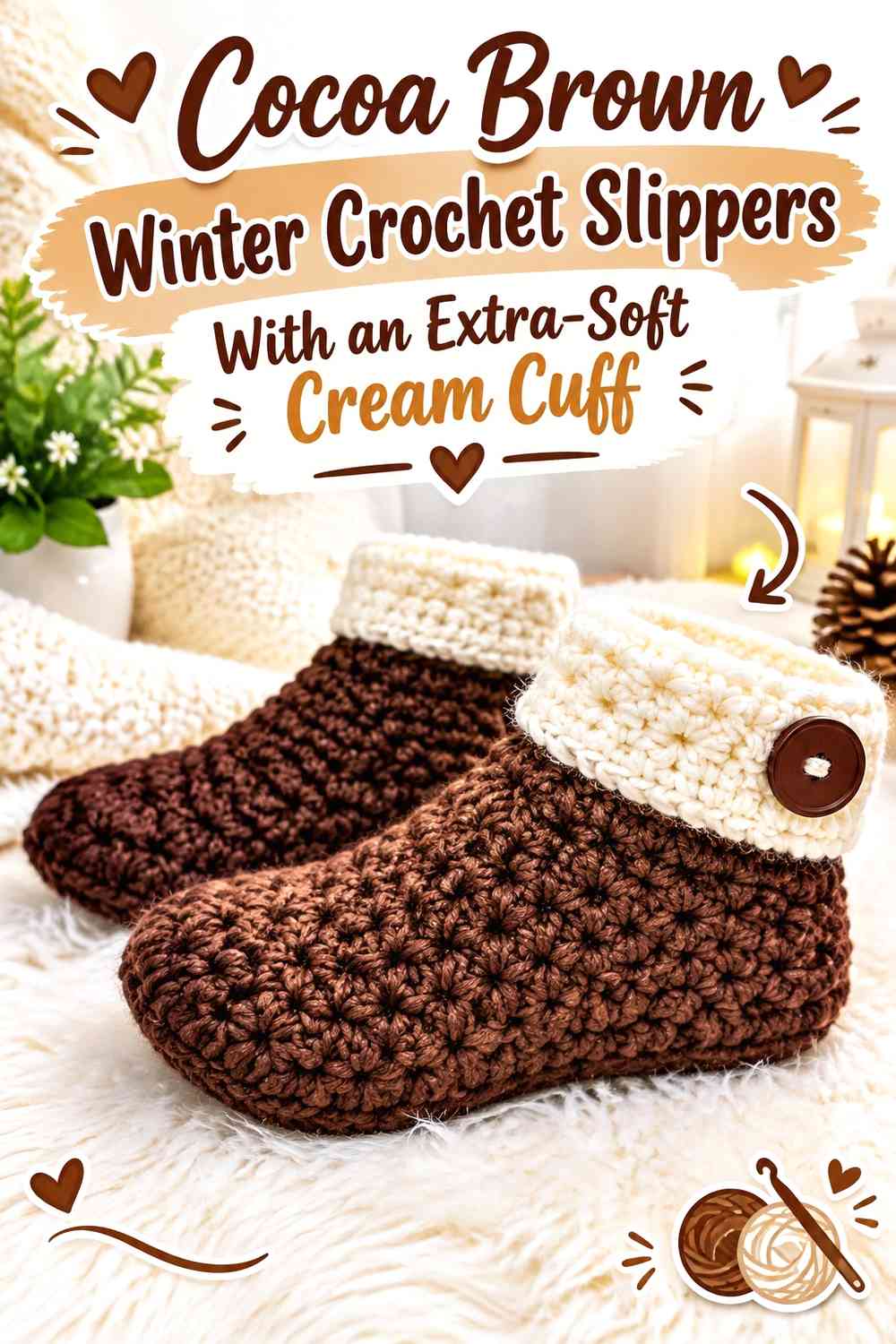
This direction puts almost all of the sherpa-look texture in one place. Make the slipper body Cocoa Brown and use the most visibly plush Cream treatment only at the cuff, so the contrast between surfaces is obvious.
Keep Cocoa Brown Smooth Beneath the Cream Cuff
A comparatively smooth Cocoa Brown body makes the pale collar look even softer. If both sections are equally fuzzy, the distinction between shell and lining becomes less noticeable.
Let Cream Carry the Strongest Sherpa-Look Texture
Use the texture where it has enough space to show: around the ankle rather than in tiny lines across the toe.
Keep Cocoa Brown Visible Above and Below Cream Transitions
A clean dark-to-light transition helps the cuff look intentional. Avoid peppering small Cream patches across the entire Cocoa Brown upper just because the accent yarn is available.
Creator Credit: Crochet con Sole
15. Cocoa Brown Moccasin Crochet Slippers With Cream Sherpa-Look Seams
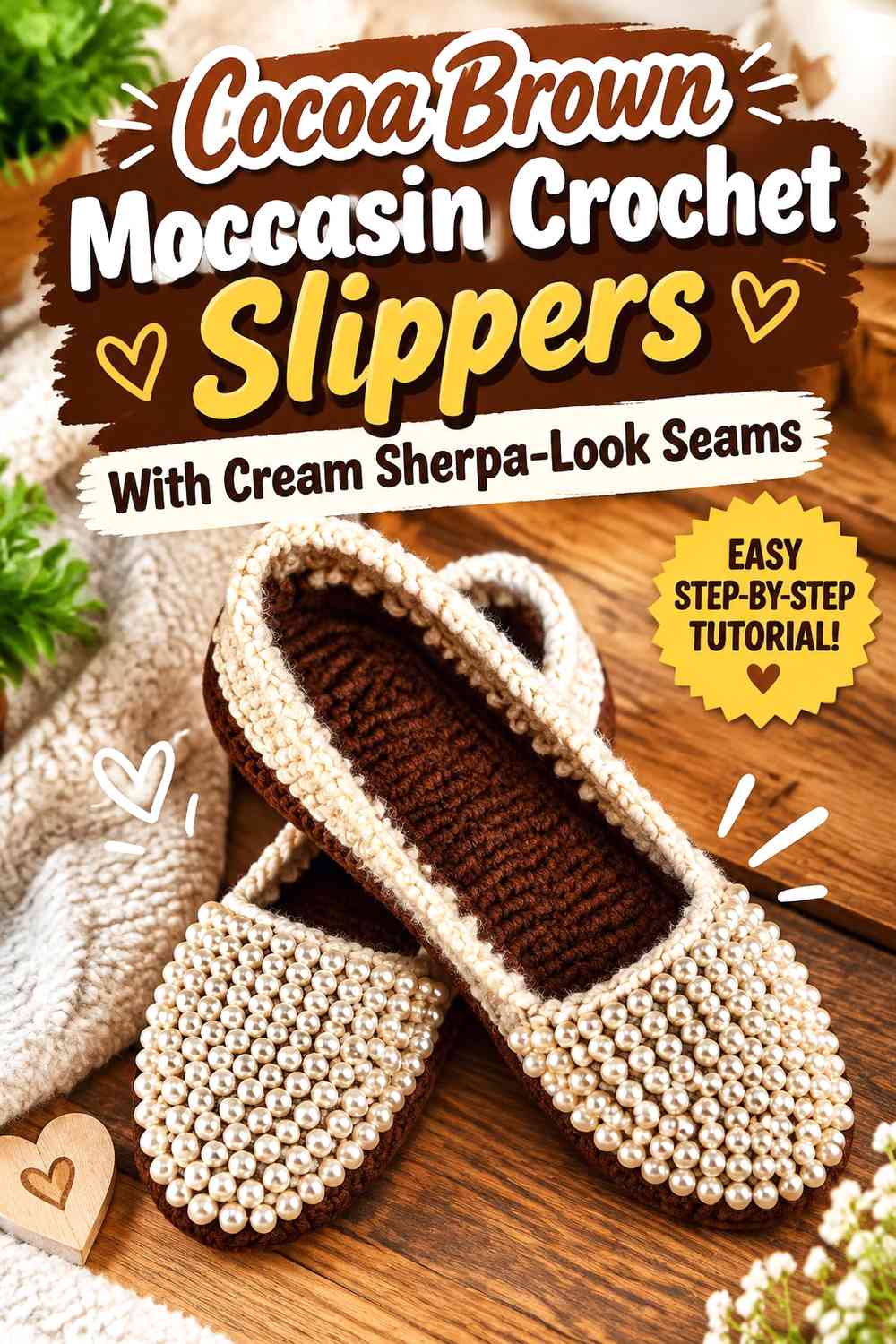
Moccasin-style shaping creates an obvious seam around the upper, giving Cream a different place to appear. Cocoa Brown can form the body and sole, while Cream traces the seam or opening to emphasize the characteristic upper shape.
Keep Cocoa Brown Across the Moccasin Foot and Sole
The broad Cocoa Brown base maintains the low moccasin profile and gives the Cream detail a strong surrounding field.
Use Cream Along the Cocoa Brown Moccasin Seam
A pale seam accent can outline the toe construction without turning the entire upper Cream. This gives the sherpa-inspired palette a more tailored interpretation than a large fuzzy cuff.
Add Cream Around the Cocoa Brown Opening Carefully
If Cream already defines the toe seam, keep the opening trim restrained. Two strong pale outlines can compete with each other on a low slipper.
Creator Credit: Esendalile
16. Cocoa Brown Crochet Slipper Boots With a Cream High Sherpa-Look Cuff
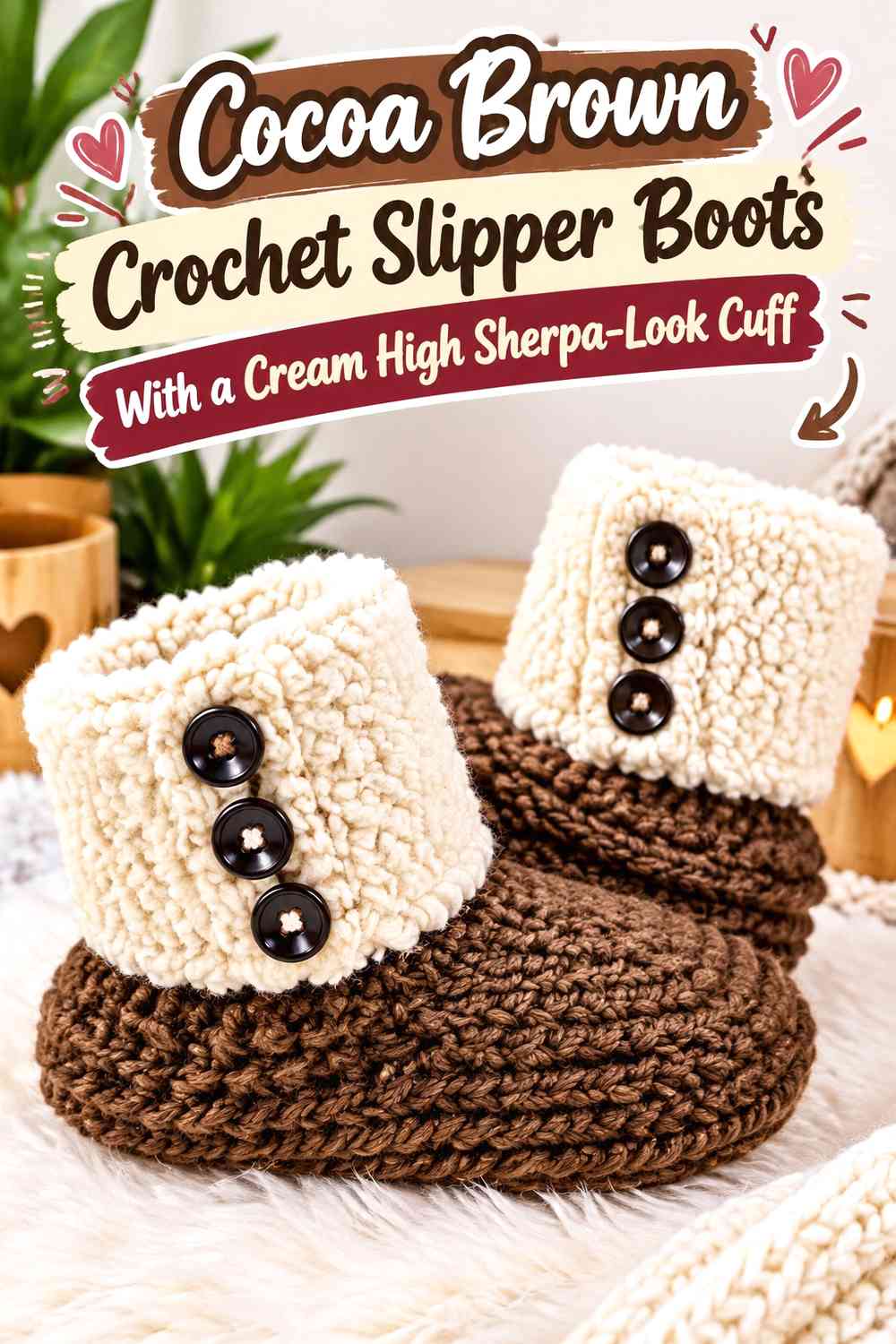
A taller slipper boot offers the most dramatic version of the palette. Cocoa Brown covers the foot and lower leg, while Cream forms a deep upper cuff that can be worn visually as the main teddy-style feature.
Let Cocoa Brown Rise High Enough Below the Cream Cuff
Give the Cocoa Brown boot body enough height that the Cream section looks like a separate collar rather than half of a two-color sock.
Make the Cream High Cuff the Main Teddy Sherpa-Look Feature
A deeper Cream section has more room to show fuzzy texture. Keep its color placement uninterrupted so the pale cuff reads as one plush area.
Use Cocoa Brown to Frame the Bottom of the Cream Cuff
A clean Cocoa Brown transition immediately below the pale section reinforces the difference between boot body and lining.
Keep Cream Away From Most of the Cocoa Brown Toe
The high cuff already provides substantial light color. Leaving the toe dark prevents Cream from competing at both ends of the slipper.
Creator Credit: Creative Day Craze
Which Cocoa Brown and Cream Teddy Sherpa-Look Slipper Direction Should You Choose?
For the clearest teddy-lined effect, choose a Cocoa Brown body with a Cream cuff. The basic adult slipper, house boot, ribbed boot, slipper-sock, cottage-slipper, and high-cuff ideas all place the pale texture where a soft lining would naturally show.
For a lighter slipper, the Cream ballet, textured, or simple bulky versions reverse the hierarchy. Cocoa Brown then works best around the sole, toe, or other structural edges rather than appearing as frequent stripes.
If texture is your priority, compare the cable, ribbed, heavily textured, cottage, and extra-soft-cuff options. Keep in mind that a very fluffy Cream yarn may hide detailed stitches, so simpler cuff construction often makes the sherpa-look surface easier to read.
For a less conventional silhouette, the hexagon, rectangle, and moccasin versions provide stronger construction differences while still supporting the same Cocoa Brown and Cream winter palette.
Conclusion
Cocoa Brown and Cream work especially well for teddy sherpa-look house slippers because each shade can have a clear visual responsibility. Cocoa Brown can define the foot, heel, sole, and lower structure, while Cream can suggest soft lining around a cuff or opening.
If you want the strongest sherpa-inspired effect, concentrate Cream in one substantial area rather than scattering it through every part of the slipper. For a lighter design, reverse the arrangement and use Cocoa Brown to frame a mostly Cream upper.
Texture should support the color placement rather than hide it. Plush Cream is most useful where the shape is broad and simple, while detailed cables, ribs, or moccasin shaping can remain easier to see in Cocoa Brown. Follow the credited tutorials for their original construction details and treat these Cocoa Brown and Cream arrangements as independent palette adaptations.
Frequently Asked Questions
Should Cocoa Brown or Cream dominate teddy sherpa-look crochet slippers?
Cocoa Brown is a strong dominant choice when you want Cream to resemble exposed lining. Use Cream mainly at the cuff, opening, or trim. A Cream-dominant slipper works too, but Cocoa Brown should then define the sole or other structural areas clearly enough to keep the pale upper from looking visually flat.
Where should Cream go on Cocoa Brown crochet house slippers?
The cuff and foot opening are the most natural locations for a sherpa-look Cream accent. Cream can also define a moccasin seam, toe edge, or small side detail, but concentrating it near the opening usually creates a clearer lined-slipper effect.
Do I need fuzzy yarn to create the Cream sherpa look?
No. Color placement alone can suggest a Cream lining against a Cocoa Brown upper. A textured yarn can strengthen the effect, but very fuzzy yarn may hide stitch definition, so test it on a small section before using it around detailed shaping.
How can I keep a Cream sherpa-look cuff from overwhelming Cocoa Brown slippers?
Keep the Cocoa Brown foot and lower sides visually larger than the Cream collar. If a very fluffy Cream yarn looks especially prominent, reduce the cuff depth rather than adding more Cocoa Brown stripes through the pale area.
Can the sole be Cream on Cocoa Brown slippers?
Yes, but consider how it changes the visual hierarchy. A Cream sole creates a pale lower frame as well as a pale cuff if both are used together. If you want Cream to resemble lining specifically, Cocoa Brown at the sole usually keeps that role clearer.
Which color works better for a crochet moccasin seam?
Cream can clearly define the seam against a Cocoa Brown upper, creating a soft contrast. If Cream is already heavily used at the opening, a Cocoa Brown seam within a lighter upper may provide better balance.
How do I substitute another shade for Cocoa Brown?
Choose another medium-to-dark brown that remains noticeably darker than the Cream. Preserving that light-dark relationship is more important than matching an exact commercial shade.
How do I replace Cream without losing the teddy sherpa-look palette?
Choose a warm light neutral that still contrasts clearly with Cocoa Brown. Soft ivory, oatmeal-like neutrals, or other pale warm shades can preserve the lining effect as long as they remain visually lighter than the main slipper color.