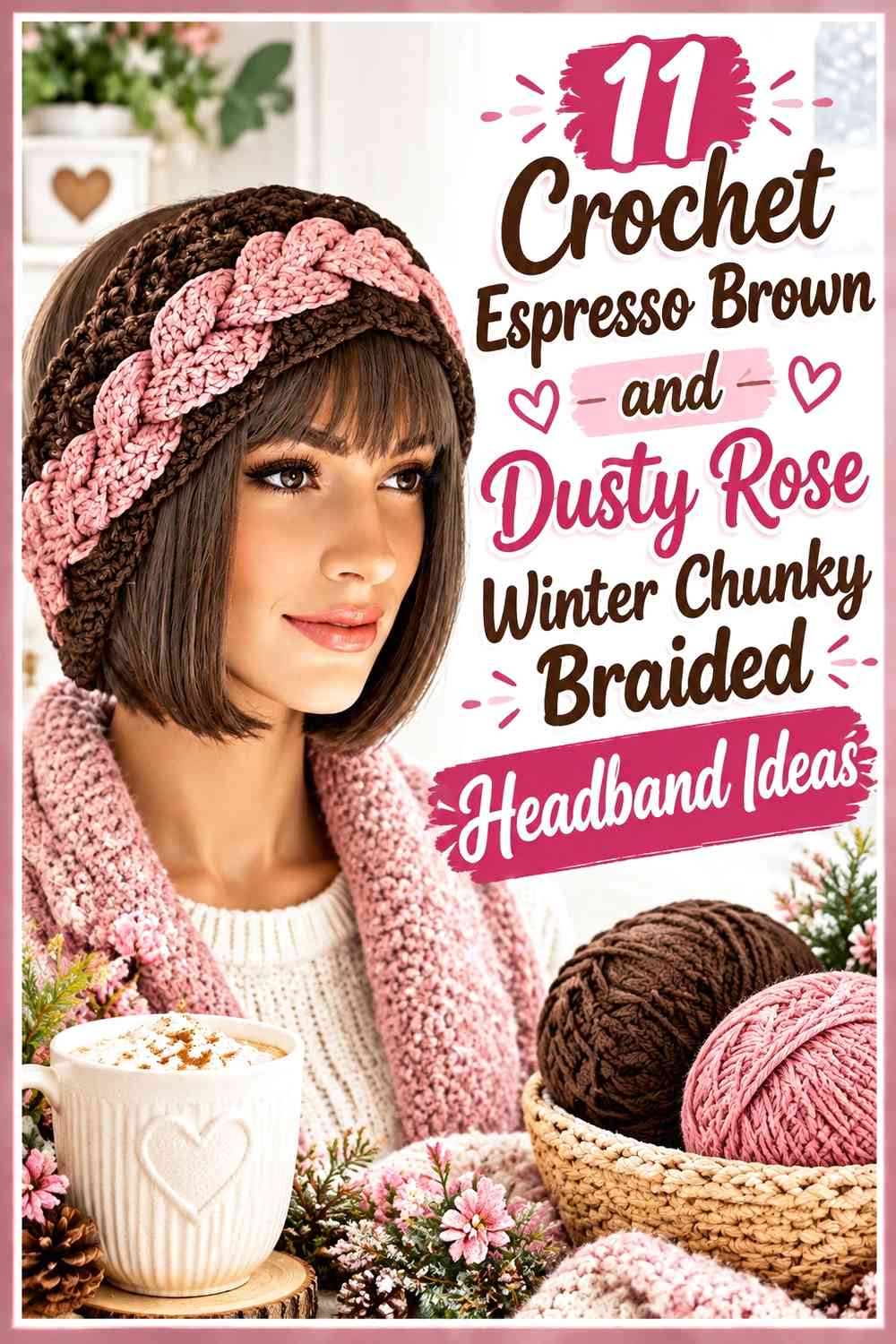

Espresso brown and dusty rose give a chunky crochet braided headband a useful mix of dark definition and softened color. Espresso brown can make raised braid sections look deeper and more grounded, while dusty rose can separate individual strands or cables so the texture does not disappear into one dark block.
The key is deciding where each shade belongs. A headband with espresso brown across the main band and dusty rose through the center braid looks very different from one that reverses those roles. You can also divide the colors between outer strands, edging, crossed cable sections, or a twist-front focal area.
Some of the tutorials below use true multi-strand braids, while others use raised cable or twist constructions that create a related braided look. Use each creator’s tutorial for the actual headband construction and treat the espresso brown and dusty rose combinations as independent color adaptations.
Quick List
- Espresso Brown Base and Dusty Rose Center Crochet Chunky Braided Headband
- Dusty Rose Base and Espresso Brown Outer-Strand Crochet Chunky Braided Headband
- Alternating Espresso Brown and Dusty Rose Crochet Three-Strand Chunky Braided Headband
- Espresso Brown and Dusty Rose Crochet Four-Strand Color-Block Chunky Braided Headband
- Espresso Brown-Dominant and Dusty Rose Crochet Five-Strand Chunky Braided Headband
- Espresso Brown Cable and Dusty Rose Edge Crochet Chunky Braided Headband
- Dusty Rose Cable and Espresso Brown Border Crochet Chunky Braided Headband
- Espresso Brown, Dusty Rose, and Oatmeal Crochet Chunky Braided Headband
- Dusty Rose, Espresso Brown, and Muted Mauve Crochet Chunky Braided Headband
- Espresso Brown and Dusty Rose Split-Color Crochet Chunky Braided Headband
- Espresso Brown and Dusty Rose Twist-Front Crochet Chunky Braided Headband
Decide Whether Espresso Brown or Dusty Rose Should Lead the Braid
A chunky braid creates large areas of raised texture, so the dominant color has a strong effect on the finished headband. Espresso brown makes the overall accessory darker and lets dusty rose act as a noticeable highlight. Reversing those roles creates a lighter headband with espresso brown defining selected crossings or outer edges.
Consider the winter clothes you expect to wear with the headband. A brown-heavy version can connect easily with camel, cream, denim, or other subdued layers, while a dusty-rose-heavy version puts more color around the face. The goal is not to match everything exactly, but to decide whether you want the headband to read primarily as brown or rose.
Use Espresso Brown and Dusty Rose Contrast to Reveal the Crochet Braid
Raised crochet texture already creates highlights and shadows, but color can make the braid easier to understand. Putting dusty rose beside espresso brown can visually separate crossing strands, especially when individual sections of the braid are broad enough for each color to remain visible.
Check the two yarns side by side before committing to the full headband. If your particular dusty rose is quite dark, it may sit closer to espresso brown in value than expected. A grayscale photo is a simple way to check whether the braid will have clear light-and-dark separation.
Keep Espresso Brown and Dusty Rose Placement Consistent Around the Headband
Braided headbands have a strong directional pattern, so an accent color that appears only once can look accidental. Repeat dusty rose through several crossings, outer strands, or edge sections when espresso brown dominates. If dusty rose covers most of the band, repeat espresso brown at several visually connected points.
Also look at the join or finishing area before deciding where color changes belong. A strong contrast change positioned directly at a visible seam can attract more attention to that area than intended.
1. Espresso Brown Base and Dusty Rose Center Crochet Chunky Braided Headband
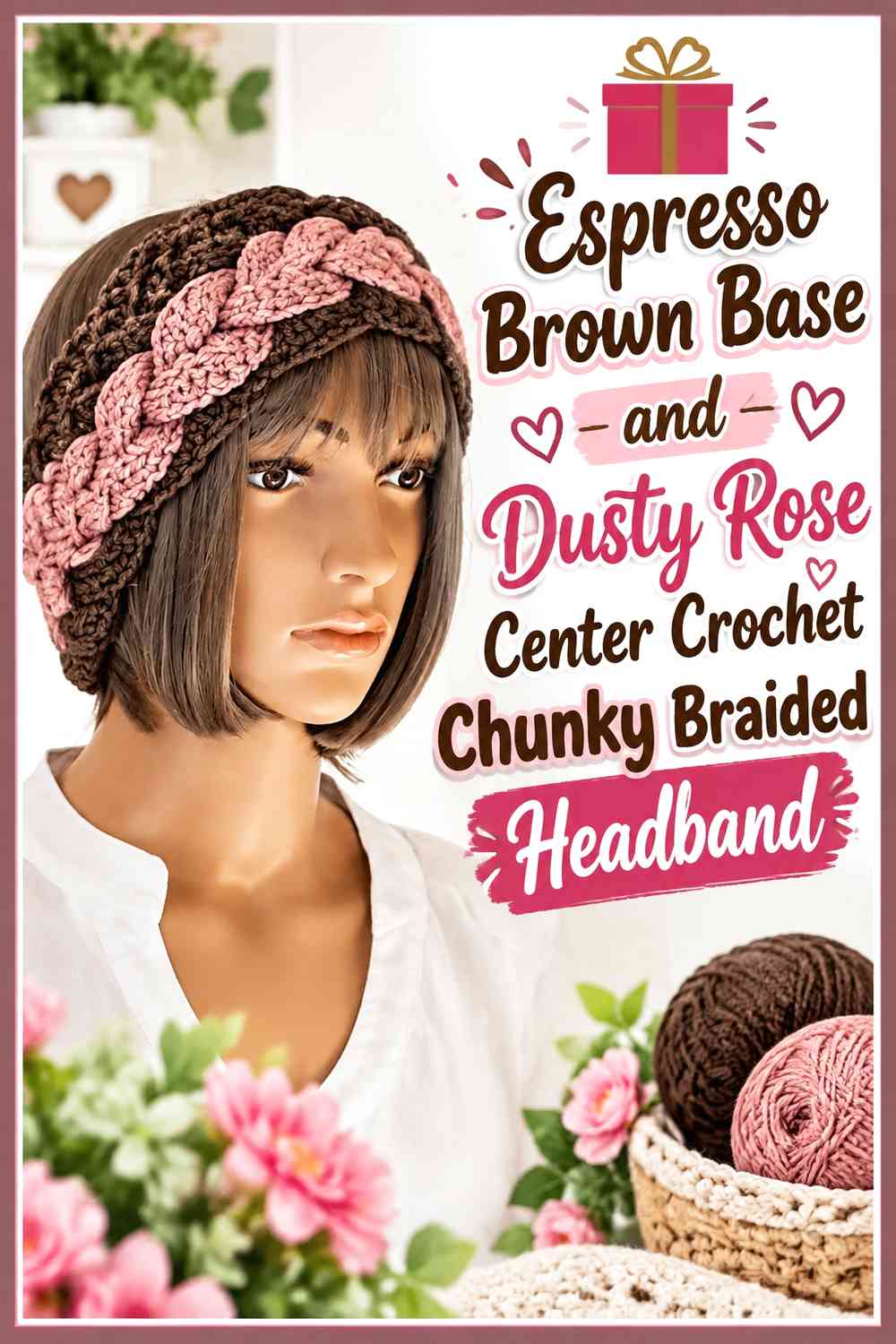
Let espresso brown cover most of the headband while dusty rose runs through the central braided feature. This arrangement keeps the winter accessory dark and grounded but gives the raised center enough color contrast to remain noticeable.
It works particularly well when the braid is the main decorative feature rather than an all-over multicolor treatment. Dusty rose should be easy to follow through the center without competing with every edge of the band.
Espresso Brown Gives the Chunky Headband a Dark Visual Foundation
Use espresso brown across the wider supporting areas or dominant braid strands. Because the shade covers the largest visual area, it establishes the overall winter look before dusty rose is introduced.
Check whether deeply raised brown sections still show enough texture. If the braid appears visually flat from a distance, increase the dusty rose area around important crossings instead of adding several unrelated colors.
Dusty Rose Can Pull the Center Braid Away From Espresso Brown
Concentrating dusty rose in the central strand makes the braid easier to track across an espresso brown background. The lighter, softened color also prevents the middle of the headband from becoming one continuous dark mass.
Keep the dusty rose placement connected from one crossing to the next. Scattered rose stitches are less useful than a recognizable strand or repeated braid section.
Creator Credit: Mamie Crochet
2. Dusty Rose Base and Espresso Brown Outer-Strand Crochet Chunky Braided Headband
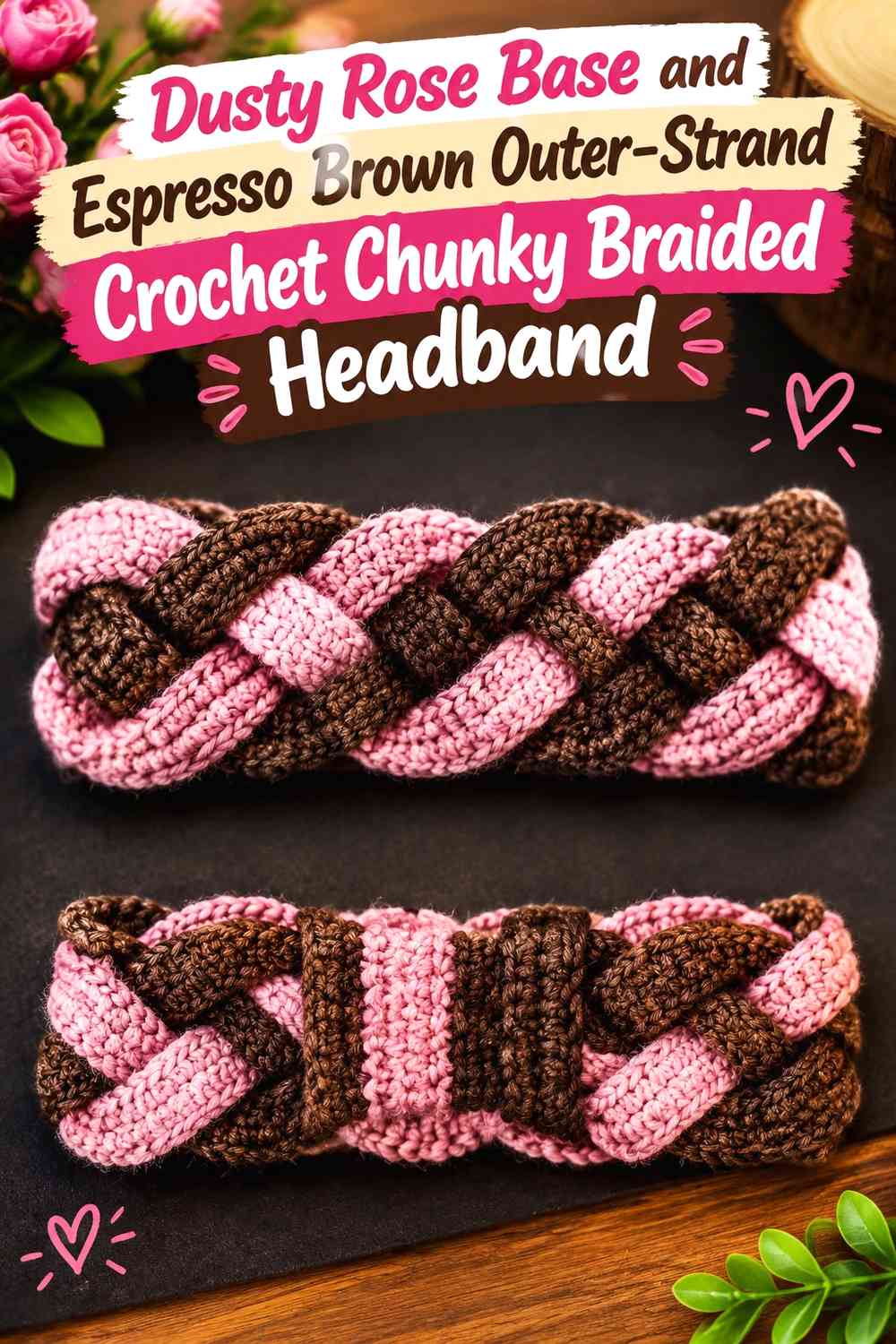
Reverse the color hierarchy by allowing dusty rose to dominate the headband while espresso brown frames the braid from the sides. The result keeps the softer shade close to the face while dark brown gives the outer structure more definition.
This direction is useful when you like the espresso-and-rose combination but do not want the finished accessory to appear primarily brown.
Dusty Rose Should Cover Enough of the Braid to Remain Dominant
Place dusty rose through the central or broadest strands rather than limiting it to small accents. On a chunky headband, a small rose section can be overwhelmed by dark outer strands.
Evaluate the headband from the front rather than only while it lies flat. The center is often the area most visible when worn, so that is where the dusty rose dominance should remain obvious.
Espresso Brown Can Frame Dusty Rose Without Cutting Through Every Strand
Reserve espresso brown for outer strands or a repeated edge area. This creates definition around the dusty rose center without breaking the lighter color into too many separate pieces.
If the brown begins to feel too heavy, reduce its width rather than changing it to another color. The contrast between espresso brown and dusty rose is already doing useful work.
Creator Credit: Let’s All Crochet
3. Alternating Espresso Brown and Dusty Rose Crochet Three-Strand Chunky Braided Headband
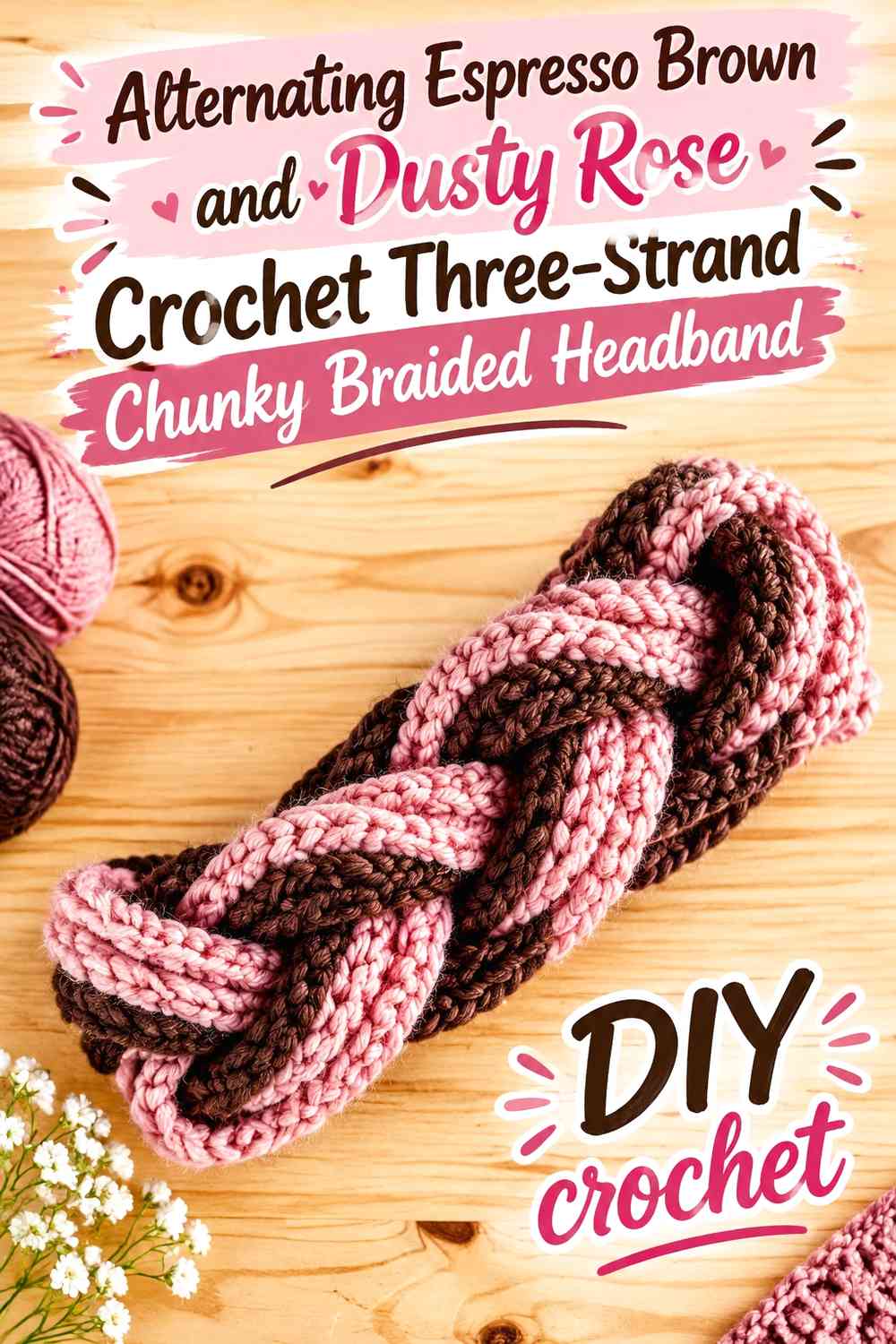
A three-strand braid makes color placement especially easy to read. Use two espresso brown strands with one dusty rose strand for a brown-dominant version, or reverse the ratio when you want dusty rose to control more of the finished surface.
The repeated crossings naturally distribute both colors, so there is less need for separate edging or additional accents.
Espresso Brown Can Anchor Two Strands of the Three-Strand Braid
Using espresso brown on two strands gives the braid a dark majority without making it completely monochromatic. The dusty rose strand remains easy to follow as it moves between the brown sections.
This arrangement is useful when you want strong color repetition. Each braid crossing automatically brings espresso brown back into view.
Dusty Rose Needs to Stay Visible Through Each Espresso Brown Crossing
Avoid placing the dusty rose strand where it remains hidden behind brown for long portions of the finished braid. The purpose of this palette is to let the softer color break up the darker structure.
Lay out or loosely arrange the strands before final finishing so you can check whether dusty rose appears regularly across the front-facing side.
Creator Credit: DIYmoda withEmíl
4. Espresso Brown and Dusty Rose Crochet Four-Strand Color-Block Chunky Braided Headband
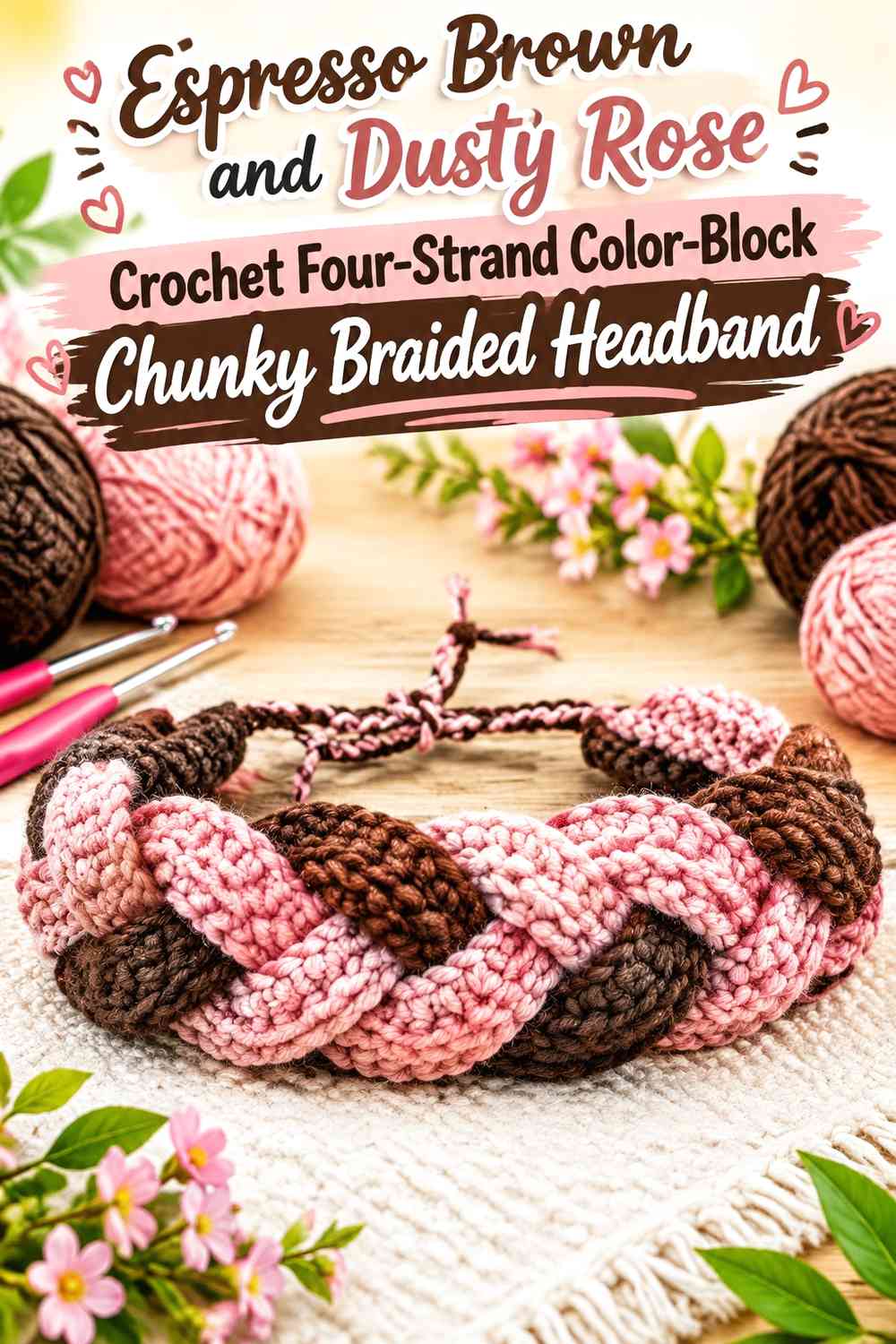
A four-strand braid gives you enough sections to create a balanced two-and-two color division. Two espresso brown strands and two dusty rose strands can repeat across the width without introducing a third color.
This approach has more visible movement than a single accent strand because both colors repeatedly exchange positions through the braid.
Espresso Brown and Dusty Rose Need a Planned Four-Strand Order
Decide the strand order before braiding. Placing both espresso brown strands together creates larger dark areas, while separating them with dusty rose produces more frequent color changes.
Neither arrangement is automatically better. Choose based on whether you want broader color blocks or a more evenly mixed braid.
Dusty Rose Can Keep Espresso Brown Four-Strand Texture From Looking Too Dense
Four chunky strands create substantial texture, and an all-dark palette can make the individual crossings less obvious. Dusty rose introduces visual breaks that help separate neighboring sections.
Keep the rose and brown yarns reasonably distinct in lightness if braid visibility is a priority. Different hues alone do not guarantee strong value contrast.
Creator Credit: NS Crafts
5. Espresso Brown-Dominant and Dusty Rose Crochet Five-Strand Chunky Braided Headband
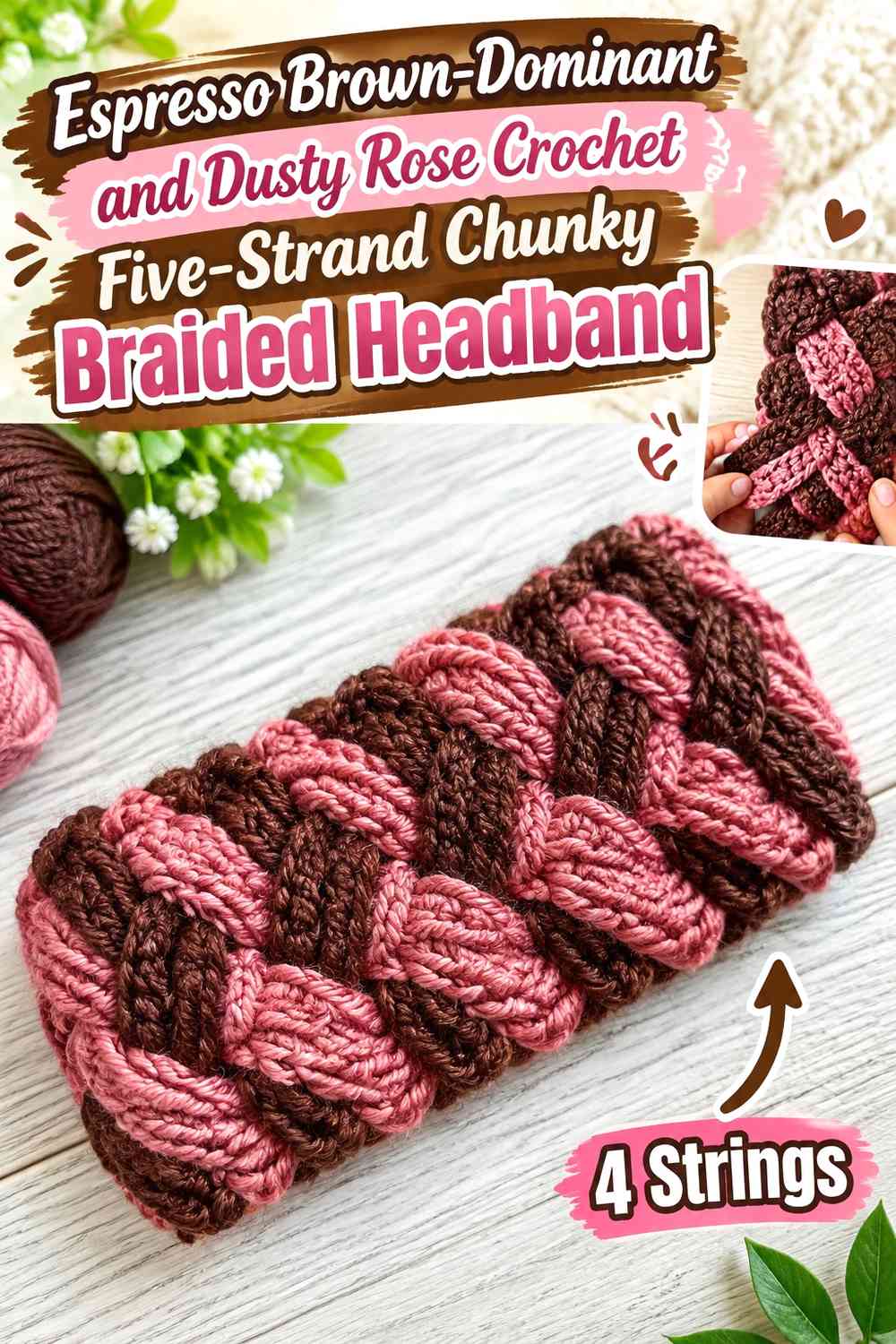
With more strands available, espresso brown can remain dominant while dusty rose appears in two carefully positioned sections. The extra braid complexity already provides visual detail, so the palette should stay disciplined.
A three-brown-to-two-rose distribution creates a clear hierarchy without allowing either color to disappear completely.
Espresso Brown Should Unite the Busier Five-Strand Braid
Repeating espresso brown across several strands keeps the wider braid from looking fragmented. The dark shade becomes the common visual element that connects the crossings.
Avoid assigning a different color to every strand. The braid itself supplies complexity, so espresso brown and dusty rose can provide enough variation on their own.
Dusty Rose Works Best as a Repeated Accent Between Espresso Brown Strands
Space the dusty rose strands so the color appears across more than one part of the braid. Keeping both rose strands together produces one large block, while separating them distributes the accent more evenly.
Choose the placement before completing the braid so the rose does not accidentally collect on one side of the finished headband.
Creator Credit: Diving Ducks Crochet
6. Espresso Brown Cable and Dusty Rose Edge Crochet Chunky Braided Headband
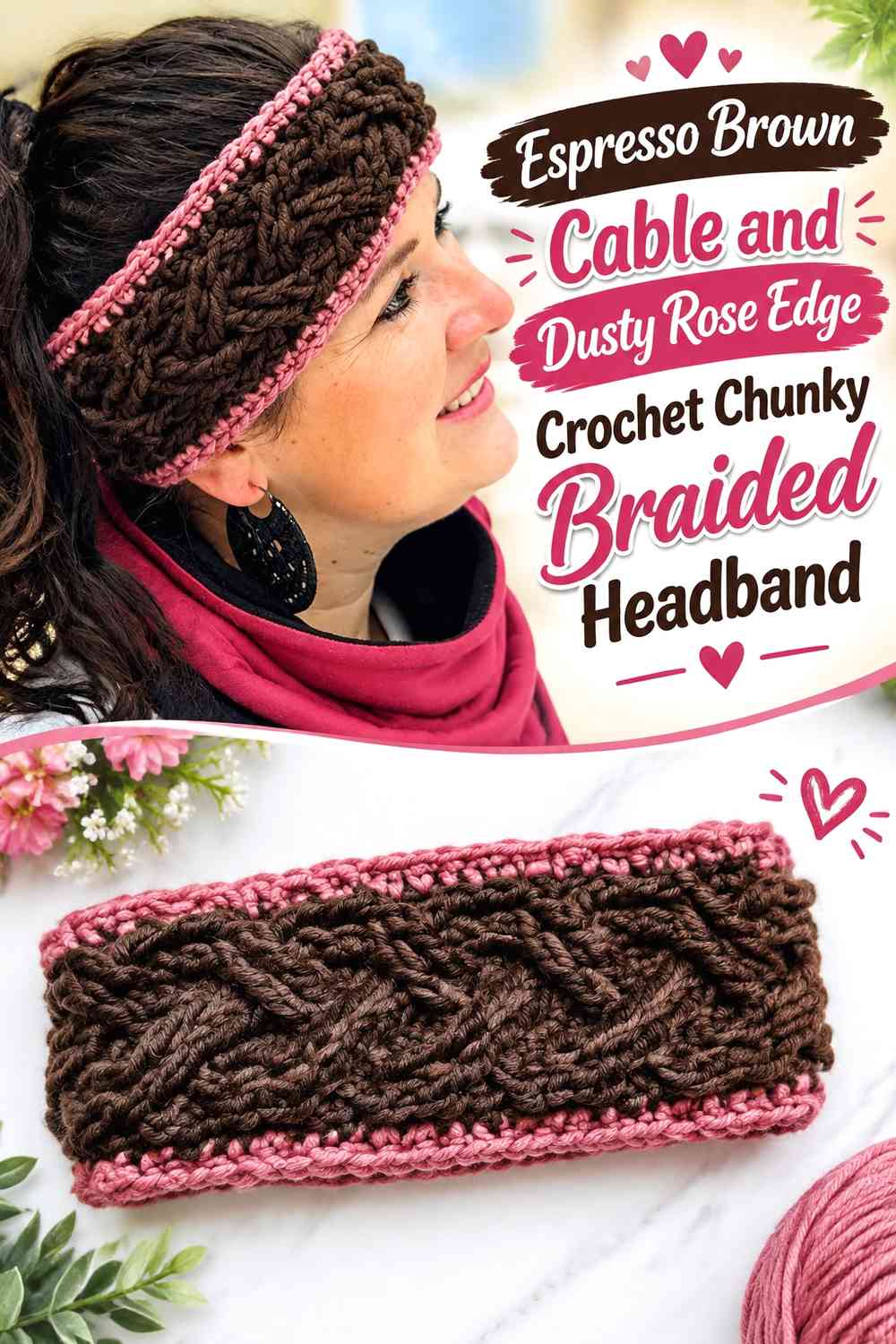
Use espresso brown for the raised cable or braided center and dusty rose along the quieter side sections. This approach reverses the common idea of using the lighter shade on the braid itself.
The dark center emphasizes depth, while dusty rose gives the outer edges enough separation to keep the entire headband from appearing heavy.
Espresso Brown Can Emphasize the Raised Crochet Cable
Keeping the central cable espresso brown makes the darkest shade coincide with the most sculptural part of the headband. Light and shadow across raised crochet can still reveal texture even when the color stays consistent.
Check the cable in normal indoor and outdoor light. If the brown absorbs too much visual detail, dusty rose can be brought closer to the center as a narrow adjacent section.
Dusty Rose Edges Can Lighten an Espresso Brown Chunky Headband
Placing dusty rose beside the cable gives the dark center a visible boundary. It can also prevent espresso brown from covering the entire width of the accessory.
Repeat dusty rose on both sides if you want a symmetrical frame. Using it on only one edge creates a more directional color-block effect.
Creator Credit: Nebeska Crochet with Love
7. Dusty Rose Cable and Espresso Brown Border Crochet Chunky Braided Headband
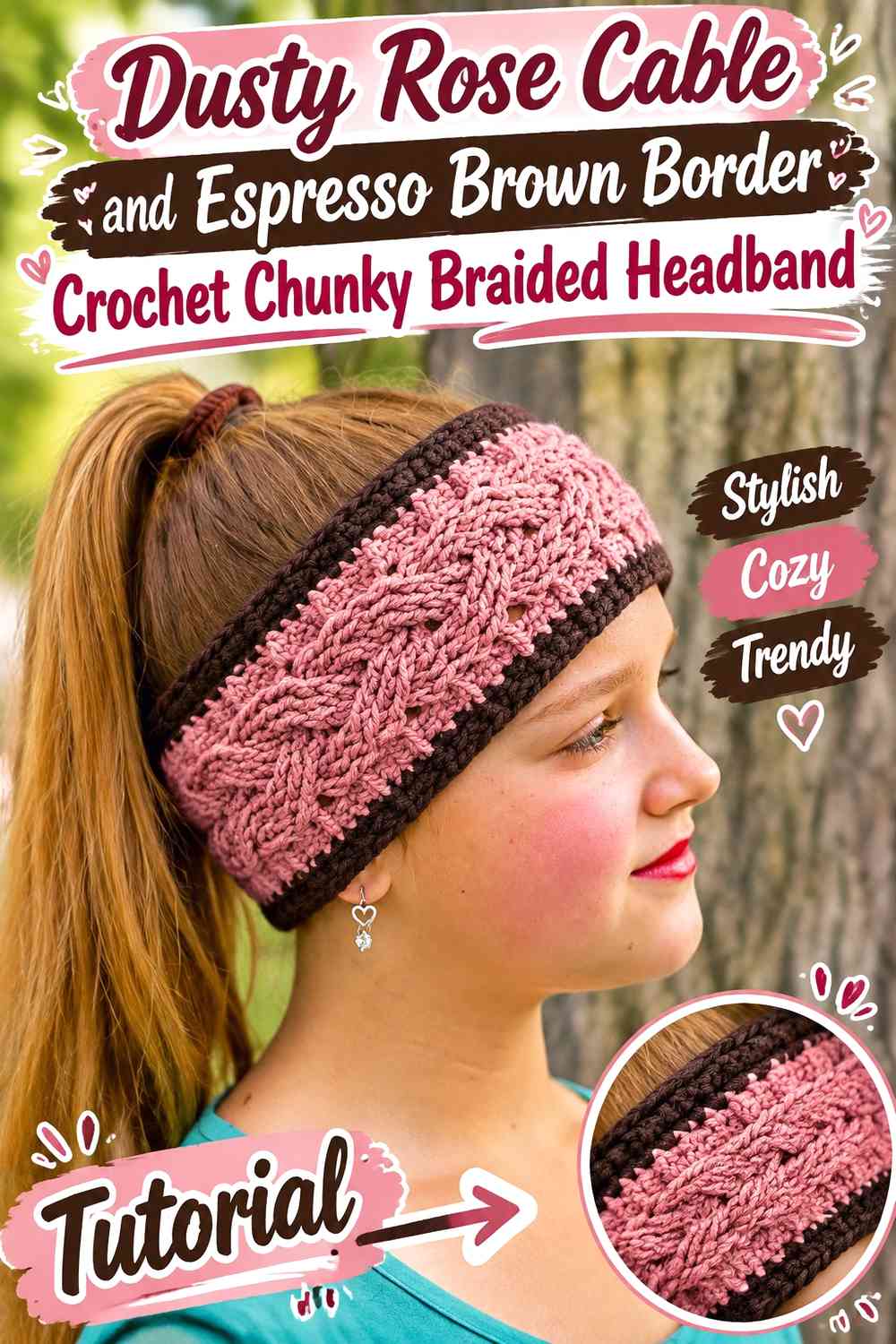
Here the raised braided or cable area becomes dusty rose, while espresso brown stays along the borders. This makes the decorative texture the lighter focal feature and uses the darker color primarily for definition.
The arrangement is especially useful when you want dusty rose to be the first color noticed without losing the depth of espresso brown.
Dusty Rose Makes the Crochet Cable the Main Color Feature
A broad dusty rose cable gives the center enough surface area to establish itself as the dominant visual element. Because the braid is already dimensional, you do not need numerous additional color changes inside it.
If the dusty rose is very muted, keep surrounding colors controlled so the center does not become visually lost.
Espresso Brown Borders Give the Dusty Rose Braid a Defined Edge
Use espresso brown where the raised center transitions into the flatter sides. A dark boundary can make the dusty rose cable appear more separate from the rest of the headband.
Keep the border proportional to the braid. Very wide espresso brown edges can turn a rose-dominant concept back into a brown-dominant one.
Creator Credit: Kristina Crochet
8. Espresso Brown, Dusty Rose, and Oatmeal Crochet Chunky Braided Headband
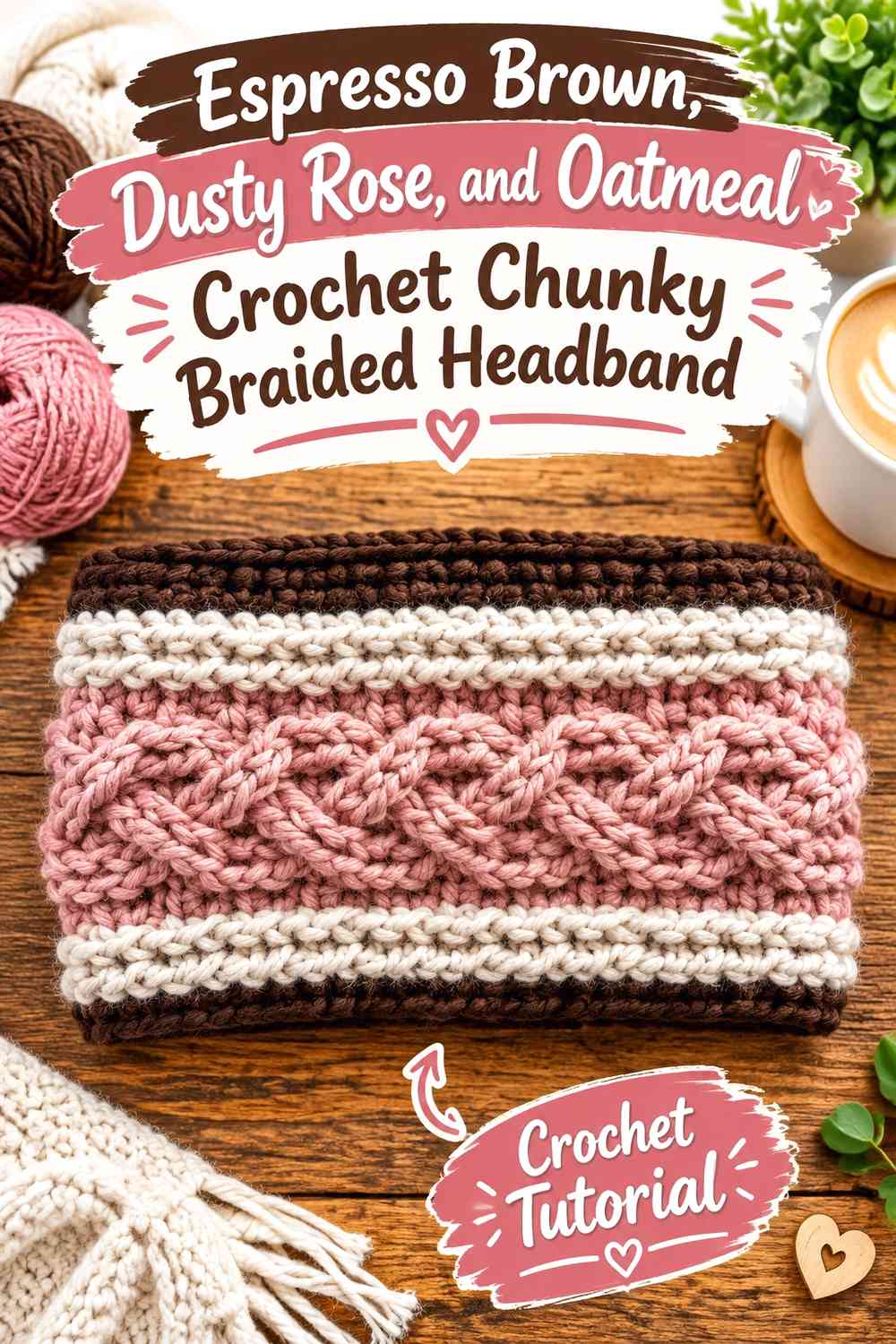
Add oatmeal as a restrained neutral between espresso brown and dusty rose. The neutral is most useful when it separates the two main shades rather than occupying equal space with them.
For example, espresso brown can remain the dominant braid color, dusty rose can supply the noticeable secondary strand, and oatmeal can appear in a narrow border or one repeating section.
Oatmeal Can Separate Espresso Brown and Dusty Rose Without Competing
A lighter neutral provides additional value contrast where brown and rose sit closer together than expected. Use oatmeal beside small braid details or as a narrow separating strand.
Do not allow oatmeal to take over the design if the goal is still an espresso brown and dusty rose headband. Its job is clarification rather than dominance.
Espresso Brown Keeps the Dusty Rose and Oatmeal Palette Grounded
When two lighter colors appear together, espresso brown can prevent the chunky braid from becoming visually washed out. Place it in a major strand, outer cable, or border where it can create a clear dark anchor.
Repeat brown in more than one visible area so it does not look like an isolated finishing color.
Creator Credit: Sierra Fontaine
9. Dusty Rose, Espresso Brown, and Muted Mauve Crochet Chunky Braided Headband
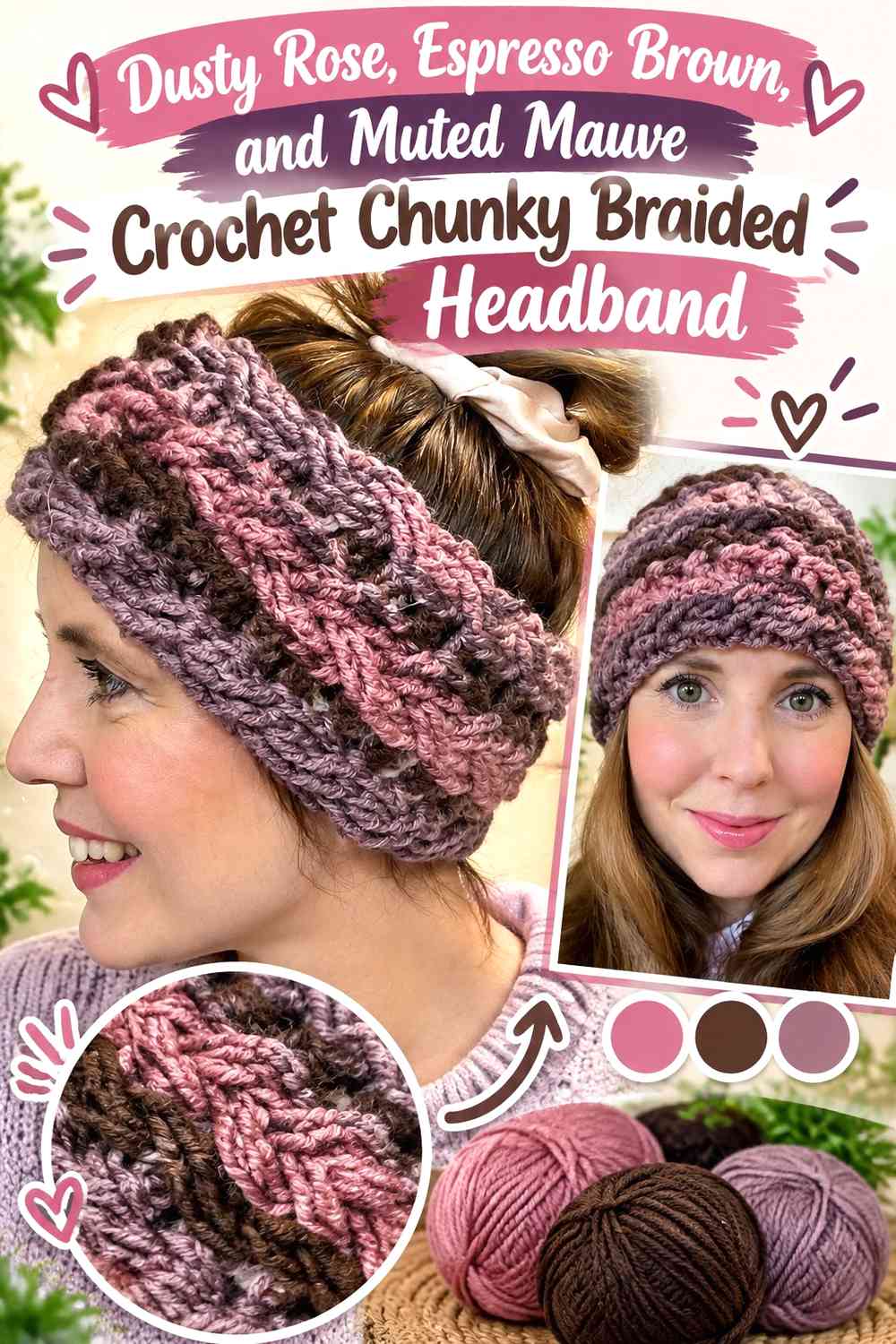
Muted mauve can create a softer transition between dusty rose and espresso brown when you want less abrupt contrast. Dusty rose should remain the recognizable lighter color, while espresso brown supplies the darkest point.
Keep mauve limited to one supporting strand or cable section so the palette does not become three equally weighted colors.
Dusty Rose Should Stay Distinct From Muted Mauve
Choose a mauve that is visibly different enough from dusty rose to justify adding it. If both yarns look almost identical from a short distance, the extra color will complicate the braid without improving its definition.
Dusty rose can remain on the most prominent strand while mauve fills a quieter supporting area.
Espresso Brown Gives Dusty Rose and Mauve a Dark Contrast Point
Use espresso brown beside the softer pink-purple shades where you want clearer braid crossings. The dark brown provides a reference point that stops similar muted tones from blending together.
A narrow brown border can also connect separate espresso sections without increasing the number of dark strands.
Creator Credit: The Pretty Stitch
10. Espresso Brown and Dusty Rose Split-Color Crochet Chunky Braided Headband
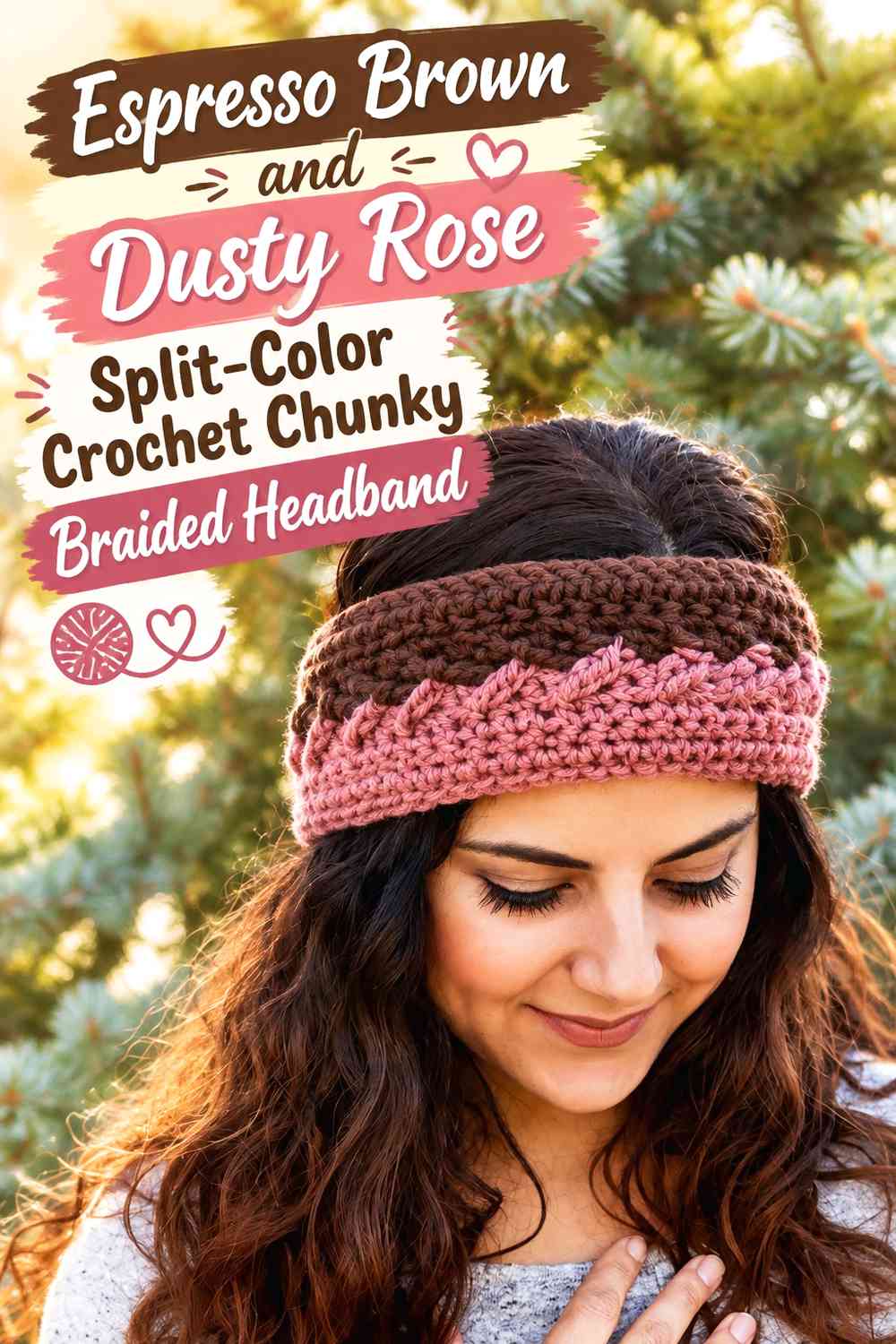
Instead of mixing the colors evenly through every crossing, divide the headband into larger espresso brown and dusty rose sections. The braid can move through both color zones, creating a stronger color-block effect.
This direction is useful when you want the palette to be visible from a distance rather than relying on many small alternating strands.
Espresso Brown Can Control One Side of the Braided Headband
Allow espresso brown to occupy a substantial continuous area rather than breaking it into tiny accents. The large dark section creates a clear starting point for the split-color design.
Consider where the transition will sit when the headband is worn. A centered transition feels deliberate, while a slightly offset change creates a more asymmetrical look.
Dusty Rose Needs a Clean Transition From Espresso Brown
The change from espresso brown to dusty rose should align with a logical visual point in the texture rather than cutting awkwardly across a prominent raised feature.
Before fastening off or joining sections, hold the headband in its worn orientation and check whether the two color blocks appear balanced from the front.
Creator Credit: Leelee Knits
11. Espresso Brown and Dusty Rose Twist-Front Crochet Chunky Braided Headband
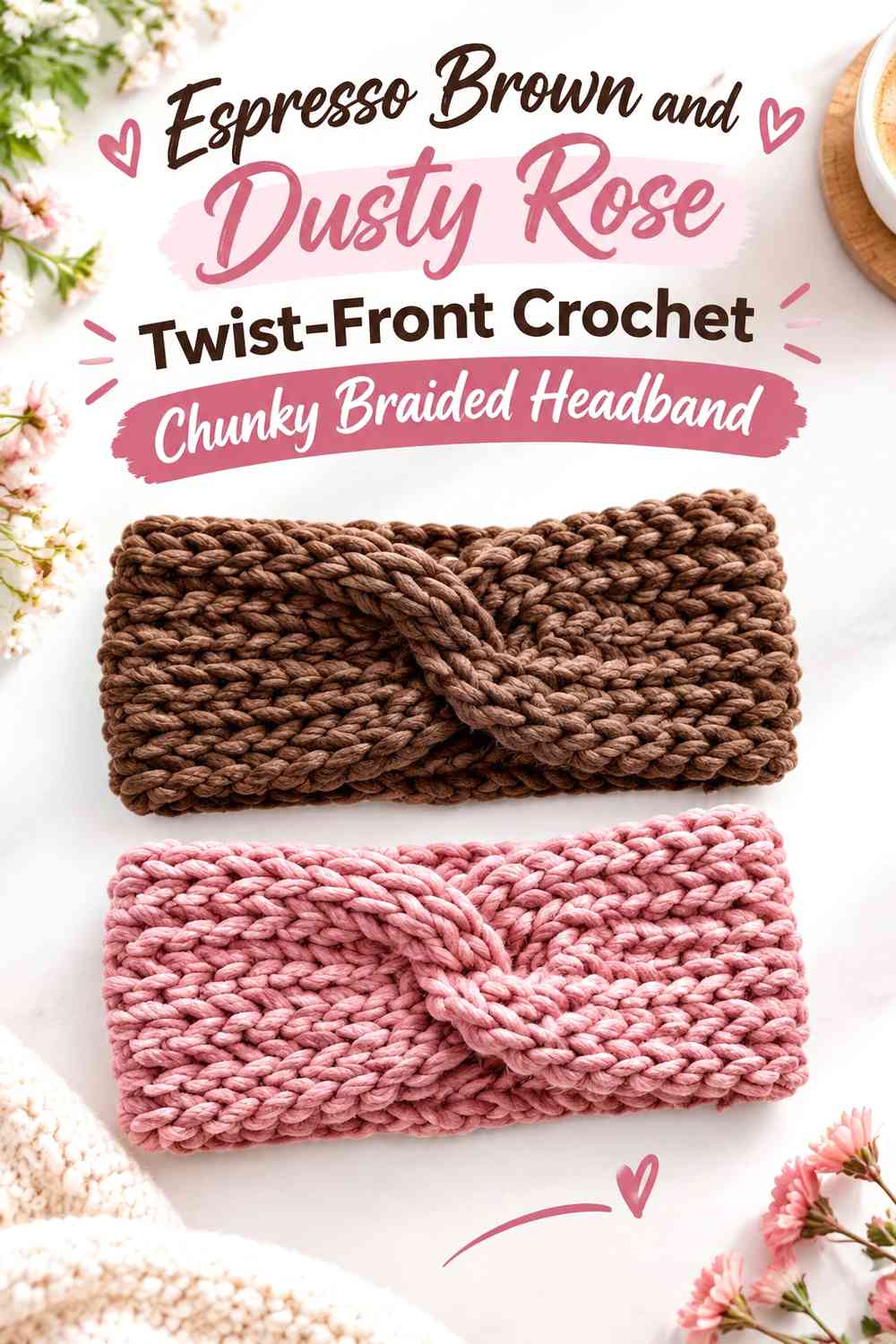
A twist-front headband can carry the same braided color logic even when it does not use separate physical strands. Use espresso brown across one prominent side of the twist and dusty rose across the other, allowing the front overlap to bring the shades together.
This creates a simpler interpretation of the braided look while keeping the chunky winter profile and two-color focal point.
Espresso Brown Can Give One Side of the Front Twist More Weight
Putting espresso brown through one major section creates a dark visual anchor at the front of the headband. The twist naturally brings that section toward dusty rose, making the contrast part of the focal detail.
Avoid adding several small brown accents elsewhere unless they help balance the front. The twist should remain the main point of interaction between the colors.
Dusty Rose Can Brighten the Espresso Brown Twist Without Extra Accents
A broad dusty rose section gives the darker half enough contrast by itself. This means you can keep the rest of the headband simple rather than adding borders, buttons, or additional shades.
Check the color placement after forming the twist. Because sections overlap, some dusty rose may become hidden, so adjust the balance before permanently finishing the headband.
Creator Credit: Wilma Westenberg
Which Espresso Brown and Dusty Rose Chunky Braided Headband Palette Should You Choose?
For the darkest winter look, choose the espresso-brown-base, five-strand, or espresso-brown-cable versions. They give brown the largest visual area and let dusty rose provide controlled contrast.
For a softer color direction, choose a dusty-rose base or dusty-rose cable with espresso brown at the outer edges. These versions keep the muted pink more visible while retaining enough dark brown to define the braid.
If braid visibility is the main priority, the alternating three-strand and four-strand ideas create the clearest repeated color changes. Oatmeal adds stronger light-dark separation, while muted mauve produces a more gradual transition between espresso brown and dusty rose.
Conclusion
Espresso brown and dusty rose can change a chunky crochet braided headband substantially depending on which shade leads. Espresso brown gives the braid a deeper visual base, while dusty rose can clarify individual strands, brighten the center, or soften a dark winter accessory.
Use the three-, four-, or five-strand versions when you want color movement across the braid itself. Choose a cable-centered design when you prefer a stronger single focal texture, and use the split-color or twist-front ideas when larger blocks of espresso brown and dusty rose suit your style better.
Before repeating a headband as a gift set or winter collection, make one complete sample and check the palette while it is worn. The curve of the headband can hide parts of the braid that appear prominent when the piece is lying flat, so the finished orientation is the best place to judge color balance.
Frequently Asked Questions
Should Espresso Brown or Dusty Rose dominate a chunky braided headband?
Either can lead. Espresso brown produces a darker overall accessory, while dusty rose makes the headband noticeably lighter. Choose the dominant shade first, then use the second color in braid strands, borders, or raised sections rather than dividing every area equally.
How can I make Dusty Rose stand out against Espresso Brown in a crochet braid?
Give dusty rose a continuous role, such as one complete braid strand or the raised center cable. Small disconnected accents are easier to lose inside chunky texture. Also compare the two yarns in grayscale if you are unsure whether they differ enough in lightness.
Can Espresso Brown and Dusty Rose be used in every strand of a chunky braid?
Yes, but plan the strand order first. Alternating the colors produces frequent contrast, while grouping two same-color strands creates broader color blocks. The braid will look more controlled when the arrangement repeats logically.
What neutral works with Espresso Brown and Dusty Rose without taking over?
Oatmeal, cream, or another restrained light neutral can separate espresso brown and dusty rose when more value contrast is needed. Keep the neutral in a supporting role so the original two-color palette remains recognizable.
Why does an Espresso Brown crochet braid sometimes look less defined?
A very dark, single-color braid can make neighboring raised sections look visually similar from a distance. Dusty rose along a crossing strand, side panel, or narrow border can provide more separation without changing the basic construction.
Can I replace Dusty Rose with another pink in an Espresso Brown headband?
Yes. Preserve the relationship rather than matching a commercial shade name. Look for a softened pink that remains clearly distinguishable from espresso brown and is not so bright that it changes the muted winter direction of the palette.
How should I distribute Espresso Brown and Dusty Rose across a matching set of headbands?
Choose one repeatable hierarchy. For example, keep espresso brown dominant on every headband and vary only where dusty rose appears, or reverse the same two planned colorways across the set. Consistent roles make the collection look coordinated even when the braid structures differ.