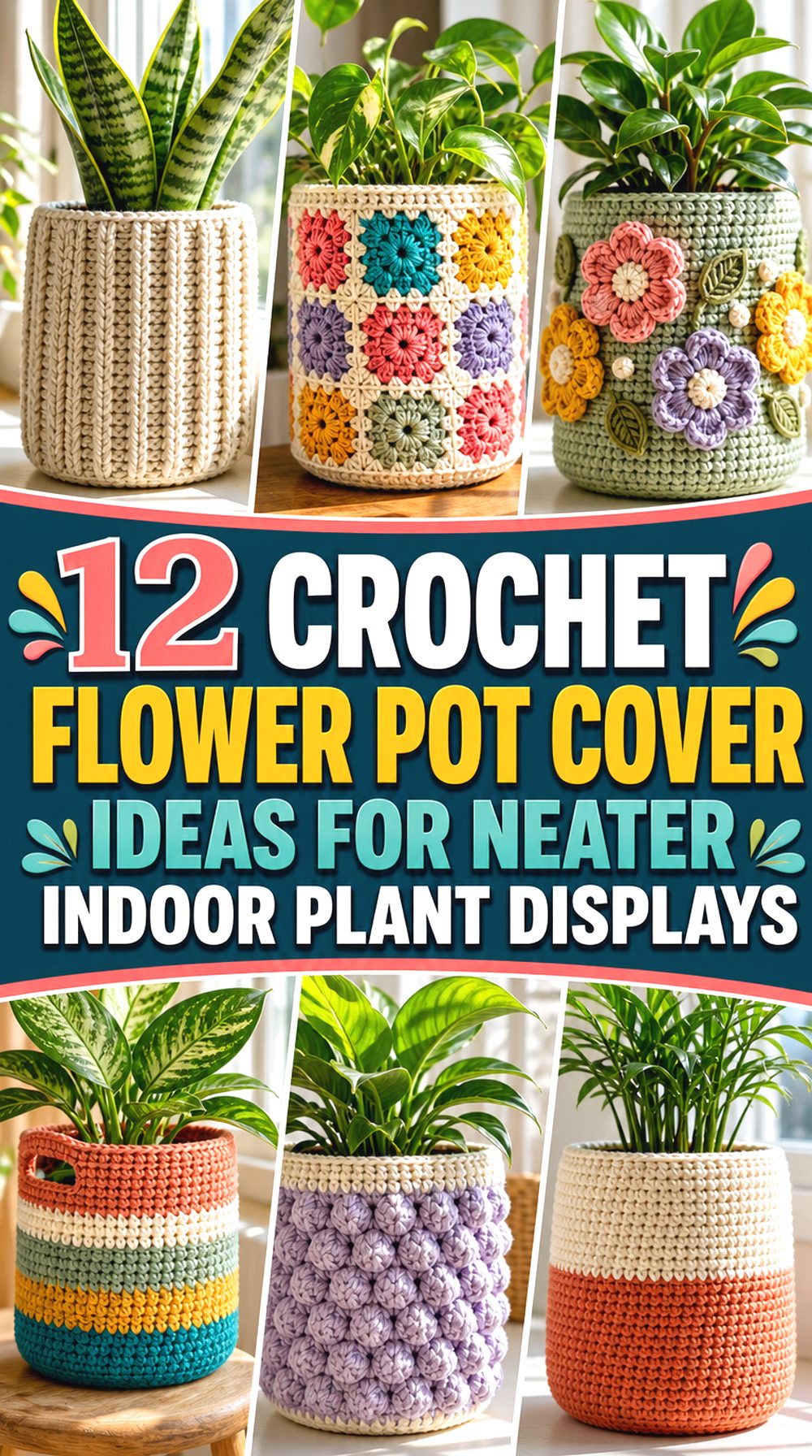

Crochet flower pot covers are a useful way to make nursery pots, jars, small planters, and indoor plant displays look more finished without replacing the container underneath. This collection focuses on covers with different shapes and uses, from fitted tabletop sleeves to chunky basket-style covers and hanging versions for saving surface space.
The projects below vary by texture, size approach, motif style, rim finish, and display placement. Some are better for small pots, some give a bolder basket look, and others help a plant sit higher or hang neatly. Use the original tutorials for exact construction details, sizing, and materials.
Quick List
- Crochet Textured Farmhouse Flower Pot Cover
- Crochet Bright Flower Pot Cozy
- Crochet Minimal Jersey Plant Pot Cover
- Crochet Granny Square Flower Pot Cover
- Crochet Chunky Two-Tone Plant Pot Cover
- Crochet Vernon Adjustable Planter Cover
- Crochet Vincent Bulky Plant Pot Cover
- Crochet Basketweave Flower Pot Cozy
- Crochet Hanging Basket Plant Pot Cover
- Crochet Beaded Hanging Flower Pot Cover
- Crochet Flower Granny Square Plant Pot Cover
- Crochet Modern Elegant Plant Pot Cover
Why These Crochet Flower Pot Covers Are Worth Making
Flower pot covers are especially useful when the plant is healthy but the outside container does not match the room. A cover can soften a plain plastic nursery pot, add texture to a shelf, or help several mismatched planters feel more coordinated. They are also easy to rotate by season or room color without disturbing the plant itself.
The biggest thing to consider is placement. A cover used on a windowsill needs a stable footprint, while a hanging cover needs a secure attachment point. Moisture also matters, so readers should check whether the tutorial discusses saucers, liners, or ways to keep yarn away from wet soil or drainage water.
Crochet Textured Farmhouse Flower Pot Cover
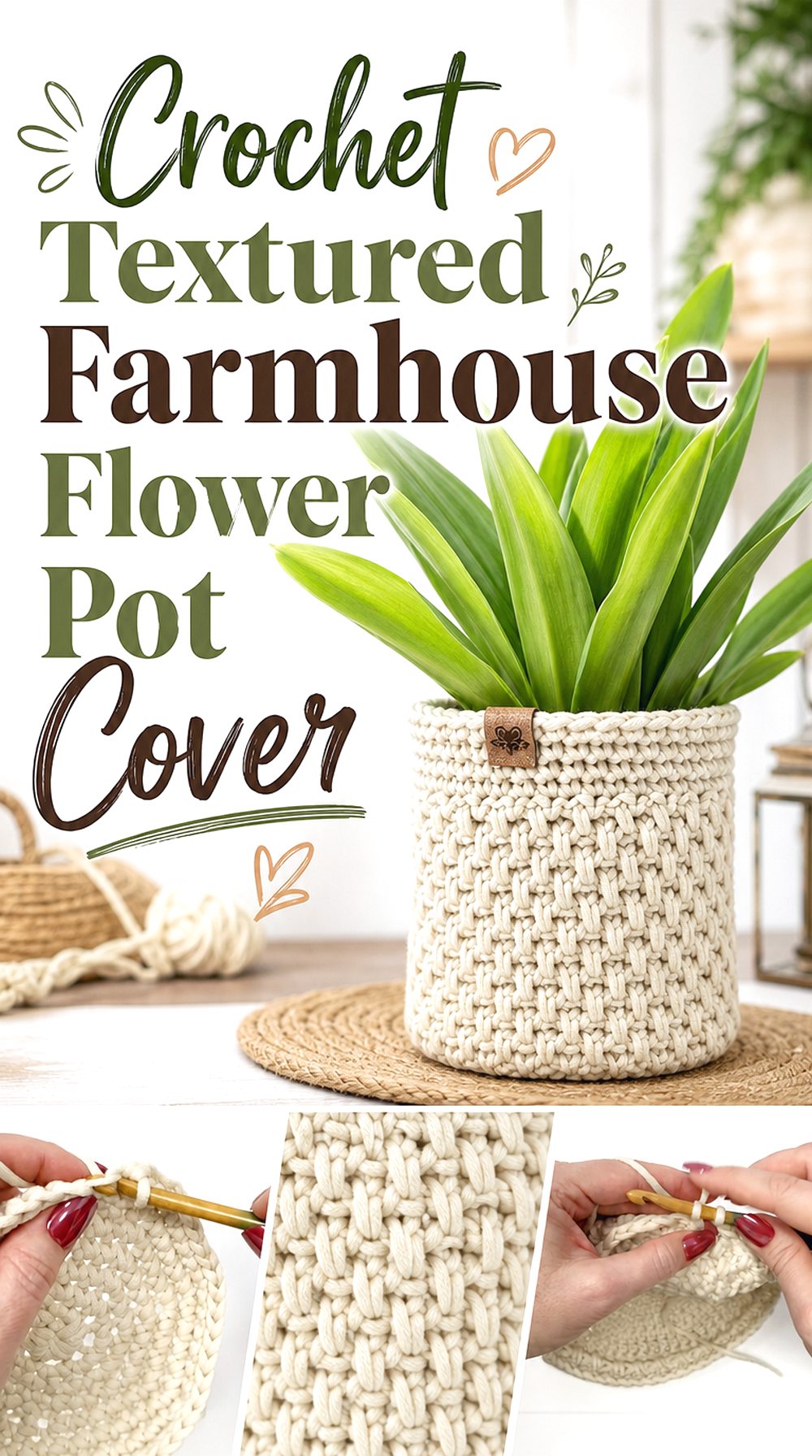
A raised textured surface gives this flower pot cover a clean farmhouse look without needing a busy color palette. The finished style works well for a tabletop plant, a seasonal flower pot, or a simple container that needs more visual weight on a shelf. It differs from the granny square and hanging options because the surface detail is built into the body of the cover, keeping the overall shape tidy and calm.
Match the Cover to the Container
A fitted crochet flower pot cover looks best when the container underneath supports the shape instead of stretching it unevenly. Before choosing this project, compare the pot’s widest point, bottom shape, and height with the creator’s size guidance. A cover that is too short may expose the nursery pot rim, while one that is too loose can look slouchy once the plant is inside.
Consider Moisture Exposure
This kind of cover is decorative, not a waterproof plant saucer. Keep a dish, liner, or inner container in mind if the plant is watered in place. The safest approach is to treat the crochet piece as the outer layer and keep soil, overflow, and drainage away from the yarn. Check the original guide for any specific moisture notes before using it around live plants.
Confirm the Material List
The texture depends on the materials and hook combination the creator lists, so it is worth checking the supply section before buying yarn. A different yarn may change the firmness, stitch definition, and final fit. Record the recommended hook size, yarn type, and any measuring tools mentioned, then compare those details with the pot you actually want to cover.
Crochet Bright Flower Pot Cozy
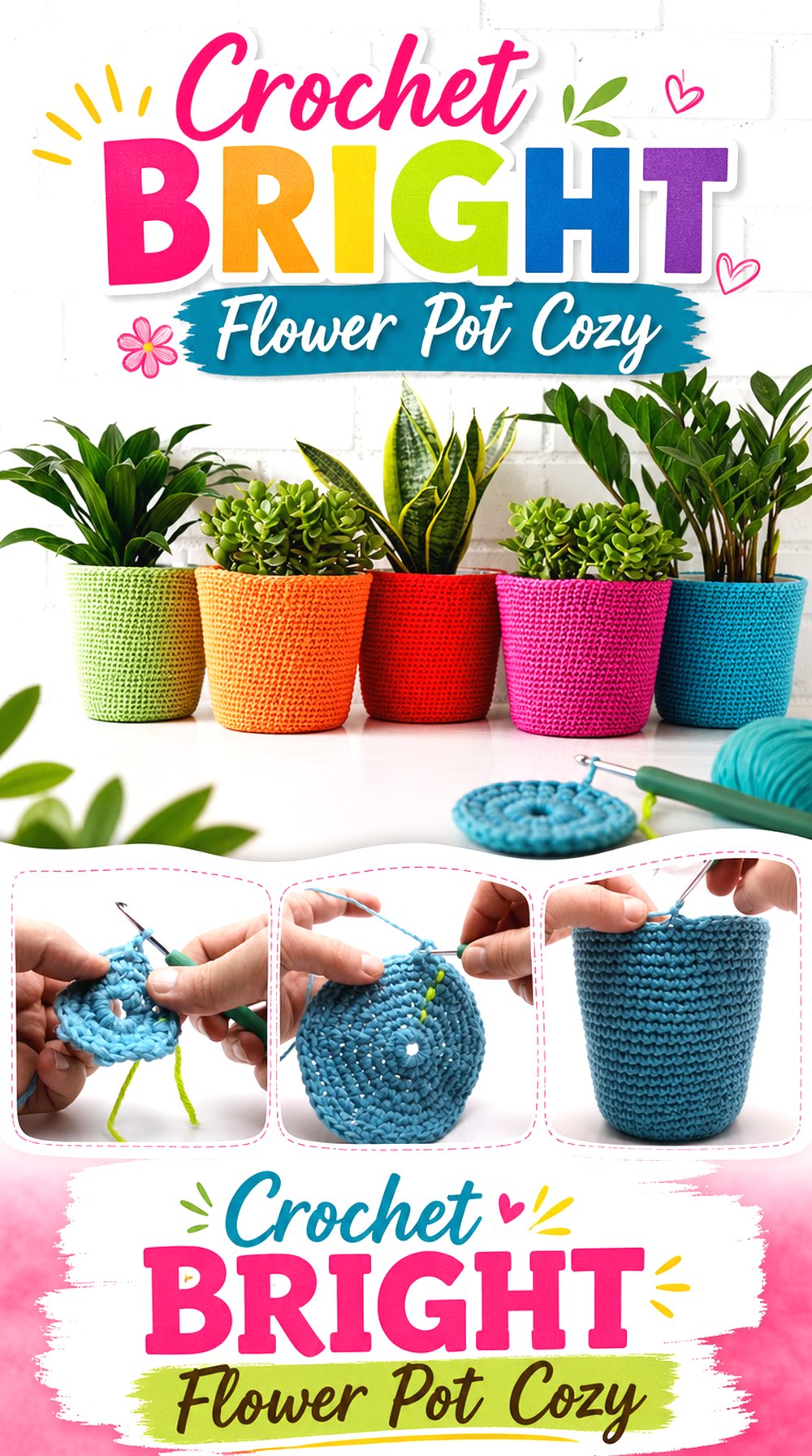
This cheerful flower pot cozy is a good option when the plant display needs color instead of heavy texture. The design is described as a flower pot cozy made to match home decor, so it can work well for a windowsill, plant shelf, or gift-style pot cover. Unlike the neutral farmhouse cover, this idea leans more toward a bright decorative sleeve that changes the mood of the container quickly.
Choose the Display Spot
A bold cozy can become the color accent in a plant corner, so placement matters. Try thinking about what surrounds the pot before choosing yarn colors. On a busy shelf, a simpler color may help the leaves stand out. On a plain table or windowsill, a brighter cover can make a small plant feel more intentional without adding extra decor pieces.
Check the Top Edge
The top edge affects how much of the original flower pot remains visible. A snug rim can hide a plain plastic edge, while a lower edge may let the plant container show. Before using the finished cover in a main display area, compare the cover height with the pot’s rim and decide whether you want a fully covered look or a layered container look.
Use the Original Guide for Exact Sizing
This project should be followed from the original source for counts, sizing, and finishing. Flower pots often taper, so the top and base may not need the same fit. Rather than guessing from another pot cover, check the creator’s information and compare it with the exact container you plan to use, especially if your pot has a wide lip.
Original Tutorial and Creator Credit
Creator: The Crochet Crowd
Crochet Minimal Jersey Plant Pot Cover
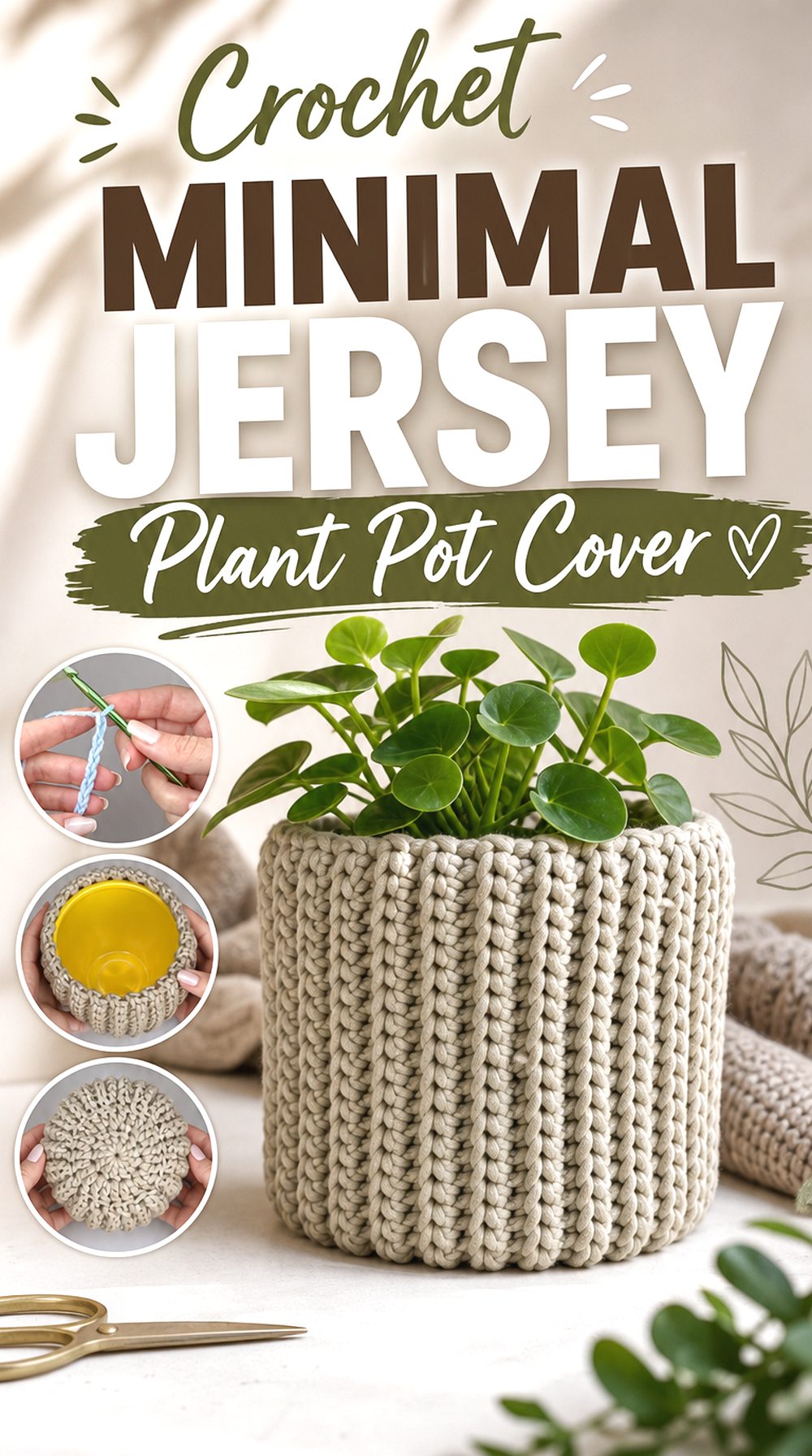
The clean sleeve shape in this pot cover makes it useful for modern rooms, small tables, and plant displays where the greenery should stay the focus. The tutorial lists a plant pot size and uses jersey-style yarn, giving the finished piece a smooth, structured look compared with softer motif covers. It is a neat choice for covering a plain container without adding hanging cords, tassels, or large decorative panels.
Check the Finished Footprint
A tabletop flower pot cover needs to sit flat and leave enough space around the plant. Before starting, measure the spot where the pot will live, especially if it is going on a narrow shelf, desk, or windowsill. The finished footprint should not crowd nearby plants or push leaves against a wall, because that can make the whole display look cramped.
Think About Surface Protection
The crochet cover dresses up the pot, but the surface underneath still needs protection from watering. If the plant will stay on wood, painted furniture, or a shelf, plan for a saucer or inner liner. A tidy cover can hide the nursery pot, but it should not hide moisture problems. Confirm how the pot and cover are shown together in the original tutorial.
Plan Before Buying Supplies
Jersey-style yarn can create a different body than soft acrylic or cotton yarn. Check the creator’s listed supplies before substituting anything, because a change in yarn thickness can affect fit and firmness. A minimal cover has fewer decorative distractions, so uneven sizing or a loose top edge will be easier to notice once it is on display.
Original Tutorial and Creator Credit
Creator: Made by Lunda
Crochet Granny Square Flower Pot Cover
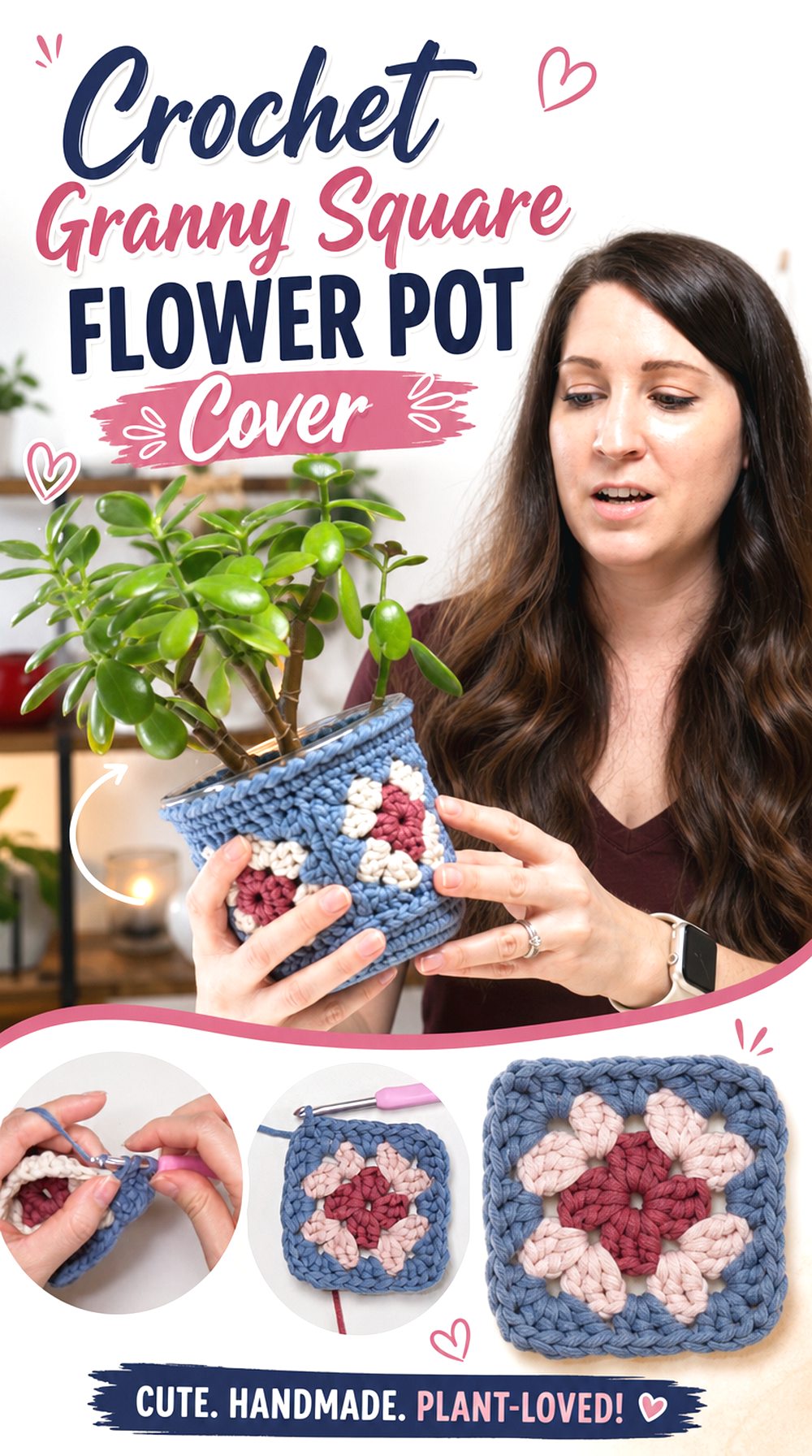
Classic granny squares give this plant pot cover a more patchwork-style look, which can help a simple houseplant feel warmer and more decorative. The source describes the project as a granny square cover sized for 5–6 inch pots, so it suits readers who want a visible motif rather than one continuous textured sleeve. This option stands apart because the side panels become the main design feature.
Let the Squares Stay Visible
The appeal of this cover comes from the joined square layout, so color placement matters more than it does on a plain sleeve. Choose colors that let each motif read clearly from across the room. Too many low-contrast shades may hide the square edges, while a small number of balanced colors can make the cover look organized beside leafy plants.
Confirm the Pot Size Range
The source describes the cover as fitting 5–6 inch pots, which is helpful but still worth checking against the exact container. Nursery pots can have different rim shapes, heights, and tapers even when the listed size sounds similar. Measure the pot before starting, then compare it with the creator’s notes so the squares sit neatly around the sides.
Watch the Joining Section Closely
A granny square cover depends on clean joining and even alignment. When using the tutorial, slow down during the joining portion and compare the shape as it forms. A small twist or uneven join can show clearly because the square layout creates visible lines. Keeping the panels oriented consistently will help the finished cover look intentional on a shelf or plant stand.
Original Tutorial and Creator Credit
Creator: B.Hooked Crochet
Crochet Chunky Two Tone Plant Pot Cover
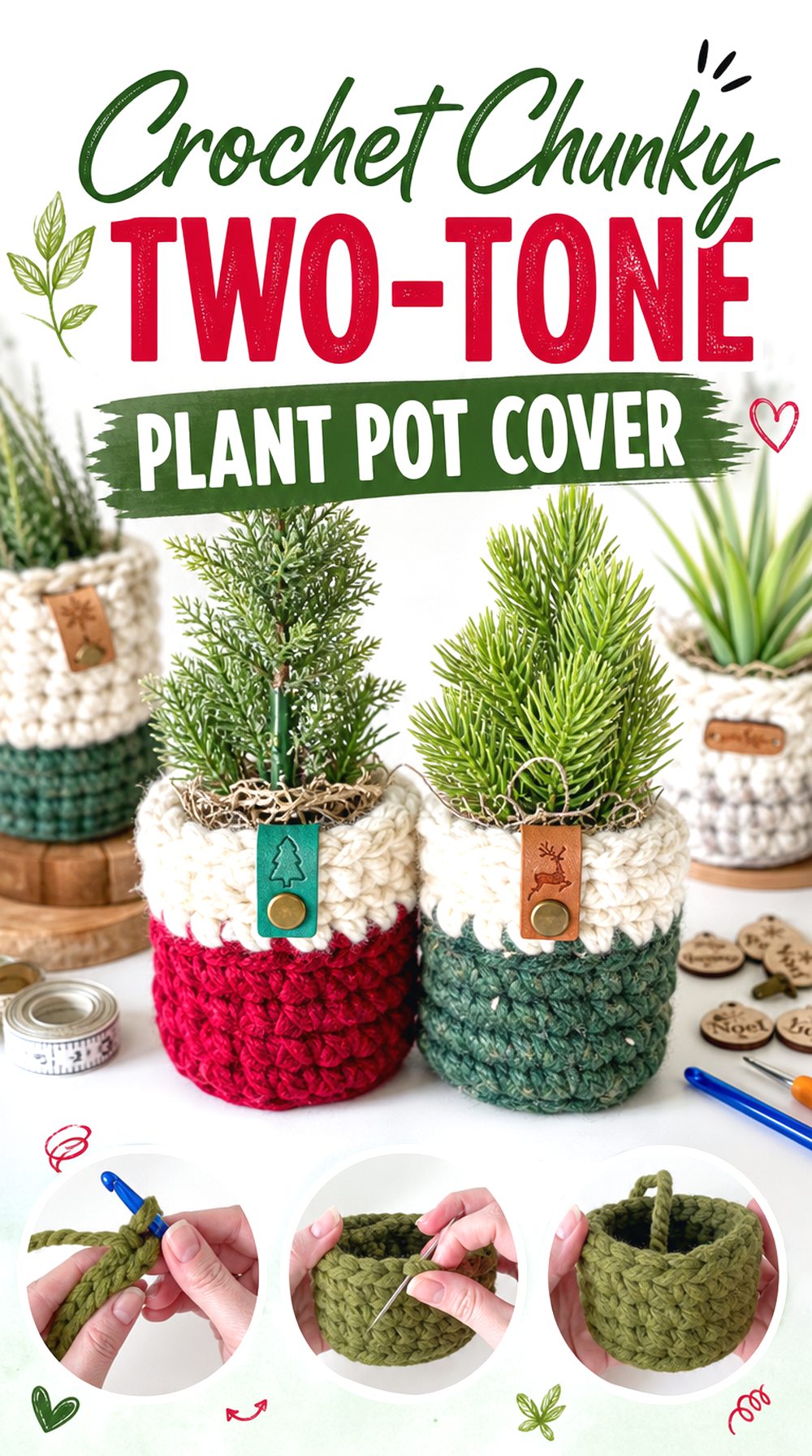
A chunky plant pot cover gives more visual weight to the container, which can balance fuller greenery or faux plants on a shelf. The tutorial describes a chunky plant pot cover pattern with super bulky yarn and optional decorative tags, so this idea feels more like a soft basket than a thin sleeve. It differs from the minimal jersey cover because the texture and thickness become part of the room decor.
Think About Shape Retention
Chunky yarn can make a flower pot cover look fuller and more structured, but the actual result still depends on the yarn, tension, and pot insert. Look for how the creator supports the shape and how the finished sides sit around the container. If the cover will be used without a firm pot inside, confirm whether the design is intended to stand on its own.
Check Any Extra Components
This project may include optional decorative details, so review what is required and what is just styling. A tag, filler, or faux plant can change the final look, but it may not be necessary for the crochet cover itself. Sorting the true materials from display extras helps readers avoid buying items they do not need for their own plant corner.
Consider Seasonal Display
A chunky two-tone cover can be easy to style for different seasons because the shape is bold and simple. Neutral colors may work year-round, while higher-contrast colors can make the pot feel more seasonal. Since the tutorial gives the construction source, use it for the actual making details and treat color as the main area for personal room coordination.
Original Tutorial and Creator Credit
Creator: Simply Made by Erin Crochet
Crochet Vernon Adjustable Planter Cover
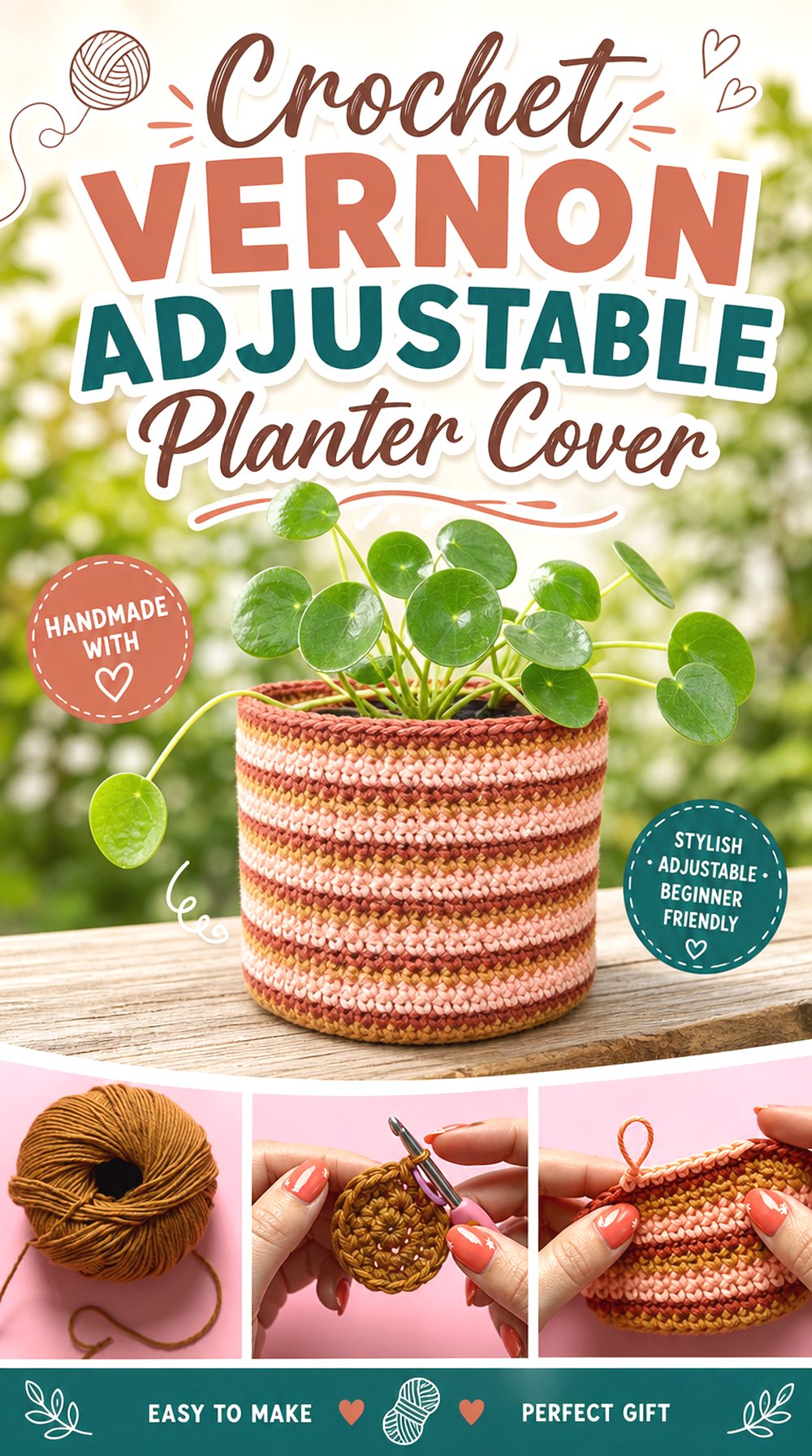
The Vernon planter cover is useful for readers who want a flexible cover that can be adjusted around different planter sizes. The source describes it as a plant pot koozie with a full tutorial and notes that a terracotta dish can help keep the crochet cover from getting soggy. This makes it a practical option for indoor plant displays where the cover needs to look neat but still work around real watering habits.
Adjust Around the Real Pot
An adjustable planter cover still needs planning around the actual pot. Measure the base, widest point, and height instead of relying only on a label size. Tapered pots can sit differently inside a cover than straight-sided jars or cachepots. Use the creator’s sizing guidance to shape the cover around the container you will display, not a general pot category.
Keep the Bottom Protected
The source mentions using a terracotta dish at the bottom so the crochet cover does not get wet. That detail is important for live plants, especially on indoor shelves. A dish or liner can help separate the yarn from drainage water, but readers should still remove excess water and avoid letting the cover sit damp for long periods.
Review the Full Guide First
Because the design is adjustable, it is worth reviewing the full guide before starting. This helps readers understand where size changes happen and where the basic shape needs to stay consistent. Watching the project once through can prevent a cover that fits the base but becomes too short, too tall, or too loose around the upper edge.
Original Tutorial and Creator Credit
Creator: WAVELENGTHS
Crochet Vincent Bulky Plant Pot Cover
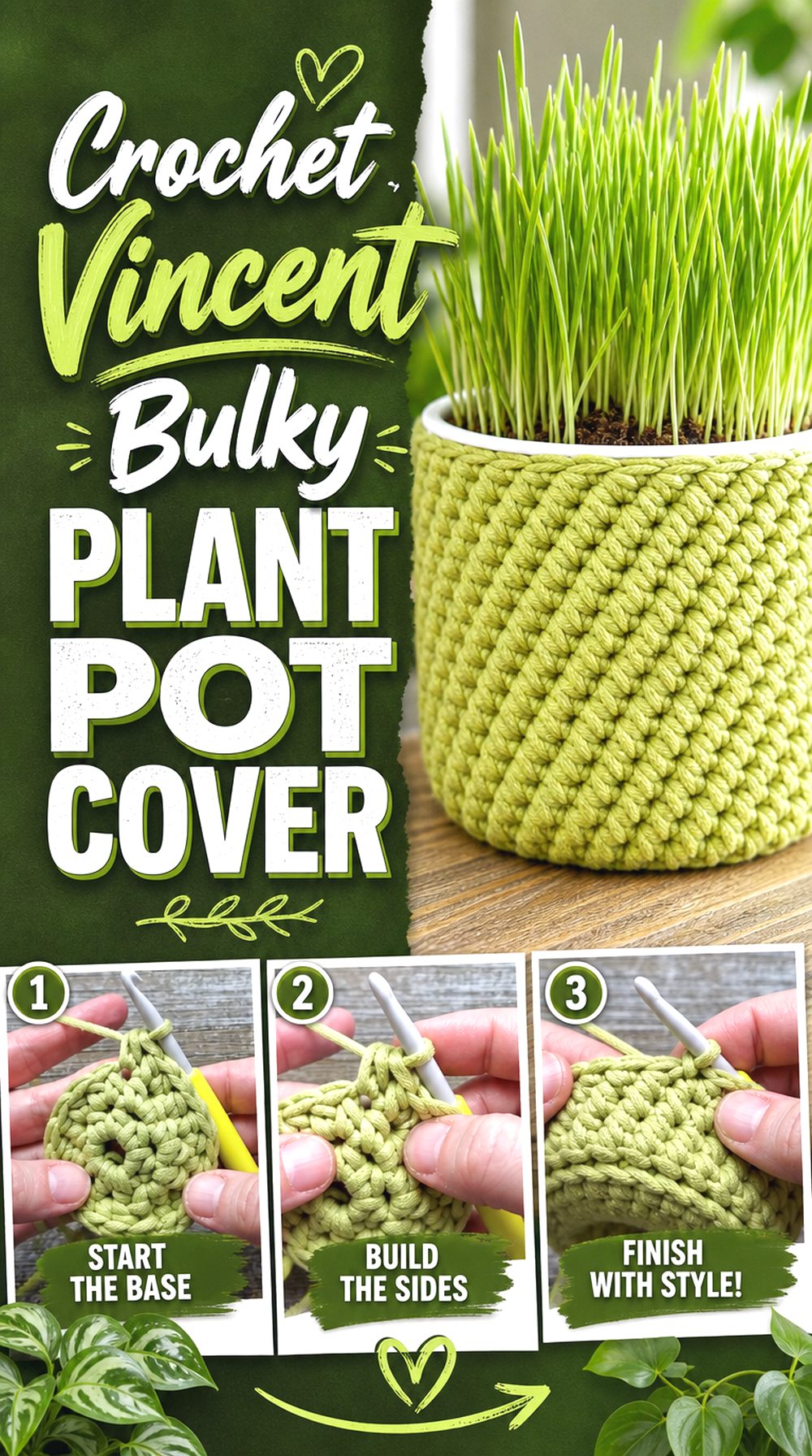
The Vincent plant pot cover uses a bulky-weight approach and is described as adjustable depending on the plant pot being covered. That makes it a useful middle ground between the chunky basket-style cover and the slimmer tabletop sleeves. It can work for different pot sizes when the maker follows the original sizing method, and its cleaner structure keeps the focus on texture rather than separate motifs.
Check the Size Notes
This project includes size-related information, so read those notes before choosing a container. The amount of yarn and number of base adjustments can change with the pot size. Instead of assuming one finished cover will suit every planter, compare your pot with the creator’s examples and decide whether the project fits the display you have in mind.
Consider a Plain Pot Insert
A bulky cover can hide an unattractive nursery pot, but it still benefits from a stable inner container. A plain insert gives the crochet piece shape and keeps soil contained. For a cleaner room display, choose an inner pot or liner that does not fight the cover color. The crochet layer should look like a deliberate outer sleeve, not a replacement for drainage planning.
Pause at Major Shape Changes
The shift from base to side is important on any pot cover because it controls how the piece sits around the container. When following this tutorial, pause at major shape changes and compare the work to the pot. If the base is not sitting correctly, the sides may not improve the fit later. Use the original counts and shaping details rather than estimating.
Original Tutorial and Creator Credit
Creator: First The Coffee Crochet
Crochet Basketweave Flower Pot Cozy
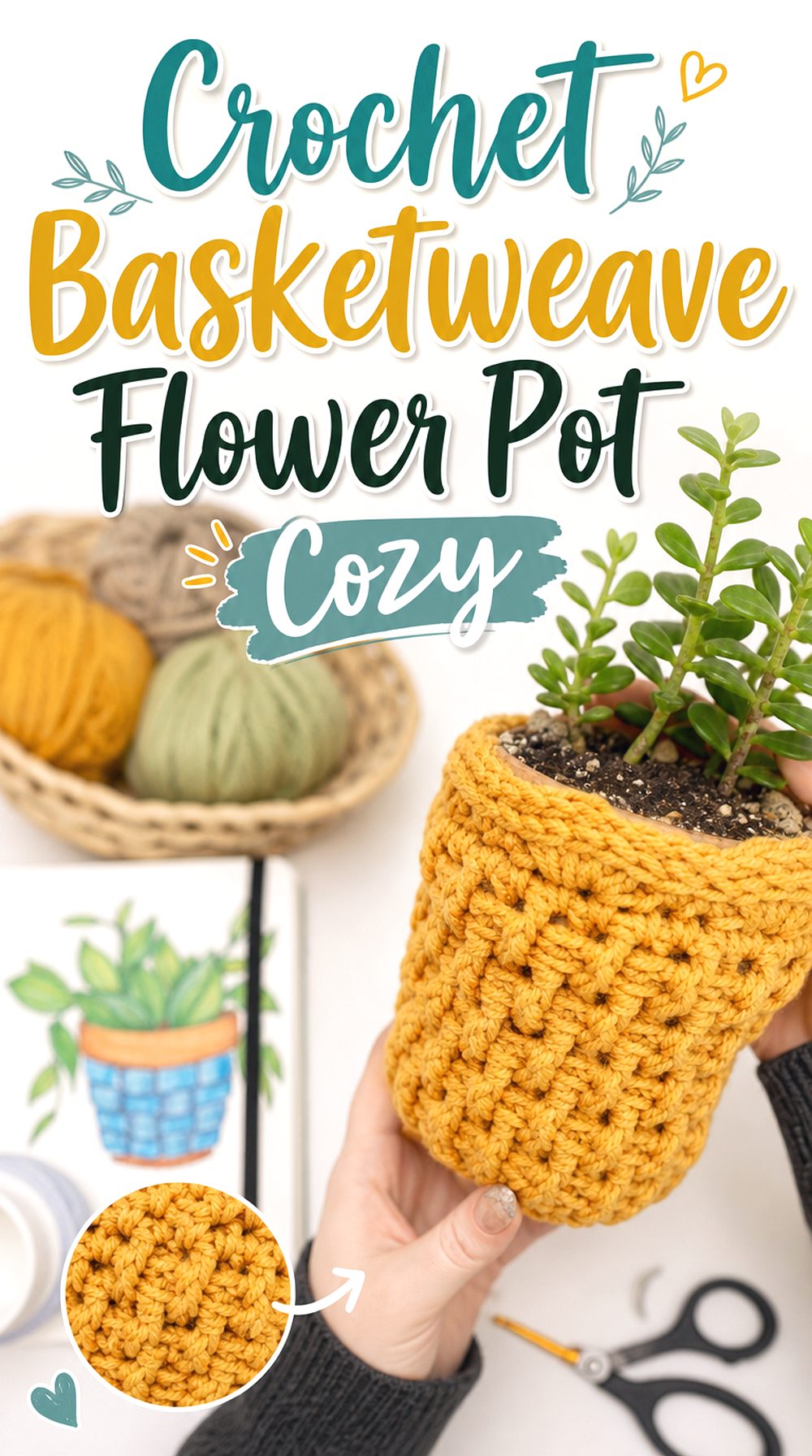
A basketweave-style flower pot cozy brings stronger surface texture to a small plant display. The tutorial title describes it as a pot cozy for a 4-inch pot, which makes it especially useful for small nursery pots, succulents, herbs, or compact houseplants. Unlike the granny square covers, the interest comes from a woven-looking surface instead of separate motifs, giving the finished piece a tighter, more continuous look.
Use Texture Where It Shows
Basketweave texture is most effective when the cover is placed where the side surface can be seen. A low shelf or crowded plant tray may hide the detail that makes the project interesting. Consider a desk, side table, windowsill, or open plant stand where the woven surface can face outward and support the plant without competing with too many other objects.
Confirm the 4-Inch Fit
The source describes the cozy in connection with a 4-inch pot, so check your container before starting. Small pots can still vary in height and rim width. A cover made for one nursery pot may not sit the same way on a ceramic pot with a thicker lip. Measure first, then use the original tutorial for the fit details.
Look at the Rim Finish
The top rim affects whether the cover looks polished or unfinished. With a textured body, a clean rim helps frame the plant and keeps the upper edge from looking uneven. Watch how the original project finishes the top area, then compare that finish with the pot you plan to use. The goal is a cover that looks secure without hiding the plant too much.
Original Tutorial and Creator Credit
Creator: Last Minute Laura
Crochet Hanging Basket Plant Pot Cover
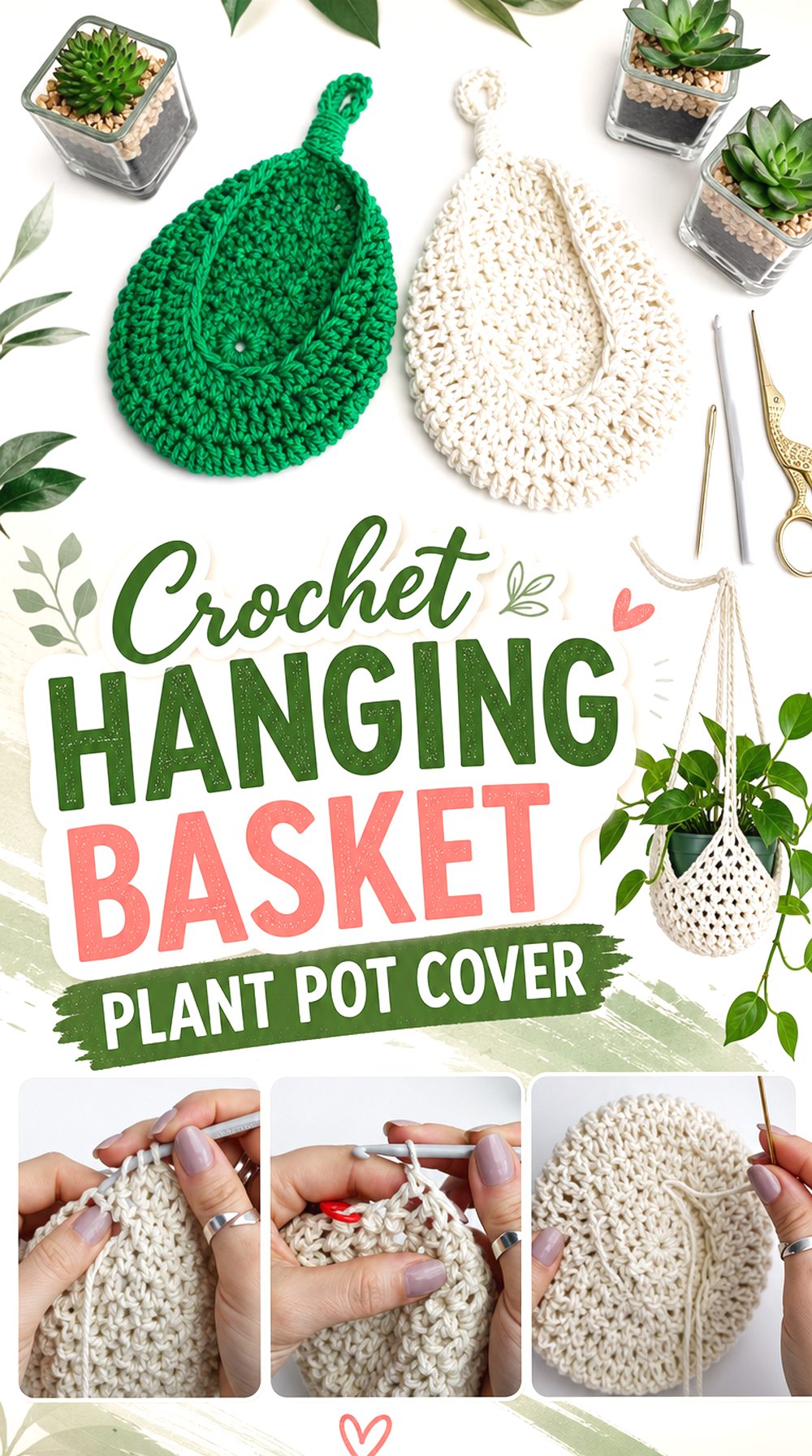
This hanging basket plant pot cover is useful when surface space is limited or when trailing plants need more height. The tutorial is described as a crochet plant hanging basket for little plants and succulents, so it belongs in small indoor plant corners, window areas, or wall hook displays. It differs from the tabletop covers because the hanging structure becomes part of the finished decor, not just the pot sleeve.
Plan the Hanging Position
A hanging cover needs a thoughtful location before it is made. Consider the plant’s size, the ceiling or wall hook position, and how low the pot should hang. It should not block a walkway, press leaves against glass, or hang where watering becomes awkward. Check the finished hanging length and display style in the original tutorial before choosing the final spot.
Check How It Attaches
The attachment point matters because the cover supports both the pot and the plant. Review how the straps or hanging sections come together, and look for any ring, loop, or joining method included by the creator. Do not assume another hanger’s hardware will work. Use the original guide to understand the intended attachment before putting a live plant inside.
Think About Daily Handling
Hanging plant covers are moved, turned, and watered differently than tabletop covers. Think about how often the plant needs care and whether the cover allows easy access to the pot. A small succulent may be simple to manage, while a trailing plant may need more room. The finished piece should make the plant easier to display, not harder to maintain.
Crochet Beaded Hanging Flower Pot Cover
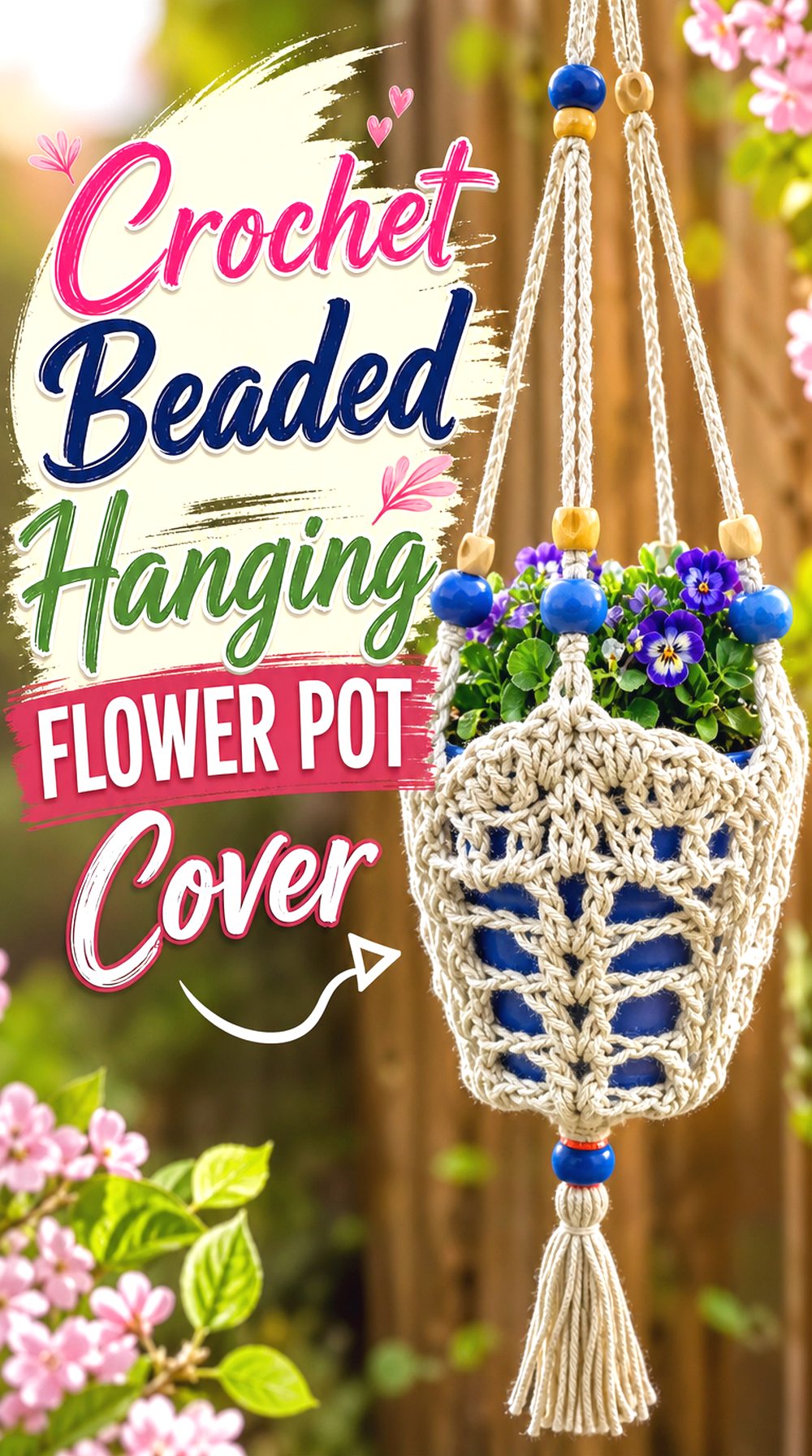
A beaded hanging flower pot cover adds more decorative detail than a plain hanging basket. The source describes a hanging flower pot cozy that can be used outside and includes craft cord, beads, and a tassel in the related pattern information. This option works well for readers who want a more ornamented plant display, especially where the bottom and hanging strands will be visible.
Place Beads and Tassel Thoughtfully
Beads and tassels can make the cover feel more finished, but they should not interfere with the pot or plant care. Think about where the decorative pieces will hang and whether they might touch the surface below. In a narrow window or porch area, extra dangling details need enough room to move without catching on leaves, furniture, or nearby hooks.
Consider Outdoor Placement
The source connects this design with hanging flowers outside, but outdoor use still needs careful planning. Weather, watering, sunlight, and wind can all affect how a crochet cover looks over time. Check the creator’s material notes and use a covered or protected area when needed. Do not assume any yarn or cord is weather-safe unless the source clearly supports that.
Before You Rely on the Finished Item
A hanging cover has to hold the pot in a stable position, so review the final assembly carefully. Confirm how the hangers are attached, how the pot sits inside, and whether the finished display looks balanced. This is especially important if using a heavier container. The tutorial should remain the source for exact construction and any load-related decisions.
Original Tutorial and Creator Credit
Creator: Sara Sach Crochet Designs
Crochet Flower Granny Square Plant Pot Cover
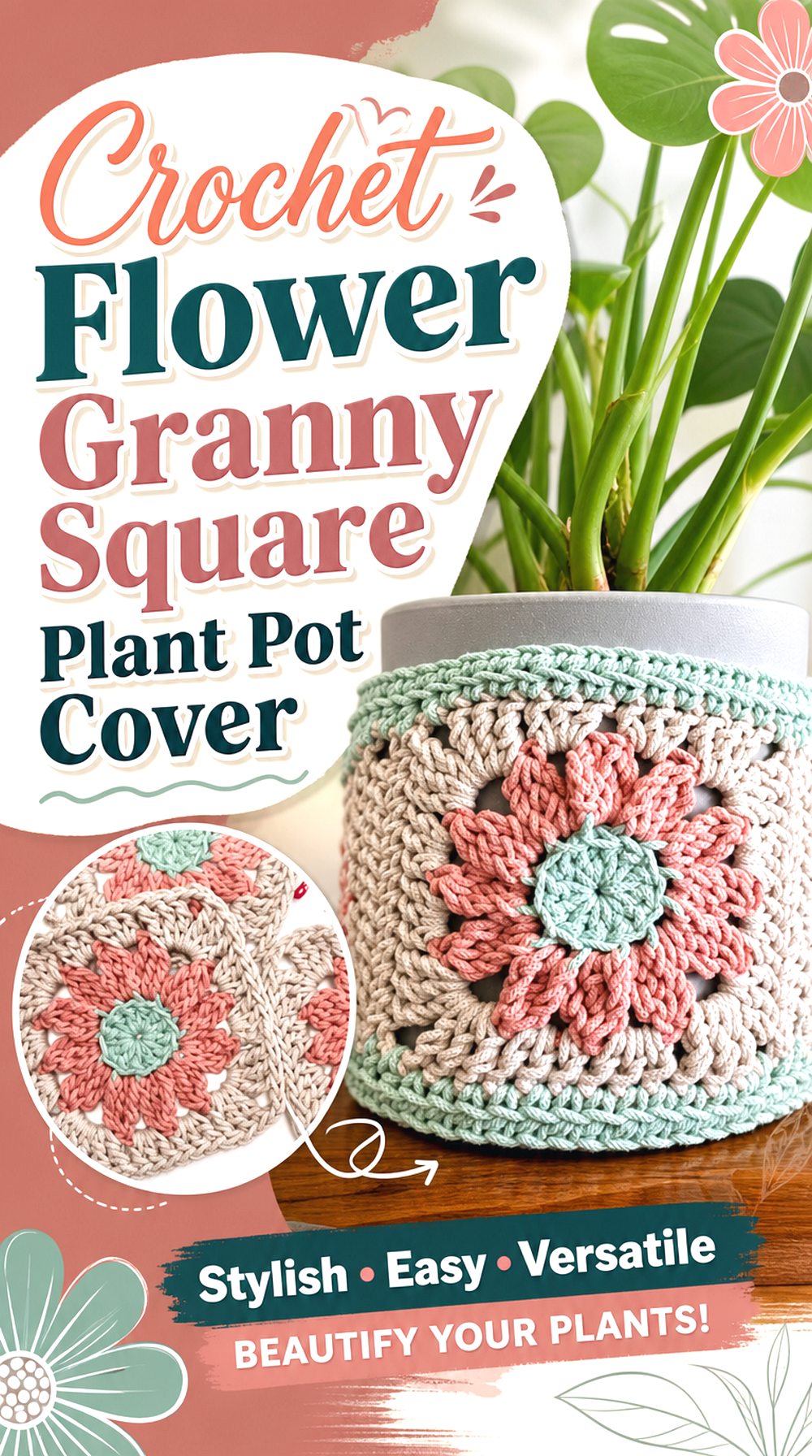
Flower granny squares give this plant pot cover a softer, more garden-inspired look than a classic square motif. The tutorial is described as a plant pot cover using flower granny squares that can be made in different sizes with different yarn, so it is a good option for readers who want the cover itself to echo the plant theme. It stands apart because the floral motif is part of the container, not just the plant above it.
Balance Flowers and Foliage
A flower motif cover can look busy if the plant already has highly patterned leaves or strong blooms. For a calmer display, pair it with simple greenery or choose yarn colors that support the plant rather than compete with it. If the pot will hold flowers, consider whether the crocheted flower squares should contrast, blend, or act as a quiet border below the plant.
Match It to the Container
Since the source notes that the cover can be made to fit different sizes, the real container matters. Check the pot shape before choosing colors and starting the motifs. A taller pot may need a different visual balance than a squat one. The flower squares should sit where they can be seen clearly, rather than disappearing below a wide rim or behind dense leaves.
Slow Down Detailed Sections
Flower granny squares often have more visual detail than plain squares, so it helps to slow down while following the motif portions. Compare each piece before joining so the flowers face the same direction and the cover looks even around the pot. Use the original video for any exact counts, joining choices, and sizing details rather than trying to recreate the design from photos.
Original Tutorial and Creator Credit
Creator: Concrete Gems Crochet
Crochet Modern Elegant Plant Pot Cover
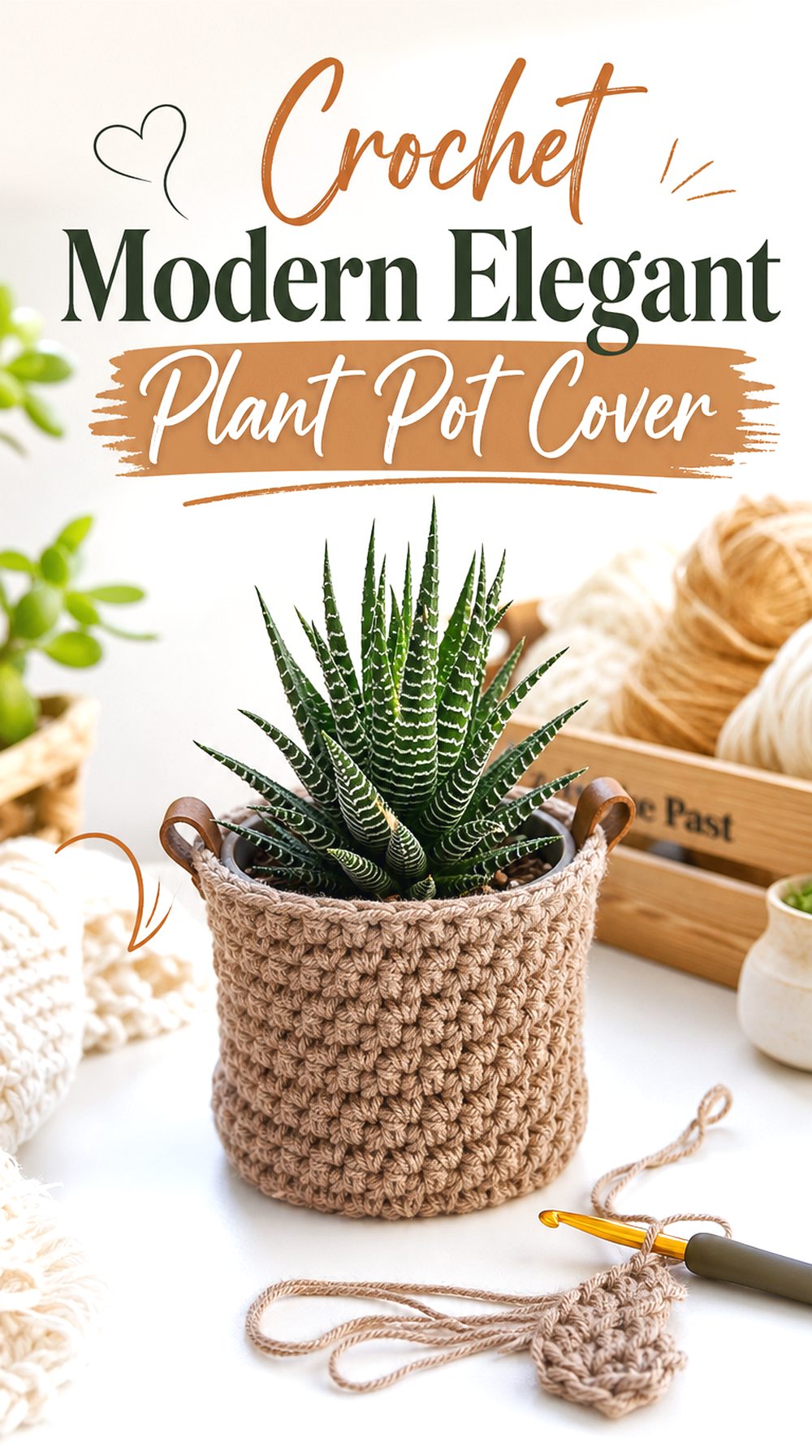
This modern plant pot cover is a clean choice for readers who want a simple indoor decor piece without large motifs, tassels, or heavy color blocking. The tutorial describes a modern and elegant crochet plant pot cover for home decor, so it works well for shelves, desks, entry tables, or plant groupings where the cover should look polished but not overly decorative. It rounds out the list with a calmer option for minimal rooms.
Choose a Clean Display Location
A modern cover benefits from open space around it. Place it where the silhouette, rim, and texture can be seen without too many nearby objects. A cluttered shelf can make even a neat cover disappear. For a stronger display, pair it with one plant, a simple saucer, and enough blank space so the crochet surface becomes part of the room styling.
Check What Is Included
Before starting, review the tutorial’s supply and instruction details so you know what the cover requires. Some modern pot covers rely on a specific yarn weight, a firm container, or a particular finishing method to keep the shape tidy. Confirm what is included in the source and avoid assuming that a different material will create the same polished result.
Compare the Shape as You Work
Modern designs often look simple because the proportions are clean. That also means uneven height, a loose rim, or a wavy base can stand out quickly. While following the tutorial, compare the cover with the pot at natural stopping points. Keep the original guide open for exact construction, and use the real container as a fit check throughout the process.
Original Tutorial and Creator Credit
Creator: HjimiCrochet
Conclusion
These crochet flower pot cover ideas give readers several ways to tidy up indoor plant displays. A minimal sleeve works well for a clean shelf, while a chunky cover gives small pots more presence. Granny square and flower motif covers add visible pattern, and hanging versions help when table space is limited. Before choosing, compare the pot size, display location, watering habits, and how much texture the room can handle. Use the original tutorials for exact construction details, sizing, and finishing.
FAQs
How do I choose the right crochet flower pot cover size?
Start by measuring the pot’s base, widest point, height, and rim. Flower pots often taper, so one measurement is not enough. Compare those numbers with the creator’s size notes before starting. If the source says the pattern is adjustable, review where the adjustment happens instead of guessing from the finished photo.
Should a crochet flower pot cover touch wet soil?
It is better to keep yarn away from wet soil and drainage water. Use an inner pot, saucer, liner, or removable cachepot when needed. Unless the creator clearly gives moisture guidance, treat the crochet cover as decorative. This helps protect the yarn and keeps the finished piece looking cleaner in an indoor display.
Are hanging crochet flower pot covers good for small spaces?
Hanging covers can help when shelf or table space is limited, but they need a secure hook, balanced pot, and enough room for the plant. Check how the tutorial handles the hanging section and final attachment. Also think about watering access, plant weight, and whether the cover will hang where people walk past.
Can I use a different yarn for a flower pot cover?
You can consider a different yarn, but the fit, firmness, and texture may change. A thicker yarn can make the cover larger or bulkier, while a softer yarn may not hold the same shape. Check the creator’s material list first, then make a small test or compare measurements before committing to the full project.
Can I sell flower pot covers made from YouTube tutorials?
Do not assume selling is allowed just because the tutorial is public. Check the creator’s written terms, video description, website, or pattern license. Some designers allow finished-item sales with credit, while others limit use. Use your own photos, never reuse creator thumbnails or screenshots, and follow any local business requirements.