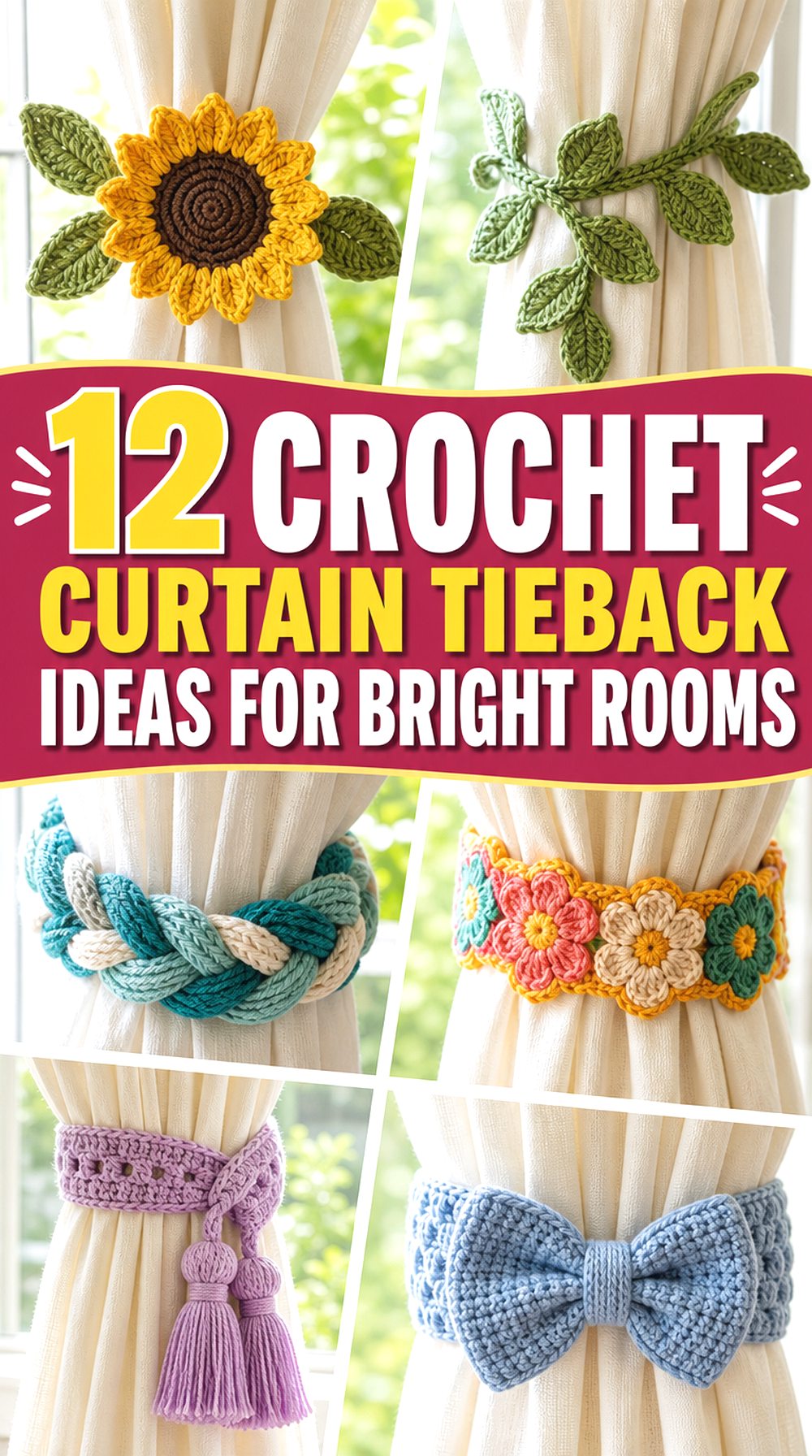

Crochet curtain tiebacks are small enough to change the mood of a room without replacing the curtains themselves. This collection focuses on bright windows, soft daylight, and projects that help pull fabric back while adding visible shape, color, or texture.
The ideas range from floral vines and classic bands to playful amigurumi-style holders. Some pieces work best as seasonal accents, while others feel more neutral for everyday use. Use the list to compare motif style, tie length, curtain weight, and how much decoration you want around the window.
Quick List
- Crochet Butterfly Curtain Tieback
- Crochet Two-Tone Rose Curtain Tieback
- Crochet Heart Curtain Tie
- Crochet Victorian-Inspired Curtain Tie
- Crochet Scrap Yarn Curtain Tieback
- Crochet Sunflower Curtain Holder
- Crochet Daffodil Vine Curtain Tieback
- Crochet Flower Garland Curtain Tie
- Crochet Tulip Window Curtain Tieback
- Crochet Lily of the Valley Curtain Tieback
- Crochet Amigurumi Gecko Curtain Tieback
- Crochet Guthelu Flower Curtain Holder
Why These Crochet Curtain Tiebacks Are Worth Making
Curtain tiebacks are practical home pieces because they affect both light and display. A narrow band can sit quietly against the fabric, while a flower, heart, or amigurumi holder becomes part of the room’s decoration. That makes this category useful for bedrooms, craft rooms, nurseries, kitchens, and sunny sitting areas.
They also let crocheters match a window treatment to a season or color palette without changing the whole room. Before choosing a tutorial, check how the tie attaches, whether it needs a hook or loop, and whether the finished shape suits lightweight curtains, heavier panels, or sheer fabric.
Crochet Butterfly Curtain Tieback
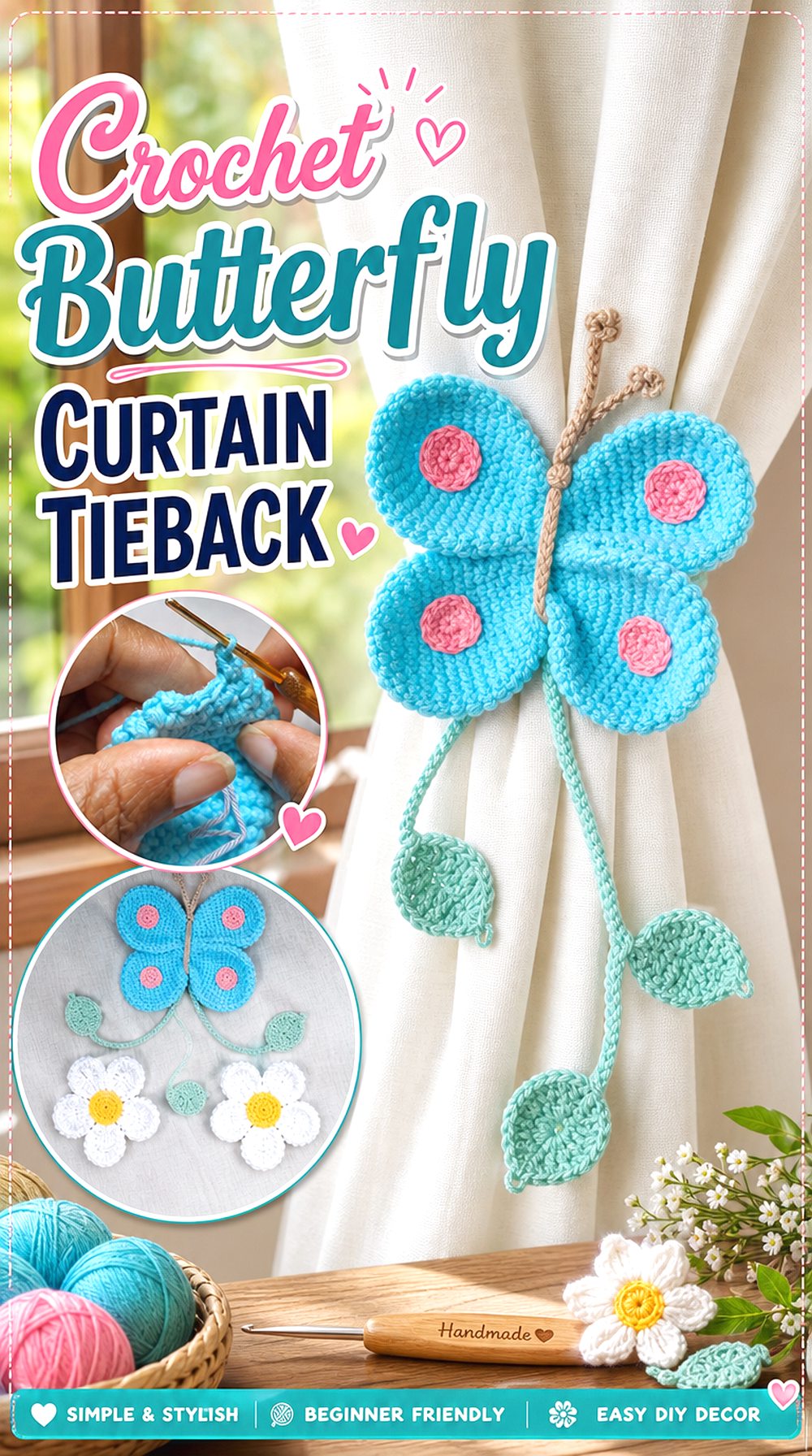
A butterfly tieback brings a soft, playful shape to a bright window without feeling as flat as a simple strap. The amigurumi-style body gives the design a more decorative center, while the wing shape makes it easy to read from across the room. This option may suit a child’s room, craft corner, or cheerful bedroom where the curtain holder is meant to look like part of the display rather than disappear into the fabric.
Match the Butterfly to the Room
A butterfly shape naturally draws attention, so it works best where the window can handle a little extra decoration. Light curtains, pale walls, and soft colors can keep the tieback from looking too busy. For a brighter room, think about whether the butterfly should contrast with the curtain or stay close to the curtain color for a gentler look.
Check the Tieback Attachment
With shaped curtain holders, the decorative part and the tying part both matter. Before starting, check how the finished butterfly is meant to hold the curtain and whether any separate cord, loop, ribbon, or attachment area is used. This helps readers avoid making a pretty motif that still needs extra planning before it can actually hold fabric back.
Review the Amigurumi Details
Because this design is presented as an amigurumi butterfly curtain tieback, the stuffed or shaped sections may require more attention than a flat band. Watch the shaping and finishing areas carefully, especially where the body and wings come together. The final piece should look balanced on the curtain, not twisted or too heavy on one side.
Crochet Two Tone Rose Curtain Tieback
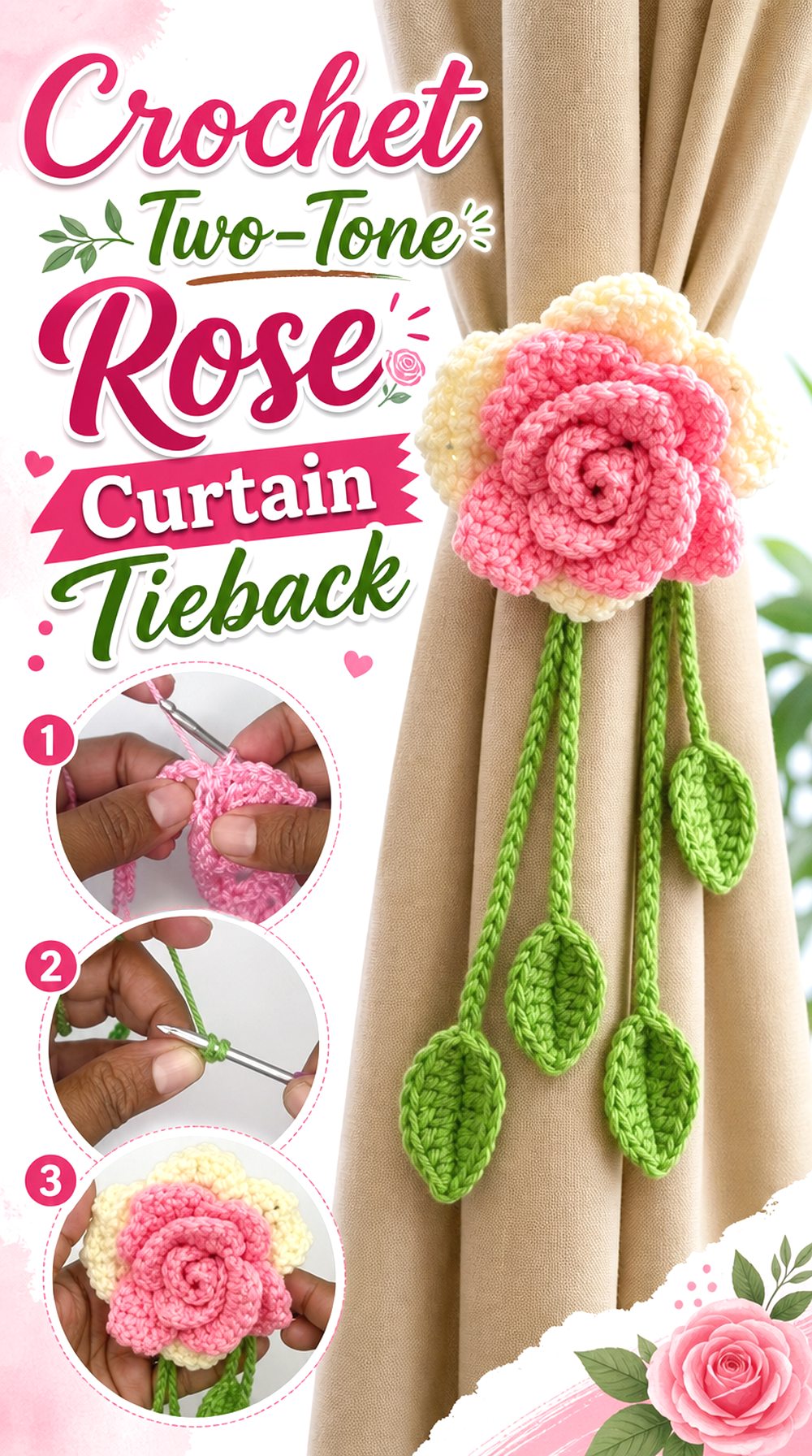
A rose curtain tieback gives the window a clear floral focal point while still staying useful as a holder. The source describes this version as a crochet curtain tieback with a two-color rose flower, which makes it different from single-color floral straps. It may work especially well with plain curtains, because the raised flower becomes the main detail. For bright rooms, the rose can add color near the window without covering much of the natural light.
Keep the Rose Detail Visible
A raised rose can lose impact if it sits too far behind thick folds of fabric. Think about where the flower will land when the curtains are pulled back. The front should face into the room, and the tieback should sit at a height where the flower is visible rather than hidden along the side edge of the curtain.
Plan the Color Contrast
The tutorial information notes that the rose can be made in two colors or one color, so color planning matters here. A two-tone rose may show the petal shape more clearly, while a single-color version may feel quieter. Choose the direction based on the curtain fabric and the amount of contrast already in the room.
Check the Creator’s Materials First
The description mentions a rose flower curtain tieback, but readers should still confirm the full supply list in the original source before buying yarn. Curtain tiebacks need to look neat from a distance, so matching the hook, yarn weight, and any listed extras helps keep the flower and tie portion in proportion.
Original Tutorial and Creator Credit
Creator: Hopeful Turns
Crochet Heart Curtain Tie
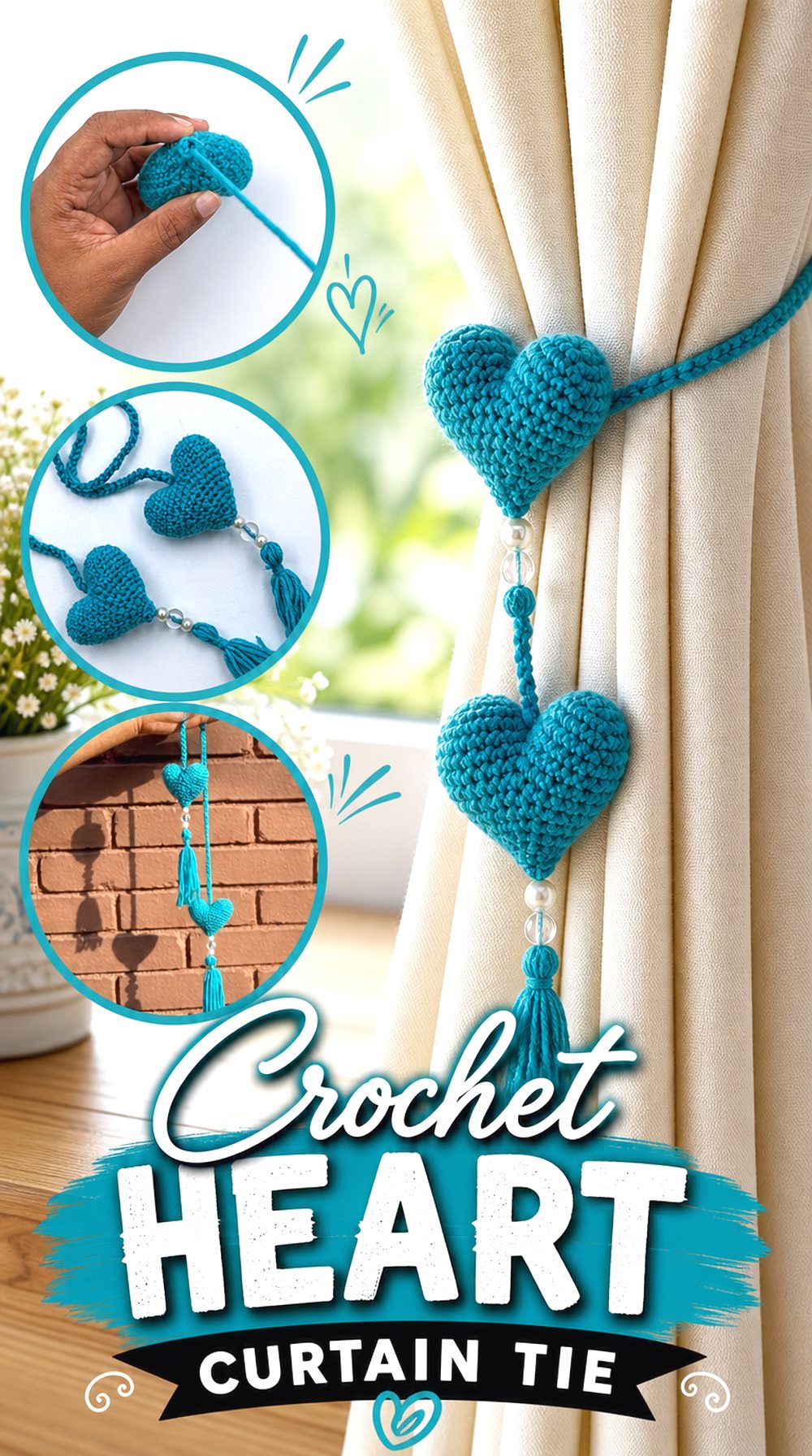
A heart curtain tie is a softer alternative to floral tiebacks, especially for bedrooms, teen rooms, and cozy reading corners. The finished idea is decorative without needing petals, leaves, or a garden theme. Because the heart sits as the main shape, this project can feel sweet while still being simple enough visually for everyday curtains. It also stands apart from the flower-heavy options in this list by using a clear symbol instead of a botanical motif.
Think About the Heart Placement
The heart should sit where it can be seen after the curtain is gathered. If the curtain folds are deep, the decorative shape may need to rest toward the front rather than close to the wall. Before making a full set, check how one tieback would sit on the window and whether the heart points straight when the curtain is pulled open.
Consider the Room Style
Heart tiebacks can look soft, playful, or romantic depending on color. For a bright room, pale pink, cream, red, or a curtain-matching neutral will create very different effects. The main decision is whether the heart should be the focus or simply a small accent that keeps the curtain from looking plain.
Confirm the Finished Length
Heart details can add decoration, but the tie still has to wrap around the curtain comfortably. Readers should look for the finished length or compare the tieback to their curtain panel before making multiples. A tie that is too short may squeeze the fabric, while one that is too long may let the curtain slump.
Original Tutorial and Creator Credit
Creator: Artisan Haus TV
Crochet Victorian Inspired Curtain Tie
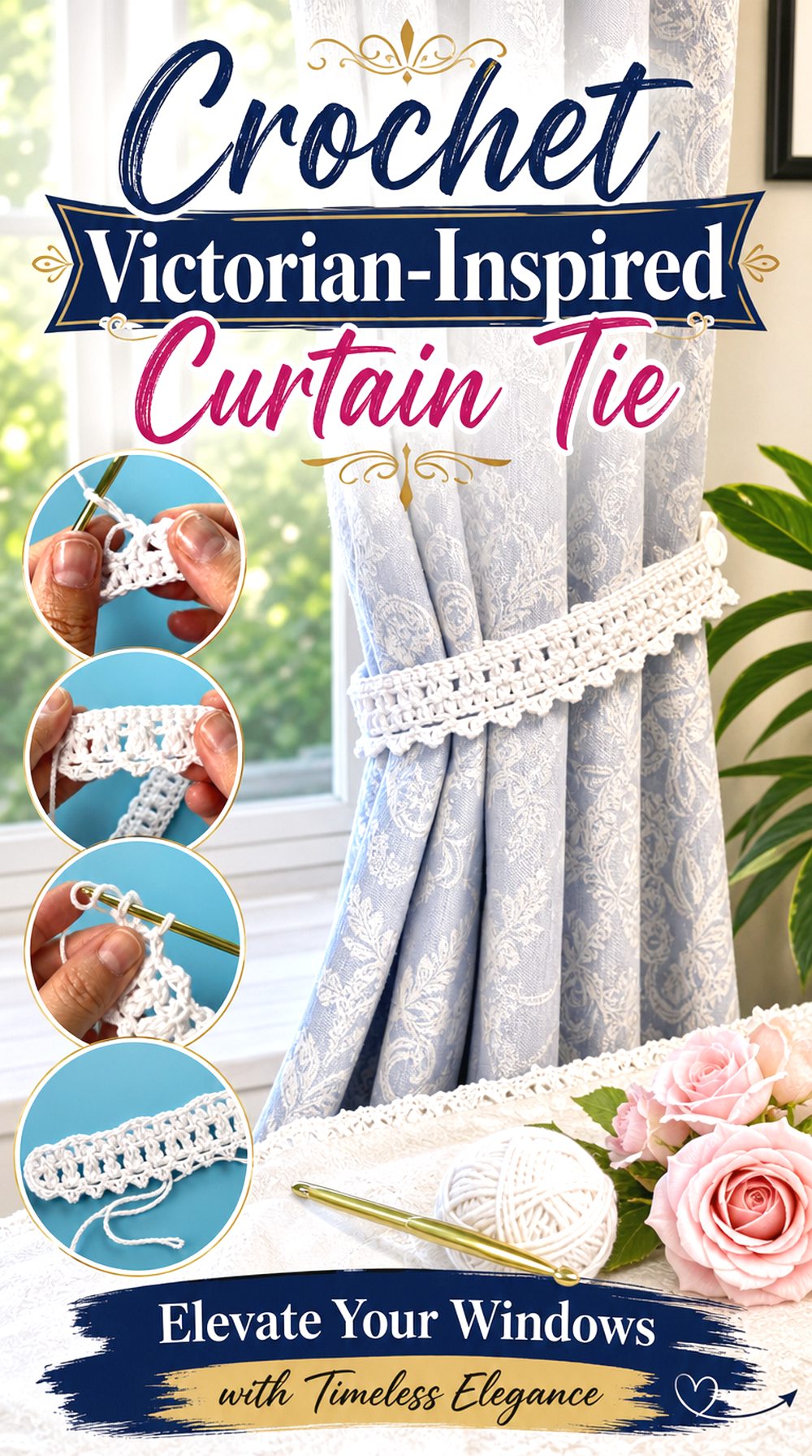
The Victorian-inspired curtain tie has a more classic look than the playful and floral pieces in this collection. The source notes a long, narrow tie shape, which makes it useful for readers who want texture and detail without a large motif at the center. It may suit sheer curtains, cottage-style rooms, vintage bedrooms, or soft neutral spaces where a lace-like tieback feels more natural than a bright flower or stuffed character.
Use the Longer Shape Thoughtfully
A longer tie can wrap around gathered fabric with a graceful line, but it also needs enough curtain fullness to look balanced. The tutorial description gives finished measurements, so compare those details with your curtain width before deciding where to use it. This type of tieback may look especially neat when both sides of the window are made to match.
Check the Width Against the Curtain
The source lists this design as about 2 inches wide, so it reads as a narrow decorative band rather than a bulky holder. That width may suit lighter curtains well, but heavier panels could need a sturdier hold or a different placement. Measuring the curtain bundle first helps prevent the tie from looking too delicate for the fabric.
Follow the Row Sections Carefully
This tutorial includes row timestamps, which can be useful for readers who like to pause at each section. Since the visual appeal depends on an even, repeated look, it is worth slowing down when the design changes. A small progress note can help keep both tiebacks consistent if making a matching pair.
Original Tutorial and Creator Credit
Creator: The Stitch Sessions – Crochet & Conversation
Crochet Scrap Yarn Curtain Tieback
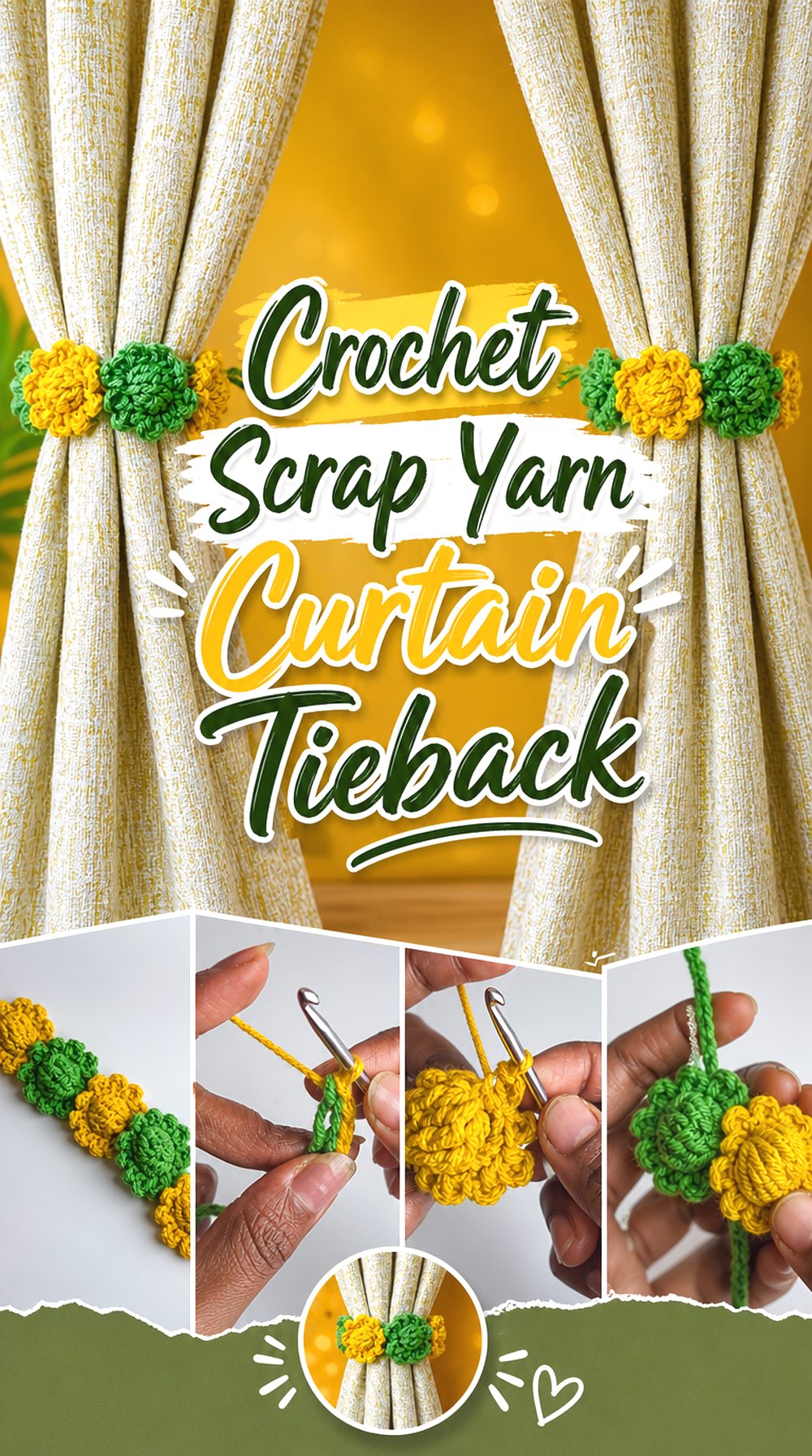
A scrap yarn curtain tieback is a practical option for readers who want a home decor project without committing to a large new yarn purchase. The source presents it as a leftover yarn craft idea, which makes the design feel flexible and casual. It is especially useful for bright rooms where a small stripe of color near the curtain can pull together shades already used in cushions, throws, rugs, or wall decor.
Sort the Leftover Yarn First
Scrap yarn projects work best when the leftovers still make sense together. Gather similar weights and test color combinations before beginning. A tieback sits at eye level near the window, so uneven color choices may stand out more than they would in a basket of scraps. Choose colors that either blend with the curtain or repeat room accents.
Keep the Pair Consistent
Curtain tiebacks are often used in pairs, so matching matters even when using leftovers. Readers may want to divide yarn amounts before starting to make sure both sides of the window can be finished in a similar way. Exact symmetry is not always necessary, but the two tiebacks should feel related when seen together.
Check the Basic Supply List
The description lists leftover yarn, a crochet hook, and scissors, but readers should still review the original tutorial before starting. Scrap yarn can vary widely, and the final look depends on how the yarn behaves. A softer yarn may drape differently from a firmer one, so the curtain weight should guide the choice.
Original Tutorial and Creator Credit
Creator: Begin with Anita
Crochet Sunflower Curtain Holder
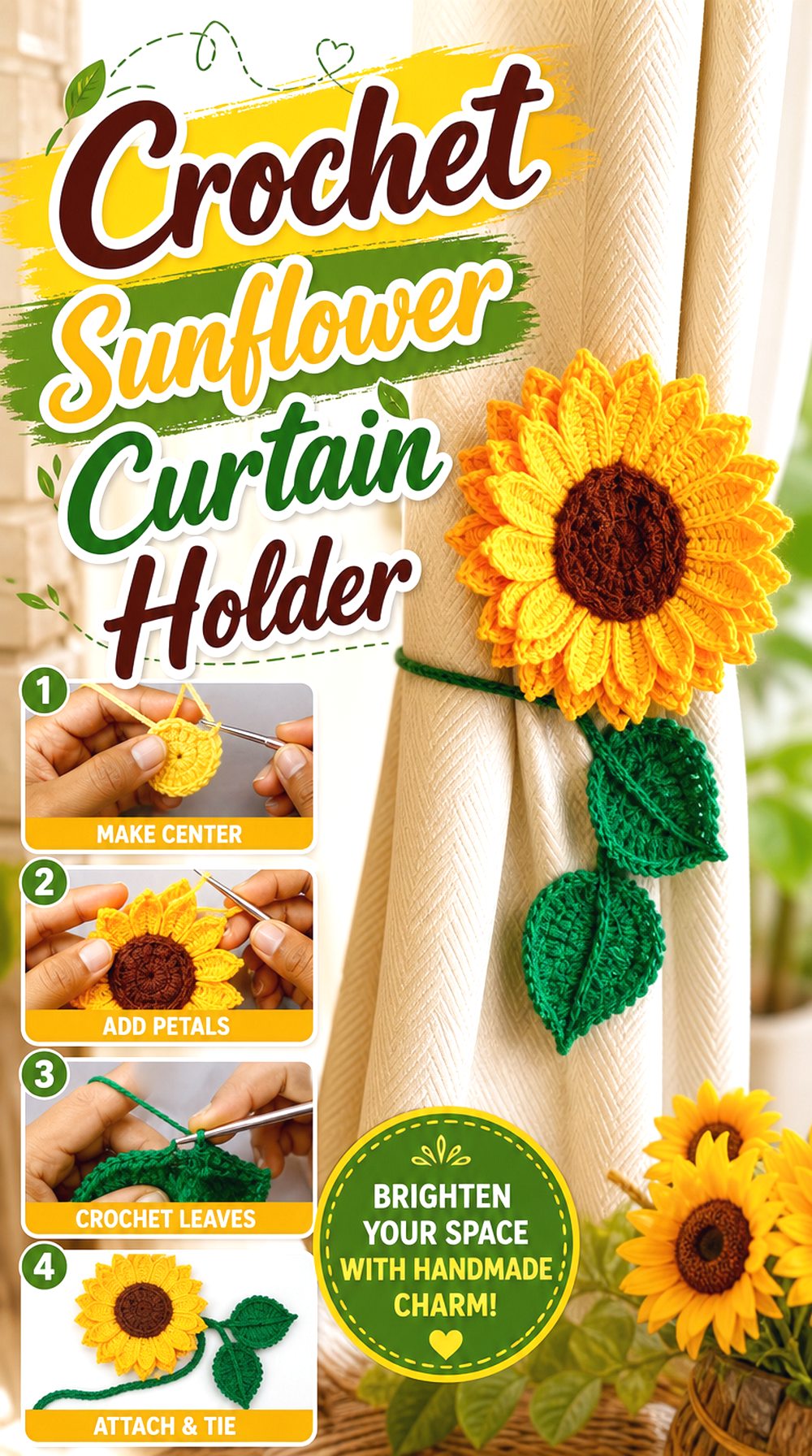
A sunflower curtain holder brings a strong, sunny center to a window, which makes it a natural fit for bright rooms. Unlike smaller floral ties, this idea has a bold seasonal feel and can stand out against white, cream, green, or neutral curtains. The sunflower shape also gives the tieback a clear purpose as decor, not just a fastening strip, so it may work well where the window is a focal point.
Choose the Window Carefully
A sunflower is visually strong, so it may suit a kitchen window, sunroom, craft space, or casual bedroom more than a very formal room. Consider how much sunlight hits the area and whether the colors will feel cheerful or too intense. A single sunflower detail can brighten a curtain without needing several extra decorations nearby.
Look at the Flower Size
The larger the flower, the more it affects the curtain’s look. Before making a pair, check how the finished motif compares with your curtain width and tieback height. A wide sunflower may look balanced on full panels, while a smaller window may need careful placement so the flower does not overwhelm the fabric.
Watch the Joining Area
Flower curtain holders often involve a motif connected to a tie or base section. The connection needs to sit neatly because that is where daily handling can show. Use the original tutorial for the exact construction details, and slow down when the flower and holder section meet so the finished piece faces the right direction.
Original Tutorial and Creator Credit
Creator: Sanjs Aasha
Crochet Daffodil Vine Curtain Tieback
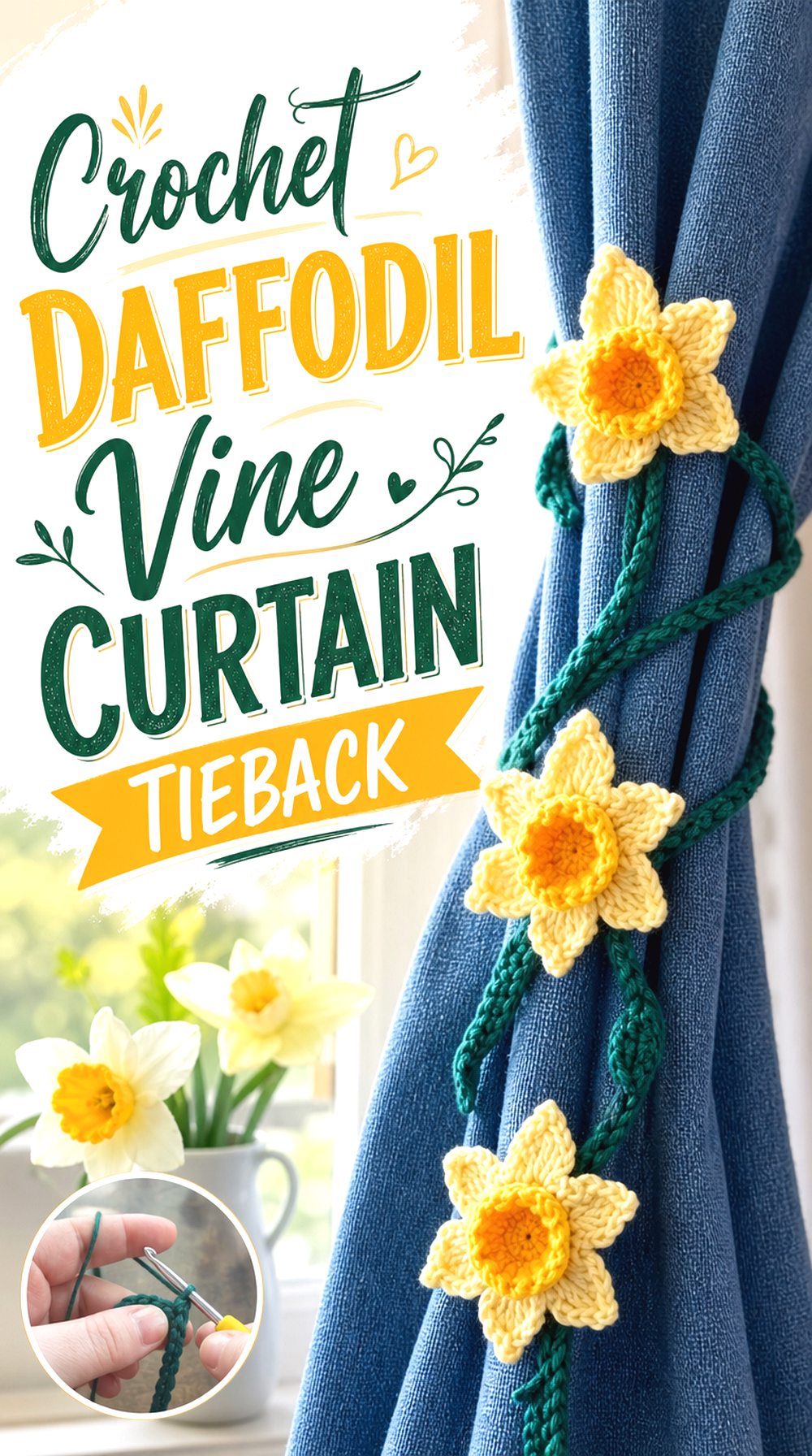
A daffodil vine tieback has a fresh spring look and feels lighter than a single oversized flower. The source frames it as daffodil curtain ties, with vines, flowers, and leaves shown in the tutorial sections. That structure makes the finished piece useful for bright rooms where the tieback can trail gently around the curtain. It is a good option for readers who want movement and small floral details instead of one central bloom.
Let the Vine Shape Show
The vine element is one of the main reasons to choose this project. When the curtain is gathered, arrange the tieback so the line of the vine is still visible rather than buried in folds. This helps the daffodils and leaves look intentional and keeps the finished piece from reading as only a cluster of flowers.
Consider Seasonal Use
Daffodils naturally suggest spring, so this tieback may be especially useful for seasonal room changes. It can brighten a plain curtain during March, April, or any time a room needs a fresher look. For year-round use, softer yellows or muted greens may help the floral theme feel less tied to one season.
Check the Tutorial Sections
The source lists separate sections for the base, vines, daffodils, and leaves. That tells readers this is not just one flat strip. Watch the full guide before starting so the number of components and the finishing stage are clear. Planning the pieces in advance makes a pair of tiebacks easier to keep consistent.
Original Tutorial and Creator Credit
Creator: Mumsy Makes Crochet
Crochet Flower Garland Curtain Tie
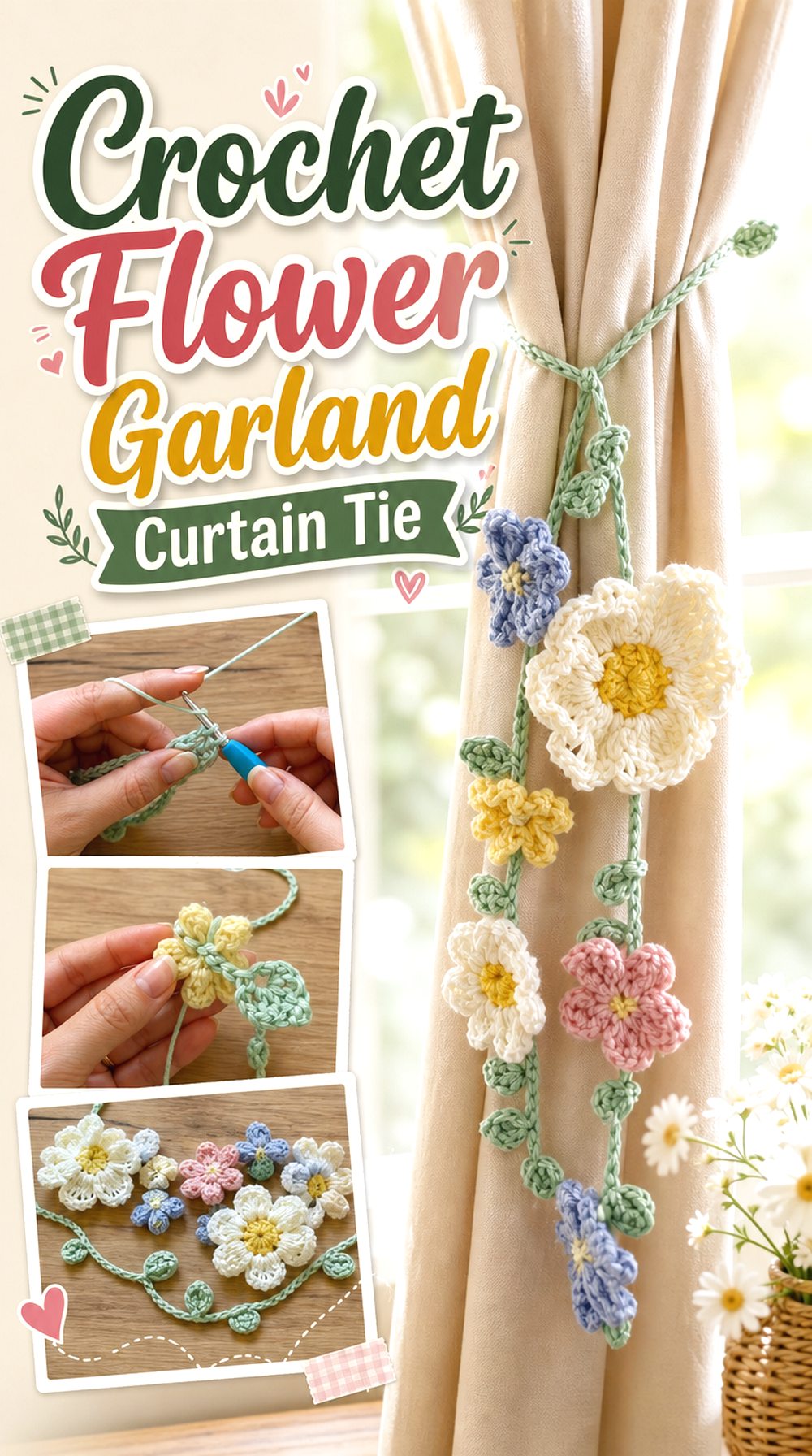
A flower garland tieback gives a window a softer, more scattered floral look than a single rose or sunflower. The title identifies it as both flower ties and a garland curtain tieback, so it may be useful for readers who like a connected row of small decorative elements. This style can wrap around a curtain with a relaxed garden feel, especially in a bright room with sheer panels or light cotton curtains.
Balance the Garland Around the Curtain
A garland-style tieback should not have all the decoration hidden on one side. When planning the finished piece, think about where the flowers will sit after the curtain is pulled back. The best placement keeps the flower section visible from the front while still letting the tie hold the fabric in place.
Plan for Multiple Motifs
Unlike a simple band, a garland usually depends on repeated pieces. Readers should check how many flowers, leaves, or connecting sections are included before starting. This helps with yarn planning and makes it easier to decide whether to create matching tiebacks or make each side slightly different while keeping the same overall style.
Compare It With Plain Curtains
This type of tieback works especially well when the curtain itself is simple. Busy printed curtains may compete with a flower garland, while plain panels give the crochet shapes room to stand out. In a bright room, the garland can add color without blocking light or adding heavy hardware near the window.
Original Tutorial and Creator Credit
Creator: Summer Girl Designs
Crochet Tulip Window Curtain Tieback
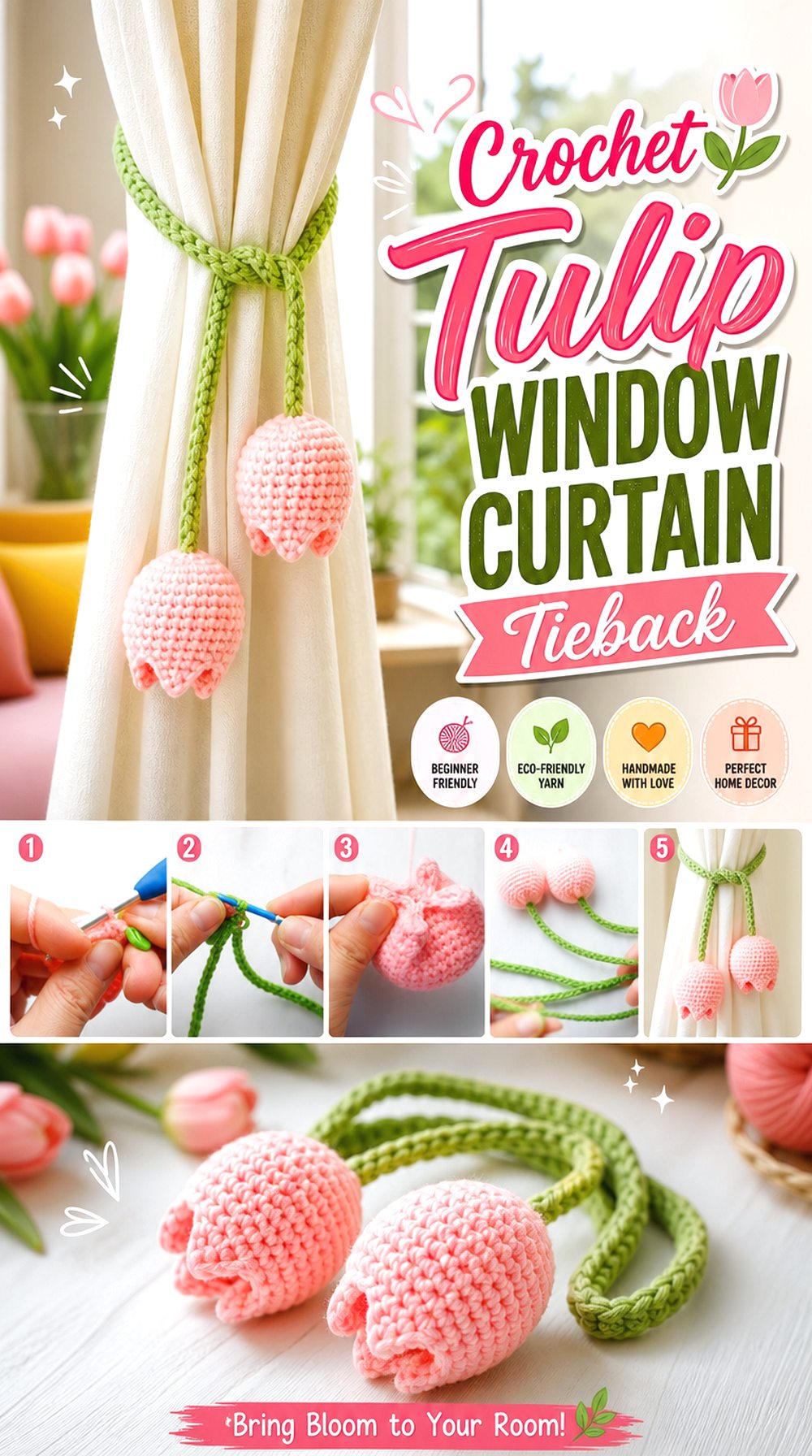
A tulip curtain tieback gives a cleaner floral shape than a full garden garland. The tulip form has a tidy, upright look, which may suit readers who want a flower detail that feels neat rather than full or frilly. This option can work well with bright white curtains, pastel rooms, or small windows where one defined flower shape is enough to soften the edge of the curtain.
Keep the Tulip Shape Clean
The tulip is the feature readers will notice first, so the finished flower should sit neatly when the curtain is gathered. A crowded curtain fold can hide the bloom shape. Try to position the tieback so the tulip remains upright or angled naturally, with the tie section doing the practical work behind it.
Use Color With Restraint
Tulips can look fresh in many colors, but too many competing shades may make the tieback feel busy near a bright window. A simple pairing, such as one flower color with green, can make the motif easier to recognize. Match the color mood to the room: soft pastels for a calm space or brighter tones for a cheerful one.
Confirm Any Written Notes
The source description includes abbreviations and row-handling notes, so readers should review those before beginning. This is especially useful if the tutorial uses a method that differs from the way they usually start or end rows. Checking those notes first can prevent confusion once the flower shape begins to form.
Original Tutorial and Creator Credit
Creator: Let’s crochet
Crochet Lily of the Valley Curtain Tieback
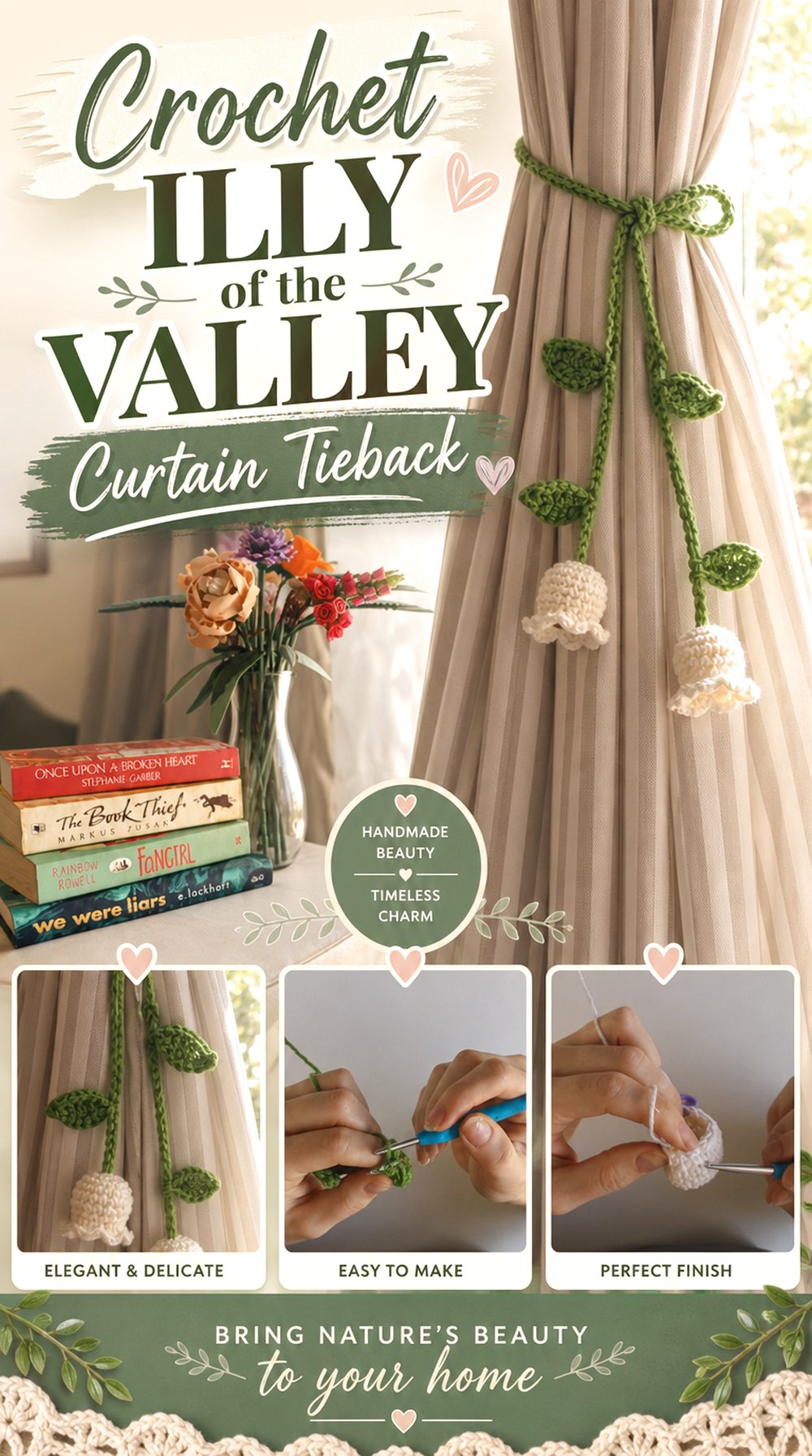
A lily of the valley tieback has a delicate hanging-flower look that feels different from roses, sunflowers, and tulips. The source describes it as a lily of the valley-inspired curtain tieback that can also be adapted into a keychain, bag charm, or garland by changing length and attachment. For curtain use, the appeal is in the small downward blooms and softer botanical shape, especially beside light curtains.
Notice the Hanging Flower Direction
Lily of the valley flowers usually read best when the small blooms hang downward. When using this as a curtain tieback, placement matters because the flowers should not flip behind the fabric. Check the final view in the tutorial and think about which side of the window needs the tieback to face outward.
Check the Attachment Choice
The description notes that length and attachment can be changed for other uses, so curtain makers should focus on the version that actually works for a window. Before starting, decide whether the tieback will wrap, loop, or connect to a hook. The decorative flowers need a practical way to stay in place during daily use.
Review the Different Hook Areas
The source lists more than one hook size for different parts, so preparation is important. Keep the material list nearby and note which hook belongs to the string, leaf, or flower sections. This prevents the delicate flower detail from becoming too large or too small compared with the tie section.
Original Tutorial and Creator Credit
Creator: strawberryshort_crochet
Crochet Amigurumi Gecko Curtain Tieback
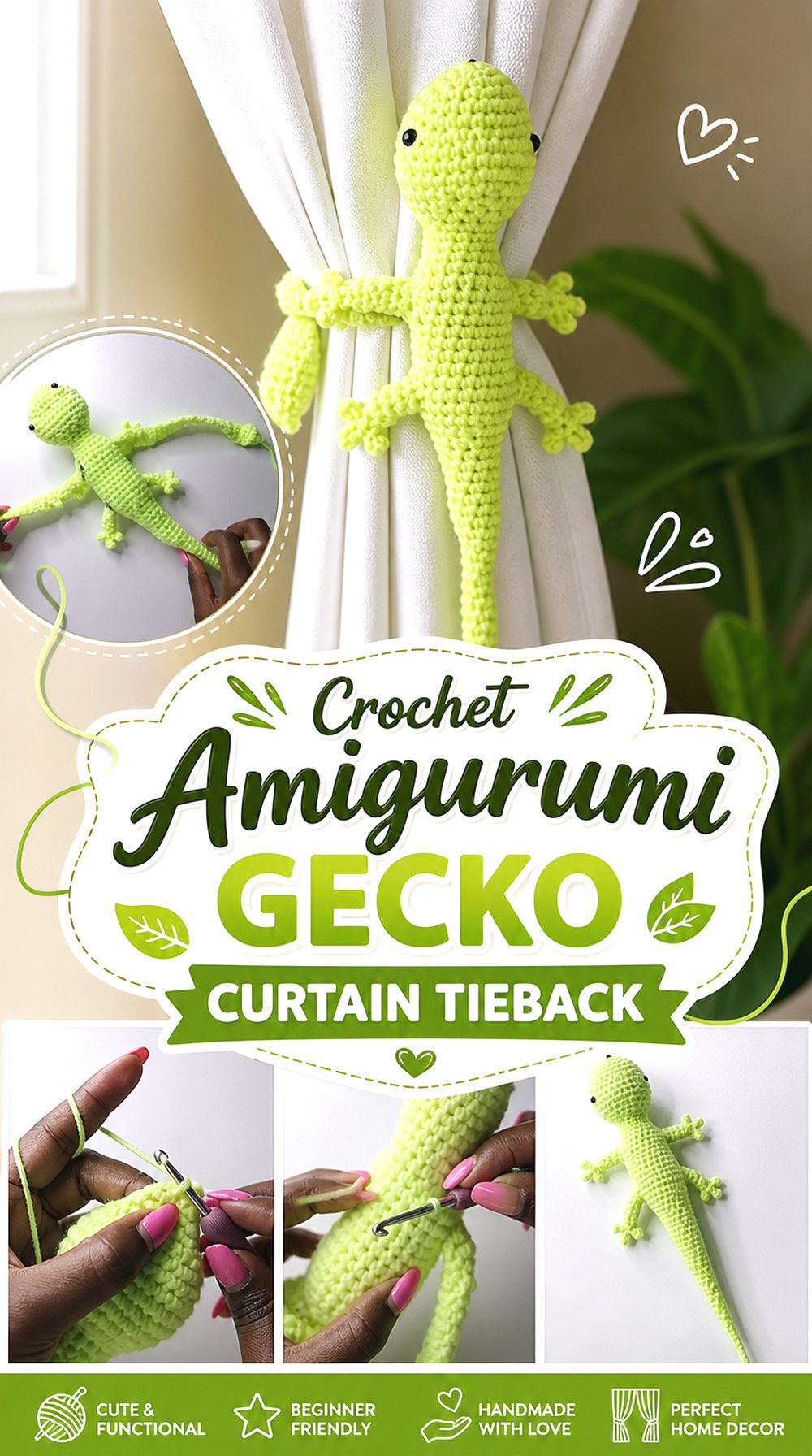
A gecko or lizard curtain tieback is the most playful option in this collection. It moves away from traditional flowers and gives the curtain a character-like shape that may suit a kid’s room, nature-themed space, or creative studio. Because the title identifies it as an amigurumi gecko or lizard curtain tieback, readers should expect more shaping than a flat tie. The finished look is decorative, bold, and clearly different from the softer floral pieces.
Decide Where Playful Decor Fits
A gecko tieback makes a stronger statement than a rose or vine. It may look right in a room that already has bright color, animal themes, or handmade toys on display. In a formal living room, it may feel out of place. Think about whether the tieback should be whimsical or quietly decorative.
Confirm the Shaping Supplies
The source lists yarn, a crochet hook, yarn needle, and scissors in the description, but readers should still check the complete tutorial before starting. Amigurumi-style curtain holders often rely on neat shaping and finishing. Having the right tools nearby helps the body, limbs, and tie portion stay tidy.
Watch the Final Assembly View
The most important part of a character tieback is how it sits on the curtain after assembly. Use the original source for the final arrangement, and pause near the finishing stage to compare the direction of the body and tie. The gecko should look like it belongs on the curtain, not like a separate toy added afterward.
Crochet Guthelu Flower Curtain Holder
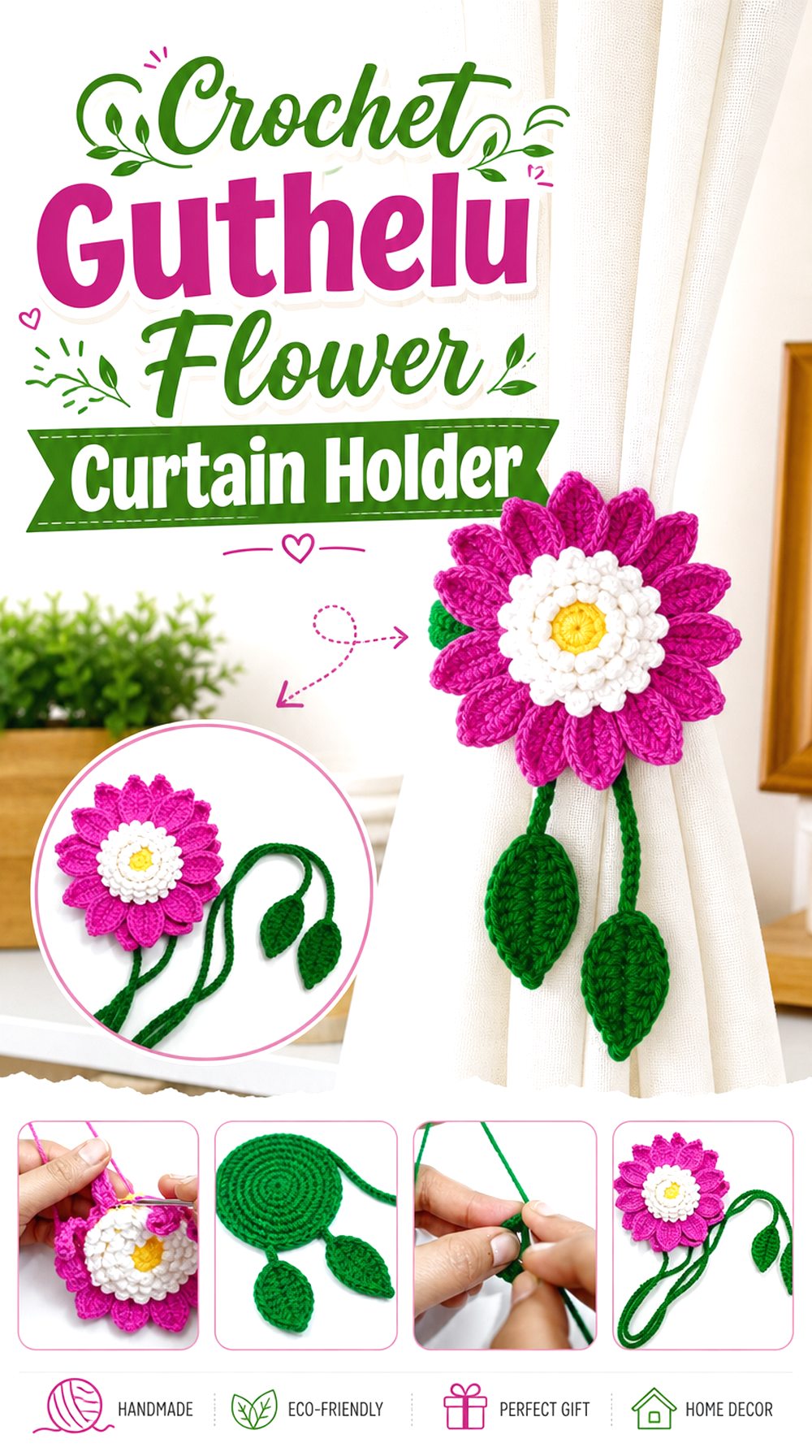
The Guthelu flower curtain holder adds another floral option, but its appeal is in the gathered, decorative holder style rather than a single rose or long garland. The title identifies it as a flower curtain tie and curtain holder, making it suitable for readers who want a handmade accent that feels fuller than a plain band. It can bring a bright spot of color to a window while still keeping the curtain pulled back.
Compare It With Other Flower Tiebacks
This flower holder may be a better choice for readers who want a compact floral focal point instead of a long vine or garland. Compare it with the rose, sunflower, daffodil, and tulip options before choosing. The main question is whether the curtain needs one strong motif, several small blooms, or a more decorative holder shape.
Check the Language Format
The source title notes that the video is in Hindi, so readers who do not speak Hindi should preview the guide first. A clear visual tutorial can still be useful, but it helps to know whether on-screen steps, captions, or repeated demonstrations are enough to follow comfortably. This is especially important when making a matching pair.
Think About Curtain Weight
A decorative flower holder can look lovely on light or medium curtains, but the actual hold should be checked against the fabric. Heavy drapes may need stronger support, wall hooks, or a sturdier tieback style. Before making several, test whether the finished shape holds the curtain without stretching or hiding the flower.
Original Tutorial and Creator Credit
Creator: Radhe krishna crochet
Conclusion
These crochet curtain tieback ideas cover a wide range of bright-room styles. Choose the Victorian-inspired tie or scrap yarn tieback for a softer everyday look, the rose, tulip, daffodil, sunflower, or lily of the valley for floral windows, and the butterfly or gecko for rooms that can handle more playful detail. Before starting, compare attachment style, finished length, motif size, and how the tieback will sit against your curtain fabric. Use the original tutorials for exact construction details.
FAQs
How do I choose the right crochet curtain tieback?
Start with the curtain weight and room style. Light curtains can usually handle finer floral, heart, or lace-style tiebacks, while heavier panels may need a sturdier band or extra support. Also check whether the tieback wraps, loops, or attaches to a hook so it will work with your window setup.
Should crochet curtain tiebacks be made in pairs?
Most windows look more balanced with a matching pair, especially when curtains hang on both sides. A single tieback can still work for one-panel curtains, door curtains, or asymmetrical room styling. When making a pair, divide yarn and compare progress so the size and decorative placement stay consistent.
Can I use flower garlands as curtain tiebacks?
Yes, a crochet flower garland can work as a curtain tieback when the length and attachment are suitable. The important point is function: it should hold the curtain without slipping or stretching too much. Check the tutorial’s finished view and decide whether the garland needs loops, ties, or hooks.
What should I check before changing yarn?
Changing yarn can affect size, drape, stretch, and how clearly the motif shows. For curtain tiebacks, that can change both appearance and function. Check the creator’s material list first, then compare your substitute yarn carefully. A heavier yarn may create a bulkier tieback, while a lighter yarn may need more support.
Can I sell crochet curtain tiebacks made from YouTube tutorials?
Do not assume selling is allowed. Check each creator’s description, linked pattern terms, shop policies, or pinned comments for permission. If the terms are not clear, ask the creator directly before selling finished items. Credit is respectful, but credit alone does not replace permission when a designer sets specific usage rules.