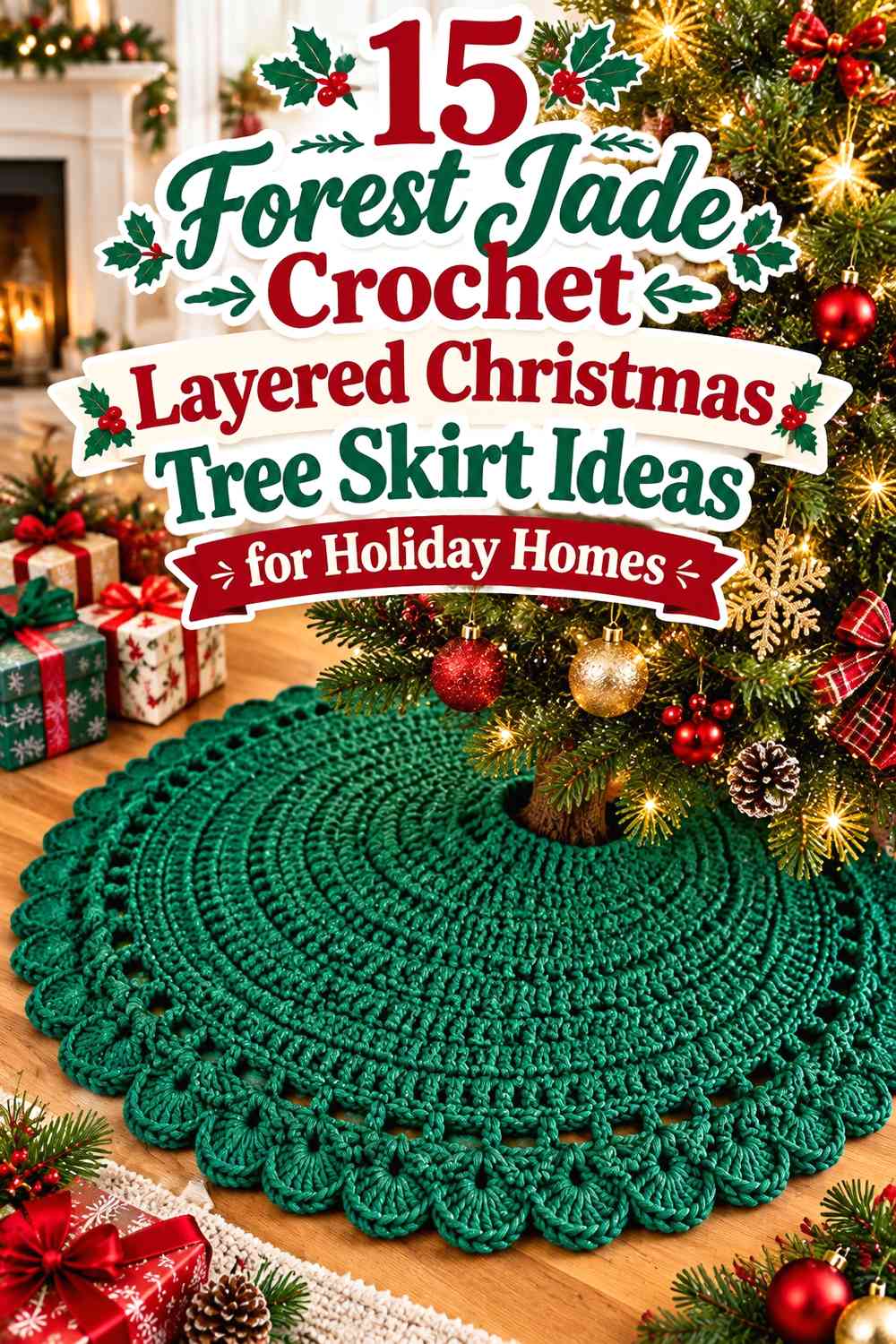

Forest Jade gives a crochet Christmas tree skirt the depth of a traditional evergreen without requiring bright holiday green. On a layered design, the color becomes even more useful because changes in texture, relief, scallops, points, and overlapping sections naturally create lighter and darker-looking areas across the same shade.
The strongest layered tree skirts do not need many competing colors. Forest Jade can remain dominant while cream, oatmeal, antique gold, flax, muted berry, or another quiet supporting shade marks selected borders, joins, or tier edges. This keeps the skirt connected to the Christmas tree instead of turning the floor beneath it into a separate multicolor focal point.
A tree skirt also has to work around the actual stand, lower branches, gifts, and available floor space. Measure the intended placement before choosing the depth of the outer layers. A dramatic tier that looks balanced on its own may disappear beneath low branches or extend farther into a walkway than the room comfortably allows.
The tutorials credited below support Christmas tree skirt constructions including scalloped edging, hexagons, granny sections, mosaic crochet, points, cables, textured bands, and joined panels. The Forest Jade palettes and layered arrangements are independent adaptations, so use each creator’s tutorial for the original construction details.
Quick List
- Forest Jade Victorian-Edge Layered Crochet Christmas Tree Skirt
- Forest Jade Hexagon-Layered Crochet Christmas Tree Skirt
- Forest Jade Granny-Tier Crochet Christmas Tree Skirt
- Forest Jade Mosaic-Band Layered Crochet Christmas Tree Skirt
- Forest Jade Wide-Ring Layered Crochet Christmas Tree Skirt
- Forest Jade Twelve-Point Layered Crochet Christmas Tree Skirt
- Forest Jade Granny-Square Layered Crochet Christmas Tree Skirt
- Forest Jade Tonal-Ring Crochet Christmas Tree Skirt
- Forest Jade Chunky Tiered Crochet Christmas Tree Skirt
- Forest Jade Alternating-Panel Layered Crochet Christmas Tree Skirt
- Forest Jade Pine-Motif Layered Crochet Christmas Tree Skirt
- Forest Jade Puff-and-Rib Layered Crochet Christmas Tree Skirt
- Forest Jade Zigzag-Pentagon Crochet Christmas Tree Skirt
- Forest Jade Braided-Cable Layered Crochet Christmas Tree Skirt
- Forest Jade Mixed-Texture Layered Crochet Christmas Tree Skirt
Plan Forest Jade Layers Around the Actual Christmas Tree
Start with the center opening and the amount of floor you want the finished skirt to occupy. The most decorative Forest Jade layer should still be visible once the tree is in place, so consider how low the branches hang and where wrapped gifts will normally sit.
If the outer tier will disappear almost completely beneath gifts, move more of the visual interest toward the middle portion. If the tree has a raised or narrow base, a stronger outer border can become the main visible feature.
Give Forest Jade Layers Clear Visual Separation
Layering does not always require physically overlapping crochet. Different stitch textures, broader bands, openwork intervals, scallops, or a narrow supporting color can create separate visual levels while keeping the skirt flatter on the floor.
If several Forest Jade sections have similar stitch density, use a change in texture or a restrained accent at the transition. Adding a new color to every layer can make the skirt look striped rather than dimensional.
Keep Forest Jade Tree Skirt Edges Practical on the Floor
Deep scallops, pointed sections, and heavy ruffles create a strong holiday look, but the outer edge should still settle predictably around the tree. Check that decorative points do not repeatedly curl under gifts or extend into walking paths.
Make one complete layered section before repeating it around the entire skirt. This gives you a better sense of how the Forest Jade fabric behaves at floor level than judging individual stitches while the piece is still in progress.
1. Forest Jade Victorian-Edge Layered Crochet Christmas Tree Skirt
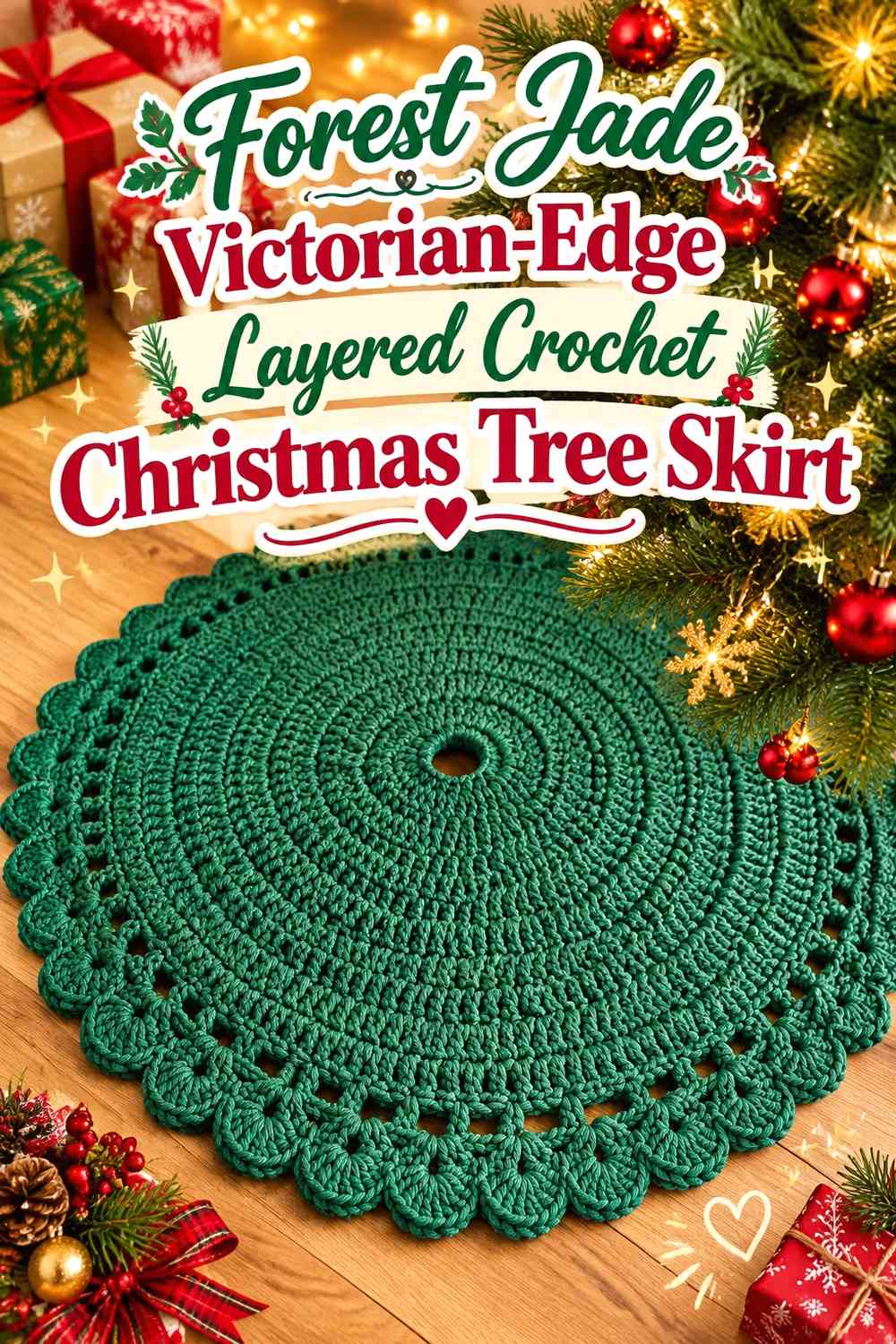
This version keeps the central tree skirt relatively calm and reserves its strongest layering for the perimeter. Forest Jade can cover the complete body, while a Victorian-inspired outer treatment creates increasingly decorative bands toward the edge.
Keep Forest Jade Simple Before the Victorian Layers Begin
Use a quieter Forest Jade center so the visual weight builds gradually toward the outside. If intricate openwork begins immediately around the tree stand, the complete skirt can become equally busy from center to edge.
A simpler inner field also leaves more room for gifts without hiding the main decorative feature.
Let Forest Jade Victorian Edging Create the Final Layer
Use scallops, lace-like openings, or repeated curved forms primarily along the perimeter. The darker green can create useful shadow between those outer details even without adding another yarn color.
If you introduce cream or antique gold, keep it to one narrow finishing line so Forest Jade remains the defining color.
Creator Credit: Alynaa Crochets 🎀🧶
2. Forest Jade Hexagon-Layered Crochet Christmas Tree Skirt
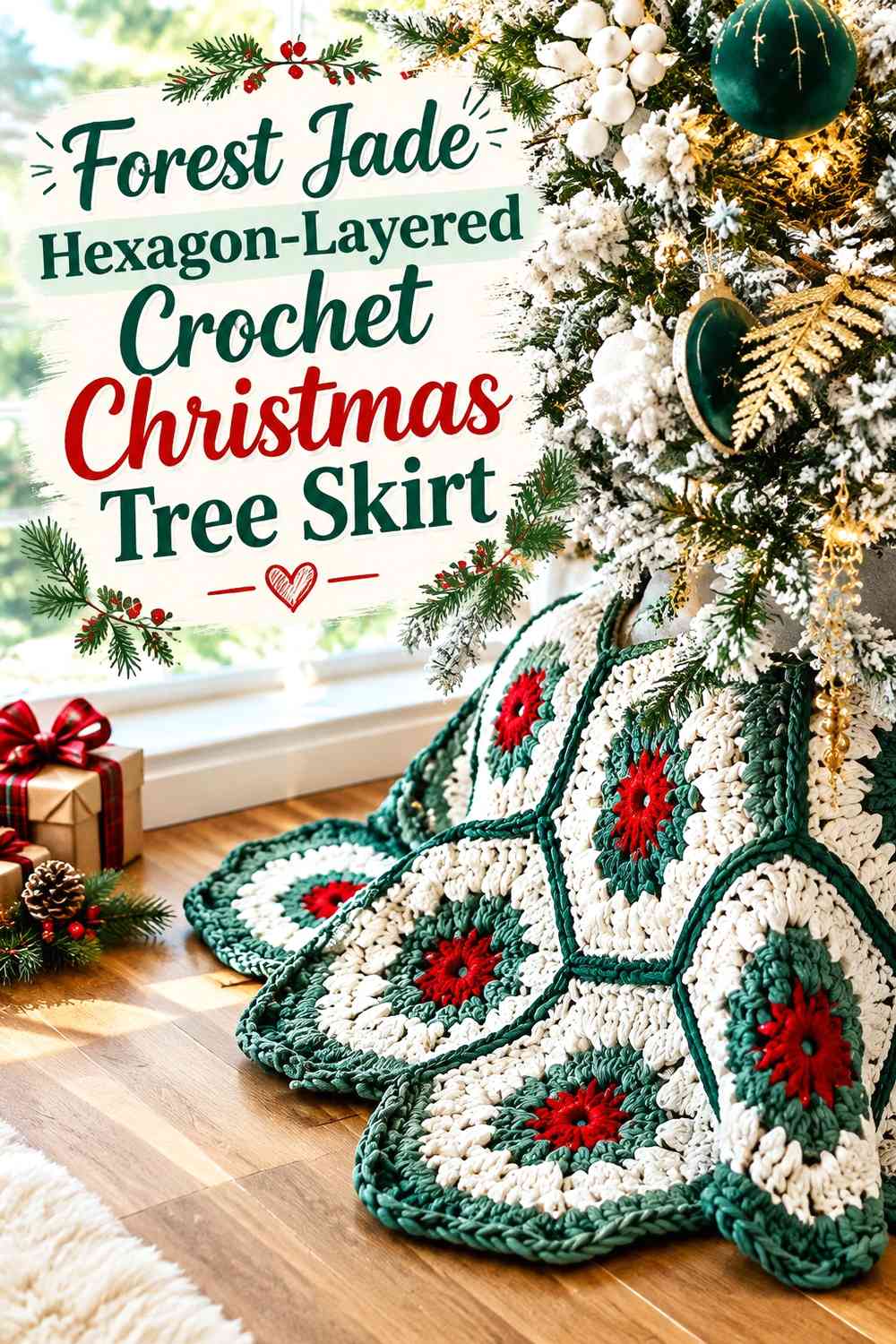
Hexagons create layering through overlapping geometry rather than circular bands. Keep most motifs Forest Jade and use the joining lines to emphasize where individual sections meet.
Use Forest Jade Across the Main Hexagon Surfaces
A common Forest Jade field makes multiple motifs look like one tree skirt instead of a collection of separate pieces. Texture and changes in motif direction can supply enough visual variety without changing the main color.
Arrange the hexagons around the center opening before joining so the outer silhouette remains balanced.
Make Forest Jade Hexagon Joins Part of the Layered Look
Use a tonal Forest Jade join or a restrained lighter accent to make each geometric section visible. A join that is too wide can dominate the hexagons and turn the skirt into a grid.
Keep the joining treatment consistent around the tree so one area does not appear more heavily layered than another.
Creator Credit: Craft with Jess
3. Forest Jade Granny-Tier Crochet Christmas Tree Skirt
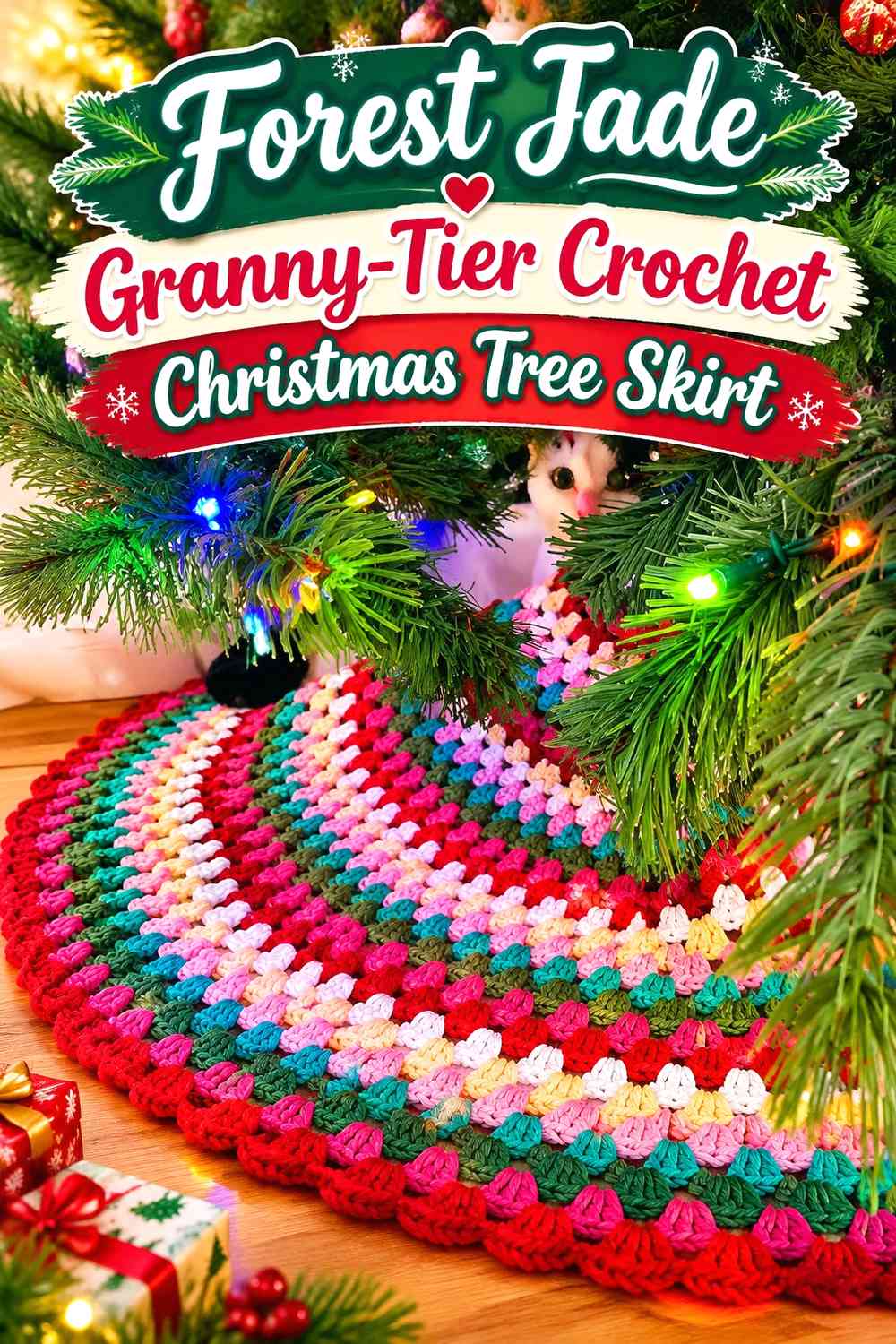
A granny-style construction naturally creates visible horizontal levels. Forest Jade can remain dominant through every tier while small changes in openness make the outer sections appear progressively lighter.
Keep Forest Jade Continuous Through the Granny Tiers
Repeating the same green across several granny sections allows the spaces between stitch groups to provide the variation. This is useful when you want a layered skirt that remains strongly monochromatic.
Avoid inserting a different color into every tier simply to make the layers visible.
Widen the Forest Jade Outer Tiers Deliberately
As the skirt expands, give the more decorative lower levels enough depth to remain visible around gifts and lower branches. A very narrow final layer may disappear once the tree is decorated.
Compare the complete tier proportions on the floor before adding a final border.
Creator Credit: Play Hooky with Me
4. Forest Jade Mosaic-Band Layered Crochet Christmas Tree Skirt
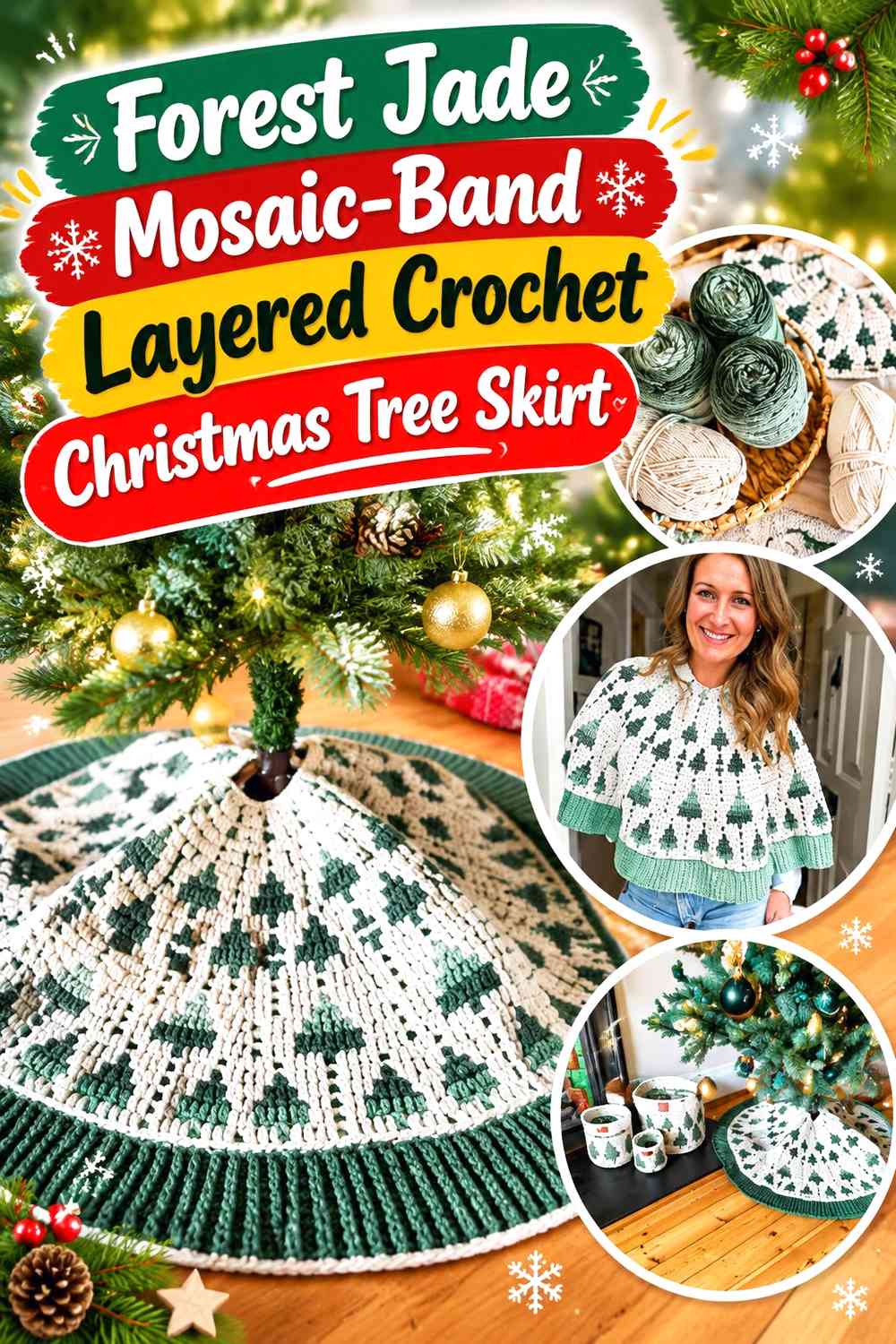
Mosaic crochet can create the appearance of stacked ornamental bands without physically ruffling the skirt. Use Forest Jade as the principal field and a quieter contrasting shade only where the geometric pattern needs separation.
Let Forest Jade Connect the Mosaic Layers
Keep Forest Jade recurring between the patterned bands so each decorative section remains part of one tree skirt. If every mosaic layer has a different dominant color, the green can lose its anchoring role.
Use the strongest geometry farther from the center where more of the pattern will remain visible.
Keep Forest Jade Mosaic Contrast Controlled
A cream, flax, or muted gold partner can help the Forest Jade motifs register, but avoid equal-width color blocks if the goal is a green-led skirt.
Check the pattern from standing height. Very small mosaic details can look more blended from across the room than they do while crocheting.
Creator Credit: HanJan Crochet
5. Forest Jade Wide-Ring Layered Crochet Christmas Tree Skirt
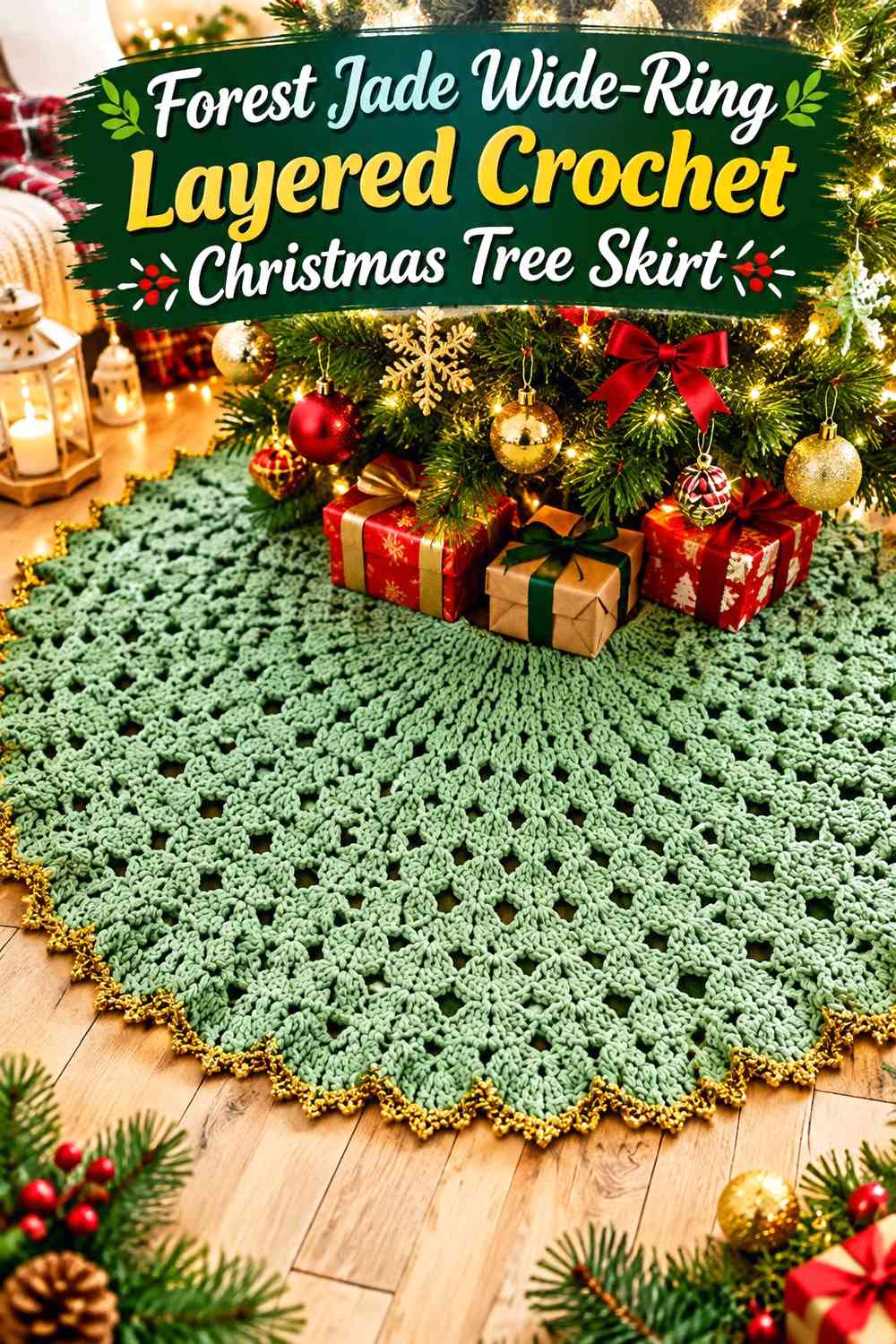
Broad concentric sections create a cleaner layered look than highly detailed motifs. Forest Jade can cover the full skirt while each ring changes slightly in texture, density, or stitch direction.
Use Forest Jade Texture to Separate Wide Rings
Let one ring remain smooth, another more raised, and another slightly more open rather than changing colors at every transition. The single green field helps the tree skirt feel substantial without becoming visually fragmented.
Make the texture changes wide enough to remain visible from across the room.
Keep the Forest Jade Outer Ring Strong but Flat
A broad final ring can frame the entire skirt, but it should still settle neatly beneath gifts. Avoid adding unnecessary bulk at the very outside if the skirt will sit in a frequently used living area.
A simple Forest Jade edge can be enough after several internal layers.
Creator Credit: Bag-O-Day Crochet
6. Forest Jade Twelve-Point Layered Crochet Christmas Tree Skirt
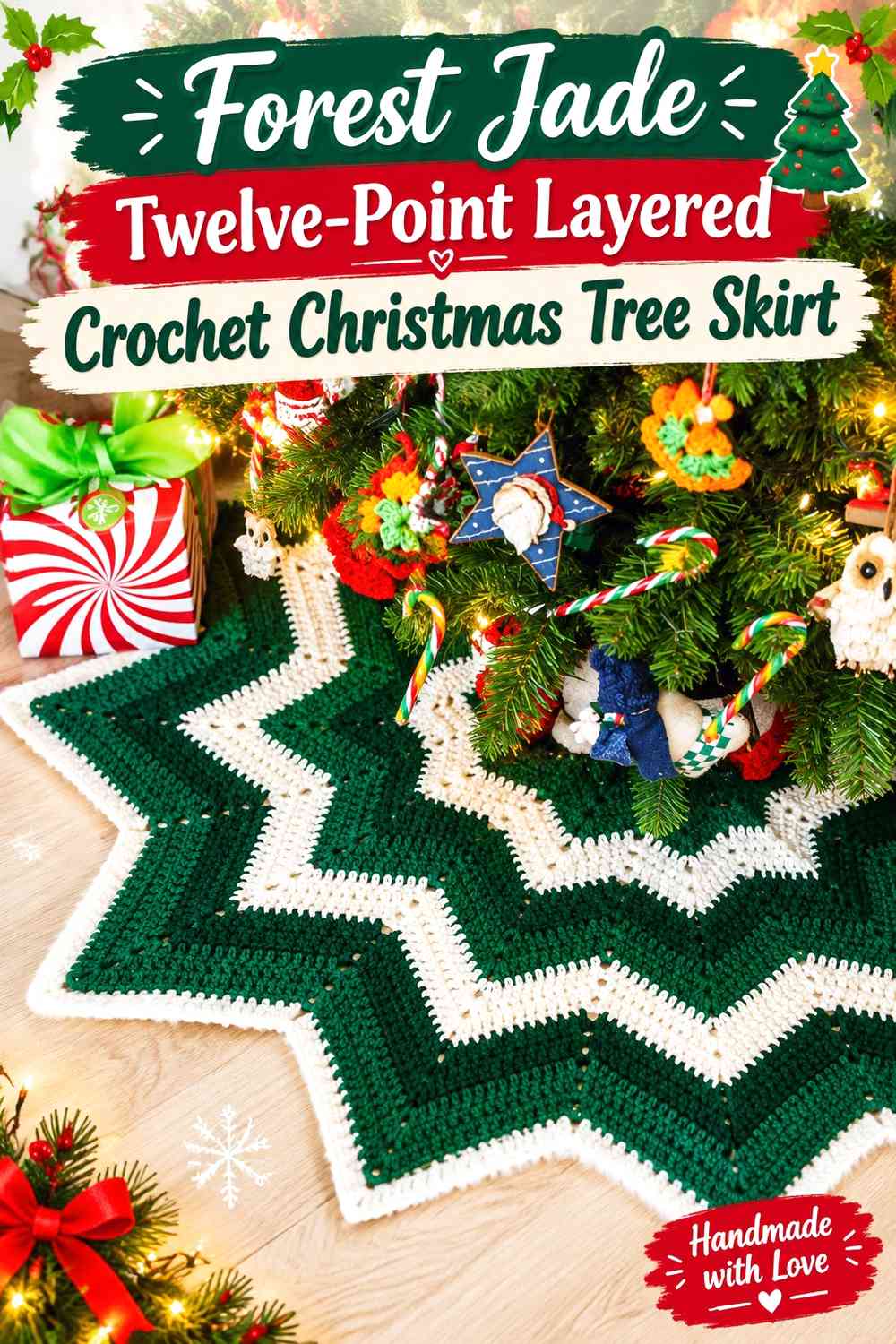
A pointed skirt replaces a purely round perimeter with a star-like outline. Forest Jade emphasizes that silhouette especially well because the points can resemble radiating evergreen sections beneath the tree.
Keep Forest Jade Points Consistent Around the Tree
Each point should carry a comparable amount of Forest Jade so the skirt remains visually centered. Differences in color width or border placement can make one section appear longer even when the crochet shape is correct.
Lay the skirt flat periodically to compare opposite points.
Layer Forest Jade Texture Toward the Pointed Edge
Save the strongest relief, scallop, or accent line for the outer part of each point. This makes the directional shape easier to see without crowding the center opening.
If using a lighter supporting shade, repeat it at the same position on every Forest Jade point.
Creator Credit: Jayda InStitches
7. Forest Jade Granny-Square Layered Crochet Christmas Tree Skirt
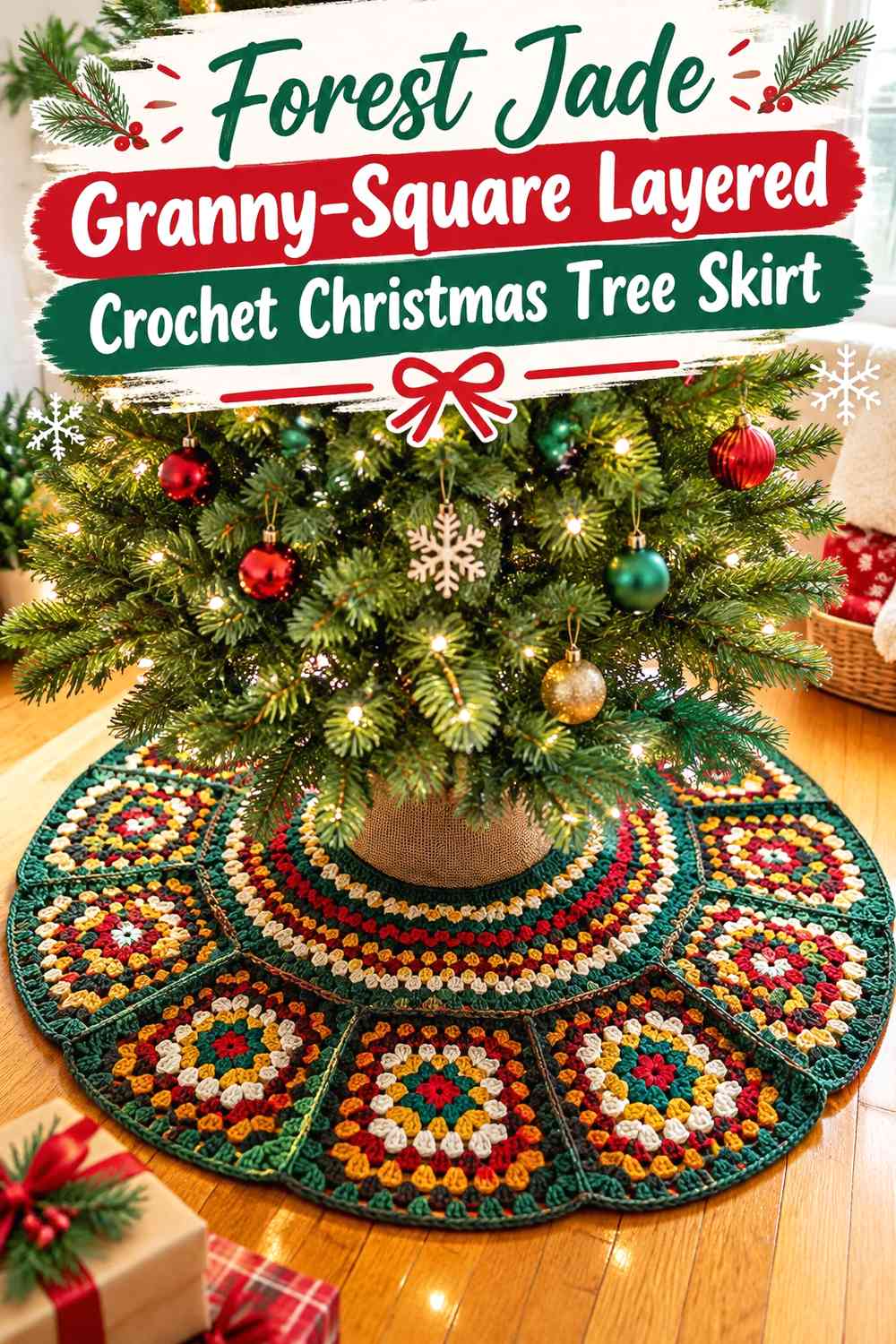
Granny-square construction can give the skirt a patchwork holiday character while still staying within one main color. Forest Jade can dominate each square, with cream or oatmeal used only at motif centers or joining edges.
Keep Forest Jade Dominant Across Every Granny Square
Using the same green role in each motif keeps the complete tree skirt visually unified. You can vary small supporting details without making one square noticeably lighter than its neighbors.
Lay out the motifs before joining so darker or more textured sections do not cluster on one side.
Use Forest Jade Joins to Control the Patchwork Layers
A Forest Jade join makes the individual squares blend more softly, while a lighter join emphasizes their geometry. Choose based on whether you want the layered look to come from motifs themselves or from the grid between them.
For a calmer holiday home, the tonal Forest Jade join usually keeps the patchwork from becoming too busy.
Creator Credit: Yarnspirations
8. Forest Jade Tonal-Ring Crochet Christmas Tree Skirt
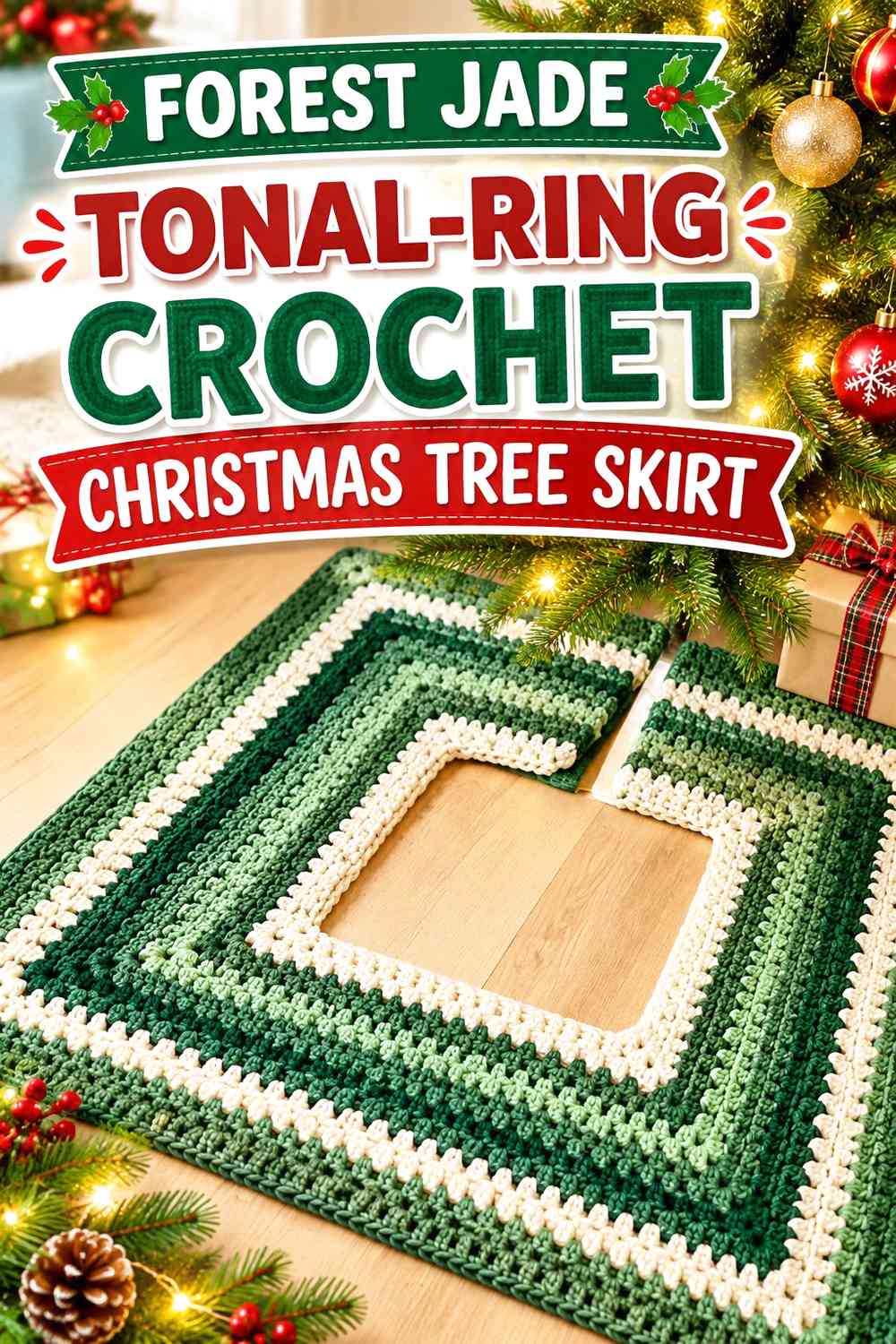
A tonal version can use several nearby jade or green depths while keeping Forest Jade as the obvious anchor. Place the deepest Forest Jade around the middle or outer edge and use softer related greens only as supporting rings.
Keep Forest Jade as the Darkest Tonal Anchor
One clearly deeper Forest Jade section helps the neighboring greens feel intentional instead of randomly mismatched. Place it where you want the eye to stop—often at a major middle band or final outer ring.
Avoid using several equally dark greens in narrow stripes.
Repeat Forest Jade at More Than One Layer
Bring Forest Jade back after a softer tonal band so the main color connects the center and perimeter. This repetition prevents the lighter sections from taking over the whole skirt.
Use texture changes between repeated Forest Jade bands to keep them from looking like simple stripes.
Creator Credit: The Crochet Crowd
9. Forest Jade Chunky Tiered Crochet Christmas Tree Skirt
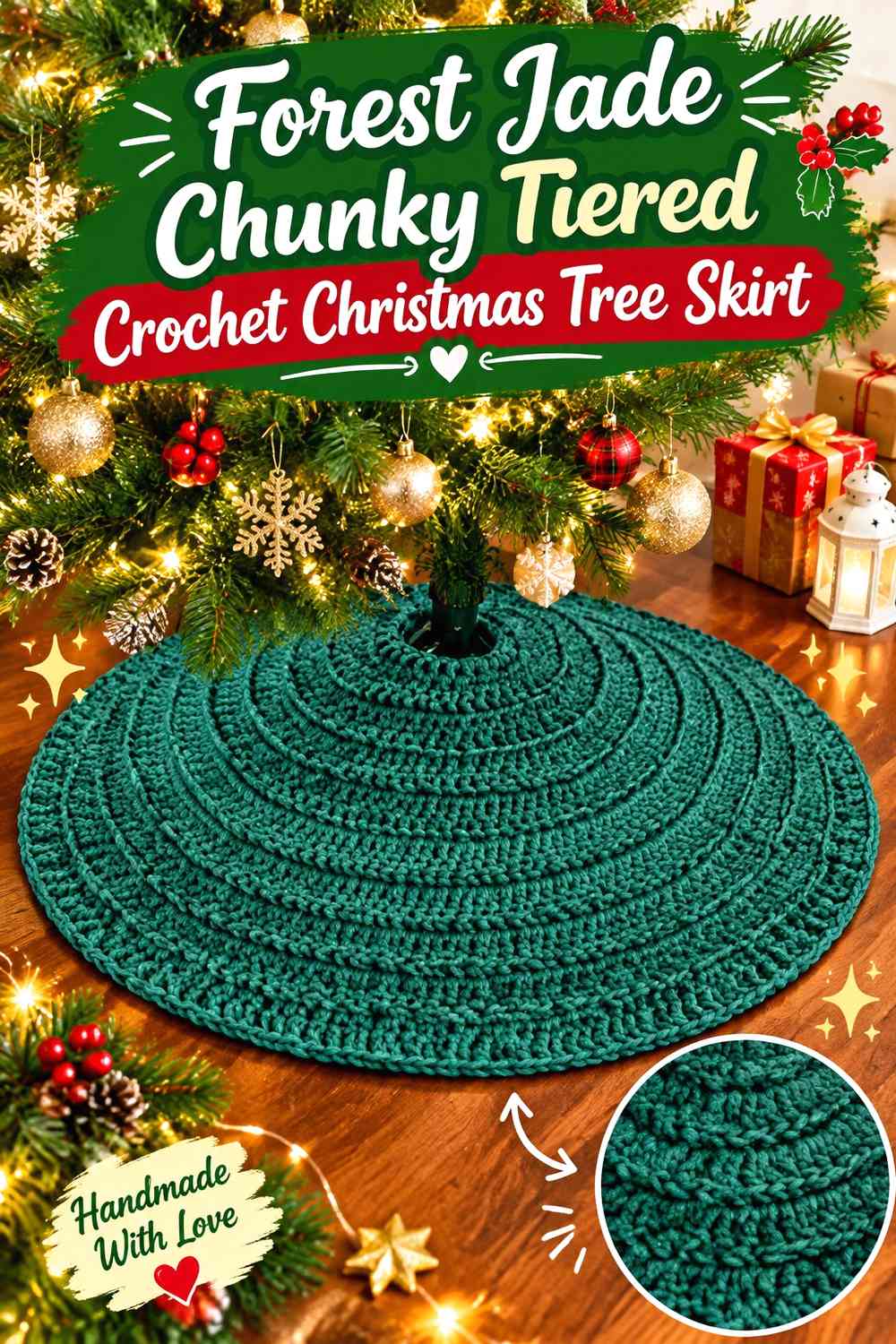
A chunkier construction naturally creates stronger shadows and visual weight. Forest Jade can make those broad layers feel rich and grounded, but the skirt benefits from fewer, larger sections rather than many small tiers.
Keep Forest Jade Chunky Layers Broad
Give each major tier enough depth to show the yarn texture. Narrow bands can bunch visually when the fabric is thick and may make the lower skirt look unnecessarily busy.
Use the tree’s scale and floor space to decide how many visible levels the skirt needs.
Simplify the Forest Jade Outer Tier
The heaviest layer should not automatically receive the most complicated edging. A relatively simple Forest Jade finish can keep the perimeter from becoming bulky beneath presents.
If you want contrast, add one narrow cream or flax line rather than another full heavy tier.
Creator Credit: Katia Creates
10. Forest Jade Alternating-Panel Layered Crochet Christmas Tree Skirt
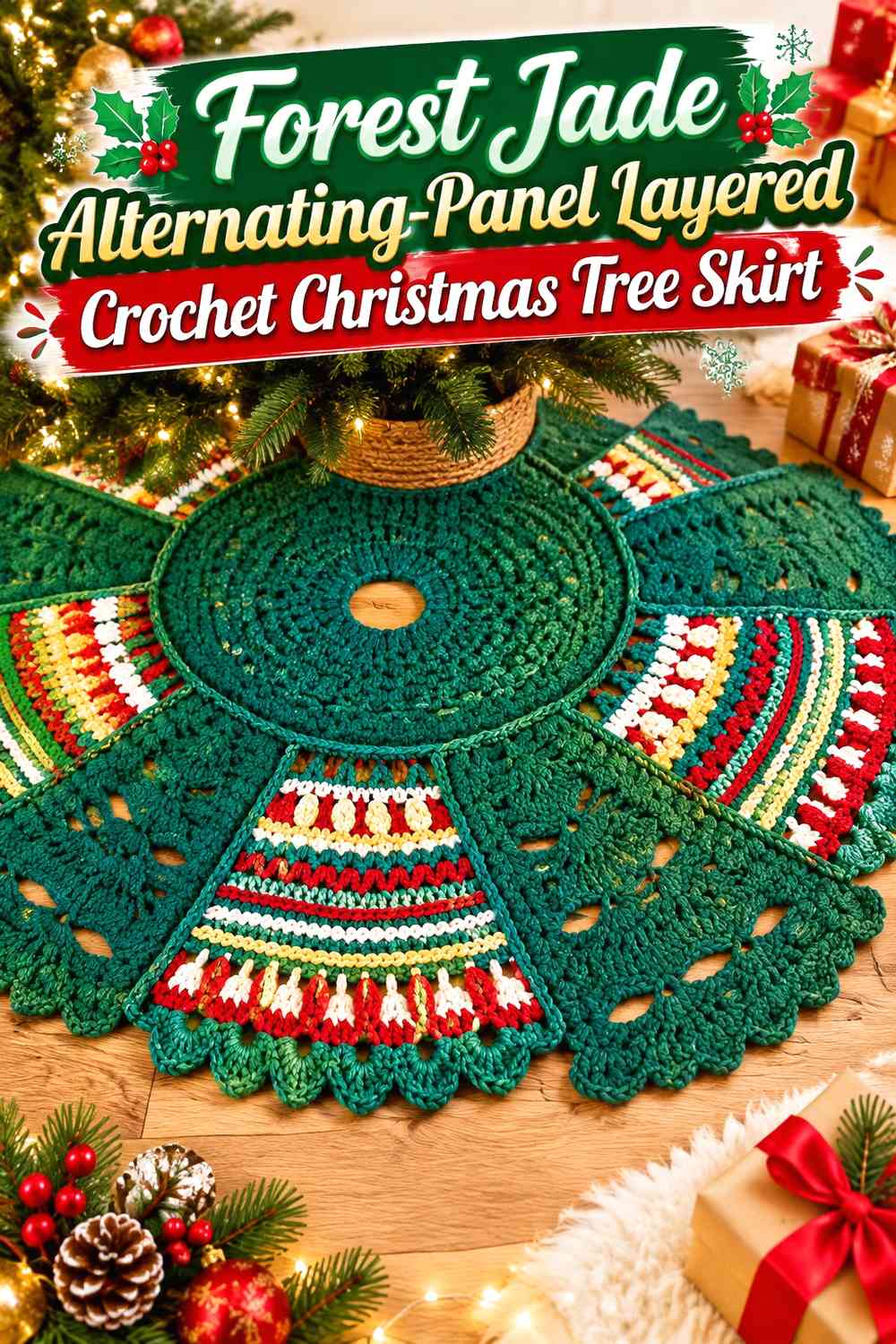
Panel construction creates wedges that radiate outward from the tree. Use Forest Jade throughout, but alternate the texture or openness of neighboring panels to create layered visual movement.
Alternate Forest Jade Panel Texture Instead of Main Color
One Forest Jade section can be denser while the next is more open or subtly textured. The shared color keeps the skirt coordinated while the changing stitch surface creates distinction.
This approach works particularly well when the tree itself already carries many ornament colors.
Keep Forest Jade Panel Transitions Even Around the Tree
The boundary between neighboring panels should repeat predictably. If one transition becomes much wider or more decorative, the skirt may look visually off-center.
Arrange the panels on the floor before final finishing to check the complete radial balance.
Creator Credit: Crochet with Tuula Maaria
11. Forest Jade Pine-Motif Layered Crochet Christmas Tree Skirt
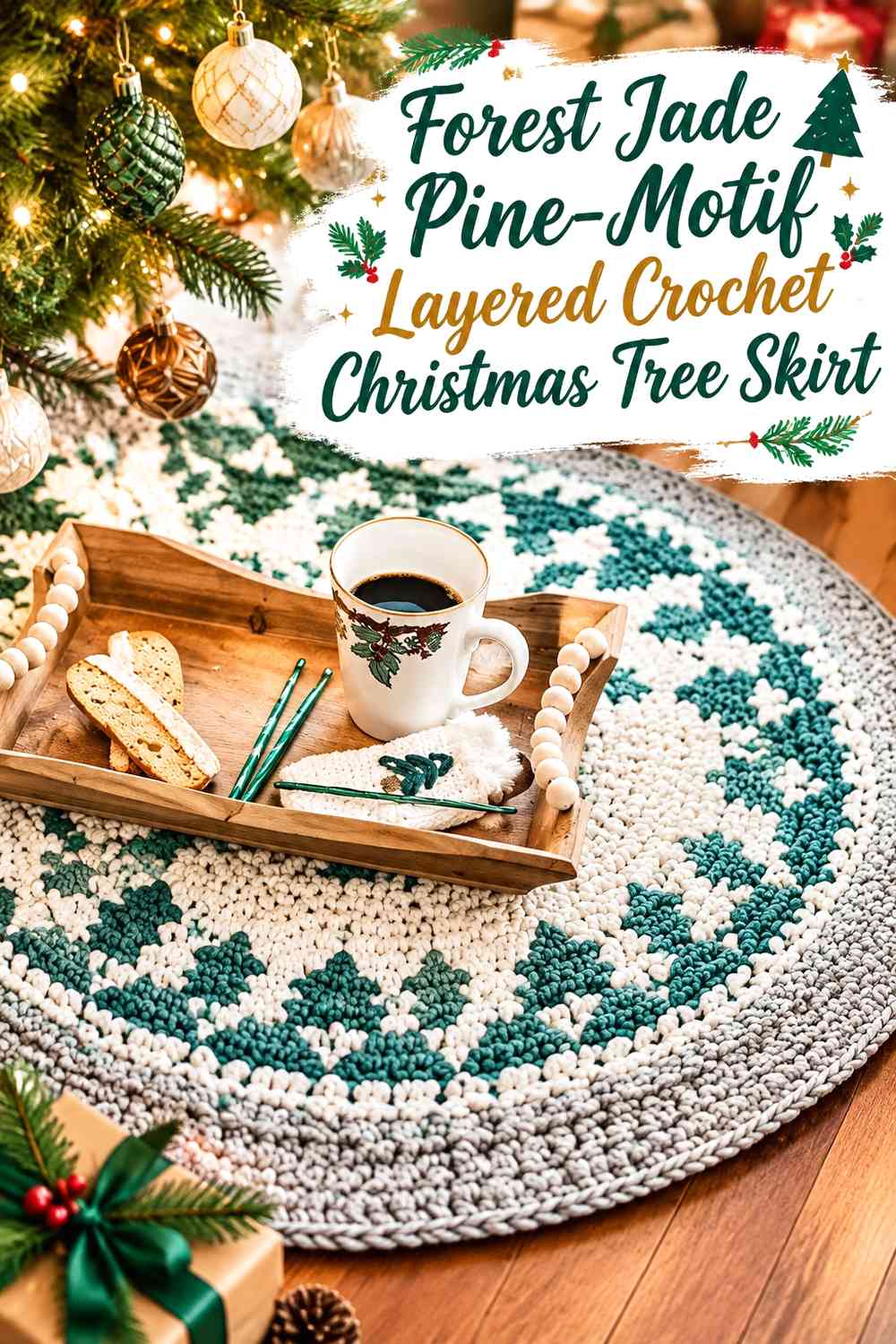
Pine motifs reinforce the evergreen color story without requiring traditional bright Christmas colors. Keep Forest Jade across the main skirt and use a softer neutral only where the pine shapes need greater contrast.
Keep Forest Jade Strong Around the Pine Motifs
The background and motif relationship should still leave the skirt clearly Forest Jade-led. If a contrasting pine pattern occupies most of the visible surface, the green can become secondary.
Position the clearest motifs farther from the tree trunk where gifts are less likely to hide every detail.
Repeat Forest Jade Between the Pine-Motif Layers
Use solid or quieter Forest Jade sections between ornamental bands so each motif group has breathing room. This prevents several patterned layers from merging into one dense field.
A restrained outer edge can then finish the skirt without another competing motif.
Creator Credit: Briana K Designs
12. Forest Jade Puff-and-Rib Layered Crochet Christmas Tree Skirt
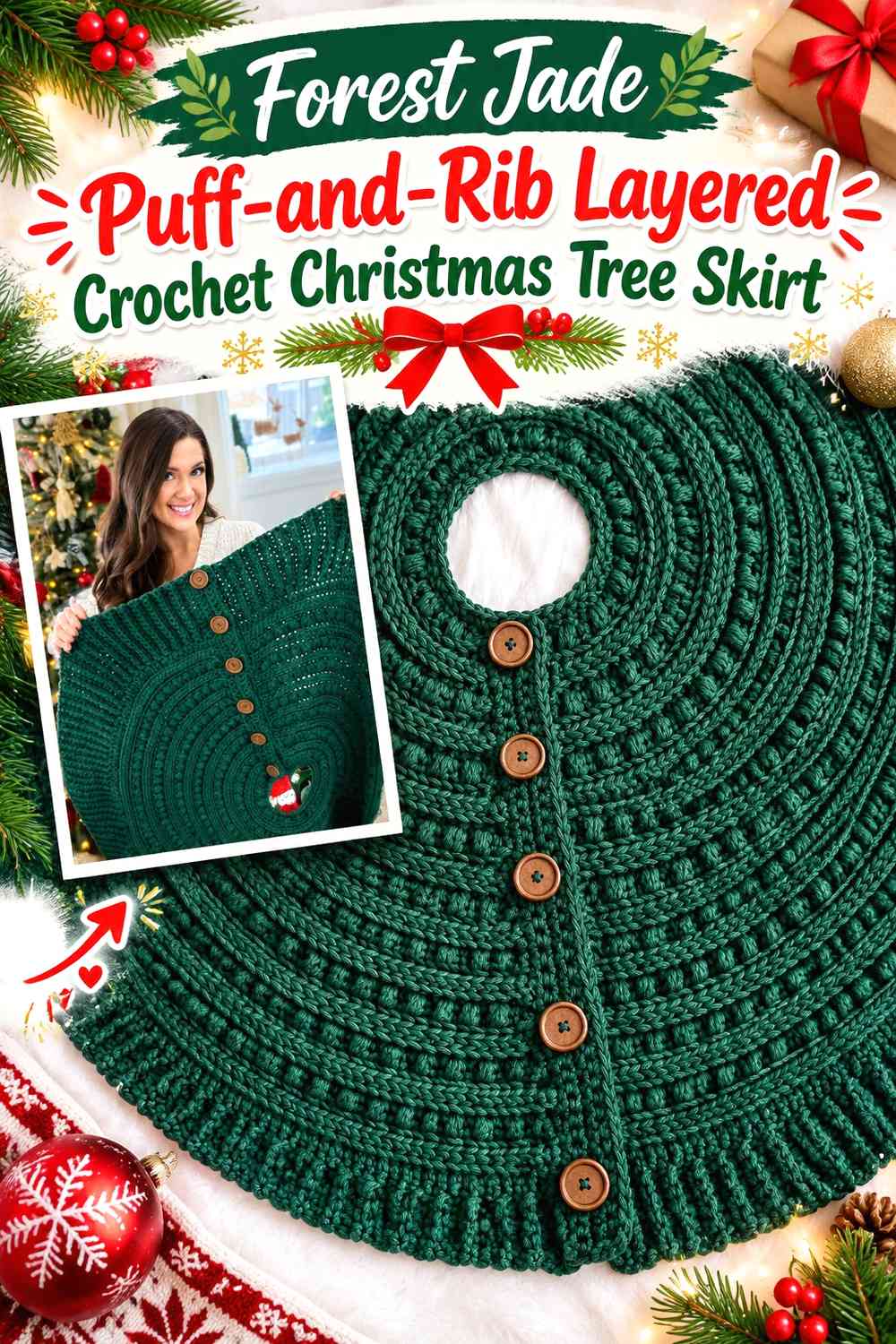
Puff texture and ribbing provide two distinctly different types of depth. Forest Jade can unify both, giving the skirt a plush appearance without requiring several supporting colors.
Let Forest Jade Puff Texture Create the Main Middle Layer
Use the raised texture where it can remain visible around the tree rather than hiding it completely beneath the trunk or stand. The shadow created by Forest Jade puffs can supply enough contrast on its own.
Keep adjacent sections simpler so the puff layer remains distinctive.
Finish Forest Jade With a Ribbed Outer Layer
A ribbed perimeter gives the eye a clear final band after the puff texture. Keep the ribbing proportionate to the whole skirt so it frames rather than overwhelms the center.
If you add buttons or ties, treat them as functional details rather than another large color zone.
Creator Credit: MJ’s Off The Hook Designs
13. Forest Jade Zigzag-Pentagon Crochet Christmas Tree Skirt
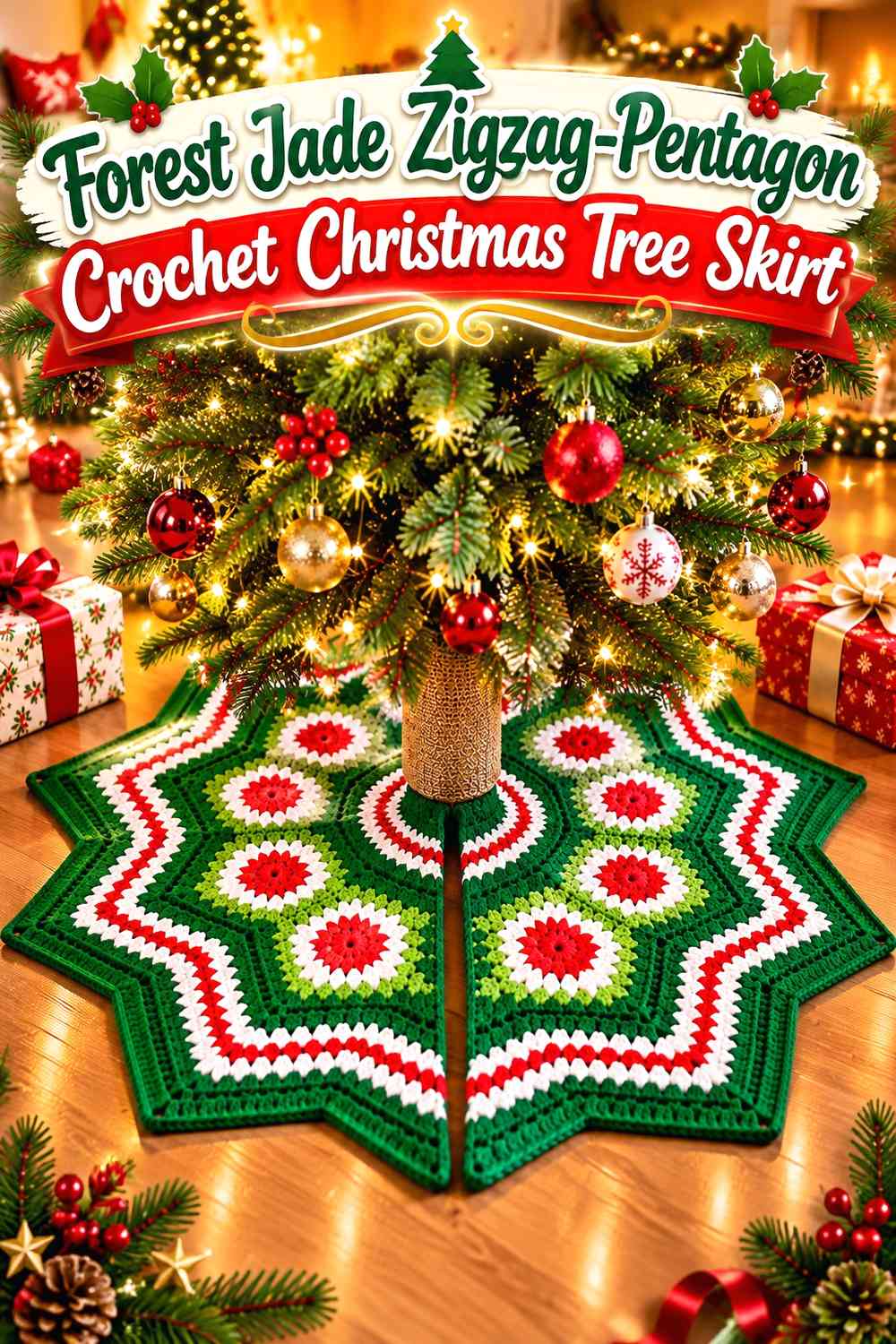
Pentagon motifs can form a more angular layered skirt, particularly when their points create a zigzag route around the outside. Forest Jade keeps that geometry connected to the tree itself.
Use Forest Jade Across the Main Pentagon Motifs
Keep most pentagons predominantly green so the strong geometry does not compete with an equally complex color plan. A quiet supporting shade can appear at motif centers or selected edges.
Arrange the pentagons around the tree opening before joining to see how their points interact.
Let Forest Jade Zigzags Define the Outer Layer
The repeated changes in direction can become the main layered feature at the perimeter. Avoid covering those points with an oversized border.
If a finishing color is needed, trace the Forest Jade zigzag narrowly rather than straightening it into a conventional round edge.
Creator Credit: TubaCrochet
14. Forest Jade Braided-Cable Layered Crochet Christmas Tree Skirt
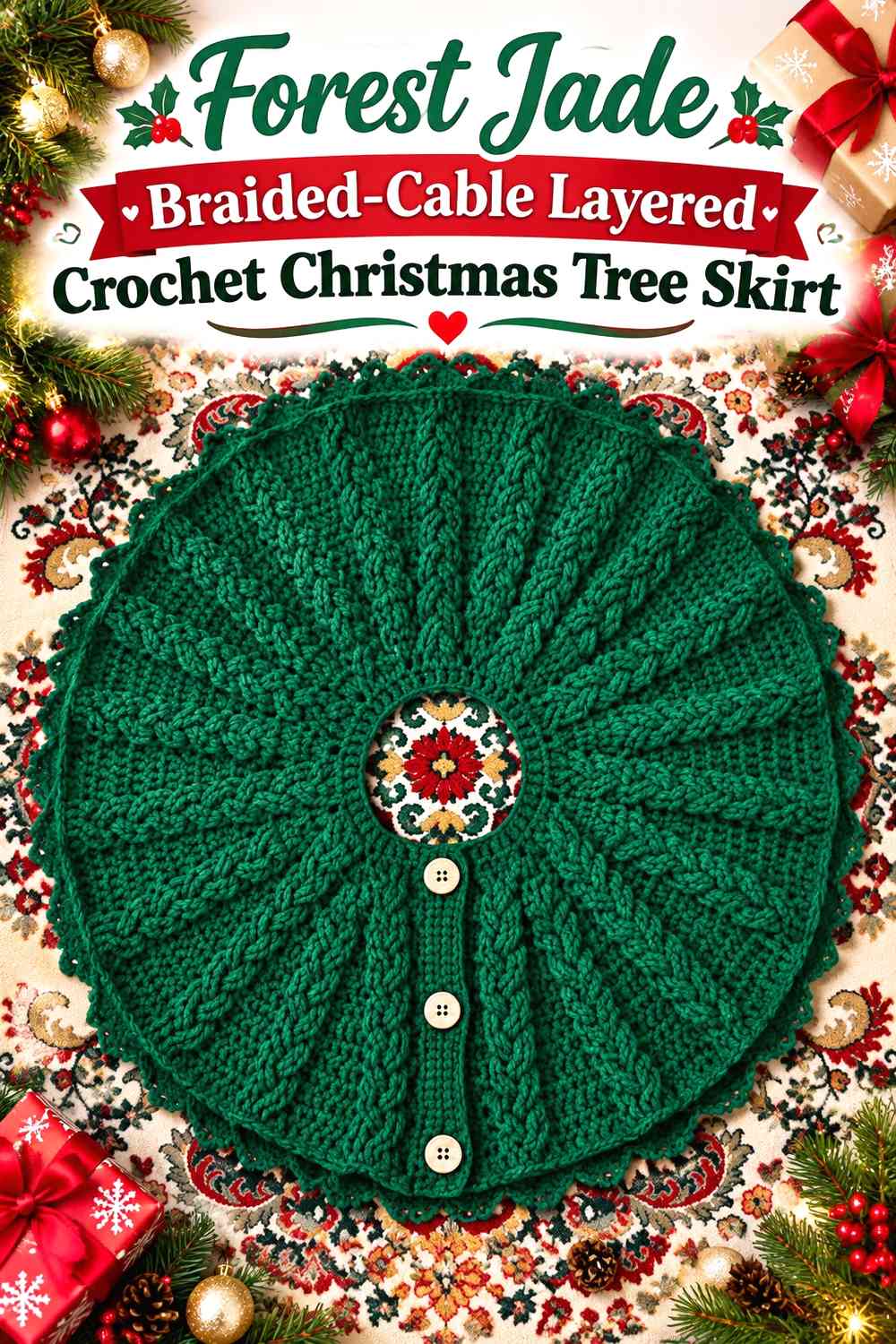
Braided cables create physical relief across the skirt and can form strong radiating layers without separate ruffles. Forest Jade gives the cables natural shadow that helps their structure remain visible.
Keep Forest Jade Continuous Through the Braided Cables
A single dark green allows the raised and recessed sections to create their own tonal differences. Frequent contrasting stripes can make the cables harder to follow.
Place the strongest braided texture where it will remain visible between the lower branches and gift area.
Give Forest Jade Cables a Quieter Outer Border
After a heavily textured body, finish with a simpler Forest Jade band or restrained scallop. The border should contain the cable pattern rather than introduce another equally strong texture.
If a second color is used, keep it to one narrow finishing line.
Creator Credit: Bonnie Bay Crochet
15. Forest Jade Mixed-Texture Layered Crochet Christmas Tree Skirt
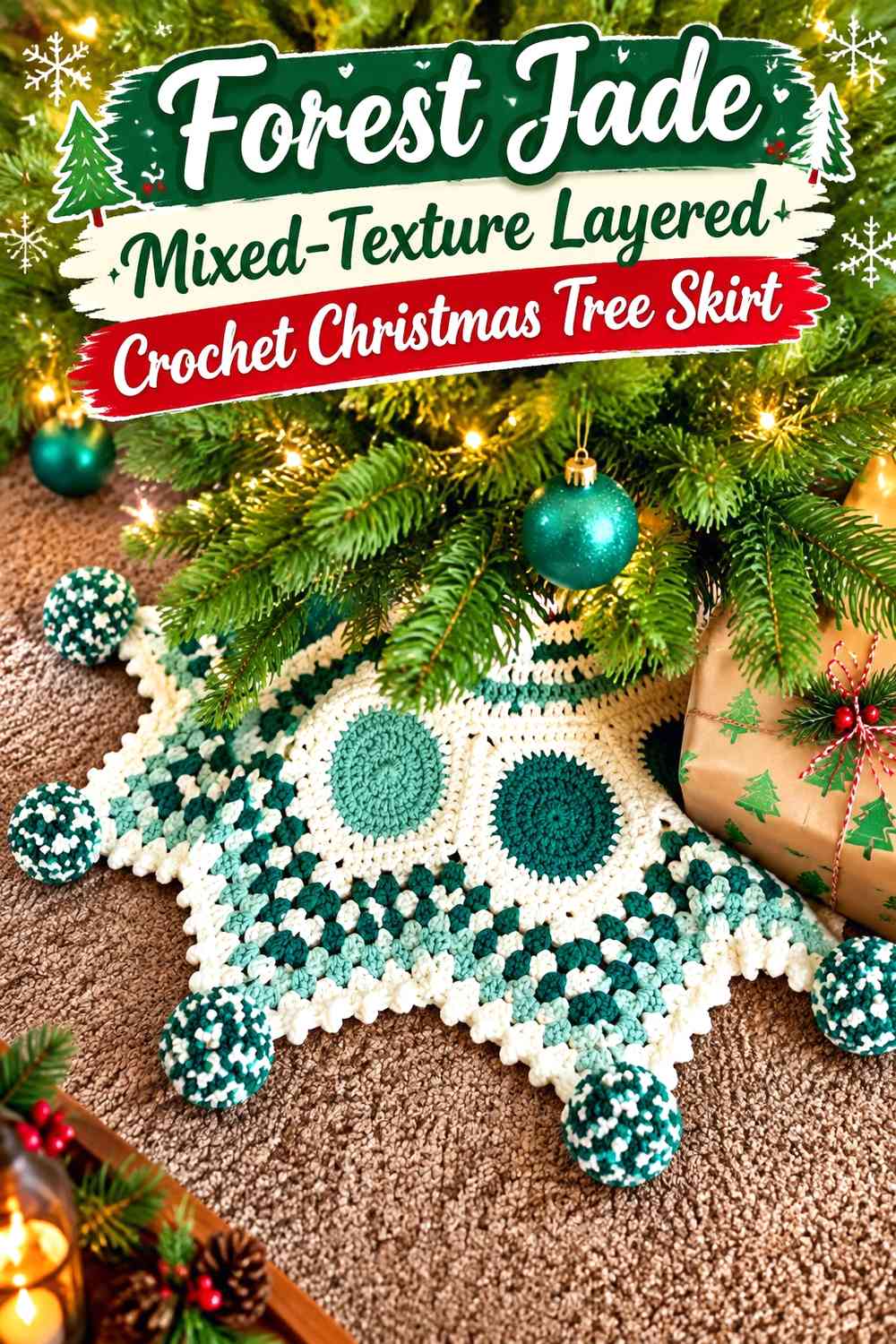
The final idea combines several stitch surfaces in broad sections: a simpler inner field, one textured middle layer, and a more decorative outer band. Forest Jade ties those changing surfaces together.
Give Each Forest Jade Texture Its Own Wide Layer
Avoid changing stitches every few rows. Larger Forest Jade zones make the transition from smooth to textured to openwork easier to recognize and keep the skirt from looking like a stitch sampler.
Decide which section should be most visible after the gifts are placed and give that layer the strongest texture.
Repeat Forest Jade at the Final Edge
After several different stitch treatments, a Forest Jade finishing band brings the skirt back to one clear color identity. Keep it simpler than the most decorative internal section.
This final repeat can visually contain mixed textures without needing a contrasting outer color.
Creator Credit: Moho Crafts
Which Forest Jade Layered Christmas Tree Skirt Suits Your Holiday Home?
For a softer traditional look, Ideas 1, 3, 5, and 8 rely on rings, granny tiers, or decorative edging without highly graphic motifs. Forest Jade remains the strongest visual feature, so these are easy to coordinate with ornament collections that already contain several colors.
For geometric holiday decor, Ideas 2, 4, 7, 10, and 13 use hexagons, mosaic bands, granny squares, panels, and pentagons. These benefit from a restrained supporting color because the construction already provides plenty of visual structure.
Ideas 11, 12, and 14 put more emphasis on motif or stitch texture, while Ideas 6 and 15 make the layered silhouette itself the focal point. When the tree has very low branches, prioritize a distinctive outer edge because more of the inner construction may be hidden.
Conclusion
Forest Jade is a versatile main color for a layered crochet Christmas tree skirt because it can look rich in smooth stitches, dimensional in cables and puffs, or lighter where openwork creates more visible floor space.
For a calm holiday home, keep the whole skirt close to monochromatic and use texture to distinguish the layers. For stronger contrast, add one supporting shade at joins, motif centers, tier edges, or the final border rather than dividing every section equally.
Before committing to the full skirt, test the center opening and one complete outer repeat around the actual Christmas tree area. Check how much of each layer remains visible beneath the branches, where gifts will sit, and whether points or scallops stay clear of common walking paths. Use the credited tutorials for their original tree-skirt construction and apply the Forest Jade layering and color placement independently.
Frequently Asked Questions
Should every layer of a Forest Jade crochet Christmas tree skirt be a different color?
No. Using Forest Jade throughout and varying texture, stitch density, scallops, or motif direction can create clear layers without additional colors. A supporting shade is most useful when two neighboring sections need stronger separation.
What colors pair well with Forest Jade on a layered Christmas tree skirt?
Cream, oatmeal, flax, antique gold, muted berry, and other subdued warm neutrals can work as supporting accents. Keep them concentrated on borders, joins, motif centers, or tier edges so Forest Jade remains dominant.
How can I make Forest Jade layers visible if I use only one yarn color?
Use differences in stitch texture and openness. A smooth section beside raised puffs, cables, granny openings, ribbing, or scallops will produce natural shadow and separation even in one Forest Jade shade.
How large should a Forest Jade Christmas tree skirt be?
There is no useful universal size because tree stands, branch spread, room layouts, and gift placement vary. Measure the actual area and decide how much floor you want covered before adapting a tutorial.
Should the most decorative Forest Jade layer be near the center or outer edge?
The outer or middle portion is often more visible after the tree and gifts are in place. If your tree has very low branches, move important layered details farther outward so they are not completely hidden.
How do I stop a layered Forest Jade tree skirt from looking too busy?
Give each layer enough visual space and limit the number of competing techniques. For example, combine a smooth center, one textured band, and one scalloped edge instead of using cables, mosaic motifs, bobbles, stripes, lace, and several contrast colors all at once.
Can I use a lighter green instead of Forest Jade?
Yes. Preserve the role of the main shade rather than an exact commercial color. A lighter green will create less depth and may need a darker or warmer accent to make layered sections stand apart, while a deep Forest Jade can often rely on texture and shadow alone.