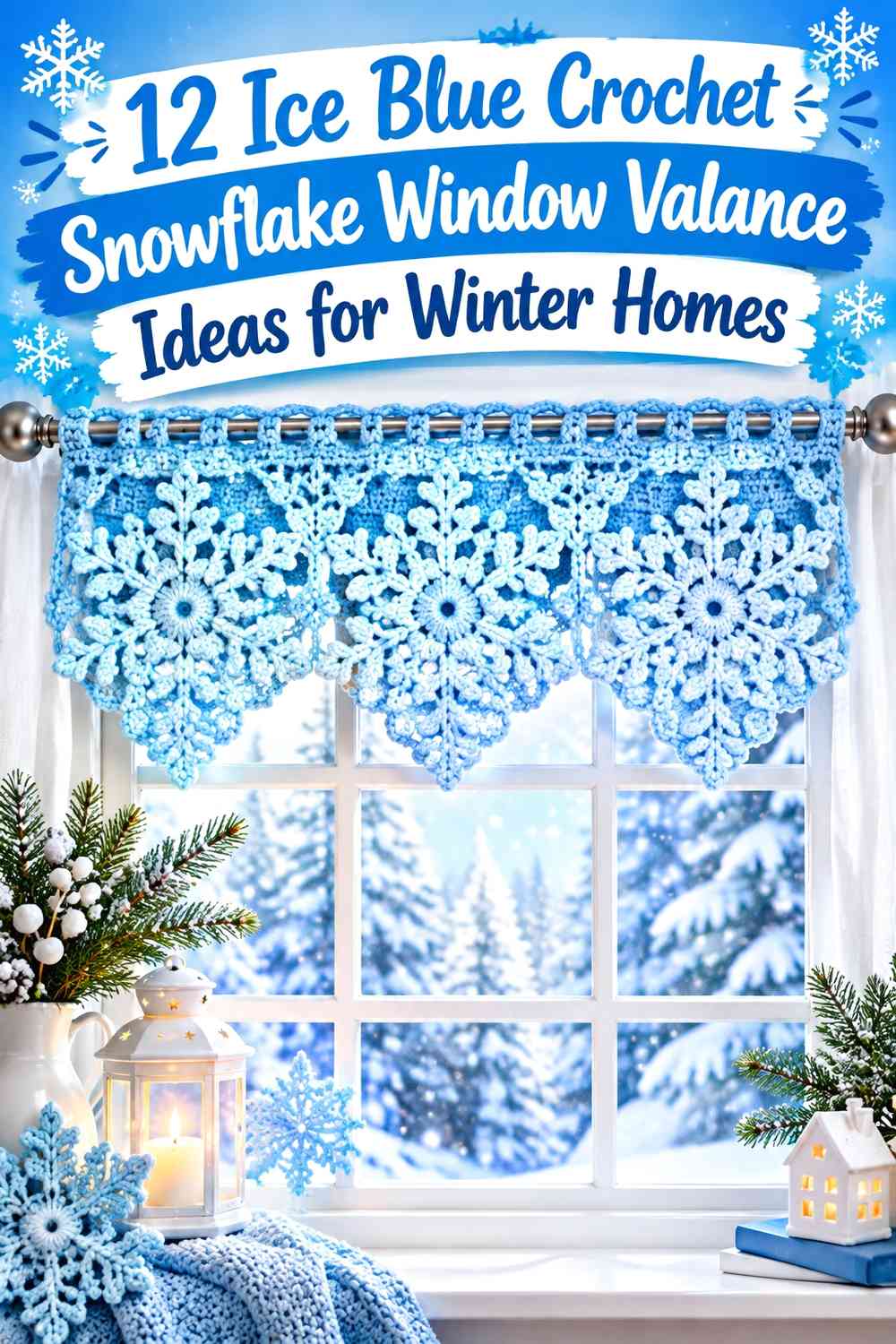

Ice Blue gives a crochet snowflake window valance a cool winter identity without requiring the entire window treatment to be bright white. The pale blue can define a continuous lace panel, individual hanging snowflakes, a solid upper band, or the scalloped lower edge while still allowing daylight to become part of the design.
A window also changes the way crochet color is perceived. During the day, Ice Blue motifs may be strongly backlit, making silhouette and spacing more important than very small stitch details. After dark, the room becomes the background, so contrast against curtains, blinds, wall color, and window trim becomes more noticeable.
These 12 ideas vary snowflake scale, motif spacing, lower-edge shape, openwork, tonal borders, hanging drops, and color distribution. The credited tutorials support compatible crochet snowflake constructions; the Ice Blue valance arrangements are independent adaptations rather than claims that the creators made these exact window treatments.
Quick List
- Ice Blue Crochet Scalloped Snowflake-Edge Window Valance
- Ice Blue Crochet Mini-Snowflake Garland Window Valance
- Ice Blue Crochet Celtic Snowflake Centerpiece Window Valance
- Ice Blue Crochet Openwork Snowflake Panel Window Valance
- Ice Blue Crochet Snowflake-Fringe Window Valance With a Solid Ice Blue Band
- Ice Blue Crochet Small-Repeat Snowflake Window Valance
- Ice Blue Crochet Crystal-Snowflake Center Window Valance
- Ice Blue and Soft Navy Crochet Snowflake Window Valance
- Ice Blue Crochet Curtain-Ring Snowflake Window Valance
- Ice Blue Crochet Mixed-Scale Snowflake Lace Window Valance
Let Ice Blue Control the Main Window Shape
Decide first whether the valance should read as a continuous Ice Blue textile or as a row of individual snowflakes. A solid or lace upper panel creates a stronger horizontal line across the window, while separated motifs leave more glass exposed and make each snowflake silhouette more important.
If you add pearl white, soft gray, or deeper blue, keep Ice Blue in the largest visual role. On a backlit window, even narrow dark borders can appear more prominent than they do on a worktable, so supporting shades usually need less surface area than the main color.
Check Ice Blue Snowflakes Against Daylight Before Joining Them
Snowflakes that look highly detailed on a table can simplify into silhouettes when placed against a bright window. Hold one finished motif against the glass before making the full set and look at it from normal room-viewing distance.
Pay particular attention to the gaps between points. If neighboring Ice Blue snowflakes overlap too much, their outlines can merge into a continuous irregular band. Leaving visible window space between motifs often makes a repeated valance easier to read.
Use Ice Blue Placement to Control the Lower Valance Edge
The bottom edge is where snowflake shapes can have the greatest influence on the window treatment. Large motifs can create deep decorative drops, while small repeated flakes make a shallower, more regular edge.
Before joining the complete row, temporarily arrange the motifs across the intended window width. Check whether important snowflakes disappear behind curtain panels, window handles, or nearby drapery and adjust spacing before final assembly.
1. Ice Blue Crochet Scalloped Snowflake-Edge Window Valance
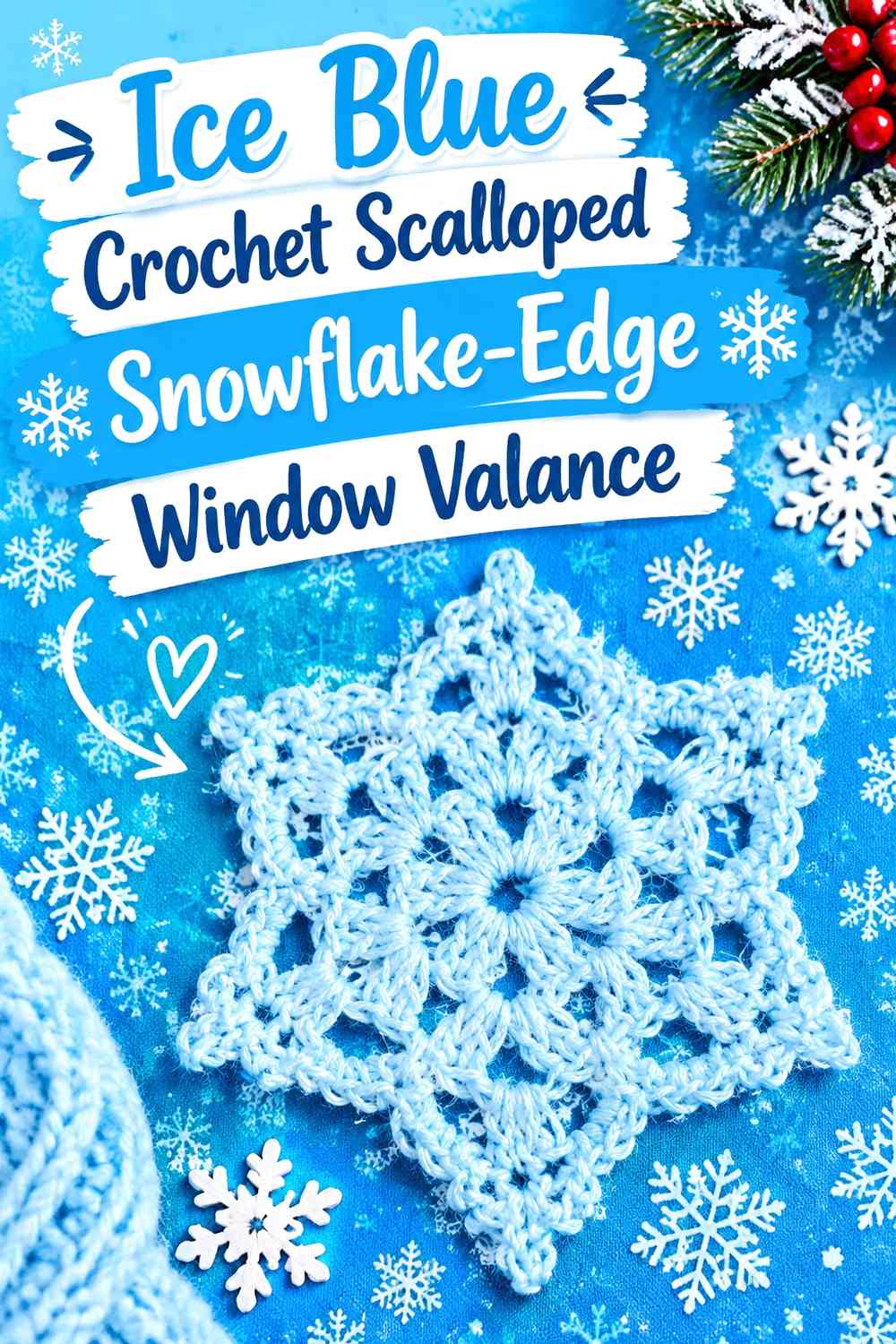
Use a more continuous Ice Blue lace panel across the top and let snowflake points create a scalloped lower edge. Rather than hanging complete motifs below the valance, integrate the snowflake shapes closely enough that their outer points become part of the hemline.
Ice Blue Snowflake Points Should Form a Deliberate Lower Rhythm
Keep the depth of the lower drops visually consistent. One unusually long Ice Blue point can make the valance look uneven unless it is intentionally used as a central feature.
Ice Blue Needs a Calmer Band Above the Snowflake Edge
Leave the upper area less intricate than the lower border. That contrast gives the snowflake scallops a clear job and prevents the entire window treatment from becoming one dense lace field.
Creator Credit: Bella Coco
2. Ice Blue Crochet Mini-Snowflake Garland Window Valance
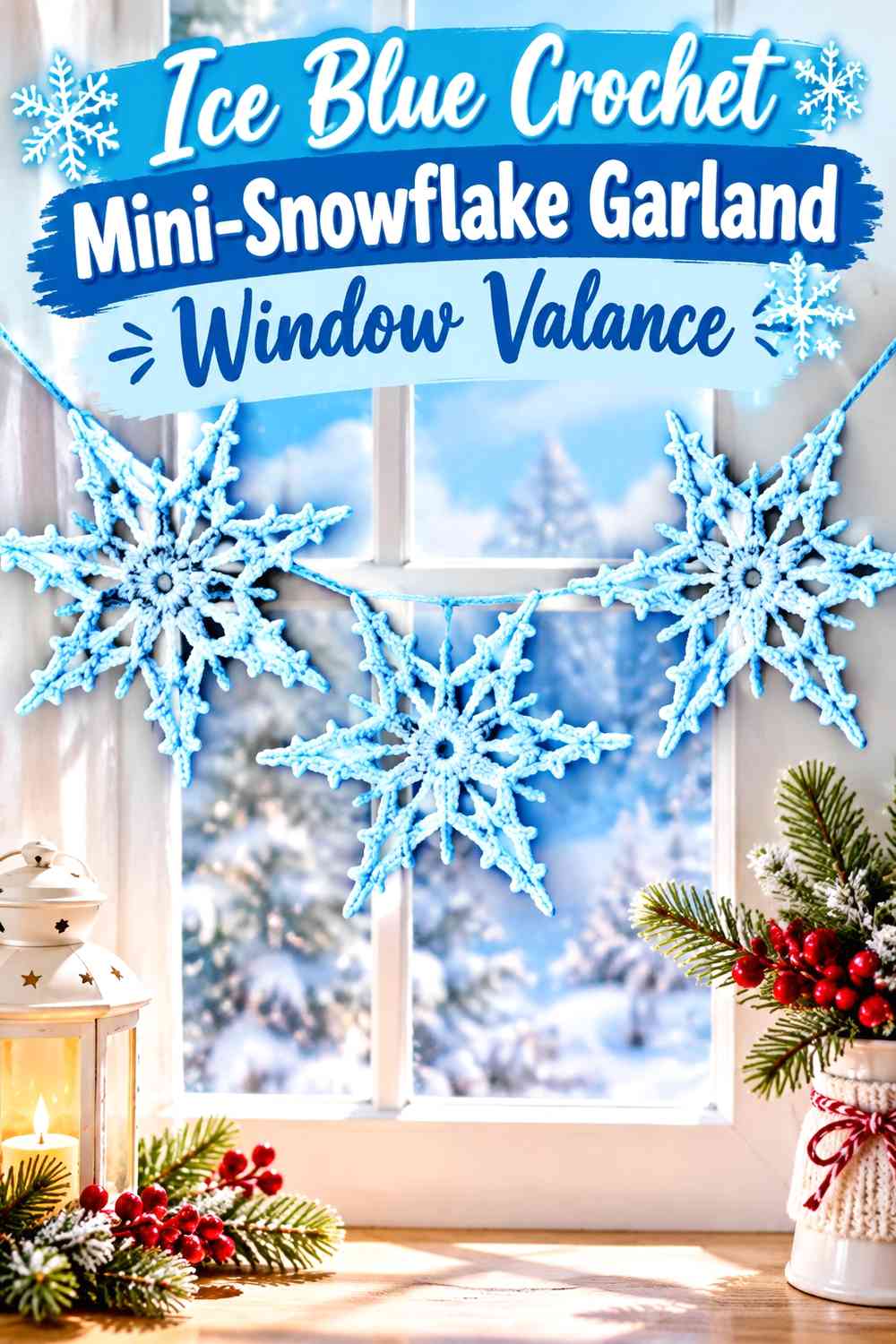
Use many smaller Ice Blue snowflakes across the width of the window rather than a few large motifs. A mini-flake arrangement creates finer repetition and can work especially well when you want a shallow decorative edge rather than long drops.
Ice Blue Mini Snowflakes Need More Open Window Space Than Their Size Suggests
Small motifs can still become visually crowded when repeated closely. Leave enough space for individual Ice Blue points to stay separate instead of creating a solid textured strip.
Ice Blue Repetition Should Stay Consistent Across the Garland
Use a regular spacing pattern or repeat a small group arrangement. Consistency helps many little Ice Blue elements feel like one intentional valance rather than a collection of unrelated ornaments.
Creator Credit: Crochet with Tuula Maaria
3. Ice Blue Crochet Celtic Snowflake Centerpiece Window Valance
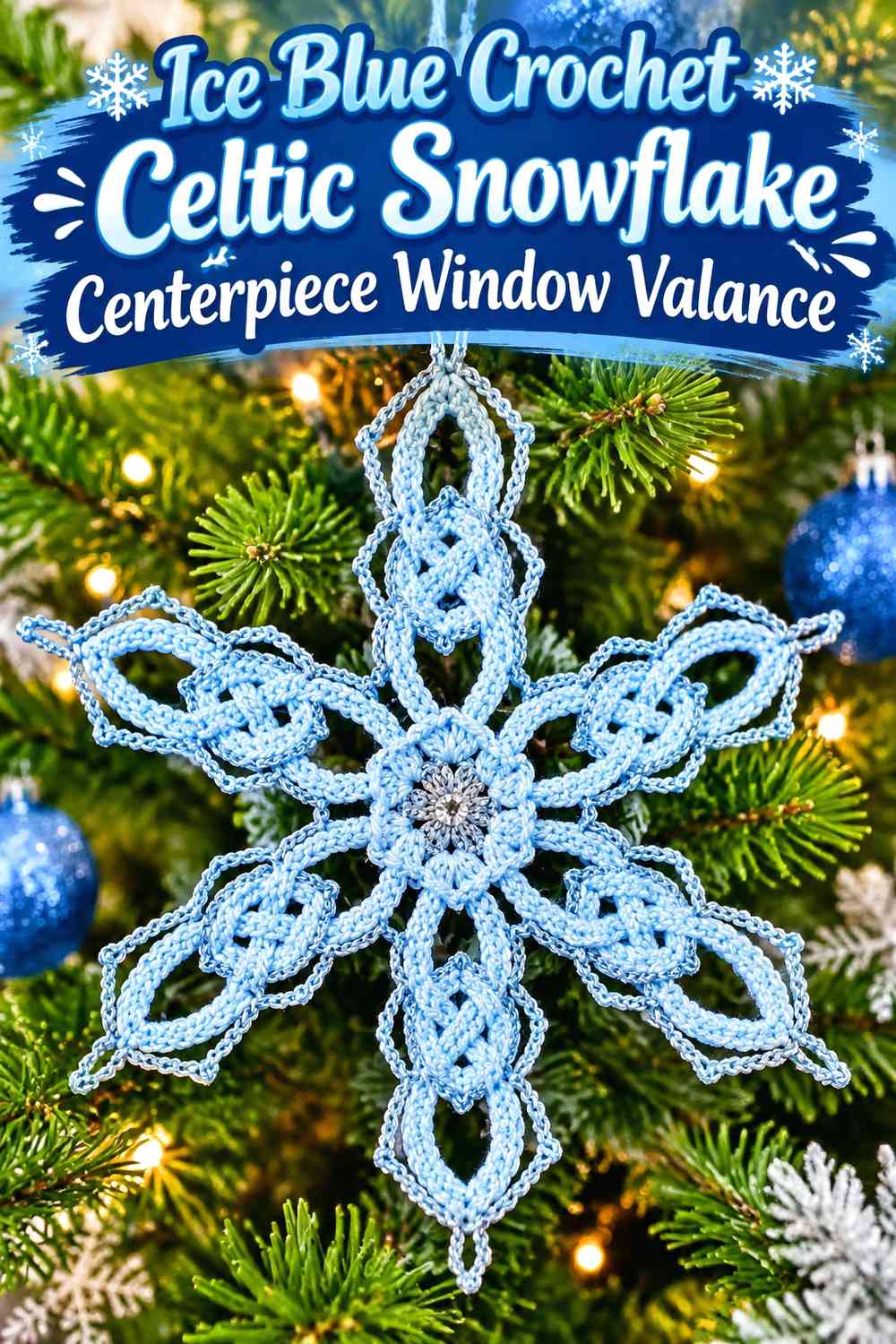
Make one elaborate Ice Blue snowflake the center of the valance and keep the surrounding motifs or lace sections simpler. A more intricate central piece gives the window a strong midpoint without requiring the entire valance to carry the same level of detail.
Ice Blue Celtic Snowflake Detail Needs a Quiet Surrounding Area
Leave more open space around the centerpiece than around smaller supporting motifs. This protects its outer shape and woven-looking details from visually merging with nearby crochet.
Ice Blue Supporting Motifs Should Stay Simpler Than the Center Snowflake
Use smaller flakes, plain lace, or restrained edging to either side. Repeating equally complex Ice Blue motifs across the entire width would reduce the visual importance of the centerpiece.
Creator Credit: Celtic Knot Crochet
4. Ice Blue Crochet Openwork Snowflake Panel Window Valance

Build the valance as a continuous Ice Blue openwork panel with snowflake-like motifs repeated inside the fabric rather than hanging separately. This gives the window a more textile-like treatment and creates a stable horizontal shape.
Ice Blue Openwork Should Preserve Clear Snowflake Centers
Give each motif enough surrounding lace for the radial structure to remain identifiable. When neighboring Ice Blue motifs share too many edges, the individual snowflakes can disappear into general openwork.
Ice Blue Solid Sections Should Frame the Snowflake Panel
Use slightly denser crochet along the top or outer edges to give the lace a visible boundary. A solid Ice Blue frame can make the central openwork easier to read against bright glass.
Creator Credit: ExpressionFiberArts
5. Ice Blue Crochet Snowflake-Fringe Window Valance With a Solid Ice Blue Band

Use a denser Ice Blue upper band and attach individual snowflakes along its lower edge like decorative fringe. The solid top creates a stronger valance shape while the open motifs keep the lower portion airy.
Ice Blue Upper Coverage Should Stay Shallower Than the Snowflake Fringe
Avoid making the solid portion so deep that it covers most of the window. A relatively narrow Ice Blue band allows the hanging snowflakes to remain the reason the valance feels winter-specific.
Ice Blue Snowflake Fringe Needs Consistent Attachment Points
Arrange the motifs so the top of each flake begins at a similar level. Uneven attachment can make the lower edge look accidental even when the individual Ice Blue motifs are well shaped.
Creator Credit: Jayda InStitches
6. Ice Blue Crochet Small-Repeat Snowflake Window Valance
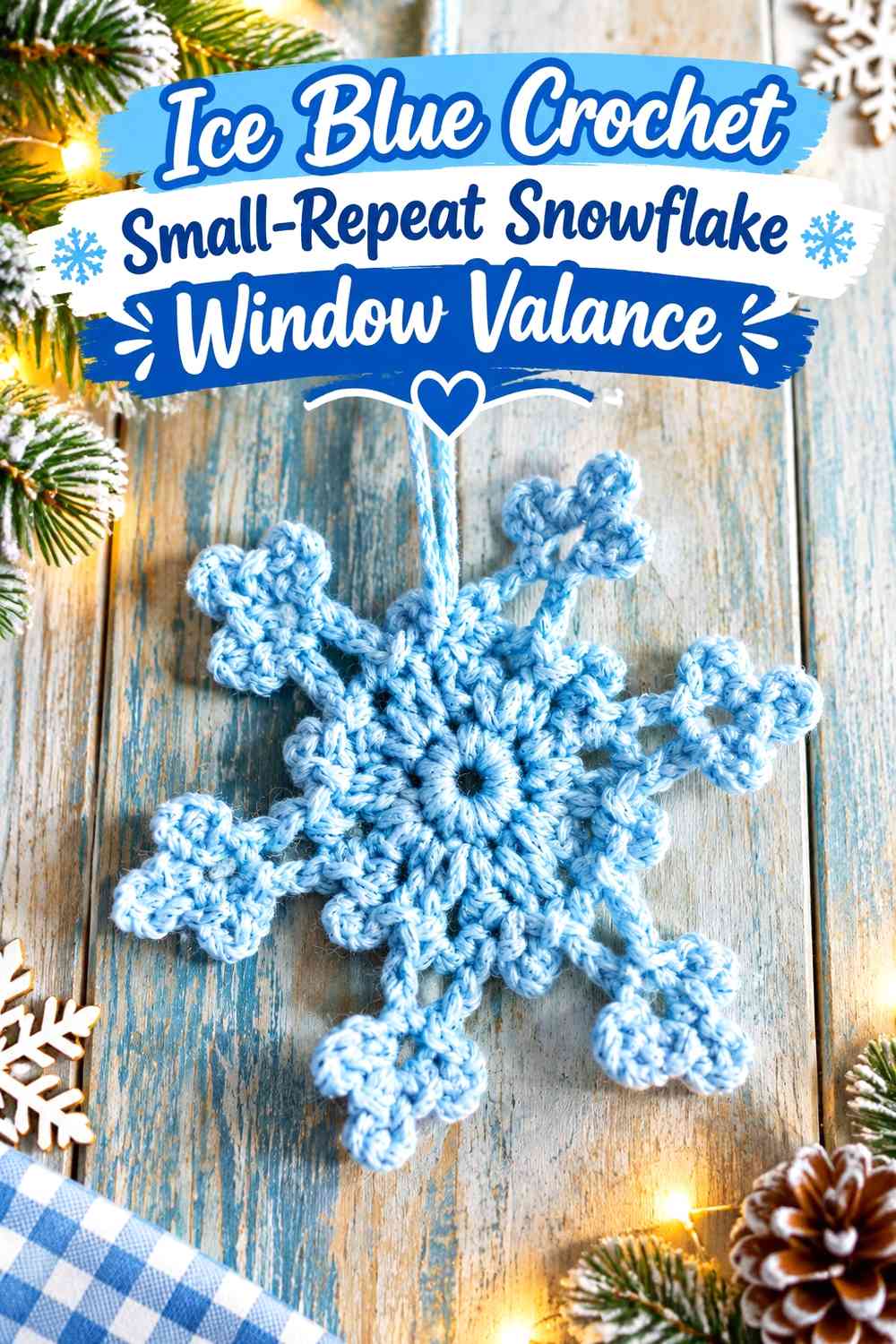
Repeat compact Ice Blue snowflakes across a narrow valance and connect them with simple crochet links. This produces more visual density than a widely spaced garland while keeping the overall drop relatively shallow.
Ice Blue Small Snowflakes Should Not Overlap Their Outer Points
Keep enough separation for the six-sided or radial silhouettes to remain readable. Overlap can turn several Ice Blue motifs into a continuous jagged edge when seen against bright daylight.
Ice Blue Connections Should Stay Visually Secondary to the Snowflakes
Use simple joining areas rather than heavily decorative bridges. The connectors need to hold the row together visually, but the repeated Ice Blue flakes should remain the dominant feature.
Creator Credit: HappyBerry Crochet
7. Ice Blue Crochet Crystal-Snowflake Center Window Valance
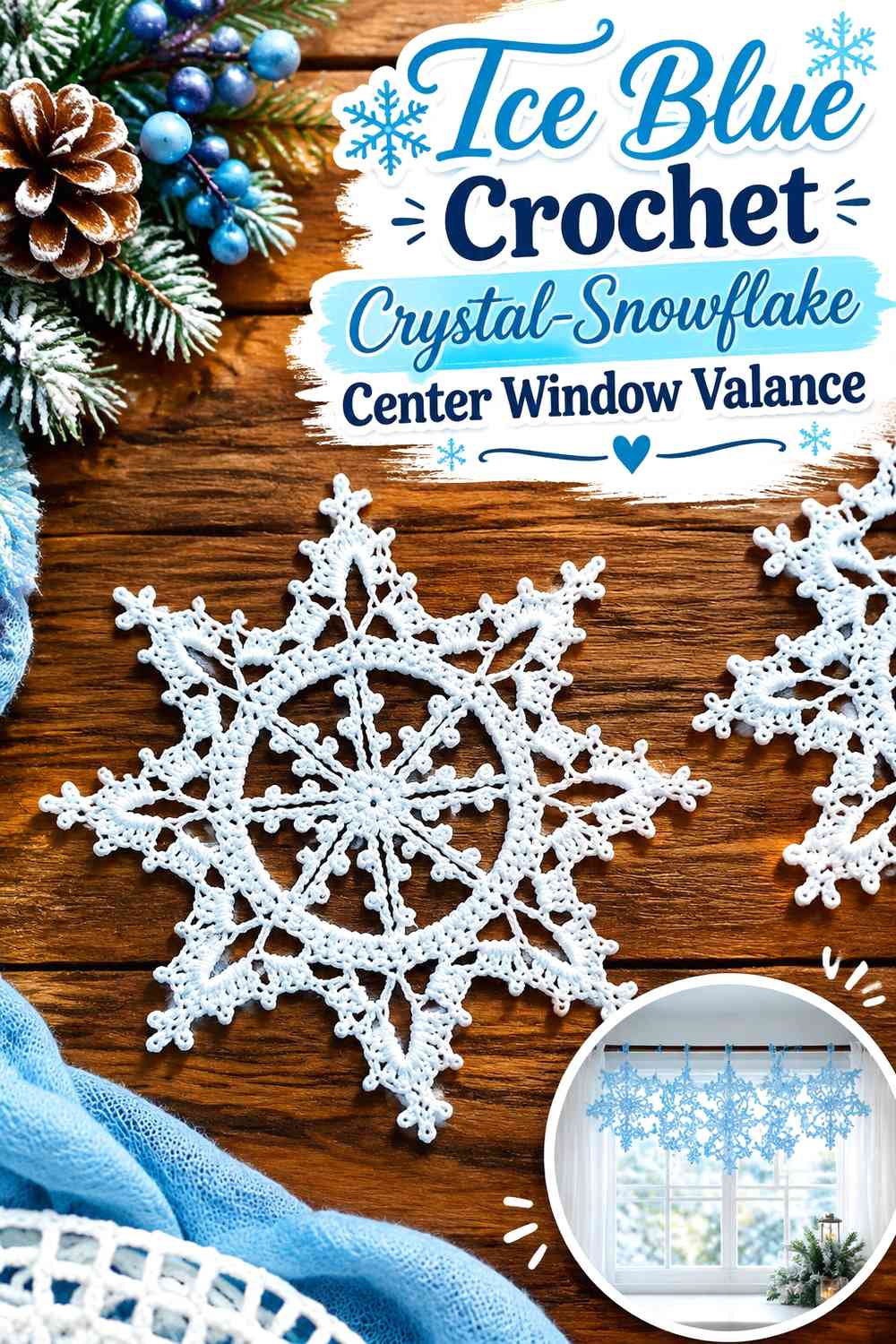
Choose a fine, detailed Ice Blue snowflake as the central motif and use increasingly simpler elements toward the outer edges. This creates a graduated composition that draws attention toward the middle of the window.
Ice Blue Crystal Detail Needs Enough Light Around the Center Motif
Do not crowd the central flake with additional lace immediately beside every point. A bright window background can help intricate Ice Blue openings remain visible when they have enough clear space around them.
Ice Blue Side Motifs Should Step Down in Visual Complexity
Use smaller or more open supporting elements toward the edges. This maintains a hierarchy instead of making every part of the valance compete with the detailed Ice Blue center.
Creator Credit: Irina Tsokalo
8. Ice Blue and Soft Navy Crochet Snowflake Window Valance
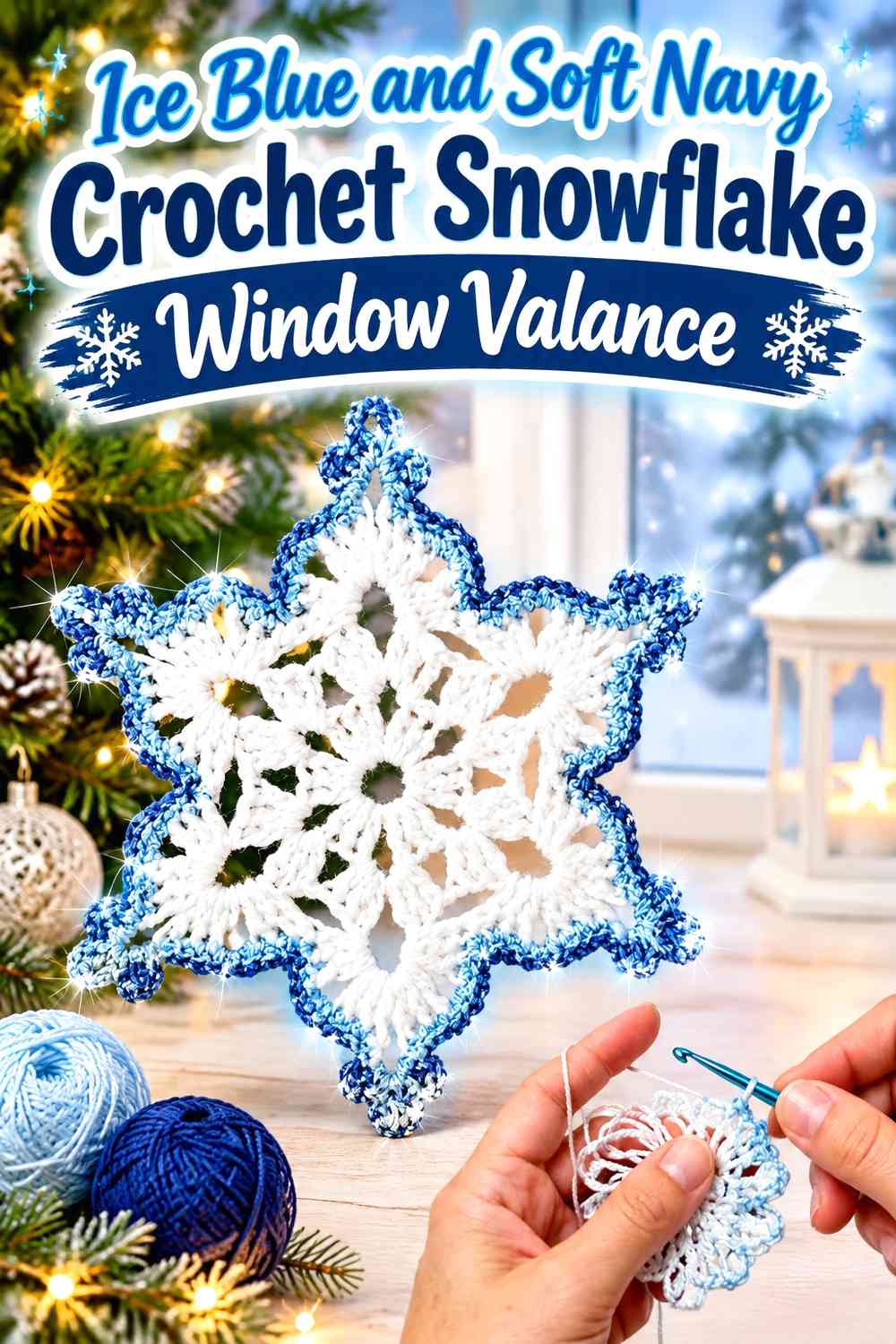
Let Ice Blue cover the snowflakes and most of the upper valance, then introduce soft navy only as a narrow top edge or joining line. The deeper blue gives the window treatment definition while leaving the snowflakes noticeably lighter.
Ice Blue Snowflakes Need More Visual Area Than Soft Navy
Keep navy away from the interiors of most motifs. Because the darker shade carries more visual weight, a narrow line can provide enough contrast without dividing the valance equally.
Ice Blue Should Separate Soft Navy From the Lower Snowflake Edge
Leave a visible Ice Blue section between the dark top border and the motif-heavy lower edge. This prevents navy from visually dominating the full height of the valance.
Creator Credit: Crochet Craftsman
9. Ice Blue Crochet Curtain-Ring Snowflake Window Valance
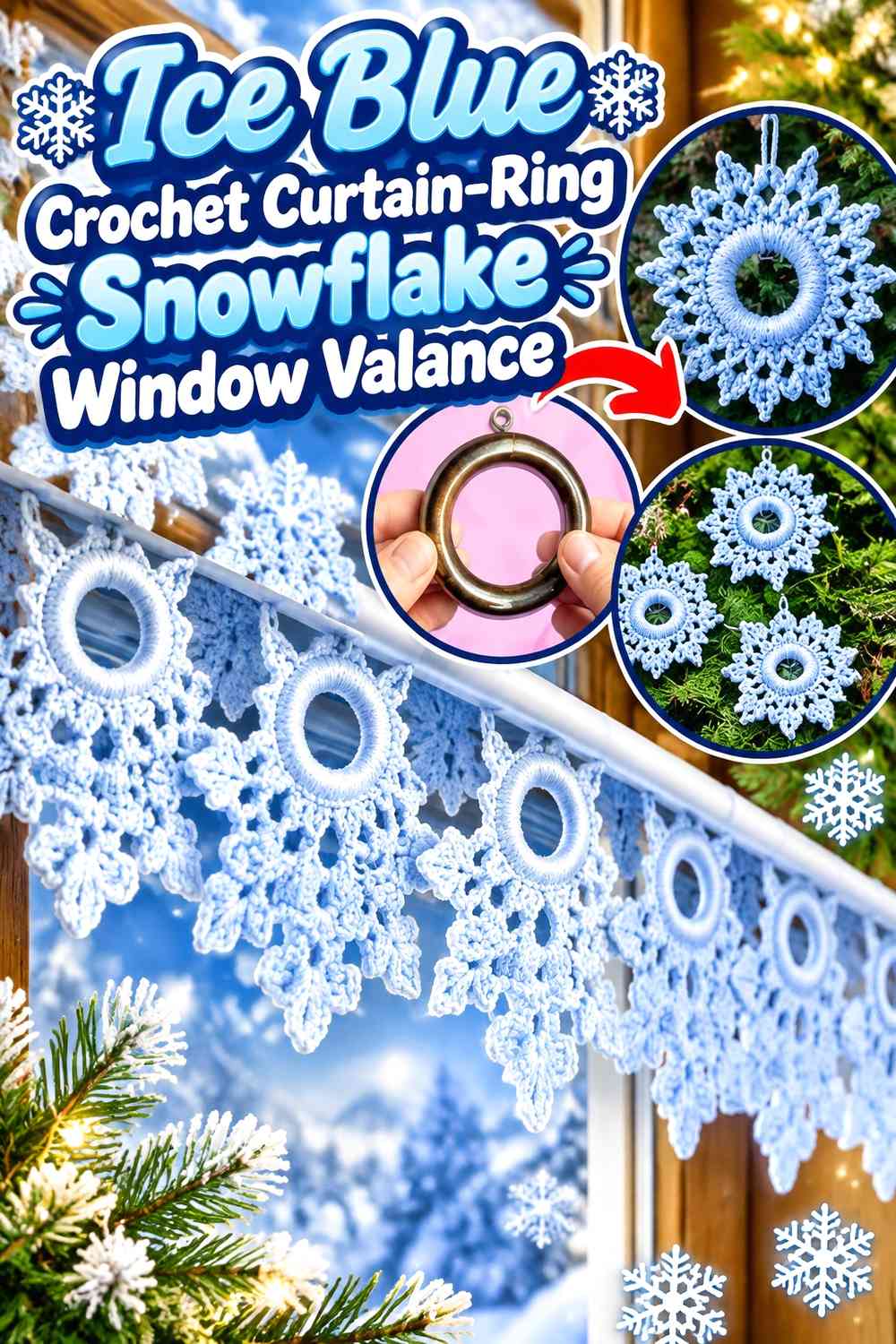
Use snowflake motifs worked around curtain rings or similar compatible circular forms to create a row of Ice Blue framed flakes. The circular inner structure makes each motif visually distinct and can give the valance a stronger repeating geometry.
Ice Blue Ring Snowflakes Need Consistent Outer Spacing
Line up the circles carefully across the window so one ring does not sit noticeably higher or closer than its neighbors. Consistent spacing helps the Ice Blue snowflake edges create an intentional rhythm.
Ice Blue Should Cover Enough of the Ring to Keep the Snowflake Look Cohesive
Avoid introducing several contrasting ring colors within the same row. Keeping the visible crochet predominantly Ice Blue makes the circular supports feel like part of one winter valance.
Creator Credit: Makingpolly
10. Ice Blue Crochet Mixed-Scale Snowflake Lace Window Valance
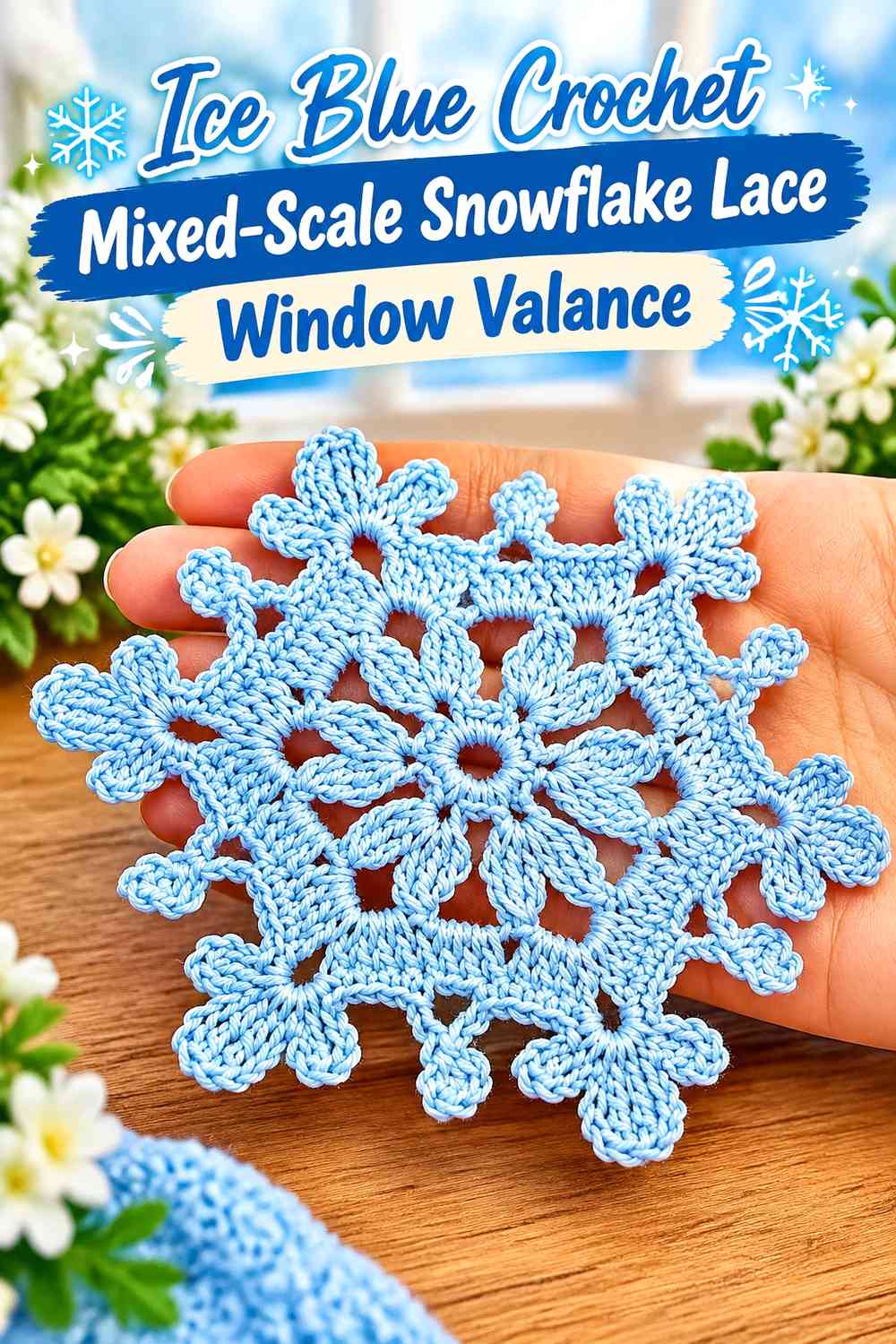
Combine a few larger Ice Blue snowflakes with smaller supporting flakes to create varied depth along the lower edge. Instead of repeating one motif identically, use scale to make the window treatment feel like layered falling snow while keeping one consistent main color.
Ice Blue Large Snowflakes Should Mark Important Valance Positions
Place the largest motifs deliberately—such as at the center or at balanced intervals—rather than scattering them randomly. Their size gives them more visual weight, so their placement establishes the structure of the entire valance.
Ice Blue Small Snowflakes Should Fill Gaps Without Crowding Larger Motifs
Use the smaller flakes to maintain rhythm between the main motifs. Leave enough glass visible around both sizes so the mixed-scale Ice Blue arrangement remains airy rather than becoming a dense lace wall.
Creator Credit: Crochet.ElenaRugalStudio
Which Ice Blue Snowflake Window Valance Style Should You Choose?
For the lightest window coverage, choose hanging Ice Blue snowflakes, mini-flake garlands, or widely spaced drop motifs. These designs preserve more exposed glass and make the snowflakes themselves the main decorative feature.
For a more traditional valance shape, choose an Ice Blue openwork panel, scalloped snowflake edge, or solid upper band with hanging motifs. These styles establish a stronger horizontal line across the top of the window while still allowing lace openings to admit light.
If you want a clear focal point, use one larger Celtic, crystal-style, or detailed Ice Blue snowflake at the center and simplify the surrounding motifs. For a more uniform look, repeat compact flakes at regular intervals instead.
Conclusion
Ice Blue works especially well for crochet snowflake window valances when the color has enough uninterrupted space to establish the overall winter direction. It can cover a continuous lace panel, define a solid upper band, or appear entirely through individual hanging motifs.
The biggest visual choice is how much glass should remain visible. Large spaced flakes create an airy window treatment, while integrated lace or closely repeated motifs create more coverage. Pearl white can lighten selected snowflakes, and soft navy can define an edge, but keeping those supporting shades secondary preserves Ice Blue as the main color.
Before joining a complete set of motifs, hold a few finished snowflakes against the actual window during daylight. Check their scale, spacing, and silhouette from across the room, then adjust the arrangement before committing to the final valance. Use the credited tutorials for their demonstrated snowflake construction and adapt the Ice Blue placement to the width and style of your own window.
Frequently Asked Questions
Is Ice Blue a good color for a crochet snowflake window valance?
Yes. Ice Blue keeps the snowflake theme clearly winter-oriented while creating a softer color statement than bright white. It is particularly useful when you want the crochet to remain visible against pale walls or white window trim.
Should an Ice Blue snowflake valance use one motif size or several?
Either can work. One repeated size creates a regular, orderly lower edge, while several sizes can create a layered falling-snow effect. If you mix scales, place the largest Ice Blue snowflakes deliberately so the arrangement remains balanced.
How can I keep Ice Blue snowflakes visible against a bright window?
Focus on silhouette and spacing. Leave clear glass between neighboring motifs and avoid overlapping too many Ice Blue points. A slightly denser outer edge or central section can also give an openwork snowflake more definition.
What color works well with Ice Blue in a winter window valance?
Pearl white creates a light, frosty contrast, while soft navy or muted blue-gray can add deeper definition. Keep the supporting color to borders, selected motifs, or small joining details when you want Ice Blue to remain dominant.
Should Ice Blue snowflakes hang separately or be joined into a lace panel?
Separate hanging motifs leave more window exposed and make each snowflake easier to distinguish. A joined lace panel gives the window a more traditional valance shape. Choose according to the amount of coverage and visual structure you want.
How should I space Ice Blue crochet snowflakes across a window?
Temporarily lay out or pin the motifs across the intended width before permanently joining them. Leave enough space for individual snowflake points to remain separate, and check the arrangement against the actual window rather than measuring only on a table.
How do I substitute another blue while keeping the Ice Blue winter effect?
Choose a pale, cool-looking blue that remains noticeably lighter than navy or medium denim blue. If the substitute is darker, increase the open space between motifs or reduce any additional dark accents so the valance still feels light and snowflake-focused.