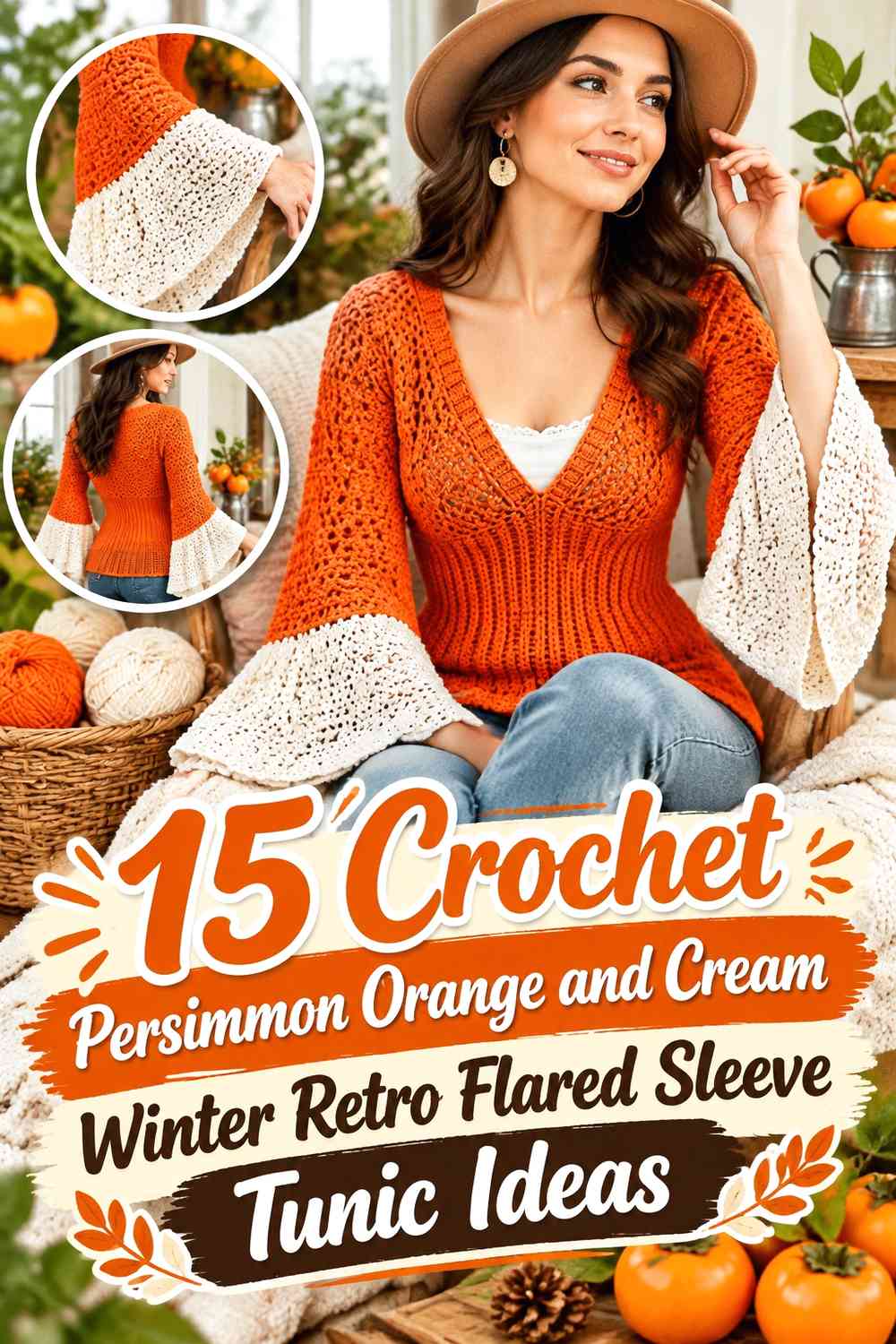

Persimmon orange and cream naturally support the strong color blocking associated with retro crochet clothing. Persimmon orange can give a long tunic body visual warmth and weight, while cream can separate flared cuffs, necklines, panel edges, or hems so the garment does not become one uninterrupted orange field.
Flared sleeves make color placement especially important. A color change placed exactly where the sleeve begins to widen emphasizes the retro silhouette, while a contrasting cuff at only the outer edge produces a quieter result. The longer tunic body also changes the balance: a dramatic sleeve can feel disconnected if its accent color never appears anywhere on the torso.
For winter styling, consider the complete layered outfit. Openwork or mesh sleeves may still require a fitted layer underneath when more coverage is wanted, and that layer becomes another visible color through the crochet.
The tutorials below include bell-sleeve sweaters, tops, cardigans, wraps, and shrugs. Not every creator makes a tunic-length garment. Where a source is shorter, use it for the demonstrated sleeve or garment-construction concept and treat additional tunic length as an adaptation to plan only where the tutorial’s fitting method allows.
Quick List
- Persimmon Orange Crochet Winter Tunic with Cream Flared Sleeve Cuffs
- Cream Crochet Winter Tunic with Persimmon Orange Flared Sleeves
- Persimmon Orange Crochet Tunic with Cream Retro Sleeve Flares
- Cream and Persimmon Orange Granny-Style Crochet Flared Sleeve Tunic
- Persimmon Orange 70s Crochet Tunic with Cream Neckline and Flared Cuffs
- Persimmon Orange Crochet Tunic with Cream Center Panel and Flared Sleeve Edges
- Cream Lace Crochet Tunic with Persimmon Orange Flared Sleeve Borders
- Persimmon Orange Crochet Pullover Tunic with Cream Retro Bands
- Cream Wrap-Style Crochet Tunic with Persimmon Orange Flared Sleeves
- Persimmon Orange Crochet Tunic with Cream Tie and Flared Sleeve Trim
- Persimmon Orange and Cream Hexagon-Inspired Crochet Flared Sleeve Tunic
- Cream Crochet Tunic with Persimmon Orange Bolero-Style Flared Sleeve Contrast
- Persimmon Orange Crochet Tunic with Cream Front Trim and Bell Sleeves
- Cream Crochet Tunic with Persimmon Orange Lace Flared Sleeves
- Persimmon Orange and Cream Mesh-Flare Crochet Winter Tunic
Decide Whether Persimmon Orange or Cream Should Dominate the Tunic
A longer crochet garment gives the dominant color much more visual area than a cropped top. If persimmon orange covers the complete tunic body, even small cream cuffs can create a noticeable contrast. If cream controls the body, persimmon orange can become a stronger retro accent through sleeves, side panels, or the neckline.
Avoid distributing both shades in tiny equal sections unless a deliberately busy retro pattern is the goal. Broad color areas usually make the tunic length and flared sleeve shape easier to understand.
Use Cream and Persimmon Orange to Emphasize the Sleeve Flare
The point where a sleeve begins widening is an effective place for a color change. Moving from persimmon orange through the upper arm to cream at the flare makes the expansion easier to notice.
The opposite arrangement works too. Cream sleeves ending in persimmon orange create a stronger, darker cuff. Try the garment on with your arms relaxed before deciding whether the flare needs additional color; sleeves often look more dramatic when extended than they do during normal wear.
Repeat Persimmon Orange and Cream Between the Sleeves and Tunic Body
A contrasting sleeve can look disconnected if its color appears nowhere else. Repeat cream from the cuffs at the neckline or hem of a persimmon tunic, or echo persimmon cuffs with a narrow orange lower border on a cream body.
The repeat does not have to be large. Its purpose is to connect the dramatic sleeves to the longer torso rather than make every garment section equally two-toned.
1. Persimmon Orange Crochet Winter Tunic with Cream Flared Sleeve Cuffs
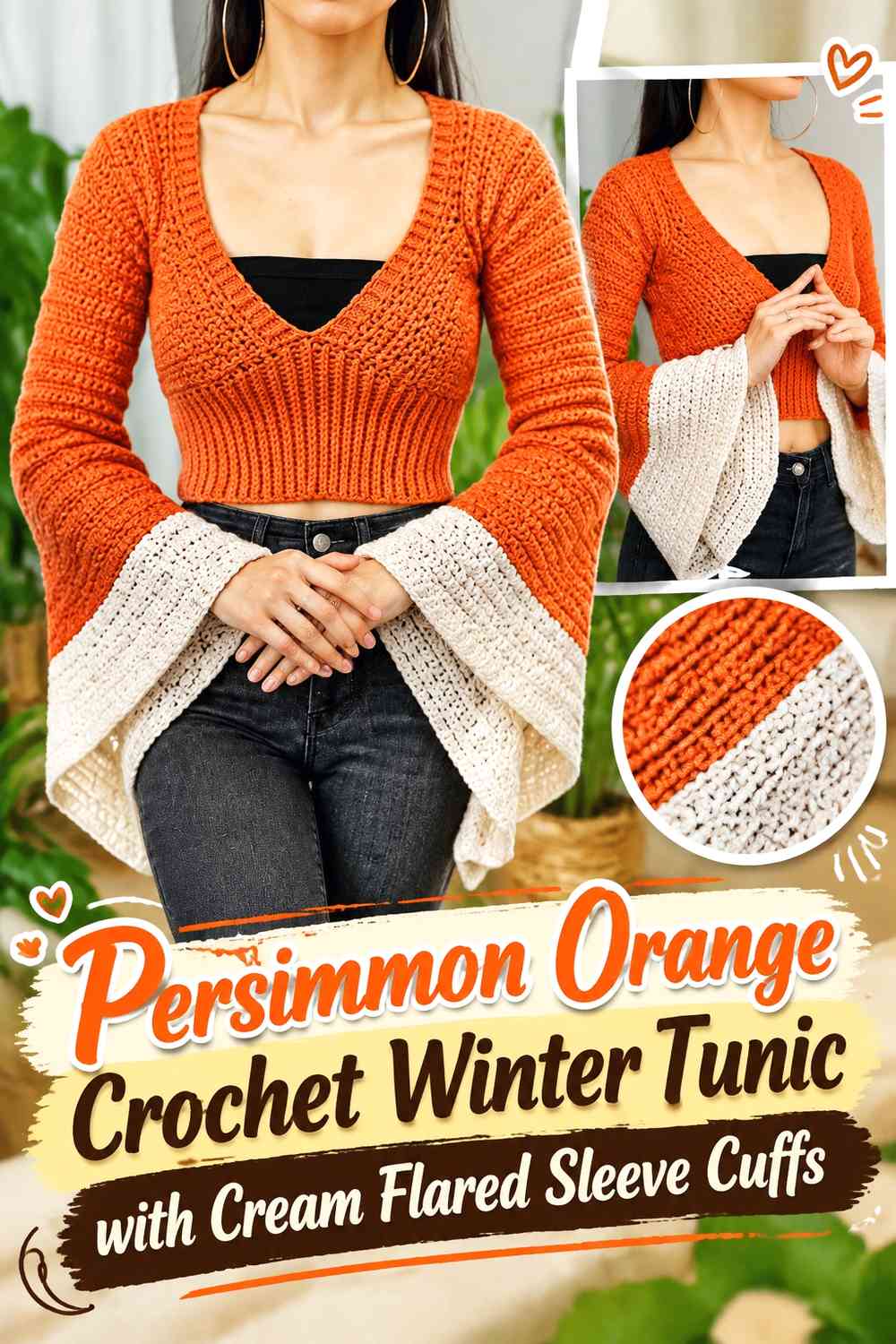
Let persimmon orange cover the main tunic body, upper sleeves, and most of the garment length. Change to cream where the sleeves begin their strongest flare. This creates a direct visual link between color and silhouette: the lightest section appears exactly where the sleeve becomes widest.
Persimmon Orange Should Carry the Long Crochet Tunic Body
A continuous persimmon torso keeps the longer silhouette cohesive. Avoid interrupting it with several narrow cream stripes if the cuffs are intended to be the main retro feature.
A small cream repeat at the neckline or hem can connect the cuffs without reducing the strong orange body.
Cream Makes the Persimmon Orange Sleeve Flare More Obvious
Start the visible cream section near the widening portion rather than hiding most of it at the very edge. The larger light area helps distinguish the bell shape from the straighter upper sleeve.
Check both sleeves together before final finishing so the orange-to-cream transition sits at a visually similar height.
Creator Credit: TCDDIY
2. Cream Crochet Winter Tunic with Persimmon Orange Flared Sleeves
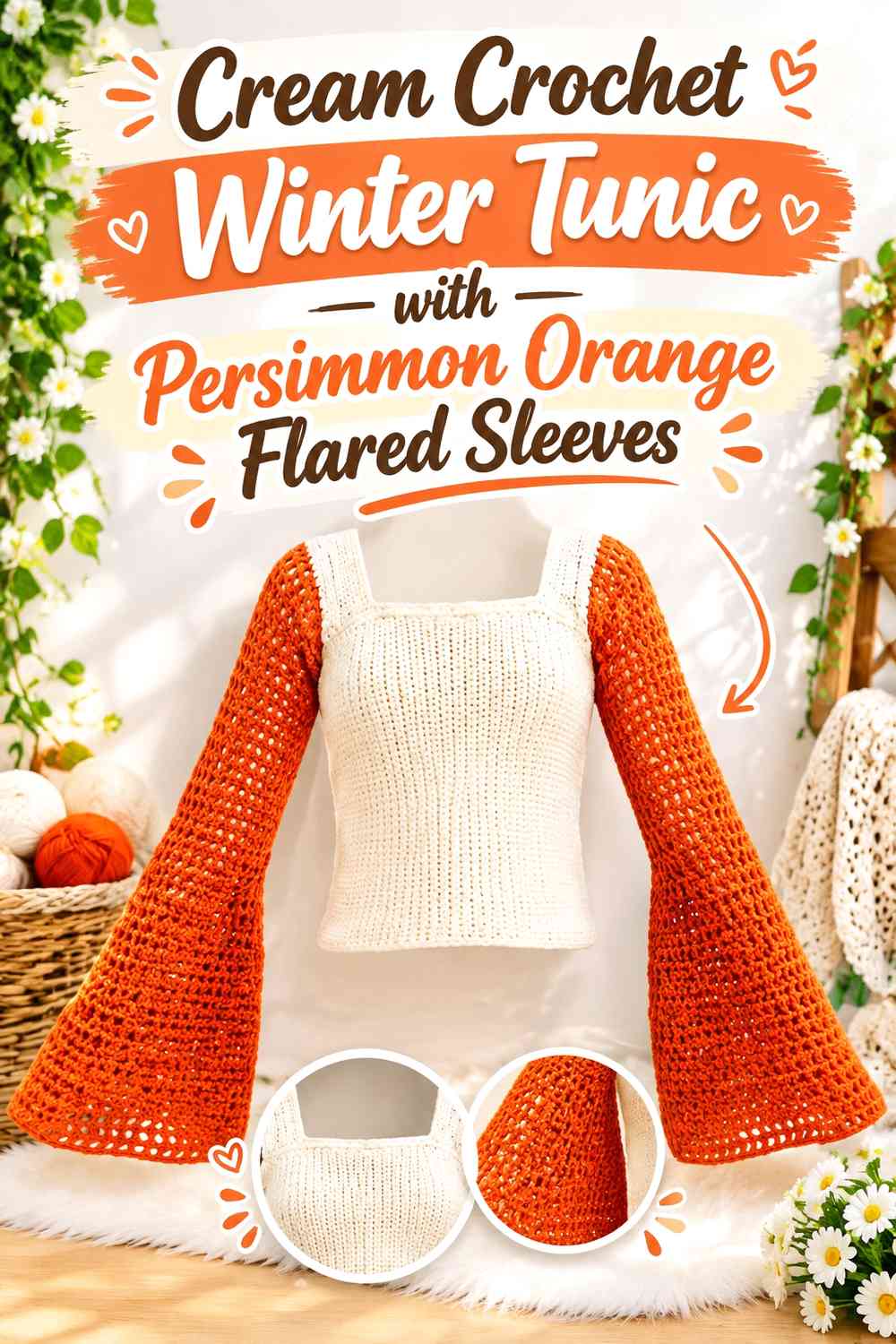
Reverse the hierarchy by making the long torso cream and using persimmon orange through the flared sleeves. The darker warm sleeves become the strongest retro statement while the body remains comparatively quiet.
Cream Keeps the Persimmon Orange Sleeves as the Main Focal Point
Use cream continuously through the front and back panels rather than introducing several competing orange body sections. A broad pale torso gives the eye room to notice the expanding sleeves.
If more connection is needed, use a narrow persimmon neckline rather than a large second body block.
Persimmon Orange Gives Cream Flared Sleeves Stronger Visual Weight
Carry persimmon through enough of the sleeve that it reads as a deliberate sleeve color rather than a small cuff. This can be particularly effective when the sleeve itself contains mesh or openwork.
For winter wear, judge open sleeves over the layer you expect to wear underneath because that color will remain visible through the crochet.
Creator Credit: Calluna Crochet
3. Persimmon Orange Crochet Tunic with Cream Retro Sleeve Flares
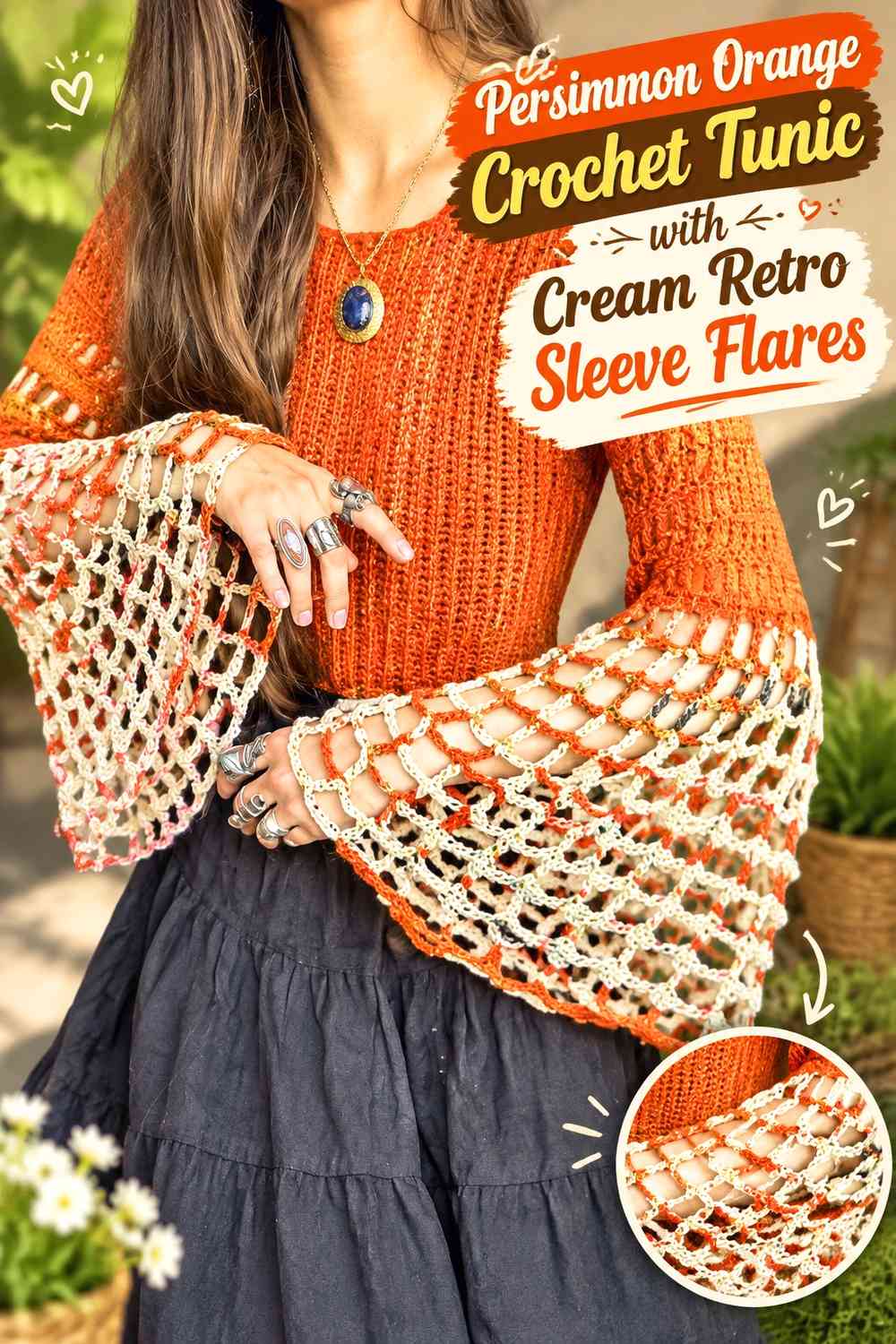
Keep the torso and upper sleeve persimmon orange, then introduce cream only at the lower flare. Compared with a half-and-half sleeve, this creates a more restrained two-color treatment while still making the cuff expansion easy to see.
Persimmon Orange Can Keep the Tunic and Upper Sleeve Connected
Continuing the same orange from shoulder through the straighter sleeve section creates one uninterrupted line before the flare. That continuity makes the later cream change feel more deliberate.
It also keeps the tunic body visually stronger than the accent cuffs.
Cream Should Begin Where the Persimmon Orange Sleeve Changes Shape
Use the color break as a visual marker for the beginning of the flare. If cream begins far above the widening section, color and silhouette may feel unrelated.
A narrow cream hem can echo the sleeves and prevent the light cuffs from appearing isolated.
Creator Credit: Hannah Drapinski
4. Cream and Persimmon Orange Granny-Style Crochet Flared Sleeve Tunic
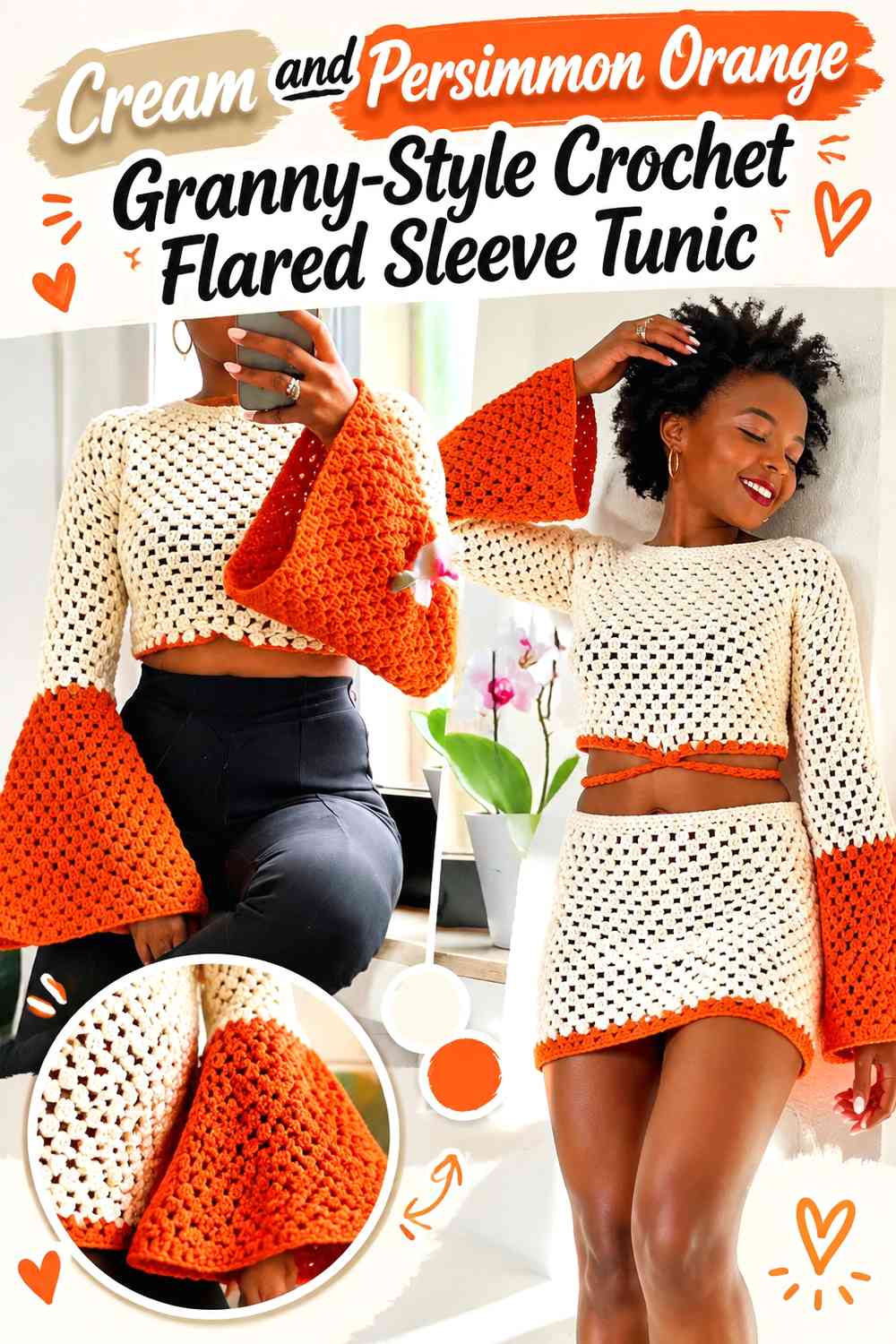
A granny-stitch or clustered texture already creates a strong repeating surface, so keep the color plan organized. Let cream form the main torso field and use persimmon orange in the flared sleeve sections and selected broad bands.
Cream Gives Persimmon Orange Granny Texture More Breathing Room
Large cream sections keep the repeating crochet structure visible without requiring constant color changes. They also provide a calmer background for the stronger orange sleeve sections.
Avoid changing colors at every small stitch repeat if the retro flare is supposed to remain the focal feature.
Persimmon Orange Can Define the Cream Sleeve Flare and Tunic Hem
Use orange at the widening cuffs and repeat it near the bottom edge of the tunic. That top-to-bottom relationship helps connect the dramatic sleeves with the longer garment.
Keep the lower orange band narrower than the cream body if cream should remain dominant.
Creator Credit: AC Crochets
5. Persimmon Orange 70s Crochet Tunic with Cream Neckline and Flared Cuffs
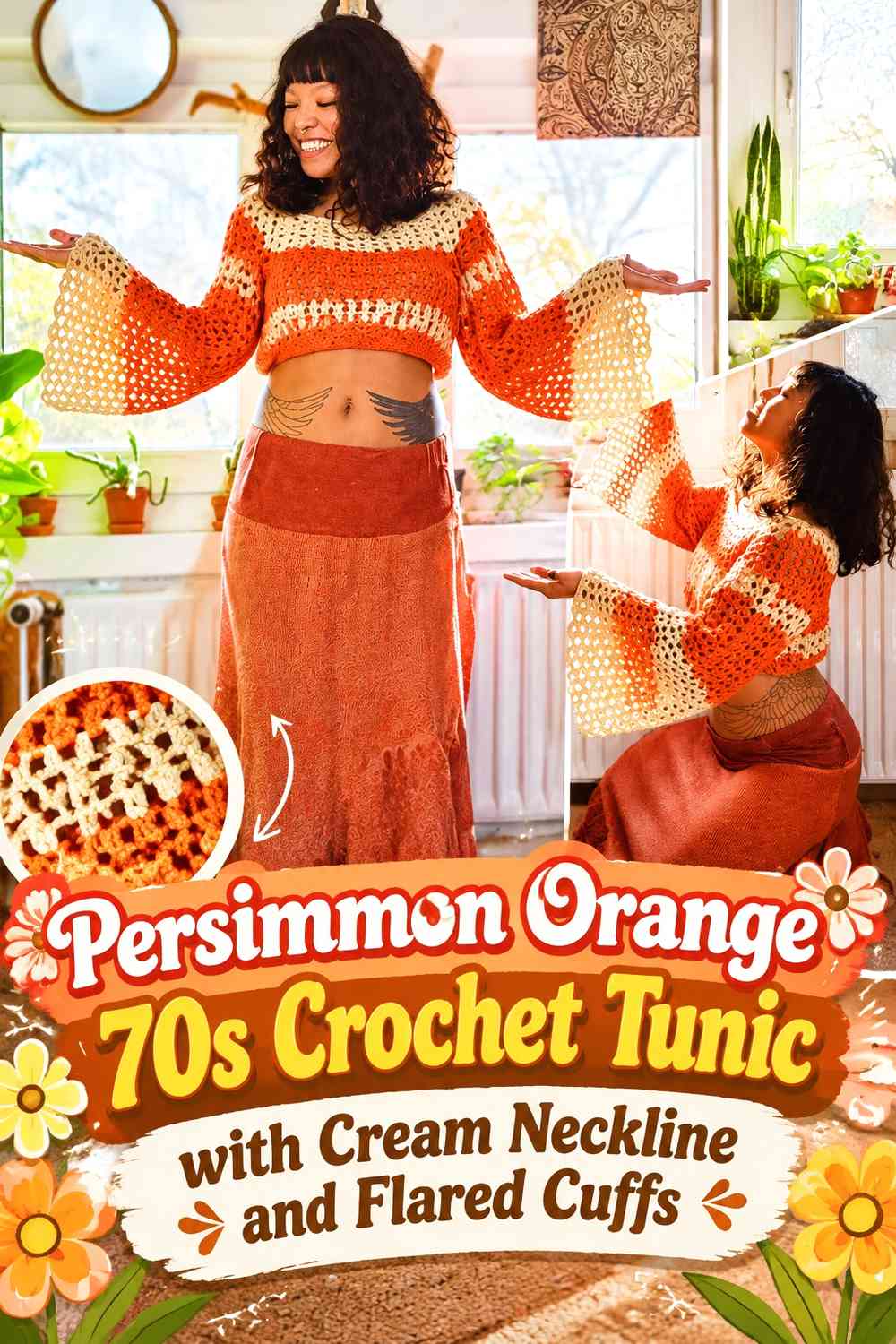
Persimmon orange is particularly effective for a 1970s-inspired direction when it occupies broad uninterrupted sections. Cream at the neckline and cuffs creates a lighter frame without turning the garment into a stripe-heavy design.
Persimmon Orange Should Lead the Retro Crochet Tunic Surface
Use orange across most of the torso and upper sleeves so the color itself contributes to the vintage direction. Keep the body relatively simple if the flared sleeves already provide a strong silhouette.
The longer tunic proportion can then become part of the retro effect rather than competing with multiple motifs.
Cream Can Connect the Persimmon Orange Neckline to the Sleeve Flares
Repeat cream at both ends of the upper-body composition: around the neckline and toward the cuffs. This creates a deliberate color relationship across the garment.
If the neckline is already highly textured, keep the cream border narrow so it supports rather than overtakes the orange body.
Creator Credit: MayaLunaCorazon DIY CROCHET & BUSINESS
6. Persimmon Orange Crochet Tunic with Cream Center Panel and Flared Sleeve Edges
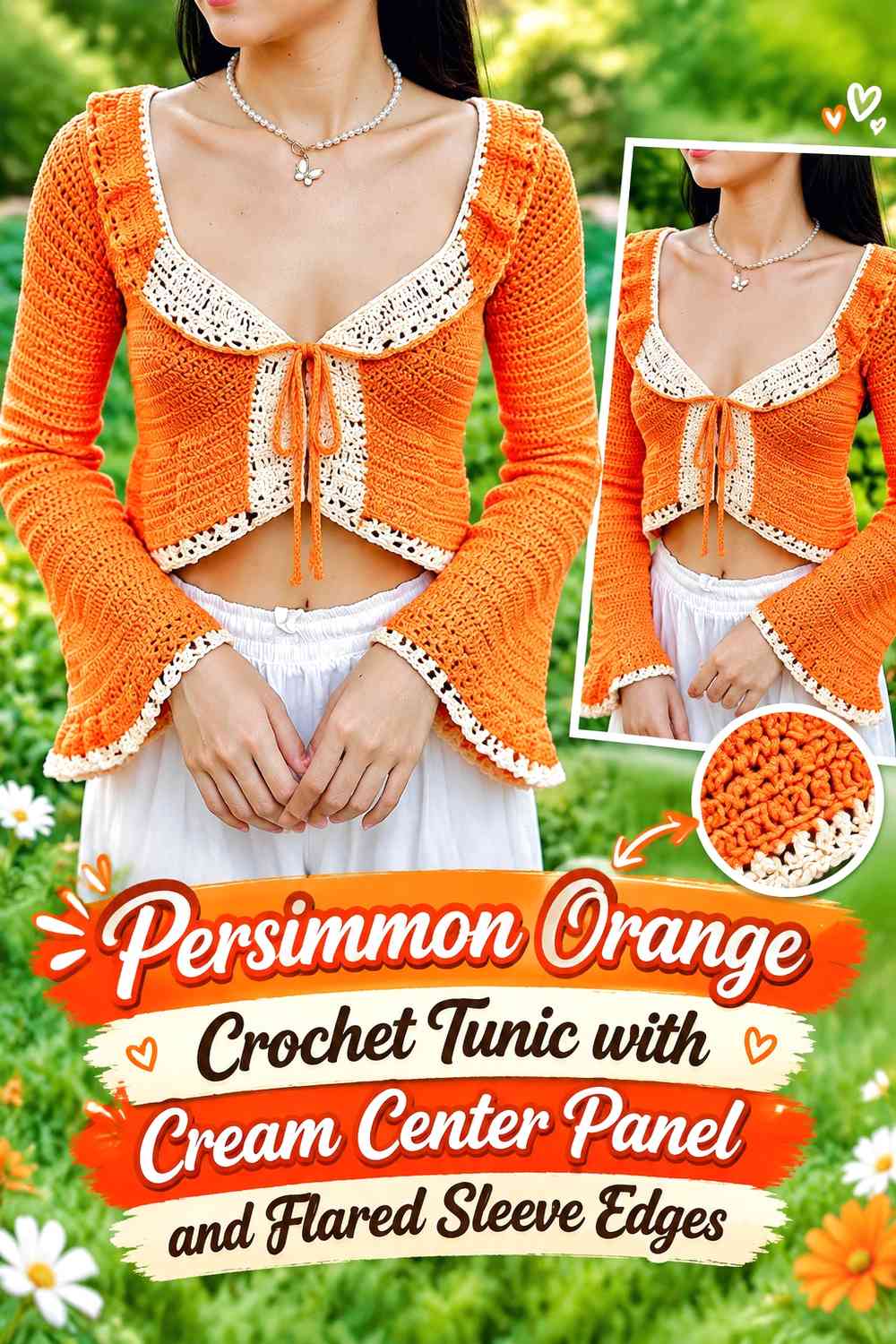
Use persimmon orange on the side panels and most of the sleeves, with cream running through a central torso section and returning at the outer cuff edges. This distributes cream more substantially while keeping orange dominant around the silhouette.
Persimmon Orange Can Frame the Cream Tunic Center
A darker orange field on both sides of a cream center creates a clear vertical structure through the longer body. Keep the cream panel broad enough to look deliberate rather than like a narrow decorative stripe.
This arrangement can make the tunic feel longer visually because the light center continues down the torso.
Cream Should Repeat from the Persimmon Orange Center Panel to the Cuffs
Use the same cream again at the flared sleeve edge so the center panel does not feel like an isolated color block.
The repeated light color can also help the widest part of each sleeve remain distinct against the orange upper arm.
Creator Credit: Chenda DIY
7. Cream Lace Crochet Tunic with Persimmon Orange Flared Sleeve Borders
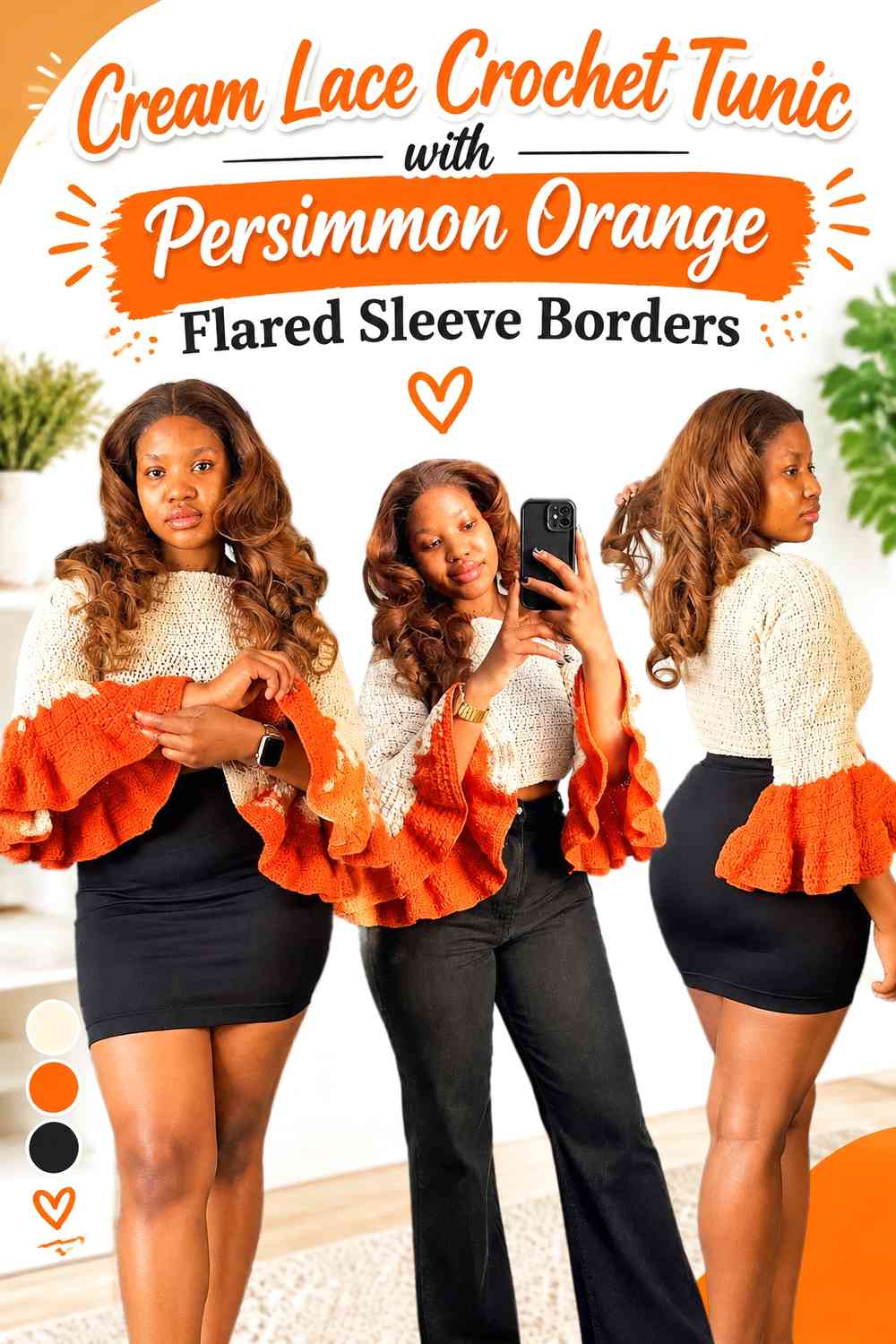
Let cream carry the lace or open-texture body and use persimmon orange around the lower sleeves and selected outer edges. This reverses the usual dark-body/light-trim arrangement and gives the flare a stronger finish.
Cream Should Stay Broad Across the Lace Tunic Body
A continuous cream field gives open crochet enough visual space and keeps the longer torso light. If you introduce orange repeatedly through every lace section, both the color and stitch pattern can become harder to read.
For winter layering, test the cream fabric over the base layer you plan to wear.
Persimmon Orange Can Give Cream Lace Sleeves a Defined Flare
Place orange around the expanding lower sleeve where the contrast can trace the width of the cuff. A matching narrow orange hem can connect that sleeve treatment to the tunic body.
Keep the border proportional to the openwork rather than making it so wide that it becomes a separate sleeve section.
Creator Credit: 🧶Mihankushea🧶
8. Persimmon Orange Crochet Pullover Tunic with Cream Retro Bands
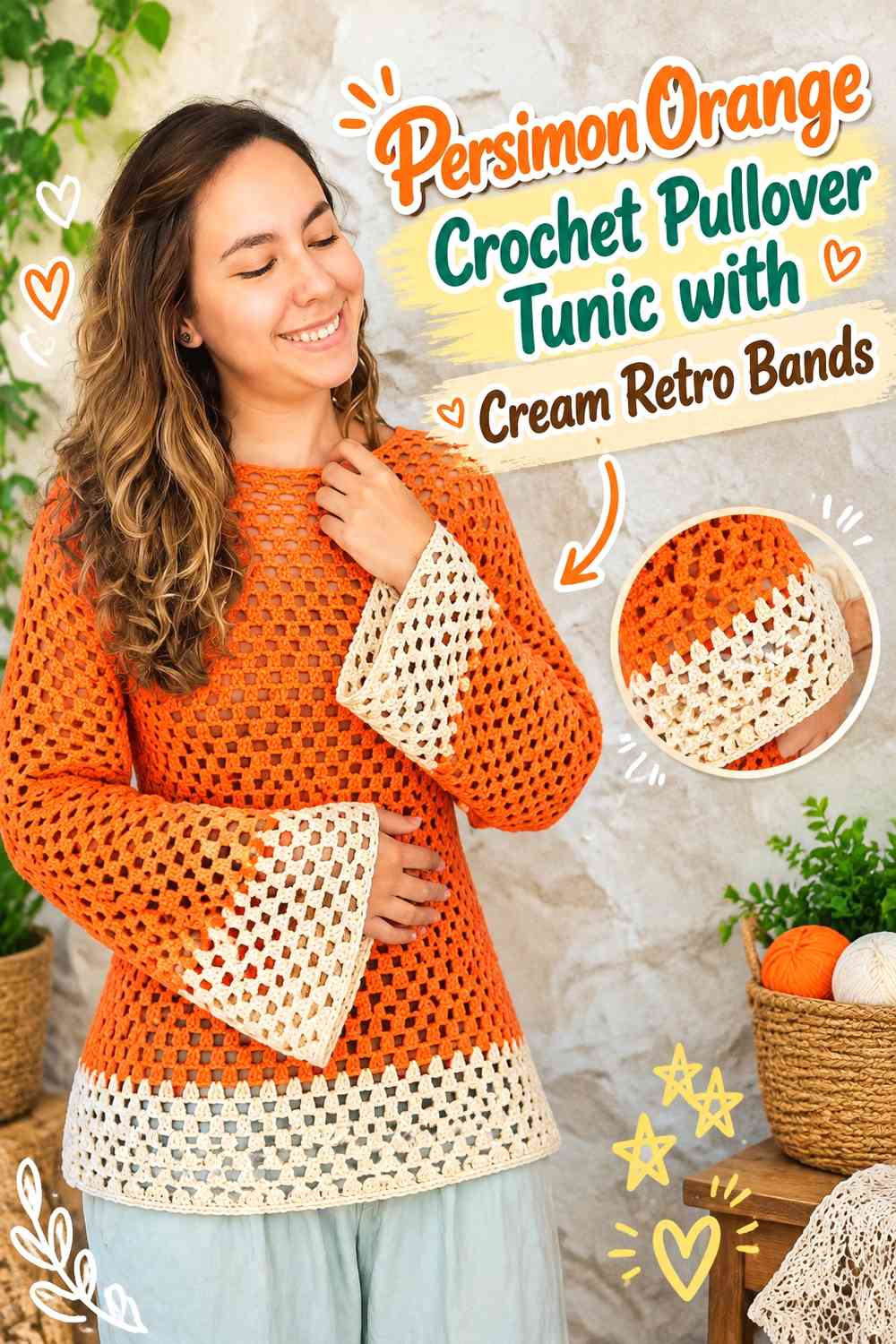
Use a straightforward persimmon-orange pullover body as the base and add wider cream bands only at selected garment landmarks such as the sleeve flare and lower tunic edge.
Persimmon Orange Keeps the Cream-Banded Tunic Visually Simple
Let orange run uninterrupted through most of the torso. A simple central body makes the cream bands easier to understand and puts more attention on the sleeve silhouette.
This is useful when you want retro color blocking without a heavily patterned garment.
Cream Bands Should Reinforce the Persimmon Orange Sleeve and Hem Proportions
Repeat cream at the cuffs and hem rather than placing one isolated band in the middle of the body. These outer boundaries naturally frame the longer tunic.
If the cream hem is broad, keep the cuff treatment similarly substantial enough to feel connected.
Creator Credit: Yarnmaide
9. Cream Wrap-Style Crochet Tunic with Persimmon Orange Flared Sleeves
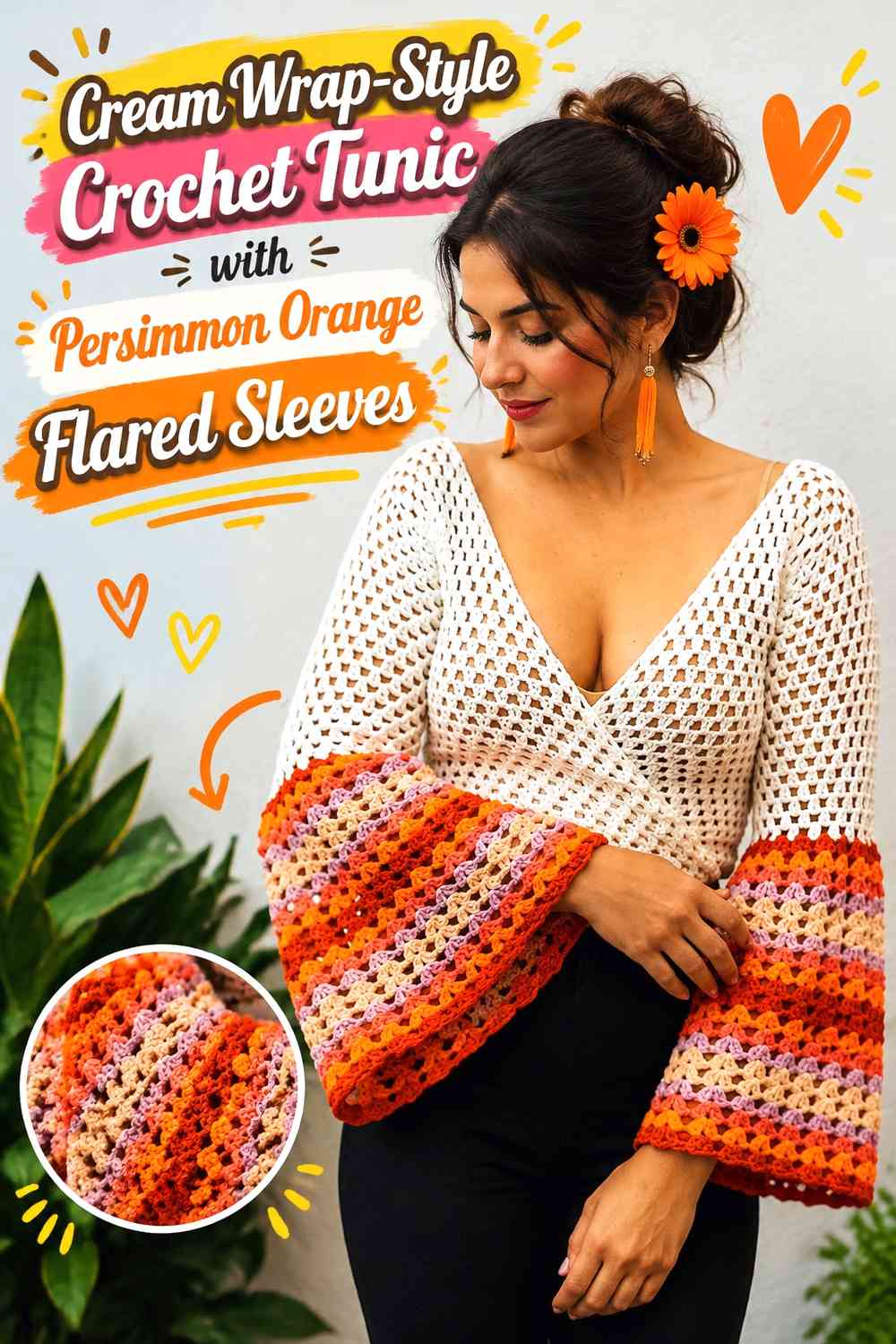
A wrap-inspired front introduces diagonal lines, so keep the palette relatively simple. Cream can cover the overlapping body sections while persimmon orange is concentrated in the sleeves and narrow trim.
Cream Keeps the Persimmon Orange Wrap Tunic from Becoming Too Busy
Use cream across the large front sections so the wrap line remains easier to follow. Several alternating body colors would compete with both the diagonal front and dramatic cuffs.
A fitted underlayer can provide additional winter coverage where the wrap or stitch pattern leaves more of the base garment visible.
Persimmon Orange Can Make the Cream Sleeve Flare the Strongest Retro Detail
Use orange through the lower sleeves and repeat it sparingly along one border or tie area. This creates a clear color link without surrounding every cream edge.
Keep the deepest orange concentration at the cuffs if sleeve drama is the main goal.
Creator Credit: Muchacha Ganchillo
10. Persimmon Orange Crochet Tunic with Cream Tie and Flared Sleeve Trim
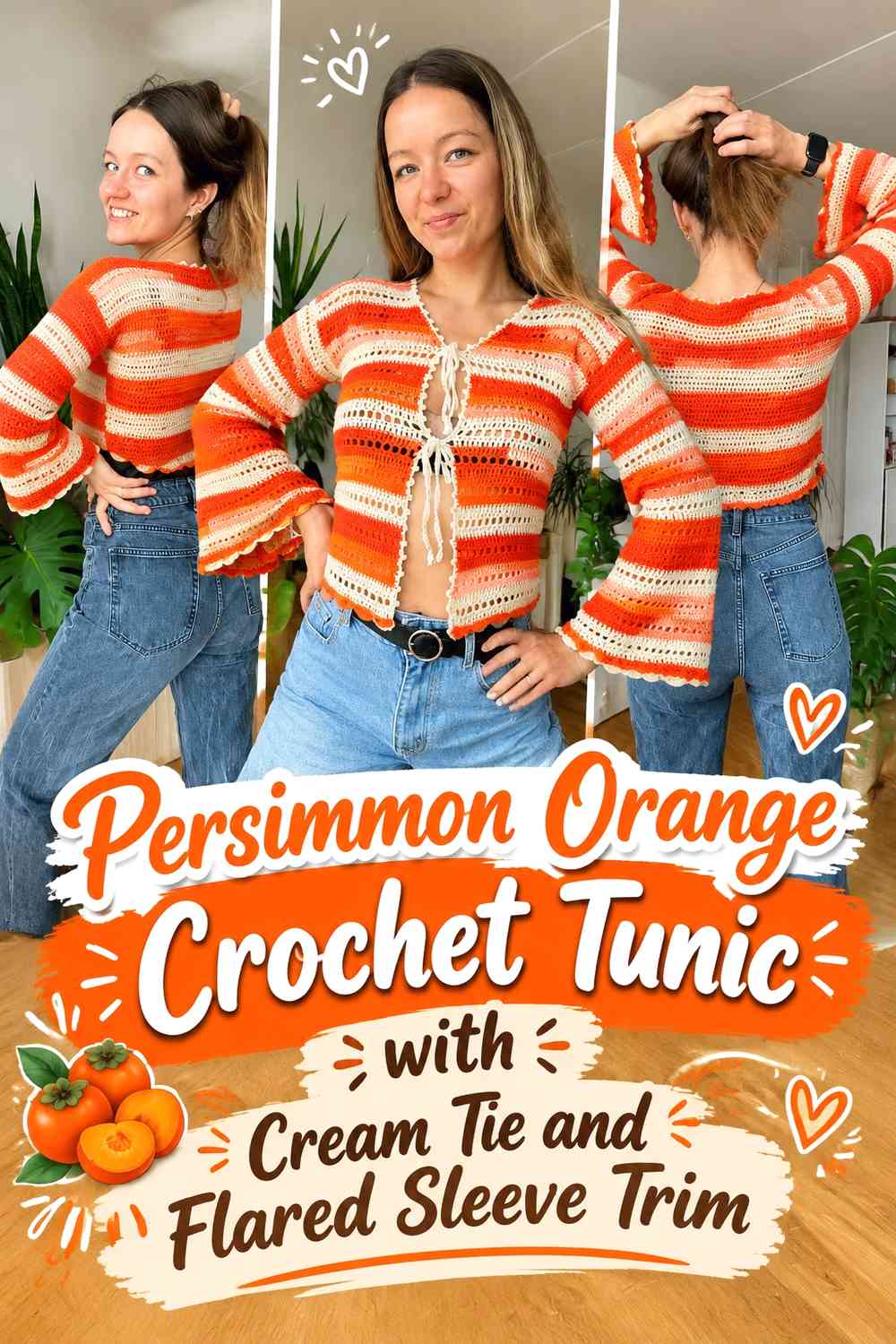
A tie-front-inspired construction can be adapted into a longer layering tunic concept when the tutorial’s fitting method permits. Use persimmon orange for most panels and cream on the ties, inner border, and lower sleeve flare.
Persimmon Orange Should Remain Broad Around the Cream Front Trim
Keep orange on the main front, back, and sleeve areas so the pale inner edge reads as a deliberate frame rather than one of many competing stripes.
On a longer tunic, extending the orange field makes the cream front detail more noticeable.
Cream Can Link the Persimmon Orange Ties to the Flared Sleeves
Repeating cream at both the moving front ties and sleeve edges creates continuity between two parts of the garment that naturally move during wear.
Avoid adding several more cream tassels or bands if the ties and cuffs already provide enough light contrast.
Creator Credit: by Kristine
11. Persimmon Orange and Cream Hexagon-Inspired Crochet Flared Sleeve Tunic
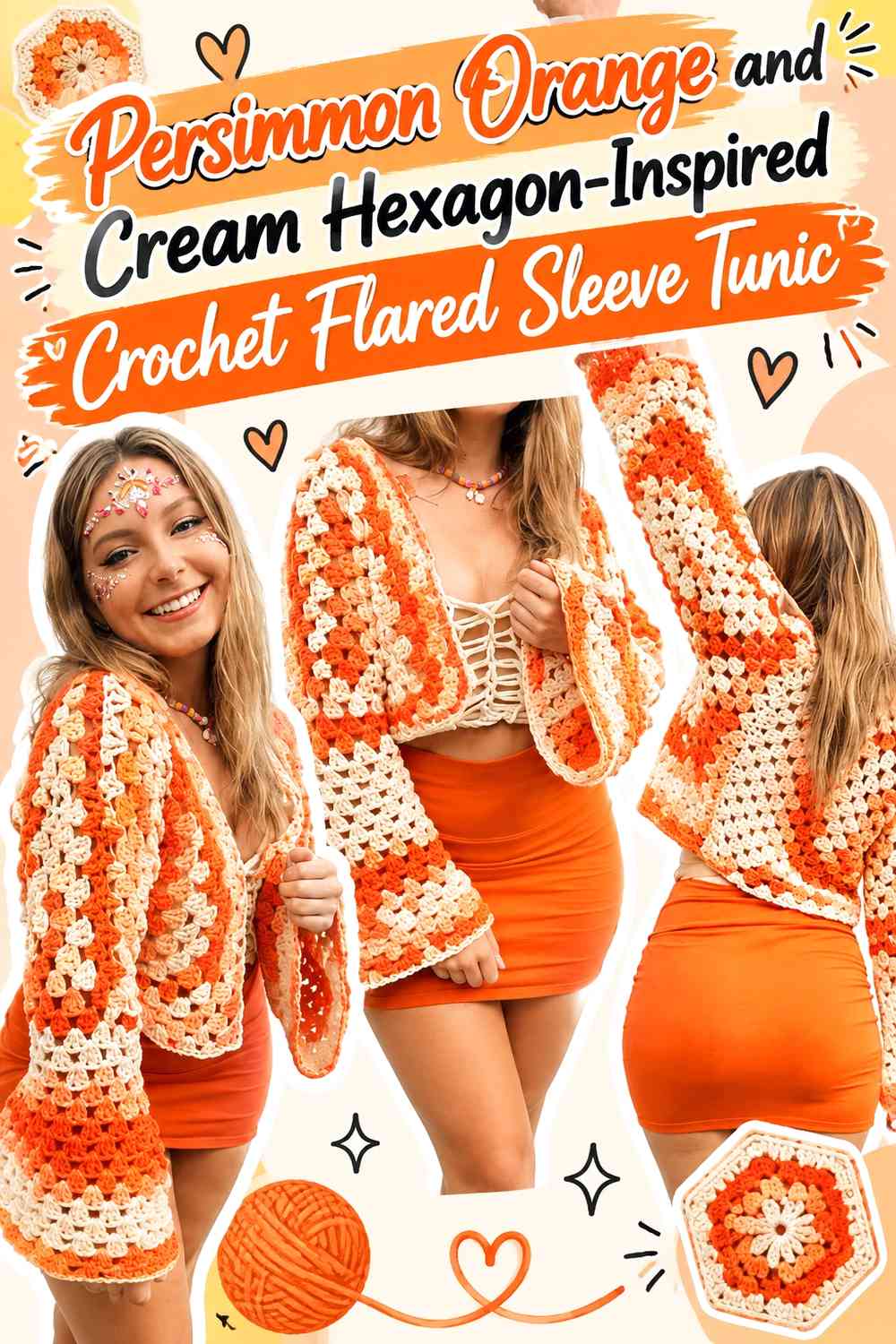
A hexagon-based garment creates different color-planning challenges because expanding a motif can affect several dimensions at once. Use persimmon orange as the dominant field and cream in selected outer sections rather than alternating every round.
Persimmon Orange Should Unify the Cream Hexagon-Inspired Tunic Sections
Keep large connected orange areas so the finished garment reads as one tunic rather than a collection of rings. Cream can appear around selected outer sections or sleeve edges.
When adapting body length, follow the creator’s construction logic rather than assuming that simply enlarging the original hexagon changes only the torso.
Cream Can Make Persimmon Orange Flared Sleeves Easier to Separate
Use cream toward the sleeve edge where the widening shape deserves definition. Repeating cream in a narrow body border can connect the flare to the rest of the garment.
Compare both garment halves regularly so their color changes remain aligned before joining.
Creator Credit: AstroKnotty
12. Cream Crochet Tunic with Persimmon Orange Bolero-Style Flared Sleeve Contrast
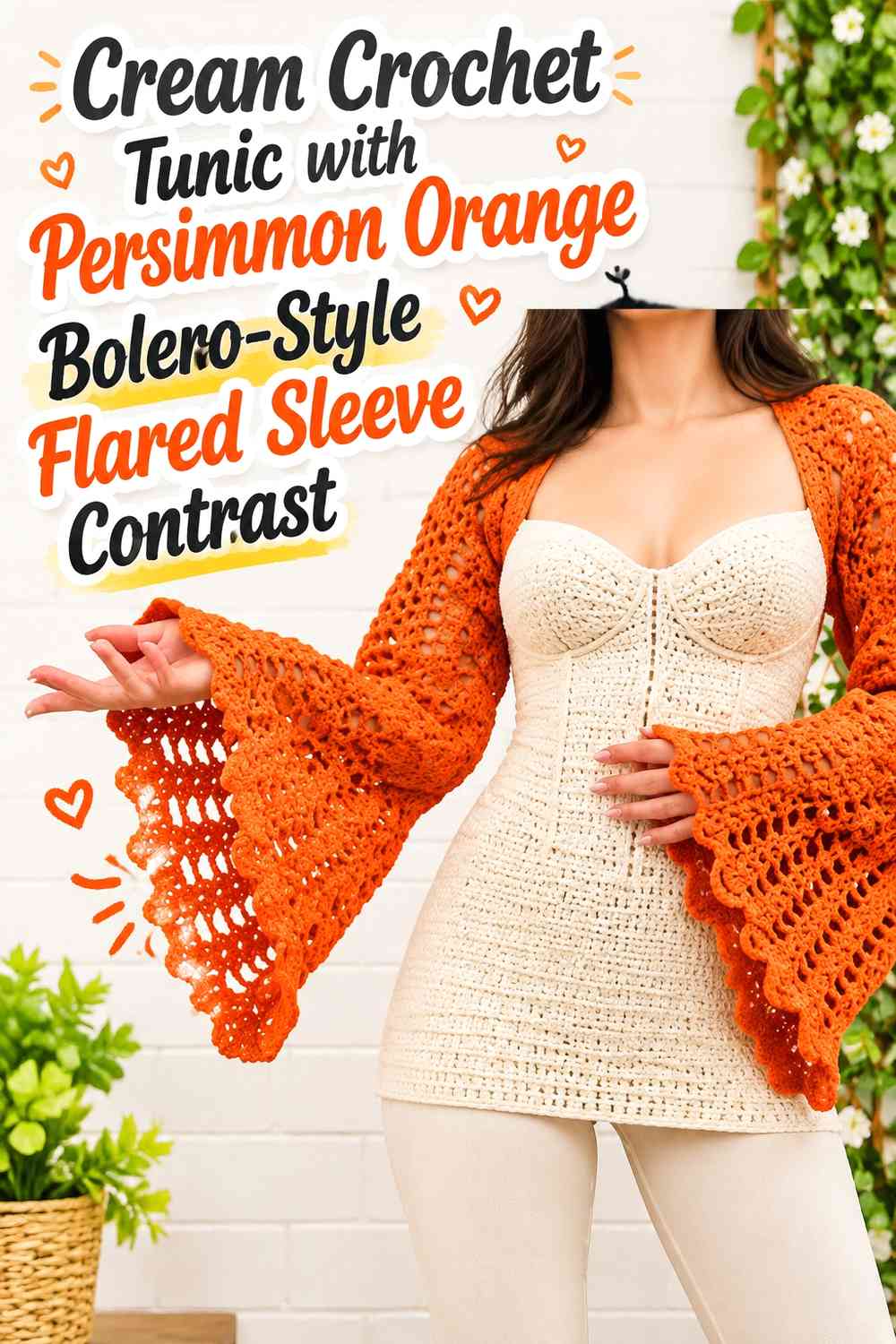
This idea uses a cream tunic body as the foundation and treats persimmon orange sleeves as a stronger contrasting layer. The inspiration comes from a bell-sleeve bolero construction, so the tunic body is an editorial adaptation rather than part of the source.
Cream Should Give the Persimmon Orange Sleeve Contrast a Quiet Torso Base
Keep the central body predominantly cream so the sleeves receive the strongest color emphasis. This works especially well when the sleeve shape is already dramatic.
A small orange neckline can help integrate the sleeves without turning the whole tunic into equal color blocking.
Persimmon Orange Should Cover Enough of the Cream Sleeve Area to Feel Deliberate
Use orange through a substantial portion of the sleeve instead of only the last narrow edge. The strong color then becomes part of the flared silhouette rather than a minor cuff detail.
Check how the wide sleeve fits beneath any winter outerwear you expect to use.
Creator Credit: Krystal Everdeen
13. Persimmon Orange Crochet Tunic with Cream Front Trim and Bell Sleeves
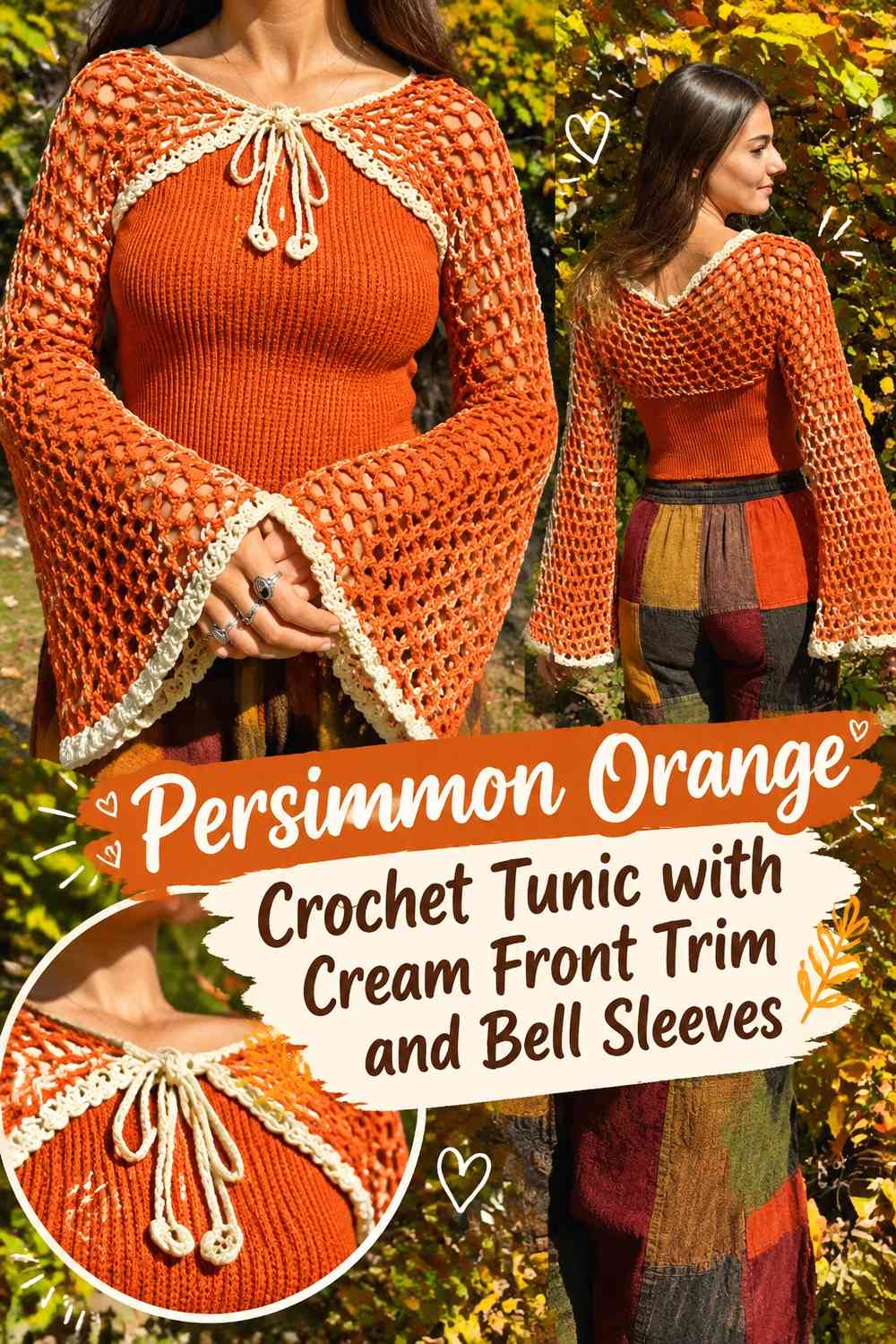
Use persimmon orange through the tunic body and most of the bell sleeves, then introduce cream at the front trim, ties, or selected borders. The lighter vertical front detail can balance the width created by substantial cuffs.
Persimmon Orange Can Balance the Cream Front with Strong Bell Sleeves
Keeping the body and sleeves orange creates a continuous field from shoulder to cuff. The cream front trim then provides a clear contrasting line down the torso.
This distribution is useful when the sleeves have enough movement that additional sleeve striping would feel excessive.
Cream Front Trim Can Lengthen the Look of the Persimmon Orange Tunic
A narrow pale line running vertically through the front gives the eye a different direction from the horizontally widening sleeves. Repeat cream lightly at the cuffs if you want those two features connected.
Avoid making every outer edge cream; selective placement keeps the front trim meaningful.
Creator Credit: Natalie
14. Cream Crochet Tunic with Persimmon Orange Lace Flared Sleeves
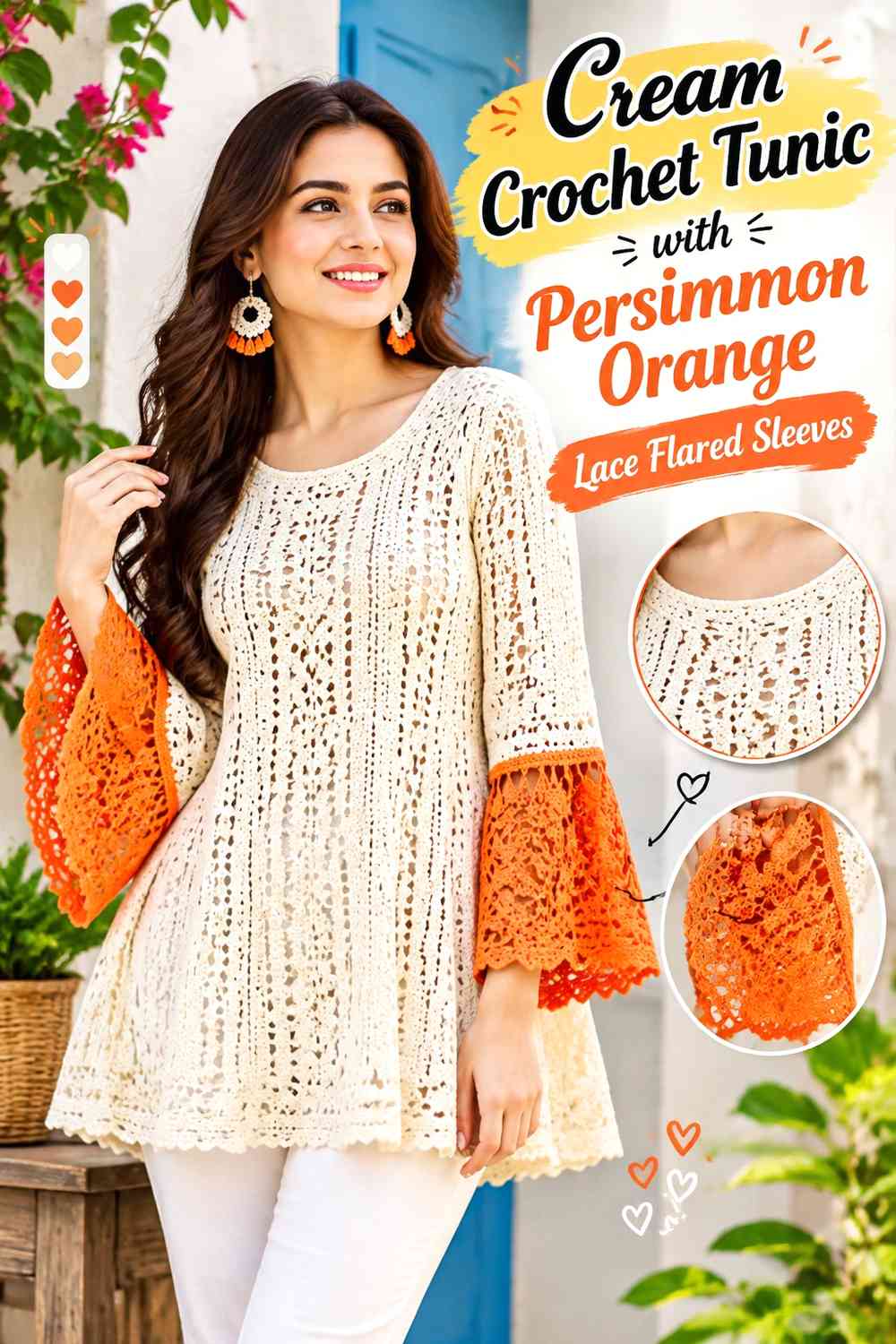
Make the longer body cream and use persimmon orange for lace or openwork sleeves that widen toward the wrist. The color change makes the sleeves clearly separate from the torso even before the flare reaches its widest point.
Cream Should Keep the Persimmon Orange Lace Sleeves Visually Separate
A plain or comparatively quiet cream body gives orange openwork a stable backdrop at the shoulder. Avoid carrying complex cream lace into every torso section if the orange sleeves are intended to be the feature.
The lighter body also makes a narrow orange hem an effective optional repeat.
Persimmon Orange Lace Needs a Winter Layering Plan Against Cream
Open flared sleeves may expose a significant amount of the garment underneath. Test the orange crochet over your intended base layer so you can see the complete winter color combination.
If the underlayer is visually strong, keep the cream body and orange sleeve treatment simple rather than adding a third accent.
Creator Credit: it’s erin b.
15. Persimmon Orange and Cream Mesh-Flare Crochet Winter Tunic
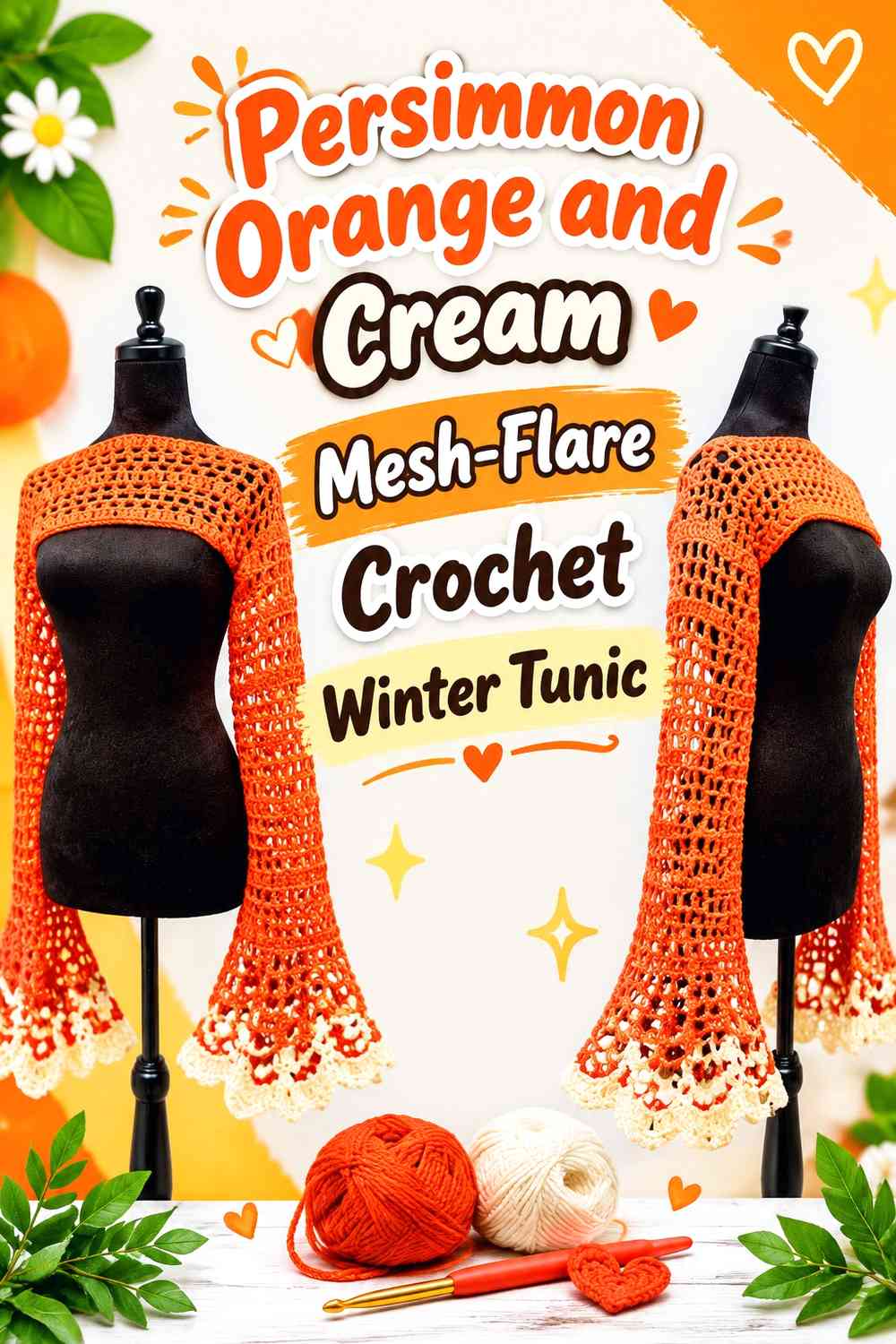
Use persimmon orange for the more substantial body and upper sleeve, then move into cream mesh or a lighter open section toward the flare. This gives the tunic a strong covered center while allowing the cuffs to look visually lighter.
Persimmon Orange Should Anchor the Cream Mesh-Flare Tunic Body
Keep orange through the longer torso and upper arm so the tunic does not become visually dominated by the airy sleeve finish. This gives the garment a strong center when worn over a winter base layer.
A small cream neckline can repeat the sleeve color without breaking the orange torso.
Cream Mesh Can Lighten the Persimmon Orange Sleeve Flare
Using cream where the sleeve widens emphasizes both the color transition and the change in fabric openness. Test the sleeve hanging naturally to see whether the mesh flare retains the amount of movement you want.
Because the source teaches a shrug rather than a tunic, follow its sleeve construction for the relevant concept and plan the longer body through a compatible garment method rather than assuming the shrug itself can simply be extended.
Creator Credit: Crochet Made By Eli
Which Persimmon Orange and Cream Retro Tunic Direction Should You Choose?
For the strongest retro color statement, start with a persimmon orange tunic body and cream flared cuffs. The darker warm body keeps the garment visually unified, while the lighter cuffs immediately emphasize the flare.
For a lighter winter layer, reverse the palette. Cream bodies with persimmon orange sleeves or borders make the orange details more concentrated and graphic.
If you want more color movement, granny-style sections, broad bands, center panels, or hexagon-inspired construction can distribute both shades more evenly. For lace and mesh sleeves, keep the torso palette simpler because the open fabric and visible underlayer already add another visual element.
Conclusion
Persimmon orange and cream are especially effective on a retro flared sleeve tunic because each color can reinforce a different part of the silhouette. Persimmon orange can anchor the longer body, side panels, and upper sleeves, while cream can highlight widening cuffs, necklines, hems, center panels, and openwork.
Choose an orange-dominant arrangement when you want a stronger vintage color statement. Use cream as the main body shade when the persimmon sleeves should receive more attention. For the clearest flared silhouette, place at least one important color transition where the sleeve begins to widen.
Before finishing both sleeves, try the garment on over the winter layer you expect to wear. Check tunic length, armhole comfort, sleeve weight, cuff width, and the location of every major color transition. Follow each credited tutorial for its demonstrated construction and treat any longer tunic extension that is not taught by the creator as a separate fitting adaptation.
Frequently Asked Questions
Should Persimmon Orange or Cream Be the Main Color of a Retro Crochet Tunic?
Use persimmon orange as the main shade when you want the long body to create the strongest retro statement. Use cream across most of the tunic when you want orange flared sleeves, panels, or edging to become the focal details.
Where Should Cream Start on a Persimmon Orange Flared Sleeve?
A useful option is to begin cream near the point where the sleeve starts widening. That lets the color change reinforce the flare. Starting cream only at the final edge gives a subtler result.
Can Persimmon Orange and Cream Work in Stripes on a Crochet Tunic?
Yes, but broader bands generally preserve the long tunic silhouette more clearly than many narrow stripes. Keep the sleeve flare in mind when positioning the bands so an important color transition does not disappear into the cuff.
How Can I Make a Persimmon Orange and Cream Tunic Look More Retro?
Use the palette to support recognizable garment lines rather than adding unrelated decoration. Flared cuffs, broad contrasting borders, simple stripes, cream necklines, and strong orange body panels can create a clear retro direction while keeping the garment wearable.
Should Cream Flared Cuffs Be Repeated Somewhere on a Persimmon Orange Tunic?
Repeating cream at the neckline or lower hem can make the cuffs feel more connected to the garment. The repeat can remain narrow; it does not need to occupy as much area as the sleeve flare.
Can an Openwork Persimmon Orange and Cream Tunic Work for Winter?
It can function as a winter layering piece, but open crochet should not be assumed to provide the same coverage as dense fabric. Plan the color of the fitted shirt, turtleneck, or other base layer because it may be visible through the tunic and sleeves.
How Do I Substitute a Different Orange for Persimmon Orange?
Choose another warm orange with a similar depth and muted or saturated character. Preserve the contrast relationship with cream: if the replacement becomes very pale, the two colors may no longer separate the cuffs, panels, or borders as clearly.
What Should I Check Before Making Both Flared Sleeves?
Complete enough of the first sleeve to assess its length, flare position, weight, and color placement while worn. Compare the cuff with your usual winter layers and outerwear, then use the same visual checkpoints when making the second sleeve so the pair remains balanced.