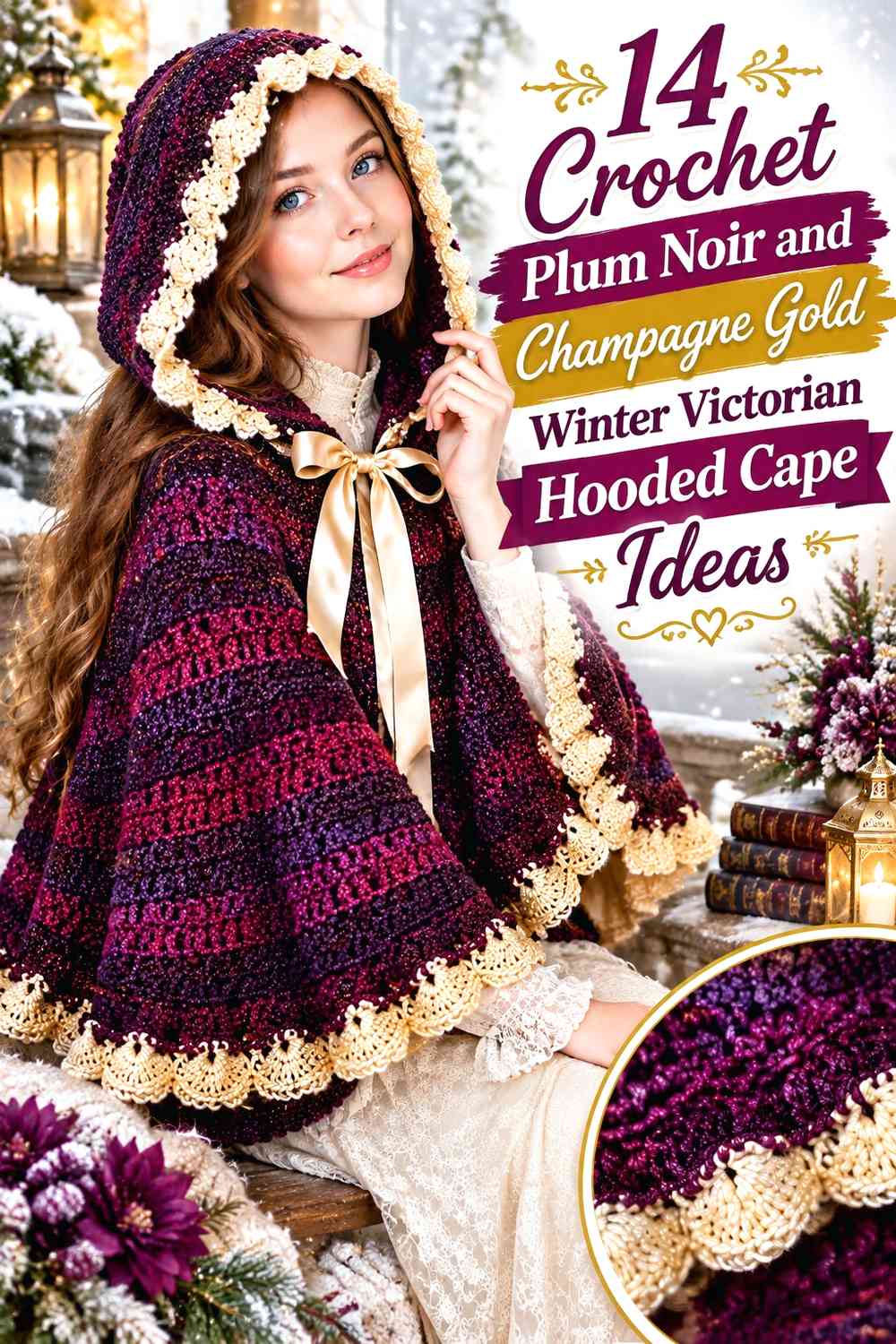

Plum noir and champagne gold can give a crochet hooded cape a rich winter look without requiring a complicated multicolor design. Plum noir works especially well across the broad cape body because it creates a deep visual base, while champagne gold can define the hood opening, neckline, closure, shoulder yoke, scalloped hem, or other details that remain visible when the cape is worn.
The Victorian direction here is styling inspiration rather than a claim that every cape reproduces a historical garment. Ribbon-style ties, decorative edging, high-contrast hood framing, scallops, ornate-looking center details, and structured shoulder treatments can move a modern crochet cape toward a Victorian-inspired appearance while the original tutorial remains the authority for construction.
Some credited tutorials demonstrate complete hooded capes or cloaks, while others focus on capes, capelets, or cape-poncho forms that provide useful shoulder and body constructions. When a source does not include a hood, use it for the construction it actually teaches rather than improvising an unsupported hood attachment.
Quick List
- Plum Noir Crochet Victorian Hooded Cape with Champagne Gold Hood Framing
- Plum Noir Crochet Cape with a Champagne Gold Statement Hood
- Plum Noir Crochet Hooded Cloak with Champagne Gold Front Edges
- Plum Noir Crochet Long Hooded Cape with Champagne Gold Lower Border
- Plum Noir Crochet Lace Hooded Cape with Champagne Gold Neckline Detail
- Plum Noir Crochet Fairy-Tale Hooded Cape with Champagne Gold Pointed Trim
- Plum Noir Crochet Victorian Hooded Cape with Champagne Gold Scalloped Hem
- Plum Noir Crochet Ribbon-Front Hooded Cape with Champagne Gold Ties
- Plum Noir Crochet Textured Hooded Cape with Champagne Gold Hood Band
- Plum Noir Crochet Short Hooded Cape with Champagne Gold Shoulder Yoke
- Plum Noir Crochet Cape-Poncho with Champagne Gold Hood and Hem Repeats
- Plum Noir Crochet Draped Hooded Cape with Champagne Gold Center Closure
- Plum Noir Crochet Winter Hooded Cape with Champagne Gold Radial Accents
- Plum Noir Crochet Minimalist Hooded Cape with Champagne Gold Edge Detail
Let Plum Noir Carry the Main Cape Before Adding Champagne Gold
A hooded cape has several large visual zones: hood, shoulder area, front opening, lower body, and hem. If champagne gold appears equally across every one of them, it can quickly stop functioning as an accent.
Start by deciding where plum noir should remain uninterrupted. A broad plum body with a plum hood creates the darkest and most dramatic direction. Champagne gold can then identify one or two high-value areas, such as the face-framing hood edge and the lower hem.
A lighter alternative is to make the hood champagne gold while leaving the cape body plum noir. Because the hood sits close to the face and remains visible even when the cape overlaps at the front, it naturally becomes a strong focal feature.
Use Champagne Gold Where Plum Noir Victorian Details Need Definition
Dark crochet can make small structural details less obvious from a distance. Champagne gold can help define a front opening, shoulder yoke, scalloped edge, or closure without requiring every textured stitch to change color.
Keep the color placement connected to the garment. If gold appears around the hood, repeating a smaller amount at the neckline can make sense. If it appears mainly at the hem, a narrow repeat near the closure can connect the palette without surrounding the entire cape in gold.
Check Plum Noir and Champagne Gold Around the Hood and Shoulders
The hood is usually one of the strongest visual areas of a hooded cape. A wide champagne gold border can significantly change the apparent size of the hood, while a narrow outline emphasizes the shape without taking over.
Shoulder color matters too. A champagne gold yoke creates more visual width near the top of the garment, while keeping the shoulders plum noir and moving gold toward the lower edge draws attention downward. Compare the cape while worn rather than planning all the color distribution with the fabric lying flat.
1. Plum Noir Crochet Victorian Hooded Cape with Champagne Gold Hood Framing
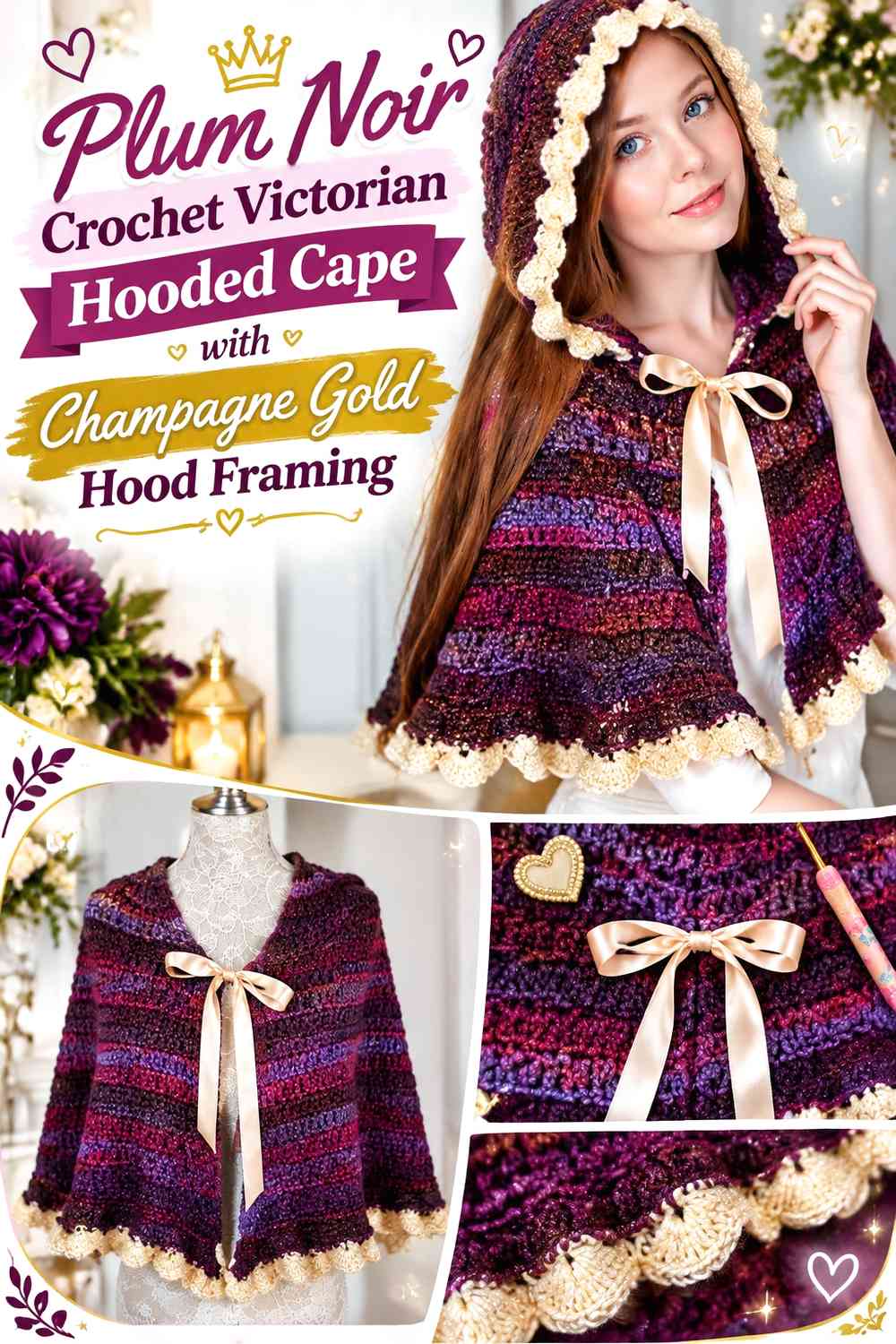
Let plum noir cover the hood and cape body, then trace only the face opening with champagne gold. This creates one continuous dark silhouette while the lighter warm edge emphasizes the hood whenever it is worn up.
The same gold can repeat narrowly at the neckline or front closure, but the broad shoulder and body areas should remain plum noir if the goal is a dark winter cape.
Champagne Gold Hood Framing Defines the Plum Noir Face Opening
Use champagne gold continuously around the visible hood opening rather than scattering small gold sections across the hood surface. The uninterrupted border makes the face-framing shape easier to follow.
Keep the trim controlled in width so it emphasizes the plum noir hood instead of visually replacing its outer edge.
Plum Noir Should Continue From the Hood Into the Cape Shoulders
Carrying plum noir through the hood, neckline, and shoulder area gives the garment a strong continuous dark foundation.
If champagne gold also appears at the hem, leave a substantial plum noir section between the upper and lower accents so the cape does not turn into several equal horizontal bands.
Champagne Gold Can Repeat at the Plum Noir Front Closure
A small gold tie, button-area accent, or narrow center-front treatment can connect the hood edging to the body.
Keep this second gold feature visually smaller than the face-framing border so the hood remains the main focal area.
Creator Credit: Selina Veronique Crochet
2. Plum Noir Crochet Cape with a Champagne Gold Statement Hood
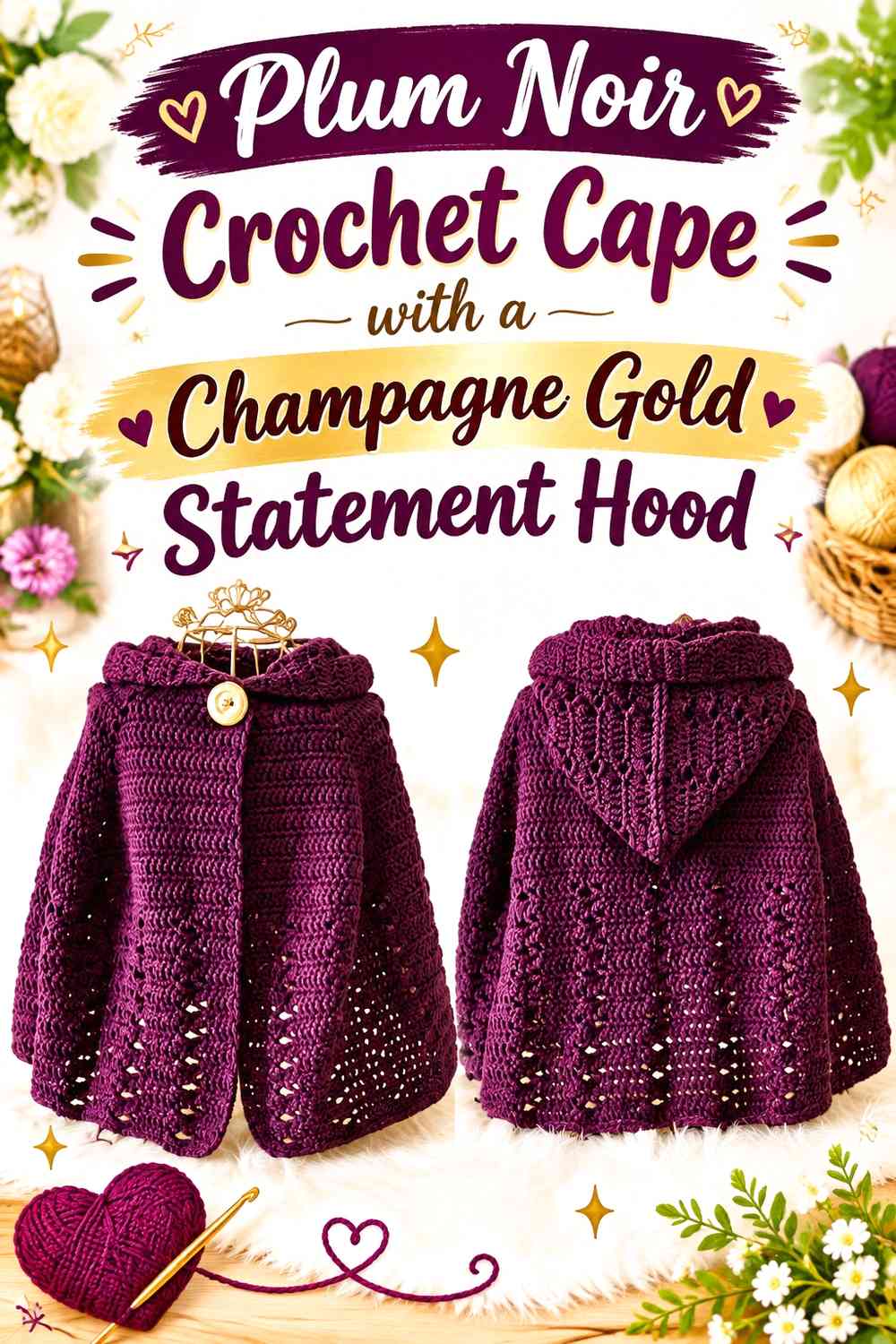
Reverse the hood relationship by keeping the cape body plum noir and working the hood in champagne gold. Because the hood occupies a relatively concentrated area, this creates strong contrast without dividing the large cape body into multiple colors.
A narrow champagne gold repeat at the lower edge can connect the hood to the rest of the garment, but it should remain clearly secondary.
Champagne Gold Hood Becomes the Focal Point Above the Plum Noir Cape
Let most or all of the hood stay champagne gold if you want a deliberate two-block composition. Tiny alternating plum-and-gold hood stripes would weaken the clarity of the contrast.
The plum noir shoulders beneath it provide the dark transition that makes the lighter hood stand out.
Plum Noir Cape Body Needs Enough Area Beneath the Champagne Gold Hood
Keep the shoulder spread and lower body primarily plum noir. A large gold yoke directly beneath an already gold hood could make the entire upper garment feel much lighter than the lower cape.
Use the dark body to anchor the brighter neckline area.
Creator Credit: Alina Crochet & Knitting
3. Plum Noir Crochet Hooded Cloak with Champagne Gold Front Edges
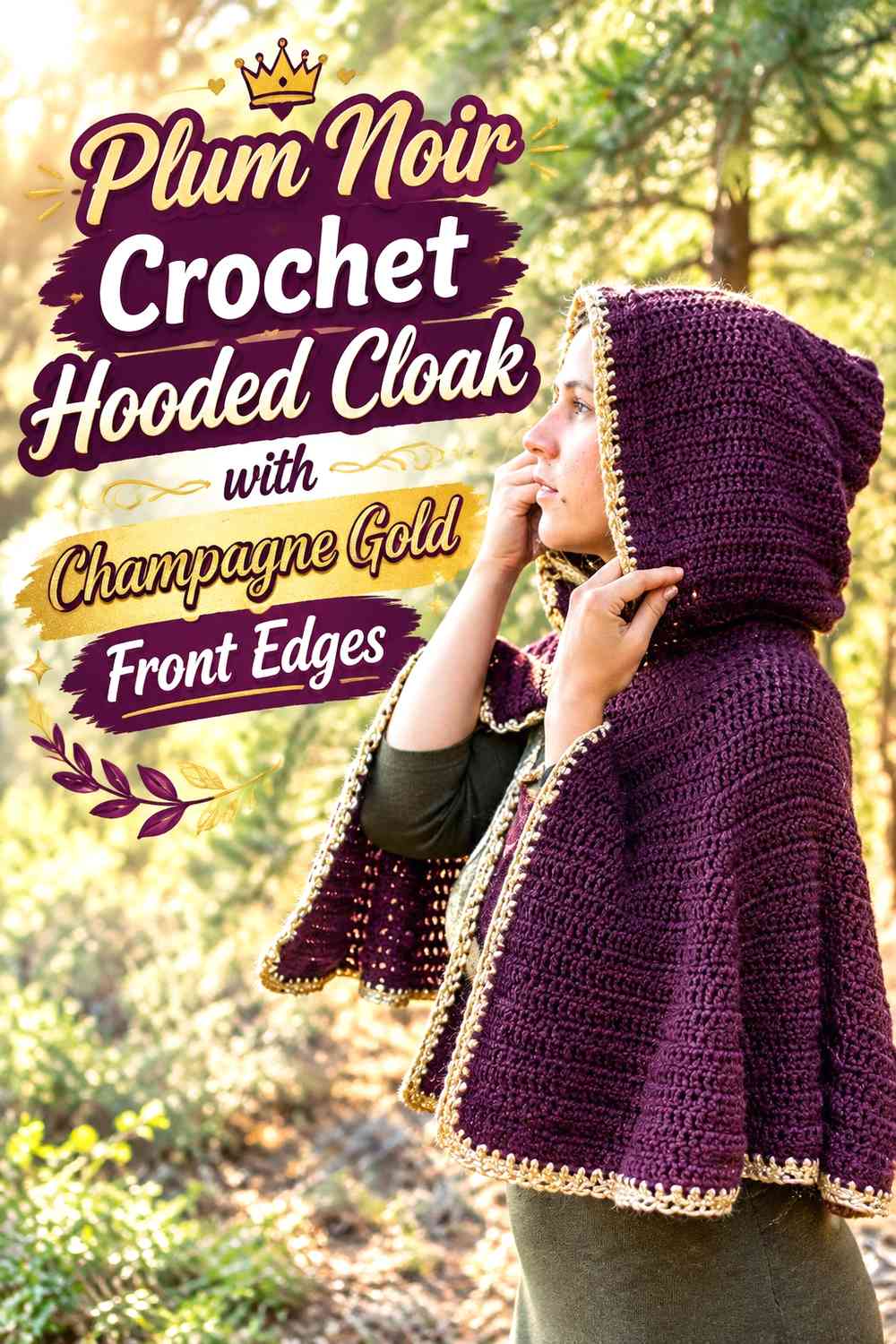
Use plum noir over the hood and cloak body, then place champagne gold along the two front edges. The vertical gold lines guide the eye from the neckline toward the lower cape and can give the open front a more formal appearance.
This treatment is especially useful when you want the cape to stay predominantly dark but need more definition than one small clasp or tie provides.
Champagne Gold Front Edges Lengthen the Plum Noir Hooded Silhouette
Keep the gold trim consistent on both sides so the open front looks balanced. Because the lines run vertically, even relatively narrow edging can remain noticeable across a long cape.
Avoid adding another equally wide gold stripe through the center of the body.
Plum Noir Hood Keeps Champagne Gold Front Trim From Becoming Top-Heavy
Leaving the hood plum noir allows the front edging to begin at the neckline without surrounding the entire face in gold.
A small champagne gold hood detail can still be added, but it should connect visually to the front trim rather than become a second competing border.
Champagne Gold Should Follow the Plum Noir Opening Cleanly
Inspect the finished edges while the cape is hanging or worn. Uneven contrasting trim is easier to notice than uneven plum noir edging because the color difference creates a clear visual reference.
Follow the source construction for the actual front finishing and use the color change only as an adaptation.
Creator Credit: Crochet with illJay
4. Plum Noir Crochet Long Hooded Cape with Champagne Gold Lower Border
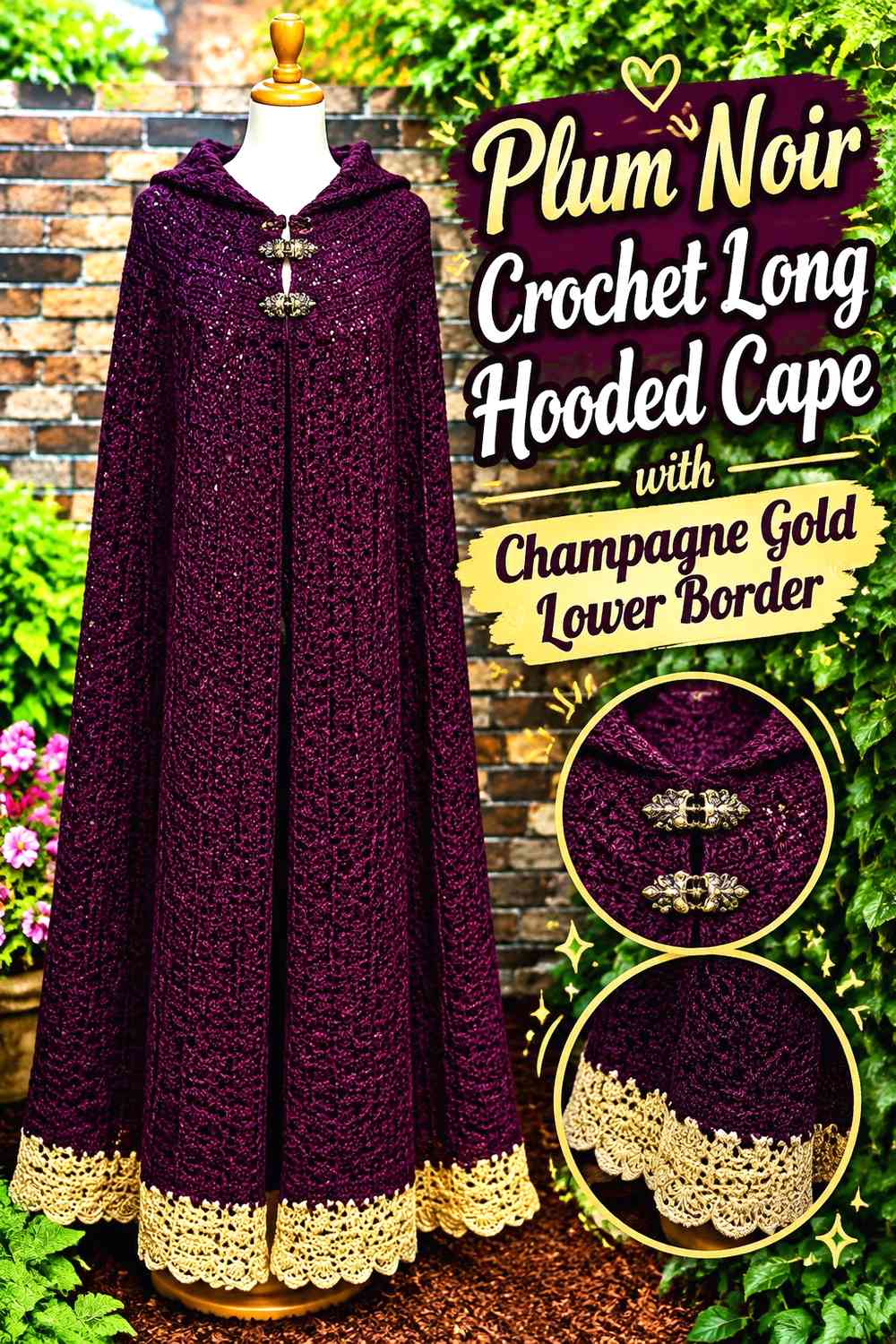
Keep the hood, shoulders, front edges, and most of the cape body plum noir, then reserve champagne gold for a substantial but controlled lower border. This moves the warm accent away from the face and creates weight at the bottom of the silhouette.
It is useful when you want the hood to remain dark and dramatic rather than strongly outlined.
Champagne Gold Lower Border Grounds the Plum Noir Cape
Place the gold where the cape meets the lower visual edge rather than adding several narrow stripes throughout the body.
A single continuous border creates more impact and keeps the plum noir section above it broad and uninterrupted.
Plum Noir Should Dominate Above the Champagne Gold Hem
The gold border should look like finishing, not half of the cape. On a longer garment, even a moderately deep lower section can cover a large visual area.
Step back and compare the full length before deciding whether the border needs additional width.
Champagne Gold Neck Detail Can Connect the Plum Noir Hood to the Hem
A very small gold neckline or closure detail can prevent the lower border from feeling isolated.
Keep the upper repeat restrained so the main gold emphasis remains at the hem.
Creator Credit: Bag-O-Day Crochet
5. Plum Noir Crochet Lace Hooded Cape with Champagne Gold Neckline Detail
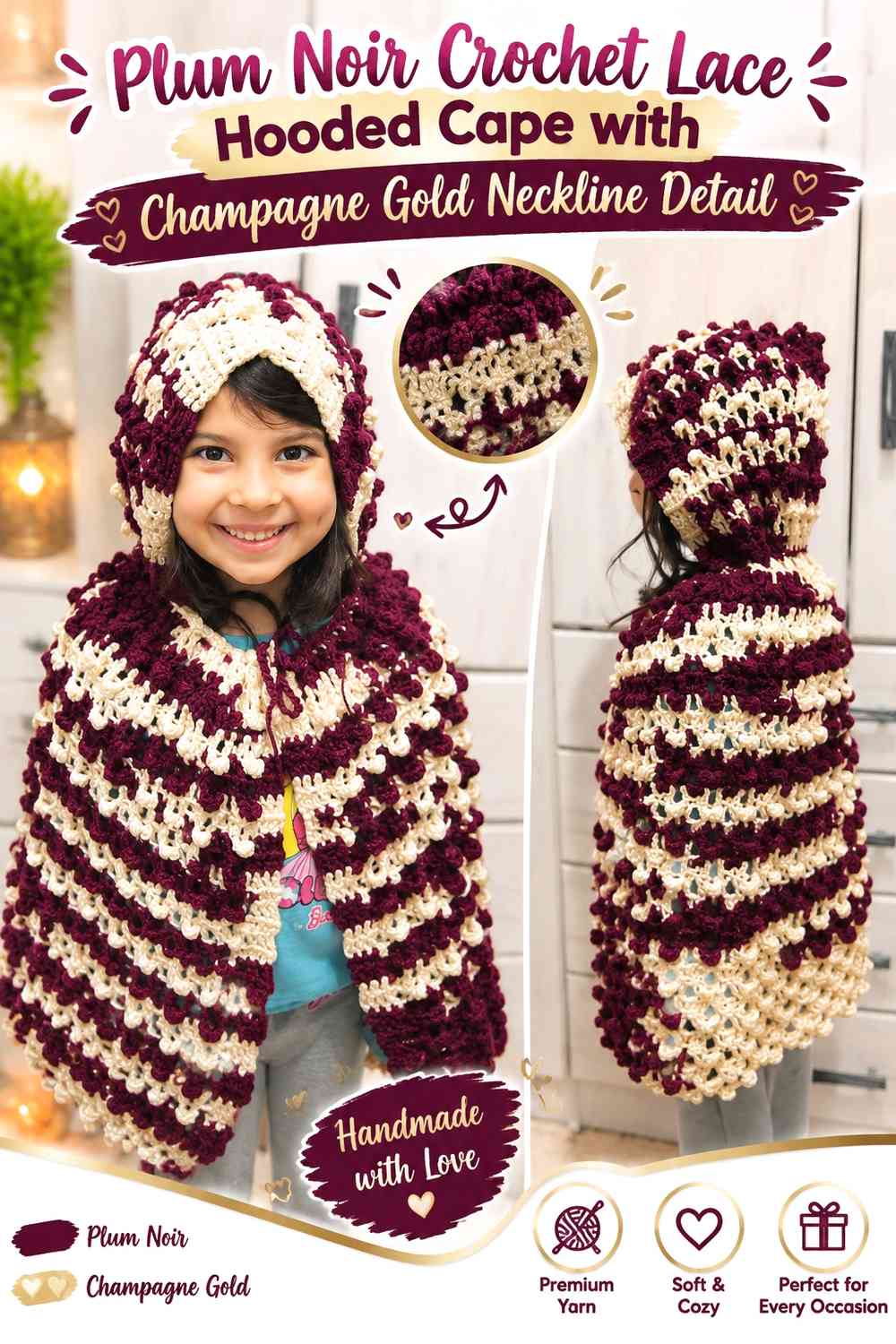
A lace-influenced cape already contains substantial visual movement, so keep most of the fabric plum noir and place champagne gold around the neckline, tie, or narrow hood transition.
This lets stitch openings provide the surface detail while the second color identifies the upper structure.
Champagne Gold Neckline Separates the Plum Noir Hood From the Cape
Use the gold where the hood and body visually meet. The contrast can make the neckline easier to distinguish even when the hood and cape share the same plum noir yarn.
Avoid extending the gold into every lace repeat.
Plum Noir Lace Needs Broad Areas Without Champagne Gold Interruptions
Openwork creates its own pattern through light and shadow. Frequent gold changes can make the lace harder to read, particularly over clothing that shows through the openings.
Keep the major lace sections one color and let gold mark the structural boundary.
Creator Credit: Meladora’s Creations for Crochet
6. Plum Noir Crochet Fairy-Tale Hooded Cape with Champagne Gold Pointed Trim
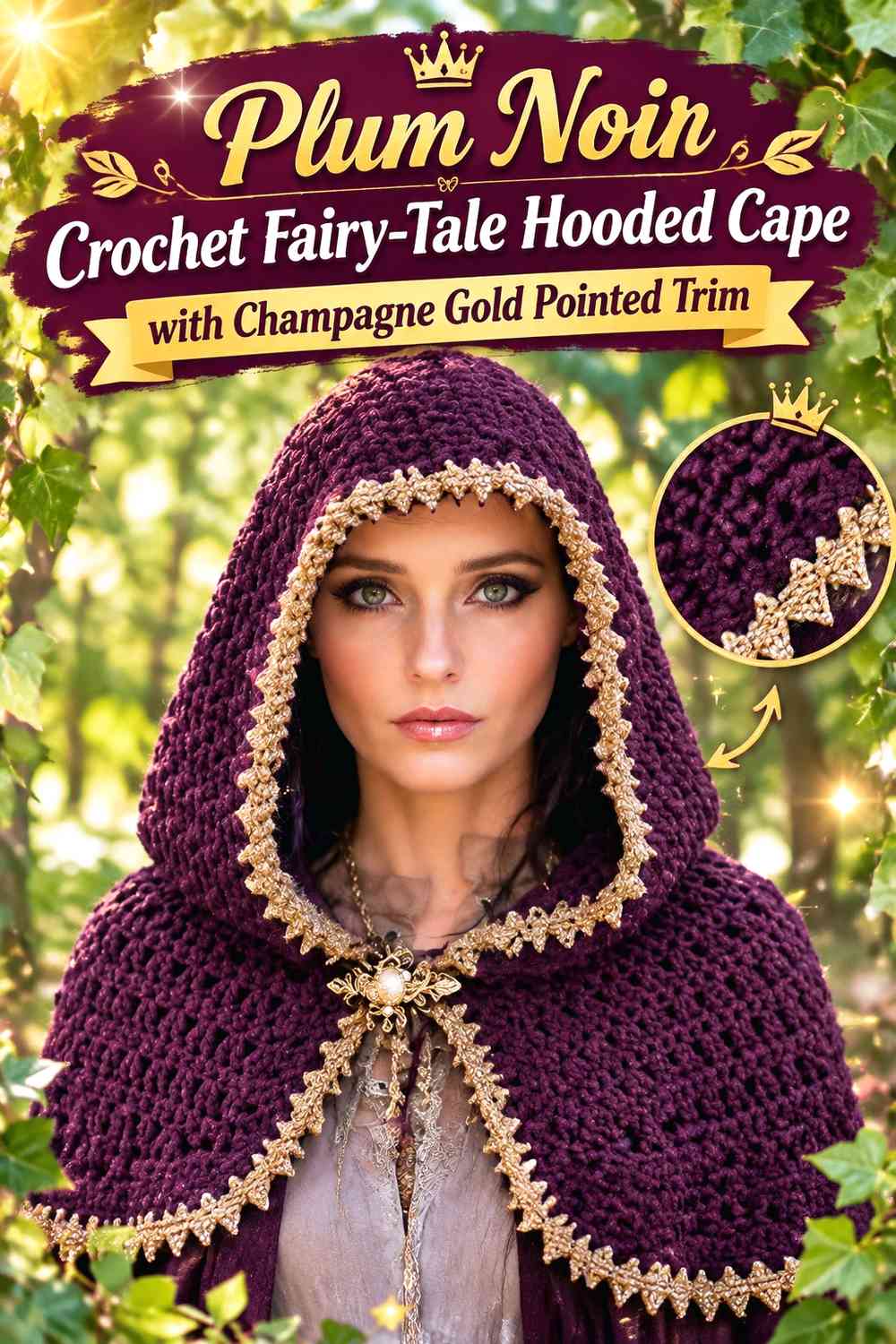
Use plum noir across the main cloak and add champagne gold to selected points or angular sections along the lower edge. Instead of one continuous gold band, the accent appears at intervals around the hem.
This gives the perimeter more movement while keeping most of the garment dark.
Champagne Gold Points Need Consistent Placement Against Plum Noir
Repeat the gold at deliberate intervals so the lower edge looks planned. Randomly sized gold areas can make a symmetrical cape feel visually uneven.
Lay or hang the cape fully before deciding which points receive the accent.
Plum Noir Between Champagne Gold Points Protects the Dark Silhouette
Leave substantial plum sections between each gold feature. Those dark intervals prevent the warm edge details from merging into one continuous bright border.
The contrast becomes stronger because each gold section has its own surrounding plum field.
Champagne Gold Should Not Compete With the Plum Noir Hood
Keep the hood largely plum noir if the pointed hem is already visually active.
A tiny gold hood-edge repeat is enough if you want a connection between the top and bottom.
Creator Credit: Jayda InStitches
7. Plum Noir Crochet Victorian Hooded Cape with Champagne Gold Scalloped Hem
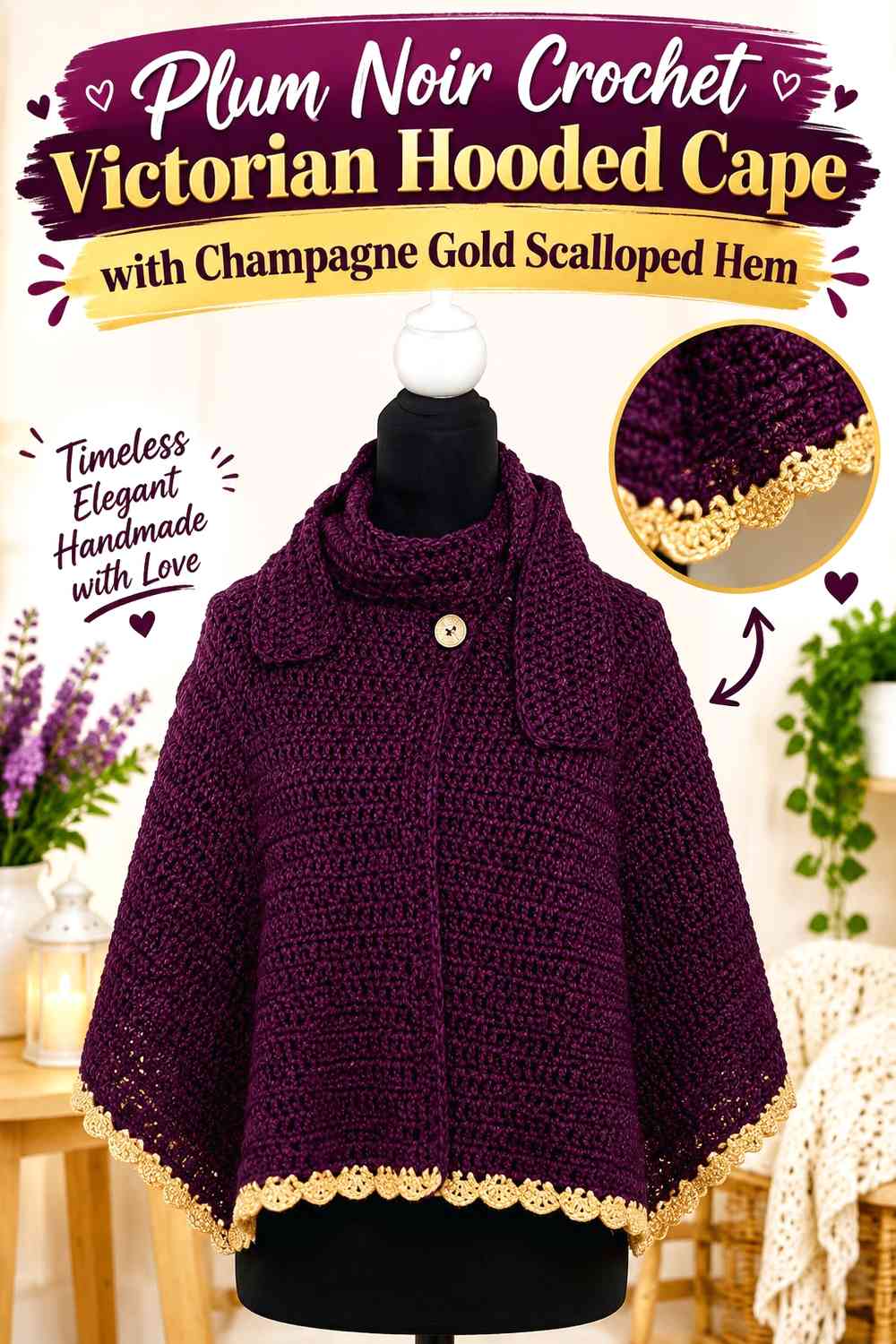
Work the shoulder and cape body in plum noir, then use champagne gold only on the scalloped or decorative lower edge. The contrast makes the shaped hem easier to see and gives the garment an ornate Victorian-inspired finish without adding motifs across the entire body.
For a hooded adaptation, keep the hood comparatively plain so the lower decorative edge remains important.
Champagne Gold Scallops Make the Plum Noir Hem More Visible
Use gold on the actual shaped edge rather than in a broad straight band immediately above it. This allows the color and silhouette to reinforce the same feature.
Check that the scallops remain visually consistent after the cape drapes over the shoulders.
Plum Noir Body Should Stay Quiet Above Champagne Gold Scallops
A broad plum body provides enough negative space for the ornate edge to stand out.
If the cape surface also contains texture, avoid tracing every raised section in gold. Let the lower border carry the strongest decorative contrast.
Creator Credit: Crochet with Clare
8. Plum Noir Crochet Ribbon-Front Hooded Cape with Champagne Gold Ties
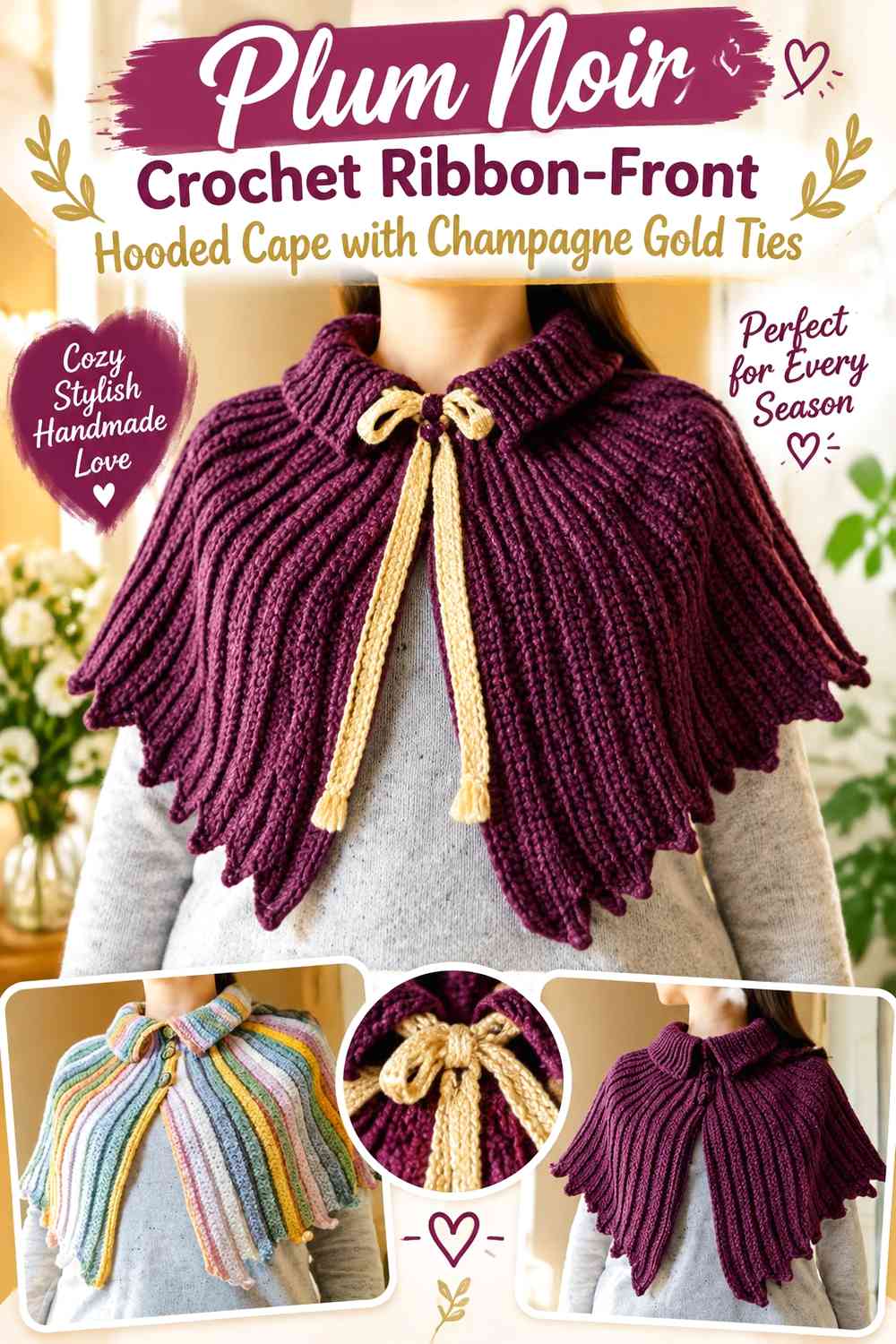
Use plum noir for the cape body and planned hood, then make champagne gold the color of the front ties or ribbon-inspired closure. This keeps the accent concentrated around the neckline where it remains visible when the cape is closed.
It is one of the more restrained ways to create a Victorian-inspired palette because the gold does not need to occupy a large crochet area.
Champagne Gold Ties Create a Focal Point on the Plum Noir Front
Keep the tie area visually simple enough that the champagne gold remains easy to identify.
Several additional gold medallions around the neckline may make the closure feel less special.
Plum Noir Should Remain Broad Behind Champagne Gold Ribbon Details
The darker front panels act as the backdrop for the warm ties. Preserve enough plum surface on both sides of the closure to keep the contrast strong.
For a hooded version, a narrow gold hood edge can connect to the ties without changing the entire hood color.
Champagne Gold Placement Should Respect Plum Noir Cape Fit
Treat the closure location as part of the source construction rather than moving it simply for color balance.
Once the cape sits correctly, use champagne gold to emphasize that established fastening point.
Creator Credit: Sabrina Melodieuse
9. Plum Noir Crochet Textured Hooded Cape with Champagne Gold Hood Band
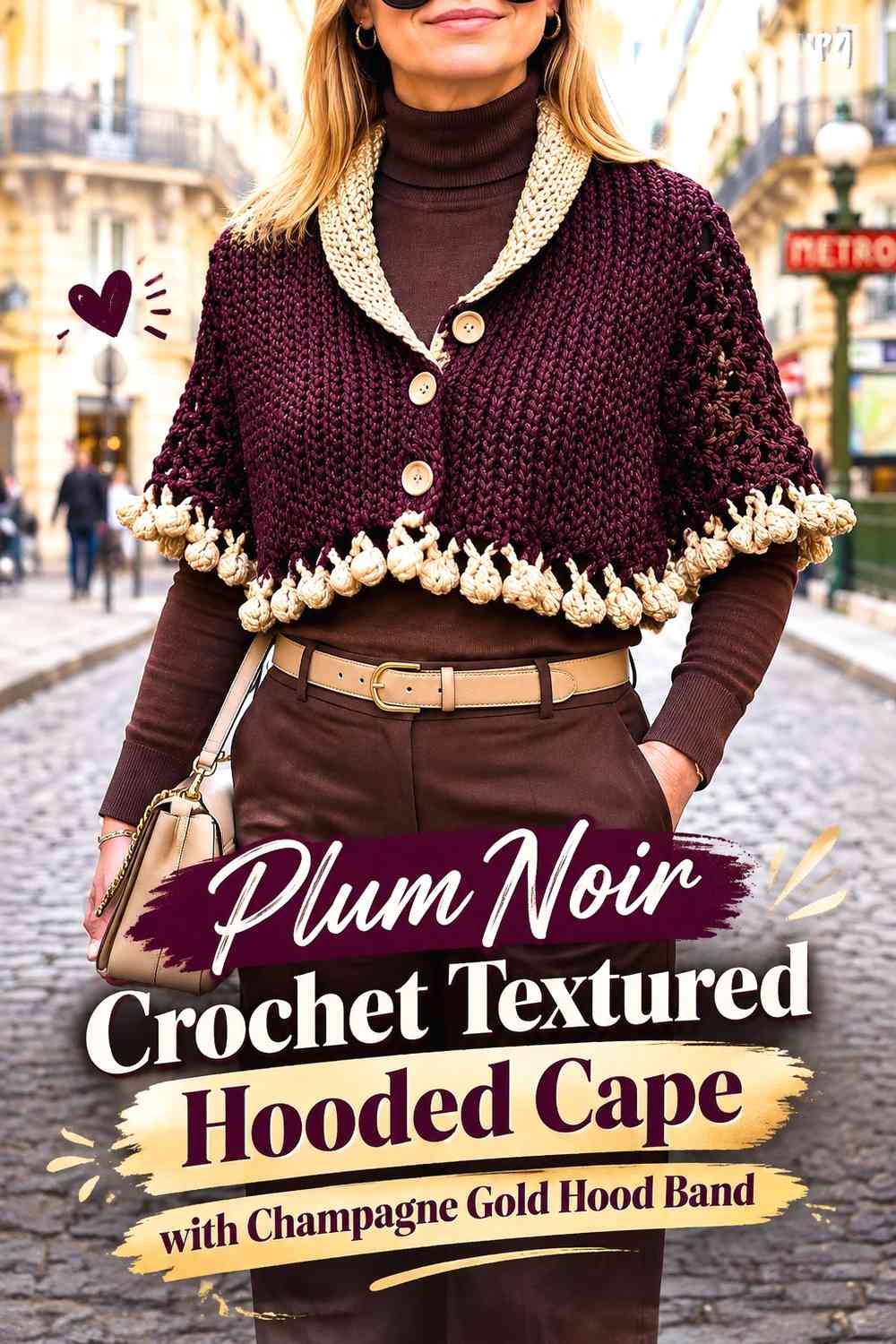
A textured cape body can stay entirely plum noir while champagne gold appears as one substantial band around the hood opening or lower hood edge. This keeps the color contrast high on the garment without interrupting the body texture.
If the cape construction also includes decorative edging, keep that edging plum noir so the hood remains the gold focal point.
Champagne Gold Hood Band Should Be Wider Than a Tiny Plum Noir Accent
If the hood band is meant to define the palette, give it enough width to read as a deliberate color block rather than an accidental finishing row.
The exact proportion should be judged against the finished hood rather than by a universal measurement.
Plum Noir Texture Needs Distance From the Champagne Gold Hood
Keep the shoulder and upper cape plum noir so the gold hood has a clean boundary beneath it.
A large gold shoulder band immediately below the hood would create one broad light upper section and reduce the contrast between hood and cape.
Creator Credit: Handwork diy
10. Plum Noir Crochet Short Hooded Cape with Champagne Gold Shoulder Yoke
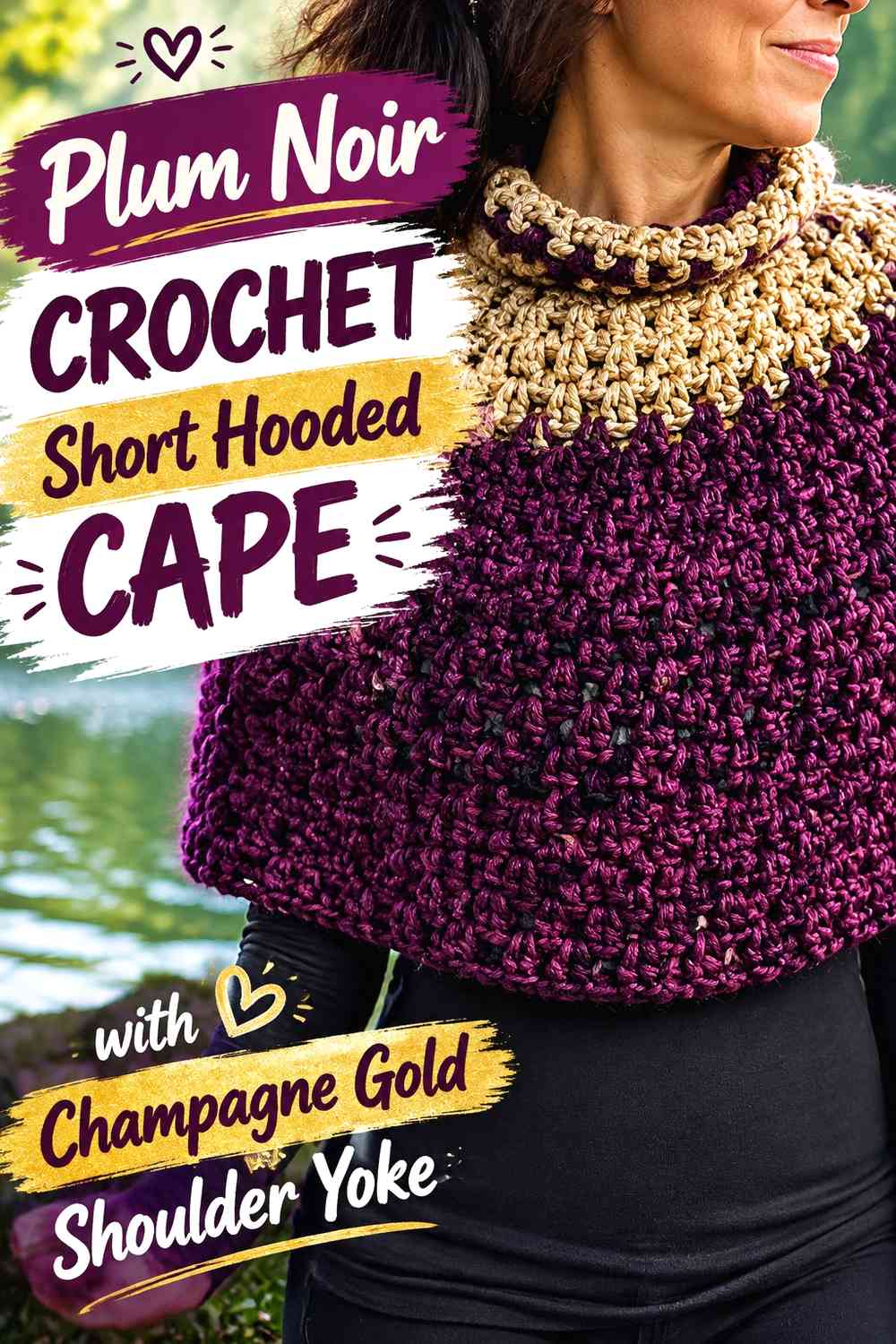
Place plum noir on the hood and lower cape, then use champagne gold across a defined shoulder-yoke section. The warm band draws attention to the upper garment without surrounding the face completely.
This is especially effective on a shorter cape because the shoulder area represents a larger share of the overall silhouette.
Champagne Gold Yoke Visually Widens the Plum Noir Shoulders
A horizontal gold section can make the shoulder line more noticeable, so keep its depth controlled if you want the cape to remain elongated rather than top-heavy.
Compare the yoke while worn over the clothing you expect to layer underneath.
Plum Noir Hood Should Stay Dark Above the Champagne Gold Yoke
Keeping the hood plum noir creates a clear three-part progression: dark hood, gold shoulder feature, dark lower cape.
Avoid adding another broad gold hem if you want the yoke to remain the main accent.
Champagne Gold Can Repeat Narrowly at the Plum Noir Closure
A small closure or edge repeat connects the yoke to the center front without creating another large gold area.
This works particularly well when the cape has a clearly defined fastening point.
Creator Credit: Francesca Uncinettando Crochet&Love
11. Plum Noir Crochet Cape-Poncho with Champagne Gold Hood and Hem Repeats
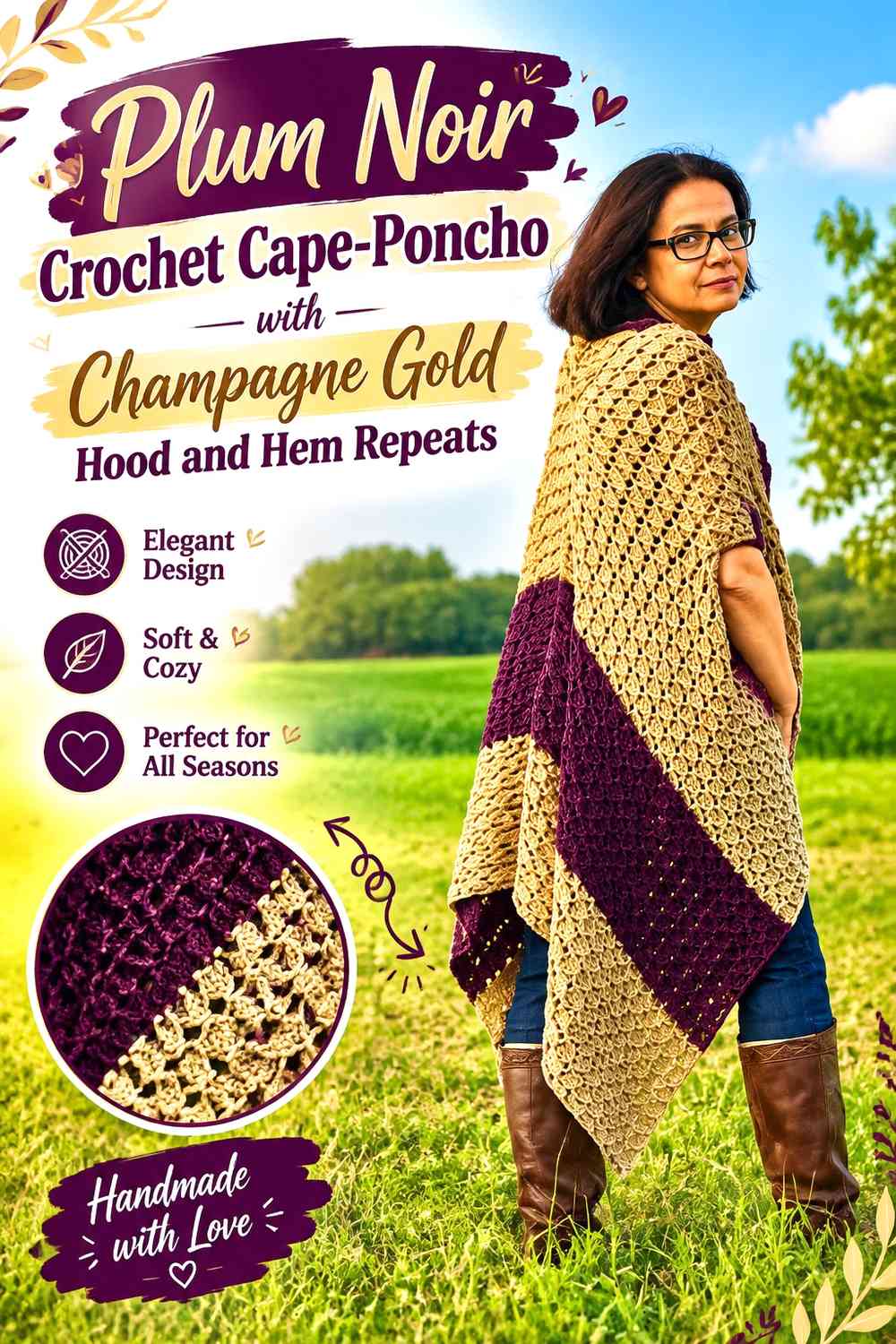
Use plum noir for most of a fuller cape-poncho body, then repeat champagne gold in two separated zones: the hood frame and the lower edge.
The repeated gold gives the long vertical silhouette a clear top and bottom without interrupting the middle.
Champagne Gold Hood Edge Should Echo the Champagne Gold Hem
Keep the two accents related in visual strength. If the hood border is extremely narrow but the lower border becomes very broad, they may look like unrelated color decisions.
They do not need identical proportions, but they should clearly belong to the same palette plan.
Plum Noir Middle Section Needs Space Between Champagne Gold Repeats
The dark center is what prevents the cape from looking like stacked bands.
Let plum noir remain uninterrupted across most of the shoulder-to-hem distance, especially if the garment has noticeable texture.
Creator Credit: oana boutique crochet &knitting
12. Plum Noir Crochet Draped Hooded Cape with Champagne Gold Center Closure
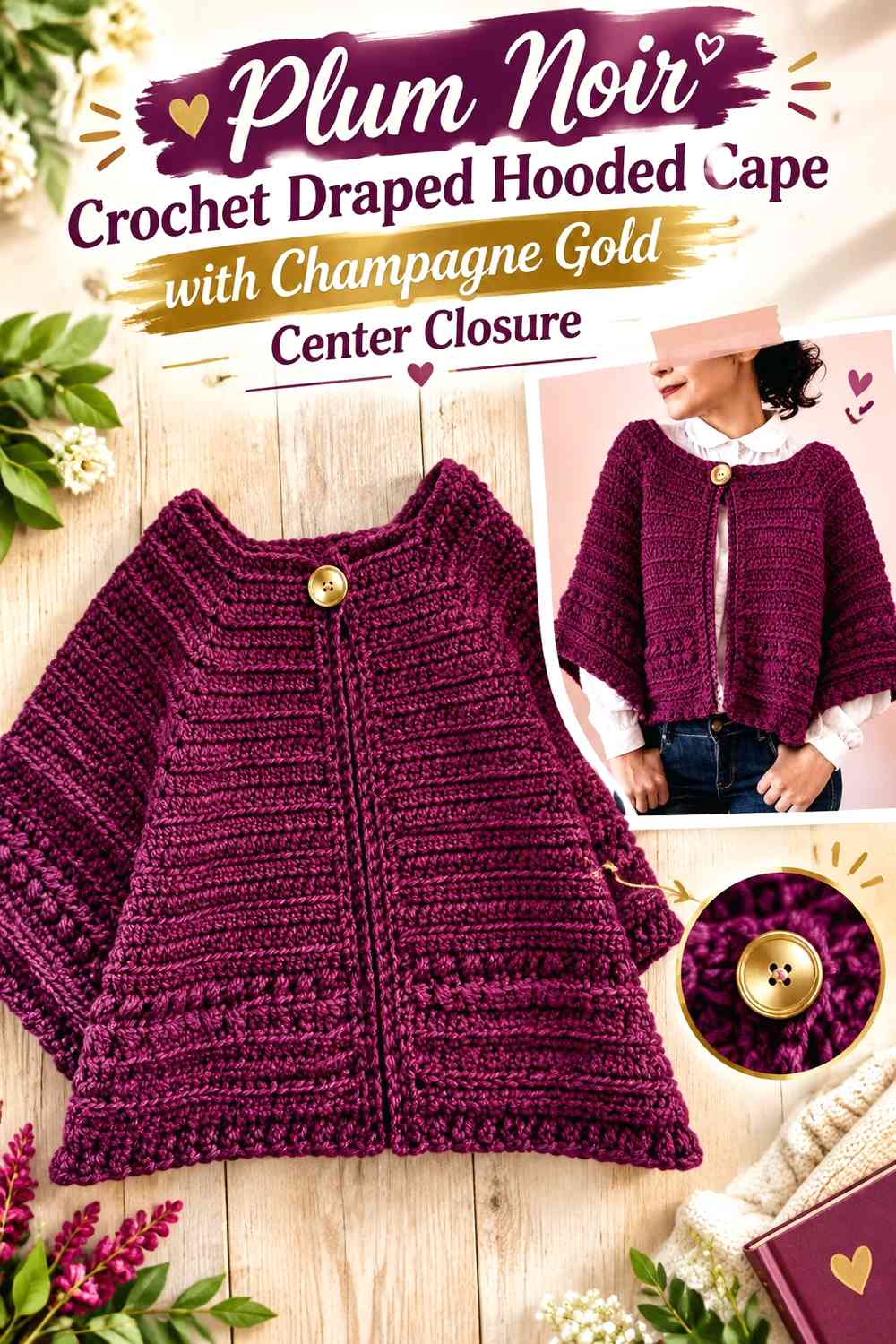
Keep the draped cape and planned hood plum noir, then make the champagne gold closure the only significant contrasting feature. A button area, tie, decorative tab, or other tutorial-supported fastening zone can become the center focus.
This is a good direction when you want the garment to look dark and formal rather than heavily embellished.
Champagne Gold Closure Needs a Quiet Plum Noir Background
Keep the nearby neckline and front panels mostly plum noir so the small gold feature remains easy to find.
Adding gold to every front edge may turn the closure into just one more part of a large border system.
Plum Noir Drape Should Remain the Main Visual Feature
A flowing cape already creates folds and shadows. Let the dark color emphasize that movement rather than dividing it into many stripes.
The champagne gold center then becomes a precise point of contrast instead of a competing surface pattern.
Champagne Gold Should Follow the Plum Noir Construction’s Actual Fastening Point
Use the tutorial’s established front orientation and closure logic. Color can highlight that structure, but it should not be used as a reason to relocate a fastening point without construction guidance.
Creator Credit: Kiri Kiri
13. Plum Noir Crochet Winter Hooded Cape with Champagne Gold Radial Accents
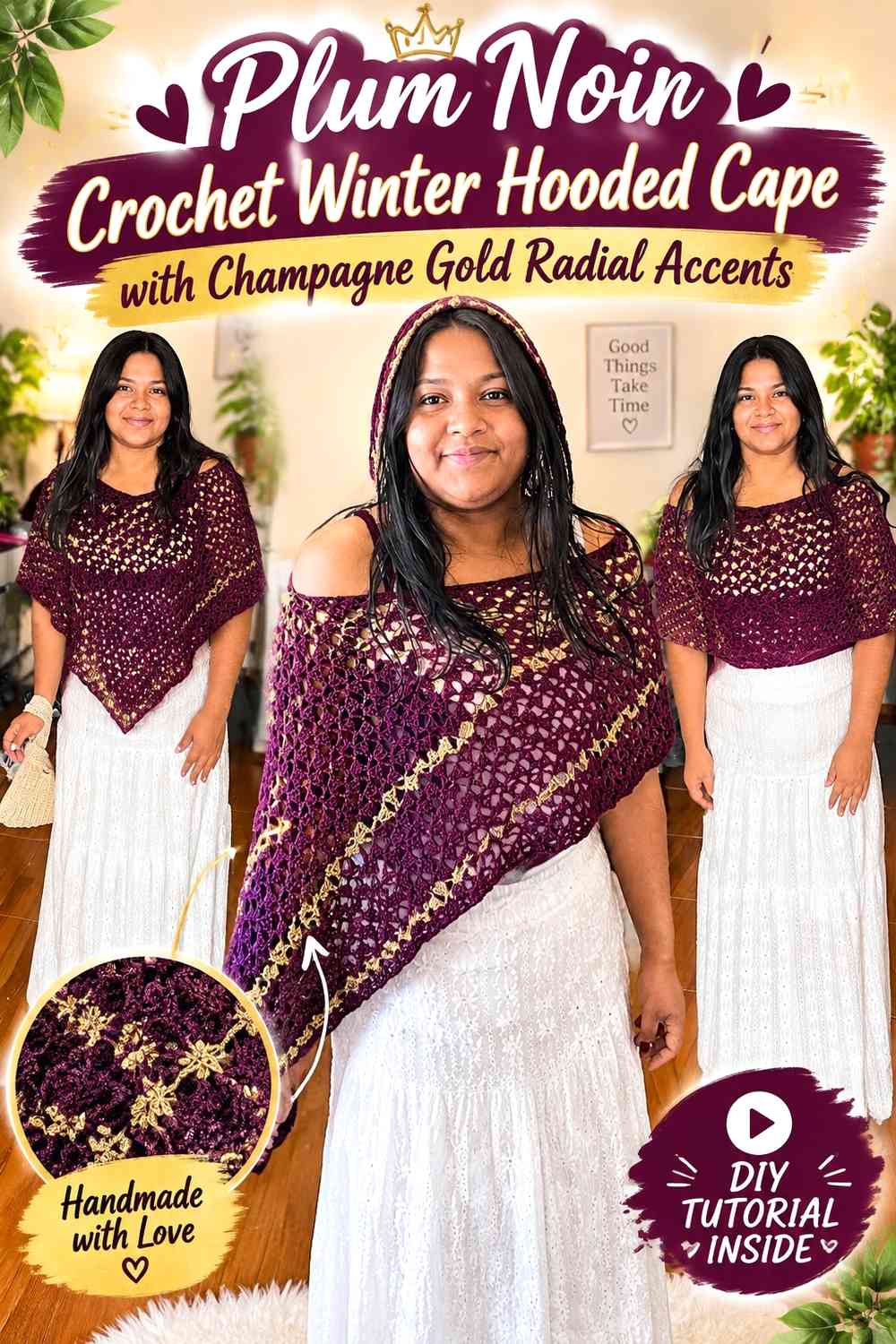
Use plum noir across the broad cape and introduce champagne gold in a few lines that radiate outward from the neckline or upper body. This emphasizes how the garment spreads over the shoulders without turning it into all-over stripes.
For a hooded version, keep the hood primarily plum noir so the radial body treatment remains the defining color feature.
Champagne Gold Radial Lines Need Wide Plum Noir Panels Between Them
The gold should function like structural punctuation. If the lines appear too frequently, the cape begins to look evenly striped.
Broad plum sections maintain the dark winter character while still allowing the construction direction to show.
Plum Noir Hood Can Carry One Small Champagne Gold Repeat
A narrow center or face-edge gold detail can connect the hood with the radial body accents.
Keep it smaller than the lines on the cape so the garment does not develop several equal focal zones.
Creator Credit: Jesuecrochet
14. Plum Noir Crochet Minimalist Hooded Cape with Champagne Gold Edge Detail
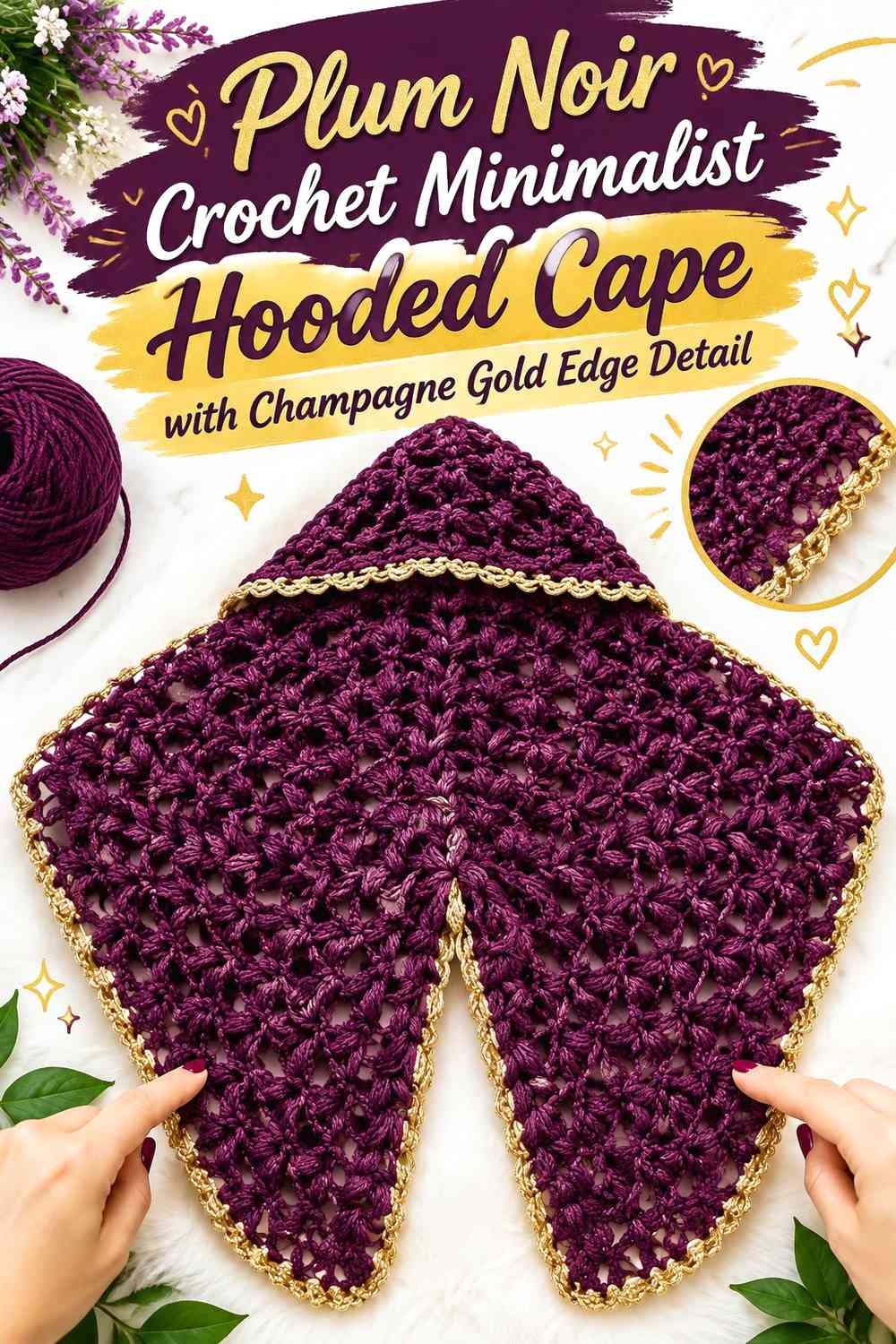
For the most restrained option, keep nearly the entire cape and hood plum noir. Use champagne gold only as a narrow edge around the hood, front opening, or selected part of the hem rather than outlining everything.
This color scheme puts the depth of plum noir ahead of ornament and works well when the clothing or accessories worn underneath already contain decorative detail.
Plum Noir Should Dominate the Hooded Cape Without Frequent Champagne Gold Breaks
Leave the large fabric areas uninterrupted. The dark color can carry the silhouette, drape, and stitch texture without needing multiple gold bands.
This is especially useful when the cape has a long or dramatic shape.
Champagne Gold Should Mark Only One or Two Plum Noir Boundaries
Choose the boundaries that matter most visually, such as the hood opening and front edge. Avoid automatically outlining the neckline, shoulders, hem, and every decorative detail as well.
Restrained gold placement makes each accent more noticeable.
Plum Noir and Champagne Gold Need a Full-Outfit Check
Try the cape over the clothing you plan to wear with it before deciding whether more gold is needed. A champagne-toned brooch, belt, jewelry, or other accessory may already provide enough repetition outside the crochet.
Keeping the cape restrained can prevent the complete outfit from becoming overly ornamented.
Creator Credit: Lili Crochet
Which Plum Noir and Champagne Gold Victorian Hooded Cape Should You Choose?
For the darkest and most dramatic look, Ideas 1, 3, 4, 8, 12, and 14 keep most of the hood and cape body plum noir. Champagne gold is limited to framing, closures, ties, or one major border.
Ideas 2 and 10 give champagne gold a larger role near the head and shoulders. These are useful when you want the upper part of the cape to become the visual focus rather than concentrating all the accent color near the hem.
Choose Ideas 6, 7, 11, or 13 when you want color placement to emphasize the garment’s shape. Gold points, scallops, repeated hood-and-hem framing, and radial lines all use the second color to explain the silhouette rather than simply decorating it.
For a more texture-led Victorian-inspired cape, Ideas 5 and 9 keep the body largely plum noir and reserve champagne gold for structural transitions around the neckline and hood.
Conclusion
Plum noir and champagne gold can create a winter hooded cape that feels ornate without requiring dense decoration across the entire garment. The strongest schemes usually let plum noir carry the cape’s size and drape while champagne gold identifies one or two important structural areas.
Use a champagne gold hood frame when you want attention near the face, a shoulder yoke when you want the upper silhouette emphasized, and a gold hem when you want the cape to feel visually grounded. Ribbon-style ties, center closures, scallops, and pointed trim can add a Victorian-inspired direction without covering the dark body in constant color changes.
Before committing to the full color layout, compare the hood, shoulders, and cape length while worn. A contrast that seems small on a flat piece can become much more prominent around the face or across a wide hem. Follow the credited tutorials for their actual construction, fit, and assembly, then apply the plum noir and champagne gold arrangement as the independent color adaptation.
Frequently Asked Questions
Should Plum Noir or Champagne Gold Dominate a Victorian Hooded Cape?
Plum noir is a strong dominant choice when you want a dark winter silhouette. Its large uninterrupted areas can carry the hood, shoulders, and cape body while champagne gold defines smaller details.
Champagne gold can take a larger role around the hood or shoulder yoke when you want the upper garment to feel lighter and more ornate.
Where Should Champagne Gold Go on a Plum Noir Hooded Cape?
Useful locations include the hood opening, neckline, center closure, front edges, shoulder yoke, lower border, scallops, ties, or selected pointed hem details.
Choose a few connected areas instead of placing champagne gold on every available edge. Too many equal accents can weaken the plum noir foundation.
Should the Champagne Gold Hood Border Match the Cape Hem?
It can. Repeating champagne gold at the top and bottom creates a clear framed relationship around the plum noir body.
The two sections do not need to be equally wide. A narrower hood edge and somewhat deeper hem can still look connected if the broad area between them remains plum noir.
How Can I Make a Plum Noir Crochet Cape Look More Victorian?
Focus on styling elements such as a decorative shoulder cape silhouette, ribbon-style ties, scalloped borders, structured front edges, ornate-looking closure areas, or a carefully framed hood.
Use “Victorian-inspired” rather than assuming a modern tutorial reproduces documented historical construction.
Can I Add a Hood to a Crochet Capelet Tutorial That Does Not Include One?
Do not assume a hood can simply be added without affecting the neckline. The hood attachment needs to be compatible with the capelet’s actual neckline, fit, and construction.
Use the capelet tutorial for the body it demonstrates and rely on a properly established hooded construction if you want to develop a hooded adaptation.
How Can I Keep Champagne Gold From Overpowering Plum Noir?
Concentrate the gold in one or two structural areas and leave broad plum sections between them. A continuous gold hood border may already create substantial contrast, so the cape body may need only a small second repeat.
Judge the entire worn garment rather than comparing isolated yarn sections.
How Do I Substitute Another Dark Shade for Plum Noir?
Choose another deep plum, aubergine, blackened purple, wine-purple, or similarly dark shade that preserves the role of the visual foundation.
Compare it directly with the champagne gold so borders and closures remain clearly visible.
How Do I Substitute Another Shade for Champagne Gold?
Choose a softened warm gold, muted brass-gold, ochre-gold, or another warm antique-looking shade that remains distinguishable from the plum noir.
If the replacement is much brighter or more yellow, use it more sparingly so the hood, border, or yoke does not overwhelm the darker cape body.