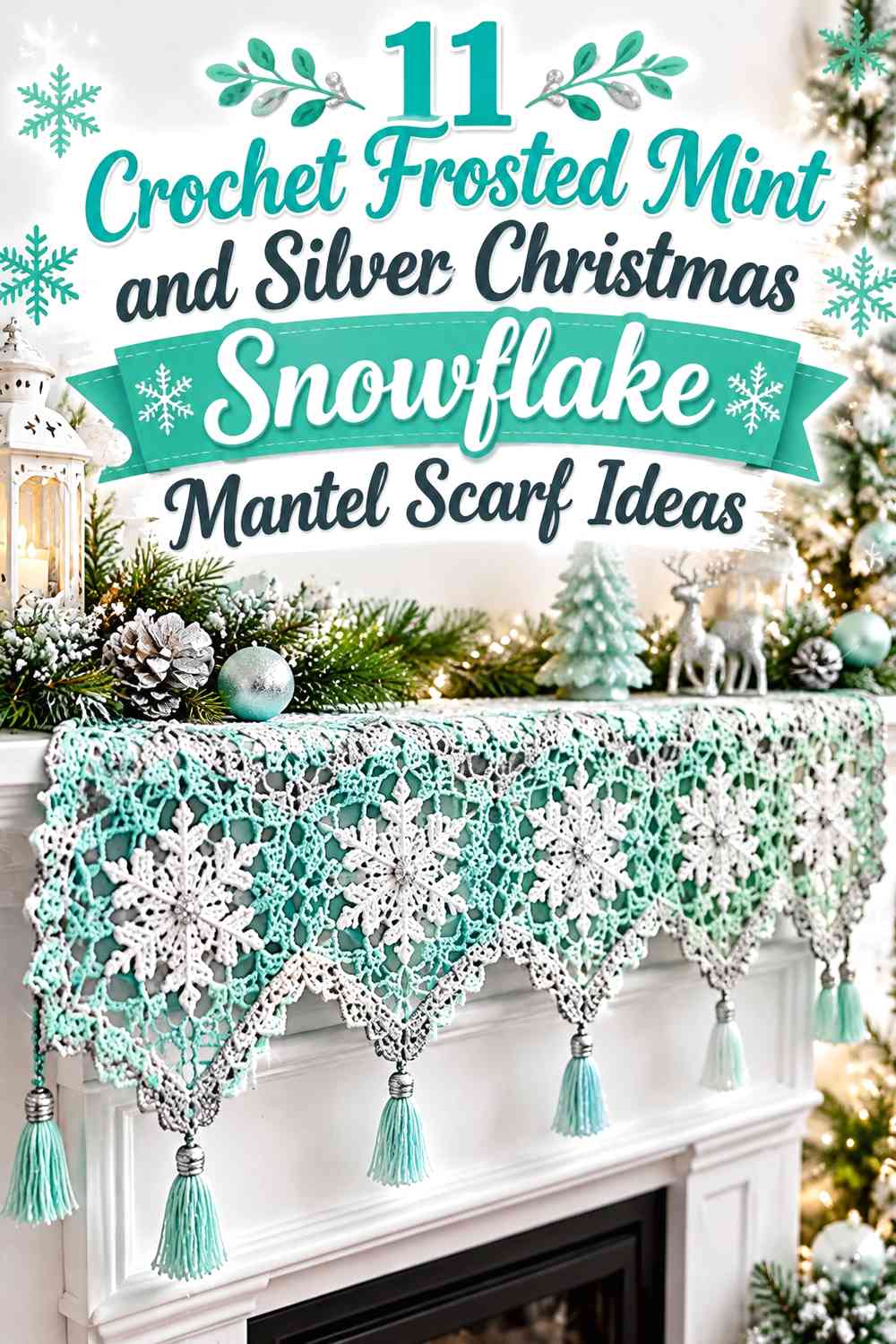

Frosted mint and silver give a crochet Christmas mantel scarf a cool winter palette without depending on traditional red or green. Frosted mint can carry the broad runner surface, while silver can define snowflake points, borders, motif frames, joins, hanging drops, or a narrow edge along the front of the mantel.
The main color decision is how much silver should interrupt the mint field. A mantel scarf already creates a long horizontal feature, so repeating silver across every row can make the entire piece look striped rather than snowflake-focused. Concentrating silver around recognizable snowflakes or along one important edge usually preserves a clearer hierarchy.
The tutorials below include full snowflake runner constructions as well as individual snowflakes, snowflake squares, coasters, and ornaments that can support motif-based mantel-scarf adaptations. Follow each creator for the construction they actually demonstrate; the frosted mint, silver, and mantel placement are independent editorial adaptations.
Quick List
- Frosted Mint Crochet Snowflake Mantel Scarf with Silver Filet Details
- Frosted Mint and Silver Crochet Repeating Snowflake Mantel Scarf
- Frosted Mint Crochet Snowflake-Square Mantel Scarf with Silver Frames
- Frosted Mint Crochet Mantel Scarf with Silver Snowflake Medallions
- Frosted Mint Crochet Mantel Scarf with Silver Hanging Snowflake Edge
- Frosted Mint Crochet Openwork Mantel Scarf with Silver Snowflakes
- Frosted Mint Crochet Mantel Scarf with Silver Corner Snowflakes
- Frosted Mint Crochet Mantel Scarf with a Silver Center Snowflake Row
- Frosted Mint Crochet Mantel Scarf with Silver Puff-Style Snowflake Drops
- Frosted Mint Crochet Mantel Scarf with Silver Picot Snowflake Border
- Frosted Mint Crochet Mantel Scarf with Silver Layered Snowflake Accents
Let Frosted Mint Carry the Main Mantel Scarf Surface
Frosted mint works well across the largest uninterrupted sections because it gives the mantel scarf a clear base color while leaving room for silver to identify the snowflake structure. This is particularly useful when several motifs repeat across the entire mantel.
Silver does not need equal surface area to be noticeable. A narrow silver frame around mint squares, silver snowflake centers, or selected silver points can create enough repetition to connect the full scarf.
Use Silver Where Frosted Mint Snowflakes Need More Separation
Color placement should reinforce the snowflake rather than obscure it. If the background is frosted mint, a silver snowflake can become the main motif. If the snowflake itself is mint, silver can surround it through a border, square frame, or connector.
Different yarns labeled mint and silver can still be fairly similar in lightness, so compare the actual yarns together before making many motifs. If the shapes merge visually, enlarge the contrasting sections instead of relying on very small silver details.
Plan Frosted Mint and Silver Around the Mantel Edge
The front edge is often more visible than the portion lying farther back on the mantel. That makes it a useful location for silver scallops, snowflake drops, fringe, or a narrow contrasting band.
Keep any hanging elements proportionate to the display and clear of fireplace openings, flames, candles, and other heat-producing decorations. A crochet mantel scarf should be treated as decorative textile, not as a heat-resistant barrier.
1. Frosted Mint Crochet Snowflake Mantel Scarf with Silver Filet Details
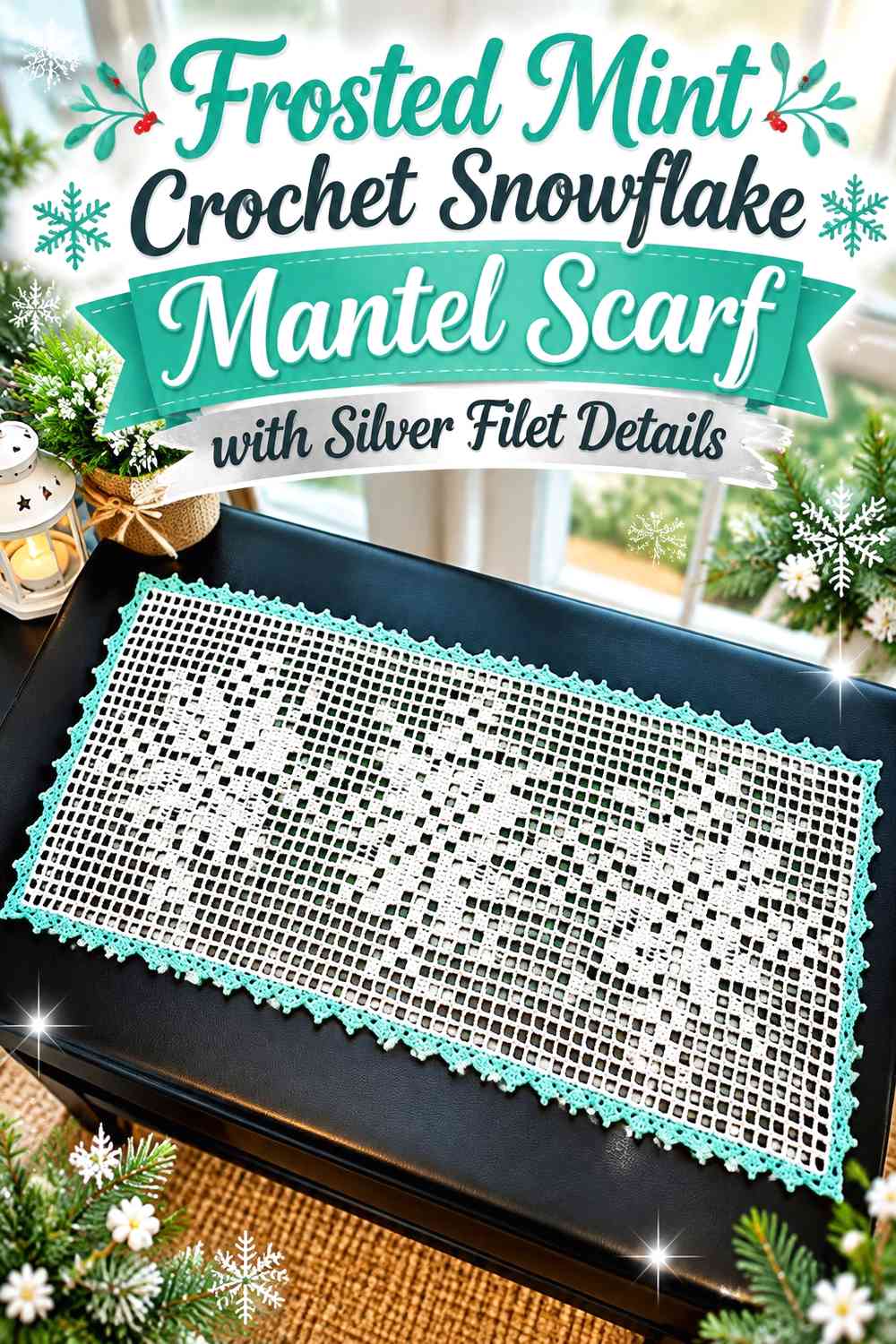
Use frosted mint for most of a runner-style scarf and let silver identify selected snowflake sections within the open design. This creates a relatively flat mantel treatment where the motif comes from the fabric itself rather than from several added appliqués.
The palette works best when silver stays concentrated around the snowflake imagery or outer edge instead of becoming an additional all-over stripe pattern.
Silver Details Should Clarify the Frosted Mint Snowflake Pattern
Place silver where it reinforces the most recognizable parts of the snowflake or where one motif transitions into the surrounding field.
If the openwork already creates plenty of visual movement, keep the silver sections broad enough to read clearly rather than inserting many tiny color changes.
Frosted Mint Needs Long Uninterrupted Areas Beside Silver
Allow substantial mint sections to remain between contrasting details. The continuous field keeps the mantel scarf calm and prevents the snowflake pattern from competing with the objects displayed above it.
A narrow silver edge can finish the piece without changing the main mint balance.
Creator Credit: HandmadebyRaine
2. Frosted Mint and Silver Crochet Repeating Snowflake Mantel Scarf
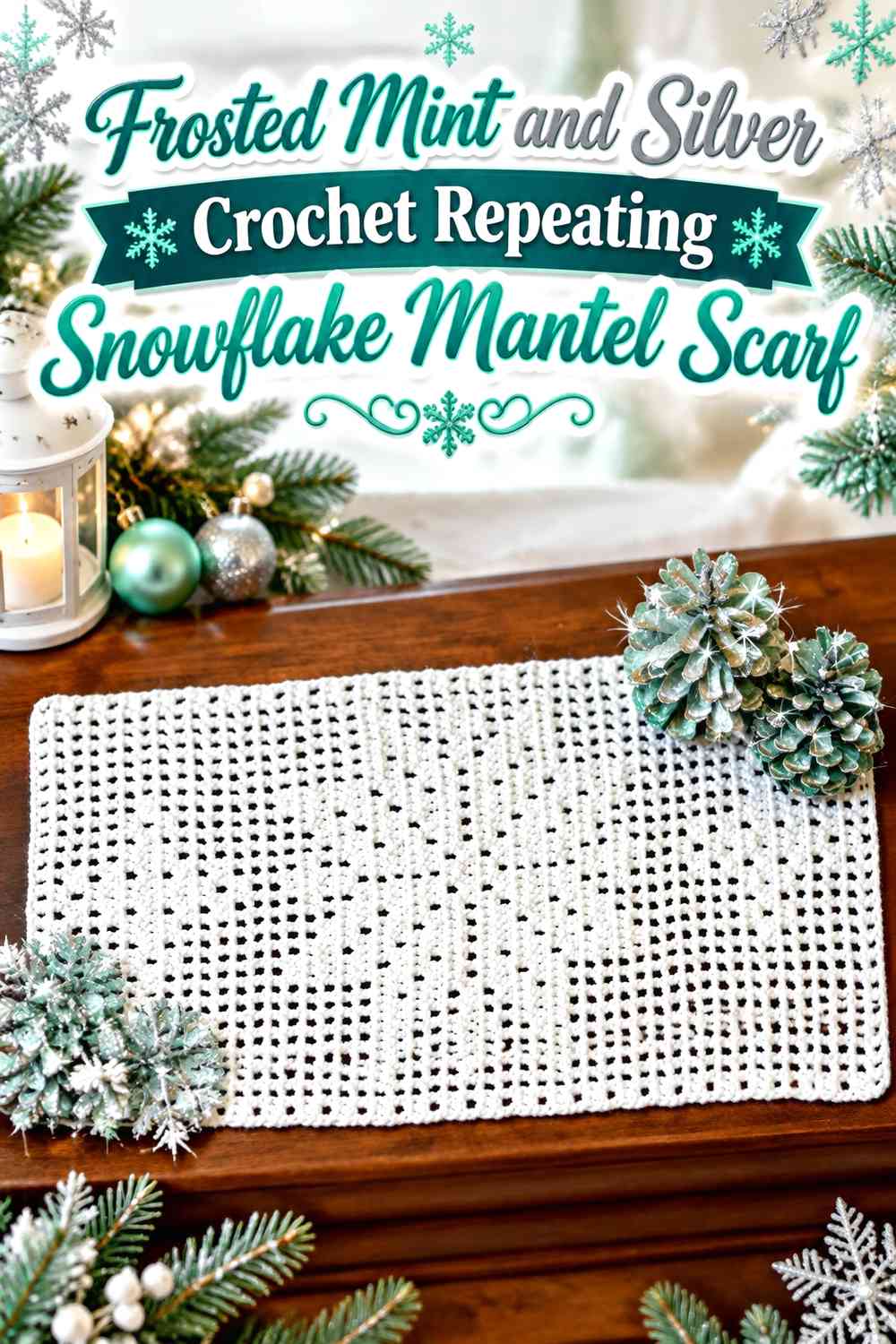
Use a repeating runner construction with frosted mint carrying most of the background and silver appearing in selected snowflakes or repeated motif sections. This creates more color rhythm across the entire mantel than a single centerpiece motif.
Decide whether silver will appear in every snowflake or only at regular intervals before beginning the full-length color arrangement.
Silver Snowflakes Need Predictable Repetition Across Frosted Mint
If silver appears every second or third motif, keep that sequence consistent so the scarf reads as deliberately patterned.
Random silver placement can make one side of a long mantel look visually heavier than the other.
Frosted Mint Should Connect the Silver Snowflakes Into One Scarf
Keep the background, outer field, or connecting sections mint so the repeated silver motifs do not look like separate ornaments placed side by side.
That continuous mint base is especially useful when the scarf extends beyond the main decorative objects on the mantel.
Silver Edge Repetition Can Finish the Frosted Mint Runner
If the snowflakes already contain substantial silver, keep the final edging narrow.
The border should connect the interior accents, not compete with them as another major feature.
Creator Credit: Lenysea
3. Frosted Mint Crochet Snowflake-Square Mantel Scarf with Silver Frames
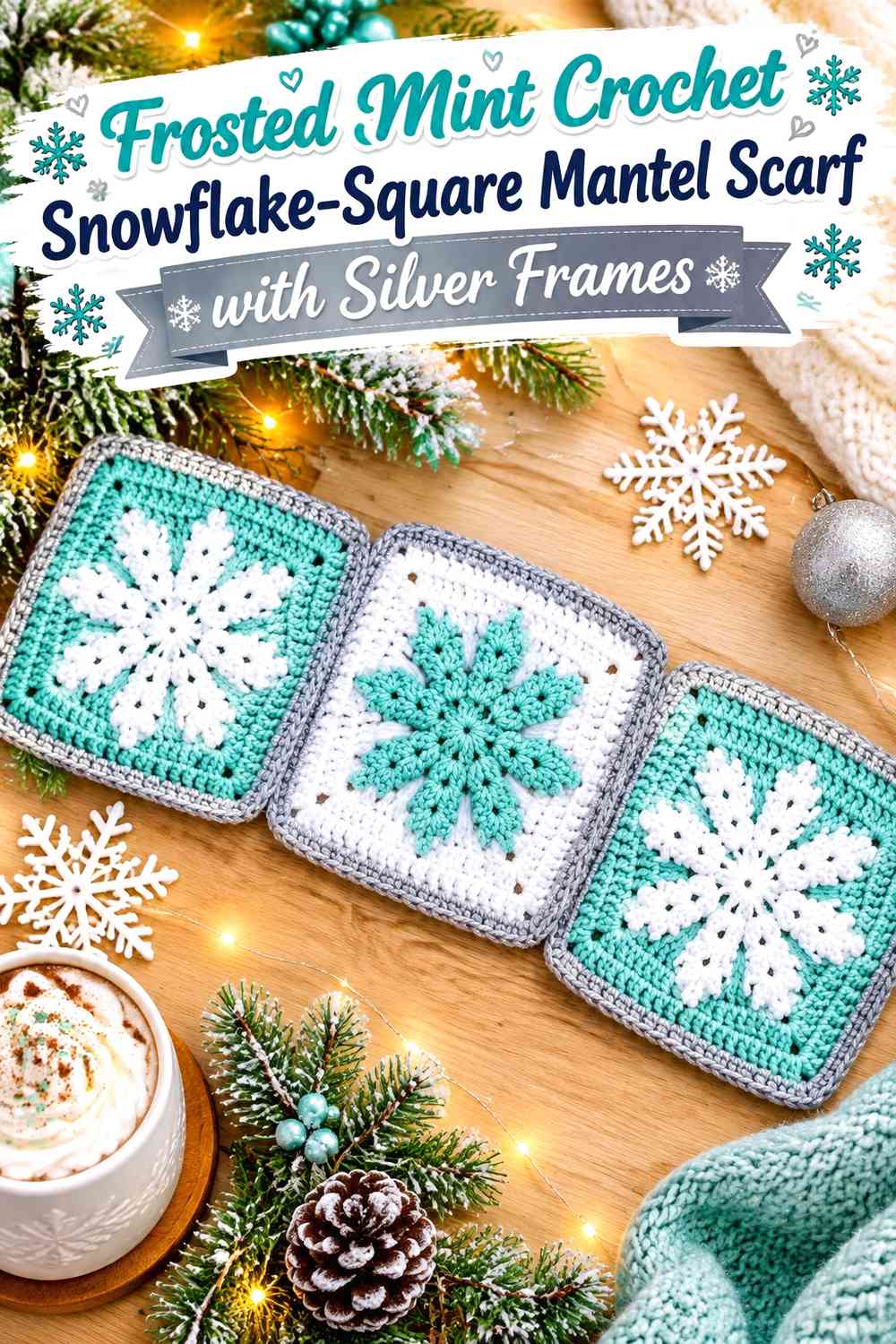
Build the scarf from snowflake-square concepts, keeping the snowflake or main square field frosted mint and framing each unit in silver. The repeated frame makes the modular construction part of the finished color design.
This is useful when you want visible divisions across the mantel rather than one uninterrupted runner surface.
Silver Frames Should Separate Frosted Mint Snowflake Squares Cleanly
Keep the silver framing visually consistent around each unit. When some frames are much wider than others, individual squares can appear to be different sizes even if their construction matches.
The silver should explain the modular layout rather than dominate each square.
Frosted Mint Snowflakes Need Enough Area Inside Silver Borders
Preserve a generous mint center so every square remains primarily frosted mint.
If the silver frame becomes too broad, the completed scarf may read as a silver grid containing small mint details instead of the reverse.
Silver Joins Can Connect Frosted Mint Squares Without Another Border
When silver already frames the squares, using the same color at joins can create one coherent network across the mantel.
A separate third visual treatment is unnecessary when the existing frame already defines the structure.
Creator Credit: Crafting Happiness Crochet
4. Frosted Mint Crochet Mantel Scarf with Silver Snowflake Medallions
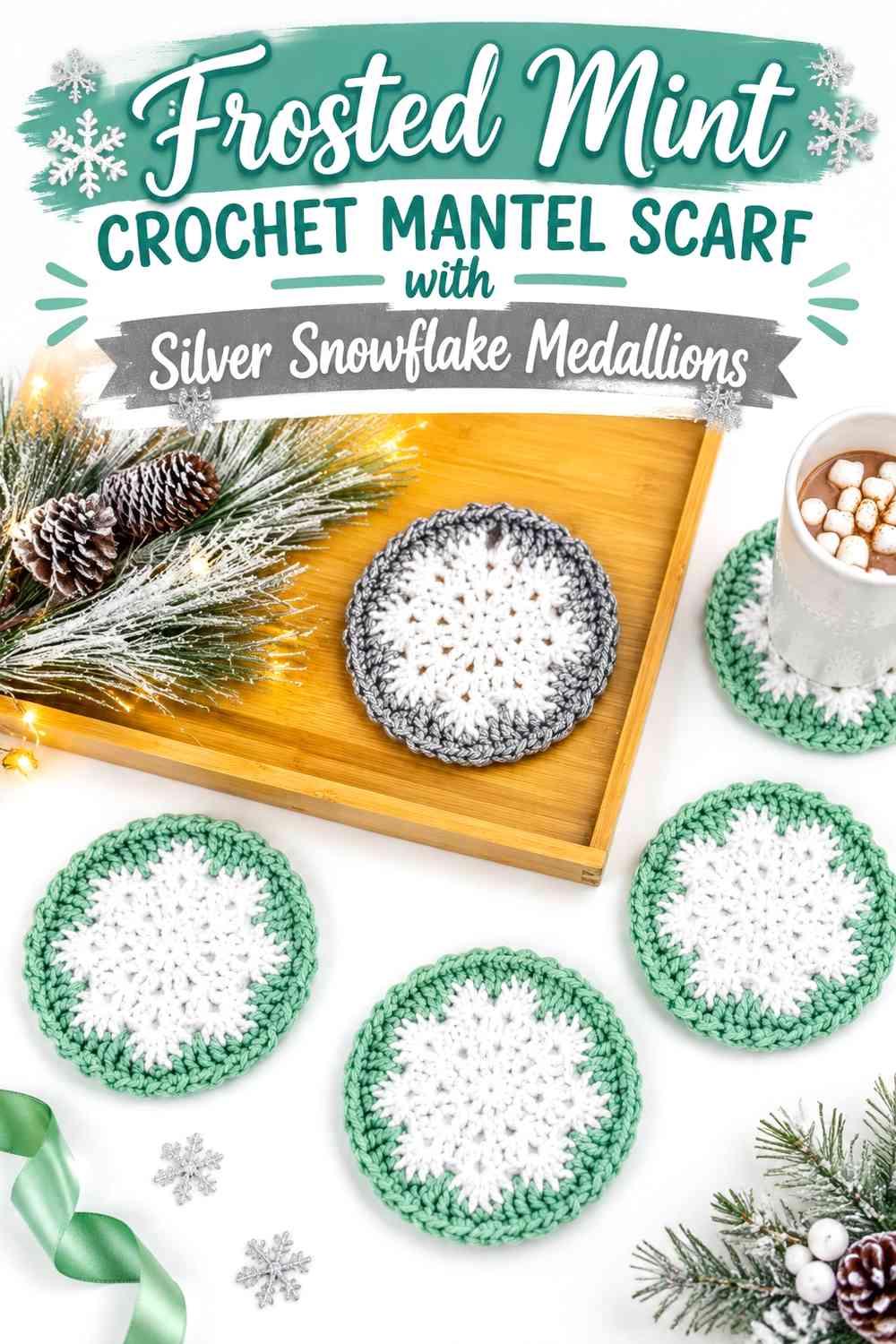
Keep the main mantel band frosted mint and position larger silver snowflake medallions at selected points. Rather than covering the full surface with small motifs, this scheme gives a few snowflakes enough room to become focal features.
A center medallion with smaller repeats toward the ends can create a natural mantel composition without requiring every space to contain decoration.
Silver Medallions Need Frosted Mint Space Around Their Points
Leave visible mint around each snowflake so its outer branches remain recognizable.
Placing large silver motifs immediately beside one another can make their points overlap visually and reduce the individual snowflake shapes.
Frosted Mint Can Control the Space Between Silver Snowflakes
Treat the undecorated mint sections as part of the design. They provide visual rest between detailed motifs and allow the scarf to coordinate with other Christmas objects on the mantel.
Avoid filling every gap simply because the band looks sparse while lying flat.
Creator Credit: Jo to the World Creations
5. Frosted Mint Crochet Mantel Scarf with Silver Hanging Snowflake Edge
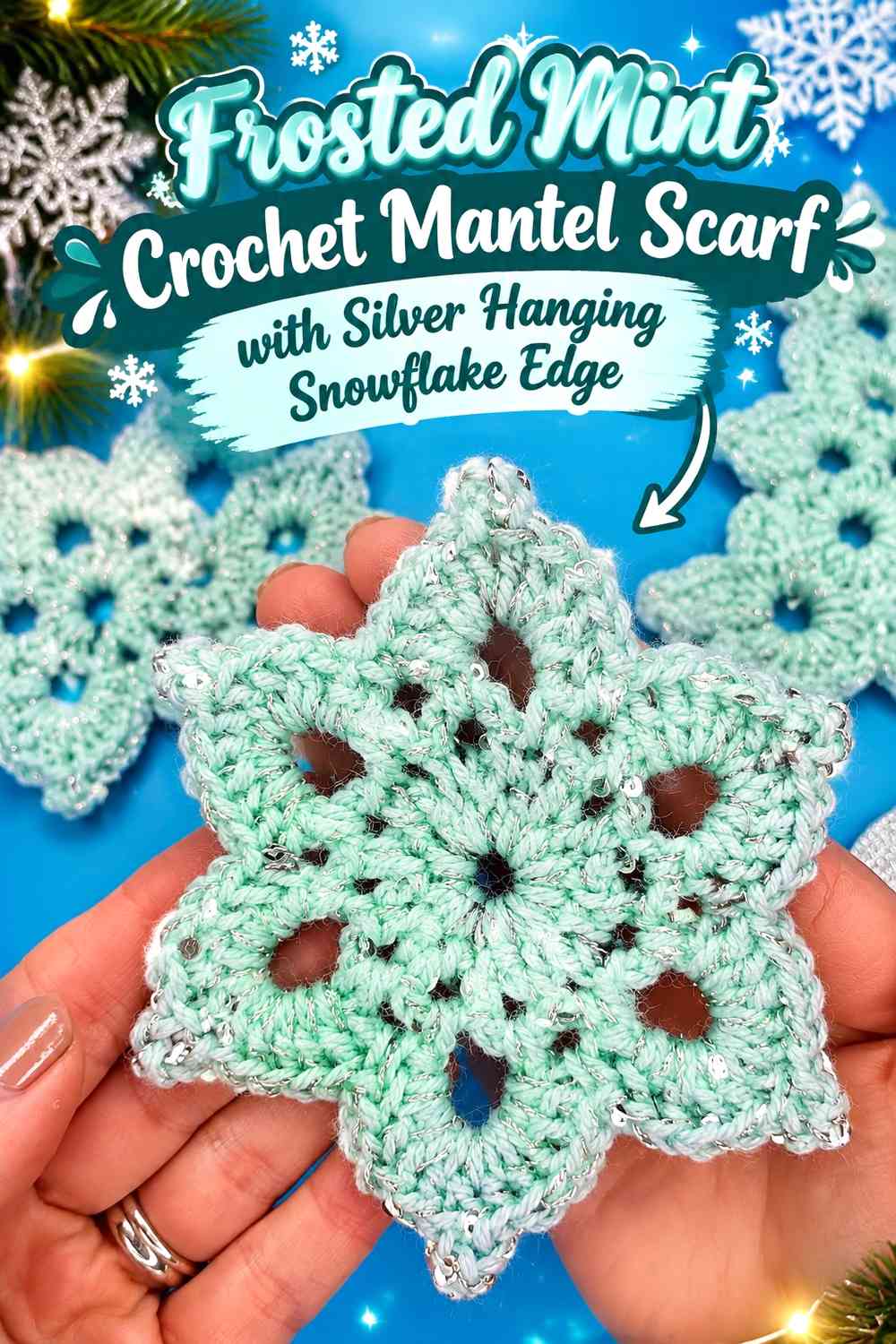
Use frosted mint for the main scarf and place individual silver snowflakes along the front edge so they hang below the horizontal band. This shifts the snowflake theme toward the most visible part of the mantel rather than spreading it across the top surface.
The mint band can remain fairly restrained because the hanging silver motifs already create a strong decorative rhythm.
Silver Hanging Snowflakes Need Consistent Frosted Mint Spacing
Space the silver motifs far enough apart that each flake retains a distinct outline.
If they overlap when the scarf drapes, increase the visible mint interval between attachment points rather than adding smaller overlapping snowflakes.
Frosted Mint Front Edge Should Stay Simple Behind Silver Snowflakes
Avoid an equally elaborate mint fringe directly behind the hanging motifs. The silver flakes need a relatively quiet upper edge to remain the primary decorative feature.
A narrow mint or silver finishing line is enough.
Silver Snowflakes Should Hang Safely Below the Frosted Mint Mantel Edge
Check the finished drop length in the actual display location. Keep the crochet well clear of fireplace openings, flames, candle heat, and anything else that could expose the textile to heat.
The safest decorative length depends on the specific mantel and surrounding setup.
Creator Credit: Hooked by Robin
6. Frosted Mint Crochet Openwork Mantel Scarf with Silver Snowflakes
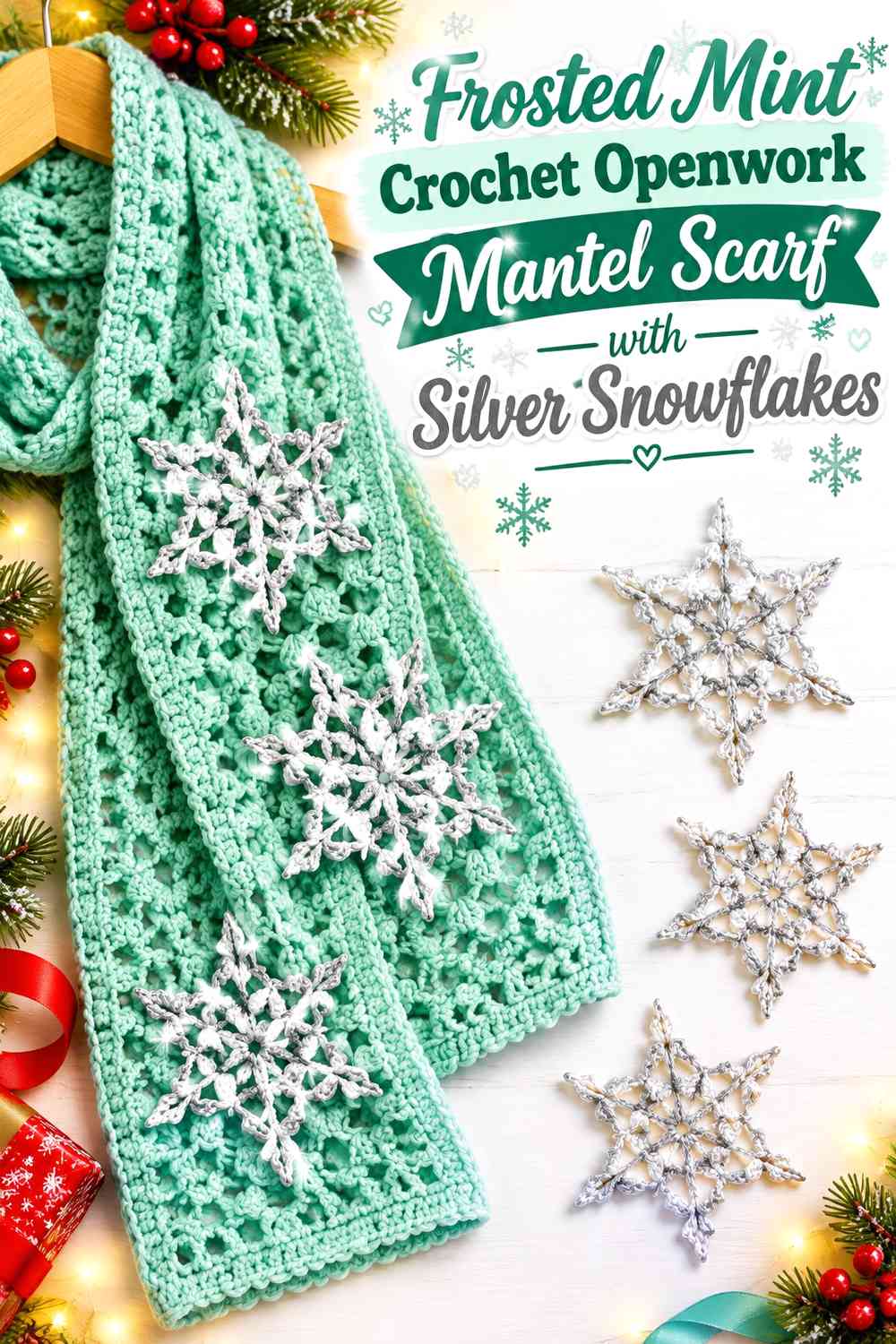
Use an open frosted mint runner surface and attach or integrate delicate silver snowflakes at regular intervals. This gives the scarf a lighter visual structure than a dense solid band.
Because the wall or mantel surface may show through open crochet, test the palette against the actual background before deciding how much silver is needed.
Silver Snowflakes Need Clear Contrast Against Frosted Mint Openwork
Position silver where enough mint structure surrounds the snowflake to distinguish its points.
If both colors appear very pale against the mantel, make the silver motifs larger or group them strategically rather than adding many tiny accents.
Frosted Mint Openwork Should Remain Connected Around Silver Motifs
Avoid creating so many openings that the mint background stops reading as one continuous scarf.
The snowflakes should appear within or over a recognizable mint field rather than floating between disconnected sections.
Creator Credit: Crochet with Tuula Maaria
7. Frosted Mint Crochet Mantel Scarf with Silver Corner Snowflakes
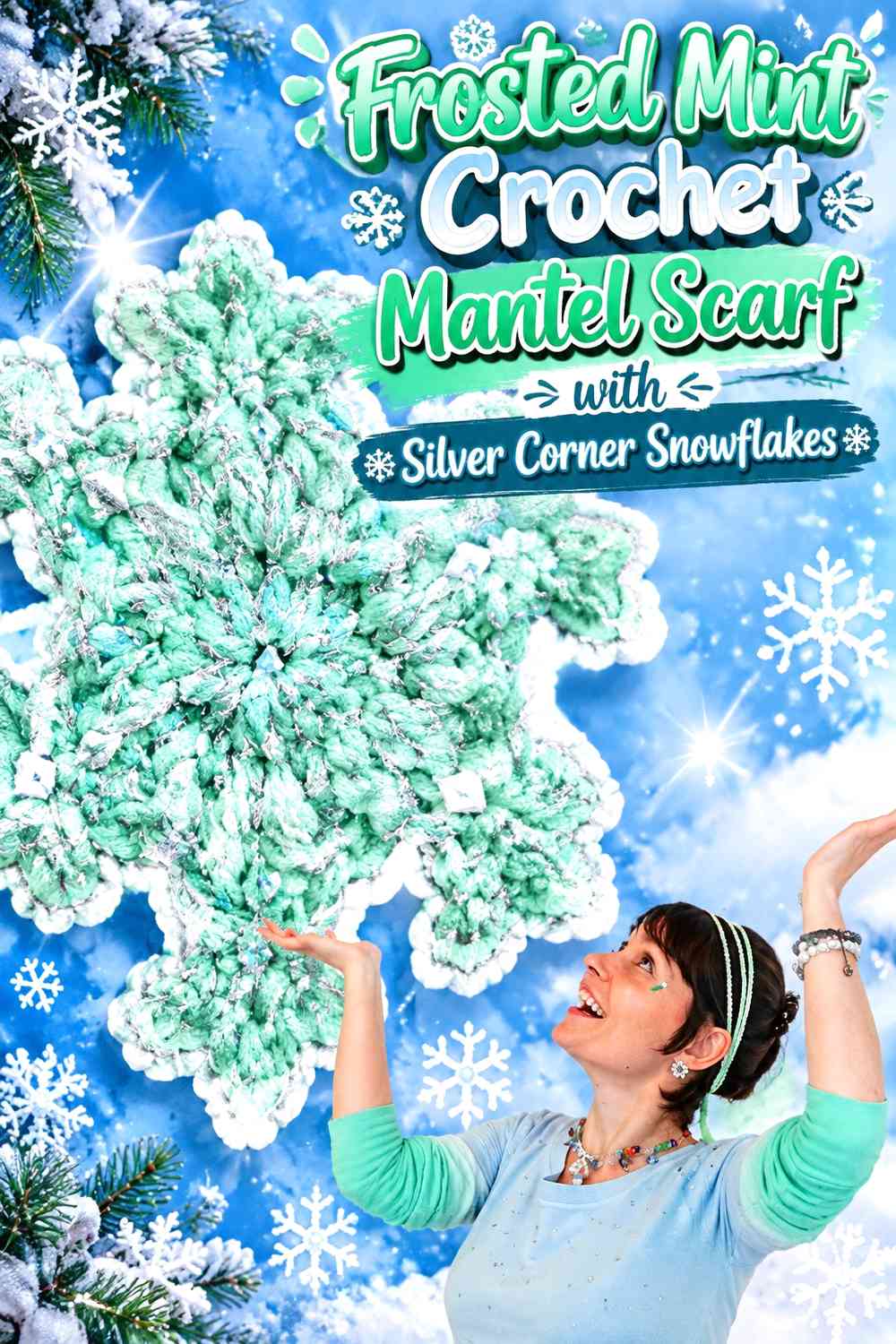
Keep most of the scarf frosted mint and concentrate silver snowflakes near the two front corners or ends. This leaves the central surface quiet for stockings, candle-free displays, greenery, frames, or other mantel decorations.
It is also a useful arrangement when the scarf hangs slightly beyond each end of the mantel and those corners remain especially visible.
Silver Corner Snowflakes Should Balance Across Frosted Mint
Use similar visual weight at each end if you want the scarf to feel symmetrical.
The snowflakes do not have to be identical in every detail, but one end should not carry a large cluster while the other has only a tiny silver accent unless that asymmetry is intentional.
Frosted Mint Center Should Stay Quiet Between Silver Ends
Resist filling the middle simply because the corner motifs are separated by a long stretch of mint.
That central negative space can make the edge details stronger and leave room for the mantel’s other decorations.
Silver Can Repeat Narrowly Along the Frosted Mint End Edges
A small silver finishing line at each end can connect the snowflake motifs to the scarf structure.
Keep the long central edges mint if the goal is to preserve concentrated corner emphasis.
Creator Credit: Jayda InStitches
8. Frosted Mint Crochet Mantel Scarf with a Silver Center Snowflake Row
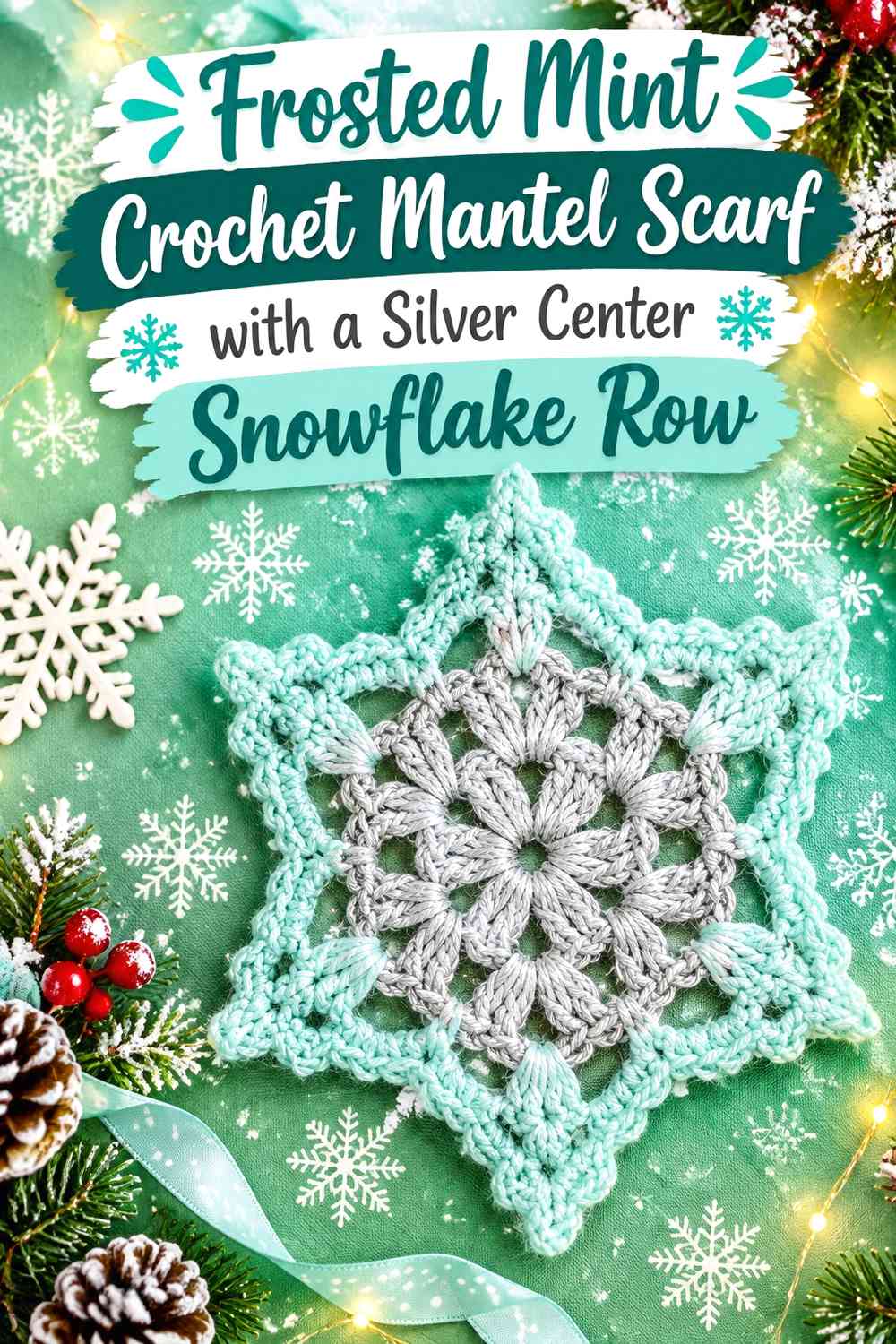
Use frosted mint above and below a horizontal row of silver snowflakes running through the visible center of the scarf. Instead of placing silver at the perimeter, this scheme creates one defined motif band across the middle.
The surrounding mint should remain wide enough to frame that band rather than turning the entire scarf into a silver-heavy snowflake strip.
Silver Center Snowflakes Need Frosted Mint Above and Below
Give the motif row visible mint margins. Those bands clarify where the snowflake section begins and ends.
If silver extends from edge to edge vertically, the scarf may look divided into two mint strips attached to a silver center.
Frosted Mint Borders Should Stay Simpler Than the Silver Snowflake Row
Use understated mint edging so the central snowflake sequence remains the dominant decorative feature.
A second elaborate silver scalloped border would create another competing horizontal band.
Creator Credit: Bella Coco
9. Frosted Mint Crochet Mantel Scarf with Silver Puff-Style Snowflake Drops
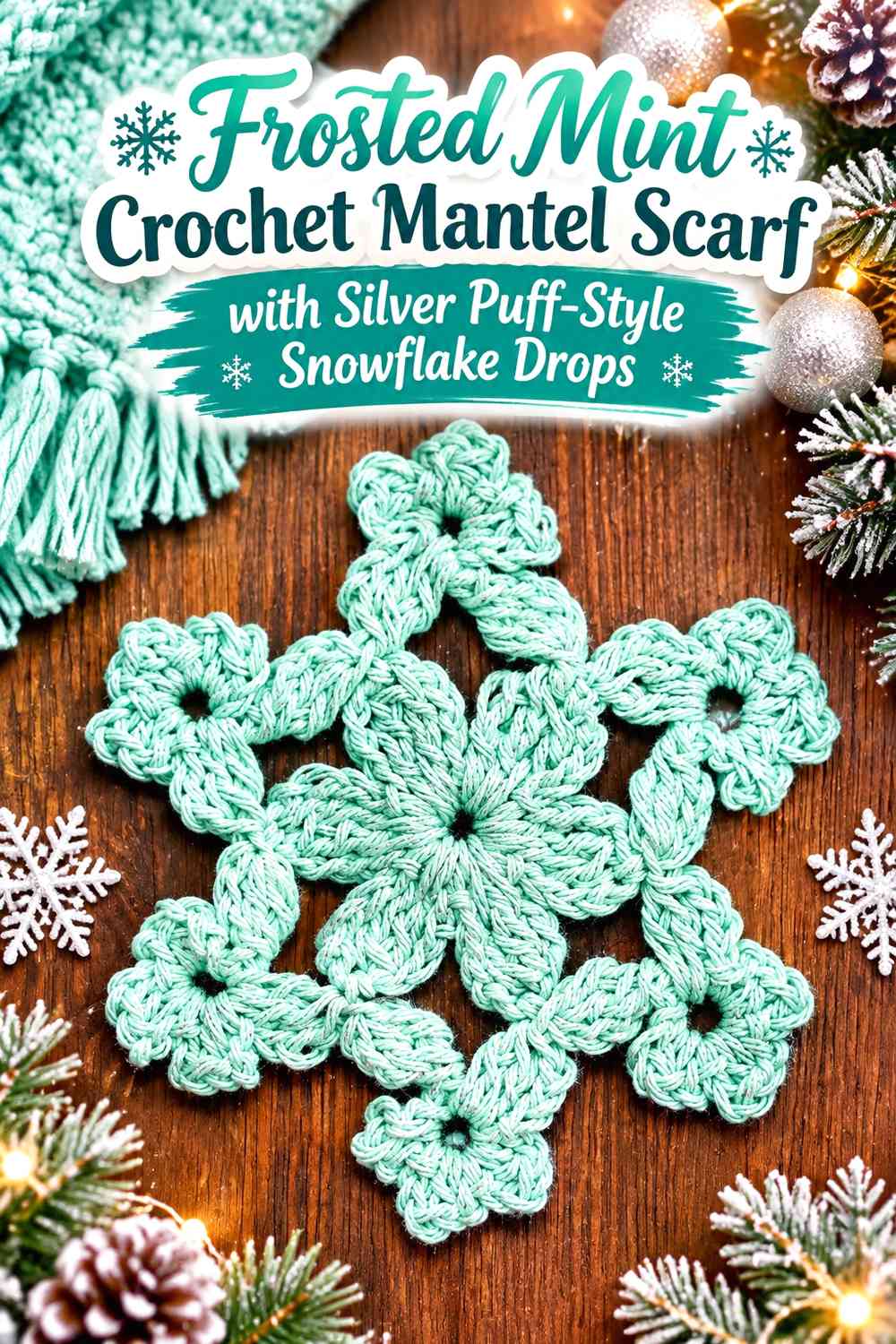
Use frosted mint for a simple scarf base and repeat silver snowflakes with more visible central texture along the lower edge. A motif with a stronger center can hold its own against a long mint background without requiring a large diameter.
This treatment works particularly well when you want the snowflakes to read as individual ornaments attached to the scarf rather than as part of the flat surface.
Silver Snowflake Centers Should Remain Visible Against Frosted Mint
Keep the attachment area simple so the center texture and branching points can be read without additional mint bobbles or fringe immediately behind them.
A clean frosted mint edge gives the silver motif a clearer outline.
Frosted Mint Should Separate Repeated Silver Drops
Leave enough mint between motifs for each snowflake to remain distinct.
Crowding textured silver flakes together can create a continuous heavy-looking lower edge rather than the intended snowflake rhythm.
Creator Credit: naztazia
10. Frosted Mint Crochet Mantel Scarf with Silver Picot Snowflake Border
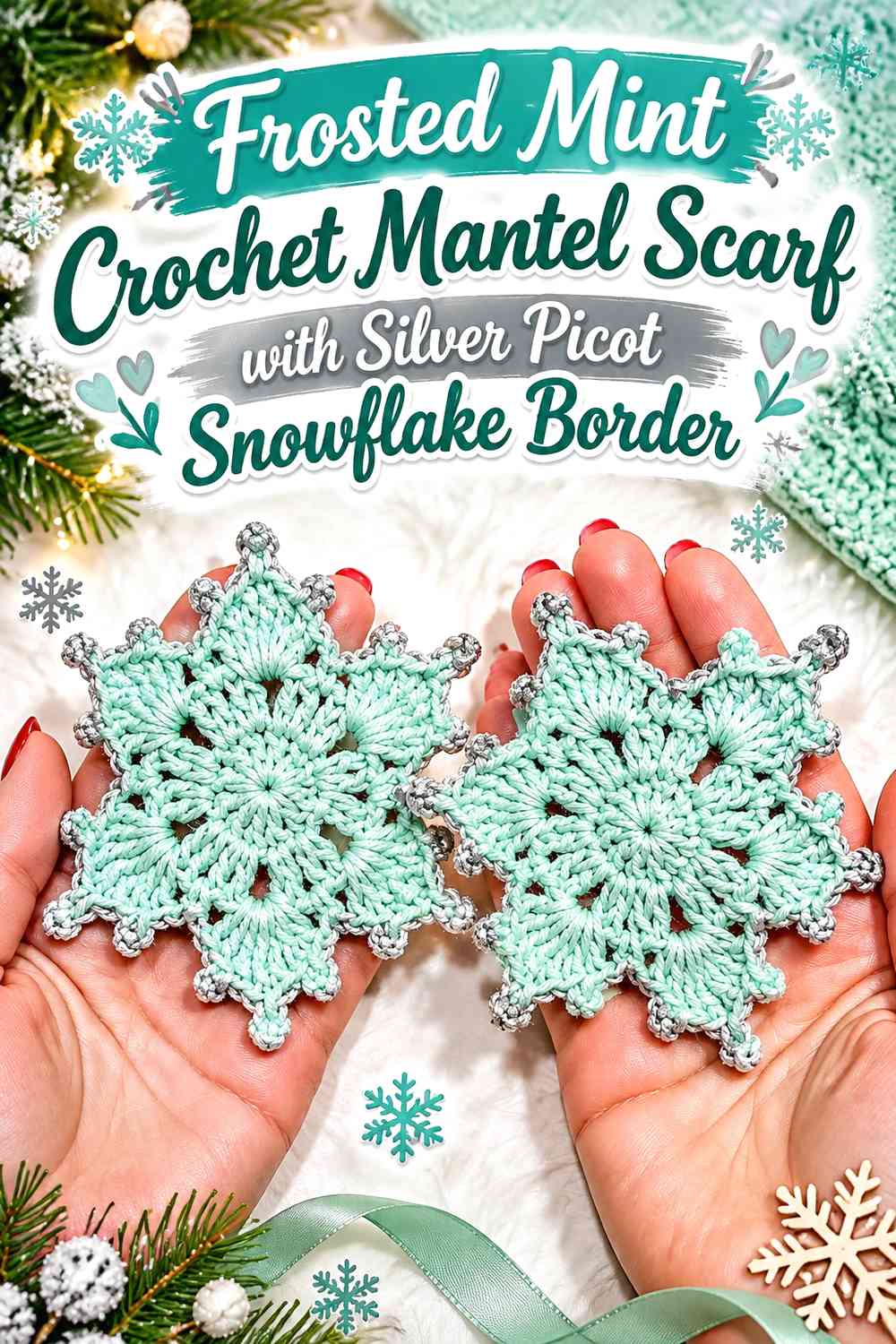
Use frosted mint for the primary scarf and build the front edge around crisp silver snowflake motifs with pointed or picot-like details. This places the most intricate crochet where it can be seen from across the room.
The top surface can stay comparatively simple so the silver lower border remains the defining feature.
Silver Points Need Space Below the Frosted Mint Mantel Scarf
Detailed snowflake points are easier to read when they are not pressed against another busy trim.
Leave the surrounding frosted mint edge restrained and check how the motifs hang once gravity affects their shape.
Frosted Mint Should Frame the Silver Snowflake Border From Above
Keep a continuous mint band immediately above the motifs. This provides color separation and prevents the silver section from appearing detached from the main scarf.
If more silver is needed elsewhere, use a narrow top edge rather than another complete motif row.
Silver Detail Should Not Overcrowd the Frosted Mint Corners
At the ends, check whether snowflake points collide with corner tassels, fringe, or other decorative details.
Simplifying the corners can preserve the stronger snowflake silhouette along the main front span.
Creator Credit: Kristines Crochets
11. Frosted Mint Crochet Mantel Scarf with Silver Layered Snowflake Accents
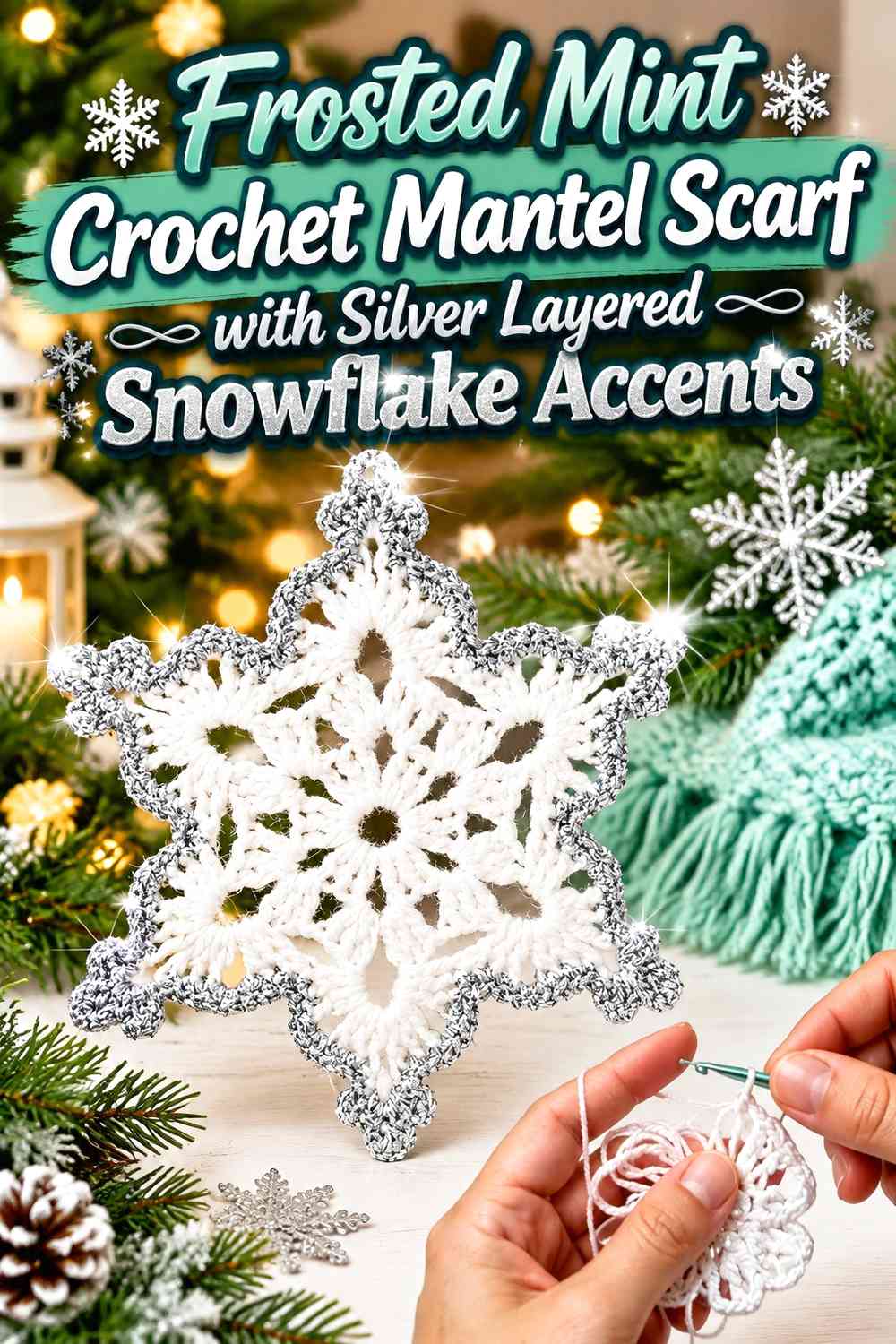
For a more detailed finish, use frosted mint across the scarf and create selected snowflakes with an added silver outer or inner layer. The second color can emphasize either the center or final points without changing the entire motif to silver.
This gives the mantel scarf a more complex two-color snowflake while still maintaining a clearly mint-dominant background.
Silver Layering Should Clarify the Frosted Mint Snowflake Shape
Choose whether silver belongs at the center or outer points before repeating the motif. Using both treatments differently on every snowflake can make the row look inconsistent.
A repeated layering rule creates a more coordinated mantel display.
Frosted Mint Needs to Remain Visible Inside the Silver Accents
Do not let the silver layer cover so much of the motif that the mint snowflake effectively disappears.
The two-color effect works best when both shades remain recognizable within the same snowflake.
Silver Repetition Can Connect the Frosted Mint Scarf Ends
If layered motifs appear mostly across the center, repeat a small amount of silver at each scarf end to close the composition.
A narrow end border is enough; the layered snowflakes should remain the strongest silver feature.
Creator Credit: Crochet Craftsman
Which Frosted Mint and Silver Snowflake Mantel Scarf Should You Choose?
For a mostly frosted-mint scarf with restrained silver details, Ideas 1, 7, and 11 keep the largest areas calm while concentrating silver in specific motifs or finishing sections.
Ideas 2, 3, and 8 create stronger repeated structure across the entire mantel through runner patterns, framed squares, or a central snowflake row. These suit a display where the scarf itself is intended to be one of the primary Christmas decorations.
Choose Ideas 5, 9, or 10 when you want the front edge of the mantel to carry most of the snowflake detail. Hanging flakes, textured drops, and pointed snowflake borders remain visible even when objects cover part of the scarf’s upper surface.
Ideas 4 and 6 work well when individual snowflake shapes matter more than an all-over repeating pattern.
Conclusion
Frosted mint and silver can create a Christmas snowflake mantel scarf that feels wintry without becoming visually crowded. The clearest designs usually give frosted mint the larger field and use silver to identify the snowflakes, borders, frames, or hanging details.
Choose a silver front edge when the scarf’s lower drop will be most visible. Use framed snowflake squares or a repeating runner when you want pattern across the full mantel. For a quieter arrangement, keep the center frosted mint and concentrate silver snowflakes at the corners or selected focal points.
Before completing the full length, test one section on the actual mantel. Check the wall and mantel colors, how much of the upper surface will be covered by decorations, and whether the silver remains distinct from the mint at normal viewing distance. Keep all crochet clear of flames and heat-producing decorations, and use the credited tutorials for their original construction details while adapting the two-color arrangement independently.
Frequently Asked Questions
Should Frosted Mint or Silver Dominate a Crochet Snowflake Mantel Scarf?
Frosted mint is a useful dominant color when you want silver snowflakes to function as clear accents. It can cover the main runner, square backgrounds, or connecting sections.
Silver can take a larger role when the snowflakes themselves are the primary feature, but leaving visible mint around them helps preserve the two-color hierarchy.
How Can I Keep Silver Snowflakes Visible on a Frosted Mint Background?
Compare the actual yarns before making the whole scarf. If their light-dark values are similar, increase the size of the silver areas or give each snowflake more uninterrupted mint space around it.
A narrow darker-looking outline is not required if larger contrasting shapes already provide enough separation.
Where Should Silver Go on a Frosted Mint Mantel Scarf?
Useful locations include snowflake motifs, motif centers, square frames, joins, the front edge, fringe, corner details, or a narrow finishing border.
Choose connected placements rather than adding silver to every possible surface. One strong silver motif row may need very little additional silver elsewhere.
Are Hanging Silver Snowflakes Better Than Snowflakes Worked Into the Frosted Mint Scarf?
They create different effects. Hanging snowflakes emphasize the visible front edge and can remain noticeable when the mantel top is partly covered by decorations.
Integrated motifs create a flatter, more unified textile surface. The better choice depends on which part of your mantel scarf will remain visible.
Can I Mix Several Snowflake Designs in One Frosted Mint and Silver Mantel Scarf?
Yes, but keep another element consistent so the collection still looks connected. Using the same silver-to-mint hierarchy, similar motif scale, or predictable spacing can unify different snowflake shapes.
If every motif changes in size, color balance, and spacing, the scarf may lose a clear visual rhythm.
How Do I Substitute Another Color for Frosted Mint?
Choose another softened pale green or cool light green if you want to preserve the frosted winter direction. The replacement should remain visually distinct from the silver yarn you plan to use.
Compare the two shades together under the lighting around the mantel before committing to a large runner.
How Do I Substitute Another Shade for Silver?
A soft gray, pale pewter, cool gray-white, or another silver-like neutral can fill the same supporting role if it remains distinguishable from frosted mint.
If the replacement is much darker, use it more sparingly because it will carry greater visual weight around snowflake points and borders.
Is a Crochet Mantel Scarf Safe Near a Fireplace?
Treat crochet as a decorative textile and keep it away from flames, fireplace openings, hot surfaces, candles, and other heat-producing decorations. Do not assume a yarn or finished crochet piece is heat resistant.
The exact safe placement depends on the fireplace, mantel, and surrounding equipment, so preserve appropriate clearance for the specific installation.