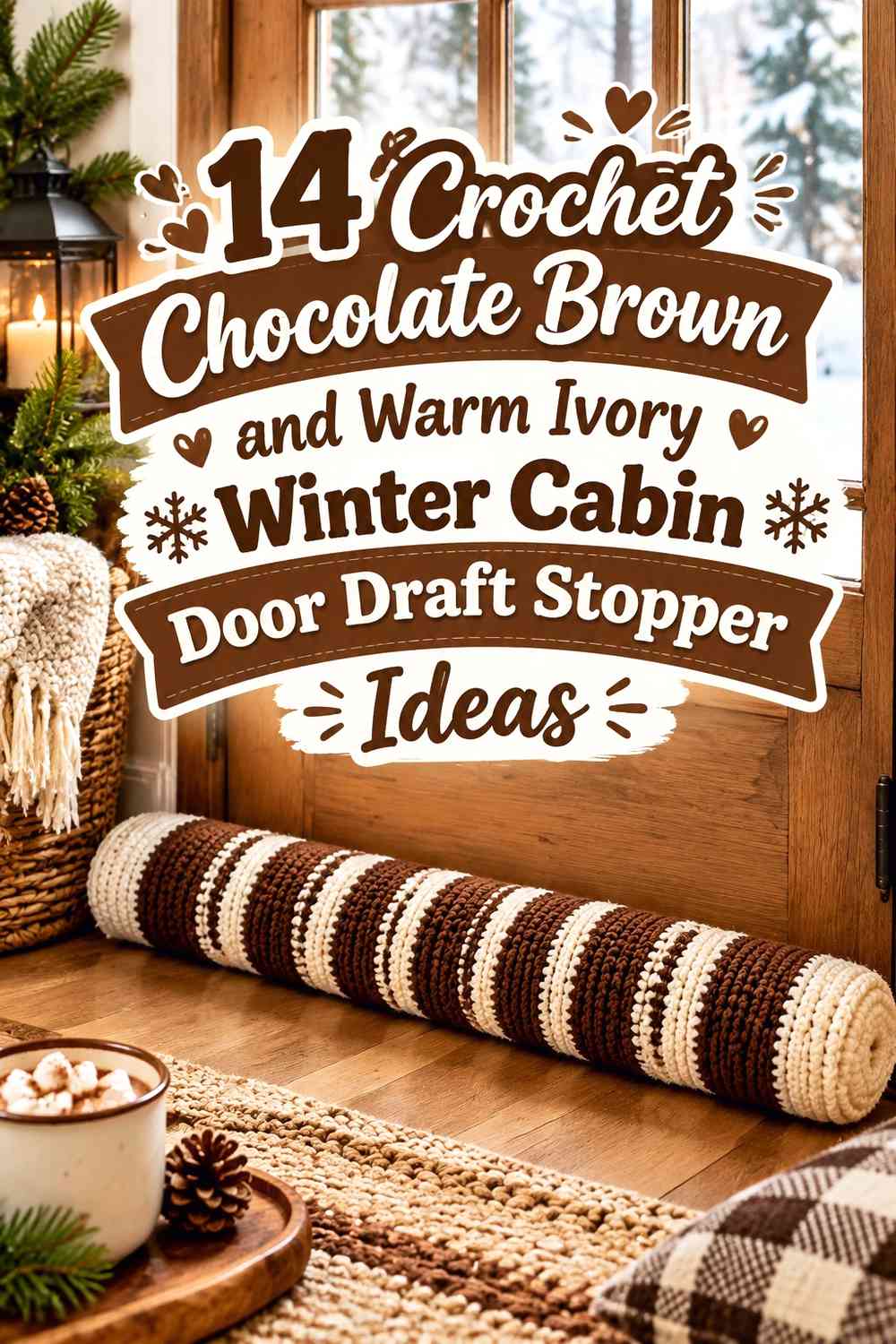

Chocolate brown and warm ivory are a natural fit for a winter cabin-style crochet door draft stopper. Chocolate brown can visually anchor a long stuffed piece against wood floors and rustic doors, while warm ivory lightens ridges, stripes, ends, and decorative details without introducing a stark white contrast.
Because a draft stopper stretches horizontally across a doorway, color placement matters differently than it does on a pillow or blanket. Numerous narrow stripes can make the piece look busy across its full length, while one broad contrasting section can become disproportionately noticeable. The strongest arrangements usually give chocolate brown or warm ivory a clear dominant role and use the second shade to define texture, ends, repeated bands, or small cabin-inspired details.
Some tutorials below demonstrate exact crochet draft stoppers, while others teach long stuffed snakes, animals, or bolster constructions that can provide a useful construction reference. When adapting a non-draft-stopper tutorial, measure the intended doorway independently and do not assume the tutorial’s original finished length will fit it.
Quick List
- Chocolate Brown Crochet Cabin Door Draft Stopper With Warm Ivory End Caps
- Warm Ivory Crochet Cabin Door Draft Stopper With a Chocolate Brown Center Band
- Chocolate Brown and Warm Ivory Crochet Striped Winter Cabin Door Draft Stopper
- Chocolate Brown Crochet Textured Cabin Door Draft Stopper With Warm Ivory Ridges
- Warm Ivory Crochet Long-Cat Cabin Door Draft Stopper With Chocolate Brown Markings
- Chocolate Brown and Warm Ivory Crochet Bolster-Style Cabin Door Draft Stopper
- Warm Ivory Crochet Snake-Style Cabin Door Draft Stopper With Chocolate Brown Bands
- Chocolate Brown Crochet Snake-Style Door Draft Stopper With Warm Ivory Pinstripes
- Warm Ivory Crochet Cabin Door Draft Stopper With Chocolate Brown End Blocks
- Chocolate Brown Crochet Cabin Door Draft Stopper With a Warm Ivory Center Panel
- Warm Ivory and Chocolate Brown Crochet Wide-Stripe Cabin Door Draft Stopper
- Chocolate Brown Crochet Long-Body Cabin Door Draft Stopper With Warm Ivory Details
- Warm Ivory Crochet Dachshund-Style Cabin Door Draft Stopper With Chocolate Brown Accents
- Chocolate Brown and Warm Ivory Crochet Dachshund-Style Winter Cabin Door Draft Stopper
Decide Whether Chocolate Brown or Warm Ivory Should Lead the Doorway
Chocolate brown makes the draft stopper visually heavier and more grounded, which can suit a cabin-inspired room with wood, leather, woven baskets, or other deep neutrals. Warm ivory produces a lighter result and gives brown stripes or end sections stronger definition.
Avoid treating the two shades as automatically equal. On a long horizontal project, repeated fifty-fifty color changes can create a strong striped effect that competes with stitch texture. If you want a quieter cabin look, let one color occupy most of the draft stopper and repeat the second shade in two or three deliberate locations.
Use Chocolate Brown and Warm Ivory to Clarify Crochet Texture
Raised crochet texture creates its own shadows. A chocolate brown textured field may therefore need only a limited amount of warm ivory to show the direction of the ridges or define the outer edge. On an ivory body, chocolate brown can emphasize selected raised sections without outlining every stitch feature.
Check the yarns side by side before committing to a long piece. Warm ivory should remain visibly lighter than chocolate brown so narrow bands and small details do not disappear once the draft stopper is viewed from standing height.
Measure Before Adapting Chocolate Brown and Warm Ivory Color Sections
Plan the color layout after deciding the finished length needed for your doorway. A stripe arrangement that looks balanced on a short sample can become repetitive when extended across an entire door.
Mark the approximate center and both ends before deciding where chocolate brown and warm ivory transitions should fall. This is especially helpful for broad center panels, symmetrical end blocks, and animal-inspired designs where a face or decorative feature should not end up partly hidden behind furniture or a door frame.
1. Chocolate Brown Crochet Cabin Door Draft Stopper With Warm Ivory End Caps
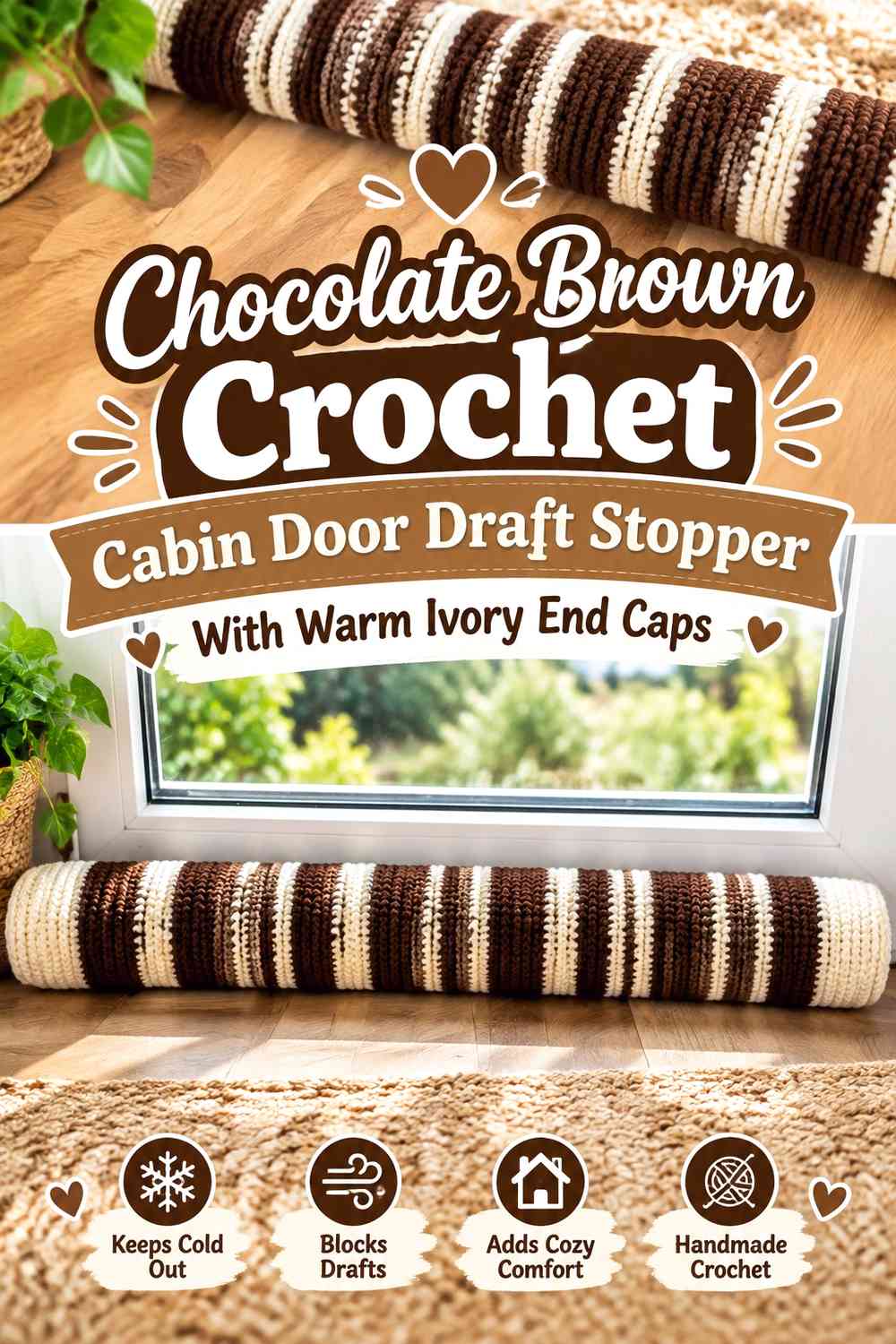
This is one of the quietest ways to use the palette. Chocolate brown can cover almost the entire long body, while warm ivory appears only at both ends. The dark center gives the draft stopper a substantial cabin look, and the matching pale ends provide enough contrast to keep the shape from becoming one uninterrupted brown tube.
Let Chocolate Brown Cover the Main Crochet Draft Stopper Body
Keep the longest section chocolate brown when you want the stopper to blend naturally with wood-heavy or dark-neutral cabin decor. A continuous body also allows ridges or other crochet texture to remain visible without being interrupted by frequent color changes.
If the brown is already strongly contrasted against the floor, there is little need to add extra ivory stripes through the middle.
Use Warm Ivory Symmetrically on the Chocolate Brown Crochet Ends
Matching warm ivory end sections make the long form look intentional and balanced. Keep the two end areas visually similar so one side does not appear heavier when the stopper is positioned across the door.
If you want an even quieter variation, reduce the ivory to narrow end bands rather than large caps.
Creator Credit: Lindy Loves Life
2. Warm Ivory Crochet Cabin Door Draft Stopper With a Chocolate Brown Center Band
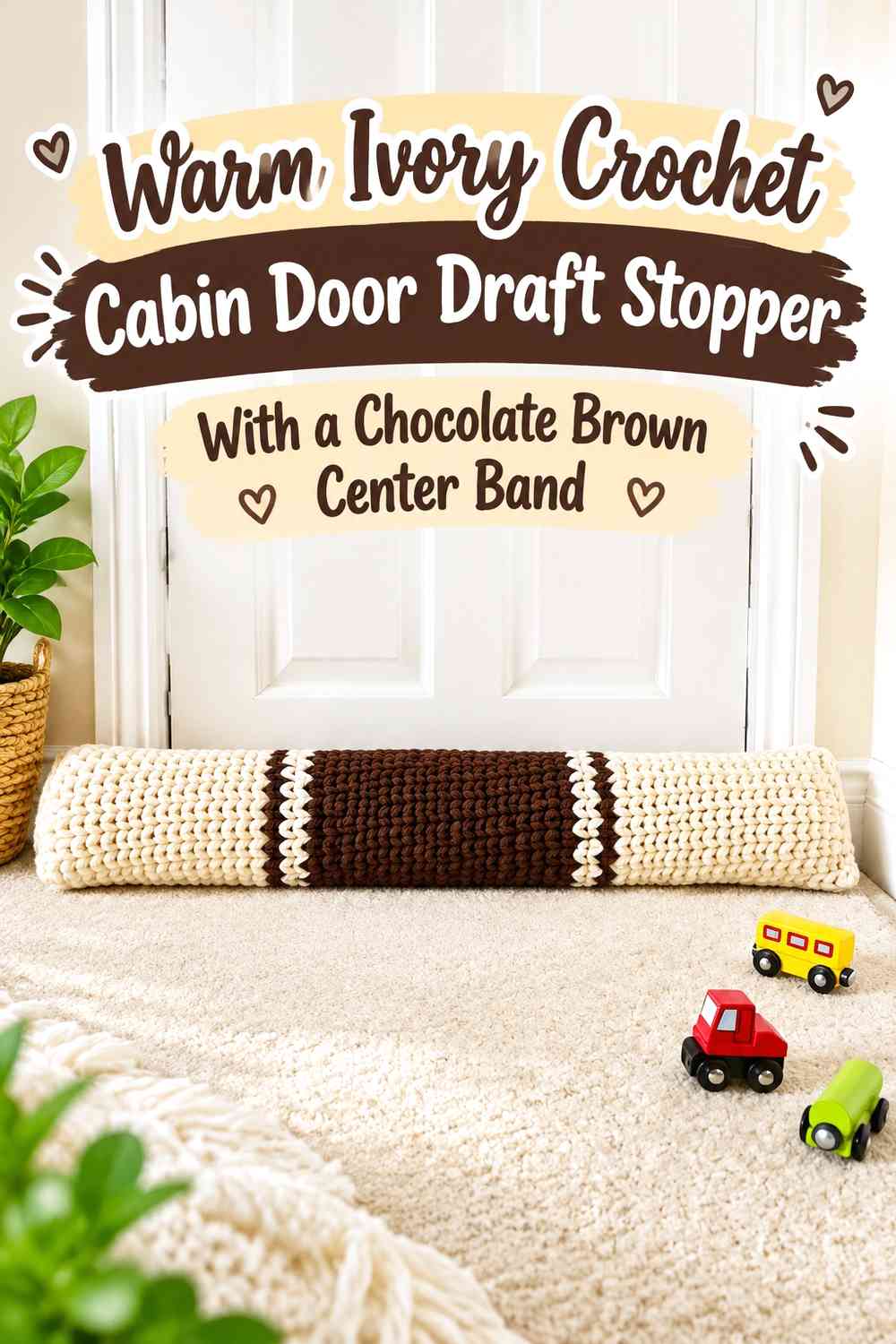
This arrangement reverses the hierarchy. Warm ivory carries most of the length, while one substantial chocolate brown band marks the center. It works well when you want a light cabin accessory but still need enough dark color to prevent the piece from feeling visually washed out.
Let Warm Ivory Create a Continuous Crochet Cabin Base
Use warm ivory across both long outer sections so the draft stopper reads as one pale piece rather than two separate halves. The color is especially useful when the crochet surface has noticeable ridges because shadows can define the texture without extra color changes.
Leave enough uninterrupted ivory for the center brown band to feel deliberate.
Make Chocolate Brown Wide Enough to Anchor the Warm Ivory Center
A very narrow brown stripe at the exact center can look accidental on a long project. A broader chocolate brown section gives the eye a clear midpoint and makes the two ivory sides feel balanced.
Before finalizing its width, view the proposed color proportions from across the room rather than only at close range.
Creator Credit: Annaboo’s House
3. Chocolate Brown and Warm Ivory Crochet Striped Winter Cabin Door Draft Stopper
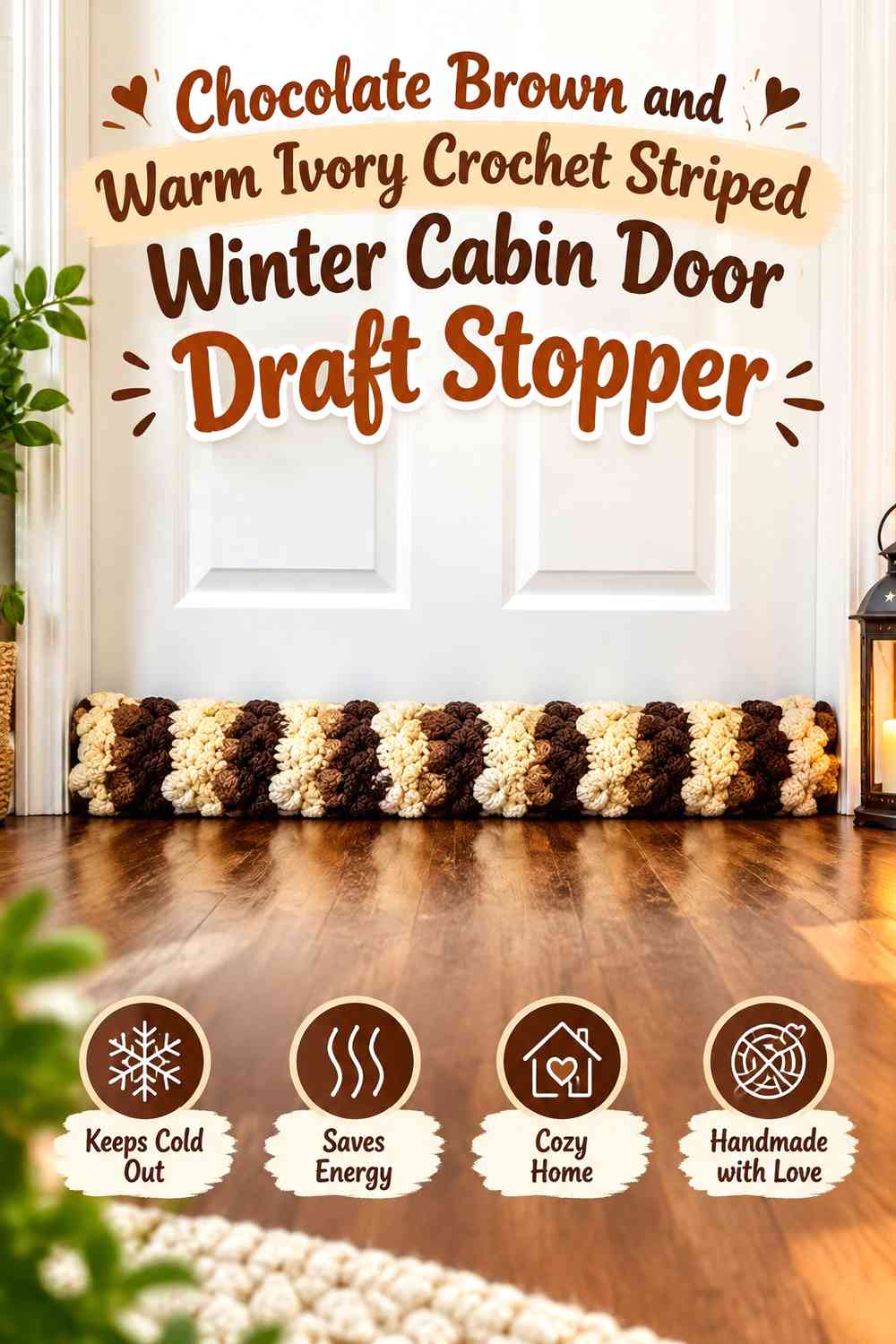
Stripes give the palette a stronger handcrafted cabin character. Instead of alternating chocolate brown and warm ivory in equal narrow bands, use broader brown sections and smaller ivory breaks. That keeps the long draft stopper from developing an overly busy barcode effect.
Use Chocolate Brown for the Wider Crochet Cabin Stripes
Chocolate brown can take the dominant role by appearing in wider repeated bands. The darker sections visually connect the full length and keep the stopper grounded against the floor.
Keep the width rhythm reasonably consistent unless you intentionally want an irregular scrap-style effect.
Let Warm Ivory Separate the Chocolate Brown Crochet Bands
Use narrower warm ivory sections as pauses between the darker bands. Their lighter value keeps individual brown areas distinct while preventing ivory from taking over half the surface.
If there are many stripes already, keep the ends simple rather than introducing another complicated color treatment there.
Creator Credit: L’angolo di Criss
4. Chocolate Brown Crochet Textured Cabin Door Draft Stopper With Warm Ivory Ridges
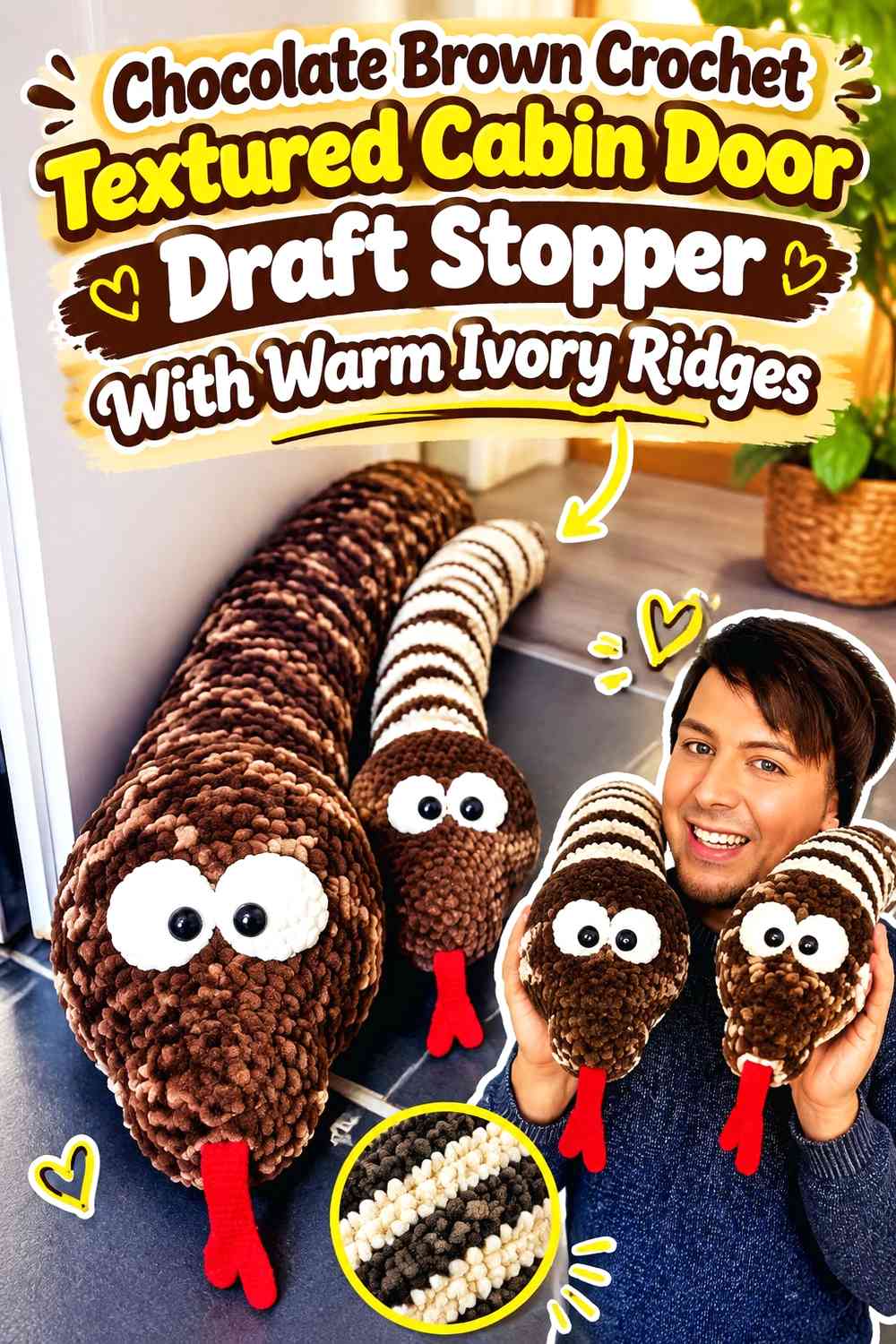
Texture can replace complicated colorwork. Use chocolate brown for most of the draft stopper and introduce warm ivory only on selected raised sections or repeating textured bands. The lighter shade then helps readers see the surface structure rather than simply dividing the project into stripes.
Keep Chocolate Brown Continuous Behind the Crochet Texture
Chocolate brown works well as the uninterrupted background because the shadows created by raised stitches already add visual movement. Maintaining one dark base prevents the long stopper from looking fragmented.
This also leaves room to use ivory only where the texture benefits from extra separation.
Use Warm Ivory on Selected Chocolate Brown Crochet Ridges
Do not automatically highlight every raised section. Repeating warm ivory at controlled intervals can reveal the texture while allowing plenty of brown to remain visible between accents.
Check the complete length before adding more ivory; texture that looks subtle at close range may become much more prominent when repeated across a door.
Creator Credit: Küma Tutorials
5. Warm Ivory Crochet Long-Cat Cabin Door Draft Stopper With Chocolate Brown Markings
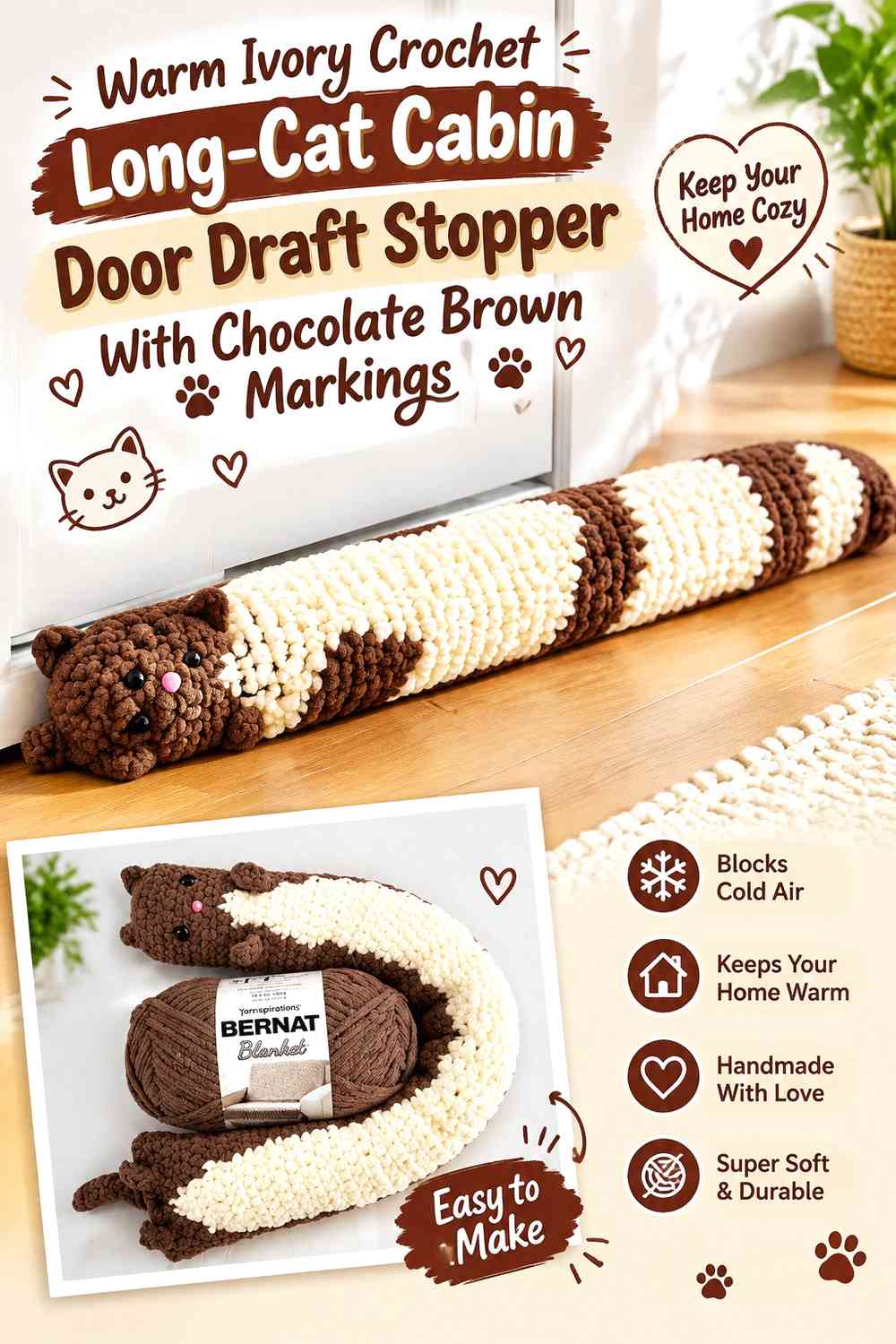
A long-cat construction can turn the draft stopper into cabin decor as well as a practical doorway piece. Warm ivory makes a useful main body color, while chocolate brown can define ears, paws, tail details, or simple markings. The supporting tutorial is an exact long-cat door draft stopper, so the animal silhouette is directly relevant to this variation.
Let Warm Ivory Keep the Crochet Cat Body Visually Simple
Cover most of the elongated body in warm ivory so the cat shape does not become lost among many patches. The pale field also gives darker facial or end details enough room to remain recognizable from standing height.
Avoid covering every part of the body with brown spots simply because the design permits color changes.
Place Chocolate Brown on the Warm Ivory Crochet Cat’s Key Features
Use chocolate brown where it helps the cat silhouette read clearly—such as the ears, tail area, or a limited group of body markings. Repeating the dark color at both ends can visually connect the face and tail.
Keep small details subordinate to the long body so the draft stopper still feels appropriate for a restrained winter cabin room.
Creator Credit: Tamara Kelly – Moogly
6. Chocolate Brown and Warm Ivory Crochet Bolster-Style Cabin Door Draft Stopper
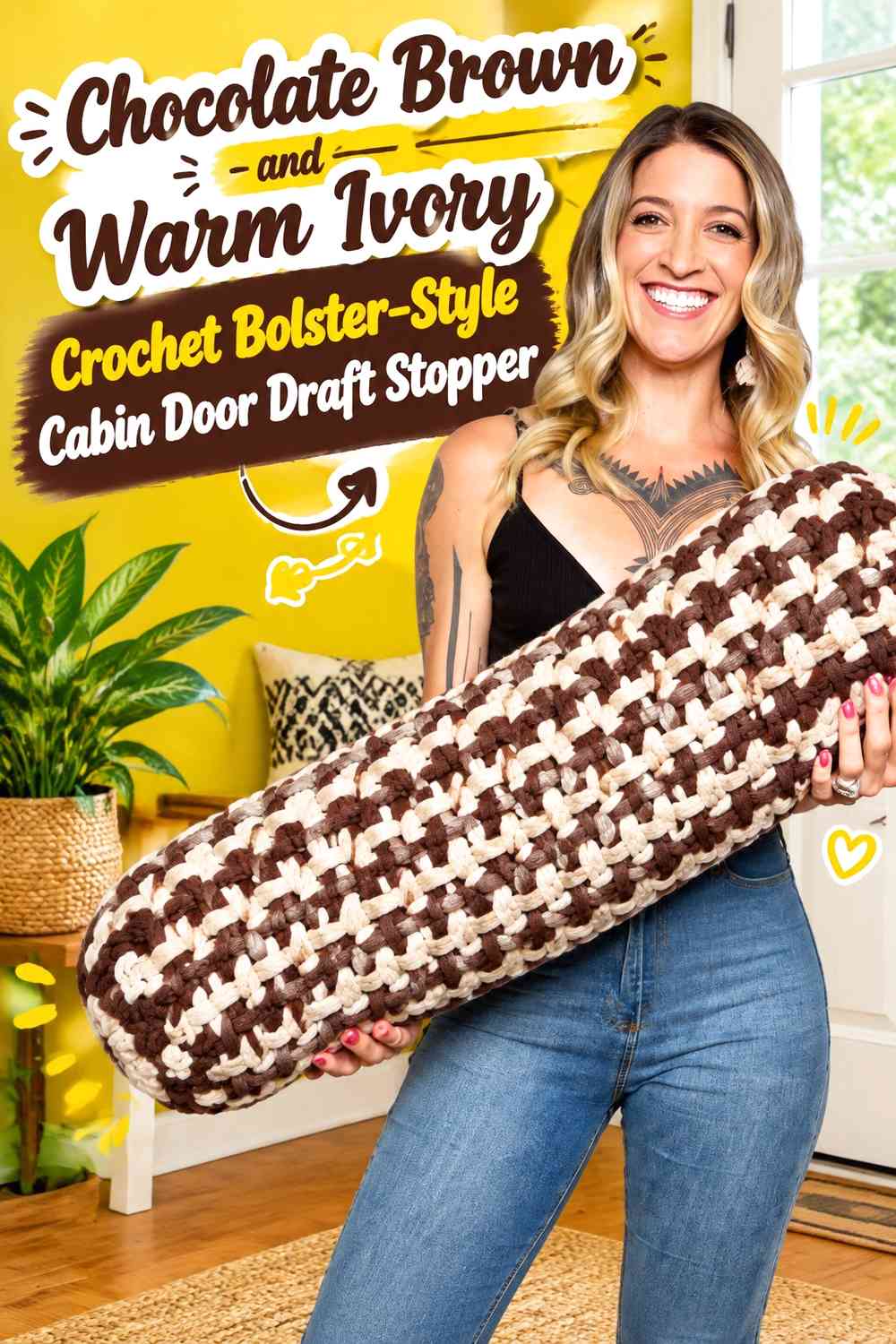
A cylindrical bolster shape offers a clean surface for large color blocks. Chocolate brown can cover one long side or most of the body, while warm ivory forms a broad contrasting section. The supporting tutorial demonstrates a crochet bolster rather than a door draft stopper, so adapt the length only after measuring the intended doorway.
Keep Chocolate Brown Broad on the Crochet Bolster Body
Large brown areas suit the simple cylindrical construction because the color does not interrupt the shape. If the piece will rest against a wooden door or floor, compare the brown to those surrounding tones before deciding whether more ivory is needed.
A long uninterrupted field also keeps the project visually calmer.
Position Warm Ivory Where the Chocolate Brown Bolster Needs Separation
Warm ivory can form a center panel, end sections, or one repeated band. Choose one of those roles rather than using all three at once.
For a cabin look, broad blocks generally feel quieter than numerous small color changes across a smooth bolster surface.
Creator Credit: Anne Galante – Escola de Artes Manuais
7. Warm Ivory Crochet Snake-Style Cabin Door Draft Stopper With Chocolate Brown Bands
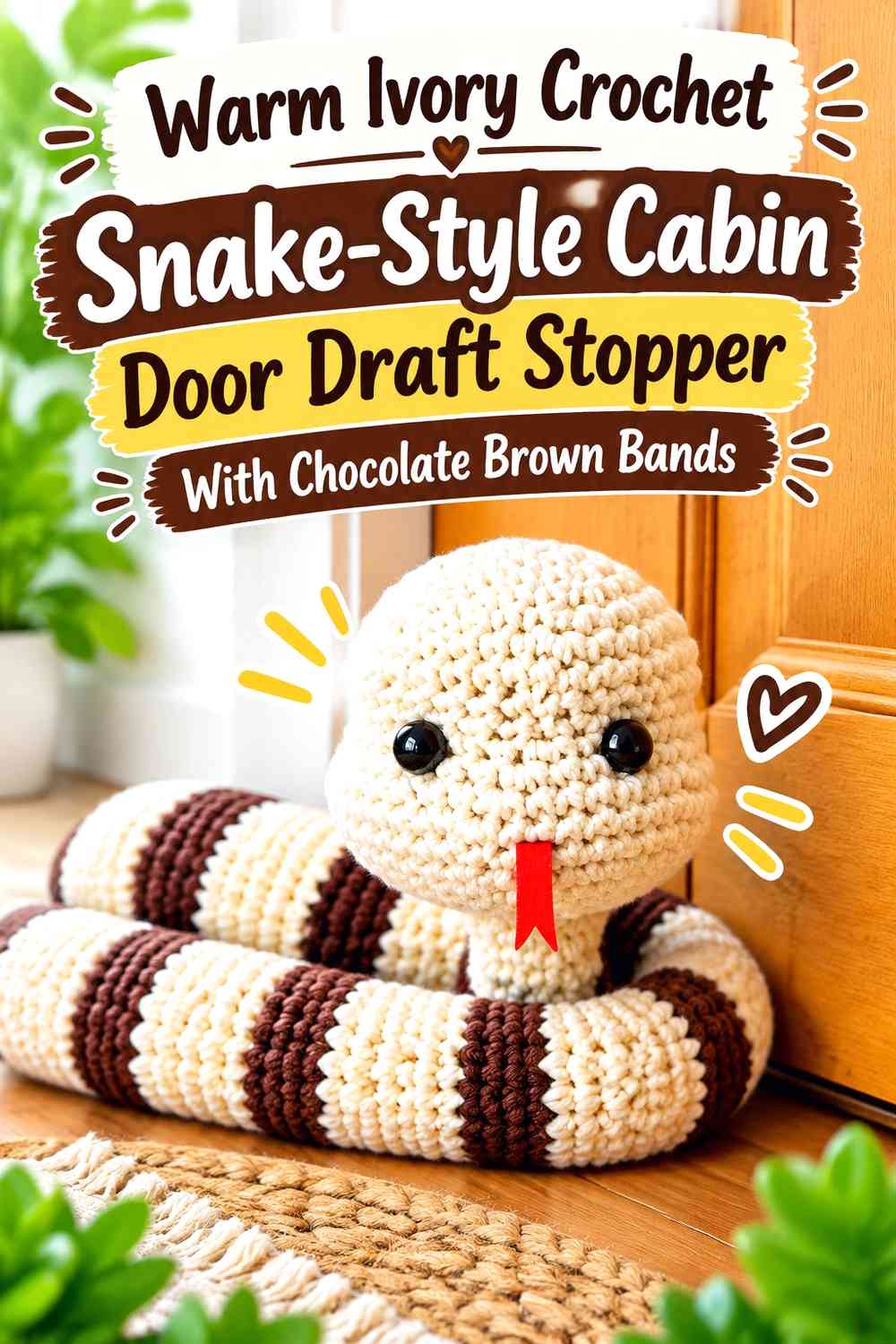
A stuffed snake construction provides a useful reference for a simple elongated tube, but the supporting tutorial is not originally sized as a door draft stopper. Measure the doorway and assess how the construction would need to be adapted before using it for this purpose. For the color direction, let warm ivory dominate and place chocolate brown in widely spaced bands.
Give Warm Ivory Most of the Crochet Snake-Style Length
A predominantly ivory body makes the long piece feel softer and more decorative than a dark solid draft stopper. It also provides a clear background for brown bands that need to stay visible from a distance.
Keep the main body consistent rather than alternating color after every short section.
Space Chocolate Brown Bands Across the Warm Ivory Crochet Body
Widely spaced chocolate brown bands create cabin-inspired rhythm without making the piece look overly striped. Consider using a brown section near each end and one or two through the middle.
If the bands begin to dominate more of the surface than the ivory, widen the pale spaces rather than adding another color.
Creator Credit: Yarn Society
8. Chocolate Brown Crochet Snake-Style Door Draft Stopper With Warm Ivory Pinstripes
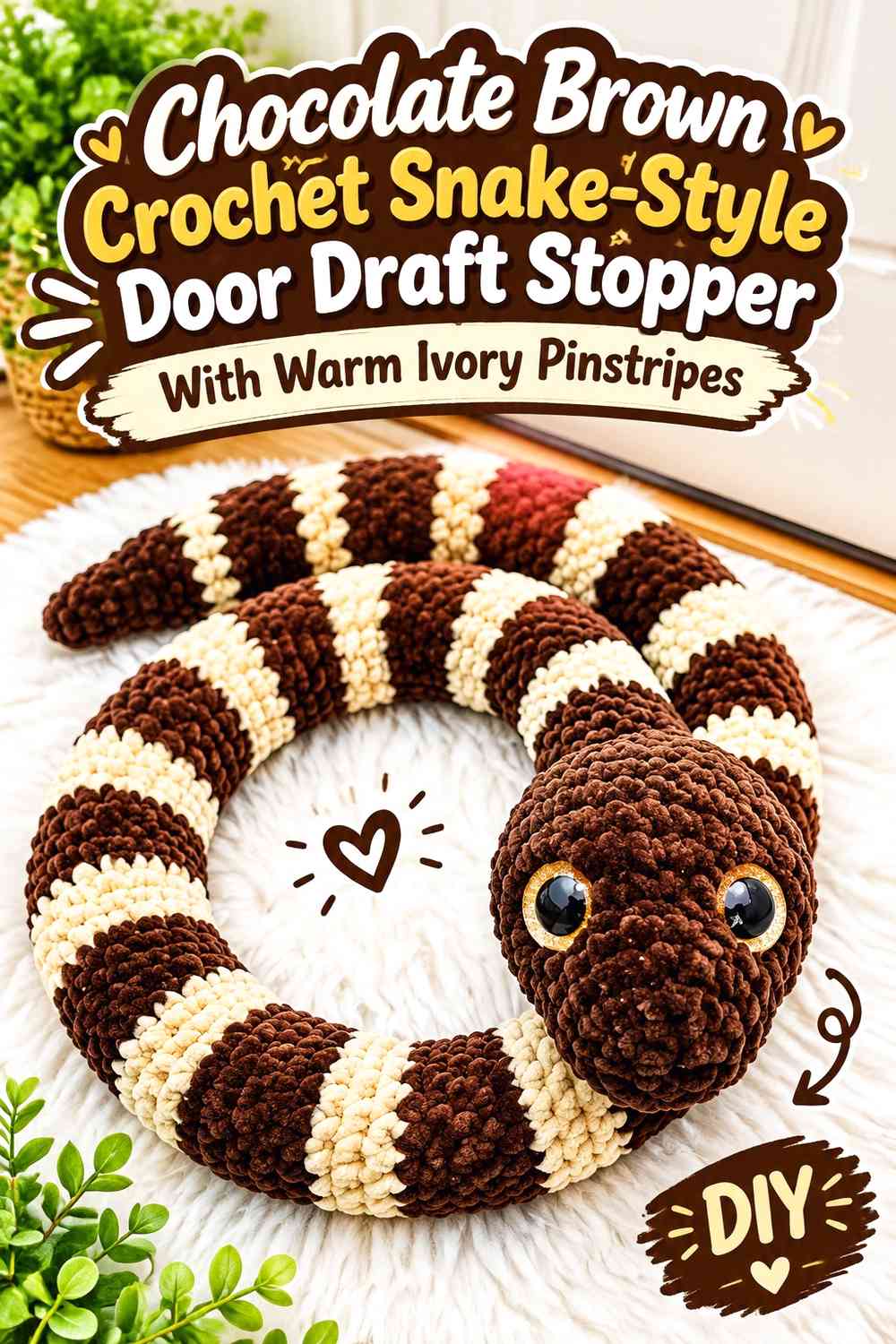
This idea uses the same long stuffed concept but changes the color balance dramatically. Chocolate brown becomes the uninterrupted main field and warm ivory appears in narrow repeated stripes. The result is darker and better suited to a cabin palette where you want the draft stopper to sit quietly along the base of the door.
Make Chocolate Brown the Continuous Crochet Background
Use chocolate brown for most of the length so the draft stopper reads as a dark neutral home accessory first. This gives any narrow warm ivory stripe more visual impact without requiring a large amount of pale yarn.
The dark body can also make an animal-inspired construction feel less playful and more aligned with rustic decor.
Keep Warm Ivory Pinstripes Narrow Against Chocolate Brown
Thin ivory bands can provide enough repetition to break up a long brown surface. Space them deliberately rather than placing them at random intervals.
If the piece already has a visible face or tail treatment, reduce the number of stripes so those details do not compete with the body pattern.
Creator Credit: Twin Peak Knits
9. Warm Ivory Crochet Cabin Door Draft Stopper With Chocolate Brown End Blocks
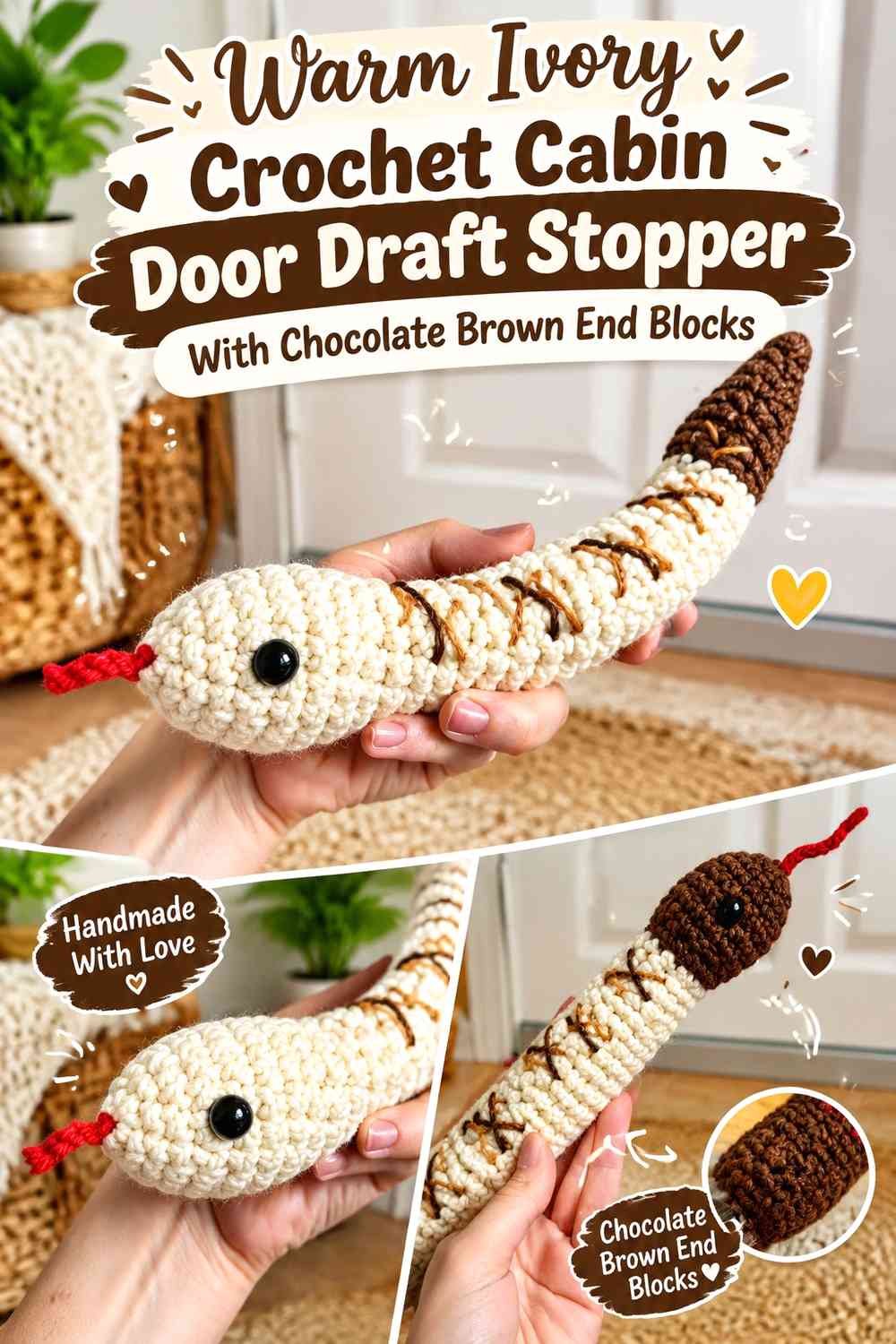
Instead of using small end caps, make the chocolate brown sections long enough to act as substantial blocks at both sides. Warm ivory remains dominant through the center. This layout places the darkest visual weight close to the door frame while leaving the center lighter.
Keep Warm Ivory Long and Uninterrupted Through the Crochet Center
The center should remain clearly larger than either brown end if ivory is meant to lead the palette. A generous pale middle creates visual breathing room and can show subtle stitch texture well.
Avoid inserting an extra brown center stripe unless you intentionally want a three-block rhythm.
Match the Chocolate Brown Crochet End Blocks
Use similar brown proportions on both ends to frame the warm ivory center. Symmetry is particularly useful on a functional object placed horizontally across a doorway because mismatched end blocks can look accidental.
Check the color changes with the piece laid at the actual door before committing to the final arrangement.
Creator Credit: Lousy Llama Creations
10. Chocolate Brown Crochet Cabin Door Draft Stopper With a Warm Ivory Center Panel
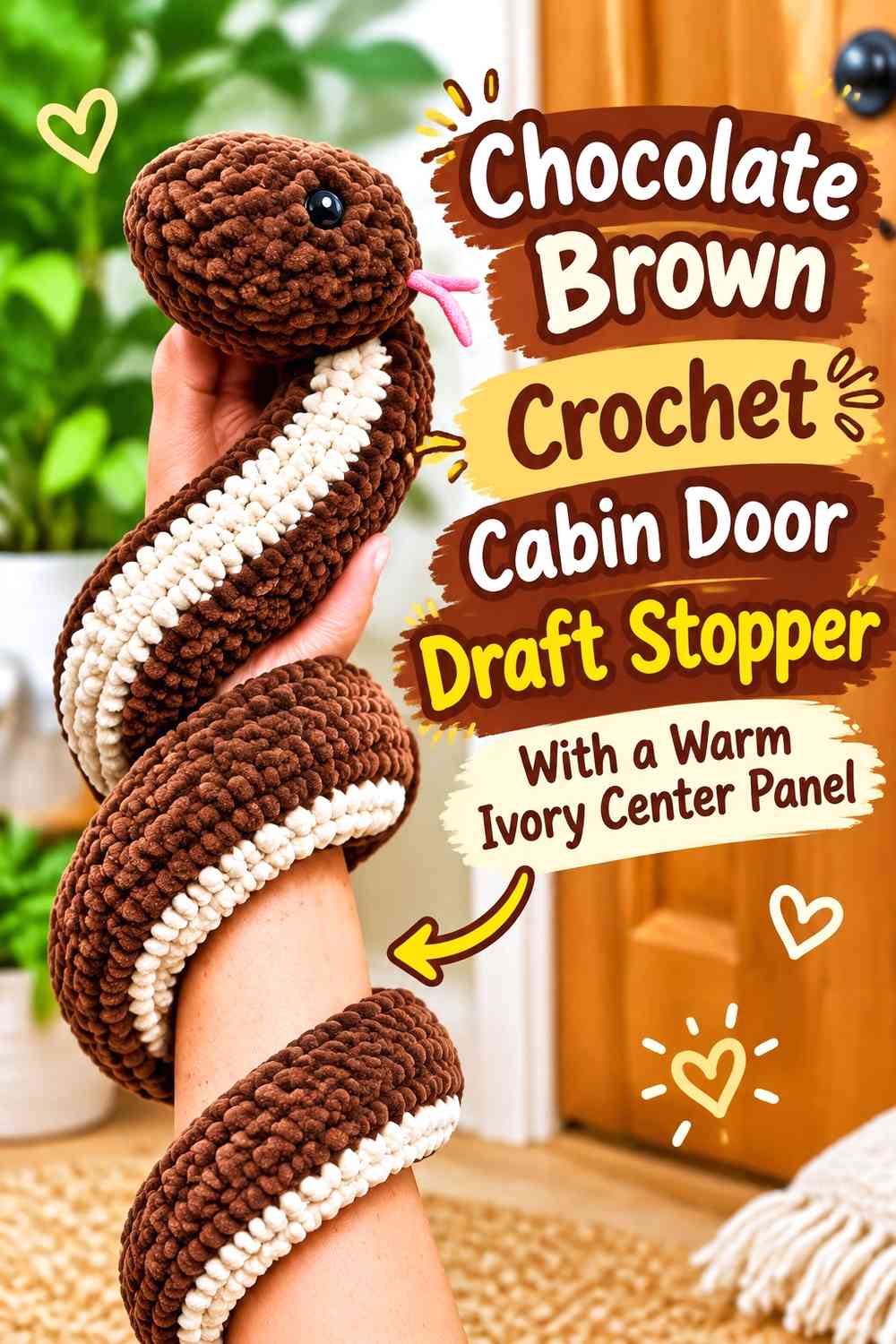
This palette puts most of the visual weight at the ends and uses one warm ivory section as a lighter focal point. It is a good choice when you prefer a mainly brown draft stopper but want more contrast than small ivory trim would provide.
The supporting snake tutorial demonstrates elongated stuffed construction rather than a finished draft stopper, so door-specific length and placement need independent planning.
Let Chocolate Brown Connect Both Sides of the Crochet Draft Stopper
Keep chocolate brown on both long outer sections so they visually relate even though an ivory panel separates them. This preserves brown as the dominant color and helps the piece coordinate with rustic cabin neutrals.
Avoid introducing additional large ivory areas at the ends if you want the center panel to remain the feature.
Center Warm Ivory Carefully Between the Chocolate Brown Sections
A noticeably off-center pale panel can draw attention to uneven color distribution. Mark the intended midpoint before beginning the panel if visual symmetry matters for your doorway.
If the center will be partly obscured by a door feature, move the color block only when doing so improves how the finished piece is actually displayed.
Creator Credit: One Cent Crochet
11. Warm Ivory and Chocolate Brown Crochet Wide-Stripe Cabin Door Draft Stopper
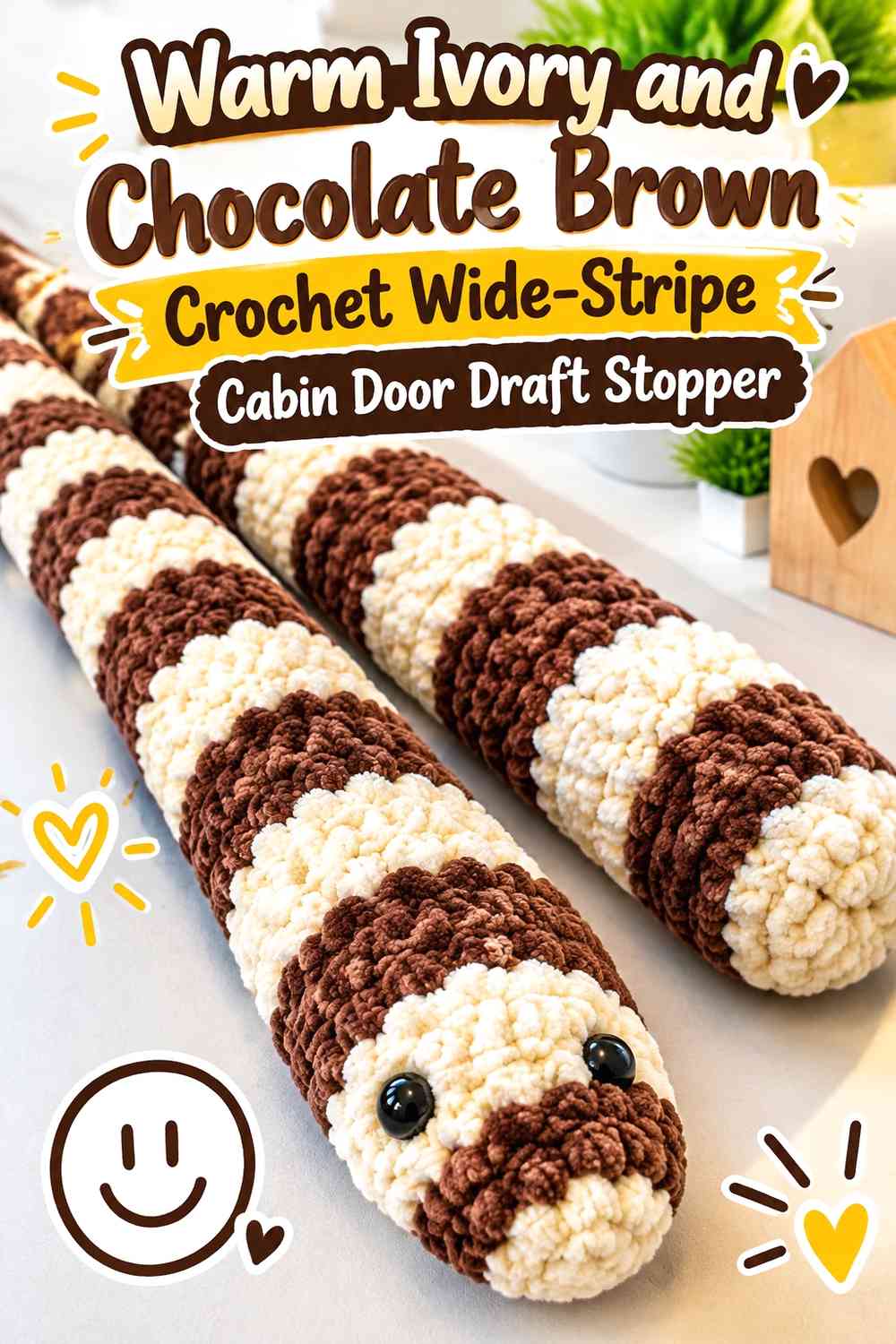
Broad stripes create a different effect from the narrow stripe idea earlier in the article. Use only a few large sections across the full length, allowing both warm ivory and chocolate brown enough space to show their own crochet texture.
Use Warm Ivory in Broad Crochet Sections Instead of Small Accents
Large warm ivory areas give the pale neutral a structural role rather than reducing it to trim. This can make the stopper feel lighter while still preserving the winter cabin palette.
Place the ivory sections where they are unlikely to be completely hidden by the open door.
Let Chocolate Brown Separate the Warm Ivory Crochet Blocks
Broad chocolate brown sections can serve as visual dividers between ivory areas. Because both colors occupy substantial space, keep the number of transitions relatively low.
A few confident blocks usually create a calmer cabin result than many short alternating sections.
Creator Credit: Inmysparetime Crochet
12. Chocolate Brown Crochet Long-Body Cabin Door Draft Stopper With Warm Ivory Details
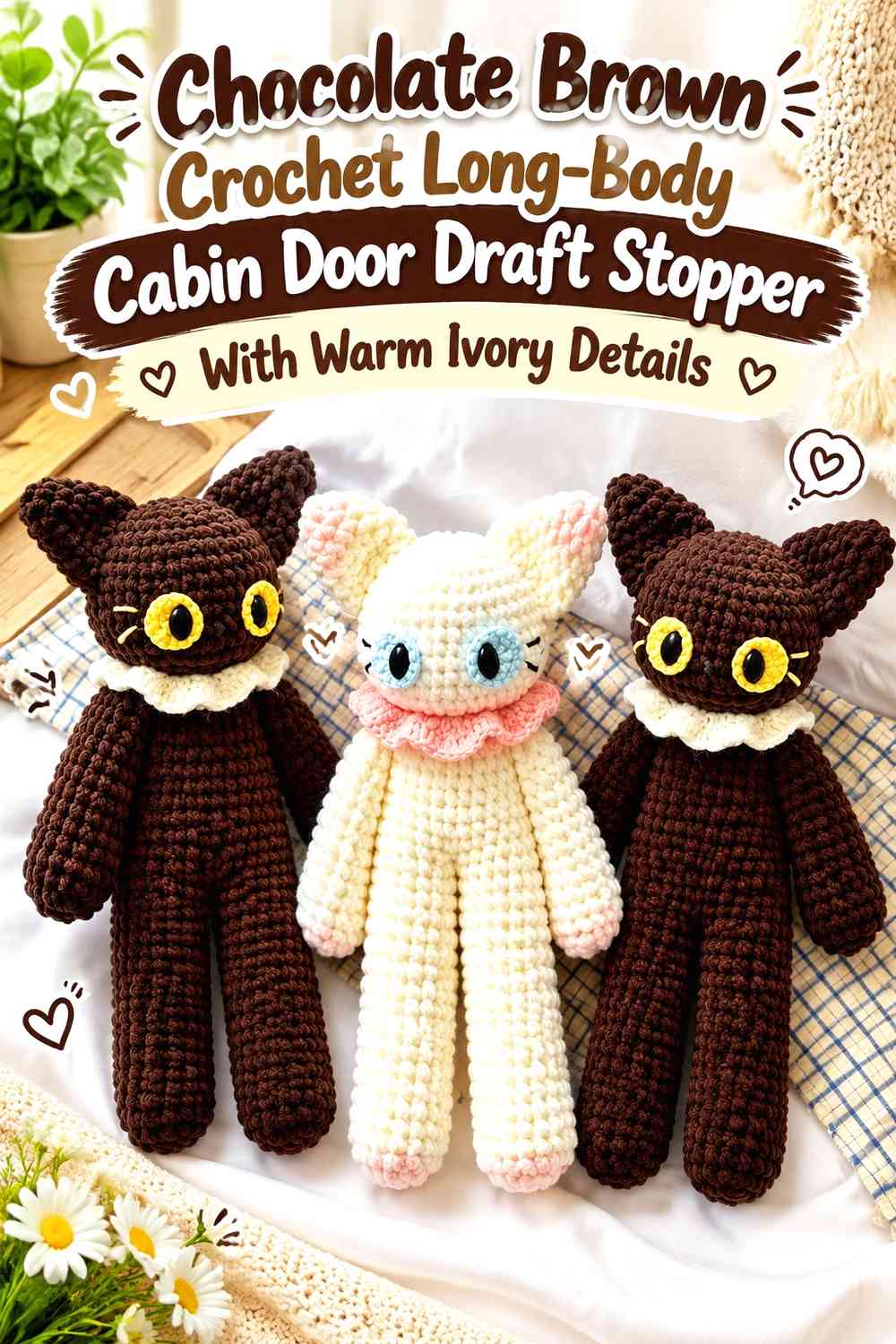
A long-cat or elongated animal construction can be adapted visually into a darker cabin accessory by making chocolate brown the body color. Warm ivory then belongs on a small collar, paws, muzzle-like detail, or limited end treatment rather than in large stripes.
The supporting tutorial demonstrates a long crochet cat, not a ready-sized door draft stopper, so its dimensions should not be assumed to match a doorway.
Keep Chocolate Brown Dominant Across the Long Crochet Body
A continuous chocolate brown body minimizes the novelty effect and makes the elongated shape feel more like rustic home decor. It also provides enough dark surface for small ivory details to remain visible.
If the crochet construction includes many appendages or features, resist adding a separate color to every one.
Use Warm Ivory Only Where the Chocolate Brown Crochet Shape Needs Definition
Warm ivory can clarify selected paws, a face area, or one collar-like band. Repeating it two or three times is usually enough to establish the secondary color.
Keep the ivory away from areas that already contain heavy texture if you want the details to remain easy to read.
Creator Credit: chubbiesbyash𐙚
13. Warm Ivory Crochet Dachshund-Style Cabin Door Draft Stopper With Chocolate Brown Accents
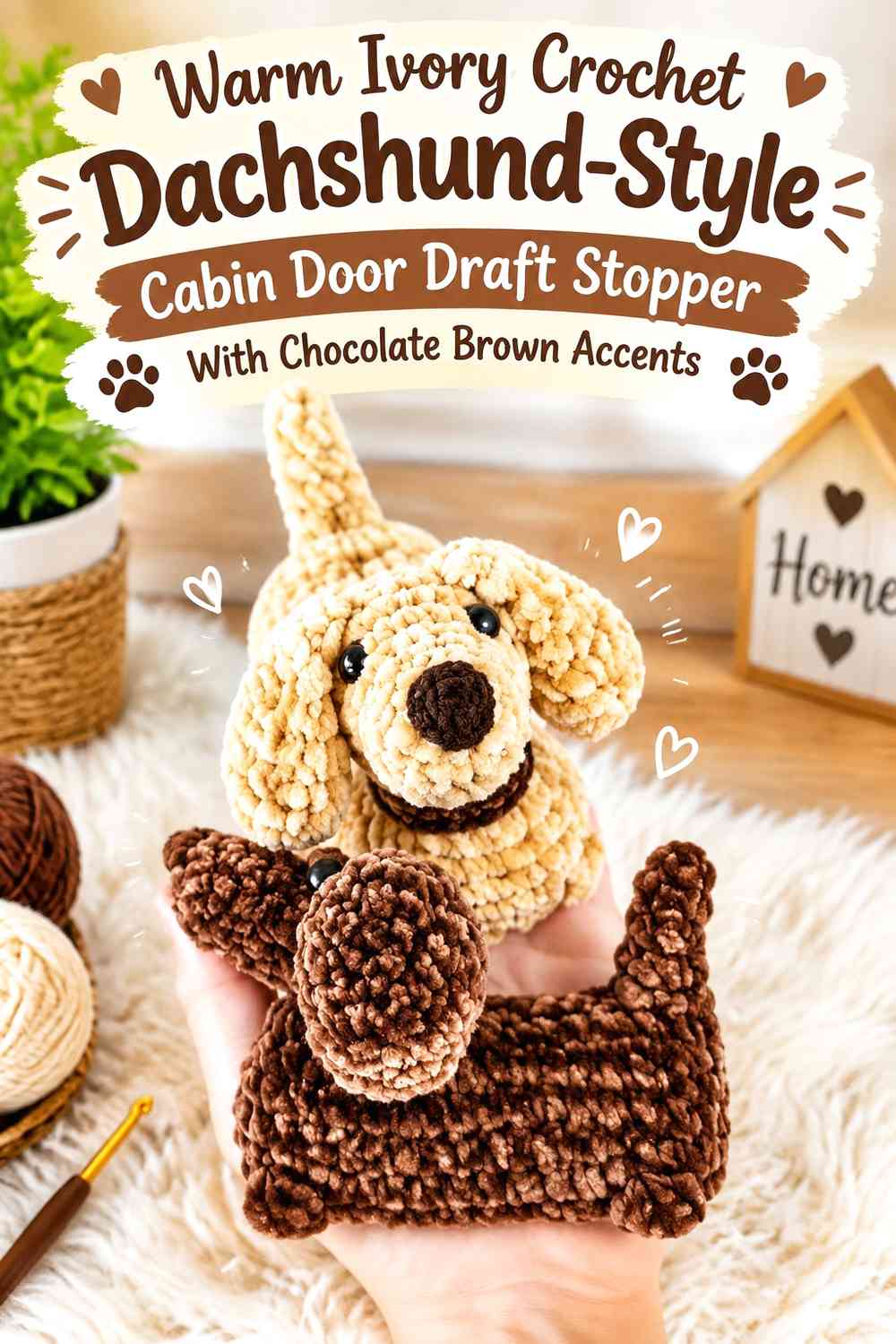
The long dachshund silhouette naturally suits a door-length visual concept, although the supporting tutorial makes a smaller amigurumi dog rather than an actual draft stopper. Treat it as a shaping reference only and plan the required dimensions separately. A warm ivory main body with chocolate brown ears, tail, or back markings gives this version a lighter cabin character.
Let Warm Ivory Control the Crochet Dachshund-Style Body
Using ivory across the elongated torso keeps the body visually simple and leaves the recognizable long silhouette unobstructed. It also makes chocolate brown details easier to identify from above.
For a doorway piece, prioritize the horizontal body over small decorative features that will rarely be viewed at eye level.
Put Chocolate Brown on the Warm Ivory Crochet Ears and End Details
Chocolate brown can provide visual weight at the head and tail ends, helping the long ivory body feel framed. A limited brown back marking can be added if more color repetition is wanted.
Avoid placing many small dark patches across the middle if you want the draft stopper to retain a restrained winter cabin look.
Creator Credit: Amigurumis Atina
14. Chocolate Brown and Warm Ivory Crochet Dachshund-Style Winter Cabin Door Draft Stopper
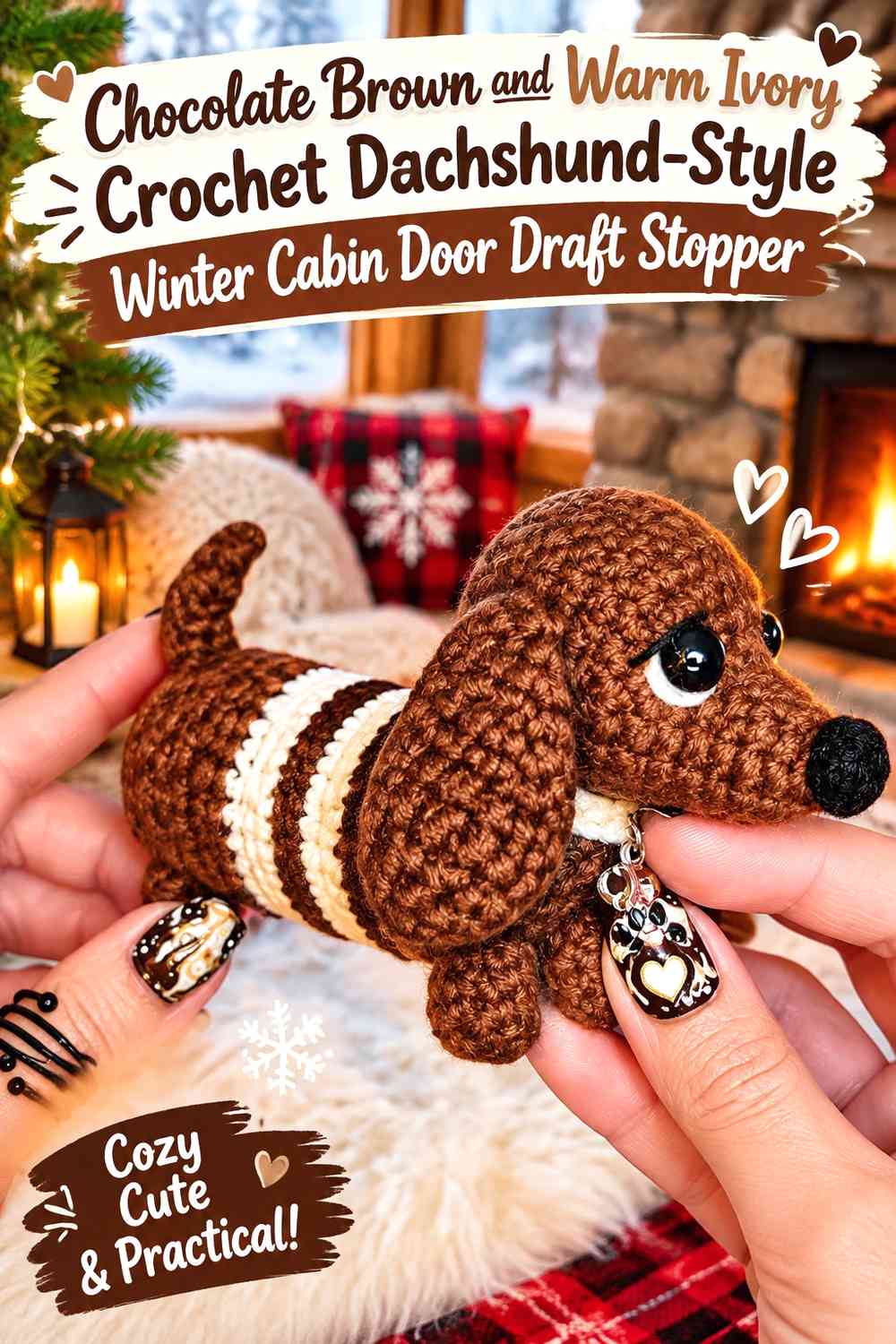
The final idea reverses the dachshund palette. Chocolate brown covers most of the elongated body, giving the design a natural cabin-neutral direction, while warm ivory is restricted to a muzzle-like area, paws, collar, or a narrow back accent. As with the previous idea, the supporting tutorial demonstrates amigurumi construction rather than a door-sized finished project, so adaptation requires independent measuring.
Make Chocolate Brown the Main Crochet Dachshund-Style Color
A dark brown elongated body creates one of the most understated animal-inspired options in the collection. The silhouette can carry the character while the color remains compatible with other brown, tan, cream, or wood tones in a cabin entryway.
Keep the central body largely solid if you want the finished piece to look less toy-like.
Use Warm Ivory to Clarify the Chocolate Brown Crochet Features
Warm ivory works best in small high-contrast areas such as the muzzle, paws, or a narrow collar. These details can break up the dark body without turning it into a highly patterned animal.
Repeat the ivory selectively so the head details do not become the only pale spot across the full length.
Creator Credit: Coraoutline Retrosurreal
Which Chocolate Brown and Warm Ivory Cabin Draft Stopper Direction Should You Choose?
For the quietest cabin look, choose a mostly chocolate brown body with warm ivory ends, ridges, or one center panel. These arrangements keep the dark neutral dominant and work particularly well when you want stitch texture rather than frequent color changes to provide the visual interest.
For a lighter doorway, the warm ivory body with brown center band, end blocks, or widely spaced bands gives the pale neutral much more surface area. Wide stripes are a useful middle ground when you want both colors to have substantial presence.
The cat, snake, and dachshund directions are more decorative. Keep their color placement restrained if the surrounding cabin decor already contains plaid, patterned rugs, baskets, or other visually active elements.
Conclusion
Chocolate brown and warm ivory can make a crochet door draft stopper feel closely connected to winter cabin decor without requiring a large palette. The main decision is where the visual weight should sit.
Choose chocolate brown as the dominant shade for a darker, grounded result, then use warm ivory to reveal ends, ridges, faces, or a central panel. Reverse the hierarchy when you want a lighter accessory, using brown for bands, end blocks, animal markings, or a strong midpoint.
For a long horizontal project, test the complete color rhythm against the actual doorway rather than judging only a small sample. Use the linked tutorials for their intended construction guidance, and when adapting a snake, bolster, cat, or dachshund project that was not originally designed as a door draft stopper, establish the required doorway measurements independently before changing the scale.
Frequently Asked Questions
Should Chocolate Brown or Warm Ivory Dominate a Winter Cabin Crochet Draft Stopper?
Chocolate brown is useful when you want a darker accessory that visually settles near a wood floor or rustic doorway. Warm ivory produces a lighter result and makes brown stripes or end blocks more prominent. Either can lead; what matters is giving one shade enough surface area to establish a clear hierarchy.
How Can I Keep Chocolate Brown and Warm Ivory Crochet Stripes From Looking Too Busy?
Use fewer, broader color sections or let one shade occupy more space than the other. On a door-length project, many short alternating stripes create much more visual activity than they do on a small swatch.
Where Should Warm Ivory Go on a Mostly Chocolate Brown Draft Stopper?
Useful placements include matching end caps, selected raised ridges, a central panel, narrow repeated bands, or small animal details. Choose one or two of these roles rather than placing ivory on every available feature.
How Can Chocolate Brown Add Definition to a Warm Ivory Crochet Draft Stopper?
Use chocolate brown where it creates a clear visual boundary: end blocks, a center band, widely spaced stripes, or selected motif details. The darker shade is especially useful when the ivory body would otherwise blend into a pale floor or rug.
Should a Chocolate Brown and Warm Ivory Draft Stopper Match the Door or the Floor?
It does not need to match either exactly. Consider which surface provides the background when the stopper is in place. If both the door and floor are dark, additional warm ivory can make the crochet outline easier to see; against a pale floor, a chocolate brown body may provide enough contrast on its own.
Can I Adapt a Crochet Snake or Dachshund Tutorial Into a Door Draft Stopper?
The elongated stuffed construction can provide inspiration, but a toy tutorial should not be assumed to produce the correct doorway dimensions or functional result. Measure the intended doorway independently and decide whether the original construction is suitable before scaling or modifying it.
How Do I Substitute Chocolate Brown or Warm Ivory Without Losing the Cabin Palette?
Preserve the relationship between the colors. Replace chocolate brown with another deep, warm brown that remains substantially darker than the supporting neutral. Replace warm ivory with another creamy light neutral rather than a shade so dark that the light-dark contrast disappears.